
Bordeaux to Lascaux: cave art, Lascaux IV and visitor guide
A major collection of cave art, 2 hours and 8 minutes from Bordeaux: 680 frescoes and 1,500 engravings cataloged by the Ministry of Culture, located at the heart of the 15 sites along the Vézère River listed as a UNESCO World Heritage Site. Everything you need to know before you go—and how to get there with a private driver.
A major collection of cave art, 2 hours and 8 minutes from Bordeaux. The complete guide to Lascaux and the Vézère Valley.
Half-day Lascaux IV tour or full-day tour including Sarlat — fixed price confirmed in writing before departure, with no surge pricing.
In a nutshell
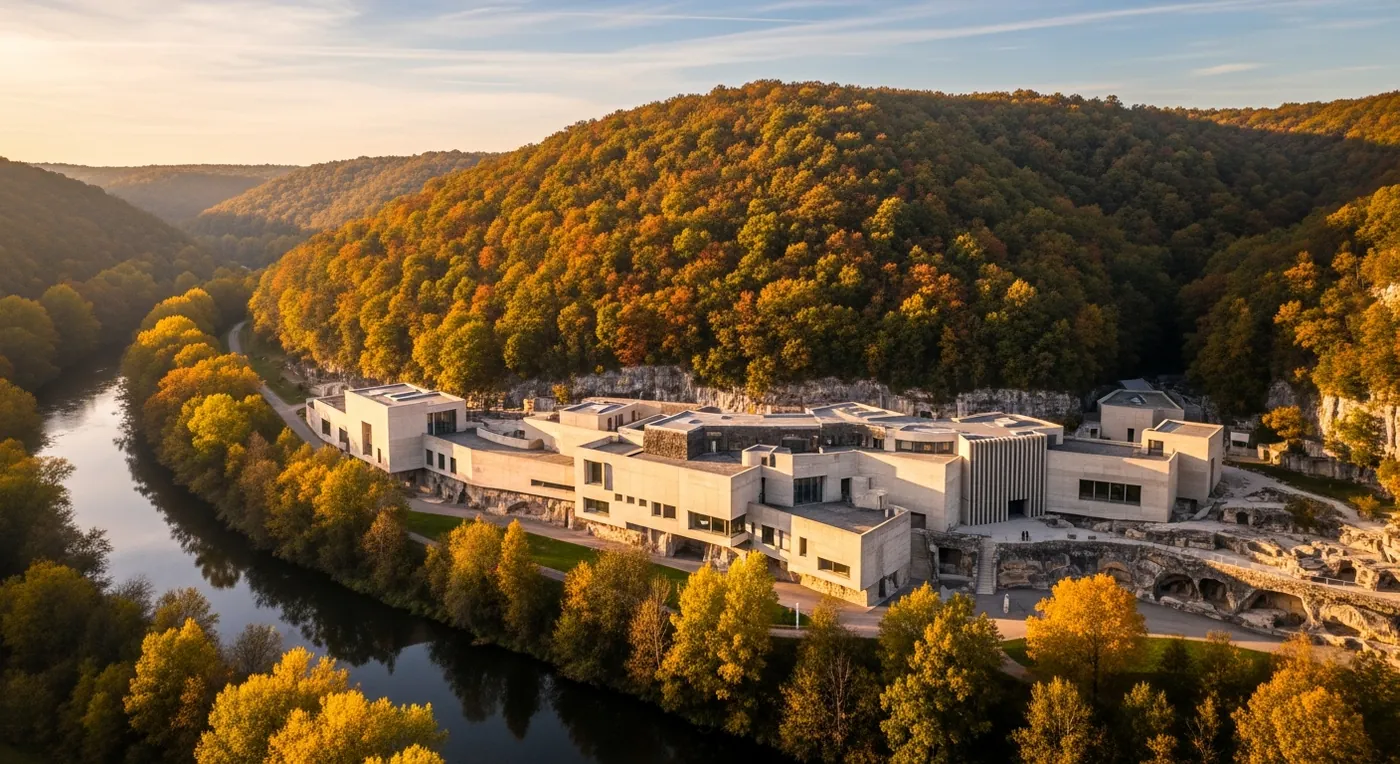
Lascaux is a major complex of decorated Paleolithic caves located in Montignac, in the Vézère Valley (Dordogne), 186 km and 2 hours and 8 minutes from Bordeaux. Discovered on September 12, 1940, by four teenagers [Culture 2026] , the original cave has been closed to the public since 1963 and can now be explored through Lascaux IV, its exact replica. One-way transfers start at 310 € from downtown Bordeaux.
- Lascaux is one of the greatest archaeological discoveries of the 20th century. The Ministry of Culture has identified 680 frescoes and 1,500 engravings on the cave walls. [Culture 2026]
- Discovered on September 12, 1940, by four teenagers from Montignac: Marcel Ravidat, Jacques Marsal, Georges Agniel, and Simon Coencas. [Lascaux 2026]
- Nicknamed "the Sistine Chapel of Prehistory" by Father Henri Breuil, the first prehistorian to enter the cave on September 21, 1940.
- The original cave has been closed to the public since April 20, 1963, to prevent damage caused by overcrowding. [Lascaux 2026]
- Lascaux IV, International Center for Cave Art, inaugurated in December 2016 by François Hollande: 8,500 m², a full-scale replica created using 3D scanning and resin, representing an investment of 57 million euros.
- The Périgord is also home to Font-de-Gaume (one of the last original polychrome caves open to the public), Cap Blanc (a monumental carved frieze), and Rouffignac (158 mammoths that visitors can see from a small train).
- The Vézère Valley has been listed as a UNESCO World Heritage Site since 1979 as part of a property comprising 15 prehistoric sites. [UNESCO 2026]
Before You Go: What Lascaux Really Is
On September 8, 1940, Marcel Ravidat, accompanied by his dog Robot, inspected an opening on the hill at Lascaux. Four days later, on September 12, he returned with Jacques Marsal, Georges Agniel, and Simon Coencas; the four teenagers descended into the cave and discovered the paintings.
Four teenagers and a discovery that has transformed humanity’s understanding of prehistoric art: *Lascaux* also highlights the fragility of a site that had remained preserved in obscurity but was soon threatened by the massive influx of visitors following its opening to the public. [Lascaux 2026]
This guide traces the entire history: the discovery, the closure, the saga of the replicas, what you see today at Lascaux IV, and the other decorated caves in the Périgord, all of which are well worth a visit. For practical information (how to get there, pricing, and services offered), see our page on private chauffeur services between Bordeaux and Lascaux.
The Discovery of September 12, 1940
Four teenagers and a dog
Context is crucial. September 1940. France has been under occupation for three months. In Montignac, in the Périgord region, life goes on away from the major thoroughfares. Marcel Ravidat, 18, an apprentice mechanic, is the oldest member of the small group. Like all the children of Montignac, he had heard about a mysterious hole in the hill at Lascaux, which, according to legend, led to an underground passage connecting the Lascaux manor to a hidden place. It is precisely this local legend that drives Ravidat and his friends to go down into the hole.
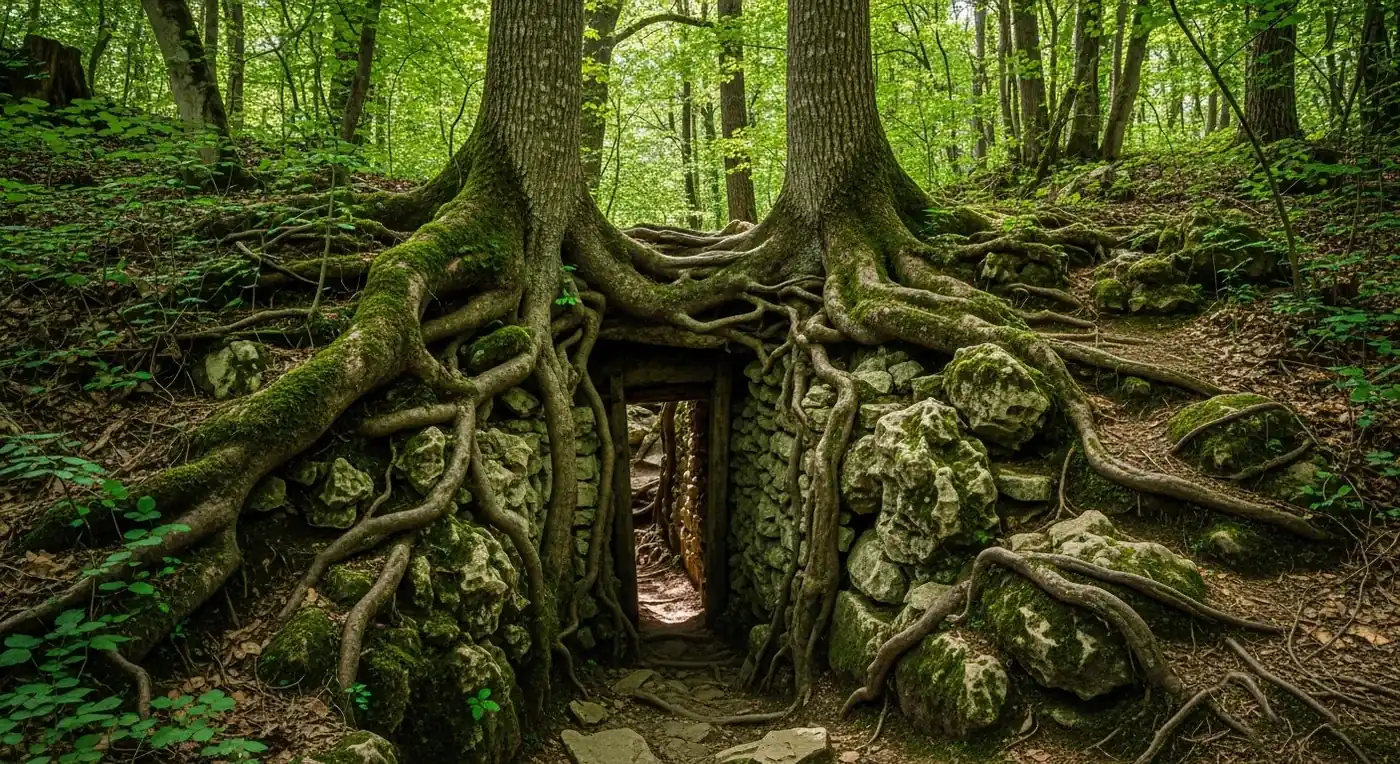
Equipped with a rope and a makeshift kerosene lamp, the four teenagers descended into the cave on September 12, 1940. Marcel Ravidat was the first to see the paintings.
"The Sistine Chapel of Prehistory"
The teenagers warned their teacher, Léon Laval, who in turn alerted the leading prehistorians of the time. On September 21, 1940, Abbé Henri Breuil, the greatest French prehistorian of the time (nicknamed “the Pope of Prehistory”), entered the cave. His reaction was immediate: he described Lascaux as "The 'Sistine Chapel of Prehistory'" — a phrase that would forever be associated with the site.
A Place in History
The cave was quickly designated a historic monument in 1940. During the war, access was restricted and the cave was preserved. After the Liberation, work began on developing the site. The cave officially opened to the public in July 1948, with an admission fee.
Next, the inventors
Marcel Ravidat remained connected to Lascaux for the rest of his life. He became one of the cave’s official guides in 1948 and later directed a guide training school. He died in Montignac in 1995, remembered as one of the Périgord’s best-known figures. Jacques Marsal also became a guide at Lascaux and worked there until his death in 1989. Simon Coencas, who was Jewish, was deported and survived the Holocaust; he later described September 12, 1940, as the most important day of his life. Georges Agniel left Lascaux but returned several times for anniversaries of the discovery.
The Montignac-Lascaux Tourist Office now offers a walking tour called “In the Footsteps of the Inventors,” which leads up to the cave’s original entrance (which is not accessible but can be seen from the outside).
1948–1963: The Cave Devastated
Visitor numbers have skyrocketed
Opened to the public in 1948, the cave quickly attracted millions of visitors. This influx of visitors, in a confined space with 235 meters of tunnels, altered the cave’s atmosphere and endangered the paintings. [Lascaux 2026]
The Green Disease (1960)
The first warning sign came in 1960: colonies of green algae began to appear on the walls. Cause identified: CO₂ emissions from human respiration, combined with the heat generated by artificial lighting and rising temperatures, create an environment conducive to the growth of microorganisms.
It is the prehistorian Glory who is sounding the alarm. Biological pollution is spreading rapidly. The ozone filters installed as an emergency measure are not stopping the problem.
White Disease
At the same time, another scourge is emerging: “white disease.” The increase in atmospheric CO₂ is causing a white calcite film to form, which gradually settles on the paintings, clouding them and destroying them in places.
Malraux's Decision (April 1963)
Faced with the accelerating deterioration, André Malraux, then Minister of Cultural Affairs, made a courageous and definitive decision: to permanently close the cave to the public in April 1963.
Since then, only a few accredited researchers have been allowed to enter the cave—for just a few days each year—under strictly controlled conditions (sterile suits, limited time inside, continuous monitoring).
The paradox that Lascaux presented to the world
This is a universal lesson that the cave has taught humanity: popularity can destroy what it celebrates. Lascaux survived 17,000 years in the darkness and silence of the limestone. Fifteen years of tourist influx nearly destroyed it for good.
This lesson transformed museum and conservation practice worldwide. All comparable decorated caves (Chauvet, Altamira, etc.) that have since opened were designed as replicas from the outset. Lascaux is the origin of this conservation doctrine.
The Replica Saga: Lascaux I, II, III, IV
| Name | Period | Status | Description |
|---|---|---|---|
| Lascaux I | Original (~17,000 B.C.) | Closed since 1963 | The original cave, which is closed to the public and accessible only to researchers |
| Lascaux II | Opened in 1983 | Closed to the general public since 2016 | First partial replica: Salle des Taureaux + Axial Diverticulum, 200 m from the original |
| Lascaux III | Starting in 2012 | Global Traveling Exhibition | Traveling exhibits featuring reproductions, held in Chicago, Houston, Brussels, Tokyo, Geneva, Paris, etc. |
| Lascaux IV | Opened in December 2016 | Open to the public | International Center for Cave Art: Full-Scale Replica + Exhibition Spaces |
Lascaux II (1983)
The first replica opened to the public in 1983, just 200 meters from the original cave. Partial replica: only the Hall of the Bulls and the Axial Diverticulum. Handcrafted using a process of successive casting. It welcomed millions of visitors between 1983 and 2016. Closed to the general public since the opening of Lascaux IV—now reserved for private tours by special request.
Lascaux III (2012–present)
International traveling exhibition. Not a single site, but a collection of portable panels depicting certain sections of the cave (Hall of the Bulls, The Well, The Nave), designed to travel around the world. It has already been exhibited in Chicago (Field Museum), Houston, Brussels, Tokyo, Geneva, Paris, and several other capital cities.
Lascaux IV (2016)
The full-scale replica. Inaugurated on December 15, 2016, by President François Hollande. 8,500 m² at the foot of the Lascaux hill. Total cost: 57 million euros, funded by local governments, the French government, the European Union, and private donations.
Lascaux IV in Detail
Unprecedented reproduction technology
The complete replica was made possible by:
- High-precision 3D laser scan of the original cave (millimeter-level survey conducted in partnership with the Ministry of Culture’s IT department)
- Comprehensive numerical modeling of walls
- The panels are printed on resin and mounted on a steel structure that replicates the cave's geometry
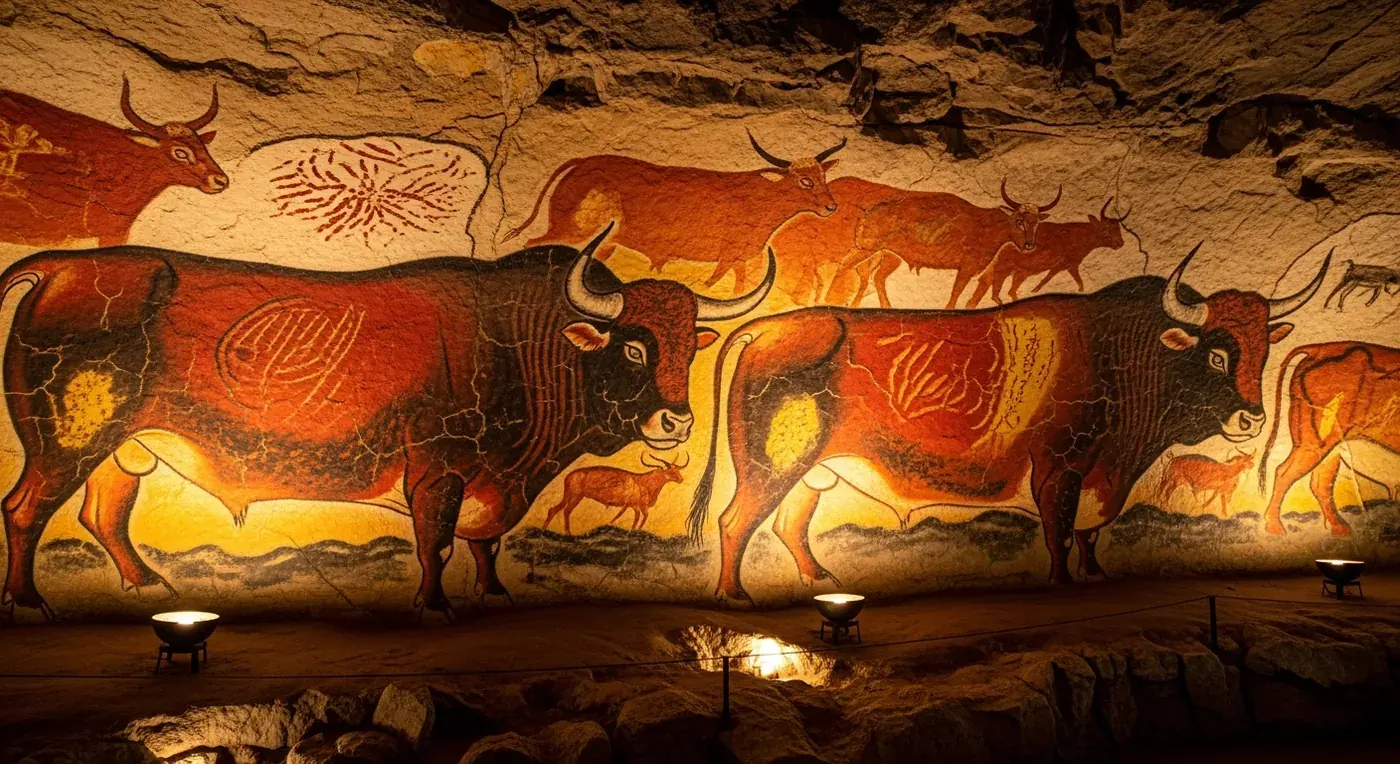
- Hand-painted by the Atelier des Fac-Similés du Périgord (under the direction of Francis Ringenbach), using the same pigments and techniques as the Magdalenian people
- Immersive environment: low temperature, high humidity, the smell of damp limestone, and the sound of water on rock to recreate the original atmosphere
The result is stunning. Even the curators sometimes have trouble telling the reproductions apart from the original photos.
The 6 exhibition spaces at the International Center for Cave Art
- The facsimile: a full-scale replica of the original cave, which visitors can explore on a guided tour (about 1 hour).
- The Lascaux Workshop: close-ups of key details from the paintings, freely accessible after the guided tour.
- "The Theater of Cave Art": The work of prehistorians, from the 19th century to the present, on the big screen.
- The Gallery of the Imagination: Lascaux in Modern and Contemporary Art (Picasso said, “We haven’t learned anything in 17,000 years”).
- The 3D Immersion Area: virtual reconstruction of the cave, interactive projections.
- 3D Movies: Animated Films About Prehistory.
What You See Inside
The Hall of the Bulls — the centerpiece. Five monumental aurochs, including one measuring 5.5 meters long. A composition of rare visual power, considered one of the pinnacles of prehistoric art worldwide.
The Axial Diverticulum—a narrow corridor where horses pass one after another in an almost cinematic sequence, creating the illusion of a looping narrative.
The Nave — bison, horses, deer. The frieze of swimming deer (five deer, with only their heads and antlers visible above the water, creating the illusion that they are crossing a river) is one of the most poetic scenes in all known prehistoric art.
The Well—the most mysterious and most debated scene in Lascaux. A man (with a bird’s head) lies wounded, facing a disemboweled bison whose entrails are spilling out. To the right, a woolly rhinoceros is walking away. This is the only complex narrative scene involving a human being in all known Paleolithic art. There is no consensus on its interpretation.
Recommended duration of visit
Allow at least 2 hours for the guided tour of the replica and the museum exhibits. 3 hours for a leisurely tour that includes all the exhibits. A full half-day if you really want to immerse yourself without rushing.
Cave Art at Lascaux: Techniques and Iconography
Pigments and Techniques
Magdalenian artists had a limited but well-mastered palette:
| Pigment | Mineral source | Resulting color | Usage at Lascaux |
|---|---|---|---|
| Hematite | Iron oxide (iron earth) | Red ochre | Predominant color of horses and bison |
| Limonite | Iron hydroxide | Yellow ochre | Manes, secondary contours |
| Charcoal | Charred plant matter | Black | Outlines and Main Shapes |
| Manganese (dioxide) | Mineral | Deep Black | Dark details, highlighted engravings |
| Natural calcite | Calcium carbonate | White | Rarely used at Lascaux |

- Red ochre (hematite) and yellow ochre (limonite) — ground iron-rich earth
- Charcoal or manganese for black
- A rarely used white (natural calcite)
The application techniques were remarkably varied:
- Foam, leather, or fur pads for applying paint
- Improvised brushes (twigs, animal hair)
- Blowing: The pigment was blown directly onto the cave wall using the mouth or a hollow bone—this is particularly evident in the hand stencils found in other caves in the Périgord region (Pech-Merle, Chauvet)
- Scratching: The wall was scored to create texture and play with the light
- Use of natural terrain: The artists knew how to incorporate the bumps and hollows of the rock into the animals’ silhouettes, giving them a striking sense of depth
The Subjects Depicted
The Lascaux bestiary is dominated by:
| Animal | Depictions | Notes |
|---|---|---|
| Horses | 364 | The most common finding: Axial diverticulum |
| Aurochs | 5 monumental | Salle des Taureaux; one of them measures 5.5 m |
| Deer | Several friezes | Frieze of deer swimming in the nave |
| Bison | Several | In particular, in *The Well* (narrative scene) |
| Woolly Rhinoceros | A few | Present in the Well |
| Bears, big cats | Rare | A few isolated depictions |
| Bird | 1 | The Well scene |
| Mammoths | 0 | Absent from Lascaux (in contrast to Rouffignac) |
- Horses (the most frequently depicted subject, with 364 depictions)
- Aurochs (wild bulls)
- Deer (often in friezes)
- Bison (especially in Le Puits)
- A few woolly rhinos, bears, big cats, and a bird perched on the Well
No mammoths at Lascaux—that’s one of the site’s unique features (there are, however, plenty of mammoths at Rouffignac).
The Mystery of the Well
The Well scene is unique. Access: ~5 meters down a narrow vertical shaft, which the Magdalenian people likely reached using a rope. Why was this hidden, hard-to-reach spot chosen for the scene? No one knows.
Is the bird-headed man a shaman in a trance, an injured hunter, or a symbolic representation of death? Is the bird perched next to him the soul of the deceased? Is the disemboweled bison a hunting victim or a sacrificial symbol? There is no consensus on any interpretation among prehistorians.
This is probably Lascaux's most famous image, and one of the most mysterious in the entire art world.
Theories of Meaning
Several major theories compete regarding the general significance of cave art:
| Theory | Lead Author | Hypothesis | Argument Type |
|---|---|---|---|
| Shamanic | David Lewis-Williams | Trance rituals: the wall as a veil between two worlds | Anthropological |
| Seasonal Calendar | Several authors | Animals depicted = hunting seasons, collective memory | Environmentally Friendly |
| Narrative / Storytelling | Several authors | Hunting tales permanently etched on the rock face | Narratological |
| Structuralist | André Leroi-Gourhan | Symbolic grammar: binary oppositions (male/female, etc.) | Semiology |
| Consensus | — | No universally accepted theory | — |
- Shamanic theory (David Lewis-Williams): The paintings are thought to be linked to trance rituals, with the artists “seeing” the animals through the rock face as if it were a veil between two worlds.
- Seasonal calendar theory: The animals depicted are thought to correspond to hunting seasons, with the paintings serving as a collective memory for the group.
- Narrative theory: hunting stories, prehistoric storytelling preserved for posterity.
- Structuralist theory by André Leroi-Gourhan (a French prehistorian who had a profound influence on the discipline): animals organize themselves according to a symbolic grammar, based on binary oppositions (male/female animals, day/night, etc.).
No theory is universally accepted. That is also what makes Lascaux so fascinating: 17,000 years later, these images still speak to us, even though we don’t really understand what they’re saying.
Other Major Caves in the Périgord
Lascaux isn't the only one. The Vézère Valley is home to 15 major decorated caves and more than 150 prehistoric sites within a 30-km radius. Here are the three other must-see sites.
Font-de-Gaume (Les Eyzies)
The absolute gem of the Périgord—and you really need to visit it right away.
Located in Les Eyzies-de-Tayac, 20 km from Lascaux, Font-de-Gaume is one of the last caves in the world featuring original polychrome paintings that is still open to the public. Lascaux, Altamira, Chauvet, and others have had to close permanently. Font-de-Gaume is still open—but probably not for much longer.
Discovered in 1901 by Denis Peyrony, Abbé Breuil, and Louis Capitan. Listed as a UNESCO World Heritage Site since 1979 (along with the other sites in the Vézère Valley).
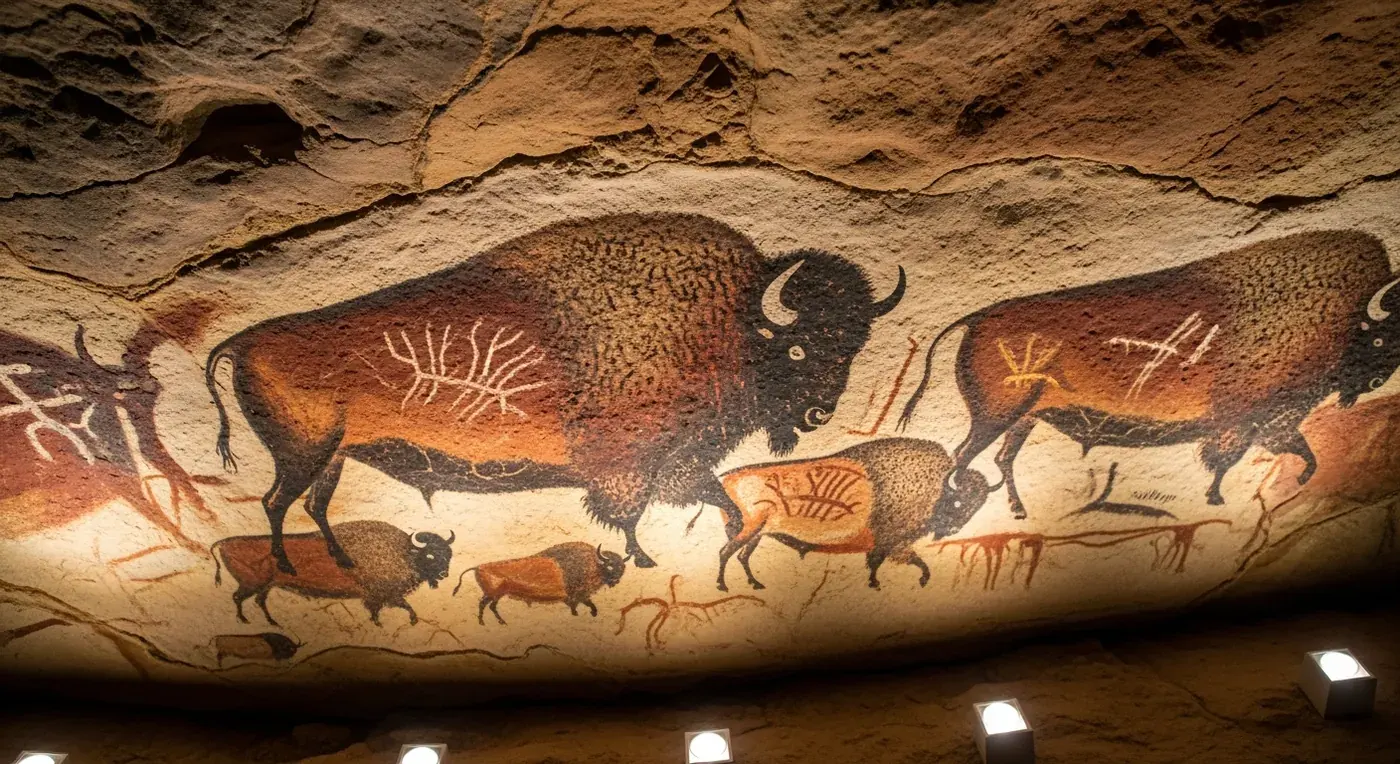
What it contains: more than 230 depictions dating from approximately 14,000 to 17,000 years ago. Bison are the most common subject (84 depictions, including the famous polychrome bison), along with horses, mammoths, and reindeer. The polychromatic coloring (red, brown, black) here reaches a level of sophistication that is truly unique. Scenes of reindeer facing each other—one of which depicts two animals in a posture of mutual affection (one reindeer appears to be licking the forehead of another)—are among the most moving images in all known prehistoric art.
Very limited capacity: only 78 people per day, in groups of no more than 12. Visitors are allowed 30 minutes inside the cave for conservation purposes.
Practical: - Reservations are required on sites-les-eyzies.fr since 2021 - Adult Rate: €13 (free for those under 18) - Closed on Saturdays - During peak season, book 3 to 4 months in advance — slots fill up fast - Distance from Lascaux IV: 20 km, ~25 min
Visit it now. Experts agree that its permanent closure is only a matter of time, just like Lascaux before it. This may be the last generation to see it.
The Cap Blanc Shelter (Marquay)
Located 2 km from Font-de-Gaume, the Cap Blanc Shelter is less well-known, and that is precisely what makes it so appealing: it offers a more intimate experience, without the media hype surrounding Lascaux or Font-de-Gaume.
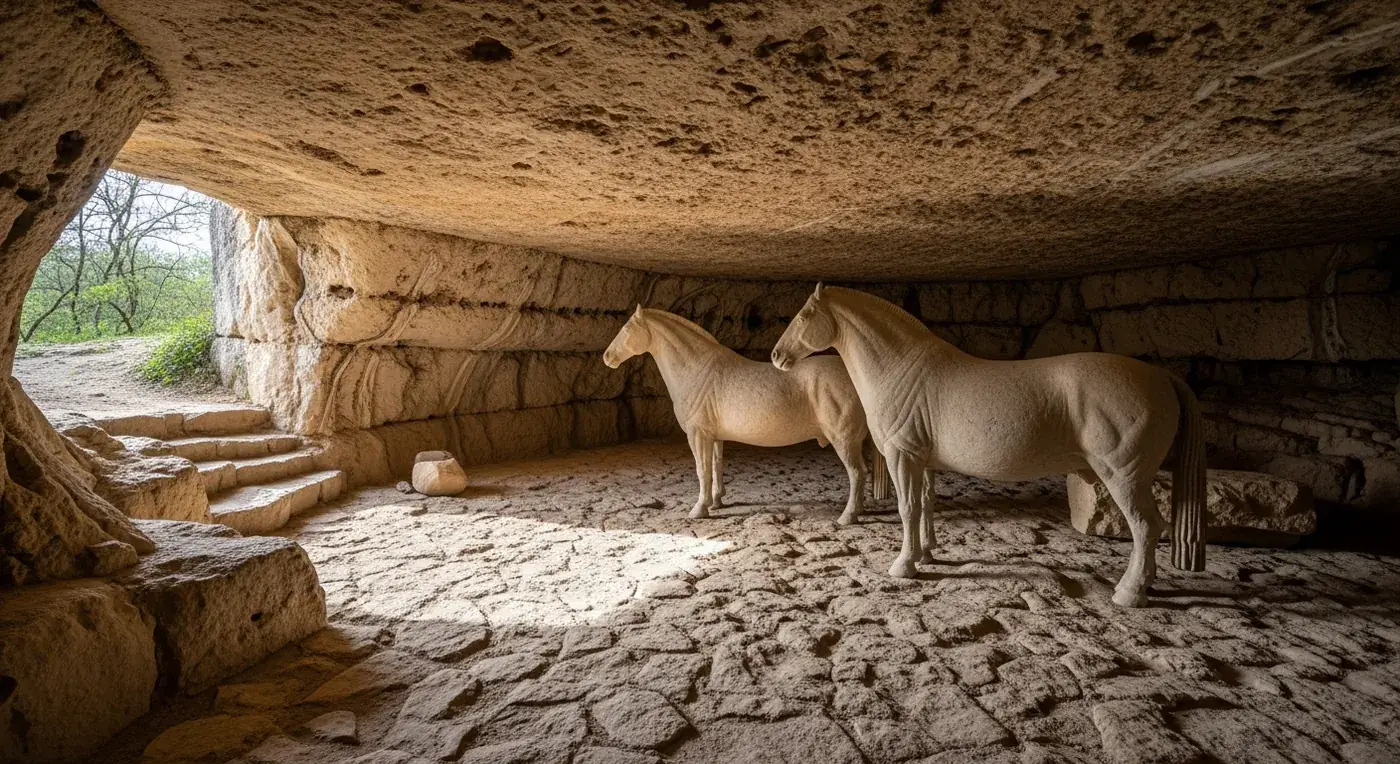
Unique feature: a 13-meter-long bas-relief frieze, dating from around 15,000 years ago. Wall carving was an extremely rare technique during this period—there are a few similar rock-shelter sites in the Dordogne and Charente, but Cap Blanc remains the most monumental example and the best-preserved.
What you'll see there: a dozen horses, including a central horse 2.20 meters long, accompanied by bison and deer. The reliefs were created using flint picks, through chipping, scraping, and polishing. Some traces of ochre paint indicate that the frieze was once entirely colored.
Fun fact: In 1911, during preventive excavations at the site, the nearly complete skeleton of a young Magdalenian woman was discovered beneath the frieze. The skeleton is now housed at the Field Museum in Chicago, where it is known as the “Magdalenian Girl.” A replica is on display at the site.
Practical: - Address: D48, 24620 Marquay (a town near Les Eyzies) - Adult Rate: €9 (free for those under 18) - Reservations are required on sites-les-eyzies.fr (maximum of 30 people per visit) - Closed Saturdays, January 1, May 1, December 25 - Duration: 45 minutes - Distance from Lascaux IV: 28 km, ~30 min
The Rouffignac Cave (the "Mammoth Cave")
The most accessible family-friendly option among all the decorated caves in the Périgord. Located 28 km northwest of Lascaux, Rouffignac is a site that stands out for its size and the way it’s toured.
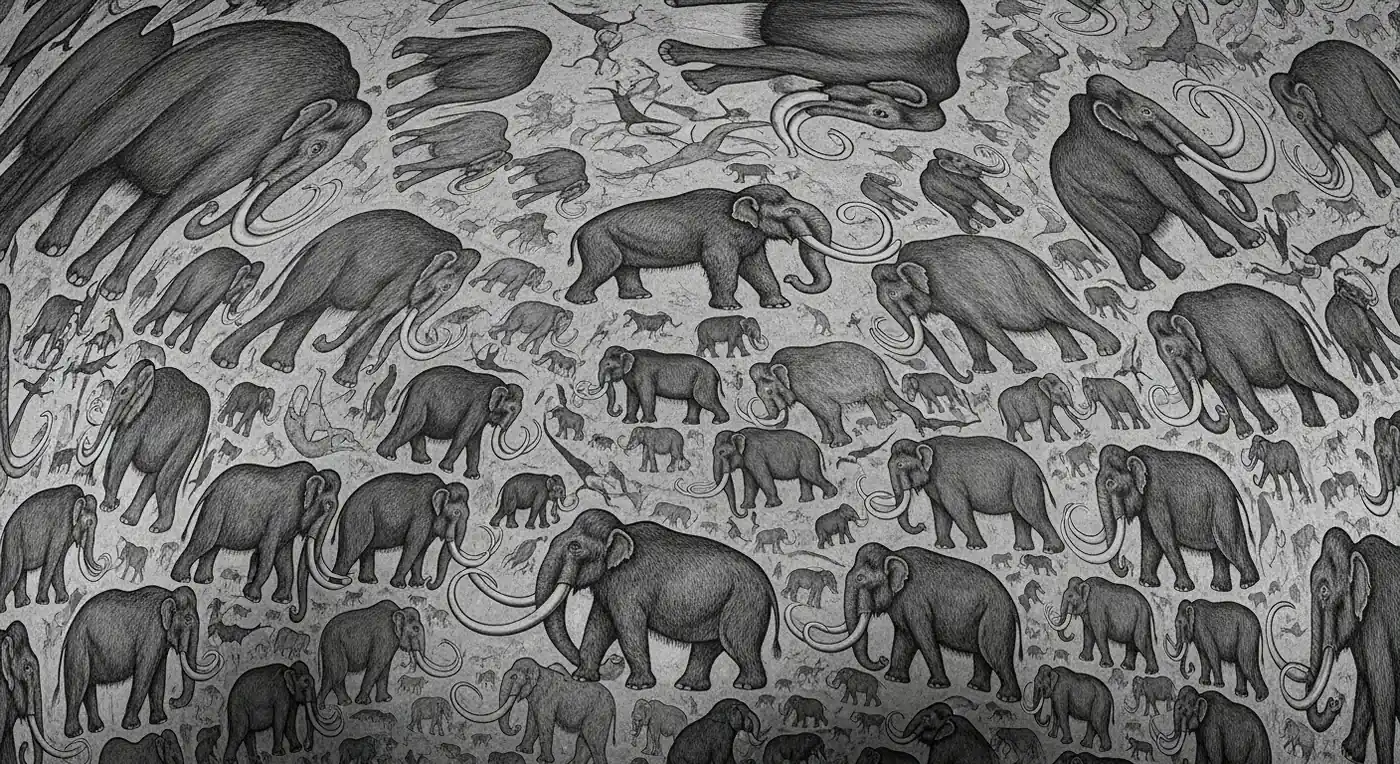
What it contains: 8 kilometers of tunnels (only part of it is open to visitors), explored on a small electric train — hence its nickname, "the train cave." 158 depictions of mammoths, or more than one-third of all known depictions of mammoths in Western Europe. More than 250 depictions of animals in total: horses, bison, ibex, woolly rhinoceroses.
The works date from around 13,000 to 15,000 years ago. They are line engravings or black line drawings (manganese dioxide). The "Grand Plafond", accessible by train, features 65 intertwined animals in a striking visual whirlwind.
Mystery: The cave has been known since the 15th century (clay was mined there). However, the prehistoric paintings were not scientifically recognized until 1956—it took more than 500 years for anyone to realize that these black marks on the rock were actually Paleolithic artworks.
Perfect for families: The little train makes Rouffignac accessible to everyone, including people with limited mobility and young children. The tour lasts about 1 hour.
Practical: - Address: Granville, 24580 Rouffignac-Saint-Cernin - Reservation: online at grottederouffignac.fr (since 2025) - Adult Rate: ~8–10 € (free for very young children) - Opening: From April 2 to around November 1 (closed during the off-season) - Distance from Lascaux IV: 28 km, ~35 min
Comparison Chart of the 4 Major Caves
| Criterion | Lascaux IV | Font-de-Gaume | Cap Blanc | Rouffignac |
|---|---|---|---|---|
| Authenticity | Full Replica | Original | Original | Original |
| Age of the Works | ~17,000 years | ~14,000–17,000 years | ~15,000 years | ~13,000–15,000 years |
| Dominant Animals | Horses, aurochs, deer, bison | Bison (84), reindeer, mammoths | Horses (bas-relief) | Mammoths (158) |
| Technical | Polychrome Paintings | Original polychrome paintings | Bas-relief sculpture | Engravings and Black-and-White Drawings |
| Duration of the tour | At least 2 hours | ~45 min | ~45 min | ~1 hour (train) |
| Access for People with Disabilities | 100% accessible | No (steep path) | Difficult | Yes (train) |
| Reservation | Required online | Required (78 people per day) | Required | Recommended |
| Adult rate | 23 € | 13 € | 9 € | 8-10 € |
| Ideal for | Families, all ages | Enthusiasts of Cave Art | Prehistoric Sculpture Enthusiasts | Families, children |
| Risk of Closure | No | Yes (eventually) | No | No |
The Vézère Valley, the global cradle of prehistory
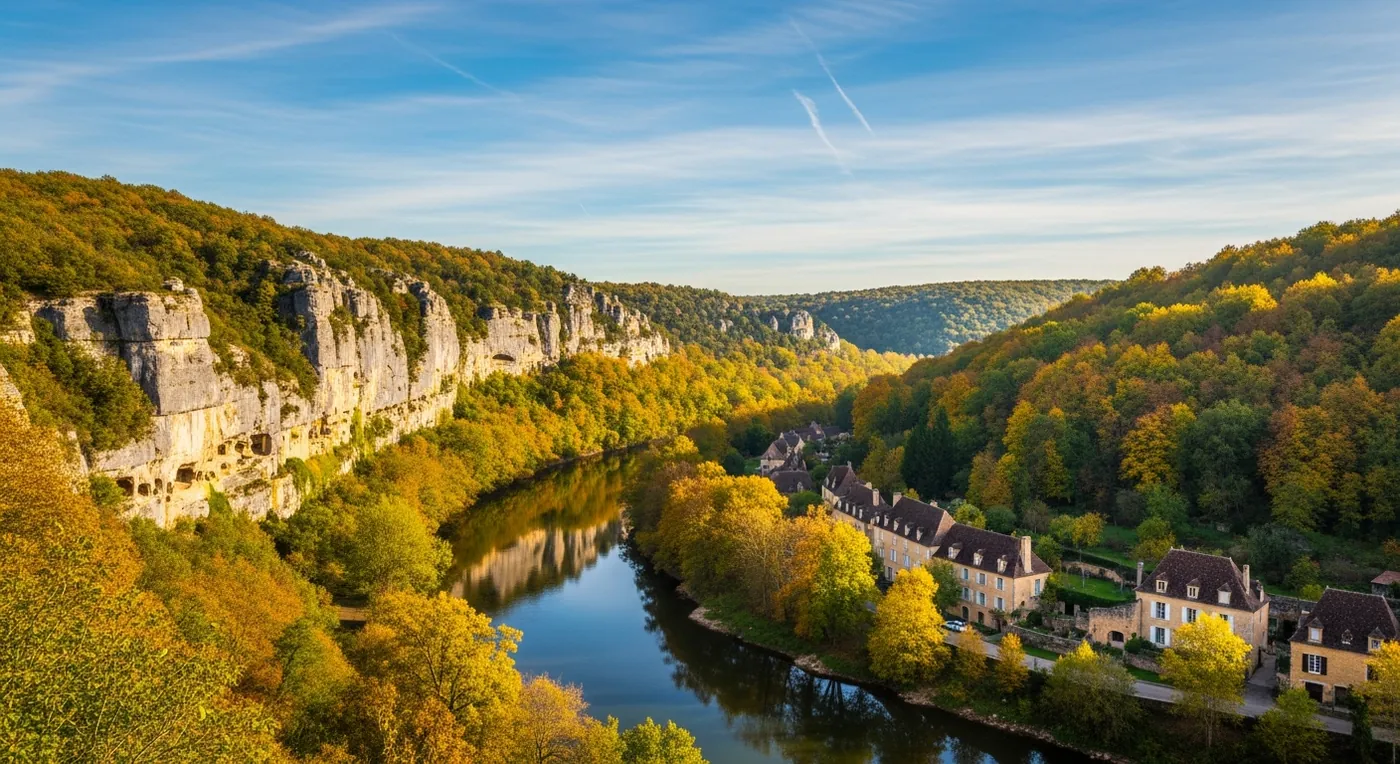
The Vézère Valley stretches for about 30 km between Montignac (to the north) and Limeuil (to the south, at the confluence with the Dordogne). This area is likely home to the world’s highest concentration of prehistoric sites.
The 1979 UNESCO designation
In 1979, UNESCO inscribed 15 major sites in the Vézère Valley on the World Heritage List as a coherent group. This listing includes, in particular: - Lascaux Cave - Font-de-Gaume Cave - Combarelles Cave - Cap Blanc Rock Shelter - Madeleine Rock Shelter - Poisson Rock Shelter - Grand Roc Cave - Rouffignac Cave - National Museum of Prehistory (Les Eyzies) - And several other rock-shelter sites
The UNESCO designation has helped to establish a framework for protecting the area and has attracted international researchers.
The Magdalenian: the culture named after the site
The Magdalenian is the prehistoric culture that corresponds to the heyday of cave art in Western Europe (approximately 17,000 to 12,000 B.C.). This culture takes its name from the Madeleine rock shelter, the eponymous site located in Tursac, in the Vézère Valley.
The Magdalenian period is also known for its portable art (sculptures carved from bone, ivory, and deer antler), its sophisticated tools (spears, harpoons, and spear throwers), and its adaptation to the end of the last ice age. It was the last major culture of the Upper Paleolithic before the Neolithic Revolution.
Les Eyzies-de-Tayac: The World Capital of Prehistory
The village of Les Eyzies-de-Tayac is considered the world capital of prehistory—that’s the official term, not a marketing slogan. It was here, in 1868, that the first modern human skeletons (Homo sapiens) in Europe were discovered in the Cro-Magnon rock shelter, giving the entire species its name.
The National Museum of Prehistory (Les Eyzies)
Housed in a medieval castle overlooking the village, the National Museum of Prehistory features one of Europe’s most extensive Paleolithic collections: flint tools, bone carvings, human remains (including original specimens), and reconstructions of campsites. A must-see before or after a visit to the caves.
Adult admission: ~7 €. Free for those under 26.
The International Center for Prehistory (PIP, Les Eyzies)
A free interpretation center located right in the heart of Les Eyzies. It offers the perfect introduction to prehistory before visiting the caves: educational displays, videos, and temporary exhibits. Especially useful for families with children who are new to the subject.
Other Notable Sites
- Combarelles Cave: a unique cave with rock art, located 1 km from Font-de-Gaume. Reservations at sites-les-eyzies.fr.
- La Madeleine Shelter: the eponymous site of the Magdalenian period, a medieval cave village built atop prehistoric settlements.
- Abri du Poisson: a large bas-relief depicting a fish over one meter long.
- Thot Park (Thonac): a park featuring life-size replicas of prehistoric animals (mammoths, reindeer, etc.)—perfect for children; a combined ticket is available with Lascaux IV.
2026 Rates and Schedules for Lascaux IV
Address and Directions
- Address: 1 allée de Lascaux, 24290 Montignac-Lascaux
- GPS: 45.0527° N, 1.0697° E
- Parking: Free on-site, ~400 spaces
2026 Schedule
| Period | Hours of Operation |
|---|---|
| February 7 – April 3 | 10 a.m. – 6 p.m. |
| April 4 – July 11 | 9 a.m. – 7 p.m. |
| July 12–26 | 8:30 a.m. – 9:30 p.m. |
| July 27 – August 21 | 8 a.m. – 10 p.m. |
| August 22 – November 1 | 9 a.m. – 7 p.m. |
| November 2 – January 3, 2027 | 10 a.m. – 6 p.m. |
Last admission: 2 hours before closing. Closed from approximately January 4 to February 6, 2026 (check lascaux.fr).
2026 Rates
| Public | Rates |
|---|---|
| Adult (ages 13 and up) | 23 € |
| Child (ages 5–12) | 15 € |
| Under 5 years old | Free (ticket required) |
| Reduced rate (students, job seekers, etc.) | 22 € (with proof of purchase, purchased on site) |
| Disability | 16 € (upon request via email) |
| Ages 16–18 | Free with the Culture Pass |
Guided tours available
- Standard guided tour: 1 hour in the replica with a tour guide. Tours are available in French, English, Spanish, Dutch, and German, depending on the time slot.
- Self-guided tour with audio guide: available in the middle of the day (times vary by season).
- Storytelling tour for children: suitable for ages 4–10, featuring fun activities.
- Prestige Tour: an in-depth tour in a small group (maximum 8 people), ~2 hours, with special access to certain details. Higher price.
Practical
- Reservations: at lascaux.fr — strongly recommended year-round, required during peak season (July–August, May long weekends). Time-stamped tickets (specific time slot must be observed).
- Accessibility for People with Disabilities: 100% accessible. “Tourisme & Handicap” certification (4 categories of disability).
- Dining: On-site restaurant.
- Photos: Not allowed inside the replica. Permitted in the museum exhibits and from the rooftop observation deck.
- Shop: books, facsimiles, posters, children's books — after the tour.
Book your ride to Lascaux
Half-day Lascaux IV tour or full-day tour including Sarlat and a castle on the Vézère River. Mercedes sedan or van, English-speaking driver, fixed price guaranteed in writing before departure—no surge pricing.
How to get to Lascaux from Bordeaux
From downtown Bordeaux, Lascaux IV can be reached via the A89 and then the D704 on a standard route of 186 km, taking 2 hours and 8 minutes. A car or chauffeur service offers the most direct route. By train or bus, you’ll need to travel via Périgueux or Les Eyzies, then arrange a bus connection to Montignac.
By car
The easiest option. 186 km from downtown Bordeaux, 2 hours and 8 minutes via the A89 highway toward Brive, then the D704 toward Montignac. Free parking on site at Lascaux IV (~400 spaces).
Alternative route: Take the A89, then take the Périgueux exit to reach Montignac via the departmental roads. It takes longer (~2 hours and 15 minutes) but offers magnificent scenery.
By train
The journey is complicated. Bordeaux Saint-Jean → Périgueux (~1 hour 15 minutes by TER), then a transfer: Trans-Périgord bus or local taxi to Montignac. Allow at least 3 hours 30 minutes to 4 hours 30 minutes in total, with limited service.
The Eyzies-de-Tayac train station is accessible directly from Bordeaux (with a transfer in Périgueux) and is located 22 km from Lascaux IV. There is no direct train service to Montignac-Lascaux.
This option is available only to guests staying on-site for several days.
Private chauffeur service from Bordeaux
For a stress-free trip, an executive car service will drop you off right at the entrance to Lascaux IV and can wait for you to continue on to other sites (Font-de-Gaume, Cap Blanc, Rouffignac). Ideal for groups, families with children, and anyone who doesn’t want to worry about strict time slots.
For more details, see our page on private chauffeur services between Bordeaux and Lascaux.
By coach / bus
Flixbus and BlaBlaCar Bus do not offer direct service to Montignac. You’ll need to travel via Périgueux or Sarlat and transfer there. This option is not recommended for a day trip from Bordeaux.
When to Visit Lascaux
| Period | Crowd | Benefits | Disadvantages |
|---|---|---|---|
| January (partial) | Very low | Lascaux IV was closed at the beginning of the month, but other sites are sometimes open | Lascaux IV Closed |
| February–March | Low | Very quiet; tickets are easy to get | Variable weather |
| April–June | Moderate | Our recommendation: mild weather, green landscapes, small crowds | Busy on May holiday weekends |
| July–August | Very high | Late opening hours, events | Tickets must be reserved 3 weeks to 1 month in advance; hot weather; full parking lots |
| September–October | Moderate | Our other recommendation: golden autumn light, a sense of calm | Shorter Days in October |
| November–December | Low | Low hotel rates, authentic atmosphere | Some satellite sites are closed (Rouffignac, Cap Blanc) |
Our recommendation: May–June or September. You’ll be able to explore under ideal conditions, without the crowds of the high season, and the landscapes of the Périgord Noir are magnificent.
Important for Font-de-Gaume: If you want to visit Font-de-Gaume, be sure to book 3 to 4 months in advance during peak season (capacity is limited to 78 people per day).
Practical Information
Recommended duration
- Half-day: Lascaux IV alone (subject to scheduling constraints). A tight schedule.
- Day 1: Lascaux IV + another cave (Font-de-Gaume OR Cap Blanc OR Rouffignac). Our recommendation for a one-day tour.
- Day 2: Lascaux IV + Font-de-Gaume + Cap Blanc + National Museum of Prehistory + Sarlat (overnight stay in Montignac or Les Eyzies).
- 3–4 days: a comprehensive tour of the Vézère Valley and the Périgord Noir.
Accommodations in Montignac and the surrounding area
Montignac-Lascaux: several charming hotels, rural inns, and bed-and-breakfasts. Expect to pay 80–150 € per night at a 3-star hotel; rates are higher during peak season.
Les Eyzies-de-Tayac: an excellent alternative, close to Font-de-Gaume and the museum. Hotels include the Cro-Magnon, the Centenaire (historic), and the Hostellerie du Passeur.
Castles and estates: The Vézère Valley and the Périgord Noir are home to numerous castles that have been converted into luxury hotels or bed-and-breakfasts.
Tips for Your Visit
- Book your tickets in advance, especially during peak season (Lascaux IV, Font-de-Gaume).
- Be sure to dress warmly: the Lascaux IV cave is kept at a low temperature (13°C) to recreate the original atmosphere.
- No photography allowed in the replica. Please use the designated areas in the museum to take photos.
- Visit the free PIP in Les Eyzies before exploring the caves to get some background information.
- Book Font-de-Gaume very, very early: capacity is 78 people per day, and time slots fill up 3–4 months in advance during peak season.
FAQ
Is the original Lascaux cave open to the public?
No. The original cave has been closed since April 20, 1963. Overcrowding had led to the growth of algae and, subsequently, calcite deposits that threatened the paintings. The cave has since been placed under scientific supervision and is accessible only to accredited specialists. Facsimiles, including Lascaux IV, allow visitors to explore the artwork without exposing the original. [Lascaux 2026]
Do I need to make a reservation to visit Lascaux IV?
Reservations are strongly recommended year-round and practically mandatory during peak season. Tickets are time-stamped: you choose a specific entry time slot and must arrive about 15 minutes early. In July and August, many time slots are fully booked 3 weeks to 1 month in advance; during the off-season (February–March, November–December), it’s easier to find availability, sometimes even on the same day. Reservations can be made online at lascaux.fr, where you’ll also find pricing (€23 for adults, €15 for children ages 5–12, free for children under 5 but a ticket is required) and operating hours, which vary by season.
What is the difference between Lascaux I, II, III, and IV?
Lascaux I refers to the original cave, which has been closed since 1963. Lascaux II, opened in 1983 200 meters from the original, is the first partial replica (the Hall of the Bulls and the Axial Diverticulum), which is now closed to the general public. Lascaux III is an international traveling exhibition consisting of portable panels that have traveled from Chicago to Tokyo. Finally, Lascaux IV is a complete and exact replica of the cave: inaugurated in December 2016 at a cost of 57 million euros, it covers 8,500 m² and reproduces all of the cave walls using 3D scanning and resin facsimiles created by artists from the Atelier des Fac-Similés du Périgord.
Is it okay to take photos inside Lascaux IV?
No, photography is not allowed inside the replica cave, in order to preserve the immersive experience and the subdued lighting that recreates the underground atmosphere. However, photography is permitted in the exhibition spaces that follow the tour—the Lascaux Workshop, the thematic displays, the Cave Art Theater—as well as from the observation deck on the building’s roof, which offers a panoramic view of the Vézère Valley. Flash photography is prohibited throughout the site. Please remember to put your phone away during the guided tour: it lasts about an hour and is best enjoyed without a screen.
Are there any age restrictions for visiting Lascaux IV?
No restrictions. Children under 5 enter for free, but a ticket is still required, and they do not have access to the audio guide provided during the guided tour. In practice, visitors aged 6 or 7 and older can fully enjoy the experience; younger children will benefit more from the storytelling tours, suitable for ages 4–5, and the nearby Parc du Thot. Visitors aged 16–18 can enter for free with the Pass Culture. The tour lasts about an hour, is walked on flat ground, and is accessible to people with limited mobility; strollers are permitted.
Which cave is the best to visit if you only have time for one?
It all depends on what you're looking for. For a high-tech immersion and a stress-free family outing, choose Lascaux IV: the full-scale replica is spectacular and easy to book. For authenticity and a rare experience, head to Font-de-Gaume, one of the last original polychrome decorated caves still open to the public: spots are very limited (about 80 visitors per day) and must be booked 3 to 4 months in advance. For families with young children, Rouffignac and its little electric train offer an adventurous atmosphere, with accessible facilities for people with limited mobility. All three sites complement each other perfectly if you have more than one day to spare.
Is it possible to visit Lascaux and Sarlat in a single day?
Technically, yes—Sarlat is only about 30 kilometers from Lascaux IV—but the itinerary is ambitious, since each destination deserves a full day on its own. If you want to see it all, book Lascaux IV for a morning slot (9 a.m.–10 a.m.), have lunch in Montignac, then head to Sarlat for the afternoon and its medieval market. With a private chauffeur, this combination becomes much more comfortable: no need to hunt for parking, a single door-to-door trip, and a driver waiting for you between visits. To truly enjoy both destinations without rushing, however, the ideal plan is still to set aside two days and one night on site.
Are there any other prehistoric sites to visit near Lascaux?
Yes, absolutely: the Vézère Valley is a concentration of sites unique in the world. In addition to the four major caves, you can visit the National Museum of Prehistory in Les Eyzies, the International Center for Prehistory (free admission), the Combarelles Cave and its engravings, the Abri du Poisson, and the Abri de la Madeleine, a troglodytic village that gave its name to the Magdalenian period. The Parc du Thot, with its reconstructed prehistoric animals, is a hit with kids. Fifteen sites are listed as UNESCO World Heritage Sites. By spending two to three days in the region, you can easily visit several of these sites starting from Montignac or Les Eyzies.
Is Lascaux a UNESCO World Heritage Site?
Yes, since 1979, as part of the “Prehistoric Sites and Decorated Caves of the Vézère Valley” inscription. It was one of the very first French sites to be inscribed on the World Heritage List. The complex comprises fifteen major sites, including Lascaux, Font-de-Gaume, the Cap Blanc Shelter, and the Combarelles, spread out over some thirty kilometers along the Vézère River. This designation recognizes both the exceptional density of the decorated caves and the quality of their preservation. It was also this designation that justified the closure of the original cave and the construction of faithful replicas such as Lascaux IV, to balance site protection with public access.
Why are there so many decorated caves in the Périgord?
The Vézère Valley offered all the ideal conditions for Magdalenian hunter-gatherers: soft limestone that was easy to carve, numerous natural rock shelters to settle in, rivers teeming with fish, and abundant game (reindeer, horses, aurochs). The area was densely populated 17,000 to 13,000 years ago, during a period when the glacial climate concentrated populations in these temperate refuges. More than 150 prehistoric sites have been identified within a thirty-kilometer radius: this is the highest concentration of cave art in the world. Here, the artists had an exceptional natural “studio,” conducive to both daily life and creativity.
What does the "Puits" scene from *Lascaux* really represent?
No one knows for sure. It is the only complex narrative scene involving a human being in all known Paleolithic art: a man with a bird’s head, apparently lying on his back, facing a wounded bison whose entrails are spilling out, while a rhinoceros walks away and a bird perched on a stick completes the composition. Several interpretations coexist: a shamanic ritual, a symbolic hunting scene, a narrative of death, or a confrontation with an animal spirit. Some even see it as a map of the starry sky. No single theory has gained widespread acceptance, and it is undoubtedly this mystery that makes the image so fascinating, more than 17,000 years after it was created.
How much does a private chauffeur service cost from Bordeaux to Lascaux?
The trip from Bordeaux to Lascaux is approximately 186 km (2 hours and 8 minutes) from downtown, or 194 km from Bordeaux-Mérignac Airport. For a chauffeured transfer, expect to pay starting at 324 € one-way in an economy vehicle from the airport, approximately 414 € in a Mercedes sedan from downtown, and more for a van for a group of 4 to 8 people. The rate is fixed and guaranteed in writing before departure, with no last-minute surcharges. Most visitors opt for a half-day tour (Lascaux IV only) or a full-day tour combining Lascaux, Sarlat, and a château in the Vézère Valley, with the driver waiting between visits.
Further Reading
- Private chauffeur service for Lascaux: see our page on private chauffeur service between Bordeaux and Lascaux (packages, rates, reservations)
- Sarlat and the Medieval Périgord Noir: see the Sarlat Guide and private chauffeur service between Bordeaux and Sarlat
- To get from the airport directly to Lascaux: see Bordeaux Airport Transfer
- Getting there from Saint-Jean Station: see the private chauffeur service at Saint-Jean Station
Sources and References
- Lascaux IV — official website — discovered on September 12, 1940; opened in 1948 and closed in 1963
- Ministry of Culture — Lascaux 3D — 680 murals, 1,500 engravings, and the cave's dimensions
- Prehistoric Sites in the Vézère Valley — Font-de-Gaume, Cap Blanc, Combarelles, Reservations
- Rouffignac Cave — Official Website — Information and Reservations
- UNESCO — Vézère Valley — inscribed on the World Heritage List in 1979, comprising 15 sites
- National Museum of Prehistory in Les Eyzies — Collections, Exhibitions
- International Prehistory Center (PIP) — free interpretation center
- Dordogne Périgord Tourism — Regional Information
Article updated in May 2026. Data and information verified as of that date.
Our Latest Travel Guides
 Basque Country & Béarn
Bilbao 2026 Guide: Guggenheim, pintxos, Casco Viejo, Vizcaya Bridge
Read the guide → Charentes & Poitou
Cognac Guide 2026: AOC, 4 Houses, 6 Grape Varieties, Charentais Method
Read the guide → Basque Country & Béarn
San Sebastián Guide 2026: pintxos, 19 Michelin stars, Concha
Read the guide →Lascaux from Bordeaux, guaranteed fixed price
Half-day Lascaux IV tour or full-day tour including Sarlat and a castle on the Vézère River. Get your fixed-price quote in writing in less than 30 minutes—no obligation, pay on board.