
Explore the Médoc from Bordeaux
The most prestigious peninsula in the wine world, north of Bordeaux: geography, history, the 1855 classification, the 8 appellations, the Route des Châteaux, and the best itineraries. Everything you need to know before you go—and how to get there with a private driver.
In a nutshell
The Médoc is a wine-growing peninsula located between the Gironde Estuary and the Atlantic Ocean. Its eight appellations include Médoc, Haut-Médoc, Margaux, Saint-Julien, Pauillac, Saint-Estèphe, Moulis-en-Médoc, and Listrac-Médoc. The D2 connects several châteaux, which require advance reservations for tours. From Bordeaux Airport to the Margaux area, the map shows a distance of 36.2 km, a travel time of 43 minutes, and a cost of 70 €, a fixed price to be confirmed in writing.
- The Médoc is an 80 km-long wine-growing peninsula northwest of Bordeaux, between the Gironde Estuary and the Atlantic Ocean.
- 8 appellations: Médoc, Haut-Médoc, Margaux, Saint-Julien, Pauillac, Saint-Estèphe, Moulis-en-Médoc, Listrac-Médoc.
- Approximately 16,000 hectares of vineyards, with more than 1,400 châteaux registered.
- The 1855 classification identifies 61 Grands Crus Classés (originally about 60, now 61 following subdivisions; Mouton-Rothschild was promoted to Premier Cru in 1973), including 4 of the 5 Bordeaux Premiers Grands Crus Classés (the 5th being Haut-Brion in Pessac-Léognan).
- In addition to these official classifications, there are the Crus Bourgeois (current classification to be verified with the Alliance) and the Crus Artisans (officially recognized in 2002).
- Main route: the D2, known as the “Route des Châteaux,” which runs along the estuary from Margaux to Saint-Estèphe.
- Best times to visit: April–June (spring, Open House), September–October (grape harvest, Médoc Marathon).
Before You Go: What the Médoc Really Is
At 9 a.m. on the D2, the estuary fog still clings to the vineyards. Rows of Cabernet Sauvignon vines slope down toward the Gironde, running perpendicular to the road, and with every kilometer, a gate, a wall of pale stone, and a name seen on wine labels come into view: Lafite. Latour. Mouton. Pichon. Beychevelle. Cos d’Estournel.
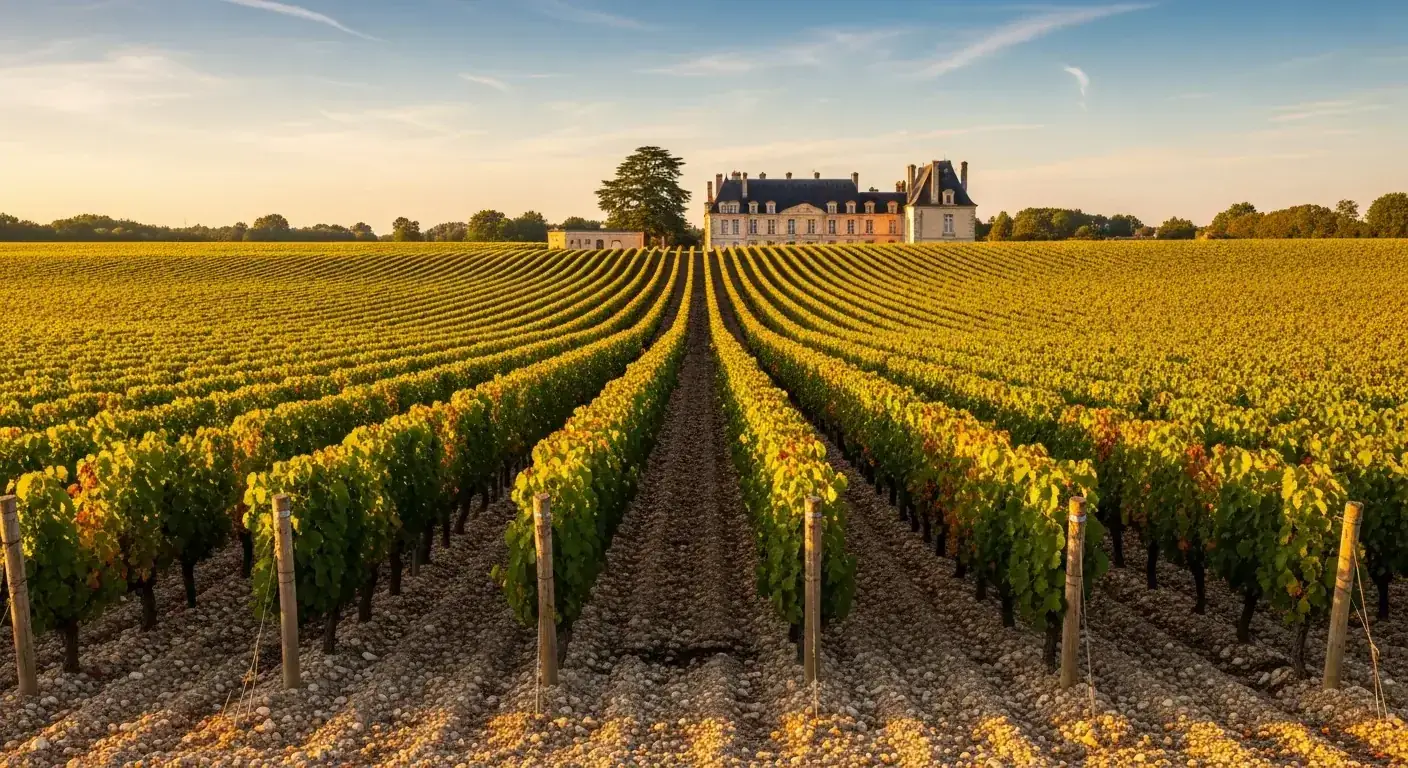
The Médoc is unlike any other wine region. It is a maker of icons, where families of English, Scottish, Irish, and Dutch origin planted vines four centuries ago, where Napoleon III had the wines classified in 1855, and where the global wine market is still measured in barrels of Pauillac and Margaux.
Before you set out to visit it, there are a few things you need to understand. That’s what this guide is for. For practical information (how to get there, cost, and service options), check out our page on private chauffeur services between Bordeaux and Médoc.
Geography: Why Exactly Here?
The Médoc is an 80-km-long peninsula running north-south, bordered on the east by the Gironde Estuary (the largest estuary in Western Europe) and protected to the west by the Landes Forest, which acts as a barrier against Atlantic winds and storms.
This configuration creates three exceptional conditions:
A temperate oceanic microclimate
The estuary and the ocean moderate temperatures in both summer and winter. Late spring frosts are rare. Summers are warm but not excessive, and fall is long and sunny—ideal for the slow ripening of Cabernet Sauvignon, the flagship grape variety of Médoc, which requires specific conditions to fully ripen.
Unique gravel soils
The subsoil of the Médoc consists of pebbles, gravel, and sand deposited by the Garonne River over the course of millennia. These poor, well-drained soils force the vines to send their roots deep into the ground (sometimes 5 to 10 meters) to find water and minerals. It is this challenge that produces the great Médoc wines: few grapes per vine, but of exceptional concentration.
Exposure to the estuary
The finest terroirs of the Médoc—those of the Grands Crus Classés—are almost all located on the gravelly ridges overlooking the Gironde, a few hundred meters or kilometers from the water. The proximity to the river provides protection from frost and enhances sunlight exposure. That is why the wines are often named after the riverside towns (Pauillac, Saint-Estèphe, Saint-Julien) rather than those further inland.
The story: shaped by British, Dutch, and Irish influence
The Médoc's global reputation did not come about by chance. And it was not built by the French alone.
Where does the name "Médoc" come from?
Contrary to what is often claimed, the name "Médoc" does not come from the Latin phrase in medio aquae (“in the midst of the waters”). This appealing etymology, which is frequently repeated, is today disputed. The actual origin is Latin medulicus, derived from the name of the Gallic tribe of the Meduli which occupied the peninsula before the Roman conquest. The region thus took its name from its inhabitants—long before it became a region famous for its fine wines.
Marshes drained by the Flemish and the Dutch
For centuries, the Bas-Médoc in the north of the peninsula was little more than an expanse of unhealthy marshland. In the 17th century, Flemish and Dutch engineers, masters of drainage, dug canals known as jalles, drying out the land and finally making it arable. The initiative is attributed to Henry IV, not Louis XIII as is sometimes claimed. This major work paved the way for vineyards to be planted on usable soils. One revealing detail: the historic administrative capital of the Médoc is neither Pauillac nor Margaux, but Lesparre-Médoc, in the north of the peninsula.
17th-Century Atlantic Trade
In the 17th century, Bordeaux merchants developed a thriving trade with England, the Netherlands, and Ireland. Bordeaux was a major Atlantic port, and the wine the English called “claret” became a favorite drink. To meet demand, British and Irish merchants began buying marshland north of Bordeaux, draining it, and planting vineyards.
Names that reveal these origins
Many of the names of castles in the Médoc region still reveal their origins today:
- Château Kirwan (Margaux) — founded by an Irish wine merchant, Mark Kirwan, in the 18th century
- Château Lynch-Bages (Pauillac) — Thomas Lynch, the mayor of Bordeaux, who is of Irish descent
- Château Léoville-Barton (Saint-Julien) — the Barton family, Irish wine merchants based in Bordeaux since 1722
- Château Phélan-Ségur (Saint-Estèphe) — Bernard Phélan, an Irish immigrant
- Château Cantenac-Brown (Margaux) — John Lewis Brown, a Scottish-born animal painter
It was these cosmopolitan families—along with the great French aristocratic houses—who built the châteaux you’ll see today, planted the vineyards, established winemaking practices, and exported the wines to London, Amsterdam, and Dublin. The Médoc, in fact, is a product of 17th- and 18th-century Atlantic trade.
The 1855 Classification: Why It's Unique in the World
It is probably the best-known and most stable classification system in the entire world of winemaking. Here's how it came about and why it still works today.
The Origins of the Classification System: Napoleon III and the 1855 World's Fair
In 1855, Napoleon III organized the World’s Fair in Paris—a global showcase of French industrial, scientific, and cultural ingenuity. He asked Bordeaux wine merchants to establish an official ranking of the best Bordeaux wines to present them to the world.
The brokers worked quickly. They did not taste the wines; they relied on what they had known for decades: market prices, in other words the châteaux’ established commercial reputation over 30, 40, or 50 years. The result was published on April 18, 1855: a list of 60 red-wine châteaux, ranked across 5 levels, from Premier Cru to Cinquième Cru.
At the time, 58 of the classified châteaux were in the Médoc. The 59th was Château Haut-Brion (Pessac-Léognan, Graves), the sole exception outside the region; its reputation in the British export market was too strong to exclude it. The 60th, depending on the historical count used, reflects later divisions of estates.
The Stability of the 1855 Ranking: 170 Years with Almost No Change
The 1855 classification was intended to be a snapshot of a specific moment in time. Yet it has remained virtually unchanged for 170 years.
There was only one major change: in 1973, after several decades of relentless lobbying by the Rothschild family, Château Mouton-Rothschild was promoted from Second Growth to First Growth. The decree granting the promotion was signed by Jacques Chirac, then Minister of Agriculture. This is the only promotion in the history of the classification. The château’s motto sums up its journey: “I cannot be first, I will not settle for second—I am Mouton”—which, after the promotion, became: “I am first, I was second—Mouton remains the same.”
The current ranking of the Médoc Classified Grand Crus
| Level (1855) | Number | Notable Examples |
|---|---|---|
| Premier Cru | 5 | Lafite Rothschild, Latour, Margaux, Haut-Brion, Mouton Rothschild (since 1973) |
| Second Growth | 14 | Pichon Longueville, Cos d'Estournel, Léoville Las Cases, Ducru-Beaucaillou |
| Third Growth | 14 | Palmer, Calon Ségur, Lagrange, Giscours |
| Fourth Growth | 10 | Beychevelle, Talbot, Pouget, Saint-Pierre |
| Fifth Growth | 18 | Pontet-Canet, Lynch-Bages, Grand-Puy-Lacoste, Pédesclaux |
Today, the 1855 classification includes 61 châteaux [source]:
- The 5 First Growths: Lafite-Rothschild, Latour, Mouton-Rothschild, Margaux, Haut-Brion
- 14 Second Growths (including Cos d'Estournel, Pichon-Longueville, Léoville-Las Cases, and Rauzan-Ségla)
- 14 Third Growths (including Palmer, Calon-Ségur, and Giscours)
- 10 Fourth Growths (including Beychevelle, Talbot, and Branaire-Ducru)
- 18 Fifth Growths (including Lynch-Bages, Pontet-Canet, and Grand-Puy-Lacoste)
Of these 61 châteaux, 60 are in the Médoc region, and 1 is in Pessac-Léognan (Haut-Brion).
In practical terms, here's what this means for you as a visitor
Ranking isn't just a matter of image. It has practical consequences:
- Wine prices. Check the producer's pricing.
- Access to tastings. Tour and tasting prices vary depending on the estate, the package, and the season; check the ticket office or contact each château directly before booking.
- The wine tourism experience. Top-rated châteaux rarely have “boutiques” and do not hold open houses. The Crus Bourgeois and Crus Artisans, on the other hand, have made wine tourism a key focus of their development.
Beyond 1855: Crus Bourgeois and Crus Artisans
The 1855 classification covers only those châteaux that were already famous in the 19th century. However, the Médoc includes more than 1,400 wine-producing estates, many of which produce excellent wines. Two other official classifications recognize them.
The Crus Bourgeois — check the current classification
A three-tier classification system was implemented in 2020 for an announced period of five years. To find out the classification applicable in 2026 and view the current list of properties, see the official publication by the Alliance des Crus Bourgeois du Médoc linked in the sources.
- Cru Bourgeois — entry-level
- Cru Bourgeois Supérieur — intermediate level, stricter quality requirements
- Cru Bourgeois Exceptionnel — the highest level, equivalent in quality to the 4th and 5th Growths of 1855
Les Crus Artisans — recognized in 2002
A more niche category, officially recognized by the European Union in 2002, comprising about fifty small artisanal producers in the Médoc region. Admission criteria: the owner must cultivate, vinify, and market their wines themselves, on small plots of land. The welcome is almost always direct and personal, in often modest wineries. For visitors seeking authentic rural charm rather than châteaux with gilded gates, this is the place to go.
The 8 appellations of the Médoc: an overview
| AOC | Area | Style | Visitor pricing |
|---|---|---|---|
| Médoc (north) | 5,750 ha | Smooth, approachable, best enjoyed young | Producer/operator rate to be verified |
| Haut-Médoc (south) | 4,600 ha | More structured, with several Grand Cru Classés | Producer/operator rate to be verified |
| Margaux | 1,500 ha | Elegance, fragrance, feminine grace | Producer/operator rate to be verified |
| Saint-Julien | 910 ha | Consistency at the top, classic balance | Producer/operator rate to be verified |
| Pauillac | 1,200 ha | Powerful, pure Cabernet, suitable for long-term aging | Producer/operator rate to be verified |
| Saint-Estèphe | 1,230 ha | Tannic and austere when young, magnificent at 15 years old | Producer/operator rate to be verified |
| Moulis-en-Médoc | 610 ha | Well-built, excellent value for the money | Producer/operator rate to be verified |
| Listrac-Médoc | 540 ha | Robust, with pronounced Merlot character, exclusive | Producer/operator rate to be verified |
The Médoc comprises 8 appellations. Here’s how to tell them apart, both in terms of the wines they produce and the visitor experience they offer.
Two regional appellations, six municipal appellations
The eight AOCs do not all sit at the same level. Two are regional: Médoc, which covers the northern part of the peninsula, formerly known as Bas-Médoc, and Haut-Médoc, which covers the south. The other six — Saint-Estèphe, Pauillac, Saint-Julien, Listrac-Médoc, Moulis-en-Médoc, and Margaux — are communal appellations, all located within the Haut-Médoc area [INAO] [Médoc Wine Council]. One practical but counterintuitive consequence is that a wine labeled simply “Médoc” comes from the north of the peninsula, where the regional AOC of that name applies.
| AOC | Type | Area (2023) | 1855 Classified Growths |
|---|---|---|---|
| Médoc (north) | Regional | 5,325 ha | 0 |
| Haut-Médoc (south) | Regional | 4,521 ha | 5 |
| Margaux | Municipal | 1,519 ha | 21 |
| Pauillac | Municipal | 1,222 ha | 18 (including the top 3) |
| Saint-Julien | Municipal | 896 ha | 11 |
| Saint-Estèphe | Municipal | 1,166 ha | 5 |
| Moulis-en-Médoc | Municipal | 610 ha | 0 |
| Listrac-Médoc | Municipal | 540 ha | 0 |
In total, 60 of the 61 wines classified in 1855 are from the Médoc (the 61st, Haut-Brion, is in Pessac-Léognan). The five First Growths are divided among Pauillac (3), Margaux (1), and—excluding Médoc—Pessac-Léognan (1).
Grape Varieties: Cabernet Sauvignon and Its Companions
The Médoc region is the realm of Cabernet Sauvignon, which can account for up to about 85% of the grape varieties planted in the grand cru vineyards. It is complemented by Merlot, which adds roundness and fruit, and Cabernet Franc; together, these three varieties account for more than 90% of the vineyard. Petit Verdot and Côt (Malbec) are used only in small quantities to add color and spice. As for Carménère, once widespread, it has now virtually disappeared from the peninsula.
| Grape variety | Role | Weight |
|---|---|---|
| Cabernet Sauvignon | The King of Grape Varieties: Structure, Tannins, Aging Potential | up to ~85% |
| Merlot | Roundness, fruitiness, suppleness | major supplement |
| Cabernet Franc | Aromatic finesse | supplement |
| Petit Verdot & Côt (Malbec) | Color and spice in small blending proportions | minority |
| Carménère | Historic Grape Variety | virtually extinct |
AOC Médoc — the northern part of the peninsula
The Médoc AOC covers the northern part of the peninsula, beyond Saint-Estèphe, all the way to the tip (Verdon-sur-Mer). The wines from this area are less prestigious and often more affordable, but the terroir offers some wonderful surprises.
Who it suits: visitors who want to explore the Médoc without Pauillac prices. Châteaux to consider include Château Goulée, Château Tour Haut-Caussan, and Château La Tour de By.
AOC Haut-Médoc — the southern part, featuring several 1855 Classified Grand Crus
The Haut-Médoc AOC covers the southern part of the peninsula, from Blanquefort to Saint-Estèphe, encompassing the municipalities that do not have their own municipal appellation. This AOC is home to several 1855 Grand Cru Classés: Château La Lagune, Château Cantemerle, and Château La Tour Carnet.
Who it's for: all visitors. This is the AOC region you pass through as you drive north on the D2—there's always an interesting château just 5 minutes off the road.
Margaux — Bordeaux-style elegance (~30 km from Bordeaux)
The first village appellation you come across as you drive north on the D2 from Bordeaux. And often, it’s love at first sight.
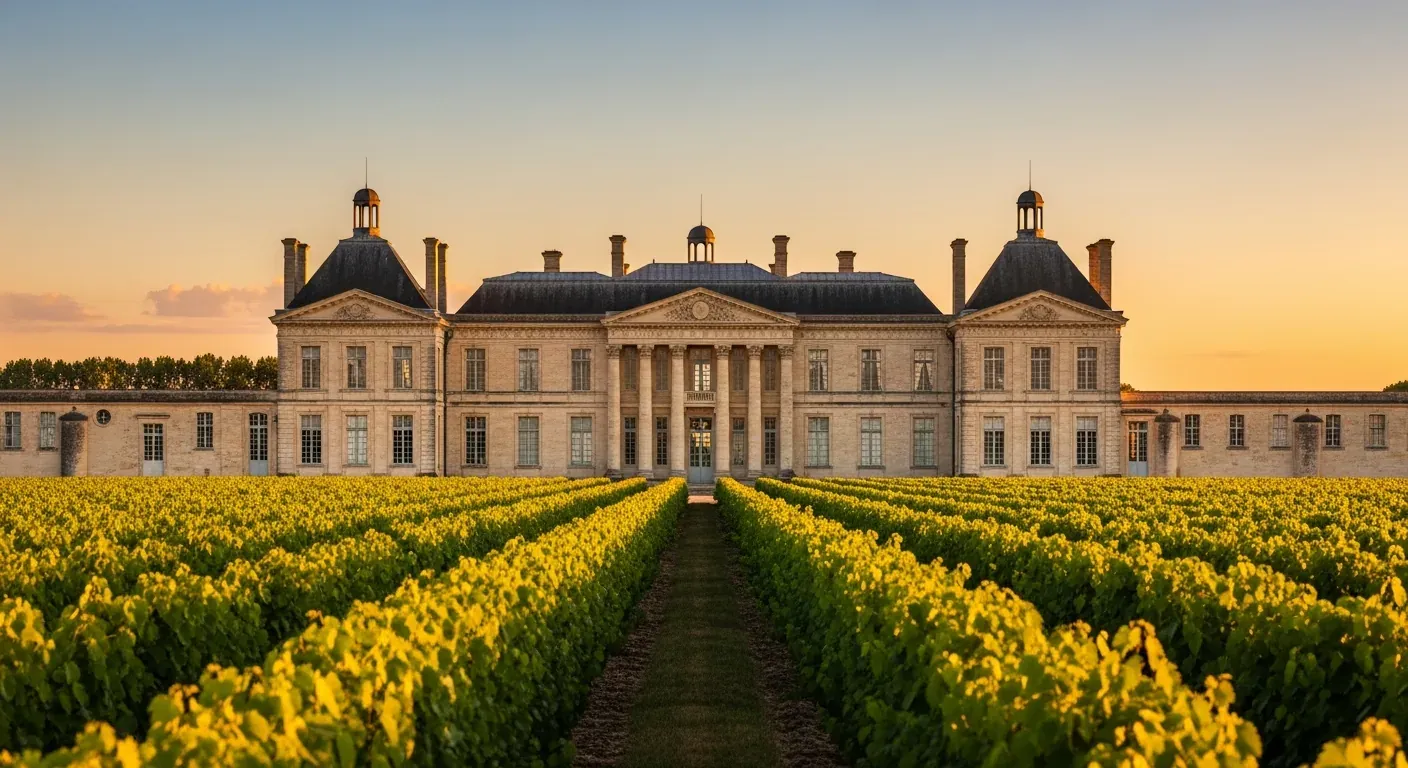
Wine profile: finesse, intense aromas (violet, rose, blackcurrant, blackberry), silky tannins. Margaux is often described as “the lace of the Médoc.” Among the great appellations, its wines are the most aromatic and the most approachable in their youth.
Castles You Should Visit:
- Château Margaux (1er Grand Cru Classé) — the gold standard; tours require reservations made several months in advance; one of the most iconic architectural landmarks in Médoc
- Château Palmer (3rd Growth) — often considered on par with a First Growth; open to visitors by appointment
- Château Rauzan-Ségla (2nd Growth) — owned by Chanel, with a thoughtful wine tourism experience
- Château Giscours (3rd Growth) — beautiful grounds, excellent hospitality, ideal for a first visit
- Château Kirwan (3rd Growth) — founded by an Irish wine merchant in the 18th century, a beautiful château
On-the-ground tip: Margaux is the perfect destination for a half-day trip. It’s just 30 minutes from Bordeaux, with several châteaux open to visitors, and a charming village where you can have lunch.
Saint-Julien — Consistency at the Top (~45 km from Bordeaux)
The smallest of the major municipal appellations (about 900 hectares), but none of them are as consistent in quality. There are no Premier Crus here, but there is an exceptional concentration of Second, Third, and Fourth Crus.
Wine Profile: A perfect balance between the finesse of Margaux and the power of Pauillac. Elegant, well-structured wines with a lovely finish.
Castles You Should Visit:
- Château Léoville-Las Cases (2nd Growth) — often described as "Super Second", Premier Cru quality
- Château Léoville-Poyferré (2nd Growth)
- Château Léoville-Barton (2nd Growth) — owned by the same Irish family since 1826
- Château Ducru-Beaucaillou (2nd Growth) — magnificent view of the estuary
- Château Beychevelle (4th Growth) — nicknamed "The Versailles of the Médoc", spectacular architecture, well-organized hospitality
Practical tip: make a photo stop at the carrelets in Beychevelle on the estuary. These fishing huts on stilts are a symbol of the Médoc.
Pauillac — the heart of the Grand Crus (~55 km from Bordeaux)
This is the absolute pinnacle. Nowhere else in the world does a single appellation boast three of the five First Growths: Lafite-Rothschild, Latour, and Mouton-Rothschild. It is here that Cabernet Sauvignon expresses its very essence.
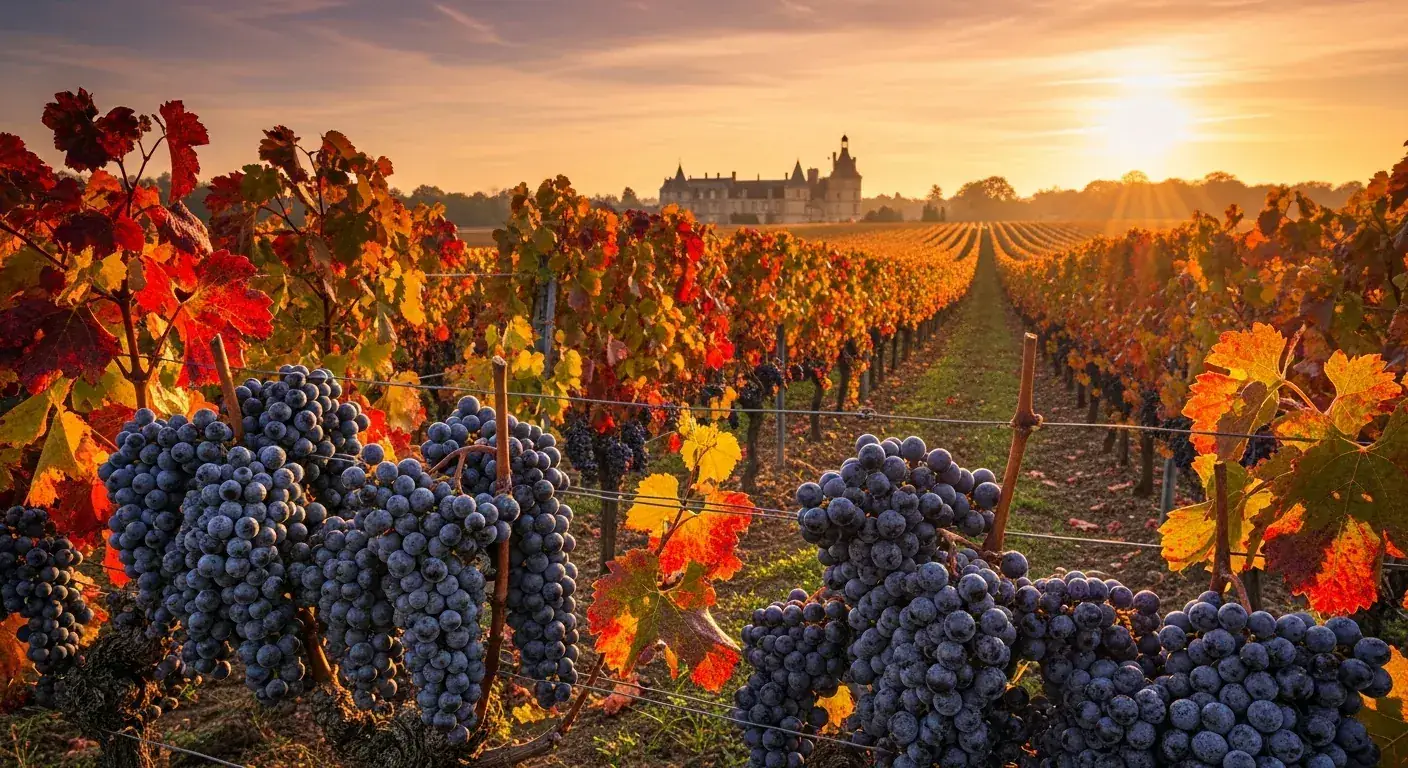
Wine profile: powerful, with pronounced tannic structure and exceptional aging potential. A Pauillac can age for 30, 40, or sometimes even 50 years. The aromas evolve from dark fruit and cedar to truffle, tobacco, and leather.
The 3 Premier Crus:
- Château Lafite-Rothschild — visits by invitation or through a specialized agency, several months in advance
- Château Latour — highly selective, tours are rare
- Château Mouton-Rothschild — the most accessible of the three, featuring a museum of art labels (Picasso, Chagall, Bacon, and Jeff Koons have designed labels); reservations required
More Accessible Pauillac Châteaux:
- Château Lynch-Bages (5th Growth) — one of the most welcoming estates in Pauillac, the lively "wine-growing village" of Bages
- Château Pichon-Longueville Baron (2nd Growth) — a 19th-century château with turrets, one of the most photogenic
- Château Pichon-Longueville Comtesse de Lalande (2nd Growth) — owned by Roederer
- Château Grand-Puy-Lacoste (5th Growth) — family-friendly atmosphere, excellent value for the tour
- Château Pontet-Canet (5th Growth) — a pioneer in biodynamics
Something else to do: have lunch at the Pauillac harbor overlooking the Gironde River. The well-organized Maison du Tourisme et du Vin can help you round out your itinerary.
Saint-Estèphe — the appellation for connoisseurs (~65 km from Bordeaux)
The northernmost appellation among the major communal appellations, and likely the most underrated in the Médoc. Less touristy than Pauillac or Margaux, it offers wines of remarkable complexity and some of the region’s most distinctive châteaux.
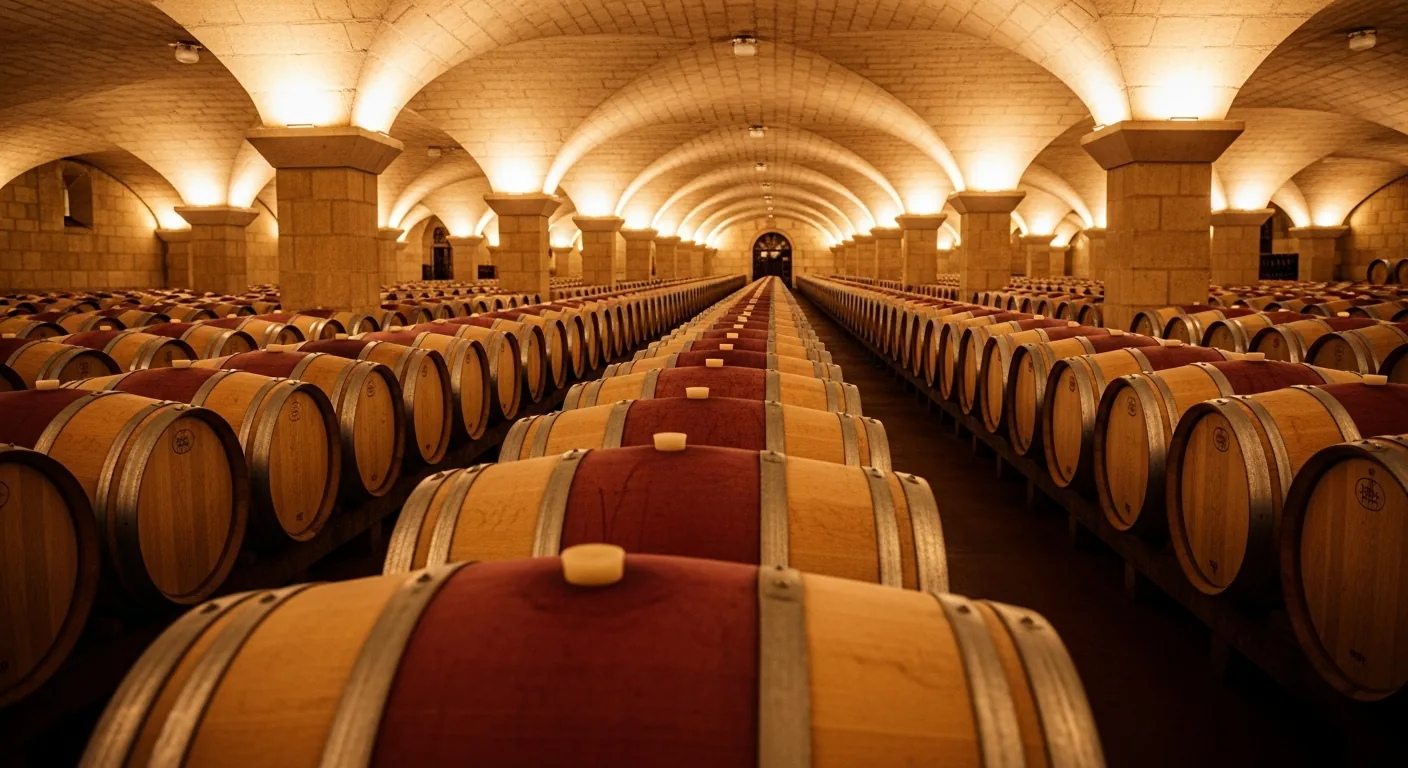
Wine profile: pronounced tannic structure, full-bodied, suitable for long-term aging. The clay-rich soils produce more robust wines that take time to open up but reveal a rare depth.
Castles You Should Visit:
- Château Cos d'Estournel (2nd Growth) — the most fascinating of the Médoc. Its founder, Louis-Gaspard d'Estournel—nicknamed “the Maharajah of Saint-Estèphe”—built a unique Oriental-style complex featuring pagodas and a carved gate imported from the palace of the Sultan of Zanzibar. A spectacle as much in architecture as in winemaking.
- Château Montrose (2nd Growth) — panoramic view of the estuary, powerful and elegant wines
- Château Calon-Ségur (3rd Growth) — famous for its label featuring a heart. The Marquis de Ségur, who owned the estate in the 18th century, said, “I make wine at Lafite and Latour, but my heart is at Calon” — hence the label.
- Château Phélan-Ségur (Cru Bourgeois Exceptionnel) — Irish-owned, warm welcome
Why Saint-Estèphe is definitely worth a visit: fewer tourists, winemakers who are often more approachable, and more reasonable prices than in Pauillac or Margaux. It’s the favorite appellation of many connoisseurs.
Moulis-en-Médoc and Listrac-Médoc — the lesser-known appellations
The two municipal appellations located furthest inland, away from the D2 and the estuary. There are no 1855 Grand Cru Classés here, but there are high-quality Crus Bourgeois and an authentic atmosphere far from the tourist trails.
Castles to Explore:
- Moulis: Château Chasse-Spleen (Cru Bourgeois Exceptionnel), Château Poujeaux (Cru Bourgeois Exceptionnel)
- Listrac: Château Fourcas-Hosten, Château Fonréaud, Château Clarke (owned by Edmond de Rothschild)
Who is this for? : Visitors looking to avoid the crowds and who want to explore Médoc "from the inside" and leave with bottles at reasonable prices.
The Route des Châteaux: the D2 explained
The D2, nicknamed the “Route des Châteaux”, is the backbone of the Médoc wine trail. It starts at the Bordeaux ring road (Exit 7 toward Eysines), passes through Le Taillan-Médoc, then heads north along the estuary to Saint-Estèphe and beyond [source].
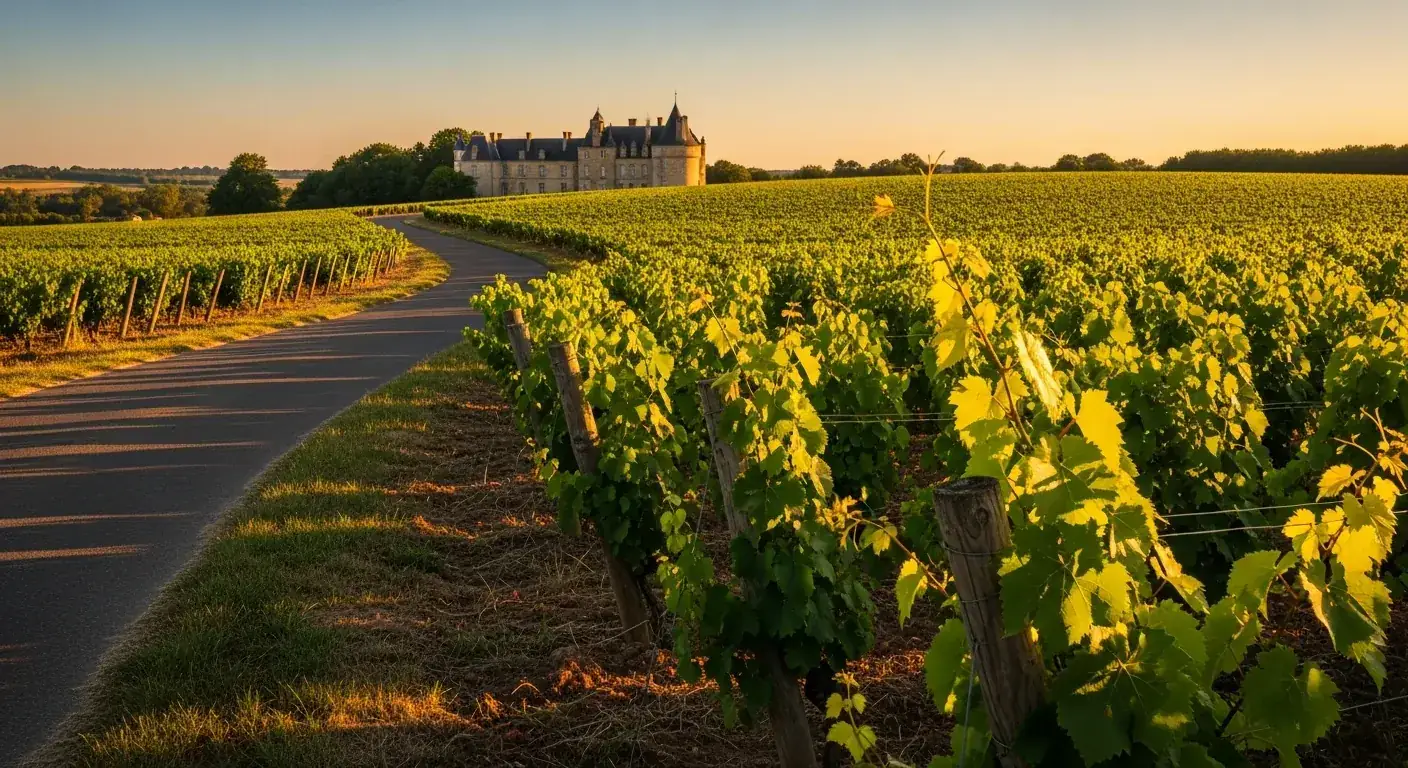
It is one of the few roads in the world where, over just a few dozen kilometers, you pass such a dense concentration of landmarks in global wine heritage.
Direction of Traffic and Pace
Recommended route: From Bordeaux heading north (Margaux → Saint-Julien → Pauillac → Saint-Estèphe). In the summer, some people prefer to take the reverse route to visit the less crowded châteaux in the morning.
How many châteaux per day? Be realistic: 2 to 3 châteaux at most with tastings. A guided visit lasts from 1 hour to 1 hour 30 minutes, plus tasting time. Add the drive between estates, lunch, and photo stops, and the day fills quickly. Three visits enjoyed properly are better than five rushed ones.
Must-See Attractions
Don't miss these sights along the D2:
- The Beychevelle fishing huts—fishermen's huts on stilts, a must-see photo spot
- Lamarque Harbor — a small fishing port, perfect for a coffee break
- The Lamarque–Blaye Ferry (across the Gironde) — a scenic alternative for reaching the right bank
- The Pichon-Longueville Lookout Over the Estuary — Spectacular Morning Light
- The Port of Pauillac — Seafood Restaurants Overlooking the Gironde River
The estuary, the Vauban forts, and the Côte d'Argent
To reduce Médoc to just its vineyards would be to overlook half of the peninsula. Between the estuary to the east and the ocean to the west, the region boasts a natural and military heritage that rivals that of the great wines—and several of its sites are listed as UNESCO World Heritage Sites.
The Gironde Estuary, the largest in Europe
The Médoc owes everything to the water surrounding it. The Gironde Estuary begins at the Bec d'Ambès, where the Garonne and Dordogne meet, and is Europe's largest estuary: approximately 635 km², 75 km long, and up to 12 km wide. This body of water moderates the vineyard climate, protects the gravel ridges closest to it from frost, and gives the Médoc landscape its distinctive light.
The Cordouan Lighthouse, the “Versailles of the Sea”
At the tip of the peninsula, seven kilometers offshore from Verdon-sur-Mer, stands the Cordouan Lighthouse. Built between 1584 and 1611 by architect Louis de Foix, it is the oldest lighthouse in France still in operation. Its monumental silhouette, royal apartments, and chapel have earned it the nickname “the Versailles of the Sea.” It was inscribed on the UNESCO World Heritage List on July 24, 2021.
The Vauban Lock on the Estuary
To block access from the estuary to Bordeaux, Vauban designed a triangular defensive system in the late 17th century. On the Médoc side, Fort Médoc, at Cussac-Fort-Médoc, was built from 1691 to 1694. Together with the Blaye Citadel and Fort Paté, on an island in the middle of the river, it formed a “barrier” whose artillery covered the estuary from bank to bank. The three structures joined the network of major Vauban sites inscribed on the UNESCO World Heritage List on July 7, 2008.
The Silver Coast and the Great Lakes
On its Atlantic coast, the Médoc turns its back on the vineyards to reveal the Côte d'Argent: the sandy beaches of Soulac-sur-Mer, Montalivet, Hourtin, Carcans, and Lacanau, backed by the vast Landes Forest. Behind the dune line lies Lake Hourtin-Carcans, which, at 62 km², is France’s largest natural freshwater lake. Surfing, swimming, and sailing on the ocean side complement what the estuary offers on the vineyard side.
| Site | Where | Recognition |
|---|---|---|
| Cordouan Lighthouse | Le Verdon-sur-Mer | UNESCO 2021 · France's oldest active lighthouse |
| Fort Médoc (Vauban) | Cussac-Fort-Médoc | Vauban Network of Sites, UNESCO 2008 |
| Blaye Citadel + Fort Paté | Right Bank / Îlot de la Gironde | Vauban Network of Sites, UNESCO 2008 |
| Lake Hourtin-Carcans | Hourtin / Carcans | Largest natural freshwater lake in France (62 km²) |
Recommended Itineraries
Half-day (4 hours) — Margaux and the surrounding area
Departure from Bordeaux at 9 a.m., return at 1 p.m.
- 9:00 a.m. : Departure from Bordeaux, D2 toward Médoc
- 9:35 a.m. : Arrival in Margaux, tour of a chateau open to the public (Giscours, Siran, or Kirwan)
- 11:00 a.m.: Wine tasting at a second château or at a Cru Bourgeois estate
- 12:30 p.m.: Lunch in the village of Margaux or return to Bordeaux
Ideal for: travelers on a tight schedule, beginners looking for an introduction.
Full-Day Tour (8 hours) — Castle Tour
Departure from Bordeaux at 9 a.m., return at 6 p.m.
- 9:00 a.m. : Departure from Bordeaux
- 10:00 a.m.: Tour of a château in Margaux (advance reservation required)
- 12:30 p.m. : lunch at the Port of Pauillac (seafood)
- 2:30 p.m. : a tour of a château in Pauillac (Lynch-Bages, Pichon-Longueville, or Grand-Puy-Lacoste)
- 4:30 p.m. : Stop in Saint-Julien — drive past Beychevelle, photo at the fishing huts
- 6:00 p.m. : Return to Bordeaux via the D2 or the N215
Ideal for: serious wine lovers who want to explore several appellations in a single day.
Médoc Weekend (2 days)
Day 1: Depart Bordeaux in the morning; tour of Margaux (1 or 2 châteaux); lunch in Lamarque or Saint-Julien; tour of a château in Saint-Julien; overnight stay in Pauillac (hotel by the harbor or bed-and-breakfast).
Day 2: Morning tour of Pauillac (Mouton-Rothschild or Lynch-Bages), lunch at the harbor, drive up to Saint-Estèphe (Cos d'Estournel or Calon-Ségur), return to Bordeaux in the late afternoon.
Ideal for: travelers who really want to understand the region, and serious enthusiasts who realize that 8 hours isn't enough to cover everything.
When to visit Médoc
| Period | Crowd | Weather | Notes |
|---|---|---|---|
| April–June | Low | Ideal | Buds, flowers, relaxed atmosphere, Open House weekends in April |
| July–August | Strong | Warm (28–35°C) | Castles are fully booked; please reserve 2–3 weeks in advance |
| September–October | Moderate | Ideal | Grape harvest, fall colors, the best time of year |
| November–March | Low | Variable | Quiet, some castles are closed, intimate atmosphere |
Visit Médoc in the spring (April–June): the vineyards come to life
This is the time of year when the vines are in bloom. The châteaux are open, the staff are available, and temperatures are pleasant (15–22°C). April and May are particularly recommended for avoiding crowds. In mid-April, the en primeur market brings the châteaux to life: buyers and journalists from around the world taste wines from the latest vintage straight from the barrels.
Late March / early April: Open House at the Médoc Châteaux (organized by the Pauillac Tourism and Wine Office). About 100 châteaux across the 8 appellations will be open to the public, featuring guided tastings and activities. It’s the perfect opportunity to explore estates that are usually closed to the public.
June: The Fête de la Fleur, the annual gala dinner hosted by the Commanderie du Bontemps, brings together more than 1,500 guests from around the world at a grand château (by invitation only, but the atmosphere in Médoc that week is something special).
Visiting Médoc in the summer (July–August): crowds and heat
Peak season. The most famous castles are packed, and tour slots fill up quickly. Some estates close in August for vacation. If you’re visiting in the summer, book well in advance and opt for morning tours (before it gets too hot).
Visiting Médoc in the fall (September–October): the best time to go
The magical moment. The grape harvest (mid-September to mid-October, depending on the vintage) transforms Médoc into a living spectacle: crews in the vineyards, tractors on the D2, the scent of grape must in the air. The vines change from green to golden red. The châteaux may be harder to access because they’re focused on winemaking, but those that welcome visitors offer an unforgettable experience.
First Saturday in September: the Marathon des Châteaux du Médoc in Pauillac. Nearly 8,500 costumed runners from 75 countries cover 42 km through the vineyards, with refreshment stops serving wine, oysters, cheese, and ribeye steak. Created in 1985, it is one of the world’s most festive sporting events.
October: fall colors, beautiful light, the grape harvest winding down, and winemakers free once again. For many wine connoisseurs, this is the perfect time to visit.
Visiting Médoc in winter (November–March): Peace and Authenticity
The Médoc region is nearly deserted in winter. Some wineries close or shorten their hours, but those that remain open offer a particularly personalized experience. It’s ideal for true enthusiasts who want to have long conversations with the winemakers. Hotel rates are also significantly more flexible.
How to get to Médoc from Bordeaux
| Mode | Travel time from Bordeaux to Pauillac | Cost | Verdict |
|---|---|---|---|
| Personal car/rental car | 55–75 min | Check the carrier's rates | Freedom—but who's going to drive after the tasting? |
| TransGironde Buses | ~1 hour 45 minutes | Check the carrier's rates | Very limited, few useful stops, not recommended |
| Private Chauffeur Service in Bordeaux | 55–75 min | Flat rate starting at 70 € | Comfort, a dedicated driver, and prearranged château visits |
| Wine tour bus (Viator, etc.) | 8-hour package | Check the carrier's rates | Shared itinerary and schedule; group size varies by tour operator |
Travel to Médoc by personal or rental car
Advantages: complete freedom, access to all the castles, the ability to stop wherever you want.
A major, non-negotiable drawback: you cannot fully take part in the tastings. The legal limit in France is 0.5 g/L (0.2 g/L for probationary licenses), and even a small amount may put a driver over the limit. Driving 65 km to Saint-Estèphe only to skip the wine misses the point of the day.
Directions: From the Bordeaux beltway, take Exit 7 toward Eysines, then take the D2 toward Pauillac.
How to get to Médoc by public transportation (TransGironde buses)
Regional bus routes 424/422 (TransGironde network) connect Bordeaux to Pauillac with stops along the Route des Châteaux. It’s economical but not very convenient: service is infrequent, the châteaux aren’t always close to the stops, and the schedules don’t always align with visiting hours. Allow 1.5 to 2 hours for the trip to Pauillac, with no easy way to get between the châteaux afterward.
Take the train to Médoc (Médoc line)
The Médoc line connects Bordeaux-Saint-Jean to Lesparre-Médoc, with a summer extension to Le Verdon and Pointe de Grave. It serves stations in Margaux and Pauillac, among others. It’s a real advantage for reaching the villages; the limitation is just as clear: the train serves the villages, not the châteaux. These are often several kilometers from the stations, with no organized transportation—making it impossible to visit two or three estates on foot. This is precisely where a driver—who drops you off at each estate and waits for you during tastings—proves invaluable.
Tour the Médoc with a chauffeur service
This is often the most practical solution for serious wine enthusiasts. A private driver takes you from château to château, waits during the visits, and returns you to Bordeaux. You can enjoy the tastings without having to drive or coordinate transport between estates. For practical details, package options, rates, and reservations, see our page on chauffeur service between Bordeaux and the Médoc.
Take an organized tour to Médoc (wine tour by bus)
An organized tour includes transportation, a guide, and scheduled visits. A chauffeured transfer offers a customized itinerary, schedule, and stops. Compare written quotes, the number of participants, what’s included, and cancellation policies for the same date before making your choice.
Practical Tips
Booking Tastings: First and Second Growths almost always require a reservation, sometimes several months in advance for the most prestigious ones. Crus Bourgeois and lesser-known châteaux often accept walk-in visits on weekdays. During the off-season, contact the château directly by phone or email.
Prices for tours and tastings vary depending on the estate, the package, and the season; check the ticket office or contact each château directly before booking.
Dress code: Smart attire is recommended at the major châteaux. No need for a suit, but avoid beachwear. Smart casual is appropriate everywhere.
Languages: The vast majority of listed castles offer tours in English. Many also offer tours in German, Spanish, and Italian, and sometimes Mandarin at the most international ones. Not speaking French will almost never be a problem.
Buying wine at the château: Yes, and it’s often cheaper than at a wine shop or online. Some châteaux offer older vintages for direct sale—these can be great deals. Ask if international home delivery is available (it often is for purchases of 6 or more bottles).
Transporting bottles: If you’re buying several bottles, bring a cooler bag or request shipping. Avoid leaving the bottles in a trunk exposed to the sun. A private chauffeur service can keep them cool in the vehicle.
Frequently Asked Questions
How long does it take to tour the Médoc?
Half a day (4 hours) for Margaux and 1–2 visits. A full day (8 hours) to cover Margaux, Saint-Julien, and Pauillac with 2–3 visits. A weekend (2 days) to explore the area from Margaux to Saint-Estèphe at a leisurely pace.
Which châteaux in the Médoc are open without a reservation?
Many Crus Bourgeois and mid-tier châteaux accept walk-in visits on weekdays, including Château Siran (Margaux), Château Paloumey (Haut-Médoc), Château Fonréaud (Listrac), and Château Lamothe Bergeron (Haut-Médoc). For the Grands Crus Classés, reservations are almost always required.
What is the difference between AOC Médoc and AOC Haut-Médoc?
The Médoc AOC covers the northern part of the peninsula (beyond Saint-Estèphe), featuring lesser-known and more affordable wines. The Haut-Médoc AOC covers the southern part (from Blanquefort to Saint-Estèphe) and includes several 1855 Grand Cru Classés. The Haut-Médoc is generally more prestigious.
Is it possible to visit Médoc in a single day from Bordeaux?
Yes. If you leave at 9 a.m., you can visit two or three châteaux in the Margaux, Saint-Julien, and Pauillac appellations, have lunch at the Pauillac harbor, and return to Bordeaux around 6 p.m. The key is to book your tours in advance and not try to see everything.
Which château in the Médoc is best to visit?
There’s no single answer. For architectural design: Cos d’Estournel (Saint-Estèphe), Beychevelle (Saint-Julien), and Pichon-Longueville Baron (Pauillac). For wine tourism experiences: Mouton-Rothschild (label museum) and Lynch-Bages (wine village). For an accessible first visit: Château Giscours or Château Siran in Margaux.
How much does a tasting cost at Médoc?
Prices for tours and tastings vary depending on the estate, the package, and the season; check the ticket office or contact each château directly before booking.
Is the Médoc accessible by public transportation from Bordeaux?
Yes, but it's not very practical. TransGironde buses 424/422 to Pauillac have limited service, and they don't always stop at the châteaux. For a tour of several châteaux that includes wine tastings, a chauffeur service or an organized tour is a much better option.
Which appellation should you choose for a first visit?
Margaux: just 30 km from Bordeaux, with elegant, easy-to-enjoy wines, accessible châteaux, and an authentic atmosphere. If you have more time, be sure to visit Pauillac for its Grand Cru wines and the port.
What are "primeurs"?
During Primeurs Week, held in early April each year, buyers and journalists from around the world taste wines from the latest vintage while they are still in barrels (i.e., before bottling). It is based on these tastings that prices are set and buyers reserve their allocations. While the event is closed to the general public, the buzz in the Médoc that week is truly special.
Was Mouton-Rothschild really "promoted" to Premier Cru?
Yes. That is the only major change to the 1855 classification. Mouton was originally classified as a Second Growth, but thanks to lobbying by the Rothschild family (particularly Baron Philippe), it was promoted to First Growth in 1973 by decree of Agriculture Minister Jacques Chirac. The château’s motto changed from “I cannot be first, I will not settle for second—I am Mouton” to “I am first, I was second—Mouton never changes.”
Why is Haut-Brion included in the 1855 classification but not in the Médoc?
Haut-Brion is located in Pessac-Léognan (Graves), south of Bordeaux. But its reputation in the British export market during the 19th century was too strong to exclude it from the classification. It is the only non-Medoc wine included in the 1855 classification.
Further Reading
- Chauffeur service for the Médoc: see our page on chauffeured travel between Bordeaux and the Médoc (fixed rates, packages, and reservations)
- Combine Médoc and Saint-Émilion over two days: see our page on private chauffeur services between Bordeaux and Saint-Émilion
- To get from the airport directly to Médoc: see our Bordeaux Airport Transfer page
- Getting there from Saint-Jean Station: see our page on private chauffeur services at Saint-Jean Station
Sources and References
- Médoc Tourist Office—Vineyards — Castle Route — D2 and a tour of the wineries
- Médoc Wine Council — representing the eight appellation associations
- INAO — Médoc — Specifications, Geographical Area, and Recognition of the AOC
- Council of the 1855 Classified Growths — official classification of the Médoc wines
- Alliance of the Crus Bourgeois of Médoc — Triennial Ranking, List of Châteaux
- Médoc Artisan Wines — Artisanal Winegrowers and Owners
- Médoc Castle Marathon — Annual Schedule
- Castle Open Houses in Médoc — Calendar of Open House Weekends
- Bordeaux Tourism — Médoc — Official Guide
- Wikipedia — Médoc (peninsula and vineyard) — etymology (Meduli), Flemish/Dutch land reclamation, appellations
- Wikipedia — Gironde Estuary — Europe's largest estuary: 635 km², 75 km, Bec d'Ambès
- Wikipedia — Cordouan Lighthouse — 1584–1611, Louis de Foix, UNESCO July 24, 2021
- Wikipedia — Fort Médoc — Vauban 1691–1694, estuary barrier, UNESCO July 7, 2008
Article updated on July 18, 2026.
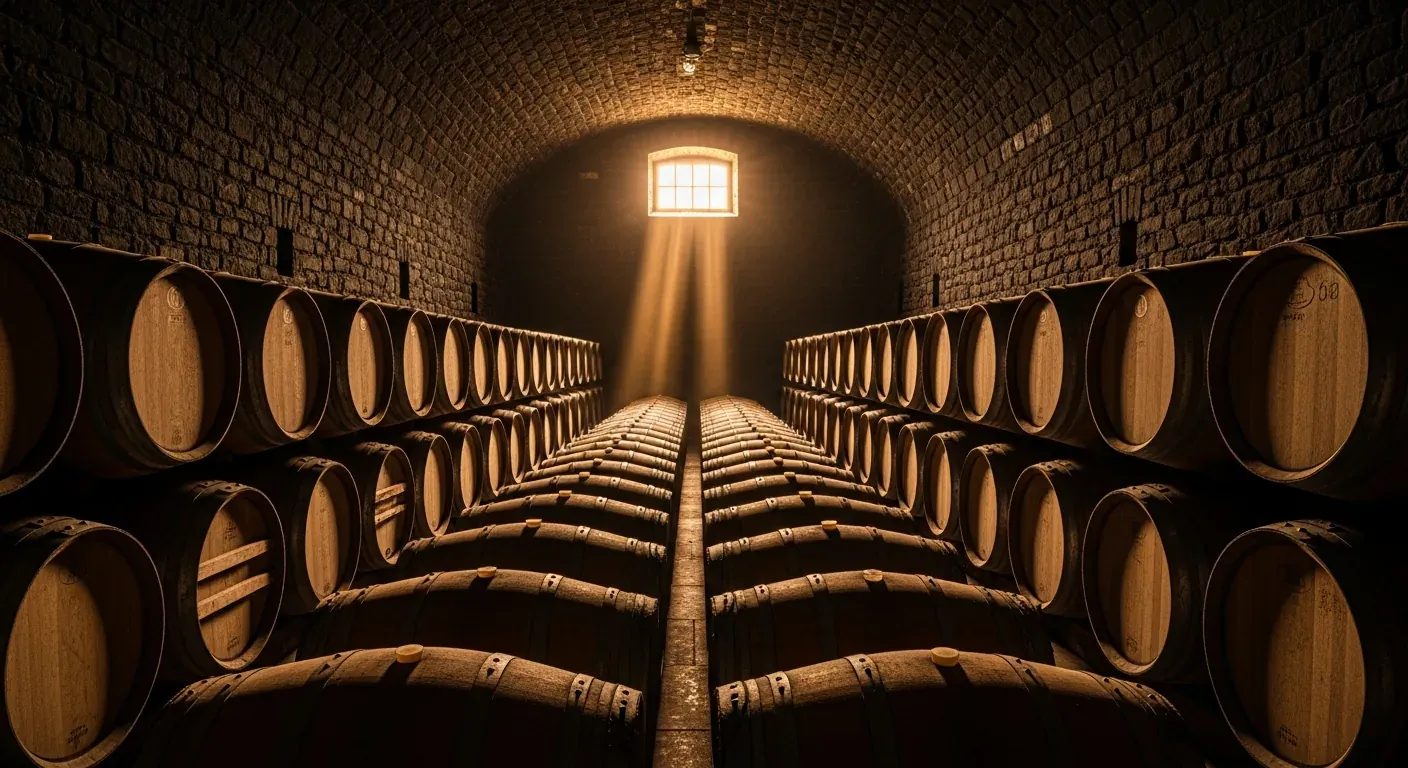
Médoc wine tour from Bordeaux
Half-day or full-day tour of the Route des Châteaux, English-speaking driver, fixed price guaranteed in writing, with the driver waiting during wine tastings.