Bordeaux to Cognac: four major houses and six crus
The city that gave its name to the king of spirits: the four great houses, the Charente double distillation process, the VS·VSOP·XO designations, the six crus, Jarnac, the Gallo-Roman city of Saintes, and Pineau—and how to get to Cognac from Bordeaux. Everything you need to know before you go.
In a nutshell
- Cognac: subprefecture of Charente, 18,000 residents on the banks of the river of the same name. The world capital of a spirit exported to 97.5% overseas in terms of value (BNIC, 2025).
- AOC Cognac: boundaries established in 1909, officially recognized on May 15, 1936, with six crus designated in 1938. Regulations administered by the BNIC (Bureau National Interprofessionnel du Cognac).
- The United States is the world’s leading cognac market, followed by China and the United Kingdom.
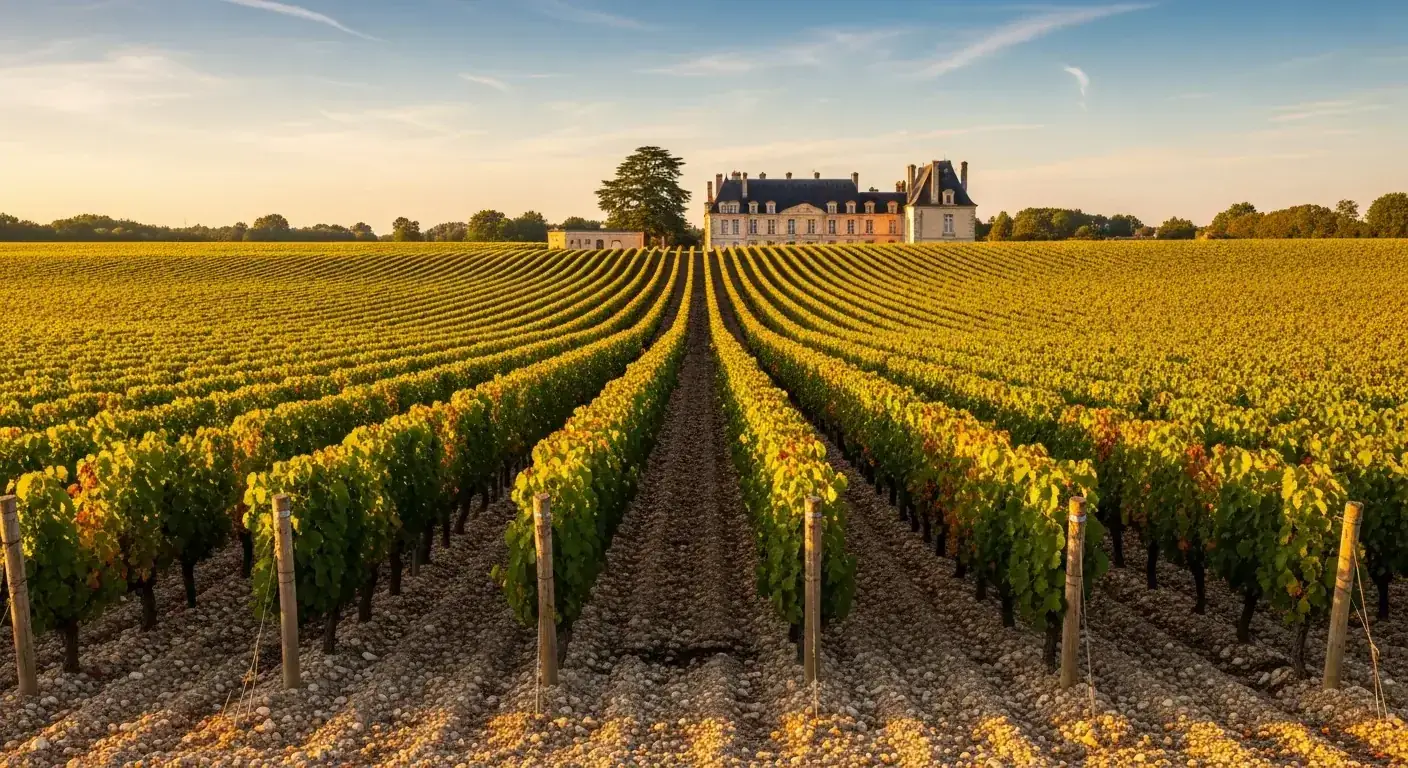
- Four major houses have historically shaped the cognac trade: Hennessy (1765), Martell (1715, the oldest), Rémy Martin (1724, Fine Champagne), and Courvoisier (1828). The BNIC does not publish a breakdown of 2025 figures by house.
- Six crus were defined in 1938 based on the work of geologist Henri Coquand: Grande Champagne (1er cru), Petite Champagne, Borderies, Fins Bois, Bons Bois, and Bois Ordinaires.
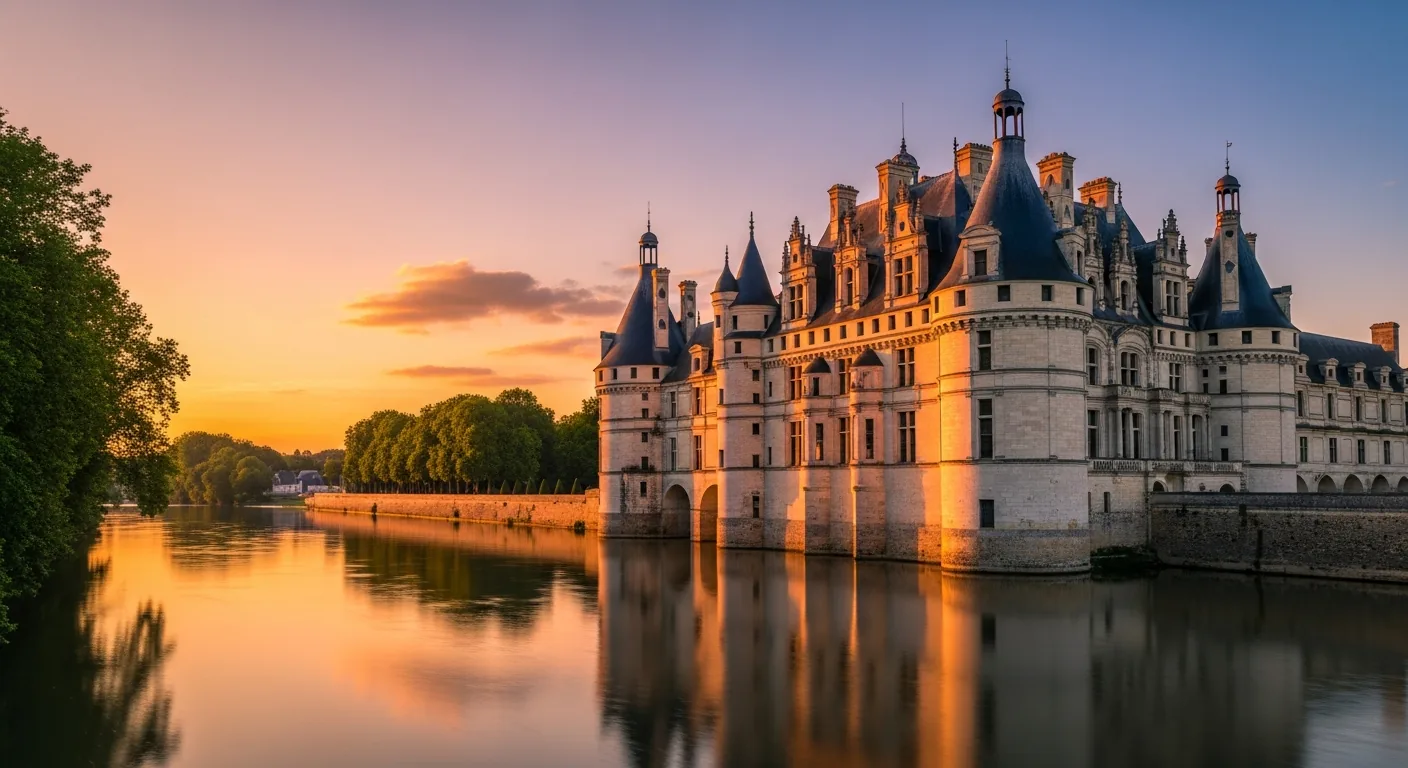
- Cognac Castle: the king’s birthplace in 1494, now the headquarters of Baron Otard.
- Saintes, 30 km away: Gallo-Roman amphitheater (Tiberius/Claudius), Arch of Germanicus, 18–19 A.D. (saved by Mérimée in 1843).
- Distance from Bordeaux: 125 km, about 1 hour and 40 minutes by car or chauffeur service via the A10.
Before You Go: What Cognac Is Really About
You arrive at Cognac one morning in May. Gentle sunshine over the Charente, a light mist over the riverbanks. You walk down toward the river along Rue Saulnier, the cobblestone alleys of the medieval center, and the first visual surprise hits you out of the blue: The facades of the major houses are black. Completely black. As if covered in soot or mold. It's the fungus Baudoinia compniacensis, a microorganism that feeds on alcohol vapors released by the cellars — what we call here "the angels' share", an annual evaporation of approximately 2 to 3% of the volume. At Cognac, this evaporation represents the equivalent of 41 million bottles per year, based on 2025 figures. The fungus spreads across facades, stones, and roofs—giving the entire city that distinctive, dark patina that is instantly recognizable.
Cognac is, first and foremost, a town that literally lives amid the vapors of its spirit. 18,000 residents, 97.5% of its exports by value in 2025, century-old, weathered cellars, quays lined by the Charente River and its tributary, the Antenne, and a medieval castle where a king of France was born. And a product—cognac—whose production has remained virtually unchanged since the 17th century: wine distilled twice in Charente-style copper stills, aged in Limousin oak barrels, and blended by cellar masters whose craft is passed down from generation to generation.
This guide outlines what you need to know before you come. For practical information (how to get there, cost, and services offered), see our page on executive car service between Bordeaux and Cognac (Cognac).
History and Identity
A city born of trade
Cognac was first mentioned in the 10th century as a fortified settlement on the Charente River. In the Middle Ages, it was a bustling river port—salt from the Charente marshes was traded there, local wine was shipped out, and foreign merchants (Dutch, English, and Scandinavian) docked there.
The major turning point came in the 17th century. The Dutch merchants, the main buyers of Charente wines, complain that these wines do not keep well during long sea voyages. Solution: distill them to reduce their volume and increase their stability. This produced brandwijn—Dutch for “burnt wine” and the origin of the English word brandy.
Very quickly, the Dutch and the English realized that certain Charente brandies developed a distinctive flavor while being transported in oak barrels. Distillation became widespread. Foreign merchants settled in Cognac—the Martells (1715, originally from Jersey), the Hennessys (1765, Irish), the Otards (1795), and the Hines (1763). This is how the global cognac industry took shape, driven by international trade.
The Cognac Castle
The most iconic historic monument in Cognac. Built as a medieval fortress in the 10th century, it entered history on September 12, 1494, when Francis of Angoulême—the future King Francis I—was born there (1515-1547).
The château has had its ups and downs over the centuries. During the Revolution, it was confiscated from émigrés. In 1795, the government put it up for sale as national property, threatening to demolish it completely if no one bought it. The merchant Jean-Baptiste Antoine Otard (Maison Baron Otard, founded in 1795 with his partner Dupuy) purchased the château specifically to save it from destruction and established his wine cellars there.
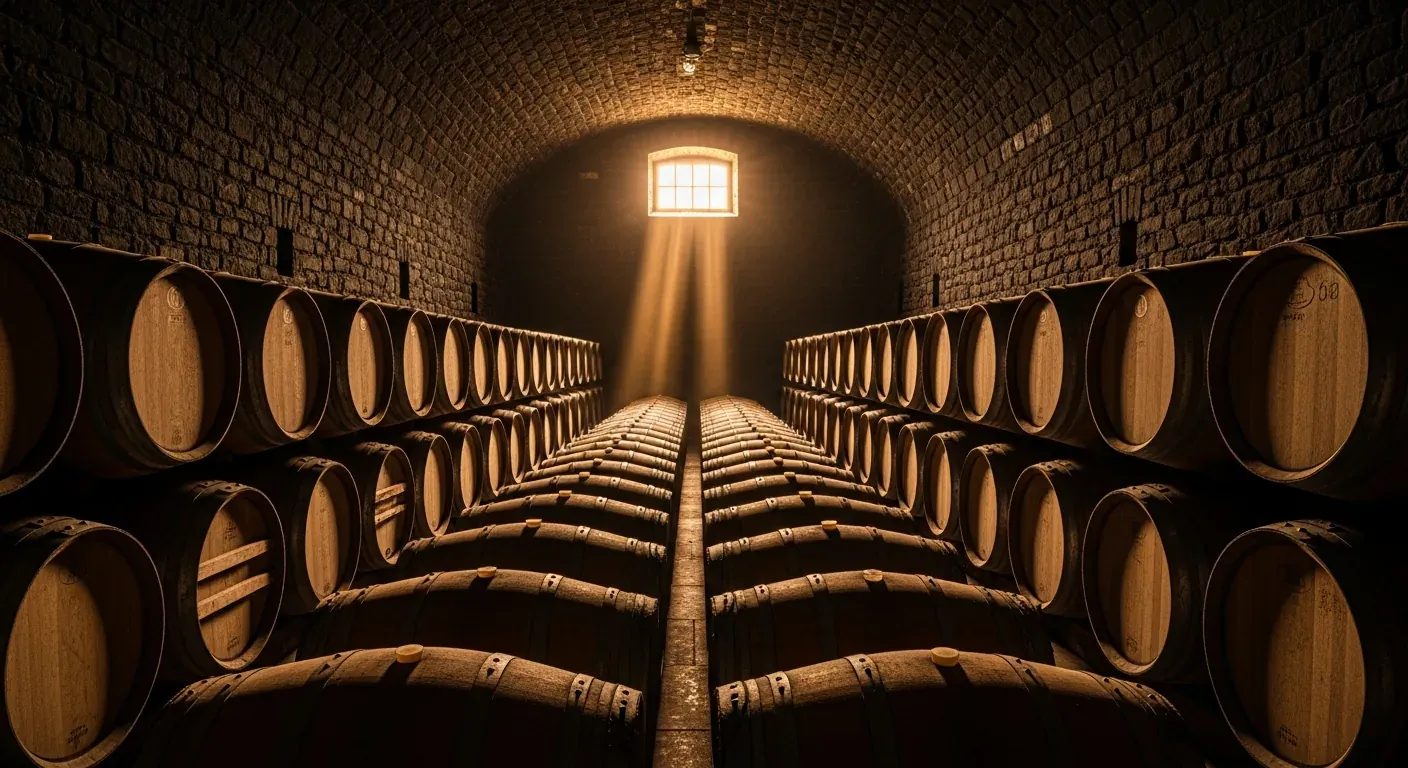
A remarkable fact: for more than 225 years, the birthplace of a French king has housed cognac barrels aging in its vaulted cellars. The thick walls provide exceptional temperature conditions for aging. It is one of the few places in the world where a listed architectural heritage site and active cellars have coexisted for so long.
It can now be visited as part of the tour of the Maison Baron Otard (~€14).
The Cognac AOC and Its Specifications
The Cognac AOC was officially recognized on May 15, 1936. The production area had been demarcated as early as 1909, and the six crus were defined in 1938. It is one of the oldest French appellations contrôlées for a spirit.
The AOC specifies: - The production area: approximately 88,000 hectares of vineyards spread across the departments of the Charente and the Charente-Maritime, and to a lesser extent in the Dordogne and Deux-Sèvres departments - The authorized grape varieties: essentially Ugni Blanc (98% of vineyards), Folle Blanche, Colombard - The distillation method: double pass in Charente-style copper still - The minimum aging period in oak barrels (from Limousin or Tronçais) - The boundaries of the 6 crus established in 1938
The BNIC (National Interprofessional Office for Cognac), established in 1946, manages and oversees the appellation. It brings together winegrowers and merchants, ensures compliance with the specifications, and promotes the appellation internationally.
How Cognac Is Made: The Charente Method
| Step | Parameter | Value |
|---|---|---|
| Base wine | Predominant grape variety | Ugni Blanc (98%), Folle Blanche, Colombard |
| Base wine | Alcohol content | 7–9% vol. (tart, low in alcohol) |
| First distillation (brouillis) | Duration / output | ~8–10 h / distilled to 28–32% vol. |
| Second distillation (bonne chauffe) | Duration / output | ~12 h / brandy at ~70% vol. |
| Statutory Period | Distillation Permitted | October 1 → March 31 |
| Aging barrel | Wood | Limousin or Tronçais Oak, 270–450 L |
| The Angels' Share | Annual Evaporation | 2–3% of the aging volume |
| Bottling | Bottling strength | 40–46% vol. (diluted with distilled water) |
Grape Varieties
98% Ugni Blanc. A modest grape variety with high yields, high natural acidity (up to 90 g/L of total acidity), and low alcohol content (8–9°). It is precisely this high acidity and low alcohol content that make it an ideal grape variety for distillation—a paradox: the base wine is not intended for drinking (very acidic, not very pleasant), but perfect for producing brandy.
The remaining 2%: Folle Blanche (a historic grape variety prior to the phylloxera epidemic of the late 19th century), Colombard, and a few lesser-known varieties.
Wine Making
Harvested in late September–October. Simple winemaking process: pressing, fermentation without sulfur (prohibited in Cognac), and without added sugar. The resulting wine is white, dry, very acidic, and low in alcohol (8–9°). It must be distilled before March 31 of the following year.
Charente-Style Distillation
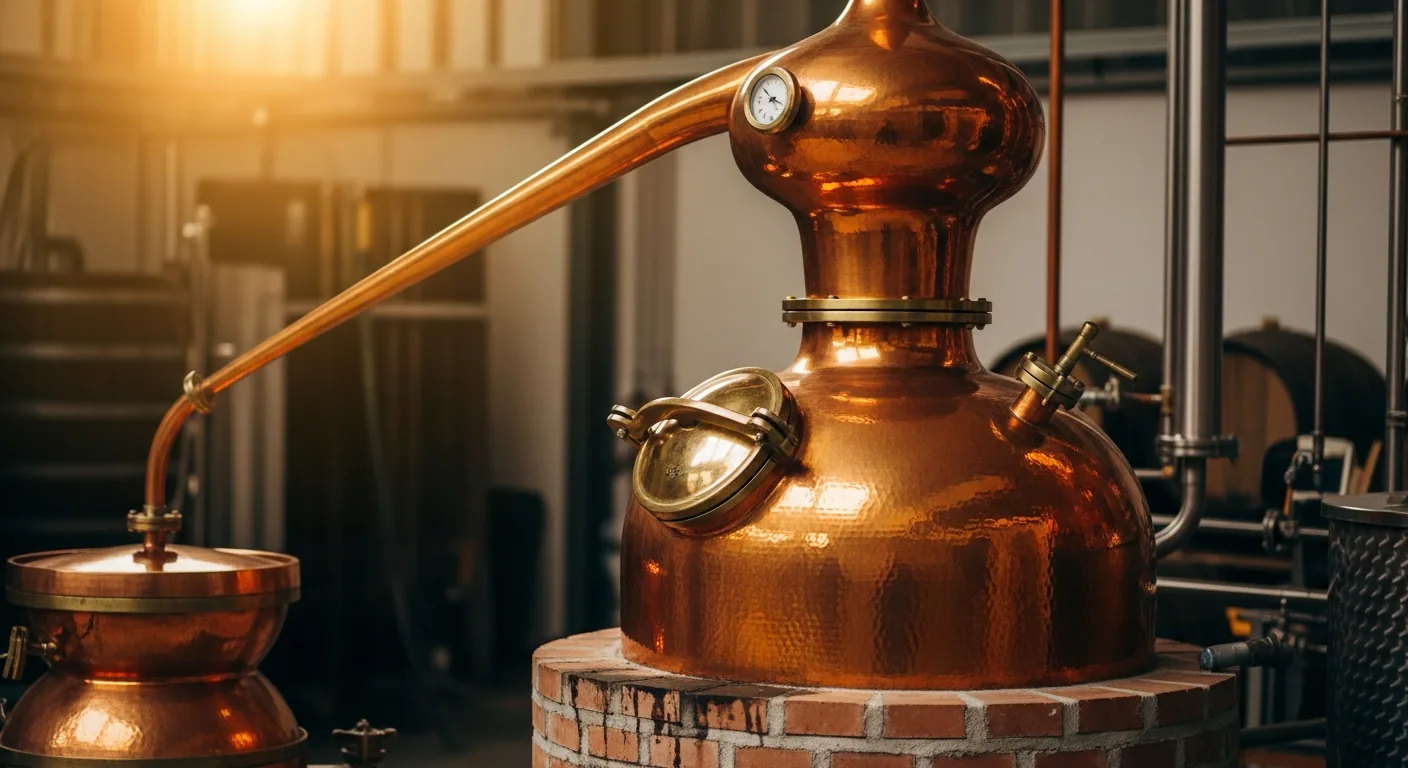
A key step, regulated by the AOC. Double distillation in a Charentais copper still—a specialized apparatus that has changed little since the 17th century. Source: Cognac.fr / BNIC, production and double distillation. Batch distillation, in two stages:
First heating (brouillis): The wine is heated; the alcohol evaporates, passes through the condenser head and the swan neck, and condenses in the water-cooled coil. This produces the brouillis, a liquid at approximately 28–32°. Duration: 8 to 10 hours.
Second distillation (bonne chauffe): the brouillis is redistilled. The heads (initial fluids, rich in undesirable compounds—removed), the heart (the central fraction, which is retained), the seconds (end of distillation, recycled). The result is cognac brandy, approximately 68–72° alcohol. Duration: 10 to 12 hours.
Legal distillation period: October 1 through March 31 of the year following the harvest. Outside the distillation season, the stills are shut down. Visiting Cognac between January and March gives you the chance to see the stills in operation—the steam of alcohol, the scent of hot mash, the sound of copper. It’s an experience that summer visitors don’t get to enjoy.
Aging and the "Angels' Share"
Once distilled, the brandy is transferred to oak barrels. Two permitted origins: - Limousin Oak (most commonly used): wide-grained wood, quickly releases tannins and vanilla - Tronçais Oak (Allier): fine-grained wood, more restrained, long aging
New barrels are first used for long-term aging (XO, Hors d'Âge), then reused for younger eaux-de-vie. The interaction between the wood and the alcohol is essential: it imparts tannins, vanilla, spices, and aromatic complexity.
During aging, approximately 2 to 3% of the volume evaporates each year. This is the “angels’ share” (the portion that evaporates into the air). On the Cognac scale: the equivalent of 41 million bottles in 2025 are thus "offered to the angels." These alcohol vapors in the atmosphere feed the Baudoinia compniacensis fungus — which gives the wine cellar facades their iconic black color.
Aging period: at least 2 years for VS; up to 50, 80, or 100 years for exceptional expressions. Once bottled, cognac no longer evolves (unlike wine)—it can be stored but no longer ages.
The Four Major Houses: A Comparison
The four major houses—Hennessy, Martell, Rémy Martin, and Courvoisier—have historically shaped the trade, although the BNIC’s statistical report does not provide a public breakdown of the 2025 market by house. Official industry figures for 2025. Each has a strong identity, a signature cognac style, and a distinctive visitor experience.
Admission prices vary: check each museum's official website before booking.
| Home | Founded | Signature Style | Tour | Duration | Tour Price |
|---|---|---|---|---|---|
| Hennessy | 1765 | Powerful, woody, with notes of vanilla and oak | Boat ride across the Charente River, immersive exhibition, “250 Years of the Dynasty” museum | 1½–2 hours | See official rates |
| Martell | 1715 | Floral, fruity, with characteristic notes of violet (Borderies) | Chanteloup Castle, remarkable gardens, "Master Blender" workshop | 1–2 hours | See official rates |
| Rémy Martin | 1724 | Fine Champagne, floral, complex, distilled on lees | 3 sites (Historic House + Merpins + Grande Champagne), small electric train | 1–4 hours | See official rates |
| Courvoisier | 1828 | Fruity, floral, full-bodied, “Napoleon’s cognac” | Jarnac Castle (15 km), contemporary design, welcoming atmosphere | 1 hour–1 hour and 30 minutes | See official rates |
Hennessy: The Largest, the Most Spectacular
Hennessy is a leading cognac house and is owned by the LVMH Group. Market share and visitor numbers are not detailed here due to the lack of official 2025 breakdowns by brand.
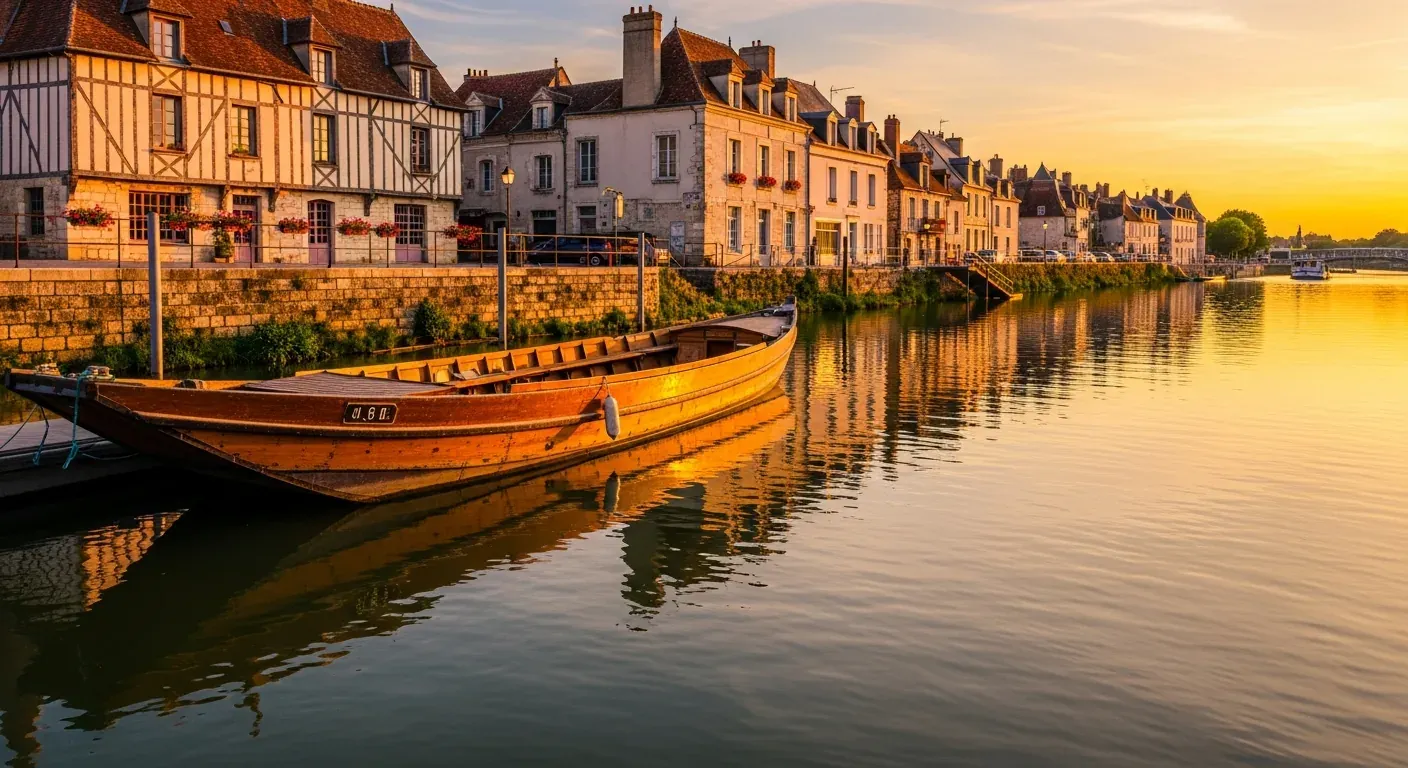
The tour begins with a ride in a flat-bottomed boat across the Charente River—an iconic moment and the most photographed sight along the entire Cognac Route. The cellars on the right bank, their walls blackened by the Baudoinia fungus, give the impression of stepping into a cathedral of spirits. Hollywood-style staging, a modern museum, and a carefully curated tasting experience. Reservations are required during peak season.
Address: Quai Richard Hennessy, Cognac. Hennessy official website.
Martell: The Oldest, the Most Aristocratic
Founded in 1715 by Jean Martell, a merchant from Jersey based in Cognac. The oldest of the great houses. Today a subsidiary of Pernod Ricard.
Distinctive Style: Martell uses a significant proportion of eaux-de-vie from Les Borderies, the smallest of the crus (4,000 ha), which imparts characteristic floral and violet aromas. This is the house’s signature aroma.
Visit to Château de Chanteloup, with its remarkable gardens. The "Master Blender" workshop—where you create your own blend using various eaux-de-vie—is one of the most memorable experiences on the tour. Reservations are recommended.
Address: 7 Place Édouard Martell, Cognac. Martell's official website.
Rémy Martin: The Most Terroir-Driven
Founded in 1724 by Rémy Martin, a winegrower from the Petite Champagne region. Today it is owned by Rémy Cointreau.
Unique Feature: Rémy Martin is the only major house to use exclusively Grande Champagne and Petite Champagne eaux-de-vie (the two most prestigious crus). That's the hallmark "Fine Champagne" (blend of at least 50% Grande Champagne and Petite Champagne). In addition, Rémy Martin distilled "on the lees" (along with the fine particles in the wine), which adds more body and complexity.
Three places to visit: - Historic house: 20 rue de la Société Vinicole, Cognac center - Domaine de Merpins: accessible by electric train from the center - New Grande Champagne distillery (Juillac-le-Coq)
Packages range from the classic tour at €25 to a gourmet lunch at €110. The Louis XIII Prestige Cuvée (blended from eaux-de-vie aged 40 to 100 years, served in a Baccarat decanter, approximately €3,000 per bottle) is iconic.
Website: Official Rémy Martin.
Courvoisier: "Napoleon's Cognac"
Founded in 1828, it is more recent than the other major houses. Legend: Napoleon Bonaparte is said to have taken barrels of Courvoisier with him during his exile on Saint Helena in 1815 (in reality, the story is fictionalized, but it has shaped the brand’s marketing identity—the silhouette of Napoleon is its official emblem).
Located in Jarnac (15 km from Cognac), in a stylish building on the banks of the Charente River. The most accessible of the four—offering “Discovery” or “Prestige” tours—with a less intimidating atmosphere than at Hennessy. It is also the smallest of the four in terms of export volume, and the only one without its own vineyards (it purchases all its eaux-de-vie from distillers).
Address: 2 Place du Château, Jarnac. Courvoisier official website.
Camus: The Fifth Major House
Special mention goes to Camus—founded in 1863 by Jean-Baptiste Camus. It is the only major cognac house that has remained family-owned (now in its 5th generation, with Cyril Camus at the helm). It isn’t among the top four in terms of volume, but it is independent, which makes it unique. It has a particularly strong presence in Asian markets (China, Vietnam, duty-free).
Visits are available at Cognac (29 rue Marguerite de Navarre).
Artisanal Producers: The Connoisseur's Experience
The major houses offer a spectacular experience—staged displays, museums, and curated tastings. But true connoisseurs know that small producers often have the best surprises in store.
Why choose an artisanal producer?
- Frequent visits free or for a donation at independent growers
- Direct access to the distiller, who explains his work without a marketing script
- Cognacs: Niche products not available in mass-market retailers
- Direct Purchase from the Property Owner
- A warm, personal atmosphere
A Few Places to Keep in Mind
Frapin (Segonzac, Grande Champagne) — One of the few houses to own all of its vineyards in Grande Champagne. 240 hectares in the heart of the 1er cru. Style elegant, highly prized by connoisseurs. Guided tour with tasting. Frapin Official Website.
Delamain (Jarnac) — A cognac house founded in 1824, specializing in aged Grande Champagne cognacs. All of its cognacs are blends of eaux-de-vie aged for more than 25 years (minimum XO category). An intimate tour of historic cellars on the banks of the Charente River.
Painturaud Frères (Segonzac) — A fourth-generation family-owned estate in the heart of Grande Champagne. Tour of the distillery and cellars, followed by a tasting in the vineyards. Open Monday through Saturday. A very authentic atmosphere.
Léopold Gourmel (Genté) — A small producer renowned for its regional cognacs, which are highly sought after by international connoisseurs. A winemaking-focused approach and serious tastings.
Charente Vineyards Open House
Each spring (usually in April or May), a Open House Weekend allows you to visit about ten properties at no cost. The perfect opportunity to meet several producers in a single day and often taste cognacs not available in stores.
The Grand Cognac Tourist Office publishes the list of participants every year. Website: destination-cognac.com.
VS / VSOP / XO Designations: A Practical Guide
Cognac uses letters rather than numbers to indicate age—a tradition inherited from 19th-century British merchants, who were the first major importers. These classifications are regulated by the BNIC and apply to the youngest eau-de-vie in the blend (a VSOP may contain older eaux-de-vie, but must meet the regulatory minimum). Source: Cognac.fr / BNIC, production and aging.
| Designation | Minimum age | Character | Suggested retail price (75 cl) | Used |
|---|---|---|---|---|
| VS (Very Special) | 2 years in barrels | Lively, fruity, floral, with notes of pear and white flowers | 30-50 € | Cocktails, long drinks, aperitifs |
| VSOP (Very Superior Old Pale) | 4 years in barrels | Well-balanced, dried flowers, subtle spices, yellow fruits | 50-80 € | Neat, on the rocks, or in sophisticated cocktails |
| Napoleon | 6 years in the barrel | Rounded, dried fruit, vanilla, subtle woody notes | 70-120 € | After-dinner tasting |
| XO (Extra Old) | 10 years in the barrel (since April 2018) | Rich, warm spices, chocolate, caramel, candied fruit | 120-250 € | On its own, after dessert, with a cigar |
| Timeless | 10 years (in practice, 30–50 years) | Rancio aromas (nuts, spices, cocoa), extreme complexity | 200-500 € + | Special Moments |
| Extra / Vintage | At least 10 years (often much longer) | Aged brandies, vanilla, rancio, remarkable finish | 300 € + | Collection, Prestigious Gift |
Non-binding price ranges, which vary depending on the producer, blend, and vintage.
Important Notes: - The minimum age is a floor, not a limit. An XO can contain spirits from 20 to 30 years old, on average. - A Grande Champagne VSOP often outperforms a XO made from less premium grapes — The terroir is just as important as the age. - The "rancio" is a wine-tasting term referring to highly complex aromas (mushrooms, dried nuts, leather, incense) that appear only in very old cognacs (at least 20 years old), considered to be a prestige brand. - In April 2018, the minimum age for XO has increased from Ages 6 to 10 (reinforcement of the designation).
The Six Crus: A Guide to the Terroirs
The Cognac vineyard is divided into six crus, which were demarcated in 1938 based on the work of geologist Henri Coquand in the 19th century. Source: Cognac.fr / BNIC, “The Crus of the Cognac Appellation.” A simple rule: the closer you get to the center (Grande Champagne), the more finesse and aging potential the cognacs possess.
| Cru | Area (approx.) | Floor | Styles of Spirits | Optimal Aging | Iconic Homes |
|---|---|---|---|---|---|
| Grande Champagne (1er cru) | 13,000 ha | Chalky limestone (near Champagne) | Floral, elegant, exceptionally refined, with a very long finish | Ages 35–50 and older | Frapin (100% GC), Rémy Martin Louis XIII, Delamain |
| Petite Champagne | 16,000 ha | Similar limestone, more compact layer | Floral, smooth, full-bodied, slightly less refined | 30–40 years old | Rémy Martin (Fine Champagne) |
| Borderies | 4,000 ha (the smallest cru) | Clay-siliceous, flint | Round, smooth, with aromas of violets and nuts; very unique | Ages 15–25 | Martell (signature), Camus |
| Fine Woods | 31,000 ha (the largest) | Hard red limestone, clay | Round, smooth, with notes of pressed grapes and fresh fruit | 10–20 years | Hennessy (significant proportion) |
| Good Woods | ~9,300 ha | Sandy, less calcareous | Fruity, less refined, matures faster | Ages 8–15 | Used in assembly to ensure a smooth finish |
| Common Woods | 1,500 ha | Coastal sandy soil, Atlantic influence | Fruity with a hint of the sea, sometimes slightly salty | 5–10 years | Rare single-vineyard wines |
Fine Champagne: an AOC within the AOC
A phrase you'll often see on bottles, particularly at Rémy Martin. Fine Champagne is not a cru — it's a AOC that refers to a blend of at least 50% Grande Champagne supplemented by Petite Champagne (and no eaux-de-vie from any other cru).
This is Rémy Martin’s historic signature—the house uses exclusively eaux-de-vie from Grande Champagne and Petite Champagne.
The fungus Baudoinia compniacensis
The most distinctive visual feature of Cognac: the black facades of the wine cellars and historic buildings.
The culprit: Baudoinia compniacensis, a microscopic fungus first reported in 1878 by the pharmacist Antoine Baudoin and described in 1881 (the genus Baudoinia, named in his honor, was not established until 2007). It feeds on the ethanol vapors emitted by the cellars as the cognac evaporates—the famous “angels’ share” (2–3% of the volume that evaporates each year).
Consequence: On any building near an active winery (sometimes several hundred meters away), a black film forms on rocks, walls, and roofs. Phenomenon non-destructive For buildings—the fungus does not damage the stone; it grows on the surface.
The mushroom has been identified and then in other spirits-producing regions around the world: Scotland (whiskey), Kentucky (Bourbon), Jerez (sherry) — anywhere where wine cellars give off alcohol vapors. But It was first described at Cognac, and that it bears the most iconic visual signature.
In Jarnac, on the buildings along the Charente River, the effect is even more noticeable than in the center of Cognac—there is a higher concentration of wine cellars.
Jarnac: The Second-Largest City in the Cognac Region
15 km east of Cognac, also on the Charente River. about 4,500 residents. Often overshadowed by Cognac, but culturally and economically essential.
Houses in Jarnac
- Courvoisier: Global Headquarters, located in a contemporary-style building on the banks of the Charente River
- Hine (1763): a historic house, the oldest vintage-dated cognac still on the market (1953)
- Delamain (1824): a trading house specializing in aged Grande Champagne cognacs
- Maison Royer: independent producer
François Mitterrand in Jarnac
Another famous person from Jarnac: François Mitterrand was born in Jarnac on October 26, 1916 and is buried in Grands-Maisons Cemetery (died January 8, 1996). His family ran a vinegar factory (which has become a museum dedicated to the president).
François Mitterrand Museum: guided tours available, room displaying personal items, archives. Address: 22 rue Abel-Guy, Jarnac.
The Town
An appealing medieval centre with cobblestone streets, St. Peter's Church (12th century), bridge over the Charente River offering an unobstructed view of the blackened facades of the wine cellars. Walk along the river Very pleasant in the late afternoon.
There are several good restaurants in Jarnac, which are generally less touristy than Cognac and offer more affordable prices.
Saintes: The Gallo-Roman Site, 30 km Away
Saintes is one of the best-preserved Gallo-Roman towns in France—and yet it remains surprisingly little known to foreign tourists. Located 30 km west of Cognac, combining a visit to both in a single day is a no-brainer for anyone who appreciates historical sites.
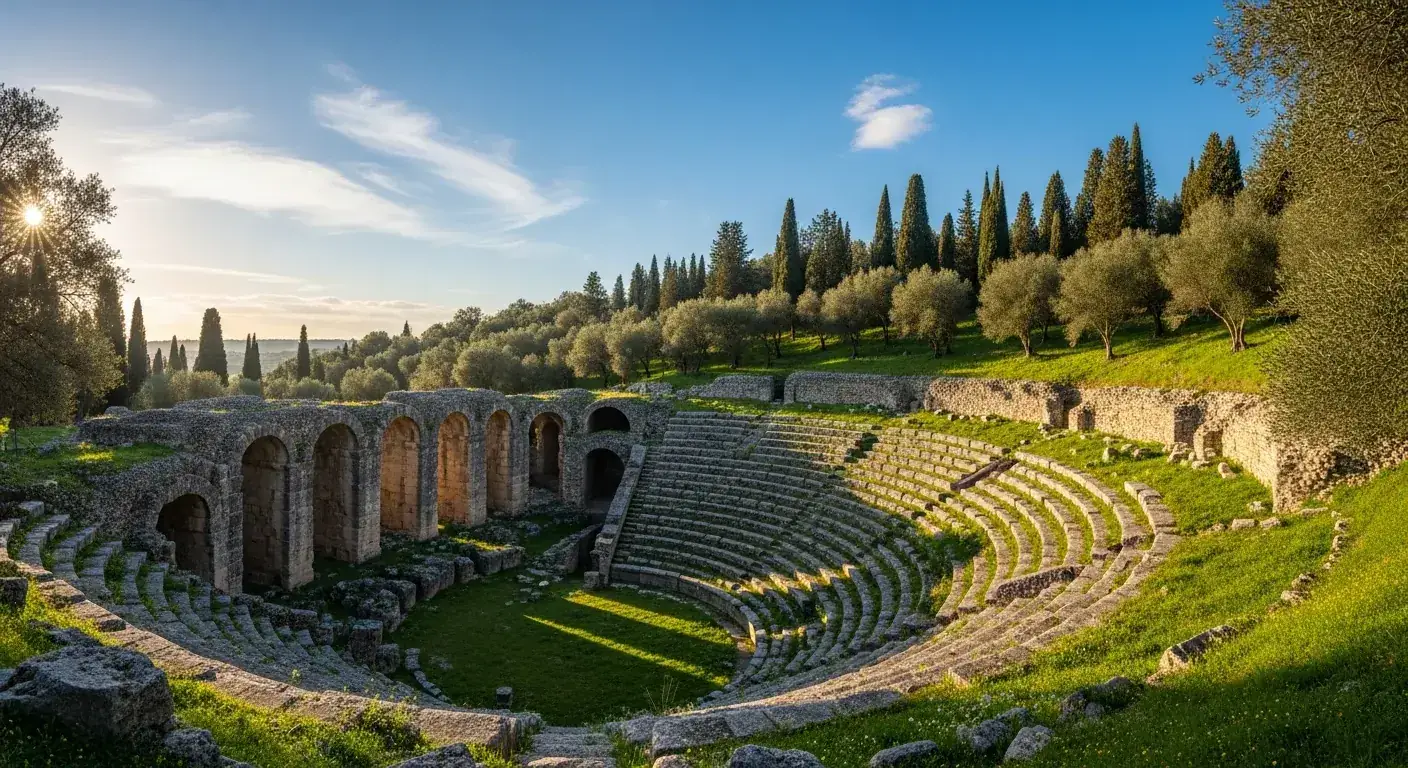
Must-See Attractions in Saintes
The Gallo-Roman Amphitheater — Built during the reigns of Tiberius and Claudius (1st century A.D., circa 40–50 A.D.), it is one of the best-preserved amphitheaters in Western Gaul. An elliptical structure measuring 102 × 126 meters. Capacity: approximately 15.000 spectators at its peak. Designated a Historic Monument in 1840 by Prosper Mérimée. Admission: €3 for adults, free for those under 18.
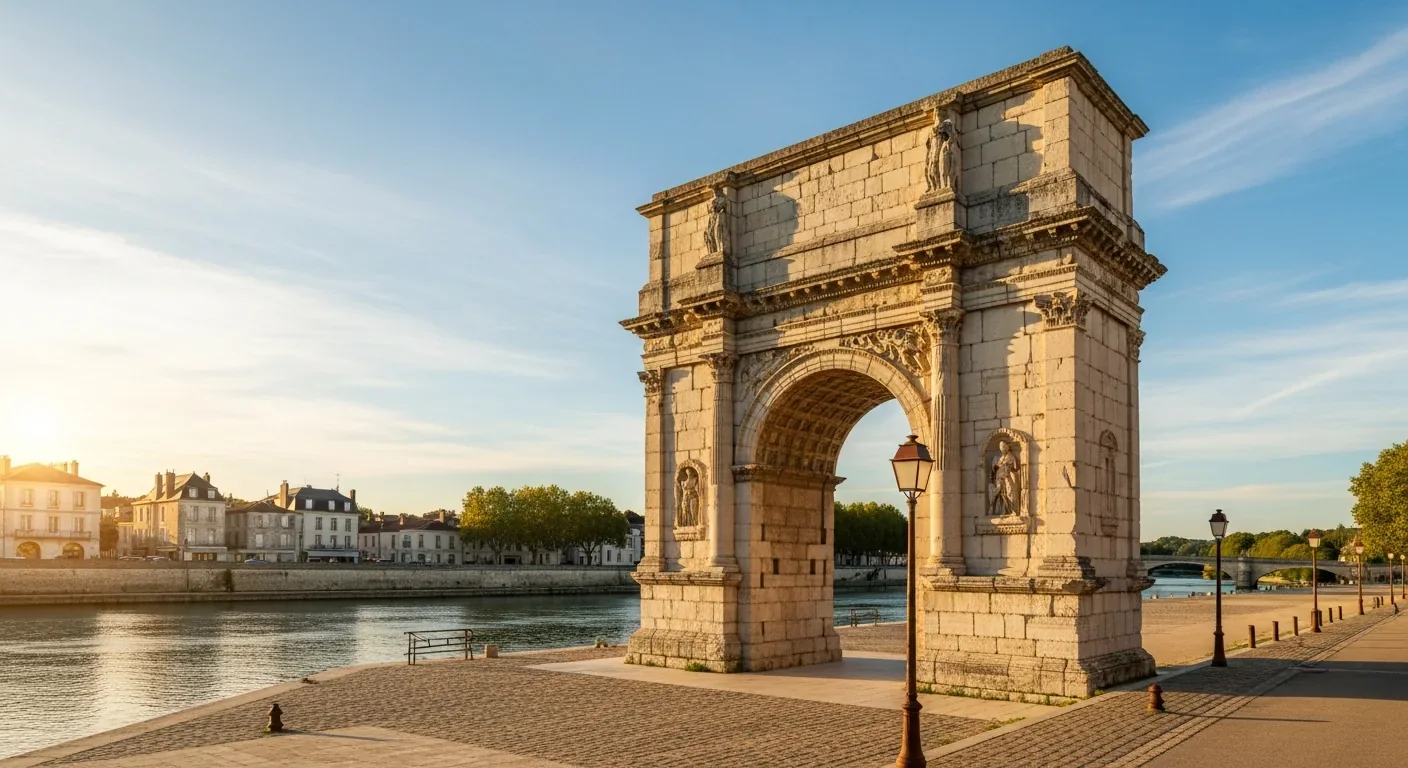
The Arch of Germanicus — Erected in 18–19 AD at the entrance to the Roman bridge over the Charente River. A monumental arch 15 meters high, dedicated to Emperor Tiberius, his son Drusus, and his adopted nephew Germanicus. Ranked among the ten most beautiful Gallo-Roman ruins in France. Free admission year-round. It nearly disappeared in 1843 during the demolition of the old bridge—it was Prosper Mérimée himself, then Inspector General of Historic Monuments, who saved it by having it dismantled stone by stone and reassembled on the new riverbank.
L'Abbaye aux Dames — A Romanesque abbey founded in the 11th century, one of the oldest in Saintonge. Today it serves as a cultural center and concert hall. Its architecture is simple yet majestic. A music festival is held there in July.
St. Peter's Cathedral and the medieval old town, connected by a green tourist route marked on the ground for visitors.
Suggested Itinerary: Cognac + Saintes in 1 Day
- Morning (10 a.m.–1 p.m.): tour of a major cognac house in Cognac (Hennessy or Martell)
- Lunch (1:00–2:30 p.m.): the Charente riverfront at Cognac
- Afternoon (3:00–5:00 p.m.): drive to Saintes (30 min), amphitheater + Arch of Germanicus
- Late afternoon (5:00–7:00 p.m.): Return to Bordeaux or stay overnight
A packed itinerary, but perfectly manageable with an 8-hour chauffeured transfer.
Pineau des Charentes
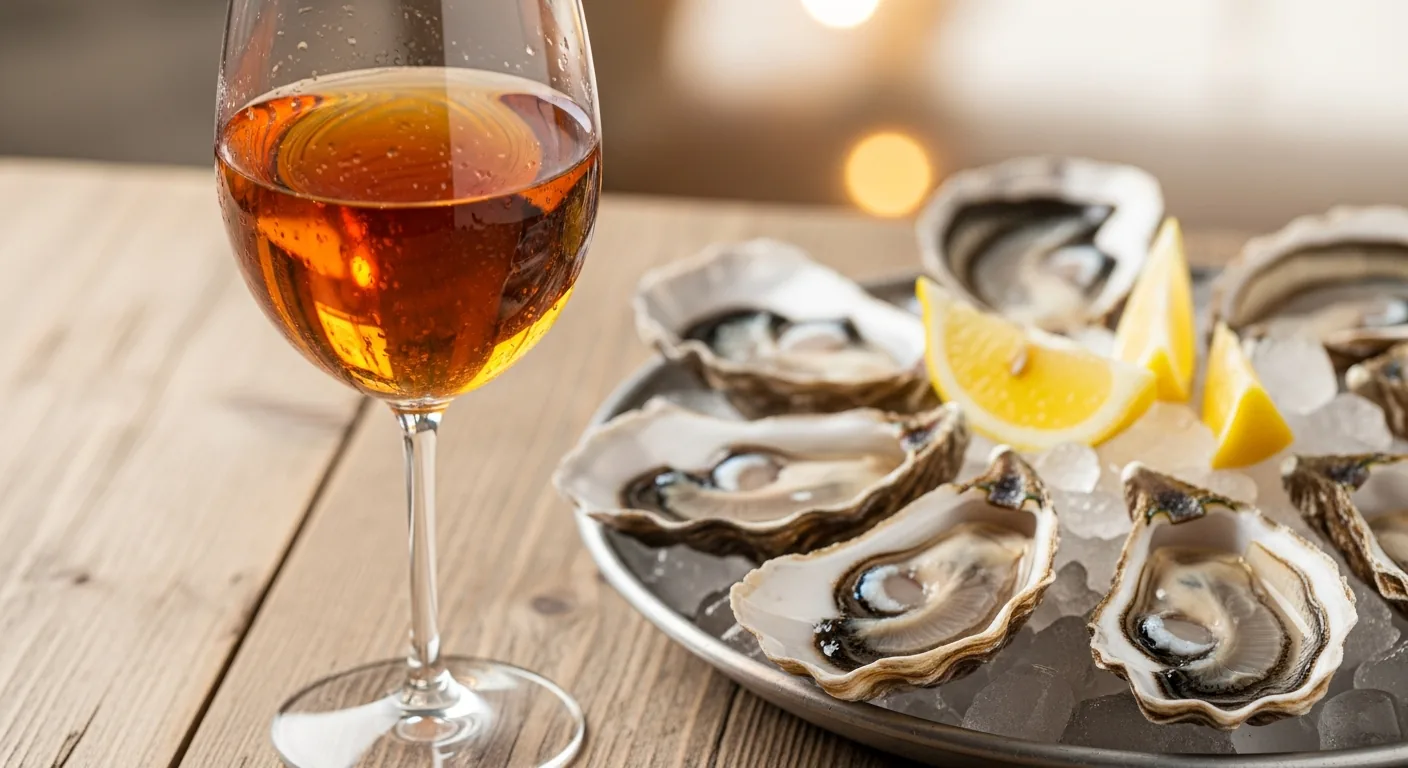
The quintessential local aperitif. AOC since 1945, the Pineau des Charentes is a liqueur wine obtained in by blending fresh grape must and young cognac (at least 1 year old), then aged in barrels.
Three varieties: - Pineau Blanc: made from white grape varieties (Ugni Blanc, Sémillon, Colombard). The most common. - Pineau Rosé: made from Cabernet, Merlot, and Cabernet Franc. - Pineau Rouge: rarer, made from Cabernet Sauvignon
Alcohol content: 16 to 22°. Sweet (at least 125 g/L of residual sugar).
Traditional serving: well chilled (8–10°C), as an aperitif, paired with Charentais melon or foie gras, or simply enjoyed as an aperitif with a few salted almonds. In the Charente tradition, brandy is never served in the middle of a meal—cognac is served after dessert.
Minimum aging: 8 months for white, 12 months for rosé/red in tanks. For Pineau Vieux: at least 5 years in barrels. Pineau Très Vieux: at least 10 years.
A must-buy souvenir from a trip to Cognac.
Charente Cuisine
Charente cuisine is a hearty regional cuisine that combines produce from the land and the sea, with cognac and pineau featuring prominently both in cooking and at the table.
Must-Try Specialties
Cagouilles — Petit-gris snails are the symbol of Charente cuisine. Cooked “Charente-style” with garlic, parsley, sausage meat, and a splash of Pineau at the end of cooking—simmered for two hours over low heat. A festive dish meant for sharing, deeply rooted in tradition.
Charente-style farci — A green terrine made with spinach, leeks, onions, parsley, and chervil, sometimes with added pork. It is served cold as an appetizer or hot as a main course. It can be found at all the butchers in the region.
Mouclade — Bouchot mussels cooked in a creamy sauce made with white wine, Pineau des Charentes, and a hint of curry. This iconic dish, which originated on the Charente coast, can be found in all the region’s fine restaurants.
The Charente-style galette — Melt-in-Your-Mouth Shortbread Cake with butter, cognac-flavored or vanilla. Dessert from the region, to take home as souvenirs. Several local brands (La Mère Lalie, Carron, etc.).
The "tourteau fromager" — a goat cheese cake with a distinctive black crust (achieved by baking at a high temperature). A specialty that always surprises visitors—something you have to try at least once.
The Charentais melon, one of the best French melons. Excellent as an appetizer, traditionally served with Pineau des Charentes poured directly into the melon’s hollow center.
Some Great Restaurants in Cognac
- Claude's Bistro (16 Boulevard Denfert-Rochereau) — Traditional Charente cuisine, including mouclade and eel stew. The go-to bistro in town.
- La Distillerie (Quai de la Charente) — Flavors inspired by cognac, foie gras, and local specialties. River view.
- Les Foudres (34 Rue de Pons) — Produce from the garden and the river, mojettes, smoked fish. Seasonal cuisine.
In Jarnac, the Restaurant du Château (across from Courvoisier) offers a magnificent view of the Charente River.
Events Calendar
| Period | Event / Interest | Atmosphere | Crowd |
|---|---|---|---|
| January–March | Active Distillation in the Cellars | Authentic, distillation vapors, the scent of must | Mild — ideal for connoisseurs |
| April–June | Charente Vineyards Open House (Spring) | Festive, direct from the producers | Moderate |
| July | Cognac Blues Passions (International Blues Festival) | Musical, friendly, outdoor concerts | High |
| September | Grape Harvest in the Vineyards | Rural, authentic, vineyards ablaze with color | Moderate |
| October | Cognac Crime Fiction Festival (novels, comics, film, theater) | Cultural, literary, unique in Europe | Moderate |
| November–December | Christmas Markets, Start of Distillation | Warmth, lights, local crafts | Low to moderate |
The Cognac Crime Fiction Festival
Founded in 1996, it is the only European festival to honor five different forms of crime fiction simultaneously: novels, comics, film, theater, and television. It is held annually in October. The program features author meet-and-greets, film screenings, book signings, and panel discussions. A cultural highlight that stands in stark contrast to the city’s image as a purely wine-tourism destination.
January–March: The Secret Season
This is the only time of year when the Charente stills are in operation. Seeing the distillation process in action—the alcohol vapors, the clanging of copper, the scent of hot mash—is an experience that summer visitors don’t get to enjoy. Artisanal distilleries are particularly welcoming during this time, with fewer tourists and an authentic atmosphere.
The Global Market: Cognac on the International Stage
According to the BNIC, in 2025, 97.5% of cognac by value will be consumed abroad in nearly 139 countries, with 141 million bottles exported. Source: Official BNIC figures as of the end of December 2025. The major houses offer tours in several languages, depending on their schedules. For the trip from Bordeaux, our service can be provided in English upon request.
Practical Information
| Route: Bordeaux → Cognac | Distance | Duration | Estimated cost |
|---|---|---|---|
| private chauffeur (door-to-door) | 125 km via A10/N10 | 1 hour and 40 minutes | Starting at €209 · one-way |
| Personal car | 125 km on the A10/N10 | 1 hour 40 minutes + parking | Variable rate — check with the service provider |
| Train (Bordeaux St-Jean → Cognac) | via Angoulême | 2:15–2:45 (1 transfer) | Variable rate — check with the service provider |
| Direct TER Train | via Saintes (rare) | 2½–3 hours | Variable rate — check with the service provider |
| FlixBus / BlaBlaCar Buses | directly or via Angoulême | 2½–3½ hours | Variable rate — check with the service provider |
Recommended duration
- Day 1: a grand house + lunch on the waterfront + a stroll through the old town. That’s enough for a first visit.
- 2 days: perfect for combining a visit to a large estate, a small-scale producer, Saintes, and an evening out at a restaurant. The recommended pace for truly enjoying the region.
- 3 days or more: for enthusiasts—the wine route, Jarnac, Segonzac, Barbezieux, Angoulême.
Accommodations
These are approximate figures only; please check the current price with the establishment.
In Cognac: several 3-star hotels starting at 70–80 € per night (Hôtel Le François 1ᵉʳ, Hôtel d'Orléans). Hôtel Chais Monnet & Spa (5-star, opened in 2018 in a former wine cellar): €250 per night and up—the premier luxury hotel.
In Jarnac: fewer options but a more rural atmosphere, and prices are often lower.
In the vineyards: several vacation rentals and bed-and-breakfasts run by local winemakers—an authentic experience.
Estimated budget per person (in addition to the professional chauffeur)
These are approximate figures only; please check the current price with the establishment.
| Position | Estimated Budget |
|---|---|
| Entrance to a large house | €15–35 (standard tour with tasting) |
| Artisanal Producer Listing | €5–15 (often free during the off-season) |
| Cognac Bistro Lunch | 20-35 € |
| Gourmet Lunch | 50-80 € |
| 3-Star Accommodations | starting at 70–80 € per night |
| House-made XO Bottle | 120-250 € |
| Timeless Bottle | 200-500 € + |
| Pineau des Charentes | €12–30 per bottle |
With children
Rémy Martin and Courvoisier welcome children on their tours (tastings are For ages 18 and older only, grape juice available). Courvoisier is the most affordable brand and the least intimidating for families. The Saintes Amphitheater offers "Family-Friendly" Workshops in July–August and a game booklet for ages 7–12.
Accessibility for People with Disabilities
Hennessy and Rémy Martin offer accommodations for people with limited mobility. The Arc de Germanicus in Saintes is wheelchair-accessible from Place Bassompierre. The historic cellars of small producers are often less accessible—check in advance before visiting.
Frequently Asked Questions
What is the difference between cognac, armagnac, and brandy?
Cognac: AOC, designated region (Charente/Charente-Maritime), double distillation in Charente stills, primary grape variety Ugni Blanc · Armagnac: AOC, Gascony region, continuous distillation (Gascon still), various grape varieties (Ugni Blanc, Baco, Folle Blanche) · Brandy: a generic term for any distilled wine spirit, with no geographical restrictions (Spanish, Californian, South African brandy, etc.)
Does cognac age in the bottle?
No. Unlike wine, once bottled, cognac no longer ages. A bottle from 1985 put up for sale in 2026 has not aged since 1985. Store your bottles upright (unlike wine), away from light. An opened bottle can be kept for several years without any noticeable deterioration.
Is it possible to visit Cognac in one day from Bordeaux?
Yes, absolutely. The drive takes about 1 hour and 40 minutes. One day is enough to tour a grand house (2 hours), have lunch on the waterfront, and stroll through the old town. If you want to include Saintes (30 km), it’s best to leave early or arrange for an 8 a.m. pickup.
Which cognac house is the best to visit?
It depends on what you're looking for: - Hennessy: the most spectacular setting (boat ride), ideal for a first visit - Martell: for history and terroir enthusiasts, with remarkable gardens - Rémy Martin: the most comprehensive wine tourism experience (Fine Champagne, 3 sites) - Courvoisier: the most accessible option for beginners and families For a truly unique experience, add a small-batch producer (Frapin, Painturaud).
Do you need to book distillery tours in advance?
During peak season (May–October), reservations are required for Hennessy and Rémy Martin. Outside of peak season, the major houses often welcome visitors without a reservation during their regular hours. For smaller producers, a phone call the day before is usually sufficient—some even open their doors free of charge upon request.
What is the difference between VS, VSOP, and XO?
These designations indicate the age of the youngest brandy in the blend: - VS: aged for at least 2 years (fruity, lively, ideal for cocktails) - VSOP: aged at least 4 years (balanced, floral, good for sipping neat) - XO: aged at least 10 years (rich, complex, spicy) In practice, producers often go well beyond these minimums.
Why are the facades black in Cognac?
Due to the fungus Baudoinia compniacensis, which feeds on the alcohol vapors emitted by the wine cellars (“the angels’ share,” 2–3% annual evaporation). This phenomenon does not damage the buildings. It can also be observed in Jarnac and throughout areas with active cellars.
Can you visit Cognac with children?
Yes. Rémy Martin and Courvoisier welcome children on their tours (no tastings for minors). The amphitheater in Saintes offers family workshops and a game booklet in July and August. The historic center of Cognac and the banks of the Charente River are pleasant places for a family stroll.
When is the best time to visit Cognac?
There are two distinct periods: - January–March: distillation is in full swing, an authentic atmosphere, and no crowds—ideal for connoisseurs - May–June: lush green vineyards, mild weather, Vineyard Open House, and relaxed tastings. July–August: peak season (Blues Passions Festival, but expect crowds and reservations are required). October: Polar Festival and grape harvest.
Are there other things to do in Cognac besides visiting the distilleries?
Absolutely. The medieval old town is worth an hour of strolling. The Château de Cognac (the king’s birthplace) can be visited via the Maison Baron Otard. The banks of the Charente River are a pleasant place for a walk. And Saintes, 30 km away, boasts an exceptional Gallo-Roman heritage, featuring its amphitheater and the Arch of Germanicus. Music lovers will want to check out the Blues Passions Festival in July, and literature enthusiasts should note the Polar Festival in October.
Is Cognac accessible by public transportation from Bordeaux?
Yes, but with a transfer. There is no direct train from Bordeaux to Cognac: you’ll need to change trains in Angoulême, for a total travel time of about 2 hours and 15 minutes to 2 hours and 30 minutes. The Cognac train station is 1 km from downtown and within walking distance. This is a good option for anyone staying in Cognac for several days and wanting to visit the distilleries on foot.
Is the U.S. market really that important for cognac?
Yes. The United States is one of cognac’s traditional markets, but market share varies over time; the industry data used here covers 2025. Hennessy is culturally embedded there (particularly in hip-hop culture since the 1990s). The major cognac houses tailor their tours to an international clientele; the languages available are to be confirmed at the time of booking. Our door-to-door car service can be provided in English upon request.
Further Reading
- Chauffeured car for Cognac: see our page on executive transfer between Bordeaux and Cognac (packages, rates, multiple drop-offs, reservations)
- Arriving from the airport or train station: see Bordeaux Airport Transfer and Chauffeur-driven transfer from Saint-Jean Train Station
- Combine with a 2-day tour of the Bordeaux vineyards: see pre-booked car service Bordeaux ↔ Médoc and dedicated chauffeur Bordeaux ↔ Saint-Émilion
- The Arcachon Basin as part of the same trip? See our door-to-door transfer between Bordeaux and Arcachon, our chauffeur-driven car between Bordeaux and Cap Ferret, or our private driver between Bordeaux and the Dune du Pilat
- Is Périgord (Sarlat, Lascaux) on your itinerary? See our chauffeur service between Bordeaux and Sarlat or our executive car service between Bordeaux and Lascaux
- Basque Country? See chauffeured transfer Bordeaux ↔ Biarritz, private chauffeur Bordeaux ↔ Bayonne, or professional chauffeur Bordeaux ↔ San Sebastián
Sources and References
- Destination Cognac — Grand Cognac Tourist Office — calendar, tours, lodging, events
- Cognac.fr / BNIC — production — winemaking, double distillation, and aging
- Cognac.fr / BNIC — the crus — the appellation’s six crus
- Cognac.fr / BNIC — Industry Statistics — Data as of the end of December 2025
- Saintes Tourist Office — Amphitheater, Arch of Germanicus, Events Calendar
- Hennessy
- Martell
- Rémy Martin
- Courvoisier
- Frapin — Grande Champagne, Artisanal Producer
- Pineau des Charentes — AOC, Producers, Recipes
- Cognac Blues Passions — July Festival
- Cognac Crime Fiction Festival — October Edition
Article updated on .
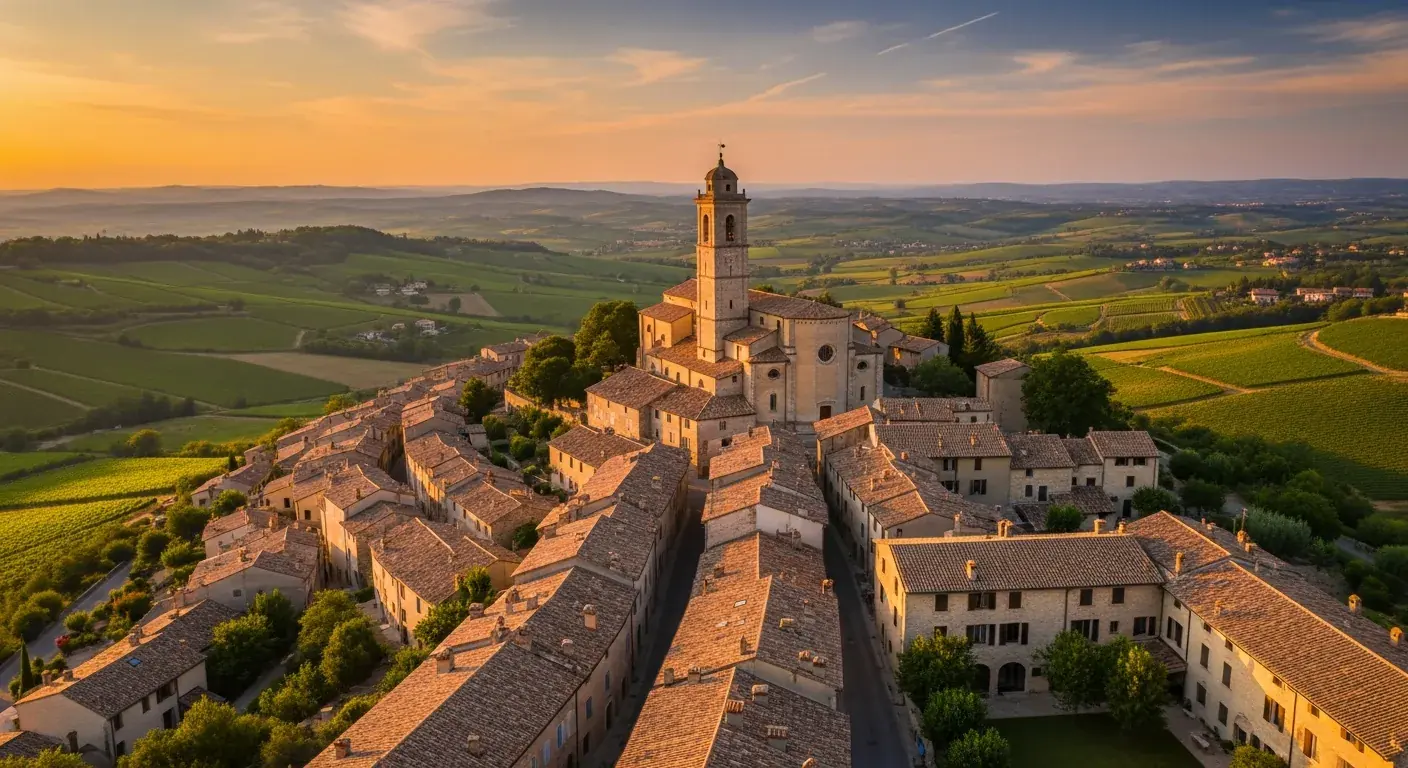
On the way to Cognac
Direct door-to-door trip from Bordeaux (~1 hour 40 minutes), ideal for a day trip to the cognac houses (tours + tastings without having to drive). Fixed-price quote in writing within 30 minutes; sedan or van; English-speaking driver.