
Bordeaux to Bayonne, France’s chocolate capital
The gateway to the Basque Country: France’s leading chocolate-making city, its PGI-certified ham and the annual ham fair dating back to 1462, the “White and Red” Festivals, the ramparts redesigned by Vauban, and the cloister of Sainte-Marie Cathedral—and how to get to Bayonne from Bordeaux. Everything you need to know before you go.
In a nutshell
- Bayonne, population 50,000, at the confluence of the Adour and Nive rivers. The historic and cultural capital of the French Basque Country (Iparralde, province of Labourd).
- Three overlapping identities: Basque (language, culture, pelota, cuisine), Gascon (administrative history, cuisine of the Southwest), and Jewish-Portuguese (chocolate, the Saint-Esprit neighborhood since 1492).
- The fortifications of Bayonne were redesigned by Vauban beginning in 1680, but Bayonne is not among the twelve components of the UNESCO World Heritage Site “Vauban Fortifications,” inscribed in 2008.
- France's leading chocolate-making city since the 17th century—a craft brought by Sephardic Jews expelled from Spain (1492) and Portugal (1496).
- Bayonne Ham (PGI) since 1998; Ham Fair since 1462 (Louis XI, letters patent).
- Bayonne Festival: More than one million visitors over five days in mid-July. A tradition since 1932. Dates for 2026: July 15–19.
- Bonnat-Helleu Museum: Reopened on November 27, 2025, after 14 years of renovations. 7,000 works. Pierre Rosenberg (former director of the Louvre): "The finest collection between Paris and Madrid."
- Distance from Bordeaux: 186 km and 2 hours 14 minutes by private chauffeur service. 1 hour 15 minutes to 1 hour 45 minutes by direct TGV/TER.
Before You Go: What Bayonne Is Really Like
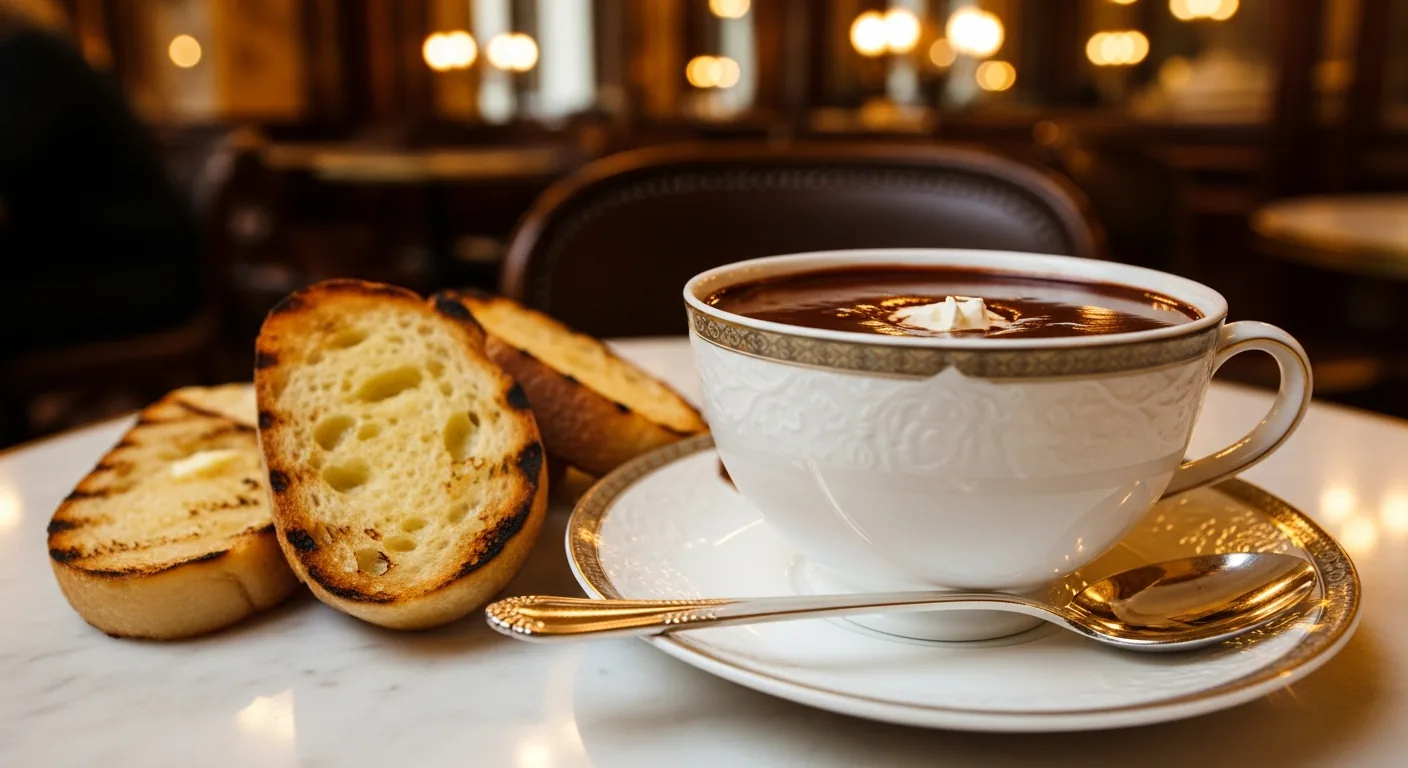
It’s 8:30 a.m. on a Saturday in September. You push open the door to Salon Cazenave under the arches of Port-Neuf. Founded in 1854, the establishment has remained virtually unchanged: dark wood paneling, antique mirrors, and display cases filled with candy. You’re served a deep, steaming cup of Bayonne-style hot chocolate—thick, slightly bitter, almost creamy—accompanied by buttered toasted bread sticks. This is exactly the ritual invented in the 17th century when Sephardic Jews, driven out of Spain and Portugal, brought to Bayonne the expertise in cocoa processing they had brought back from the Americas. For two centuries, they held a near-absolute monopoly on it in France.
That’s Bayonne. A city with three identities that don’t contradict each other—they blend together. Basque in its language (Euskara, bilingual signs, pelota at the trinquet), its culture (Aviron Bayonnais rugby team, distinctive cuisine), and its traditions (the “Fêtes en blanc et rouge,” inspired by Pamplona’s Sanfermines). Gascon in its administrative history (annexed to France in the 14th century), its cuisine (ham, foie gras, and axoa from the Southwest), and its architecture (half-timbered houses with red roofs, reminiscent of the bastides). It is Jewish-Portuguese in character through its Saint-Esprit neighborhood, its chocolate-making industry, and its ties to medieval Spain and Portugal. Three identities, one city, just 50,000 residents, yet a cultural and gastronomic influence far beyond its size.
This guide is designed to help you gain an in-depth understanding of Bayonne before you visit. For practical information (how to get there, prices, and services), see our page on chauffeured transfers between Bordeaux and Bayonne.
History and Geography: A City Born at the Confluence of Two Rivers
The Natural Site
| Neighborhood | Position | Character | Specialty |
|---|---|---|---|
| Greater Bayonne | Left Bank of the Nive | Historical, Christian | Cathedral, Market Halls, Arceaux, Chocolate Shops |
| Little Bayonne | Right Bank of the Nive | Popular, festive | Pintxos, nightlife, rugby |
| Holy Spirit | Right Bank of the Adour | Former Jewish quarter (autonomous until 1857) | Synagogue (1837), Jewish cemetery (17th century), train station |
Bayonne is situated in a remarkable location: at the confluence of the Adour and Nive rivers, 6 km from the Atlantic Ocean. Three distinct historic districts, separated by the two rivers:
- Greater Bayonne on the left bank of the Nive: the historic Christian city, centered around the cathedral. Renaissance mansions, shopping streets, and the market halls at Place des Gascons.
- Le Petit Bayonne on the right bank of the Nive: a lively, working-class neighborhood with pintxos bars, restaurants, and a vibrant nightlife.
- Saint-Esprit on the right bank of the Adour: a former Jewish quarter, which was autonomous until 1857 and is now part of Bayonne (see the dedicated section).
From Lapurdum to Bayonne (Antiquity–Middle Ages)
The site has been inhabited since ancient times. In Roman times, the city was called Lapurdum—a place name that would give its name to Labourd, the historic province of the French Basque Country, of which Bayonne is now the capital.
In the Middle Ages, Bayonne came under English rule following the marriage of Eleanor of Aquitaine to Henry Plantagenet in 1152. For three centuries (1152–1451), Bayonne was under English rule, which made it a major commercial hub: a port for exporting wine, hams, and textiles to England and Northern Europe.
Recaptured by France in 1451 under Charles VII, at the end of the Hundred Years' War. Bayonne became a border town of the kingdom.
Vauban and the City Walls (17th century)
| Element | Date / Details | Role |
|---|---|---|
| Fortification Design | 1680 by Vauban | Military Engineer to Louis XIV |
| Bastions, curtain walls, citadel | late 17th century | Integrated Defense System, Crossfire |
| Citadel of the Holy Spirit | Right Bank of the Adour | Center of the defensive formation |
| Current Walk | ~5 km, 1.5–2 hours | Freely accessible; view of the Pyrenees on a clear day |
Beginning in 1680, Sébastien Le Prestre de Vauban, Louis XIV’s military engineer, designed and built Bayonne’s modern fortifications. Bastions, curtain walls, a citadel, and covered ramparts—together, they form one of the most accomplished defensive systems in Vauban’s body of work.
The fortifications of Bayonne were redesigned by Vauban beginning in 1680, but Bayonne is not among the twelve components of the UNESCO World Heritage Site “Vauban Fortifications,” inscribed in 2008.
Modern Bayonne (19th–20th centuries)
In the 19th century, Bayonne prospered thanks to its port and trade, but remained on the periphery of large-scale industry. The annexation of Saint-Esprit in 1857 nearly doubled the population. The train station was built, and the Saint-Esprit Bridge was modernized.
In the 20th century, Bayonne became the cultural capital of the French Basque Country: the Basque Museum (1924), Aviron Bayonnais (rugby champions), the Bayonne Festival (1932), and the bullring (1893). The city’s influence extends far beyond its modest size.
Today, Bayonne is: - A "City of Art and History" - Home to a cathedral that has been listed as a UNESCO World Heritage Site since 1998 as part of the Routes of Santiago de Compostela in France - A recognized cultural center (museums, festivals, living traditions)
Greater Bayonne: The Historic and Religious Heart of the City
St. Mary's Cathedral
Bayonne’s iconic landmark. Built between the 13th and 16th centuries in the Rayonnant Gothic style, on the ruins of a Romanesque cathedral destroyed by successive fires. The two distinctive Neo-Gothic spires date only from the 19th century—they were added under the direction of architect Émile Boeswillwald to give the building its current silhouette.
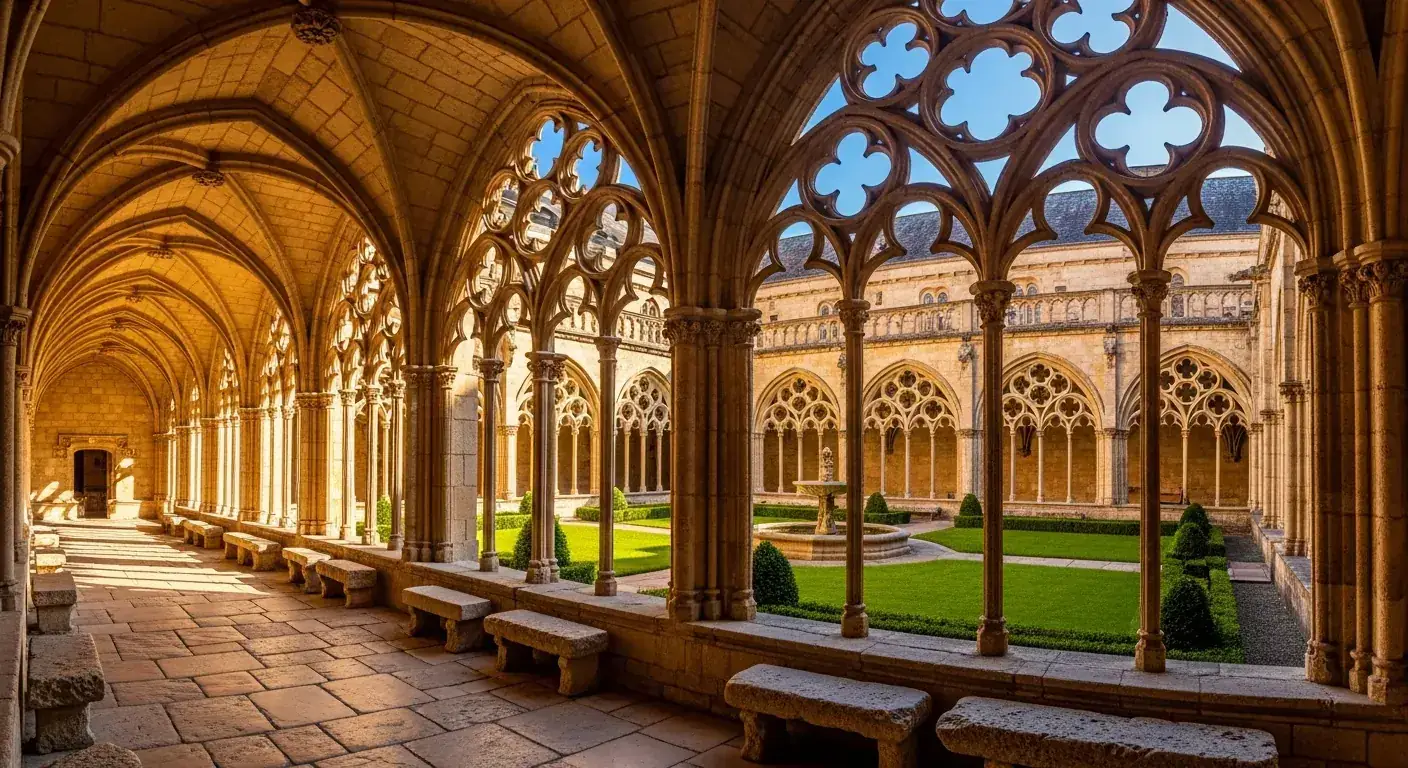
Listed as a UNESCO World Heritage Site since 1998 as part of the Routes of Santiago de Compostela in France. The cathedral is, in fact, an important stop along the Soulac Route, one of the routes connecting the Atlantic Ocean to Santiago.
Must-see highlights: - The 14th-century Gothic cloister, one of the most beautiful in southwestern France. Vaulted galleries, intricately carved sculptures, and a peaceful central garden. - The stained-glass windows in the side chapels (some dating from the 15th century, restored) - The two spires as seen from the banks of the Nive River—the best angle for photos - The Baroque organ case
Free admission. Allow at least 45 minutes.
The Bayonne Market Halls
Place des Gascons, on the left bank of the Nive. The Les Halles building, constructed in 1992 (contemporary architecture, but on the historic site of the market). This is where most of Bayonne’s food shops are concentrated: delis, cheese shops, bakeries, fishmongers, and produce stands.
Specialties to taste or buy: - Bayonne ham (IGP), sliced to order at several delicatessens (see dedicated section) - Ossau-Iraty sheep’s milk cheese (AOP) (the premier cheese of the Basque Pyrenees) - Espelette pepper AOP (powder, string, jelly, purée) - Foie gras from the Southwest - Basque cake with black cherries from Itxassou - Fresh fish from the port of Saint-Jean-de-Luz
Hours: Every morning (around 7 a.m.–2 p.m.). Bar des Halles and nearby bars for coffee and pintxos.
The Arches of Port-Neuf
The historic heart of Bayonne’s commercial district. A covered shopping arcade that runs from the city center down toward the river. This is where you’ll find the historic chocolate shops (Cazenave 1854, Daranatz 1890), as well as artisan shops, bookstores, and jewelry stores.
Shopping Streets
- Rue Port-Neuf: an extension of Les Arceaux, featuring high-quality shops
- Rue d'Espagne: the slope leading down to the bridge over the Nive
- Rue Argenterie: a narrow medieval alley
- Rue Pannecau: Transition to Petit Bayonne
Le Petit Bayonne: A Festive and Cultural Spirit
On the other side of the Nive River, accessible via several bridges (the Pannecau Bridge is the most iconic). Petit Bayonne has historically been Bayonne’s working-class neighborhood: home to artisans, factory workers, sailors, and fishermen.
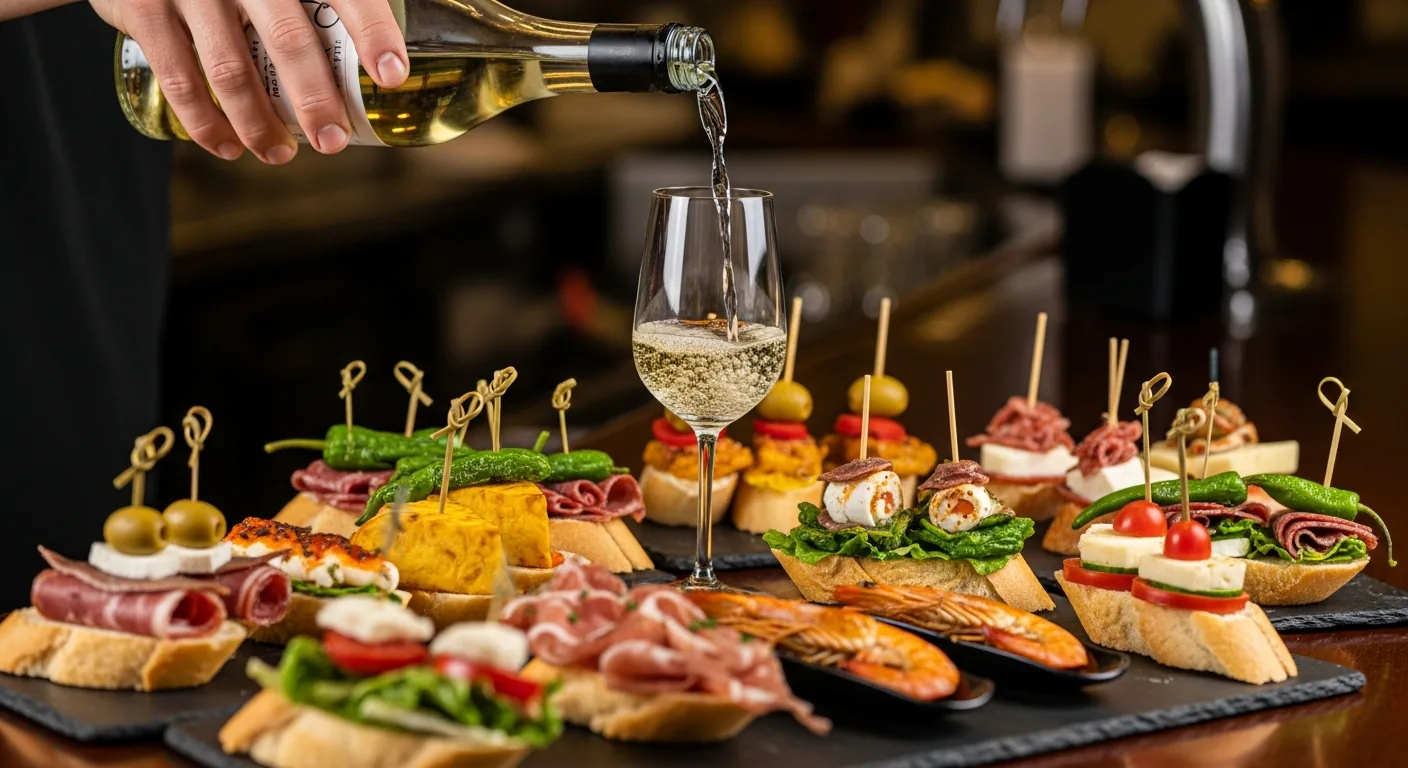
Today, it’s the city’s lively heart: pintxos bars, restaurants, outdoor seating, and nightlife. This is where people come for tapas and pintxos:
- Rue des Tonneliers: the main street for pintxos, with several historic bars (the Bar du Marché, the Trinquet Saint-André)
- Rue Pannecau: A Culinary Journey
- Quai des Corsaires (along the Nive River): shaded terraces with a view of the cathedral's spires
The pintxos ritual in Bayonne: 1. Walk into a bar 2. Choose your pintxos from the counter (€1.50 to €3 each) 3. Order a glass of txakoli (a slightly sparkling Basque white wine, poured from a height) or a Basque red 4. Eat standing at the bar, pay on your way out 5. Move on to the next bar
When to go: 12:00 p.m.–2:00 p.m. for lunch, 7:00 p.m.–10:00 p.m. for drinks and dinner. Very lively evenings on Thursday, Friday, and Saturday.
The Saint-Esprit neighborhood: the former Jewish quarter
On the right bank of the Adour River, accessible via the Saint-Esprit Bridge (the oldest and longest bridge in Bayonne). Saint-Esprit was an independent municipality until 1857, when it was incorporated into Bayonne. This autonomy, which lasted more than three centuries, has shaped the neighborhood’s unique identity.
The Settlement of Sephardic Jews (15th–16th Centuries)
The history of Saint-Esprit is inextricably linked to that of the Sephardic Jews:
- March 31, 1492: The Alhambra Decree was signed by the Catholic Monarchs, Isabella and Ferdinand. The Jews of Spain were given three months to convert to Christianity or leave—most of them left.
- 1496: Portugal followed suit, forcing Jewish refugees to convert or go into exile.
- Some of these refugees, known as the “Portuguese nation,” crossed the Pyrenees and settled in Saint-Esprit—on the outskirts of Bayonne, but in an autonomous municipality, and thus outside the jurisdiction of the Christian municipal authorities.
- They bring their expertise with them: maritime trade, finance, medicine, and especially chocolate (see the dedicated section).
The Holy Spirit Today
The neighborhood retains a distinctive architectural heritage: - Bayonne Synagogue (Rue Maubec, built in 1837)—one of the oldest in France - Jewish cemetery dating from the 17th century - Saint-Esprit Church (14th–15th centuries) - Bayonne Train Station (built in the 19th century)
Saint-Esprit remains a lively neighborhood, more down-to-earth than Grand Bayonne, with authentic bars, restaurants, and shops. It’s less touristy, making it more accessible for those looking to experience everyday Bayonne.
The Vauban Ramparts of Bayonne
The fortifications of Bayonne were redesigned by Vauban beginning in 1680, but Bayonne is not among the twelve components of the UNESCO World Heritage Site “Vauban Fortifications,” inscribed in 2008.
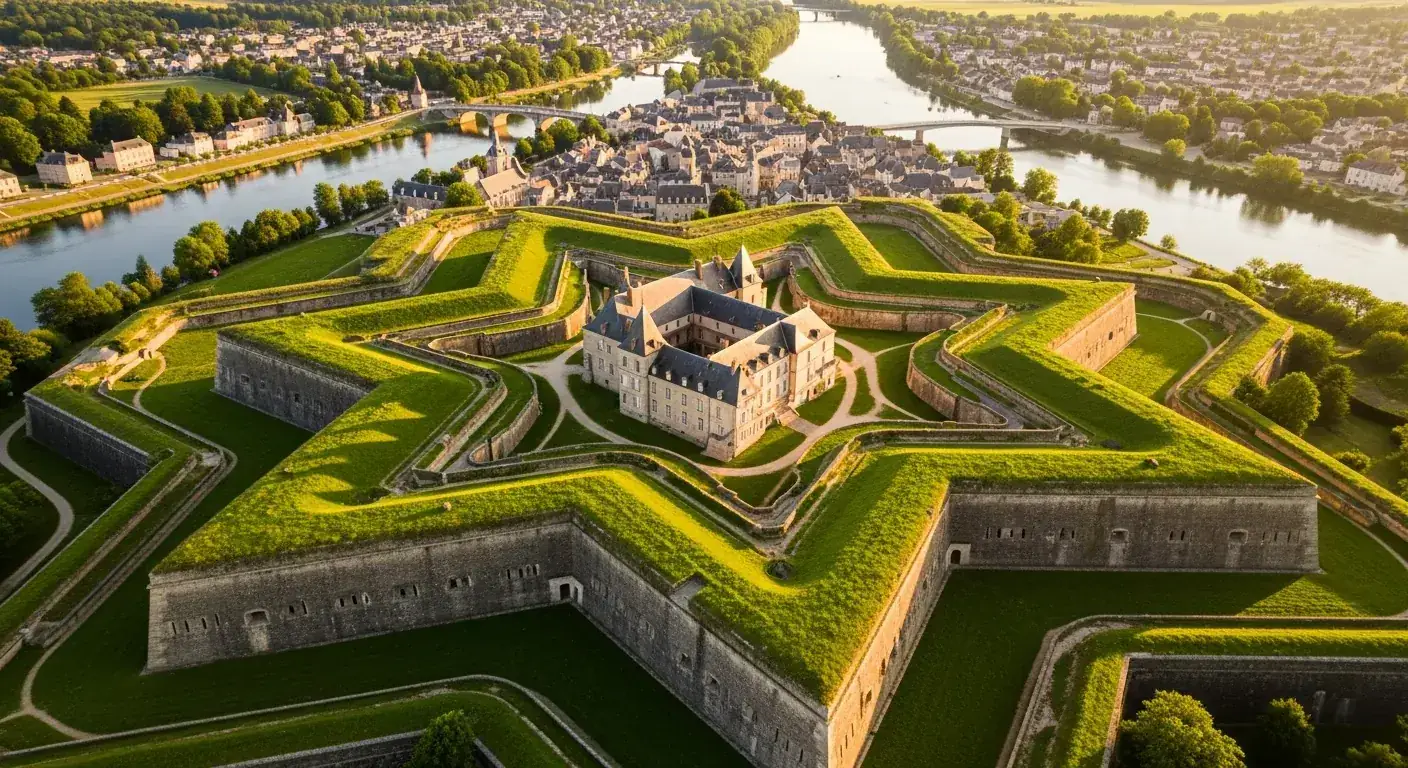
What to See
- Bastions: triangular projections that allow for crossfire
- The Saint-Esprit Citadel (on the right bank of the Adour River), the center of the defensive system
- The curtain walls between the bastions
- The ditches (now dry)
- The Ramparts Walk: a route now open to the public
The Walk
The full loop is about 5 km; allow 1.5 to 2 hours for a leisurely walk. Best time to visit: late afternoon (golden light, views of the Pyrenees on a clear day).
Several access points: from Grand Bayonne via Château-Vieux, from Saint-Esprit via the citadel, and from Petit Bayonne via the old moats that have been converted into parks.
The tourist office offers themed guided tours focusing on Vauban-style military architecture—which are helpful for understanding the logic behind the defensive system.
Museums
Basque Museum and Museum of the History of Bayonne
A must-see for anyone wanting to understand Basque culture. Housed since 1924 in the Maison Dagourette, a late 16th-century bourgeois mansion on the banks of the Nive (37 quai des Corsaires).
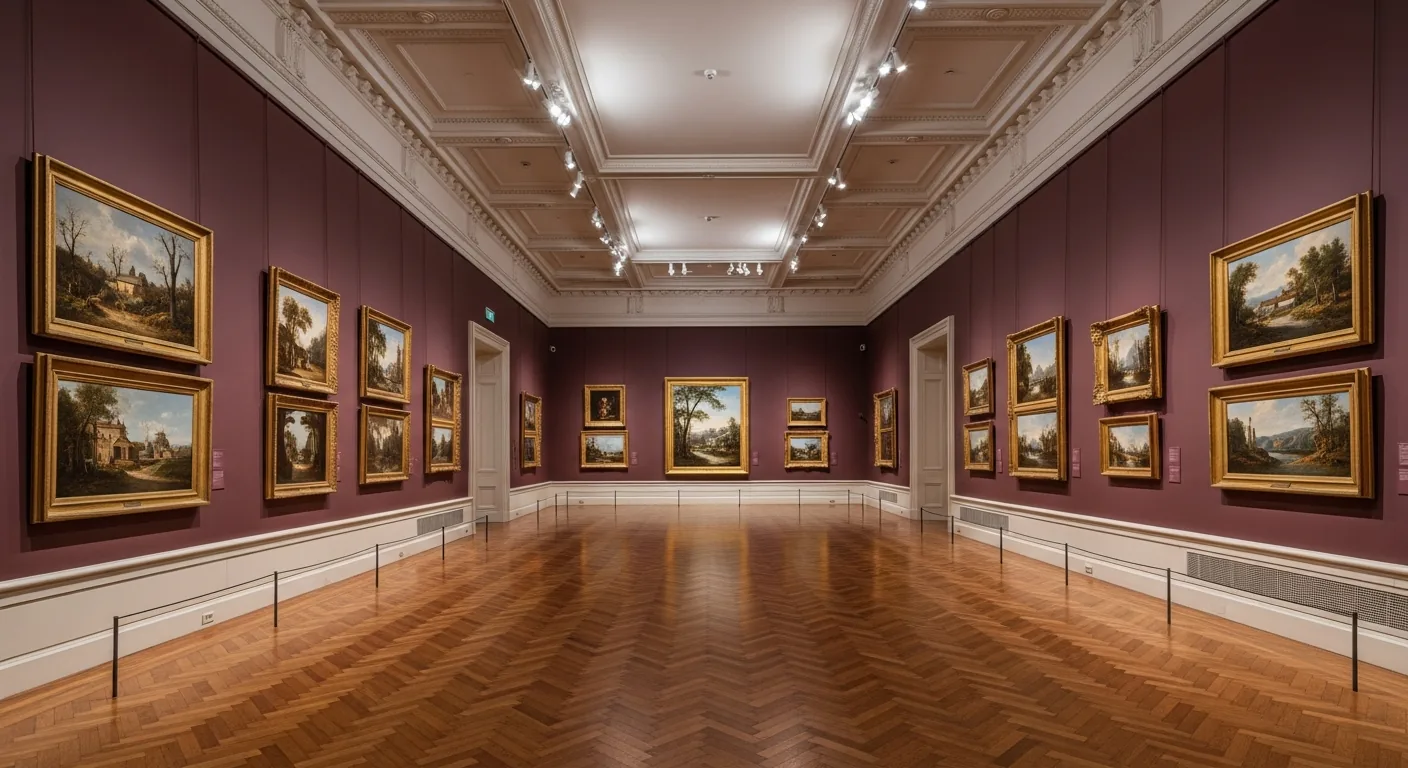
The museum houses the largest ethnographic collection dedicated to the Basque Country in France: - Approximately 85.000 objects in total - 20,000 graphic documents - 50,000 photographs (an exceptional collection from the 19th and 20th centuries) - 15.000 three-dimensional objects (tools, costumes, furniture, pelota equipment, games, masks, ex-votos) - 20 themed galleries spread across 3 floors
Topics covered: Basque pelota, traditional architecture, cuisine, dance and music, rituals and beliefs, the Basque language, maritime life and fishing, and pastoral agriculture.
Practical Information: - Address: 37 Quai des Corsaires, Bayonne - Hours: Tue, Wed, Fri, Sat, Sun: 10 a.m.–6 p.m. Thursday: 1 p.m.–8 p.m. (free from 6:00 PM to 8:00 PM) - Full price: 9 €. Free for visitors under 26 and on the first Sunday of the month - Closed during the Bayonne Festival and on July 14 - Website: musee-basque.com
Bonnat-Helleu Museum — The Great Revival of 2025
The Museum of the Year in the Southwest, 2025–2027. The Bonnat-Helleu Museum reopened on November 27, 2025, after 14 years of renovation and expansion work.
The exhibition space has doubled in size—from 2,000 to 4,000 square meters—finally allowing these masterpieces to be displayed in a manner befitting their stature.
The collection is exceptional. Nearly 7,000 works, including: - Paintings: Rubens, Van Dyck, El Greco, Goya, Ingres, Delacroix, Géricault, Degas, and Bonnat himself (a 19th-century painter from Bayonne who bequeathed his collection) - Print room: more than 3,500 drawings, among the most extensive collections in the world, featuring Leonardo da Vinci, Michelangelo, Raphael, Dürer, and Rembrandt
International Recognition: Pierre Rosenberg, former director of the Louvre, openly describes the museum as “the finest collection between Paris and Madrid.” This statement is not a marketing exaggeration—it is a scholarly opinion shared by curators around the world.
A unique fact: the Bonnat-Helleu Museum is the Louvre’s largest depository in France, with 2,500 works on loan. This is an exceptional distinction.
Practical Information: - Hours: 10 a.m.–6 p.m. (low season), 10 a.m.–7 p.m. (high season). Fridays until 8:00 p.m. or 9:00 p.m. Closed on Tuesdays. - Adult admission: 9 € (low season) / 11 €(high season) - Website: mbh.bayonne.fr
Our recommendation: If you’re visiting Bayonne after November 2025, the Bonnat-Helleu Museum is probably the main reason to go. The collection is worth the trip from Paris—and from Bordeaux, just a 2-hour drive away, it would be a shame to miss it.
The History of Chocolate: Bayonne, France's Leading Chocolate-Making City
The most unique aspect of Bayonne’s identity: according to the City of Bayonne, Bayonne was the first city in France to produce and process chocolate. This history is closely tied to the Sephardic Jewish diaspora and the first workshops established in Saint-Esprit.
The Origins (1492–1615)
| Year | Event | Impact |
|---|---|---|
| 1492 | Decree of the Alhambra (Isabella and Ferdinand) | 200,000 Jews leave Spain; some reach Saint-Esprit |
| 1496 | Portugal imposes the same conditions | Refugee Wave "Portuguese Nation" |
| 1615 | First Chocolate Workshops in Saint-Esprit | A luxury beverage made from American cocoa |
| 1660 | Louis XIV ate it in Saint-Jean-de-Luz | A Discovery at the French Court |
| 1761 | Christian Chocolatiers' Association | Attempt to Expel the Jews |
| 1768 | Court Ruling in Favor of the Jews | Return to Free Market Competition |
| 19th century | 31 Chocolate Shops in Bayonne | The Chocolate Capital of France |
| 1854 / 1890 / 1951 | Cazenave, Daranatz, L'Atelier | Historic Houses Still in Use Today |
1492 — The Alhambra Decree. On March 31, the Catholic Monarchs of Spain (Isabella and Ferdinand) signed the decree ordering Jews to convert to Christianity or leave the country within three months. More than 200,000 Jews left Spain.
1496 — Portugal. King Manuel I imposes the same conditions. Many Jews who had already taken refuge in Portugal are forced to flee once again.
Some of these refugees, known as the “Portuguese nation,” crossed the Pyrenees and settled in the Saint-Esprit neighborhood—on the outskirts of Bayonne but outside the Christian municipal jurisdiction. They brought with them valuable skills: international maritime trade, supply chains to the New World, and, above all, expertise in processing cacao, a bean imported from South America.
Starting in 1615, the first chocolate workshops opened in Saint-Esprit. Jewish chocolatiers mastered the art of making a beverage from ground cocoa beans mixed with cinnamon, vanilla, sugar, and sometimes chili pepper. This was not yet the chocolate bar we know today—it was a luxury beverage reserved for the elite.
A Century of Monopoly and the Guild of 1761
For over a century, Jewish chocolatiers from Saint-Esprit practiced their craft as itinerant artisans. Bayonne chocolate became famous throughout France: Louis XIV enjoyed it during his stays in the Basque Country (notably at the time of his marriage to Maria Theresa of Spain in 1660 in Saint-Jean-de-Luz), and the court discovered the drink.
In 1761, Christian chocolatiers in Bayonne formed a guild whose bylaws required members to be Christian in order to become master chocolatiers. The explicit goal was to eliminate Jewish competition. This was a dark chapter that illustrates the tensions of the time.
The Jewish chocolatiers fought back in court and won their case in 1768: they regained the right to settle freely in Bayonne and to practice their trade without discrimination.
Its heyday in the 19th century
In the 19th century, Bayonne was home to 31 chocolate factories and established itself as the chocolate capital of France. Bayonne-style hot chocolate became a staple: thick, slightly bitter, served in a deep cup with buttered toasted bread sticks. It was the breakfast or afternoon snack of the bourgeoisie throughout the region.
Several historic houses were founded during this period, and many of them still exist today.
Today's Chocolate Shops
| Home | Founded | Specialty | Address |
|---|---|---|---|
| Cazenave | 1854 | Bayonne-style hot chocolate served with bread sticks — an experience you won't want to miss | 19 Arches of Port-Neuf |
| Daranatz | 1890 | Fine chocolates, distinctive chocolate bars, Bayonne chocolate slabs | 15 Arches of Port-Neuf |
| L'Atelier du Chocolat | 1951 | Modern chocolate factory with an on-site chocolate museum | Allées Marines |
| Puyodebat | 20th century | Renowned ganaches and pralines | Several addresses |
Chocolate Day
The "Chocolate Days" are held every year in the spring (usually in May) and celebrate this unique tradition with demonstrations, tastings, workshops, and activities in the city center. Organized by the Bayonne Chocolate Academy, an association that brings together Bayonne’s long-established chocolatiers.
Bayonne ham: PGI since 1998
Another culinary specialty. First, it’s important to note that Bayonne ham isn’t actually produced in the city of Bayonne itself—it’s a product of the Adour River basin, made on farms in the Pyrénées-Atlantiques and neighboring departments since the Middle Ages. But it was traditionally exported throughout Europe via the port of Bayonne, which is how it came to take the city’s name.
The secret: salt from Salies-de-Béarn
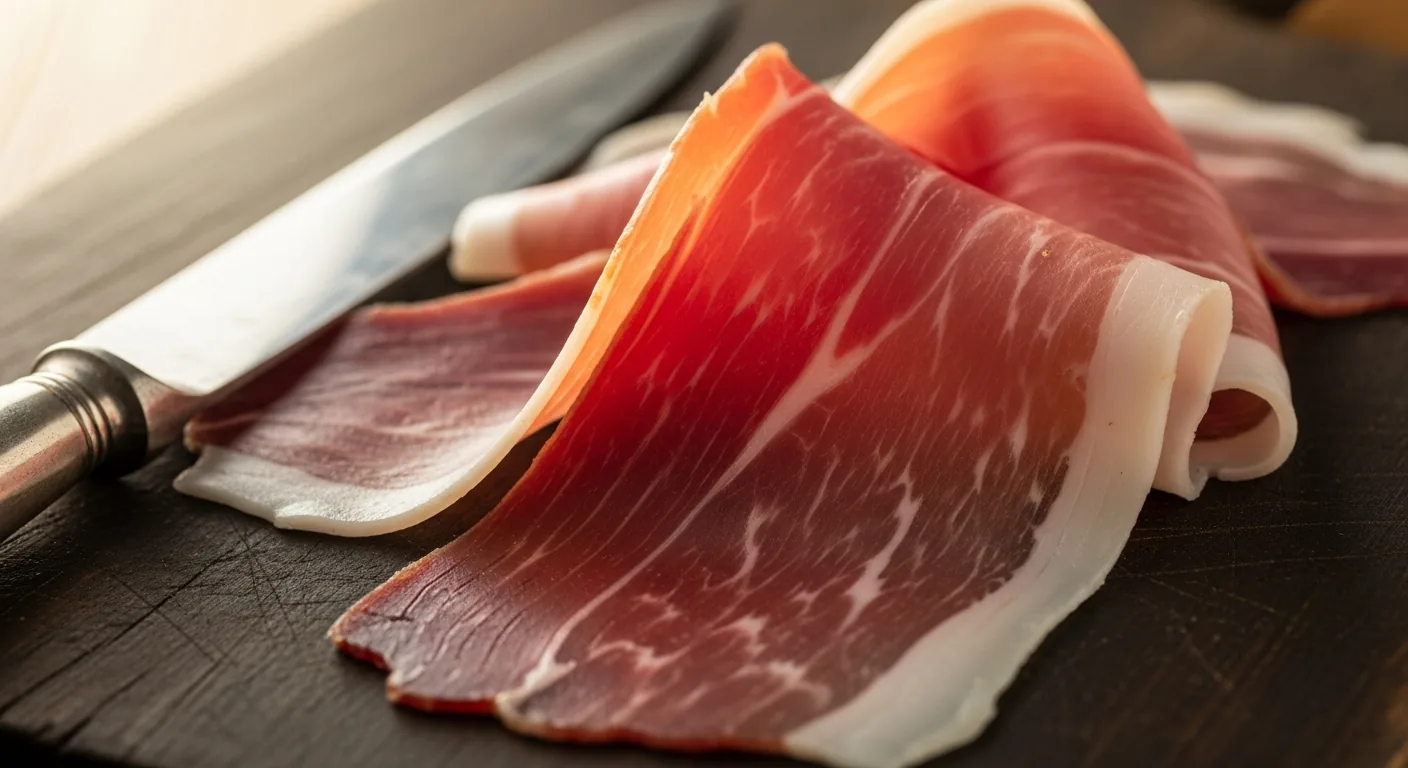
Bayonne ham is rubbed and massaged with rock salt from Salies-de-Béarn, a natural salt extracted from underground springs in the Pyrénées-Atlantiques. This salt has been preserved in pockets of water for approximately two million years, making it a geologically remarkable product. It has been protected by a PGI designation since 2016.
Salt from Salies-de-Béarn, which is very rich in trace minerals, imparts a milder flavor to the ham than traditional sea salt, giving it a tender texture and a distinctive, delicate taste.
The Manufacturing Process
| Step / Element | Details | Importance |
|---|---|---|
| Salt from Salies-de-Béarn | IGP 2016, underground springs, 2 million years old | Soft texture, trace minerals |
| PGI Zone | Adour River Basin: 64, 40, 32, 65 | Pyrénées-Atlantiques and neighboring regions |
| Curing | Rubbing Fresh Hams by Hand | Gentle Salt Penetration |
| Aging | Min. 7–10 months, up to 12+ months | Hégoa Southerly Wind |
| Lauburu Seal | Basque cross with four curved arms | IGP Guarantee of Authenticity |
| Ham Fair | A tradition dating back to 1462 (Louis XI) | France's oldest food fair |
- Curing: The fresh hams are rubbed with salt from Salies-de-Béarn and left to rest
- Rest in a cold room: recreating winter conditions in the Pyrenees
- Drying and aging: The grapes are placed in ventilated drying rooms, where they undergo a slow aging process under the influence of the southern wind (the Hégoa).
- Aged for at least 7 to 10 months, up to 12 months for the finest pieces
- Final evaluation: The master affineurs examine each piece. Only those that pass inspection receive the "Bayonne" seal—the lauburu, a Basque cross with four curved arms.
IGP since 1998
Bayonne ham has held a Protected Geographical Indication (PGI) since 1998. Strict specifications: production area limited to the Adour basin (Pyrénées-Atlantiques and neighboring parts of the Landes, Gers, and Hautes-Pyrénées), origin of the pigs, feed, and curing process.
How to Buy It in Bayonne
- Les Halles (Place des Gascons): several long-established delicatessens, sliced to order, shipping available
- Delicatessens in the Old Town: Specialty shops in the Arceaux du Port-Neuf and on Rue Port-Neuf
- Look for the Lauburu seal to verify IGP authenticity
The Ham Fair: Since 1462
The Bayonne Ham Fair is one of the oldest gourmet markets in France. Louis XI granted the right to hold it by letters patent in 1462.
The Fair is held every year at Easter (dates vary). Hundreds of producers and artisans take over the quays of Bayonne for several days. There are tastings, carving demonstrations, direct sales, and folk entertainment. Don’t miss it if you’re in the area at that time.
The Bayonne Festival: France's Largest Folk Festival
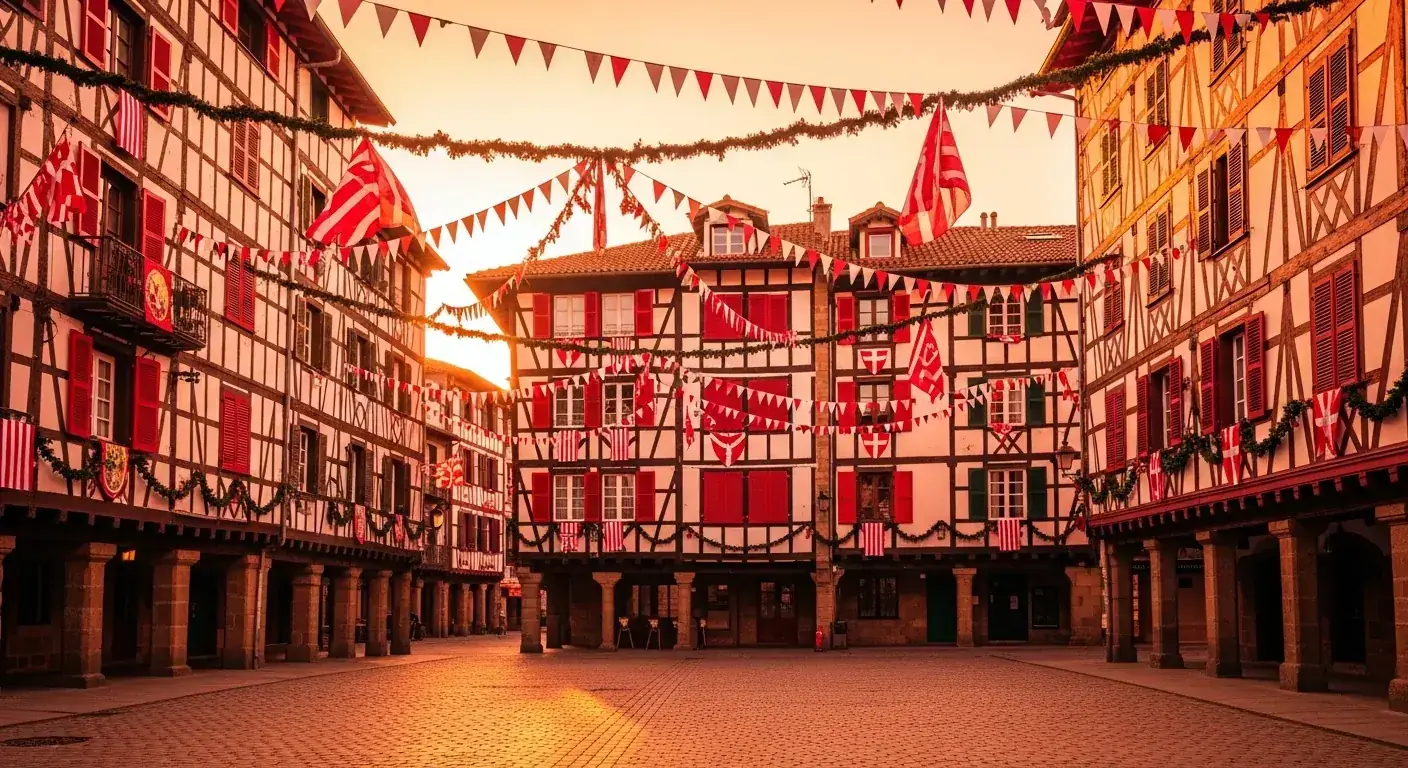
Five days and five nights of nonstop celebration every year in mid-July. More than a million visitors. The city is transformed into a sea of white and red, pulsing to the beat of the bandas (street bands) from morning until dawn.
Origins: 1932
The first Bayonne Festival took place on July 13, 1932. They were created by a group of friends from Aviron Bayonnais (a rugby club), who wanted to recreate in Bayonne the atmosphere of the Sanfermines in Pamplona that they had experienced during a visit across the border.
The tradition of cow races at Place Paul-Bert is directly inspired by the Navarrese encierro (the legendary bull runs of Pamplona). In Bayonne, it is cows (not bulls) that are released into the arena—a more accessible and festive version.
The white and red outfit
White pants, a white shirt, a red scarf tied around the neck, and a red belt or sash. Tradition dictates that the scarf be tied only after the official opening of the festival, during the ceremony in which the keys to the city are presented to King Léon—the festival’s iconic, humorous figure.
Sample Schedule
- Opening Ceremony (Wednesday evening): At Place de la Liberté, the mayor symbolically hands over the keys to the city to King Léon. The crowd is massive, and the atmosphere is electric. This moment officially kicks off the festivities.
- Every morning at 10 a.m.: the awakening of King Léon at Place de la Liberté, featuring a parade of giants (the chocolatier, the marshal, and the jester—traditional papier-mâché figures).
- Bullfights and novilladas: The Bayonne bullring (built in 1893 on Place des Basques) hosts several bullfights, a highlight for bullfighting enthusiasts.
- Cow Races (Place Paul-Bert): Bayonne’s version of the encierro. Cows are released into the arena; the boldest ones charge toward the center, while the bleachers allow the audience to watch safely.
- Bandas: Dozens of marching bands parade through the streets from morning to night (and often until dawn). They are the musical heart and soul of the festivities.
- Children's Day (Thursday): Special program featuring workshops, Basque games, and free activities.
- Bandas Mass (Sunday): ceremony at Saint-André Church, with participants dressed in white and red.
- Closing Ceremony (Sunday evening): Grand fireworks display at Place de la Liberté.
Dates and Practical Information
Dates for 2026: July 15–19. The dates traditionally fall during the first weeks of July—in recent years, an agreement between Bayonne and Mont-de-Marsan has made it possible to avoid the two festivals in southwestern France from taking place at the same time.
Essential Tips:
- Accommodations: Book 6 to 12 months in advance. Hotels in Bayonne fill up very quickly. Anglet and Biarritz offer alternatives 8–15 km away. Bordeaux, 2 hours away, remains the best option in terms of availability and budget.
- Attire: comfortable, closed-toe shoes (busy streets, sometimes slippery surfaces); a red scarf is required (available for purchase on-site at all participating stores).
- Security: The festivities are supported by a large-scale security operation (gendarmerie, civil defense, medical services). Strict pedestrian-only zone.
- Festival Pass: A wristband is required to enter the secure area on Friday, Saturday, and Sunday. On Wednesday and Thursday, entry is free.
- Official website: fetes.bayonne.fr
Our Logistics Recommendation
Stay overnight in Bordeaux. It’s the simplest and most economical option. Prices and availability vary greatly during the holidays; compare rates in Bayonne, Anglet, Biarritz, and Bordeaux before booking. Use a executive car service for your round trip—that’s exactly what our service is designed for. See our Bordeaux ↔ Bayonne chauffeur service page for details (we recommend the 12-hour package, with departure from Bordeaux between 2:00 p.m. and 3:00 p.m. and return around 2:00 a.m. to 3:00 a.m.).
Basque Cuisine: More Than Just Chocolate and Ham
Bayonne is a city where you can eat well, easily, and without breaking the bank. Here are the must-try local specialties.
Pintxos vs. Tapas — The Fundamental Difference
Pintxos (pronounced "pintchos") are the Basque version of Spanish tapas, but with one key difference:
- Tapa = a small portion served with a drink, traditionally free in certain regions of Spain
- Pintxo = a small bite-sized dish placed on a piece of bread, held in place by a wooden skewer, and displayed on the bar counter
The ritual in Bayonne: 1. You walk into the bar. 2. You see the pintxos displayed on the counter. 3. You pick whatever takes your fancy (marinated anchovies, ham, sheep’s milk cheese, foie gras with chili, shrimp, etc.). 4. Keep the wooden skewers on your plate 5. At the end, they count the skewers to calculate the bill 6. Count €1.50 to €3 per pintxo
Txakoli (txakolina)
The iconic white wine of the Basque Country. Made from the native Hondarrabi Zuri grape variety, it is a light wine (around 11°), slightly sparkling, with notes of citrus and green apple and a distinctive briny acidity.
Traditional serving method: Txakoli is poured into the glass from a great height—sometimes as high as 30 to 40 cm. This action stirs up the bubbles and releases the aromas. It pairs perfectly with pintxos, seafood, and grilled fish.
Must-Try Specialties
Veal axoa: a traditional Basque dish, simmered with Espelette pepper, onions, and bell peppers. Mild and fragrant. The Sunday meal in Basque families.
Ttoro: a fish soup from Bayonne, similar to bouillabaisse but made with Atlantic fish (hake, John Dory, gurnard). Rich and hearty, served with croutons and rouille. A must-try in winter.
Basque cake: two traditional versions—with pastry cream or with black cherries from Itxassou. The cherry version is the most authentic (Itxassou is a nearby village famous for its cherries). Every bakery and pastry shop in Bayonne offers its own homemade version.
Izarra: a Basque liqueur that has been distilled since the 19th century, available in green (made with herbs from the Pyrenees) or yellow (milder). It is enjoyed as a digestif, neat or on the rocks. The green version is 48°—to be consumed in moderation.
Ossau-Iraty AOP cheese: a fine sheep’s-milk cheese from the Basque Pyrenees. Enjoy it with black cherry jam from Itxassou or as a pintxo with a little Espelette pepper.
Espelette pepper (AOP): covered in detail in our Guide to Biarritz. In Bayonne, you can find it in powder form, on strings, and as a jelly—it adds a kick to everything: meat, fish, eggs, chocolate (yes, some chocolate bars contain it), and cheese.
Aviron Bayonnais and Rugby Identity
It’s impossible to talk about Bayonne without mentioning Aviron Bayonnais. Founded in 1904, Aviron Bayonnais is one of the city’s defining institutions. Its sky-blue and white colors are famous throughout France.
Aviron Bayonnais has competed in several French Rugby Championship finals. It is also the club that founded the Bayonne Festival in 1932, as we have seen.
Jean-Dauger Stadium: Aviron’s historic home stadium, located south of downtown. On game nights, the atmosphere in Bayonne is one-of-a-kind—the bars in Petit Bayonne are packed, with fans singing and strolling around dressed in blue and white.
If you're in Bayonne on a Saturday when there's a Top 14 or Pro D2 game, it's an experience not to be missed: tickets are relatively affordable, the crowd is passionate yet respectful, and the atmosphere is electric.
Bullrings and the Bullfighting Tradition
Bayonne Bullring, Place des Basques, opened in 1893. Seating capacity of approximately 10,000. It is one of the most beautiful bullrings in southwestern France.
Bullfights and novilladas take place mainly during the Bayonne Festival (mid-July) and the Feria de l'Atlantique (mid-August). Bayonne’s bullfighting tradition is long-standing, deeply rooted, and remains alive but controversial—as it is throughout France, where bullfighting is a subject of debate.
For fans, tickets go on sale several months in advance. Seats in the shade (sombra) are more expensive than those in the sun (sol).
The area around Bayonne
Bayonne is an ideal starting point for exploring the Basque Country. Our editorial approach: The Bayonne page focuses on Bayonne. For nearby destinations (Biarritz, Saint-Jean-de-Luz, Espelette, Hendaye, Saint-Jean-Pied-de-Port), we cover them in detail on our dedicated page:
→ See the Guide to Biarritz and the Basque Country for everything related to the Basque coastline, the surrounding villages, the cross-border Basque identity (Iparralde/Hegoalde), the Basque language, pelota, and day trips to Spain (San Sebastián is 50 km away).
One exception: Cambo-les-Bains and Villa Arnaga (20 km from Bayonne)
Located 20 km southeast of Bayonne, along the route through the Basque hinterland, the village of Cambo-les-Bains deserves a separate discussion, as it has received little coverage elsewhere.
Cambo-les-Bains is a historic spa town in the Basque Country (its sulfur springs have been known since ancient times). The village developed at the turn of the 20th century as a health resort for the bourgeoisie of Paris and Bordeaux.
The must-see landmark: Villa Arnaga, the former home of Edmond Rostand (the author of *Cyrano de Bergerac*). Built between 1903 and 1906 by architect Albert Tournaire, it is a masterpiece of the Neo-Basque style blended with Art Nouveau. 15 hectares of French and English-style gardens, with an exceptional view of the foothills of the Pyrenees.
Villa Arnaga was where Rostand wrote several of his major works. His son, Jean Rostand (the biologist and philosopher), grew up there. Designated a historic monument and open to the public, it is a must-see for anyone interested in the Belle Époque or French literature.
Practical Information: - Distance: 20 km from Bayonne, 25–30 min by car - Admission to Villa Arnaga: ~9 € per adult - Hours: vary by season; partially closed in winter. Check the official website.
Seasonal Calendar
| Period | Atmosphere | Key Event |
|---|---|---|
| January–March | Peaceful, low prices, winter light | Bayonne Carnival (March) |
| April (Easter) | Lively, gourmet | Ham Fair (a tradition since 1462) |
| May–June | Ideal: few tourists, open outdoor seating, reasonable prices | Chocolate Days (May) |
| Mid-July | Intense, festive | BAYONNE FESTIVAL (July 15–19, 2026) |
| August | High season, crowded beaches | Atlantic Fair (bullfights) |
| September–October | A golden late season, magnificent light | Irouléguy Grape Harvest, Gourmet Markets |
| November–December | Peaceful, cultural | Bayonne Celebrates Chocolate, Christmas Market, and the Full Reopening of the Bonnat-Helleu Museum (Nov. 27, 2025) |
Our recommendation: May–June or September–October are perfect for a leisurely visit to Bayonne. The city is beautiful, the outdoor cafes are open, the museums are accessible without lines, and accommodation prices are reasonable.
For the holidays (July 15–19, 2026), book your accommodations 6–12 months in advance, or stay in Bordeaux and use the door-to-door transfer (our recommendation).
For the Bonnat-Helleu Museum after its reopening, avoid weekends in November and December 2025 and the first half of 2026 (due to crowds for the grand opening). Opt for weekdays or after the summer of 2026.
How to Get to Bayonne from Bordeaux
By train
The simplest and most economical option. Direct TGV or TER trains connect Bordeaux Saint-Jean to Bayonne in 1 hour 15 minutes to 1 hour 45 minutes. There are several departures daily. Fares vary depending on how far in advance you book (starting at 15 € on the TER, higher on the TGV). The Bayonne train station is right in the city center, a 10-minute walk from the cathedral.
Great for: travelers without bulky luggage, stays focused on the city of Bayonne, short weekend getaways.
Restriction: when exploring Anglet or Cambo-les-Bains, or during the holidays (heavy traffic, difficult late-night returns).
By car
| Fashion | Travel time from Bordeaux to Bayonne | Estimated cost | When to Choose |
|---|---|---|---|
| Direct TGV/TER | 1 hour 15 minutes to 1 hour 45 minutes | 15-50 € | Downtown stay, no bulky luggage |
| Car | 2:00–2:15 (186 km on the A63) | 30-50 € fuel and toll | Exploring the surrounding area, freedom |
| private chauffeur | 2 hours and 14 minutes door-to-door | from 309 €· one-way | Bayonne Festival, Bands, English-speaking |
| Bus (Flixbus, BlaBlaCar) | 3–4 hours | 7-10 € | Tight budget, no luggage |
| Airplane (BIQ) | No direct route from Bordeaux | — | Not applicable since Bordeaux |
A63 Bordeaux-Bayonne Highway, approximately 186 km in 2 to 2 hours and 15 minutes, depending on traffic. Toll: approximately 18-20 €.
Please note in July and August: The A63 is heavy; allow an extra 30–60 minutes on weekends. During the holidays: Bayonne’s downtown area is closed to all traffic, and parking on the outskirts is full.
Private chauffeur service from Bordeaux
The most convenient option for groups and families with children, and the obvious choice for the Bayonne Festival (traffic, parking, and taxi availability are severely limited depending on the arrangements for that particular year). Fixed rate, door-to-door service, and an English-speaking driver available.
For details (one-way or round-trip transfer options, rates, reservations): see our page on chauffeured transfers between Bordeaux and Bayonne.
By plane
There are no direct flights from Bordeaux to Bayonne (the two cities are too close to each other along the route). The closest airport to Bayonne is Biarritz-Anglet-Bayonne (IATA code: BIQ), located 5 km from downtown Bayonne. Flights to Paris and Lyon, as well as seasonal European routes (London, Dublin, Madrid).
By bus / coach
Flixbus and BlaBlaCar Bus offer a Bordeaux-Bayonne route that takes 3-4 hours, with low fares (starting at 7-10 €). It's an economical option but not very convenient for luggage and transfers.
Practical Information
Recommended duration
- Day 1: Bayonne (Old Town, Les Halles, the cathedral, chocolate shops, pintxos for lunch). Enough to get a first impression.
- 2 days (weekend): everything listed above + the Bonnat-Helleu Museum + the Basque Museum + the Vauban ramparts. Our recommendation for truly experiencing the city.
- 3–4 days: Bayonne + Cambo-les-Bains + day trips in the Basque Country (Biarritz, Saint-Jean-de-Luz).
- 5 days: Bayonne Holiday Season. Reservations must be made 6–12 months in advance.
Accommodations
In the Greater Bayonne area: charming hotels in historic buildings. Expect to pay 100-200 € per night during the peak season, 3 to 5 times that amount during the holidays (and fully booked 6–12 months in advance).
In Anglet (5 km): residential options that are more affordable.
In Biarritz (10 km): from luxury hotels (Hôtel du Palais) to family-run guesthouses. More options than in Bayonne, with prices varying.
In Bordeaux: Prices and availability vary widely during the holidays; compare Bayonne, Anglet, Biarritz, and Bordeaux before booking.
Estimated budget per day, per person
| Profile | Daily Budget | Accommodations | Catering |
|---|---|---|---|
| Backpacker | 60-90 € | Hostel or Shared Airbnb | Market Halls, Pintxos by the Piece |
| Family | 130-180 € | 3-star hotel | Bistros, Basque cake |
| Couple | 180-280 € | Charming Hotel | Fine-dining restaurants |
| Premium | 350 € and more | Luxury Hotel | Michelin-Starred Restaurants |
Accessibility for People with Disabilities
Downtown Bayonne is generally well-equipped for accessibility—there are level crosswalks, and while some cobblestone alleys are difficult to navigate, most areas remain accessible. The museums (Basque Museum, Bonnat-Helleu Museum) are accessible. Les Halles: ground-level entrance. City walls: partially accessible paths; some sections are uneven.
Climate
Temperate oceanic climate. Mild winters (8–12°C), temperate summers (22–28°C), frequent rain in the spring and fall. Atlantic winds can sometimes be strong. A light jacket is useful even in the summer for evenings.
Frequently Asked Questions
When is the best time to visit Bayonne?
May–June and September–October are ideal: pleasant weather, few tourists, museums open, outdoor dining available, and reasonable prices. Mid-July (Festivities): a unique experience but absolutely packed—book accommodations 6–12 months in advance. April (Ham Fair): a tradition dating back to 1462. November–December: a cultural atmosphere, quiet.
How long does it take to visit Bayonne?
A weekend (2 days) is enough to see the highlights: the cathedral, the old town, the Halles, the Basque Museum, the Bonnat-Helleu Museum, the chocolate shops, Petit Bayonne, and the city walls. One day is enough to get a first impression. To combine this with Biarritz, Saint-Jean-de-Luz, and Espelette, plan on 3–4 days.
Are the Bayonne Festivities dangerous?
No, as long as you act reasonably. The festivities are supported by extensive security measures. There is a strictly enforced pedestrian zone, and police and medical services are on site at all times. Incidents are rare. Stay alert in the crowd, avoid excessive drinking, and follow the organizers’ instructions. The bandas and Basque tradition call for mutual respect during the festivities.
Is Bayonne a Basque or Gascon city?
Both at the same time. Bayonne has historically been a city of convergences: Basque in its culture, language, traditions, and strong identity; Gascon in its administrative history and part of its population. This duality is a source of richness, not a contradiction. Added to this is the historic Jewish-Portuguese dimension (Saint-Esprit, chocolate), which rounds out the picture.
Where can you find the best pintxos in Bayonne?
In Petit Bayonne, on Rue des Tonneliers and Rue Pannecau. There isn’t one specific restaurant to recommend: the custom is to make the rounds of the bars and nibble your way from one bar to the next. Le Bar du Marché, the Trinquet Saint-André, and several other spots on these two streets are sure bets. Expect to pay 2-3 € per pintxo and 4-5 € per drink.
Is the Basque Museum really worth a visit?
Absolutely. It’s one of the most extensive ethnographic museums in France, with 85.000 artifacts and a thoughtfully designed exhibition layout. Plan on spending 1.5 to 2 hours there. Thursday evenings (free admission from 6:00 p.m. to 8:00 p.m.) are a good time to visit without feeling rushed.
And is the Bonnat-Helleu Museum worth a visit from Bordeaux?
Yes, and it is the major museum event in southwestern France for the years 2025–2027. It will reopen on November 27, 2025, after 14 years of renovation work. The collection features 7,000 works (including drawings by Rubens, Van Dyck, Goya, Ingres, Delacroix, and Leonardo da Vinci, as well as works by Michelangelo and Rembrandt...). Pierre Rosenberg, former director of the Louvre, calls it “the finest collection between Paris and Madrid.” Just two hours from Bordeaux, it’s likely the number one new reason to visit Bayonne.
Is it possible to visit both Bayonne and Biarritz in a single day?
Yes, easily. The two cities are 8–10 km apart. Spend the morning in Bayonne (cathedral, chocolate shops, Les Halles), and the afternoon in Biarritz (Grande Plage, Rocher de la Vierge). This is the classic Basque Country tour. For details on the Basque Country tour with a private driver, see our Biarritz Guide.
Is Bayonne a good place for families with children?
Very good. The Old Town is compact and easy to explore on foot. The Basque Museum offers educational resources for families. The Bayonne Festival includes a day dedicated to children (Thursday). The market halls and chocolate shops (with tastings) are very popular stops for the little ones.
What is the IATA code for Bayonne Airport?
BIQ (Biarritz-Anglet-Bayonne). 5 km from downtown Bayonne. Flights to Paris (Air France) and several seasonal European routes. Note: Do not confuse this with BOD, which is the code for Bordeaux-Mérignac.
Why is Bayonne famous for its chocolate?
Because it was the first city in France to process cocoa. The story begins in 1492 with the arrival of Sephardic Jews expelled from Spain, who brought their expertise in processing cocoa from the Americas. The first workshops appeared around 1615 in the Saint-Esprit neighborhood. By the 19th century, Bayonne was home to 31 chocolate factories. Today, several historic companies carry on the tradition (Cazenave 1854, Daranatz 1890, L’Atelier 1951, Puyodebat).
Further Reading
- Private chauffeur service for Bayonne: see our page on executive car service between Bordeaux and Bayonne (packages, rates, reservations, holidays)
- The entire French Basque Country (Biarritz, Saint-Jean-de-Luz, Espelette, Hendaye): see the Biarritz and Basque Country Guide and the chauffeur service between Bordeaux and Biarritz
- To get from the airport directly to Bayonne: see Bordeaux Airport Transfer
- Getting there from Saint-Jean Station: see the door-to-door transfer at Saint-Jean Station
- Combine this with a trip to the Arcachon Basin: see chauffeured transfer Bordeaux ↔ Arcachon, executive car service Bordeaux ↔ Cap Ferret, or chauffeur service Bordeaux ↔ Dune du Pilat
- Add a day in the vineyards: see door-to-door transfer Bordeaux ↔ Saint-Émilion or chauffeured transfer Bordeaux ↔ Médoc
- The Périgord Noir, too? See executive car service Bordeaux ↔ Sarlat or chauffeur service Bordeaux ↔ Lascaux
Sources and References
- Visit Bayonne — Must-See Attractions and the City Walls — accessed July 24, 2026
- Official Website of the Bayonne Festival — Program, Dates, Festival Pass, Practical Information
- Basque Museum and Museum of Bayonne History — Collections, Hours, Admission Prices
- Bonnat-Helleu Museum — Collections, Temporary Exhibitions, After Reopening in 2025
- Bayonne Chocolate Academy — History and Artisan Chocolatiers
- City of Bayonne — the historic capital of chocolate — accessed July 24, 2026
- City of Bayonne — Ham Fair — Letters Patent of 1462, accessed July 24, 2026
- Bayonne Ham Consortium — PGI, Producers, Recipes
- Aviron Bayonnais — Official Website — Rugby Schedule
- Villa Arnaga, Cambo-les-Bains — the home of Edmond Rostand
- Salies-de-Béarn Salt — PGI, History
- UNESCO — The 12 Components of the Vauban Fortifications
Published on · Updated on .
On the way to Bayonne
Direct door-to-door trip from Bordeaux (2 hours 14 minutes), perfect for the holidays or a day of chocolate and ham, with stops along the way as you wish. Written fixed-price quote within 30 minutes; sedan or van; English-speaking driver.