Biarritz, the imperial seaside resort
From a whaling village to a Belle Époque legend: the Hôtel du Palais d'Eugénie, the Rocher de la Vierge, the Côte des Basques—where European surfing was born in 1956—the pintxos and the villages of the Basque Country—and how to get to Biarritz from Bordeaux. Everything you need to know before you go.
In a nutshell
- Biarritz is the tourist capital of French Basque Country (Iparralde). Approximately 25.000 residents per year, more than 5 million visitors annual events in the Southern Basque Country–Landes region. "
- Three Overlapping Identities: Imperial Station (launched by Empress Eugénie in 1854), the European cradle of surfing (since 1956), the living heart of Basque culture (the Basque language, Basque pelota, traditional cuisine).
- Distance from Bordeaux: 199 km, about 2 hours and 19 minutes by car or chauffeured transfer via the A63. 1 hour and 15 minutes Take the TGV to Bayonne, then 15–20 minutes to Biarritz.
- Spanish border 25 km away (Hendaye/Irun). San Sebastián 50 km away.
- Best Times: May–June and September–October (ideal weather, accessible beaches, reasonable prices). July–August: peak season, overcrowded, high prices.
- Symbols: Rocher de la Vierge, Côte des Basques, Hôtel du Palais, Les Halles, Espelette peppers tied in red strings.
Before You Go: What Biarritz Is Really Like
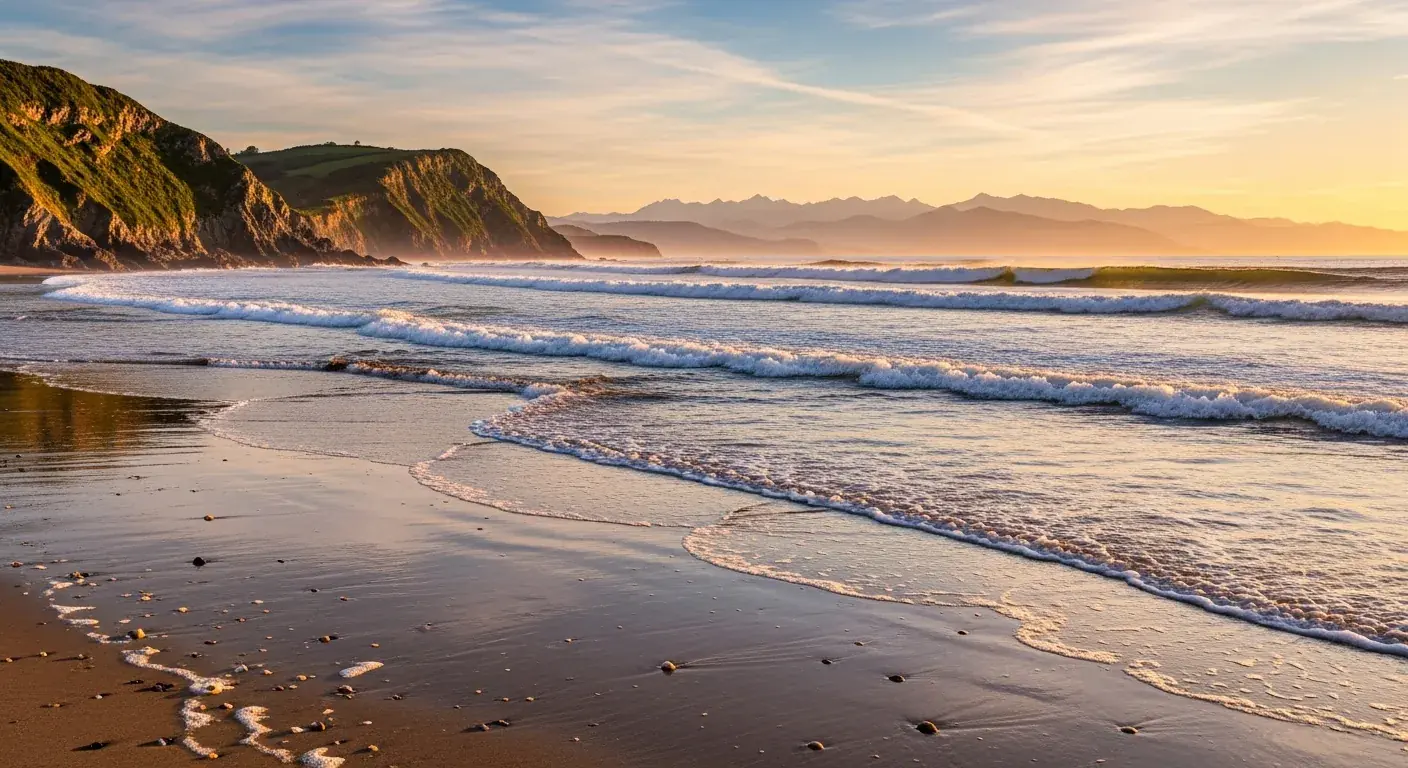
It’s 7:30 a.m. in late September. You walk down the Côte des Basques along a wooden staircase weathered by the wind and salt. The beach is still almost deserted—a few surfers in wetsuits, two walkers, the long, steady waves of the Atlantic swell. In the distance, the cliff looms through the morning mist, and farther still, the foothills of the Pyrenees trace a green line above the horizon. It was exactly here, in August 1956, that a Californian named Peter Viertel stepped onto a surfboard for the first time in Europe. Surfing was born here.
Biarritz is three cities in one. You can visit it as Imperial Station — A Belle Époque stroll along Avenue de l'Impératrice, a terrace at the Hôtel du Palais, dinner overlooking the ocean in a historic luxury hotel. You can visit it as surfing capital — a school on the Côte des Basques, longboard rentals, an international vibe in the surfer bars. You can visit it as heart of the Basque Country — a pintxos bar with txakoli poured from a height, the Halles market with Bayonne ham and Espelette pepper, a pelota team on the fronton. The three identities coexist on the same street, and that's probably what makes Biarritz unique in France.
This guide is designed to help you understand all of this before you come. For practical information (how to get there, how much it costs, and what services are available), see our page Bordeaux ↔ Biarritz executive car service.
History: From a Fishing Village to an Imperial Resort
Before 1850: a whaling village
Before the 19th century, Biarritz was a small fishing village. Whaling on the open sea brought wealth to the entire Basque coast in the Middle Ages— Basque sailors were considered the best whalers in Europe, and their techniques inspired Dutch and English fishermen who came to learn from them. In the 17th century, fishermen from Biarritz set sail as far as Newfoundland and Spitsbergen.
In the mid-19th century, the village had a few fishermen's houses, a chapel, and already a few tourists (Madame de Pompadour had stayed there as early as the 18th century to take sea baths).
1854: The Arrival of Eugénie de Montijo
The founding event of modern Biarritz. Eugénie de Montijo, future Empress of France and wife of Napoleon III, is Andalusian — born in Granada. As a child, beginning in 1835, she would regularly stay in Biarritz with her mother, the Countess of Montijo. She loved the Basque coast passionately; it reminded her of Spain without actually being Spain.
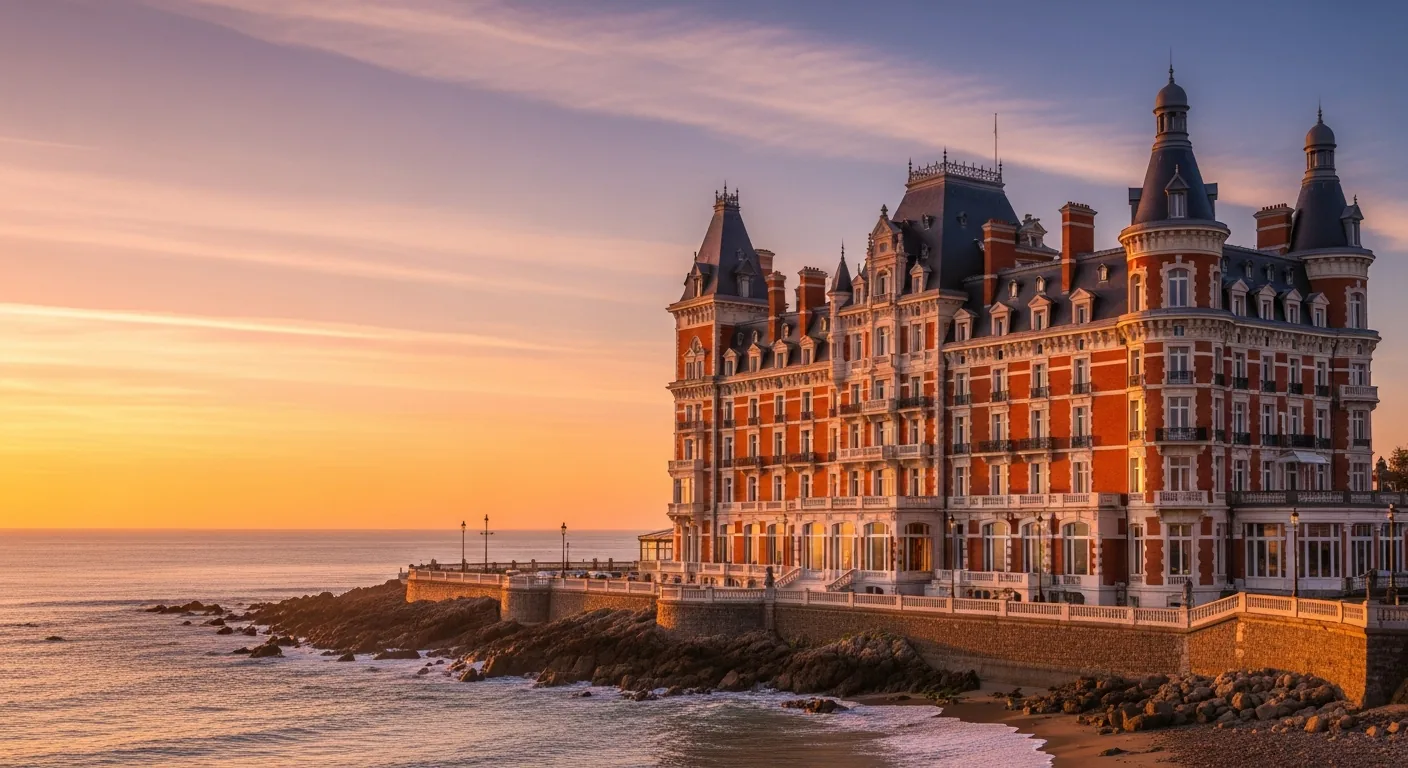
After becoming empress in 1853, she persuaded Napoleon III to build for her a summer residence in Biarritz. The Villa Eugénie was built in just ten months in 1854-1855, built in the Louis XIII style with brick and stone, on the hill that overlooks the ocean at the northern entrance to the city. The hotel now showcases this imperial heritage on its official website.
For 16 years, until 1870, the imperial court spends almost every summer in Biarritz, accompanied by the European elite: Queen Isabella of Spain, Leopold II of Belgium, the monarchs of Portugal, the Princes of Metternich, and Chancellor Bismarck himself. The sleepy village becomes Europe's most prestigious seaside resort.
1881: The Villa Becomes the Hôtel du Palais
After the fall of the Empire (1870) and the death of Napoleon III (1873), the disgraced Eugénie sold the villa in 1881 at the Banque Parisienne. The building was first converted into a hotel and casino under the name "Biarritz Palace", then "pure hotel" in 1893-1894: theHôtel du Palais was born.
During the Belle Époque, the establishment hosted the royalty of Europe: Queen Victoria, Edward VII, Empress Sissi of Austria (under a pseudonym), the Tsar Alexander II (and later his widow), the King Oskar II of Sweden, Leopold II of Belgium, Alfonso XIII of Spain. Biarritz is nicknamed "The Queen of Beaches, the Beach of Kings" — a phrase that has remained famous.
1903: The Fire and the Reconstruction
The February 1, 1903, a fire ravaged the building. The reconstruction was entrusted to the architect Édouard-Jean Niermans, who envisions a luxury hotel in reinforced concrete (a technique that was revolutionary at the time) in terms of E-shaped — in honor of Eugénie. The rotunda-style dining room is decorated with murals by Paul Gervais on the theme of Jason and the Golden Fleece.
The establishment reopens in 1905 with 120 rooms and 33 suites.
20th Century: The Cosmopolitan Palace
| Period | Notable Figures | Details |
|---|---|---|
| Second Empire (1854–1870) | Eugénie, Napoleon III, Bismarck, Leopold II, Isabella II | Imperial Court, European Elite |
| Belle Époque | Queen Victoria, Edward VII, Sissi, Tsar Alexander II, Alfonso XIII | "Queen of the Beaches, Beach of the Kings" |
| The Interwar Period | Sarah Bernhardt, Stravinsky, Ravel, Chaplin, Cocteau, Hemingway, Windsor | A major European social hub |
| Postwar | Aga Khan, Bing Crosby, Frank Sinatra, Gary Cooper, Jayne Mansfield | Opening of the Outdoor Swimming Pool, 1953 |
| Today | Managed by Hyatt Hotels (reopening June 3, 2022) | Palace Atout France · 2 Michelin Keys 2024 |
During World War I, the Hôtel du Palais served ashospital. Between the two world wars, it became one of Europe's most prestigious social hotspots: Sarah Bernhardt, Igor Stravinsky, Maurice Ravel, Charlie Chaplin, Jean Cocteau, Ernest Hemingway, the The Duke and Duchess of Windsor (who will return every summer for the rest of their lives).
After the war, theAga Khan, Bing Crosby, Frank Sinatra, Gary Cooper, Jayne Mansfield y stay there. The outdoor pool was inaugurated by her with great fanfare.
Today
The Hôtel du Palais reopened on June 3, 2022 after several years of renovation. Managed by Hyatt Hotels under a long-term lease with the City of Biarritz. 86 rooms and 56 suites, including the Edward VII Suites (152 m²) and Alphonse XIII (177 m²) with a view of the Atlantic. The 3,000 m² Guerlain Imperial Spa, spread over 5 floors.
Classified as a Palace by Atout France (one of only three luxury hotels on the southwest coast). In April 2024, the Michelin Guide awarded him two keys in the new "Exceptional Stay" category.
It is probably the most iconic landmark in Biarritz, and any stroll through the city begins or ends with its silhouette on the horizon.
Must-See Attractions in Biarritz
The Virgin's Rock
The absolute symbol in Biarritz. This isolated rock in the sea is accessible via a iron footbridge tunnel through the rock, ordered by Napoleon III. The statue of the Virgin Mary which towers over it was installed in 1865, after being purchased at the Franco-Spanish Exposition in Bayonne. The current metal footbridge is not the work of Gustave Eiffel: *Tourisme 64* attributes it to the Schryvers workshops in Haumont in its Official Presentation of the Rocher de la Vierge.
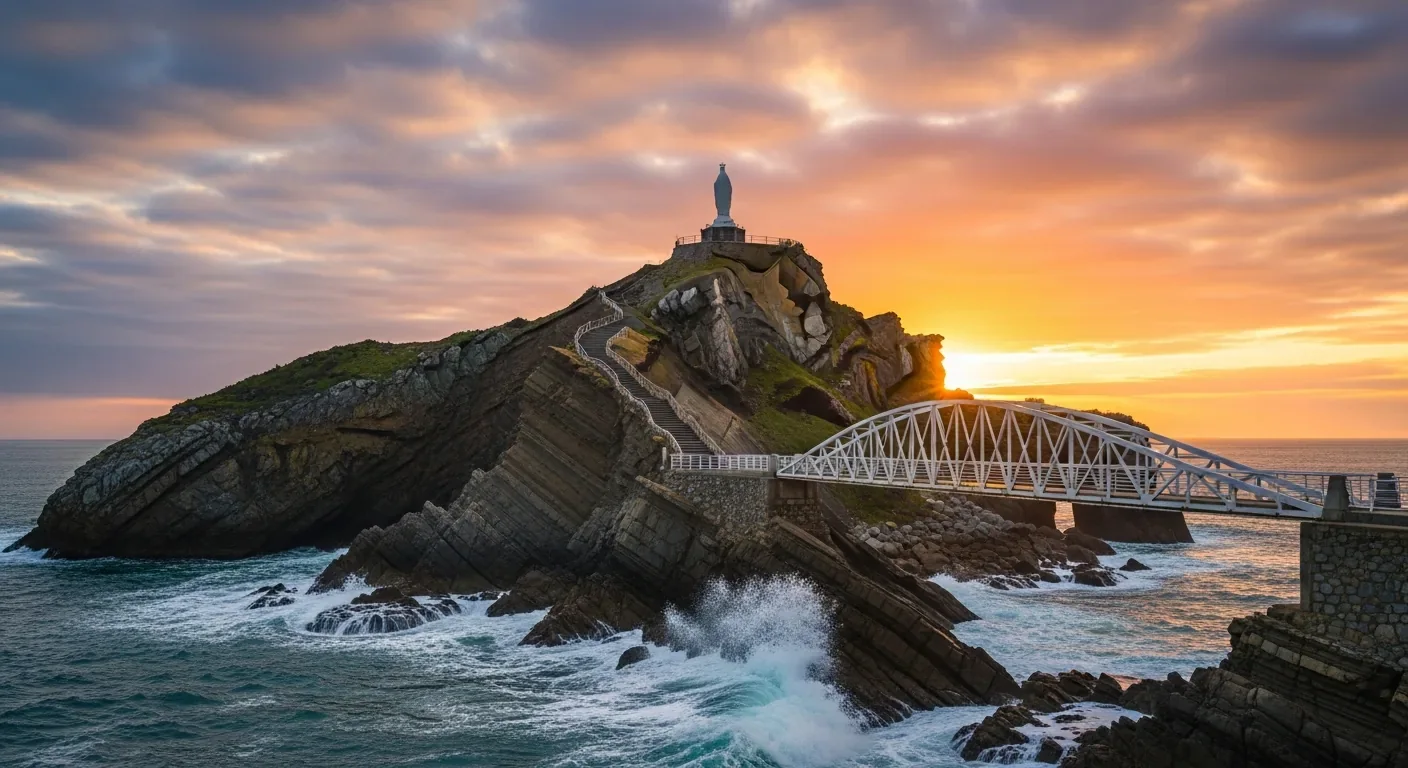
Spectacular view across the entire Biarritz Bay, the cliffs, the Côte des Basques to the south, and the Hôtel du Palais to the north. Particularly striking in the late afternoon at sunset. During a major storm, the view is breathtaking, but access can be dangerous—check the conditions.
Free admission, just a stone's throw from the Musée de la Mer, right in the heart of downtown.
La Grande Plage and the Côte des Basques
Two beaches, two atmospheres.
The Great Beach is the urban beach in Biarritz. Fine sand, Art Deco Municipal Casino in the background (1929), swimmers and surfers, café terraces. The waves there are good and accessible — This is where the major summer competitions are held.
The Côte des Basques is the surf beach. Long, steady waves—ideal for beginners and longboarders. This is where surfing was born in Europe in 1956 (see below). At high tide in the summer, the beach disappears — Check the schedules.
Don't miss it: the sunset from the Côte des Basques. The sunset over the Atlantic, as seen from the upper promenade, is one of the most beautiful on the Atlantic coast of Europe.
The Biarritz Lighthouse
Located between Biarritz and Anglet, on the Pointe Saint-Martin. The current lighthouse was inaugurated in 1834 (one of the oldest lighthouses still in operation in France). Height: 73 meters above sea level. 248 steps to reach the summit.
The view from the summit is one of the most comprehensive on the Basque Coast: Biarritz, Côte des Basques Beach, Anglet and its beaches in the Landes region, and on a clear day, the Pyrenees on the horizon.
Practical: Open from April to October, low admission fee (~3–4 €), allow 20 minutes for the climb.
The City of the Ocean
An interactive museum dedicated to the ocean and surfing, which opened in 2011. Perfect for families. Virtual diving, exploration of the ocean floor, history of major ocean expeditions, a retrospective on surfing in Biarritz. Rates: ~13–15 € per adult. Open year-round.
The Museum of the Sea (Biarritz Aquarium)
One of the oldest museums in Biarritz, opened in 1933, in a Art Deco building on the edge of the Rocher de la Vierge. Theaquarium presents the marine life of the Atlantic and the Bay of Biscay. The gray seals are the stars — feeding sessions Public tours are generally held at 10:30 a.m. and 5:00 p.m., and are always fully booked in the summer.
The museum also traces theHistory of Basque Whaling, the foundation of medieval coastal prosperity.
The Municipal Casino and the Belle Époque District
The Municipal Casino from Biarritz, Art Deco monument from the 1920s, faces the Grande Plage. Next to it, theEmpress Avenue and theMaréchal-Joffre Avenue take place Belle Époque Villas built on the former imperial estate. Themed Guided Tours offered by the tourist office.
Comparison Chart of Biarritz Beaches
| Beach | Atmosphere | Ideal for | Surfing | Supervised Swimming | Access |
|---|---|---|---|---|---|
| Grande Plage | Lively, urban | For all ages | Yes (competitions) | Yes (supervised) | Downtown |
| Basque Coast | Surfing, sunsets | Surfers, longboarders | Yes (beginners) | Partial (tide) | A 10-minute walk from downtown |
| Old Port | Quiet, family-friendly | Families, children | No | Yes (calm water) | Downtown |
| Milady | Residential, quiet | Families, beginner surfers | Yes (schools) | Yes (supervised) | South, bus |
| Marbella | Peaceful | Intermediate surfers | Yes | Partial | South |
| Ilbarritz | Wild, uncrowded | Those Who Love Peace and Quiet | Yes | Partial | Near Bidart, by car |
Biarritz, the surfing capital of Europe
1956: The Birth of European Surfing
It all started with a movie shoot. In August 1956, the American screenwriter Peter Viertel and the producer Dick Zanuck arrive in Biarritz for the filming of "The Sun Also Rises". The French Surfing Federation confirms their trial at the Côte des Basques in 1956 in its Official Tribute to Jacky Rott.
It's Peter Viertel who is learning to ski on the Basque Coast, under Hemingway's amused gaze. The board shatters on the rocks. A man from Biarritz named Georges Hennebutte (nicknamed "Gyro Gearloose"), a talented inventor and brilliant tinker, fix the board and becomes friends with Viertel.
1957–1959: The "Surfing Uncles"
In the summer of 1957, Viertel returned with three panels sent from the United States. He gives one to Joël de Rosnay, a scientist who was on vacation in Biarritz at the time. At the end of the summer, they are four experienced surfers: Peter Viertel, Georges Hennebutte, Jacky Rott, Joël de Rosnay. They're the "surfer uncles", the founders of European surfing.
The September 16, 1959, the Waikiki Surf Club was officially founded on the Côte des Basques. It is the leading surf club in France and continental Europe.
Today: "3-Star Surf Town"
In 2015, Biarritz has been awarded the certification "3-Star Surf Town" from the French Surfing Federation — the highest rating. The city has more than 15 certified surf schools, open from April through November. The World Surf League It regularly hosts competitions there. The Quiksilver Festival, the Wave Classic, and the Queen Classic Surf Festival set the pace for the surfing season.
Spots by Level
| Spot | Level | Wave Type | Ideal Season |
|---|---|---|---|
| Basque Coast | Beginner - Longboard | Long, steady waves | Any season (historic site, 1956) |
| Grande Plage | Intermediate - Advanced | Technical waves, short | Summer (WSL competitions) |
| Milady | Beginner (schools) | Gently forming waves | April–November |
| Marbella | Intermediate | Stronger waves | Fall-Winter |
| Ilbarritz (Bidart) | Confirmed | Bigger waves | Fall (Atlantic swell) |
| Chambre d'Amour (Anglet) | All levels | Beach break | Any season |
- Basque Coast: the legendary spot. Long, steady waves, Perfect for beginners and longboarders.
- Grande Plage: technical waves, competition spot. Intermediate to advanced surfers.
- Milady and Marbella: quieter spots in the south. Perfect for schoolyards.
- Ilbarritz: a wilder spot on the outskirts of Bidart.
Best season for surfing
September–October offers the best terms: steady Atlantic swell, water still mild (18–20°C), and far fewer people in the water than in the summer. Spring (April–May) is also great. Summer is still pleasant, but the spots are crowded and the waves are less consistent.
Basque Cuisine
The Basque Country is one of the the regions with the most distinctive culinary identities in Europe — and probably one of the best places to eat for the price. Pintxos, txakoli, Espelette pepper, Bayonne ham, chocolate: each has its own history, its own traditions, and its own distinct regional character.
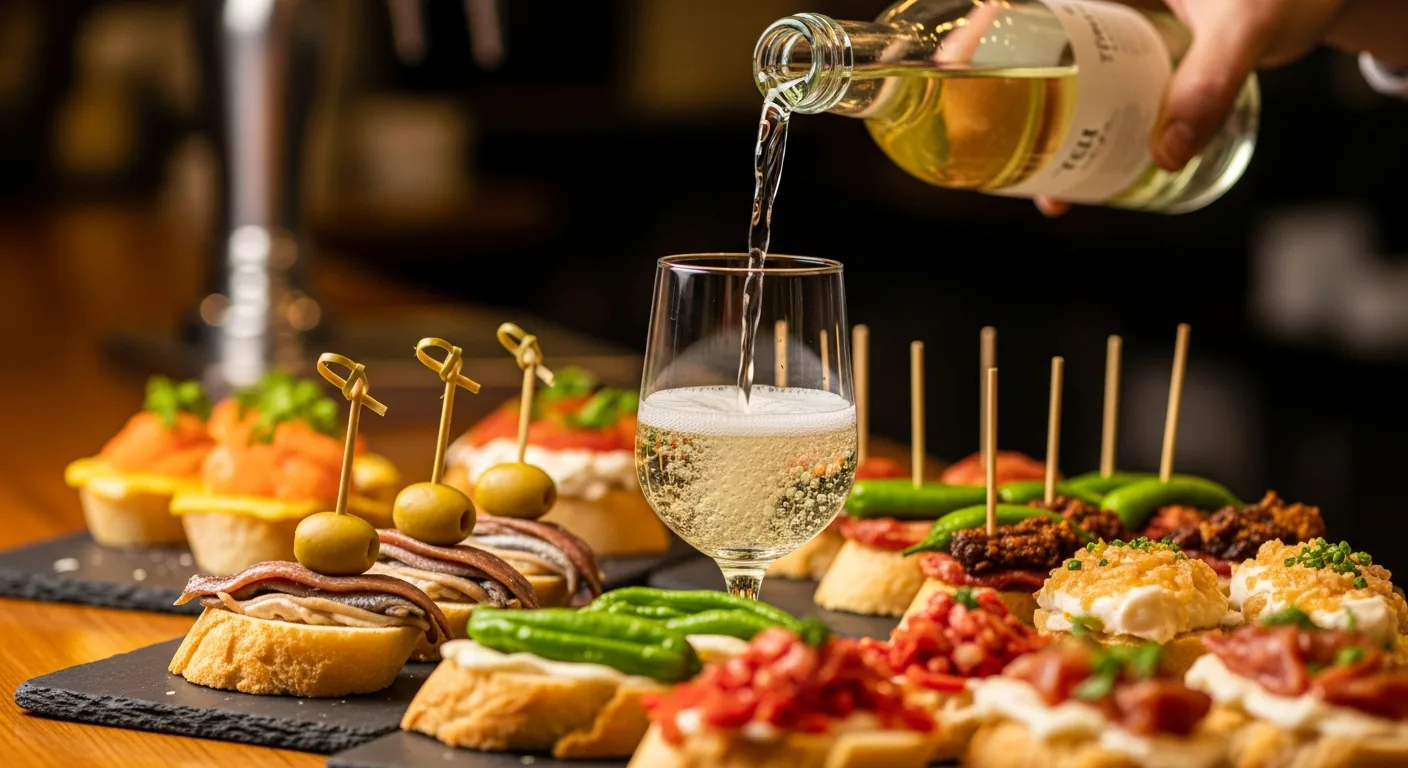
Pintxos — The Art of the Bite-Sized Snack
The pintxos (pronounced "pintchos") are not tapas. The difference is fundamental :
- Tapa = a small portion served as an accompaniment to a drink, traditionally free in certain regions of Spain
- Pintxo = bite-sized piece placed on bread, held in place by a wooden peg, displayed on the bar counter
The Ritual: Standing at the counter, you pick out your pintxos one by one from the bar, and have a glass of txakoli or Basque cider, we count the jabs at the end to do the math. Pintxos made to order > pintxos that have been sitting under plastic wrap for 3 hours.
When to Go: between 12:00 p.m. and 2:00 p.m. for lunch, between 7 p.m. and 9 p.m. for happy hour. Pintxos bars are at their best in week, off-season. During peak season, the counter is swamped.
Where in Biarritz: the Market Halls and their nearby bars (Gambetta Street, Rue du Centre). In Saint-Jean-de-Luz: Rue Gambetta. In Bayonne (which will be the subject of a future dedicated page): the entire Saint-Esprit neighborhood.
Txakoli — Basque wine
The txakoli (or txakolina (in Basque) is the iconic wine from the Basque Country. Made primarily from the native grape variety Hondarrabi Zuri, it produces wines light (around 11°), slightly sparkling, with notes of citrus, green apple, and a briny acidity.
Traditional Service: Txakoli is poured very high in the glass, sometimes 30 to 40 cm high. This isn't just a myth: it brings out the wine's natural effervescence and releases its aromas. Perfect with pintxos, seafood, and grilled fish.
Three designations of origin: Getariako Txakolina (the most maritime), Bizkaiko Txakolina, Arabako Txakolina.
Bayonne Ham (AOP)
Aged in traditional drying rooms in the Basque Country (the municipality of Bayonne and the surrounding countryside). Its subtle mildness makes it the undisputed ambassador of Basque charcuterie. Best enjoyed with a glass ofIrouléguy Red (the small wine-growing region in the French Basque Country).
Espelette Pepper (AOP)
The Only French Spice benefiting from a Protected Designation of Origin, obtained in 2000. Originally from Mexico, he arrived in the Basque Country in 16th century by merchants.
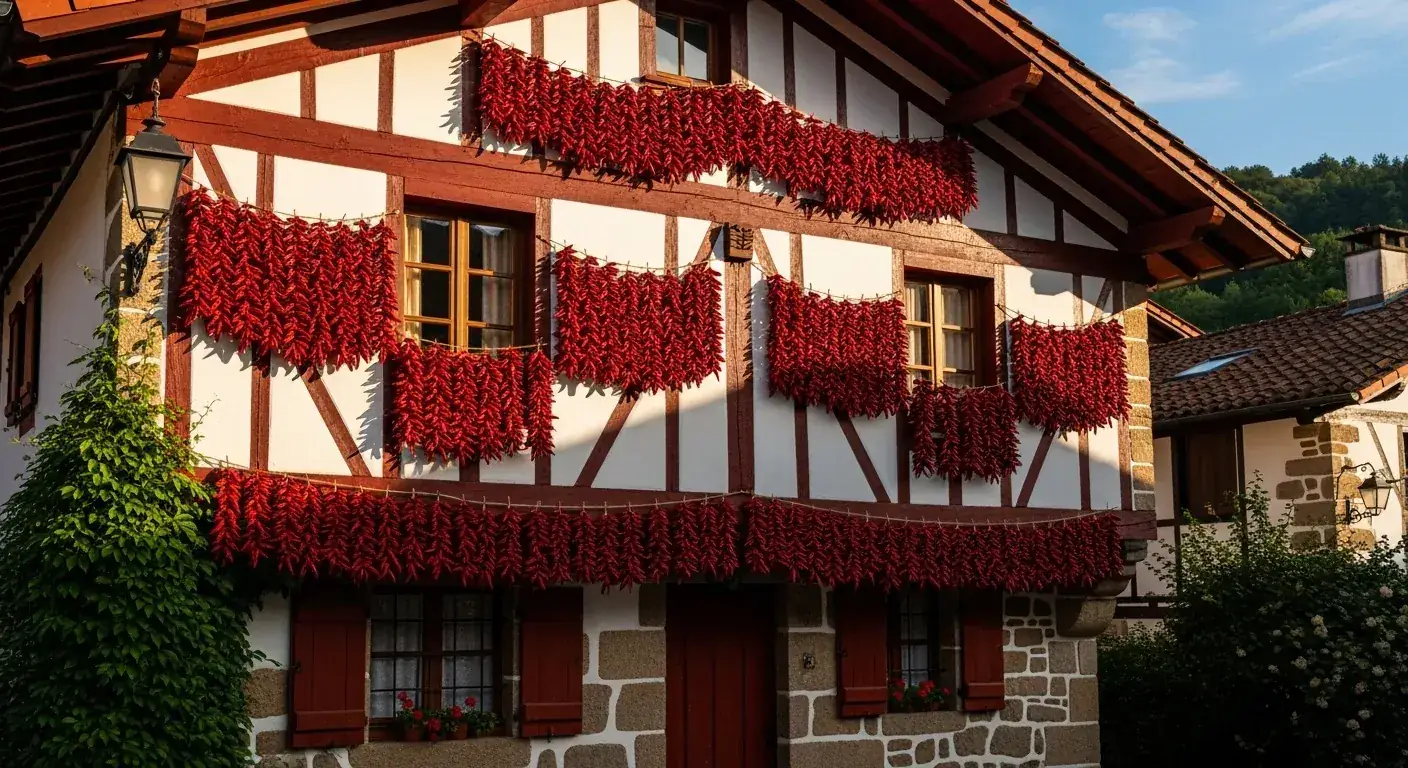
Grown in 10 municipalities Around Espelette (Espelette, Aïnhoa, Cambo-les-Bains, Halsou, Itxassou, Jatxou, Larressore, Saint-Pée-sur-Nivelle, Souraïde, Ustaritz). Spicy warm but not harsh (level 4 on the Scoville scale), with fruity notes of ripe tomato and bell pepper. In powder, string, puree, jelly. It works on everything : meat, fish, chocolate, cheese, omelets.
Chocolate from Bayonne
Bayonne is France's leading chocolate-producing city. The story begins in early 17th century, when the Sephardic Jews from Spain and Portugal, persecuted by the Inquisition, settle in the Saint-Esprit neighborhood on the outskirts of Bayonne. They bring their expertise in processing cocoa beans — The earliest recorded mention of chocolate in Bayonne dates back to 1670.
At the 19th century, Bayonne has 31 chocolate shops and has established itself as the chocolate capital of France. Today, historic houses carry on this tradition: Cazenave (1854), Daranatz (1890), Pariés (1895).
Every year, "Bayonne Celebrates Chocolate" celebrates this heritage. For more information, visit our Bayonne Guide.
The Biarritz Market Halls
| Basque specialty | Type | Wine Pairing | Where to find it |
|---|---|---|---|
| Pintxos | Bread bite + wooden skewer | Txakoli (poured from a height) | Les Halles, Gambetta Street and Centre Street |
| Bayonne Ham (AOP) | Dried deli meats | Irouléguy Red | Market Halls, Saint-Esprit Delicatessens in Bayonne |
| Espelette Pepper AOP | Spice (2000) | — | Espelette (10 producing municipalities) |
| Ossau-Iraty AOP | Sheep's-milk cheese | Irouléguy red or white | Market halls, cheese shops |
| Basque Cake | Cherry-Cream Pastry | Basque cider | Local Bakeries |
| Bayonne Chocolate | Sephardic Tradition (1670) | — | Cazenave, Daranatz, Pariés |
Built in 1885, Les Halles is the a must-visit destination to discover Basque specialties in a lively atmosphere. Sheep's-milk cheeses (Ossau-Iraty AOP), Bayonne ham, Espelette pepper, Basque cake, fresh fish from the port of Saint-Jean-de-Luz, and cold cuts.
Hours: Open every morning (approximately 7:00 a.m.–1:30 p.m.). The atmosphere is electric on the weekend. Get there early to get the best items.
Basque Identity: What You Need to Know
The Basque Country is not just a tourist destination. It is a a region with a strong sense of identity, with its language, its sports, her music, its traditions which are unlike anything else in France or Spain.
Euskara: the Basque language
TheBasque is one of the Europe's oldest languages and one of the few that does not belong to the Indo-European language family. No known relatives along with related languages (French, Spanish, Occitan, etc.). Linguists consider it to be a isolate language whose origin remains a matter of debate — some theories link it to Caucasian languages or to pre-Indo-European Paleo-European languages.
Today, approximately 750,000 people speak Euskara, mainly on the Spanish side (Southern Basque Country, Hegoalde). On the French side (Iparralde), the language is spoken by a smaller minority but is gaining ground thanks to ikastolak (Basque bilingual schools) and the public school system.
You'll come across bilingual signs everywhere on road signs: Biarritz / Miarritze, Saint-Jean-de-Luz / Donibane Lohizune, Espelette / Ezpeleta, Bayonne / Baiona.
Iparralde and Hegoalde: The Cross-Border Basque Country
The historic Basque Country is shared between France and Spain: - Iparralde = "north side" = French Basque Country (3 provinces: Labourd, Lower Navarre, Soule) - Hegoalde = "southern part" = Spanish Basque Country (4 provinces: Biscay, Gipuzkoa, Álava, Navarre)
TheIkurriña (Basque flag, green/white/red) flies on both sides. The culture is shared, despite the administrative border. San Sebastián (Donostia in Basque), located 50 km from Biarritz, is one of the World Gastronomic Capitals and is well worth the trip across the border.
Basque Pelota
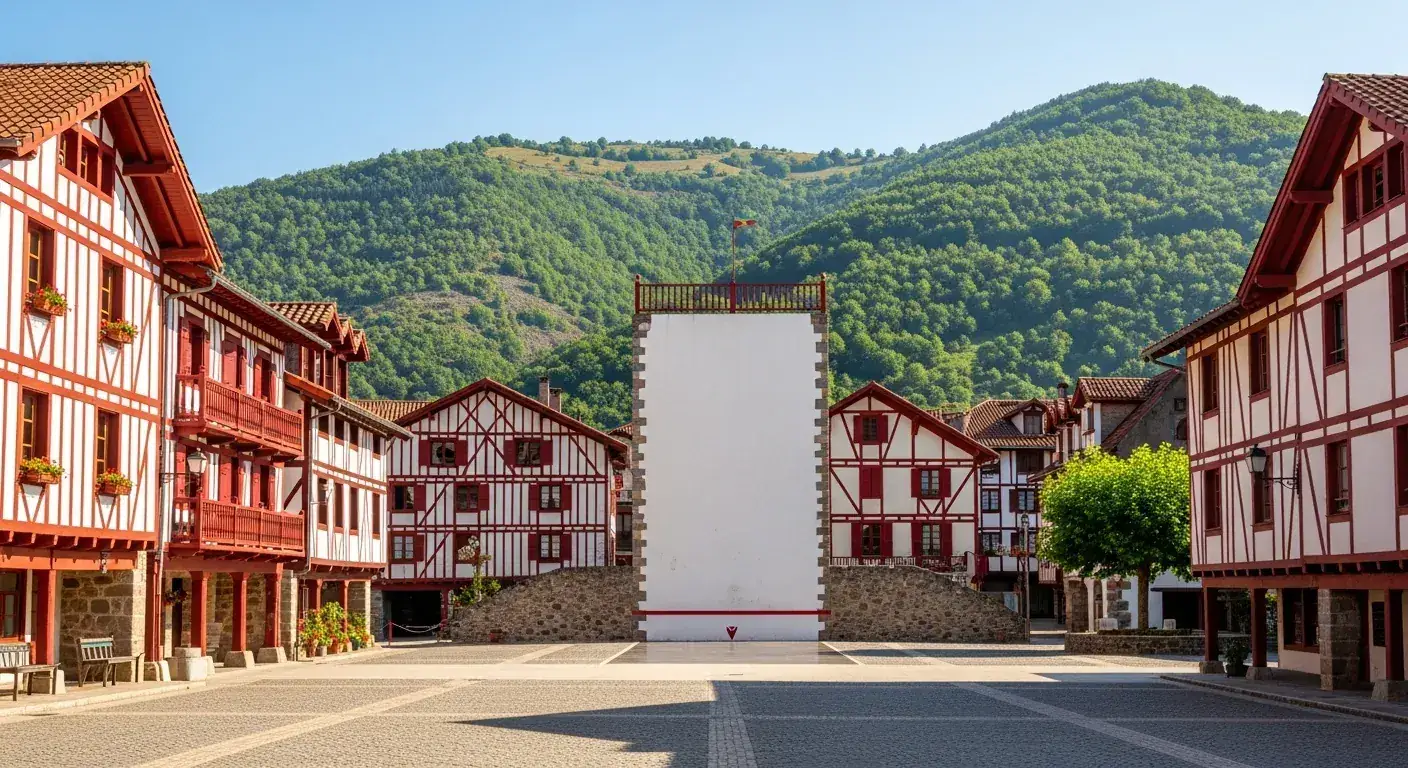
The identity-based sport from the Basque Country. Basque pelota brings together several disciplines (chistera, pala, bare hand, rebot, cesta punta), all of which are played on a pediment — those characteristic white walls seen in every Basque village. The trinquet is the indoor arena.
Where to watch a game: Every Basque village has its own fronton. In Biarritz, theBiarritz Pelota Center regularly organizes demonstrations during the season. At Saint-Jean-de-Luz, Cambo-les-Bains and Bidart, the gables are active.
Colors and Symbols
Red, green, white: traditional colors, which are ubiquitous in architecture (the half-timbered houses in villages such as Espelette and Aïnhoa).
Lauburu: the Basque cross with four curved arms, an ancestral symbol of identity.
Beret: worn by shepherds and pelota players, still seen in the villages.
Must-See Villages Around Biarritz
Saint-Jean-de-Luz (18 km / 20 min)
No doubt the most charming village along the entire French Basque Coast. Fishing port still in operation, 17th-century shipowners' houses, and beach protected by seawalls — the the only sheltered natural bay between Arcachon and Spain, making it a unique swimming spot on the wild Atlantic coast.
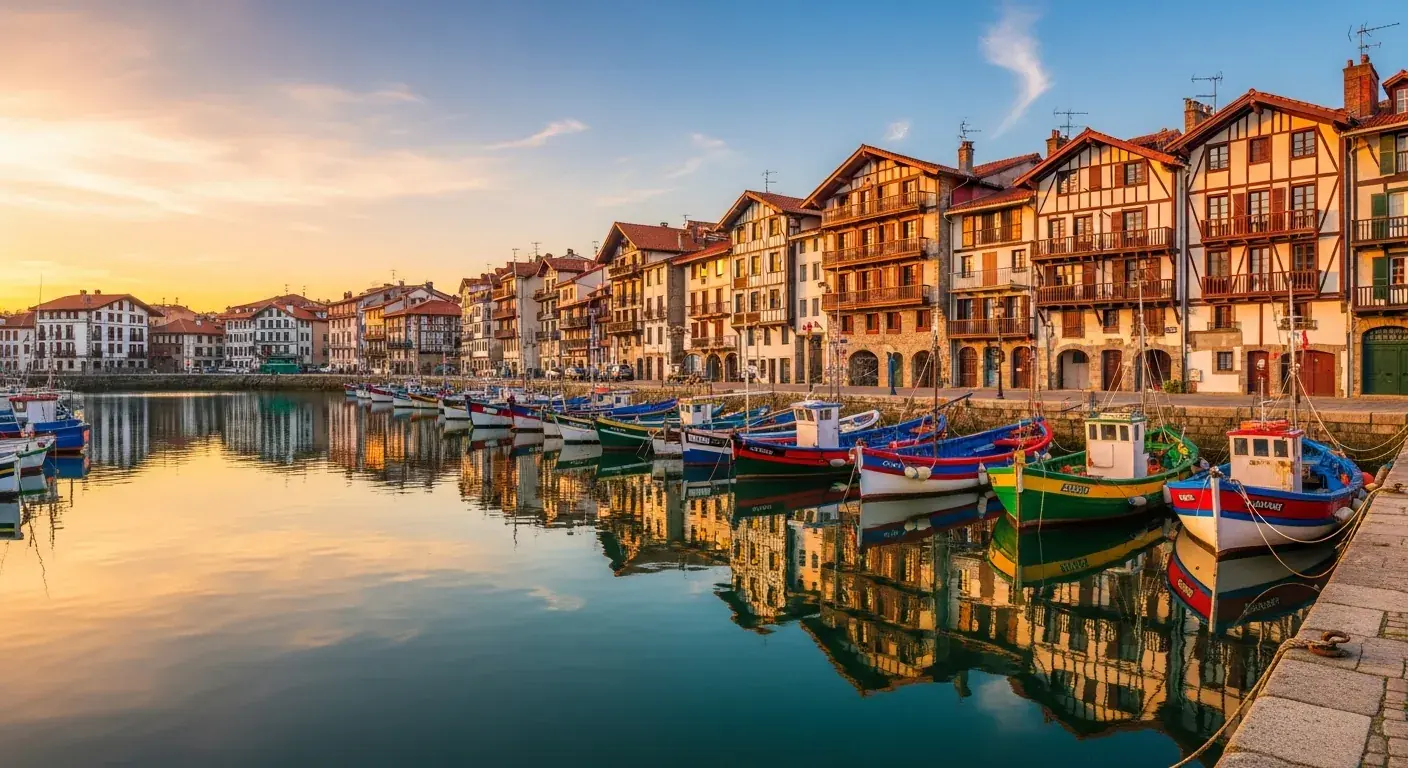
The Historic Event: the June 9, 1660, Louis XIV marries the Infanta Maria Theresa of Spain at St. John the Baptist Church, marking the Treaty of the Pyrenees which brought an end to 24 years of Franco-Spanish war. The Louis XIV House (where the king stayed the month before his wedding) can still be visited today.
Fun Fact: the church door through which the royal procession exited was walled up immediately after the ceremony, and has never been reopened. A tradition documented locally.
To Do: Stroll through Place Louis XIV, visit the Saint-Jean-Baptiste Church, have pintxos for lunch on Rue Gambetta, go swimming at the protected Grande Plage, buy some Macarons from Maison Adam (founded in 1660—it was this bakery that made the macarons served at the royal wedding). For Basque cake, all the local bakeries are worth a visit.
Anglet (5 km / 10 min)
Immediately north of Biarritz, Anglet is a seaside and residential town that stretches across 4.5 km of ocean beaches. 11 beaches including the Chamber of Love (the most iconic), perfect for surfing. Chiberta Forest (300 hectares of pine trees) for walks and golf.
Less touristy than Biarritz, with easier parking. A great spot for surfers and families.
Espelette (25 km / 30 min)
The Village of the AOP Chili Pepper. His white and red half-timbered houses, decorated with strings of chili peppers drying in the fall sun, are among the most iconic images of the Basque Country. Protected Architectural Heritage, listed among the Most Beautiful Villages of France.
Atelier du Piment Interpretation Center to understand chili pepper cultivation, from seed to plate. Buy directly from producers in the shops in the village.
The Espelette Chili Pepper Festival is held every the last weekend in October. More than 200 exhibitors, 20, 000 visitors, street bands, a chili blessing, and a community dinner in the market halls. An authentic and friendly event — something to experience at least once if you're in the area during that time.
Saint-Jean-Pied-de-Port (55 km / 50 min)
A major stop along the Camino de Santiago. At the foot of the Pyrenees, in Lower Navarre (historic province of the French Basque Country). Vauban Citadel, old medieval streets, Notre-Dame-du-Bout-du-Pont Church. This is where the pilgrims prepare to cross the Pyrenees toward Roncevaux (Roncesvalles in Spanish) — the toughest leg of the journey.
For hiking enthusiasts and fans of medieval history, a full day is well worth it.
Hendaye (25 km / 25 min)
Border City with Spain. Pheasant Island in the middle of the Bidasoa River (an island administered under Franco-Spanish joint sovereignty, one of only two remaining in the world). Long fine-sand beach facing north, much calmer and more family-friendly than those in Biarritz. Casino, marina, Abbadia Castle (19th-century Neo-Gothic castle restored).
Excellent point from Departure for San Sebastián (Donostia), just across the border (15-minute drive, or by Euskotren train from the Hendaye train station).
Bidart (10 km / 15 min)
A small seaside village between Biarritz and Saint-Jean-de-Luz. Coastal Cliffs, surf beaches (Erretegia, Royal Pavilion), Ilbarritz Castle (19th century, ancient giant mechanical musical instrument), Pelota tradition. Quieter and more authentic than Biarritz.
Seasonal Calendar
| Season | Weather | Crowd | Benefits | Disadvantages |
|---|---|---|---|---|
| Spring (April–June) | Mild, 15–20°C | Low to moderate | Quiet beaches, surf waves, soft light | Possible rain |
| Summer (July–August) | Warm, 22–28°C | Very strong | All beaches are open, nightlife, entertainment | Crowds, full parking lot, high prices |
| Fall (September–October) | Pleasant, 18–22°C | Moderate | Our recommendation: great surfing, fine dining, water that's still warm | The days are getting shorter |
| Winter (November–February) | Mild, 10–15°C | Very low | Total tranquility, low prices, winter light | Cooler sea, some restaurants closed |
Key Events
| Event | Period | Location | Character |
|---|---|---|---|
| Bayonne Festival | Mid-July (5 days) | Bayonne | 1 of France's biggest folk festivals · white and red |
| Queen Classic Surf Festival | Mid-September | Basque Coast (Biarritz) | Free, Inclusive Longboard Festival |
| Quiksilver Festival | September (variable) | Grande Plage (Biarritz) | International Surfing Competition |
| Espelette Pepper Festival | The last weekend in October | Espelette | 200 exhibitors · chili blessing · 20,000 visitors |
| Bayonne Celebrates Chocolate | November | Bayonne | Celebrating the Legacy of Chocolate-Making (since 1670) |
- Queen Classic Surf Festival (usually mid-September) — an inclusive, free longboard festival on the Côte des Basques, one of the major surfing events on the calendar
- Espelette Pepper Festival (last weekend of October) — a must-visit for food lovers
- Bayonne Celebrates Chocolate (November) — celebration of chocolate heritage
- Bayonne Festival (mid-July, 5 days in white and red) — one of France's biggest folk festivals. Be sure to book your lodging well in advance if you plan to go.
How to Get to Biarritz from Bordeaux
By personal or rental car
| Fashion | Travel time from Bordeaux to Biarritz | Estimated cost | Pros / Cons |
|---|---|---|---|
| Car / Rental | ~2 hours 19 minutes (199 km via the A63) | Gas + tolls: €30–50 | Liberté · Parking lot is full in the summer |
| TGV | ~1 hour 15 minutes (Bordeaux → Bayonne) | ~50 € round trip | Convenience · Bayonne–Biarritz shuttle: 15–20 min |
| Executive car service | ~2 hours and 19 minutes door-to-door | from 332 € · one-way | Total comfort · nearby towns within easy reach |
| Bus (Flixbus, BlaBlaCar) | 3:00–3:30 | ~15-25 € | Economical · impractical for luggage |
| Airplane (BIQ) | ~1-hour flight + transfers | ~80-150 € | Not profitable from Bordeaux |
Itinerary: highway A63 Direction Bayonne / Spain. Allow about 199 km and 2 hours, 19 minutes Excluding traffic. Tolls.
During peak season (July–August), the A63 can get very crowded on Saturday mornings (when people are leaving for vacation) and Sunday afternoons (when people are returning). Allow an extra 20 to 45 minutes.
Parking in Biarritz: major problem in July and August. The downtown parking lots fill up by 10 a.m. Paid parking is widespread (red zone up to €10 for 3 hours in the central area). Options:
- Outlying parking lots with shuttle service (Aguiléra, Biarritz-La Négresse)
- Arrival before 9 a.m. if you want a spot in downtown
- Txik Txak Network (local bus) to get to the beaches from the off-site parking lots
By train
TGV from Bordeaux Saint-Jean to Bayonne in about 1 hour and 15 minutes. Several departures a day. From Bayonne, shuttle, or taxi to Biarritz in 15–20 minutes (Biarritz has its own train station, Biarritz-La Négresse, but it isn't central— hence the curious name, which comes from a local legend about a Napoleonic canteen worker).
Valid option if you're staying in town and don't need to explore the surrounding villages. Less convenient For Espelette, Saint-Jean-Pied-de-Port, and Hendaye—without a car on site.
With a private chauffeur
The most comfortable option for travelers who want to make the most of the region without any logistical hassles: no stress about parking, the freedom to stop in the towns (Saint-Jean-de-Luz, Espelette, Hendaye), and the option to taste txakoli, Irouléguy, or Basque cider without worrying about the steering wheel.
It's also the best option for groups, the families with children and travelers who want to Combine Biarritz, Saint-Jean-de-Luz, and Espelette on the same day.
For more details, see our page Bordeaux ↔ Biarritz chauffeur service.
By plane
Biarritz-Basque Country Airport (BIQ) 5 km from the city center. Regular flights to Paris (Air France), Lyon, and several seasonal international flights (London, Dublin, Madrid).
From Bordeaux, flying doesn't make sense (the total travel time from airport to airport is longer than the drive).
By bus / coach
Flixbus and BlaBlaCar Bus offer routes between Bordeaux and Biarritz, with travel times of 3 to 3.5 hours. Economy Option but impractical for luggage and connecting flights. Best suited for travelers on a very tight budget.
Practical Information
Recommended duration
- Weekend (2 days): Biarritz + Saint-Jean-de-Luz. That's enough to cover the must-see coastal spots.
- 4–5 days: Biarritz and surrounding villages (Espelette, Bayonne, Anglet, Hendaye). Balanced formula.
- One week: The entire Basque Country, day trips to Spain (San Sebastián), Saint-Jean-Pied-de-Port, and the Camino de Santiago.
Accommodations
In Biarritz: from 5-star luxury hotels (Hôtel du Palais) to family-run guesthouses. Plenty of 3- and 4-star options. Expect to pay €100–180 per night at a 3-star hotel off season, €180–350 in July–August.
Saint-Jean-de-Luz: a very appealing alternative, slightly lower prices, a more authentic atmosphere.
Anglet: more affordable prices, ideal for families with children.
Reservations must be made 3–6 months in advance for July–August.
Estimated budget per day per person
| Profile | Daily Budget | Accommodations | Catering |
|---|---|---|---|
| Backpacker | 70-90 € | Inn or campground | Markets, pintxos |
| Family | 130-200 € | Apartment in Anglet | Bistros, market halls |
| Couple | 180-300 € | Charming Hotel | Fine-dining restaurants |
| Premium | €400 and up | Hôtel du Palais | Michelin-Starred Restaurants |
Accessibility for People with Disabilities
Biarritz is generally well-equipped In terms of accessibility: Accessible beaches (Grande Plage and Port Vieux have "Tiralo"-style facilities), and numerous lowered crosswalks. However, some of the older alleyways remain cobblestone and steep.
Climate
Climate temperate oceanic. Mild winters (10–15°C), temperate summers (22–28°C), frequent rain in the spring and fall, Atlantic wind sometimes strong on exposed beaches. A lightweight jacket comes in handy even in the summer for parties.
Frequently Asked Questions
When is the best time to visit Biarritz?
May–June and September–October are ideal: pleasant weather, moderate crowds, and reasonable prices. July–August guarantees sunshine, but the beaches are crowded and prices are high. Fall is perfect for surfing (consistent swell, water that’s still warm).
How long does it take to visit Biarritz?
A weekend (2 days) is enough to see the must-see sights (Rocher de la Vierge, Côte des Basques, Les Halles, the beaches, Hôtel du Palais). 4–5 days to also explore Saint-Jean-de-Luz, Espelette, and Bayonne. A week to cover the entire Basque Country, including trips across the border.
Is Biarritz a good place for families with children?
Yes, absolutely. Port Vieux Beach is perfect for young children (calm, sheltered waters). The Cité de l’Océan is very interactive, and the Musée de la Mer has seals. There’s a small tourist train for exploring the city. Milady Beach is great for your first surfing lessons.
Can you go surfing in Biarritz without any experience?
Absolutely. More than 15 certified schools welcome complete beginners. Côte des Basques and Milady Beach are the best spots for learning. A 2-hour lesson is all it takes to stand up on the board for the first time.
What are the quietest beaches in Biarritz?
Port Vieux (the most sheltered, ideal for families), Ilbarritz (on the border with Bidart, more rugged), Milady (residential, quiet). Avoid Grande Plage and Côte des Basques in the height of summer if you’re looking for peace and quiet.
How do I get from Biarritz to Saint-Jean-de-Luz?
18 km, about 20 min. By car via the D810 (coastal road, more scenic) or the A63 (highway, faster). By train: 10–15 min from the Biarritz-La Négresse train station. By bus: the Txik Txak network. By bike: a magnificent coastal bike path, ~1 hour–1 hour 30 minutes.
What exactly are the Bayonne Festivities?
One of France’s biggest folk festivals. Five days and five nights of festivities in Bayonne in mid-July, decked out in white and red (the traditional colors). Bandas (street bands), bullfights, Basque pelota, cow races, outdoor concerts, and an atmosphere of collective jubilation unlike anywhere else in the world. For more information, check out our Bayonne Guide.
Is Biarritz accessible by public transportation from
Bordeaux?
Yes. The TGV from Bordeaux to Bayonne takes 1 hour and 15 minutes, with several departures daily. From Bayonne, shuttle buses and taxis to Biarritz take 15–20 minutes. To explore the villages of the Basque Country, a car (or chauffeur service) is essential.
Can you travel to Spain from Biarritz?
The border is 25 km away (Hendaye/Irun). San Sebastián (Donostia) is 50 km away, about a 50-minute drive. Most cross-border day trips are day trips—restaurants, beaches, the old town of Donostia, and Mount Igueldo for the view. Bring your ID card or passport (random checks during the high season).
What does "Basque Country" mean?
The Basque Country is a historic region divided between France (Iparralde, 3 provinces: Labourd, Lower Navarre, Soule— Biarritz is in Labourd) and Spain (Hegoalde, 4 provinces: Biscay, Gipuzkoa, Álava, Navarre). A shared culture, language (Euskara), and strong identity transcend the border.
Where does the name "La Négresse" for the train station come from?
The Biarritz train station is called Biarritz-La Négresse because it is located in the La Négresse neighborhood, about 3 km from downtown. According to local legend, the name comes from a Black woman who ran a canteen who ran an inn along the road at the time of the passage of Napoleonic troops (around 1813) and was nicknamed “la Négresse” by the soldiers. The name has stuck.
Further Reading
- Chauffeured travel in Biarritz and the Basque Country: see our page Bordeaux ↔ Biarritz executive car service (packages, rates, reservations)
- Bayonne in Detail: See our Bayonne Guide and Bordeaux ↔ Bayonne chauffeured transfer
- Getting from the airport directly to Biarritz: see Transfer from Bordeaux to Biarritz
- Getting there from Saint-Jean Station: see Chauffeur service at Saint-Jean Station
- Combine a trip to Biarritz with a stay in the Arcachon Basin: see Bordeaux ↔ Arcachon chauffeur service, Bordeaux ↔ Cap Ferret chauffeured transfer or Bordeaux ↔ Dune du Pilat executive car service
- Add a day at the vineyards: see Bordeaux ↔ Saint-Émilion chauffeur service or Bordeaux ↔ Médoc chauffeured transfer
- Sarlat / Périgord, too? See Bordeaux ↔ Sarlat private chauffeur
- Extend the trip to the Pyrenees: plan the route with the Guide to Lourdes and Its Shrine
Sources and References
- Biarritz Tourist Office — Destination Biarritz — schedule, guided tours, accommodations
- Official Biarritz Tourist Office — Practical Information
- Hôtel du Palais — Official Website — History and Reservations
- French Surfing Federation — certification and competitions
- Espelette Pepper AOP — Association — Production and Events
- Tourism in the Basque Country — In the Basque Country — regional guide
- Saint-Jean-de-Luz Tourist Office
Article updated on .
Heading to the Basque Coast
Direct door-to-door service from Bordeaux (~2 hours 19 minutes), with optional stops in Saint-Jean-de-Luz or Espelette; a written, fixed-price quote within 30 minutes. Sedan or van, with an English-speaking driver.