Bilbao and the Guggenheim effect
The city that reinvented industrial Europe: the Guggenheim by Frank Gehry (1997), the medieval Casco Viejo, the pintxos and txakoli culture, the Vizcaya Bridge (a UNESCO World Heritage Site), architecture by Foster, Calatrava, and Pelli—and how to get to Bilbao from Bordeaux. Everything you need to know before you go.
In a nutshell
- Bilbao (Spanish) or Bilbo (Basque). 350,000 residents within the city walls, 1 million in the metropolitan area. Economic capital of the Spanish Basque Country (Hegoalde), province of Bizkaia.
- Opening of the Guggenheim Museum on October 18, 1997: the founding event of urban renewal, now known as"Bilbao effect".
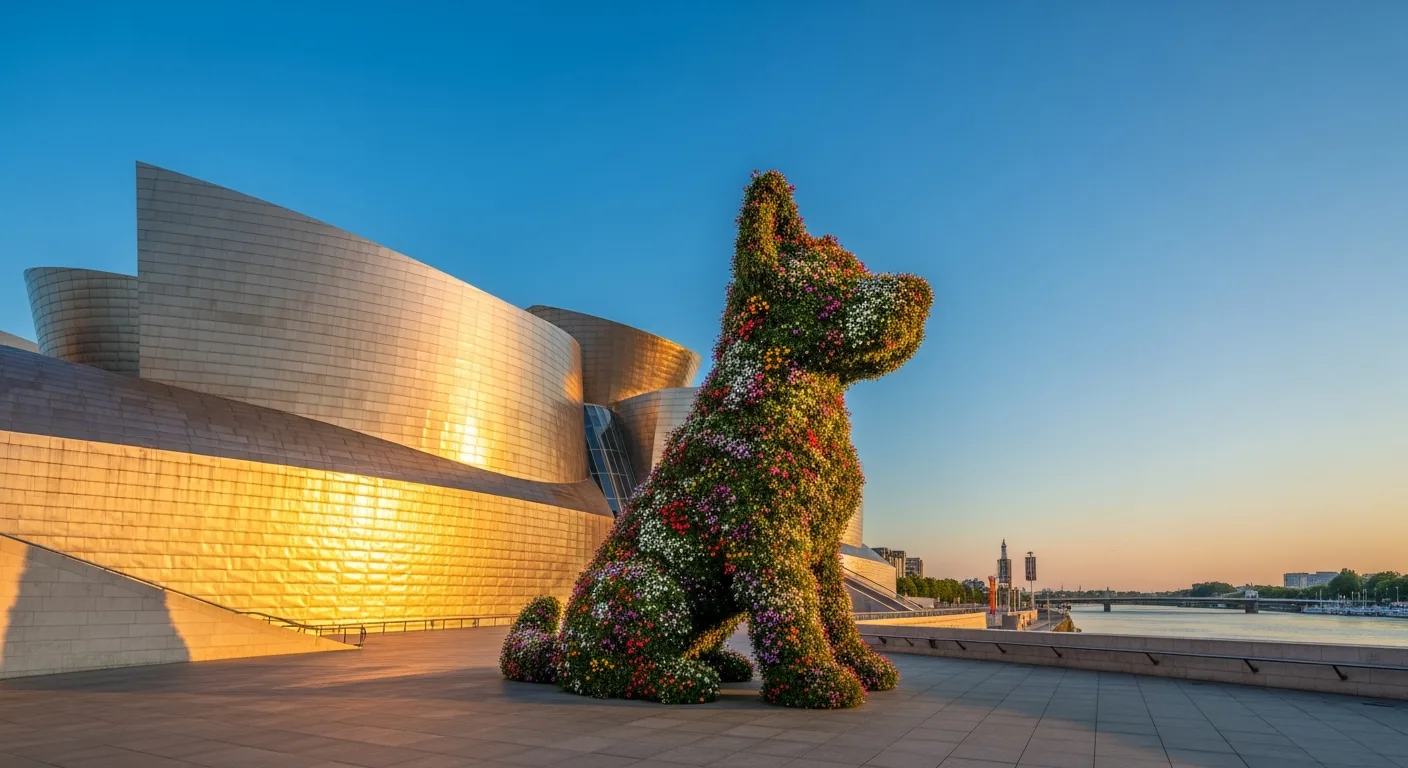
- 24,000 m² by Frank Gehry, 19 galleries, facade made of panels of titanium which changes color depending on the light. The museum describes its building and its 24,000 m² on its official website.
- A Rotating Lineup of Star Architects: Gehry (Guggenheim), Norman Foster (subway, 1995), Santiago Calatrava (Loiu Airport, 2000, Zubizuri Footbridge, 1997), César Pelli (Iberdrola Tower, 2011), Arata Isozaki (Isozaki Atea, 2009).
- Gastronomy: 140 pintxos bars in Casco Viejo, 3 restaurants with 3 Michelin stars in the wider area (Azurmendi, Etxebarri, Mugaritz, 100 km away).
- Vizcaya Bridge (Puente Bizkaia) listed UNESCO since 2006, the world's first transporter bridge (1893), according to the World Heritage Center fact sheet.
- Athletic Club Bilbao implements a recruitment policy based on being born in or having been educated in the Basque Country, as detailed in the the club's official philosophy.
- Distance from Bordeaux: about 335 km, about 3 hours and 44 minutes without traffic by car via the A63 and then the Spanish AP-8. 100 km from San Sebastián (1 hour).
Before You Go: What Bilbao Is Really Like
7:00 p.m., the last Sunday in September, Plaza Nueva. The neoclassical arcades fill up as the rain stops, and in less than an hour the 220 bar tables spill out onto the cobblestones. A Basque family orders three flaps and two glasses of txakoli; a British couple points the finger at a gilda and a bacalao al pil-pil without asking the price. In the center of the square, a grandfather is explaining to his granddaughter, in Basque, how to read the menu. The volume goes up. Five bars down, the Iruña Café has been serving the same dishes since 1903.
That's Bilbao for you. A city you might imagine to be industrial, harsh, and closed off, but which is actually one of the most elegant, among the most gastronomic, among the most architecturally spectacular in Europe. 350,000 residents only, but a disproportionate cultural influence. A city that was on the verge of bankruptcy in 1980 and which has become, in 25 years, a global case study of Urban Regeneration Through Culture.
The trigger has a name: Frank Gehry. The October 18, 1997, the Guggenheim Museum opens its doors, and Nothing in Bilbao will ever be the same again. But Bilbao isn't just the Guggenheim. It's also an intact medieval Casco Viejo that remains intact, the largest covered market in Europe, a transshipment bridge designated a UNESCO World Heritage Site, a metro system designed by Norman Foster, and the only soccer team in the world that recruits exclusively Basque players. Bilbao is as much a political project as it is a tourist destination.
This guide outlines what you need to know before you come. For practical details (how to get here, admission prices, and available services), please visit our page Bordeaux ↔ Bilbao chauffeured transfer.
History and Identity: From the Medieval Estuary to the Bilbao Effect
Foundation and the Middle Ages
Bilbao was officially founded on June 15, 1300 by Diego López V de Haro, Lord of Bizkaia, who grants his founding charter (carta puebla). The city has its roots in the right bank of the Nervión estuary, at the place where the estuary flows into the Cantabrian Sea 14 km downstream. The site is strategically located: protected from sea storms, accessible to merchant ships, and connected by waterway to the iron mines in Bizkaia.
The medieval layout is still visible today in the Casco Viejo: the famous Las Siete Calles (Seven Streets, in Basque Seven Streets), running parallel and perpendicular between the cathedral and the estuary, define the city’s historical character.
In the late Middle Ages, Bilbao became a major commercial port: Export of the Biscayan iron to England and Flanders, importing textiles and spices. The city flourished, and its cathedral Santiago (14th–15th centuries, Late Gothic) is evidence of this. Bilbao was a secondary stop on the Camino de Santiago along the coast (Camino del Norte).
Industrialization and the Golden Age
19th century: Bilbao becomes the Spain's industrial capital. The steel industry is booming thanks to the nearby iron mines (Triano, Somorrostro). The shipyards along the estuary are multiplying. The city is becoming covered with black smoke, the estuary is becoming polluted, but money is pouring in. Some Basque middle-class families (the Chávarris, Ybarras, Echevarrietas) are industrial tycoons.
It is this industrial bourgeoisie which is funding the construction of theEnsanche (the 19th-century extension) on the Left Bank: the Gran Vía plotted based on 1876, a long, straight avenue lined with elegant buildings , the Arriaga Theater (1890), the Provincial Council Building (1900), the first major hotels.
1898: founding of theAthletic Club, which would go on to become the city's signature sports institution (see the dedicated section).
Industrial Decline and Urban Decay (1970–1990)
Global Steel Industry Crisis in the 1970s and 1980s. The shipyards are closing One by one, the blast furnaces are shutting down, and the factories are closing. Unemployment Peak in the 1980s, mass emigration toward Madrid and Barcelona. The Nervión River is one of the most polluted cities in Europe. Bilbao has a reputation for"Gray Spain".
In addition, there is the Basque political conflict (ETA), which lasted until 2018 and created a climate of intense insecurity for three decades. International tourists are avoiding the city.
The Rebirth: 1992–1997
The authorities decide to radical transformation plan. The assessment is uncompromising: the city must shift from manufacturing to services, from steel to culture, from gray to a striking visual element. The plan’s three pillars:
- Complete cleanup of the estuary
- Modernization of Transportation Infrastructure (subway, airport, train stations)
- Creation of an Iconic Cultural Facility capable of attracting an international audience
It is in line with this reasoning that theagreement in 1991 with the Solomon R. Guggenheim Foundation in New York. The The museum opened on October 18, 1997. Frank Gehry, selected through a competition, delivers a building unparalleled anywhere in the world: 24,000 m², 19 galleries, 3 levels, covered with 33,000 titanium panels mats that change color depending on the daylight.
The effect is immediate. 1.3 million visitors in the first year, exceeding all expectations. The International tourism is booming. The economic benefits make the project profitable in 4 years. Urban planning researchers now refer to"Bilbao effect" to describe the ability of a cultural facility to revitalize an entire city.
Today
Bilbao today is:
- Economic Capital in the Spanish Basque Country, which is the Spain's most prosperous region (GDP per capita above the EU average)
- Recognized as one of the the world's best examples of urban regeneration
- Cultural Capital: Guggenheim, Museum of Fine Arts, Azkuna Zentroa, Itsasmuseum
- Host of 2 major international festivals (BBK Live, Bilbao BBK Music Legends)
- Consistently ranked among the Europe's Most Livable Cities
The Guggenheim Museum Bilbao: The Work That Changed a City
Frank Gehry and the Architectural Challenge
Frank Gehry, a Canadian-American architect born in 1929 (1989 Pritzker Prize laureate), was selected in 1991. The brief is ambitious: to create a building iconic, instantly recognizable, capable of become part of the global imagination just like the Eiffel Tower or the Sydney Opera House.
The design process begins with physical models made of foam and cardboard which Gehry shapes by hand, and which are then 3D-scanned and translated into CATIA, software originally developed for the French Air Force (Dassault). It is theone of the first large-scale applications from aerospace modeling to civil architecture.
Built 1993–1997. Budget: 89 million euros (compare with 1.3 billion in economic benefits over 20 years).
Building Description
24,000 m² surface, 3 levels, 19 galleries.
The coating: 33,000 titanium panels mat, gold and silver, which change color depending on the light. Titanium is more sustainable than aluminum and gives the building this vibrant patina that seems to breathe.
The Form: an arrangement of curved forms, partly inspired by the fish shell (Gehry said that his childhood in Toronto, spent watching the fish at the market, left a lasting impression on him.) The curves interact with: - The Nervión River that passes right in front of— The La Salve Bridge (1972) that the museum straddles - The Artxanda Hill that blocks the northern horizon - The Abandoibarra neighborhood that the museum has revitalized
Inside, the Grand Atrium reaches a peak at 50 meters with high ceilings, bathed in natural light.
Key Works
On permanent display in Gallery 104: "The Matter of Time" by Richard Serra (2005) Eight Corten steel sculptures monumental, forming a physical path through the museum’s largest gallery (130 m long). Spirals, ellipses, double curves. More than 1,000 metric tons of steel. An experience that is as much physical as it is visual: you Step inside the sculptures, you are enveloped by it, your relationship to space is completely transformed.
In front of the entrance: "Puppy" by Jeff Koons (1992) West Highland Terrier Puppy from 12.4 meters tall, covered with 38,000 fresh flowers (petunias, begonias, lobelias, marigolds), replanted twice a year. A team of gardeners specializing in this field takes care of its upkeep. It has become a global icon of the Internet, partly thanks to its visual virality.
Behind the museum, on the ría side: "Maman" by Louise Bourgeois (1999) Monumental spider made of bronze, marble, and stainless steel, 9 meters in height, 10 meters large-scale. 32 marbled eggs in her belly. Bourgeois associated the spider with her mother (weaver, protector). A work tender and unsettling at the same time.
Outdoor Permanent Installation: "Tulips" by Jeff Koons (1995–2004) Bouquet of tulips in stainless steel mirror, on the north plaza.
Outdoor Permanent Installation: "Fire Fountain" by Yves Klein (1961, installed in 1997) A fountain that spouts fire and water, activated at regular intervals later today.
Practical
| Information | Details |
|---|---|
| Address | 2 Abandoibarra Avenue, 48009 Bilbao |
| Hours | 10 a.m.–7 p.m. (Tuesday–Sunday), 10 a.m.–8 p.m. during peak season (mid-June to mid-September) |
| Closed | Mondays (except in July and August and on certain holidays), December 25, January 1 |
| Adult Rate | €18 (audio guide included) |
| Reduced | €9 (students under 26), free for children under 12 |
| Reservation | Highly recommended during peak season; buy tickets online with schedule |
| Official Website | guggenheim-bilbao.eus |
Our advice: Visit the Tuesday morning at opening (10 a.m.) or the Late Thursday afternoon (5:00–7:00 p.m.) to avoid crowds. Let's go directly to Gallery 104 (Richard Serra) before it fills up. Count 2½ to 3 hours for the full tour.
Casco Viejo and Las Siete Calles
A 10-minute walk from the Guggenheim, the other Bilbao is waiting for you. The Casco Viejo (Old Town) embodies the medieval, culinary, and nightlife spirit of the city. It is in this 14th-century tapestry where the locals live and where you can eat the best pintxos.
Las Siete Calles (Zazpi Kaleak)
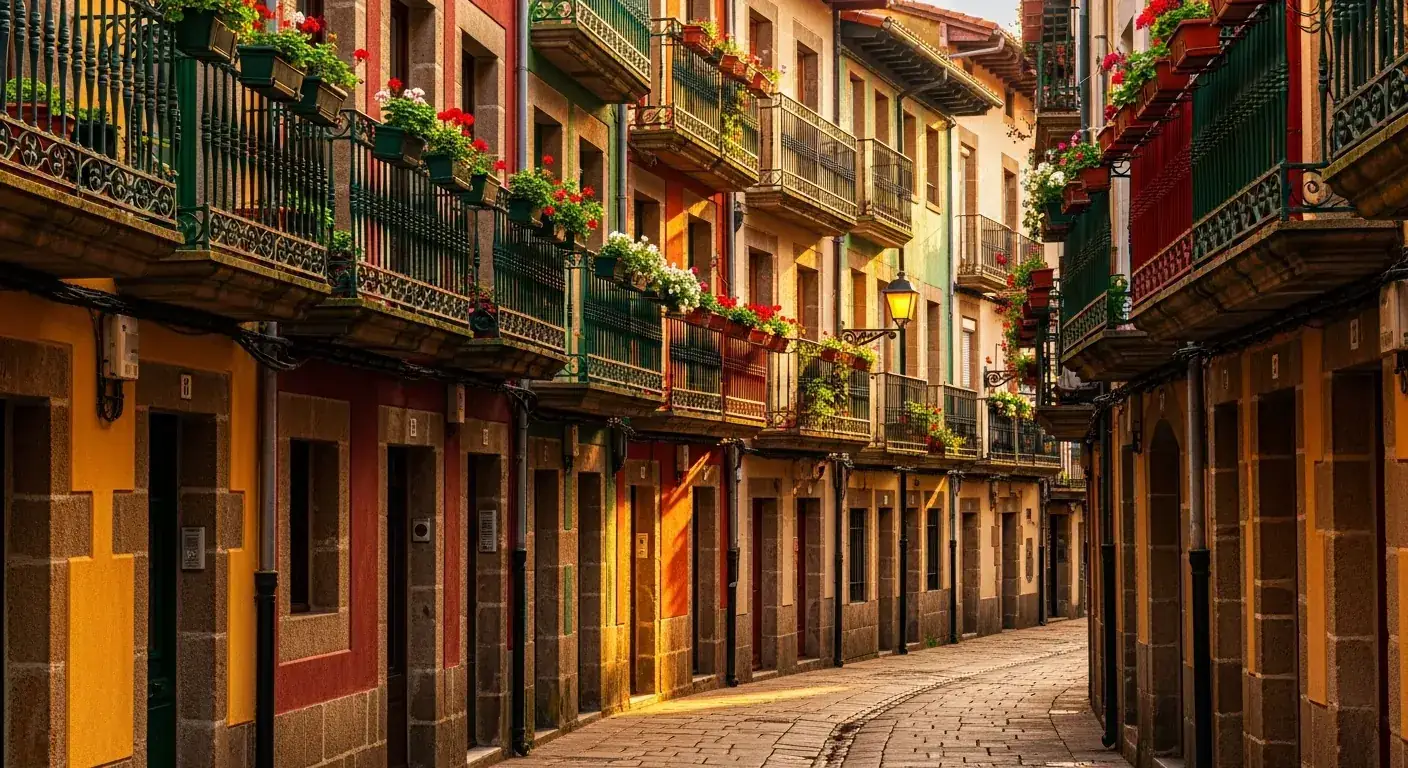
The Seven Streets historical, running parallel to one another, perpendicular to the estuary. Route dating from the 15th century. Names: Somera, Artekale, Tendería, Belostikale, Carnicería Vieja, Barrenkale, Barrenkale Barrena. Narrow houses, colorful facades, wrought-iron balconies, artisan workshops, and used bookstores.
This is where the highest concentration of pintxos bars.
Plaza Nueva
The iconic neoclassical square in Casco Viejo. Built between 1821 and 1849, framed byarcades with 64 columns, it hosts The Best Pintxos Bars under the arches. On Sunday morning, antique book, coin, and stamp market.
Bars You Should Check Out: Sorginzulo (established in 1950, original guild), Gure Toki (multiple-time winner of Bilbao's best pintxo award), Víctor Montes (the oldest, founded in 1845).
The Cathedral of Santiago
Gothic cathedral from the 14th century, elevated to the status of a cathedral in 1949. 15th-century cloister, restored Portal of the Virgin. A short leg of the Camino del Norte (Camino de Santiago along the coast). Admission fee (~€5).
Church of San Antón
Built in 1433 on the ruins of an ancient royal castle. Gothic-Renaissance facade, overlooking the estuary directly. Depicted on the coat of arms of Bilbao next to the Puente de San Antón. The two symbols of the city since the Middle Ages.
Ribera Market
Europe's Largest Covered Market according to the Guinness Book of World Records (1990): 10,000 m² on 3 levels, along the Nervión estuary right next to San Antón. Opened in 1929 in its current building Art Deco.
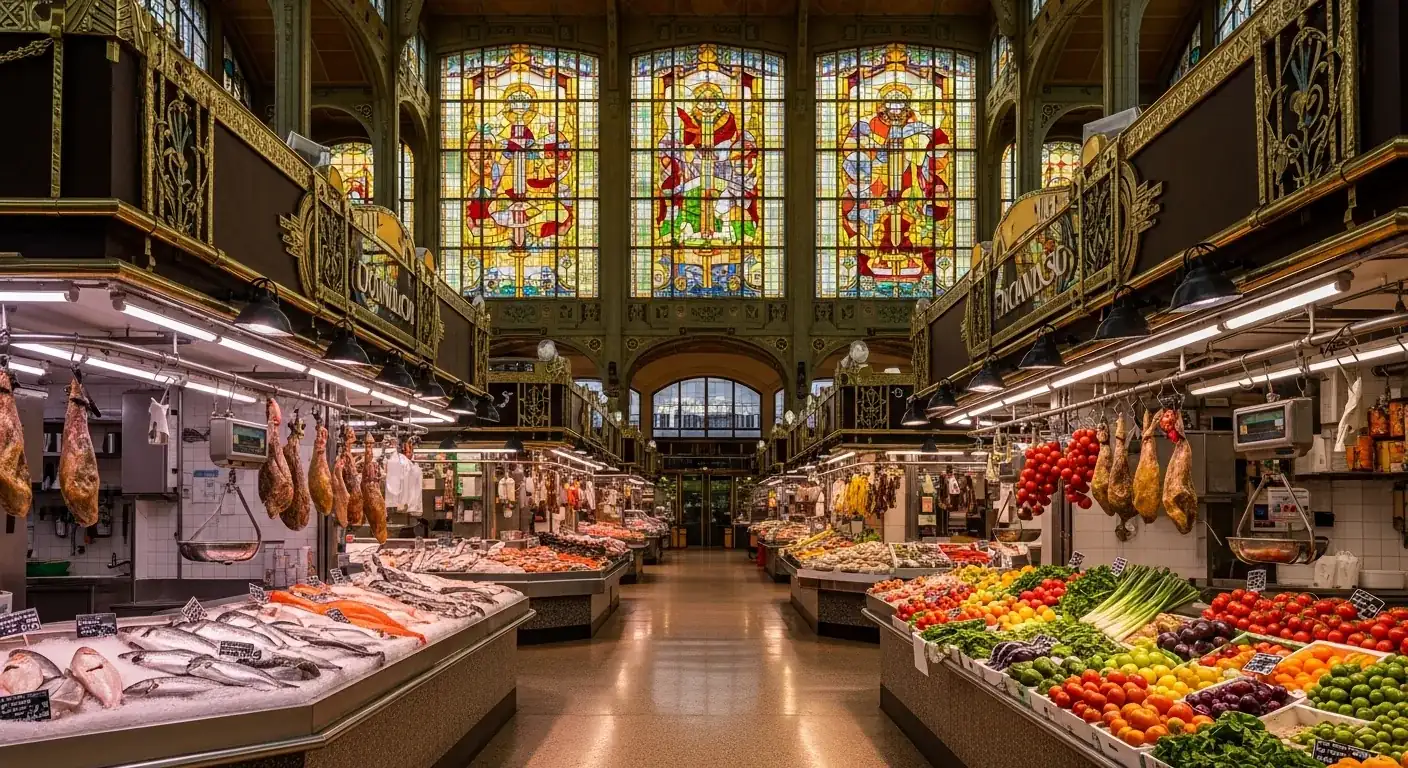
It includes: fish and seafood from the Cantabrian coast (anchovies, sardines, hake, langoustines, barnacles), local meats (txuleta from Rubia Gallega, suckling lamb from La Rioja), vegetables and fruits from Bizkaia, Basque cheeses (Idiazabal PDO), delicatessen (canned anchovies from Santoña, canned bonito from Bermeo, piquillo peppers from Lodosa).
On the first floor: a Gourmet Gallery with pintxos bars and tables where you can enjoy the products you've purchased or that have been prepared on site. A lively atmosphere, a market, and a place for socializing—all in one.
Hours: 8 a.m.–2:30 p.m., Monday through Saturday (market floor); gourmet bars open until 10 p.m.–midnight.
Nightlife
Casco Viejo is also the entertainment area history. Rock Bars, concert halls, terraces packed with people in the summer. The night begins around 10:30 p.m.–11:00 p.m. and ends around 3–4 a.m. on the weekend.
Pintxos: A Guide
| Bar | Neighborhood | Signature Dish | Since |
|---|---|---|---|
| Víctor Montes | Plaza Nueva | Classic pintxos, Iberian ham, anchovies | 1845 |
| Sorginzulo | Plaza Nueva | Original Gilda, txakoli | 1950 |
| Gure Toki | Plaza Nueva | Multiple-time champion of Bilbao (best pintxo) | — |
| Iruña Café | Albia Gardens (Ensanche) | Moruno pintxos, Art Nouveau setting | 1903 |
| Bar Sport | Casco Viejo | Potato Omelet legendary (2 batches/day) | — |
| Bascook | Downtown Bilbao | Contemporary pintxos, Chef Aitor Elizegi | — |
| Baste Brewery | Casco Viejo | Anchovies, tomato salads, seafood pintxos | — |
The fundamental difference from tapas
The pintxos (from the Spanish word pincho, "pique") are different some Spanish tapas: - Tapa = small portion served as an accompaniment to a drink, sometimes free in certain regions of Spain - Pintxo = bite-sized piece placed on bread, held in place by a wooden toothpick, paid, developed, displayed on the counter or made to order
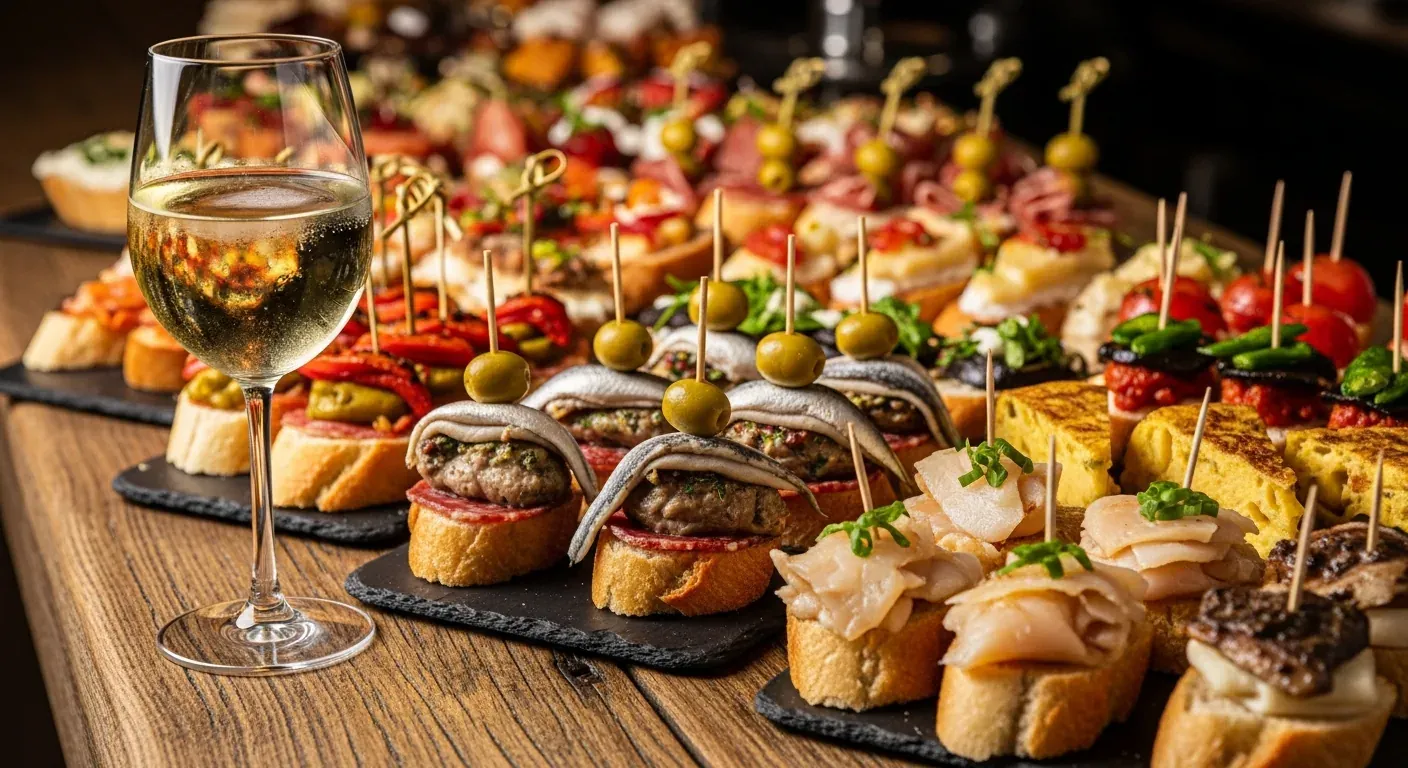
A pintxo is a miniature gourmet restaurant dish: pan-seared foie gras on apple compote, Idiazabal risotto, grilled sea urchin in its shell, tortilla de patatas (potato omelet) served right on time, marinated anchovies on toast, txangurro (spider crab) au gratin. Maximum Creativity, technically demanding, reasonable price (€2–4 each).
Txikiteo: the bar crawl
The quintessential social practice in the Basque Country: we switch bars between each drink. A pintxo, a drink, and then we Go to the next bar. Five to eight bars at a party. No customer stays at a table for very long; one eats standing up, quickly, while talking. The bill is calculated based on the number of toothpicks left on the plate or picked up at the counter.
Must-Try Pintxos
Gilda: the original pintxo. A Manzanilla olive, a Cantabrian anchovies, a guindilla chili pepper (green, slightly spicy) on a toothpick. Invented in the 1940s at the Casa Vallés bar in San Sebastián, named after Rita Hayworth in the movie *Gilda* (1946): "salty, spicy, and a little green." Simple, well-balanced, perfect with a glass of txakoli.
Cod al pil-pil: salted cod cooked in a olive oil and garlic emulsion. The technique pil-pil (onomatopoeia for the sound of bubbling) is Basque: the natural fish gelatin creates a emulsified sauce while stirring the pot. A technically demanding task, dish identity-related.
Rabas: fried squid, crispy, served with lemon and sometimes piquillo pepper mayonnaise. Marker plate the bars in Bilbao.
Txuleta: the Basque beef rib, purebred cow Rubia Gallega or Pirenaica, long-term aging (30 to 60 days), grilled on oak embers or cep, served rare, shared For 2 to 4 guests. Festive Dish, high price (60–90 € for two). Not a pintxo, but a legendary dish of Basque cuisine.
Txangurro: spider crab (centollo) au gratin. Winter Seasonal Specialty (December through March).
Potato Omelet: potato omelet served really slobbery in the center (juicy). Some legendary tortillas (Bar Nestor in San Sebastián, Bar Sport in Bilbao) come out of the oven twice a day only, in limited quantity.
Txakoli: the local wine
White wine A lightly sparkling wine from the Basque Country, made from a single grape variety Hondarrabi Zuri. Very cool (8–10°C), distinctive saline acidity, notes citrus fruits and fresh herbs. Low alcohol content (10–11°). Ritual Service: the bottle is being poured from a height of 30 to 50 cm above the glass, a gesture that brings out the natural sparkle and releases the aromas.
Three DOs: - Bizkaiko Txakolina (Bizkaia): the most maritime, the most mineral - Getariako Txakolina (Getaria, 50 km from Bilbao): the best known - Arabako Txakolina (Álava): rounder, more ripe fruit
Order a drink when you enter your first bar. It's the perfect accompaniment to seafood pintxos.
Michelin-Starred Restaurants
TheBilbao effect also extends to gastronomy. The Bilbao area (within a 40-km radius) is home to 3 restaurants with 3 Michelin stars and several 1- and 2-star hotels.
Azurmendi (3 stars, in Larrabetzu, 20 minutes from Bilbao)
Chef Eneko Atxa. Kitchen avant-garde Basque in a greenhouse spectacular. Ecological Approach thrust: ISO 14001 certification, home vegetable gardening, solar power generation. Tasting Menu A unique experience, featuring a tour through several areas (herb greenhouse, kitchen, dining room). Allow 220–280 € per person (excluding wine). Reservations must be made 3–4 months in advance.
Etxebarri (1 star, in Axpe, 40 minutes from Bilbao)
Chef Victor Arguinzoniz. Cooked exclusively over charcoal made from various types of wood (oak, oak stump, grapevine cuttings). Consistently ranked among the top 5 in the world by "The World's 50 Best Restaurants." Secluded Inn in the Atxondo Valley, at the foot of the Anboto Mountains. Tasting Menu 300 € per person. Reservations must be made 4–6 months in advance strictly mandatory.
Nerua Guggenheim Bilbao (1 star, located in the museum)
At the Heart of the Guggenheim himself. Chef Josean Alija. Contemporary Basque cuisine, view of the estuary from the room. The Most "Bilbao" Experience such as: a museum visit in the morning, followed by a Michelin-starred lunch at the same place. Menu 130–180 € per person.
Mina (1 star, on the estuary)
Near San Antón. Chef Álvaro Garrido. Creative cuisine, intimate atmosphere, 22 place settings. Tasting menu 160–200 € per person.
Helpful Tip
Reservations are required for everyone. Dress Code: Appropriate attire required (jackets are not required for men, but clothing should be neat). Credit Card Payment accepted everywhere. Tasting menu only In most cases, expect 3 to 4 hours at the table.
The Vizcaya Bridge: UNESCO 1893
14 km from downtown, in the suburbs of Getxo / Portugalete, there is one of the most unique monuments in Europe. Most visitors never see it, and that's a shame.
History and Innovation
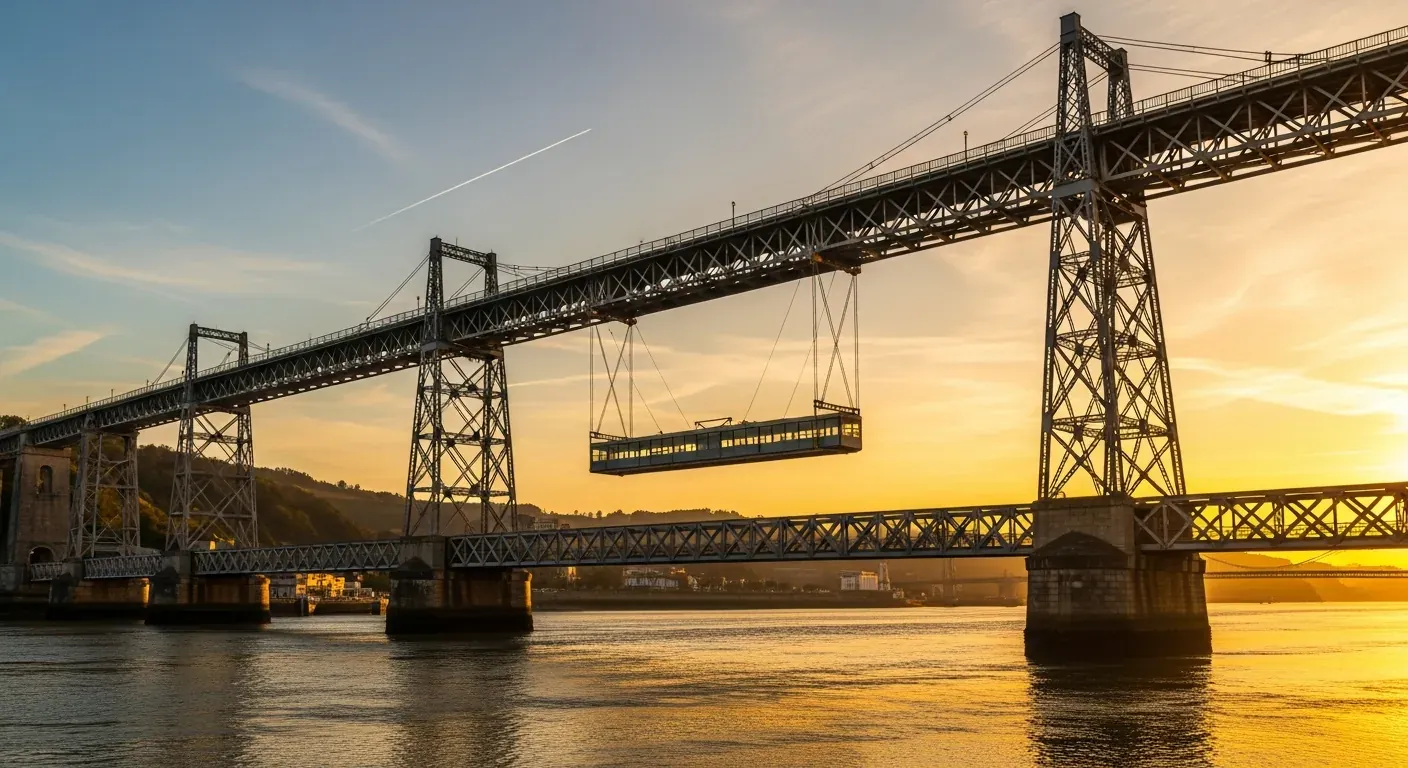
Built in 1893 by the Basque engineer Alberto de Palacio y Elissague, a student at Gustave Eiffel. The challenge is complex: span the Nervión estuary between Getxo and Portugalete without interfering with the navigation of large ships which date back to the Sestao shipyards.
The Solution: a transshipment bridge. Instead of a fixed bridge that would block the passage of boats, a suspended gondola to a metal structure top of 45 meters glides on cables to cross the river by carrying cars and pedestrians. The World's First Transporter Bridge, the idea was copied then in several major cities (Rouen, Marseille, Newport, Buenos Aires), but theThe original is here. These characteristics are documented by the UNESCO official fact sheet.
Dimensions and Status
45 meters high, 160 meters long from tower to tower, structure made entirely of riveted steel. UNESCO Designation in 2006: "a masterpiece of human ingenuity from the Industrial Revolution". Always in daily service since 130 years, one of the few transporter bridges in the world still operational.
Two ways to cross it
- The Suspended Gondola: 3 to 4 minutes crossing, every 8–10 minutes, works 24 hours a day, 7 days a week. Admission for pedestrians: €0.50 (one of the most affordable UNESCO tours in the world).
- The High Bridge: access via elevator from Portugalete to the upper deck, at 50 meters in height. Walking on the footbridge (160 m), panoramic view on the estuary, the ría, and the Cantabrian coast. Dizzying and magnificent. Rates: ~10 € per adult (including the return trip by elevator).
To visit
Can be combined with a walk through Getxo (Belle Époque upper-class neighborhood, villas, yacht marina). Directions from Bilbao: Metro Line 1 (Foster) to Areeta (Getxo side) or Portugalete (Portugalete side), 30 minutes. Allow half a day for the bridge + Getxo.
Contemporary Architecture: Bilbao Beyond the Guggenheim
| Architect | Building | Year | Distinctive Feature |
|---|---|---|---|
| Frank Gehry 🇨🇦🇺🇸 | Guggenheim Museum | 1997 | 24,000 m², 33,000 titanium panels, 1989 Pritzker Prize |
| Norman Foster 🇬🇧 | Bilbao Metro | 1995 | "Fosteritos" Curved Glass, 1999 Pritzker Prize |
| Santiago Calatrava 🇪🇸 | Loiu + Zubizuri Airport | 2000 / 1997 | "La Paloma" + white steel arch footbridge |
| César Pelli 🇦🇷🇺🇸 | Iberdrola Tower | 2011 | 165 m, 41 stories, the tallest skyscraper in the Basque Country |
| Arata Isozaki 🇯🇵 | Isozaki Atea (twin towers) | 2009 | 2019 Pritzker Prize |
| Philippe Starck 🇫🇷 | Azkuna Zentroa | 2010 | 43 columns carved by Lorenzo Baraldi |
| Federico Soriano 🇪🇸 | Bilbao Arena | 2010 | 10,000-seat arena, basketball + concerts |
TheBilbao effect triggered a wave of signature buildings. The city has become a open-air museum of contemporary architecture. The following names all have a building in Bilbao:
Norman Foster — Bilbao Metro (1995)
Opened on November 11, 1995, two years before the Guggenheim. Foster + Partners include the stations, such as the access hatches features in curved glass and steel which the people of Bilbao call "Fosteritos". Lines 1 and 2 run to the city center, the airport, and the bay. Minimalist Architecture, maximum natural light, spotless cleanliness.
Santiago Calatrava — Loiu Airport (2000) and Zubizuri (1997)
- Bilbao Airport (BIO) in Loiu, 12 km to the north. Nicknamed "La Paloma" (the dove) for its silhouette. Calatrava signs the terminal in white concrete and glass, with wings spread toward the sky.
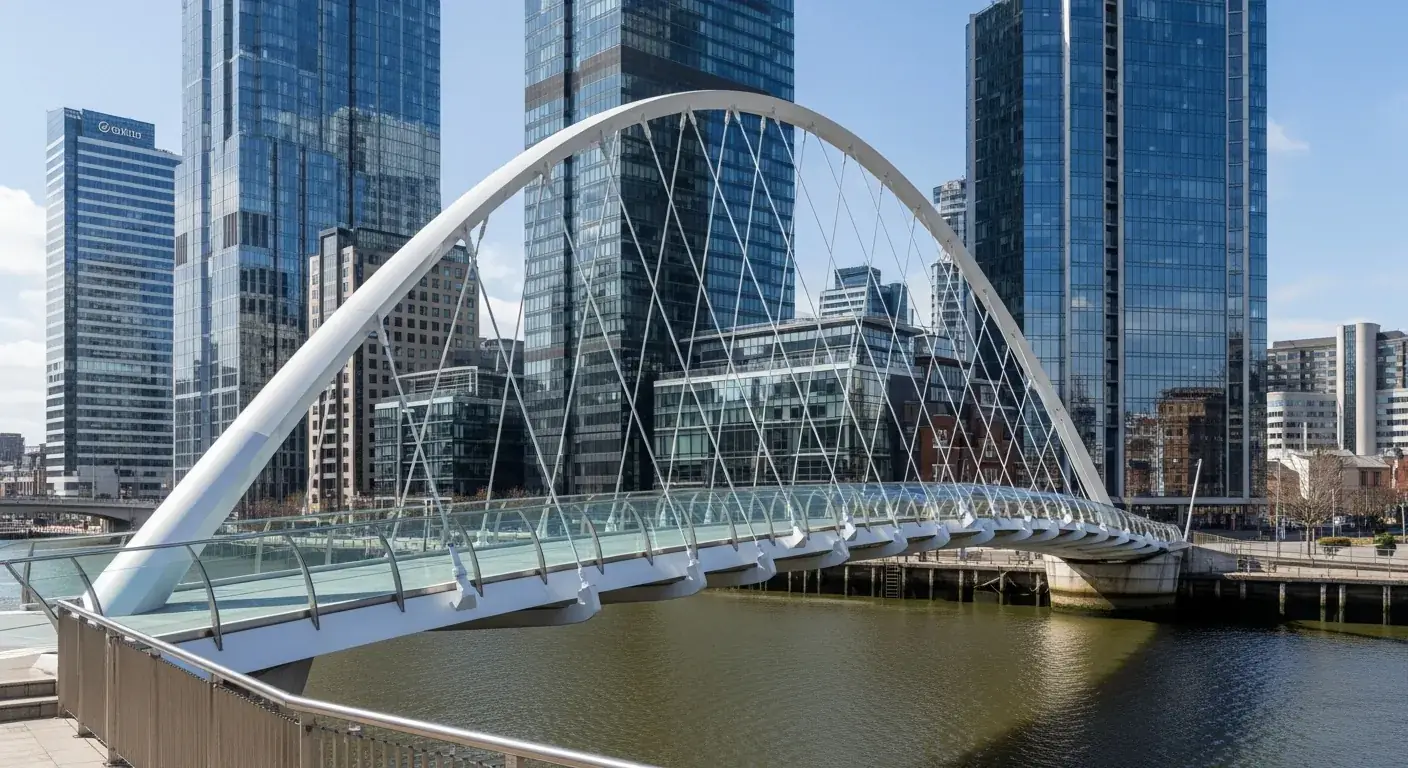
- Zubizuri Footbridge (1997): pedestrian bridge in white steel above the estuary, in line with the Guggenheim. Nose-up like a drawn bow.
César Pelli — Iberdrola Tower (2011)
165 meters high, 41 stories. Tallest skyscraper in the Basque Country. Facade made of clear glass on a triangular structure. Visible from every part of the city. Panoramic restaurant on the 41st floor (reservations required).
Arata Isozaki — Isozaki Atea Towers (2009)
Two twin towers At the entrance to Abandoibarra, a geometric dialogue with the Guggenheim.
Federico Soriano — Bilbao Arena (2010)
Multipurpose Hall at 10,000 seats, hosts international concerts and basketball games (Bilbao Basket).
Philippe Starck — Azkuna Zentroa (2010)
Former wine warehouse (1909) completely renovated by Philippe Starck. 43 columns carved by Lorenzo Baraldi, each in a different style, support the building. Cultural and Recreation Center: media library, swimming pool with a transparent ceiling, restaurant, exhibition space. Free admission in public spaces.
Frank Gehry — Guggenheim (already discussed above)
The Museum of Fine Arts: The Best-Kept Secret
Everyone's talking about the Guggenheim. Almost No one talks about the Bilbao Museum of Fine Arts, at 10-minute walk. It's a error.
Founded in 1908. More than 8,000 works spread across two buildings connected by a walkway. The collection includes Seven Centuries of Art, from the Middle Ages to contemporary Basque art.
Old Spanish Masters: El Greco (St. Francis and St. Andrew), Goya, Velázquez, Murillo, Zurbarán. Flemish Art: Van Dyck, Cranach, Memling. Impressionists and Post-Impressionists: Gauguin, Mary Cassatt, Sorolla. Basque Art: Ignacio Zuloaga, Darío de Regoyos, Aurelio Arteta, Jorge Oteiza, Eduardo Chillida.
Atmosphere radically different from the Guggenheim: calm, bright, no lines. If you don't have just one morning, start with the galleries featuring 17th-century Basque and Spanish art, then head up toward the Impressionists and Post-Impressionists.
| Information | Details |
|---|---|
| Address | 2 Plaza del Museo |
| Hours | Tuesday–Sunday, 10 a.m.–8 p.m. Closed Mondays |
| Rates | Free admission (one of the few museums of this caliber in Europe that doesn't charge an admission fee) |
| Official Website | museobilbao.com |
Basque Identity: What You Need to Know
The Basque Country is not just a tourist destination. It is a a region with a strong sense of identity, with its language, its sports, its traditions, his political autonomy and fiscal policy (the "economic coordination") that distinguishes it from classical Spain.
Euskara: the Basque language
TheBasque is one of the Europe's oldest languages and one of the few that doesn'tnot belong to any Indo-European language family. No known relatives along with related languages (Spanish, French, Occitan). Linguists consider it to be a isolated language whose origin remains a matter of debate.
Approximately 750,000 speakers. Co-official with Spanish in the Spanish-speaking Basque Country (Hegoalde) since 1979 Autonomy Statute. Bilbao was traditionally less Basque-speaking than the coast (where Spanish has long been the predominant language in the commercial city), but Ikastola schools (Basque immersion) have revived the use of the language among younger generations.
You'll see bilingual signs everywhere: Bilbao / Bilbo, Plaza Nueva / Plaza Berria, Guggenheim Bilbao Museum.
Athletic Club Bilbao
The Identity Club from the Basque Country, founded in 1898. Its player eligibility policy allows players born in the Basque Country or trained in the academies of Basque clubs. The exact criteria are outlined by the Athletic Club on its official website.
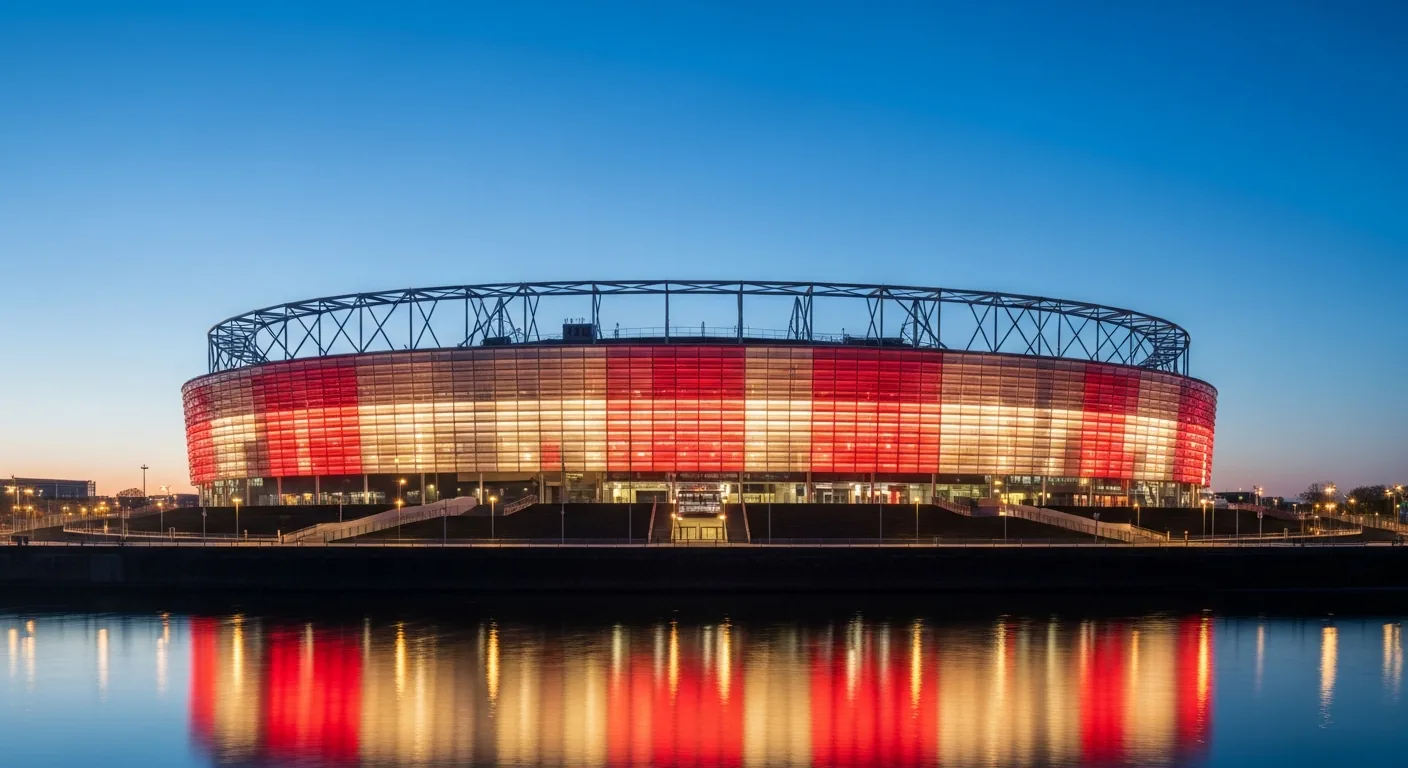
San Mamés Stadium (1913, Rebuilt in 2013, 53,000 seats), nicknamed "The Cathedral". One of the the most impressive stadiums from Spain.
Historical Statistics: the only club with Real Madrid and Barcelona to to have never been relegated La Liga since its founding in 1928. 8 Spanish league titles, 24 Copa del Rey tournaments.
Game Night: an electric atmosphere throughout the city, the bars in Casco Viejo and Ensanche packed, songs in Basque, Ikurriña flags on the street. If you're in Bilbao on a La Liga Saturday, it's a an experience worth having.
Symbols
- Ikurriña: Basque flag (green, white, red), created in 1894 by the brothers Arana
- Lauburu: a Basque cross with four curved arms, an ancestral symbol
- Beret: less common in Bilbao than in Basque villages, but still present
Day Trips from Bilbao
Gernika (30 km, 35 min)
A city that symbolizes the Basque Country. Bombed on April 26, 1937 by the Condor Legion German and the Italian Legion during the Spanish Civil War. The bombing (the first deliberate air raid on a civilian city) had a profound impact on the 20th century and inspired by Pablo Picasso's painting "Guernica" that same year (the original painting is now at the Reina Sofía in Madrid).
Must-See: Casa de Juntas (Basque traditional parliament under the The Oak of Gernika, under which the kings and queens of Spain swore allegiance to the Basque laws), Museum of Peace (an account of the bombing and the history of the 20th century), Large-format "Guernica" mural on the pedestrian avenue (a reproduction of the Picasso painting).
Mundaka (37 km, 40 min)
Fishing village at the mouth of the Urdaibai estuary . UNESCO Biosphere Reserve. Commercial for world surfing: the Mundaka wave is one of the Top 5 Left-Handers in the world, is home to a World Surf League event when conditions are right (October–March). A very pretty village, Basque architecture typical, seafood restaurants.
San Juan de Gaztelugatxe (35 km, 50 min)
Rocky islet connected to the coast by a stone bridge with 241 steps. 10th-century hermitage at the top. One of the most spectacular natural sites in the Basque Country. He became world-famous since Game of Thrones (Season 7, the island served as the setting for Dragonstone). Free admission but regulated During the high season (reservations required from May through September on the official website).
Getxo and Pont Vizcaya (14 km, 25 min by metro)
Already explained in detail above. Belle Époque Upper-Class Neighborhood, villas, Algorta (old fishing village), Las Arenas Promenade, marina, beach. Half-Day Combo along with the Vizcaya Bridge.
Vitoria-Gasteiz (65 km, 50 min)
Administrative capital of the Basque Autonomous Community. A well-preserved medieval historic center, voted European Green Capital in 2012. Less touristy, more authentic. Santa María Cathedral in ongoing restoration, New Cathedral (20th century).
San Sebastián Route (100 km, 1 hour)
100 km east of Bilbao. The Perfect Combination for a 3- to 4-day trip. See our San Sebastián Guide For more details (pintxos, beaches, 19 Michelin stars, La Concha).
Seasonal Calendar
| Period | Climate | Crowd | Benefits | Disadvantages |
|---|---|---|---|---|
| January–March | Cool, rainy (10–13°C) | Very low | Very low prices, pintxos without a line | Unpredictable weather |
| April–June | Mild (15–21°C) | Moderate | Our recommendation, perfect weather | - |
| July | Warm (22–26°C) | High | Bilbao BBK Live (July 9–11, 2026) | Expensive Hotels |
| August | Hot, humid | Very high | Semana Grande / Aste Nagusia (August 22–30, 2026) | Large crowds, high prices |
| September–October | Pleasant (18–22°C) | Moderate | Our other recommendation, grape harvest, beautiful light | The days are getting shorter |
| November–December | Cool (10–13°C) | Bass | Low prices, Christmas markets | Gray skies, rain |
Aste Nagusia / Semana Grande (August)
The biggest event of the year in Bilbao. Nine days of nonstop celebration, starting the first Saturday after August 15. 2026 Edition: August 22–30.
What's on the agenda: free concerts in several outdoor scenes, spectacular fireworks every night on the estuary, traditional processions, Basque dances, txosnas (the comparsas' booths), bullfights at Plaza Vista Alegre. Official Mascot: Marijaia, a giant effigy burned at the close of the ceremony (a symbolic ritual).
More than one million visitors over the course of the week. Bilbao becomes one big party. Book your accommodations 6 to 8 months in advance if you're visiting during this time.
Bilbao BBK Live (July)
International Music Festival since 2006. Takes place on the Kobetamendi Hills, with panoramic view over the city. 2026 Edition: July 9, 10, and 11. More than 100 artists on several stages.
Bilbao BBK Music Legends (July)
A more intimate version, held over three days in early July, featuring classic rock and blues.
How to Get from Bordeaux to Bilbao
| Route: Bordeaux to Bilbao | Distance | Duration | Estimated cost |
|---|---|---|---|
| Executive car service (door-to-door) | 335 km via the A63 and AP-8 | about 3 hours and 44 minutes, excluding traffic | from €536 · one-way (based on a quote) |
| Personal car | 335 km, Spanish toll | 3½–4 hours, including a break | ~45 € for gas + 10–12 € for the AP-8 toll |
| Train (with a transfer) | via Hendaye/Irun | 4:30–5:30 | ~60–90 € round trip |
| ALSA Bus | direct or with a connection | 5 hours+ | 30–40 € round trip |
| Airplane | Bordeaux to Bilbao with no direct service | Irrelevant | — |
By personal car
A63, then the Spanish AP-8. About 335 km, about 3 hours and 44 minutes, excluding traffic nonstop, 4 hours actually, with a break. Toll on the Spanish side (AP-8): approximately 10-12 €. Crossing the border (Hendaye / Irun) is done without systematic monitoring (Schengen Area). A French ID card is sufficient for Europeans.
Parking in Bilbao: complex traffic in the city center (extensive pedestrian zones). Choose underground parking garages (Pío Baroja, Indautxu, Arenal) or Parking on the outskirts + subway.
By train
No direct connection Bordeaux ↔ Bilbao. You have to change trains in Hendaye or Irun, then take a Spanish regional train (Commuter trains). Total: 4½ to 5½ hours depending on the connections. See renfe.com.
By bus
ALSA offers service between Bordeaux and Bilbao with a transfer. 5 hours+ in total. Economic (starting at 30–40 €) but uncomfortable for this trip.
By plane
Bilbao Airport (BIO) Served from Paris, Madrid, and several major European cities. There are no direct flights from Bordeaux to Bilbao. For this distance, The plane doesn't make any sense (door-to-door travel time > road trip).
With a private chauffeur
The best option comfortable for groups, families, and travelers who want to enjoy the ride without the stress of driving. No fatigue After a 3½-hour drive, Enjoy Basque pintxos on arrival, with total flexibility for stops (Saint-Jean-de-Luz, San Sebastián). See our page Bordeaux ↔ Bilbao chauffeur service for more information (packages, rates, reservations).
Practical Information
Recommended duration
- 1 day from Bordeaux: intense (a 6.5-hour drive round-trip), allows time for the Guggenheim + a pintxos lunch + Casco Viejo. Doable but frustrating.
- Weekend (2 days): the perfect balance between the Guggenheim, Casco Viejo, the Museum of Fine Arts, the Vizcaya Bridge, and an evening of pintxos. Our top recommendation.
- 3 days: Bilbao in Depth + Day Trip (Gernika, Mundaka, San Juan de Gaztelugatxe) or San Sebastián jumpsuit (1-hour drive).
- 4–5 days: Bilbao + San Sebastián + the Basque Country French (Saint-Jean-de-Luz, Biarritz).
Accommodations
Iconic Hotels:
- Gran Hotel Domine Bilbao: across from the Guggenheim, contemporary design, Direct view of Puppy and the museum from some rooms. 250–400 €/night
- Carlton Hotel: Belle Époque, Bilbao's historic landmark. 200–300 € per night
- Hotel Miró: boutique hotel, near the Guggenheim. €150–250 per night
Ensanche / Abandoibarra Neighborhood: modern, centrally located, close to the Guggenheim. The most highly recommended for a first visit.
Casco Viejo: authentic, lively, but noisy on the weekend (nightlife).
Reservations must be made 2–3 months in advance during peak season. 6–8 months until Semana Grande.
Estimated budget per day per person
| Profile | Daily Budget | Accommodations | Catering |
|---|---|---|---|
| Backpacker | 60-90 € | Inn or Airbnb | Markets, Pintxos by the Piece |
| Moderate torque | 120-180 € | 3-star hotel | Pintxos + a real restaurant |
| Comfort Pair | 200-300 € | Boutique Hotel | Pintxos + 1-star restaurant |
| Premium | 400-700 € | Domine or Carlton | Etxebarri, Azurmendi |
Climate
Temperate humid oceanic. Frequent rain all year round (Bilbao is one of the rainiest cities in Spain). Mild Winters (8–12°C), temperate summers (22–28°C). Useful Waterproof Clothing all year round.
Languages Spoken
Spanish and Basque officials. French spoken by some shopkeepers (especially in hotels and near the Guggenheim). English fluent in the tourism industry. To point a finger It's very popular in pintxos bars.
Currency
Euro. No need to exchange currency. Credit cards accepted everywhere. A few bars in Casco Viejo operate on a cash only: Keep 50 € in cash.
Frequently Asked Questions
Is Bilbao really worth the trip from Bordeaux?
Yes, without a doubt. Bilbao is about 3 hours and 44 minutes from Bordeaux, traffic permitting, and offers a radically different experience: world-class contemporary architecture (Guggenheim, Foster, Calatrava), exceptional cuisine, and authentic Basque culture. One of the most surprising cities in Europe for those who haven’t visited it yet.
What is the difference between Bilbao and San Sebastián?
Bilbao: a larger city (350,000 residents), contemporary architecture, a revitalized industrial heritage, the Guggenheim, Athletic Club. San Sebastián / Donostia: a smaller city (189, 000 residents), Belle Époque elegance, city beaches (Concha, Zurriola), 19 Michelin stars. The two cities complement each other; they’re an hour’s drive apart—combine them into a 3- to 4-day trip if you can.
How many days does it take to visit Bilbao?
Two days for the main sights (Guggenheim, Casco Viejo, Museum of Fine Arts, Vizcaya Bridge, pintxos night). Three days to add a day trip (Gernika, Mundaka, San Juan de Gaztelugatxe) or the San Sebastián package. One day from Bordeaux: doable but intense.
Do you need to make a reservation for the Guggenheim in advance?
During peak season (July–August) and when popular temporary exhibitions are on, yes. Lines can be long. Online ticket purchase with a time slot is highly recommended. Audio guide included. Admission is €18 for adults.
When is the best time to visit Bilbao?
April–June and September–October: ideal weather, few crowds, reasonable prices. Our recommendation. July (BBK Live): music festival. August (Aste Nagusia): legendary festival but very crowded. November–March: very low prices but unpredictable weather.
What's the budget for pintxos in Bilbao?
2 to 5 € per pintxo, depending on the complexity. A full evening of txikiteo (5–6 bars, 2 pintxos per bar, drinks included): 30–50 € per person. One of the best values for money in European gastronomy.
Do people speak French in Bilbao?
Less so than in Biarritz or San Sebastián. Spanish and Basque are the dominant languages. English is spoken well in the tourism sector. Knowing a few words of Spanish is appreciated: “Un txakoli, por favor” will open all doors for you.
Do you need a passport to travel to Bilbao from France?
No, a French national ID card is sufficient (Schengen Area since 1995). Passports are also accepted. Keep your ID on you in case of rare random checks.
Is Bilbao a good place for families with children?
All right. Itsasmuseum (maritime museum), Aquarium, Artxanda funicular (panoramic view), La Salvaje Beach in Sopelana (20 min by metro). Guggenheim with an audio guide for kids. The Foster metro station is clean and easy to use.
What is the difference between pintxos from Bilbao and those from
San Sebastián?
San Sebastián is better known worldwide (more bars, more prestige), but Bilbao has 140 pintxos bars in the Casco Viejo, offering comparable quality and slightly more affordable prices. Plaza Nueva and Somera Street more than hold their own against San Sebastián’s Old Town.
Can we attend an Athletic Club Bilbao game?
Yes. Schedule available at athletic-club.eus. Tickets start at 30–40 €, can go up to 150 €+ for big games (Real Madrid, Barcelona, Real Sociedad). Exceptional atmosphere, chants in Basque, ikurriña flags. A powerful cultural experience to be had at least once.
What's the story with the bombing of Guernica? Can we
visit it?
Yes. Gernika is 30 km from Bilbao. Visit the Museum of Peace (an account of April 26, 1937, and 20th-century world history), the Casa de Juntas (the traditional Basque parliament under the Oak Tree of Gernika), and the large-scale reproduction of Picasso’s painting on the pedestrian avenue. The original painting is at the Reina Sofía Museum in Madrid.
Further Reading
- Chauffeured travel to Bilbao: visit our page Bordeaux ↔ Bilbao executive car service (packages, rates, border crossing, reservations)
- Bilbao + San Sebastián Package: see San Sebastián Guide and Bordeaux ↔ San Sebastián chauffeured transfer
- The entire French Basque Country: see Guide to Biarritz and Bordeaux ↔ Biarritz private chauffeur
- Bayonne (chocolate, ham, festivals, Bonnat-Helleu Museum): see Bayonne Guide and Bordeaux ↔ Bayonne executive car service
- Getting Here from the Airport or Train Station: see Bordeaux Airport Transfer and Chauffeur service at Saint-Jean Station
- Combine with Arcachon: see Bordeaux ↔ Arcachon chauffeur service, Cap Ferret or Dune du Pilat
Sources and References
- Guggenheim Museum Bilbao — Official Website — collections, hours, admission prices, exhibitions
- Bilbao Museum of Fine Arts — collections, schedules
- Bilbao Tourist Office — Practical Information, Calendar
- Vizcaya Bridge — Official Website — UNESCO, hours, tour
- Ribera Market — schedule, booths, food
- Bilbao BBK Live — July Festival Program
- Bilbao's Aste Nagusia — Official Program for Grande Week
- Athletic Club Bilbao — Schedule, San Mamés Ticket Office
- Azurmendi
- Etxebarri
- Nerua
Article updated on .
On the way to Bilbao
Direct door-to-door service from Bordeaux (~3 hours 44 minutes), with optional stops in Saint-Jean-de-Luz or San Sebastián; a fixed-price quote provided in writing within 30 minutes. Sedan or van, with an English-speaking driver.