Bordeaux to Gujan-Mestras: private driver guide
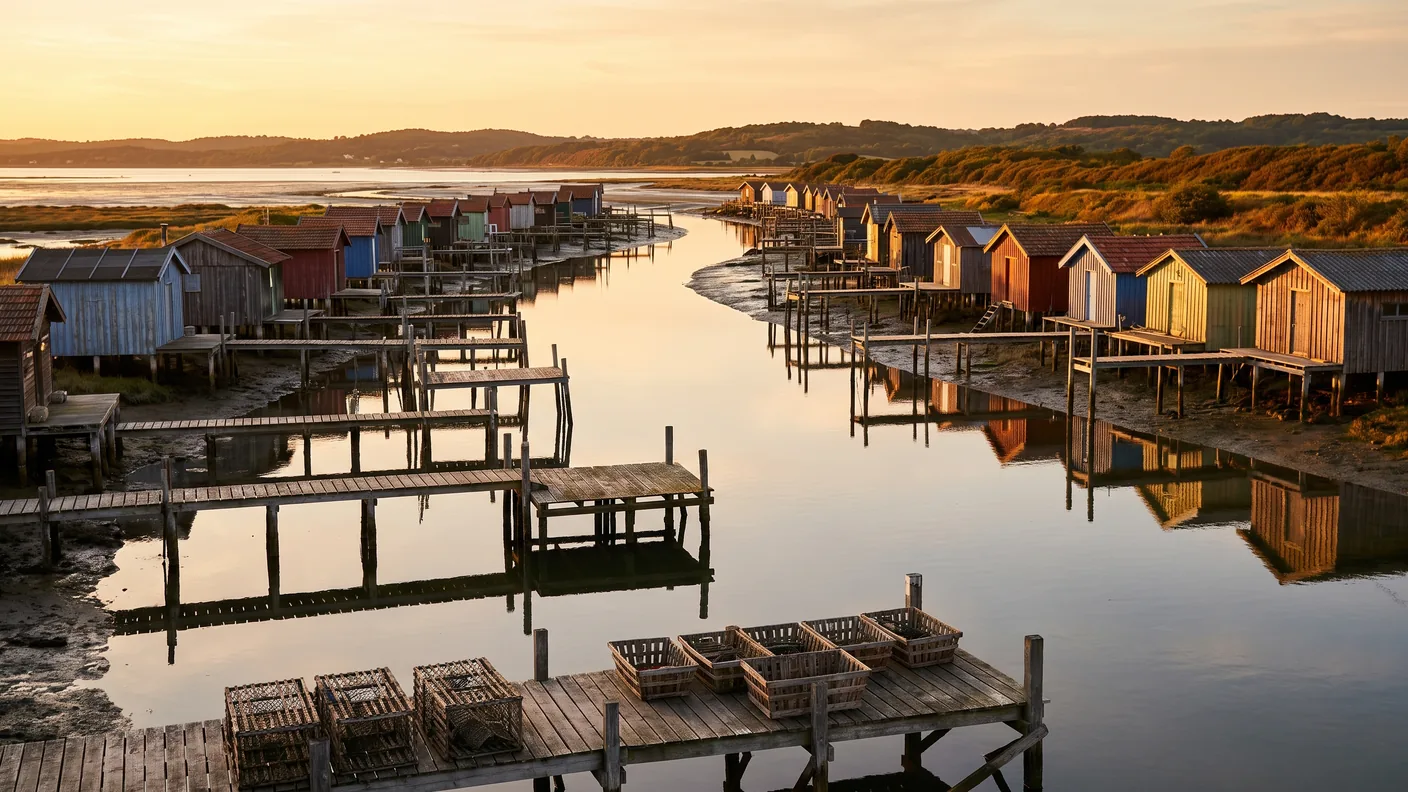
Seven oyster-farming ports lined up along the southern shore of the Arcachon Basin, nestled among colorful huts, pinasses, and oyster beds. As the oyster capital of the Arcachon Basin, Gujan-Mestras combines waterfront tastings, the Maison de l’Huître, and a large recreational area—just one hour from Bordeaux.
Gujan-Mestras at a Glance
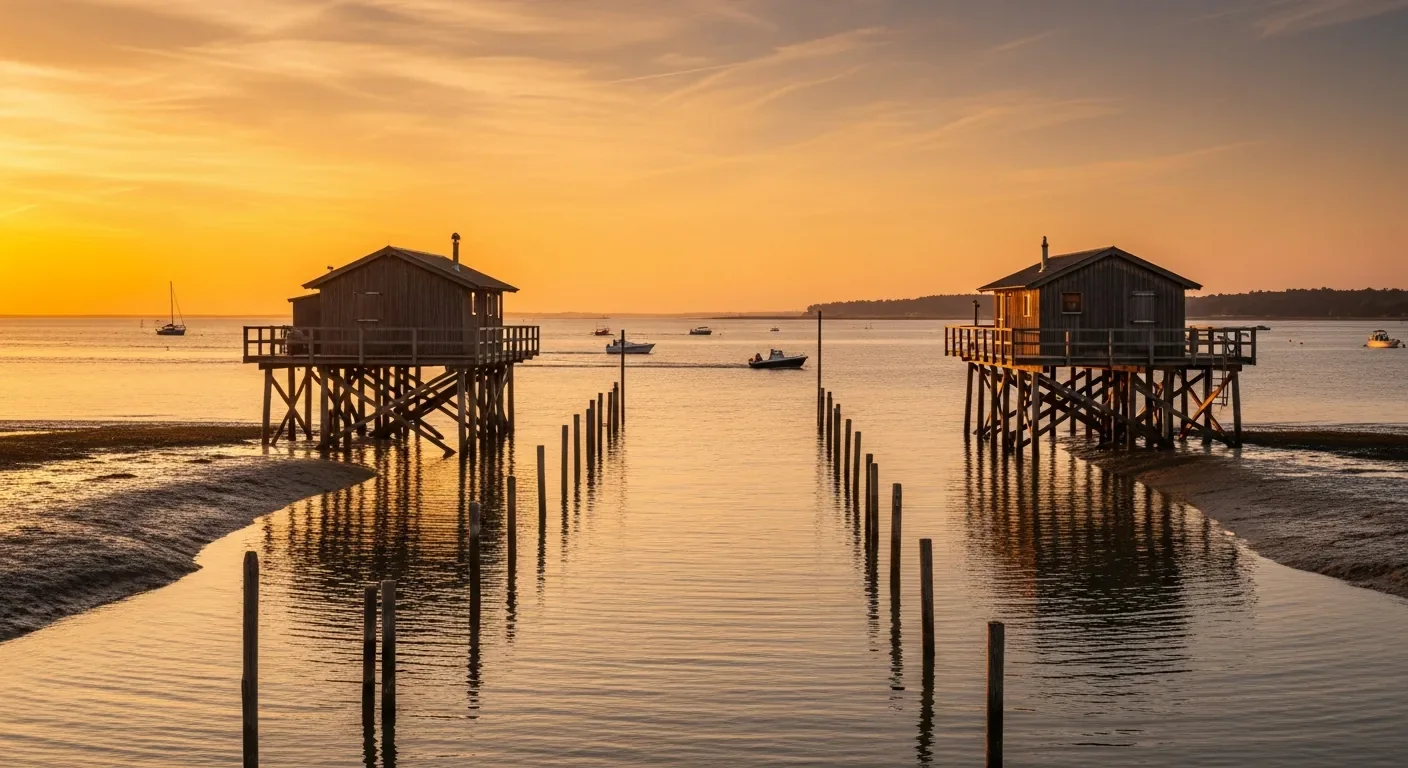
On the southern shore of the Arcachon Basin, Gujan-Mestras proudly bears the nickname “the oyster capital.” Seven oyster ports line some seven kilometers of coastline here, a string of channels flanked by brightly painted wooden huts, where pinasse boats and oyster beds create a landscape unique to the Arcachon Basin. Visitors come here to savor oysters right by the water, step inside the Maison de l’Huître at the port of Larros, and, inland, enjoy Aquitaine’s largest recreational area around La Hume, featuring a water park, a wildlife park, and attractions for children. Just an hour from Bordeaux, the town seamlessly blends its living oyster-farming heritage with family-friendly activities. This guide carefully distinguishes between verified facts and common myths: solid facts on one hand, and tourist legends and dubious superlatives on the other.
An hour's drive from Bordeaux, Gujan-Mestras is one of the larger towns on the southern shore of the Arcachon Basin, nestled between La Teste-de-Buch to the west and Le Teich to the east. It is part of COBAS, the intermunicipal association for the southern Arcachon Basin, which it shares with Arcachon, La Teste-de-Buch, and Le Teich. Less glamorous than Arcachon and less popular than Cap-Ferret, it cultivates an identity rooted in work and local heritage, centered around the water: here, oysters aren’t just a postcard backdrop but a living trade, practiced with the ebb and flow of the tides.
What sets Gujan-Mestras apart is its dual character. On one hand, it is an authentic oyster-farming town, whose seven harbors tell the story of centuries of maritime history, resin harvesters, and shipwrights. On the other, a family-friendly leisure destination, where the La Hume area is home to a concentration of parks and attractions in the heart of the pine forest. You can spend the morning breathing in the sea air along the channels of Larros Harbor and the afternoon whizzing down the slides at a water park: few towns in the Bassin offer such a wide range of experiences, and that’s precisely what makes a getaway to Gujan-Mestras so special.
| Landmark | Details |
|---|---|
| Department / Region | Gironde (33) · Nouvelle-Aquitaine |
| Status | A municipality on the south shore of the Arcachon Basin, a member of COBAS |
| Population | 22,153 residents in 2023 (INSEE), the people of Guiana |
| Must-Sees | The 7 oyster-farming ports, the Maison de l'Huître, and the La Hume amusement parks |
| From Bordeaux | ~67 km · ~1 hr · starting at €107 for a private transfer |
Where is Gujan-Mestras located?
Gujan-Mestras is located on the southern shore of the Arcachon Basin, in the Gironde department, within the Arcachon district. The municipality stretches from west to east between La Teste-de-Buch, its western neighbor, and Le Teich, its eastern neighbor, forming a long coastline opening onto the foreshore. Its INSEE code is 33199 and its ZIP code is 33470. With an area of 53.99 km² and a population of 22,153 in 2023, INSEE reports a population density of 410.3 inhabitants per square kilometer: a vast territory, partly forested inland, with only its northern edge bordering the water.
Gujan-Mestras is part of COBAS, the South Arcachon Basin Urban Community, along with Arcachon, La Teste-de-Buch, and Le Teich. It should be distinguished from COBAN, the intermunicipal association on the north shore (Andernos, Arès, Lanton, Lège-Cap-Ferret, etc.). Two shores, two regional authorities, one Bay: keeping this mental map in mind helps avoid a lot of confusion, as the Bay’s geography—with its central body of water that cannot be crossed by car—often confuses passing visitors.
The town’s name alone tells its story. “Gujan-Mestras” symbolizes the union of two former neighborhoods that were long rivals: Gujan, to the west, and Mestras, to the east. This union, which had long existed in practice, was formalized administratively by a Decree of March 24, 1936, which established the compound name we know today. Even today, residents readily distinguish between the town’s two historic centers, each with its own church, atmosphere, and history.
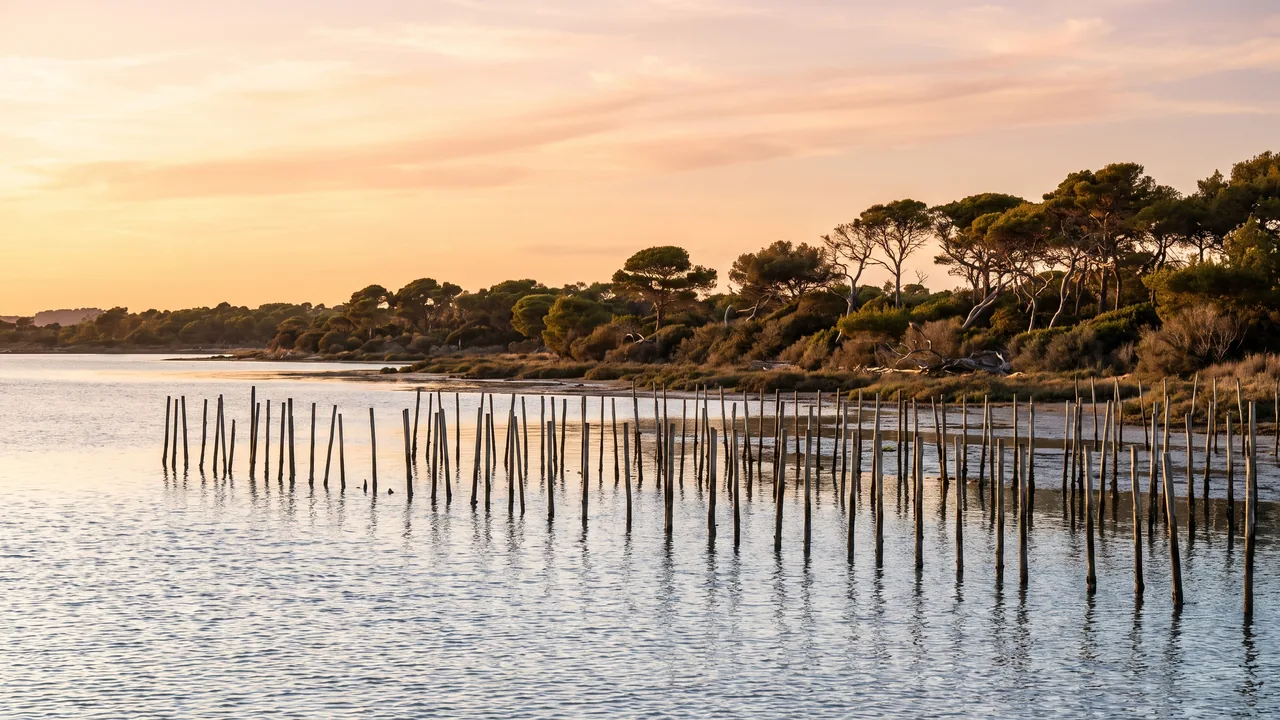
This location on the south bank also shapes the landscape. Facing the Bassin, Gujan-Mestras is a coastal town: mudflats, channels, salt marshes, and oyster beds that are revealed at low tide. Inland, it extends into the Landes de Gascogne forest, a vast pine forest planted in the 19th century. Between the two lie the town and its recreational parks. The terrain here is virtually flat, with the boundary between land and water shifting twice a day with the tides: an amphibious territory, both maritime and forested.
How far is it from Bordeaux?
From Bordeaux, it’s about 67 km and a one-hour drive to Gujan-Mestras, via the A63 and then the A660 toward Arcachon. The distance depends somewhat on your starting point within the metropolitan area: from downtown Bordeaux, the shortest route is closer to 57 to 58 km, while departing from the southwestern outskirts or being picked up at the airport slightly extends the journey. Here are some useful distances from Gujan-Mestras to help you locate the town within the Bassin region.
| Destination | Distance (by road) | Estimated duration |
|---|---|---|
| Le Teich | ~4.6 km | ~8 min |
| La Teste-de-Buch | ~9.7 km | ~14 min |
| Arcachon | ~10.5 km | ~16 min |
| Bordeaux | ~67 km | ~1 hour |
How many people live in Gujan-Mestras?
According to the INSEE Regional Comparison Tool published on July 9, 2026, Gujan-Mestras has 22,153 residents in 2023, in terms of geography as of January 1, 2026. The average population change is +0.8% per year between 2017 and 2023.
This rate represents a six-year average; it does not indicate that the population is growing every year. Seasonal fluctuations related to tourism and factors explaining the region’s appeal are reflected in other indicators and therefore cannot be extrapolated from the census alone.
One of the most populous municipalities in the Bassin
With a population of 22,153 in 2023 and an INSEE population density of 410.3 inhabitants per km², Gujan-Mestras covers an area of nearly 54 km². Its territory connects the pine forest to the mudflats and encompasses several neighborhoods, from the historic centers of Gujan and Mestras to the La Hume area.
| Indicator | Value |
|---|---|
| Municipal Population | 22,153 residents in 2023 (INSEE) |
| Average Change | +0.8% per year between 2017 and 2023 |
| Demonym | People from Gujana |
| Area | ~53.99 km² |
| Density | 410.3 people per square kilometer in 2023 (INSEE) |
| Official compound name since | Decree of March 24, 1936 |
Gujan-Mestras, the Oyster Capital
Gujan-Mestras is often referred to as the “oyster capital” or the “capital of oyster farming in the Arcachon Basin.” This is a colloquial title, shaped by tradition and tourism, rather than an official designation: it is best viewed as a well-deserved reputation rather than an administrative distinction. The town owes this reputation to a simple, verifiable fact: seven oyster ports are strung along approximately seven kilometers of coastline, making it unique in the Arcachon Basin, where no other town has as many ports dedicated to oysters.
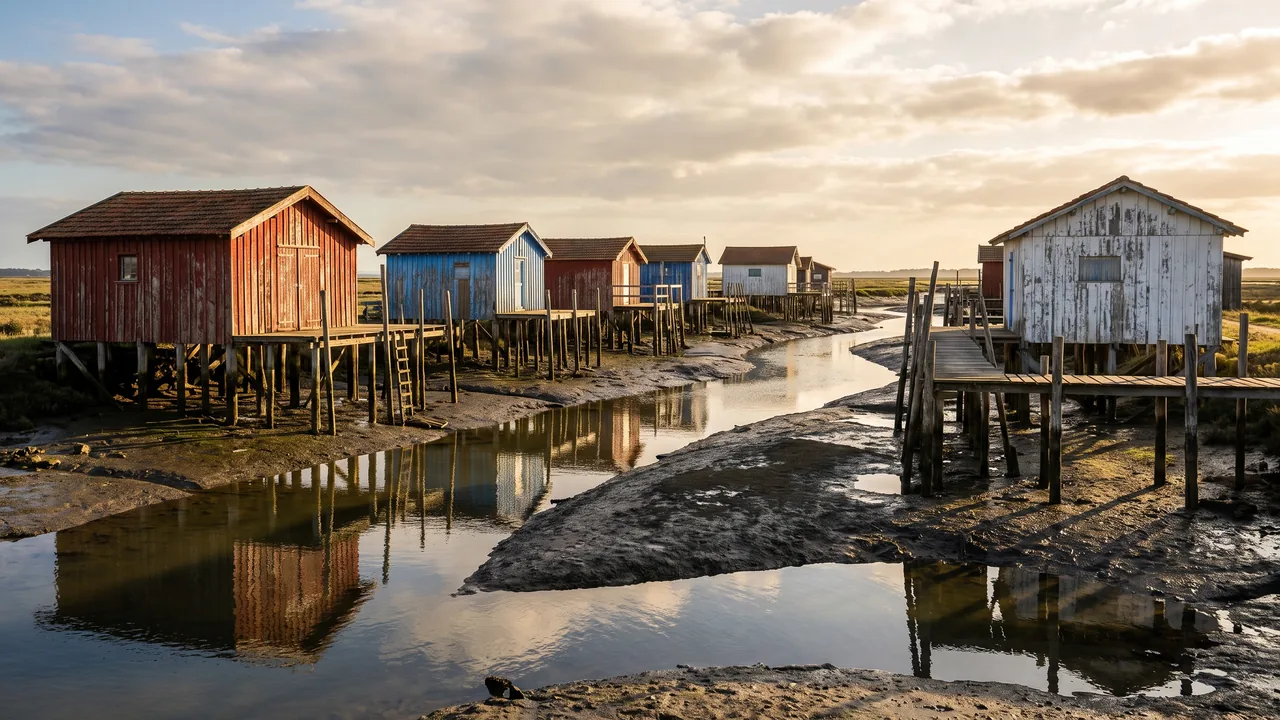
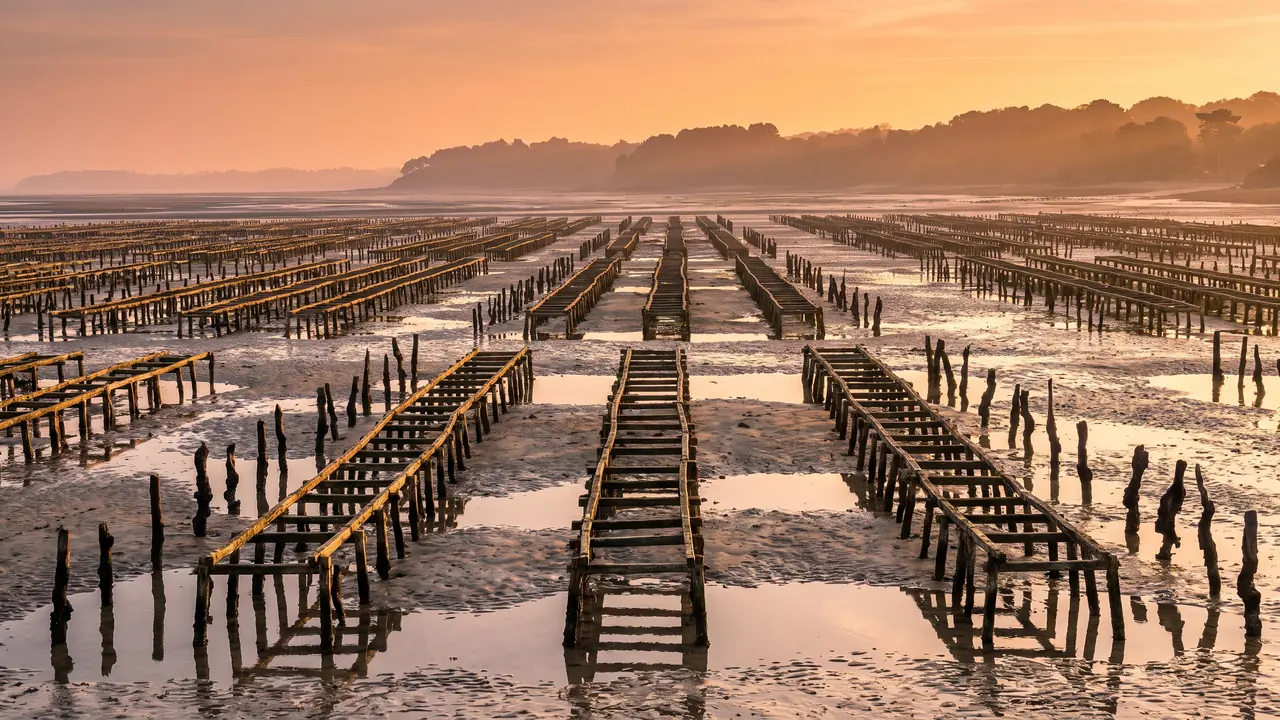
Oyster farming shapes the entire landscape here. Along the channels, brightly painted wooden huts house equipment, serve as sorting areas, and, in some cases, offer oyster tastings. On the foreshore at low tide, the oyster beds come into view: metal racks and stakes driven into the mud, where the oysters grow with the ebb and flow of the tides. On the water, the oyster farmers’ pinasses and flat-bottomed boats glide along, making their way to the beds when the ebb tide allows. Nothing in this setting is merely decorative: everything serves the logic of a demanding trade, governed by the calendar of tides and seasons.
Why "Oyster Capital"?
The formula is rooted first and foremost in geography: nowhere else in the Arcachon Basin can one find such a concentration of oyster ports within a single municipality. It is also rooted in history, as Gujan-Mestras is a long-standing cradle of Arcachon oyster farming, whose techniques have been refined here over generations. One point, however, deserves to be made clear, so as not to exaggerate the reality: the large figures often cited—in the range of 280 to 380 oyster farming businesses and 8,000 to 10,000 metric tons of oysters per year—refer to the entire Arcachon Basin, and not to the municipality of Gujan-Mestras alone. The municipality is a major link—undoubtedly the most iconic—in this industry, but it does not account for the entire production on its own.
Pine-boat-building workshops at the Lycée de la Mer
Gujan-Mestras’ maritime identity is not limited to oysters. The town was also a major center for shipbuilding: pinasses—the slender boats typical of the Bassin—were built here in shipyards, some of which, such as Couach and Dubourdieu, have left their mark on the local and regional history of recreational boating. This tradition of craftsmanship involving wood and water lives on through the Lycée de la Mer, a maritime vocational school located in the town that provides training in marine farming, aquaculture, and coastal trades. Oysters, shipbuilding, maritime training: in Gujan-Mestras, the sea isn’t just a pastime—it’s a legacy of expertise passed down through the generations.
| Maritime Sector | In Gujan-Mestras |
|---|---|
| Oyster-farming ports | 7 ports along ~7 km of coastline |
| Flagship Business | Oyster Farming (Oysters from the Arcachon Basin) |
| Shipbuilding | Pinasses and Boats of the Bassin (Shipbuilding) |
| Training | Lycée de la Mer (maritime careers and marine aquaculture) |
| Industry Statistics (Basin-wide) | ~280–380 companies · ~8,000–10,000 metric tons per year |
The Seven Oyster-Farming Ports
According to the official website “The 7 Ports of Gujan-Mestras,” the list from west to east is: La Hume, Meyran, Gujan, Larros, Le Canal, La Barbotière, and La Mole. “La Passerelle” is therefore not a separate eighth port.
From west to east: La Hume, Meyran, and Gujan
La Hume marks the western end of the chain. It is no longer an oyster port in the strict sense: today it is a recreational marina, developed since 1985, complete with a lifeguard-patrolled beach that makes it one of the most popular family swimming spots in the town. Next comes Meyran, often considered the most important port for oyster farming. It enjoyed a second industrial life: between 1919 and 1935, it served as a railroad terminus for exporting timber from the Landes region—mine props, posts—to English coal mines, a little-known episode that highlights the importance of forestry in the local economy. Further east, Gujan, the historic heart of the neighborhood of the same name, was once called “La Passerelle” and, as early as 1843, hosted seaside bathing facilities at the dawn of seaside tourism in the Bay.
Larros, the iconic port
If I had to pick just one, it would be Larros. Dredged in 1883, it is the most iconic and photogenic of the seven: its wooden huts lined up along the channel, its tasting huts, its oyster farms, and the presence of the Maison de l’Huître make it the showcase harbor of Gujan-Mestras—the one that appears in photos and where visitors are taken. This is where you can best feel the pulse of the trade: the comings and goings of the oyster farmers, the stacked bags of oysters, the scent of the sea and wet wood, and the moored pinasses. Larros alone embodies everything that makes the oyster capital famous.
The Canal, La Barbotière, and La Mole
To the east of Larros, three more modest ports round out the series. The canal extends the line of oyster channels. La Barbotière, meanwhile, is the oldest of the seven: dating back to the 18th century, it corresponds to the former “port of Mestras,” the maritime birthplace of the town’s eastern district. Finally, at the far eastern end, La Mole brings up the rear: it is the smallest of the ports and the only one that has never been dredged, remaining a natural harbor on the foreshore. From the seaside port of La Hume to the untamed La Mole, these seven ports offer a condensed history of Gujan-Mestras’ oyster-farming and social heritage.
Exploring the seven ports also means learning to read the tides. At high tide, the water fills the channels, the pinasses float alongside the huts, and the light glides across the mirror-like surface of the Bassin; it’s the hour of reflections and departures for the oyster beds. At low tide, the scene shifts: the boats rest on the mud, the channels empty, and the foreshore is exposed all the way to the oyster beds. Each port thus changes its appearance twice a day, and photographers know this well, as they wait for the moment when the ebb tide coats the sand with a film of water and sky. Larros and Meyran, the liveliest of the ports, are particularly well-suited for this leisurely stroll along the water’s edge.
Just a quick note, by the way, to clear up a persistent misunderstanding. One sometimes reads that Gujan-Mestras has a separate port called “La Passerelle,” which would bring the total to eight. This is incorrect: “La Passerelle” is simply the former name of the port of Gujan—the one associated with the 1843 baths—and not an additional port. The municipality does indeed have seven official ports, and it’s best to stick to the accurate list to avoid spreading a mistake that has become common on the web.
| Port (west → east) | Character |
|---|---|
| La Hume | Recreational marina (since 1985) and lifeguard-patrolled beach |
| Meyran | The most important center for oyster farming; former railroad terminus (1919–1935) |
| Gujan | The historic heart of the neighborhood; formerly known as “La Passerelle,” baths dating from 1843 |
| Larros | Dug in 1883, the most iconic; Maison de l'Huître, tasting |
| The Canal | An oyster-farming port extending the channels eastward |
| La Barbotière | The oldest (18th century), formerly known as the “Port of Mestras” |
| La Mole | The smallest, never excavated, remaining in its natural state |
The Oyster House and the Tasting
At the Larros Harbor, the Oyster House is the perfect first step toward understanding the wine before tasting it. This place combines a museum space, which tells the story of the Arcachon oyster—its life cycle, the oyster farmer’s work, harvesting, cultivation, and aging—and a tasting area where you can sample oysters from the Bassin right on the spot. It’s an educational and culinary gateway, perfect for families and curious visitors who want to understand what goes on behind the huts and oyster beds.
Admission prices and hours vary by season; please check the Oyster House before your visit. Since opening hours and days vary by season, it’s best to check before heading out, especially outside of summer. A helpful note to avoid confusion: this place is sometimes incorrectly referred to by other names, but it’s best to stick with "La Maison de l'Huître, at the Larros Harbor", the only reliable title.
What's there to see at the Maison de l'Huître?
The museum tour traces the complete life cycle of the oyster in the Bassin: how the larva, or spat, attaches itself to collectors during the summer harvest; how the oyster farmer then raises the oyster in bags placed on tables on the foreshore; how the tide, twice a day, nourishes and shapes them; and finally, how they are sorted, graded, and finished before sale. You’ll also learn about the vocabulary and tools of the trade, the pinasse boats, the huts, and the work that follows the rhythm of the tidal coefficients. It’s short, practical, and lively—enough to help you view the oyster beds and huts with a new, informed perspective.
Where can you enjoy oysters from the Bassin?
In Gujan-Mestras, the oyster-tasting experience begins in the harbor huts, foremost among which is Larros. There, you can enjoy oysters from the Bassin on the go, for lunch or dinner depending on the tides and the season, often accompanied by a glass of white wine, rye bread, and butter, and sometimes shrimp or pâté. These tasting huts aren’t restaurants in the traditional sense: you simply sit down, order a platter from the oyster farmer who raised the oysters himself, and the setting—canals, pilings, boats beached at low tide—is part of the charm. Since operating hours depend on the tides, checking the opening times before heading out helps avoid unpleasant surprises, especially during the off-season when many huts close or scale back their services.
| The Oyster House | Details |
|---|---|
| Location | Larros Harbor, Gujan-Mestras |
| Nature | Museum area + oyster tasting from the Bassin |
| Estimated Price | ~€6.50 for adults · ~€4.40 for children |
| Management | Terra Ostra Operator |
| Good to Know | Hours vary by season—please check before visiting |
Saint-Maurice Church and Cultural Heritage
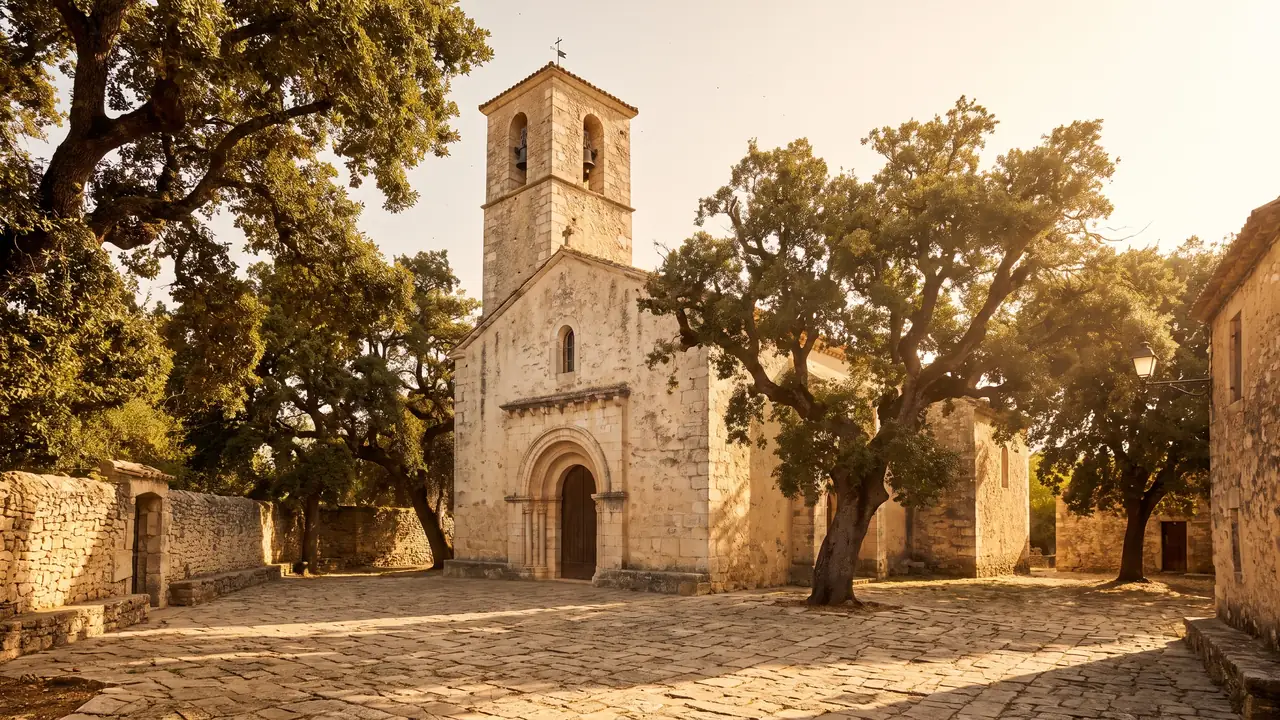
In the heart of the Gujan neighborhood, the Church of Saint-Maurice is the town’s main religious building and one of its most moving places of remembrance. Suspended from its vaults is the history of Gujan’s sailors: it is a church of seafarers, where memories of shipwrecks and long-distance voyages remain etched in stone. Modest in size, it is rich in what it preserves, and is well worth a stop to look up at its nave.
Is Saint-Maurice Church a designated historic site?
According to the official website "Objets" Collective of the Ministry of Culture, the Saint-Maurice Church houses eight protected objects, including two ex-voto models of three-masted ships, altarpieces, a lectern, and a statue. The protection applies to these objects, not to the building itself.
The three-masted ex-votos and the Mestras Chapel
Among these eight protected objects are two exceptional pieces: two Ex-voto models of three-masted ships, named "La Concorde" and "L'Alexandre", suspended in the nave. These miniature ships, offered as tokens of gratitude or supplication, are a living reminder of the shipwrecks and perils displayed by the sailors of Gujan: each ex-voto is a vow, a prayer made tangible, hung above the faithful. The church also houses other classified artifacts—an altarpiece, a lectern, and a statue of Saint Maurice—which bear witness to a rich collection of religious artifacts. At Mestras, the other historic neighborhood, a modest wooden chapel dedicated to Saint Michael was completed in 1897, in fulfillment of a vow made in 1864: another example of the local maritime piety.
To wrap up, here’s a geographical clarification, since this mistake is common. The Château de Ruat, an elegant residence listed as a Historic Monument (reference PA00083852), is sometimes mistakenly associated with Gujan-Mestras. In reality, this château is located in the neighboring town of Le Teich, not in Gujan-Mestras. Confusing the two is like moving a monument from one town to another: it’s better to attribute Château de Ruat to Le Teich and, for Gujan-Mestras, stick to the Church of Saint-Maurice and the Chapel of Mestras.
| Heritage in Gujan-Mestras | Status / Details |
|---|---|
| Saint-Maurice Church (Gujan) | Listed in the General Inventory (not designated as a historic monument) |
| Historic Landmarks | 8 items classified (Palissy database) |
| Three-masted ex-voto | "La Concorde" and "L'Alexandre," suspended in the nave |
| Saint-Michel Chapel (Mestras) | Made of wood, completed in 1897 (vow made in 1864) |
| Ruat Castle | ⚠ Located in Le Teich, not in Gujan-Mestras (listed as a historic monument) |
Gujan-Mestras Through the Years
The history of Gujan-Mestras is, first and foremost, the history of two communities. Gujan to the west, Mestras to the east: two neighborhoods, two parishes, long-time rivals, that eventually became a single municipality. This duality, still evident in the compound name and in the geography of the old town centers, shapes the entire local memory. The merger of the two entities under a single name was made official by the decree of March 24, 1936, which enshrined the name “Gujan-Mestras”—as we know it today—in administrative records.
From resin tappers to oyster farmers
Before oysters and tourism, Gujan-Mestras relied on the forest and the sea for its livelihood, with an economy based on subsistence farming and crafts. The resin collectors—known as “gemmeurs”—tapped the maritime pines of the moor to harvest the resin, which was processed into turpentine and rosin—an activity that was emblematic of the Landes de Gascogne region until the 20th century. Along the shore, traditional oyster farming and fishing supplemented these resources, while the pinasse shipyards employed carpenters and caulkers to build the boats of the Bassin. It was a world of hardworking people with deep craftsmanship—facing the forest on one side and the water on the other—that shaped the town’s identity long before the arrival of amusement parks.
This rivalry between Gujan and Mestras was not merely a matter of local pride, even though that played a part. Each neighborhood had its own parish, church, social life, and sense of community: the Church of Saint-Maurice for Gujan, and the Chapel of Saint-Michel for Mestras. It took time—and the weight of administrative realities—for the two communities to agree to unite under a single name. The 1936 decree merely formalized a process that was already underway by establishing the composite name. Today, this dual origin is still evident in the town’s layout, with its two historic centers and its ports spread out on either side, from La Hume to La Mole.
The arrival of the railroad in the second half of the 19th century then transformed the town’s destiny, as it did that of the entire Bassin region. The train brought Gujan-Mestras closer to Bordeaux, paved the way for the emerging seaside tourism industry—the 1843 bathing facilities at the port of Gujan were an early sign of this—and made it possible to transport timber from the Landes and oysters from the Bassin to markets elsewhere. Even today, the town is served by two TER stations, Gujan-Mestras and La Hume, on the line connecting Bordeaux to Arcachon: a direct legacy of this railway revolution that, over a century and a half, transformed the town from an isolated moorland settlement into the southern gateway to the Bay.
| Historical Background | Details |
|---|---|
| Two Rival Neighborhoods | Gujan (west) and Mestras (east), which have long been separate |
| Ancient Economy | Resin harvesting (pine sap), oyster farming, pinasse shipyards |
| Swimming in the ocean | As early as 1843 at the port of Gujan (“La Passerelle”) |
| Official Compound Name | Decree of March 24, 1936 |
| Rail Service | 2 TER stations: Gujan-Mestras and La Hume (Bordeaux–Arcachon line) |
La Hume's Amusement Parks
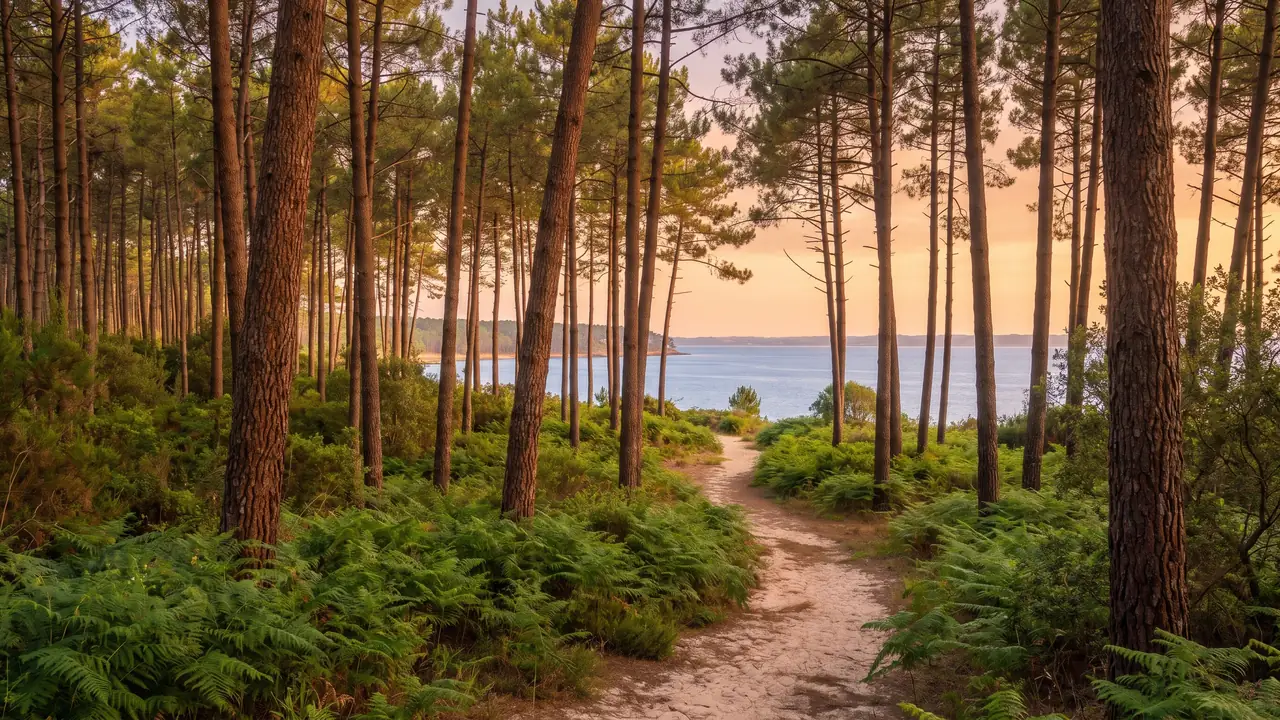
This is the other side of Gujan-Mestras, a world away from the oyster channels: the La Hume area, to the west of the town, is home to what is billed as the largest recreational zone in Aquitaine. Nestled in the pine forest, just a stone’s throw from the beach, it brings together theme parks and outdoor activities in a single area, making it a popular family destination in the Bassin region, especially in the summer and on overcast days when the beach isn’t enough to keep the kids entertained.
The top three attractions are well known to families in the region. Aqualand, the water park, covers about six hectares and features some 14 attractions, from water slides to wave pools. La Coccinelle is a family-friendly petting zoo designed for toddlers, where visitors can get up close to and feed farm animals. Finally, Kid Parc is an amusement park dedicated to children, featuring rides and games tailored to their size. Three complementary worlds, all packed into a tiny area.
Aqualand, La Coccinelle, and Kid Parc
In addition to these three attractions, the La Hume area offers other activities to round out a family day out. There’s a tree-top adventure course—under the Bassin d’Aventures brand—as well as laser tag, bowling, and mini-golf, all great options for all ages and for rainy days. Together, these attractions form a veritable mini-entertainment hub, where you can go on slides in the morning, visit the animals at noon, and tackle the tree-top adventure course in the afternoon—all without ever having to get back in the car. Prices, hours, and operating seasons vary from park to park and depending on the season: most are only open when the weather is nice, so it’s a good idea to check the calendar before planning your visit.
Does the “Gujan-Mestras Labyrinth” actually exist?
The “Gujan-Mestras Maze” is sometimes listed among La Hume’s attractions. To be honest, we must point out that this attraction has not been confirmed by official sources from the town or the tourist office as of this writing. We therefore prefer not to make any claims about it and will stick to the confirmed attractions—Aqualand, La Coccinelle, Kid Parc, the tree-top adventure course, laser tag, bowling, and mini-golf. If a plant-based or recreational maze were to open or reopen, it would add to an already extensive selection of attractions; as things stand, it’s best not to promise something that no reliable source can confirm.
| Park / Activity | Type |
|---|---|
| Aqualand | Water park (~6 ha, ~14 attractions) |
| The Ladybug | Family-friendly wildlife park (for young children) |
| Kid Parc | Children's Amusement Park |
| Adventure Pool | Tree-top adventure course in the pine forest |
| Laser · bowling · mini-golf | Indoor and Outdoor Recreation |
Nature, the foreshore, and birds
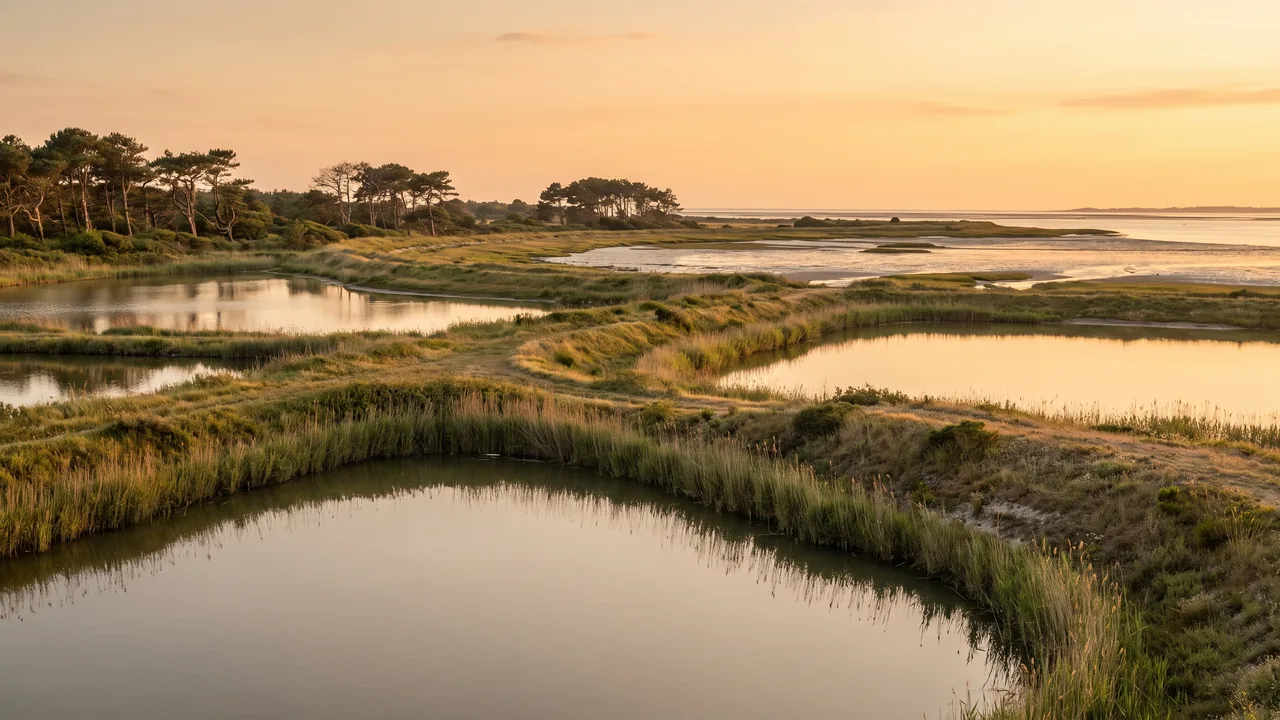
Gujan-Mestras is a tidal flat municipality, and this shapes his entire relationship with nature. Between the city and the body of water lies an amphibious strip made up of mudflats, salt marshes, channels, and former fish ponds, which is exposed and covered twice a day by the tide. At low tide, the ebb tide reveals vast expanses of sand and mud where birds come to feed; at high tide, the water reclaims its territory and smooths out the landscape. This perpetual movement, more than any monument, is the true spectacle of the south bank.
These wetlands make Gujan-Mestras an area of great ecological richness. The old fish ponds—remnants of traditional fish farming—and the salt marshes provide refuges for abundant wildlife, particularly waterfowl that frequent the basin throughout the seasons and during migrations. This is one of the major migratory corridors along the Atlantic coast, where shorebirds, herons, egrets, and ducks find food and shelter on the mudflats.
Where can I go birdwatching?
For birdwatching, the area’s premier site isn’t actually located within the town: it’s the famous Teich Bird Sanctuary, in the neighboring town of Le Teich, just a few minutes away. This 110-hectare park, which opened in 1972, is home to approximately 320 species of birds throughout the year and features trails dotted with observation decks along the banks of the Eyre Delta. It’s easily accessible from Gujan-Mestras and is the perfect way to round out a day on the south bank. Just be sure not to mistake it for being in Gujan-Mestras itself—it’s actually located in Le Teich, the neighboring town to the east.
Cycling Around the Bassin: From the Vélodyssée to a Tour of the Bassin
Gujan-Mestras is also a natural stop for cyclists. The town is crossed by La Vélodyssée, the French section of EuroVelo 1, a long cycling route that connects Norway to Portugal along the Atlantic coast. The Arcachon Bay bike loop also passes through here, connecting oyster-farming ports, beaches, and neighboring towns via safe bike paths away from traffic. It’s one of the most beautiful ways to explore the southern shore: along the foreshore, following the rhythm of the tides, you’ll pass by ports, huts, and scenic viewpoints overlooking the water, with the pine forest as a backdrop.
| Nature Around Gujan-Mestras | Details |
|---|---|
| Foreshore | Mudflats, salt meadows, channels, former fish ponds |
| Wildlife | Waterfowl, shorebirds, herons, egrets (migratory corridor) |
| Teich Bird Sanctuary | ⚠ at the nearby Teich · 110 ha · ~320 species · opened in 1972 |
| Bicycle | The Vélodyssée (EuroVelo 1) and a bike tour of the Bassin |
What is there to do in Gujan-Mestras?
In Gujan-Mestras, you can plan an entire day without ever going in circles—and even by switching things up completely. Start with the oyster ports—Larros being the main one—where you can stroll among the colorful huts before sampling a dozen oysters from the Bassin while looking out over the foreshore, at lunchtime or in the evening depending on the tides. Pop into the Maison de l’Huître at the Larros harbor to learn about the trade, then head inland toward La Hume and its large recreation area—Aqualand, La Coccinelle, Kid Parc—to delight the kids. The afternoon can also include swimming at La Hume’s supervised beach, a bike ride along the Vélodyssée, a trip to the market, or a short getaway to the Teich Bird Sanctuary. Few destinations in the Bassin offer such a wide range of activities within a single town.
Gujan-Mestras’s strength lies precisely in bringing together in one place what people usually seek elsewhere: the authentic oyster-farming atmosphere of a working port and the entertainment of a family-friendly leisure destination. So you can plan your day however you like—contemplatively along the waterways, indulging in local cuisine at the huts, getting active on the bike paths, or simply having fun at the parks—without ever having to choose between nature, heritage, and relaxation.
- Enjoy oysters from the Bassin—at the harbor huts, especially in Larros, for lunch and dinner depending on the tides.
- Visit the Maison de l'Huître—a museum and tasting center at the Larros harbor (~€6.50 for adults)—to learn about the oyster industry.
- Enjoy the amusement parks in La Hume—Aqualand, La Coccinelle, and Kid Parc—the largest amusement park complex in Aquitaine.
- Swimming at La Hume Beach—a lifeguard-patrolled, family-friendly beach, perfect for children.
- Stroll through the port of Larros—colorful huts, oyster farms, and the light of the Bassin—the most photogenic port.
- Cycling along La Vélodyssée—EuroVelo 1 and the Bassin Bike Tour connect ports, beaches, and neighboring towns.
- Visit the Teich Bird Sanctuary—just nearby (in Teich), covering 110 hectares and home to approximately 320 species of birds.
- Visiting the Market — local produce, oysters, fish, and seasonal produce available on market days.
How much time should I set aside?
Half a day is enough to explore one or two ports, sample oysters at the port of Larros, and visit the Maison de l'Huître. A full day allows you to add the La Hume amusement parks, the beach, or a bike ride—or even a trip to the Teich Bird Sanctuary. If you’re traveling with your family and children, feel free to plan for the whole day: between oysters for the parents and playgrounds for the kids, Gujan-Mestras has something to keep the whole family happy from morning to night. As is the case throughout the Bassin, keep an eye on the tide schedule for oyster tasting and the parks’ opening hours, which are mostly during the summer.
| Desire | Where | Good to Know |
|---|---|---|
| Oysters | Oyster-farming ports (Larros) | Tasting huts, open for lunch and dinner depending on the tides |
| Understanding Oysters | Maison de l'Huître, Larros Harbor | Museum + tasting, ~€6.50 per adult |
| Amusement Parks | La Hume Area | Aqualand, La Coccinelle, Kid Parc — especially in the summer |
| Swimming | La Hume Beach | Supervised, family-friendly beach |
| Birds | Teich Bird Sanctuary | At the nearby Teich, 110 ha, ~320 species |
| Bicycle | The Vélodyssée / Tour of the Bassin | Safe trails along the riverbank |
Getting to Gujan-Mestras from Bordeaux
Gujan-Mestras is one of the most easily accessible gateways to the Bay from Bordeaux: it’s a direct drive of about 67 km and one hour, via the A63 and then the A660 toward Arcachon. This ease of access makes it an ideal destination for a day trip without driving, combining oyster tastings at the port of Larros, a visit to the Maison de l’Huître, and an afternoon at the La Hume amusement parks.
How much does the ride cost?
From Bordeaux, private transfers to Gujan-Mestras start at €107 during the day for a sedan (1 to 3 passengers). The price is fixed and confirmed in writing before departure—no meter, no surprises. Surcharges apply at night, on weekends, and on holidays; for groups of more than four people, a van is provided. For pickups at Bordeaux-Mérignac Airport, service to neighboring towns (Le Teich, La Teste, Arcachon), or a full-day “oysters and parks” tour, the rate is determined by a quote based on the itinerary.
| Route | Distance / Duration | Rates |
|---|---|---|
| Bordeaux → Gujan-Mestras | ~67 km · ~1 hr | starting at €107 |
| Neighboring towns (Le Teich, La Teste, Arcachon) | Nearby | Based on a quote |
| Bordeaux-Mérignac Airport → Gujan-Mestras | Based on a quote | Based on a quote |
| "Oysters and Parks" Day | À la carte | Based on a quote |
Why hire a private driver?
A day in Gujan-Mestras often means oyster tastings, a glass of white wine by the water, and family-friendly amusement parks—all great reasons not to drive. With a private driver, you’ll be dropped off right at the port of Larros or at the entrance to La Hume’s parks—no need to worry about finding parking during peak season—and you’ll return home relaxed at a time that suits you. This option is especially convenient for families—kids at the parks, parents enjoying oysters—and for a lunch with a few drinks on the Bassin.
The parking issue is by no means a theoretical one. During peak season, the areas around the ports, the Maison de l’Huître, and the La Hume recreational area get completely packed, and the time spent looking for a spot eats into the time you’d rather spend with your feet in the sand or along the waterways. A door-to-door transfer eliminates this hassle: drop-off as close as possible, pick-up at the agreed-upon location and time, with no need to hunt for parking or worry about the return trip. For a day trip from Bordeaux—oysters in the morning, parks in the afternoon, and sunset over the harbors—this is the most stress-free option, starting at 120 € for a sedan and available upon request for a customized day trip.
Frequently Asked Questions
Where is Gujan-Mestras located?
Gujan-Mestras is located in Gironde (33), on the southern shore of the Arcachon Basin, in the Arcachon district. The town stretches between La Teste-de-Buch to the west and Le Teich to the east, and is part of COBAS, the intermunicipal community of the Southern Arcachon Basin, alongside Arcachon, La Teste-de-Buch, and Le Teich. Its name reflects the union of two former neighborhoods, Gujan and Mestras. From Bordeaux, it is about 67 km and a one-hour drive via the A63 and then the A660.
How much does a trip from Bordeaux to Gujan-Mestras cost with a private chauffeur?
Private transfers from Bordeaux to Gujan-Mestras start at €107 during the day for a sedan accommodating 1 to 3 passengers. The price is fixed and confirmed in writing before departure; no meter is used. Surcharges apply for nighttime, weekend, and holiday travel, and a van is available for groups of more than four people. For pickups at Bordeaux-Mérignac Airport or a full-day “oysters and parks” tour, the rate is determined by a quote based on the itinerary.
Why is Gujan-Mestras called the "oyster capital"?
Because it is home to seven oyster ports spread along approximately seven kilometers of coastline—a concentration found nowhere else in the Arcachon Basin. This is a common designation, shaped by tradition and tourism, rather than an official label. Note, however, that the large figures often cited—ranging from 280 to 380 businesses and 8,000 to 10,000 metric tons of oysters per year—refer to the entire Arcachon Basin; not the town alone, which is a major player but does not account for the entire production.
What are the 7 ports of Gujan-Mestras?
From west to east, the seven oyster-fishing ports are: La Hume (now a recreational port with a lifeguard-patrolled beach), Meyran (the largest active port, a former railroad terminus from 1919 to 1935), Gujan (formerly known as “La Passerelle,” with bathing facilities dating back to 1843), Larros (dredged in 1883, the most iconic, home to the Maison de l’Huître), Le Canal, La Barbotière (the oldest, dating from the 18th century, formerly known as “Port de Mestras”), and La Mole (the smallest, never actually dredged). “La Passerelle” is not an eighth port, but the former name of the port of Gujan.
Where can you enjoy oysters in Gujan-Mestras?
At the huts in the oyster-farming ports, foremost among them the port of Larros. There, you can enjoy oysters from the Bassin on the go, for lunch and dinner depending on the tides and the season, often with a glass of white wine, rye bread, and butter. These tasting huts aren’t traditional restaurants: you order your platter directly from the oyster farmer who raised the oysters. Since operating hours depend on the tides, it’s best to check opening times before heading out, especially during the off-season.
What is the Maison de l'Huître?
This venue, located at the Larros harbor in Gujan-Mestras, combines a museum space—dedicated to the Arcachon oyster, its life cycle, and the work of oyster farmers—with a tasting area. Admission prices and hours vary by season; check with the Maison de l'Huître before your visit. It’s an ideal educational starting point before strolling through the harbors. Since hours vary by season, it’s best to check before you go.
Is the Saint-Maurice Church in Gujan-Mestras a designated historic site?
No, not the building itself. The Saint-Maurice Church, in the Gujan neighborhood, is listed in the General Inventory of Cultural Heritage, but it is neither classified nor listed as a Historic Monument. However, it houses eight objects protected as Historic Monuments (Palissy database), including two ex-voto models of three-masted ships, “La Concorde” and “L’Alexandre,” suspended in the nave in memory of the shipwrecks of sailors from Gujan, as well as an altarpiece, a lectern, and a statue of Saint Maurice.
Is Ruat Castle located in Gujan-Mestras?
No, this is a common misunderstanding. The Château de Ruat, a residence listed as a Historic Monument (reference PA00083852), is located in the neighboring town of Le Teich, not in Gujan-Mestras. As for the architectural heritage of Gujan-Mestras, the highlights include the Church of Saint-Maurice in the Gujan neighborhood and the modest wooden chapel dedicated to Saint Michael in Mestras, completed in 1897 to fulfill a vow made in 1864.
What amusement parks are there in Gujan-Mestras?
The La Hume area is home to what is billed as the largest recreational zone in Aquitaine. It features Aqualand (a water park covering about six hectares with about fourteen attractions), La Coccinelle (a family-friendly animal park for toddlers), Kid Parc (an amusement park for children), as well as a tree-top adventure course, laser tag, a bowling alley, and a mini-golf course. Most of these parks are only open during warm weather: it’s best to check the schedule before planning your visit.
Is there a maze in Gujan-Mestras?
A “Gujan-Mestras Maze” is sometimes mentioned, but this attraction has not been confirmed by official sources from the town or the tourist office. To be honest, we prefer not to make any claims about it and will stick to the confirmed attractions in the La Hume area: Aqualand, La Coccinelle, Kid Parc, a tree-top adventure course, laser tag, bowling, and mini-golf. As things stand, it’s best not to make promises that no reliable source can guarantee.
Is it possible to go birdwatching near Gujan-Mestras?
Yes. Gujan-Mestras is a coastal town featuring mudflats, salt marshes, and old fish ponds that are home to a rich variety of waterfowl. The premier spot for birdwatching, however, is the Teich Ornithological Park, located in the neighboring town of Le Teich, just a few minutes away: 110 hectares, home to approximately 320 species of birds, open since 1972, and crisscrossed by trails and observation decks. It’s the perfect way to round out a day on the south bank—provided you don’t plan to visit it from Gujan-Mestras itself.
How many people live in Gujan-Mestras?
According to the INSEE comparison tool published on July 9, 2026, Gujan-Mestras has 22,153 residents in 2023, with a population density of 410.3 people per km². The average variation is +0.8% per year between 2017 and 2023. The residents are known as Gujanians.
How do I get to Gujan-Mestras from Bordeaux?
Gujan-Mestras is one of the most easily accessible gateways to the Arcachon Basin from Bordeaux: a direct route of about 67 km and a one-hour drive via the A63 and then the A660 toward Arcachon. The town is also served by two TER train stations, Gujan-Mestras and La Hume, on the Bordeaux–Arcachon line. With a private door-to-door transfer, you’ll be dropped off directly at the port of Larros or at the entrance to the La Hume parks, starting at €107 during the day—a fixed price confirmed in writing.
Further Reading
- Book your transfer: Request a quote for Bordeaux → Gujan-Mestras, with a fixed price confirmed in writing.
- Explore the Basin: Discover all our destinations from Bordeaux.
- The Heart of the Basin: Discover the Guide to the Arcachon Basin, its villas, and the Dune du Pilat.
- The northeast shore: stop by Andernos-les-Bains, with its pier and oyster harbor.
- The tip of the Bassin: follow the Cap Ferret Guide to its lighthouse and oysters.
Sources and References
- Tourist Office — The 7 Ports of Gujan-Mestras — The 7 Oyster Ports, History, and Religious Traditions
- Gujan-Mestras Tourist Office — oyster farming, amusement parks, markets
- INSEE — Regional Comparison Tool, Gujan-Mestras (33199) — Demographics, Area
- Maison de l'Huître — Larros Harbor — museum, tastings, admission prices
- Collectif Objets — Ministry of Culture — Protected Artifacts from Saint-Maurice Church
Third-party information and rates verified on .
Heading to the Oyster Capital
Direct transfer from Bordeaux (~1 hour) to the oyster ports and the Maison de l'Huître in Gujan-Mestras. Written, fixed-price quote with no obligation.