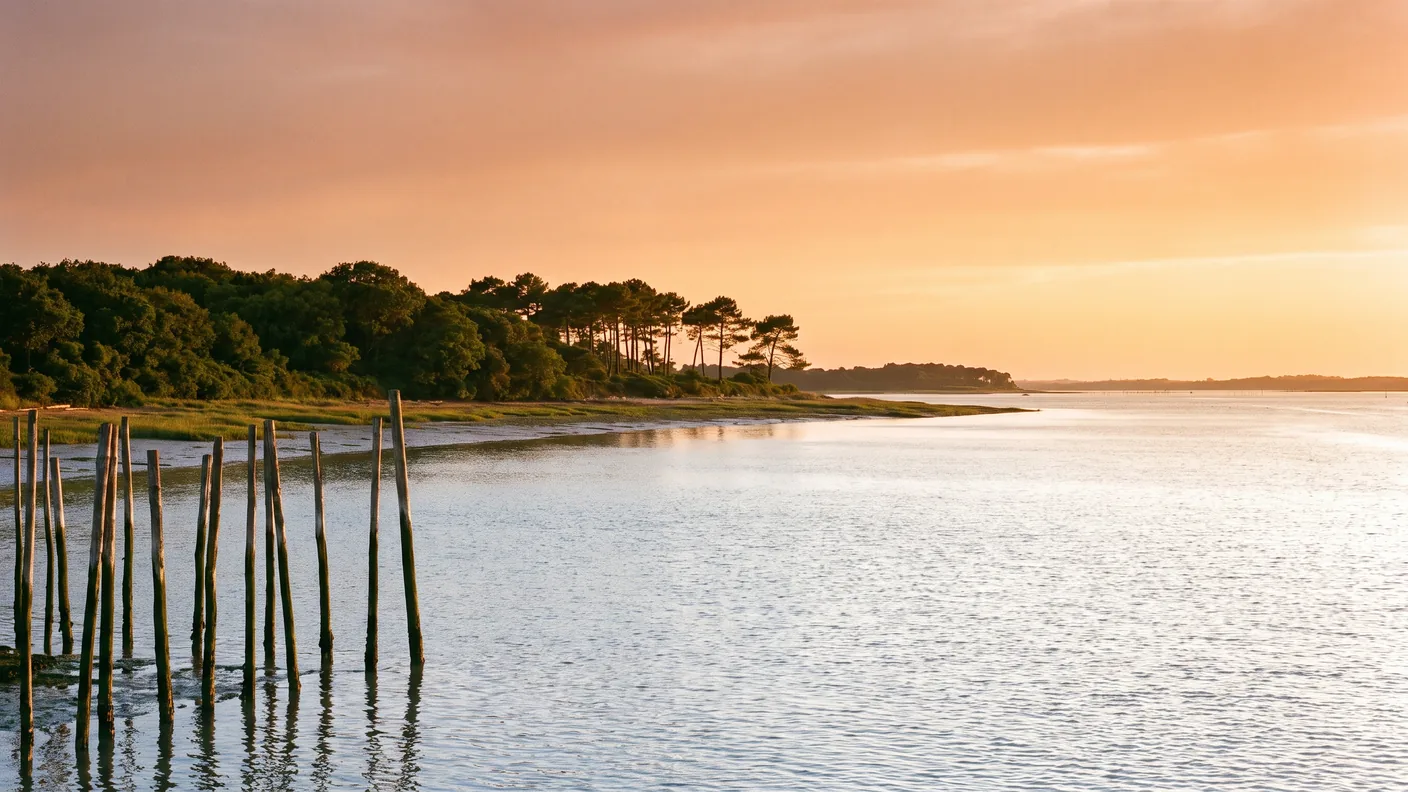
Bordeaux to Lanton: oyster ports and the Certes nature reserve
Four villages nestled among pine trees and the tidal flats—Lanton, Cassy, Taussat, and Blagon—on the northeastern shore of the Arcachon Basin. Oyster-farming ports, a historic seaside resort, and the Certes Bird Sanctuary: the tranquil, natural side of the Arcachon Basin, less than 50 minutes from Bordeaux.
Lanton at a Glance
There’s the “Postcard Coast”—Arcachon, the Dune, Cap Ferret—and then there’s the other shore, the northeastern one, more low-key, where the water laps at the reed beds and rough-hewn wooden huts line the banks of the channels. Lanton is on that shore. A mosaic-like municipality made up of four villages, Lanton, Cassy, Taussat, and Blagon, where the foreshore stretches for hundreds of meters at low tide, where you can buy oysters directly from the producer, and where the Certes Nature Reserve opens up its dikes for birdwatching. Here, you get a sense of a Bassin that’s slower-paced, greener, and more a place for locals than for tourists. This guide sets aside the information that is repeated from town to town, focusing instead on what is unique to Lanton and verified: its ports, its Romanesque church, its nature reserve with three distinct ecosystems, and its historic villas. All of this is just about fifty minutes from Bordeaux.
Lanton is one of those towns you sometimes drive right through without noticing it, on your way to Andernos or Arès, and that you truly discover when you take the time to turn toward the water. The town center lies slightly set back from the bay, clustered around its church; the oyster-farming villages, on the other hand, live according to the rhythm of the tides. Between the two stretches a vast pine forest that covers more than half of the municipality’s territory.
This guide is designed to distinguish what truly belongs to Lanton from what is commonly said throughout the Basin. Many stories are circulating that attribute to this shore huts that are actually located elsewhere, a church with the wrong name, or an entire estate to a single municipality. We chose to verify each point individually: actual road distances rather than as-the-crow-flies distances, the exact name of the church, the precise boundaries of the Domaine de Certes, and the specific years of the population figures. What remains uncertain is presented as such, in the conditional tense, and what is established is given for what it’s worth. The idea is simple: to help you plan a getaway on a solid foundation, without any unpleasant surprises or copied legends.
| Landmark | Details |
|---|---|
| Department | Gironde (33) · Nouvelle-Aquitaine |
| Status | Municipality on the northeastern shore of the Arcachon Basin (COBAN Atlantique) |
| Population | According to the 2022 INSEE census, Lanton had a population[3] of 7,315; see the INSEE municipal report for the most recent official population figure. |
| Villages | Lanton (village) · Cassy · Taussat · Blagon |
| Must-Sees | Oyster-farming ports, Domaine de Certes-et-Graveyron, Notre-Dame Church |
| From Bordeaux | 37 km · 50 min · starting at €89 |
Where is Lanton located?
Lanton is located on the northeastern shore of the Arcachon Basin, in the Pays de Buch region, between Audenge to the south and Andernos-les-Bains to the north. Administratively, the municipality is part of the Gironde department and the Nouvelle-Aquitaine region, the Arcachon arrondissement, and, since the 2015 redistricting, the canton of Andernos-les-Bains. Its INSEE code is 33229 and its ZIP code is 33138. It is part of the COBAN Atlantique intermunicipal community, the urban community of the Northern Basin—not to be confused with COBAS, which includes the southern municipalities (Arcachon, La Teste-de-Buch, Gujan-Mestras, and Le Teich).
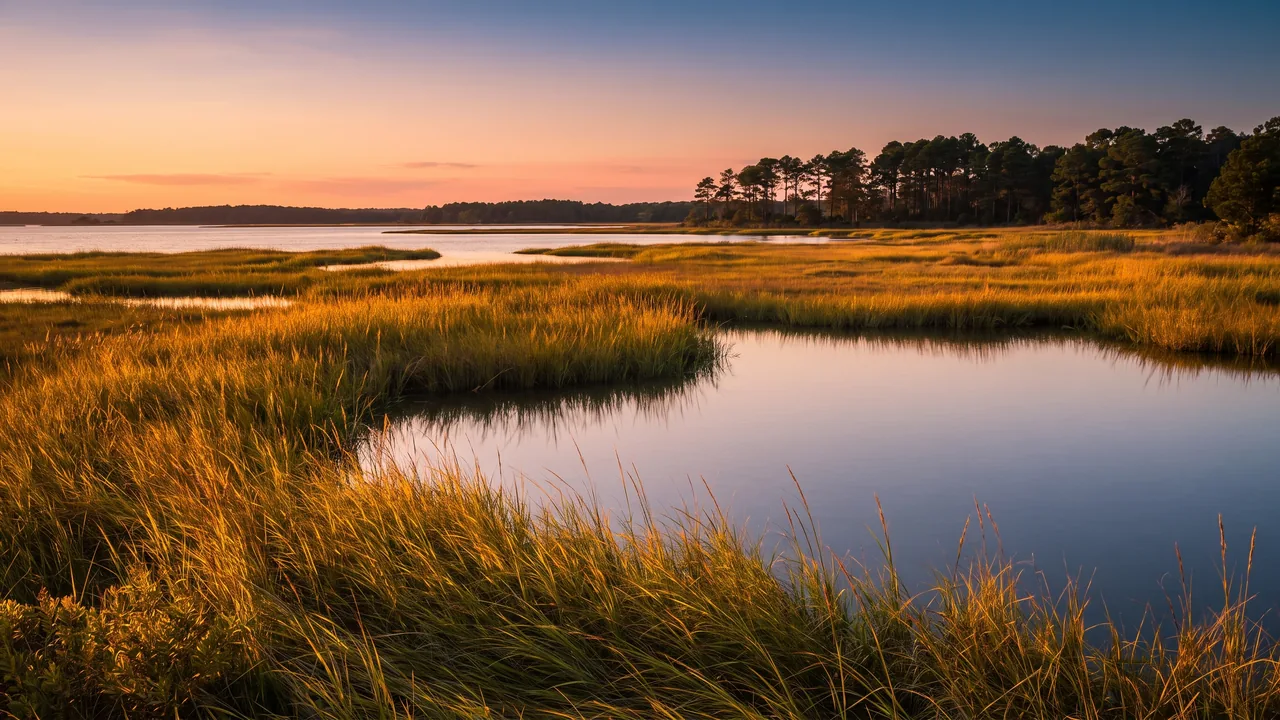
What’s surprising when you look at a map is the size of the municipality: about 136 km²[1], making it one of the largest in the Bassin. But water covers only a narrow strip of it. More than half of the territory—around 56%—is covered by the Landes forest of maritime pines. This is reflected in the population density—about 54 inhabitants per square kilometer—and creates a sense of open space, with villages nestled in clearings that open onto the foreshore. The neighboring municipalities are Andernos-les-Bains, Arès, Audenge, Saint-Jean-d’Illac, and Le Temple.
This two-part geography—a narrow coastal strip in the northwest and a vast forested hinterland in the southeast—explains a great deal. It explains why Lanton seems so quiet despite its population: the residents are spread out across several villages, and the forest keeps them apart. It also explains why the town doesn’t have the feel of a compact seaside resort, but rather that of a string of hamlets connected by forest roads. On the shore, the foreshore exposed at low tide further enhances the impression of vastness: in Lanton, the horizon is always wider than you’d expect.
How far from Bordeaux?
From Bordeaux, it’s about 37 kilometers and a 50-minute drive, making Lanton one of the quickest getaways to reach on the north side of the Bassin. One point deserves clarification, as it confuses many visitors: Arcachon appears to be “across from” Lanton, on the other side of the bay, just a few kilometers away as the crow flies. But no road crosses the Bay. To reach Arcachon by land, you have to go all the way around the body of water—a journey of about 34 kilometers and 38 minutes; the only direct connection between the two shores is by boat. The geography of the Bassin can therefore never be understood by looking at it as the crow flies.
| From Lanton | Driving distance | Duration |
|---|---|---|
| Audenge | ~3.6 km | ~6 min |
| Andernos-les-Bains | ~7.9 km | ~13–15 min |
| Arès | ~11.7 km | ~21 min |
| Arcachon (by car) | ~34 km | ~38 min |
| Bordeaux | 37 km | 50 min |
How many people live in Lanton?
According to the 2022 INSEE census, Lanton had a population of 7,315; consult the INSEE municipal report for the most recent official population figure. Residents are known as Lantonais and Lantonaises. It is always prudent to specify the reference year, as the municipality is experiencing continuous and rapid growth, which quickly renders any figures outdated.
Three Centuries of Growth
The demographic history of Lanton chronicles the transformation of the entire Arcachon Bay area from a modest rural parish to the residential and seaside town it is today. The population numbered barely 270 in 1726, 643 around 1860, and still only 1,567 in 1968. Then growth accelerated: nearly 5,000 residents in 1999, more than 6,200 in 2011, and now around 7,300. Over the course of three centuries, the population has increased more than twenty-fivefold, with most of this growth concentrated in recent decades, driven by the appeal of the Arcachon Bay area and the town’s proximity to Bordeaux.
This trend is by no means unusual in the Arcachon Basin, where all coastal towns have seen their populations grow as the shoreline became first a vacation destination and then a place of permanent residence. But it has given Lanton its current character: a town with modern infrastructure, still green, where buildings remain scattered, and where the village atmosphere has not been lost amid growth. The immediate proximity of Bordeaux—about fifty minutes away—has played a decisive role in this recent boom, making the north shore both an accessible place to live and a popular getaway destination.
| Year | Population |
|---|---|
| 1726 | ~270 |
| 1860 | ~643 |
| 1968 | 1 567 |
| 1999 | 4 962 |
| 2011 | 6 201 |
| 2022 (INSEE) | 7 315 |
Lanton, Cassy, Taussat, and Blagon
Lanton is not a single, contiguous town, but rather a mosaic of four villages, each with its own distinct character, spread out between the waterfront and the inland forest. It is this diversity that gives the town its richness: depending on whether you’re looking for the church and the market, the oyster huts, the historic villas, or the tranquility of the pine forest, you’ll head to different places.
Understanding this village layout is key to making sure you don’t miss out. Many visitors drive through Lanton thinking they’ve seen it, when in fact they’ve only caught a glimpse of the village center from the road. The real Lanton Bay—with its huts and foreshore—is hidden a little further down, at the end of the paths that lead down to the water.
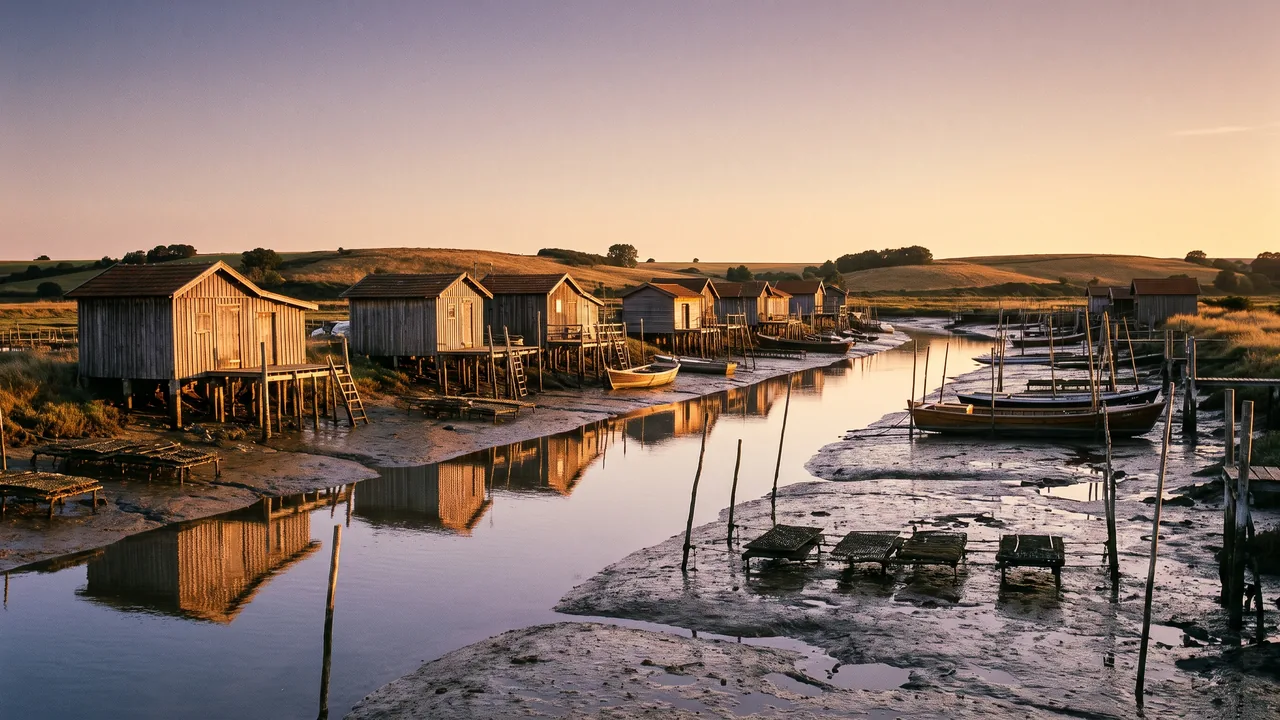
The town of Lanton and the port of Cassy
The village of Lanton lies a short distance back from the water, centered around its Romanesque church, Notre-Dame. It is the administrative and historic heart of the town—more rural than coastal—with the feel of a typical village in the Landes region, quickly surrounded by the forest. You can sense the place’s long history here—that of a parish established long before seaside tourism transformed Arcachon Bay.
Cassy, on the other hand, faces the foreshore. It is the main oyster-farming port of Lanton, a grounding port with about 225 berths where boats settle onto the mudflats at low tide and right themselves as the tide comes in. Rows of rustic wooden huts line the channels here, and visitors can buy and taste oysters directly from the producers. Cassy is the hub of much of the town’s activity: this is where the Sunday market is held, and where people come to enjoy the light reflecting off the water of the Bassin.
Taussat, the old resort, and Blagon, the forest town
Taussat, or Taussat-les-Bains, is the village with the richest history as a seaside resort. Once a fashionable little resort during the Belle Époque, it has inherited a heritage of villas—sometimes nicknamed “the Beauties of Taussat”—and a chapel, the Saint-Louis Chapel, whose stained-glass windows were created by the Gironde-based artist Raymond Mirande. Taussat retains that slightly old-fashioned charm of vacation spots that enjoyed their heyday before returning to tranquility.
In fact, it was in Taussat—and not in a neighboring town, as is sometimes claimed—that the painter Henri de Toulouse-Lautrec was a regular visitor. He stayed at the Villa Bagatelle and visited the town on several occasions between the 1890s and his death in 1901. This detail quietly anchors Taussat in art history, far from the hustle and bustle of the major resorts. This kind of artists’ retreat speaks volumes about what the north shore was like during the Belle Époque: an elegant and intimate refuge, favored by those who were already fleeing the social scene of Arcachon.
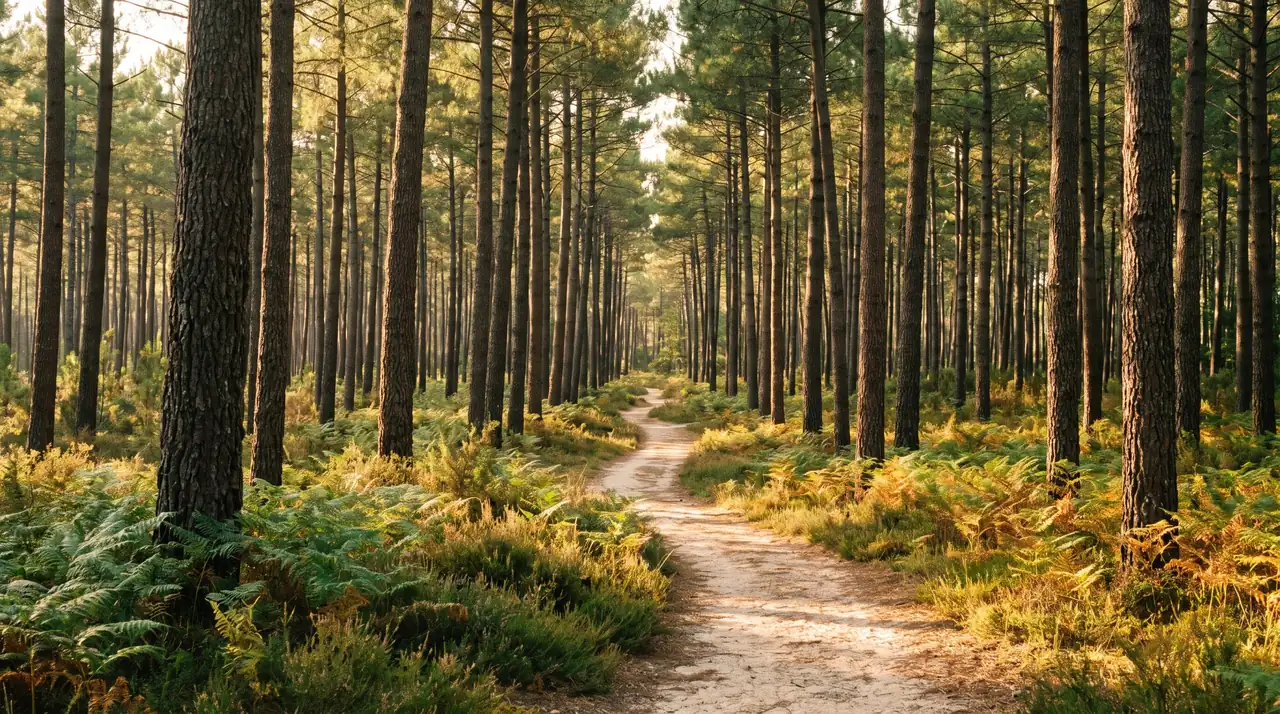
Finally, Blagon is the inland village, a forest hamlet tucked away among the pine trees, far from the Bay. Here you’ll discover another side of the town: the Landes forest, with its profound tranquility and sandy paths. Blagon reminds us that Lanton isn’t just about water and oysters, but also a land of forests where villages have taken root.
Where does the name Lanton come from?
The origin of the name Lanton has not been definitively established, and one should refrain from making any overly confident assertions. The most commonly cited toponymic hypothesis suggests that “Lanton” is derived from an ancient personal name, a Latin personal name of the type Lentus or Lantos, which is believed to have referred to a landowner's estate during the Gallo-Roman period. An ancient Gascon form, “Lenton,” is also attested.
This theory remains a conjecture by a toponymist and is by no means a definitive proof. As is often the case with place names in the Basin, the etymology is stated in the conditional: the name may derive from such-and-such a root; it could refer to such-and-such an ancient domain. It is therefore preferable to present it as a plausible scholarly theory rather than as an established fact.
What is certain, however, is the long history of human settlement along this shoreline, as confirmed by the Neolithic remains unearthed at the port of Cassy. The name—whatever its exact root may be—has come to be associated with a place that has been inhabited for a very long time, on the edge of the water and the forest. It is worth noting, moreover, that the name Lanton—which today applies to the entire municipality—originally referred only to the hamlet clustered around the church; Cassy, Taussat, and Blagon existed for a long time as separate villages before being united under this single name. The names of the villages themselves speak more clearly: Taussat and Cassy have retained their ancient forms, and Blagon, in its own way, refers to the land of pine trees. The place names of Lanton thus form a small landscape of words that evoke the forest, the foreshore, and the people who shaped them.
Notre-Dame Church in Lanton
The oldest monument in the town is its parish church, the Church of Notre-Dame de Lanton. This point is worth emphasizing right away, as the church is sometimes confused with another: it is not called “Saint-Seurin ”—a name associated with other churches in the Gironde region, in Bordeaux, Galgon, Rions, or Le Pian-Médoc—nor is it the “Church of Cassy,” since it stands in the village of Lanton and not at the port. It is indeed Notre-Dame, in the village.
The 12th-century Romanesque apse
Its significance lies in its 12th-century Romanesque apse[1], the only medieval remnant still visible and one of the oldest architectural examples in the entire Bassin region. The apse retains its engaged columns, its modillion cornice, and its carved capitals, whose iconography combines herons, pinecones, and foliage—a bestiary and flora that already seem to hint at the proximity of water and the forest. It is this eastern part of the building that is considered a treasure, while the nave has been extensively remodeled.
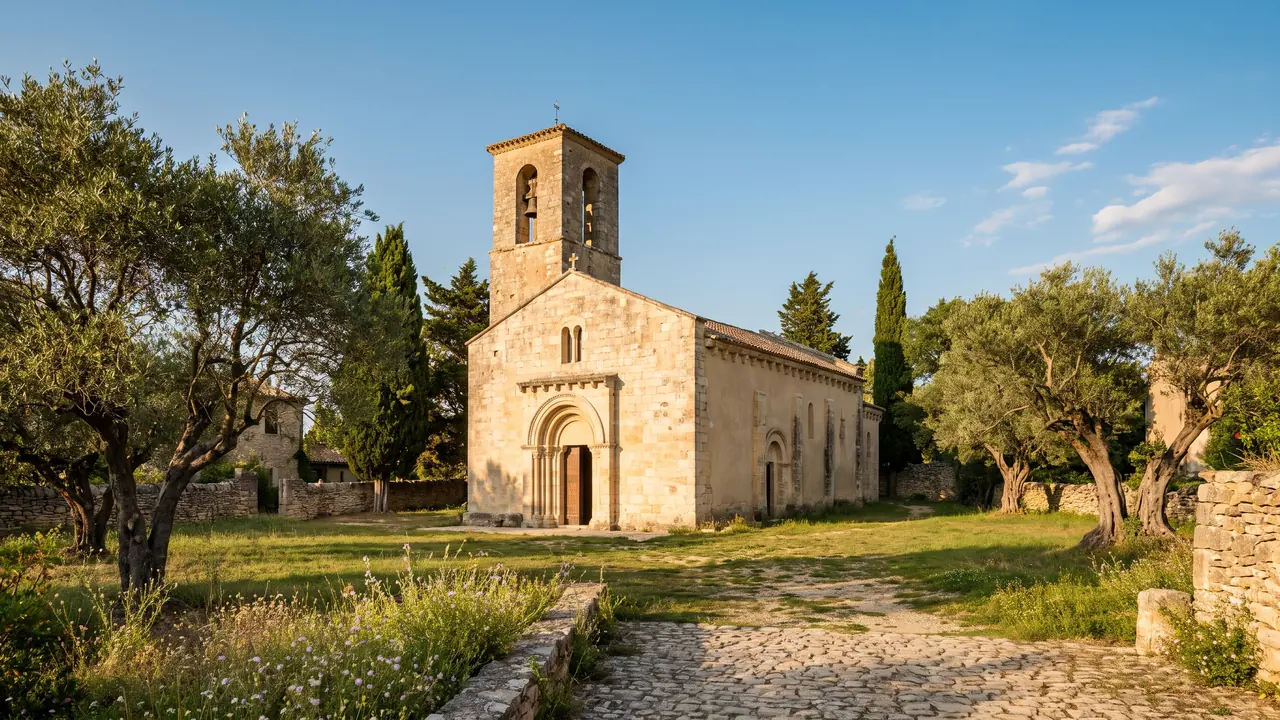
The nave, in fact, was rebuilt in the Neo-Gothic style in the 19th century, during Cardinal Donnet’s episcopate in Bordeaux, a period of intense activity in the reconstruction of churches in the Gironde region. This juxtaposition of an authentic Romanesque apse and a 19th-century nave gives Notre-Dame its composite character, clearly visible to the eye: the ancient stone of its origins to the east, the late Gothic style to the west.
The church stood along the coastal route leading to Santiago de Compostela, one of the pilgrimage routes that ran along the Atlantic coast, and the parish once fell under the jurisdiction of the lords of the Captal de Buch, the powerful lords who controlled the region. As for its age, let’s remain cautious: it can be described as one of the oldest churches in the Bassin based on the dating of its apse to the 12th century, but this should not be taken as an established classification. Its possible designation as a Historic Monument does not appear to be confirmed in the national database, so it is best to stick to what the stone itself reveals.
The Certes-et-Graveyron Estate
If you had to pick just one site near Lanton, it would be the Domaine de Certes-et-Graveyron. First, we need to pinpoint the exact location of this vast area, as it straddles two municipalities: the Château de Certes and most of the reservoirs are on the Audenge side, while the Graveyron peninsula falls under Lanton, with access from the Cassy side. We will therefore refer to it as an estate straddling Audenge and Lanton, never as the “Certes Estate of Lanton.”
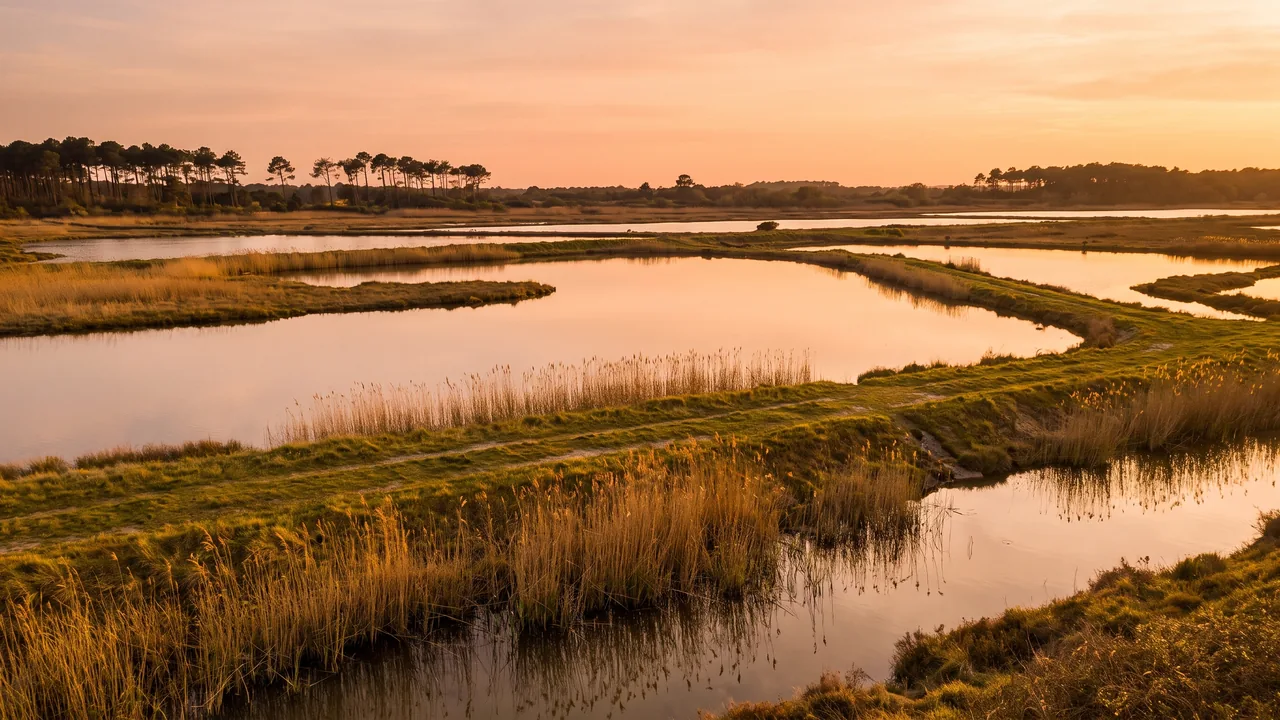
It is a protected natural area covering approximately 530 to 540 hectares, of which nearly 200 hectares are water. It is owned by the Coastal Conservation Agency, which acquired Certes in 1984 and then Graveyron in 1998, and has been managed by the Gironde Department as a Sensitive Natural Area since 1991. This combination—public land protection and departmental management—has made it one of the most beautiful nature sites open to the public along the entire eastern shore of the Bay.
An Estate with Three Lives
The estate is fascinating because it has undergone three successive phases, three different ways of inhabiting the same foreshore. In the second half of the 18th century, the Marquis de Civrac had saltworks[2] built there—the largest salt operation in the Bassin, which produced around 1,000 metric tons of salt per year. The landscape of dikes and basins that we walk through today is the direct legacy of this great hydraulic engineering project.
In the 19th century, the site’s use changed dramatically: industrialist and philanthropist Ernest Valeton de Boissière transformed the basins into fish ponds, establishing an extensive fish-farming operation that took advantage of the tides. Then, in the 20th century, when operations ceased, nature reclaimed the area, and the site became a premier bird sanctuary. Salt pans, fish, birds: three uses, three eras, the same labyrinth of dikes.
| Period | Use of the Estate |
|---|---|
| Second half of the 18th century | Saltworks developed by the Marquis de Civrac (~1,000 metric tons of salt per year) |
| 19th century | Fish ponds (Ernest Valeton de Boissière) |
| 20th century to the present | Protected bird sanctuary, open to the public |
A bird sanctuary open to the public
Today, Certes-et-Graveyron is a wildlife sanctuary. A total of 258 bird species, 336 plant species, and 42 mammal[2] species have been recorded there. Visitors can explore the area via a network of approximately 19 kilometers of trails built along the old levees, winding between bodies of water that reflect the sky and the reeds. Admission is free and open to the public, making it one of the best free birdwatching spots in the entire Bassin region.
A walk at the Domaine de Certes is one of those experiences that changes depending on the time of day and the season. In the morning, the low-angled light gently caresses the bodies of water, and the birds are at their most active; at the end of the day, the levees take on a golden hue, and the reflections multiply. Over the course of the months, different bird populations can be observed, as the site is a stopover along migration routes: herons, egrets, ducks, and waders take turns as they pass through, and depending on the season, you may spot white stilts, storks, or spoonbills, among many other species. The terrain is flat, with wide, safe paths, making the area accessible to everyone, including families—provided you bring water and sun protection, as shade is scarce.
That leaves the Château de Certes, on the Audenge side, whose recent history is more melancholic. Rebuilt around 1840, it was listed in the supplementary inventory of Historic Monuments in 1991, before being ravaged by a fire in 2010. The estate surrounding it, however, continues to thrive and welcome walkers and visitors throughout the seasons and during migratory periods.
Lanton Through the Centuries
Human settlement along the Lanton shoreline dates back to ancient times. During the excavation of the Port of Cassy in the 1970s—specifically the 1972 and 1975 excavation campaigns— the work unearthed Neolithic artifacts: arrowheads, scrapers, blades, and a polished black stone axe. These objects attest that people were already visiting this shore of the Bassin several millennia ago, likely drawn by the abundance of its foraging grounds.
The Falcons of Captal de Buch
In the Middle Ages, Lanton was a fief of the lords of the Captal de Buch, the vast seigneury that ruled the Pays de Buch. The town preserves a curiosity from that era that deserves to be recounted with caution: in the 14th century, Lanton was reportedly renowned for breeding falcons for falconry, which were shipped as far as the English court—Guyenne was then an English possession. A deed granting falcons is dated 1340. Care should be taken not to overinterpret the details: the solid, verifiable fact is the breeding of falcons for the English court; attributing them to a specific sovereign falls more within the realm of documentary uncertainty.
This falcon trade recalls a time when the Arcachon Basin looked out to sea and toward England rather than inland. Guyenne remained under English rule for nearly three centuries, and the Pays de Buch, with its captaux, was one of its cogs. Lanton, situated on its shore, participated in these exchanges on a modest scale. This gives us a sense of how this now-peaceful shore was once connected to networks that extended far beyond the horizon of the Arcachon Basin.
Who was Valeton de Boissière?
The 19th century brought forth a remarkable figure, one we’ve already encountered in Certes: Ernest Valeton de Boissière, owner of the fish ponds. This wealthy man and philanthropist left the Gironde to found a cooperative colony in Kansas, driven by his social ideals. This unexpected journey quietly links the banks of the Bassin to the great communal utopias of the 19th century, lending the Certes estate a human depth that one would never suspect while strolling through it.
Finally, a word to clear up a common misunderstanding. There are stories circulating that link Lanton to the history of ballooning, particularly to the tragic flight of the Zénith balloon in 1875. Let’s be clear: that dramatic flight ended in Ciron, in the Indre department, and has nothing to do with the Arcachon Basin. Therefore, we will not conflate any local anecdotes about balloon landings with this episode, which took place in an entirely different geographical location.
Oysters from the Bassin at Lanton
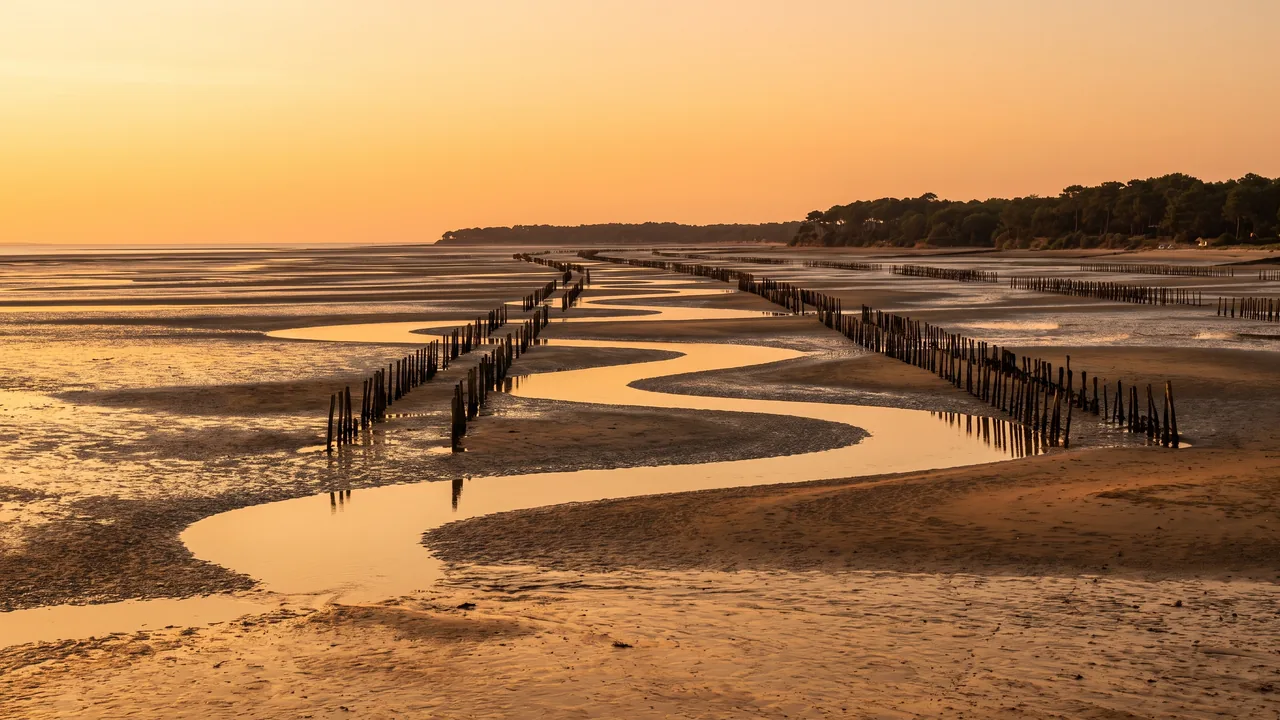
Oysters are the heart and soul of the Lanton waterfront. The town has two oyster ports, Cassy and Taussat, where rustic wooden huts serve as workspaces for the oyster farmers and, for many, as spots for on-site tastings. Cassy is a tidal port with about 225 berths, where the water depth varies from one metre to nearly 1.8 metres depending on the tide: boats rest on the seabed at low tide and float again at high tide. This is the very rhythm of Arcachon Bay, governed by the moon rather than by the clock.
Everything here revolves around the tides. Twice a day, the water recedes and exposes the foreshore for hundreds of meters: the oyster beds come into view, the stakes emerge, the mud glistens in the sun, and birds come to forage there. Then the sea returns and washes everything away. Understanding this cycle means understanding oyster farming: the beds are tended on foot at low tide, and the huts adapt to this ebb and flow. To enjoy the oysters, it’s best to check the tide schedule, which sets the mood at the harbor.
Where can you enjoy oysters at Lanton?
On this north shore, oyster farming isn’t a reenactment for visitors but a very real activity that gives the ports their unique liveliness: the sorting tables, the stacked bags of oysters, the flat-bottomed boats, and the scent of the sea and wet wood. In Cassy, as in Taussat, tastings often take place in a simple setting, just a few steps from the oyster beds, which makes all the difference: you eat the oysters right where they were grown, looking out at the water. It’s a more intimate experience of the Bay than that offered by the large tourist terraces, and undoubtedly the one that best captures the true essence of the Lanton waterfront.
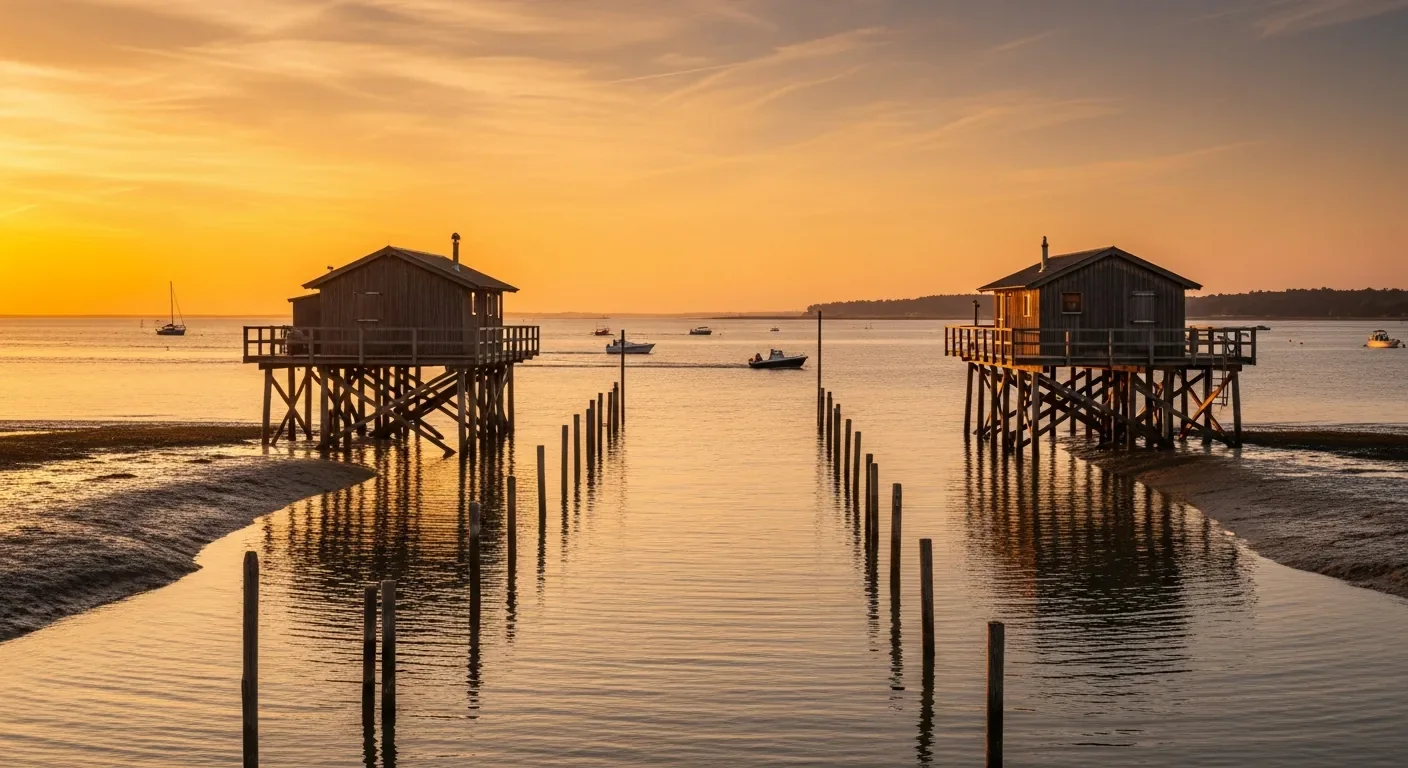
A clarification is needed to avoid a common misunderstanding. The famous huts perched on stilts—the ones featured in the iconic photographs of the Bassin—are not located in Lanton: they stand in the middle of the water, on Île aux Oiseaux, which is administratively part of La Teste-de-Buch. What you see in Cassy and Taussat are oyster huts in the harbor, lined up along the edges of the channels—something entirely different, more modest and more lively, where you encounter the oyster farmers themselves rather than a postcard-perfect scene. That is precisely what gives the Lanton waterfront its authentic charm.
What to Do in Lanton?
In Lanton, you can spend an entire day without ever getting bored—as long as you enjoy the Bassin at its most peaceful. Start by sampling a dozen oysters at a hut in Cassy or Taussat, overlooking the foreshore, before strolling through the market in Cassy or, in the summer, the night market in Taussat. Next, take a long walk at the Domaine de Certes, where nineteen kilometers of levees offer one of the region’s most beautiful bird-watching spots, with free admission. Cyclists can take the Vélodyssée bike path that runs along the Bassin, while history buffs will enjoy admiring the villas of Taussat and the village’s Romanesque church. And to end the day in peace and quiet, there’s the Blagon Forest with its sandy trails. Here’s everything you need to plan your day.
Must-Sees in Lanton
- Tasting Oysters at the Farm — at the oyster huts in the ports of Cassy and Taussat, where you can buy and taste oysters overlooking the foreshore, as the tides ebb and flow.
- The Cassy market is usually held on Sunday mornings; in the summer, a night market may be scheduled in Taussat. Check the dates, times, and location on the official Lanton calendar before heading out.
- The Domaine de Certes-et-Graveyron — approximately 19 km of levees in a protected natural area, where you can observe more than 250 species of birds; free admission.
- The Vélodyssée (EuroVelo 1)—a major cycling tour of the Bassin, covering approximately 77 km almost entirely on greenways, passing through Audenge, Lanton, Andernos, and Arès (including a ferry crossing between Cap-Ferret and Arcachon).
- The villas of Taussat and the Saint-Louis Chapel—the seaside heritage of the former resort, the “Belles de Taussat,” and the stained-glass windows by Raymond Mirande.
- The beaches and foreshore of the Bassin—the shores of Cassy and Taussat, where you can swim as the tides come and go and enjoy sunsets over the calm water.
- The Blagon Forest—the sandy trails of the Landes inland forest, perfect for hiking, mountain biking, and enjoying the peaceful tranquility of the pine trees.
| Activity | Where / When | Good to Know |
|---|---|---|
| Oysters Direct from the Farm | Cassy and Taussat Ports | Check the tide schedule |
| The Cassy market is usually held on Sunday mornings; in the summer, a night market may be scheduled in Taussat. Check the dates, times, and location on the official Lanton calendar before heading out. | ||
| Certes Estate | Graveyron Peninsula, access from the Cassy side | ~19 km of boardwalks, open to the public and free of charge |
| Vélodyssée | Tour of the Basin, ~77 km | Greenway, Cap-Ferret–Arcachon Ferry Crossing |
Around Lanton
Lanton is the perfect starting point for a tour of the north shore, as its neighboring towns are all worth visiting and are just a few minutes apart. To the south, Audenge (about 3.6 km away) shares the Domaine de Certes and its reservoirs with Lanton, offers a lovely waterfront along the Bassin, and is also home to a small oyster port that opens onto the nature reserve. To the north, Andernos-les-Bains (about 7.9 km away) is a must-see with its pier, which is about 232 meters long—one of the longest in France—as well as its Saint-Éloi Church and its bustling oyster port. A little further on, Arès (about 11.7 km) extends the shoreline toward the tip of the Bassin, between its oyster port and its salt marshes, which are protected as a nature reserve.
A little further south, at the far end of the Bassin, the eastern shore extends all the way to Biganos, a town built on the edge of the Eyre Delta—the main river that supplies the Bassin with freshwater and forms, at its mouth, a vast wetland of branches and reed beds. Taken together, these towns form an eastern shore that is more secluded and natural than the tourist-heavy southern part, and they can easily be visited in a single day starting from Lanton.
The Other Side of the Basin
And then there’s the other shore—the southern one—which you can reach by driving around the body of water. Arcachon, with its winter resort town featuring romantic villas and its famous Dune du Pilat, is about 34 kilometers away by road. Cap Ferret, with its lighthouse and oyster-farming villages, marks the western end of the peninsula. From Lanton, you can thus take a complete tour of the Bay, alternating between the different shores and atmospheres.
| Destination | Distance from Lanton | Must-See |
|---|---|---|
| Audenge | ~3.6 km | Certes Castle and Reservoirs |
| Andernos-les-Bains | ~7.9 km | Pier, Saint-Éloi Church, oyster port |
| Arès | ~11.7 km | Bassin Shore, northern tip |
| Arcachon | ~34 km by road | Winter Town and the Dune du Pilat |
How to get to Lanton from Bordeaux
The journey from Bordeaux to Lanton covers 37 kilometers and takes about 50 minutes. The route goes directly to the northeastern shore of Arcachon Bay, without detouring through Arcachon. For a day trip, this travel time leaves plenty of time to visit the port of Cassy, Taussat, and the Domaine de Certes-et-Graveyron. The advertised rate for a private chauffeur service starts at €89 during the day for a sedan.
How much does the ride cost?
The Bordeaux → Lanton transfer is available starting at €89 during the day, for a sedan carrying one to three passengers. The price is fixed and confirmed in writing before departure—no meter, no surprises. A surcharge applies for nighttime, weekend, and holiday trips, and a van is provided for groups of more than four passengers. Trips to Bordeaux-Mérignac Airport or a tour of the ports and the Certes Nature Reserve are priced based on a quote.
| Route | Distance / Duration | Rates |
|---|---|---|
| Bordeaux → Lanton | 37 km · 50 min | starting at 89 € |
| Mérignac Airport → Lanton | By address | Based on a quote |
| Tour of the Ports & Certes | Upon request | Based on a quote |
Why Choose a Chauffeur Service?
A day at Lanton means oysters by the water and a long walk through the Certes Nature Reserve—two pleasures that don’t mix well with driving and searching for a parking spot. Hiring a chauffeur service lets you fully enjoy the tasting, be dropped off directly at Cassy, Taussat, or the entrance to the Domaine de Certes, and head back without any hassle when the day comes to an end. It’s the comfort of a tailor-made getaway, from door-to-door service in Bordeaux to the tranquil shores of the Bassin.
Frequently Asked Questions
Where is Lanton located?
Lanton is a commune in the Gironde department located on the northeastern shore of the Arcachon Basin, in the Pays de Buch region, between Audenge to the south and Andernos-les-Bains to the north. It is part of the COBAN Atlantique (Northern Arcachon Bay) intermunicipal community, not to be confused with the COBAS in the south. More than half of its vast territory (approximately 136 km²) is covered by the Landes Forest, with water occupying only a narrow strip along the coast. From Bordeaux, it is about 37 kilometers and a 50-minute drive.
How much does a trip from Bordeaux to Lanton cost with an executive car service?
The Bordeaux → Lanton transfer is available starting at €89 during the day for a sedan accommodating one to three people. The rate is fixed and confirmed in writing before departure; no meter is used. A surcharge applies at night, on weekends, and on holidays, and a van is provided for groups of more than four passengers. Trips from Bordeaux-Mérignac Airport or a tour of the ports and the Certes Nature Reserve are priced on a quote basis. The direct route is approximately 37 km and takes 50 minutes.
What are the villages in Lanton?
The municipality of Lanton consists of four villages, each with its own distinct character. Lanton, the town center, lies slightly back from the water, centered around its Romanesque Notre-Dame Church. Cassy is the main oyster-farming port, a mooring harbor with approximately 225 berths. Taussat, or Taussat-les-Bains, is a former seaside resort with many villas and a chapel. Finally, Blagon is a forest village inland, tucked away among the pine trees. This arrangement of villages is what gives Lanton its rich diversity.
What to Do in Lanton?
In Lanton, you can sample oysters straight from the producer at the huts in the ports of Cassy and Taussat. The Cassy market is usually held on Sunday mornings; in the summer, a night market may be scheduled in Taussat. Check the dates, times, and location on the official Lanton calendar before heading out. Next, head out for some birdwatching at the Domaine de Certes-et-Graveyron, where the 19 km of dikes are open to the public free of charge. Cyclists can take the Vélodyssée bike path, which circles the Bassin, while history buffs can visit the villas in Taussat and the village church.
What is the Domaine de Certes-et-Graveyron?
It is a protected natural area covering approximately 530 to 540 hectares, straddling Audenge and Lanton: the castle and most of the reservoirs are on the Audenge side, while the Graveyron peninsula falls under Lanton. Owned by the Conservatoire du littoral and managed by the Gironde Department, the estate has had three distinct uses: saltworks in the 18th century, fish ponds in the 19th, and now a bird sanctuary. More than 250 species of birds have been recorded here, and 19 km of trails along the dikes are open to the public free of charge.
What is the name of the church in Lanton?
The parish church of Lanton is called Notre-Dame—not “Saint-Seurin,” a name used for other churches in the Gironde department. It stands in the town center, not at the port of Cassy. Its 12th-century Romanesque apse, with its engaged columns, modillion cornice, and carved capitals (herons, pinecones, foliage), is one of the oldest architectural remnants in the Bassin region. The nave was rebuilt in the Neo-Gothic style in the 19th century. It ranks among the oldest churches in the Bassin.
Can you eat oysters at Lanton?
Yes. Lanton has two oyster ports, Cassy and Taussat, where rustic wooden huts allow visitors to buy and taste oysters from the Bassin directly from the producers, right on the foreshore. Cassy is a grounding harbor with about 225 berths where boats rest on the seabed at low tide. The atmosphere depends heavily on the tides: it’s best to check the tide schedule before visiting. Please note: the huts built on stilts are not in Lanton but on Île aux Oiseaux, in the middle of the Bassin.
How many people live in Lanton?
According to the 2022 INSEE census, Lanton had a population of 7,315; consult the INSEE municipal report for the most recent official population figure. The municipality is experiencing strong and steady growth: it had barely 270 residents in 1726, 1,567 in 1968, nearly 5,000 in 1999, and more than 6,200 in 2011. This growth, concentrated in recent decades, reflects the appeal of the entire Arcachon Basin as a residential and seaside destination.
Is Lanton on the same shore as Arcachon?
No. Lanton is on the northeastern shore of the Bassin, while Arcachon is on the southern shore. The two towns appear close as the crow flies, “across from” each other, but no road crosses the Bassin: to reach Arcachon from Lanton by land, you must go all the way around the body of water, a distance of about 34 kilometers and a 38-minute drive. The only direct connection between the two shores is by boat. The geography of the Bassin can therefore never be understood as a straight line.
What is there to see around Lanton?
There are several towns worth visiting near Lanton. Audenge (~3.6 km) shares the Domaine de Certes. Andernos-les-Bains (~7.9 km) features a long pier, the Saint-Éloi Church, and an oyster port. Arès (~11.7 km) extends along the northern shore. On the opposite shore, about 34 km away by road, Arcachon boasts its winter resort and the Dune du Pilat, while Cap Ferret marks the tip of the peninsula with its lighthouse. From Lanton, you can take a complete tour of the Bay by alternating between the two shores.
Did Toulouse-Lautrec stay in Lanton?
Yes, in Taussat, one of the villages in the municipality of Lanton. The painter Henri de Toulouse-Lautrec was a regular at Villa Bagatelle there and visited the place on several occasions between the 1890s and his death in 1901. It was indeed in Taussat, and not in a neighboring municipality as is sometimes reported. This visit quietly anchors the former small seaside resort in art history, setting it apart from the larger, more popular resorts of the Bay.
How do I get to Lanton from Bordeaux?
From Bordeaux, Lanton is about 37 kilometers and a 50-minute drive away, heading toward the north shore of Arcachon Bay. It’s one of the quickest Arcachon Bay day trips from Bordeaux. With a private chauffeur, door-to-door transfers start at €89 during the day for a sedan accommodating one to three people, with a fixed price confirmed in writing. This option lets you enjoy oysters and the Certes Nature Reserve without having to drive or worry about parking, with direct drop-off in Cassy, Taussat, or Certes.
Is there a market in Lanton?
The Cassy market is usually held on Sunday mornings; in the summer, a night market may be scheduled in Taussat. Check the dates, times, and location on the official Lanton calendar before heading out.
Further Reading
- Book your driver: Request a quote for Bordeaux → Lanton, fixed price confirmed in writing, with no obligation.
- Explore the Bordeaux region and beyond: discover all our destinations departing from Bordeaux.
- The neighboring town: Continue along the east bank to Andernos-les-Bains, with its pier and oyster port.
- The Heart of the Basin: Discover the Guide to the Arcachon Basin, its villas, its oysters, and the Dune du Pilat.
- The Wild Cape: Cross over to the other side with the Guide to Cap Ferret, its lighthouse, and its oyster-farming villages.
Sources and References
- Municipality of Lanton — History and Heritage — Area, Villages, and Notre-Dame Church
- Gironde Department — Certes-et-Graveyron Estate — History of the Ponds and Naturalist Surveys
- INSEE — Population of Lanton in 2022 — Municipal Data
- Mérimée Database / POP — Ministry of Culture — Official Architectural Heritage Database
- Arcachon Bay (Intermunicipal Tourist Office) — oyster farming, Vélodyssée, tides
Article updated in July 2026.
Heading to the north shore of the Bassin
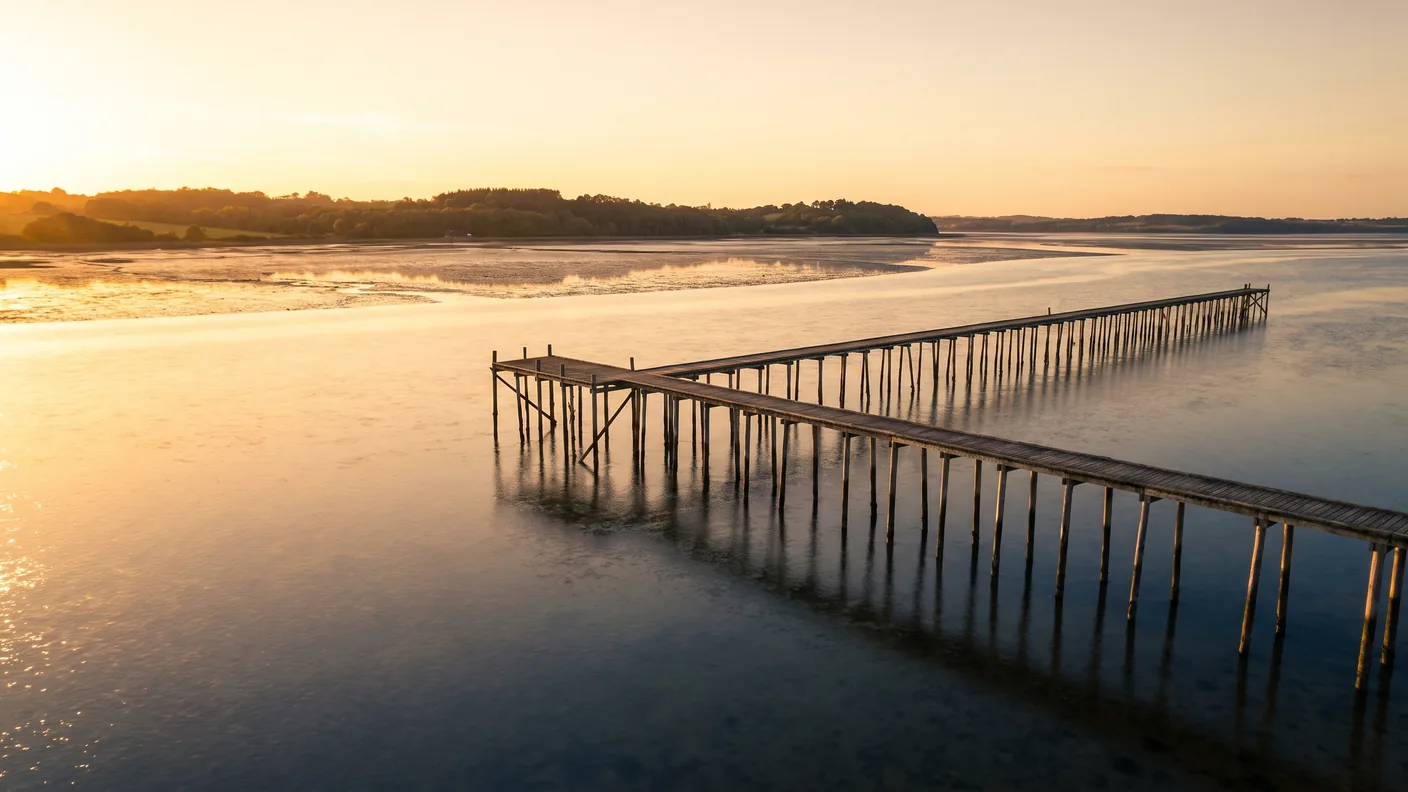
Direct transfer from Bordeaux (50 min) to the oyster ports of Cassy and Taussat and the Certes Nature Reserve. Fixed-price quote in writing, with no obligation.