Bordeaux to Pyla-sur-Mer: Bay, Villas and Dune
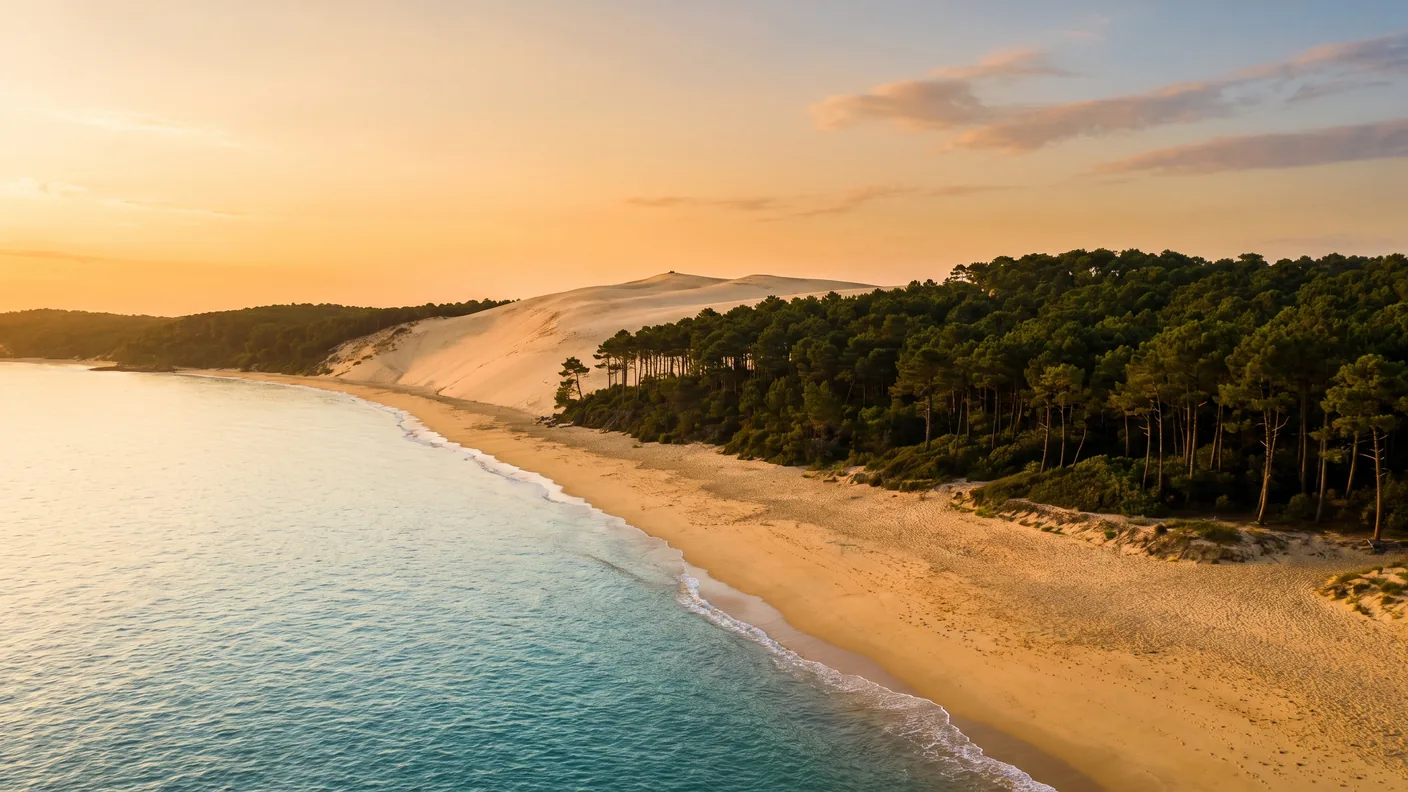
A resort of villas nestled in the pine forest, at the southern entrance to the Arcachon Basin, at the foot of Europe’s tallest dune. Beaches, the Corniche, a pine forest, and the Banc d’Arguin across the way: Pyla-sur-Mer, a chic neighborhood in La Teste-de-Buch, about 1 hour and 15 minutes from Bordeaux.
Pyla-sur-Mer at a Glance
At the end of the road that runs along the Arcachon Basin, where the pine forest meets the sand, Pyla-sur-Mer features its unobtrusive villas nestled beneath the trees. It’s not a city: it’s a seaside resort that sprang up in the pine forest in the early 20th century, a neighborhood within the town of La Teste-de-Buch, situated at the southern entrance to the Arcachon Basin, at the foot of Europe’s tallest dune. Here, everything revolves around three settings: the beach and the turquoise water, the Corniche and its pine trees leaning over the Arcachon Basin, and the immense Dune du Pilat, which frames the southern horizon. Across the way, the Banc d’Arguin forms its shifting sandbanks. This guide takes you on a journey through the resort itself—its history, its beaches, its way of life—carefully distinguishing between verified facts and rumors passed down by word of mouth.
First, a word about the scope of this guide: we’re focusing here on the town of Pyla-sur-Mer—its streets winding through the pine trees, its beaches, its Corniche, its history as a resort town, and its way of life. The Dune du Pilat, meanwhile, is the giant neighbor that dominates the entire landscape: we’re bound to come across it, but for information on climbing it, its formation, and details on visiting it, we refer you to a dedicated guide, the article “Dune du Pilat.” First, here are the key points to help you locate the resort and understand exactly what it entails.
What strikes you when you arrive at Pyla is the absence of a traditional boardwalk. No wide, concrete promenade lined with high-rises, no row of flashy restaurants facing the waves: the resort was built in the forest, hugging the contours of the land, so that the villas are more implied than visible. This deliberate discretion was a conscious choice from the very beginning, enshrined in the initial specifications. It explains why, a century after its founding, Pyla remains one of the most sought-after and best-preserved destinations along the entire Aquitaine coastline, striking a balance between untamed nature and seaside sophistication.
| Landmark | Details |
|---|---|
| Department | Gironde (33) · Nouvelle-Aquitaine |
| Status | Seaside resort — La Teste-de-Buch neighborhood |
| Location | Southern entrance to the Arcachon Basin, at the foot of the Dune du Pilat |
| ZIP Code | 33115 (Pyla-sur-Mer) |
| Must-Sees | Beaches, Dune du Pilat, Corniche, Banc d'Arguin |
| From Bordeaux | ~78 km · ~1 hr 15 min · starting at 127 € |
Where is Pyla-sur-Mer located?
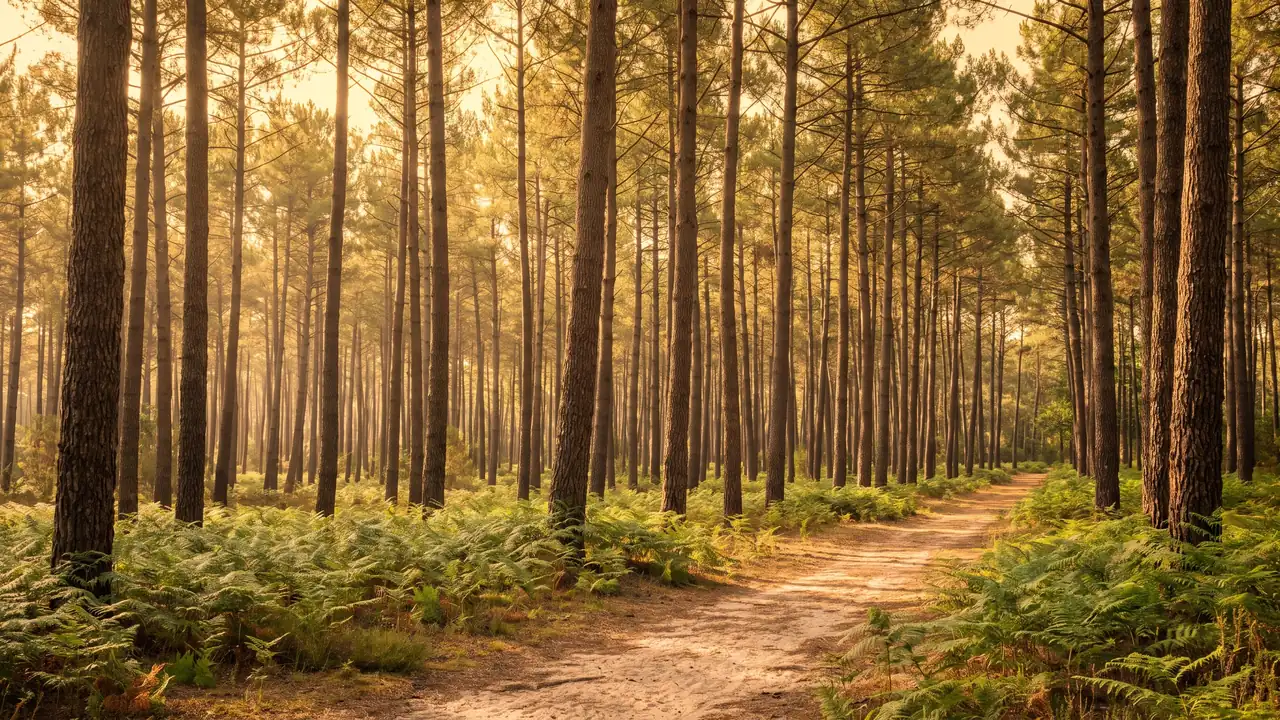
Pyla-sur-Mer is situated on a wooded promontory along the coast, at the southwestern tip of the Arcachon Basin, where the inland body of water opens onto the Atlantic Ocean. The resort is backed by the vast Landes pine forest and bordered to the south by the Dune du Pilat. Its location is unique: although it is administratively part of La Teste-de-Buch, it is actually closer to the center of Arcachon than to the town of La Teste. You reach it via the coastal road that runs along the Bassin, beneath a canopy of maritime pines that only really clears as you approach the beaches. It is this geography—between water, forest, and a mountain of sand—that gives the place its unique character.
This remote location has long isolated the area: before the resort was built, there was nothing here but the national forest, the sand, and the ocean. This partly explains its unique atmosphere today—you get the feeling of arriving at the end of something, where the land, the forest, and the water meet. In fact, the road leading to Pyla serves almost no one but Pyla itself: you don’t pass through the resort on your way somewhere else; you come here on purpose. This geographical dead-end quality is part of its charm and relative tranquility, far from the main tourist traffic.
Pyla-sur-Mer: A Municipality in Its Own Right?
No—and this is one of the most persistent misconceptions about it. Pyla-sur-Mer has never been an independent municipality. It is a neighborhood, a seaside resort attached to the municipality of La Teste-de-Buch (INSEE code 33529). This distinction is even reflected in the ZIP codes: Pyla has the code 33115, while the town of La Teste-de-Buch falls under 33260. Originating as a private housing development in the early 20th century, the resort has retained a strong identity, a catchy name, and a reputation that far exceeds that of its parent municipality—to the point that it is often mistakenly considered a city in its own right.
This affiliation has a surprising geographical consequence. La Teste-de-Buch is one of the largest municipalities in metropolitan France: its territory stretches from the Dune du Pilat to the forests and ponds of the hinterland. Pyla-sur-Mer occupies only a coastal strip—the part facing the sea. That’s why the resort seems to lead a life of its own, with its shops, atmosphere, and summer season, almost independent of the historic town of La Teste, located further inland in the Bay. In fact, a resident of Pyla will almost always tell you that they live “in Pyla,” rarely “in La Teste.”
The resort itself is divided into several neighborhoods that stretch from the beach up toward the wooded hills:
- Pyla Centre — the heart of the resort, near the beaches and shops
- Bellevue and L'Hermitage — on the hillside, in the pine forest
- Super-Pyla — perched above the Bassin, renowned for its villas and views
- Vieux-Pilat and Pilat-Plage — to the south, closest to the dune
- La Corniche — the road and the hills overlooking the entrance to the Bassin
Each neighborhood has its own atmosphere. The hills—Bellevue, L'Hermitage, Super-Pyla—offer the most beautiful views of the bay and the ocean inlet, but require a walk down sloping streets to reach the beach. The Pilat-Plage area, further south, lies in the immediate shadow of the Dune. In between, Pyla Centre is where most of the action takes place: shops, a seasonal market, and direct access to the most popular beaches. Choosing the right place to stay is the first step in setting the tone for your vacation—whether you prefer panoramic views and tranquility on the heights, or the resort atmosphere and easy access to swimming down below.
How far is it from Bordeaux?
From Bordeaux, it’s about 78 kilometers and a 1-hour-15-minute drive, mostly along the A63 toward Arcachon, then along the coastal road that runs alongside the Bassin to the resort. This makes for a perfectly doable day trip from the city, and it’s one of the most popular “beach” getaways for Bordeaux residents. Here are some helpful distances to help you find your way around once you’re there:
| From Pyla-sur-Mer | Distance | Please note |
|---|---|---|
| Dune du Pilat | ~5 km | just to the south, at the end of the beach |
| Arcachon (downtown) | ~7.2 km | the neighboring town, which is closer than La Teste |
| La Teste-de-Buch (town) | ~7.4 km | the municipality of residence |
| Arguin Bank | across from | Access by boat, at the entrance to the basin |
| Bordeaux | ~78 km | ~1 hour 15 minutes via the A63 |
Pyla or Pilat? The History of the Name
One question keeps coming up: Is it spelled “Pyla” or “Pilat”? Both—but not to refer to the same thing. This little spelling quirk is neither a mistake nor a hesitation: it’s the result of a century-old commercial decision, grafted onto a word from the Gascon language. Let’s clear this up once and for all, since it’s undoubtedly the least well-known detail in the entire Bassin region.
Where does the name Pilat come from?
The word “Pilat,” spelled with an “i,” is the oldest. It comes from the Gascon word “pilat” or “pilot,” which simply means “pile,” “mound,” or “heap.” It’s hard to find a more fitting description for a mountain of sand. The term appears on old maps as early as the 18th century, long before a single villa had been built in the pine forest. It is therefore the historical and geographical spelling, the one that reflects the landscape: even today, we write “la Dune du Pilat”—with an “i.” This is the correct form for the sand dune, and it has nothing to do with a tourist-driven invention.
Why is the resort spelled "Pyla" with a "y"?
"Le Pyla," with a "y," is much more recent—and entirely deliberate. When developer Daniel Meller launched his seaside resort in the early 20th century, he sought a name that sounded chic and exotic, befitting the luxury resort he envisioned. So he “embellished” the Gascon spelling with a more elegant-sounding “y” and included this name, Pyla-sur-Mer, in the specifications for his real estate company in 1917. Since then, the rule has been clear, even if few people know it: Pyla (with a “y”) for the resort and the beaches surrounding it, Pilat (with an “i”) for the dune. Therefore, one should not write “Dune du Pyla” or “Pilat-sur-Mer”—these are the two most common mistakes.
- Pilat (with an "i"): the dune — historical Gascon spelling, "pile, mound"
- Pyla (with a "y"): the resort and its beaches — name registered in 1917
- Avoid: “Dune du Pyla” and “Pilat-sur-Mer,” two common sources of confusion
Why does this confusion persist? Because the resort and the dune are right next to each other, have almost the same name—differing by just one letter—and the Dune du Pilat is infinitely more famous than the resort that put it on the map. In everyday usage, everyone mixes up the two spellings—including signs, postcards, and websites. Remember this simple rule, and you’ll be among the few who never get it wrong: the dune takes an “i,” the resort takes a “y.”
This story about the “y” and the “i” perfectly captures the spirit of the place: at Pyla, even the name was designed to be appealing. Where geography simply referred to it as a “pile of sand” in Gascon, the developer saw an opportunity to create a brand, an identity—almost a luxury label ahead of its time. One might see this as mere vanity; but above all, it was the first step in the birth of a resort that, from the very beginning, took as much care with its image as it did with its villas. A century later, the name still works: “Le Pyla” instantly evokes the understated elegance of the Arcachon Basin.
The Birth of a Chic Resort
Unlike the villages in the Bassin region, which date back centuries, Pyla-sur-Mer is a recent and entirely deliberate creation. The resort emerged from the pine forest in the early 20th century, driven by two men with very different backgrounds: a visionary landowner from Bordeaux and a self-made builder. Together—though not without rivalry—they created one of the most elegant resort towns on the Aquitaine coast, based on a bold vision of luxury seamlessly integrated into nature.
Daniel Meller, the founding father
Daniel Meller (Bordeaux, 1863 – Nice, 1944), a landowner, was the true founder of the resort. His project was as ambitious as it was administratively complex. To acquire the land backing onto the Dune, he negotiated a large-scale land swap with the government: he ceded 463 hectares versus approximately 143 hectares of state-owned forest land, which is better suited for development. The project was authorized by a prefectural order dated November 13, 1913 and implemented on April 4, 1915. Two years later, the April 2, 1917, Meller submits the specifications for the Pyla-sur-Mer Real Estate Investment Company : The resort now has a name, defined boundaries, and rules. Its goal is clear—to create a seaside resort in the pine forest modeled after Biarritz.
Louis Gaume and the Villas of Pilat-Plage
The resort's other big name is Louis Gaume. Upon arriving in Arcachon in 1911, a plumber and sheet-metal worker by trade, he became a builder and developer. In 1920, he started his own Pilat-Plage Company, with plans to develop the southernmost section, closest to the Dune. The two men, who were initially competitors, eventually joined forces in 1928. The neighborhood of Pilat-Plage is then dotted with luxury homes—the famous “ Gaume Villas "— and luxury hotels, in a seaside resort style that still defines the character of the place today. These villas, scattered among the pine trees and along the Corniche, remain one of the most sought-after architectural landmarks of Pyla."
Between the two world wars, Pyla experienced its golden age. Following the model established from the outset—that of Biarritz and the major coastal resorts—the resort attracted a wealthy clientele seeking sea air, pine trees, and privacy. Opulent villas and hotels sprang up amid the forest setting, while the resort cultivated what remains its hallmark to this day: luxury hidden among the trees rather than flaunted along a concrete boardwalk. It is this legacy from the early 20th century that, a century later, still defines Pyla’s reputation as “chic yet discreet.”
The rivalry and subsequent alliance between Meller and Gaume left a lasting mark on the resort’s landscape. Meller, the urban planner and landowner, was responsible for the overall layout, the name, and the zoning regulations of the development; Gaume, the builder, was responsible for much of the most iconic architecture, concentrated around Pilat-Plage. Two personalities, two approaches, but a shared conviction: the pine forest at the foot of the Dune was worth more than just a timber operation; it deserved to become a resort. History has proven them right, and the names of both men remain forever linked to that of the resort they brought out of the sand.
From that era, Le Pyla has inherited a loyal clientele and a reputation that has never wavered. Families who purchased a villa there between the two world wars often pass the home down from generation to generation, and when summer arrives, Le Pyla offers a taste of old-fashioned vacationing: the same beach rituals, the same evenings spent on the Corniche, the same taste for chic simplicity. This continuity—rare on a coastline often disrupted by mass tourism—contributes to the resort’s timeless character and the deep attachment it inspires in those who visit.
| Date | Step |
|---|---|
| November 13, 1913 | Prefectural Order Authorizing the Land Exchange by Daniel Meller |
| April 4, 1915 | Exchange completed: 463 ha transferred in exchange for ~143 ha of state-owned forest |
| April 2, 1917 | Submission of the Terms of Reference for the Pyla-sur-Mer Real Estate Investment Company (SCI) |
| 1920 | Louis Gaume founded the Pilat-Plage Company |
| 1928 | Meller and Gaume Join Forces; The Rise of Pilat-Plage and the Gaume Villas |
The Dune du Pilat, at the end of the beach
It’s impossible to talk about Le Pyla without looking up at the Dune. It borders the resort to the south like a frozen wave of sand, taller than the pine trees and visible from almost everywhere. It’s the tallest dune in Europe, and it serves as a permanent backdrop to life in the resort: it can be seen from the beach, from the Corniche, and from the road leading down to Pilat-Plage. Many visitors come to Pyla primarily for the dune, only to discover that there’s a resort in its own right all around it.
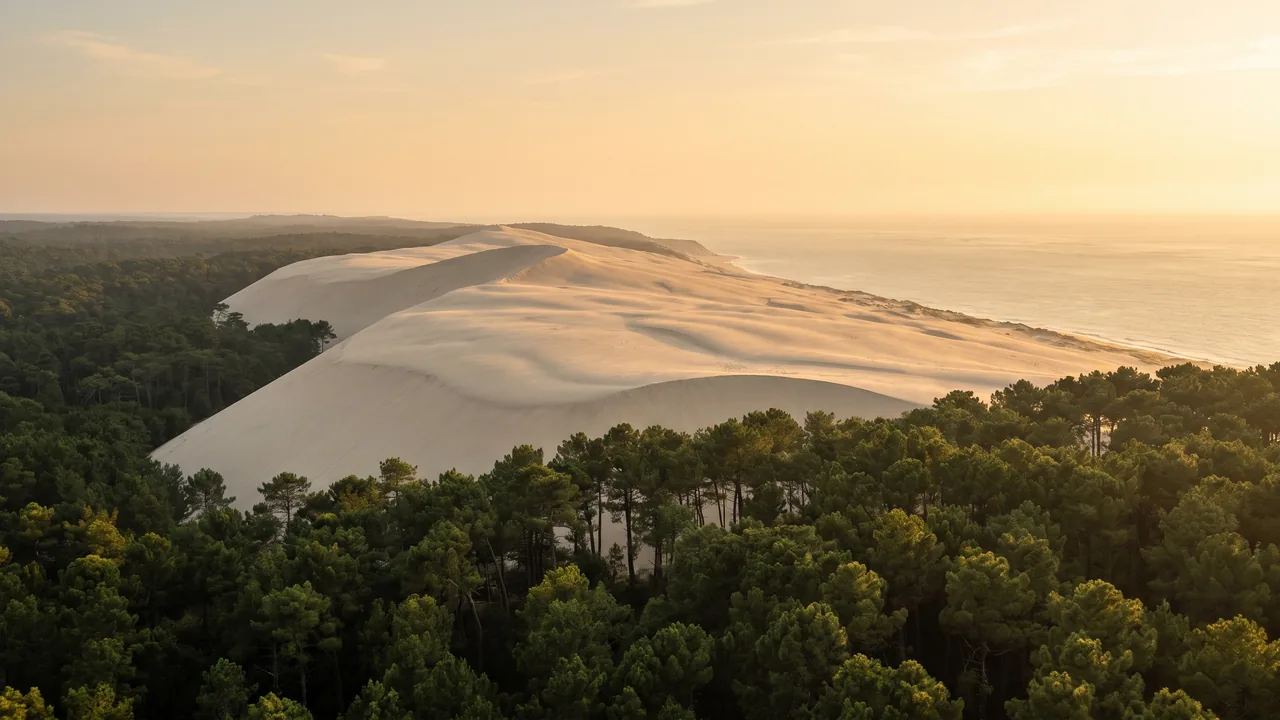
From Pyla Beach, the Dune rises a few hundred meters away, at the far end of the sand. This proximity changes everything: the evening light clings to its pale crest, the silhouettes of walkers stand out at the very top, and the eye is naturally drawn to this golden wall. It is this interplay between the resort nestled among the pine trees and the mountain of sand that defines the visual identity of the place. Pyla wouldn’t be Pyla without this overwhelming and magnificent presence that towers over every beach and every villa.
How tall is the dune?
The height of the Dune varies depending on the wind, the seasons, and the movement of the crest. As a rough estimate, expect it to be around 100 meters, and check the most recent dated measurement published by the official Dune du Pilat website (accessed July 24, 2026) before your visit.
This guide focuses on the resort; the Dune, however, deserves its own article. To learn everything about climbing it (the staircase is installed for part of the year), its geological formation, the best time to climb it, and the panoramic view it offers of the Banc d’Arguin and the ocean, check out our guide dedicated to the Dune du Pilat. Here, let’s simply note that it is the Pyla’s spectacular neighbor—the feature that gives the resort its unique setting and worldwide fame.
Seen from the station, the Dune never looks quite the same. In the early morning, it takes on pale, almost milky hues; in the middle of the day, under the sun, its sand glows brilliantly white; at sunset, it turns gold and then pink. On windy days, you can see wisps of sand sweeping along its crest—a subtle reminder that this giant is very much alive. It is this ever-changing spectacle—offered free of charge to anyone who looks up—that ensures you never tire of the resort: the Dune serves as both the horizon and a landmark, as well as the backdrop, from sunrise to sunset.
The Beaches of Pyla
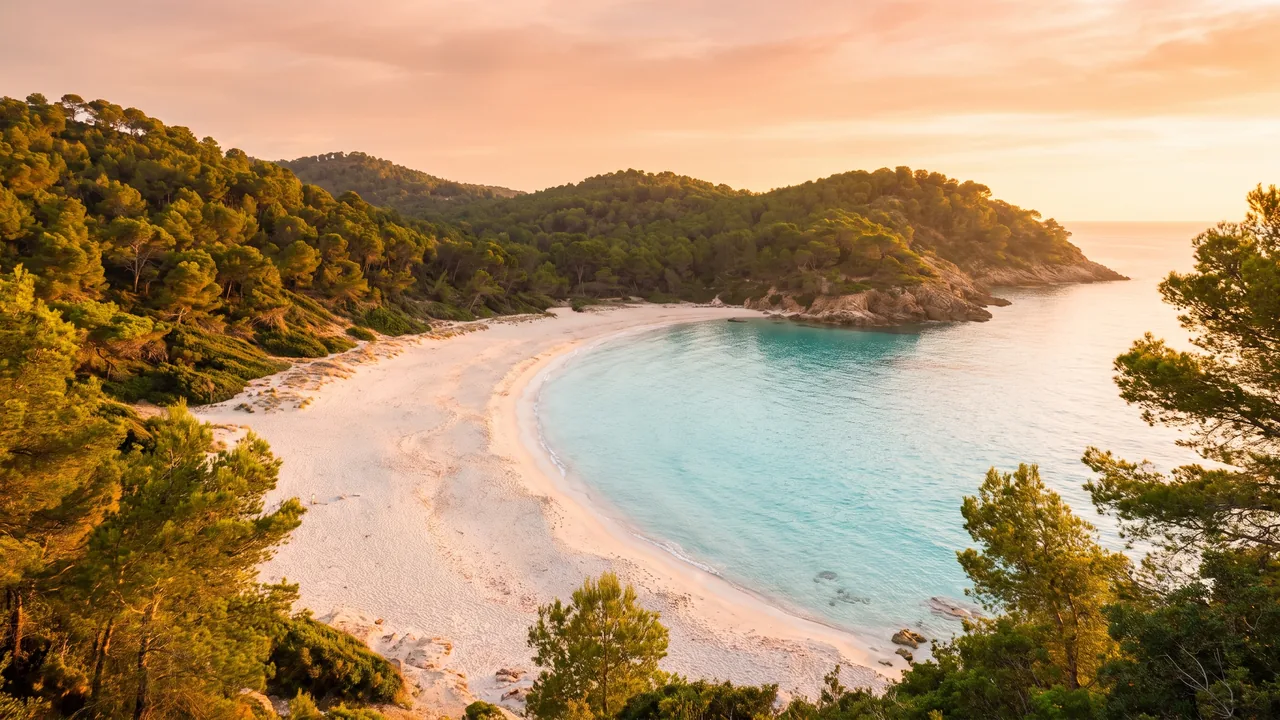
The beaches are the main reason the first summer visitors come here, and they remain the beating heart of the resort. At Pyla, the sand takes on many forms: long, open beaches at the entrance to the Bassin, and smaller, more intimate coves nestled beneath the Corniche, between the pine-covered slopes and the water. From one beach to the next, the atmosphere changes completely—family-friendly and lively near the center, wilder and more secluded as you move away from the main access points.
The bay side or the ocean side?
This distinction is important, including for safety reasons. Most of the beaches at Pyla face the Bassin or its entrance: the water there is generally calmer, swimming is more pleasant, and the atmosphere is sheltered by the geography of the inland body of water. But Pyla-sur-Mer is located precisely where the Bassin opens onto the Atlantic Ocean: as soon as you reach the most exposed areas, you encounter swells, currents, and above all, “baïnes”—these basins that drain out to sea. In other words, the same beach can offer peaceful swimming on one side and downright dangerous conditions on the other. This is a crucial point that we’ll discuss in more detail below.
Beaches Restored with Sand
The sand at Pyla is not stationary: the coastline is constantly shifting, shaped by currents, wind, and the advancing dune. To maintain the beaches and protect the waterfront, artificial replenishment is carried out regularly: an average of about 150,000 m³ of sand is replenished every three years. This shows just how much the coastline is shifting. This reality changes the way we view the landscape: what you photograph today—the width of a beach, the shape of a sand spit—is merely a temporary state of a coastline in perpetual motion, which humans accompany as best they can.
The beaches below the Corniche have a special charm. You reach them via trails or stairways that wind down the wooded slope, emerging onto strips of light-colored sand backed by pine trees, facing the turquoise water and the Banc d’Arguin. These are often the favorite spots for those seeking a bit of peace and quiet, far from the crowds of the large central beaches. Be careful, though: at high tide, some of these coves shrink considerably. It’s best to check the tide tables before settling in for the afternoon, or you might find the sea creeping up on your towel.
During peak season, it’s best to have a plan. The central beaches, which are easy to access, fill up quickly, and parking there soon becomes a headache; the coves below the Corniche, which are a bit harder to reach, often remain more peaceful. The morning generally offers the softest light and the calmest water, while late afternoon—when some visitors head back up to the Dune or hit the road—frees up more space on the sand. Also keep shade in mind: under the pine trees along the beach, you can always find a cool spot to take a break during the hottest hours of summer. Check the latest practical information with the La Teste-de-Buch tourist office (official website accessed on July 24, 2026).
From one year to the next, the appearance of the Pyla beaches can change significantly. A winter storm or an equinox gale can reshape a sand spit, alter access points, or widen or narrow a beach. This is the nature of a living coastline: nothing here is ever set in stone. Regulars know this and adapt to these changes, which are part of the place’s identity. For the casual visitor, the rule is simple: enjoy the scenery of the day without trying to recreate last year’s postcard-perfect scene, because here, the sand always has the final say.
Swimming and the eddies
This is the point that needs to be made clear, because it affects the safety of swimmers. The Aquitaine coast, from the mouth of the Bay to the ocean beaches, is known for a phenomenon that rescue workers dread: the baïnes. At Pyla, as long as you stay on the Bassin side, the water is calmer and swimming is more peaceful; but as soon as the beaches open up to the ocean, caution is essential. This is no minor detail for cautious tourists: it is the leading cause of accidents along this coastline.
What is a "baïne"?
A baïne is a natural basin that forms in the sand between the beach and a sandbar further out to sea. Its calm appearance makes it difficult to assess the risk. Currents, swells, and sandbars can quickly change the areas of risk.
How can you swim safely?
Currents, swells, and sandbars can quickly change hazardous areas. Swim only in a designated, supervised area; follow the flags and instructions from the lifeguard station; and keep children within arm’s reach. If you are caught in a current, avoid exhausting yourself by struggling; signal for help and follow the lifeguards’ instructions.
- Swim only in supervised areas, between the flags
- Never enter or approach a rip current
- If caught in a current: do not struggle, let the current carry you, signal for help, and swim parallel to the shore
- Keep children in sight and within arm's reach at all times
What makes rip currents so dangerous is that they are deceptive. From the beach, there’s no warning sign of the danger: the pool of water looks calm, almost more sheltered than the rest, and that’s precisely where many people choose to let their children go into the water. The outgoing current, however, gives no warning. That’s why the presence of lifeguards and adherence to marked zones aren’t just summer formalities—they’re the best protection available. If you’re unsure about sea conditions, just follow this simple rule: ask the lifeguard station for advice before going in the water, and strictly follow the flags and posted instructions.
The Corniche and the villas in the pine forest
While the beaches are the heart of Pyla, the Corniche is its soul. It is this winding road and the wooded hills that flank it, overlooking the entrance to the bay from the tops of the slopes. You drive—or rather, you take a leisurely drive—through wind-swept pine trees, with the turquoise water appearing intermittently between the trunks. The Corniche alone embodies the seaside lifestyle that has made the resort famous: neither flashy nor noisy, but refined and seamlessly integrated into nature.
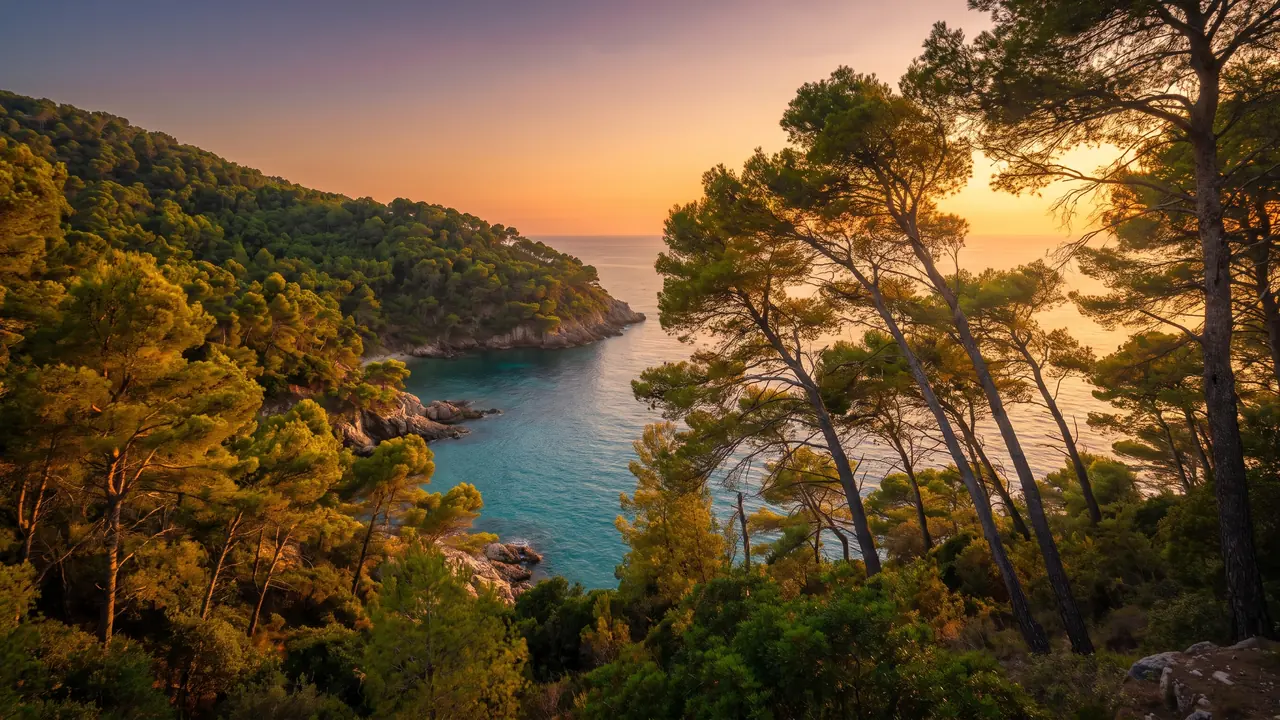
On both sides of the road lie the villas that give Pyla its prestige. Many date back to the resort’s golden age, in the 1920s and 1930s: these are the early 20th-century vacation homes, including the famous “Gaume villas” built during the era of Louis Gaume. Tucked away beneath the pine trees, set back from the road, and often hidden behind their hedges, they form a discreet yet highly sought-after architectural heritage. It is this combination—the forest, the villas, and the sweeping view of the Bay—that gives the Corniche its unique atmosphere, at once wild and chic.
What's there to see on the Corniche?
The Corniche is best savored slowly. People come here to admire the views of the entrance to the Bassin, the Banc d’Arguin, and, in the distance, the tip of Cap Ferret. You can descend to the sheltered beaches via staircases carved into the hillside. It’s a wonderful place to stroll at sunset, when the light gilds the pine trunks and sets the water ablaze. It’s also the best place to capture the residential spirit of Pyla: neither a concrete resort nor a stagnant village, but a housing development that blends seamlessly into nature, where the architecture deliberately recedes behind the trees. Take the time to walk: you can only truly appreciate the Corniche on foot, at a leisurely pace.
- Panoramic views of the entrance to the Bassin and the Banc d'Arguin
- Vacation villas in the pine forest, including the Gaume villas
- The stairs and paths leading down to the sheltered beaches
- The sunset filtered through the pine trees leaning over the water
La Corniche also says something about the way Pyla has chosen to age. Rather than giving in to densification, the resort has largely preserved its residential and forested character: the lots remain spacious, the trees are protected, and the higher elevations have been relatively spared from large-scale development projects. This restraint comes at a price—real estate here is among the most sought-after on the coast—but it guarantees what visitors come here for: the feeling of a place apart, where you hear the wind in the pines more than the noise of the city. La Corniche is the most eloquent example of this.
Taking a stroll along the Corniche also means being willing to get a little lost. The streets wind between the homes, rising and falling with the terrain, sometimes ending in dead ends or stairways leading down to the beach. You’ll encounter more cyclists and walkers than hurried cars, and the silence is broken only by the wind and the birds. This is undoubtedly the best way to understand why so many families have been returning here for generations: the Pyla doesn’t impose itself; it reveals itself slowly, at eye level, between two pine trunks and a clearing overlooking the Bassin.
The Banc d'Arguin, across from
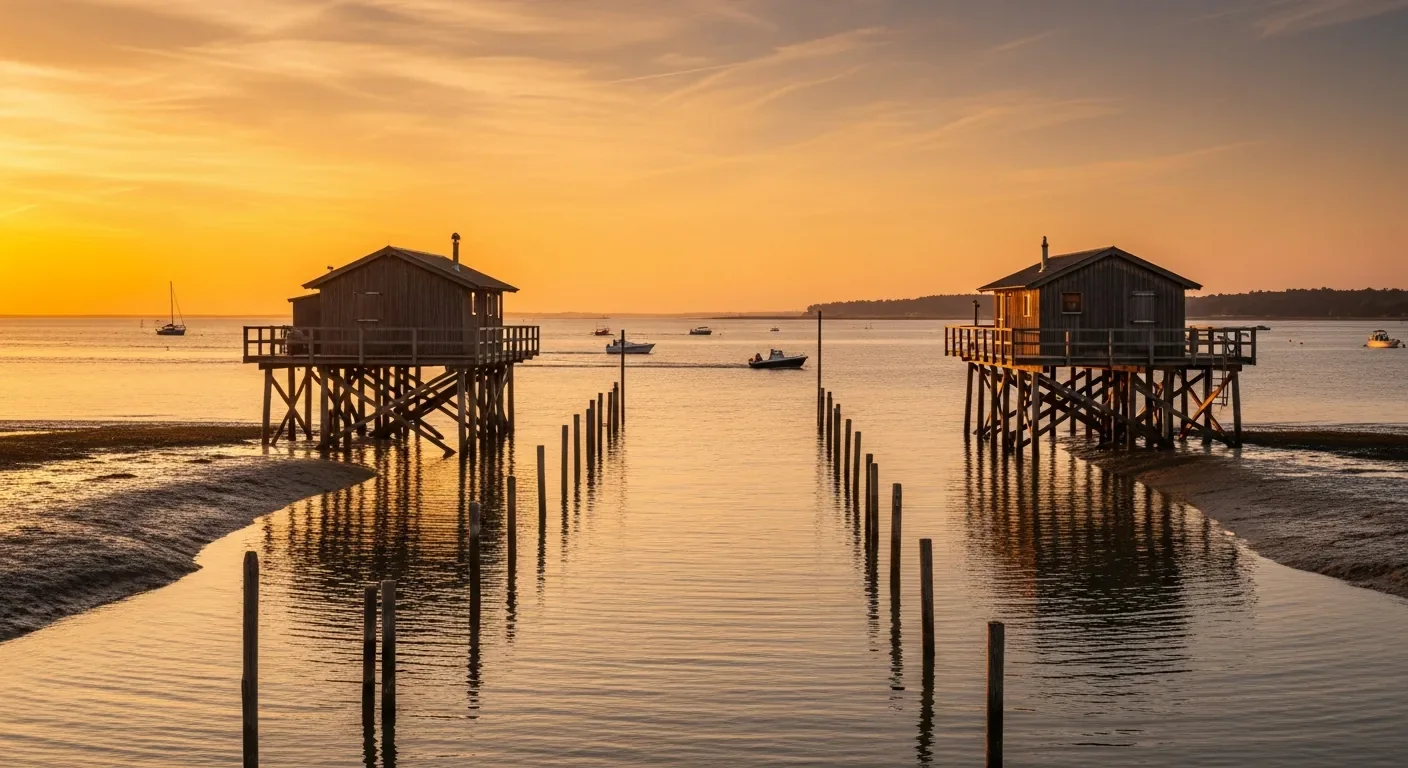
Opposite the Pyla, between the base of the dune and the tip of Cap Ferret, lies a vast, pale-sand “comma” that appears and disappears with the tides: the Banc d’Arguin. It is one of the most fascinating landscapes in the Arcachon Basin—and one of the most fragile. Designated a national nature reserve since 1972, it covers approximately 4,360 hectares at the entrance to the Arcachon Basin, where the inland waters meet the ocean (SEPANSO, the reserve’s manager, accessed July 24, 2026).
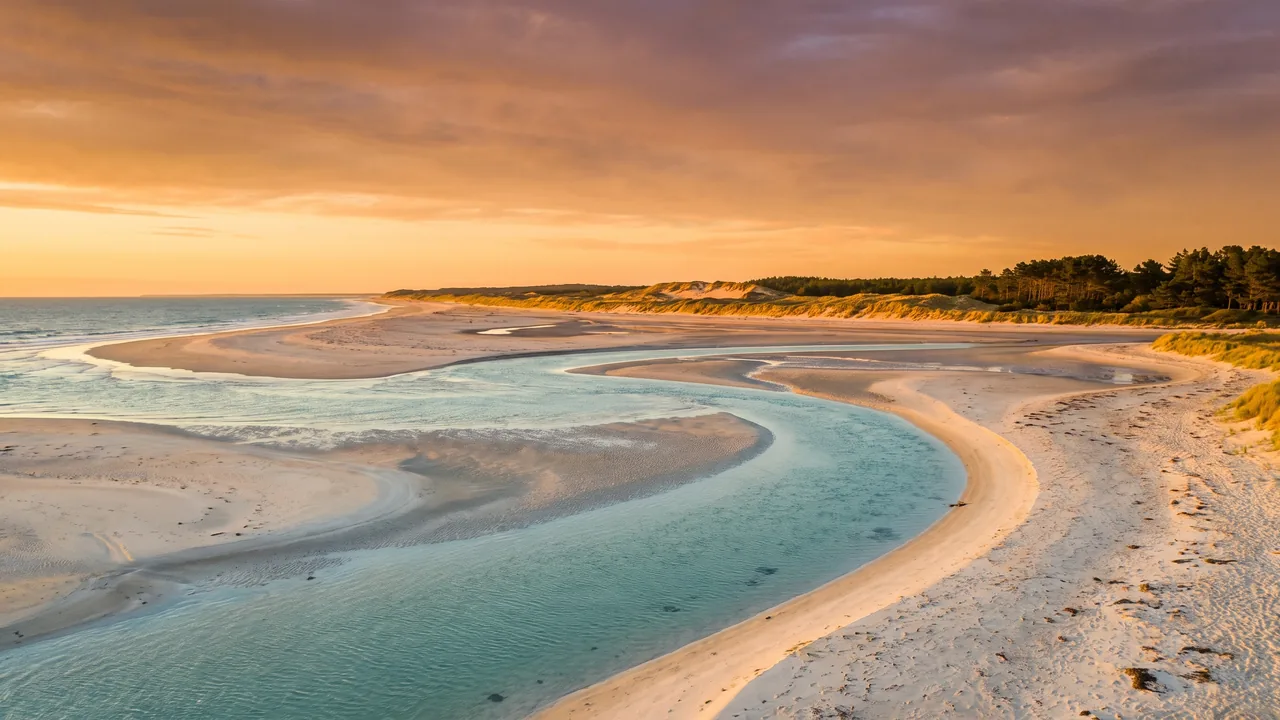
The Banc d'Arguin is a shifting sandbar: it moves and changes shape and size with the seasons and storms, so much so that no map can capture its permanent form. It is precisely this instability that makes it so rich. It is a major stopover for birds: a nesting area in the spring—particularly for terns—and a wintering ground for many species. This is also why visitor access is strictly regulated, season after season.
Who owns the Banc d'Arguin?
Contrary to popular belief, the Banc d'Arguin belongs neither to a municipality nor to a private owner. It is part of the public maritime domain : It is therefore the property of theStatus. Its management is entrusted to the SEPANSO (Society for the Study, Protection, and Management of Nature in the Southwest), which oversees the reserve and regulates visitor access. TheAccess is restricted, with restricted areas—particularly during the birds' nesting season—in order to preserve this rare ecosystem. Visitors may stop there, but only within specific limits that must be strictly observed.
How do I get there?
You can’t reach the Banc d’Arguin on foot: you have to go by sea. The easiest way is to take a boat—a shuttle, tour boat, or private vessel—from Arcachon or from the docks near the Pyla. During the season, several tour operators offer trips that combine the boat ride, a stop on the sand, and often an oyster tasting while anchored. It’s a memorable excursion, as long as you keep in mind that you’re entering a protected nature reserve: follow the guidelines, stay within the authorized areas, and leave without leaving a trace.
Setting foot on the Banc d’Arguin at low tide evokes a rare sensation: that of being on a fleeting island, somewhere between the Bay and the ocean, with the Dune du Pilat towering in the background and the open sea glistening on the other side. But this postcard-perfect setting is fragile. Every spring, thousands of birds nest right in the sand, and a single step in the wrong place can destroy a brood. Respecting restricted areas, keeping dogs away, and leaving nothing behind: these actions aren’t restrictions—they’re the conditions that ensure the sandbar will remain, tomorrow, what it is today.
What is there to do in Pyla-sur-Mer?
At Pyla-sur-Mer, you can easily spend several days without ever getting bored—as long as you love nature and the great outdoors. The resort isn’t an amusement park: its attractions are those of the coast—simple and intense. You often start with the beach and swimming, in supervised areas; then the call of the Dune becomes irresistible, and we set off to climb to take in the view of the bay, the forest, and the ocean. Thrill-seekers set off on paragliding from its crest, carried by the updrafts. The rest of the time is divided between the walks in the pine forest and along the Corniche, a boat trip toward the Banc d'Arguin, and the ritual of the sunset at the foot of the dune. Add to that the chance to explore the small, sheltered beaches along the Corniche, and you have the perfect itinerary for a trip to Pyla.
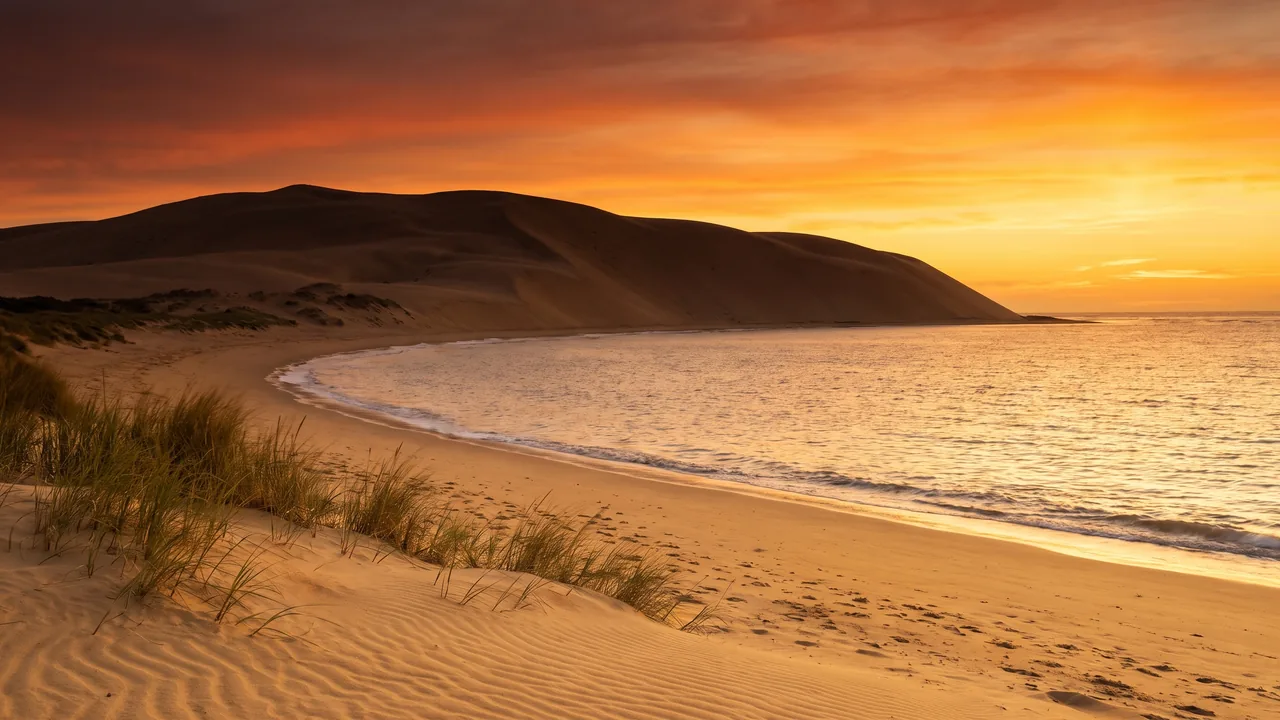
- The beach and swimming — only in supervised areas; watch out for rip currents on the ocean side
- Climb the Dune du Pilat — via the staircase set up during the season, for the 360° view
- Paragliding — takeoff from the Dune ridge, a classic activity at this site
- Walks through the pine forest and along the Corniche—shaded trails and viewpoints overlooking the Bassin
- A boat trip to the Banc d'Arguin — departing from Arcachon or Le Pyla
- The sunset over the dune and the ocean—the highlight of the day
- The sheltered beaches beneath the Corniche—more secluded, accessible by stairs
Beyond the resort itself, Pyla is an excellent base from which to explore the surrounding area. Arcachon and its “Ville d’Hiver” are just a few minutes away; Cap Ferret can be reached by boat or via the road that circles the bay, and the nearby oyster ports offer the chance to sample the famous local oysters right by the water. This way, you can combine, all in one trip, the beach and the Dune on the Pyla side, a leisurely stroll through Arcachon, and a nature getaway to the Banc d’Arguin. The resort may be small, but it opens up to one of the most diverse regions on the Atlantic coast.
The ideal schedule? A perfect day combines a morning at the beach—when the light is soft and the crowds are still sparse—followed by a climb up the dune in the late afternoon to avoid the heat, and finally, watching the sunset from the top or at the base of the dune. The more organized visitors book a boat trip to the Banc d’Arguin the day before, as slots fill up quickly during peak season. Here’s a summary to help you plan your itinerary:
| Activity | Where | Good to Know |
|---|---|---|
| Swimming | Lifeguard-patrolled beaches | Marked areas; use caution on the ocean side (rip currents) |
| Climbing the Dune | Dune du Pilat (~5 km) | Staircase during the season; see the dedicated guide |
| Paragliding | Crest of the Dune | Depending on the weather and the service providers |
| Boat to the Banc d'Arguin | Departure from Arcachon / Pyla | Protected reserve, restricted access |
| Walks & Sunsets | Cliff, pine forest, beach | Free; beautiful at the end of the day |
One last reminder, because it’s more important than anything else: at Pyla, you should only swim in supervised areas. The beauty of the site should never make you forget that conditions and hazardous areas can change rapidly.
How to get to Pyla-sur-Mer from Bordeaux
From Bordeaux, it takes about 1 hour and 15 minutes to reach Pyla-sur-Mer—a distance of roughly 78 kilometers—mainly via the A63 toward Arcachon, then along the coastal road that runs alongside the Bassin to the resort. It’s an ideal day trip. During peak season, however, there’s one thing to keep in mind: the area around the Dune du Pilat and its parking lots fill up by mid-morning, and you can waste a lot of time looking for a spot. Being dropped off right at the foot of the dune, without having to worry about parking or the time of your return, completely changes the day.
How much does the ride cost?
The Bordeaux → Pyla-sur-Mer route starts at 158 € during the day for a sedan that can accommodate 1 to 3 passengers. This price is fixed and confirmed in writing before departure: no meter, no unpleasant surprises upon arrival. A surcharge applies at night, on weekends, and on holidays; for groups of more than 3 passengers or those with a lot of luggage, we’ll arrange a van, based on a quote. Transfers to nearby destinations—the Dune du Pilat, Arcachon, and Cap Ferret—as well as transfers from Bordeaux-Mérignac Airport are also available upon request, with a quote provided.
| Route | Distance / Duration | Rates |
|---|---|---|
| Bordeaux → Pyla-sur-Mer | ~78 km · ~1 hr 15 min | starting at 127 € |
| Pyla-sur-Mer → Dune du Pilat | ~5 km | based on a quote |
| Bordeaux → Arcachon | near Pyla | based on a quote |
| Bordeaux → Cap Ferret | Tour of the Basin | based on a quote |
| Bordeaux-Mérignac Airport → Pyla | direct transfer | based on a quote |
Why hire a private driver?
The main appeal lies in the peace and quiet. You’ll be picked up at your address in Bordeaux or at the airport, dropped off as close as possible to the beaches or the Dune, and picked up again at the agreed-upon time—no driving, no searching for parking, and no worrying about the last train’s schedule. Whether you’re a family loaded down with beach umbrellas and coolers, a group of friends, or business clients traveling from Bordeaux to the Bassin in a single day, this service saves you valuable time and offers unparalleled comfort. Since the fare is set in advance, you’ll know the cost as soon as you book. This is especially appreciated on a summer day, when the roads and parking lots in Pilat are packed.
In practical terms, a great day trip to Pyla from Bordeaux can be broken down into a few steps: leave in the morning to enjoy the beach while it’s still cool, visit the dune in the late afternoon, and head back at a leisurely pace as the sun sets. On the coastal road during peak season, traffic jams are common around the Bassin; planning your schedule in advance often makes the difference between a successful getaway and a day spent looking for a parking spot. Be sure to bring water, sunscreen, sturdy shoes for the Dune, and a windbreaker for the Corniche in the evening: with these essentials, you’ll enjoy Pyla without a hitch.
Frequently Asked Questions
Is Pyla-sur-Mer a municipality?
No. Pyla-sur-Mer is not an independent municipality, but a seaside resort that is part of the municipality of La Teste-de-Buch (INSEE code 33529) in Gironde. Originating as a private housing development in the early 20th century, it has retained a strong name and reputation that surpass those of its parent municipality, to the point that it is often mistaken for a city in its own right. Its ZIP code, 33115, is also distinct from that of the town of La Teste-de-Buch, which falls under the 33260 code.
Pyla or Pilat: How Should It Be Spelled?
Both spellings exist, but they do not refer to the same thing. The dune is spelled Pilat, with an “i”: this is the historical Gascon spelling (“pilat” means “pile, mound”), attested on maps as early as the 18th century. “Pyla,” with a “y,” is used for the seaside resort: this more “chic” spelling was chosen by developer Daniel Meller in 1917. So: Dune du Pilat, but the resort is Pyla-sur-Mer. Avoid “Dune du Pyla” and “Pilat-sur-Mer,” two common mistakes.
How much does a trip from Bordeaux to Pyla-sur-Mer cost with a private chauffeur?
The Bordeaux → Pyla-sur-Mer route starts at 158 € during the day for a sedan carrying 1 to 3 passengers. This rate is fixed and confirmed in writing before departure: no meter, no surprises upon arrival. A surcharge applies at night, on weekends, and on holidays. For groups of more than 3 passengers or those with bulky luggage, the transfer is provided by van, based on a quote. Trips to the Dune du Pilat, Arcachon, Cap Ferret, or from Bordeaux-Mérignac Airport are also subject to a quote.
Where exactly is Pyla-sur-Mer located?
Pyla-sur-Mer is located on the coast at the southern entrance to the Arcachon Basin, where the inland body of water opens onto the Atlantic Ocean. The resort is nestled against the Landes pine forest and bordered to the south by the Dune du Pilat. It is located about 5 km from the Dune, just over 7 km from Arcachon (closer than the town of La Teste-de-Buch), and 78 km from Bordeaux—about a 1-hour-and-15-minute drive. It can be reached via the coastal road that runs along the Bay.
What is the difference between Pyla-sur-Mer and the Dune du Pilat?
These are two distinct things that are often confused. Pyla-sur-Mer is the seaside resort: its villas, beaches, Corniche, and pine forest. The Dune du Pilat is the sand dune that borders the resort to the south—the tallest dune in Europe. The resort is located at the foot of the dune, a few hundred meters from the beach. Incidentally, the resort’s name is spelled with a “y” (Pyla) and the dune’s name with an “i” (Pilat). Our dedicated guide provides details on climbing the dune itself.
How tall is the Dune du Pilat?
The height of the Dune varies depending on the wind, the seasons, and the movement of the crest. As a rough estimate, expect it to be around 100 meters, and check the most recent dated measurement published by the Grand Site de la Dune du Pilat before your visit.
Is it safe to swim at Pyla?
No: Swimming is never risk-free. At Pyla, choose a supervised area, check the flags, and ask the lifeguard station about today's conditions.
What is the Banc d'Arguin, and can you visit it?
The Banc d'Arguin is a vast shifting sandbar located opposite the Pyla, at the entrance to the Bay, between the Dune and Cap Ferret. Designated a national nature reserve since 1972 and covering approximately 4,360 hectares, it is a major nesting and wintering area for birds. It can be reached by boat from Arcachon or the Pyla, but access is restricted, with off-limits areas—especially during the nesting season—to protect this fragile ecosystem.
Who created the Pyla-sur-Mer station?
The resort is the work of two men. Daniel Meller (1863–1944), a landowner from Bordeaux, was its true founder: he negotiated a large-scale land swap with the government and submitted the specifications for the Société Civile Immobilière de Pyla-sur-Mer in 1917. Louis Gaume, a builder who arrived in Arcachon in 1911, began developing the Pilat-Plage neighborhood—with its luxury villas—in 1920. The two men, who were initially competitors, joined forces in 1928 to spur the resort’s growth.
What are the Gaume villas?
The term “Gaume villas” refers to the vacation homes built in the 1920s and 1930s under the leadership of Louis Gaume, in the Pilat-Plage neighborhood and along the Corniche. These are luxury homes in the early 20th-century seaside style, often nestled among the pine trees. Today, they are among the most sought-after architectural landmarks in Pyla and contribute to the resort’s “chic yet discreet” charm, where luxury is hidden among the trees rather than flaunted.
How long does it take to get from Bordeaux to Pyla-sur-Mer?
Allow about 1 hour and 15 minutes to cover the roughly 78 kilometers between Bordeaux and Pyla-sur-Mer, mainly via the A63 toward Arcachon, then the coastal road that runs along the Bassin. This is a perfectly doable day trip. During peak season, allow extra time: the area around the Dune du Pilat and its parking lots often fill up by mid-morning, which can significantly extend the time it takes to reach the beaches and the site.
Is the Banc d'Arguin private property?
No. Contrary to popular belief, the Banc d'Arguin belongs neither to a private individual nor to a municipality. It is part of the public maritime domain and is therefore owned by the State. Its management is entrusted to SEPANSO, which oversees the nature reserve and regulates visitor access. This protection explains the restricted areas and access rules, particularly during the birds’ nesting season in the spring and summer.
Do I need to book my transfer to Pyla-sur-Mer in advance?
This is highly recommended, especially in the summer and on weekends, when demand for the Bassin area is high. Booking in advance guarantees the availability of a vehicle suited to your group and a fixed rate that’s known at the time of booking—no surprises. The price is confirmed in writing before departure. You’ll then be picked up at your address in Bordeaux or at the airport and dropped off as close as possible to the beaches or the Dune, without having to search for parking upon arrival.
Further Reading
- Dune du Pilat: Access, Stairs, and Visitor Tips — The Complete Guide to Europe’s Tallest Dune, the Pyla’s Giant Neighbor.
- Arcachon Bay: oysters, villas, and the Dune du Pilat—the nearby town of Pyla, just a few kilometers away, situated around the same body of water.
- Cap Ferret: the lighthouse, the oysters, and the peninsula—across from the Pyla, on the other side of the entrance to the Arcachon Basin.
- All our destinations—the Arcachon Bay, the vineyards, and the coast, all starting from Bordeaux.
- Book your ride — a fixed-price quote confirmed in writing, with no obligation, for Pyla-sur-Mer and the Bassin region.
Sources and References
- La Teste-de-Buch Tourist Office — Pyla-sur-Mer — the resort, beaches, neighborhoods
- Wikipedia — Pyla-sur-Mer — history, Meller & Gaume, neighborhoods
- SEPANSO — Banc d'Arguin Nature Reserve — reserve, management, birds
- The Dune du Pilat (major site) — Pilat or Pyla, height, ascent
- INSEE — Municipality of La Teste-de-Buch (33529) — Pyla = neighborhood of La Teste
Article updated on July 18, 2026.
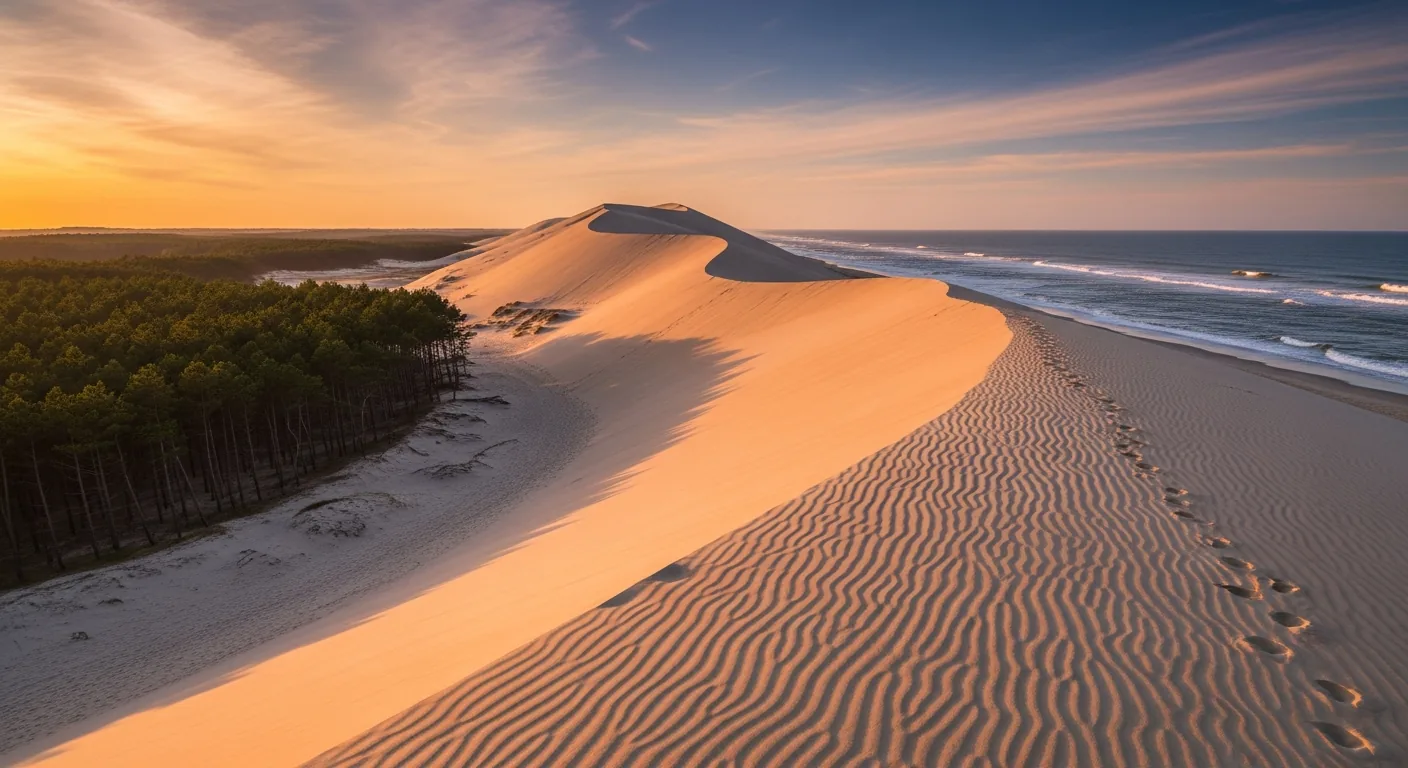
On the way to the foot of the Dune
Direct transfer from Bordeaux (~1 hr 15 min) to the beaches and the Corniche via Pyla-sur-Mer. Fixed-price quote in writing, with no obligation.