Bordeaux to Biscarrosse: Lakes & Seaplanes
From the Latécoère giants to the Pan Am clippers, a transatlantic gateway nestled between two lakes: Biscarrosse, with its Museum of Seaplane Aviation, its lakeside beaches at Navarrosse and Maguide, and its 27-hole golf course—just 1 hour and 15 minutes from Bordeaux.
Biscarrosse at a Glance
Biscarrosse is the largest municipality in the Landes department (160.48 km²) and the third-largest in terms of population (15,836 residents, INSEE, 2023 reference population published in July 2026)—but its fame can be summed up in one word: seaplanes. From the giant Latécoère seaplanes to Pan Am stopovers, the town served as a transatlantic gateway to Europe in the 1930s and 1940s, and its Musée de l’Hydraviation, designated a “Musée de France,” preserves that legacy. Nestled between two giant lakes—Cazaux-Sanguinet to the north, Biscarrosse-Parentis to the south—and the ocean, 75 km from Bordeaux (1 hr 15 min), it offers three distinct experiences in one: the town, the lake, and the beach. This guide distinguishes fact from fiction: seaplanes took off from the South Lake (not Biscarrosse-Lac), the regular flight departed for Fort-de-France (New York was a test route), and Saint-Martin Church is not a listed historic site—the town’s only historic monument is… a control tower. We’ll conclude with the easiest way to get there: a private door-to-door transfer.
Here are the key details to know before you go. Distances are calculated door-to-door from Bordeaux; the fare listed is for a chauffeur service at a fixed rate provided in advance, with no unexpected meter charges. The information has been verified using Wikipedia, the Mérimée database, INSEE, the city of Biscarrosse, the Musée de l’Hydraviation, and the Bisca Grands Lacs tourist office; event times and dates are subject to change and should be confirmed on site.
| Key fact | Details |
|---|---|
| City | Biscarrosse (Landes), population 15,836 (2023) — the department's third-largest city |
| Location | Born region; three main areas: Bourg, Biscarrosse-Lac, and Biscarrosse-Plage |
| Singularities | The City of Seaplanes · Two Giant Lakes · The Largest Municipality in the Landes Region |
| Must-See | the Hydraviation Museum, the lakeside beaches (Navarrosse, Maguide), Saint-Martin Church |
| Distance from Bordeaux | about 75 km · about 1 hour and 15 minutes by car (A63/A660) |
Where is Biscarrosse located?
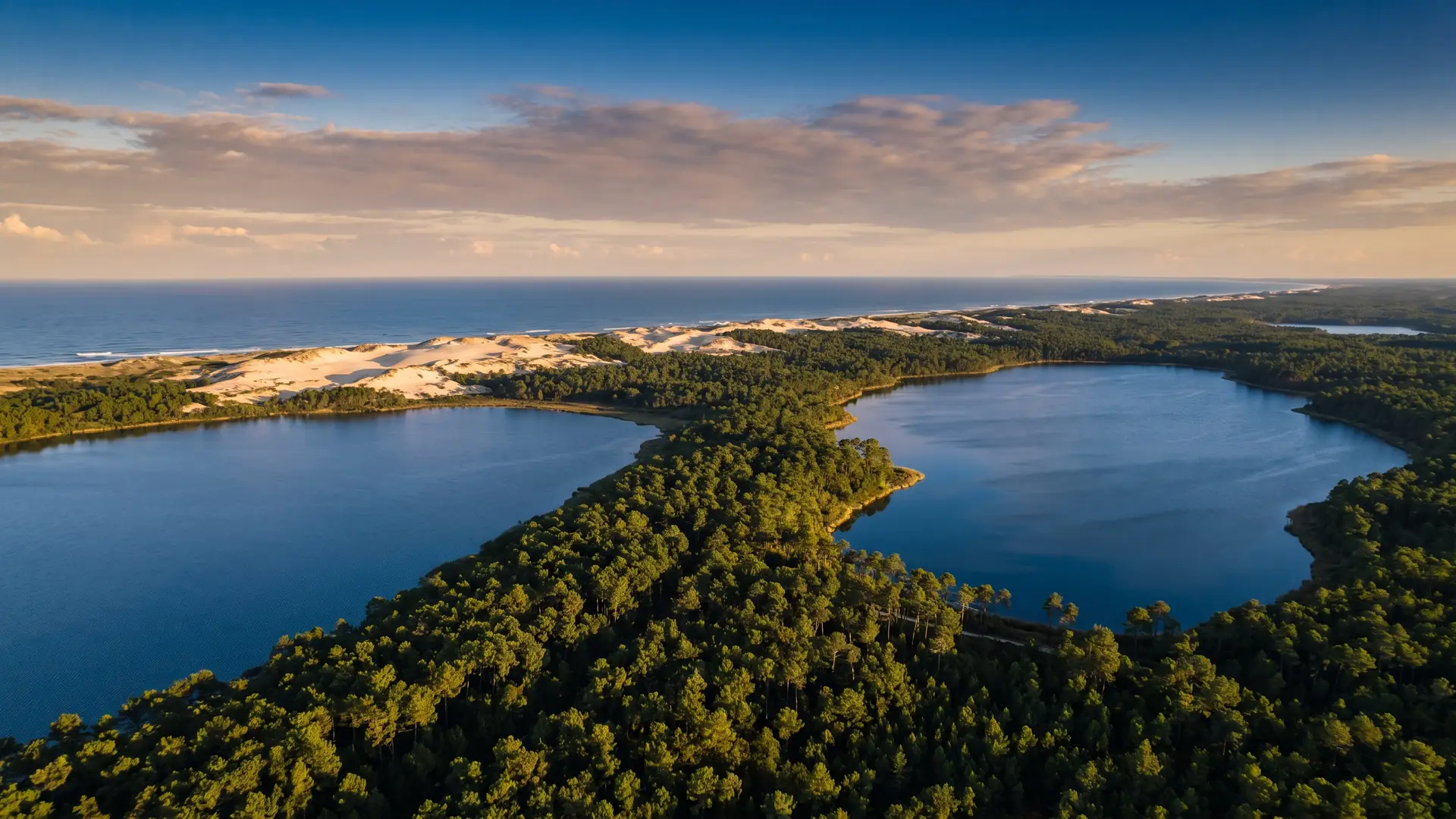
Biscarrosse is located in the northern part of the Landes region, in the Pays de Born, 75 km from Bordeaux via the A63 and A660—a 1-hour-and-15-minute drive. The town is a quiet giant: 160.48 km²—the largest in the Landes—and 15,836 residents (2023, up 11.7% since 2017), known as Biscarrossais. This makes it the third-largest town in the department behind Mont-de-Marsan and Dax. It is part of the Mont-de-Marsan district, the Grands Lacs canton, and the Grands Lacs community of municipalities. Its geography explains it all: the municipality spans three districts—the town center, an administrative and commercial center; Biscarrosse-Lac, 7 km away, on the shores of Lake Cazaux-Sanguinet, with a golf course and marinas; and Biscarrosse-Plage, the ocean resort, which we discuss in a dedicated guide. The name itself is of Basque-Aquitaine origin: bizkar, the back, the ridge—the country’s ancient, neatly aligned dunes.
The population growth is worth noting: +11.7% in six years, in a municipality that is already the third-largest in the department—the Pays de Born is one of the leading residential development areas in Nouvelle-Aquitaine, driven by the Bordeaux-Arcachon-Lakes triangle. Biscarrosse absorbs this growth without losing its balance thanks to its exceptional size: 160 km² provide ample space for pine trees among the residential developments, and the three distinct areas each serve different purposes—the town center for year-round life, and the lake and beach for summer activities. For visitors, this vitality is very tangible: shops open year-round, a vibrant cultural season, and markets that are always bustling—the opposite of a ghost town in winter. It’s one of Le Born’s best-kept secrets: you can come here in February for the museum and the deserted beaches, and find a town that’s truly alive.
Between Two Giant Lakes
Biscarrosse enjoys a privilege that is unique in France: the town borders two of the country’s largest natural lakes. To the north lies Lake Cazaux-Sanguinet—5,500 hectares, 23 meters deep, shared between the Gironde and Landes departments—with Biscarrosse situated on its southern shore; to the south, the Biscarrosse-Parentis pond—3,540 hectares—which it shares with Parentis, Gastes, and Sainte-Eulalie. The two have been connected since 1834–1838 by the Landes Canal, which runs through the town.
An interesting fact about the subsoil: beneath Lake Sud lies the largest crude oil reserve in metropolitan France—discovered on March 22, 1954, and drilled three days later by the American company Esso (the first lake-based oil drilling operations in Europe), and still operated today by the Canadian company Vermilion… and the crude is sent for refining at Bec d’Ambès, near Bordeaux. Between the two bodies of water lie the pine forest, campgrounds, and the golf course: the full range of what a vacation in the Landes has to offer.
The City of Seaplanes, Europe's Transatlantic Gateway
From 1930 to 1955, Biscarrosse was one of the world capitals of seaplane aviation: Pierre-Georges Latécoère set up his assembly and testing base there, the Ministry of Aviation built an “international airport for transatlantic seaplanes,” and the giants of the skies—the Laté 521, Laté 631, and Pan Am clippers—landed there on Lake Sud. The epic story is well-documented, records and all.
1930: Latécoère Chooses the Lakes
It all starts with a letter: on June 10, 1929, the Toulouse-based industrialist Pierre-Georges Latécoère proposes that the mayor establish a test site on the Great Lakes; it opens in 1930—the Laté 38-02 first flew on August 24— north of Lake Biscarrosse-Parentis, South Lake. A local geographical detail that confuses everyone: the seaplanes did not take off from Biscarrosse-Lac (which borders Lake Nord), but rather from Lake Sud. In addition to the mounting base, Les Hourtiquets seaplane base opened in 1937 as an “international airport for transatlantic seaplanes,” commissioned by the Ministry of Aviation, which remained in service until 1955.
The legends of the Aéropostale crossed paths here: Mermoz, Saint-Exupéry, and Guillaumet were regulars at the base in the 1930s. And the town’s only historic monument stems directly from this era: the watchtower—the control tower—at Les Hourtiquets, listed in 2012. A control tower designated as a historic landmark: this nod to the past captures the essence of Biscarrosse.
From the Laté 521 in New York to the Laté 631 in the Caribbean
Giants make history. The Latécoère 521 "Lieutenant-de-Vaisseau-Paris" — 49-meter wingspan, up to 70 passengers, first flight in 1935 — successfully completed the crossing Biscarrosse → New York, August 23–31, 1938 (via Lisbon and the Azores), followed by four round trips in 1939: from test flights, not a scheduled route—a distinction this guide must make. In 1939, Henri Guillaumet A remarkable feat: New York → Biscarrosse nonstop, 5,875 km at an average speed of 206 km/h—including 2,300 km with the engine off.
After the war, the Laté 631—the largest seaplane of its time, with a wingspan of 57.43 meters—launched the first regular air service between France and the Antilles on July 25, 1947: Biscarrosse → Fort-de-France via Port-Étienne, a nonstop 4,700-kilometer flight lasting 16 to 20 hours. The route was discontinued in 1948, after 23 round trips and two tragedies—including Flight No. 6, which disappeared at sea with 52 people on board. Pan Am and BOAC also made stops here: in 1939, the Yankee Clipper touched down on the lake in the Landes region.
Why a seaplane? Why here?
A bit of background to understand the era: in the 1930s, seaplanes seemed to be the future of long-haul travel—there was no need for expensive runways, the ocean served as an airport, and inland bodies of water offered safe stopovers. The major aviation powers competed to build giants of the seas, and France had its champions at Latécoère. The Born lakes checked all the boxes: vast freshwater bodies sheltered from the swell, proximity to the Atlantic for crossings, and accessible hinterland for manufacturing facilities. The war, followed by the rise of long-range land-based aircraft, brought this chapter to a close in the mid-1950s — leaving Biscarrosse with a unique legacy: hangars, a lookout tower, a museum, and the memory of a decade when the village of resin harvesters watched as star pilots from around the world passed through on their way to America. Few towns of this size can recount such a collision between grand history and the pine forest.
The Hydraviation Museum: A Reminder of a Golden Age
The Musée de l'Hydraviation—awarded the "Musée de France" designation, founded by Marie-Paule Vié-Klaze, and opened in 1982 on the very site of the former Latécoère airbase—features 12 seaplanes and more than 1,000 artifacts, a collection described as unique in Europe. Source: Musée de l'Hydraviation, official website accessed on July 21, 2026. A must-see stop on any visit to Biscarrosse. Here are the verified facts.
Twelve Seaplanes and the Luxury of 1947
Located at 332 Louis-Bréguet Street, on the base’s historic grounds, the museum chronicles half a century of adventure: scale models, engines, uniforms, photographs—and 12 seaplanes Life-size, the highlight of the collections.
It gives us a sense of what the 1947 transatlantic luxury liner : On board the Laté 631, there were 44 leather armchairs that could be converted into berths, complete with sheets and blankets, a bar—and a boarding procedure that will resonate with today’s travelers: passengers were arriving from Paris by train to Bordeaux, then by car to the seaplane base — the exact predecessor, word for word, of the Bordeaux → Biscarrosse transfer. Practical information: Open from February through October, Wednesday through Sunday (2:00 p.m.–6:00 p.m.); open daily in July and August (10:00 a.m.–7:00 p.m.); closed in January. And every two years, the International Seaplane Rally — established in 1991, free — brings the Catalina and Grumman Albatross back to land on South Lake: next edition on May 29 and 30, 2027. Source: Musée de l'Hydraviation, official announcement accessed on July 21, 2026. The city calls itself the “birthplace of seaplane aviation”—the title is rightfully its own, and its legacy is undeniable.
The visit is all the more enjoyable once you know its origins: the museum owes its existence to one woman, Marie-Paule Vié-Klaze, who founded it in 1982 to preserve a legacy that was then slipping away—hangars being dismantled, archives scattered, and witnesses growing old. Forty years later, her collection is a leading one in Europe and attracts both aviation enthusiasts and families—children love the cockpits and giant models, while adults linger over photos from the Roaring Twenties: Biscarrosse decked out in tuxedos and evening gowns, awaiting the splashdown of the mail from America. The site itself is part of the exhibition: you’ll explore the base grounds with Lake Sud as a backdrop—the very place where it all happened. Allow a good two hours, or more if you’re with aviation enthusiasts; and if your visit falls in an odd-numbered year, plan it for late May: the RIHB turns the tour into a life-size time machine.
Navarrosse, Maguide: Life by the Lakes
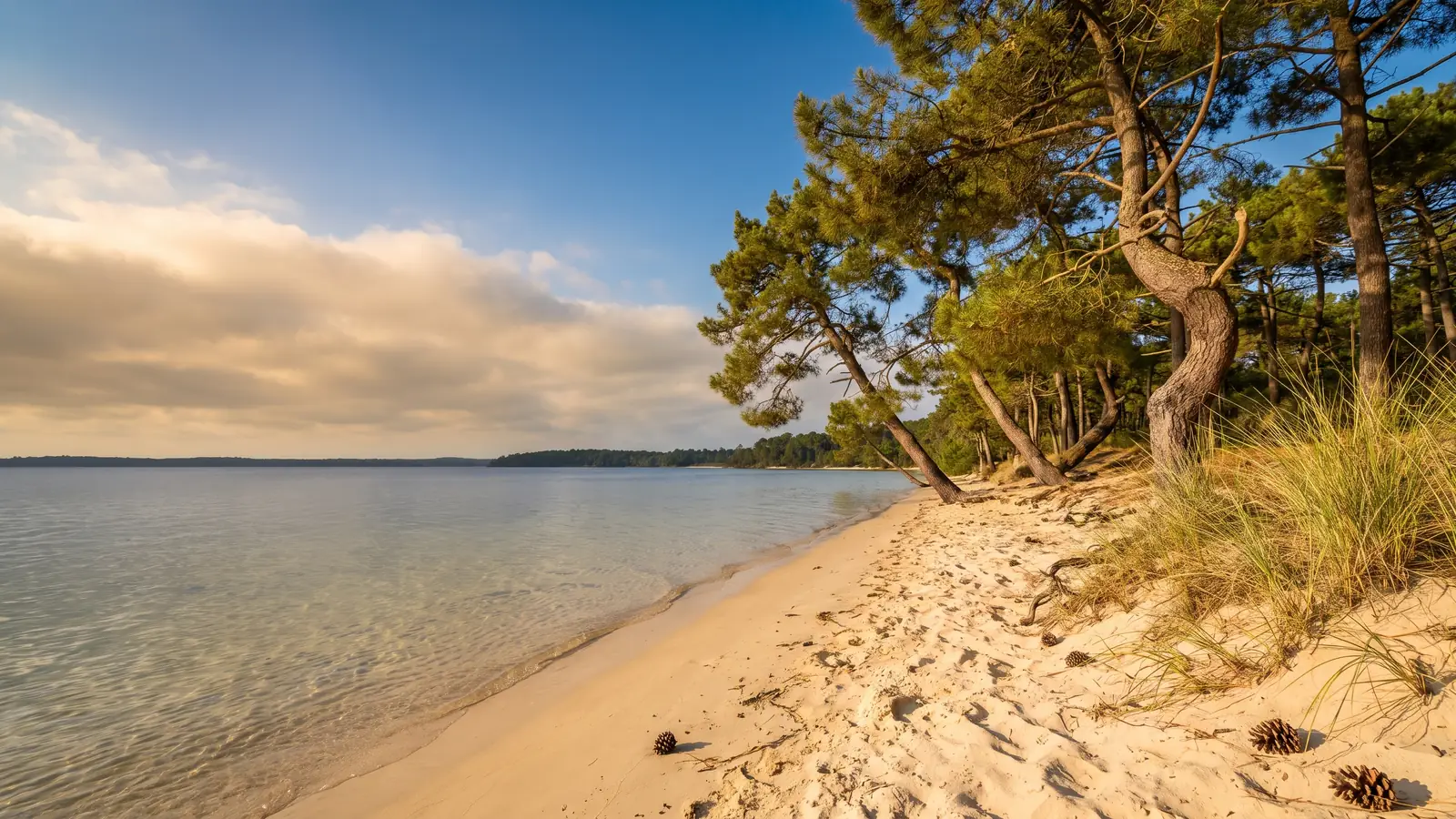
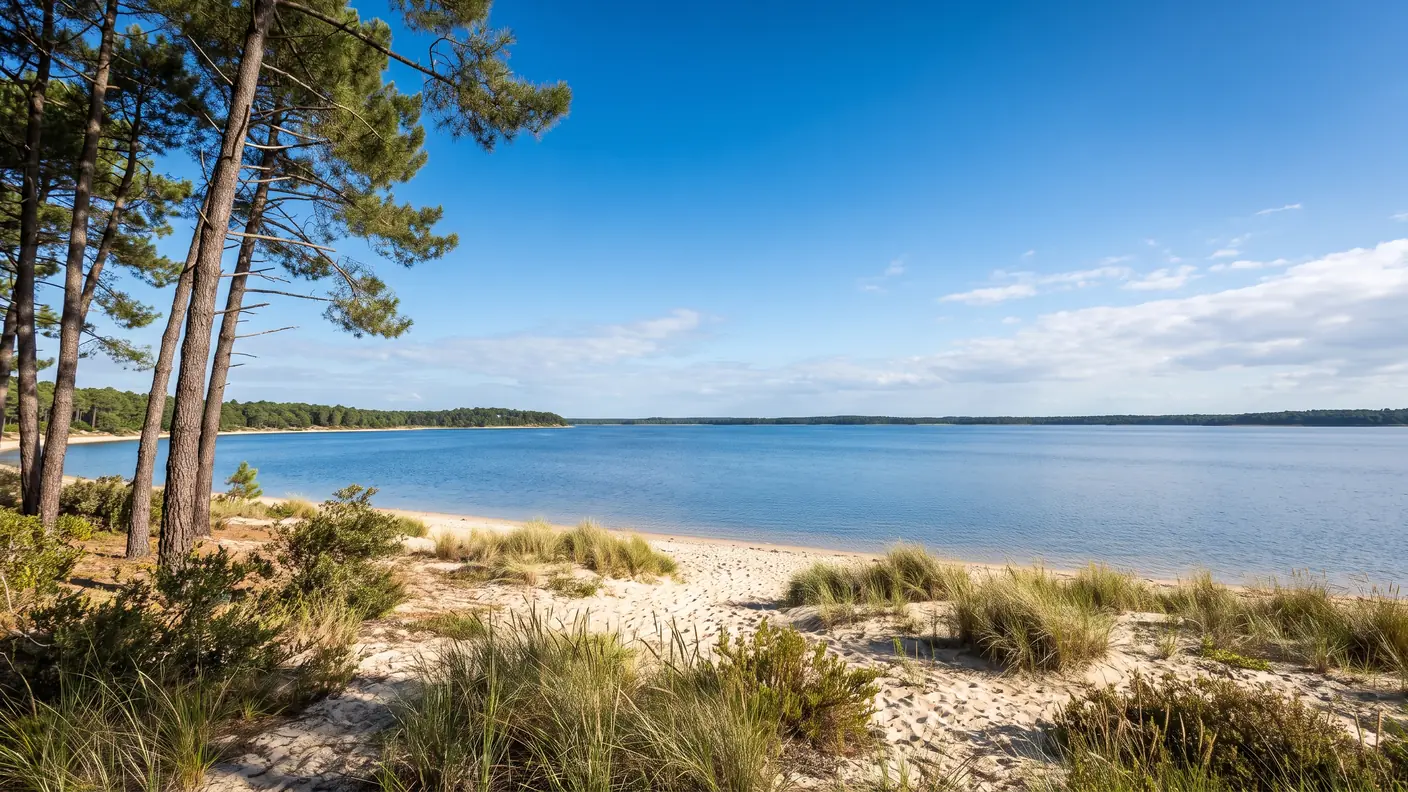
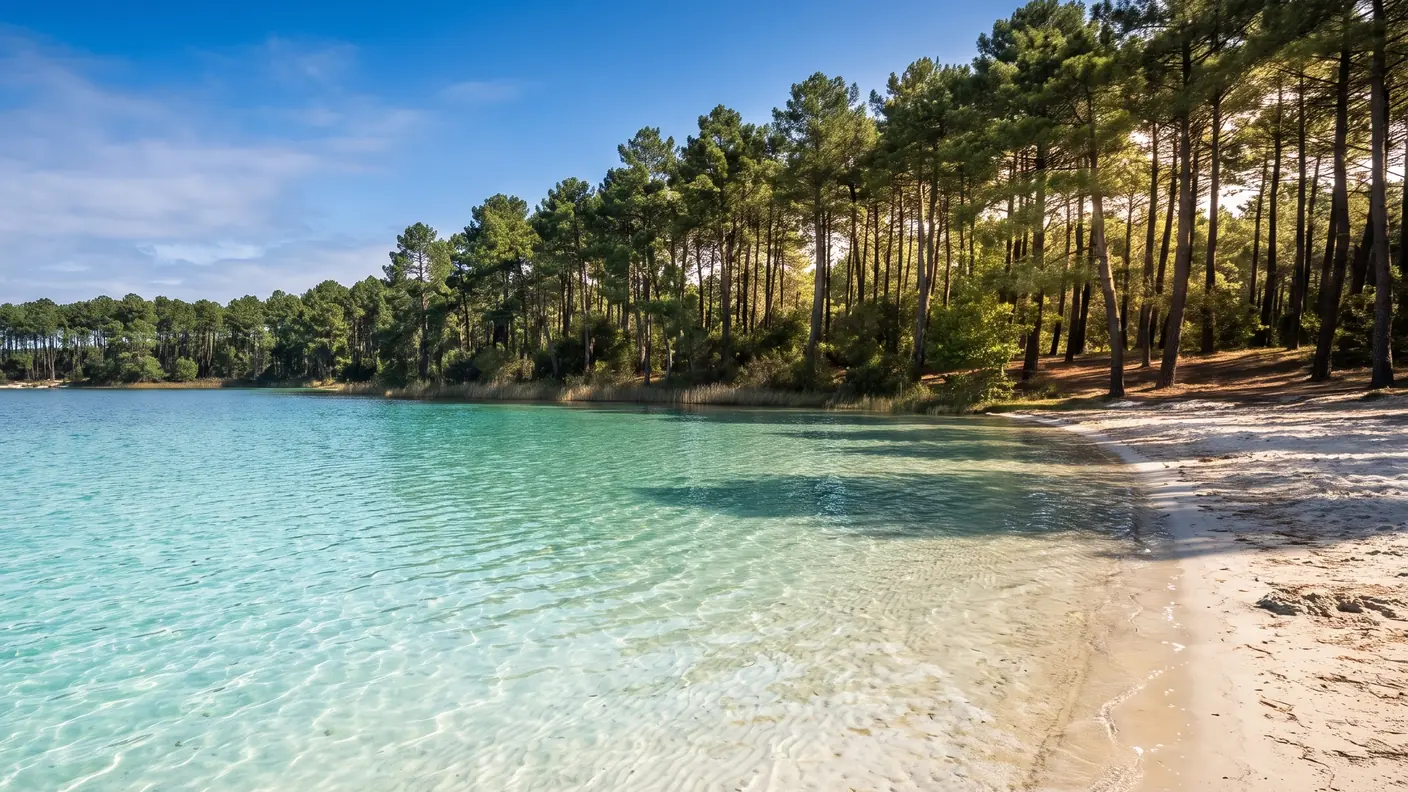
Nestled between its two lakes, Biscarrosse boasts a string of marinas, lakeside beaches, and a golf course: Navarrosse and Maguide—the two supervised beaches on the North Lake in July and August—are the heart of family summers, with calm waters, gentle slopes, and campgrounds under the pine trees. The peaceful counterpart to the ocean. Here are the verified details.
North Lake: The Gentle Side
Biscarrosse-Lac, the lakeside complex, located 7 km from the town, stretches along the southern shore of Lake Cazaux-Sanguinet: the ports for recreational boating on the lake, the beaches of Navarrosse and Maguide — staffed in July and August, from about 11 a.m. to 7 p.m. — historic campgrounds and water sports centers. The water here has all the qualities of the great lakes of the Landes region: calm, temperate, and free of rip currents—a haven for families when the ocean is rough. Just a stone’s throw away, the Biscarrosse Golf Course deploys 27 holes on ~70 hectares Near Navarrosse: an 18-hole “Forêt-Océan” course (par 71, 5,674 m) and a 9-hole “Lac” course (par 32); the first nine holes were opened in 1989.
The bike path runs along the shore toward Sanguinet (~15 km)—the most scenic route to the lake, with the pine trees just at handlebar height. A tip from a local: the Navarrosse shore faces north—for sunsets over the water, head to Sanguinet on the east shore; for beach days sheltered from the west wind, Navarrosse is the best choice.
Lake Sud: Nature and Oil
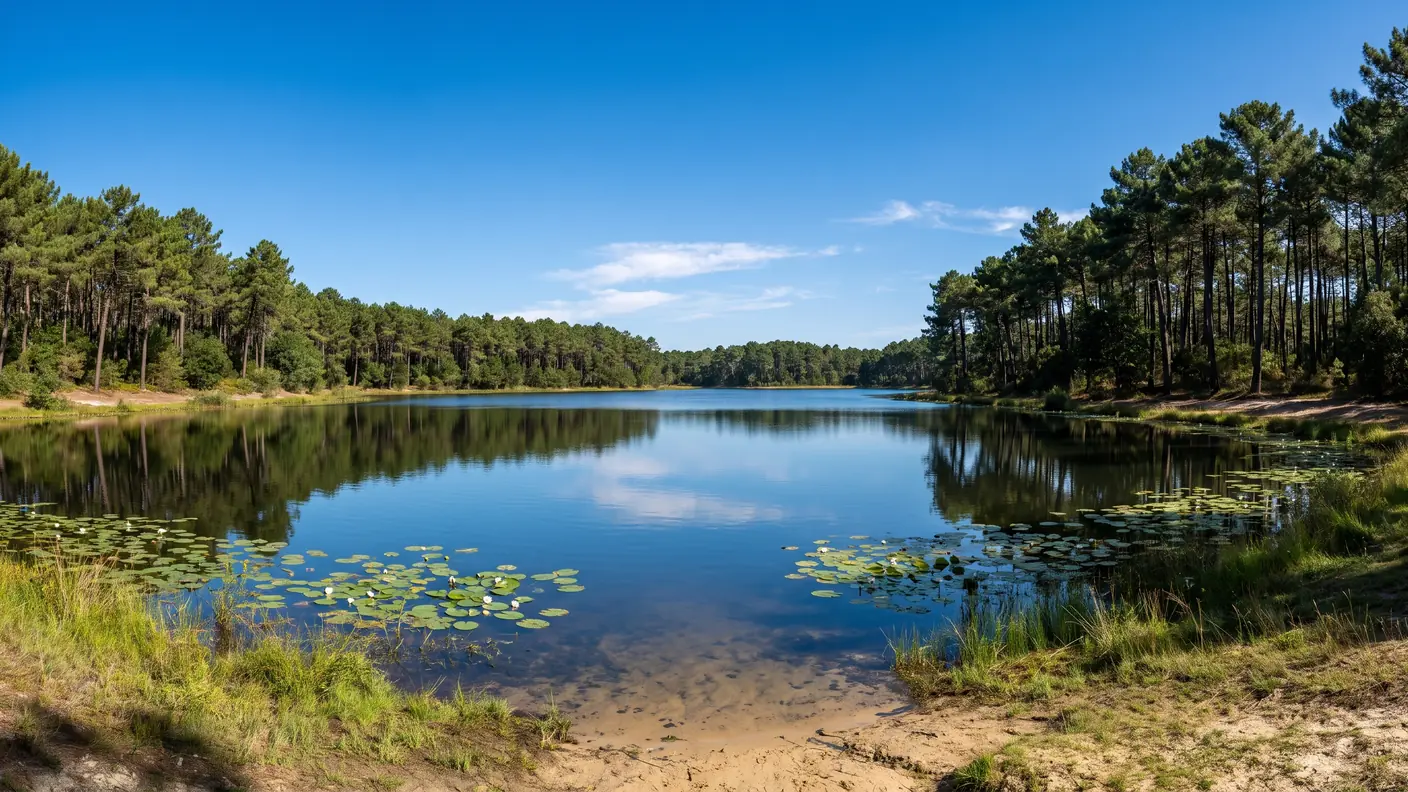
The Biscarrosse-Parentis pond, known as the “South Lake,” offers a wilder experience: less developed, teeming with fish, it attracts predator anglers and those seeking peaceful shores—it’s also the home of the seaplanes of yesteryear and today’s RIHB. Its most unlikely feature lies hidden beneath the surface: the Parentis oil field, whose discreet platforms can be glimpsed offshore—a miniature industrial landscape that kayakers paddle past with guaranteed amazement. Between the two lakes, the Landes Canal (1834–1838) winds its way beneath the pine trees: once dug for dreams of commercial navigation, it now serves as an ecological link and a destination for strolls. This duality—the family-friendly, well-equipped North Lake and the nature- and history-rich South Lake—gives Biscarrosse a depth of experience that resorts with a single body of water cannot offer: two distinct lakeside atmospheres just ten minutes apart, plus the ocean as a third highlight.
Saint-Martin, the Museum of Traditions, and the Old Town
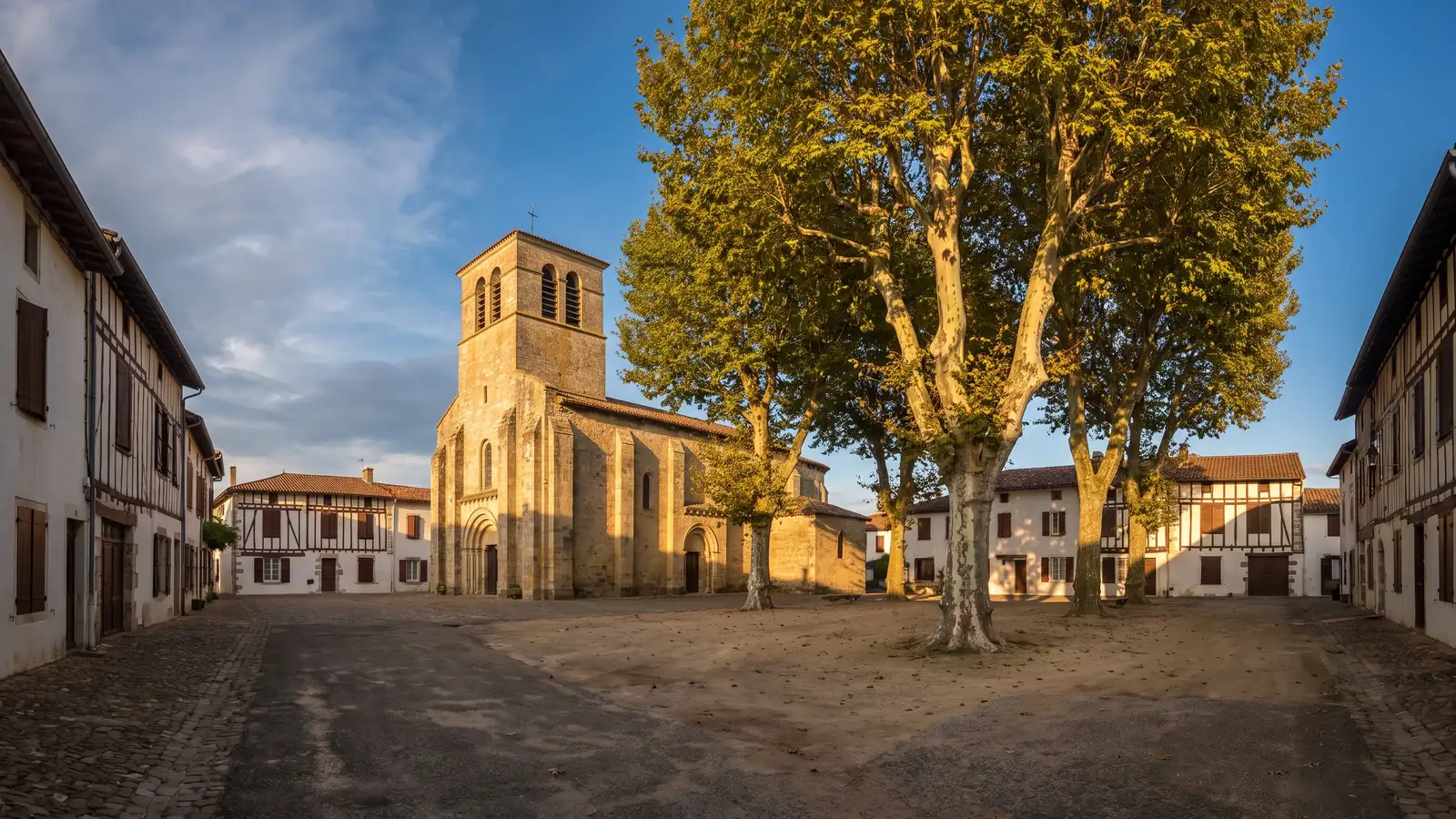
The town of Biscarrosse retains its historic landmarks: the Church of Saint-Martin, fortified in the 14th and 15th centuries and built of garluche, brick, and white stone; the Château de Montbron (16th century); and the Museum of Traditions, which tells the story of Biscarrosse before the beachgoers arrived. Here is the verified heritage—without assigning it any rankings.
A fortress church built of ironstone
Saint-Martin Church stands out with its squat silhouette in the center of town: built in the 14th and 15th centuries and fortified in troubled times, it combines the garluche (the rust-colored, rough-textured sandstone from the Landes region), brick, and white stone, for a 31-meter-long nave that was remodeled in the early 20th century. One important clarification: it is neither listed nor registered as a historic monument—the municipality’s only protected monument is the Hourtiquets watchtower. A few streets away, the Montbron Castle (16th century) remains discreetly present. The old elm beside the church, which was more than six centuries old, had to be torn down in 2012—the residents of Biscarrosse still talk about it.
For rural history, the Museum of Traditions (open from mid-April to late September) displays tools, traditional clothing, and furniture from the Landes region, and offers, by reservation, boat trips on the canals — the Biscarrosse of the resin collectors and millers, a thousand leagues away from the transatlantic clippers. The boat trips, in particular, are worth a visit: there, you can explore the hidden network of canals that feed the lake’s hinterland, a legacy of 19th-century development, led by tireless volunteers who know everything there is to know about the town before tourism took over. Finally, in the forest, the Saint-Michel Fountain, on the banks of the Canteloup Stream, is said to cure skin diseases—a local belief, which we report as such.
New York, the lake, the historic church: what we often read
Several claims are circulating about Biscarrosse that deserve to be corrected, with supporting sources—which is the whole point of a reliable guide. Transatlantic shipping routes, the geography of the lakes, heritage protection: here’s what’s true and what’s false.
Regular flights to Fort-de-France, study tours to New York
The most important distinction concerns the crossings. It is often stated that Biscarrosse “operated the route to New York”: in reality, the Laté 521’s crossing in August 1938 and the four round trips in 1939 were test flights—spectacular, but not a regular route; the museum’s wording, “transatlantic flights to New York and Fort-de-France,” is correct. The only documented regular commercial route departing from Biscarrosse is Biscarrosse → Fort-de-France (Air France, Laté 631, 1947–1948)—the first regular air service between France and the Antilles. The “Air France Transatlantique” brand did indeed exist: a subsidiary created in June 1937 in partnership with the Compagnie générale transatlantique, under which the Laté 521 operated. And the correct lake: the seaplanes operated on Lake Sud (Biscarrosse-Parentis)—not from Biscarrosse-Lac, which borders Lake Nord. These clarifications do not detract from the story; they make the epic tale verifiable.
A church with no official designation and a lake with no official "record"
Regarding cultural heritage: Saint-Martin Church is not a listed building—the only historic monument in the town is the hydrobase watchtower (listed in 2012), and no “heritage mill” is mentioned in the sources, despite what some websites may claim.
In terms of superlatives: Lake Cazaux-Sanguinet is 5,500 hectares (not 5,600), and its status as “France’s second-largest natural lake”—which would be consistent with Hourtin-Carcans’ 5,667 hectares—is not explicitly stated by any primary source: we write “one of the two largest natural freshwater lakes in France, behind Hourtin-Carcans.” The population figure, however, is reliable: 15,836 residents (INSEE 2023), making it the 3rd-largest town in the Landes, as official figures confirm. Finally, the “choice of Biscarrosse for its calm, unobstructed body of water”—often attributed to Latécoère—is not cited as such; the town simply states that he “chose our large lakes to test his seaplanes .” The legend needs no embellishment: the archives are sufficient.
What is there to do in Biscarrosse?
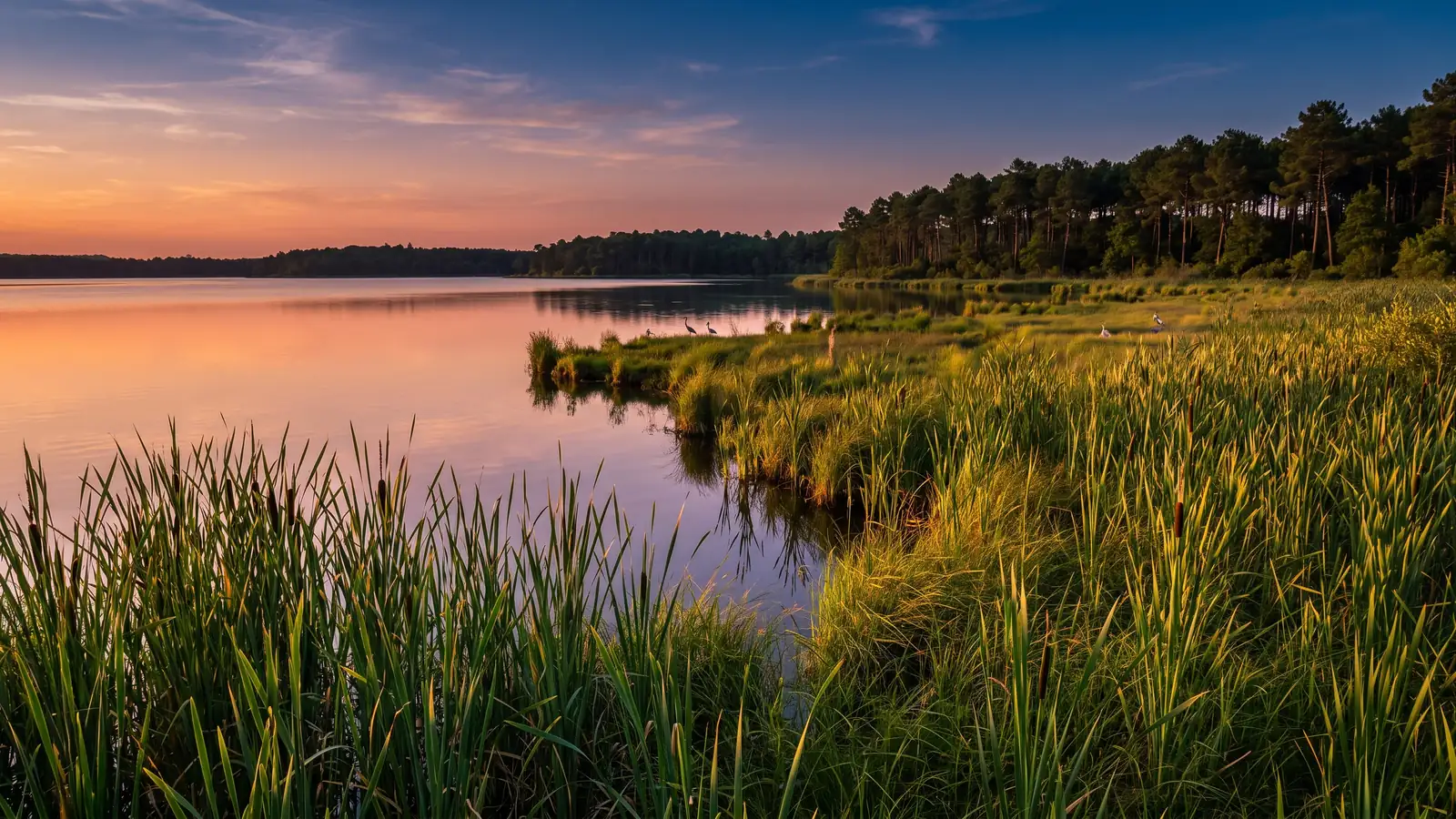
In Biscarrosse, you can visit the Hydraviation Museum, go swimming at the lifeguard-patrolled beaches of Navarrosse and Maguide, play a round of 27-hole golf, bike along the lake path toward Sanguinet, and browse the Friday and Sunday markets in town—and we’ll save the ocean at Biscarrosse-Plage for the next guide. The town and lakes have it all, proven day after day. Here’s the real itinerary.
- The Seaplane Museum — 12 seaplanes, over 1,000 artifacts; Feb.–Oct., Wed.–Sun., 2:00 p.m.–6:00 p.m.; July–Aug., daily, 10:00 a.m.–7:00 p.m.
- The lake beaches—Navarrosse and Maguide—are patrolled in July and August (approximately 11 a.m.–7 p.m.); calm waters, campgrounds under the pine trees
- The Biscarrosse Golf Course — 27 holes spread over approximately 70 hectares near Navarrosse: an 18-hole “Forêt-Océan” course and a 9-hole “Lac” course
- The Lake Trail — ~15 km of wooded shoreline toward Sanguinet; Vélodyssée to the beach (Arcachon → Biscarrosse-Plage, 25.8 km)
- Town markets — Friday 8 a.m.–1 p.m. at Place du Marché + Sunday 8 a.m.–1 p.m. on Avenue Clemenceau, year-round
- The Museum of Traditions — Landes Heritage and Boat Tours on the Canals (mid-April through late September, by reservation)
- Saint-Martin Church—the 14th- and 15th-century Garluche fortress, in the heart of the town
- The RIHB—the biennial, free international seaplane meet; next edition May 29–30, 2027
The Perfect Day in Biscarrosse
The classic itinerary: the town market on Friday or Sunday morning—Landes poultry, asparagus, Bourrit pastis—the Hydraviation Museum in the late morning (allow a good two hours; the kids will come out feeling like pilots), picnic and swimming in Navarrosse in the afternoon, followed by golf or biking depending on the group—the trail from the lake to Sanguinet offers 15 km of continuous shade. Ocean option: head over to Biscarrosse-Plage in the afternoon—just a quarter of an hour away—for waves, the boardwalk, and a sunset due west (our dedicated guide provides details on beaches and lifeguard services). On summer evenings, the resort takes over with its daily night market. And every two years, in late May, the RIHB brings the magic back: legendary seaplanes—Catalina, Grumman Albatross—touch down once again on the South Lake, free of charge, right where the Laté 631s once roared. Mark your calendars for 2027: it’s the ultimate event in Biscarrosse.
Markets: The Complete Schedule
Biscarrosse’s markets are spread across three locations. In town, there are two regular events held year-round: Friday mornings at Place du Marché and Sunday mornings on Avenue Georges-Clemenceau—these are the local markets, featuring free-range poultry and vegetables from the Born region as the main attractions. At the beach, the Saturday morning market at Place Dufau runs year-round; and from late June through late August, the resort switches to nonstop operation: a market every morning except Thursday, paired with a daily night market from 8 p.m. to midnight—the liveliest summer scene in the Born region, featuring artisans, ice cream vendors, and strollers in flip-flops. The connoisseur’s choice: Sunday in town for a serious shopping trip, the beach night market for the atmosphere. In between, local producers ensure continuity—sand asparagus in the spring, porcini mushrooms in the fall, and pastis from Bourrit all year round.
| Activity | Where / When | Good to Know |
|---|---|---|
| Museum of Seaplane Aviation | 332 Louis-Bréguet Street | Musée de France; open 7 days a week in the summer; closed in January |
| Lakeside Beaches | Navarrosse · Maguide | Staffed July–August, approximately 11 a.m.–7 p.m. |
| Golf | 27-hole course near Navarrosse | 18-hole, par-71 course + 9-hole “Lac” course |
| Town Markets | Fri., Market Square · Sun., Clemenceau Ave. | 8 a.m.–1 p.m. year-round |
| Museum of Traditions | town · mid-April → late September | Boat trips by reservation |
| RIHB | Latécoère Air Base, South Lake | Biennial, free; May 29–30, 2027 |
What to see nearby: Sanguinet, Pilat, Mimizan
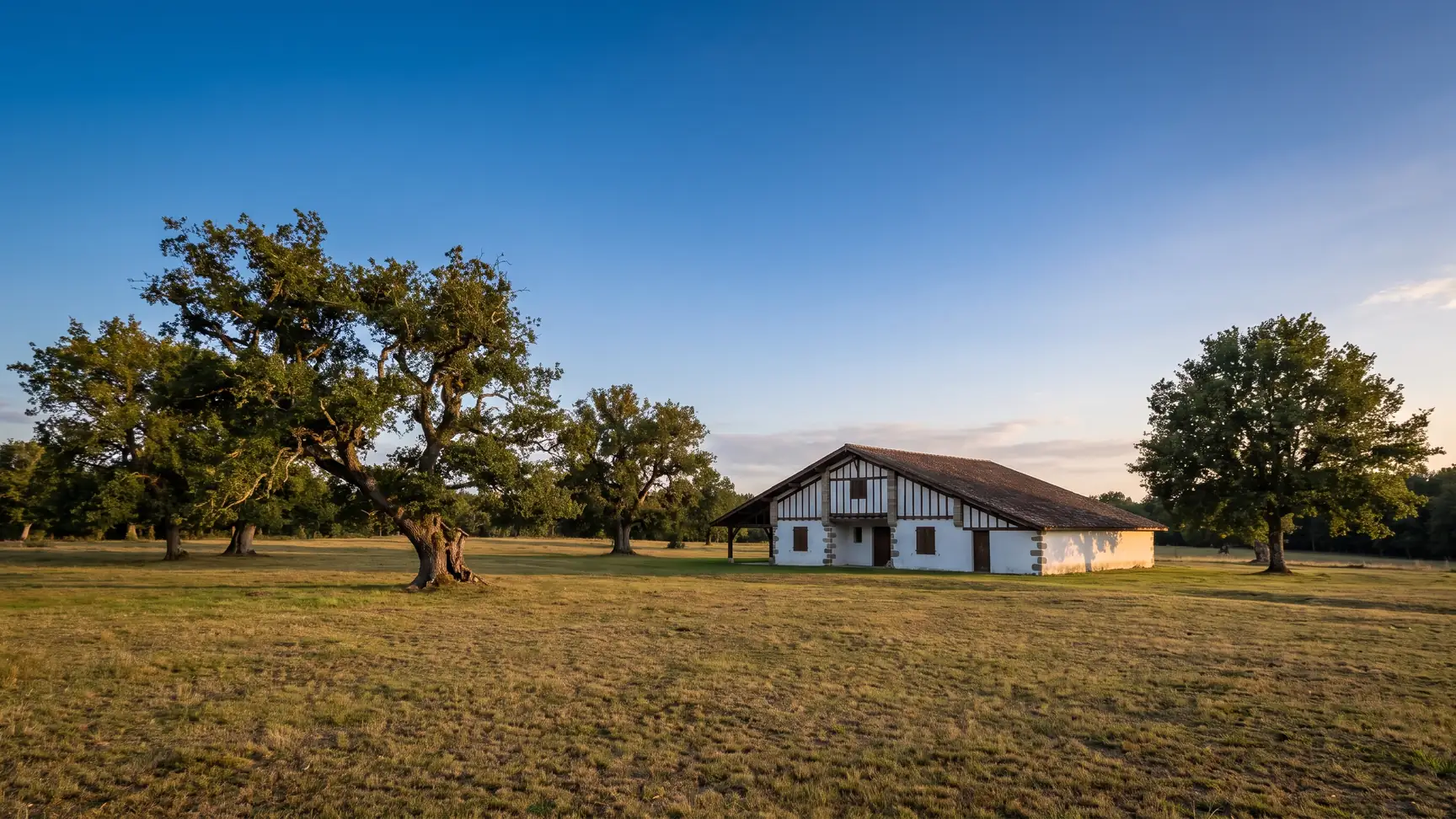
Biscarrosse is a hub for the entire Pays de Born region and the southern Bassin: Sanguinet is 14 km away, the Dune du Pilat is 32 minutes away, Arcachon is 40 minutes away, Mimizan is 30 km away—and Parentis, on the other side of the bay, is a quarter of an hour away. Here are the verified distances.
From the Lake to the Sand Giants
To the north, Sanguinet (14.2 km) shares the same lake and hides its treasure: five sunken villages and a Musée de France dedicated to lake archaeology—see our Sanguinet Guide. Further up, the Pilat Dune (32 minutes) and Arcachon start with the Bassin—the classic excursion for visitors to Biscarrosse, best done early in the morning to avoid the summer crowds at the dune parking lot: see our Guide to the Dune du Pilat. To the south, Parentis-en-Born shares the oil lake, and Mimizan (30 km) boasts its UNESCO-listed bell tower and its "Churchill Summers"—see our Mimizan Guide. The train stations The nearest towns: Ychoux (Bordeaux–Hendaye line) and La Teste-de-Buch (Bordeaux–Arcachon TER), each about 20 kilometers away. The Born region can be explored like an archipelago: lakes, dunes, pine forests, and resorts follow one after another without a break—the perfect setting for a wonderful week starting from the 3rd-largest town in the Landes department.
Here’s a tip for planning the highlight of your trip: combine a visit to the Pilat Dune with a trip to Arcachon. Leave early—the dune parking lot fills up by mid-morning in the summer—hike up while it’s still cool, head back down for lunch on the Bassin, then treat yourself to a late afternoon in Arcachon when the crowds have thinned out: the piers, ice cream shops, and the “Winter Town” bathed in golden light. Return via the Lakes Route, with an evening swim at Navarrosse as your reward. The reverse route works just as well off-season, when the dune is best enjoyed at sunset. In either case, it’s best to drive: the parking lots at Pilat and Arcachon are among the most frustrating in Aquitaine during the summer, and the loop route is best enjoyed from the passenger seat rather than behind the wheel—an argument that hasn’t changed since the days of the Laté 631.
| Destination | Distance / Time from Biscarrosse | Must-See |
|---|---|---|
| Sanguinet | 14.2 km · 18 min | sunken villages, Lake Museum, beaches |
| Parentis-en-Born | ~12 km · 15 min | the other side of South Lake, the land of oil |
| Dune du Pilat | ~35 km · 32 min | the tallest dune in Europe |
| Arcachon | ~42 km · 40 min | waterfront, piers, Ville d'Hiver |
| Mimizan | ~30 km · 30 min | UNESCO bell tower, Lake Aureilhan |
| Ychoux | ~20 km · 20 min | TER station on the Bordeaux–Hendaye line |
When is the best time to visit Biscarrosse?
The museum is open from February through October (7 days a week in the summer), the lake beaches are patrolled in July and August, the town markets are bustling year-round, and the RIHB returns in late May 2027: Biscarrosse is full of life. Here is the verified calendar.
| Season | What's in Store for You |
|---|---|
| Spring (April–June) | A peaceful museum, a golf course in top shape, lakes with their first sailboats, and boat trips from the Museum of Traditions |
| Summer (July–August) | Navarrosse and Maguide are under surveillance; the museum is open 7 days a week; there are daily markets at the beach; and the campgrounds are fully booked |
| Fall (Sept.–Oct.) | Golden Lakes, Royal Golf Course, museum open through the end of October, predator fishing |
| Winter | The town is open year-round (markets on Fri. and Sun.), high tides at the beach; the museum is closed in January |
Seasonal Tip
The signature moment is back every two years, in late May : The International Seaplane Rally — next edition on May 29 and 30, 2027 — when the Catalinas touch down on the water for free before the eyes of tens of thousands of spectators: the only event in France where aviation history is reenacted on its original body of water. Aside from vintage aircraft, June offers the best balance: a quiet museum, lakes that are already warm, and a smooth golf course. July and August bring the three main attractions—the town, the lake, and the beach—to life, complete with lifeguards and daily markets; fall returns the lakes to the fishermen and the 18-hole course to the purists. In winter, the town remains lively—that’s the advantage of a real town over a resort—but the museum is closed in January: check before getting in the car. A general rule for the Born region: the main areas are spread out (7 to 10 km apart)—it’s best to plan your day in loops rather than round trips.
How much does the trip cost, and how do I get there?
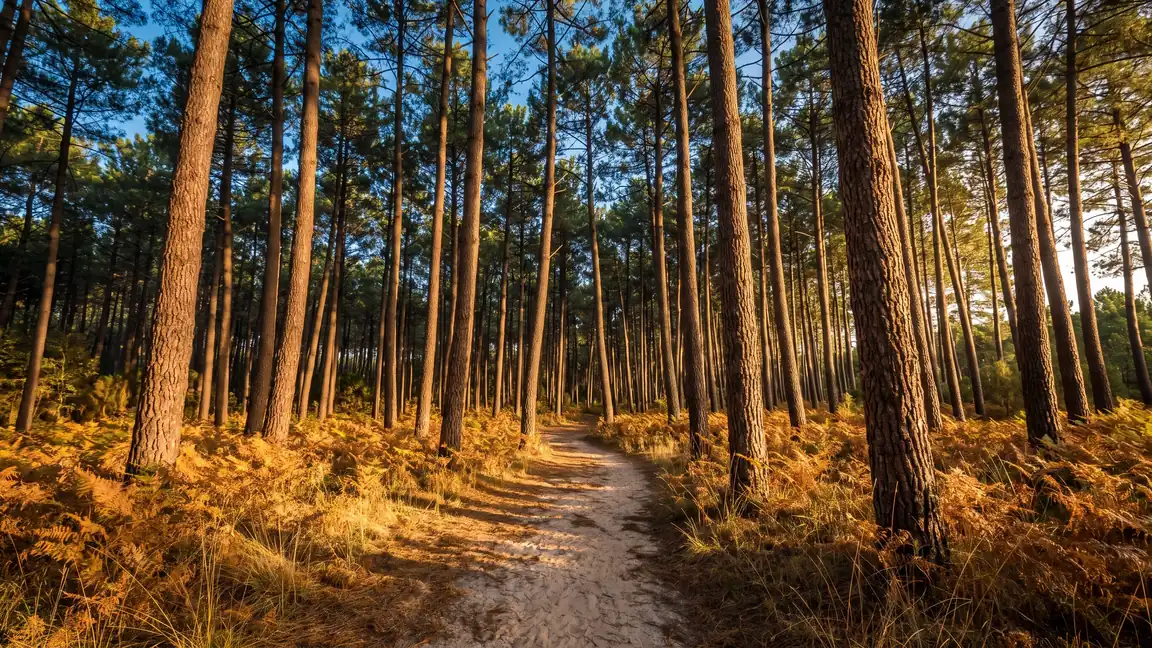
A private transfer from Bordeaux to Biscarrosse costs 141 € in Economy class (1–3 passengers), a fixed price provided in advance, for approximately 75 km and a 1-hour-15-minute drive via the A63 and A660. If you don’t have a car, the nearest train stations are Ychoux and La Teste-de-Buch, about 20 kilometers away. Here’s an honest comparison—with a bit of historical context.
By road from Bordeaux, just like the passengers on the Laté 631
The route hasn't changed since 1947: the bypass, theA63 then theA660 toward Arcachon, and take the D652 due south to the lakes — about 75 km, 1 hour 15 minutes. That is exactly the route taken by the passengers on the Laté 631, who traveled by train from Paris to Bordeaux and then made their way to the seaplane base by car Before flying to Fort-de-France: the transfer from Bordeaux to Biscarrosse has a transatlantic pedigree. In private driver, it’s a door-to-door service—from your home, Mérignac Airport, or Saint-Jean Train Station to the town center, the lake, or the campground—with your golf and paddle equipment on board. The price is set and announced before the race : 141 € in Eco class; 8-seat van available upon request. Interesting stop along the route: the beach (85 km) can be reached almost as quickly as the town (75 km)—with just a few minutes' difference—thanks to the highway route; our Guide to Biscarrosse-Plage describes that transfer in detail.
Without a car: Ychoux or La Teste, then by road
Biscarrosse does not have a train station. The nearest stations are Ychoux (~20 km), on the Bordeaux–Hendaye line—the historic Landes railway line—and La Teste-de-Buch (~22 km), on the frequent-service Bordeaux–Arcachon TER line. From there, public transportation to the lakes is limited and seasonal: you’ll need to finish the trip by car. For travelers with a lot of luggage—whether traveling with family, for golf, or for paddleboarding—the smoothest option is a private transfer all the way from Bordeaux, or taking the TER and hiring a driver for the final 15 minutes. Once there, the bike reigns supreme between the main hubs: the lake trail heads toward Sanguinet, the Vélodyssée connects the beach to both Arcachon and Parentis, and the campgrounds rent out all kinds of bikes. The Born equation, one last time: plan your trip, then spend your stay cycling—between two lakes and the ocean.
| Option | Duration | What You Need to Know |
|---|---|---|
| Executive Car Service (Door-to-Door) | ~1 hr 15 min | 141 € € in Economy (1–3 passengers), fixed price, 8-passenger van available upon request |
| Personal car | ~1 hr 15 min | A63/A660, then D652; shopping centers 7–10 km apart in the area |
| TER from Bordeaux to Ychoux + drive | ~40 min + 20 min | ~20 km remaining without reliable public transportation |
| TER Bordeaux → La Teste + drive | ~40 min + 25 min | ~22 km remaining; a great option to combine with the Bassin |
Frequently Asked Questions
Where is Biscarrosse located?
In the northern part of the Landes region, in the Born area, about 75 km from Bordeaux (1 hour and 15 minutes via the A63 and A660). It is the largest municipality in the department (160.48 km²) and its third-largest town (15,836 residents in 2023), spread across three areas: the town center, Biscarrosse-Lac on the shores of Lake Cazaux-Sanguinet (7 km away), and Biscarrosse-Plage facing the ocean. The municipality borders two massive lakes—Cazaux-Sanguinet to the north and Biscarrosse-Parentis to the south—which have been connected by the Landes Canal since 1838.
Why is Biscarrosse known as the city of seaplanes?
Because Pierre-Georges Latécoère established his assembly and testing base there in 1930, on Lake Biscarrosse-Parentis (the South Lake), which was supplemented as early as 1937 by the transatlantic seaplane base at Les Hourtiquets, which remained in operation until 1955. The giant Latécoère 521 and 631 took off from there—on test flights to New York in 1938–39 and on the first regular France–Antilles route to Fort-de-France in 1947–48—and Mermoz, Saint-Exupéry, and Guillaumet were regular visitors to the base. The city calls itself the “cradle of seaplane aviation,” and its museum preserves this legacy.
What is there to see at the Musée de l'Hydraviation?
On the very site of the former Latécoère base (332 rue Louis-Bréguet), the museum displays 12 seaplanes and more than 1,000 artifacts, with collections described as unique in Europe—scale models, engines, memorabilia from pilots, and artifacts reflecting the luxury of transatlantic travel in 1947 (leather reclining seats and the bar from the Laté 631). Designated a “Musée de France,” founded by Marie-Paule Vié-Klaze in 1982. Open from February through October, Wednesday through Sunday (2:00 p.m.–6:00 p.m.), daily in July and August (10:00 a.m.–7:00 p.m.), closed in January.
How much does a trip from Bordeaux to Biscarrosse cost with a
private driver?
A private transfer from Bordeaux to Biscarrosse costs 141 € in Economy class (1–3 passengers), with a fixed price provided before the ride—no meter and no surprise surcharges. The trip covers approximately 75 km in 1 hour and 15 minutes via the A63 and A660, door-to-door: from your home, Mérignac Airport, or Saint-Jean Train Station to the town center, the lake, or the campground. An 8-passenger van is available upon request. A bit of history: this is the route that passengers on the Laté 631 used to take by car before flying to Fort-de-France.
What is there to do in Biscarrosse?
Visit the Hydraviation Museum and its twelve aircraft, swim at the supervised beaches on the lake (Navarrosse and Maguide, July–August), play a round of 27-hole golf near Navarrosse, bike along the lake path toward Sanguinet (~15 km), explore the town markets (Friday and Sunday mornings), explore the Museum of Traditions and take a boat ride on the canals, admire the fortified church of Saint-Martin—and head over to the ocean at Biscarrosse-Plage, just fifteen minutes away, for the waves and the sunset.
What is the difference between Biscarrosse, Biscarrosse-Lac, and
Biscarrosse-Plage?
These are the three main areas of the same municipality. The town center is the hub of year-round activity: town hall, shops, markets, Saint-Martin Church, and museums. Biscarrosse-Lac, 7 km away, borders Lake Cazaux-Sanguinet (the North Lake): marinas, the beaches of Navarrosse and Maguide, a golf course, and campgrounds. Biscarrosse-Plage, about ten kilometers away, faces the ocean: lifeguard-patrolled beaches, surfing, a boardwalk, and summer markets—we’ve dedicated a separate guide to it. A common misconception: seaplanes used to take off from the South Lake, not from Biscarrosse-Lac.
Did seaplanes really fly to New York from Biscarrosse?
Yes, but on test flights, not on scheduled flights—that distinction matters. The Latécoère 521 successfully completed the Biscarrosse → New York crossing from August 23 to 31, 1938 (via Lisbon and the Azores), followed by four round trips in 1939; That same year, Henri Guillaumet set a record: a nonstop flight from New York to Biscarrosse, covering 5,875 km, 2,300 of which were flown with one engine shut down. The only regular commercial route was Biscarrosse → Fort-de-France (Laté 631, 1947–1948)—the first regular air service between France and the French West Indies.
What is the International Seaplane Rally?
The city’s major biennial event, established in 1991: Over the course of a weekend, legendary seaplanes—such as the Catalina and Grumman Albatross—once again touch down on Lake Biscarrosse-Parentis, right on the site of the former Latécoère base, in front of a large audience, free of charge. It is the only air show in France where the history of seaplane aviation is reenacted on its original body of water. The next edition is scheduled for May 29 and 30, 2027; the 2025 edition took place in late May and early June.
Is there really oil under Lake Biscarrosse?
Yes—and by a wide margin: the oil field discovered on March 22, 1954, beneath and around the Biscarrosse-Parentis lake remains the largest crude oil reserve in metropolitan France. The American company Esso carried out Europe’s first lake-based oil drilling operations there as early as March 25, 1954; at its peak, production reached approximately 800,000 metric tons per year. The Canadian company Vermilion still operates the field, and the crude is sent for refining at Bec d’Ambès… just outside Bordeaux. The unobtrusive platforms can be glimpsed from the shores of the South Lake.
On which days are the markets held in Biscarrosse?
In town, year-round: Friday mornings (8 a.m.–1 p.m., Place du Marché) and Sunday mornings (8 a.m.–1 p.m., Avenue Georges-Clemenceau). In Biscarrosse-Plage: Saturday mornings year-round (Place Dufau)—and during the summer (late June through late August), the pace picks up with a market every morning except Thursday, plus a night market every evening from 8 p.m. to midnight at Place Dufau. Plenty to fill your Landes shopping basket at any time: free-range poultry, sand-grown asparagus, and pastis bourrit.
What is the closest train station to Biscarrosse?
Ychoux, about 20 kilometers away, on the Bordeaux-Hendaye TER line; the alternative is La Teste-de-Buch (~22 km), on the Bordeaux-Arcachon TER line, which runs more frequently. There are no reliable public transportation options to reach the lakes from there; you’ll need to finish the trip by car. Most visitors without a car choose a direct private transfer from Bordeaux (75 km, ~1 hr 15 min, 141 € in Economy class), or the TER to La Teste followed by a private driver—a convenient option for combining the trip with a visit to the Arcachon Basin.
When is the best time to visit Biscarrosse?
Late May in odd-numbered years for the International Seaplane Rally (next edition May 29–30, 2027)—the signature event. Otherwise: June for a good balance of museum, lakes, and golf without the crowds, July–August for the lifeguard-patrolled beaches (Navarrosse, Maguide, and the ocean) and the daily beach markets; fall for golf and fishing; winter for the authentic village—avoiding January, the only month the museum is closed. Since the three main attractions are 7 to 10 km apart, plan your day as a loop rather than a series of round trips.
Further Reading
- The town's ocean: see the Biscarrosse-Plage Guide (lifeguard-patrolled beaches, surfing, and night markets, 10 km away)
- The Sunken Villages: see the Sanguinet Guide (lacustrine archaeology and Musée de France, 14 km away)
- The jewel of the Côte d'Argent: see the Mimizan Guide (UNESCO-listed bell tower and Churchill's summers, 30 km away)
- Europe's tallest dune: see the Guide to the Dune of Pilat (32 min away)
- Book your trip: book online or browse all our destinations
Sources and References
- Wikipedia — Biscarrosse — Population: 15,836 (2023), 160.48 km² (largest municipality in the Landes department); three districts; port of call for the Yankee Clipper (1939); Saint-Martin Church; etymology: bizkar
- Wikipedia — Latécoère 521 — flight from Biscarrosse to New York, August 23–31, 1938 (test flights); Guillaumet record, 1939: nonstop flight from New York to Biscarrosse, 5,875 km
- Wikipedia — Latécoère 631 — the largest seaplane of its time (57.43 m); Biscarrosse–Fort-de-France route beginning July 25, 1947, the first regular flight service between France and the Antilles; 44 reclining seats and a bar
- Hydraviation Museum — Musée de France, 1982, 12 seaplanes and more than 1,000 artifacts
- POP Mérimée — the Hourtiquets lookout tower — the control tower of the transatlantic seaplane base, designated a Historic Monument on February 1, 2012 — the only Historic Monument in the municipality
- City of Biscarrosse — “the cradle of seaplane aviation” (self-proclaimed); town market (Fridays and Sundays) and beach market; lifeguard-patrolled beaches at Navarrosse and Maguide
- Wikipedia — Biscarrosse and Parentis Lake — 3,540 ha; the largest crude oil reserve in metropolitan France (Esso 1954, Vermilion since 1997); crude oil refined at Bec d'Ambès
- OT Bisca Grands Lacs — lake and ocean beaches, 27-hole golf course, Vélodyssée (Arcachon → Biscarrosse-Plage, 25.8 km), Saint-Michel Fountain (traditional)
- INSEE — Biscarrosse — Municipal Population in 2023 and Changes Since 2017
Article updated in July 2026.
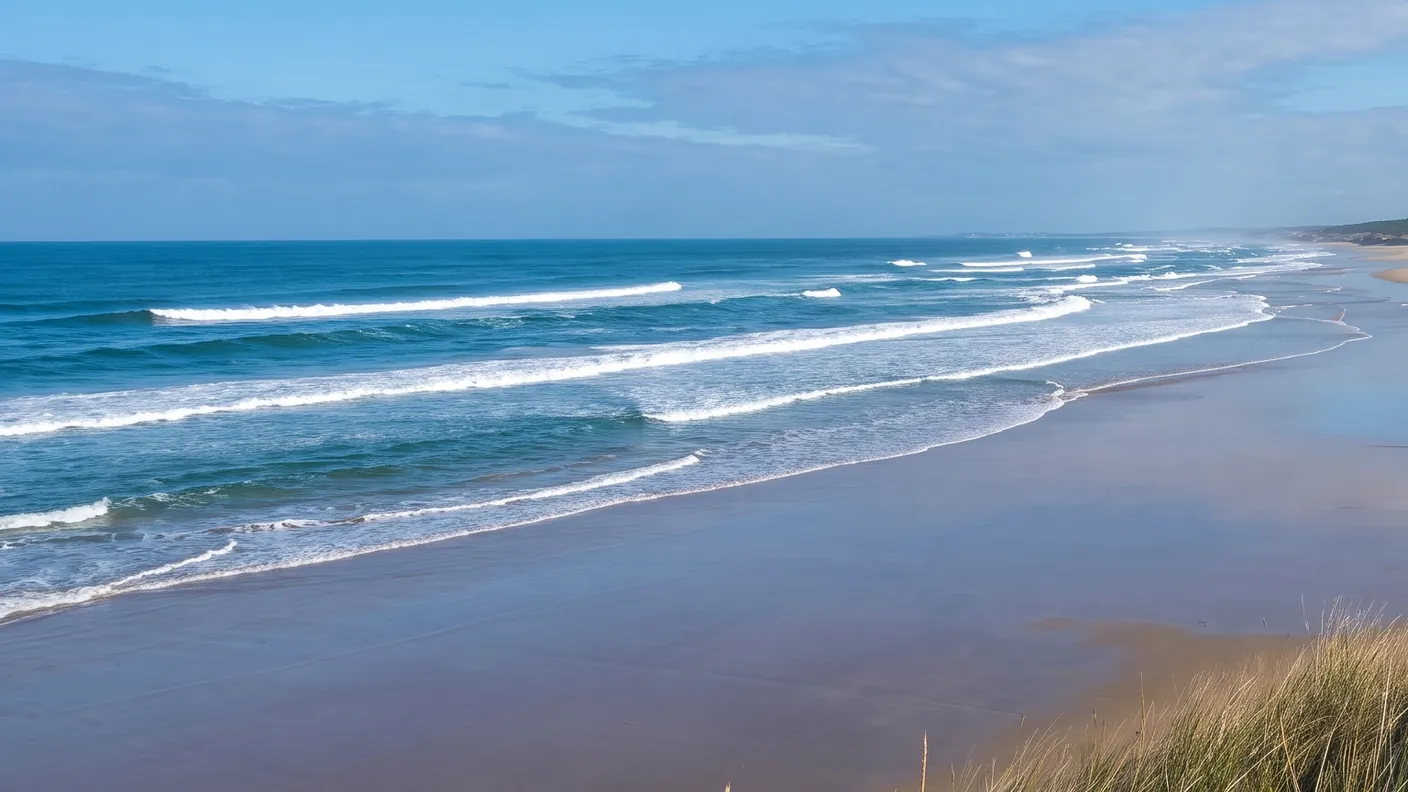
Off to the City of Seaplanes
Direct transfer from Bordeaux (~1 hr 15 min via the A63/A660) to Biscarrosse, its lakes, and its museum—from your home, the airport, or the train station to the town center, the lake, or the campground, including golf and paddle tennis: the same route taken by passengers on the Laté 631, but more comfortably.