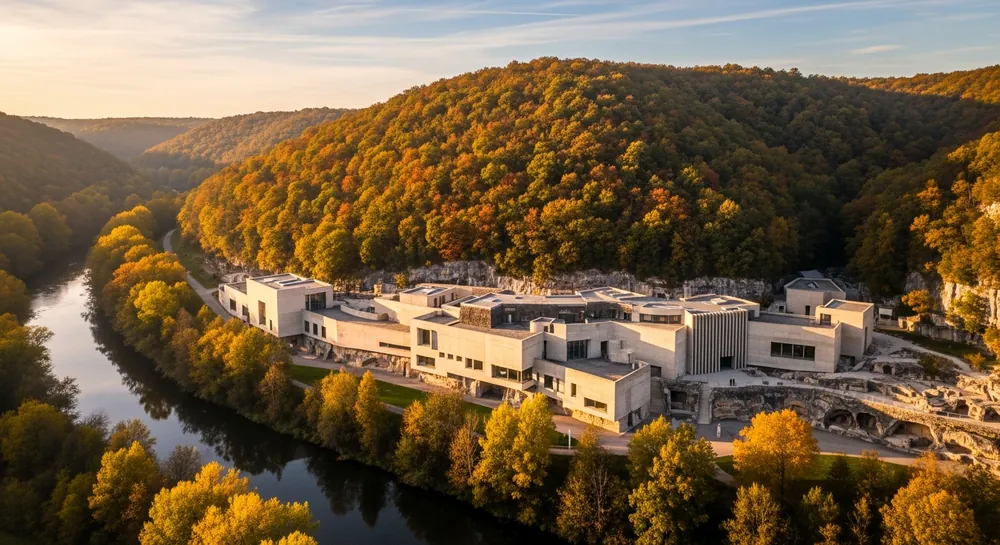
Bordeaux Saint-Jean Station 2026 guide: halls, transfers

By Adrien Moreno, licensed VTC chauffeur and founder of VTC Bordeaux Chauffeur (EVTC #03322012101). Updated May 2026, official sources: SNCF Gares & Connexions, TBM, Euratlantique, Bagmobile, EFFIA.
Monumental architecture (Marius Toudoire and Louis Choron, 1889-1898), Eiffel railway bridge over the Garonne (1860, Gustave Eiffel's first major work in France), Listed Historic Monument canopy, LGV SEA (Paris in 2h04 since July 2017), surging traffic (22.6M rail travellers in 2023, 27.8M users of the PEM hub), Euratlantique district (738 hectares being redeveloped), 3 halls, parking, Bagmobile and Grand Voyageur lounge services, "Grande Gare de Bordeaux" project for 2030. The complete guide to prepare your journey.
At a glance
- Address: Rue Charles Domercq, 33800 Bordeaux · GPS: 44.8257° N, 0.5566° W
- City centre: 15-20 min walk, ~10 min by tram
- TGV Paris-Montparnasse: 2h04 since the LGV SEA opened on 2 July 2017
- Traffic: 22.6 million rail travellers + 27.8 million people total at the multimodal hub in 2023, +8.5% annual growth since 2015
- 3 halls: Hall 1 (historic, Cours de la Marne) · Hall 2 (central, multimodal) · Hall 3 (Belcier, opened 26 April 2017)
- Transport: 3 tram lines serving the station (C, D, F) · bus · taxi · private chauffeur · bike (Le Vélo)
- Listed Historic Monument since 1984 (façade and canopy)
- "Grande Gare de Bordeaux" project launched 24 May 2024 by SNCF Gares & Connexions, horizon 2030
Before you go: the station in context
2:47 p.m., Thursday in September. You step off the TGV inOUI 8541 from Paris-Montparnasse, which left at 12:43 p.m. 2 hours 4 minutes journey, crossing France at 320 km/h, lunch had in the dining car. You walk up platform 7 toward Hall 2. Above you, the great canopy: approximately 280 metres long, 56 metres wide, 26 metres high, one of the largest still-active rail halls in Europe. 19th-century metal structure, listed as a Historic Monument in 1984.
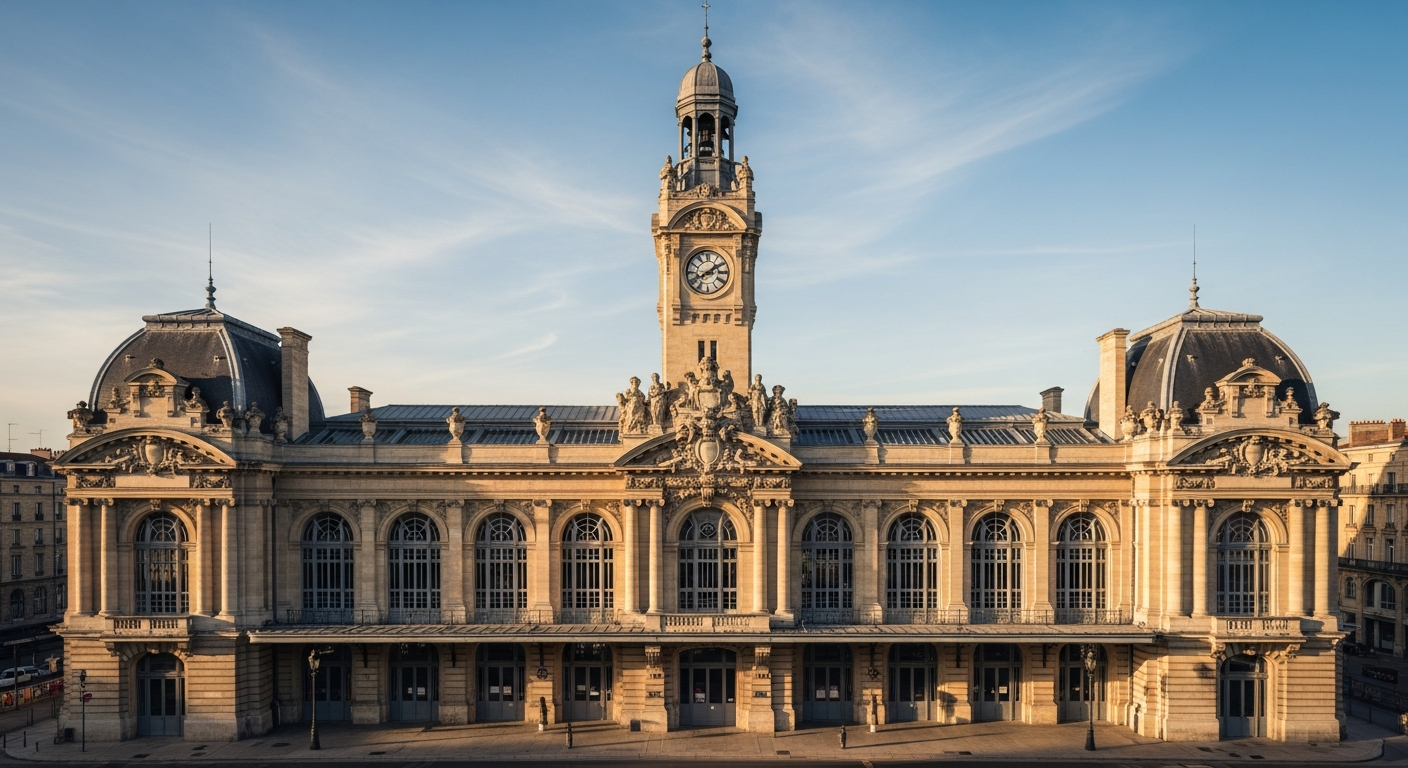
You exit onto the main forecourt on the Cours de la Marne side (Hall 1). Facing you: the Belle Époque façade designed between 1889 and 1898 by Marius Toudoire — the architect who, during exactly the same period, also designed the Gare de Lyon in Paris (1899-1900). Same architectural codes, same technical solutions for the canopy. Railway Bordeaux is a direct cousin of railway Paris, by the same man.
You turn right. Cours de la Marne northward. To your left, buildings under construction, cranes, building sites: this is the Belcier district, undergoing deep transformation since 2009 as part of the Operation of National Interest Bordeaux-Euratlantique. 738 hectares between Bordeaux, Bègles and Floirac, in full urban redevelopment. In 5 years, the station district will no longer look like what you see today.
Bordeaux Saint-Jean is a station in accelerated transformation. After the Sud Europe Atlantique LGV high-speed line opened in July 2017, traffic rose from 11 million to over 22 million rail travellers per year — nearly doubling in under a decade. A growth SNCF itself calls a "national record" (Marlène Dolveck, CEO of SNCF Gares & Connexions, May 2024). And the movement is just starting: the "Grande Gare de Bordeaux" project launched in May 2024 prepares a complete redesign by 2030.
This guide covers everything to know before coming. For the practical side of the private chauffeur transfer (rates, formats, comparison, train tracking), see our Saint-Jean Station Transfer page.
The station in numbers
| Data | Value |
|---|---|
| Rail travellers (2023) | 22.6 million |
| People total PEM (2023) | 27.8 million |
| Annual growth (2015-2024) | +8.5% per year |
| Tracks | 15 (TGV, TER, Intercités) |
| Halls | 3 (Hall 1 historic, Hall 2 central, Hall 3 Belcier) |
| Current building construction | 1889-1898 |
| Listed Historic Monument | 1984 |
| Address | Rue Charles Domercq, 33800 Bordeaux |
| SNCF phone | 36 35 (€0.40/min) |
| Official site | gares-sncf.com |
| Ticket office hours | Mon-Fri 9 a.m.-7 p.m. · Sat 10 a.m.-5 p.m. · Sun & bank holidays noon-7 p.m. |
Station opening hours:
- Monday-Thursday: 4:45 a.m. - 12:30 a.m.
- Friday: 4:45 a.m. - 1:30 a.m.
- Saturday: 4:45 a.m. - midnight
- Sunday and bank holidays: 4:45 a.m. - 1:30 a.m.
History and architecture: 170 years of Bordeaux station
1855: the first wooden station
The history of Saint-Jean station begins in 1855, with the construction of a first wooden station by the Compagnie des Chemins de Fer du Midi. This private company — created by the Pereire brothers, bankers close to Napoleon III — drove the opening of southwest France's railway lines. The station was then named "Gare du Midi" and marked the southern terminus of a major Paris-Bordeaux line via Tours and Poitiers.
The wooden structure soon proved insufficient. Bordeaux's industrial and commercial development outpaced the provisional building's capacity. The company planned a monumental station befitting the city's rank.
1889-1898: the monumental station by Toudoire and Choron
Construction of the new station began in 1889 under the joint direction of:
- Engineer Louis Choron for the metal structure and rail engineering
- Architect Marius Toudoire for the façade and overall architecture
Marius Toudoire is an essential name. Official architect of the Paris-Lyon-Méditerranée Company, he signed several masterpieces of French railway architecture during the same period: the Gare de Lyon in Paris (1898-1900), the Toulouse-Matabiau station, and so Bordeaux Saint-Jean. Railway Bordeaux is a direct cousin of railway Paris, by the same architect, in the same period.
Construction timeline:
- 1893: arrival hall completion
- 1897: departure hall completion
- 1898: official opening of the complete station
Architectural style: sober and elegant Belle Époque façade, central clock, side wings, classical pilasters. Far from Second Empire Parisian opulence, this is an assumed Bordeaux classical style.
The monumental canopy
The true masterpiece of the station is the great metal hall covering the platforms. Approximate dimensions:
- Length: ~280-300 metres
- Width: ~56 metres
- Height: ~26 metres
- Covered area: ~17,000 m²
Among the largest rail canopies in Europe, it uses metal engineering techniques characteristic of the late 19th century. Renovated multiple times: 1990 (Atlantic LGV), then 2016-2017 (Sud Europe Atlantique LGV).
1984: Historic Monument listing
Saint-Jean station was listed as a Historic Monument in 1984 for its façade and monumental canopy. Essential protection that structures all later renovations: works must respect the architectural heritage even when modernising rail flows.
Gustave Eiffel and the Saint-Jean bridge (1858-1860)
A less-known but essential history page. Gustave Eiffel did not design the station itself, but his footprint is very present in Bordeaux.
Eiffel's first major work in France
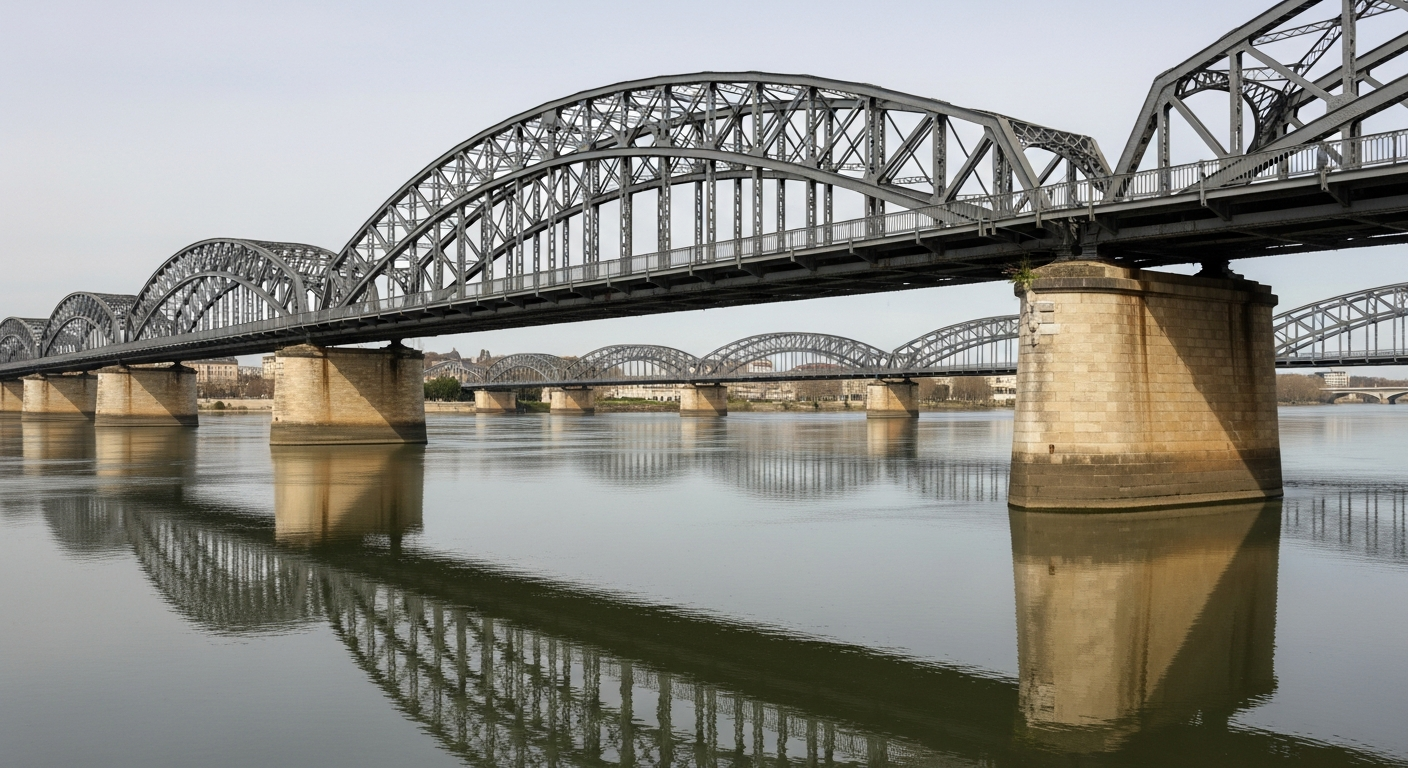
From 1858 to 1860, Gustave Eiffel (then just 26 years old) supervised the construction of the Saint-Jean railway bridge over the Garonne, for the Compagnie des Chemins de Fer du Midi. This was his first major work in France — well before the Eiffel Tower (1889), well before the Garabit viaduct (1884).
Bridge characteristics:
- Length: ~500 metres
- Structure: riveted iron deck on stone piers
- Use: two-track railway bridge, connecting the left bank (Saint-Jean station) to the right bank
The structure marks a key step in the future "iron magician's" career. Eiffel developed there the techniques of riveted metal truss construction he would later apply to his most famous works.
The bridge replaced in 2008
In 2008, as part of preparing for the arrival of the Sud Europe Atlantique LGV, the original Eiffel bridge was replaced by a new four-track bridge able to absorb high-speed traffic. Part of Eiffel's structure was preserved as heritage testimony, but the current structure is entirely contemporary.
The LGV SEA and the 2017 explosion
2 July 2017: Paris in 2h04
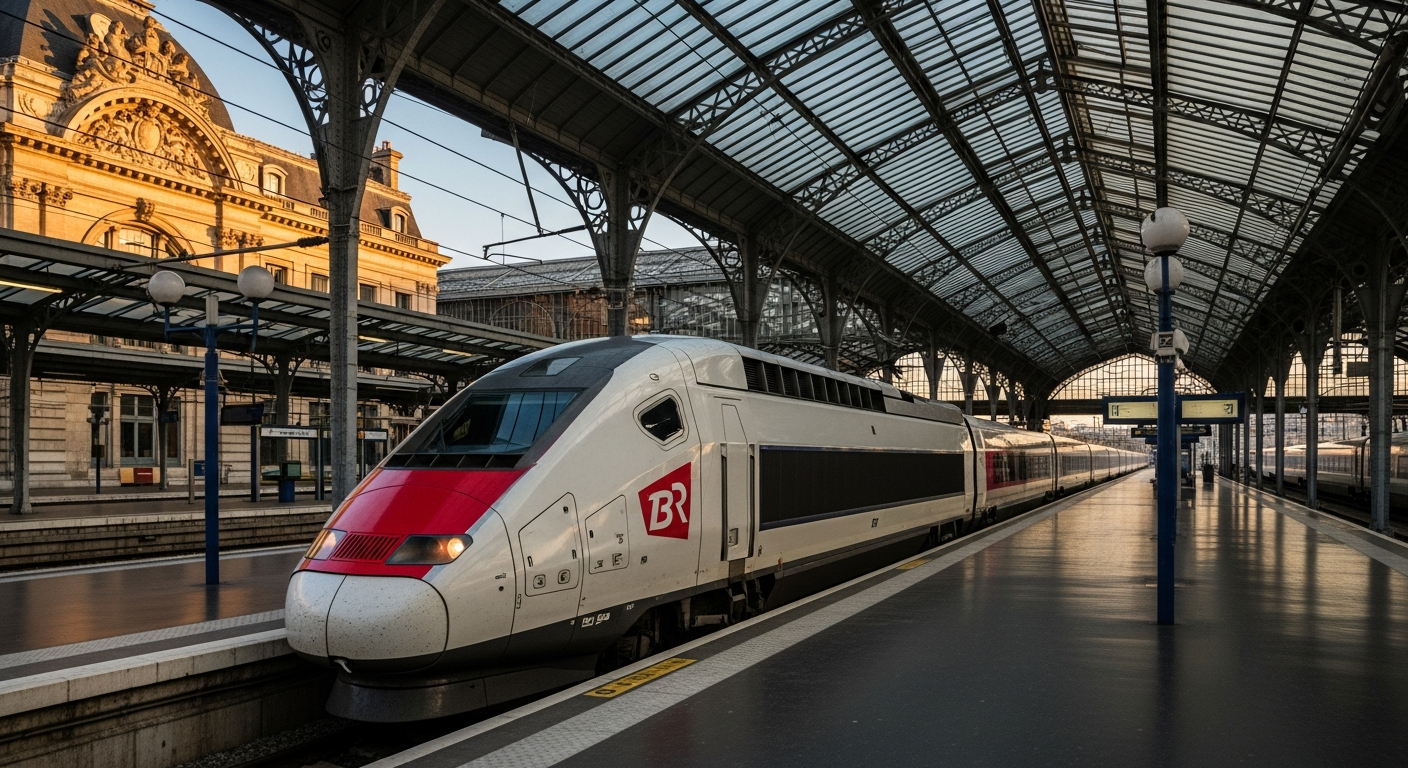
The station's major modern turning point. On 2 July 2017, the Sud Europe Atlantique LGV between Tours and Bordeaux entered service. Bordeaux-Paris-Montparnasse journey: from 3h00 to 2h04. Nearly an hour saved at once, propelling Bordeaux into the Paris region's orbit.
Immediate impacts:
- Station traffic: rises from 11 million to over 17 million rail travellers in 2 years, then 22.6 million in 2023
- Average annual growth: +8.5% per year between 2015 and 2024 — one of France's strongest growths
- Bordeaux property boom: real estate prices soar in subsequent years (the "Parisians moving in" becomes a local phenomenon)
- Economic reconfiguration: Bordeaux becomes an attractive remote-work destination for Parisian executives
Hall 3: Belcier-side extension (26 April 2017)
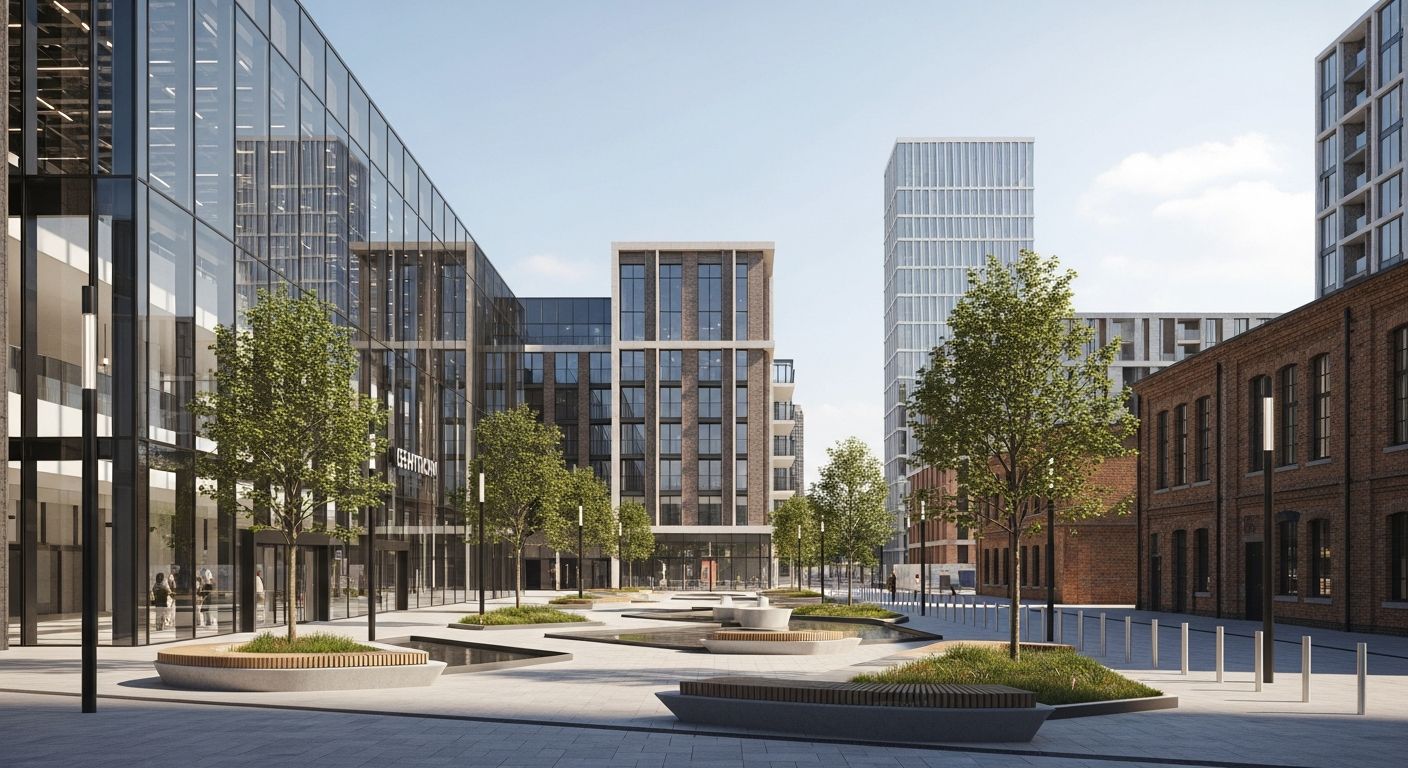
To absorb the expected influx, a new hall was opened on 26 April 2017 — just before the LGV's arrival. Hall 3, on the Belcier side, rue des Terres-de-Borde. It allowed a second station entrance, relieved the historic Hall 1, and structured the Euratlantique district's development.
A "record station"
Marlène Dolveck, CEO of SNCF Gares & Connexions, at a Bordeaux Métropole press point in May 2024: "Bordeaux Saint-Jean is a record station. With flows up 8.5% per year since 2015, it today receives 27.8 million travellers and users per year. We hadn't imagined it would reach this level."
Important distinction:
- 22.6 million rail travellers = those who take or get off a train
- 27.8 million people total = all users of the multimodal hub (travellers + accompanying persons + tram/bus connections + passersby)
The Euratlantique district: the station at the heart of a transformation
A 2009 Operation of National Interest
On 5 November 2009, a decree created the Operation of National Interest Bordeaux-Euratlantique. Objective: transform the station district into a major metropolitan business hub, leveraging the future LGV.
Features:
- Surface: 738 hectares spread across 3 municipalities — Bordeaux (386 ha), Bègles (217 ha) and Floirac (135 ha)
- Programme: 15,000 dwellings, 500,000 m² of offices, shops, public facilities, urban parks
- Horizon: 2030 for the main completion
- The largest urban project in France outside Greater Paris
Belcier in deep change
The Belcier district (east of the station, Hall 3 side) is the most profoundly transformed. Formerly an SNCF workers' district, it is becoming a contemporary business district: office towers, modern housing, MECA (Maison de l'Économie Créative et de la Culture en Nouvelle-Aquitaine), new Ars park, renovated Eiffel hall.
To see on exiting the station Hall 3 side:
- MECA: Creative Economy House, spectacular contemporary architecture signed Bjarke Ingels Group
- Halle Boca and Halle Debat-Ponsan: former rail halls converted
- Air France Tower and new office buildings
The "Grande Gare de Bordeaux" project for 2030
Launch in May 2024
On 24 May 2024, SNCF Gares & Connexions officially announced the "Grande Gare de Bordeaux" project — a complete modernisation programme of the station and its surroundings, horizon 2030.
Steering: SNCF Gares & Connexions in partnership with Bordeaux Métropole, the Nouvelle-Aquitaine Region, EPA Euratlantique, the State and the European Union.
Official announcement: "From today and particularly toward 2030, the exceptional traffic growth and evolving uses and practices require rethinking the operation and layout of the multimodal hub at Bordeaux Saint-Jean station."
10 structural priorities
The project articulates 10 main priorities:
- Adapting the multimodal hub with creation of a modern bus station
- Decongesting the rail station through space reorganisation
- Improving access from the various districts
- Possible integration of a suitable car park
- Streamlining flows of travellers and connections
- Preparing for the arrival of the metropolitan RER (regional express service)
- Preparing for the arrival of new LGVs toward Toulouse, Dax and Spain
- Strengthening the urban dimension
- Modernising commercial spaces
- Improving user experience
2024 public consultation
A preliminary public consultation was held from 2 September to 11 October 2024, mobilising users, residents and local stakeholders. Feedback is currently being integrated into the final planning.
The 3 halls today
Hall 1 (Cours de la Marne) — the historic
The historic main hall, façade Cours de la Marne side. The main entrance most travellers use. Here you'll find:
- Belle Époque façade listed as Historic Monument
- Emblematic central clock
- Pilasters, side wings
- SNCF Grand Voyageur lounge (Grand Voyageur or 1st class access)
- Accès Plus PRM service (main meeting point)
- Panoramic view of the canopy from inside
Exit: taxis, tram, open forecourt onto the station square.
Hall 2 — the central multimodal hub
The central hall, between Hall 1 and Hall 3. The true multimodal hub:
- Tram C, D, F stops at the forecourt
- Taxi rank
- Bagmobile (luggage lockers) at level -1
- Shops: Paul, Brioche Dorée, Relay, Burger King, Eat'Shop
- Ticket withdrawal kiosks
- Access to central platforms
This is where most train ↔ tram ↔ bus connections take place.
Hall 3 (Belcier) — the new
Opened on 26 April 2017 to anticipate the LGV's arrival. Belcier side, rue des Terres-de-Borde. Deep modernisation:
- Contemporary architecture with large glass walls
- EFFIA Le Roy underground car park direct access
- Exit onto the Belcier / Euratlantique district
- Taxi and chauffeur service Belcier side (less congested than Hall 1)
- Modern waiting area and workspaces
Tip: to reach Belcier, Floirac, or take a private chauffeur less exposed to the Cours de la Marne traffic, exit via Hall 3. Less busy, direct access to the Le Roy car park.
Main destinations
Major lines from Bordeaux Saint-Jean
| Destination | Type | Duration |
|---|---|---|
| Paris-Montparnasse | TGV inOUI / OUIGO | 2h04 |
| Lyon Part-Dieu | TGV inOUI | ~3h50 |
| Marseille Saint-Charles | TGV inOUI | ~4h45 |
| Toulouse Matabiau | Intercités | 2h10 |
| Lille Europe | TGV inOUI | ~4h30 |
| Strasbourg | TGV inOUI | ~5h30 |
| Nice | TGV inOUI | ~7h |
| Brussels-Midi | Eurostar (ex-Thalys) | ~5h30 |
| Hendaye (Spanish border) | TGV / Intercités / TER | 2h-2h30 |
| Arcachon | TER | 50 min |
| Bayonne | TER / Intercités | 1h30 |
| Angoulême | TER / TGV | 35-55 min |
| Périgueux | TER | 1h20 |
| Sarlat | TER (change at Libourne) | 2h30 |
| La Rochelle | TER / Intercités | 2h-2h30 |
| Limoges | Intercités | 2h45 |
| Bergerac | TER | 1h10 |
| Libourne (Saint-Émilion) | TER | 25-35 min |
OUIGO from Bordeaux
Bordeaux is one of France's main OUIGO destinations. SNCF's low-cost high-speed trains serve from Bordeaux:
- Paris-Massy / Marne-la-Vallée (Paris variants)
- Lyon Saint-Exupéry / Part-Dieu
- Marseille
- Strasbourg / Nancy (seasonal)
- Lille Europe / Tourcoing
OUIGO fares: from €10-25 booked ahead, up to 3 months before departure.
Parking around the station
EFFIA Le Roy car park (main)
The official station car park, adjacent on the Belcier side (Hall 3 access).
- Capacity: ~850 spaces
- Opening: 24/7
- Rate: ~€3/hour, ~€29/24h
- Direct platform access from the car park
- Online booking: recommended on effia.com (-15 to -30%)
- PRM: reserved spaces, lift access
Valet services and private parking
For longer stays, several valet or shuttle car park services offer significantly more advantageous rates:
| Service | Type | Indicative rate | Specifics |
|---|---|---|---|
| Ector | Valet | From €6/day | Drop-off/pickup on the station forecourt |
| ParkVia | Valet or shuttle | From €8/day | Several partner providers |
| Belcier private parking | Shuttle | From €5/day | Belcier district, free shuttle |
Tip: For 3+ days, valets or private car parks are systematically cheaper than EFFIA Le Roy. Book online, compare before departure.
In-station services
Bagmobile (official luggage lockers)
THE station locker service, partnership with SNCF.
- Location: Hall 2, level -1
- Hours: 8:15 a.m. - 9 p.m., 7/7
- Prices: Small bag €5.50 · Medium €8 · Large €11 · XL €15
- Online booking: gironde.bagmobile.fr — recommended in high season
Grand Voyageur lounge
Premium waiting room reserved for SNCF Grand Voyageur Card customers, TGV Pro Première, or 1st class ticket holders.
- Location: Hall 1
- Services: comfortable seating, strengthened WiFi, plenty of plugs, workspace, press, hot drinks dispensers
- Access: on presentation of your card or 1st class ticket
Accès Plus PRM service
Free assistance service for travellers with reduced mobility.
- Mandatory booking: at least 48h before your departure
- Official site: accessibilite.sncf.com
- Phone: 3635
- PRM meeting point: main entrance of Hall 1
- All platforms accessible by wheelchair via lifts
Restaurants and cafés
- Paul (Hall 2): open from 5:30 a.m., most versatile option
- La Brioche Dorée (Hall 2)
- Relay (Hall 2): press, snacks, drinks
- Burger King (Hall 3)
- Vending machines (all halls)
Tip: in-station catering quality and value are mediocre. To eat better and cheaper, walk 5 minutes toward cours de la Marne: many restaurants, brasseries, Bordeaux cafés.
Free WiFi
- SNCF_GARES network available throughout the station
- Free, simple sign-up
- Smooth connection in main waiting areas
ATMs and banking services
- ATMs present in Halls 1 and 2
- Currency exchange: not available in station, but in city centre (15 min by tram)
Travellers with bikes
SNCF bike rules
| Train type | Bike rule |
|---|---|
| TER | Accepted free of charge (subject to space), without dismantling |
| TGV inOUI | Bike must be dismantled and stored in a bag (max 120 × 90 cm), or bike space reservation on certain TGVs (paid, book ahead) |
| OUIGO | Bike dismantled in bag only, no non-dismantled bike space |
| Intercités | Bike space available with reservation |
| Eurostar (ex-Thalys) | Mandatory bike reservation, paid supplement |
Bike parking at the station
- Bagmobile bike storage: Hall 2, level -1 (same hours as luggage lockers)
- Le Vélo stations (Bordeaux Métropole): at the station exit to reach the centre
- Bike lanes marked via the cours de la Marne
How to reach the city centre from the station
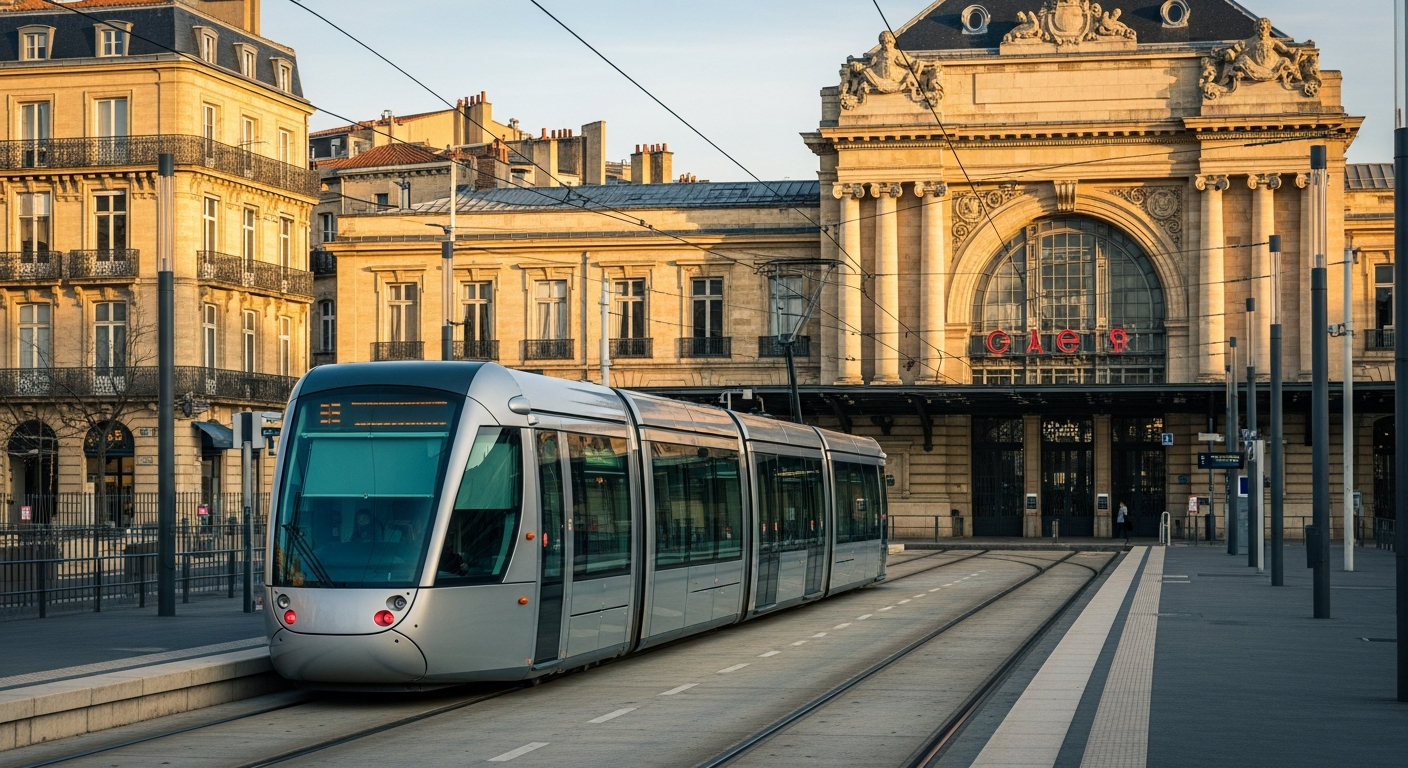
The station is 15-20 min walk from the historic city centre, or ~10 min by tram. Several options by profile.
- On foot: 15-20 min up the cours de la Marne to Place de la Victoire, then rue Sainte-Catherine to the Quinconces. Doable and pleasant in good weather.
- Tram line C (Hall 2 forecourt): toward Quinconces / Grand Parc in ~10 min, fare €1.80. The fastest option to the centre.
- Tram line D (Hall 2 forecourt): reinforces service to Quinconces and Chartrons.
- Tram line F (Hall 2 forecourt, since December 2025): direct station ↔ airport link in ~45 min.
- TBM buses: lines 6, 9, 11 serve the station, 15-30 min to other districts.
- Taxi: rank in front of Hall 1, fare to centre ~€10-15.
- Private chauffeur with fixed rate: from €30 in eco class, train tracking included, 15 min free waiting time. Useful for late arrivals or groups with luggage.
- Le Vélo bikes (self-service): €1.70 for 30 min, day pass at €3.
For details (fixed transfer rates, comparison of providers, anti-marketplace, formats, long-distance Saint-Émilion / Cap Ferret / Médoc): see our dedicated Saint-Jean Station Transfer page.
Practical tips by traveller type
Business traveller
- Arrive 20-25 min before a TGV departure (boarding closes 5 min before)
- The Grand Voyageur lounge (Hall 1, Grand Voyageur Card or 1st class ticket access) offers comfortable seating, strengthened WiFi, plenty of plugs
- If you come by car for several days, opt for a long-stay valet parking: far cheaper than EFFIA over time
- The SNCF Connect app lets you follow your train in real time and be alerted in case of disruption
- For regular Paris-Bordeaux business trips: TGV Pro subscription or SNCF Liberté Card, profitable from 8-10 trips/year
Family with children
- Lifts are present in all three halls for strollers and wheelchairs
- Paul and Brioche Dorée are the most child-friendly options in station
- The cours de la Marne (5 min walk) has several restaurants with kids' menus
- Plan to arrive 30 min before with young children: platforms can be long to reach
Traveller with reduced mobility (PRM)
- Book the SNCF Accès Plus service at least 48h before your departure: accessibilite.sncf.com or 3635
- The PRM meeting point is at the main entrance of Hall 1
- All platforms are wheelchair-accessible via lifts
- The TBM network (tram, bus) also has PRM-adapted infrastructure
Traveller with heavy luggage
- Bagmobile at Hall 2 level -1 is the best option for storing a bulky bag during a day in Bordeaux
- For very heavy suitcases: prefer Hall 3 Belcier side, direct parking access and spacious lifts
- Luggage assistance VTC: +€15 option if you want the chauffeur to take your bags directly on the platform
Calendar: when is the station busiest?
| Period | Crowd | Tip |
|---|---|---|
| Friday evening (5-9 p.m.) | Very high | Paris TGVs packed, platforms saturated |
| Sunday evening (4-9 p.m.) | Very high | Massive weekend returns |
| July-August school holidays | Peak | Book 3 months ahead |
| All Saints, Christmas, February, Easter | High | Trains sold out very early |
| Bank holidays and long weekends | High | Friday before + Monday after saturated |
| Tuesday-Thursday morning (off-school) | Low | Best moment to travel light |
In case of SNCF strike
- Activate SNCF Connect app alerts ("My alerts" section)
- Check sncf.com the day before and morning of departure
- Alternative transport plans are published the day before at 5 p.m. in case of strike notice
FAQ
How to get from Saint-Jean Station to central Bordeaux?
The fastest solution is tram line C (Saint-Jean stop in front of the forecourt): 10 minutes to reach the Quinconces or Place de la Victoire for €1.80. On foot, allow 15-20 minutes up the cours de la Marne. Private chauffeur: fixed rate from €30, see Saint-Jean Station Transfer.
What's the parking rate at Bordeaux Saint-Jean Station?
The official EFFIA Le Roy car park (adjacent to the station) costs about €3/hour and €29/24h. For multiple days, valet services (Ector, ParkVia) offer rates from €6/day with online booking.
Are there luggage lockers at Bordeaux Saint-Jean?
Yes. The official Bagmobile lockers (SNCF partnership) are at Hall 2, level -1, open daily 8:15 a.m. to 9 p.m.. Rates: €5.50 (small bag) to €15 (XL) for 24h. Online booking at gironde.bagmobile.fr.
Which restaurants are open at Bordeaux Saint-Jean Station?
In the station: Paul (from 5:30 a.m.), Brioche Dorée, Relay, Burger King Hall 3 side. To eat better and cheaper, the cours de la Marne restaurants (5 min walk) are a far better option.
How to get from Saint-Jean Station to Bordeaux-Mérignac Airport?
Since December 2025, the TBM tram line F directly connects Saint-Jean Station to the airport in around 45 minutes. Fare: €1.80. 30'Direct shuttle: €8, 30 min. By taxi, allow €35-45 and 25-35 min depending on traffic. By private chauffeur: from €40 fixed rate.
Is there free WiFi at Bordeaux Saint-Jean Station?
Yes. The SNCF_GARES network is free throughout the station. Simple connection, no lengthy sign-up.
How to book PRM assistance at Bordeaux Station?
Contact the SNCF Accès Plus service at 3635 or via accessibilite.sncf.com, at least 48h before your departure. The PRM meeting point is at the main entrance of Hall 1.
What are the opening hours of Bordeaux Saint-Jean Station?
The station is open Monday-Thursday 4:45 a.m. to 12:30 a.m., Friday 4:45 a.m. to 1:30 a.m., Saturday 4:45 a.m. to midnight, and Sunday and bank holidays 4:45 a.m. to 1:30 a.m.. Ticket offices have more limited hours (Mon-Fri 9 a.m.-7 p.m., Sat 10 a.m.-5 p.m., Sun noon-7 p.m.).
How many travellers use Saint-Jean Station?
In 2023: 22.6 million rail travellers and 27.8 million people total at the multimodal hub (PEM). Average annual growth of +8.5% since 2015 — one of France's strongest growths according to SNCF Gares & Connexions. It is the arrival of the Sud Europe Atlantique LGV in 2017 that triggered this surge.
What's the architectural history of Saint-Jean Station?
Built between 1889 and 1898 under the direction of engineer Louis Choron and architect Marius Toudoire (who also designed the Gare de Lyon in Paris in the same period). The large metal canopy of about 280 × 56 × 26 m is one of the most important in Europe. Listed as a Historic Monument in 1984.
When did Hall 3 (Belcier) open?
On 26 April 2017, in anticipation of the Sud Europe Atlantique LGV (opening 2 July 2017). Hall 3 offers a second station entrance, Belcier side (rue des Terres-de-Borde), and relieves the historic Hall 1.
What is the "Grande Gare de Bordeaux" project?
Announced in May 2024 by SNCF Gares & Connexions, it is a complete modernisation programme of the station and its surroundings, horizon 2030. Main objectives: adapting the multimodal hub, decongestion, creating a modern bus station, preparing for the arrival of the metropolitan RER and new LGVs to Toulouse, Dax and Spain.
Going further
- Book your private chauffeur transfer from the station: see our Saint-Jean Station Transfer page (rates, formats, comparison, anti-marketplace, booking)
- Arriving by plane? See our Bordeaux Airport Transfer page
- Heading straight to the vineyards: see Bordeaux ↔ Saint-Émilion or Bordeaux ↔ Médoc
- Arcachon Bay on the same trip: see Bordeaux ↔ Arcachon, Cap Ferret or Dune du Pilat
- Périgord Noir and Lascaux: see Bordeaux ↔ Sarlat
Sources and references
- SNCF Gares & Connexions — Bordeaux Saint-Jean: official info, services, station map
- SNCF Gares & Connexions — Grande Gare de Bordeaux communiqué (24 May 2024): 2030 project, official ridership figures
- infotbm.com: tram and bus schedules, fares, network map
- accessibilite.sncf.com: Accès Plus PRM service, online booking
- gironde.bagmobile.fr: official Bagmobile luggage lockers (Hall 2, level -1)
- effia.com: EFFIA Le Roy parking, online booking
- euratlantique.fr: Saint-Jean Belcier district transformation project
Article updated May 2026. Data and information verified at that date.
Book your Bordeaux ride
Choose comfort and peace of mind for your journeys by booking your chauffeur ride now with our easy-to-use online tool.
BOOK ONLINE