
Bordeaux to Saint-Émilion: UNESCO heritage, a monolithic church and fine wines
The world’s most famous wine-growing village: the area designated a UNESCO World Heritage Site in 1999, the monolithic church carved into the rock, the designation reviewed every 10 years, the terroirs, Pomerol, and its surrounding areas—and how to get there from Bordeaux. Everything you need to know before you go.
In a nutshell
- Saint-Émilion: medieval village of 1,876 residents (INSEE) on a limestone hillside, about 47 km from Bordeaux via the A89 and then the vineyard roads.
- The first wine-growing region to be inscribed on the UNESCO World Heritage List in 1999 (UNESCO fact sheet) — 5,400 hectares designated across 8 municipalities, with 245 million bottles produced annually.
- A city literally carved out of limestone—from the Middle Ages through the 19th century, underground quarries provided the stone for the buildings above ground. These cellars are now used for aging wine and crémant.
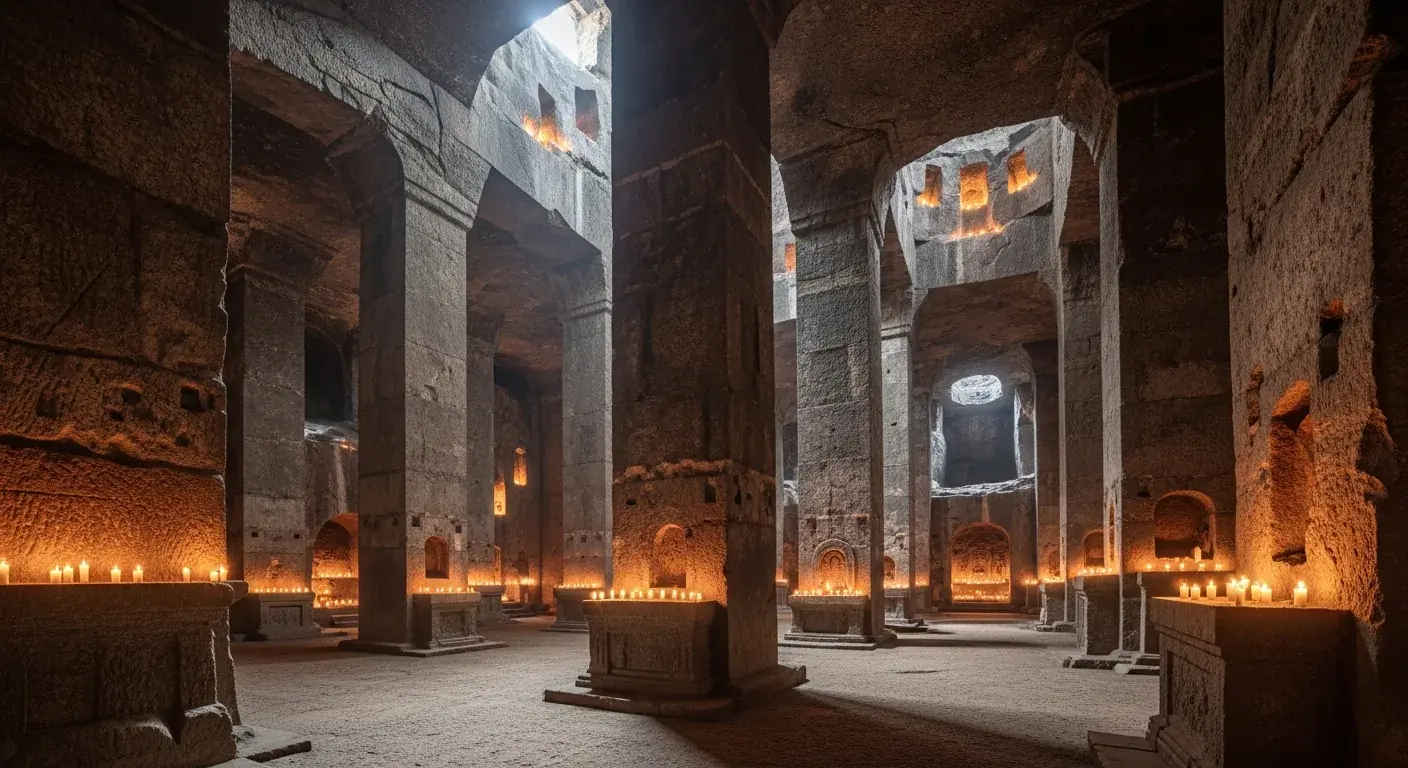
- The monolithic church (11th–12th century): 38 meters long, the largest underground church in Europe. Carved in one piece from the rock.
- La Jurade: a brotherhood founded in 1199 by John Lackland (Plantagenet), abolished during the French Revolution, and reestablished in 1948. It organizes the Ban des Vendanges and the Fête de la Fleur.
- Saint-Émilion Classification: the only French classification system revised every 10 years. Last revision in 2022: 2 First Growths Classified A (Pavie, Figeac), 12 First Growths Classified B, 71 Grand Cru Classés.
- Saint-Émilion Grand Cru is a separate AOC, not a classification. Its specifications include, among other things, a maximum yield specific to the appellation and an organoleptic inspection prior to sale. “Saint-Émilion Grand Cru” does not mean “Grand Cru Classé”; the latter term refers to the classification system.
- More than one million visitors per year. Distance from Bordeaux: about 47 km, or about 49 to 50 minutes depending on the starting point.
Before You Go: What Saint-Émilion Really Is
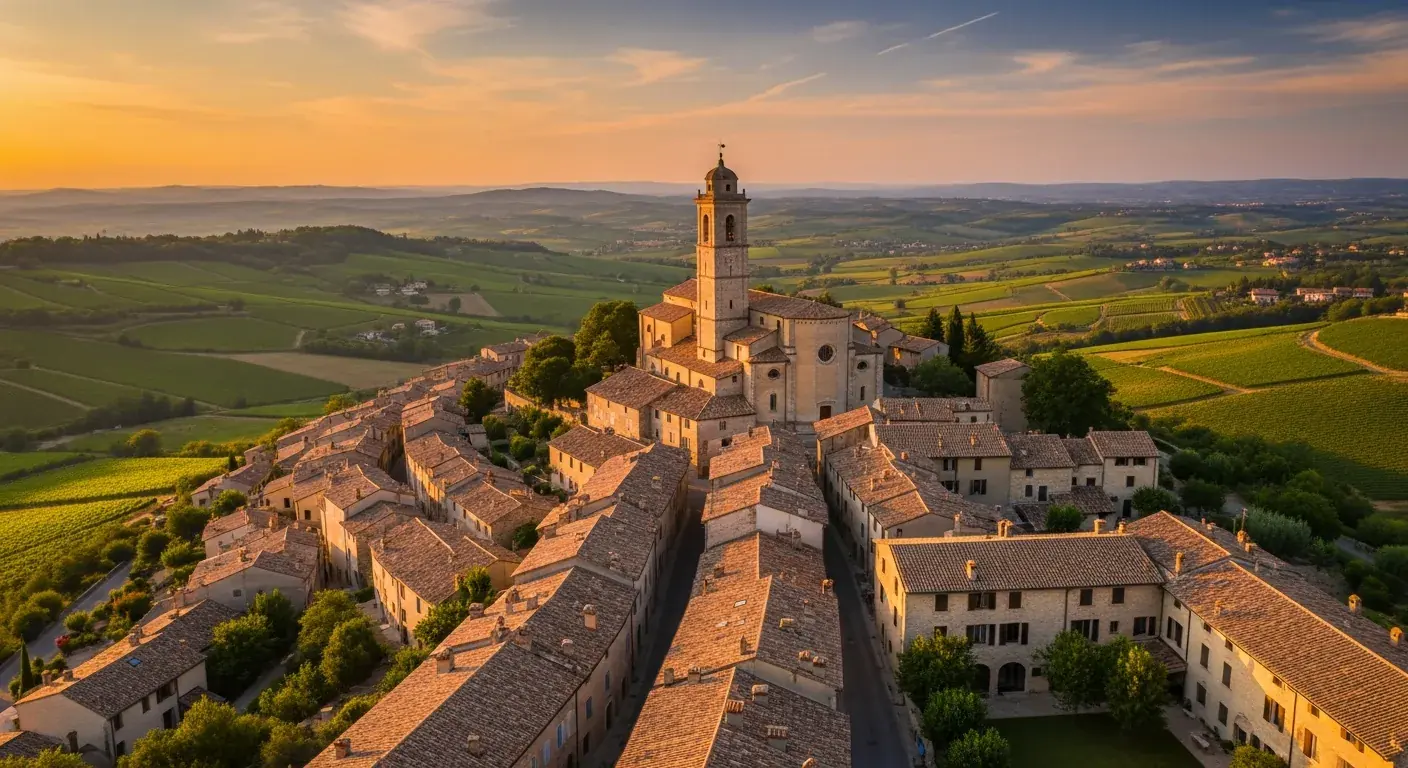
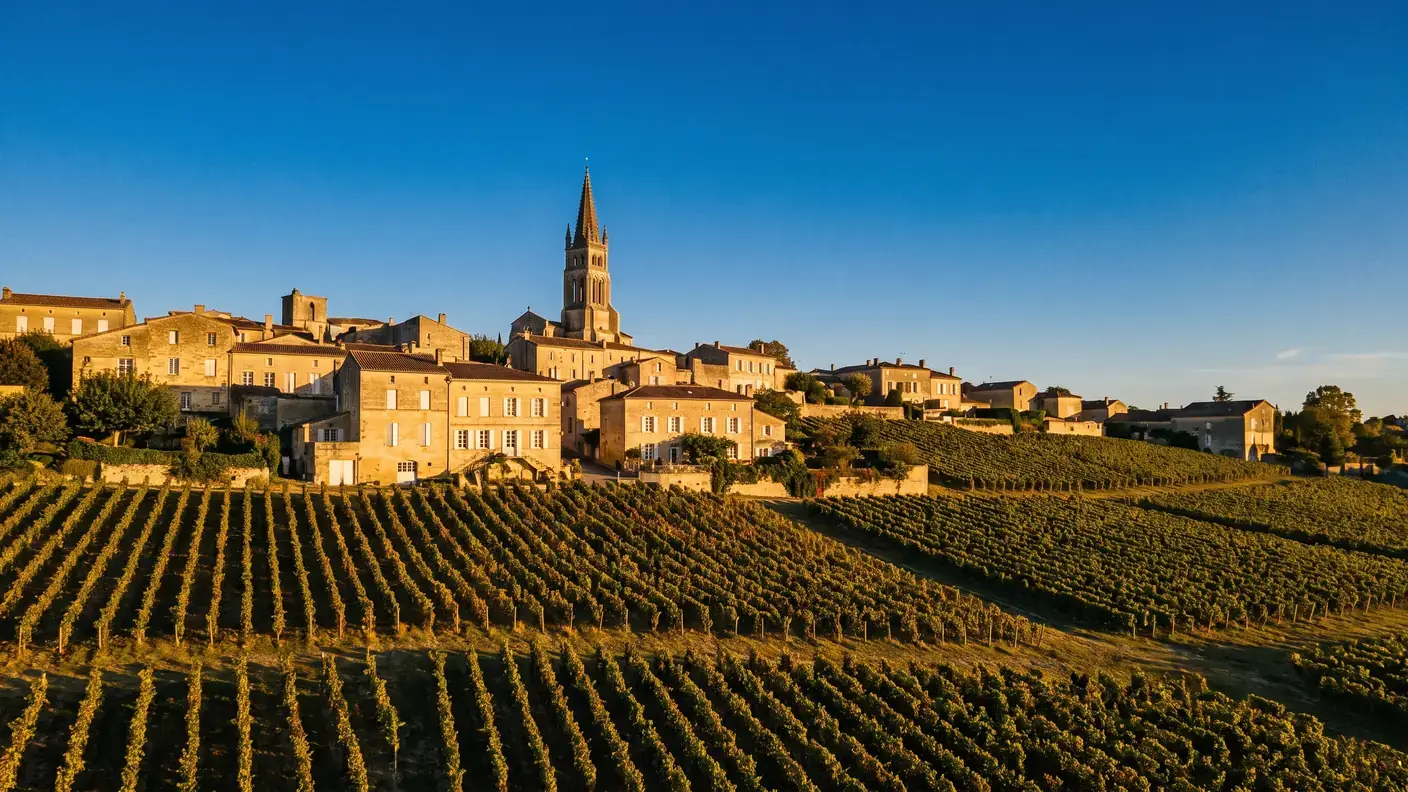
You arrive by car one morning in May. The D1089 crosses the Dordogne plain, then climbs up onto a limestone plateau. On your left, you first catch sight of the bell towers in the light—that of the monolithic church which rises above the village like a medieval landmark. To the right, as far as the eye can see: the vineyards. Not a continuous plain, but stacked terraces, some gentle slopes, some small plots separated by low white limestone walls. It is this mosaic of terroirs spanning 5,400 hectares that earned Saint-Émilion its designation as a World Heritage Site in 1999 — The First Wine-Growing Region designated by UNESCO as “ a living, evolving cultural landscape ", because here, the vineyards and people still shape the landscape together.
You park your car on the outskirts of the village. You walk down toward the pedestrian-only center. And there, the second surprise: the town isn’t built on the rock—it’s built from the rock. The walls of the houses are made of white limestone, hewn from the town’s very bedrock. The main church is carved out beneath your feet, not built on top of it. And the cellars where the wines age are the former quarries that supplied the stone for the buildings—you’re walking through tunnels that sometimes extend over several underground levels. Asterian limestone (sedimentary layers of 30-million-year-old fossil sea urchins) forms the soil of the vineyards, the walls of the houses, and the vaults of the wine cellars. This geological continuity is the very essence of Saint-Émilion.
This guide outlines what you need to know before you come. For practical information (how to get there, cost, and services offered), see our page on private chauffeur services between Bordeaux and Saint-Émilion.
History: From a Breton Hermit to a UNESCO Landscape
Emilion the Hermit (8th century)
The story begins with Émilion (Aemilianus), a Breton monk originally from Valves. At the 8th century, probably between 750 and 767 According to sources, he left Brittany to escape a daily life he considered too materialistic. He settled in a limestone cave at a place called “Combes,” near a spring that still exists today (the Saint-Émilion Fountain). There, he leads an austere, hermit-like life.
His reputation for holiness attracted disciples, who settled around the hermitage. Over the decades, the community carved the first tunnels into the limestone—this marked the beginning of the underground district of Saint-Émilion. The town that grew out of this hermitage took the name Émilion, which over the centuries was transformed into “Saint-Émilion.”
Émilion's hermitage can still be seen today: it is one of the stops on the "Saint-Émilion Souterrain" guided tour organized by the Tourist Office.
Saint-Émilion under English rule (1152–1453)
The marriage of Eleanor of Aquitaine to Henry Plantagenet in 1152 brought the entire Aquitaine region—and therefore Saint-Émilion—under the English Crown. For three centuries, the town grew under the kings of England, who were also dukes of Aquitaine.
This period had a lasting impact on the region:
- The Wine Trade with England explodes. The English discover the “ claret " (a term they still use today to refer to red Bordeaux wine). Saint-Émilion has become a major supplier to the British markets.
- Construction of the Keep of the Tour du Roy around 1224, during the reign of Henry III of England. It's the only intact 13th-century royal keep intact in Gironde.
- The Jurade was founded in 1199 by John Lackland (see the dedicated section).
- Construction of the Collegiate Church, the royal ramparts, and the main churches.
La Jurade: A Unique Institution Founded in 1199
It is the most unique institution in Saint-Émilion, and probably the one least understood by visitors. The Jurade was established on July 8, 1199, by John Lackland, King of England and Duke of Aquitaine, by a letter patent signed in Saint-Émilion itself.
The charter’s provisions are exceptional: John Lackland granted the burghers of Saint-Émilion a degree of municipal autonomy that was highly unusual for the time. Powers granted:
- Managing the City (Administration, Public Works, Local Taxation)
- Administering justice (clean courts)
- Minting Your Own Currency
- Controlling wine quality—a key factor that will have a lasting impact on the appellation’s culture
The Jurade thus became one of the oldest municipal bodies in Europe and the first institution in the world to conduct quality control on a regional wine.
During the French Revolution, like all institutions of the Ancien Régime, the Jurade was abolished (1789).
In 1948, the brotherhood was reestablished by the winemakers of Saint-Émilion in a new form: a prestigious wine brotherhood. Today, the Jurade:
- Has several hundred members (winemakers, wine merchants, honorary ambassadors)
- Organizes two major ceremonies each year:
- The Flower Festival (June) — celebrates the flowering of the grapevines
- The Ban des Vendanges (September) — a solemn announcement marking the start of the grape harvest, proclaimed from the top of the Tour du Roy
The Jurade is more than just a folk tradition: it represents an exceptional historical continuity between the Anglo-Aquitanian Middle Ages and the contemporary wine region.
The French Reconquest and the Battle of Castillon (1453)
English authority collapses during the Battle of Castillon on July 17, 1453, which takes place just 15 km from Saint-Émilion. This was the last major battle of the Hundred Years' War, which marks the decisive victory of the French army commanded by Jean Bureau (and the pioneering use of the field artillery, which changed the nature of medieval warfare).
At the end of the battle, the English commander John Talbot, Earl of Shrewsbury, was killed. Aquitaine returned to French control after three centuries of English rule.
Saint-Émilion: Modern and the 1999 UNESCO Designation
To the 17th and 18th centuries, the vineyard took on its modern form. At the 19th century, the phylloxera devastates the vineyard—which is recovering thanks to the resistant American rootstocks, just like everywhere else in France.
In the 20th century, there were several pivotal milestones:
- AOC Saint-Émilion in 1936
- AOC Saint-Émilion Grand Cru in 1954
- Saint-Émilion's first classification in 1955 (subject to review every 10 years)
- Designated a UNESCO World Heritage Site in 1999 — the world’s first wine-growing landscape to be listed as a “living, evolving cultural landscape”
The UNESCO-designated area includes 8 municipalities: Saint-Émilion, Saint-Christophe-des-Bardes, Saint-Étienne-de-Lisse, Saint-Hippolyte, Saint-Laurent-des-Combes, Saint-Pey-d'Armens, Saint-Sulpice-de-Faleyrens, and Vignonet.
Geology: A City Carved Out of Its Subsoil
This is the least well-known aspect of Saint-Émilion, and yet the most unique in the world in the world of wine. The town and its wineries are not not just built on limestone: they are done with him, and within him.
Asterian limestone
The basement of Saint-Émilion consists of asterian limestone — sedimentary layers dating from the Oligocene (30 million years ago), formed by the accumulation of marine fossils (including starfish, “asteria” in Latin, which give the formation its name).
This rock has three exceptional qualities:
- Tender and easy to cut when freshly harvested
- Hardens when exposed to the open air once exposed
- Naturally climate-controlled: the underground galleries maintain a constant temperature (around 12–14°C year-round), ideal for aging wine
From Quarries to Cellars
From the Middle Ages through the 19th century, underground quarries were operated beneath the city to supply stone for the buildings above ground. Houses, churches, city walls—everything is made of local white limestone. As the city grew, people dug beneath their own feet to build it.
As a result, Saint-Émilion now sits atop a network of underground tunnels that span more than 70 hectares, sometimes on several superimposed levels (up to three stories in some areas). No one knows for certain the complete layout of these underground passages—some tunnels date back to the 12th century, others to the 19th.
Today, these former quarries are:
- Aging cellars for numerous châteaux (Château Villemaurine, Château Soutard, Château Beauséjour Bécot, etc.)
- Production site for Crémant de Bordeaux Les Cordeliers (see the dedicated section)
- Areas Open to Visitors as Part of Guided Tours
The Monolithic Church: The Largest in Europe
The number one landmark in Saint-Émilion. Carved entirely out of the rock between the late 11th and 12th centuries—not a built structure, but a carving out of the limestone bedrock.
Dimensions and Specifications
- Length: 38 meters
- Width: 20 meters
- Clear height: 11 meters
- 3 naves separated by monolithic pillars (each carved from a single block, not assembled)
- Bell tower accessible via a staircase, offering a panoramic view of the village and the vineyards
- It is the largest underground church in Europe
The bell tower and the panoramic view
A unique feature: the bell tower stands above ground, in the open air, while the church is underground. The bell tower rests on bedrock above the church’s vault. This also explains why, in the 18th century, authorities feared it might collapse—as the vault had been weakened by related excavations. Major reinforcement work was carried out in the late 20th century, involving the installation of steel tie rods that are visible today in the nave.
From the top of the bell tower: a 360° panoramic view of the UNESCO-listed vineyards. An additional €2 for the guided tour.
The Underground Complex
The monolithic church is part of a larger underground complex that must be visited with an official guide:
- The Hermitage of Saint-Émilion: the original cave, a place of retreat for the hermit in the 8th century
- The Chapel of the Trinity: a 13th-century building featuring rare medieval murals
- The Catacombs: Tombs Carved into the Rock, from the Middle Ages to the Renaissance
- The monolithic church itself
"Saint-Émilion Underground" Tour:
- Duration: about 1 hour
- Price: ~€15 for adults; reduced rate for ages 6–17, students, and job seekers
- Online reservations are required through the Tourist Office — time slots fill up quickly in July and August
- Tours in French, in English and Spanish, depending on the season
- Helpful tip: Bring a light jacket. The temperature underground remains constant at around 12°C, even in the middle of summer.
Medieval Heritage on the Surface
The Collegiate Church (12th–15th centuries)
One of the largest churches in Gironde. Phased construction of the 12th to 15th centuries, a blend of Romanesque and Gothic styles depending on the section. Romanesque West Facade, Gothic choir flamboyant.
The cloister is adjacent: a 14th-century Gothic cloister, accessible from Place des Créneaux. It features finely carved vaulted galleries and a peaceful central garden. Not to be confused with the Cloister of the Cordeliers (see the dedicated section), which is different and older.
Admission is free. Guided tours are offered by the Tourist Office.
The King's Tower (circa 1224)
The only 13th-century royal keep intact in Gironde. Built around 1224 during the reign of Henry III of England (since Aquitaine was English at the time), it is the last remnant of the royal ramparts that surrounded the city.
- 32 meters high
- Base: 9.5 m × 9.5 m
- Walls 2.5 meters thick at the base
- 360° panoramic view from the summit: UNESCO-listed vineyards, the village rooftops, and the Dordogne plain
Distinctive Feature: it's from the top of the Tour du Roy that the Jurade solemnly proclaim the Grape Harvest Festival every fall.
Hours: Weekends and holidays, depending on the season. Check the hours with the Tourist Office.
The Cordeliers Cloister and Crémant
Don't miss it. The Cloister of the Cordeliers is what remains of a former Franciscan convent Founded in the 14th century. Arcaded gallery of the 14th–15th centuries, a peaceful garden, romantic ruins.
A unique feature: beneath the cloister, the ancient cave cellars (carved into asterian limestone) are now used for aging Crémant de Bordeaux Les Cordeliers, the only producer in Saint-Émilion that uses the traditional method. Tours and tastings available: ~€10–15; allow about 1 hour.
The City Walls and the Brunet Gate
Part of the medieval ramparts still stands around the village. The Brunet Gate, the only fortified gate still intact, marks the southeastern entrance to the town.
The medieval alleyways
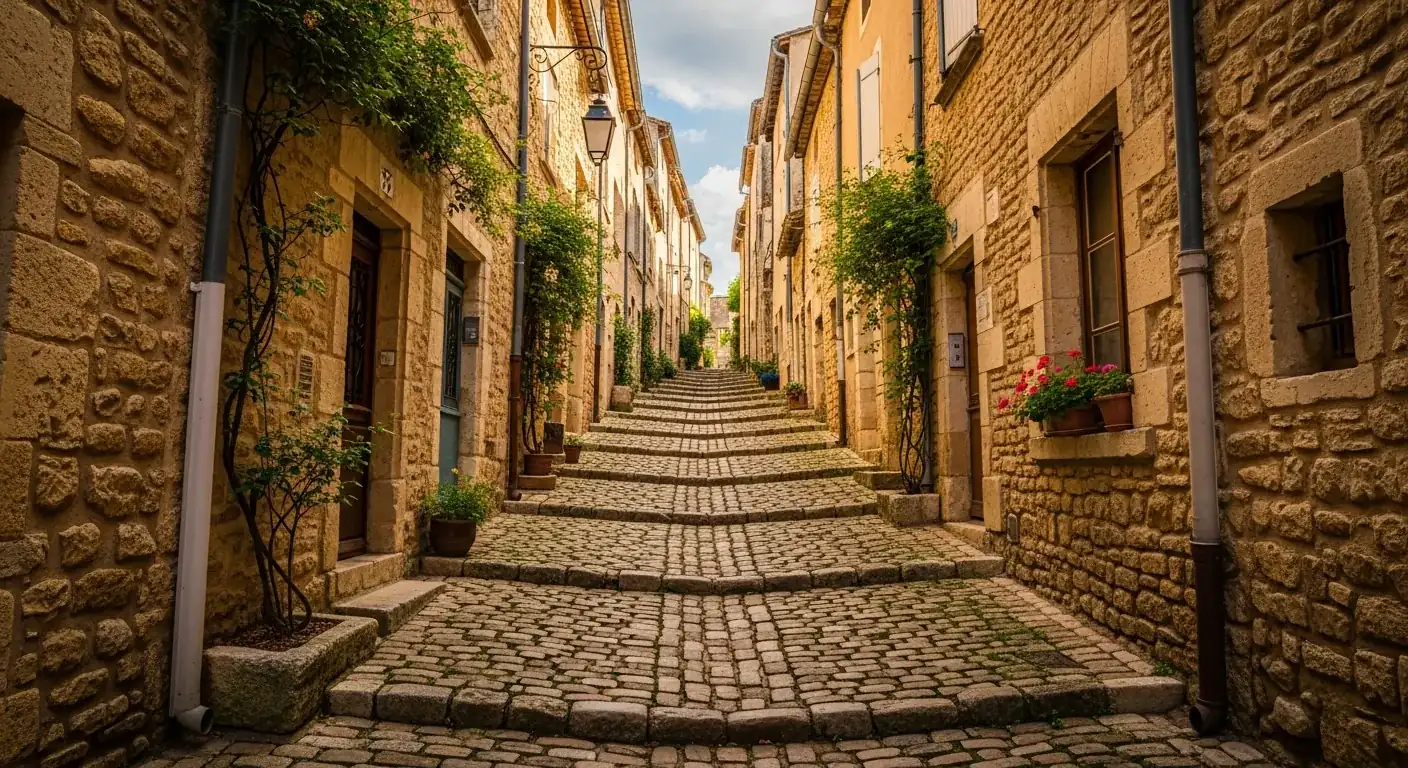
The pedestrian zone is a maze of cobblestone alleys lined with houses made of pale limestone. It’s easy to get lost here:
- Rue Guadet: main street, shops, restaurants
- Rue du Clocher: leads up to the Collegiate Church
- Place du Marché au Bois: Former Medieval Market
- Monolith Church Square: central square, outdoor cafés
AOCs: Saint-Émilion and Saint-Émilion Grand Cru
A unique French characteristic. Saint-Émilion produces wines under two appellations distinct areas that overlap within the same territory:
AOC Saint-Émilion (1936)
- Recognized in 1936
- 5,400 hectares within the UNESCO-designated area (8 municipalities)
- Authorized grape varieties: Merlot (predominant), Cabernet Franc, Cabernet Sauvignon, and, to a lesser extent, Carménère and Petit Verdot
- Maximum yield: 53 hl/ha
- Wines for Aging average, standard winemaking
AOC Saint-Émilion Grand Cru (1954)
Saint-Émilion Grand Cru is a separate AOC, not a classification. Its specifications include, among other things, a maximum yield specific to the appellation and an organoleptic inspection prior to sale. “Saint-Émilion Grand Cru” does not mean “Grand Cru Classé”; the latter term refers to the classification system.
The Saint-Émilion Classification: Revised Every 10 Years
This is another feature unique to France: Saint-Émilion is the only French appellation whose classification is revised approximately every 10 years. Unlike the 1855 Médoc classification, which has remained unchanged for 170 years, Saint-Émilion is subject to ongoing reassessment—fueling both friendly competition among châteaux and controversy.
Ranking History
| Year | Notable Revisions |
|---|---|
| 1955 | First official classification — established upon the creation of the Saint-Émilion Grand Cru AOC |
| 1969 | First Decennial Review |
| 1985 | Second revision |
| 1996 | Third Revision |
| 2006 | Review Overturned in Court (Castles' Appeal) |
| 2012 | Controversial classification (legal proceedings) |
| 2022 | Current Standings — Controversy Over Withdrawals |
Current Rankings (2022)
Approved in September 2022. Three levels:
| Level | Number | Iconic Castles |
|---|---|---|
| First Growth, Class A | 2 | Château Pavie, Château Figeac (promoted in 2022) |
| Premier Grand Cru Classé B | 12 | Beauséjour Bécot, Beau-Séjour Bécot, Belair-Monange, Canon, Canon-la-Gaffelière, Larcis Ducasse, Pavie Macquin, Troplong Mondot, Trottevieille, Valandraud, La Gaffelière, Larmande |
| Grand Cru Classé | 71 | Various (Balestard la Tonnelle, Berliquet, Cap de Mourlin, Clos de l'Oratoire, Fonroque, Grand Mayne, etc.) |
The 2022 Controversy
The major development. Three of the four 2012 First Growths Classified as "A" have announced their withdrawal from the classification process ahead of the 2022 review:
- Château Cheval Blanc (June 2021)
- Château Ausone (July 2021)
- Château Angélus (July 2022)
Reason given: the ranking criteria would be too much emphasis on marketing, visibility, and infrastructure at the expense of the terroir and the wine's intrinsic quality. Specifically, the châteaux felt that criteria such as “international influence,” “communication strategy,” or “quality of wine tourism services” should not carry as much weight as they did.
As a result, only Château Figeac was promoted to Class A in 2022, joining Château Pavie. Cheval Blanc, Ausone, and Angélus retain their commercial prestige intact—these wines remain among the most expensive and sought-after in the world (Cheval Blanc is regularly priced at €800–1,200 per bottle en primeur)—but without an official classification.
This controversy highlights a classic tension in wine classifications: Should terroir be the sole criterion, or does commercial prominence also contribute to a wine’s “status”? The debate remains open.
The Three Major Wine Regions
| Terroir | Description | Wine Style | Iconic Castles |
|---|---|---|---|
| Limestone plateau (around the church) | Floors Thin sections on asterias limestone, roots deep in the rock | Elegant, refined, and well-structured wines, long finish, freshness | Château Ausone, Château Belair-Monange, Château Canon |
| Clay-limestone slopes (south-facing slopes) | Clay soils over a limestone subsoil | Full-bodied, complex, well-structured wines with a sunny character | Château Pavie, Château Troplong Mondot, Château Angélus |
| Hillside and lowlands (plain, near Pomerol) | Deeper soils, sometimes sandy and gravelly | Wines that are round, full-bodied, and approachable, fruity flavor | Château Figeac (Graves), Château Cheval Blanc |
Note: Cheval Blanc and Figeac are geologically closer to Pomerol than to the classic limestone plateau of Saint-Émilion. This explains their unique aromatic profile within the appellation: a higher proportion of Cabernet Franc in the blend (35–40% at Cheval Blanc, which is exceptional in Saint-Émilion).
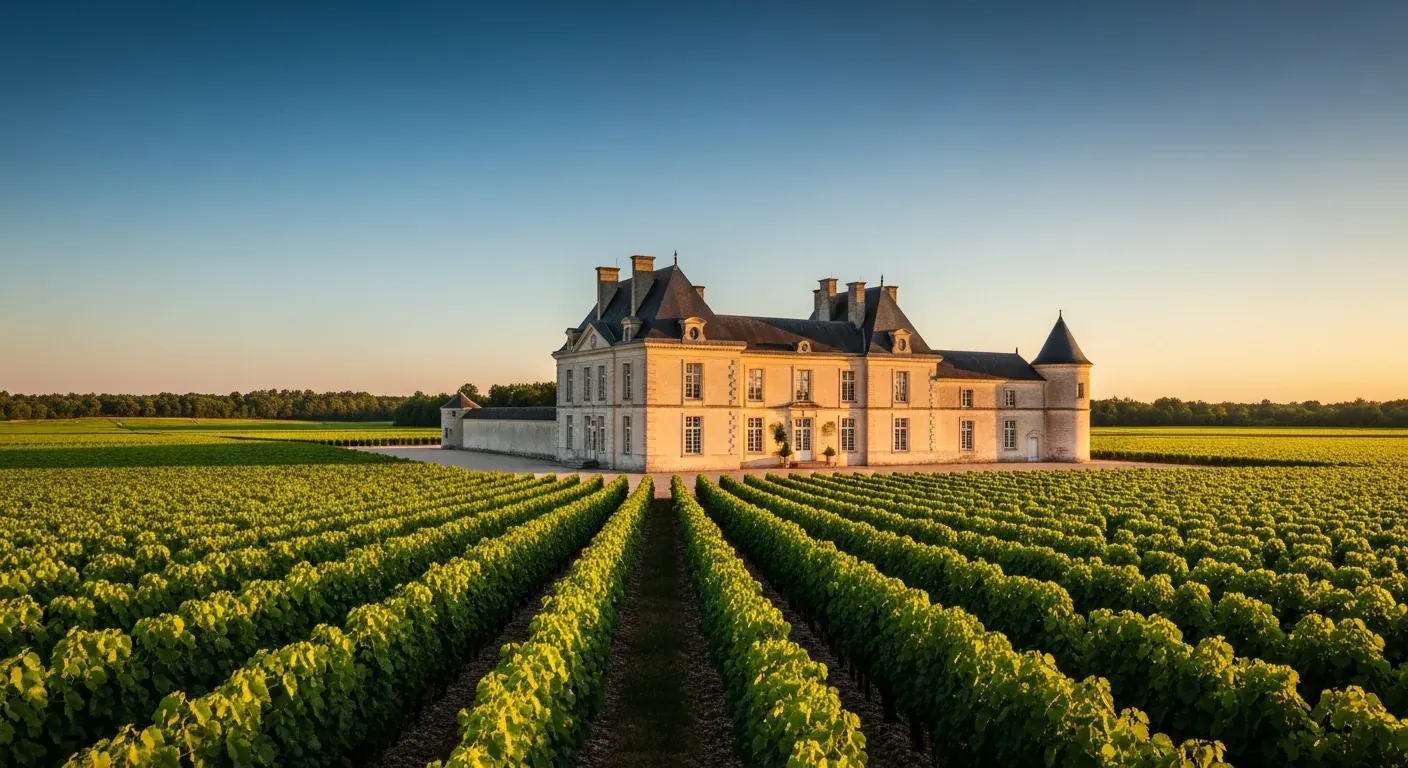
Saint-Émilion vs. Médoc vs. Pomerol
| Criterion | Saint-Émilion | Médoc | Pomerol |
|---|---|---|---|
| Riverbank | Right Bank (Dordogne) | Left Bank (Garonne) | Right Bank (Dordogne) |
| Primary Grape Variety | Merlot (60–70%) + Cabernet Franc (20–30%) | Cabernet Sauvignon (55–65%) + Merlot (25–30%) | Merlot (80–90%+) |
| Style | Round, fruity, approachable, with moderate to long aging potential | Tannic, austere when young, with a very long finish | Velvety, rich, with good aging potential |
| Floors | Asterian limestone + clay-limestone | Deep bass | Clay + fine gravel |
| Rankings | Revised every 10 years (1955 → 2022) | Unchanged since 1855 | No official ranking |
| Distinctive Feature | Saint-Émilion Grand Cru Annual Tasting | 5-level hierarchy: 1st → 5th Cru | No official ranking; prices vary widely |
| Admission Price | 15-40 € | 20-60 € | From €20 to several thousand (Pétrus) |
| Visitors | Very accessible (village + sightseeing) | Scattered Castles, Castle Route | Very little tourism infrastructure |
| Notable Recent Vintages | 2022, 2020, 2019, 2018, 2015 | 2022, 2020, 2019, 2016, 2015, 2010, 2009 | 2022, 2020, 2019, 2018, 2015, 2010 |
Pomerol: the legendary little neighbor
Pomerol is a 10-minute drive from Saint-Émilion, on the same right bank, on the same large plateau. But the tourist experience there is completely different.
Pomerol doesn't have a tourist village in the strict sense of the term—it's a wine-growing plateau dotted with châteaux and small stone houses, with no shopping streets, no cafés, and no restaurants. There's no major tourist office. It's rural and quiet.
Pomerol has no official ranking. There is no hierarchy like the one in Saint-Émilion, nor a ranking like the one in the Médoc. The hierarchy is unofficial, determined by market prices, reputation, and scores from international critics.
And yet, Pomerol produces some of the most expensive and sought-after wines in the world:
| Castle | Feature | Estimated price (average vintage) |
|---|---|---|
| Pétrus | The Most Expensive Wine from the Bordeaux Region | €3,000–6,000 per bottle |
| Le Pin | Tiny (1.8 ha), internationally renowned | €3,000–5,000 per bottle |
| Lafleur | Spectacular Cabernet Franc (50%) | €1,500–3,000 per bottle |
| Vieux Château Certan | The most historic, elegant, and refined | 200–500 € per bottle |
| Trotanoy | The Moueix Family: Structure and Power | €400–800 per bottle |
| La Conseillante | Elegant, sophisticated, and relatively easier to access | €200–350 per bottle |
Visiting Pomerol: by invitation or through a professional referral only. Most of the grand châteaux are not open to the public. That’s why Saint-Émilion + Pomerol in one day is the classic itinerary: Pomerol in the morning (1 château by reservation), Saint-Émilion in the afternoon.
The 4 satellite AOCs of Saint-Émilion
Outside the UNESCO designation, four neighboring AOCs bear the suffix “Saint-Émilion.” These are smaller, less prestigious vineyards, but they offer excellent value for the price:
| AOC | Area | Style | Average price |
|---|---|---|---|
| Lussac-Saint-Émilion | 1,450 ha | Round, approachable, slightly more structured | 12-25 € |
| Puisseguin-Saint-Émilion | 740 ha | Full-bodied, expressive, moderate aging potential | 12-22 € |
| Montagne-Saint-Émilion | 1,565 ha | More structured, with good body | 14-30 € |
| Saint-Georges-Saint-Émilion | 200 ha (the smallest) | Elegant, fruity, approachable | 15-30 € |
The four vineyards—Lussac, Montagne, Puisseguin, and Saint-Georges—are separate AOCs within Saint-Émilion. To compare their styles and prices, check the producer, cuvée, vintage, and sales channel; the appellation alone does not guarantee equivalent quality.
Castles Open to Visitors
Saint-Émilion features dozens of châteaux open to visitors, ranging from the most famous to small family-owned estates. Here is a handy overview.
| Castle | Rankings | Type of visit | Tasting Price | Reservation |
|---|---|---|---|---|
| Château Pavie | First Growth, Class A | Premium Tour + Tasting of Vintage Wines | Based on a quote | Required, several weeks |
| Château Figeac | First Growth, Class A | Local Tour + Tasting, Contemporary Wine Cellar | 30-50 € | Required |
| Château Canon | Premier Grand Cru Classé B | Tour of the cave dwellings and gardens | 20-35 € | Required |
| Château Troplong Mondot | Premier Grand Cru Classé B | Panoramic Tour of the Vineyards | 25-40 € | Required |
| Château La Gaffelière | Premier Grand Cru Classé B | Family visit, warm welcome | 15-25 € | Recommended |
| Château La Dominique | Grand Cru Classé | Contemporary architecture by Jean Nouvel (renovated in 2014), the panoramic restaurant La Terrasse Rouge with a view of Cheval Blanc | 18-30 € | Recommended |
| Fonroque Castle | Grand Cru Classé | Biodynamic tour, intimate welcome | 15-20 € | Recommended |
| Soutard Castle | Grand Cru Classé | Mansion + cave cellars | 20-30 € | Recommended |
| Villemaurine Castle | Grand Cru Classé | Tour of the spectacular underground quarries | 18-25 € | Recommended |
Our tip: The lesser-known Grands Crus Classés often offer the best personal experiences. Fewer tour groups, more time with the winemaker, and wines that are often remarkable for €25–40 a bottle. Château Fonroque (biodynamic), Château Villemaurine (spectacular underground cellars), and Château La Dominique (architecture by Jean Nouvel + Terrasse Rouge) are definitely worth a visit.
Cheval Blanc and Ausone: Since they were removed from the rankings, visits are by invitation only or through a waiting list. Contact the château directly several weeks (or even months) in advance.
1-Day Itinerary: A Realistic Plan
9:30 a.m. — “Saint-Émilion Underground” Tour
Start with the monolithic church and the catacombs. This is the coolest time of day, and there are fewer tour groups. 1 hour; reservations are required.
11:00 a.m. — Medieval alleys and the Collegiate Church
Wander freely through the narrow streets. Climb to the top of the bell tower of the monolithic church (187 steps, additional €2) for the panoramic view. The Gothic cloister of the Collegiate Church.
12:00 p.m. — Cloître des Cordeliers and crémant
Tour and tasting of Les Cordeliers Crémant de Bordeaux in the ancient cave cellars beneath the Franciscan cloister. 30 min, ~10–15 €.
12:30 p.m. — Saint-Émilion Wine Center
Place Pierre Meyrat. Wine tastings available without a reservation (€5–15), advice from the sommelier, and wines from throughout the appellation available for purchase.
1:00 p.m. — Lunch
- On a tight budget (€20–30): Le Clos du Roy, regional cuisine in a vaulted setting
- Bistronomique (€35–55): L'Envers du Décor, an iconic wine cellar-turned-restaurant, featuring a concise menu and high-quality wines by the glass
- Fine Dining (€100 and up): Hostellerie de Plaisance (2 Michelin stars), La Table de Pavie (1 Michelin star)
2:30 p.m. — Tour of a castle
Choose based on your budget and personal taste. For first-time buyers, Château Canon, Château La Dominique, or Château Villemaurine offer a nice balance between affordability and prestige.
4:30 p.m. — Tour du Roy and shopping
Head up to the Tour du Roy for the late-afternoon view—the golden light on the vineyards is magnificent. Then, do some shopping: Bouriotte macarons (Rue Guadet), wines at the Maison du Vin, or at a wine shop on Rue Guadet.
7:30 p.m. — Dinner in the vineyards (if you're staying)
Several châteaux offer table d'hôte meals or dinners in the vineyards during the season. Château Troplong Mondot has a gourmet restaurant with a panoramic view. Be sure to check in advance.
Gastronomy and Fine Dining
Macarons from Saint-Émilion
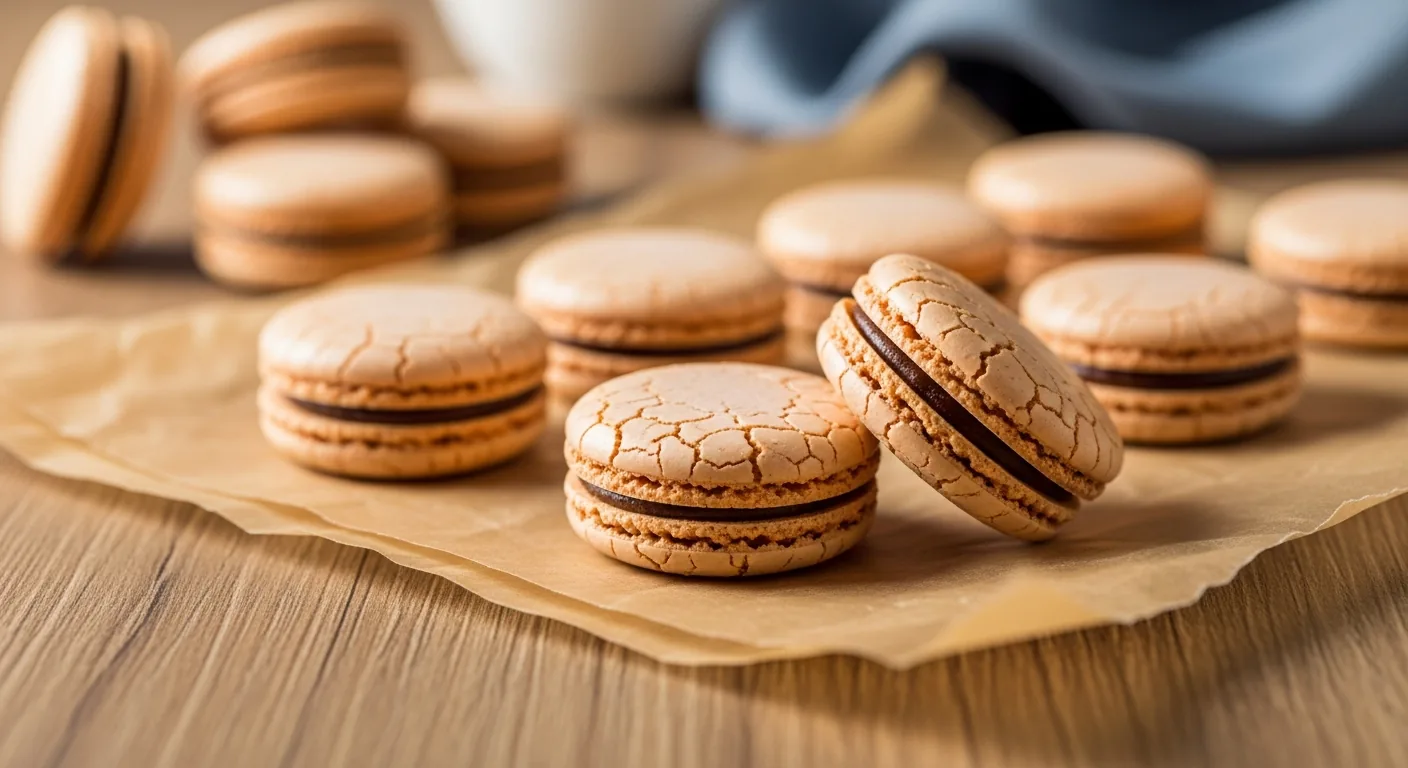
The must-try sweet treat. Made since 1620 by the Ursuline sisters based in Saint-Émilion. These are small, moist cakes made with sweet and bitter almonds, bearing no resemblance to the Parisian macaron (no shell, no ganache, no artificial colors).
The recipe nearly disappeared during the French Revolution (1789) with the dissolution of religious congregations. Preserved through oral tradition within the family of the convent’s heirs, it is now produced by Bouriotte (on Rue Guadet)—the custodian of the Ursulines’ historic recipe, passed down from generation to generation.
Expect to pay about 8–12 € for a box of 12 macarons. Everything is made by hand, every day, without additives or preservatives.
Great Restaurants
Hostellerie de Plaisance — 5-star, 2 Michelin stars, Place du Clocher. Saint-Émilion’s iconic fine-dining restaurant, with views of the village and vineyards. Tasting menus; wines from the appellation served by the glass.
La Table de Pavie — Château Pavie’s Michelin-starred fine-dining restaurant. Seasonal cuisine, with direct access to the château’s wine cellar.
Behind the Scenes — Rue du Clocher. An iconic wine cellar and dining spot, with a menu featuring 600 selections and reasonably priced wines by the glass. The place to go to fully savor Saint-Émilion in a bistronomic setting.
Le Clos du Roy — Local cuisine in a vaulted setting, offering good value for the money.
Le Chai Pascal — A laid-back atmosphere, featuring a selection of lesser-known local producers.
Wine Bars
- Behind the Scenes (dining cellar, see above)
- La Maison du Vin (Place Pierre Meyrat): official tastings, no reservation required
- Le Chai Pascal: relaxed atmosphere, local producers
Wine and Food Pairings to Remember
| Main Course | Recommended Wine |
|---|---|
| Roasted Pauillac Lamb | Saint-Émilion Grand Cru (predominantly Merlot) |
| Duck breast | Saint-Émilion or Pomerol |
| Aged cheeses (Comté, Brie de Meaux) | Saint-Émilion 1st Grand Cru Classé |
| Oysters from the Arcachon Basin | White Graves or Sauternes |
| Pan-fried foie gras | Sauternes or Monbazillac |
| Bordeaux-style canelé | Sauternes |
| Macaron by Saint-Émilion | Crémant de Bordeaux Les Cordeliers |
Events Calendar
| Period | Event | Crowd | Weather |
|---|---|---|---|
| January–February | Off-season, early produce (late January) | Low | Cold, damp |
| March–April | Early Produce Week (April) — trade tours | Moderate | Sweet |
| May | Wine Spring: Open House at the Châteaux | Moderate | Ideal |
| June | Flower Festival (Jurade) — a major wine event | Moderate to strong | Ideal |
| July–August | Peak tourist season | Very strong | Hot (sometimes sweltering) |
| September | Grape Harvest + Harvest Festival (Jurade, proclamation from the Tour du Roy) | Strong | Ideal |
| October | Red vines, golden light, a warm welcome | Moderate | Ideal |
| November–December | Off-season, Medieval Christmas Market (December) | Low to moderate | Variable |
Events You Should Know About
Saint-Émilion Wine Festival (May) — Open house weekend at the appellation’s châteaux. This is the perfect opportunity to visit estates that are not open to the public the rest of the year, often for free or for a nominal fee.
The Flower Festival (June) — The Jurade ceremony celebrating the blooming of the vines. By invitation only, but the festive atmosphere spreads throughout the village that weekend.
The Harvest Festival (September) — The Jurade, dressed in red robes and hats, solemnly proclaims the opening of the harvest from the top of the Tour du Roy. A unique medieval and wine-themed spectacle, open to the public.
The Medieval Christmas Market (December) — The village is transformed into a fairy-tale setting. Artisan stalls, mulled wine, and lights in the cobblestone alleys. A particularly warm atmosphere, few foreign tourists.
Our recommendation: May–June or September–October. The best time to visit is late September during the grape harvest: the light is golden, the air smells of grape must, and tractors loaded with grapes crisscross the roads. But be sure to book well in advance—accommodations fill up quickly.
The area around Saint-Émilion
Saint-Émilion is a great starting point for exploring Bordeaux's right bank.
| Destination | Distance | Specialty | Duration of the tour | Ideal for |
|---|---|---|---|---|
| Pomerol | 10 min | Pétrus, Le Pin, Lafleur: Legendary Wines | 2–3 hours | Connoisseurs (with no chateau open to the general public) |
| Libourne | 10 min | A hub for the wine trade on the Right Bank, with a Friday market on Place Abel Surchamp | 1–2 hours | Market, lunch in the square, architecture |
| Castillon-la-Bataille | 15 min | Site of the 1453 battle that ended the Hundred Years' War; AOC Castillon-Côtes-de-Bordeaux (excellent value for the price) | 2–3 hours | Historical exploration + wine tasting without the crowds |
| Fronsac | 20 min | An Overview of Little-Known Vineyards Along the Dordogne | 2–3 hours | Hiking, Off-the-Beaten-Path Wines |
| Bergerac | 1 hour | Bergerac Wines, Old Town, Cyrano de Bergerac | Half-day | Cultural and Wine Tour |
| Sarlat-la-Canéda | 1 hour and 30 minutes | Périgord Noir, foie gras, truffles, medieval architecture | Day | Long Weekend in the Dordogne |
How to Get to Saint-Émilion
By car
40 minutes via the D1089 (formerly the N89). Convenient, but parking is a real problem during peak season. Paid parking lots fill up as early as 10 a.m. in July and August. Main parking lots: Cordeliers parking lot, Town Hall parking lot, and Lower Station parking lot.
By train
TER Nouvelle-Aquitaine trains serve the Saint-Émilion station according to the daily schedule. The station is located 1.5 km uphill from the village—a walkable distance with a light bag, but not very practical with luggage. Check the schedules and services on the station’s official information page.
Private chauffeur service from Bordeaux
The most comfortable option for groups, families, and anyone who would like to Enjoy freely without worrying about your blood alcohol level. Flat Rate, door-to-door service, English-speaking driver available, castles reserved just for you on day passes.
For details (one-way transfer options, 4-hour, 6-hour, and 8-hour packages, rates, reservations, and anti-marketplace policy): see our dedicated page for private chauffeur service between Bordeaux and Saint-Émilion.
By bus / coach
Regional connections from Libourne are infrequent. It's an affordable option (~€10 round-trip) but not very practical for a day trip.
Practical Information
Recommended duration
- Half-day: possible (most of the village), but frustrating
- Full-day itinerary: perfect — heritage + wine tasting + fine dining
- Weekend (2 days): for visitors who want to tour several castles and explore the surrounding area
- 3 days or more: for enthusiasts and the Right Bank combo (Saint-Émilion + Pomerol + Fronsac + Bergerac)
Parking
The village center is a pedestrian zone. Parking lots are located at the entrance:
- Cordeliers Parking Lot (the closest to downtown)
- Town Hall Parking Lot
- Lower Station Parking Lot (free, farther away)
During peak season, arrive before 9:30 a.m. or after 5:00 p.m. to find a parking spot easily.
Accommodations
- In a castle: Hostellerie de Plaisance (5-star, 2 Michelin stars, Place du Clocher), Château Grand Barrail (charming hotel nestled among the vineyards), Hôtel Pavie (newly built, part of the estate)
- Bed-and-breakfasts in the vineyards: many options available on booking platforms, often run by winemakers — 92 €–150 per night, an authentic experience
- Budget: Hotels in Libourne (10 min) are significantly cheaper
- For the Holidays/Grape Harvest: Please book at least 3–6 months in advance
Estimated budget for one day
| Position | Budget |
|---|---|
| Guided Tour of Saint-Émilion Underground | ~€15 per person |
| Cloître des Cordeliers + Crémant | ~10–15 € per person |
| Wine House (tasting) | €5–15 per person |
| Castle Tour with Wine Tasting | €15–35 per person |
| Bistronomic Lunch | 30–55 € per person |
| Michelin-Starred Gourmet Lunch | €100+ per person |
| Macarons (box of 12) | ~8-12 € |
| Total for the day (bistronomic) | ~75–130 € per person |
| Total for the day (gourmet) | ~180–280 € per person |
Accessibility for People with Disabilities
The cobblestone streets and numerous staircases in Saint-Émilion make it difficult for people with limited mobility to visit. The monolithic church is not wheelchair accessible (stairs are required). The Maison du Vin and the Place du Marché au Bois are accessible. Contact the Tourist Office before your visit to obtain an accessible map.
Climate
Temperate oceanic climate. Mild winters (8–12°C), hot summers (25–32°C, sometimes scorching). The limestone subsoil keeps the village naturally cool even in the height of summer. Frequent rainfall in the spring and fall.
Frequently Asked Questions
Is Saint-Émilion free to visit?
Yes, for the most part. Strolling through the narrow streets, admiring the architecture, and viewing the ramparts from the outside is completely free. The Collegiate Church is open to the public, as is the Gothic cloister. However, the underground sites (monolithic church, catacombs, hermitage) require an admission fee and are accessible only as part of a guided tour—about €15 per adult.
How long does it take to visit Saint-Émilion?
A full day allows you to combine an underground guided tour, lunch, a visit to a castle, and shopping. A half-day tour gives you a glimpse but can be frustrating. A weekend is ideal for enthusiasts who want to explore several estates.
What is the difference between Saint-Émilion AOC and Saint-Émilion Grand Cru?
Saint-Émilion Grand Cru is a separate AOC, not a classification. Its specifications include, among other things, a maximum yield specific to the appellation and an organoleptic inspection prior to sale. “Saint-Émilion Grand Cru” does not mean “Grand Cru Classé”; the latter term refers to the classification system.
What is the Jurade de Saint-Émilion?
The Jurade is a wine guild founded in 1199 by John Lackland, King of England and Duke of Aquitaine. It is one of the oldest municipal bodies in Europe and held very broad powers during the Middle Ages (justice, currency, and wine quality control). Abolished during the French Revolution, it was reestablished in 1948 as a prestigious guild. Today, it organizes the Fête de la Fleur (June) and the Ban des Vendanges (September, proclaimed from the top of the Tour du Roy).
Can we visit the castles without a reservation?
During peak season, no. The vast majority of classified estates require a reservation, sometimes several weeks in advance. The Maison du Vin remains the most accessible option without prior arrangements (tasting: 5–15 €). A few small châteaux accept walk-in visitors during the off-season.
What is the best time of year to visit Saint-Émilion?
May–June offers the best balance: pleasant weather, vineyards in bloom, and fewer crowds. September–October is the most visually stunning time of year (grape harvest, autumn light), but also the busiest. Avoid weekends in July and August if possible. Our recommendation: late September, during the grape harvest—be sure to book early.
Why is there controversy surrounding the 2022 rankings?
In 2022, three of the four 2012 First Growths Classified as A—Cheval Blanc, Ausone, and Angélus—withdrew from the classification of their own accord. Their criticism: the criteria placed too much emphasis on marketing and image at the expense of terroir and wine quality. These three châteaux retain their commercial prestige intact without an official classification. Only Château Figeac was promoted to Class A in 2022, joining Château Pavie.
Where can I buy authentic macarons from Saint-Émilion?
At Bouriotte on Guadet Street, home to the historic Ursuline recipe (1620), passed down from generation to generation. Macarons made with sweet and bitter almonds, free of additives, and handmade daily.
Is it possible to visit Saint-Émilion and Pomerol on the same day?
Yes, that’s actually the classic itinerary. Pomerol is a 10-minute drive away. Pomerol doesn’t have a tourist village—it’s a wine-growing region with scattered châteaux and few attractions open to the general public. Plan a winery tour in Pomerol in the morning (reservations required) and spend the afternoon in Saint-Émilion.
Why are there so many underground cellars in Saint-Émilion?
The bedrock beneath Saint-Émilion consists of asterian limestone (a 30-million-year-old sedimentary formation containing marine sea urchin fossils). From the Middle Ages through the 19th century, underground quarries were operated beneath the town to supply building stone. Over 70 hectares of tunnels, sometimes spanning several levels, were excavated over the centuries. These former quarries now serve as aging cellars for wine (and crémant at Les Cordeliers) thanks to their constant temperature (12–14°C).
Is Saint-Émilion suitable for children?
Yes, with a few precautions. The cobblestone streets are walkable, but it’s difficult to navigate them with a stroller. The Tourist Office offers guided tours specifically for children (ages 6–12) featuring medieval tales—an excellent option for families. The monolithic church is not recommended for very young children (darkness, stairs, quiet atmosphere).
What is the distance between Bordeaux and Saint-Émilion, and how much does a private driver cost?
Saint-Émilion is located about 47 km from Bordeaux, which is about a 50-minute drive via the A89 highway and then through the vineyard roads. With a chauffeur service, the rate is fixed and provided in advance, starting at approximately €103 one way (sedan or van, door-to-door price). This is the ideal option for a wine tour: the driver takes you from château to château and drops you off in the heart of the village, so you don’t have to worry about driving between tastings or finding parking, which is notoriously difficult in Saint-Émilion during peak season.
Is the monolithic church in Saint-Émilion the largest in Europe?
Yes. The monolithic church of Saint-Émilion, carved entirely out of limestone between the 11th and 12th centuries, is the largest monolithic church in Europe (and the second largest in the world). About 40 meters long, it is topped by a bell tower that overlooks the village and has been classified as a historic monument since 1883 (POP/Mérimée listing). It can only be visited with a guide from the tourist office, who also provides access to the catacombs and the hermitage of Saint Émilion.
Further Reading
- Private chauffeur service for Saint-Émilion: see our page on private chauffeur service between Bordeaux and Saint-Émilion (packages, rates, reserved châteaux, no third-party platforms)
- Médoc Vineyards (Margaux, Pauillac, Saint-Estèphe): See our page on private chauffeur services between Bordeaux and the Médoc
- Arcachon Bay during the same trip: see private chauffeur service between Bordeaux and Arcachon, Cap Ferret, or the Dune du Pilat
- Sarlat / Lascaux / Périgord: See private chauffeur service between Bordeaux and Sarlat-la-Canéda
- Basque Country: See private chauffeur service between Bordeaux and Biarritz
Sources and References
- Grand Saint-Émilionnais Tourist Office — guided tours, reservations, events calendar
- Saint-Émilion Wine Council — appellations, classifications, wine industry news
- UNESCO — Saint-Émilion Jurisdiction — Official 1999 World Heritage Site Listing
- Saint-Émilion Wine House — tastings, official store
- POP/Mérimée — monolithic underground church — Historic Monument designation and official description · accessed July 24, 2026
- INSEE — Saint-Émilion (33394) — Population and Municipal Data · accessed July 24, 2026
- TER Nouvelle-Aquitaine — Saint-Émilion Station — Official Schedule and Services · Accessed July 24, 2026
- Crémant de Bordeaux Les Cordeliers — made using the traditional method in cave cellars
- The Jurade de Saint-Émilion — a historic wine brotherhood
Article updated in July 2026.
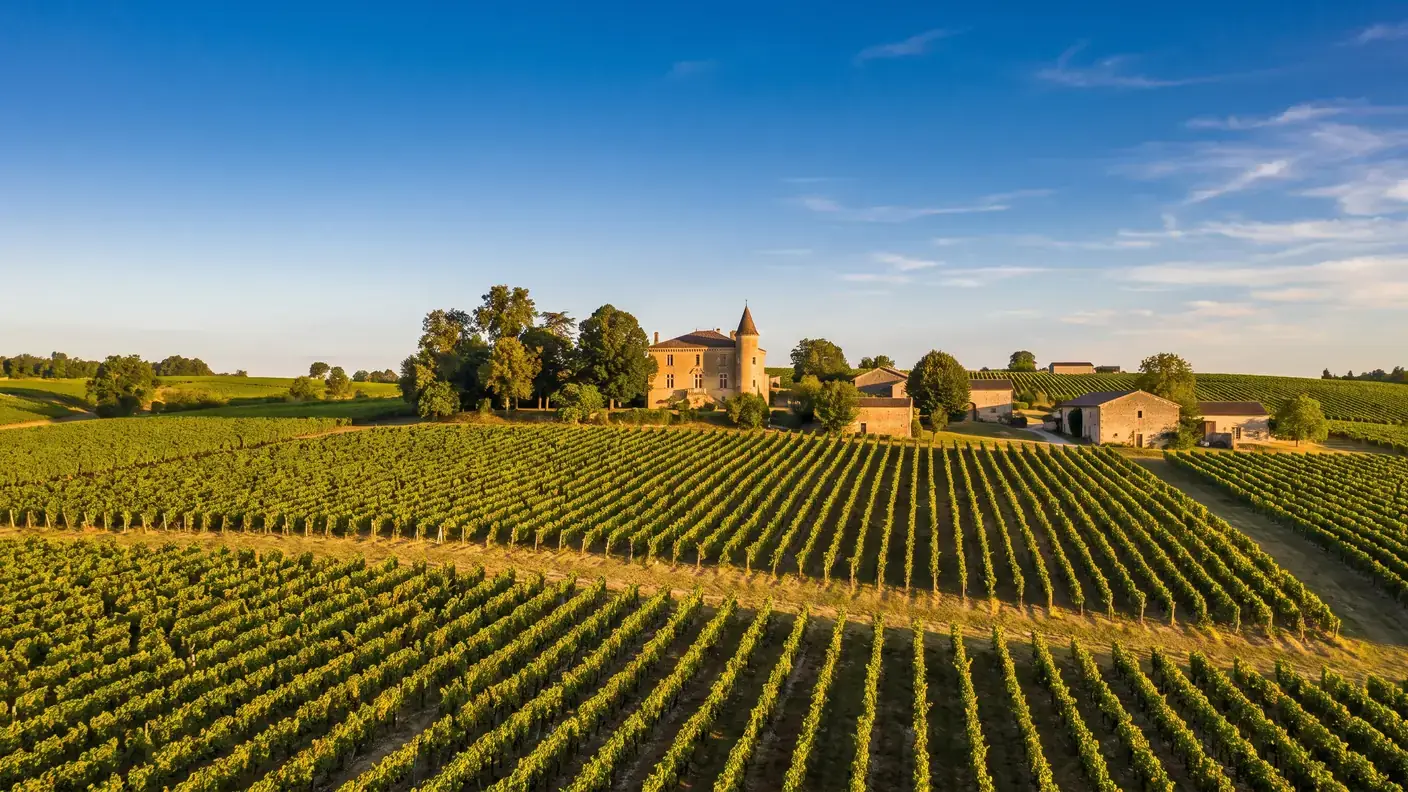
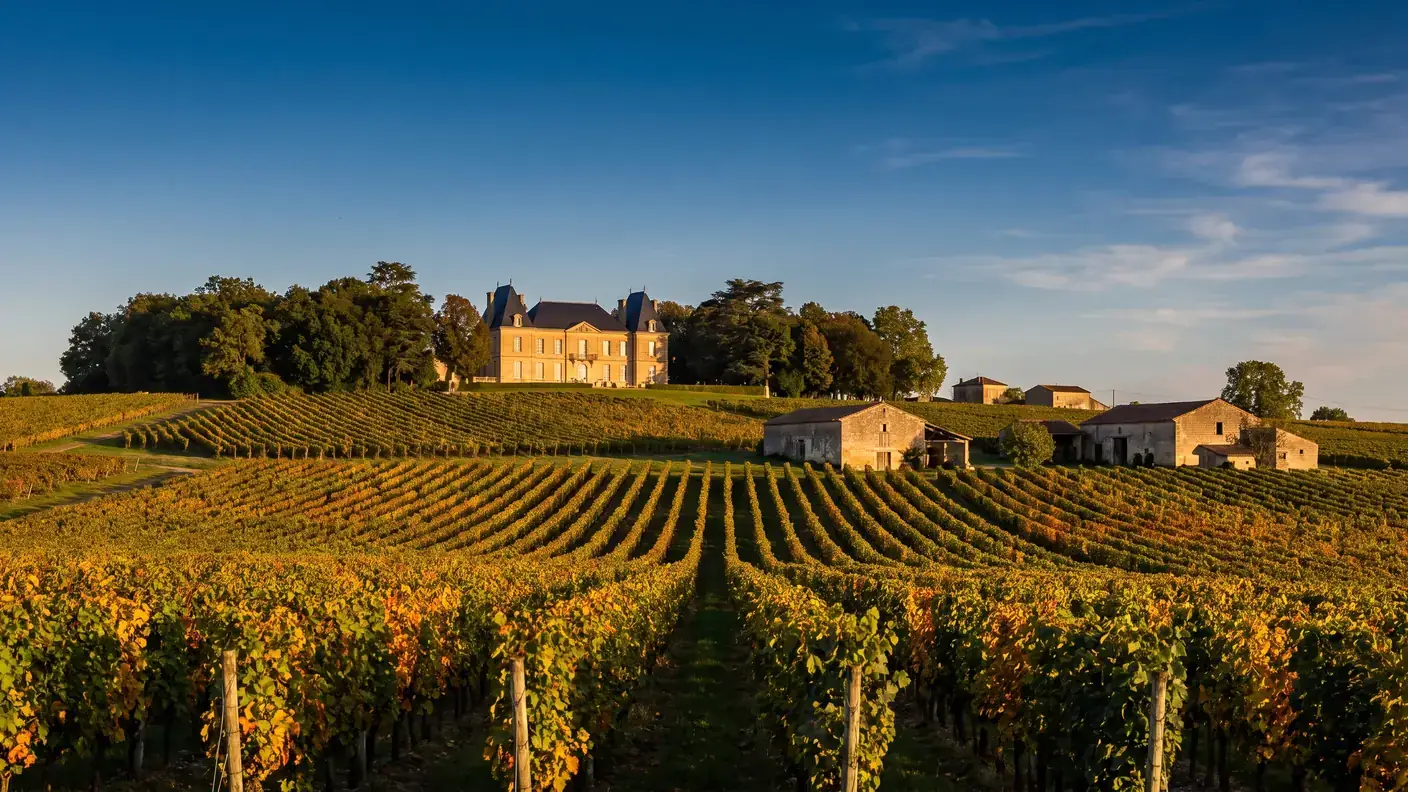
On the way to Saint-Émilion
Direct door-to-door trip from Bordeaux (~49 min), perfect for a wine tour: châteaux + village + tastings without having to drive. Written fixed-price quote within 30 minutes, sedan or van, English-speaking driver.