
Discover Les Portes-en-Ré, Île de Ré’s wild northern tip
The northernmost village on the Île de Ré, the wildest and best-preserved: the Trousse-Chemise Woods, immortalized in song by Aznavour; the Lilleau des Niges bird sanctuary; the Fier d’Ars and its oysters; and the beaches at La Pointe, about 2 hours and 47 minutes from Bordeaux, including the bridge crossing.
Les Portes-en-Ré at a Glance
Les Portes-en-Ré is the northernmost village on the Île de Ré, located at its northwestern tip, the farthest from the mainland, the least populated, and one of the best-preserved. It is the island’s realm of vast, untamed landscapes: the woods and beach of Trousse-Chemise, immortalized in song by Aznavour; the Lilleau des Niges bird sanctuary; and the vast tidal flats of Fier d’Ars with its oyster beds, nestled between salt marshes and pine forests. A village of white houses with green shutters, long cherished by artists and nature lovers, Les Portes exudes an intimate charm, far from the hustle and bustle. From Bordeaux, you can reach this remote corner of the Atlantic coast in just over two and a half hours, at the very tip of the island, past the great Ré Bridge.
Here are the key details to know before you go. The distance and travel time are based on the actual road trip from Bordeaux, including the bridge; the fare shown is for a chauffeur service booking at a fixed price provided in advance, with no surprises from the meter or tolls.
| Landmark | Details |
|---|---|
| Department | Charente-Maritime (17), Nouvelle-Aquitaine |
| Location | Île de Ré, northwestern tip · La Rochelle district |
| Population | approximately 577 residents (INSEE 2023) · Portingalais residents |
| Area | 8.51 km² · the northernmost municipality on the island |
| Don't miss it | Trousse-Chemise, the Lilleau des Niges Reserve, the Fier d'Ars |
| Distance from Bordeaux | about 227 km · about 2 hours and 47 minutes (including the bridge) |
| Nature | bird sanctuary, salt marshes, oysters, pine forests |
A word about accuracy right off the bat, because even this unspoiled little village has its share of inaccuracies, which this guide corrects with supporting sources. Its Saint-Eutrope Church is not a listed historic monument (the town has no listed buildings). The large Baleines Lighthouse is not in Les Portes but in the neighboring town of Saint-Clément-des-Baleines; and there is no monumental “Trousse-Chemise Lighthouse” in the town; the name comes from the nickname of a lighthouse keeper. Trousse-Chemise was made famous by the song “Trousse-Chemise” by Aznavour (1962), not “La Bohème.” And the village’s “chic” reputation stems from the artists' retreat, not an official status. Every statement in this guide is based on verifiable sources.
Here we’ll go over everything you need to know: the location of Les Portes-en-Ré and its population, the Trousse-Chemise woods and beach and their legend, the Lilleau des Niges Nature Reserve and the Fier d’Ars, the white village and its heritage, the wild beaches, the history and origin of the name, its reputation as an artists’ village, the notable sites from the tip of the island to the Baleines Lighthouse, the best time of year to visit, and how to get there from Bordeaux, all thoroughly sourced and verified.
Where is Les Portes-en-Ré located?
Les Portes-en-Ré is located at the northwestern tip of Île de Ré, in Charente-Maritime (17), in Nouvelle-Aquitaine: it is the island’s northernmost municipality and the one farthest from the mainland. Part of the La Rochelle arrondissement, the Île de Ré canton, and the Île de Ré Community of Municipalities, it covers 8.51 square kilometers at the very tip of the island, beyond Ars-en-Ré. Its only neighboring municipality by land is Saint-Clément-des-Baleines, to the south. The village is surrounded by nature: the vast Fier d’Ars Bay and its bird sanctuary, the salt marshes, the Trousse-Chemise Woods, and long, wild beaches. This remote location, the most isolated on the island, has spared Les Portes from excessive urbanization and made it one of the wildest and most secluded spots on the Île de Ré.
A Corner of the Atlantic World
What gives Les Portes its unique character is its end-of-the-land setting, at the tip of the island, opening out onto the ocean and wide-open spaces. There are fewer shops and less hustle and bustle here than in Saint-Martin or Bois-Plage, but much more nature: the Fier d’Ars, a vast tidal flat that is almost entirely exposed at low tide, the bird sanctuary, the marshes, and the pine forests come together to form a landscape of rare beauty, changing with the tides and the seasons. It’s a place for lovers of hiking, biking, birdwatching, and sunsets over the water. In fact, two former islands are at the origin of this geography: the Île d’Ars and the Île de Ré, once separated by a strait that has since been filled in, Les Portes was born at the junction of these two worlds, at the very edge of the land.
The least populated village on the island
With approximately 577 year-round residents [source] (2023 municipal population), Les Portes-en-Ré is the least populous municipality on the Île de Ré. Its residents are known by the demonym Portingalais. The population, which peaked at around 660 residents in the late 1990s, has been declining slowly since then (about −5% between 2017 and 2023), bucking the trend for the department. But above all, it is a town with extreme seasonality: nearly 84% of the homes there are second homes [source], one of the highest rates in France. In winter, the village is very quiet, almost sleepy; in summer, its population swells several times over, yet it never loses its unspoiled atmosphere. This dual life, as both a sleepy fishing village and a popular summer retreat, is the very soul of Les Portes-en-Ré.
Trousse-Chemise, Aznavour’s Famous Woodland
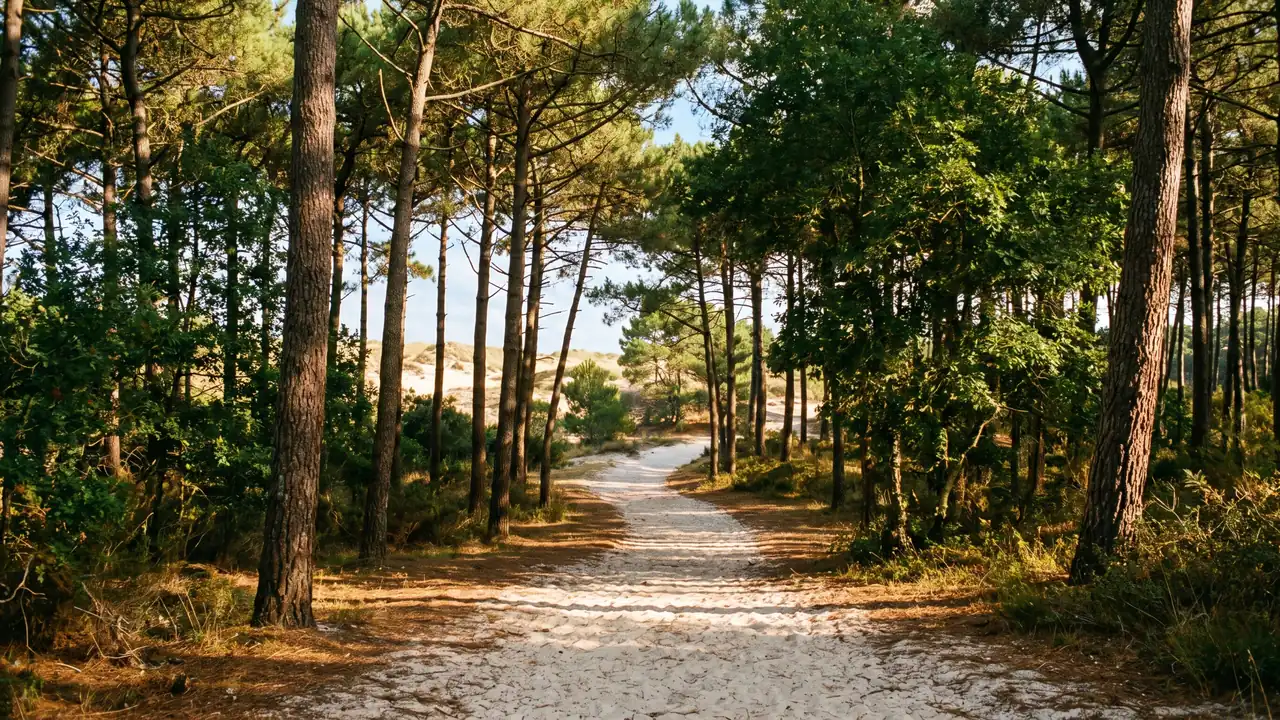
The Trousse-Chemise woods and beach are the most famous site in Portes-en-Ré, immortalized in a song by Charles Aznavour, a picturesque setting of pine trees and sand that has become a legend on the Île de Ré. Behind this picturesque name lie a forest, a beach, and a charming story about a lighthouse keeper.
The smallest forest on the island
The Trousse-Chemise Forest, covering some 25 hectares, is the smallest state-owned forest on the Île de Ré, but by far the best known [source]. This grove of maritime pines and holm oaks, planted to stabilize the dunes, extends almost to the shore and shelters a secluded beach, nestled in the shade of the trees, one of the most intimate on the island. It can be reached on foot or by bike via shaded paths through the pine forest. It’s a place like no other, wilder and more secluded than the large beaches in the south of the island: people come here for the beauty of the setting, the tranquility, and the shade of the pines, all within an unspoiled atmosphere. Keep one thing in mind: Trousse-Chemise is first and foremost a forest, the beach is merely an addition to it and should not be confused with the large resort beaches.
"In the Little Wood of Trousse-Chemise"
Trousse-Chemise owes its fame to the song “Trousse Chemise,” written in 1962 by Charles Aznavour (with lyrics by Jacques Mareuil), which evokes the emotions of a young couple “in the little woods of Trousse-Chemise.” Be careful not to confuse the two: it’s not “La Bohème” (another Aznavour song, set in Montmartre), but rather “Trousse Chemise” that made this corner of the island legendary.
As for the name itself, there are two stories circulating. The one with the most supporting evidence links it to the nickname of a lighthouse keeper, Napoleon Benoni Renaud (1837–1920), who was known as “Trousse Chemise” and who died of the Spanish flu in 1920: it is said that the forest was named after his nickname. Another tradition, an older one and presented as a legend, traces the name back to 1627: when the Duke of Buckingham’s English troops were being disembarked at Fier d’Ars, the people of Rétais are said to have “tucked up their shirts” to taunt the fleeing enemy. Two stories with the same colorful name, best told on the spot, without taking sides.
The Lilleau des Niges Nature Reserve and the Fier d'Ars
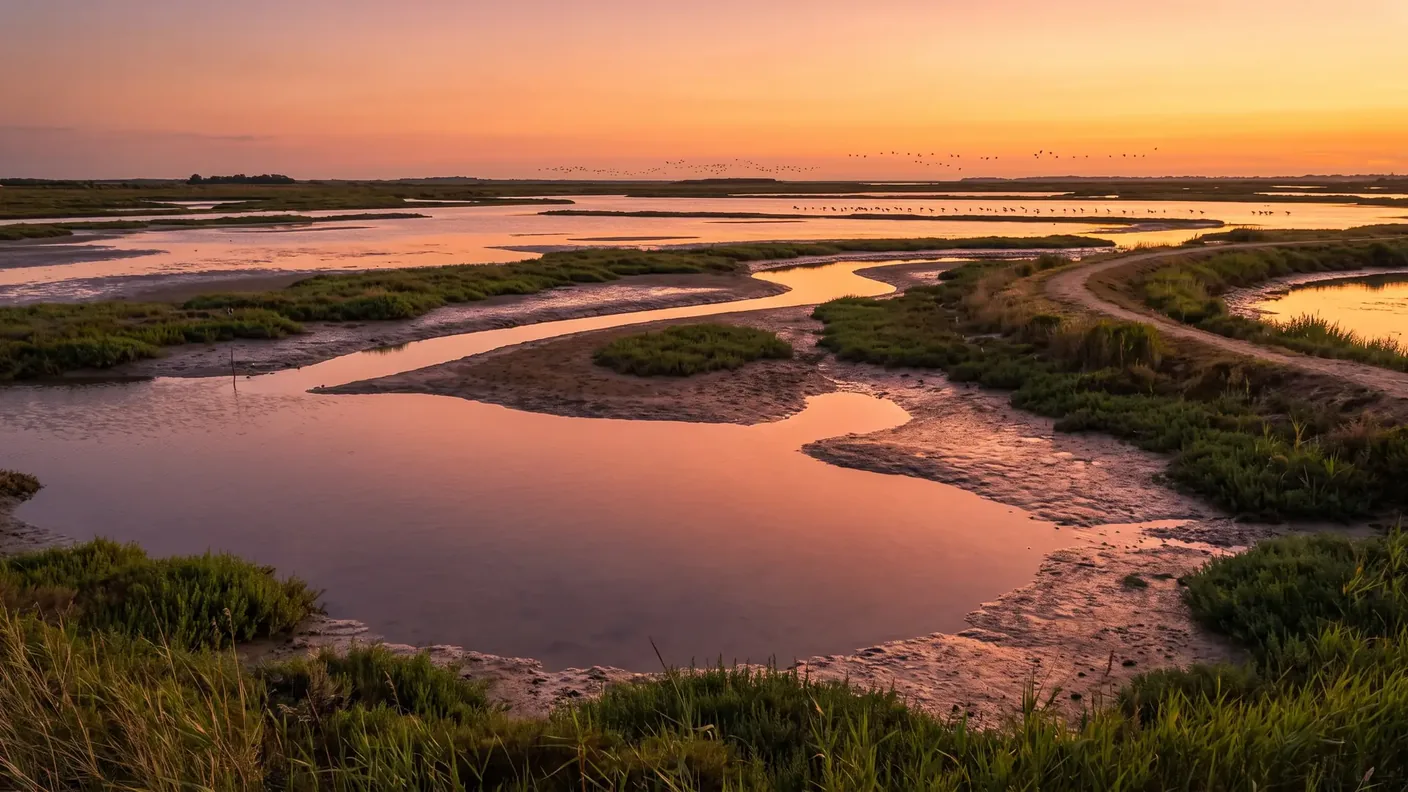
Les Portes-en-Ré is home to one of the island’s most beautiful natural sites: the Lilleau des Niges National Nature Reserve, a sanctuary for migratory birds on the shores of the Fier d’Ars, a vast inland bay. It is a paradise for birdwatchers and lovers of intertidal landscapes.
A Bird Sanctuary
The Lilleau des Niges National Nature Reserve, managed by the League for the Protection of Birds (LPO), occupies former salt marshes at the northern tip of the island [source]. It is a major stopover on migration routes: more than 300 species of birds have been observed there, and depending on the season, visitors can admire avocets, egrets, Belon shelducks (the reserve’s emblem), and, above all, huge flocks of brant geese, up to ten thousand each winter, arriving from Siberia.
The Maison du Fier, located at the entrance to the village, showcases the nature reserve and offers guided tours, complete with binoculars and spotting scopes, led by LPO guides. The best time to observe large flocks is in the fall and winter, at high tide, when the birds gather at the roosting sites. Watching, at dawn or dusk, these swarms of birds over the shimmering mudflats is an unforgettable experience and one of the great treasures of Portes-en-Ré, a form of nature tourism that is slow and mindful, a stark contrast to the crowded beaches of summer.
You don't enter the reserve; you observe it.
One key point: we don't go for walks in the Lilleau des Niges Nature Reserve. Created by Decree of January 31, 1980 and managed by the LPO since its inception, it protects former salt marshes where public access is prohibited, so as not to disturb the birds; only the trail along its edge, accompanied by a bike path remains open, freely and at no charge, all year round. That’s where we observe, with binoculars around our necks. The site is among France’s ten leading wintering grounds for waterfowl, with nearly 50,000 overwinterers [source] at the height of the season. A delightful detail: the Maison du Fier, which showcases the nature reserve at the entrance to the village, occupies a former salt warehouse, Around 1910, two large warehouses there stored up to 2,000 metric tons of salt [source] in some years. However, it is only open during the season (from April to early November); in the winter, the open trail takes over.
The Fier d'Ars, a tidal bay
The reserve borders the Fier d'Ars, a vast inland bay covering approximately 800 hectares, a sort of inland sea that extends deep into the island between Les Portes, Ars, Loix, and Saint-Clément [source]. At high tide, it is a shimmering expanse of water; at low tide, the water recedes almost entirely, revealing a vast foreshore of mudflats, channels, and sandbars, used for oyster farming and salt production. This spectacular landscape, which changes completely with the tides, is one of the most distinctive features of the Île de Ré. You can explore it on foot or by bike along the dikes and paths, passing through oyster beds, salt marshes, and colorful huts. Designated a wetland of international importance (Ramsar) since 2003, the bay is the natural heart of Les Portes-en-Ré, this labyrinth of water and land where the tide reshapes the landscape twice a day.
| Nature in Portes-en-Ré | Details |
|---|---|
| Lilleau des Niges Nature Reserve | LPO National Reserve · More than 300 species of birds |
| Brant Geese | up to ~10,000 in winter, arriving from Siberia |
| The Fier d'Ars | inland bay ~800 ha · oyster farming & salt production |
| Trousse-Chemise Woods | the island's smallest forest (~25 ha), the most famous one |
The White Village, the Church, and the Redoute
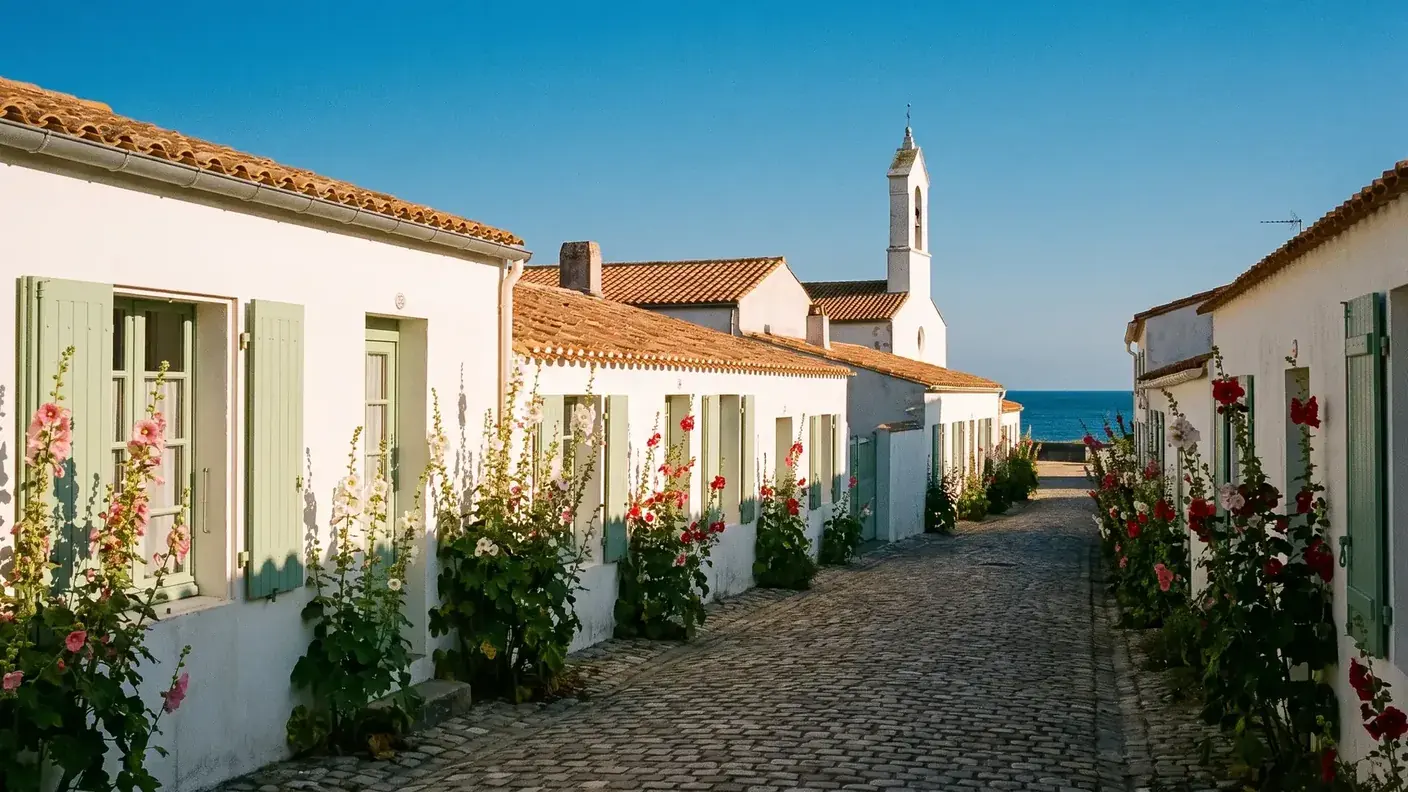
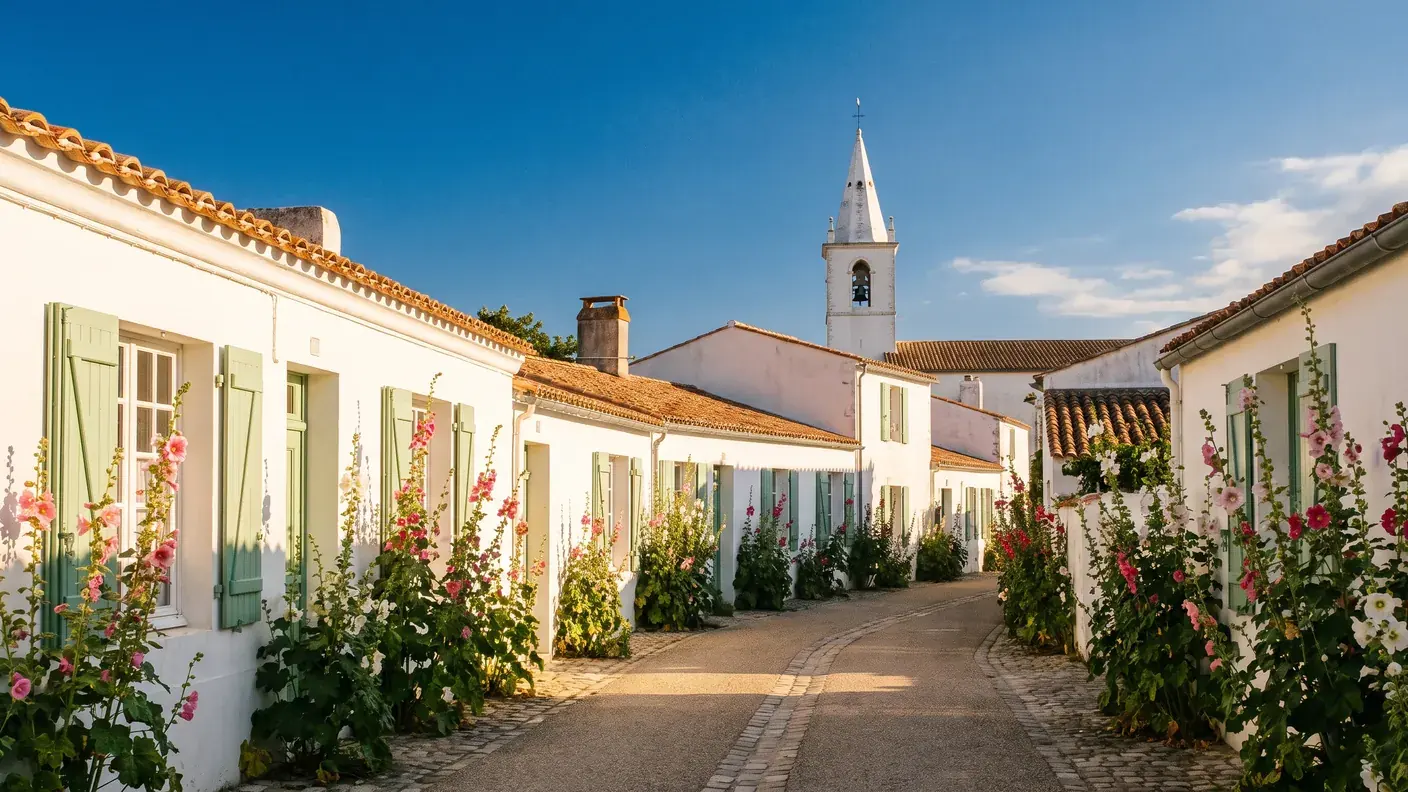
The village of Les Portes-en-Ré features the island’s characteristic white-washed streets, whitewashed houses, green shutters, and hollyhocks, stretching out around its church and the ruins of its military redoubt. It is a modest yet authentic heritage that must be presented accurately.
Architecture on the Île de Ré and the Church
Like everywhere else on the island, Les Portes charms visitors with its low, whitewashed houses, with shutters painted in the famous “Ré green,” adorned with hollyhocks. This aesthetic, common throughout the island, originated from a sailors’ practice: shutters and doors were repainted with leftover green paint from boat hulls; today, it is codified by urban planning regulations. In the heart of the village, the Saint-Eutrope Church, with its white bell tower, is a fine example of Ré architecture: the parish dates back to 1548, and the original chapel was expanded in 1610. A useful note: contrary to what is sometimes reported, this church is neither classified nor listed as a Historic Monument (the town has no listed buildings). It features a mural painted by Abbé Moulard in 1925. It’s worth a look for its charm, rather than for any official status.
La Redoute and the Sailors' Chapel
On the coast, the remains of the Redoute des Portes are a reminder of the island's military past. This fortification was built in 1674 to defend the entrance to the Fier d'Ars, and not, as is often claimed, “according to Vauban’s plans”: the famous engineer merely visited in 1681 and made changes to it, deeming the site “the most dangerous descent on the island.” Abandoned in 1854, all that remains are sections of wall on La Redoute Beach. Next to it stands a small chapel, known as the Redoute Chapel, dedicated to Our Lady of the Sailors: it houses a statue of the Virgin Mary donated around 1875 by the sailors of a shipwrecked three-masted ship, the Margareth, saved by the people of Portingal. It is these small reminders of maritime history that give the village its depth and soul, nestled between land and sea.
The wild beaches at the cape
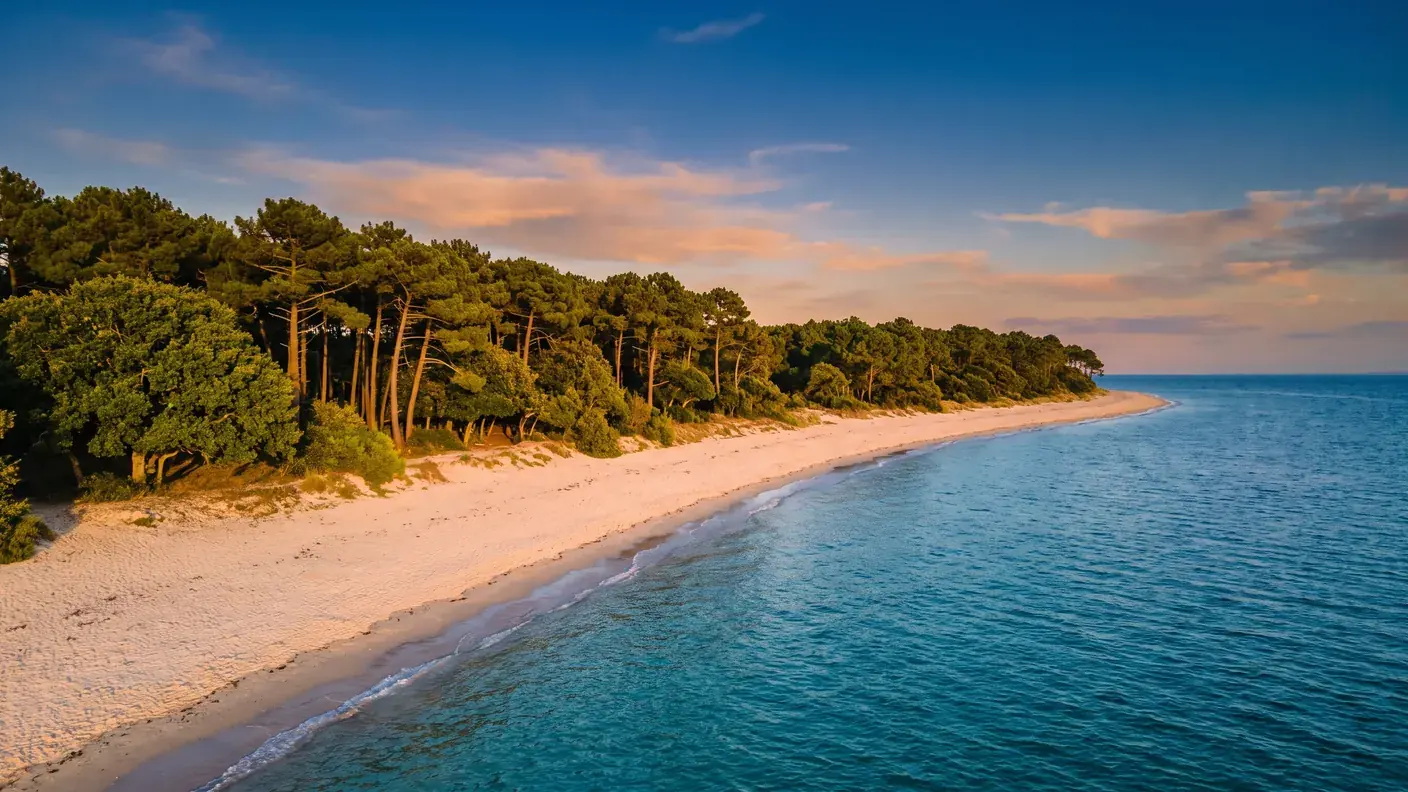
Les Portes-en-Ré boasts the wildest and most unspoiled beaches on the Île de Ré, surrounded by dunes, pine trees, and the vastness of the ocean, a setting that feels like the end of the world, far from the crowds. People come here for the open space, the light, and nature, rather than for seaside amenities: it’s a coastline for contemplation and the great outdoors, not a traditional beach resort.
The string of beaches
The Portes coastline features a string of beaches, each with its own character: the secluded Trousse-Chemise Beach, sheltered by its woods; Le Lizay and Le Gros Jonc, long stretches of sand and dunes; La Loge and La Redoute, closer to the village, where the remains of the old fortifications are visible; and, at the very tip, La Patache and Pointe du Fier, where the ocean meets the bay in a spectacular landscape of sand and wind. To the west, the town even borders the far end of La Conche des Baleines, the island’s largest beach. These beaches, often undeveloped, appeal to lovers of unspoiled nature, long walks along the water’s edge, and invigorating swims, far from rows of beach umbrellas. Each offers a different atmosphere depending on the time of day, the tide, and the wind, an endless playground for those who love the Atlantic coast at its most authentic.
A wild coastline to be respected
This untamed beauty comes with a caveat: caution is advised. Currents can be strong, particularly around Pointe du Fier and at the mouth of the bay, and not all beaches are lifeguard-patrolled, it’s best to check beforehand and, when visiting with children, stick to the patrolled areas during the season. The fragile environment is also protected: dunes, foreshores, and back beaches are home to sensitive flora and fauna, which must be respected by staying on marked trails and taking your trash with you. It is precisely this lack of artificiality and this commitment to preservation that make the Côte des Portes so special: a changing and magnificent natural landscape that takes a little effort to experience but can be savored for a long time, at the slow pace of the island’s tip. Here, you quickly learn to work with the tides, watch for the evening light, and savor the silence, a rare and precious luxury, just a few hours away from the hustle and bustle of the cities.
| The Beaches of Portes-en-Ré | Character |
|---|---|
| Trousse-Chemise | secluded, sheltered by a pine grove |
| Le Lizay, Le Gros Jonc | long stretches of sandy beaches and dunes |
| La Loge, La Redoute | near the village, ruins of the Redoute |
| La Patache, Pointe du Fier | outermost point, ocean and bay, strong currents |
The History and Name of Portes-en-Ré
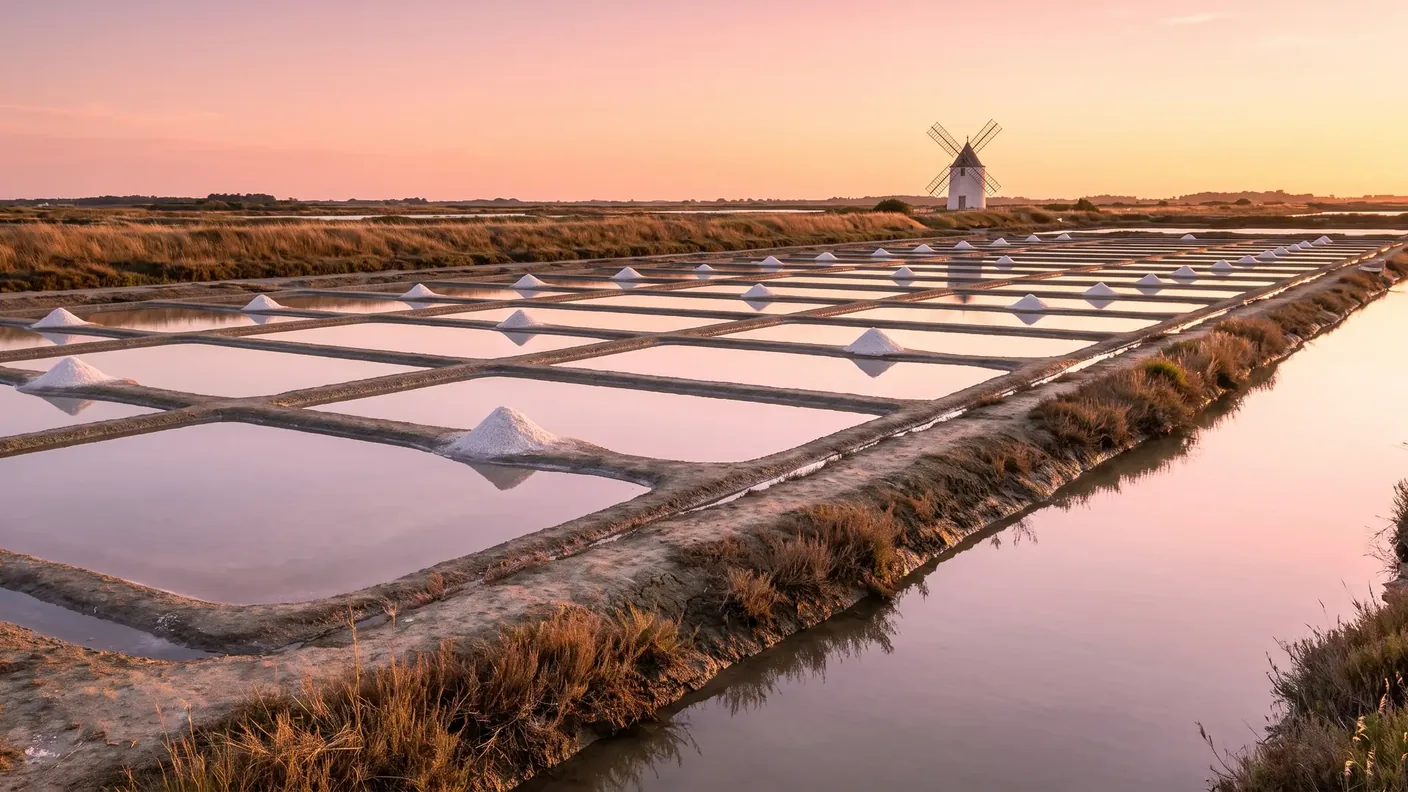
Behind its intriguing name, Les Portes-en-Ré has a long history, tied to that of two islands that were once separate and to a curious village on a narrow strip of land, whose residents make their living from salt, fishing, and oysters. A few key facts shed light on the past of this unique town.
"Les Portes d'Ars," the gateway to the island
The name "Les Portes" is intriguing, and we need to dispel a common misconception: it does not come from old city gates or fortifications. “Portes” refers to a crossing point, threshold, or entrance. The Île de Ré originally consisted of several islands, and the village stood at the entrance to the former Île d’Ars, making it a natural “gateway.” The place was therefore known as “Les Portes d’Ars” from the 11th to the 17th century. Once the islands had joined and “d’Ars” no longer described the geography, “en Ré” came into use during the 17th century. The official name "Les Portes-en-Ré," however, was not established until 1979, although the municipality itself had been established as early as 1790. A name that, on its own, tells the story of the island's shifting geography.
A Village of Salt and Sea
A village dating back to the 11th century, established as a parish in 1538, Les Portes, like the entire tip of the island, long depended on salt production, fishing, and oyster farming. The salt marshes of Fier d'Ars brought wealth to the village, and oyster farming took over when the salt industry declined. Life there was harsh and isolated: until the mid-20th century, Les Portes was reached by a small narrow-gauge train, a “slow train” known for being slow and rickety, whose old shed now houses the fire station. Unfortunately, the village’s old archives were destroyed in 1793. This humble history of sailors, salt workers, and oyster farmers at the tip of the island forged the independent and unspoiled character of Les Portes, before tourism and vacationing gave it a new face in the 20th century.
A village beloved by artists
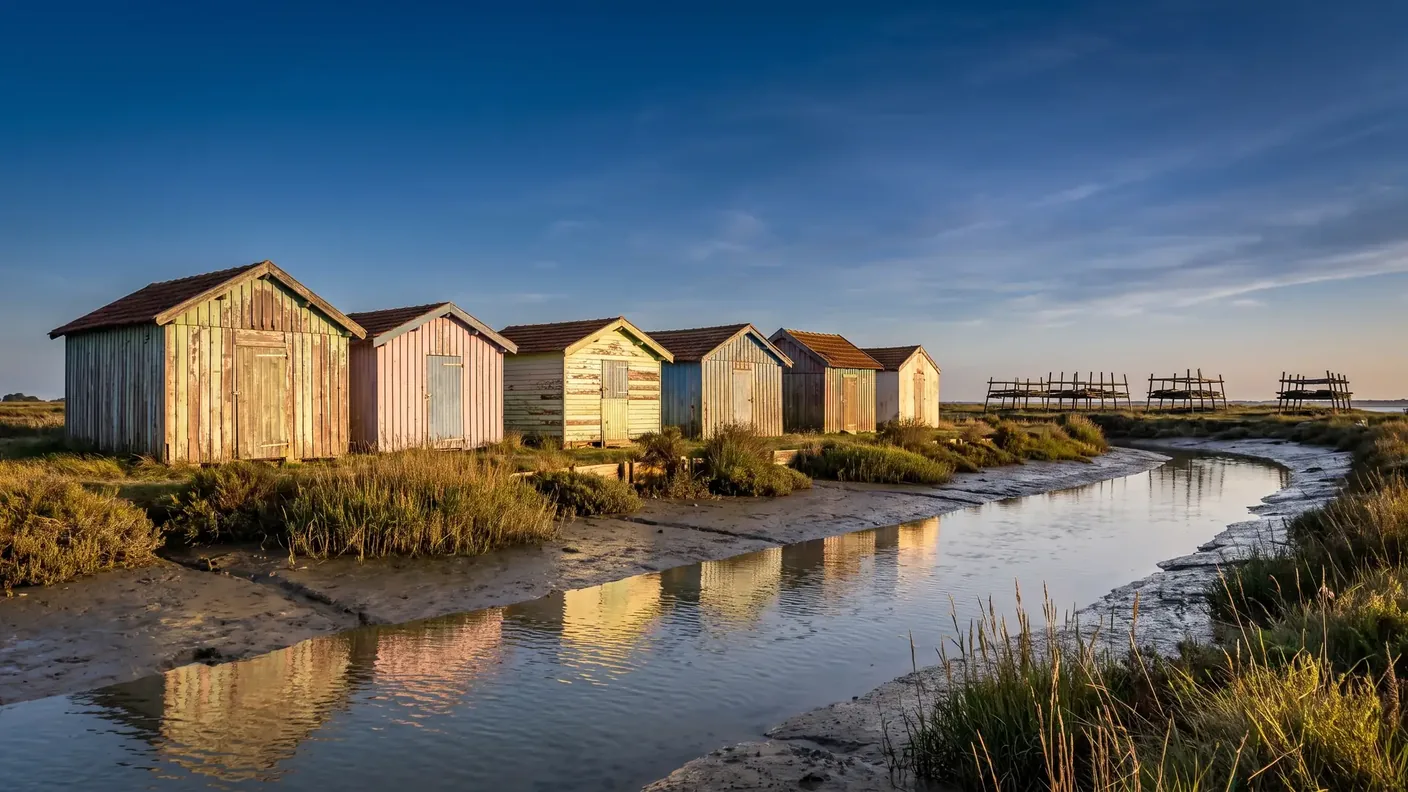
Les Portes-en-Ré has a reputation as a quiet, refined village, beloved by artists and celebrities who own vacation homes there, a reputation that should be presented honestly, as a perception rather than an official title. Its charm lies in its tranquility, beauty, and unspoiled seclusion.
Artists' Retreats
For decades, the tip of the island has quietly attracted artists and celebrities seeking peace and nature. Charles Aznavour, whose song immortalized Trousse-Chemise, the singer Claude Nougaro (who had a family home in the village), actor Bernard Giraudeau, historian Hélène Carrère d’Encausse, and the “father of Europe,” Jean Monnet (who spent his summers there), have all frequented Les Portes. In the summer, you can also run into many figures from the worlds of film and literature there. This is the source of the village’s “chic” reputation, but let’s be precise: no encyclopedic source describes Les Portes as an “exclusive” resort; it is a rural village with scattered dwellings, whose understated charm appeals to a loyal clientele. The true elegance of Les Portes lies in its simplicity and unspoiled natural beauty, not in ostentation.
Jean Monnet, a Father of Europe on Vacation
The most illustrious of these unassuming figures was Jean Monnet, one of the “fathers of Europe”: From the 1950s until his death, he spent his summers in Les Portes-en-Ré, away from prying eyes, in the simplicity of a village at the tip of the island. The town paid tribute to him by renaming part of the central square “Rue Jean Monnet”, a reminder, between swims, that European history was written here with feet in the sand, in all discretion. That’s the very spirit of Les Portes: people come here to disappear, not to be seen.
The Art of Living at the Tip of the Island
What makes this place so appealing is a certain island way of life: cycling as the only means of transportation, long, deserted beaches in the off-season, oysters enjoyed with a view of the Fier River, sunsets over the marshes, and the slow pace dictated by the tides. Far from the bustling seaside resorts, Les Portes embraces privacy and a connection with nature. There are few shops, but they’re carefully selected; the houses, often beautiful, meticulously maintained vacation homes, are tucked away behind white walls and gardens. It’s a village where people come to recharge rather than to be seen, where luxury is measured in space, silence, and light.
This preserved authenticity, set apart from it all, is the true treasure of Les Portes-en-Ré, and the reason why those who return season after season are so attached to it. Many families have owned homes here for generations, passed down like a well-kept secret, and this quiet loyalty, more than any flashy displays, is what gives the place its unique atmosphere. People come here by bike, greet one another, and share a platter of oysters at sunset: the true art of living in Portes lies in these simple gestures, at the far end of the island, where time slows down.
What is there to see around Portes-en-Ré?
From Les Portes, at the tip of the island, it’s easy to explore the entire northern part of Île de Ré: the Baleines Lighthouse, Ars-en-Ré and its salt marshes, Saint-Martin, and, on the mainland, La Rochelle. There’s so much to discover, making your stay in the village even more enjoyable, whether by bike or by car.
The Baleines Lighthouse and Ars-en-Ré
Nearby, in the neighboring town of Saint-Clément-des-Baleines (not to be confused: the large lighthouse is not located in Les Portes), stands the famous Baleines Lighthouse: 57 meters tall and designated a historic monument, it can be climbed via 257 steps to enjoy a superb panoramic view of the western tip and the ocean. A few kilometers away, Ars-en-Ré, ranked among the most beautiful villages in France, charms visitors with its striking black-and-white bell tower (a landmark for sailors), its harbor, and its narrow streets, all set in the heart of the salt marsh region. Here you can learn about the work of the salt workers and visit the Salt Ecomuseum in nearby Loix. These villages in the north of the island, more authentic and unspoiled than those in the south, form a landscape of great beauty, entirely oriented toward the sea, the salt marshes, and the sky.
Saint-Martin and La Rochelle
Heading down toward the center of the island, you’ll reach Saint-Martin-de-Ré, the historic capital: its ramparts, designed by Vauban, are listed as a UNESCO World Heritage Site, and its bustling harbor, citadel, and shops make it a must-see destination. Further on, across the bridge, La Rochelle showcases its Old Port, guarded by three medieval towers, its arcaded streets, and its famous aquarium: it is the region’s largest city, less than an hour from Les Portes, and home to the nearest train station. Starting from the northern tip, you can thus cross the entire island from north to south, from the wild marshes to the Vauban ramparts, before reaching the mainland. Hiring a private chauffeur allows you to organize these excursions without worrying about parking, which is notoriously difficult on the island during the summer.
| Around Les Portes-en-Ré | Distance | Interest |
|---|---|---|
| Phare des Baleines (St-Clément) | ~5 km | Panorama, 257 steps, western tip |
| Ars-en-Ré | ~7 km | Most Beautiful Village, Bell Tower, Salt Marshes |
| Saint-Martin-de-Ré | ~15 km | Vauban Ramparts (UNESCO), harbor, citadel |
| La Rochelle | ~35 km | Old Port, towers, aquarium (mainland) |
When is the best time to visit Les Portes-en-Ré?
The best time to visit Les Portes-en-Ré is in the spring and early fall, when the weather is milder and the area is infinitely quieter than in the height of summer, but winter has its own wild charm, which is particularly popular with birdwatchers. The spring (May–June) is a dreamy season: the light is superb, hollyhocks are in bloom, nature is coming to life, and the village regains its tranquility before the summer crowds arrive; it’s the perfect time for biking, deserted beaches, and birdwatching. Summer (July–August) is peak season: the island is bustling, the beaches and Trousse-Chemise are lively, but the Pointe des Portes area remains more unspoiled than the southern part of the island; Book your accommodations early, they’re scarce and in high demand, and expect crowded piers and congested roads.
Late Fall and Winter for Birds
The early fall (September) is a precious secret: the sea is still warm, the golden light is magnificent, the island regains its tranquility, and it’s one of the most beautiful times to stroll along the beaches and through the marshes without the crowds. Winter, windy and barren, reveals a completely different side of Les Portes: the nearly deserted village, the high tides, the Atlantic storms, and above all the large gatherings of migratory birds on the Fier d'Ars, a sight that delights nature lovers. In every season, the island’s bright, oceanic climate, among the sunniest on the Atlantic coast, makes Portes-en-Ré a rejuvenating and unspoiled getaway for those seeking nature and tranquility at the tip of the island.
How to get to Les Portes-en-Ré from Bordeaux
Les Portes-en-Ré is located about 227 km from Bordeaux, which is a little over two and a half hours by car via the A10 highway toward La Rochelle, across the Île de Ré bridge, and then all the way across the island to its northern tip. It is the village farthest from the bridge: once on the island, you still have to travel almost its entire length, passing through Saint-Martin and Ars, to reach Les Portes at the very end. The Île de Ré Bridge (opened in 1988, nearly 3 km long) has a toll, but it’s only charged to non-residents on the way there. The island has no train station: the nearest one is in La Rochelle, on the mainland, about 35 km from the village.
A car or a chauffeur service?
To reach this remote corner of the world, and especially to stay there, a private chauffeur service offers true freedom: a direct, door-to-door trip from Bordeaux, with no transfers or stops in La Rochelle, and without the hassle of parking, which is notoriously difficult and expensive on the island during the summer. This is all the more appreciated since Les Portes is located at the very tip of the island, at the end of a long island crossing that’s often congested during peak season. Having a driver drop you off lets you forget about the car and enjoy biking, the only real way to get around the island. We offer this trip at a fixed price quoted in advance: expect to pay around €478 for the one-way trip, in a Mercedes sedan or a van seating up to 8 passengers, with a professional driver. The price, set at the time of booking, does not change: it includes the bridge toll.
This is the perfect option for a family vacation (with luggage, beach gear, and strollers), a relaxing getaway with friends, an event, or a simple transfer to or from Bordeaux-Mérignac Airport. You can travel alone, as a couple, or in a small group of up to 8 people, and request a stop in La Rochelle along the way. Booking is simple: just provide your pickup address in Bordeaux and your destination in Les Portes-en-Ré, along with the date, desired time, and number of passengers, and you’ll receive a fixed-price quote in writing. The driver picks up passengers at the agreed-upon address and takes them directly to the village, including the bridge and the drive across the island, without any detours. It’s a truly convenient way to arrive relaxed in this unspoiled corner of Île de Ré, ready to hop on a bike as soon as you arrive.
| Route | Distance | Duration | Landmark |
|---|---|---|---|
| Bordeaux → Les Portes-en-Ré | ~227 km | about 2 hours and 47 minutes | starting at ~379 € (including bridge) |
| Les Portes → Ars-en-Ré | ~7 km | ~11 min | most beautiful village, salt marshes |
| Les Portes → Saint-Martin-de-Ré | ~15 km | ~20 min | Vauban Ramparts (UNESCO) |
| Les Portes → La Rochelle | ~35 km | ~45 min | Old Port, train station (mainland) |
Whether you come for the Trousse-Chemise Forest and its legend, for the bird sanctuary and the Fier d’Ars, for the wild beaches, or for the understated charm of the white village, Les Portes-en-Ré is a treat for lovers of an authentic and unspoiled Île de Ré, at the very edge of the land, an Atlantic land’s end where nature, light, and silence are the true luxuries.
Whether it’s for a family vacation, a nature getaway, or a comfortable ride to the tip of the island, booking a chauffeur service provides a punctual, worry-free door-to-door trip, including the bridge, book a driver from Bordeaux → Les Portes-en-Ré or explore all our destinations.
Frequently Asked Questions
Where is Les Portes-en-Ré located?
Les Portes-en-Ré is the northernmost village on the Île de Ré, located at its northwestern tip, in Charente-Maritime (17), Nouvelle-Aquitaine. It is the municipality farthest from the mainland and the least populated on the island (approximately 577 residents, known as Portingalais). Part of the La Rochelle district and the Île de Ré Community of Municipalities, it is renowned for its vast natural areas: the Trousse-Chemise Woods, the Lilleau des Niges Bird Sanctuary, and the Fier d’Ars. It is located about 227 km from Bordeaux, or about a 2-hour, 47-minute drive, including the bridge.
What is the distance between Bordeaux and Les Portes-en-Ré?
About 227 km by road, a little over two and a half hours, via the A10 highway toward La Rochelle, across the Île de Ré Bridge, and then all the way across the island to its northern tip (the village farthest from the bridge). If you hire a private driver from Bordeaux, the fare is fixed and provided in advance, starting at around €478 one way (sedan or van, door-to-door, including the bridge toll). The island does not have a train station; the nearest one is in La Rochelle, about 35 km away.
What is Trousse-Chemise in Les Portes-en-Ré?
Trousse-Chemise is a wooded area and a beach at the northern tip of Portes-en-Ré, made famous by Charles Aznavour’s song “Trousse Chemise” (1962). The woodland, covering approximately 25 hectares, is the island’s smallest state-owned forest but the best known; it is home to a secluded beach nestled in the shelter of the pine trees. The name comes from the nickname of a lighthouse keeper, Napoléon Benoni Renaud (1837–1920), known as “Trousse Chemise”; another tradition, presented as a legend, traces it back to 1627. Note: It was indeed the song “Trousse Chemise,” and not “La Bohème,” that immortalized this place.
Is the church in Portes-en-Ré designated as a historic monument?
No. The Saint-Eutrope Church, in the heart of the village, is neither classified nor listed as a historic monument: the town of Les Portes-en-Ré has no protected buildings. It is a fine example of Ré Island architecture (the parish dates back to 1548, and the chapel was expanded in 1610) and it houses a fresco painted by Father Moulard in 1925, but its value lies in its charm, not in any official status. Beware of a common confusion: the listed Saint-Eutrope Church is a namesake located in Allemans-du-Dropt (Lot-et-Garonne), which has no connection to the Île de Ré.
What is the Lilleau des Niges Nature Reserve?
It is a national nature reserve located at the northern tip of Portes-en-Ré, on former salt marshes along the Fier d’Ars, managed by the League for the Protection of Birds (LPO). It is a major stopover along migration routes: more than 300 species of birds have been observed there, including the Belon shelduck (its emblem) and huge flocks of Brent geese overwintering there (up to ten thousand, arriving from Siberia). The Maison du Fier provides information about the reserve and offers guided tours. It is a major site for birdwatching.
Is the Baleines Lighthouse in Portes-en-Ré?
No, that's a common misunderstanding. The large Baleines Lighthouse (57 m tall, 257 steps, classified as a historic monument), at the western tip of the island, is located in the neighboring town of Saint-Clément-des-Baleines, not in Les Portes-en-Ré. The Baleines Lighthouse is still very close by (about 6 km from the village center) and is easily accessible from Les Portes. However, the “Trousse-Chemise Lighthouse” is not a landmark in the town: the name comes from the nickname of a former lighthouse keeper.
What does the name Les Portes-en-Ré mean?
Contrary to popular belief, “Portes” does not come from ancient city gates or fortifications: the word refers to a crossing point, a threshold. Originally, the Île de Ré consisted of several islands, and the village was located at the entrance, the “gate”, to the former Île d’Ars; it was therefore called “Les Portes d’Ars” from the 11th to the 17th century. When the islands merged, “en Ré” replaced “d’Ars.” The official name “Les Portes-en-Ré” was not established until 1979, although the municipality had been founded in 1790.
What to See in Portes-en-Ré?
The woods and beach at Trousse-Chemise (immortalized by Aznavour); the Lilleau des Niges bird sanctuary and the Fier d’Ars, a vast bay at high tide; the salt marshes and oyster huts; the wild beaches at the tip (Le Lizay, Le Gros Jonc, La Patache, Pointe du Fier); the white village, its Saint-Eutrope Church, and the ruins of the Redoute des Portes (1674). Nearby: the Baleines Lighthouse (in Saint-Clément), Ars-en-Ré and its marshes, and Saint-Martin-de-Ré and its Vauban ramparts.
Is Les Portes-en-Ré a chic village?
Les Portes has a reputation as a quiet, refined village, popular with artists: Charles Aznavour, Claude Nougaro, Bernard Giraudeau, Hélène Carrère d’Encausse, and Jean Monnet were all regular vacationers there. But let’s be precise: no encyclopedic source describes it as an “exclusive” resort. It is a rural village with scattered settlements, the least populous municipality on the island, whose understated charm and unspoiled natural beauty attract a loyal clientele. The true elegance of Les Portes lies in its simplicity, open spaces, and tranquility.
How many people live in Les Portes-en-Ré?
With approximately 577 year-round residents (2023 municipal census), it is the least populous municipality on the Île de Ré. The population, which peaked at around 660 in the late 1990s, has been declining slowly ever since. Its residents are known as Portingalais. Above all, the village experiences extreme seasonality: nearly 84% of the housing units are second homes, one of the highest rates in France, and the summer population far exceeds the permanent population.
Is the Île de Ré a good place to bike from Les Portes?
Yes, Île de Ré is a cyclist’s paradise, and Les Portes, at the northern tip, is a great starting point. An extensive network of safe bike paths connects the ten villages through marshes, pine forests, and along the coast. From Les Portes, you can bike to the Trousse-Chemise Woods, the bird sanctuary, the Fier d’Ars, Ars-en-Ré, and the Baleines Lighthouse. On this flat island, which is often congested with cars in the summer, biking is by far the best way to get around, which is why it’s a good idea to have a driver drop you off and leave your car behind.
What is there to see around Portes-en-Ré?
The Baleines Lighthouse in Saint-Clément-des-Baleines (~5 km), known for its panoramic views; Ars-en-Ré, one of the most beautiful villages in France, with its black-and-white bell tower and salt marshes (~7 km); Saint-Martin-de-Ré and its Vauban ramparts, a UNESCO World Heritage Site (~15 km); and, on the mainland, La Rochelle, with its Old Port and towers (~35 km). The entire Île de Ré, from the wild north to the ramparts in the south, is accessible by bike or car from Les Portes, at the tip of the island.
Can I book a private chauffeur from Bordeaux to Portes-en-Ré?
Yes. We offer the Bordeaux → Les Portes-en-Ré route (approximately 227 km and 2 hours 47 minutes via the A10, the Ré Bridge, and the entire crossing of the island) at a fixed price, starting at approximately €478 one-way, including the bridge toll, in a Mercedes sedan or van seating up to 8 passengers, with a professional driver. The route is direct, door-to-door, which avoids the difficult parking on the island and a long crossing that’s often congested in the summer. Ideal for a family nature vacation, ready to hop on a bike upon arrival. The fixed-price quote is confirmed in writing before departure.
Further Reading
- The island's other village: see the Guide to Bois-Plage-en-Ré (the beaches, the vineyards, and the market, in the center of Île de Ré)
- The Pearl of the Arcachon Basin: see the Cap-Ferret Guide (the lighthouse, the oyster huts, the ocean, and the Arcachon Basin)
- Plan your trip: Book a private chauffeur from Bordeaux to Les Portes-en-Ré or explore all our destinations
Sources and References
- Wikipedia, Les Portes-en-Ré, geography, demographics, heritage, history
- Lilleau des Niges Nature Reserve (LPO), migratory birds, Fier d'Ars, guided tours
- ONF, Île de Ré State Forest, Trousse-Chemise Forest and Dune Stabilization
- Wikipedia, Redoute des Portes-en-Ré, a fortification built in 1674 and modified by Vauban in 1681
- Wikipedia, Phare des Baleines, a 57-meter lighthouse in Saint-Clément-des-Baleines (not in Les Portes)
- INSEE, Portes-en-Ré (17286), municipal population in 2023 (577 residents)
Article updated in July 2026.
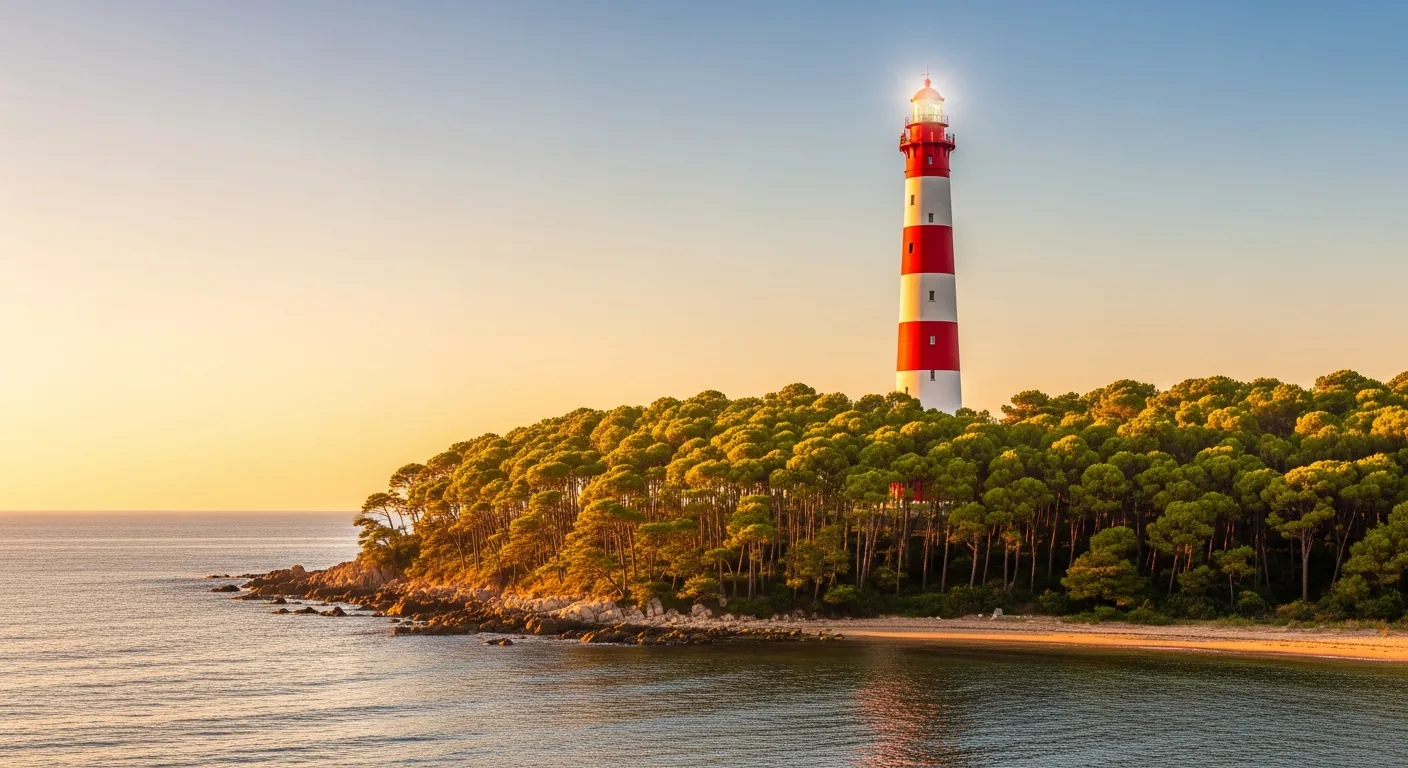
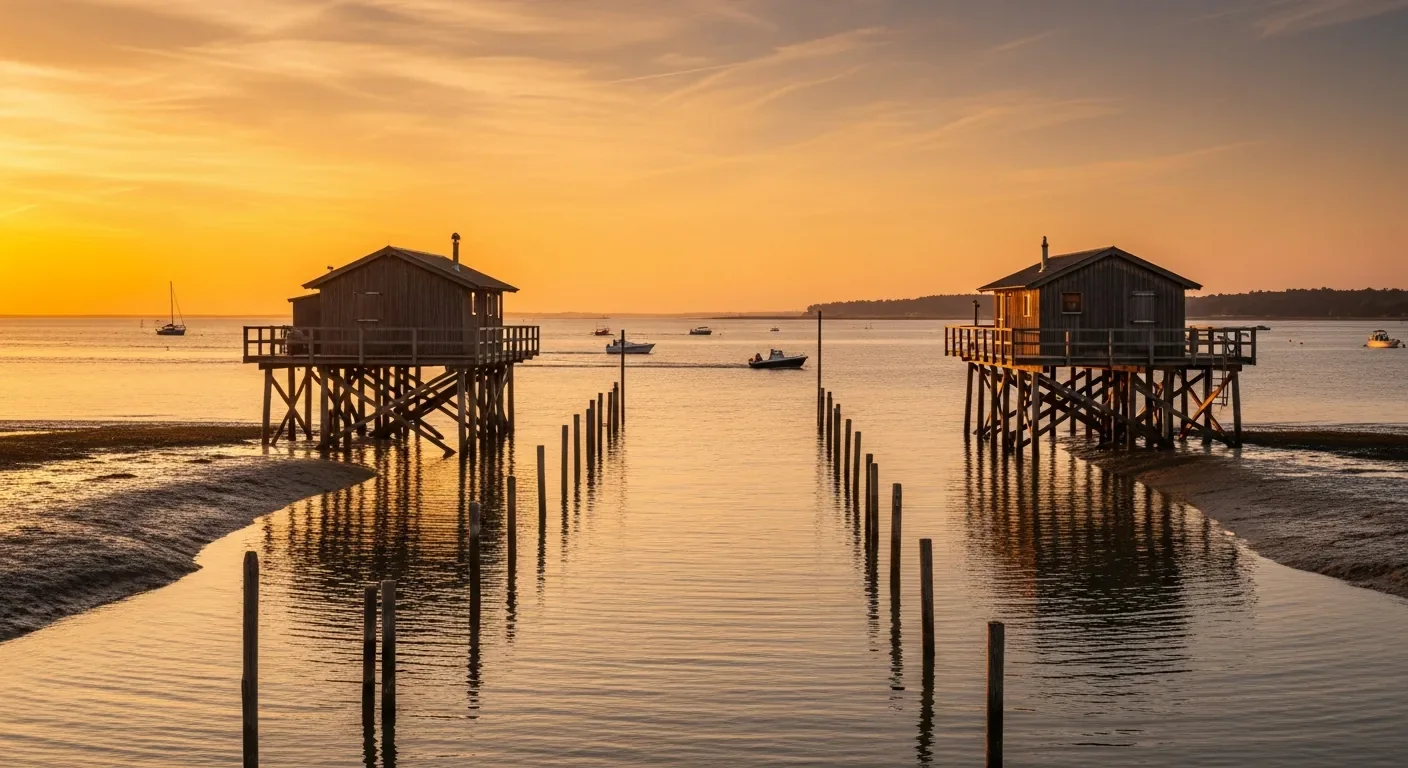
On the way to the tip of Île de Ré
Direct trip from Bordeaux (~2 hours 47 minutes) to the northern tip of Île de Ré, including the bridge and island crossing, with no need to worry about parking, with the option to stop in La Rochelle. Ideal for a family getaway in nature. Written fixed-price quote.