Bordeaux to Le Bois-Plage-en-Ré: beaches, market and island vineyards
A village in the heart of Île de Ré, on its southern coast lined with beaches and dunes: white houses with green shutters, the vineyards and the Uniré winery, the large market, oysters, and the donkeys in breeches—about 2 hours and 10 minutes from Bordeaux, including the bridge.
Le Bois-Plage-en-Ré at a Glance
Le Bois-Plage-en-Ré is a town on the southern coast of Île de Ré, known for its beaches, its market, and the Uniré winery. It has a population of approximately 2,125. [INSEE 2023]From Bordeaux, the 207-km trip takes about 2 hours and 10 minutes via the A10 and the Île de Ré Bridge, with a flat rate starting at 345 €.
Le Bois-Plage-en-Ré is a village on the Île de Ré, located on its southern coast, known for its long sandy beaches, its vineyards, and its large market. Located in the center of the island, between La Couarde and La Flotte, this village of low, white houses with green shutters, adorned with hollyhocks, is home to the Île de Ré winemakers’ cooperative winery and one of the island’s liveliest markets. Just a few minutes from the ramparts of Saint-Martin-de-Ré, and within biking distance of the northern salt marshes and the Baleines Lighthouse, Le Bois-Plage is an ideal base for exploring this Atlantic island, famous for its laid-back lifestyle, bike paths, oysters, and its famous donkey in pants. From Bordeaux, it takes about 2 hours and 10 minutes to reach the island by crossing the large bridge that connects it to the mainland.
Here are the key details to know before you go. The distance and travel time are based on the actual road trip from Bordeaux, including the bridge; the fare shown is for a chauffeured transfer booked at a fixed price at a fixed price provided in advance, with no unexpected charges from the meter or tolls.
| Landmark | Details |
|---|---|
| Department | Charente-Maritime (17), Nouvelle-Aquitaine |
| Location | Île de Ré, south coast · La Rochelle district |
| Population | approximately 2,125 residents (INSEE 2023) · the residents known as Boitais [INSEE 2023] |
| Area | 12.18 km² · centrally located on the island |
| Don't miss it | The beaches, the vineyard (Uniré Winery), the main market |
| Distance from Bordeaux | about 207 km · about 2 hours 10 minutes (including the bridge) |
| Terroir | wine, Pineau, cognac · AOP potatoes · oysters |
Clarifications
A few clarifications: the village church itself is not listed as a historic monument; only some objects inside it are protected. The salt marshes and fleur de sel are in the north of the island, around Ars and Loix, not in Le Bois-Plage. The Île de Ré potato gained AOC status in 1998 and EU PDO status in 2000. Non-residents pay the Île de Ré Bridge toll only when travelling from the mainland to the island; the return crossing is included. Le Bois-Plage market is the island’s largest, especially in summer.
Here’s a rundown of everything you need to know: Bois-Plage’s location on Île de Ré and its population, its beaches on the south coast, its typical white village and church, its local produce (wine, potatoes, oysters), its large market, the history and origin of its name, nature, the bike paths and the donkeys in breeches, the island’s notable sites all the way to Saint-Martin-de-Ré and the Baleines Lighthouse, the best time of year to visit, and how to get there from Bordeaux—all sourced and verified.
Where is Le Bois-Plage-en-Ré located?
Le Bois-Plage-en-Ré is located in Charente-Maritime (17), in Nouvelle-Aquitaine, on the Île de Ré, where it occupies a central position on the southern coast facing the Pertuis d'Antioche. It is a commune in the district of La Rochelle, part of the Île de Ré canton and the Île de Ré Community of Communes, which brings together the island’s ten villages. It covers an area of 12.18 square kilometers, stretching from the village of La Couarde in the west to that of La Flotte in the southeast. Le Bois-Plage was formed from the merger of three former hamlets—Le Bois-Plage, Le Rouland, and Le Morinand—which grew together over the course of the 20th century as the village expanded. Its central location, halfway between the two ends of the island, and its long stretch of beaches make it one of the most convenient starting points for exploring the entire Île de Ré, whether on foot, by bike, or by car.
In the center of Île de Ré
Île de Ré is a long, narrow Atlantic island about 30 kilometers long, connected to the mainland since 1988 by a large bridge. Famous for its light, its white villages, its bike paths, and its relaxed lifestyle, it attracts crowds of visitors every summer. Le Bois-Plage is situated in the center of the island, along the east-west axis, which is a real advantage: from there, it’s easy to reach Saint-Martin-de-Ré and La Flotte to the east, and La Couarde, Ars-en-Ré, and the Baleines Lighthouse to the west. Unlike the fishing and salt-making villages of the north, which face the marshes and harbors, Le Bois-Plage is first and foremost a village on the sandy coast, facing its beaches and vineyards. It was this central, seaside location that fueled its growth as a tourist destination in the 20th century. Here you’ll find the tranquility of white-washed alleyways and the vibrancy of a true village that’s lively year-round, combined with a bustling summer season.
A village with a highly seasonal economy
With approximately 2,125 residents on an annual basis (2023 municipal population), Le Bois-Plage is one of the most populous villages on the island, but its population is experiencing a slight decline (approximately −5% between 2017 and 2023) and a marked aging trend (nearly 46% of residents are 60 years of age or older). Its residents are known as the Limped. Above all, like the rest of the Île de Ré, the village lives at the pace of a very strong seasonality: Second homes account for nearly 63% of housing units, and the population increases severalfold during the peak summer season, when vacationers and vacation home owners flock to the area. This dual nature—a quiet village off-season and a lively seaside resort in the summer—is characteristic of the Île de Ré. It also explains the importance of outdoor lodging: Le Bois-Plage alone has about ten campgrounds and nearly 2,000 campsites, making it a major hub for tourism on the Île de Ré.
The Beaches of Bois-Plage
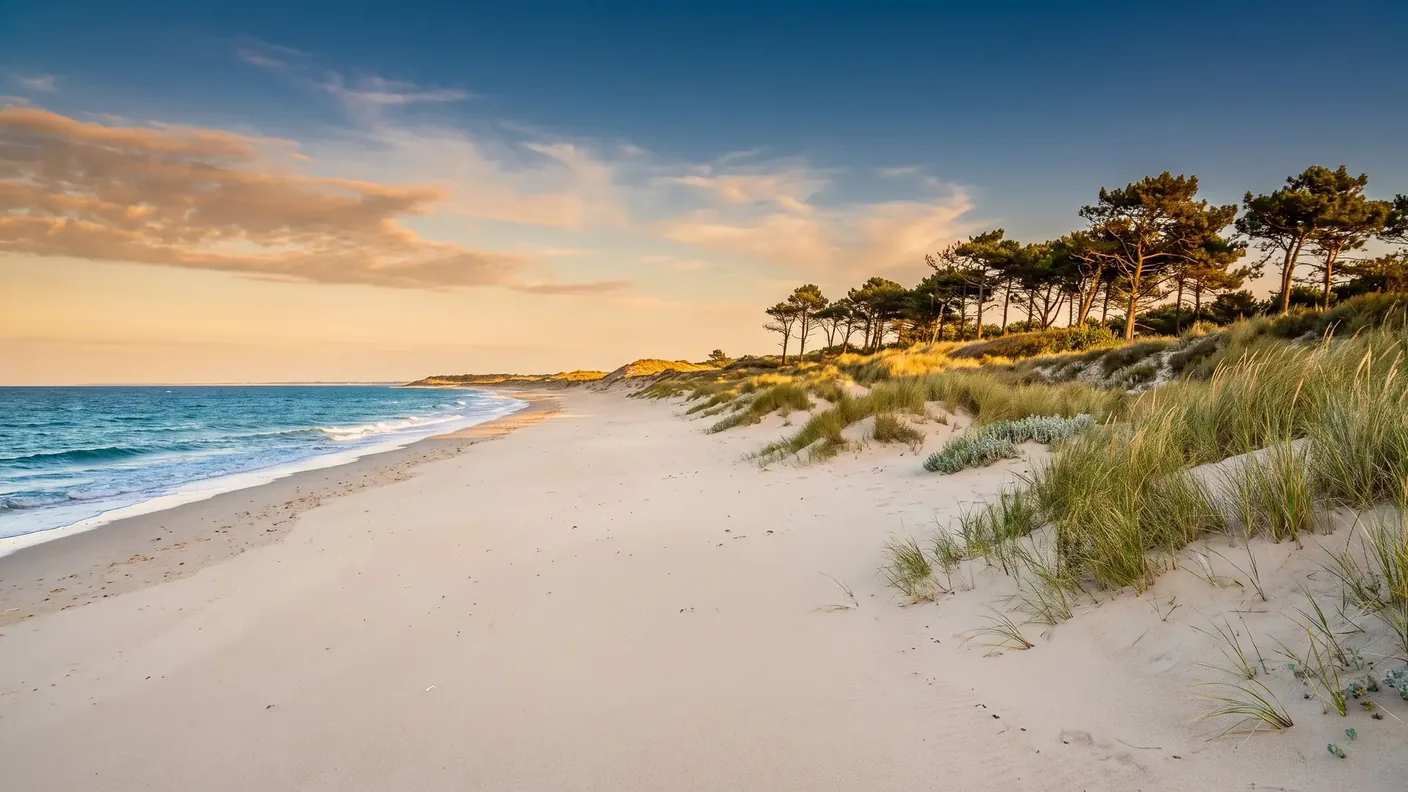
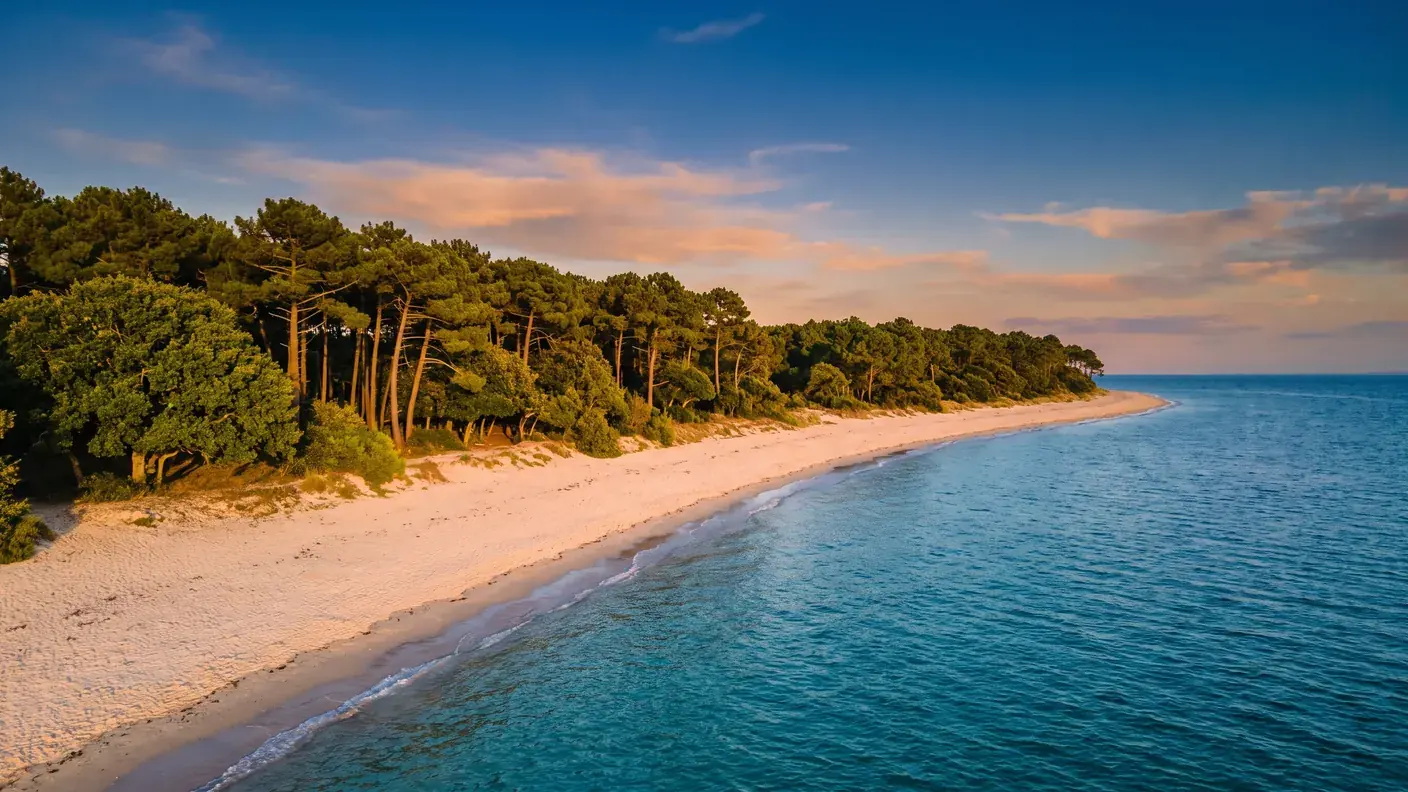
Le Bois-Plage boasts one of the longest stretches of sandy beach on the southern coast of Île de Ré: about five kilometers of beaches, lined with dunes and pine trees, among the most beautiful family-friendly beaches along this coastline. This is one of the village’s greatest assets and the main reason for its popularity as a seaside resort.
Five kilometers of sand
The southern coast of Bois-Plage features a long stretch of fine sand, backed by dunes covered with marram grass and a line of maritime pines. It is accessed via small paths crossing the dunes, which the locals affectionately call the “pas”: the town has six of them, each numbered, leading to the different sections of the beach. From west to east, the beaches of Petit Sergent, Les Fontaines, Les Brémaudières, Les Gollandières, Les Sauzes, Le Gros-Jonc, and Les Gouillauds follow one after another. Two of them, Les Gollandières and Le Gros-Jonc, are lifeguard-patrolled during the season and Blue Flag certified: these are the large family-friendly beaches, ideal for swimming with children. Soft sand, shallow waters, and a pristine setting: the beaches of Bois-Plage are among the most pleasant on the island, though they’ve never claimed a ranking that no source has truly validated.
Les Gouillauds, a great spot for beginners
At the eastern end of the town, Gouillauds Beach has a distinctive character: its rocky seabed, where ancient fish locks (these stone tide traps, visible at low tide) still remain, creates waves that make it the village’s main water sports spot—surfing, windsurfing, kitesurfing, stand-up paddleboarding, and kayaking. Be careful not to overdo it, though: these are small waves breaking over a reef, making it a good spot for beginners but not a top surfing destination. The island’s renowned surfing spots are elsewhere, at Les Grenettes (in Sainte-Marie-de-Ré) or to the northwest. At Les Gollandières, on the other hand, several surf schools offer lessons from June through September in a more sheltered setting, perfect for beginners. From family swimming to an introduction to board sports, the Bois-Plage coast offers a wonderful playground for the whole family, set amid dunes and pine trees.
| The Beaches of Bois-Plage | Character |
|---|---|
| Les Gollandières | supervised · Blue Flag · family-friendly + surf schools |
| Le Gros-Jonc | supervised · Blue Flag · family-friendly · large bike parking area |
| Les Gouillauds | beginner spots (surfing, kitesurfing) · traditional stone fish traps |
| Petit Sergent, Les Fontaines… | the quieter beaches in the western part of the town |
The White Village and Its Church
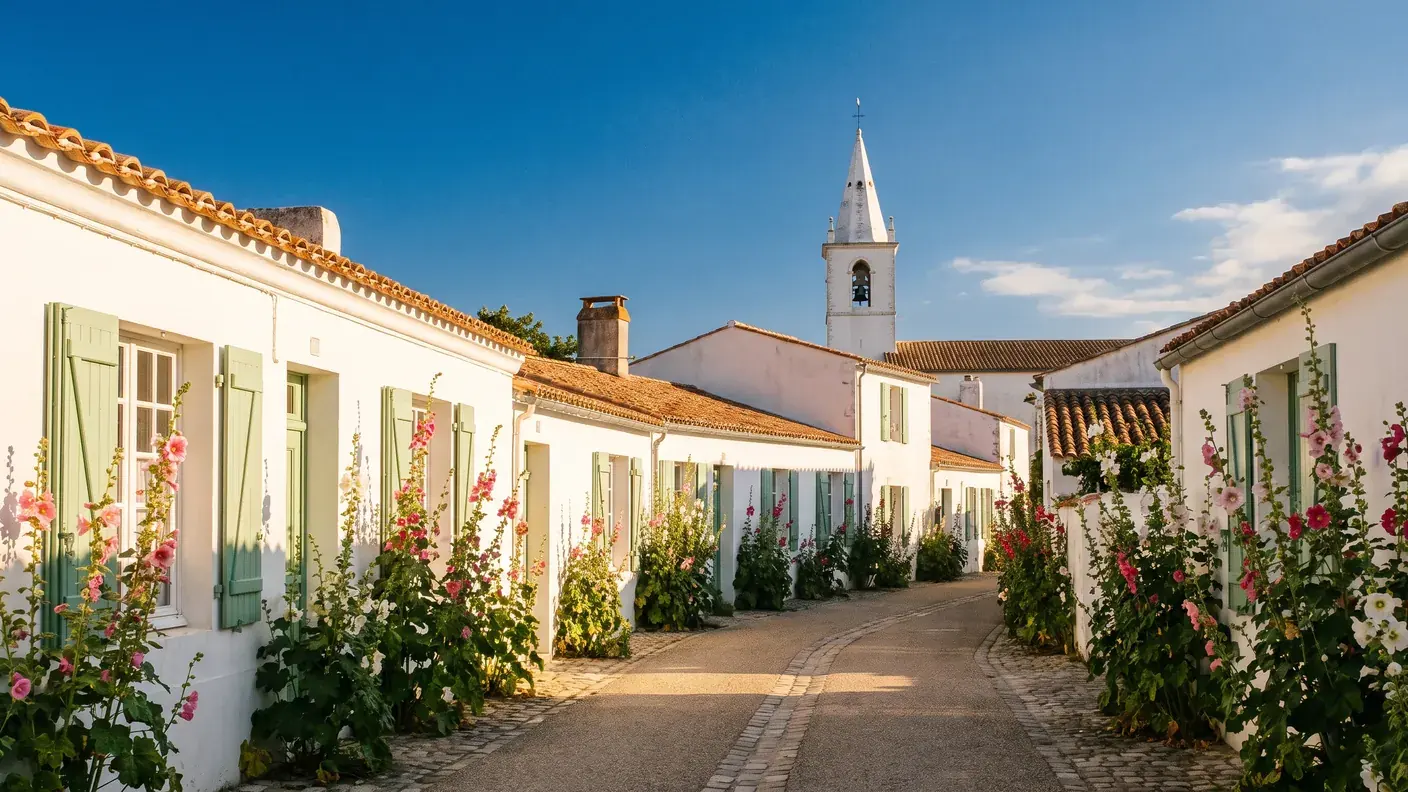
Like all the villages on the Île de Ré, Le Bois-Plage charms visitors with its traditional architecture: low, whitewashed houses with “vert de Ré” shutters, adorned with hollyhocks, lined up along peaceful alleyways. This charm is characteristic of the entire island, but Le Bois-Plage showcases it beautifully around its town center and church.
Architecture on the Île de Ré
The built landscape of Île de Ré is remarkably uniform, and Le Bois-Plage is no exception: low-rise buildings, rarely more than one story high (to withstand the wind), with walls whitewashed a brilliant white, and shutters and doors painted a soft green (the famous “Ré green,” sometimes accented with a blue-gray hue), with their Roman-style tiled roofs. Against the walls and along the narrow streets, the hollyhocks, those tall flowers that are the island’s colorful hallmark. This harmony isn’t just a postcard-perfect backdrop: it stems from strict urban planning regulations that preserve the island’s character. To be fair, it should be noted that this aesthetic is common to all the villages on Ré, and is not unique to Bois-Plage alone—but strolling through it, among the small squares, little gardens, and white-washed alleyways, remains a simple and luminous pleasure, typical of island life.
All Saints Church
In the heart of the village stands the Church of Notre-Dame-de-Tous-les-Saints, known as the “Church of All Saints,” the village’s main building with its white bell tower rising above the rooftops. A useful clarification, as it is often misreported: the building itself is not protected as a historic monument (the municipality has no buildings that are classified or listed). However, the church houses twelve objects protected as historic monuments (Palissy database): two have been classified since 1979—a collection plate and a ciborium—and ten others are listed (including a beautiful ensemble of altar, altarpiece, and tabernacle, as well as the choir stalls). It is therefore an “unintentional museum” worth visiting for its furnishings rather than its architecture. The village also preserves, in the hamlet of Morinand, an old mill (known as the Bellerre Mill) dating from before 1627, and the Malakoff Tower—other quiet reminders of its past.
Wine, Potatoes, and Oysters
Le Bois-Plage is the culinary heart of Île de Ré: this is where the Île de Ré winemakers’ cooperative is based, and the town is renowned for its wine, Pineau, cognac, new potatoes, and oysters. A unique island terroir, where vines grow on sand, facing the ocean. [Mairie 2026]
The Uniré Winery in Bois-Plage
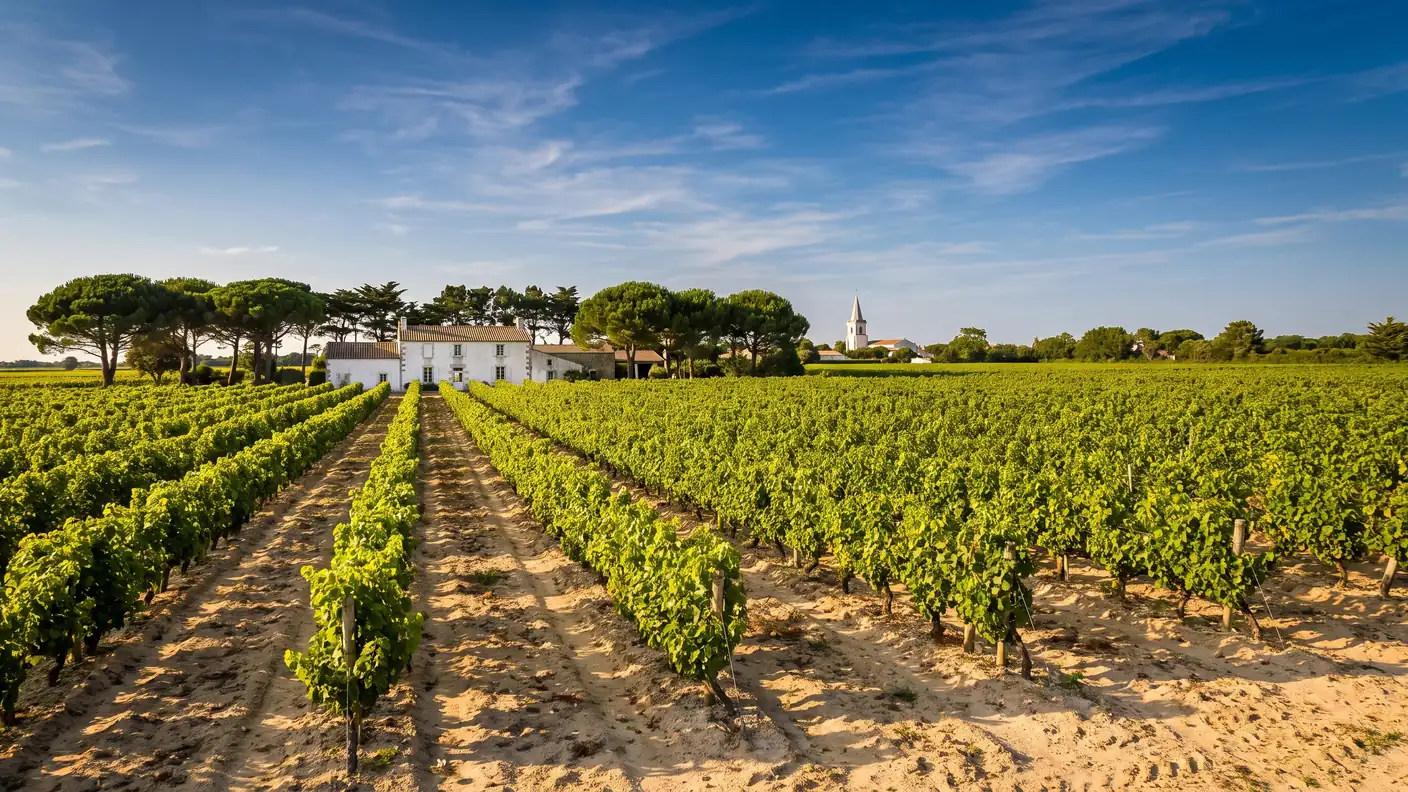
A distinctive feature, and one that has been thoroughly verified: the cooperative winery Uniré — “Les Vignerons de l’Île de Ré” — is headquartered in Bois-Plage itself, on Route de Sainte-Marie. Founded in 1950, it brings together some forty winegrowers and covers approximately five hundred hectares of vineyards, planted on soils composed of sand and groies (clay-limestone). [Uniré 2026] It produces a comprehensive and original line of: wines (rosé, white, red), including a sparkling wine with a playful name, “ Trousse Chemise "; from the Pineau des Charentes; and the cognac — because the Île de Ré is part of the Cognac appellation. It’s a wine tourism destination in its own right, with a wine cellar, distillery, and tastings. Tasting the island’s wines and spirits—with their briny, sun-kissed flavors—right where they’re made is one of the wonderful experiences Le Bois-Plage has to offer—much more than just a seaside stopover.
PDO Potatoes and Oysters
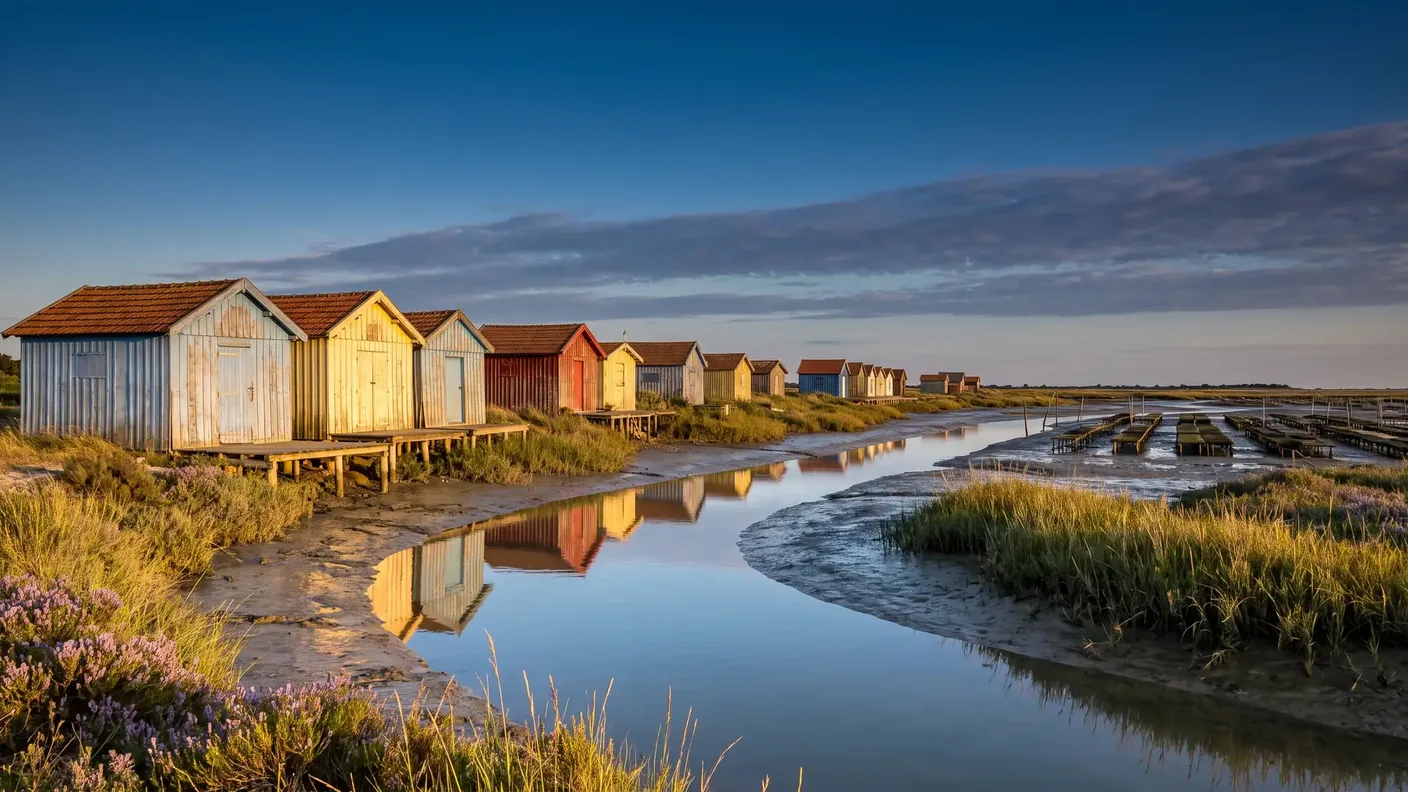
Another source of local pride is the Île de Ré potato, a small early-season variety with a melt-in-your-mouth texture and a subtle briny flavor, grown in the island’s sandy soil. It was the first potato in France to be granted AOC status, by decree on February 5, 1998, and then AOP (at the European level) in 2000—not to be confused: AOC first, AOP second. Le Bois-Plage is located within the appellation’s designated area. [INAO 2026]Harvested in the spring, it is best enjoyed simply, with the island’s fleur de sel. Another must-try are the oysters: oyster farming is a traditional activity on the island, and colorful oyster huts dot the waterways. You can enjoy Île de Ré oysters right there, overlooking the water. Wine, new potatoes, oysters, salt: the terroir of Île de Ré is exceptionally rich for such a small island, and Le Bois-Plage is one of its showcases.
Salt: A Northern Affair
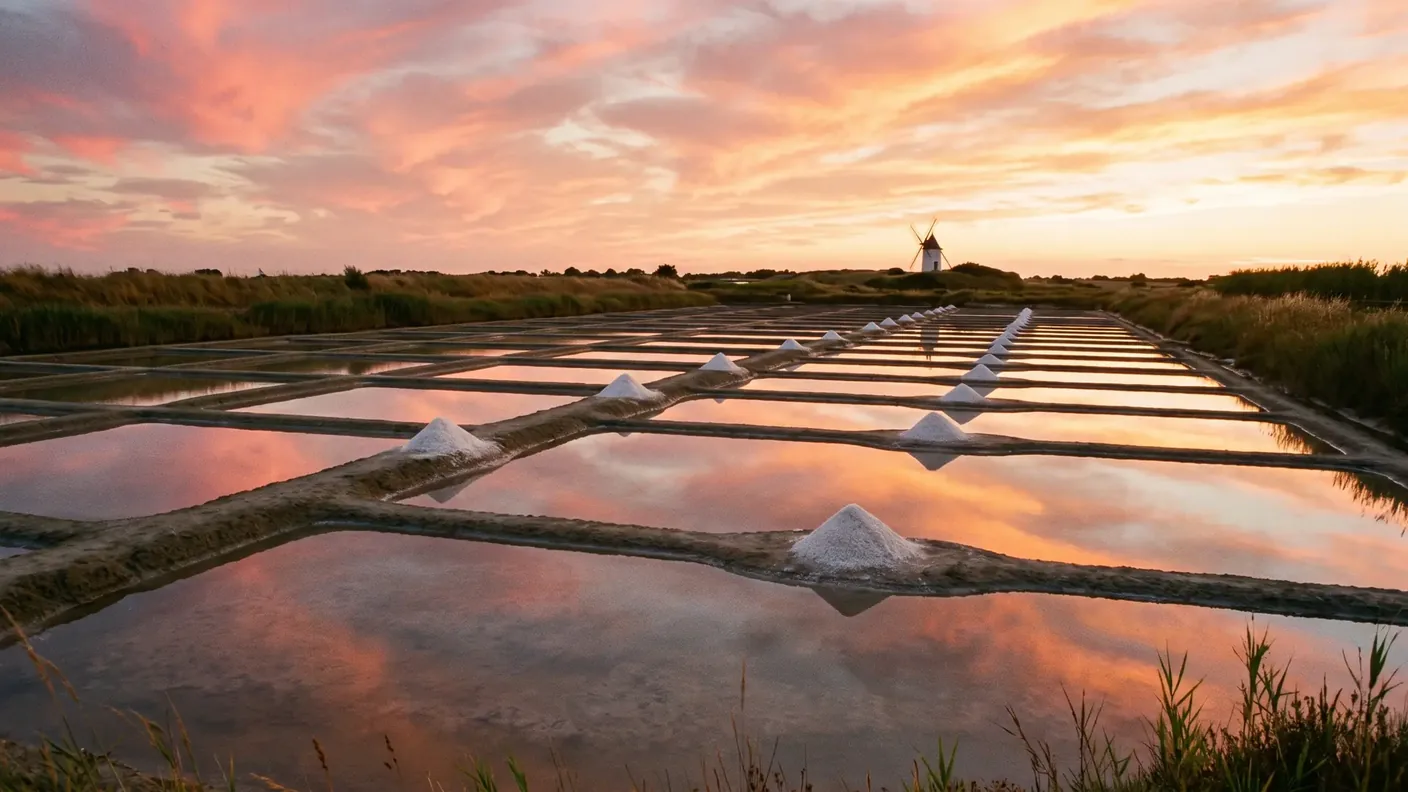
A quick note to clear up a common misconception: the salt and fleur de sel from Ré, so emblematic of the island, are not produced in Bois-Plage. The salt marshes are located in the north of the island, around the Fier d’Ars (in Ars-en-Ré, Loix, Saint-Clément-des-Baleines, and La Couarde), where the geography of mudflats and basins is conducive to salt production. The Sauniers de l’île de Ré cooperative is in Ars-en-Ré, and the Salt Marsh Ecomuseum is in Loix. Salt is therefore a product of the entire island, but not of the specific region of Bois-Plage, which is focused on the sand, vineyards, and the beach. The same is true of the famous “donkey in breeches,” the emblem of the entire island (Poitou donkeys, once used in the salt marshes and vineyards, which were fitted with breeches to protect them from insects): this is a tradition of the Île de Ré, not a characteristic specific to the village. These are all nuances that the curious traveler will appreciate.
| The Terroir of Île de Ré | Details |
|---|---|
| Wine, Pineau, Cognac | Uniré Cooperative Winery, based in Bois-Plage (since 1950) |
| Potatoes from Île de Ré | France's First AOC for Potatoes (1998) · AOP (2000) |
| Oysters | oyster farming · colorful huts along the waterways |
| Salt & Fleur de Sel | salt marshes in the NORTH of the island (Ars, Loix), not at Bois-Plage |
The Big Market in Bois-Plage
The Bois-Plage municipal market is described by the town hall as the largest on the Île de Ré. From April through September, it is open daily from 8:30 a.m. to 1:00 p.m.; from October through March, it is held on Tuesdays, Thursdays, Saturdays, and Sundays, with daily hours during school breaks. [Mairie 2026]
A market hall and stalls
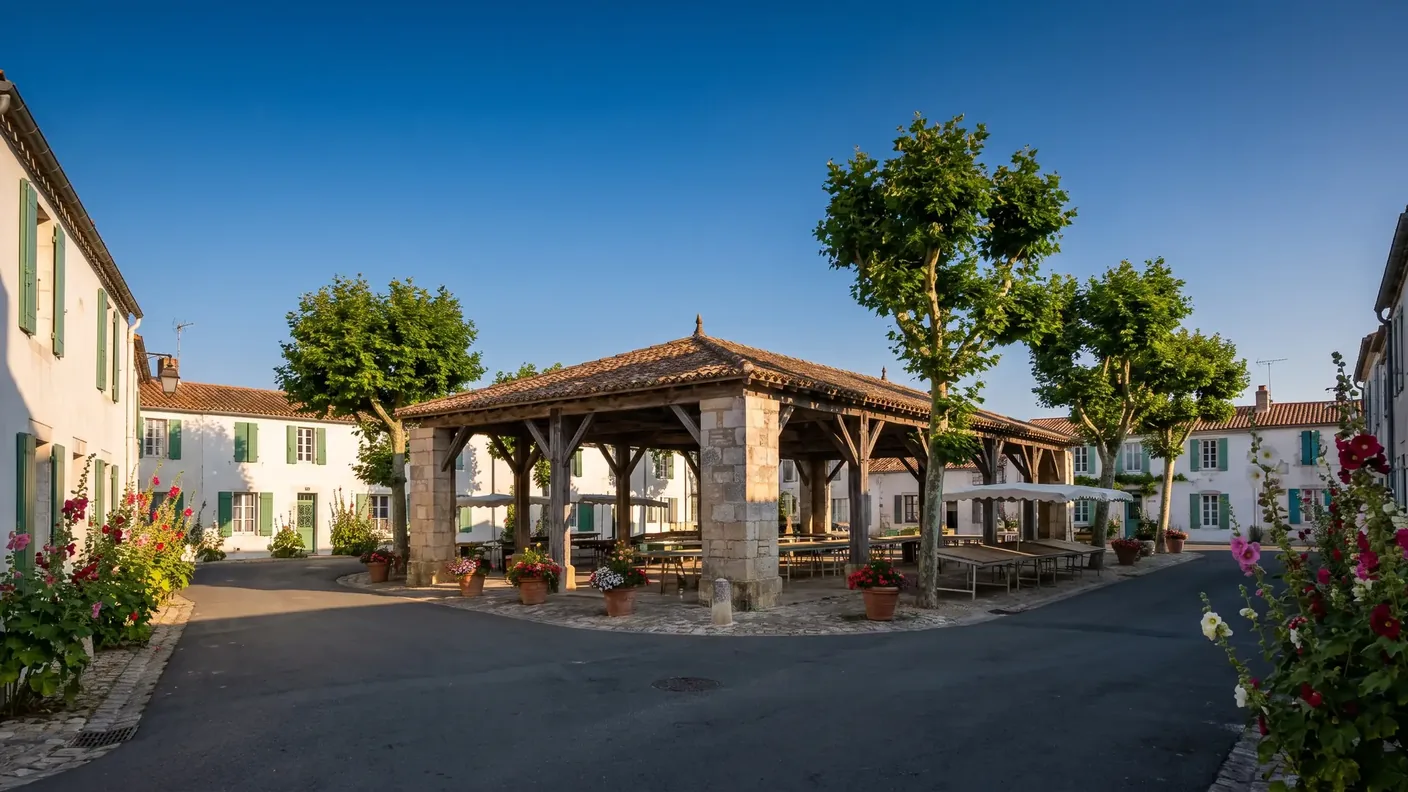
In the heart of town, the Bois-Plage market spreads out around a covered market hall and spills out into the open air along Avenue de la Plage and Rue de l’Église. During peak season, it brings together more than a hundred vendors and is widely considered the largest market on the Île de Ré—a distinction that holds true mainly in the summer, as it’s open only a few days a week during the off-season. Here you’ll find all the culinary delights the Île de Ré has to offer: oysters and shellfish, fresh-caught fish, potatoes from the island, salt and fleur de sel, wines and Pineau, cheeses, early-season produce, pastries, and regional specialties. From April through September, it’s open every morning; during the off-season, it’s open on Tuesdays, Thursdays, Saturdays, and Sundays, as well as every day during school breaks. [Mairie 2026]It’s a lively, colorful, and fragrant spectacle, where you can do your shopping while getting a feel for the island’s pulse. Strolling through the Bois-Plage market, a basket in hand, is one of those simple pleasures that epitomize the island way of life.
A village that's lively all year round
Beyond its market, Le Bois-Plage is one of the island's best-preserved villages, year-round living, with its shops, schools, community organizations, and a genuine permanent population—which is not the case everywhere on an island where vacation homes predominate. This vitality, combined with a lively summer scene, makes Bois-Plage a well-rounded destination, where visitors find themselves neither in a static museum nor in a soulless resort. The village also offers numerous outdoor lodging options (about ten campgrounds, several of which are rated four stars) and a few hotels, making it one of the island’s leading tourist destinations. Between the market, the beaches, the bike paths, and the farmers’ stands, there’s plenty to keep you pleasantly occupied for a stay of several days, whether with family or friends, at the leisurely pace of Île de Ré.
The History and Name of Bois-Plage
Despite its seaside-sounding name, Le Bois-Plage has a long history: the area has been inhabited since prehistoric times, the village grew out of the merger of three hamlets, and its name did not take its current form until 1927. A few key facts shed light on the past of this island community.
The Woods, the Beach, and the Island
The village’s name is a descriptive place name, consisting of three elements: the forest (the maritime pines and holm oaks that once covered part of the municipality), the beach (the long sandbar along the southern coast), and Ré (the island). But this name is recent: the town was simply called “Le Bois ” since 1801, and was not renamed “Le Bois-Plage-en-Ré” until 1927, with the rise of seaside tourism—the addition of “Plage” was undoubtedly intended to attract tourists, even though no source formally documents this. The village itself emerged from the gradual merging of three former hamlets—Le Bois-Plage, Le Rouland, and Le Morinand—which were brought together in the 20th century by population growth. Under the Ancien Régime, “Le Bois” was organized into districts called “dizaines,” a form of community organization typical of the villages of the Île de Ré in days gone by.
From “La Vérité” to the Boitais
The village’s history holds a few interesting facts. During the Revolution, in 1792, “Le Bois” became a commune and briefly took on the revolutionary name “La Vérité,” with its inhabitants then nicknamed the “Loups” — a far cry from the current demonym, the Boitais. The area has been inhabited for a long time: Le Bois-Plage is, along with Les Portes-en-Ré, the island’s municipality that has yielded the most prehistoric and Gallo-Roman artifacts, and the village was already inhabited by the mid-15th century. The village also has its own notable figure: René-Théodore Phelippot (1829–1905), a collector and mayor of Le Bois-Plage for twenty-two years, had set up a small museum in his home; his collections were purchased by Ernest Cognacq to found the museum that bears his name in Saint-Martin-de-Ré. A modest yet deeply rooted history, hidden beneath the facade of a simple seaside resort.
The Bicycle, the Pine Trees, and the Donkeys in Breeches
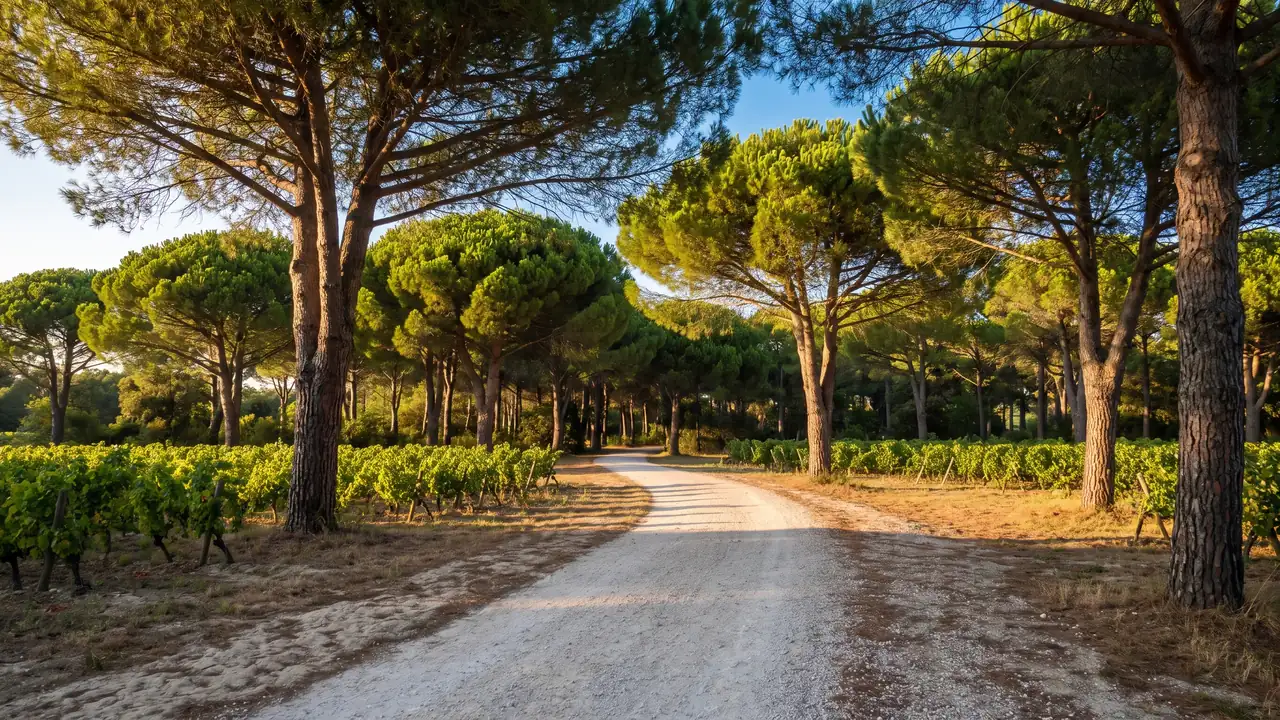
The Île de Ré is a cyclist’s paradise, and Le Bois-Plage—central and flat—is an ideal starting point: an extensive network of bike paths lets you explore the entire island, winding through pine forests, vineyards, marshes, and beaches. It’s one of the best ways to explore this unspoiled island.
The Kingdom of Cycling
The Île de Ré is renowned for its exceptional network of bike paths: approximately 110 to 130 kilometers of safe, dedicated bike lanes connecting the island’s ten villages through pine forests, vineyards, salt marshes, and along the coast. On this flat island, where car traffic is often heavy in the summer, cycling is the preferred mode of transportation—and one of the great pleasures of a visit. From Le Bois-Plage, you can easily reach Saint-Martin-de-Ré, the northern salt marshes, the Baleines Lighthouse, or the western beaches. The village also has a huge bike parking lot at Gros-Jonc Beach, which in the summer offers the delightful sight of a veritable sea of bicycles. Renting a bike and exploring the island at your own pace, with your family, along these shaded and safe paths, is the quintessential Ré experience—accessible to everyone.
The pine trees, the dunes, and the donkeys in breeches
You can also explore the natural beauty of Bois-Plage and the island on foot. The maritime pine forest bordering the beaches offers shade and coolness, and is home to pleasant trails; the protected dunes rise to about twenty meters at Les Gouillauds, a notable landmark on this very flat island. Everywhere, the bright and ever-changing Atlantic light delights photographers and strollers alike. Finally, it’s impossible to talk about the Île de Ré without mentioning its iconic animal: the donkey in trousers. These Poitou donkeys, introduced in the 19th century, were used in the salt marshes and vineyards; canvas pants were put on them to protect them from insect bites. Now a beloved attraction on the island, you can still encounter them and get up close to them. It’s a tradition shared by the entire island, one in which Le Bois-Plage fully participates, blending unspoiled nature with a relaxed way of life.
What's there to see around Bois-Plage?
From the central village of Le Bois-Plage, the entire Île de Ré is within easy reach: the Vauban ramparts of Saint-Martin, the salt marshes in the north, the Les Baleines lighthouse, and—on the mainland—La Rochelle are just a few kilometers away. These are all wonderful places to explore, making for the perfect extension of your stay in the village.
Saint-Martin, Ars, and the Baleines Lighthouse
A few kilometers to the east lies Saint-Martin-de-Ré, the island’s historic capital: its ramparts, designed by Vauban, are listed as a UNESCO World Heritage Site (as part of the Vauban fortifications); visitors can stroll through the picturesque harbor, the citadel, the narrow streets, and the shops. To the northwest lies the region of the salt marshes, centered around Ars-en-Ré (ranked among the most beautiful villages in France, with its striking black-and-white bell tower) and Loix, where you can learn about the work of the salt workers and visit the Salt Ecomuseum. At the western tip of the island, the famous Phare des Baleines lighthouse (257 steps and a superb panoramic view) watches over the ocean, amid the wild landscape of dunes and the foreshore. The island’s three distinct facets—military, salt-making, and maritime—are all accessible by bike or car from Le Bois-Plage.
La Rochelle, on the mainland
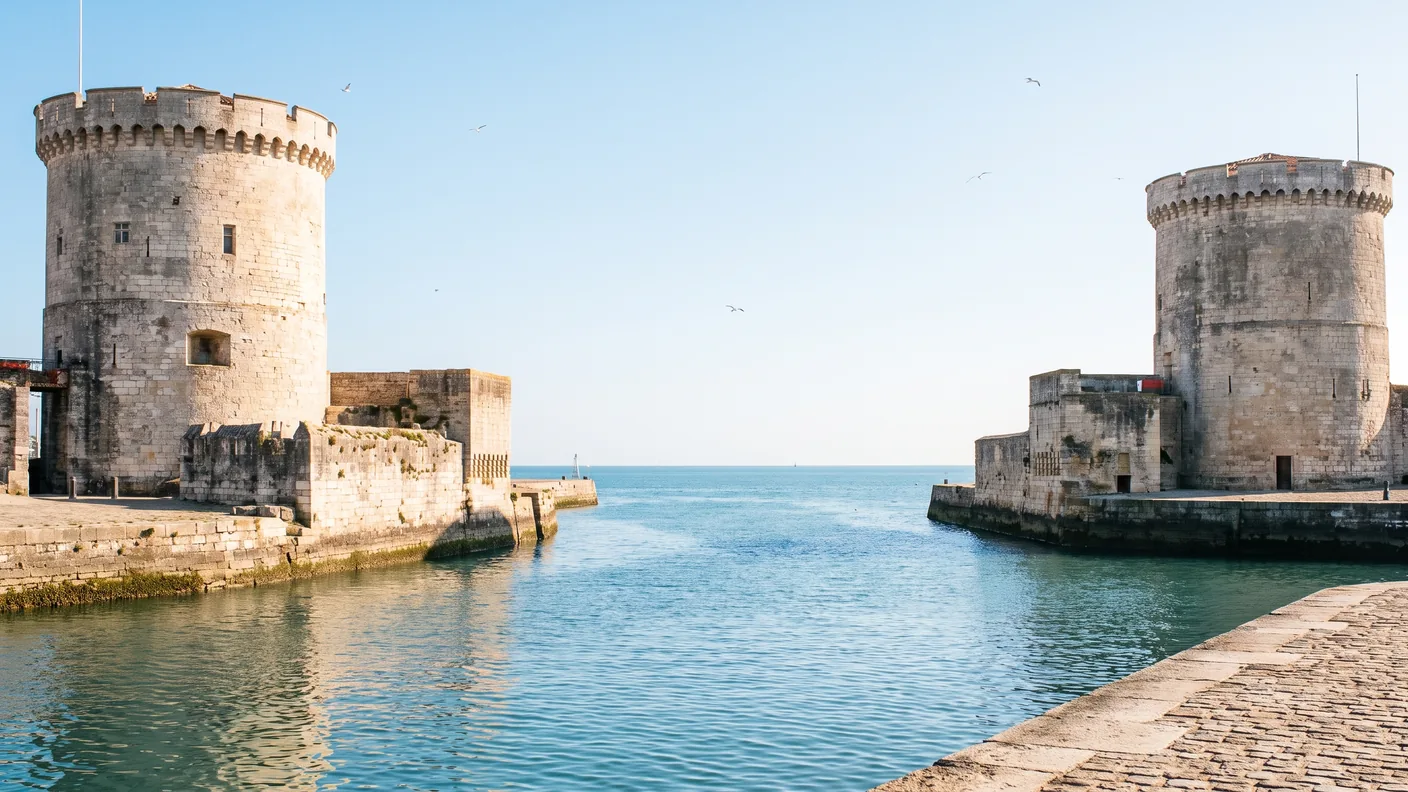
On the other side of the bridge, just under half an hour away, La Rochelle is well worth a visit. A former Protestant stronghold and major Atlantic port, the city charms visitors with its Old Port, guarded by three medieval towers (the Saint-Nicolas Tower, the Chaîne Tower, and the Lanterne Tower), its arcaded streets, its renowned aquarium, and its refined maritime atmosphere. It is also the closest train station to the island and a major transportation hub for the region. Between the island and its mainland capital, you can move easily from the beaches and vineyards of Ré to the vibrant atmosphere of a beautiful city of art and history. A chauffeur service makes it easy to organize these getaways, without having to worry about the often-difficult parking or the long lines at the bridge during peak summer season.
| Around Bois-Plage | Distance | Interest |
|---|---|---|
| Saint-Martin-de-Ré | ~6 km | Vauban Ramparts (UNESCO), harbor, citadel |
| Ars-en-Ré | ~12 km | Most Beautiful Village, Bell Tower, Salt Marshes |
| Phare des Baleines | ~18 km | Panorama, the wild western tip |
| La Rochelle | ~23 km | Old Port, towers, aquarium (mainland) |
When is the best time to visit Le Bois-Plage-en-Ré?
The best time to visit Le Bois-Plage is from late spring to early fall, but May through June and September—when the weather is milder and the crowds are smaller than in the height of summer—are the best times to go. The spring (May–June) is perhaps the most beautiful season: the light is superb, nature is in bloom (hollyhocks are in full bloom), temperatures are mild, the island is still peaceful before the summer influx, and it’s the season for new potatoes. It’s the perfect time for biking, quiet beaches, and exploring the villages without the crowds. The summer (July–August) is peak season: the island is bustling with activity, the beaches and markets are packed, and the atmosphere is festive—but it’s very crowded, the bridge and roads are congested, and accommodations must be booked well in advance at high prices.
The early fall (September) is a well-kept secret: the sea is still warm enough for swimming, the light takes on golden hues, the grape harvest brings the vineyards to life, and the island regains its calm after the hustle and bustle of summer—an ideal time to enjoy the beaches and restaurants without the crowds. The winter, which is windier and quieter, reveals another side of Île de Ré—authentic and unpretentious—perfect for long walks along deserted beaches and exploring the island’s heritage off-season, with the added bonus of very affordable prices, including the bridge toll. In any season, the island’s bright, oceanic climate—renowned as one of the sunniest on the Atlantic coast—makes Le Bois-Plage a rejuvenating getaway—provided, if possible, that you avoid the peak crowds of midsummer.
How to get to Le Bois-Plage-en-Ré from Bordeaux
Le Bois-Plage-en-Ré is located 207 km from Bordeaux, which is about 2 hours and 10 minutes via the A10 and then the Île de Ré Bridge. The route leads directly to the village on the south coast; the flat rate starts at €345, including the bridge toll. This bridge, which opened on May 19, 1988, spans nearly three kilometers (2.9 km) and rises 42 meters above the sea, connecting La Rochelle to the tip of the island: Crossing it is a highlight of the trip in itself, with its view of the Pertuis strait. Please note: the bridge has a toll, but only on the outbound trip (from the mainland to the island) for non-residents—the return trip is included. The toll for a car varies by season (check the bridge toll schedule for your date). The island does not have a train station; the nearest one is in La Rochelle, on the mainland.
Train, car, or executive car service?
To reach Île de Ré—and especially to stay there—a private chauffeur (private chauffeur service) offers true freedom: a direct, door-to-door trip from Bordeaux, with no transfers or stops in La Rochelle, and without the hassle of parking, which is notoriously difficult and expensive on the island during the summer. This is particularly appreciated during peak season, when the bridge and the island’s roads are at capacity (traffic counts have recorded more than 16,000 vehicles in a single day): having a driver drop you off lets you avoid driving on the island and enjoy biking instead. We offer this route at a fixed price quoted in advance: expect to pay approximately €434 for the one-way trip, in a Mercedes sedan or a van seating up to 8 passengers, with a professional chauffeur. The price, set at the time of booking, remains fixed: it includes the bridge toll and is not affected by traffic or stops.
This is the perfect option for a family vacation (with luggage, beach gear, and strollers), a romantic weekend getaway, an event, or a simple transfer to or from Bordeaux-Mérignac Airport. You can travel alone, as a couple, or in a small group of up to 8 people, and request a stop in La Rochelle along the way. Booking is simple: just provide your pickup address in Bordeaux and your destination in Bois-Plage-en-Ré, along with the date, preferred time, and number of passengers, and you’ll receive a fixed-price quote in writing. The driver picks up passengers at the agreed-upon address and takes them directly to the village—including the bridge—with no detours or unpleasant surprises—a real convenience for arriving on Île de Ré feeling relaxed and ready to hop on a bike as soon as you arrive.
| Route | Distance | Duration | Landmark |
|---|---|---|---|
| Bordeaux → Le Bois-Plage-en-Ré | about 207 km | about 2 hours and 10 minutes | starting at ~345 € (including bridge) |
| Le Bois-Plage → Saint-Martin-de-Ré | ~6 km | ~9 min | Vauban Ramparts (UNESCO) |
| Le Bois-Plage → La Rochelle | ~23 km | ~29 min | Old Port, train station (mainland) |
| Le Bois-Plage → Phare des Baleines | ~18 km | ~24 min | western tip of the island |
Whether you come for the sandy beaches and bike paths, for the wine and oysters, for the large market, or for the charm of the white-washed streets, Le Bois-Plage-en-Ré is a treat for lovers of the authentic Île de Ré, where vineyards, sandy beaches, and the ocean meet—a central, lively village that offers the best of the island’s lifestyle to those who take the time to linger.
Whether it’s for a family vacation, a weekend getaway by the sea, or a comfortable ride to the island, booking a chauffeured transfer guarantees a punctual, worry-free door-to-door trip—including the bridge—book a driver from Bordeaux → Le Bois-Plage-en-Ré or explore all our destinations.
Frequently Asked Questions
Where is Le Bois-Plage-en-Ré located?
Le Bois-Plage-en-Ré is a village on the Île de Ré, in Charente-Maritime (17), Nouvelle-Aquitaine. It is centrally located on the island, on the southern coast, between La Couarde and La Flotte. It is a commune in the La Rochelle arrondissement, part of the Île de Ré Community of Communes, with a year-round population of approximately 2,125 (known as Boitais). Renowned for its beaches, vineyards, and market, it is located about 207 km from Bordeaux, or about a 2-hour, 10-minute drive via the Île de Ré Bridge.
What is the distance between Bordeaux and Le Bois-Plage-en-Ré?
About 207 km by road, or about a 2-hour, 10-minute drive, via the A10 highway toward La Rochelle and then across the Île de Ré Bridge. By professional chauffeur from Bordeaux, the fare is fixed and provided in advance, starting at approximately €434 one way (sedan or van, door-to-door, including the bridge toll). The island does not have a train station: the nearest one is in La Rochelle, on the mainland, about 23 km from the village.
Is there a toll to cross the Île de Ré Bridge?
Yes, but only for the one-way trip from the mainland to the island for non-island residents (the return trip is included in the fare). The bridge, which opened in 1988, spans nearly 2.9 km and reaches a height of 42 m. The fare for a car varies by season: from a few euros during the very low season to 345 € during the peak summer season (mid-June to mid-September). Island residents travel for free. For private chauffeurs, the bridge toll is included in the advertised flat rate.
Is the church in Bois-Plage designated as a historic landmark?
No. The Notre-Dame-de-Tous-les-Saints Church, the village’s main building, is not protected as a historic monument: the municipality has no buildings that are classified or listed. However, the church houses twelve protected objects (Palissy database): two have been classified since 1979 (a collection plate and a ciborium), and ten others are listed (including an altar-altarpiece-tabernacle ensemble and choir stalls). It is therefore for its furnishings, rather than its architecture, that the church is worth a visit.
What kind of wine is produced in Bois-Plage-en-Ré?
Le Bois-Plage is home to the headquarters of the Uniré wine cooperative, “Les Vignerons de l’Île de Ré” (Route de Sainte-Marie), founded in 1950. It brings together some 40 winemakers and covers approximately 500 hectares of vineyards on sandy and groies soils, producing wines (rosé, white, red, including a sparkling wine called “Trousse Chemise”), Pineau des Charentes, and cognac—since the island is part of the Cognac appellation region. It’s a popular destination for wine tourism, featuring a winery, a distillery, and tastings. A unique island terroir, where vines grow on sandy soil facing the ocean.
Are there salt marshes in Bois-Plage?
No, contrary to a common misconception. The salt marshes and fleur de sel of Ré—so emblematic of the island—are located in the northern part of the island, around the Fier d’Ars (Ars-en-Ré, Loix, Saint-Clément, La Couarde), where the geography is conducive to salt production. The Sauniers de l’île de Ré cooperative is in Ars-en-Ré, and the salt marsh ecomuseum is in Loix. Le Bois-Plage, on the sandy southern coast, focuses on its beaches, vineyards, and pine trees, not on salt. Salt is a product of the entire island, not just the village.
What are the beaches in Bois-Plage?
Le Bois-Plage features about five kilometers of sandy beach along the southern coast, accessible via small dune paths called “pas” (there are six of them, numbered). The two main beaches, which are lifeguarded during the season and Blue Flag certified, are Les Gollandières and Le Gros-Jonc—both family-friendly and ideal for swimming. Gouillauds Beach, to the east, with its rocky seabed and old fish locks, is a great spot for beginners to try surfing and kitesurfing (though it’s not the island’s premier surfing destination). Other, quieter beaches dot the western part of the town.
What is the Île de Ré potato?
It is a small new potato with a melt-in-your-mouth texture and a subtle briny flavor, grown on the island’s sandy soils, with Le Bois-Plage falling within its production area. It was the first potato in France to be granted AOC status, by decree on February 5, 1998, and then AOP (European-level) status in 2000—it is important to distinguish between the AOC (1998) and the AOP (2000). Harvested in the spring, it is enjoyed simply, often with the island’s fleur de sel. It is one of the great local products of the Île de Ré, along with wine, oysters, and salt.
What is there to see around Bois-Plage-en-Ré?
From its central location: Saint-Martin-de-Ré and its Vauban ramparts, a UNESCO World Heritage Site (~6 km); Ars-en-Ré, one of the most beautiful villages in France, and the northern salt marshes (~12 km); the Baleines Lighthouse at the western tip, with its panoramic views (~18 km); and, on the mainland, La Rochelle, its Old Port, and its medieval towers (~23 km). The entire Île de Ré is accessible by bike or car from Le Bois-Plage, winding through beaches, marshes, vineyards, and whitewashed villages.
How many residents are there in Le Bois-Plage-en-Ré?
With approximately 2,125 year-round residents (2023 municipal population), it is one of the most populous villages on the Île de Ré. The population is experiencing a slight decline (about −5% between 2017 and 2023) and a marked aging trend (nearly 46% are 60 years of age or older). Its residents are known as Boitais. Above all, like the rest of the island, the village experiences very strong seasonality: nearly 63% of the housing units are second homes, and the summer population is much larger than the permanent population.
Is Île de Ré a good place for cycling?
Yes, Île de Ré is a true cyclist’s paradise. It has a network of approximately 110 to 130 km of safe, dedicated bike paths connecting the ten villages through pine forests, vineyards, marshes, and along the coast. On this flat island, which is often crowded with cars in the summer, cycling is the ideal way to get around. Le Bois-Plage, located in the center of the island, is an excellent starting point: from there, you can easily reach Saint-Martin, the Baleines Lighthouse, or the beaches. The village even has a huge bike parking lot at Gros-Jonc Beach.
What does the name Le Bois-Plage-en-Ré mean?
The place name is composed of three elements: “bois” (the maritime pines and holm oaks in the town), “plage” (the long sandbar along the southern coast), and “Ré” (the island). The name is relatively recent: the town had been known simply as “Le Bois” since 1801 and was not renamed “Le Bois-Plage-en-Ré” until 1927, with the rise of seaside tourism. The village grew out of the gradual merging of three hamlets (Le Bois-Plage, Le Rouland, and Le Morinand). During the Revolution, in 1792, it was briefly known as “La Vérité,” and its inhabitants were then nicknamed the “Loups.”
Can I book a private chauffeur from Bordeaux to Le Bois-Plage-en-Ré?
Yes. We offer the route from Bordeaux to Le Bois-Plage-en-Ré (approximately 207 km, about 2 hours and 10 minutes via the A10 and the Ré Bridge) at a fixed price, starting at approximately €434 one-way, including the bridge toll, in a Mercedes sedan or van seating up to 8 passengers, with a professional chauffeur. The trip is direct, door-to-door, which avoids the difficult and expensive parking on the island and the lines at the bridge during the summer. Ideal for family vacations with luggage—you’ll be ready to hop on a bike as soon as you arrive. The fixed quote is confirmed in writing before departure.
Further Reading
- The Great Mediterranean City: See the Guide to Marseille (the Old Port, the Calanques, the Bonne Mère)
- The jewel of the Arcachon Basin: see the Arcachon Guide (the "Winter City," the beaches, the oysters)
- The peninsula and its lighthouse: see the Cap-Ferret Guide (the lighthouse, the huts, the ocean, and the Bassin)
- Plan your trip: Book a chauffeur service from Bordeaux to Le Bois-Plage-en-Ré or explore all our destinations
Sources and References
- INSEE — 2023 reference population for Bois-Plage-en-Ré — municipal population
- Bois-Plage-en-Ré Town Hall — The Market — Days, Seasons, and Hours of Operation
- Bois-Plage-en-Ré Town Hall — The Cooperative Winery — Establishment and History
- Uniré — History of the Cooperative — Ré Island Vineyards and Products
- INAO — Île de Ré Potatoes — PDO Recognition and Geographical Area
Article updated in July 2026.
Off to Île de Ré
Direct trip from Bordeaux (~2 hours 10 minutes) to Le Bois-Plage-en-Ré, via the bridge, with the toll included, with no need to worry about parking on the island—with the option to stop in La Rochelle. Ideal for a family vacation; you’ll be ready to hop on a bike right away. Written fixed-price quote.