Visit Bordeaux, the Sleeping Beauty
The Complete Guide to Visiting Bordeaux: the Port de la Lune, a UNESCO World Heritage Site; the Place de la Bourse and its reflecting pool; the Grand Théâtre; the Cité du Vin; the neighborhoods; the grand crus–and how to plan it all in 1, 2, or 3 days.
Bordeaux in Eight Facts
- Visiting Bordeaux means exploring "Bordeaux, Port de la Lune", inscribed on the UNESCO World Heritage List on June 28, 2007. At the time, it was the largest urban ensemble ever recognised by UNESCO: 1,731 hectares, covering more than one-third of the city (official UNESCO listing).
- 267,991 residents in the municipality (INSEE 2023), an all-time high, and 854,334 across the 28 municipalities of Bordeaux Métropole, according to official INSEE figures.
- Approximately 350 historic monuments: Bordeaux ranks second in France in terms of protected heritage sites, behind Paris.
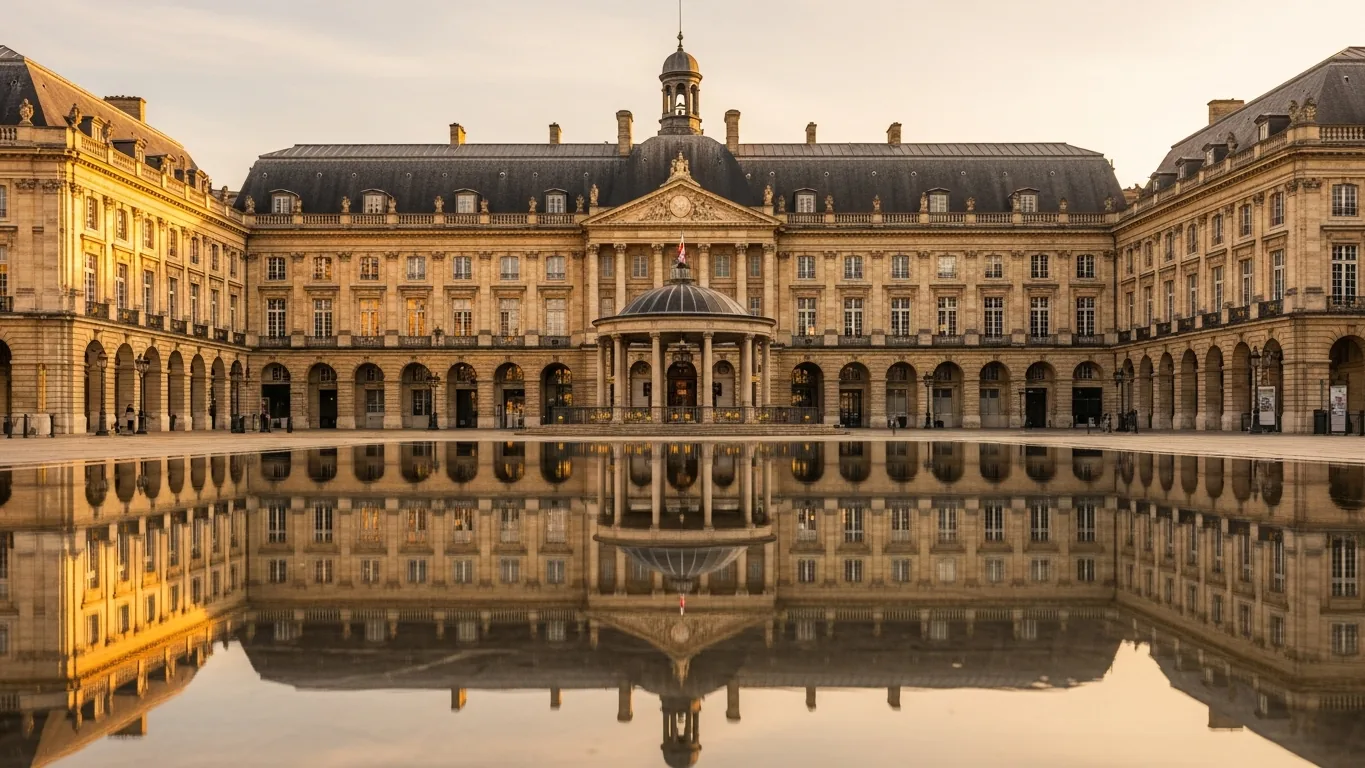
- The Place de la Bourse (1730–1755) faces the Water Mirror, a 3,450 m² reflecting pool often described as the world's largest.
- The Grand Théâtre by Victor Louis (1780), whose staircase inspired Charles Garnier's design for the Paris Opera.
- A world wine capital, with the 1855 Classification, the Cité du Vin (2016) and approximately 95,000 hectares of AOP vineyards just beyond the city.
- Paris in 2 hours 4 minutes via high-speed rail from Saint-Jean station; Bordeaux-Mérignac Airport (~6.6 million passengers in 2024), connected to central Bordeaux by tram lines A and F.
- Count 2 days for the most part, 3 days with a trip to Saint-Émilion, the Médoc, or the Arcachon Basin.
What Bordeaux Really Is
At 9:00 p.m. on a July evening, the mist rising from the Water Mirror reaches your ankles as the 18th-century façade of Place de la Bourse is reflected in two centimetres of water, the full depth of the pool. A hush almost settles over the square; all you hear is the tram gliding along the quays without overhead wires. Behind you, 1,731 hectares of pale stone gently come to life. At the time of its inscription, this was the largest urban ensemble ever added to the World Heritage List, and it remains open for everyone to enjoy every evening of the year.
To visit Bordeaux is to discover a city transformed. In the 1990s, the riverfront façades were black with soot, port warehouses cut the city off from the Garonne and the press still called it the Sleeping Beauty: magnificent, but tired, and often passed through on the way to the Médoc châteaux. Over the past twenty years, the renovated quays, the tram network (2003), restored stone façades, UNESCO inscription (2007) and high-speed railway (2017) have renewed the city without erasing its character. The figures, dates and heritage classifications in this guide have been checked against official sources including INSEE, the Mérimée database, UNESCO and the monuments' own websites.
Bordeaux is not a static museum. It is made for exploring on foot and at street level, from 3 km of redeveloped waterfront to the 1,250-metre Rue Sainte-Catherine, often described as Europe's longest pedestrian shopping street, and squares where people linger rather than simply take photographs. Distances are short: the Grand Théâtre is a 15-minute walk from the Grosse Cloche. The vineyards are not merely “around” Bordeaux, either. The first Pessac-Léognan plots sit between two tram stops, and Saint-Émilion is about 45 minutes away.
In terms of organization, everything below is designed to be used as is: the exact status of the monuments (listed or designated, with dates), verified travel time tables, and three realistic itineraries depending on whether you stay 1, 2, or 3 days, the best neighborhoods to stay in, and the real answers to practical questions–including the one everyone asks: Do you need to make a reservation for the Cité du Vin? (Yes, in the summer.) Along the way, this guide also debunks a few persistent myths: no, the UNESCO site doesn’t cover “half the city,” and no, the 17 arches of the Pont de Pierre don’t represent Napoleon’s letters–the archives tell a more prosaic story.
A crescent-shaped harbor, nestled between vineyards and the ocean
Bordeaux stands on the left bank of the Garonne, about 50 kilometres from the Atlantic beaches, with Lacanau-Océan the closest, and roughly 100 km from the mouth of the Gironde Estuary. The estuary, formed by the Garonne and Dordogne at Bec d'Ambès, covers 635 km², runs for 75 km and reaches 12 km across. In front of the city, the river forms the broad crescent that gave Bordeaux its name Port de la Lune, or Port of the Moon, recorded in its heraldry since the 12th century. Look at the plaques and street furniture and you'll see the city emblem's three intertwined crescents.
Capital of the Gironde department and the Nouvelle-Aquitaine region, Bordeaux sits between the Médoc vineyards and Arcachon Bay. The city itself is compact: 49.36 km², with about 5,400 inhabitants per square kilometre, and a historic centre roughly 3 km by 2 km between Saint-Jean station to the south and the Cité du Vin to the north. It is best explored on foot. The tide travels up the Garonne as far as La Réole, more than 150 km inland, allowing cruise ships to dock in the city centre and creating the tidal bore surfed on certain high tides.
The right bank, long dominated by industry and long overlooked, has reinvented itself: Parc aux Angéliques along the river, the Bastide neighborhood around Place Stalingrad, and the open-air cafés on the Quais Deschamps. It is from here–from the Pont de Pierre to the Quais Deschamps–that you can take in the entire listed facade of the left bank at a single glance, especially at sunset when the pale stone takes on a honey-colored hue. Bordeaux residents can take the TBM river shuttle there for the price of a tram ticket: the cheapest mini-cruise in France, and undoubtedly the best way to get a sense of the city’s layout.
| Data | Value |
|---|---|
| Region / County | New Aquitaine / Gironde (33) |
| River | the Garonne – the Gironde estuary at Bec d'Ambès, downstream |
| Distance to the beaches | ~50 km (Lacanau-Océan) · Pilat Dune, ~68 km away |
| Common Area | 49.36 km² – historic center that can be explored on foot |
| Relief | a city on an alluvial plain, almost flat–ideal for biking |
| Nicknames | The Port of the Moon · Sleeping Beauty (Awoken) |
| A Must-See | Place de la Bourse & Miroir d'eau, Grand Théâtre, Cité du Vin, Saint-Émilion (~40 km away) |
The city that has never been so populous
The city of Bordeaux has 267,991 residents (INSEE municipal population, 2023 data). This marks an all-time record, surpassing the previous peaks of 267,409 in 1921 and 266,662 in 1968. Bordeaux is France's 9th-largest municipality. The metropolitan scale is even more revealing: Bordeaux Métropole comprises 28 municipalities and 854,334 residents, an increase of about 10,000 residents per year since 2017, while the wider catchment area exceeds 1.4 million, making it the 6th largest in France. For visitors, that means the cultural and culinary range of a major metropolis within a historic centre the size of a medium-sized city.
The demographic trend tells the story of Bordeaux’s revival better than any speech ever could. Between 1968 and 1982, the city lost 58,503 residents – nearly 22% of its population over the past fourteen years – to the benefit of the suburbs: the run-down downtown was losing its families. The low point was reached in 1982 with a population of 208,159. Then the tide turned: the revitalization of the riverfront, the tramway (2003), UNESCO designation (2007), and the high-speed rail line (2017). In forty years, the city has regained nearly 60,000 residents, returning to and then surpassing in 2023 its level from the 1960s. Few major European cities have experienced such a resurgence–it is this energy that you can feel in the revitalized neighborhoods, from the Chartrons to the Bassins à flot.
| Year | Municipal Population | Background |
|---|---|---|
| 1968 | 266 662 | figure that includes the annexation of Caudéran (February 1965) |
| 1982 | 208 159 | Low point of the 20th century – exodus to the outskirts |
| 1999 | 215 363 | start of the recovery |
| 2015 | 249 712 | redevelopment of the downtown area |
| 2023 | 267 991 | all-time high (INSEE) |
From Burdigala to Bordeaux
The name Bordeaux comes from Burdigala, the city's ancient name, recorded as early as the 1st century BC by the Greek geographer Strabo. Its precise etymology remains disputed; it is one of the major French place names whose origin has never been conclusively established. The most widely accepted hypothesis treats it as a compound of the Aquitanian roots burd- ("muddy") and gala ("inlet"), meaning "the inlet in the marshes". That would accurately describe the original settlement, a natural harbour beside wetlands. These roots are reconstructed rather than attested, however, so linguists present the explanation as a hypothesis, not a fact, and this guide does the same.
The evolution of the name, for its part, is documented in the texts: Burdigala in ancient times, Burdegale in the Middle Ages, followed by the Occitan and Gascon forms – Bordèu, attested as early as 1280 and still in use in Gascon–before the Frenchification in Bordeaux. Two interesting facts to wrap things up. During the Revolution, the city was briefly renamed Commune-Franklin (1792–1795), in honor of Benjamin Franklin. And in 1894, the Bordeaux astronomer Fernand Courty, upon discovering an asteroid from the city’s observatory, named it… Burdigala – So the ancient name of Bordeaux orbits somewhere between Mars and Jupiter.
2,000 Years of History, from Burdigala to the Renaissance
Bordeaux's history spans three golden ages and two long periods of decline: a prosperous Roman city, a wine capital under the English Crown and France's leading colonial port in the 18th century, followed by a long dormancy during the 20th century from which it emerged only in the 2000s. The chronology below presents the key dates, all checked against the cited sources.
Burdigala, the Roman
Founded in the 1st century BC by the Bituriges Vivisques, a Gallic people who settled beside the Garonne between the end of the Gallic Wars and the reign of Augustus, Burdigala first appears in written history in 56 BC, when Caesar's lieutenant Publius Crassus arrived. It became the capital of the province of Aquitaine around AD 70 under Vespasian, and later the capital of Aquitania Secunda. The first vines were planted between AD 40 and 60, giving Bordeaux nearly 2,000 years of wine history. The Palais Gallien, an early 2nd-century amphitheatre measuring 132 m by 111 m and once seating about 22,000 spectators, survives from the Roman city and was protected on France's first historic monuments list in 1840.
Burdigala was also a center of learning. Ausone (c. 310–395), a Latin poet, professor of rhetoric in Bordeaux, imperial tutor, and later consul in 379, was already celebrating his vineyard there–Château Ausone, in Saint-Émilion, bears his name. In 333, an anonymous pilgrim who had set out from the city wrote the Itinerarium Burdigalense, the oldest account of a Christian pilgrimage to Jerusalem that has come down to us. And until 1675, Bordeaux was home to a second Roman monument that was virtually intact: the Pillars of Guardianship, a colonnaded temple, demolished on the orders of Louis XIV to clear the glacis of Château Trompette–one of the greatest losses to the city’s cultural heritage in its history.
1152: Eleanor, and Bordeaux Passes to England
In 1152, Eleanor, Duchess of Aquitaine, married Henry Plantagenet. When he was crowned King of England in 1154, the whole of south-western France entered the English sphere of influence for nearly three centuries (1154–1453). For Bordeaux, this was a commercial boon: the city's wine gained privileged access to the English market, the claret fleet sailed to London and Bristol each autumn, and the city enjoyed considerable autonomy. Bordeaux's wine fortunes were built during this English period, when "claret" also became a permanent part of the English wine vocabulary. One often-overlooked detail is that Eleanor had previously married King Louis VII of France at Bordeaux's Saint-André Cathedral in 1137; the annulment of that marriage changed the map of Europe.
1453: Castillon, the Return to France
The Hundred Years' War ended on the outskirts of Bordeaux. On July 17, 1453, the French royal army defeated Talbot's Anglo-Gascon forces at Castillon, 45 km east of the city. Castillon is often cited as the first battle in history won through the decisive use of field artillery, deployed by the Bureau brothers, and it was the final battle of the Hundred Years' War. Bordeaux, which had remained loyal to the Plantagenets, surrendered on October 19 and paid a fine of 100,000 écus. Charles VII then built two fortresses to watch over the defiant city, including Château Trompette on the present-day Place des Quinconces. A century later, Bordeaux re-entered the French national story through an illustrious mayor: Michel de Montaigne, elected in 1581 while taking the waters in Italy. He initially declined the post, but Henry III ordered him to accept it; Montaigne served two terms, until 1585.
The 18th Century: The Golden Age That Shaped the City
Much of the Bordeaux visitors see today is an 18th-century cityscape. Fuelled by Atlantic trade with the West Indies, the city became the leading French colonial port, with around a quarter of the kingdom's foreign trade passing through its docks. The royal intendants Claude Boucher and, above all, the Marquis de Tourny, Intendant of Guyenne from 1743–1757, laid out avenues and promenades, created the Jardin Public and opened the city towards its river. Place de la Bourse (1730–1755), the Grand Théâtre (1780) and thousands of pale-stone buildings still define the cityscape recognised by UNESCO in 2007.
This prosperity had a dark side that is now documented openly. Depending on the measure used, Bordeaux was France's second- or third-largest slave-trading port, with approximately 480 expeditions transporting between 120,000 and 150,000 African captives from 1672 to 1837. Historians add an important distinction: slave-trading voyages represented about 4.4% of Bordeaux's shipping, while much of the city's wealth came from colonial trade with the West Indies, itself built on slavery. The Musée d'Aquitaine addresses this history in its permanent galleries, and a memorial trail crosses the city.
1822: The Stone Bridge, the first bridge over the Garonne
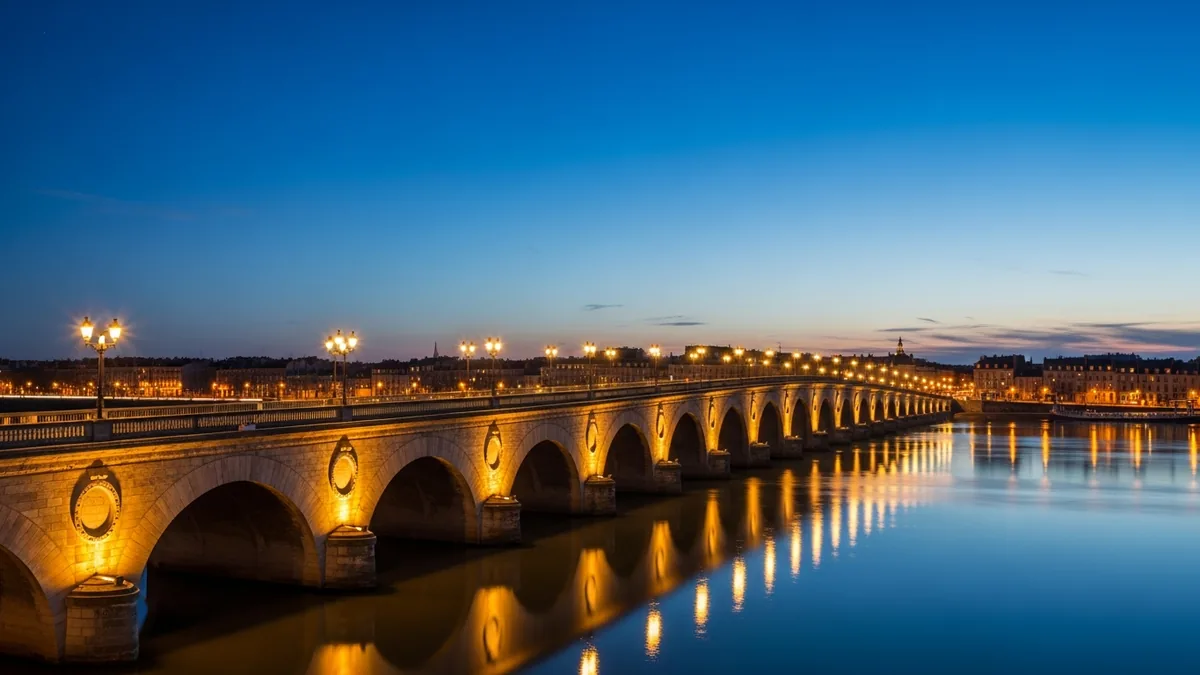
Until the 19th century, the Garonne was crossed by ferry: the river, almost 500 metres wide and swept by strong currents, had long daunted engineers. Construction began in 1810 under Napoleon I, France's 1st emperor, and was completed in 1822 under Louis XVIII. The 487-metre bridge has 17 arches built from pink brick and stone. Local legend links those arches to the 17 letters in "Napoleon Bonaparte", but the archives tell a different story: the original design had 19 arches, reduced to 17 in 1819 for budgetary reasons. Designated a historic monument in 2002, Bordeaux's oldest bridge is now reserved for trams, buses, pedestrians and cyclists; crossing it on foot at sunset is one of the city's finest free experiences.
The 20th Century: Sleeping Beauty
After 1945, Bordeaux slipped into a long slumber. The port moved downstream, warehouses cut the city off from its river, the 18th-century façades darkened with pollution and the centre emptied out; nearly 22% of the population left between 1968 and 1982. This was the era of the bittersweet nickname "Sleeping Beauty": a magnificent but tired city that tour groups passed through quickly on their way to the vineyards. Mayor Jacques Chaban-Delmas, who served from 1947 to 1995, developed the modern Mériadeck district and the Pont d'Aquitaine, but the historic centre's revival would not begin until the end of the century. First, Bordeaux had to learn to face its river again.
1995–2007: The Renaissance
The revival unfolded over a decade. From the late 1990s, the city transformed the quays: warehouses came down, façades were restored stone by stone and a continuous riverfront park replaced car parks along 3 kilometres. In December 2003, the first tram line opened with ground-level power supply, a world first that avoided overhead wires in the protected historic centre. The Water Mirror opened in July 2006; UNESCO inscribed “Bordeaux, Port of the Moon” on June 28, 2007; and high-speed rail brought Paris within 2 hours 4 minutes in July 2017. In 2023, the population exceeded its 1921 record: the Sleeping Beauty had fully awakened.
The Port of the Moon, the Monumental City
"Bordeaux, Port de la Lune" has been a UNESCO World Heritage Site since June 28, 2007, as property no. 1256. The decision was taken at the 31st session of the World Heritage Committee in Christchurch, New Zealand. Its scale is exceptional: 1,731 hectares according to UNESCO's official listing, or more than one-third of the municipality. At the time of inscription, it was the largest urban ensemble the organisation had ever recognised. The committee described it as an "exceptional urban and architectural ensemble, created during the Age of Enlightenment" under criteria (ii) and (iv), reflecting a city that has shaped commercial and cultural exchange for more than two thousand years while retaining a largely intact urban plan.
The beating heart of this highly rated property is the waterfront: more than a kilometer of classical architecture in a single stretch, facing the river, from the Porte de Bourgogne to the Chartrons. The Place de la Bourse (1730–1755) is its masterpiece–designed by Jacques Gabriel, the king's chief architect, and later completed by his son Ange-Jacques Gabriel, the architect of the Petit Trianon and the Place de la Concorde. Designed as a setting for the equestrian statue of Louis XV–which was destroyed during the Revolution–it was originally called “Place Royale.” Its facades and roofs are designated as historic monuments by decree dated December 22, 1916, with preservation work completed in 1942 and again in 2019–2020. In the evening, when the facades light up, the urban design becomes clear: the city has turned its back on its medieval alleyways to showcase itself facing the water.
Opposite the square, the Water Mirror has become Bordeaux's most widely shared image. Opened in July 2006, it was designed by landscape architect Michel Corajoud with architect Pierre Gangnet and fountain designer Jean-Max Llorca. A 3,450 m² granite slab covered by 2 centimetres of water alternates between reflection and mist, and is often described as the world's largest reflecting pool. An 800 m³ underground reservoir and almost 900 jets control the cycle. Admission is free from spring to autumn; the installation is drained each winter to prevent freezing. Visit at sunrise for reflections without the crowds, or at dusk for the illuminated façades.
Don’t limit the UNESCO site to the quays: the boundary encompasses most of the “city of stone,” from Saint-Jean Station to Les Chartrons. Strolling through it without a map is part of the experience–it’s a city where historic monuments aren’t the exception but the fabric of the city, with approximately 350 protected buildings in terms of historic monuments, second only to Paris in France. The visual unity comes from the material: the light-colored limestone of the region, which takes on that honey-colored hue at sunset that the people of Bordeaux simply call “the stone.” Add to that the wrought-iron balustrades, the mascarons–those sculpted faces above the doors, of which there are thousands–and you have the visual language of the entire city center.
| The UNESCO Site in Numbers | Value |
|---|---|
| Official Name | Bordeaux, Port de la Lune (Listing No. 1256) |
| Date of Registration | June 28, 2007 (31st session, Christchurch) |
| Area | 1,731 ha – more than one-third of the municipality |
| Criteria | (ii) cultural exchanges · (iv) exemplary architectural ensemble |
| Waterfront | more than 1 km in a single stretch, 18th century |
| Distinctive Feature | the largest urban complex listed as of the date of its designation · ~350 historic monuments |
Major monuments and their exact status
Bordeaux has approximately 350 protected buildings designated as historic monuments–the second-largest collection in France after Paris, according to the Ministry of Culture’s Mérimée database. Here are the must-see sites, along with their exact official status: “classified” denotes the highest level of protection (any modification requires government approval), while “listed” denotes an intermediate level. The dates cited are those from the official records.
The Grand Théâtre, the staircase that inspired Garnier
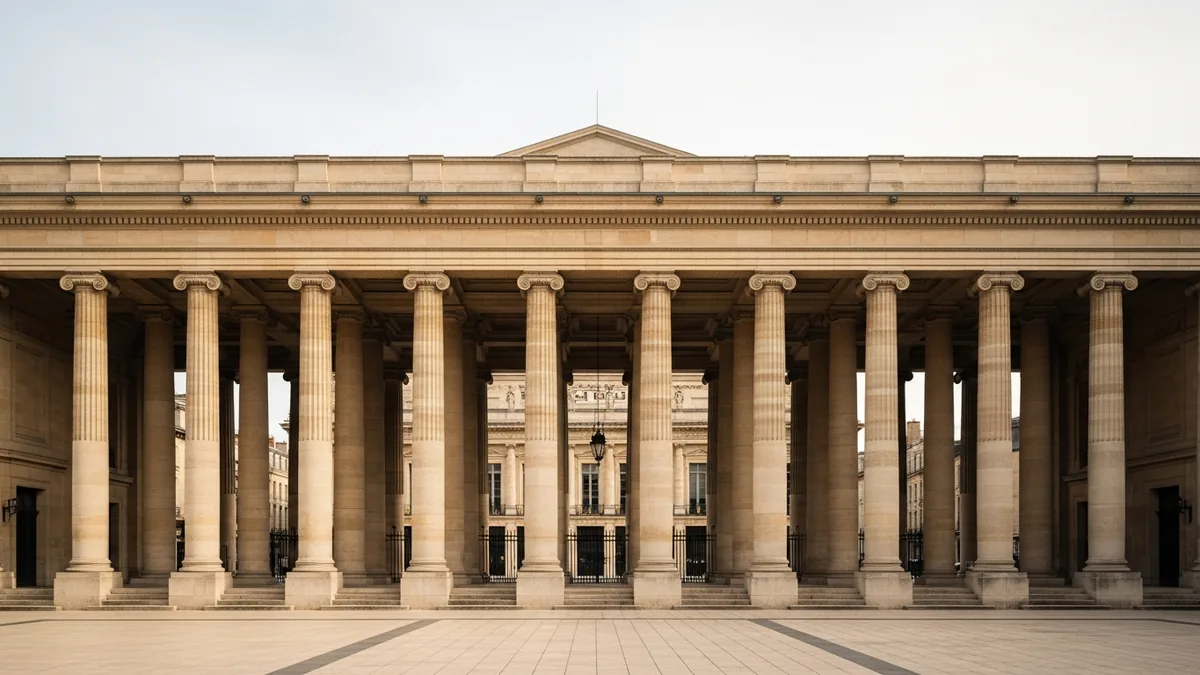
Opened on April 7, 1780 – not with an opera, but with theAthalie by Racine –, the Grand Theater from Victor Louis is one of the most beautiful Italian-style theaters in Europe, Designated a historic monument on March 8, 1899. Its facade features a portico of twelve Corinthian columns featuring twelve statues: the nine Muses and three goddesses–Juno, Venus, and Minerva. Inside, the monumental staircase inspired Charles Garnier for the Paris Opera; this connection is well documented, even in the words of the Opera’s directors themselves. Now home to the Bordeaux National Opera, it can be explored on a guided tour or, better yet, during a performance: the blue-and-gold auditorium, built entirely of wood for optimal acoustics, is worth the trip on its own.
St. Andrew's Cathedral and the Pey-Berland Tower
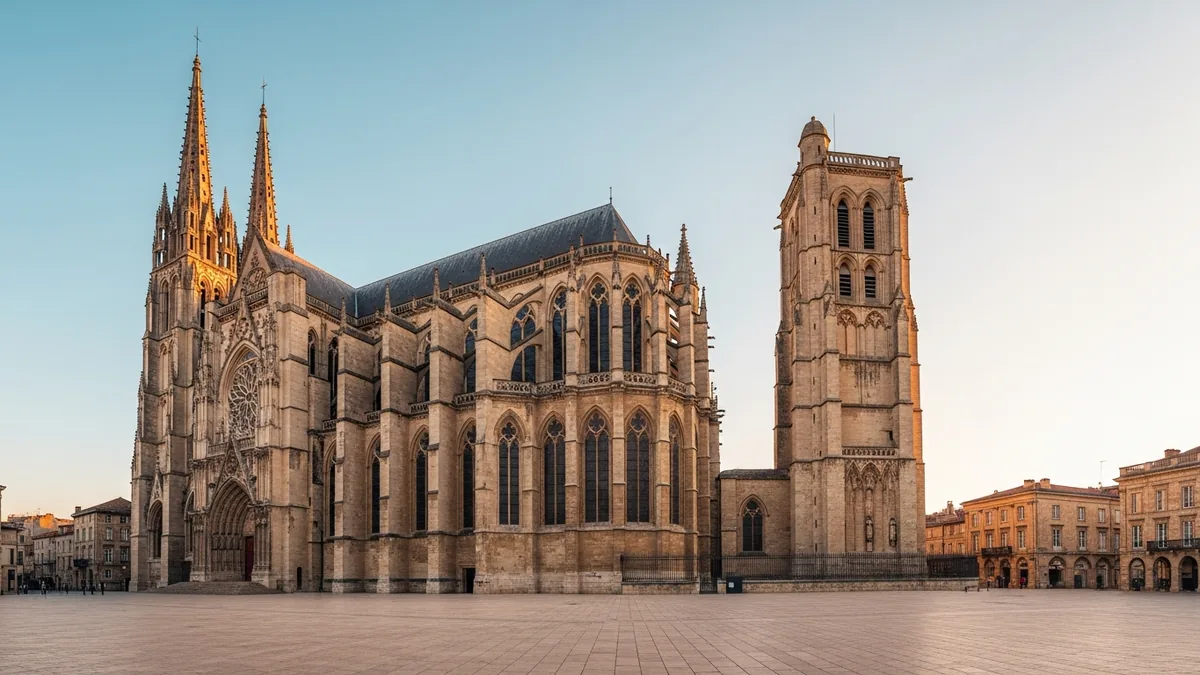
This is whereEleanor of Aquitaine married the future King of France, Louis VII, in 1137–fifteen years before she chose England instead and changed the map of Europe. The Saint-André Cathedral, Gothic, is listed as a historic monument on the 1862 list and listed as a World Heritage Site since December 2, 1998 under the heading of the Pilgrimage Routes to Santiago de Compostela – Along with the Basilica of Saint-Michel and Saint-Seurin, Bordeaux is home to three of the 71 monuments that make up the Way of St. James. Its most striking feature: the bell tower is a separate building. The Pey-Berland Tower (1440–1500, Flamboyant Gothic), built at a distance so that the vibrations from the bells would not cause cracks in the cathedral, can be climbed via more than 230 steps all the way to the panoramic terrace, 50 meters away–the most beautiful view of the city. At the top stands Notre-Dame-de-l'Aquitaine, a gilded statue erected in 1863.
The tower has lived several lives, much like the city itself. Sold as national property during the Revolution, it became a shot tower, with molten lead dropped from the top, before serving as a bell tower again in the 19th century. Its bourdon, Ferdinand-André, weighs 8 metric tons; locals like to point out that it is heavier than the bell of the Grosse Cloche itself. Allow 30 to 45 minutes for the climb and the 360° panorama over tiled rooftops, the crescent-shaped river and, on a clear day, church spires rising beyond the vineyards.
The Cailhau Gate and the Grosse Cloche Gate, the two surviving gates
Two monumental gates from medieval Bordeaux survived the city's 18th-century expansion. The Porte Cailhau (1493–1496), listed on May 28, 1883, is a triumphal arch disguised as a defensive structure. Dedicated to Charles VIII after his victory at Fornovo in 1495, it combines a white-marble royal statue with a fully functional portcullis and machicolations. Climb to the top for a fine view of the Pont de Pierre. The Grosse Cloche, officially the Porte Saint-Éloi on the Way of St James, dates from the 13th century and was rebuilt in the 15th century. The former town-hall belfry was listed on July 12, 1886. Its bell, Armande-Louise, now rings on only a handful of days each year; local tradition recalls that kings punished the rebellious city by confiscating its bell and clock, the severest sanction Bordeaux could imagine.
The Saint-Michel Spire, the tallest bell tower in southern France
In the working-class district of the same name, Saint-Michel Basilica, listed by UNESCO in 1998 as part of the Routes of Santiago de Compostela, has a separate bell tower: the Flèche Saint-Michel. At 114 metres and designated a historic monument in 1846, it is the tallest bell tower in southern France and the 4th tallest in the country, behind Rouen (151 m), Strasbourg (142 m) and Chartres (115 m). The climb reveals Bordeaux's other great panorama from the south, with fewer crowds than Pey-Berland and the Garonne in the foreground. Around it, the neighbourhood moves to the rhythm of its daily market and the Sunday flea market on Place Meynard: cosmopolitan, lively Bordeaux, just ten minutes on foot from the historic quays.
The Rohan Palace and the Gallien Palace, the two “palaces”
These two "palaces" could scarcely be more different. The Palais Rohan, a grand residence built in 1771–1784 for Archbishop Ferdinand Maximilien Mériadec de Rohan, has served as Bordeaux's city hall since the 1830s and has been a listed historic monument since 1997. The Palais Gallien is a palace in name only, a legacy of medieval stories linking it either to Emperor Gallienus or to a mythical Queen Galienne. In fact, it is Burdigala's only surviving monumental structure: an amphitheatre dating from the early 2nd century that once held around 22,000 spectators. It joined France's first list of historic monuments in 1840, after serving as a municipal dump during the Revolution and narrowly escaping redevelopment. Its surviving stone arch, standing amid a residential neighbourhood, is one of Bordeaux's most striking glimpses into the past.
| Monument | Period | Protection | To Do |
|---|---|---|---|
| Place de la Bourse | 1730-1755 | Listed as a historic monument in 1916 | Reflecting pool, evening lighting |
| Grand Theater | 1780 | Listed as a historic monument in 1899 | guided tour or show |
| Saint-André Cathedral | 11th–16th centuries | Listed in 1862 · UNESCO 1998 | free admission |
| Pey-Berland Tower | 1440-1500 | listed as a historic monument | more than 230 steps, terrace 50 m away |
| Cailhau Gate | 1493-1496 | listed in 1883 | climb, river view |
| Grosse Cloche | 13th–15th centuries | Listed in 1886 | photograph Rue Saint-James |
| Saint-Michel Spire | 15th century · 114 m | Listed in 1846 · UNESCO 1998 | view of the south side |
| Palais Gallien | early 2nd century | classified as 1840 | Roman ruin open to the public |
| Stone Bridge | 1810-1822 | Listed as a Historic Monument in 2002 | walk across at sunset |
Four neighborhoods, four cities within the city
Bordeaux is best explored neighborhood by neighborhood, and each one has its own unique character. Visitors in a hurry stick to the “Golden Triangle” and the riverbanks; curious travelers venture as far as the Chartrons and Bacalan–that’s where today’s city is taking shape, in the converted wine cellars and silos. Four stops, from the oldest to the newest.
Saint-Pierre: The Historic Heart of the City, Now an Epicurean Destination
Between Place de la Bourse and Porte Cailhau, Saint-Pierre is the city's historic heart: its narrow street plan remains medieval, its façades are largely 18th-century and its atmosphere feels almost Mediterranean. Café terraces overlook Place du Parlement; wine bars, artisans and record shops cluster around Place Saint-Pierre and Rue du Pas-Saint-Georges. This is one of the best districts for dinner in central Bordeaux and the liveliest after dark. Two streets away, Place Camille-Jullian and its Utopia cinema, housed in a former church, capture the neighbourhood's spirit: rich in heritage without being trapped in the past. Stay here on a first visit; everything is within walking distance, and the district is as appealing at night as it is by day.
Saint-Michel, Unapologetically Popular
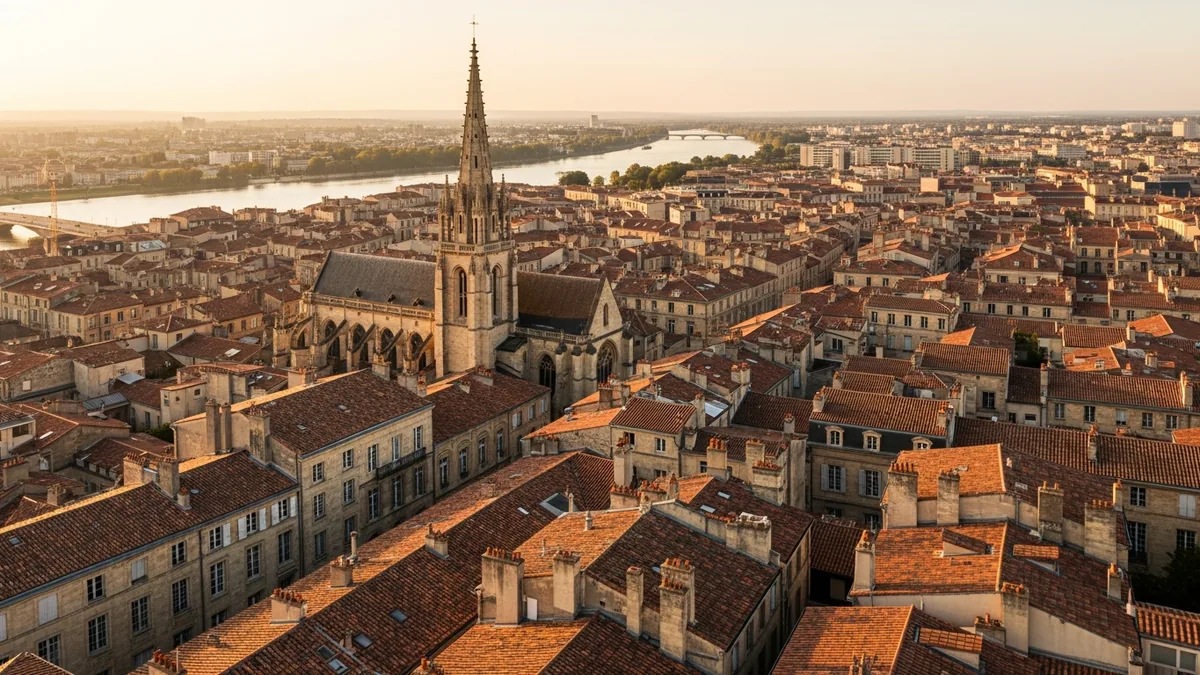
To the south, around the basilica and its 114-meter spire, Saint-Michel is the neighborhood that looks the least like a postcard–and that is precisely what makes it so appealing. Daily market at the Capuchins just a stone's throw away, Sunday flea market Place Meynard, Kabyle cafés, Portuguese and Spanish grocery stores: Bordeaux’s working-class, multicultural community has thrived here for generations, and rising rents haven’t yet erased its character. The Saturday morning routine is a Bordeaux classic: oysters and white wine at the Capucins bar around 10 a.m., followed by coffee on the terrace at Place Saint-Michel, facing the spire. It’s the least touristy and most authentic route in the city–come before everyone else finds out about it.
Les Chartrons, the former stronghold of merchants
North of the Quinconces, the Chartrons were, for three centuries, the neighborhood of the wine merchants – often of English, Irish, Dutch, or German origin – who lined the riverbanks with their wine cellars and shipped claret to Northern Europe. After being redeveloped, the neighborhood has become a favorite among the people of Bordeaux: antique shops and galleries Notre-Dame Street, the Sunday market on the Quai des Chartrons, wine shops and bistros on every corner, and the Wine and Wine Trade Museum, housed in former wine cellars, to understand how the wine trade literally built the city. The atmosphere: a village within the city, somewhere between a chic flea market and neighborhood cafés–perfect for a leisurely Sunday, and for a peaceful night’s sleep just a fifteen-minute walk from the riverbanks.
Bacalan and the Bassins à Flot: A City in the Making
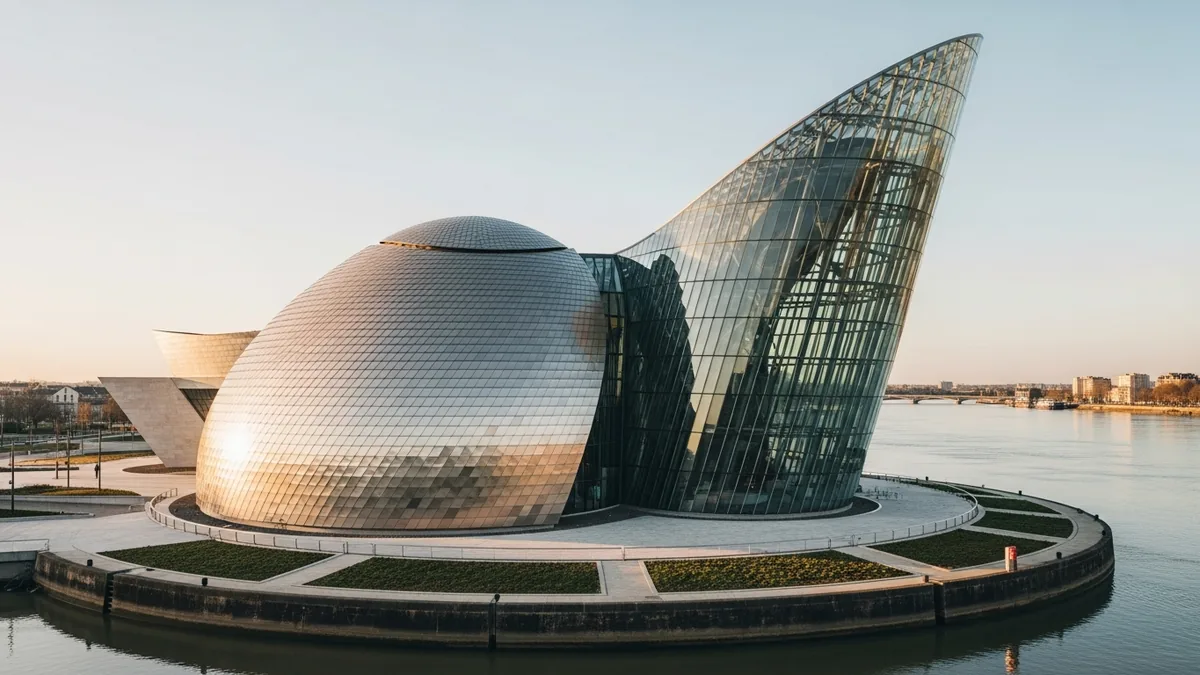
In the north, the former port district of Bacalan has undergone Bordeaux's most spectacular recent transformation. Around the Bassins à flot, silos and warehouses have become cultural venues: the golden silhouette of the Cité du Vin (2016), the Bassins des Lumières, billed as the world's largest digital-art centre and housed in a former World War II submarine base, Les Halles de Bacalan for a quick lunch, and the base itself, a vast concrete monument whose sheer mass conveys the history of the Occupation better than any textbook. Tram B takes you there, and it is easy to spend half a day exploring. It is also the one Bordeaux district where 21st-century architecture confidently holds its own beside that of the 18th century.
The Wine Capital of the World, a City of Fine Dining
Bordeaux is not merely a city "with" wine; it is the capital of a region comprising approximately 95,000 hectares of AOP vineyards (CIVB, 2024), France's leading appellation wine area, divided among 65 appellations from the Médoc to Sauternes. Less widely known is that it is also the world's largest Merlot vineyard, with the grape accounting for two-thirds of the red-wine area. The city tells that story at every scale, from its landmark museum to a simple plate of cannelés. Here is where to begin.
The 1855 ranking: a hierarchy that has endured for 170 years
Created at the request of Napoleon III for the Paris World's Fair of 1855, the classification was compiled in a matter of weeks by Bordeaux wine brokers using long-established market prices. It divides the Médoc's grands crus, together with Haut-Brion in the Graves, into five tiers. Today it includes 61 classified red-wine estates, among them 5 Premiers Crus: Lafite Rothschild, Latour, Margaux, Haut-Brion and Mouton Rothschild. Mouton was promoted in 1973; apart from the addition of Cantemerle in 1856, that remains the classification's only change. A separate list identifies 27 sweet-wine estates in Sauternes and Barsac, crowned by Château d'Yquem, the sole Premier Cru Supérieur. This 170-year-old hierarchy remains a global benchmark and one of the main reasons to explore the Médoc.
La Cité du Vin, the iconic museum
Inaugurated on May 31st, 2016 and opened to the public the following day, the Cité du Vin explores wine as a civilisation, encompassing wine cultures from around the world rather than Bordeaux alone. The XTU architects Anouk Legendre and Nicolas Desmazières designed the 55-metre building, whose gold-toned aluminium and screen-printed glass evoke wine swirling in a glass. It contains 13,350 m² across 10 levels. The permanent exhibition ends with a tasting on the observation deck on the 8th floor, with its 360° view of the city. The museum has welcomed approximately 400,000 visitors a year since opening. Book a summer time slot online and allow 2½ to 3 hours.
Cannelés, oysters, and the “belly of Bordeaux”
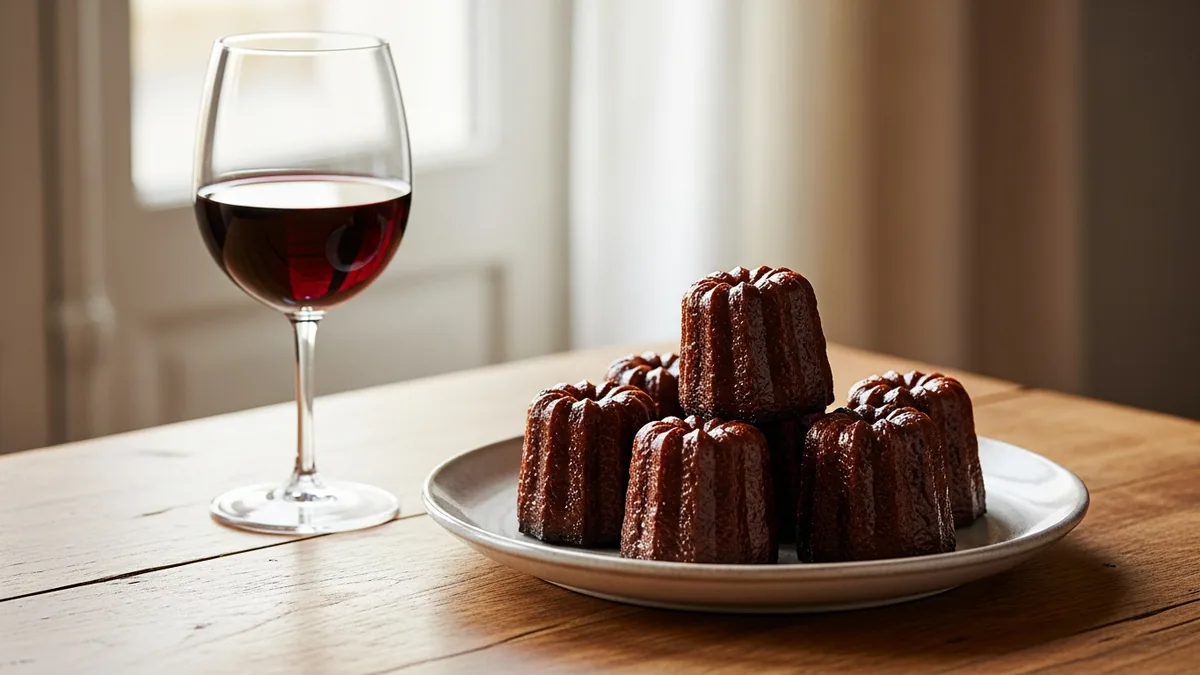
The cannelé is Bordeaux's signature treat: a nearly black caramelised crust around a soft, fragrant centre flavoured with rum and vanilla, two products once unloaded at the port from the West Indies. Its documented history is more recent than many assume: the earliest written mention of the cake dates only to 1937. The traditional story credits nuns from the Annonciades convent, who supposedly used egg yolks left over by wine estates after the whites had clarified the wine, but no surviving archive confirms the tale. One detail for connoisseurs: the spelling "canelé", with one "n", is a collective trademark registered in 1985 by the Confrérie du Gâteau and reserved for cakes made in Bordeaux. Both spellings refer to the same delicious speciality.
For a taste of the city in one morning, head to Marché des Capucins, established in 1749 under Intendant Tourny and long known as the belly of Bordeaux. Its 1878 metal halls were acquired from the Paris World's Fair and built in the Baltard style. From Tuesday to Sunday morning, stalls serve Arcachon Bay oysters at the counter with dry white wine, alongside cannelés, Pyrenean cheeses and produce from across the region. The market is a ten-minute walk from the Saint-Michel spire, making the two an ideal Saturday-morning pairing.
| Wine & Dining Experience | Where / How much | The advice |
|---|---|---|
| Cité du Vin | Bassins à flot · ~€26 with tasting | Book online for the summer, Tram B |
| Capucins Market | Saint-Michel · Free admission | Oysters and white wine at the bar, Saturday morning |
| CIVB Wine Bar | July XXX Special · Glasses at Low Prices | the official showcase for wine appellations |
| Notre-Dame Street (Chartrons) | wine shops & bistros | The Bordeaux-Style Aperitif |
| Wine Tour | Saint-Émilion or Médoc · half-day or full-day | See the "Excursions" section |
Museums That Are Truly Worth a Visit
Bordeaux boasts a museum scene worthy of a major metropolis, one that is often overlooked by visitors captivated by the city’s outdoor heritage. Five must-see attractions, ranging from Paleolithic masterpieces to immersive digital art–almost all accessible via a single tram line, and often indoors: save this section for a rainy day–it does rain in Bordeaux from time to time.
The Musée d'Aquitaine on Cours Pasteur tells the region's story from prehistory to the 20th century. Its collections include the Venus of Laussel, a Palaeolithic relief about 25,000 years old, the Montaigne cenotaph and unflinching galleries on Bordeaux, Atlantic trade and slavery in the 18th century. The Musée des Beaux-Arts, in the town hall gardens, holds works by Titian, Rubens and Delacroix. The CAPC contemporary art museum is as notable for its setting, the spectacular 1824 Entrepôt Lainé colonial-goods warehouse, as for its exhibitions.
At Bassins à flot, the Pools of Light project monumental digital exhibitions–Klimt, Van Gogh, Dalí, depending on the season–onto the walls and bodies of water of the former underwater base: the city's most photogenic experience–book online. Finally, two family-friendly spots: Cap Sciences, on the Bacalan pier, is a surefire way to make any afternoon with the kids a success, and the Bordeaux Museum, renovated in 2019 in the Public Garden, rounds out a morning spent in the park watching the ducks. Almost all of them are closed on Mondays–check before heading across town.
| Museum | Neighborhood | Why Go There |
|---|---|---|
| Aquitaine Museum | Pey-Berland | Venus of Laussel, Slavery & Atlantic Trade Galleries |
| Fine Arts | City Hall | Titian, Rubens, Delacroix |
| CAPC | Chartrons | The Lainé Warehouse (1824) and Contemporary Art |
| Pools of Light | Bacalan | Digital Art in the Underwater Base |
| Cap Sciences / Museum | Bacalan / Public Park | Children on Rainy Days |
Exploring Bordeaux in 1, 2, or 3 Days
How many days should you spend visiting Bordeaux? Two days cover most of the UNESCO Center and the Cité du Vin; three days allow you to add a trip to the vineyards or the Arcachon Basin. Here are three realistic itineraries, timed based on actual conditions on the ground–the distances are short, everything is done on foot and by tram, and each stop refers to the detailed sections of this guide. A general tip: Bordeaux is best experienced early in the morning and late in the day, when the light bathes the stone in a golden glow and the tour groups haven’t arrived yet.
Day 1: The Classic UNESCO Tour
Start before 9:30 a.m. at Place de la Bourse and the Water Mirror, when the reflection is still quiet. Walk along the waterfront towards Quinconces and the Monument aux Girondins, then continue to the Grand Théâtre and the Golden Triangle. Have lunch around Saint-Pierre and Place du Parlement. In the afternoon, visit Saint-André Cathedral, climb the Pey-Berland Tower (more than 230 steps), then follow Rue Sainte-Catherine to the Grosse Cloche and Porte Cailhau. Finish by crossing the Pont de Pierre at sunset for an aperitif on the right bank opposite the illuminated riverfront.
Day 2: Wine, the Chartrons, and Bacalan
Morning at the Capucins Market – oysters at the counter first thing in the morning, except on Mondays –, followed by a leisurely stroll through Saint-Michel and climbing the tower if your legs can keep up. Tram B northbound: afternoon at the Cité du Vin (Book the early afternoon time slot; allow 3 hours, including the tasting at the lookout), then Pools of Light to the submarine base if you continue on, or a smooth return via the Chartrons – Notre-Dame Street, antique shops, wine tasting at a wine shop. Dinner at Les Halles de Bacalan or back to Saint-Pierre. Day 2 is the counterpart to Day 1: after the city of stone comes the city of wine and urban renewal.
Day 3: The Excursion – Vineyard or Ocean
On day three, leave the city. Choose Saint-Émilion for its UNESCO-listed village and fine wines, the Médoc for its château route, or Arcachon Bay and the Dune du Pilat for coast and nature. Without a car, Saint-Émilion is easiest thanks to a direct TER train taking about 40 minutes. Wine enthusiasts may prefer the Médoc, while Arcachon works particularly well for families. A chauffeur for the day gives you the freedom to create a tailored itinerary.
| Duration | Condensed Program | The advice |
|---|---|---|
| 1 day | Bourse & Miroir d'eau → quays → Grand Théâtre → Saint-André & Pey-Berland → Grosse Cloche → stone bridge at sunset | start before 9:30 a.m. |
| 2 days | + Capucins, Saint-Michel, Cité du Vin, Chartrons, Bassins des Lumières | Book a visit to the Cité du Vin |
| 3 days | + excursion to Saint-Émilion, the Médoc, or the Arcachon Bay | TER to Saint-Émilion, driver for the Médoc |
| Weekend | = 2-day itinerary, staying overnight in Saint-Pierre or Les Chartrons | Watch out for cobblestones when pulling wheeled suitcases |
Around Bordeaux: Vineyards, the Ocean, and Villages
The advantage of Bordeaux as a base: within an hour’s drive or less, three distinct worlds–UNESCO-listed vineyards, Europe’s tallest dune, and the Vauban citadel. The distances and travel times listed below are actual, verified driving times from downtown Bordeaux; allow extra time during rush hour, given the state of the Bordeaux beltway.
Saint-Émilion (~40 km / ~45 min)
Saint-Émilion's wine-growing landscape has been UNESCO-listed since 1999, the first wine region in the world to receive that recognition. Its monolithic church is carved from the rock, and cobbled lanes climb between small estates and celebrated Libournais names. Allow a full day for the village, a château visit and a tasting, and reserve winery tours in advance during summer. Without a car, this is the easiest day trip: a direct TER train from Saint-Jean station takes about 40 minutes, followed by a 20-minute walk. Our complete Saint-Émilion guide covers monuments, châteaux and restaurants.
The Médoc and its Château Route (~50–80 km / ~1 hr)
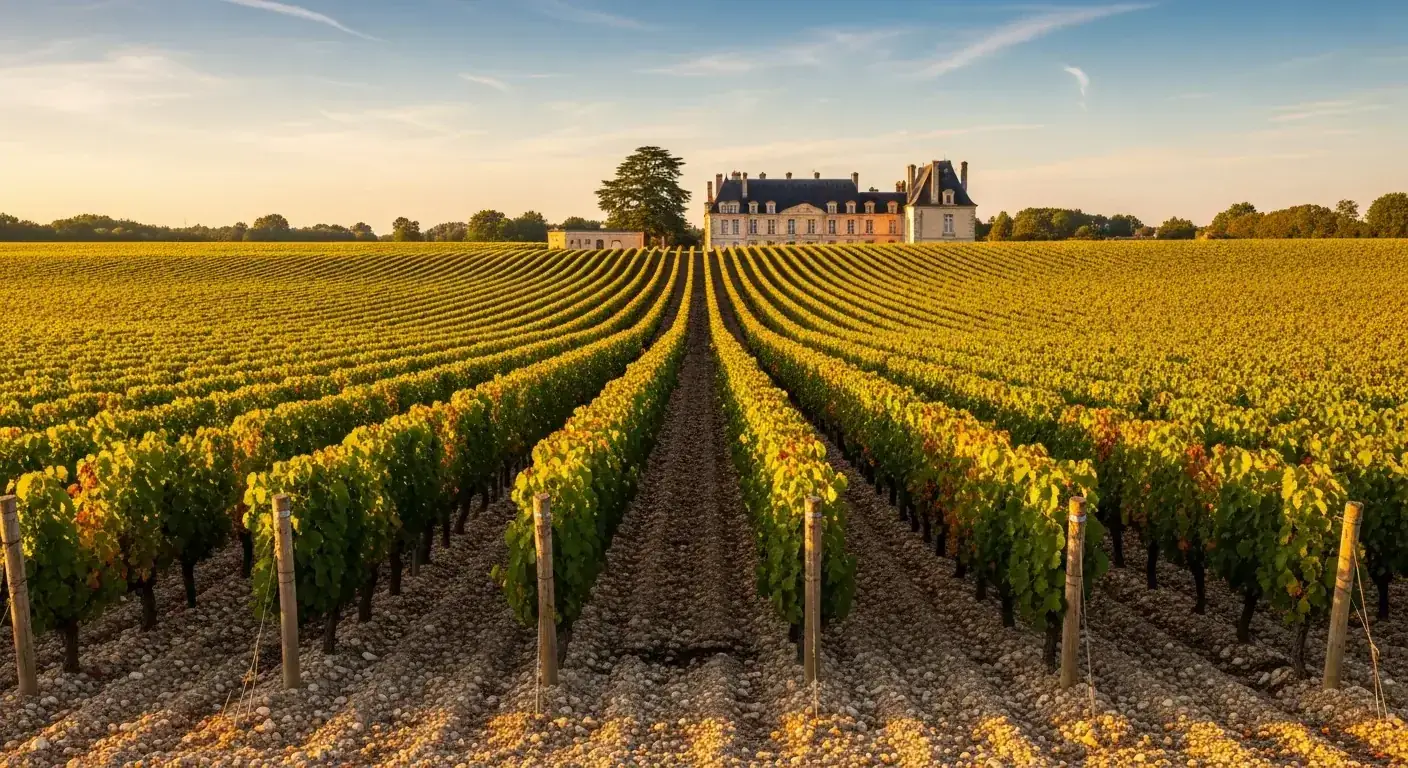
D2, also known as Castle Route, winds its way up the peninsula, featuring the most prestigious names in wine: Margaux, Saint-Julien, Pauillac, Saint-Estèphe – and the facades of Château Margaux and Château Pichon Baron, set amid the vineyards. Most of the châteaux are open to visitors by reservation only; the wineries in Margaux and Pauillac welcome walk-ins. Without a driver, the experience can be frustrating–wine tasting and driving don’t mix; this is the kind of trip where a day tour with a driver really pays off. Our Guide to the Médoc lays the groundwork, appellation by appellation, including the 1855 classification.
Arcachon Bay and the Pilat Dune (~65–70 km / ~1 hr)
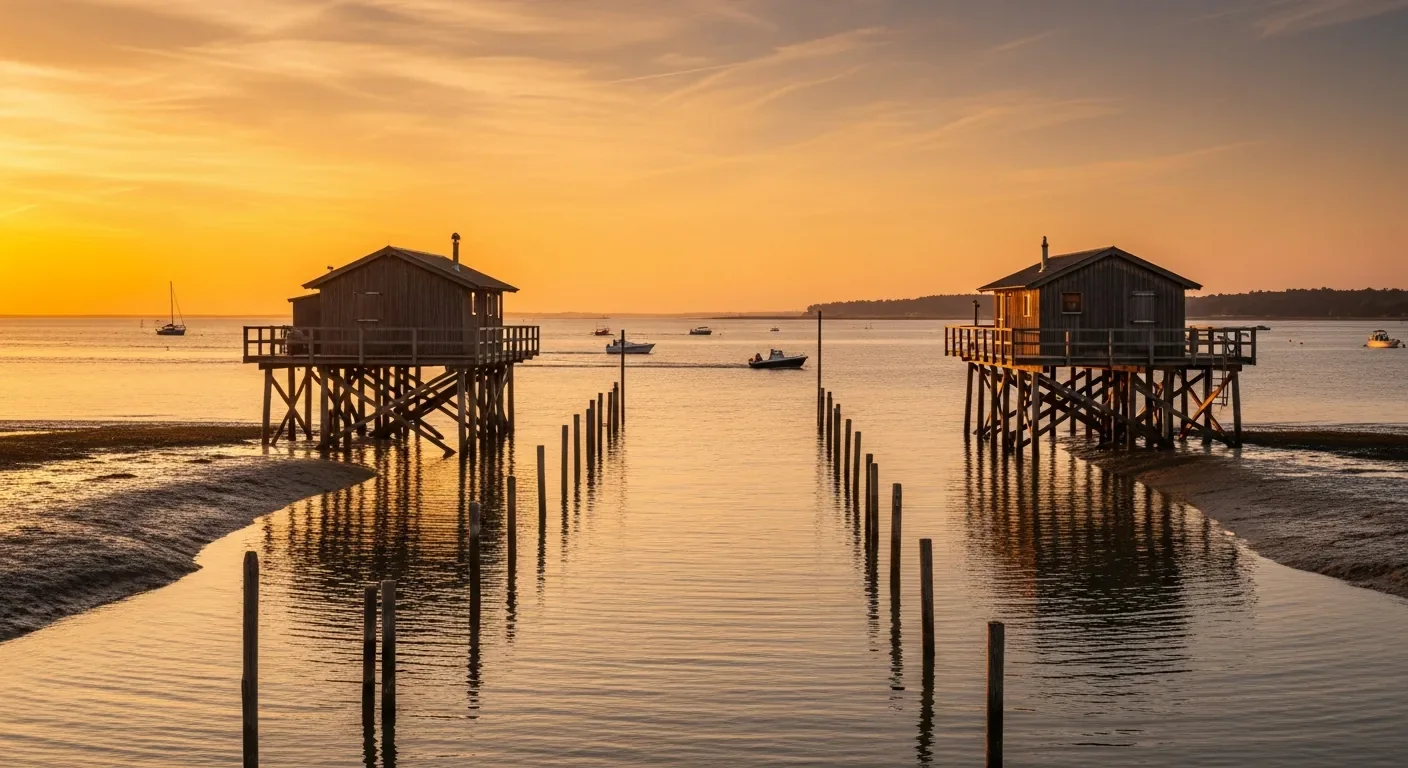
For a day by the ocean, combine Arcachon and its Belle Époque winter town, the oyster villages of Cap Ferret and the Dune du Pilat. At about 102 metres high, it is Europe's tallest dune and overlooks the Banc d'Arguin and Landes forest. Spend the day eating oysters in L'Herbe or Gujan-Mestras, then climb the dune in the late afternoon. Leave early in summer, when the peninsula becomes busy. Our Arcachon Bay guide and Dune du Pilat guide cover access, timings and protected areas.
| Field Trip | Distance / Travel Time | Who is this for? | No car? |
|---|---|---|---|
| Saint-Émilion | ~40 km / ~45 min | Heritage + Wine, the most comprehensive | Direct TER train ~40 min |
| Médoc (Castle Route) | ~50–80 km / ~1 hr–1 hr 15 min | connoisseurs of fine wines | difficult – driver recommended |
| Arcachon & the Pilat Dune | ~65–70 km / ~1 hr | families, nature, photography | TER Arcachon + bus/taxi to the dunes |
| Blaye (Vauban Citadel) | ~50 km / ~50 min | Vauban, estuary | difficult |
| Cognac | ~120 km / ~1 hr 30 min | cognac houses | train with a transfer |
The Best Time of Year to Visit Bordeaux
Bordeaux is a great place to visit year-round, but there are two peak seasons: May–June and September–October – a mild climate tempered by the ocean, crowded terraces but a city where you can still breathe, and that golden light on the pale stone that makes up half of every great photo. July and August are hot–temperatures peaking at 35 °C are no longer rare–and more crowded with tourists, but the long days, the Miroir d’Eau fountain in full swing, and the lively quays until midnight have their fans. Winter, mild and damp, is the season for quiet museums, winter dining, and hotel rates that plummet–Bordeaux without lines does exist; it’s in January.
When it comes to events, keep track of the years: the Wine Festival (June, even-numbered years) transforms the quays into France's largest open-air wine tasting event, alternating with the River Festival (odd-numbered years) and its tall ships moored in the heart of the city. Add the Epicurean and their pop-up outdoor restaurants in early summer, the night marathon in the spring, and the Christmas market on the Allées de Tourny in December. During the Wine Festival and major trade shows, Book your accommodations several months in advance: The city is truly at full capacity, and prices are skyrocketing.
| Period | Crowd | Strengths | Limitations |
|---|---|---|---|
| May–June | moderate to heavy | ideal weather, Wine and River Festival, long days | Expensive hotels during events |
| July–August | strong | The water's surface glistens in the evening, and the docks are bustling | heat, crowds, Arcachon Bay at capacity |
| September–October | average | grape harvest, golden light, the still-warm ocean | a few busy weekends |
| November–March | low | Low prices, quiet museums, winter dining | Short days, the reflecting pool drained in winter |
Getting There: Train, Plane, Car
Bordeaux is one of the most easily accessible major French cities: Paris is just over 2 hours away by train, there’s an international airport 12 km from downtown, and two major highways (the A10 from Paris, and the A62/A63 from Toulouse and Spain). Here are the details, mode by mode–with actual figures and pitfalls to avoid.
By train: 2 hours and 4 minutes from Paris, Saint-Jean Station
Since the LGV Sud Europe Atlantique opened in July 2017, the fastest direct service from Bordeaux Saint-Jean to Paris-Montparnasse takes 2 hours 4 minutes. Around 30 daily return services include approximately 18 direct TGV INOUI and OUIGO trains. Direct connections also reach Lille, Strasbourg, Lyon, Marseille, Nantes and Toulouse. The station's 1898 glass roof, designed by Daydé & Pillé, is Europe's largest railway train shed. Nearby, the Passerelle Eiffel (1858–1860) was the first major project of Gustave Eiffel, then aged 26. Trams C and D reach Quinconces in about 15 minutes. Our Saint-Jean station guide covers its halls, parking and connections.
By plane: Bordeaux-Mérignac Airport
Bordeaux-Mérignac Airport (BOD), about 12 km west of central Bordeaux, handled approximately 6.6 million passengers in 2024 and offered nearly 100 direct destinations in 27 countries, chiefly across Europe and North Africa. Tram A reaches the centre in about 40–45 minutes, while Line F connects the airport directly to Saint-Jean station. Taxis and a pre-booked chauffeur offer faster road transfers at other price points. Our airport guide compares terminals, parking and every transport option.
By car or chauffeured transfer
Bordeaux is reached by the A10 from Paris (~580 km, about 5½ hours), the A62 from Toulouse (~245 km) and the A63 from Spain. The ring road becomes busy at peak times (7:30–9:30 a.m. and 5:00–7:00 p.m.), so allow extra time. Much of the UNESCO-listed centre is pedestrianised, and on-street parking is scarce and expensive; TBM park-and-ride sites are a better option. For luggage, late arrivals or vineyard excursions, a private driver offers written fixed fares from €30 within the city, €45 from the airport and €30 from the station. Our page on alternatives to taxis in Bordeaux explains the fixed-versus-metered comparison.
| Mode | Duration / Estimated Cost | Details |
|---|---|---|
| TGV from Paris | 2 hr 4 min · €30–120 depending on how far in advance you book | ~30 trains per day, including ~18 direct trains; the station is a 15-minute tram ride from downtown |
| By air | nearly 100 direct destinations | Tram A to downtown · Tram F direct to the train station |
| By car from Paris | ~5 hr 30 min / ~580 km | Heavy traffic on the bypass during rush hour; Park-and-Ride recommended |
| Pre-booked chauffeur service | Airport: €45 · Train station: €30 · City: starting at €30 | Guaranteed fixed price, 24 hours a day |
Tram, bike, boat: the car-free city
Once you arrive, leave the car behind. The historic centre is easy to explore on foot, with most sights within 3 km, and the TBM network covers the rest. Since December 2025, its tram network, with six lines (A to F) and an express bus route, has covered about 80 km. Lines C, D and F serve the station; A and F serve the airport; and B serves the Cité du Vin. In the centre, trams run without overhead wires thanks to ground-level power supply (APS), introduced in Bordeaux in 2003 to preserve historic views. Single tickets and 24-, 48- and 72-hour passes are available.
Cycling is another good option in this flat city, with 3 km of landscaped waterfront, dedicated lanes and TBM's Le Vélo bike-share service, including electric models. The TBM river shuttles cross the Garonne for the price of a tram ticket: board at Quinconces or Stalingrad to see the UNESCO-listed riverfront from the water. Old Bordeaux has cobbled streets, so wear comfortable shoes. Wheeled suitcases are less practical, making a direct station-to-hotel transfer useful when travelling with substantial luggage.
Budget, duration, practical advice
Bordeaux remains significantly less expensive than Paris, but it’s no longer the bargain it was in the 2000s–the high-speed rail line has changed that, and hotel prices have risen along with the city’s appeal. Realistic price ranges for 2026: a decent hotel room in the city center 90-150 € (with peak times during the Wine Festival and trade shows), lunch menu 15-20 €, bistronomic dinner 35-55 €, a Bordeaux glass at the wine bar 4-8 €. The city’s major free attractions more than make up for it: the reflecting pool, the quays, the squares and churches, the public garden, the covered markets, and crossing the Stone Bridge at sunset–most of what Bordeaux has to offer costs nothing.
Three practical tips make a difference. First, stay within the UNESCO district: Saint-Pierre for its lively atmosphere or Les Chartrons for a quieter, village-like feel. Second, book the two main bottlenecks in advance: the Cité du Vin in summer and Médoc château visits, which generally require an appointment. Third, follow the local rhythm with morning markets and a 7 p.m. aperitif. On Sundays, start at the Chartrons riverside market and continue to the Saint-Michel flea market.
| Budget per day, per person | Tight | Comfort | Pleasure |
|---|---|---|---|
| Accommodations (based on double occupancy) | 45-70 € | 90-150 € | 200 €+ |
| Meals | 20-30 € | 45-70 € | 100 €+ |
| Tours & Transportation | 5-15 € | 25-40 € | 60 €+ (guided tour) |
| Estimated total | ~80 € | ~180 € | 300 €+ |
Frequently Asked Questions
How many days does it take to visit Bordeaux?
Two days are enough to cover the highlights: the UNESCO district (Place de la Bourse, Miroir d’Eau, Grand Théâtre, the cathedral and Pey-Berland Tower, and the Grosse Cloche) on the first day, followed by the Cité du Vin, the Chartrons, and Bacalan on the second. Add a third day for a trip to Saint-Émilion, the Médoc, or the Arcachon Basin. A simple weekend in Bordeaux is therefore enough to see the highlights, provided you stay in the city center and book the Cité du Vin in advance.
What to Do in Bordeaux Over a Weekend?
Day 1: The Miroir d’Eau early in the morning, the Quais façade, the Grand Théâtre, lunch at Saint-Pierre, Saint-André Cathedral, and a climb up the Pey-Berland Tower (over 230 steps), Grosse Cloche, then a walk across the stone bridge at sunset. Day 2: Capucins Market for oysters, Saint-Michel neighborhood, then Tram B to the Cité du Vin and the Bassins des Lumières, followed by an aperitif in the Chartrons district on Rue Notre-Dame. Everything is done on foot and by tram.
Why is Bordeaux a UNESCO World Heritage Site?
UNESCO inscribed “Bordeaux, Port of the Moon” on June 28, 2007, for its exceptional urban and architectural ensemble created during the Age of Enlightenment, and for its role as a hub of commercial and cultural exchange for over 2,000 years (criteria ii and iv). The property covers 1,731 hectares–more than one-third of the municipality–making it, at the time of inscription, the largest urban complex recognized by UNESCO. The city also boasts approximately 350 historic monuments, the second-highest number in France after Paris.
Is the Water Mirror open year-round?
No. The Water Mirror (3,450 m², often described as the largest in the world, opened in July 2006 across from Place de la Bourse) operates from spring through fall, alternating between a mirror effect and mist; it is drained every winter to prevent freezing. The water is only 2 centimeters deep, resting on a granite slab fed by an 800 m³ underground reservoir. Admission is free and open to the public. For the perfect photo: go early in the morning to capture the reflection without crowds, or at dusk when the façade is illuminated.
Do you need to make a reservation for the Cité du Vin in advance?
Yes, in the summer and during school breaks: online time slots fill up quickly, especially between 11 a.m. and 3 p.m. Expect to pay about €26 for admission, which includes a wine tasting at the 8th-floor observation deck (with a 360° view of Bordeaux), and allow 2½ to 3 hours for the tour. The Cité du Vin (opened in 2016, with about 400,000 visitors per year) is accessible via Tram B; get off at the “La Cité du Vin” stop. During the off-season, reservations are still recommended on weekends.
What's the best neighborhood to stay in Bordeaux?
Saint-Pierre and the “Golden Triangle” for a first-time visit: everything is within walking distance, with restaurants and landmarks right at your fingertips–it’s also the liveliest area in the evening. Les Chartrons for a village-like atmosphere, flea markets, and wine bars, a fifteen-minute walk from the riverbanks. Around the Saint-Jean train station, hotels are cheaper and convenient for an early morning departure, but the neighborhood isn’t as charming in the evening. Avoid staying outside the city center if you don’t have a car.
How much does a private driver cost in Bordeaux?
With our private chauffeur service in Bordeaux, an intra-city ride starts at €30, the transfer between Saint-Jean Station and downtown is €30, and the transfer between Mérignac Airport and downtown is €45–all at a fixed price guaranteed in writing–no meter, no surprise surcharges, 24 hours a day. For a wine tour (Saint-Émilion, Médoc), the full-day package with a driver lets you visit the châteaux and enjoy wine tastings without having to drive. Book online in just a few minutes; English-speaking drivers available.
Is it possible to visit the vineyards from Bordeaux without a car?
Yes, there are three options. By train: a direct TER train to Saint-Émilion (~40 minutes), followed by a 20-minute walk–the easiest car-free option. Organized minibus tours departing from the tourist office (half-day or full-day, tastings included). Or a private driver for the day–the only truly flexible option for the Médoc, where the châteaux require specific appointment times. Note: The first vineyards of Pessac-Léognan are located within the city itself and are accessible by public transit.
Is Bordeaux an expensive city?
Cheaper than Paris, but more expensive than the average French city. Expect to pay €90–150 per night for a decent hotel in the city center, €15–20 for a set lunch menu, €35–55 for a bistronomic dinner, and €4–8 for a glass of wine. Prices peak during the Fête du Vin (June, even-numbered years) and major trade shows–be sure to book months in advance. On the other hand, almost all major outdoor attractions are free: the Miroir d’Eau, the riverbanks, squares, churches, public gardens, and markets.
What are some things to do in Bordeaux with kids?
The Miroir d'eau is children's favourite summer playground, with mist and two-centimetre-deep pools. Add the Jardin Public and its museum, renovated in 2019, Cap Sciences on the Bacalan quays, the Bassins des Lumières, whose immersive projections fascinate children from around age five or six, a climb up Pey-Berland Tower for older children and a crossing of the Garonne on a TBM river shuttle for the price of a tram ticket. On rainy days, visit the Musée d'Aquitaine and its 25,000-year-old Venus of Laussel.
What is the difference between a “classified” monument and a “registered” monument?
These are the two levels of protection for French historic monuments, listed in the Ministry of Culture’s Mérimée database. “Classification” offers the highest level of protection: any modification requires the government’s approval. “Registration” is an intermediate level, requiring prior notification. In Bordeaux: Saint-André Cathedral is classified (1862 list), the Grand Théâtre is classified (1899), and the Stone Bridge is listed (2002). The city has a total of approximately 350 protected buildings–the second-largest collection in France.
Where can you see the best views of Bordeaux?
Four must-see viewpoints. The Pey-Berland Tower (over 230 steps, terrace at 50 m): the definitive 360° panorama. The Saint-Michel Spire (114 m, the tallest bell tower in southern France): the view to the south, less crowded. The right bank near the Quais Deschamps: the entire UNESCO-listed facade at sunset, free of charge–the ultimate photo spot. And the Cité du Vin observation deck on the 8th floor, glass of wine in hand, overlooking the Bassins à Flot.
Does the Bordeaux tram serve the airport and the train station?
Yes, and better than ever: since December 2025, the TBM network has included six tram lines (A through F). Tram A connects Mérignac Airport to downtown in 40–45 minutes; trams C and D serve Saint-Jean Station; and the new Line F connects the airport directly to the station, with no transfers required. The network (~80 km) runs without overhead wires in the city center thanks to ground-level power supply–a world first introduced in Bordeaux in 2003 and designed to preserve the city’s historic views. Purchase 24-hour, 48-hour, or 72-hour passes on the TBM app.
Further Reading
- Arrange Your Local Transfers: book a driver (airport: €45, train station: €30, within the city starting at €30) or Estimate your fare in 30 seconds
- Tour #1 from Bordeaux: our Saint-Émilion Guide – UNESCO village, monolithic church, fine wines
- The Castle Trail: the Guide to the Médoc, appellations and the 1855 classification
- A Getaway by the Ocean: the Guide to the Arcachon Bay Area and the Pilat Dune
- Your destinations: our guides to the Saint-Jean Station and theMérignac Airport
- All Our Destinations Departing from Bordeaux: the full map
Sources and References
- INSEE – Complete Report, City of Bordeaux – population, area, population density, historical data series
- UNESCO – Bordeaux, Port de la Lune (Property No. 1256) – date of listing, area of 1,731 ha, criteria
- Mérimée Database – Ministry of Culture – status of historic monuments (designations, listings)
- Bordeaux Métropole Tourist Office – Hours, guided tours, events
- Pey-Berland Tower – National Monuments Center – History of the tower, how to get to the top, hours of operation
- La Cité du Vin – Official Website – tickets, exhibits, observation deck
- Bordeaux-Mérignac Airport – destinations, access, traffic figures
- TBM – tram, bus, river shuttles, Le Vélo – Lines A–F, schedules, tourist passes
- Bordeaux City Hall – Heritage, Water Mirror, Municipal Markets
- Council of the 1855 Classified Growths – 1855 classification, official list of crus
Information and prices verified on July 21, 2026; please check the linked official websites before your visit.
Your chauffeur in Bordeaux
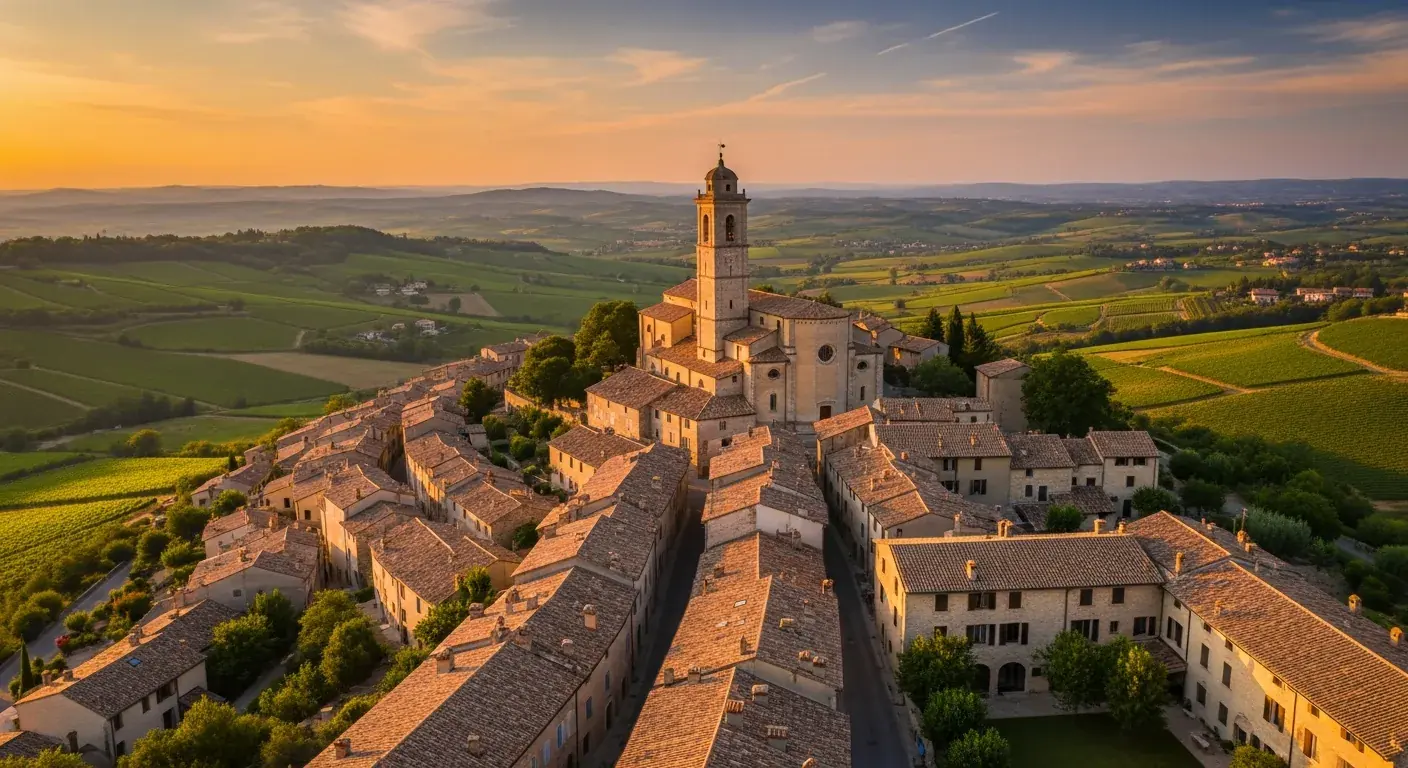
Pickup service throughout Bordeaux and the metropolitan area: within the city starting at €30, Mérignac Airport €45, Saint-Jean Train Station €30. Fixed price guaranteed in writing, sedan or van, 24 hours a day.