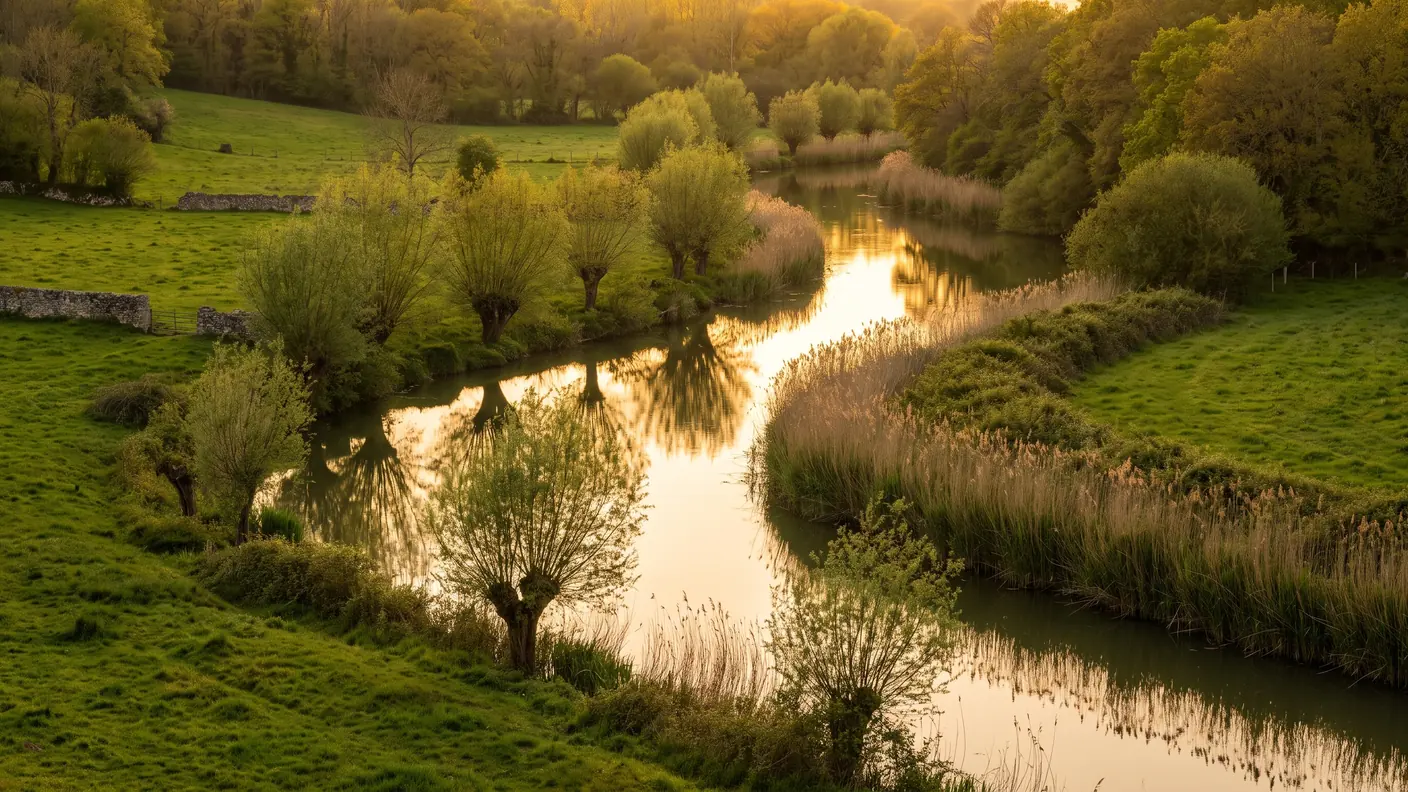
Bordeaux to Asnières-la-Giraud: rural Saintonge
A palimpsest church and Cognac vineyards on the outskirts of Saint-Jean-d'Angély. Asnières-la-Giraud, a small village in the Vals de Saintonge, is a peaceful stopover on the way to the royal abbey—1 hour and 40 minutes from Bordeaux.
Asnières-la-Giraud at a Glance
Asnières-la-Giraud is a village in Charente-Maritime, in Nouvelle-Aquitaine, nestled in the Vals de Saintonge, seven kilometers from Saint-Jean-d'Angély. Its official name and code 17022 are confirmed by the INSEE geographic profile (accessed July 24, 2026). Visitors can explore the Saint-Médard Church and reach the nearby royal abbey in just a few minutes. From Bordeaux, the distance is ~151 km, the trip takes about 1 hour and 40 minutes, and prices start at 245 €.
| Landmark | Details |
|---|---|
| Department | Charente-Maritime (17) · Nouvelle-Aquitaine |
| Status | Village of Les Vals de Saintonge · Saint-Jean-d'Angély District |
| Population | ≈ 977 residents (residents of Asnières) |
| Terroir | Cru des Fins Bois (cognac) · “groie” soil |
| Must-Sees | Saint-Médard Church · Fins Bois Vineyard · Royal Abbey of Saint-Jean-d'Angély (very close by) |
| From Bordeaux | ≈ 151 km · ~1 hr 40 min via the A10 · starting at €245 by private car |
Let’s be honest: Asnières-la-Giraud doesn’t appear on any list of France’s most-visited villages, and this guide won’t pretend otherwise. It’s a rural town with fewer than a thousand residents, with no listed monuments or ticketed attractions, whose appeal lies in what it represents: an authentic snapshot of Vals de Saintonge, this region of grain-growing plains, wet meadows, and Cognac vineyards that stretches between Saintes and Poitou. Its richness lies not in the spectacular—but in a church whose history can be read layer by layer, in a name that dates back to the donkeys of the Middle Ages, and in its immediate proximity to a royal abbey and an AOC vineyard.
This guide therefore adheres to a principle of honesty: what truly belongs to Asnières-la-Giraud is presented as such, and what is located in the surrounding area—the Abbey of Saint-Jean-d’Angély, the Fenioux funeral lantern, Roman Saintes, the cognac houses—is clearly identified as being in neighboring towns, just a few kilometers away. This way, you’ll know exactly what you’ll see when you get out of the car in the village, and what you’ll need to seek out a little further afield. Every date, number, and name cited here has been verified against the official sources listed at the end of the article.
Where is Asnières-la-Giraud located?
Asnières-la-Giraud is located in the northern part of Charente-Maritime, in the Nouvelle-Aquitaine region, in the Saint-Jean-d'Angély district and the Matha canton. It is part of the Vals de Saintonge Communauté intermunicipal community, the largest community of municipalities in the department. Its INSEE code is 17022, its ZIP code is 17400, and its territory covers 18.64 km² of plains and hillsides, at an elevation ranging from 22 to 82 meters. Its residents are known by the charming demonym “Asnièrois” and “Asnièroises.” The village moves to the slow pace of the Saintonge countryside: a few farms, houses built of light-colored stone clustered around the church, and all around, a checkerboard pattern of fields and vineyards.
One point deserves to be clarified right from the start, as there are many misconceptions about it: Asnières-la-Giraud is not located on the Boutonne River. The municipality does indeed belong to the basin of this river—itself a tributary of the Charente—but it is drained to the west only by a modest stream, the Loubat Stream, a tributary that joins the Boutonne a little further north. In other words, people often refer to Asnières as being “on the edge of the Boutonne Valley,” but the river, its locks, and its canoe routes are actually located in Saint-Jean-d’Angély, seven kilometers away, and not in the village itself. This distinction is important when planning a visit.
How far is it from Bordeaux?
From Bordeaux, allow about 151 km and 1 hour and 40 minutes by car Take the A10 highway northbound to Exit 34. The route is direct all the way to the outskirts of Saint-Jean-d’Angély, from where a few minutes’ drive on local roads will take you to the village. It’s a moderate-length trip: too long for a simple, impromptu half-day trip, but ideal for a day trip to the Vals de Saintonge, combining a visit to Asnières, the nearby royal abbey, and—why not?—a cognac tasting or a stop in Saintes on the way back. Since the village currently has no convenient rail service, driving remains the easiest way to get there from the Gironde.
| From Asnières-la-Giraud | Driving distance | Duration |
|---|---|---|
| Saint-Jean-d'Angély | ≈ 7 km | ~8 min |
| Saintes | ≈ 25 km | ~30 min |
| Cognac | ≈ 31 km | ~36 min |
| Bordeaux | ≈ 151 km | ~1 hr 40 min |
This location, halfway between Saintes to the south and the border of Poitou to the north, places Asnières-la-Giraud at the heart of a region rich in cultural heritage. In less than three-quarters of an hour by car, you can travel from the Cognac vineyards to the Roman amphitheater in Saintes; in eight minutes, you reach the royal abbey and the markets of Saint-Jean-d’Angély. The village itself is not a destination in and of itself, but an excellent base from which to explore a region where cultural heritage is scattered in small doses, from one town to the next. It is this dispersion—rather than a concentration of monuments in a single location—that defines the experience of the Vals de Saintonge, and a private driver allows you to move from one place to the next without worrying about the itinerary.
The Village and the Church of Saint-Médard
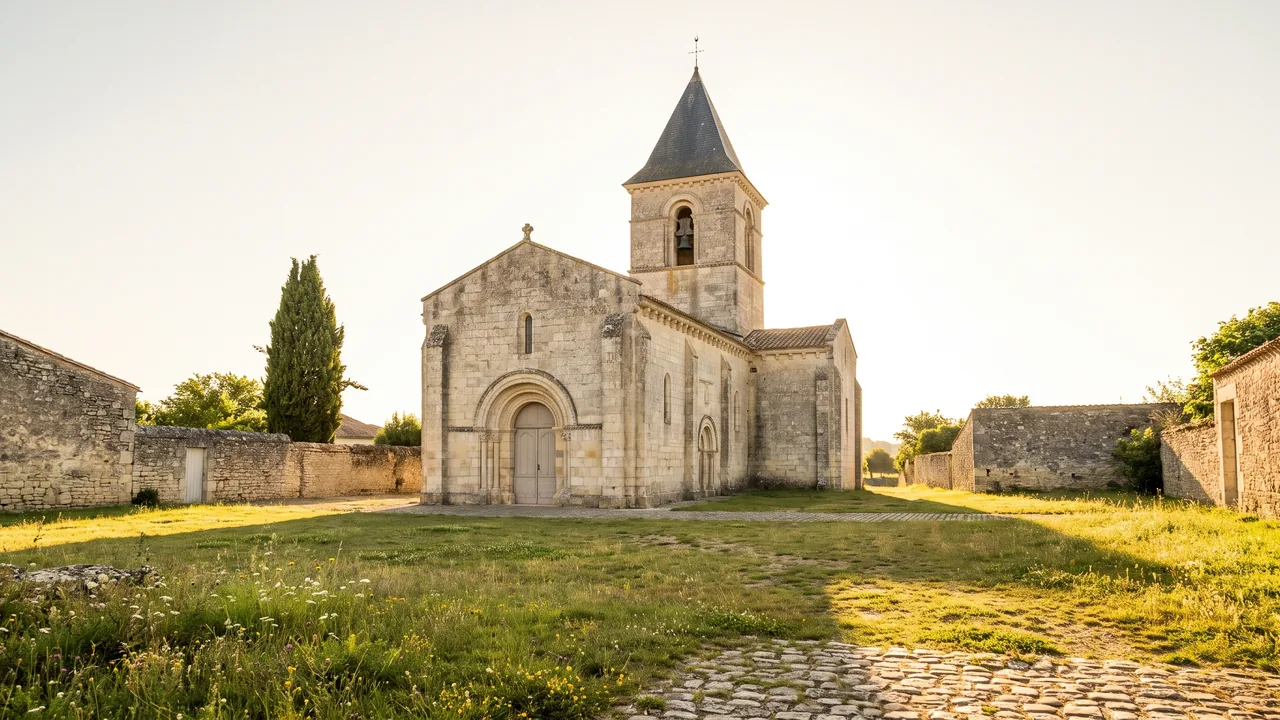
In the center of the village stands theSaint-Médard Church, the main landmark in Asnières-la-Giraud and its most recognizable visual landmark. Originally Roman — it dates back to XIIe century — yet she has retained only a tiny fraction of that time: only the headboard wall and three Romanesque windows still bear witness to the original structure. The rest tells a long story of renovations: restored in XVIe century, its facade was redesigned in XIXe century. It is therefore less a homogeneous monument than a layering of overlapping eras, a palimpsest of a church that one learns to read layer by layer. Let’s state this plainly: it is not not protected as a historic monument — It is a local cultural heritage, modest but genuine, that no official record classifies.
A Palimpsest Church to Be Read Layer by Layer
The appeal of Saint-Médard lies precisely in this stratigraphic interpretation. In front of the apse, one stands facing the 12the Romanesque period; when you look up at the façade, you’re transported to the 19the; in between, the 16the The 19th century left its mark on the restoration. Few village churches so clearly illustrate how a building endures through the centuries, being rebuilt piece by piece, depending on available resources and the ravages of time. The central bell tower crowns the whole thing: it is topped with a eight-sided pyramidal roof, flanked by four pyramidions, all covered withslate. This pointed silhouette—unusual in a country known for its tiled roofs—serves as a landmark visible from every street in the town and signals the church from afar in the countryside.
A bestiary carved at eye level
Inside, the charm lies in the details. The capitals are ornate, and two carved bases in particular catch the eye: one depicts an animal with a human head, the other a mermaid. This small fantastical bestiary, typical of the medieval imagination, watches discreetly over visitors—you have to look up to spot it. These hybrid figures, part-real, part-monstrous, belong to the repertoire of Romanesque sculpture in the Saintonge region, which is rich in enigmatic creatures whose exact meaning is often debated. Taking the time to look for them transforms a visit to a seemingly ordinary country church into a little scavenger hunt. It’s also the best way to appreciate what a modest town has managed to preserve: not a listed masterpiece, but a living heritage, maintained by its residents, at eye level and within easy view.
The Name of Asnières-la-Giraud and Its History
A commonly proposed etymology links “Asnières” to the Latin *Asinarias*, associated with donkey breeding. We present this as a toponymic hypothesis: no primary historical source has been found that specifically attests to this for this municipality. The official INSEE record 17022 confirms the current administrative name, but not its origin (accessed July 24, 2026).
The connection between “Asnières” and Asinarias remains a hypothesis here, due to the lack of a primary record specific to the municipality.
“Asnières… la Giraud”: a name made official in 1937
Contrary to what one might think, the compound name Asnières-la-Giraud is not very old: it was not made official on July 21, 1937. Previously, the town was simply called "Asnières". The addition of the suffix “la Giraud” was a response to a very specific administrative need—to avoid confusion with the many other places with the same name scattered throughout the country, a recurring source of postal and land-registration errors in the early 20the century. This detail, seemingly insignificant, places the village in a France that was still rural and fragmented, where towns were distinguished by local nicknames rather than by codes. The current name, believed to be medieval, is therefore in reality an administrative compromise from the interwar period.
The Train Station and the Dairy: The Golden Age of Agriculture in the Vals de Saintonge
Two dates tell the story of the village's past prosperity. The The Asnières train station opened on May 8, 1911, connecting the town to the railroad network at a time when the railroad reached even the smallest rural communities. Twelve years later, in 1923, a dairy cooperative was founded, before closing its doors in 1960. These two institutions—the train station and the dairy—bear witness to a agricultural golden age in the Vals de Saintonge, when dairy and grain production sustained a dense rural population and justified infrastructure that has since disappeared. This history also explains the village’s slow population decline: with 977 residents according to the 2023 census. Source: INSEE, municipality 17022. Down by about 7% since 2017, Asnières-la-Giraud shares the fate of many rural towns, which lost their services over the course of the 20th centurye century. The population density there is now around 52 people per square kilometer.
A Cognac Terroir: Les Fins Bois
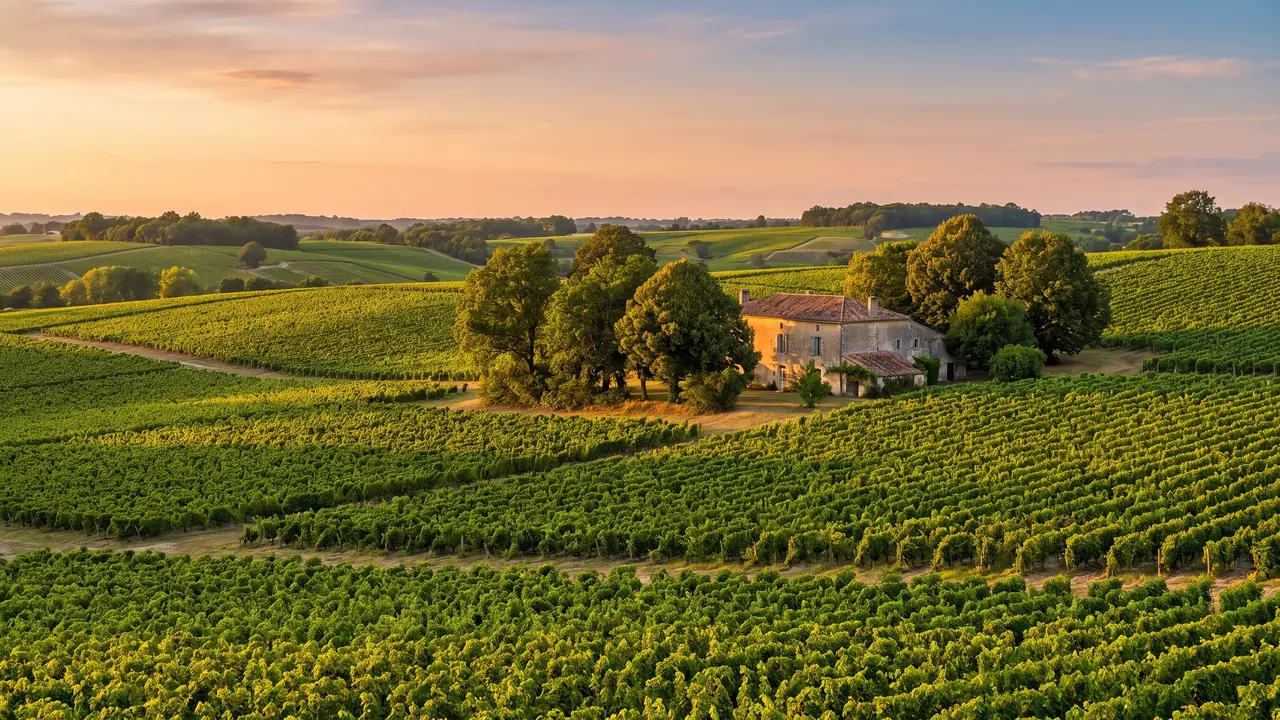
Like much of the Saintonge region, Asnières-la-Giraud is a wine-growing area—but not just any wine-growing area. The town is located in the cru of the Fine Woods in the Cognac appellation, right on the edge of the Good Woods. The soil there is "groie", this characteristic stony clay-limestone soil, which lies on the Tithonian limestone plateau. The vines grown here are not intended to produce table wine: they yield white wines that are high in acidity and low in alcohol, the raw material for the distillation which will be used to make cognac. Understanding where Asnières fits into the mosaic of wine regions means understanding the story told by the landscape you pass through as you approach the village.
The Six Cognac Grape Varieties and the Role of Fins Bois
The Cognac appellation is divided into six crus, ranked according to the nature of their soils. At the heart of the region, Grande Champagne and Petite Champagne—with their chalky soils—produce the finest eaux-de-vie, which age most slowly; the Borderies constitute the smallest cru; next come the Fins Bois, the Bons Bois, and finally the Bois ordinaires, as one moves further from the center. The Fins Bois, where Asnières-la-Giraud is located, form the largest of the six crus: they surround the Champagne regions and produce eaux-de-vie that are rounder, open up more quickly, and often have fruity notes. Its location within this terroir, on the border of the Bons Bois, places the village within the broader geography of Charente eaux-de-vie, without occupying its chalky heart.
Pineau des Charentes, a pioneer among AOCs
From the same region comes another treasure of the Charente: the Pineau des Charentes. It is a fortified wine produced by transfer, that is, by halting the fermentation of fresh grape must by addingcognac brandy; it comes in the following the same six vintages than cognac. Its history holds a hidden gem that connoisseurs often overlook: Pineau des Charentes was the First AOC for French liqueur wine, recognized on October 12, 1945. In other words, this regional wine, long known only to a select few, was a true regulatory pioneer, paving the way for the country’s other liqueur wines. Served chilled as an aperitif—whether white or rosé—it is the most accessible ambassador of Charente’s winemaking expertise—and the perfect companion for exploring the Asnières region.
Where to Dine Around Asnières
It’s important to note that you can’t actually taste cognac in Asnières-la-Giraud itself, since the village has neither a house open to the public nor an ecomuseum. All the tasting venues are located in the surrounding area. The Cognac Ecomuseum, which traces the history of brandy and distillation, is located in Migron, at the Domaine Tesseron. In Saint-Jean-d’Angély, seven kilometers away, two distilleries welcome visitors: Louis Bouron and René Luc Chabasse. It is therefore within a few kilometers of the village—and not in the village itself—that you can continue exploring the region with a tour of the cellars and a tasting. This is where a chauffeur service really comes in handy: it allows you to taste cognac and Pineau with complete peace of mind, without having to get behind the wheel.
Saint-Jean-d'Angély and its Royal Abbey (UNESCO)
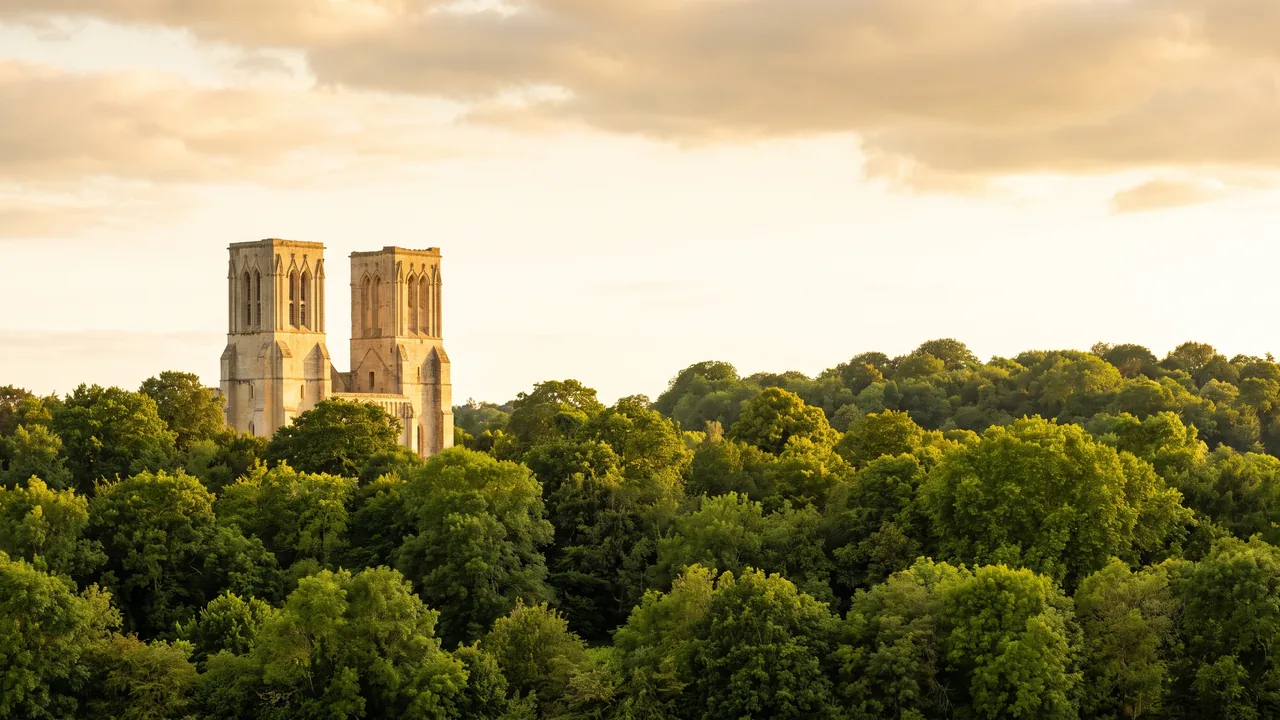
Seven kilometers from Asnières-la-Giraud, in the neighboring town of Saint-Jean-d'Angély (INSEE 17347, approximately 6,784 residents, the district seat), is home to the area’s major heritage event: theRoyal Abbey of Saint John the Baptist. This alone is reason enough to visit the Vals de Saintonge, and it is Listed as a UNESCO World Heritage Site since 1998, under the heading “ The Ways of St. James in France ". The city was, in fact, a stop on the via Turonensis, the Tours Route, between Aulnay and Saintes—one of the major pilgrimage routes to Santiago de Compostela that led pilgrims to Spain. Here are the facts, often distorted by tourist guides, set straight.
An abbey founded in the 9th century, not in 1010
The Official Notice from the City of Saint-Jean-d'Angély dates the founding of the Benedictine abbey to IXe century by Pepin Ier of Aquitaine and the rediscovery of the relic in 1010 (accessed July 24, 2026). It does not specify the exact year 817; the guide therefore uses the century attested by this primary source.
The Unfinished Towers of the 1741 Construction Site
Both towers belong to the new classical abbey church, not to the Gothic building that was destroyed in the 16th century. The abbey’s official visitor guide states that the cornerstone was laid on September 14, 1741, and that the Revolution halted construction, leaving the building unfinished (accessed July 24, 2026).
The Head of Saint John the Baptist, a Lost Relic
What remains of the famous relic? Nothing visible—and that must be made clear. The account of the Head of Saint John the Baptist, which, according to tradition, was recorded by Pepin of Aquitaine and then “rediscovered” in 1010, falls under the category of hagiographic account — a shrine legend, like so many that pilgrimage towns fostered in the Middle Ages. The relic itself has destroyed in the fire of 1568, during the Protestant sacking that also destroyed the Gothic abbey church. Today, therefore, we visit the remnant of a place of worship, not the object that gave rise to it. This distinction in no way diminishes the power of the place: it was indeed this legendary relic that drew pilgrims in droves, brought prosperity to the city, and, centuries later, led to the abbey’s designation as a World Heritage Site. The legend shaped a real city.
What is there to do in Asnières-la-Giraud?
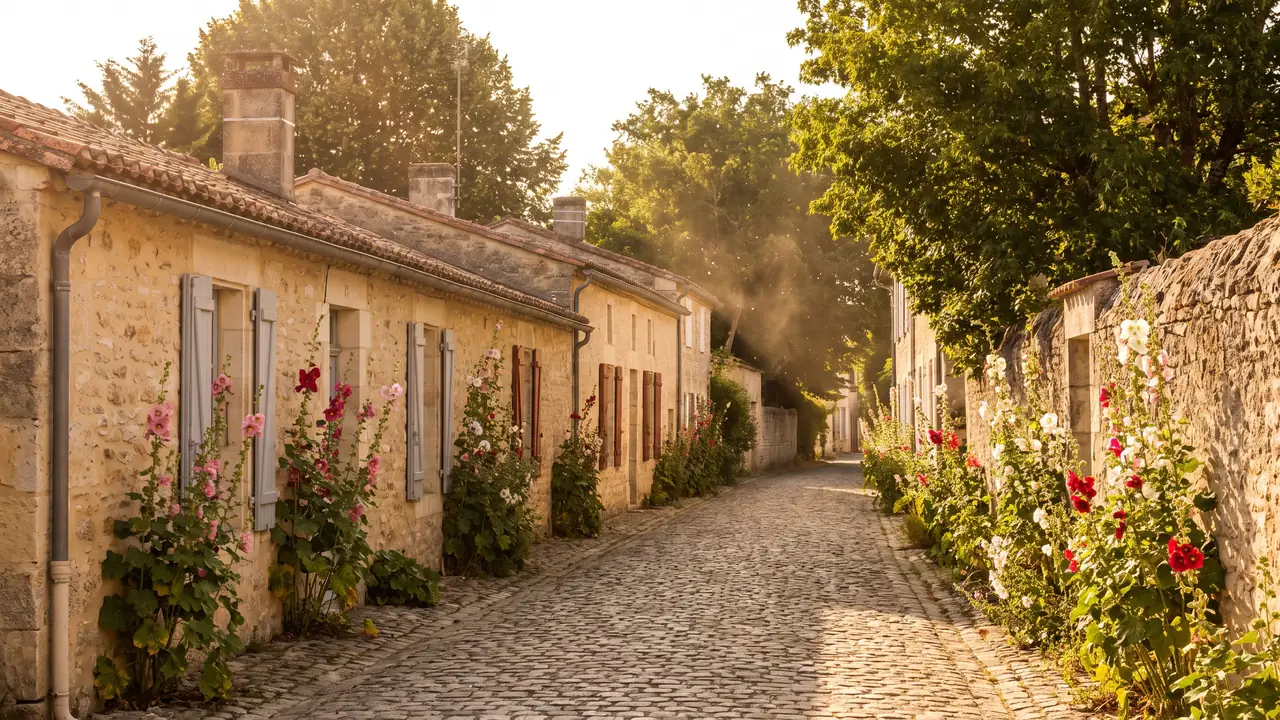
In Asnières-la-Giraud itself, the itinerary is short, and you just have to accept that: you visit the Church of Saint-Médard and its small carved bestiary, stroll through the village’s pale-stone alleyways, and get a feel for the surrounding Fins Bois wine-growing region. It’s a countryside stopover, not a heritage theme park. Most of the activities take place in the immediate vicinity, within a radius of a few kilometers—and that’s the whole point of a visit to the Vals de Saintonge, where the heritage is scattered from village to village. Seven kilometers away, Saint-Jean-d’Angély is home to the royal abbey, markets, canoeing on the Boutonne River, and cognac houses. A little further on, Fenioux preserves its “lantern of the dead,” Migron its cognac eco-museum, and Saintes its Roman monuments. Here, honestly listed, are the area’s main attractions.
- See the Saint-Médard Church in Asnières: In the heart of the village, look for the Romanesque apse wall and the three 12th-century windowse century and the two carved bases—an animal with a human head and a mermaid.
- Visit the Royal Abbey of Saint-Jean-d'Angély (~7 km): its unfinished towers from the 1741 construction project, listed by UNESCO as part of the Routes of Santiago de Compostela.
- Going to the Market in Saint-Jean-d'Angély (~7 km): Wednesday and Saturday mornings at Place du Marché, Sunday mornings at Place André-Lemoyne, and the fair on the 3rde the Saturday of the month.
- Canoeing or kayaking down the Boutonne River (~7 km): with the Kayak Club Angérien, at the Bernouët lake—routes ranging from 5 to 15 km, including Saint-Jean → Tonnay-Boutonne (15 km, ~6 hrs, 2 locks).
- Taste cognac and Pineau des Charentes: at the Louis Bouron and René Luc Chabasse distilleries in Saint-Jean-d'Angély, or at the Cognac Ecomuseum in Migron (Domaine Tesseron).
- Admire the Fenioux Lantern of the Dead: a listed Romanesque monument featuring a cluster of 11 columns and a staircase with 38 steps.
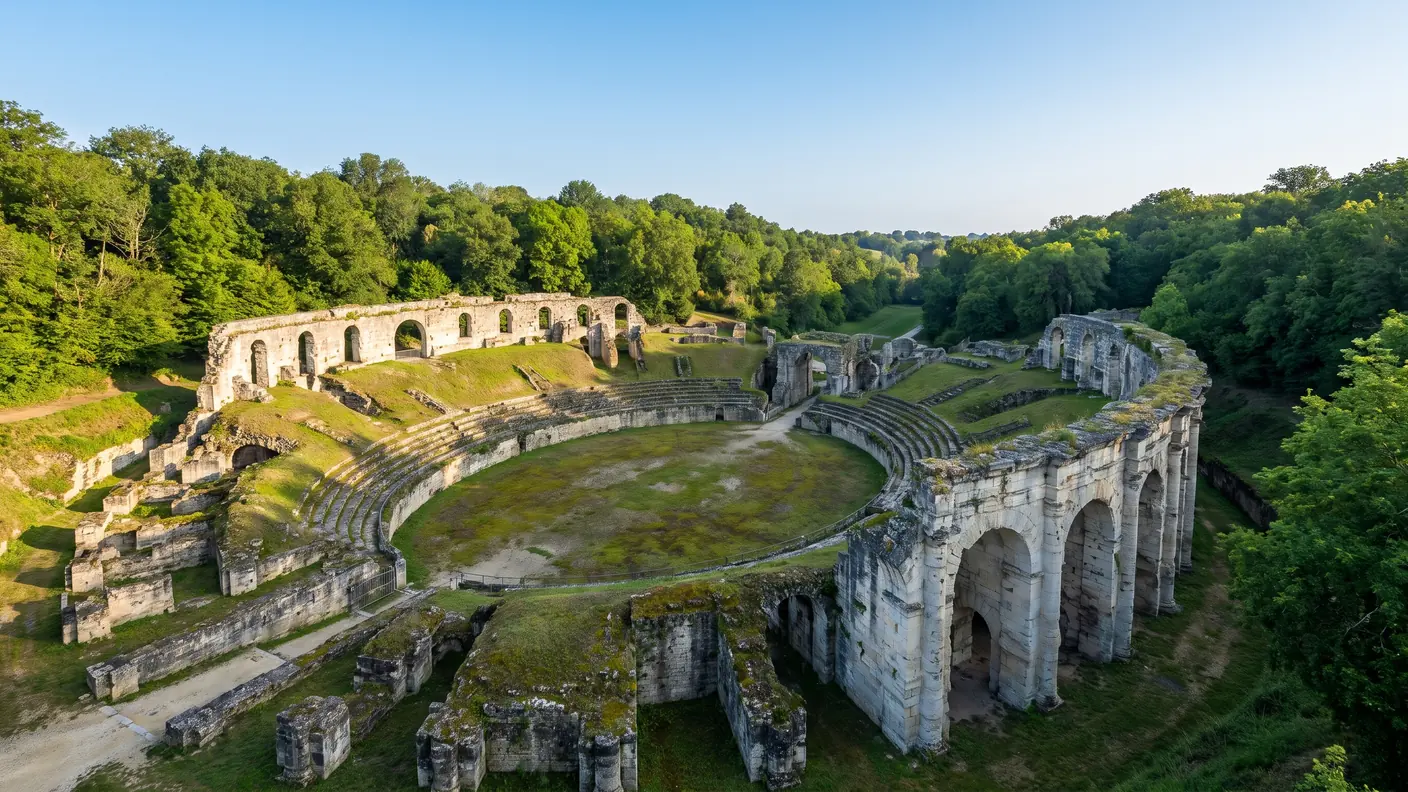
- Explore Saintes la Romaine (~25 km): Gallo-Roman amphitheater, Arch of Germanicus, Saint-Saloine thermal baths.
| Activity | Where / When | Good to Know |
|---|---|---|
| Saint-Médard Church | Asnières-la-Giraud, town center | Local heritage, unlisted; look up to spot the carved bases |
| Royal Abbey | Saint-Jean-d'Angély (~7 km) | UNESCO 1998; unfinished towers from 1741 |
| Markets & Fairs | Saint-Jean-d'Angély, Wed. & Sat. mornings, Sun. mornings | Fair on the 3rde the Saturday of the month |
| Canoeing on the Boutonne River | Saint-Jean-d'Angély, Bernouët Lake | Angérien Kayak Club; 5–15 km route |
| Cognac & Pineau | Saint-Jean-d'Angély (Bouron, Chabasse) · Migron (eco-museum) | Nothing in Asnières itself; an executive car service is convenient for dining out |
| Lantern of the Dead | Fenioux (area) | Designated a historic monument in 1862; Saintonge Romanesque architecture |
| Roman Saintes | Saintes (~25 km) | Amphitheater, Arch of Germanicus, Baths |
Fenioux and the Lantern of the Dead
Among the area's attractions, one is particularly worth a detour: the Fenioux's Lantern of the Dead. Note the location—it is in the town of Fenioux, in this area, and not in Asnières-la-Giraud. It is a unique monument in theSaintonge Romanesque art, dated XIIe century, and it enjoys a status that the church in Asnières does not have: it is Listed as a Historic Monument since 1862 (Mérimée entry PA00104685). Graveyard lanterns—hollow towers with openwork tops where a flame was raised to signal the cemetery to travelers and the living—are rare in France, and the one in Fenioux ranks among the most remarkable in the Romanesque region of Saintonge. It stands just a few minutes’ drive from Asnières, set amid the same landscape of plains and vineyards, and serves as a natural extension of any exploration of the area.
Eleven columns and thirty-eight steps
The piece is striking for its delicacy: the lantern consists of a a group of eleven columns brought together, inside which a a staircase with thirty-eight steps allowed access to the summit to light the fire there. This slender, almost graphic architecture makes it a unique feature in the region’s Romanesque landscape. A practical note: there is several All Souls' Day lanterns in France — we know of some in Cellefrouin, in Charente, in Sarlat in Périgord, and elsewhere — so we must always specify “the lantern of the dead” by Fenioux "so as not to confuse it with anything else. It is yet another landmark in this land of churches and Romanesque monuments that contributes to the understated charm of the Vals de Saintonge and their surroundings."
A twin bridge on the A10 highway
The Fenioux lantern holds an unexpected story. In 1994, a replica of the structure was built at a rest area on the A10 highway—so that thousands of drivers pass by it every year, without realizing they’re seeing a copy of a Romanesque monument from the region they’re traveling through. It’s a curious dialogue between medieval heritage and modern infrastructure, as if the old lantern were also watching over the hurried travelers of the 21st century. The Fenioux lantern is sometimes associated with a “Druidic altar”: this tradition should be taken with a grain of salt, as it has not been archaeologically proven. Older remains are said to have been found at the site, though there is no evidence to confirm this—the story, once again, belongs more to legend than to established history.
La Boutonne and the Vals de Saintonge
The Asnières-la-Giraud region is a landscape of water and plains, but here again, it is important to be precise. As has been said, the town is not located on the Boutonne River. It belongs to the basin of this river—a tributary of the Charente—without the river flowing through it. The only watercourse in the area is, to the west, the Loubat Stream, a small tributary that joins the Boutonne further north. This is a useful distinction: the canoeing and kayaking, the locks and waterways that people readily associate with this country are found in Saint-Jean-d'Angély, on the Boutonne River itself, and not in the village of Asnières.
The Loubat and the Boutonne Basin
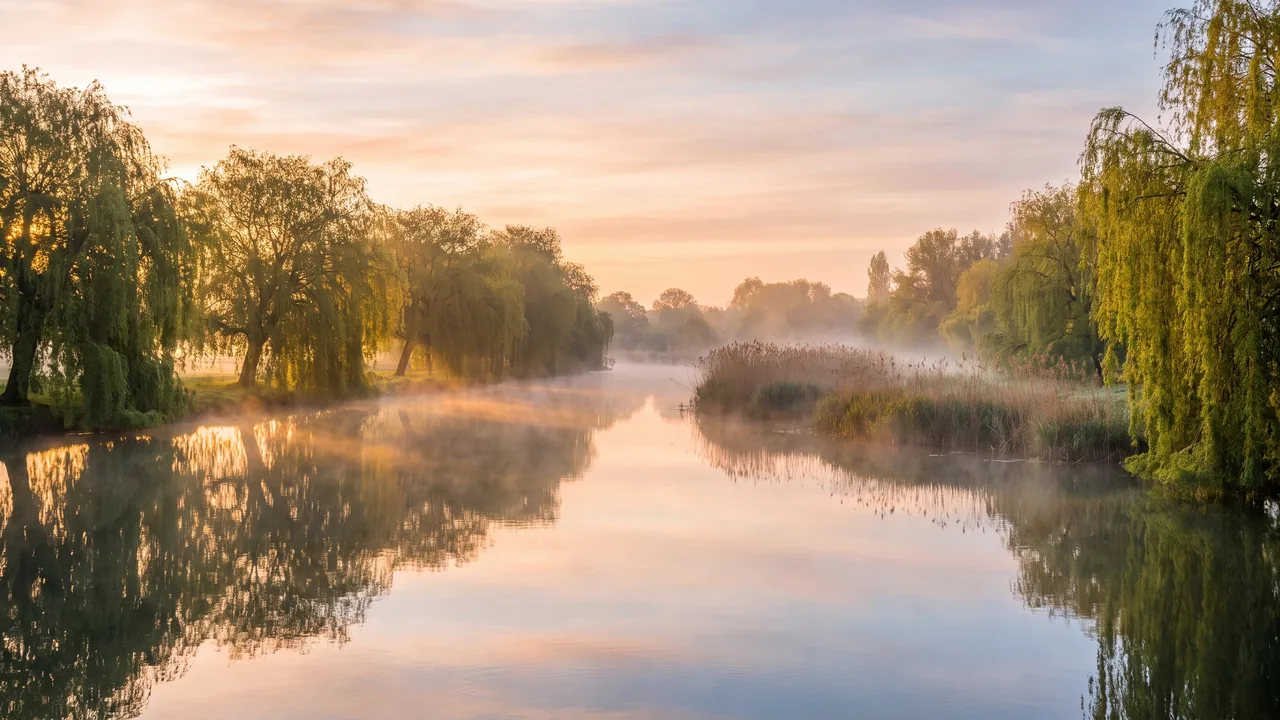
The Boutonne Valley, a little further to the west and north, features wet meadows and natural areas of great ecological interest, which are protected as such within the Natura 2000 network. It is a landscape of willows, reed beds, and waterfowl, where the river meanders slowly through the meadows. The Loubat, which drains Asnières, is part of this same river system, albeit on a smaller scale. For visitors, keeping this geography in mind helps avoid false expectations: people don’t come to Asnières to go out on the water, but they can easily reach, within a few minutes’ drive, the access points to the Boutonne on the Saint-Jean-d’Angély side, where water activities are organized and supervised.
A land of plains, vineyards, and farms
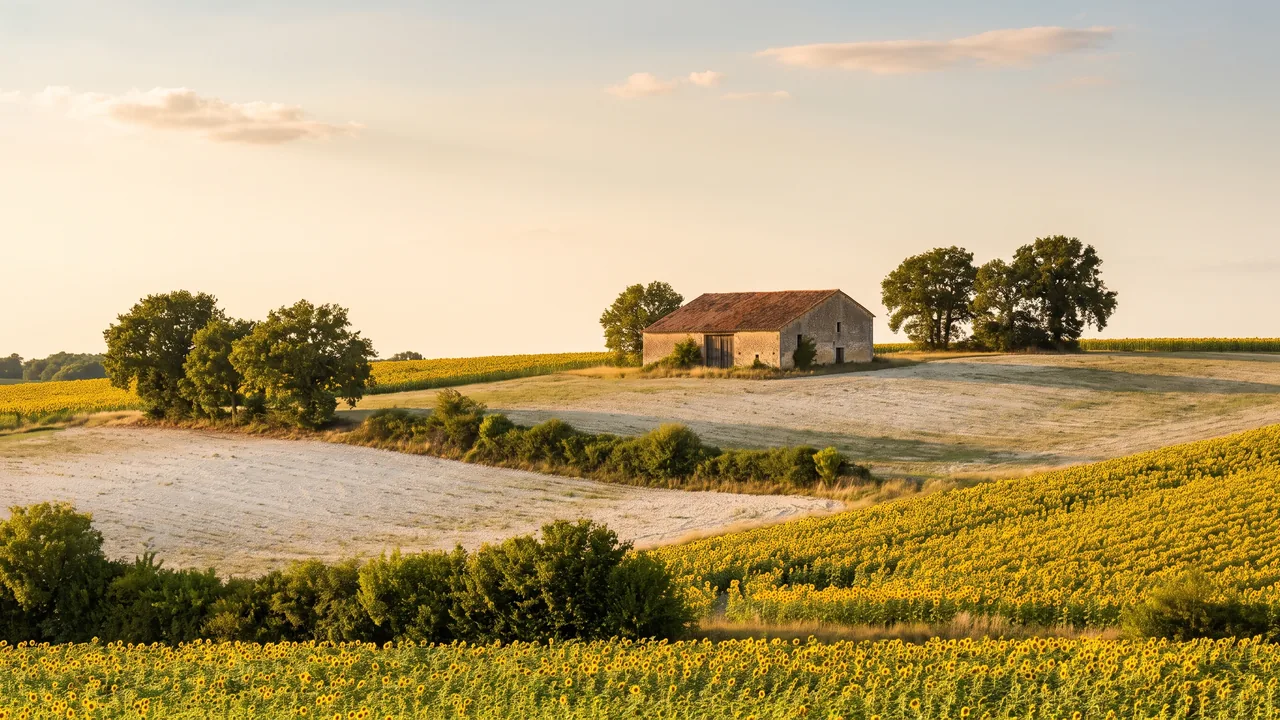
Beyond the water, the grain-growing plains and Cognac vineyards dominate the landscape of the Vals de Saintonge around the village: vast open fields dotted with hedgerows and stone barns, and rows of vines on the Groie hillsides. The area has deep agricultural roots, as evidenced by the remnants of local history—the old dairy cooperative dating back to 1923, the scattered farms, and the memory of a golden age of dairy and grain farming. The area is perfect for leisurely strolls or bike rides along the small roads and paths connecting the hamlets. It is a region that does not reveal itself at first glance, but one that rewards a leisurely pace: the charm of the Vals de Saintonge lies in this unpretentious, down-to-earth countryside, where the horizon remains vast. Here, more than anywhere else, one can appreciate what rural France was like between the two world wars: a close-knit community, structured around its train station and cooperative, living off its fields and vineyards. The train station, opened in 1911, and the dairy, which operated from 1923 to 1960, preserve this legacy, as do the stone farmhouses dotted among the fields. Visitors who take the time to drive slowly along the small roads, stopping in front of a barn or a row of vines, grasp the essence of this region: not just another place to check off a list, but an atmosphere—that of a peaceful, agricultural Saintonge that the major highways bypass.
Around Asnières: Saintes and Cognac
As we’ve seen, Asnières-la-Giraud’s strength lies in its role as a hub from which to explore the surrounding area. Two major destinations in the Charente region are less than a three-quarter-hour drive away and are the perfect way to round out a day in the area: Saintes, the Roman town, and Cognac, the capital of brandy. One recounts twenty centuries of monumental history, while the other opens the doors to its cellars. Together, they transform a simple visit to a village into a true Charentes itinerary.
Saintes-la-Romaine, 25 km away
Located about 25 kilometers away, Saintes—known as Mediolanum Santonum—was the capital of Aquitaine before Bordeaux. The city boasts an exceptional ancient heritage: a Gallo-Roman amphitheater, the Arch of Germanicus—one of the few Roman double-arched structures still standing—a city wall, and the Baths of Saint-Saloine, designated a Historic Monument in 1904. It is one of the richest Roman archaeological complexes in western France, complemented by two gems of Romanesque art listed as UNESCO World Heritage Sites. To plan your visit, check out our guide to Saintes, which provides details on the monuments and how to organize a day there. It’s the perfect cultural stop on the way back to Bordeaux.
Cognac, the capital of brandy, 31 km away
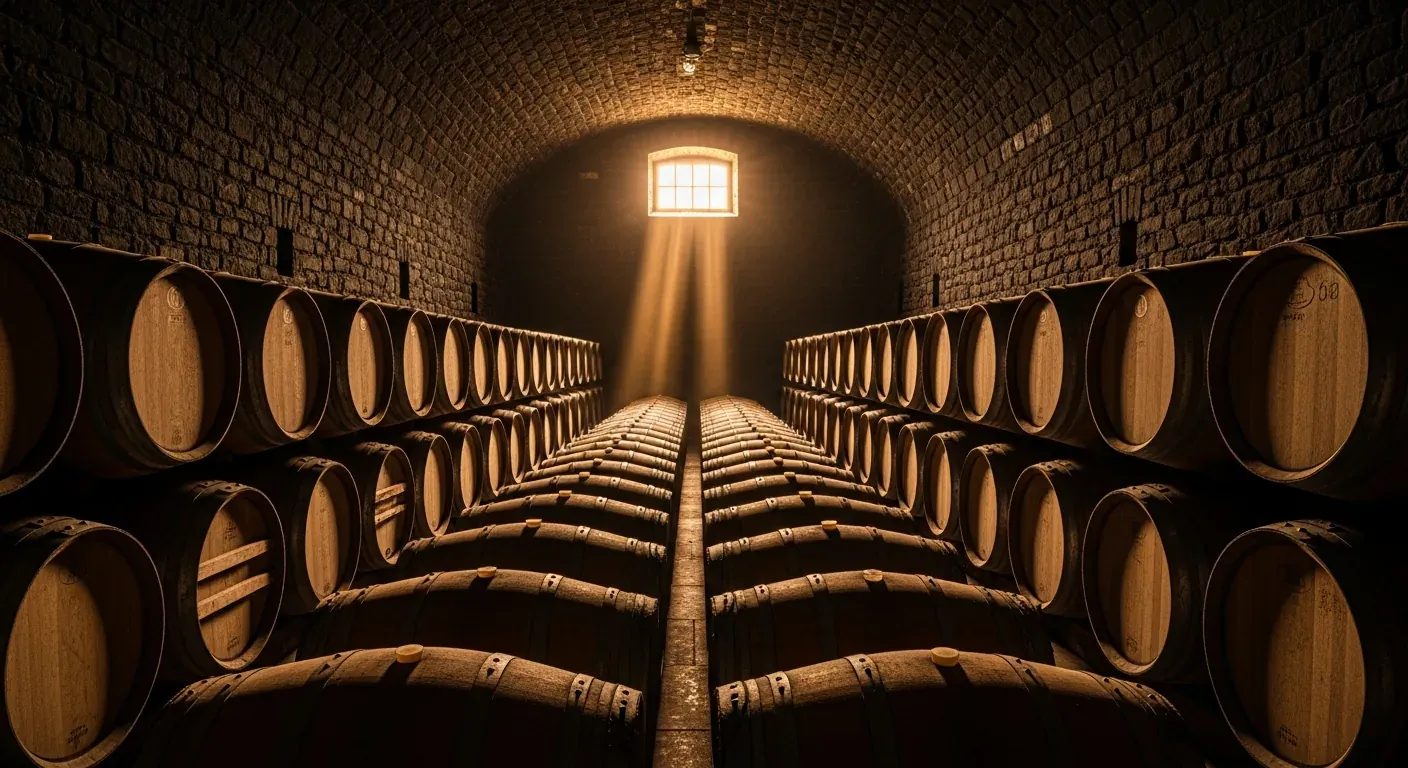
About 31 kilometers away, Cognac lends its name to the world’s most famous brandy. It is here, in the cellars where the barrels age, that the terroir of the Fins Bois—the very same that surrounds Asnières—reaches its full potential. The town boasts prestigious houses, cellars open to visitors, and museums dedicated to distillation. It serves as the perfect next stop for those whose appetite has been whetted by the vineyards of the Vals de Saintonge. Our guide to Cognac introduces the houses, the Charente method, and the six crus. Located between Saintes to the southwest and Cognac to the south, Asnières-la-Giraud is thus a convenient starting point for exploring the entire Charente region.
| Destination | Distance | Must-See |
|---|---|---|
| Saint-Jean-d'Angély | ≈ 7 km | UNESCO-designated Royal Abbey, markets, canoeing |
| Saintes | ≈ 25 km | Amphitheater, Arch of Germanicus, Baths |
| Cognac | ≈ 31 km | Wine cellars, distilleries, museums |
Getting to Asnières-la-Giraud from Bordeaux
The easiest way to explore Asnières-la-Giraud and the Vals de Saintonge from Bordeaux is to take the direct route via the A10, Exit 34. With a private chauffeur, you’ll depart from your home or the Bordeaux-Mérignac Airport and arrive right in the heart of the village—or directly at the Abbey of Saint-Jean-d’Angély—without having to worry about parking or train connections. For a rural village that currently lacks convenient rail service, this is by far the most comfortable option—and the only one that allows you to easily visit several destinations in the area in a single day.
How much does the ride cost?
The route from Bordeaux to Asnières-la-Giraud covers about 151 km in 1 hour 40 minutes via the A10. Our rates starts at €245 During the day, for a sedan carrying up to 3 passengers, a fixed price confirmed in writing before departure—no meter, no surprises upon arrival. The exact quote depends on the specific pickup address, the time of day (a surcharge applies at night, on weekends, and on holidays), and the vehicle you choose; request a quote online for a quick response. A detour to Saint-Jean-d’Angély, Saintes, or a cognac tasting can easily be added to the same transfer.
| Route | Distance | Duration | As soon as |
|---|---|---|---|
| Bordeaux → Asnières-la-Giraud | ≈ 151 km | ~1 hr 40 min | 245 € |
| Bordeaux-Mérignac Airport → Asnières-la-Giraud | ≈ 145 km | ~1 hr 35 min | based on a quote |
| Saint-Jean-d'Angély Extension | ≈ 7 km | ~8 min | based on a quote |
Why hire a chauffeured transfer?
A professional chauffeur makes this rural getaway even more enjoyable: you can read, relax, or plan your visit during the ride; you’ll be dropped off as close as possible—in the village, at the royal abbey, or in front of a wine cellar—and picked up wherever you’d like. This is especially valuable for a sprawling destination like the Vals de Saintonge, where attractions are spread across several towns: Asnières, Saint-Jean-d’Angély, Fenioux, Migron, and Saintes. Instead of worrying about navigating the roads and finding parking, you can leave the route to the driver and focus on your visit. This package also allows you to enjoy cognac and Pineau tastings without needing a designated driver. The vehicle is clean, air-conditioned, equipped with water, and driven by a uniformed driver—you travel at your own pace, without being tied to a schedule.
Frequently Asked Questions
How much does a private driver cost from Bordeaux to Asnières-la-Giraud?
The trip from Bordeaux to Asnières-la-Giraud (approximately 151 km, 1 hour 40 minutes via the A10) starts at 323 € during the day for a sedan carrying up to 3 passengers. The price is fixed, confirmed in writing before departure, with no meter. The exact amount depends on the pickup address, the time of day, and the vehicle selected; a surcharge applies at night, on weekends, and on holidays.
What is there to do in Asnières-la-Giraud?
In the village itself, visitors can explore the Church of Saint-Médard and its carved bases, and stroll through the narrow streets of pale stone surrounded by Cognac vineyards. The main attractions are located nearby: the Royal Abbey of Saint-Jean-d’Angély (~7 km, UNESCO), the markets and canoeing on the Boutonne River, the “lanterne des morts” in Fenioux, the Cognac Ecomuseum in Migron, and the Roman town of Saintes, 25 km away.
Where might the name Asnières-la-Giraud come from?
One theory links “Asnières” to Latin Asinarias, associated with donkey breeding. In the absence of primary historical sources specific to the municipality, this connection should not be presented as a certainty. The INSEE geographic profile confirms only the administrative name Asnières-la-Giraud and the municipal code 17022.
Is the Saint-Médard Church in Asnières-la-Giraud designated as a historic monument?
No. The Saint-Médard Church is not protected as a Historic Monument: it is a local heritage site that is not classified. Of Romanesque origin (12th century), the only parts from that period that have been preserved are the apse wall and three Romanesque windows; it was restored in the 16th century and its façade was redesigned in the 19th century. The “Saint-Médard” historic monument listings currently in circulation refer to other municipalities with the same name.
Where is Asnières-la-Giraud located?
Asnières-la-Giraud is a village in Charente-Maritime (INSEE code 17022, ZIP code 17400), in Nouvelle-Aquitaine, in the Saint-Jean-d'Angély district and the Matha canton. It is part of the Vals de Saintonge Community, covers 18.64 km², and has a population of approximately 977. It is located 7 kilometers from Saint-Jean-d'Angély, 25 km from Saintes, and 31 km from Cognac.
Was the Abbey of Saint-Jean-d'Angély founded in 1010?
No. The official municipal record dates the founding of the Benedictine abbey to the 9th century by Pepin I of Aquitaine. The date 1010 refers to the rediscovery of the relic. The abbey has been listed as a UNESCO World Heritage Site since 1998. Source: UNESCO, Property 868.
Can you taste cognac in Asnières-la-Giraud?
Not in the village itself, which has neither a house open to the public nor an eco-museum. Asnières-la-Giraud, however, is located within the Fins Bois appellation of the Cognac region. Tastings take place in the surrounding area: the Louis Bouron and René Luc Chabasse estates in Saint-Jean-d’Angély (~7 km), and the Cognac Ecomuseum in Migron (Domaine Tesseron). You can also taste Pineau des Charentes there, the first French AOC for fortified wine, recognized on October 12, 1945.
Is canoeing available in Asnières-la-Giraud?
No, not in Asnières itself: the town isn’t located along the Boutonne River; it’s drained only by the small Loubat stream. Canoeing and kayaking are available in Saint-Jean-d'Angély (~7 km), on the Boutonne River, with the Kayak Club Angérien at the Bernouët reservoir. The routes range from 5 to 15 km, including Saint-Jean → Tonnay-Boutonne (15 km, about 6 hours, 2 locks).
What is the "Lantern of the Dead" of Fenioux?
It is a 12th-century Romanesque monument in the Saintonge style, located in the neighboring town of Fenioux (not in Asnières). It has been designated a Historic Monument since 1862. Source: POP, entry PA00104685. It consists of a cluster of eleven columns enclosing a staircase of thirty-eight steps. A replica was built in 1994 at a rest area on the A10 highway. Since there are several “lanternes des morts” in France, it is always specified as “of Fenioux.”
What is there to see around Asnières-la-Giraud?
The area has plenty to offer: the royal abbey and markets of Saint-Jean-d'Angély (~7 km), canoeing on the Boutonne River, the “Lantern of the Dead” in Fenioux, and the Cognac Ecomuseum in Migron. A little further away, the Roman town of Saintes (~25 km) with its amphitheater and the Arch of Germanicus, and Cognac (~31 km), the capital of brandy. Asnières is an ideal base for exploring the Vals de Saintonge.
How long does it take to get from Bordeaux to Asnières-la-Giraud?
Allow about 1 hour and 40 minutes by car, or 151 km north on the A10 highway, taking Exit 34. The route is direct all the way to the outskirts of Saint-Jean-d'Angély, from where a few minutes’ drive on local roads will take you to the village. It’s the perfect distance for a day trip to the Vals de Saintonge, allowing you to combine several stops in the area.
Are the towers of Saint-Jean-d'Angély Abbey Gothic?
No. It is important to distinguish between two buildings: the Gothic abbey church was destroyed by the Protestants in 1568, during the Wars of Religion. The tall towers visible today belong to a neoclassical abbey church, construction of which began in 1741 but remained unfinished, first due to a lack of funds and then because of the Revolution. These towers were even used as a prison before becoming a library and a music school.
Why choose a chauffeur service to visit Asnières and the Vals de Saintonge?
Because the area’s heritage sites are scattered across several towns—Asnières, Saint-Jean-d’Angély, Fenioux, Migron, and Saintes—and the village has no convenient rail service. an executive car service will drop you off as close as possible to each site, manage the itinerary and parking, and allow you to enjoy cognac and Pineau tastings without needing a designated driver. The vehicle is air-conditioned, with water on board, and the price is fixed and confirmed in writing.
Further Reading
- The Rome of Aquitaine: see the Saintes Guide (Roman amphitheater and Arch of Germanicus, 25 minutes from Asnières)
- The Capital of Brandy: See the Cognac Guide (the houses and the six crus, including the Fins Bois d'Asnières)
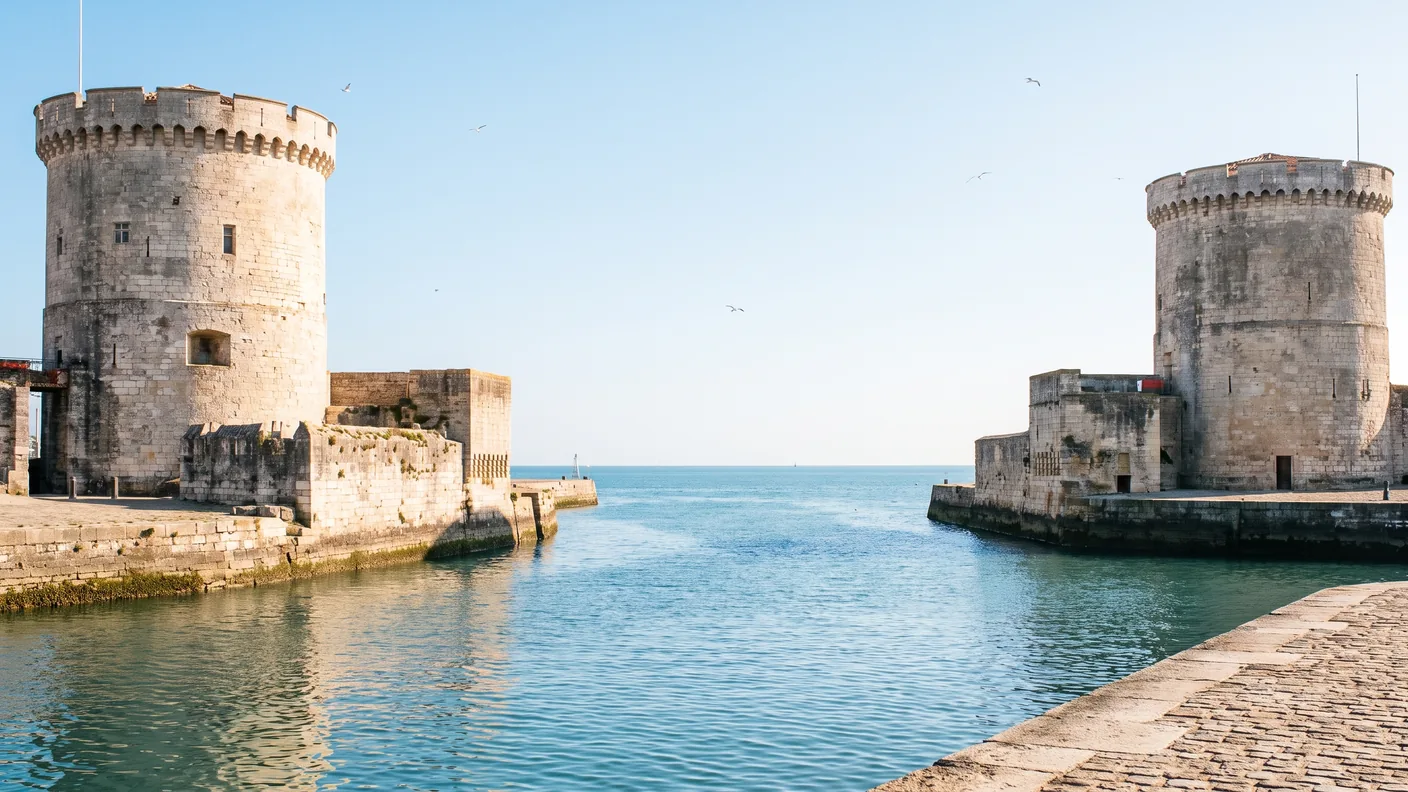
- The Old Port and the towers: see the Guide to La Rochelle (north of the Charentes region, on the Atlantic coast)
- Arrange your transfer: check the fixed-price route from Bordeaux to Asnières-la-Giraud, then request a written quote.
Sources and References
- Vals de Saintonge Tourist Office — Asnières-la-Giraud, Saint-Jean-d'Angély, Events Calendar
- Saint-Jean-d'Angély — Heritage & Royal Abbey — Abbey, Unfinished Towers, History
- UNESCO — The Routes of Santiago de Compostela in France — Property No. 868, inscribed in 1998 (Saint-Jean-d'Angély)
- Mérimée Database / POP (Ministry of Culture) — Fenioux “Lantern of the Dead” (PA00104685)
- INSEE — Municipality of Asnières-la-Giraud (17022) — Demographics
- INAO — Pineau des Charentes / Cognac — vintages, AOC
Article updated in July 2026.
On the Way to the Vals de Saintonge
Direct transfer from Bordeaux (~1 hour 40 minutes via the A10) to Asnières-la-Giraud, Saint-Jean-d'Angély, and the Cognac vineyards. Fixed-price quote in writing, with no obligation.