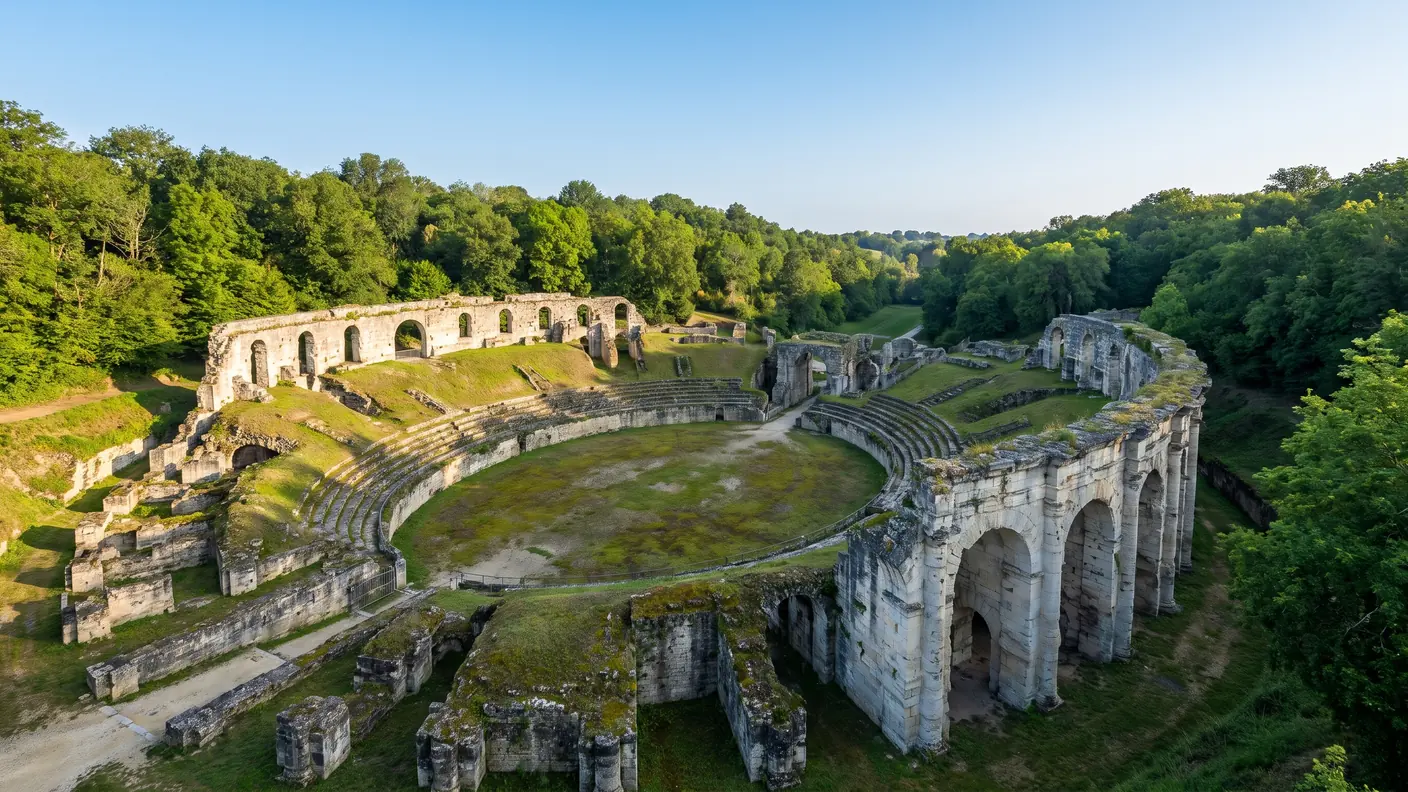
Saintes from Bordeaux: the Rome of Aquitaine on the Charente
A 1st-century amphitheater, a Roman arch that was moved stone by stone, and two Romanesque shrines listed as UNESCO World Heritage Sites. Once the capital of Aquitaine before Bordeaux, Saintes boasts twenty centuries of history on both banks of the Charente River—just 1 hour and 24 minutes from Bordeaux.
Saintes at a Glance
Saintes (Charente-Maritime), the ancient Mediolanum Santonum, was the capital in the 1st century of the province of Aquitaine in Gaul—before Bordeaux took over. Here you can visit the largest Roman amphitheater in western Gaul, an arch dedicated to Tiberius, two gems of Saintonge Romanesque art, and long quays where solar-powered boats glide by. Allow ~118 km from Bordeaux, about 1 hour and 24 minutes via the A10, or from 208 € for private chauffeur service, door-to-door.
| Landmark | Details |
|---|---|
| Department | Charente-Maritime (17) · Nouvelle-Aquitaine |
| Status | Subprefecture · historic capital of Saintonge |
| Population | ≈ 25,400 residents (Saintais) |
| Nickname | "The Rome of Aquitaine" · City of Art and History |
| Must-Sees | Amphitheater · Arch of Germanicus · Abbaye aux Dames · Basilica of Saint Eutrope |
| From Bordeaux | ≈ 118 km · ~1 hr 24 min via the A10 · starting at 208 € by chauffeured transfer |
Many travelers pass through Saintes without stopping, thinking it’s just a stopover on the way to La Rochelle. That’s a mistake. Few French cities pack, within such a small area, a Roman amphitheater, an ancient arch, a Benedictine abbey, and a crypt listed as a World Heritage Site. The entire city lies between the two banks of a peaceful river, the Charente, and can be explored on foot in a single day.
This guide tells you everything you need to know before you visit: what Mediolanum Santonum was and why it deserves its nickname, “the Rome of Aquitaine”; which monuments to see first; how to plan a day exploring both banks of the river; what to do in the surrounding area—and how to arrive well-rested from Bordeaux, without worrying about parking or connecting transportation. Every fact mentioned here has been verified using the official sources listed at the end of the article.
Where is Saintes located?
Saintes stretches along both banks of the Charente River, halfway between Cognac and the Atlantic Ocean, in the heart of a region of white limestone and vineyards known as Saintonge. The city was once its historic capital and remains today the second-largest urban center in Charente-Maritime, behind La Rochelle, with approximately 25,400 residents (25,363 according to the latest census). Its residents are known as Saintais. As the department’s subprefecture, it proudly bears the dual designation of “City of Art and History,” a recognition achieved in stages: first designated a “City of Art” in 1967, it earned the more rigorous “City of Art and History” designation in 1986, which commits it to promoting and bringing its heritage to life for both visitors and residents.
The geography of Saintes can be summed up in a single image: a tranquil river and two banks facing each other. On the left bank lie the old town, Saint-Pierre Cathedral, Saint-Eutrope Basilica, and the amphitheater; on the right bank lie Place Bassompierre, the Arch of Germanicus, and the Abbaye aux Dames. Between the two, the Charente River and its redeveloped riverfront serve as a connecting thread: you move from one monument to the next by crossing a bridge, without ever losing sight of the river. It is this compact layout—rare for a city with such a long history—that makes exploring on foot so enjoyable and allows you to see everything in a single day.
How far is it from Bordeaux?
From Bordeaux, it’s about 118 km and a 1-hour, 24-minute drive north on the A10 highway. It’s one of the major historic cities easiest to reach from Bordeaux: the route is direct, with no detours or changes in direction, and takes you to the foot of the amphitheater or the riverfront in just over an hour. The highway exit leads directly into the city, with no tedious crossings or traffic bottlenecks, making for a particularly comfortable day trip from Bordeaux.
| From Saintes | Driving distance | Duration |
|---|---|---|
| Cognac | ≈ 28 km | ~35 min |
| Royan (Ocean) | ≈ 41 km | ~40 min |
| Rochefort | ≈ 45 km | ~35 min |
| La Rochelle | ≈ 75 km | ~1 hour |
| Bordeaux | ≈ 118 km | ~1 hr 24 min |
This central location is nothing new. Under Roman rule, Mediolanum Santonum was a key junction on the Via Agrippa, the great imperial road that connected the Atlantic coast to Lugdunum—Lyon, the capital of Gaul. The city controlled the crossing of the Charente River and the routes leading to the southwest. Two thousand years later, it remains a natural crossing point between the Bordeaux region, the Gironde estuary, and the Atlantic ports, at the crossroads of the routes to Cognac, Royan, Rochefort, and La Rochelle. This is what makes it such a convenient base for day trips: one day is enough to take in the highlights, and it opens the door to the entire Charente-Maritime region.
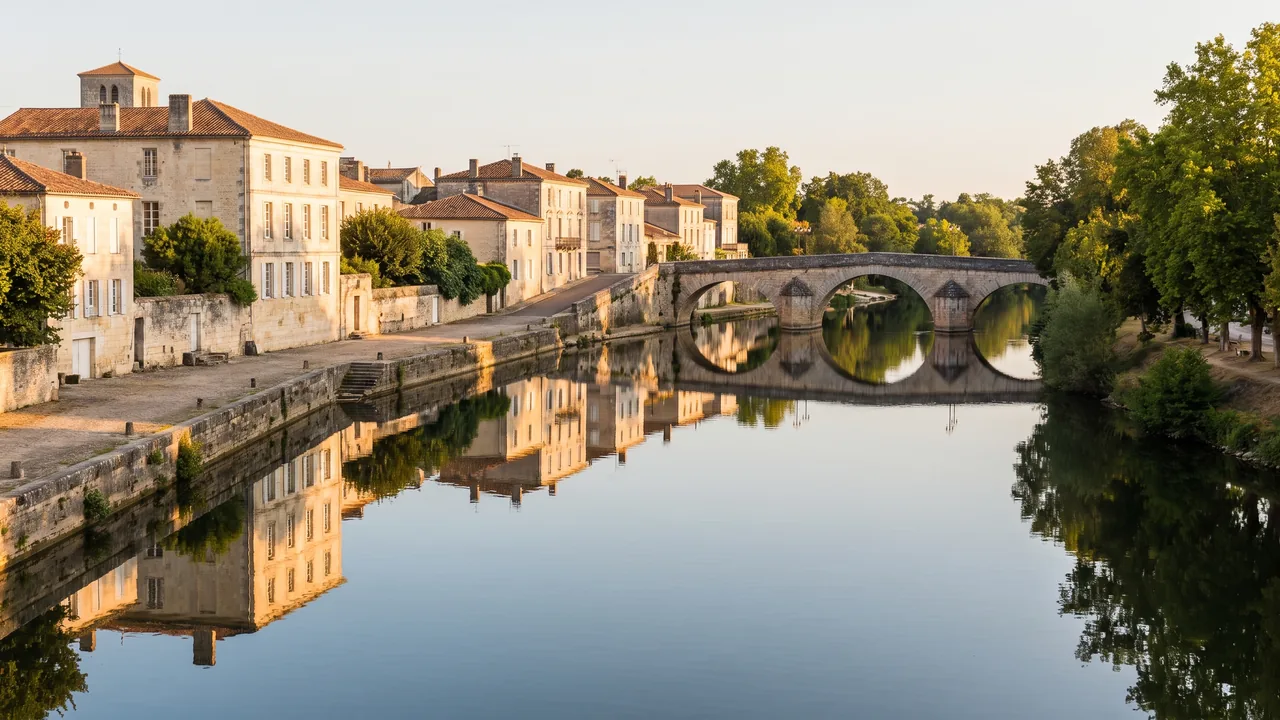
Mediolanum Santonum, the capital before Bordeaux
In the 1st century AD, Saintes was not a small town: it was the capital of the province of Aquitaine in Gaul, and the capital of the Santons, the Gallic people who gave their name to the Saintonge region. At its peak, between the late 1st century BC and the early 2nd century, the city has more than 15,000 residents spanning about 100 hectares—a metropolis on the scale of Roman Gaul, boasting monuments befitting its status.
Mediolanum Santonum dominated Roman Aquitaine long before Burdigala—Bordeaux—usurped that position in the 3rd century.
This decline was gradual: initially facing competition from Poitiers, the city finally ceded its position as the leading city in the province to Bordeaux beginning in the 3rd century. But it never forgot its imperial past, and it is this ancient heritage—unique in western France—that gives it its distinctive character today and has earned it the nickname “Rome of Aquitaine.”
The largest amphitheater in western Gaul
The amphitheater is the city’s most iconic landmark. Its tiers follow the contours of a natural valley—an engineering innovation that saved on masonry by making use of the natural terrain—and form an ellipse measuring 126 meters by 102 meters, with an arena approximately 66 meters by 39 meters. Construction began under Augustus and Tiberius and was completed under Emperor Claudius (41–54 AD), a date confirmed by an inscription found on site. It appears on the very first list of Historic Monuments, that of 1840—one of the oldest designations of protection in France.
Its capacity remains a subject of debate: estimates range from 12,000 to 20,000 spectators, with the commonly accepted figure hovering around 15,000 seats. A striking coincidence: that’s roughly the city’s population at its peak. In theory, the entire population of Mediolanum could have sat in its amphitheater. Now covered in grass, the monument is open to the public for free for much of the year; visitors can descend to the level of the arena to appreciate the scale of the bleachers, and the acoustics of the valley serve as a reminder that they are walking through one of the oldest ancient performance venues in Gaul.
The amphitheater is one of the earliest in all of Gaul and the best-preserved in western Gaul (source: City of Saintes, accessed July 24, 2026). The choice of the valley is no mere detail: rather than erecting imposing masonry substructures to support the tiers of seats, as in Nîmes or Arles, the builders excavated and backfilled the slope of a natural valley, letting the natural terrain do most of the work. This economy of means partly explains the monument’s age: as early as the reign of Claudius, builders knew how to construct quickly and on a grand scale by working with the terrain rather than against it. This is also what gives the arena its distinctive silhouette today—half-blended into the landscape—which is very different from the monumental arenas that come to mind.
Here’s a little-known fact: the people of Santons have even left their mark on science. The Santonian, a stage of the Late Cretaceous period dating back about 84 million years, takes its name from Saintes. In other words, the city has lent its name to a geologic time unit recognized worldwide—a legacy few cities can claim, and a nice conversation starter when standing before the region’s limestone cliffs.
Saintes Through the Centuries
To understand Saintes is to trace the history of a city that has never stopped reinventing itself. From the Gallic capital of the Santons to today’s City of Art and History, each era has left its mark—and it is this layering, more than any single monument, that gives the city its charm.
From the Gallic City to the Roman Capital
Even before Rome, the site was already the location of the city of the Santons, one of the most powerful Gallic tribes along the Atlantic coast. During the Empire, it became Mediolanum Santonum, the capital of the vast province of Aquitaine in Gaul, featuring a forum, thermal baths, an aqueduct, and a large amphitheater. Its decline began in the 3rd century, when invasions forced the city to retreat behind a hastily built rampart—a rampart in which a large number of carved stone blocks were reused, blocks that are now on display at the archaeological museum.
This rampart from Late Antiquity stands as a testament to the turning point of an era. To build it quickly, monuments and tombs were dismantled to recover their stones: funerary stelae, cornices, and ornate architectural blocks were used to reinforce a defensive wall, hastily erected during the Late Roman Empire. It is these elements, unearthed during excavations, that today form the remarkable Gallo-Roman lapidary collection at the archaeological museum. A paradox of history: the city that barricaded itself out of fear of invasions has thus bequeathed to us, embedded within its makeshift wall, one of the richest collections of Roman sculpture in western France. What was saved by accident now reads like a stone archive of the early Saintes.
From the Romanesque Middle Ages to the Wars of Religion
During the Middle Ages, Saintes became a major religious center: the Abbaye aux Dames and the Basilica of Saint-Eutrope were built in the 11th and 12th centuries along the Way of St. James, the Saintonge region was dotted with Romanesque churches. The city prospered amid the rivalries between the kings of France and England, before paying a heavy price for the Religious Wars from the 16th century, which ravaged its cathedral. During the Revolution, Saintes experienced administrative retribution: it was Charente-Inférieure Prefecture from 1790 to 1810, before that status was permanently transferred to La Rochelle. Although downgraded to a subprefecture, it retained its court and its role as the capital of the Saintonge region—a cultural status it continues to cultivate today through its designation as a “City of Art and History” and its vibrant music scene.
The Arch of Germanicus, Saved by Victor Hugo
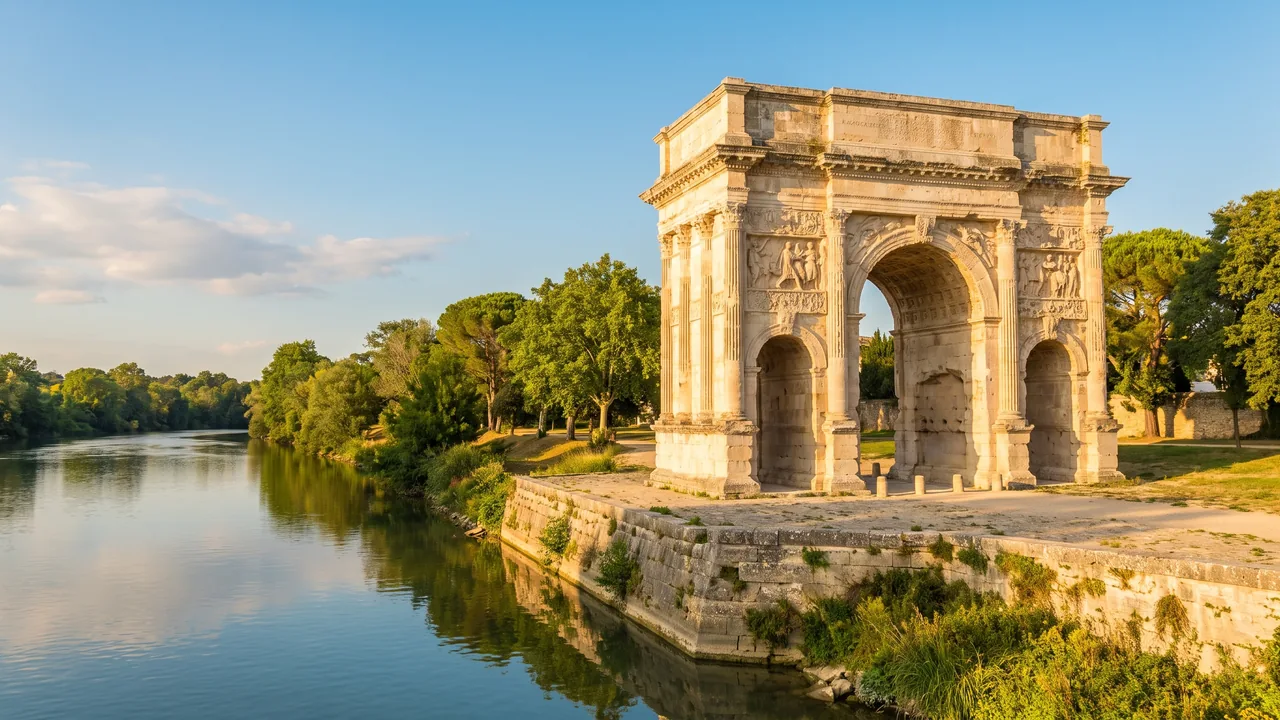
On the right bank, facing the Old City, stands a two-arched Roman arch known as the Arch of Germanicus. The name is misleading and deserves to be corrected—because this arch alone embodies several common misconceptions that are worth unpacking before admiring it.
Neither a triumphal monument nor one dedicated to Germanicus
This is not a triumphal arch: it is a votive and honorary arch, privately funded around 18–19 AD by a wealthy Santonian nobleman, Caius Julius Rufus. It does not commemorate any military victory. Its inscription honors three generations of the imperial family—Tiberius, Drusus, and Germanicus—and Tiberius, the reigning emperor, is its principal dedicatee. Germanicus, who died in the year 19, never reigned: the arch’s popular name is therefore doubly misleading. The inscription even recalls the prince’s prestigious lineage, “grandson of the divine Augustus, great-grandson of the divine Julius”—a distillation of dynastic propaganda carved in stone.
Moved stone by stone in 1843
The arch is no longer in its original location. It once marked the entrance to the city, at the head of the Roman bridge that spanned the Charente River. When this endangered bridge was demolished in the 19th century, the arch was dismantled stone by stone and reassembled 28 meters away, on Place Bassompierre, between 1843 and 1851, under the direction of architects J.-J. Clerget and V. Fontorbe. The operation—one of the first major salvage and relocation efforts involving an ancient monument in France—owes much to Prosper Mérimée, inspector of Historic Monuments, and to Victor Hugo, who described its planned destruction as a “barbaric and derisory” idea.
Take a moment to appreciate its proportions: the arch is approximately 15.80 meters wide, 14.71 meters high, and 3.90 meters thick, with its two openings spanning a vault nearly 9.70 meters wide. This is therefore no modest portico, but a monumental structure, designed to be seen from afar by anyone approaching the city via the bridge. The inscription running along the entablature turns the stone into a vehicle for dynastic propaganda: by carving Tiberius, his son Drusus, and Germanicus side by side, the donor, Caius Julius Rufus, displayed both his loyalty to the ruling house and his own wealth—for offering such a monument to his city was, for a provincial notable, the most visible way to mark his status.
A word of caution for the curious visitor: many of the pilasters and capitals we admire today are not ancient, but rather 19th-century restorations, built during the 1851 reconstruction. The arch was not officially designated a Historic Monument until 1905 (decree of July 5), well after the amphitheater, which had been included on the original list dating from 1840—a discrepancy that often surprises people, given how much the arch alone seems to embody the city’s antiquity. Illuminated at night and reflected in the Charente River, it remains one of the city’s most photographed sights and the best starting point for understanding—even before entering Saintes—what its Roman grandeur was like.
Thermal Baths, Aqueduct, and Underground Tunnels
The amphitheater and the arch are just the tip of the iceberg when it comes to the Roman city. Saintes preserves a string of less spectacular but equally revealing ruins for those who enjoy walking in the footsteps of Mediolanum and venturing off the beaten path.
The Thermal Baths of Saint-Saloine
To the north of the city, the large southern wall of the caldarium, the hot room at the Saint-Saloine Thermal Baths, a complex built in the last quarter of the 1st century. The surviving section of the wall is over three meters thick and runs nearly 80 meters from north to south, covering an area of approximately 199 square meters: enough to give a sense of the scale of the public baths in a provincial capital, where people came as much to wash as to discuss the affairs of the city. These thermal baths have been classified as a Historic Monument since 1904. In the Roman world, thermal baths were not merely facilities for hygiene: people spent hours there, moving between the cold, warm, and hot rooms; they conducted business and forged alliances. The fact that a wall of this thickness still stands at Saintes after twenty centuries speaks volumes about the solidity of imperial construction.
A 17-kilometer aqueduct
The Saintes aqueduct was developed in several phases and is supplied by intake structures located in Fontcouverte, Le Douhet, and Vénérand. The published capacities vary depending on the section and phase in question; they should not be added together without specifying the network configuration.
The most spectacular of these structures is the Arcs canal bridge in Fontcouverte: approximately 160 meters long and about 20 meters high, it carried the water pipeline over a small valley. A city that afforded itself such hydraulic conveniences was no provincial town: it was a capital city that was determined to possess the trappings of one.
In Fontcouverte, there’s a fascinating sight: the piers of the aqueduct bridge have been incorporated into the Saintes golf course, designed by Louis Rouyer-Guillet. You literally play among the Roman arches—a unique blend of eras that’s hard to find anywhere else.
| Roman ruin | What We See | Status |
|---|---|---|
| Amphitheater | Ellipsoidal arena measuring 126 × 102 m, with grass-covered bleachers | Listed as a Historic Monument, 1840 |
| Arch of Germanicus | Two-bay votive arch, Place Bassompierre | Listed as a Historic Monument in 1905 |
| Saint-Saloine Thermal Baths | South wall of the caldarium, > 3 m thick | Listed as a Historic Monument in 1904 |
| Aqueduct (Fontcouverte, Le Douhet…) | Piers, Les Arcs Canal Bridge, tunnels | Protected (neighboring municipalities) |
For lovers of underground curiosities, the city finally offers the Plantis Gallery, known as "The Nine Wells" : nearly 500 meters of vaulted canal that plunges more than 17 meters below ground. This little-known hydraulic structure serves as a reminder that Roman water management did not stop at visible monuments: an entire invisible city runs beneath today’s streets.
L'Abbaye aux Dames, City of Music
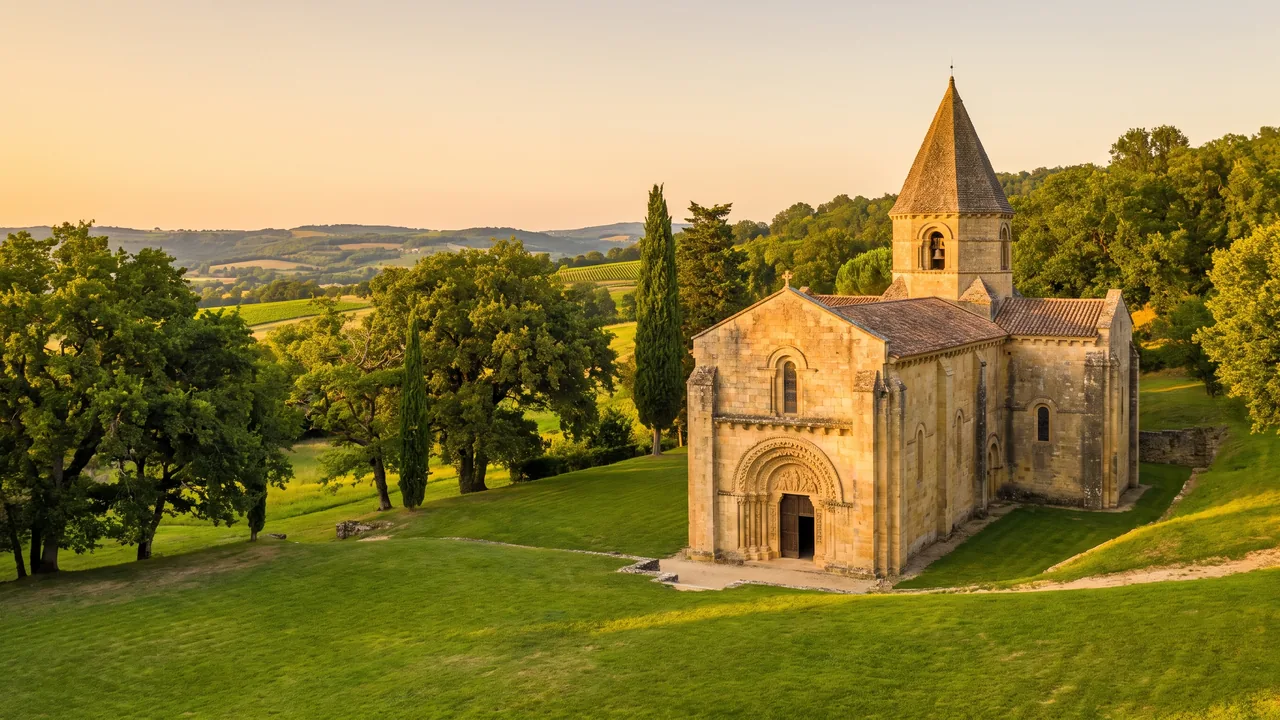
On the right bank, the Abbaye aux Dames marks the beginning of the medieval section of Saintes. Founded in 1047 by Geoffroy Martel, Count of Anjou, and his wife Agnès of Burgundy, it was the first women’s abbey in Saintonge—a powerful Benedictine community led by abbesses who were often from the high nobility, who managed a vast estate and educated the daughters of the regional aristocracy.
A masterpiece of the Saintonge novel
The Abbey Church of Sainte-Marie was rebuilt in the 12th century under Abbess Agnès de Barbezieux, between 1134 and 1174. Its richly carved façade and its striking “pine cone”-shaped bell tower, topped with stone scales, are among the most recognizable features of the region’s Romanesque art. The church has been designated a Historic Monument since 1846; the convent buildings have been listed since 1948. Visitors can admire portals with ornate arches, typical of Romanesque sculpture in the Saintonge region.
A conservatory and a major festival
The abbey is not a static monument: today, it is a vibrant musical hub that houses a conservatory with approximately 600 students and hosts the Saintes Festival every summer. As the successor to the music academies founded in the 1980s—the golden age of Philippe Herreweghe and Baroque music—it features nearly 30 concerts over eight days and attracts between 10,000 and 12,000 attendees each year. The 55th edition of the Saintes Festival took place from July 11 to 18, 2026. For your next visit, check the dated program published by the Abbaye aux Dames before making a reservation. Attending a concert in the Romanesque abbey church after dark is one of the most beautiful experiences the city has to offer.
This status as a “city of music” isn’t just a catchphrase for a tourist brochure—it refers to a reality that comes alive all year round. The convent buildings, long abandoned, have been restored to house the conservatory and the “musical city,” so that music resonates there well beyond the festival week. It is this continuity—a conservatory in daily life, a major summer event—that sets the Abbaye aux Dames apart from so many monuments reduced to mere backdrops. The festival itself built an international reputation for early and Baroque repertoire during the time when Philippe Herreweghe conducted the Académies Musicales there; it continues to attract leading performers and a loyal audience from all over France. Booking a ride back after an evening concert means you won’t have to drive at night after a full day of sightseeing.
The cathedral and the UNESCO-listed basilica
On the left bank, two other stone giants tower over the old town: Saint-Pierre Cathedral and Saint-Eutrope Basilica. Both, in their own way, tell the story of the highs and lows of Saintonge’s religious history—and the latter, in particular, is worth a visit for its exceptional crypt.
Saint-Pierre, the Unfinished Spire
The St. Peter's Cathedral, rebuilt in the Flamboyant Gothic style beginning in 1420 on Romanesque foundations left by Bishop Pierre de Confolens (early 12th century), was expected to reach a height of nearly 96 meters. The Religious Wars decided otherwise: in 1568, the Huguenot troops led by Coligny d’Andelot ransacked it, smashed the statue of Charlemagne, and undermined the pillars. The spire’s construction was halted; rebuilt two-thirds of the way starting in 1585, the bell tower-porch is now topped by a simple copper dome and remains unfinished at a height of about 58 meters, leaving flying buttresses that “overhang the void.” A cloister, listed as a historic landmark in 1937, completes the complex.
Saint Eutropius, consecrated by a pope
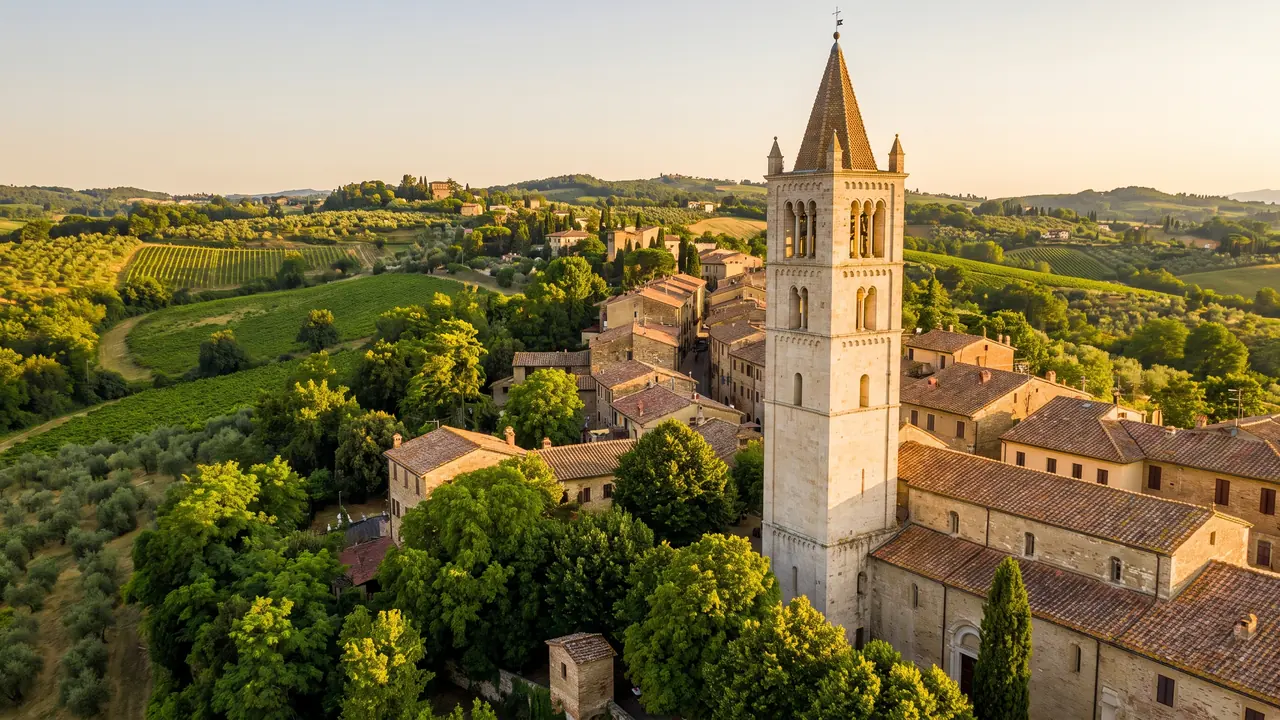
The Basilica of Saint Eutropius has a distinguished history: its cornerstone was laid in 1081, at the initiative of William VIII of Aquitaine, and it was consecrated by Pope Urban II himself on April 20, 1096 — just a few months after he had launched the First Crusade in Clermont in November 1095. The transfer of the saint’s relics to the crypt followed on October 14 of that same year. The fact that the pope, while calling on Europe to join the Crusade, diverted from his route to come and consecrate the church at Saintes himself speaks volumes about the sanctuary’s influence in the 11th century, along the great pilgrimage route to Santiago de Compostela. Its flamboyant spire was financed in the 15th century by King Louis XI. On May 11, 1886, Pope Leo XIII elevated it to the rank of minor basilica, a distinction that affirms its importance within Christendom.
One of the largest crypts in Europe
The treasure is hidden beneath the church. The 11th-century crypt, approximately 35 meters long and featuring 53 Romanesque capitals, houses the tomb of Saint Eutropius—who, according to tradition, was the city’s first bishop. This account should be taken for what it is: a hagiographic tradition. Historians generally date Eutropius's episcopate and martyrdom to the 3rd century, not the 1st century as the legend of the first bishop would have it. It is one of the largest Romanesque crypts in Europe, half-buried, with low vaults and stocky columns. As such, Saint-Eutrope is listed as a World Heritage Site of UNESCO since 1998, as part of the “Routes of Santiago de Compostela in France” (source: UNESCO World Heritage Center, accessed July 24, 2026) : Pilgrims on the Tours route have been stopping there since the Middle Ages, on their way to Santiago de Compostela.
Descending into this crypt means experiencing a change in atmosphere within just a few steps: the light dims, the vaults slope downward, the columns grow thicker, and one suddenly understands why pilgrims considered it a sacred place. Unlike many crypts that have been reduced to mere burial vaults, the crypt of Saint-Eutrope is a true lower church, almost as vast as the sanctuary above. Its carved capitals—featuring foliage, interlacing patterns, and figures—offer a distillation of the Saintonge Romanesque repertoire at eye level. Along with the amphitheater, it is one of the two places in Saintes where the past can be touched rather than merely recounted.
Stroll through the old town and along the waterfront
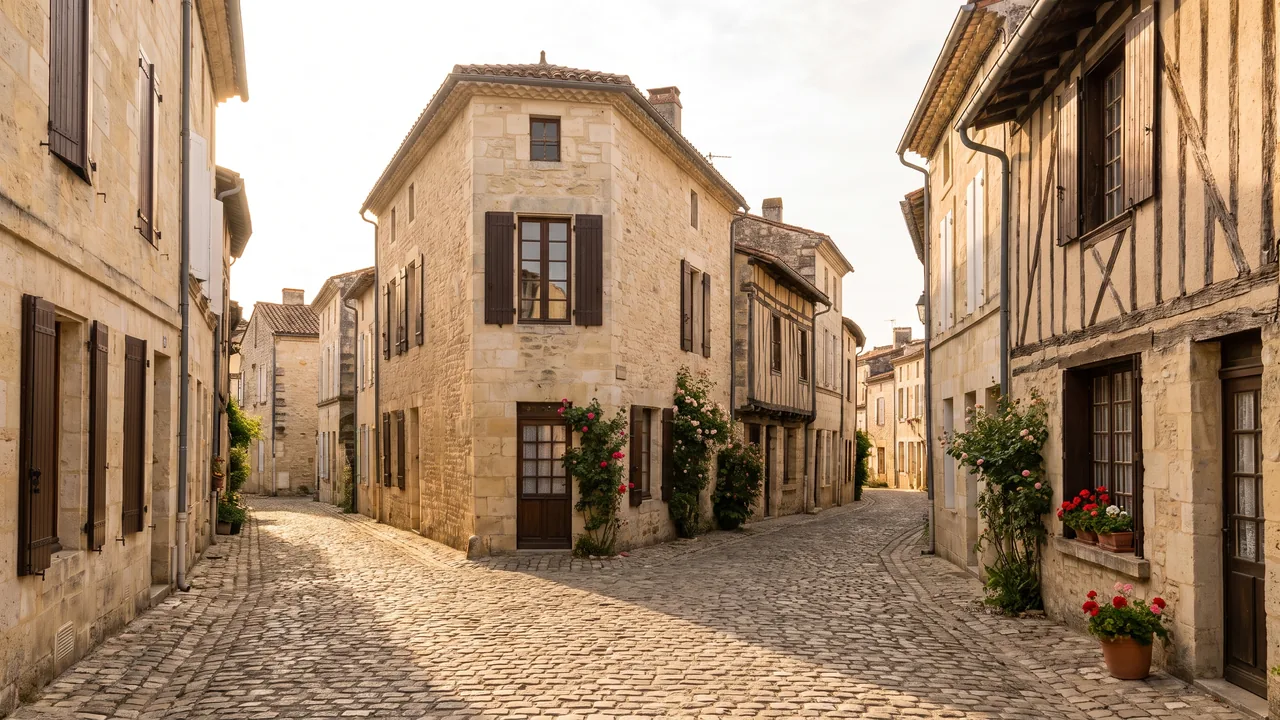
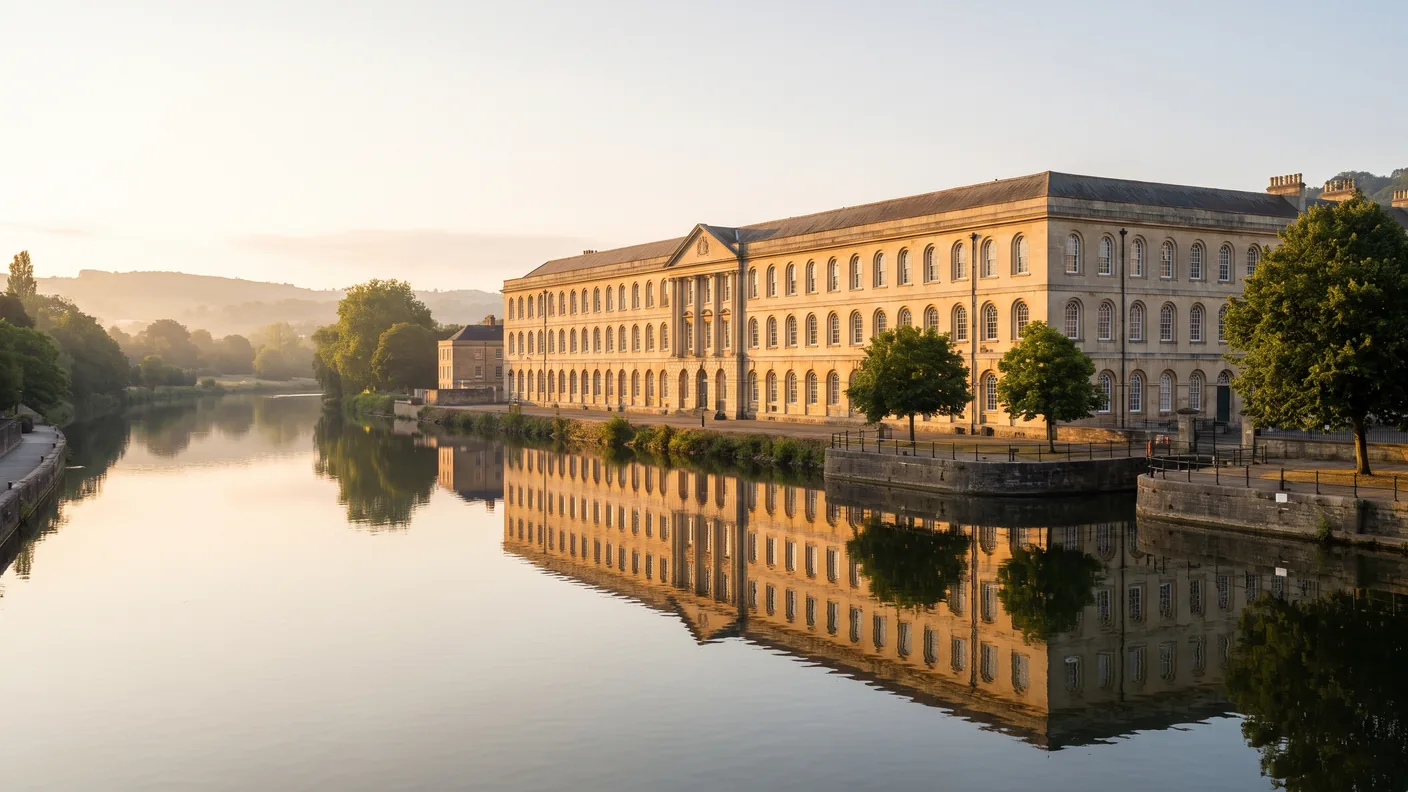
Beyond its major landmarks, Saintes is best enjoyed on foot. The old town on the left bank features cobblestone alleys, limestone houses, and a few beautiful half-timbered facades, stretching from the cathedral to the riverbanks. Everything is within walking distance: the city is compact, flat along the river, and perfectly suited for a half-day stroll, from café terraces to bookstores and from squares to gardens. The redeveloped riverbanks offer a continuous promenade along the Charente River, with a view of the Abbaye aux Dames across the water.
The City's Museums
There are three museums worth visiting, depending on your interests. The archaeological museum features a remarkable collection of Gallo-Roman stone carvings—sarcophagi, stelae, and carved blocks from the late antique city walls. The Musée de l’Échevinage occupies a 15th-century townhouse. The Dupuy-Mestreau Museum, founded in 1920 and acquired by the city in 1992, is dedicated to the arts and traditions of the Saintonge region: headdresses, furniture, and earthenware. The city also maintains a National Stud Farm, a testament to the city’s long equestrian tradition.
Cruising down the Charente River on a solar-powered boat
For a different perspective, hop on the "Bernard Palissy III", a sightseeing boat hybrid electric-solar, with zero CO₂ emissions and with a capacity of about 149 seats—one of the few of its kind in Europe. It is named after the great Saintonge potter Bernard Palissy, famous for his “rustic figulines.” Departing from Place Bassompierre from April through October, it glides peacefully down the Charente River toward Chaniers or Port-d’Envaux, offering the most beautiful view of the monuments from the water. It’s a restful and quiet break, especially appreciated at the end of the day, when the low-angled light gilds the stone of the quays and you can see the Arch of Germanicus and the Abbaye aux Dames from the same perspective as travelers of yesteryear: from the river, the city’s only true gateway for centuries.
Things to Do in Saintes: Markets, Festivals, Activities
In Saintes, you can visit the major ancient and Romanesque monuments in a single day, stroll through the old town, shop at the market on Cathedral Square, and take a boat ride on the Charente River. The city is first and foremost a place of markets and fairs, bustling all year round, where it’s nice to take your time. Here are the events you should know about to plan your visit.
Markets and the Monthly Fair
The main event is the Saint-Pierre Market on Cathedral Square, held on Wednesday and Saturday mornings (roughly from 7 a.m. to 1 p.m.) — this is where the city’s commercial heart beats, with products from the Saintonge region. Other neighborhood markets liven up the week: Cours Reverseaux on Tuesdays and Fridays, Saint-Pallais on Thursdays and Sundays, and Bellevue on Thursdays. You’re sure to find a market stall open almost every morning, depending on which neighborhood you’re in. Above all, the first Monday of each month, the city hosts a sprawling fair that draws as many as 40,000 people — one of the largest in France. If your visit happens to fall on that day, expect a festive atmosphere and heavy traffic: all the more reason to have a driver drop you off and pick you up rather than trying to find a parking spot.
| Appointment | When | Where |
|---|---|---|
| Saint-Pierre Market | Wednesday & Saturday mornings | Cathedral Square |
| Large Monthly Fair | The first Monday of the month | Downtown |
| Saintes Festival 2026 | July 11–18 | Abbaye aux Dames |
| Bernard Palissy III Cruise | April → October | Bassompierre Square |
How long should I stay?
A full day allows you to visit the amphitheater, the arch, the Abbaye aux Dames, and the Basilica of Saint-Eutrope, with a lunch break on the riverfront. To add a river cruise, museum visits, or a festival concert, plan for a overnight stay. For a day trip from Bordeaux, one day is more than enough to see the main sights, if you leave early in the morning and return in the late afternoon—the perfect itinerary for a Sunday or a cultural getaway.
Around Saintes: Romanesque Saintonge and the vineyards
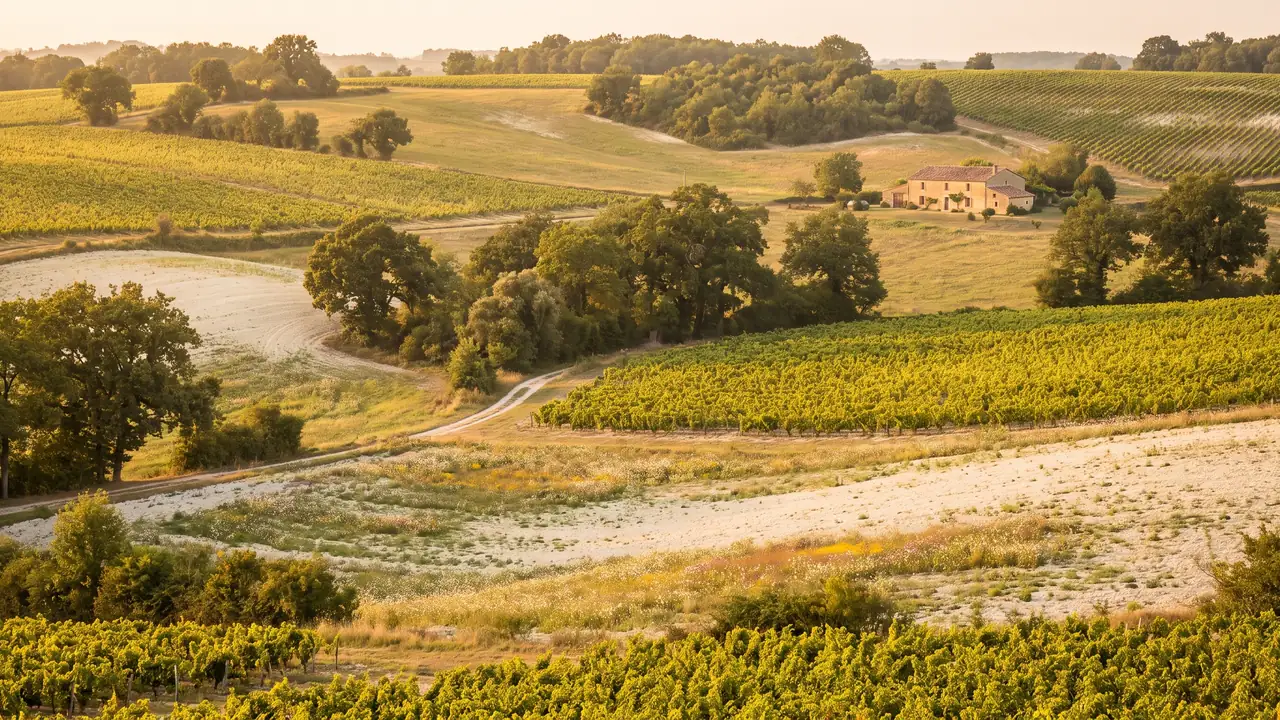
Saintes is an ideal base from which to explore the area. The Saintonge The surrounding area is a land of white limestone, teeming with Romanesque churches—it is one of the richest collections of Romanesque art in France—and vineyards, as we are here at the gateway to the Cognac appellation region. In just a half-hour drive, you go from ancient monuments to the cellars where the brandy is aging.
Less than an hour
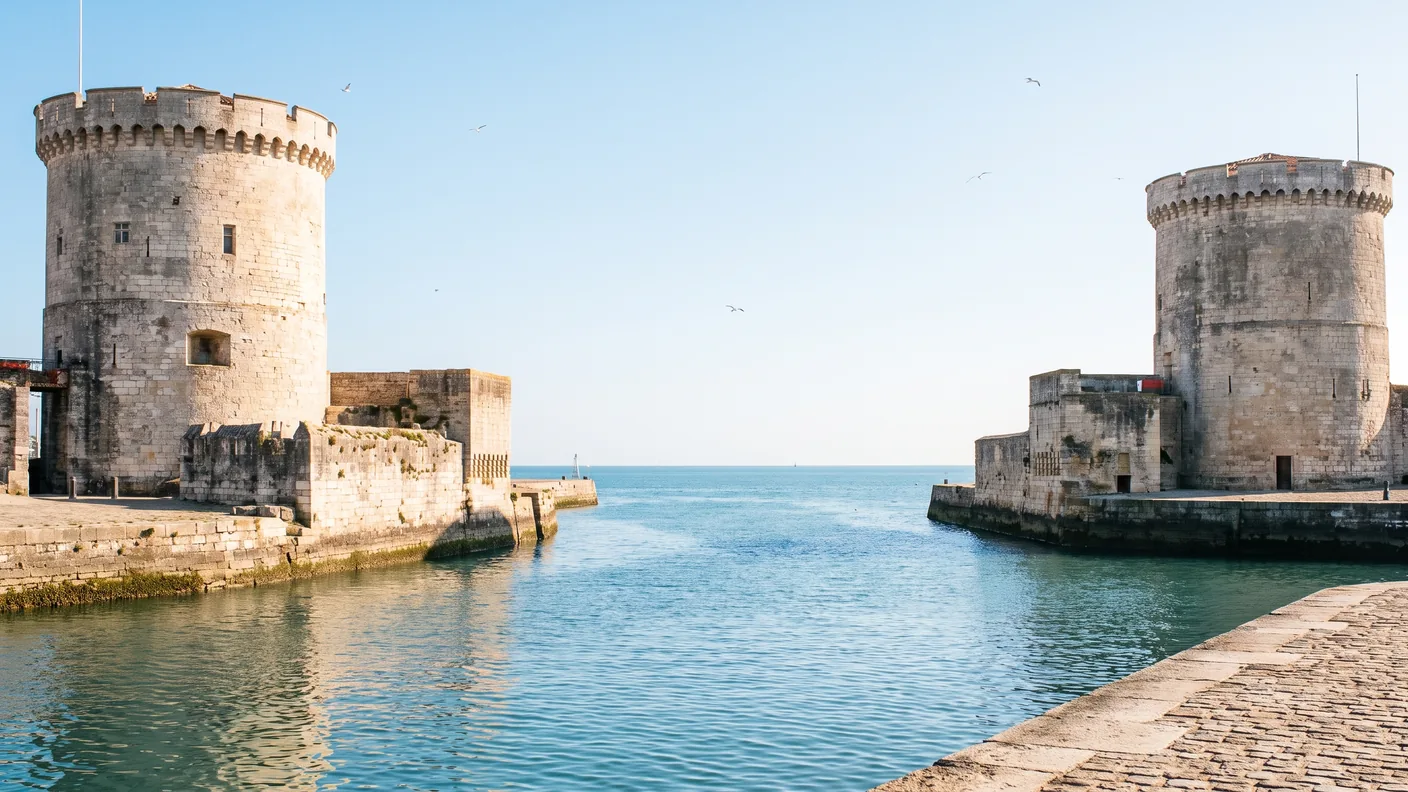
Just half an hour away, Cognac and its cellars immerse you in the world of brandy; check out our Cognac guide to plan your visit to the distilleries. To the west, Royan and its “Côte de Beauté” open up to the ocean and the beaches. To the north, Rochefort and its royal arsenal—the Corderie Royale, the frigate Hermione, and the transporter bridge—followed by La Rochelle and its medieval towers, round out an itinerary for exploring the Charentes-Maritimes region. All these towns are easily accessible by car, and many of our guests combine visits to two of them in a single day.
| Destination | Distance | Must-See |
|---|---|---|
| Cognac | ≈ 28 km | Wine Cellars, Distilleries, Château |
| Royan | ≈ 41 km | Beaches, 1950s architecture, Côte de Beauté |
| Rochefort | ≈ 45 km | Corderie Royale, Hermione, transporter bridge |
| La Rochelle | ≈ 75 km | Old Port, three towers, aquarium |
How to get to Saintes from Bordeaux
The easiest way to explore Saintes from Bordeaux is to take the direct route via the A10. With a private driver, you’ll depart from your home or Bordeaux-Mérignac Airport and arrive right at the monuments, without having to worry about downtown parking or train connections. This is especially convenient on days when there’s a fair or festival, when finding a parking spot becomes a real headache.
How much does the ride cost?
The route from Bordeaux to Saintes covers about 118 km in 1 hour 24 minutes via the A10. Our rates begins at 208 € During the day, for a sedan carrying up to 3 passengers, a fixed price confirmed in writing before departure—no meter, no surprises upon arrival. The exact quote depends on the specific pickup address, the time of day (a surcharge applies at night, on weekends, and on holidays), and the vehicle you choose; request a quote online, and you’ll receive a response within 30 minutes.
| Route | Distance | Duration | From |
|---|---|---|---|
| Bordeaux → Saintes | ≈ 118 km | ~1 hr 24 min | €208 |
| Bordeaux-Mérignac Airport → Saintes | ≈ 120 km | ~1 hr 15 min | based on a quote |
| Saintes → Cognac (extension) | ≈ 28 km | ~35 min | based on a quote |
Why choose a private chauffeur?
A chauffeur service makes all the difference: you can read, relax, or plan your visit during the ride, you’ll be dropped off right near the amphitheater, and we’ll pick you up wherever you’d like—on the riverbanks, after a concert at the Abbaye aux Dames, or following a tasting in Cognac. This option is ideal for an outing with family or friends—without needing a designated driver—as well as for business travel. The vehicle is clean, air-conditioned, equipped with water, and driven by a uniformed driver, and you travel at your own pace, free from the constraints of train schedules.
Frequently Asked Questions
How much does a private chauffeur service from Bordeaux cost to Saintes?
The trip from Bordeaux to Saintes (approximately 118 km, 1 hour 24 minutes via the A10) starts at 208 € during the day for a sedan carrying up to 3 passengers. The price is fixed, confirmed in writing before departure, and there is no meter. The exact amount depends on the pickup address, the time of day, and the vehicle selected.
How long does it take to get from Bordeaux to Saintes?
Allow about 1 hour and 24 minutes by car, or 118 km north on the A10 highway. The route is direct, with no detours, making Saintes one of the most accessible historic cities from Bordeaux for a day trip.
Why is Saintes called “the Rome of Aquitaine”?
Because the city, the ancient Mediolanum Santonum, was the capital of the province of Aquitaine in the 1st century—before Bordeaux. It still features a Roman amphitheater 126 meters long, an arch dedicated to Tiberius, thermal baths, and an aqueduct—an exceptional collection of ancient ruins for western France.
Is the Arch of Germanicus really dedicated to Germanicus?
Not only that. It is a votive arch funded around 18–19 A.D. by a prominent citizen, Caius Julius Rufus, and dedicated to Tiberius, Drusus, and Germanicus. The primary dedicatee is Tiberius, the reigning emperor. It is not a triumphal arch, and it does not commemorate any military victory.
Is the Saintes amphitheater open to visitors?
Yes, the Gallo-Roman amphitheater is open to visitors. Nestled against a natural valley, it measures 126 meters by 102 and could seat approximately 15,000 spectators. Designated a Historic Monument in 1840, it is the largest preserved ancient theater in western Gaul.
What is listed as a UNESCO World Heritage Site in Saintes?
The Basilica of Saint Eutropius and its 11th-century crypt have been listed as a UNESCO World Heritage Site since 1998, as part of the “Routes of Santiago de Compostela in France.” The crypt, approximately 35 meters long and featuring 53 Romanesque capitals, is one of the largest in Europe.
How long does it take to visit Saintes?
A full day is enough to see the main sights: the amphitheater, the Arch of Germanicus, the Abbaye aux Dames, and the Basilica of Saint-Eutrope, with a break along the riverbanks. If you’d like to add a cruise on the Charente River and visit the museums, plan to stay overnight.
When is the market held at Saintes?
The large Saint-Pierre Market is held on Wednesday and Saturday mornings in Cathedral Square. The city also hosts a huge monthly fair on the first Monday of every month, which attracts up to 40,000 people and brings the entire downtown area to life.
Can you take a cruise on the Charente River at Saintes?
Yes. The “Bernard Palissy III,” an electric-solar-powered, CO₂-free boat, departs from Place Bassompierre from April through October for cruises to Chaniers or Port-d’Envaux. It’s the best way to see the monuments from the water, in a peaceful setting.
What's there to see around Saintes?
Cognac and its cellars are about 28 km away, Royan and the ocean are about 41 km away, Rochefort and its naval base are about 45 km away, and La Rochelle is about 75 km away. Saintes is an ideal base for exploring the Charentes region, from Romanesque Saintonge to the Atlantic coast.
When is the Saintes Festival held?
The 55th edition of the Saintes Festival took place from July 11 to 18, 2026. If you plan to visit in the future, check the up-to-date schedule published by the Abbaye aux Dames before making a reservation.
Can the driver combine Saintes and Cognac in a single day?
Absolutely. Cognac is only about 30 kilometers from Saintes (~35 min). Many customers combine a morning visit to Saintes with an afternoon tasting at the Cognac houses, with the same driver handling the trips and schedules.
Does the price change at night or on the weekend?
A surcharge may apply at night (7:00 p.m.–6:00 a.m.), on weekends, and on holidays, as is the case on all our routes. The fare is always communicated and confirmed in writing before departure: you’ll know the exact price when you book, with no unpleasant surprises.
Further Reading
- The Cognac Capital: See the Cognac Guide (cognac houses and the 6 crus, 35 minutes from Saintes)
- The Royal Arsenal: see the Rochefort Guide (the Corderie Royale and the frigate Hermione, both on the Charente River)
- The Old Port: see the La Rochelle Guide (the three medieval towers, 1 hour north)
- Book your trip: book online or browse all our destinations
Sources and References
- City of Saintes / Tourist Office — Landmarks, Markets, Cruises, Events Calendar
- Mediolanum Santonum (Saintes archaeological site) — amphitheater, Roman city
- Mérimée Database / POP (Ministry of Culture) — Historic Monuments Designations
- UNESCO — The Routes of Santiago de Compostela in France — Property No. 868, inscribed in 1998 (Saint-Eutrope)
- INSEE — Municipality of Saintes (17415) — Demographics
- Saintes Festival — Abbaye aux Dames — Cité Musicale, Program
Article updated in July 2026.
On the way to the capital of Saintonge
Direct transfer from Bordeaux (~1 hr 24 min via the A10) to the amphitheater, the Abbaye aux Dames, and the Charente riverfront. Written, fixed-price quote with no obligation.