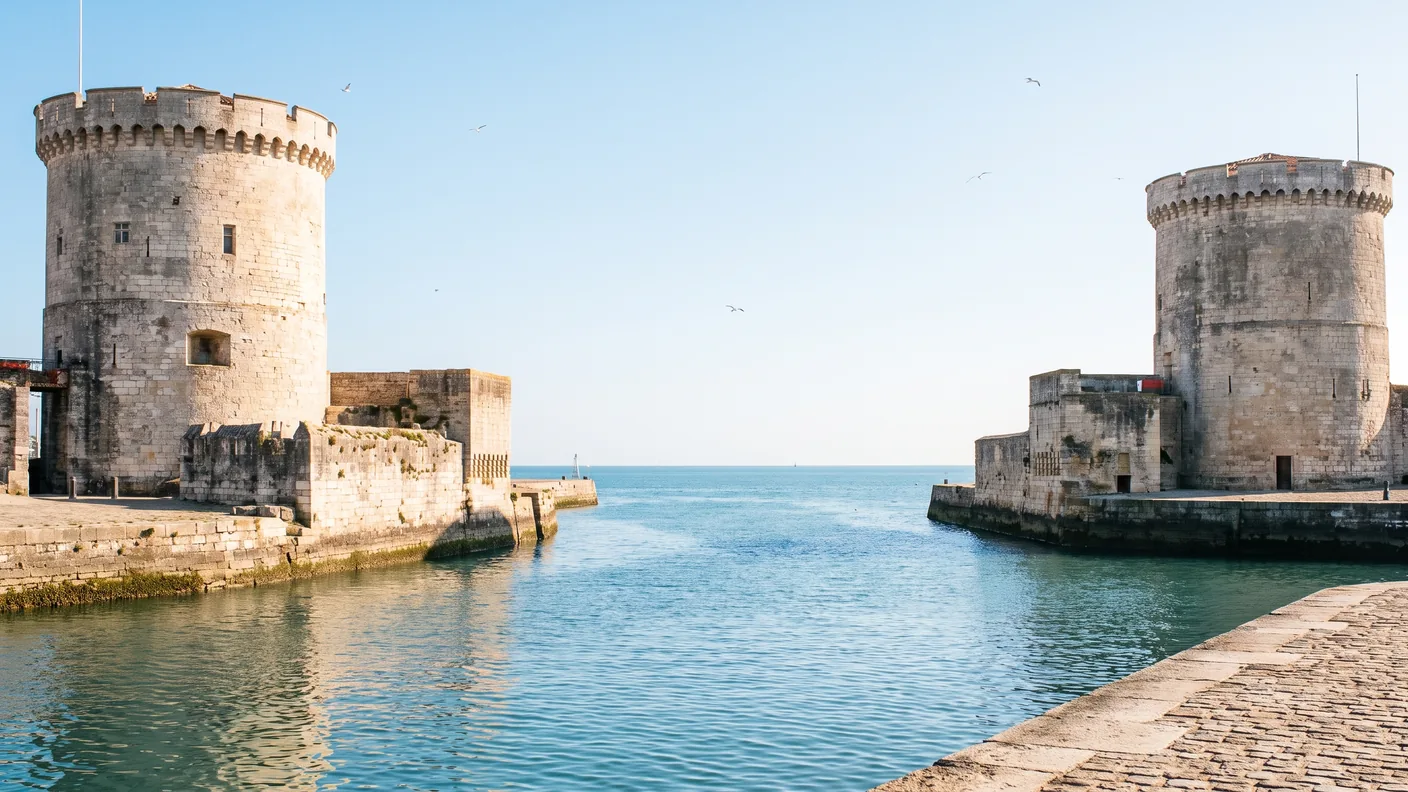
Bordeaux to La Rochelle: the Old Port, towers and Atlantic coast
Three medieval towers guarding the entrance to a thousand-year-old port, a city of arcades untouched by time, and Europe’s largest private aquarium. Former capital of Aunis and a Protestant stronghold, La Rochelle blends white stone, the ocean, and the art of living—just 2 hours and 7 minutes from Bordeaux.
La Rochelle at a Glance
La Rochelle is the prefecture of Charente-Maritime, on the Atlantic Ocean, 191 km north of Bordeaux—a 2-hour, 7-minute drive via the A10. Formerly the capital of Aunis and the fourth-largest city in Nouvelle-Aquitaine, it has a population of 79,851, known as Rochelais. Its emblem: the three medieval towers guarding the entrance to the Old Port—Saint-Nicolas, the Tour de la Chaîne, and the Tour de la Lanterne, the tallest at 55 meters—all designated as Historic Monuments since 1879 and managed by the Centre des monuments nationaux. The city also features arcaded streets dating back more than four centuries, a city hall in use since 1298, one of Europe’s largest private aquariums, and a maritime museum. A Protestant stronghold, it was the scene of the great siege of 1627–1628, one of the deadliest in French history. Just a bridge away lies the Île de Ré and its beaches.
| Landmark | Details |
|---|---|
| Department | Charente-Maritime (prefecture) · Nouvelle-Aquitaine region |
| Status | Former capital of Aunis · 4 city in Nouvelle-Aquitaine |
| Population | 79,851 residents (INSEE, RP2023) · the people of La Rochelle |
| Seaside | Atlantic Ocean, Pertuis d'Antioche · Îles de Ré, Île d'Oléron, Île d'Aix |
| Must-Sees | The Three Towers, the Old Port, Les Halles, the Aquarium, Île de Ré |
| From Bordeaux | 191 km · about 2 hours via the A10 |
Few French cities have managed to preserve, as La Rochelle has, such a harmonious blend of stone and water. Here, the ocean is not just a distant backdrop: it flows into the city through the narrow channel of the Old Port, which has been flanked by two massive medieval towers since the 14th century century. Along the docks, terraces overlook the masts of sailboats; behind them, a maze of arcaded streets shields strollers from both the sun and the rain. La Rochelle is a city best explored on foot, at a leisurely pace, with a notebook full of numbers and captions in hand.
This guide covers what you need to see and understand before you go: the three towers and their secrets, the historic Old Port, the old shipowners’ quarter, the great siege that starved the Protestant city in 1628, the aquarium and the maritime museum, Les Halles and the markets, and finally the Île de Ré, just a bridge away. Distances are calculated from Bordeaux, and facts are verified using information from the tourist office, the Centre des monuments nationaux, the Mérimée database, and INSEE. The price listed is for a private driver reservation, with a fixed rate provided in advance.
Where is La Rochelle located?
La Rochelle is a city in western France, on the Atlantic coast, the prefecture of Charente-Maritime, and the former capital of Aunis, located 191 km north of Bordeaux. It opens onto the ocean via the Pertuis d’Antioche, a strait sheltered by a string of islands—Ré, Oléron, and Aix—that breaks the swell and makes the harbor one of the safest anchorages on the coast. The fourth-largest city in Nouvelle-Aquitaine after Bordeaux, Limoges, and Poitiers, it is the most populous municipality in its department with 79,851 residents (INSEE, 2023 population). The city is home to three ports—fishing, commercial, and recreational—in addition to the deep-water port of La Pallice to the west, which faces the open sea.
How far is it from Bordeaux?
From Bordeaux, you can reach La Rochelle by taking the A10 northbound—a straightforward, easy drive of just over 191 kilometers, or 2 hours and 7 minutes. It’s one of the major seaside and heritage destinations within day-trip distance of the capital of the Gironde: leave in the morning, stroll along the waterfront and through the old town, and return in the evening. The table below places La Rochelle at the center of a network of towns in the Charente region that can be visited during a single trip—Rochefort and its naval base, the Île de Ré just a bridge away, and Niort and the Marais Poitevin a little further on.
| From La Rochelle | Distance / Time | Interest |
|---|---|---|
| Base of the Île de Ré Bridge | ~13 km · ~25 min | gateway to the island, beaches, and white villages |
| Saint-Martin-de-Ré | ~26 km · ~32 min | Vauban Citadel, Port of Île de Ré |
| Rochefort | ~35 km · ~34 min | Royal Arsenal, Corderie, the frigate Hermione |
| Niort | ~64 km · ~56 min | Gateway to the Marais Poitevin, the “Green Venice” |
| Bordeaux | 191 km · 2 hours 7 minutes | via the A10, direct door-to-door transfer |
A sheltered harbor since the 12th century
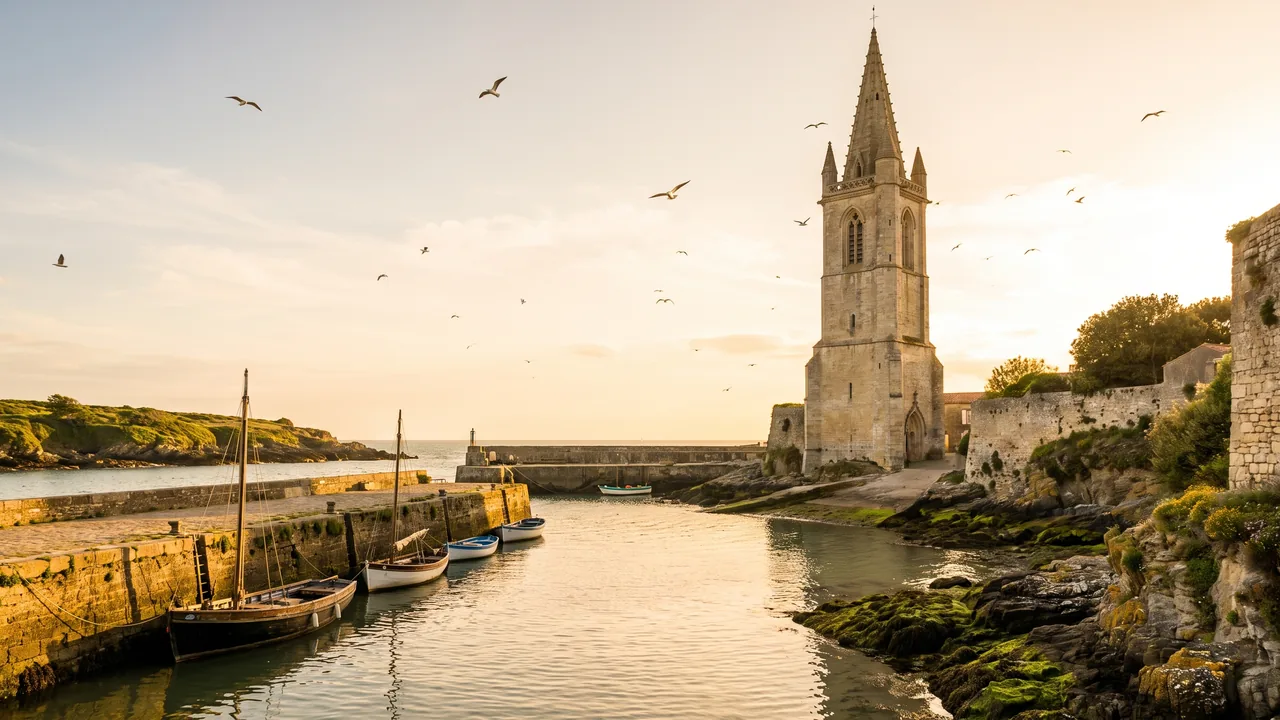
If La Rochelle became one of the kingdom’s major ports as early as the Middle Ages, it owes this to its geography. The string of islands — Ré, Oléron, Aix — shield the harbor at the Pertuis d'Antioche from storms out at sea: ships found there a a safe haven as early as the 12th century century, at a time when most Atlantic anchorages were still dangerous. This tranquil harbor brought the city its wealth—through the salt and wine trades, and later through major colonial commerce—and explains why a city of relatively modest size was able to play a leading political and military role. A bastion of the Reformation as early as the 16th In the 16th century, having embraced Calvinist doctrine, La Rochelle was a Protestant stronghold that the monarchy took two sieges to subdue. From this past, the city has retained a unique silhouette: a harbor entrance sealed off by stone, as if it were still awaiting an enemy coming from the sea.
The Three Towers of the Old Port
The three towers of La Rochelle — Saint-Nicolas, the Chaîne Tower, and the Lanterne Tower (National Monuments Center) — are the city’s most famous postcard image and its ultimate symbol. Contrary to a persistent misconception, the tallest tower is not Saint-Nicolas but the Lanterne Tower, which stands 55 meters tall. The first two guard the entrance to the narrow pass; the third stands a little further back, along the ramparts. All three have been designated as Historic Monuments since February 17, 1879 — a form of protection that should not be confused with the Old Port’s protected-site designation, which was pronounced much later, in 1933. Managed today by the National Monuments Center, they can be visited with a combined ticket and welcomed 121,523 visitors in 2011. Here are their dimensions and stories, one by one.
The Saint-Nicolas Tower, the one that leans
Massive, almost like a dungeon perched on the water, the St. Nicholas Tower blocks the passage on the city side. Built in 14th century and completed around 1376 After about thirty years of work, it amounts to 37 meters, with a diameter of 18 to 23 meters and walls 3 to 6 meters thick. Its most astonishing feature: she leans. The camber, visible to the naked eye, exceeds 20 centimeters—about 2 percent—because it was built on a swampy ground. To provide stability in the mud, it rests on a foundation slab of oak stakes driven into the mud; however, the foundations gave way during construction, causing it to tilt permanently. An old legend attributes its construction to the Mélusine the Fairy, the legendary builder of the castles of Poitou. Closer to home, the tower served as giant diving board: On six occasions between 2009 and 2016, champions set off from 26 meters in the arena, in front of up to 40,000 spectators in 2009.
The Chaîne Tower, damaged by an explosion
Across from Saint-Nicolas, on the other side of the strait, the Chaîne Tower takes its name from its function: from there, crews operated the great chain stretched across the harbour entrance every night all the way to Saint-Nicolas, to physically block access to the port. It, too, was built in the 14th century. It originally stood Originally 34 meters tall; today it rises to only about twenty metres. The reason is a drastic one: during the Fronde, on November 19, 1651, insurgents set fire to the gunpowder reserves stored in the tower, which exploded and lost its upper stories. With its top section gone, it stood exposed to the elements for nearly three centuries. The Chaîne Tower was also the "last image of France" for the emigrants who set sail for New France—today's Quebec. It houses a permanent exhibition, "La Rochelle-Quebec: Set Sail for New France", inaugurated on May 8, 2008, to mark the 400th anniversary of the founding of Quebec City. In 2010, the storm Xynthia flooded it to a depth of about 1.50 meters and closed it from February 28 to July 5.
The Lanterne Tower: Lighthouse, Prison, and Stone Book
Set back a little, the Lantern Tower is the tallest and slimmest of the three, standing 55 metres tall: a 25-meter-tall cylindrical base topped by an octagonal spire in the Flamboyant Gothic style. It dates from the 15th century and was built between 1445 and 1468 under Mayor Jehan Mérichon. Its primary purpose was to serve as a watchtower and lighthouse — a lighthouse to guide ships — before serving as a prison from the 17th to the 19th century. Its sinister nicknames stem from this use as a prison: "Priests' Tower", because thirteen Catholic priests were imprisoned there and then executed as early as 1568, and "Tower of the Four Sergeants", in memory of the four sergeants involved in the La Rochelle conspiracy, who were executed on September 21, 1822. The prisoners—up to more than a hundred in a single dormitory—left behind a treasure: more than 600 graffiti pieces carved in stone by English, Spanish, and Dutch sailors; ships and poems from the 17th to the 19th century. A contemporary detail: during the 2014–2015 restoration, two gargoyles were recreated in the likeness of the cartoonists Cabu and Wolinski.
| Tower | Height | Period | Original function | Status |
|---|---|---|---|---|
| Saint Nicholas | 37 m (it's leaning) | 14th s. (completed in 1376) | Goulet Defense Tower | MH since 1879 |
| Chaîne Tower | Originally 34 m → ~20 m | 14th s. | port chain operations | MH since 1879 |
| Lantern Tower | 55 m (the tallest) | 15th s. (1445–1468) | watchtower, lighthouse, then prison | MH since 1879 |
One final point deserves clarification, as it is so often misunderstood: the harbor chain was stretched between Saint-Nicolas and the Tour de la Chaîne, the two towers that flank the channel—never including the Lanterne, which remained set apart from the channel. And while the three towers have indeed been classified as Historic Monuments since 1879, they are not covered by the 1933 classification of the Old Port, which is a separate site protection designation. Two classifications, two dates, but the same commitment to preserving the most photographed site in La Rochelle.
The Old Port, the beating heart of the city
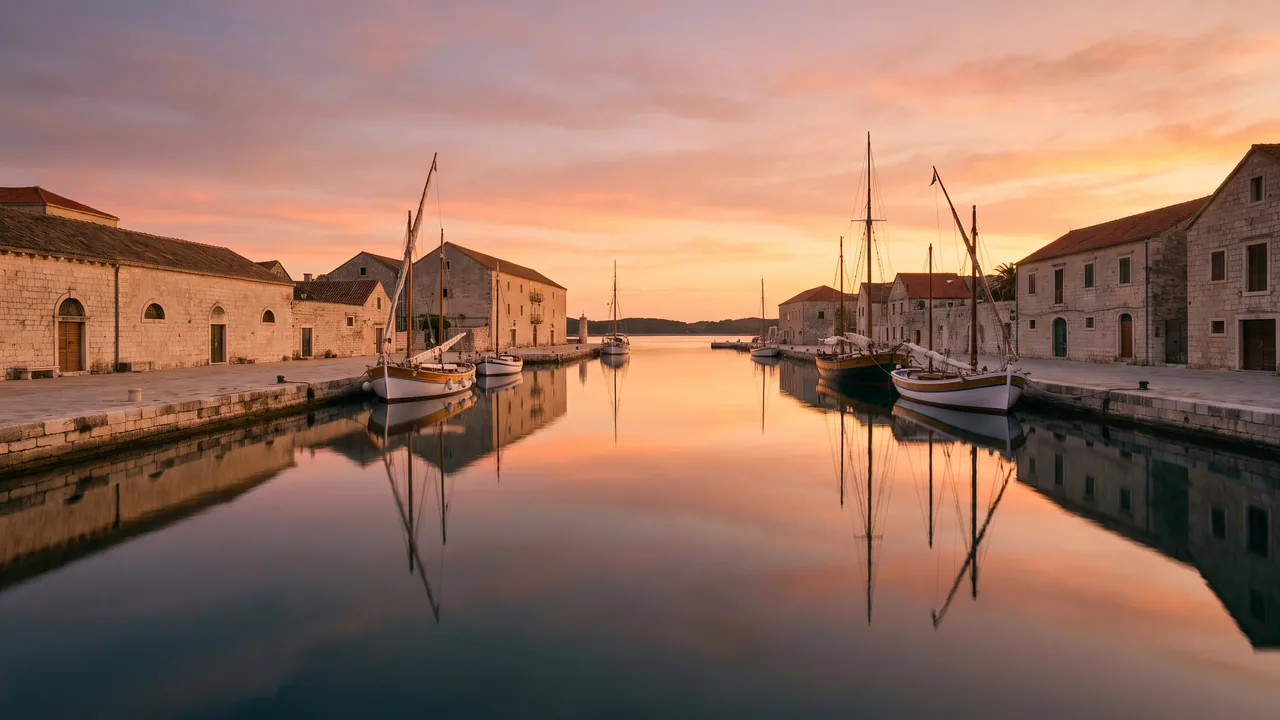
Between the two large towers lies the Old Port, the historic and vibrant heart of La Rochelle, which has been designated a protected site since July 25, 1933, along with the three towers and the Grosse-Horloge. This is the starting point for any visit: a marina with about 320 berths, surrounded by light-colored stone quays lined with café terraces, ice cream shops, and seafood restaurants. In the evening, when the light skims the water and illuminates the stone, the harbor takes on the air of a painting. The city’s pulse has been beating here for eight centuries: it was through this narrow channel that merchant ships set sail, that emigrants embarked for the New World, and that the defensive chain was closed each night. Even today, people come here to sit with no other plan than to watch the masts sway.
The chain stretched across the narrow passage every night
Imagine the scene in the Middle Ages: every evening, a major network was hoisted across the narrow passage between the Chaîne Tower and the Saint-Nicolas Tower, in order to physically bar entry to the port against enemy or unwanted ships. No vessel could force its way through without being shattered against this iron barrier. This system speaks volumes about the mindset of a wary merchant city that depended on the sea for its livelihood but sought protection from it once night fell. This configuration—two towers, a narrow channel, and a chain—made the Old Port one of the best-defended harbor entrances in the kingdom, and explains why, in 1627, it took a seawall A massive effort to cut off La Rochelle from the open sea: we weren't going to take that port by force.
From Les Minimes to the Old Port: The Largest Marina on the Atlantic Coast
The Old Port has long since been too small to accommodate La Rochelle’s recreational boat fleet. To the south of the city, the Port des Minimes was established in 1972; today it spans more than 70 hectares and offers over 5.000 berths, making it one of the largest marinas on the entire Atlantic coast. The contrast between the two harbors is striking: on one side, the historic, intimate Old Port, framed by stone and towers; on the other, the vast, modern Minimes marina, a forest of masts backing onto the beaches and university campuses. Together, they make La Rochelle a sailing capital, a host city for offshore races and major nautical gatherings. But it is the Old Port that truly serves as the symbolic heart of the city: it is there that the city reveals its true character.
The port has its ghosts and its anecdotes. The most intriguing one dates back to May 1472: while visiting the Tour de la Chaîne, King Louis XI is said to have engraved these words on a windowpane with a diamond—“Oh! What utter folly! ”— bitterly regretting having ceded the precious city of La Rochelle to his brother. According to tradition, he learned that very same day that his brother had just died… in Bordeaux. The coincidence, too good to be true, is as much a part of the city’s folklore as it is of its history; but it clearly illustrates the strategic value the crown attached to this port. To lose La Rochelle was to lose a key to the Atlantic—and a shrewd king like Louis XI could only kick himself for it.
The arcaded streets and the old town
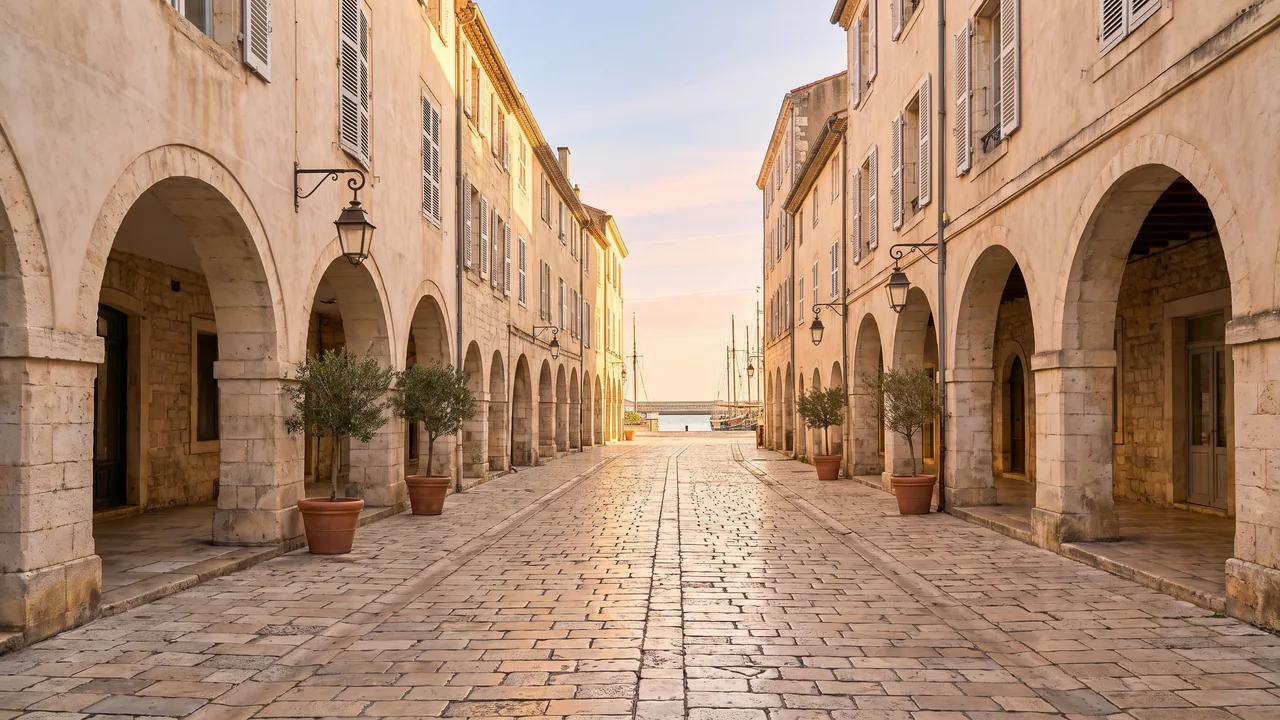
Behind the docks, La Rochelle boasts one of the best-preserved historic centers on the Atlantic coast: a network of arcaded streets dating back more than four hundred years, where visitors can stroll in the shade beneath stone arcades. This is what makes the city so unique: these arcades—described as “over 400 years old”—run along the shopping streets, allowing visitors to stroll from shop to shop without ever having to worry about rain or sun. Between them stand half-timbered houses, a legacy of the Middle Ages, and stately shipowners’ mansions built of cut stone, testaments to the wealth that the great colonial trade brought to the city. The old town, largely pedestrian-friendly, is best explored on foot—it’s actually the only way to truly appreciate its charm.
The Art of Strolling Through the Arcades
Walking beneath the arcades of La Rochelle is like experiencing a city designed for pedestrians long before the word was even invented. The arcades flow into one another, echoing each other, opening onto passageways and small squares; you look up at the half-timbered facades, pause in front of a bookstore or chocolate shop window, and continue on your way without even getting wet on a rainy day. This covered network, unique in its scale, tells the story of a city of merchants who protected their customers—and their stalls—from the whims of the oceanic climate. The half-timbered houses, some of which are among the oldest in the city, are interspersed with later mansions, so that a single street offers a glimpse of several centuries of architecture. It’s a downtown area where you need neither a car nor a map: just let yourself be carried along.
The wealth of La Rochelle is evident in its architecture. The mansions of shipowners and merchants, built in the 17th and 18th centuries, line the streets with their ornate facades, inner courtyards, and grand staircases: the city was once one of the major ports of Atlantic trade, and this prosperity has left a civic heritage of rare density. All of this can be explored on foot in a compact city center where the main landmarks—the towers, the Old Port, City Hall, the Grosse Horloge, and the Halles—are just a few minutes apart. This is a major draw for visitors coming from Bordeaux: once you’ve been dropped off at the Old Port, there’s no need to drive anymore. You park the car—or get out of the vehicle that brought you there—and spend the entire day exploring, alley after alley, without ever getting back behind the wheel.
City Hall and the Grosse Horloge
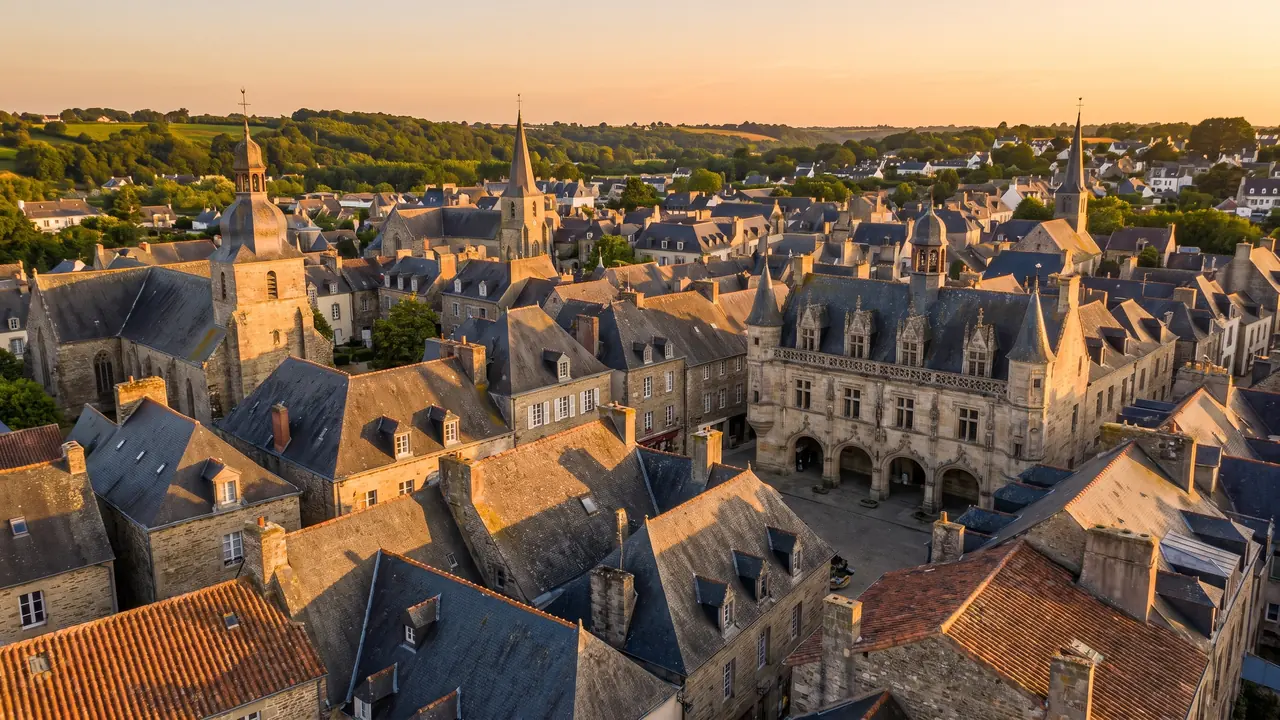
In the heart of the old town, two civic landmarks reflect La Rochelle’s municipal pride: City Hall, said to be the oldest city hall in France still in use, and the Grosse Horloge, a former city gate that has been converted into a belfry. The city hall is home to City Hall since 1298 — more than seven centuries of continuity —, behind a Gothic outer wall and a richly sculpted Renaissance façade. Designated a Historic Monument as early as December 27, 1861, it nearly disappeared in 2013: an electrical fire, on June 28, destroyed part of the building. The lengthy and meticulous restoration was completed in late 2019, restoring the city's stone setting. Not far away, the Grosse Horloge spans the street that leads down to the harbor: it's one of the main routes between the Old Town and the Old Port.
A town hall that has been in operation since 1298
Few cities can boast such continuity: at La Rochelle, the city is governed from the same location since 1298. City Hall, described as the oldest French city hall still in use, combines a crenellated defensive wall from the late Middle Ages with a Renaissance main building featuring an intricately decorated façade—statues, niches, and galleries. It embodies the spirit of independence of a city that, for a long time, governed itself almost like a small merchant republic. The Fire on June 28, 2013, caused by an electrical fault, was a traumatic event: the flames destroyed part of the roofs and interiors. It took more than six years to rebuild everything; the restoration was completed in late 2019, and the monument, which has been a listed historic site since 1861, has been restored to its former glory. Today, it is one of the most memorable sights in the old town—provided you take the time to step inside.
The Big Clock is one of the most familiar landmarks in La Rochelle: a tall gate with a passageway through it, topped by a dome, marking the threshold between the merchant city and the docks. Originally, it was a city gate of the medieval wall. It took on its present appearance when it was endowed with, in 1478, of a a bell and a clock: from a simple door, it became bell tower, a symbol of municipal freedoms, marking the rhythm of city life with the chime of the hours. The gate is Designated a Historic Monument on December 13, 1978. We pass under its arch dozens of times during a visit, almost without thinking about it, since it is such a familiar part of the everyday landscape; yet it is a distillation of urban history, from defensive rampart to civic monument, including the clock mechanism that, as early as the late 15th In the 19th century, the city imposed its own measured pace on the people of La Rochelle.
The Great Siege of 1627–1628
A Protestant stronghold in the kingdom, La Rochelle endured two major sieges during the Wars of Religion: the siege of 1572–1573, in the aftermath of the St. Bartholomew’s Day Massacre, and especially the great siege of 1627–1628, one of the deadliest in French history. The latter, led by the Cardinal Richelieu in the name of Louis XIII, lasted nearly fourteen months: started on September 10, 1627, it ended with the Unconditional surrender of October 28, 1628. To cut off the Huguenot city from the sea and its English reinforcements, a colossal project was undertaken—a seawall blocking the harbor. Inside the walls, the population grew from about 28,000 people, with some 5,400 survivors: nearly 22,000 people died, most of them from hunger. Here is the account, in chronological order, of this national tragedy.
"We must cut off the dragon's head."
In Richelieu’s view, the powerful Protestant La Rochelle, backed by England, was a threat to the unity of the kingdom. The statement attributed to him sums up his strategy: "We must cut off the dragon's head.". The siege began on September 10, 1627. The cardinal in was in charge of operations — Louis XIII, who was present only intermittently, left the management of the blockade to his minister. The main objective was to prevent any resupply by sea. Therefore, on the November 30, 1627, the construction of a seawall about 1,500 meters, whose foundations rested on some sixty sunken ships (approximately 59); up to 4,000 workers worked on it. This structure, which sealed off the harbor like a lock, is remembered as one of the greatest military construction projects of the era—proof that La Rochelle could be taken neither by trickery nor by assault, but only through the patient strangulation of its port.
Jean Guiton and the dagger stuck in the table
The heart and soul of the La Rochelle resistance has a name: Jean Guiton. Born on July 2, 1585, and serving as admiral of the city since September 5, 1621, he was elected Mayor on May 2, 1628, in the midst of turmoil. Tradition has it that, on the day of his election, he stuck his dagger into the marble table from the council, swearing that he would “pierce the heart of the first person to mention surrender.” The act has become legendary—but it’s important to note that The table and dagger on display today actually date from the second half of the 17th century, according to research from 2014—which was conducted after the events in question—these are reconstructed artifacts, not the original objects from 1628. Guiton held out in the city until he was completely exhausted, refusing to surrender as long as there was any hope of relief. To no avail: the three English expeditions sent to the rescue failed one after another. The mayor died on March 15, 1654, long after the fall of his city.
Buckingham, the Famine, and the Surrender
England had, however, tried to save the Protestant stronghold. As early as July 12, 1627, the Duke of Buckingham had landed on the Île de Ré at the head of a fleet of some 110 ships and 8,000 men; he was rejected on November 17, 1627. Two other rescue expeditions subsequently failed at the seawall. Cut off from the open sea, the city sank into a horrible famine: of nearly 28,000 residents—including about 18,000 Protestants—only 5,400 at the end of the siege. The unconditional surrender was signed on October 28, 1628. Three days later, the 1er November 1628, All Saints' Day, Louis XIII made his solemn entrance In the subjugated city—it was indeed the king, and not Richelieu, who received the honors of victory. An edict dated November 3 established a thanksgiving procession. Contrary to popular belief, the fall of La Rochelle does not abolish the Protestant faith: it's the Treaty of Alès, June 28, 1629, which abolished the Huguenots' positions of security and their political and military privileges, while at the same time guaranteeing freedom of religion.
| Date | Event |
|---|---|
| July 12, 1627 | Buckingham lands on Île de Ré (~110 ships, ~8,000 men) |
| September 10, 1627 | Start of the Siege of La Rochelle |
| November 17, 1627 | Buckingham Expelled from Île de Ré |
| November 30, 1627 | Construction of the seawall (~1,500 m, up to 4,000 workers) |
| May 2, 1628 | Jean Guiton Elected Mayor of the Besieged City |
| October 28, 1628 | Unconditional Surrender of La Rochelle |
| November 1, 1628 | The Solemn Entry of Louis XIII (All Saints' Day) |
| June 28, 1629 | Peace of Alès: End of the "places de sûreté," freedom of worship upheld |
The Aquarium, one of the largest in Europe
Located on the Grands Yachts basin, across from the Old Port, the La Rochelle Aquarium is one of the largest private aquariums in Europe and the top-grossing tourist attraction in Charente-Maritime. It's a company family, operated by the group Coutant, and not a municipal facility—an important distinction. Born in 1972 He set up shop in a modest 250-square-meter space that was rebuilt in 1988 since 2001 in its current large building. The numbers are staggering: 8,445 m² surface area, approximately 3 million liters water, some 12,000 animals from 600 species spread across 84 aquariums (Aquarium La Rochelle, 2026 Press Kit), and nearly 800,000 visitors per year. Along with the three towers, this is La Rochelle’s quintessential family outing: a chance to explore the world’s oceans without getting wet.
Twelve thousand animals, six hundred species
The Aquarium’s tour takes visitors from the nearby Atlantic to distant tropical seas, through 84 tanks that are home to a total of some 12,000 animals and 600 species: fish of all sizes, jellyfish, corals, turtles, and sharks. The entire facility contains approximately 3 million liters of reconstituted seawater, spread over an area of 8,445 m². First opened in 1972 in a tiny space, then expanded and rebuilt several times, the facility took on its final form in 2001, on the edge of the Grands Yachts basin. Its success makes it the department’s top-grossing tourist attraction, with nearly 800,000 annual visitors—a figure that ranks it among the continent’s leading aquariums. Plan on spending at least two hours on your visit: the tour is long, packed with exhibits, and designed for all ages, making it a sure bet on rainy days as well as during the busy summer season.
The centerpiece—the one that leaves children speechless—is the shark tank. It alone holds about 1.5 million liters—nearly half of all the seawater in the facility. Here, visitors can watch the ocean’s great predators glide slowly behind the glass, in a volume of water that truly conveys the scale of their power. This highlight of the show encapsulates the ambition of the La Rochelle Aquarium: to offer, right in the heart of downtown and just steps from the waterfront, an authentic immersion in the marine world, without ever feeling like an amusement park. As a family-owned business committed to its educational and scientific mission, the Coutant family has made this place much more than just an attraction: a true ambassador for ocean conservation, in a city that faces the sea and has always depended on it.
Maritime Museum, France 1, and the Atlantic Spirit
At La Rochelle, the sea is more than just a backdrop: it’s a culture, which the Maritime Museum brings to life through a fleet of historic ships moored right in the heart of the city. Established in 1988 on the initiative of Patrick Schnepp, this open-air museum brings together nine ships, eight of which are designated as Historic Monuments, which you can tour once you board. Its flagship is a celebrity: the France 1, former weather frigate 76.20 meters tall, once tasked with reporting weather from the middle of the Atlantic. The city also maintains a close connection to the ocean through its lifeguard-patrolled beaches and its pioneering history—it was here that France’s first bike-sharing program was born. Here’s an overview of this Atlantic spirit that gives La Rochelle its unique character.
France 1, the weather-monitoring frigate that kept a close watch on the Atlantic
The France 1 is a ship like no other. This weather frigate from 76.20 meters weighing some 2,200 metric tons and manned by approximately 51 crew members, was built at Forges et Chantiers de la Méditerranée in Le Havre, and launched in 1958. For more than twenty-five years, from 1959–1985, she manned the “Romeo” station, a fixed station in the middle of the Atlantic Ocean, from which she transmitted weather reports essential for navigation and aviation. Decommissioned on December 31, 1985, it was saved from the scrapyard and brought back to La Rochelle: its Arrival, June 19, 1988, was a popular event — more than 15.000 people were waiting for her on the docks. Now a museum ship, she has been Designated a Historic Monument on February 24, 2004. A tour of the ship takes you through the passageways, the deck, the gangway, and the cabins of a vessel that was part of the great era of maritime weather forecasting, before satellites rendered these frigates obsolete.
The French birthplace of bike-sharing
La Rochelle likes to point out that she was a pioneer of bike-sharing in France. On August 14, 1976, Mayor Michel Crépeau made available 250 free “yellow bikes” at three stations—three decades before Paris’s Vélib’ system. Be careful, however, not to read too much into this wonderful story: La Rochelle was the first French city where a local authority launched such a service, but not the first in the world. Amsterdam had experimented with its “white bikes” from the Provo movement as early as 1965, and Canet-en-Roussillon had made a thousand bikes available in the summer of 1975. The correct phrase is therefore French pioneer — which remains a source of pride for a city that, from the very beginning, committed to sustainable transportation and now aims to be one of the most bike-friendly cities in France. It’s also a way of life: at La Rochelle, we happily ride our bikes between downtown, the beaches, and the Port des Minimes.
A seaside town, La Rochelle has its own beaches, which are patrolled in the summer and all non-smokers. The most central one is the beach at Competition — about 150 meters of sandy beach at the foot of the town —, which is very convenient but where the Swimming becomes impossible at low tide, when the water recedes far out. To the south, near the marina, the beach at Minimes stretches for about 200 meters of fine sand and is dotted with beach volleyball In the summer: this is the beach for families and students. Finally, to the west, near the commercial port of La Pallice, the beach at Head of the Bay has the advantage of remaining suitable for swimming even at low tide. Three beaches, three different atmospheres, all within walking or biking distance of downtown: perfect for squeezing in a swim between sightseeing stops, without ever leaving the city.
Les Halles, the Markets, and the Art of Living
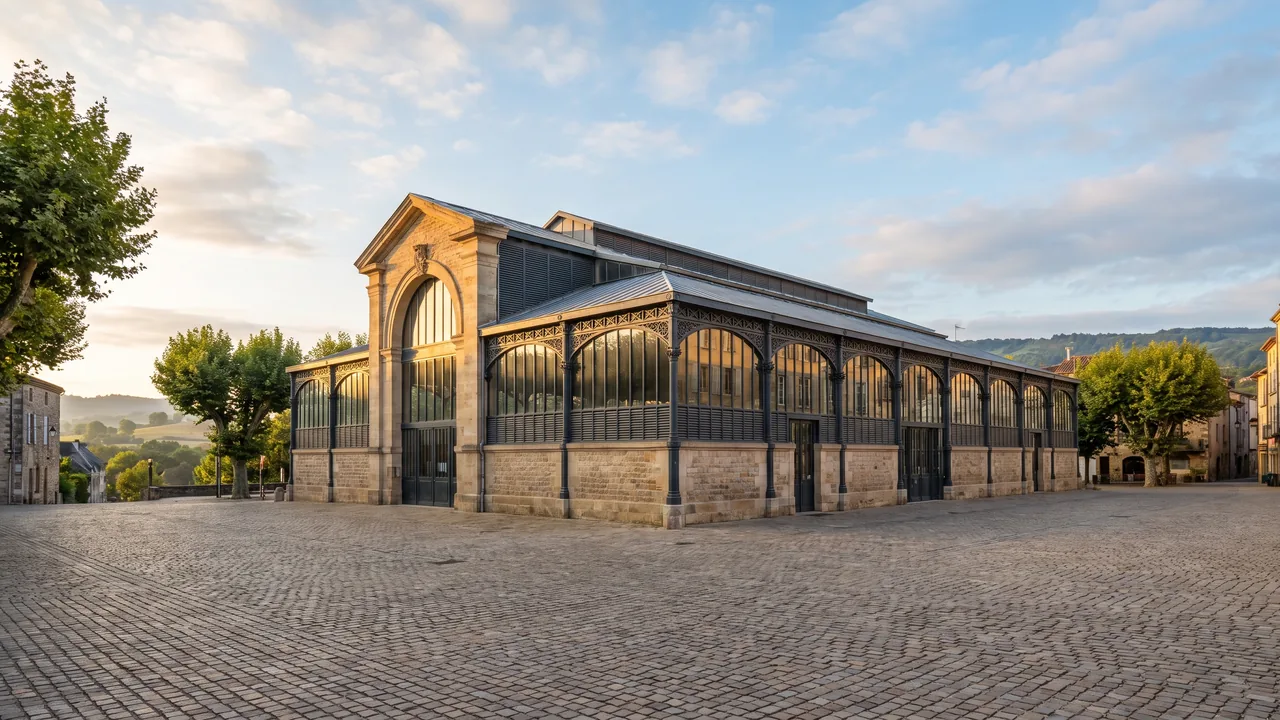
The heart of La Rochelle is its covered market: the Halles Centrales, a vast stone-and-iron hall where people come every morning to buy freshly landed fish, oysters from the coast, and local products from the Charente region. Be aware of a common misunderstanding: these Halles are not not medieval — it’s the towers that are. The covered market dates back to 19th century: he was opened in 1835, designed by architect Brossard and built of Charente stone, before taking on its current form at the late 19th century century, with its large metal and glass naves inspired by Baltard’s famous market halls in Paris. Today, it’s one of the most beautiful and vibrant markets in western France, open every morning, and the best place to get a feel for the city’s culinary scene.
A 19th-century market hall, not a medieval market
The history of Les Halles is the history of the 19th century the industrial and commercial era. The first market hall, opened in 1835, was built by the architect Brossard in Charente stone, that beautiful light-colored limestone that gives the entire city its golden glow. Then, at the end of the century, the architect Corbineau added large ones to it metal and glass naves, directly inspired by the pavilions of Baltard which at the time defined the modernity of Paris. The result combines the solidity of Charente stone with the lightness of the steel frame—an architectural style typical of its era, as far removed as possible from the Middle Ages, with which it is sometimes mistakenly associated. The market opens every morning and readily spills out onto the surrounding streets and squares; it is there that, every day, a vital part of La Rochelle’s way of life unfolds, amid stalls selling seafood, cheese, fresh produce, and Charente specialties.
Every summer, La Rochelle comes alive to the beat of the Francofolies, one of the major French-language music festivals. In 2026, the festival will celebrate its 41 July 10–14 edition (Francofolies, 2026 Edition). The beating heart of it all is the Jean-Louis Foulquier Stage, named after the festival's founder, located on the Saint-Jean-d'Acre esplanade, right at the foot of the towers; the concerts are also held at La Coursive, the Grand Theater and The Mermaid. For five days, the entire city transforms into an open-air stage, including the quays and squares. For visitors, it’s a magical time—but also a period of very heavy crowds: it’s best to book your transportation and accommodations well in advance if you’re planning to visit during these dates. Here’s a quick overview of the key events to know before planning your trip.
| Appointment | When | Where / Good to Know |
|---|---|---|
| Les Halles Market | every morning | fish, oysters, products from the Charente region — Central Market (1835) |
| Francofolies 2026 | Previous edition: July 10–14 | Jean-Louis Foulquier Stage, La Coursive, Grand Théâtre, La Sirène |
| Swimming in the City | summer | Concurrence, Minimes, and Chef de Baie beaches (smoking prohibited) |
Around La Rochelle: Île de Ré and the Charentes
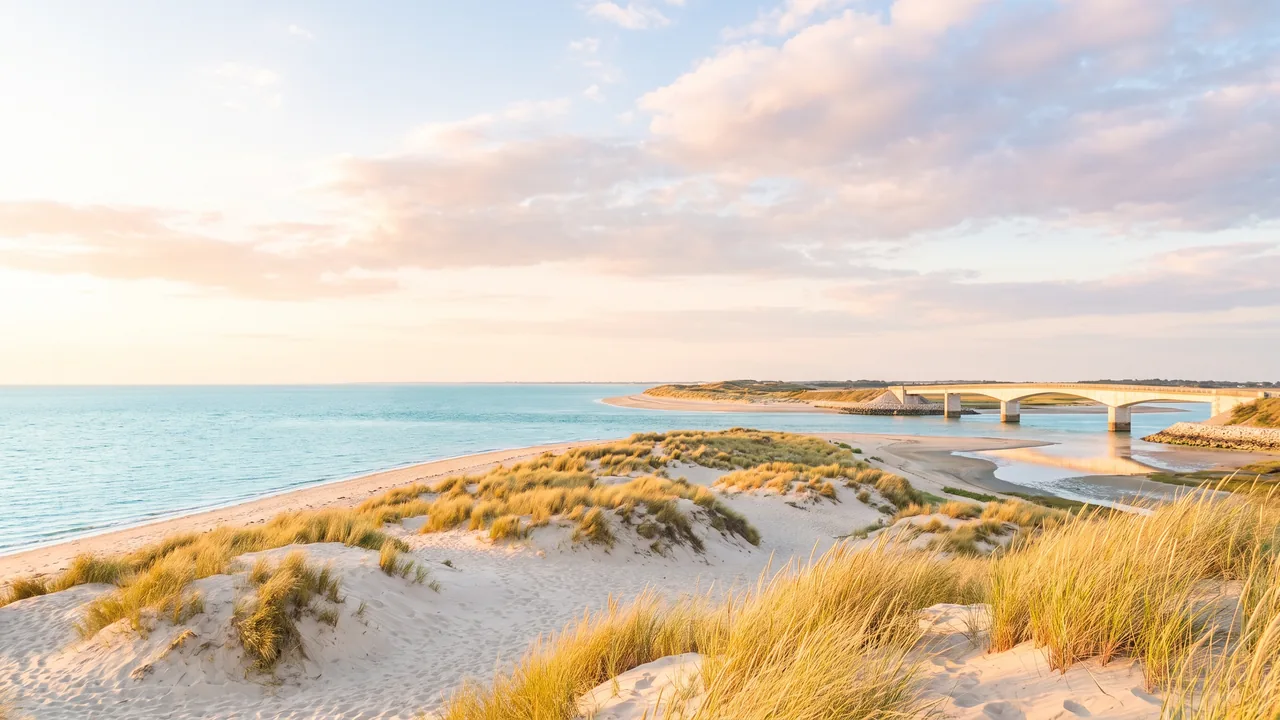
La Rochelle is also a gateway: just one bridge away lies the Île de Ré, and all around it are the towns of the Charentes region—Rochefort and its naval base, Saint-Martin-de-Ré and its citadel, Niort, and the Marais Poitevin. The Île de Ré can be reached by a bridge 2,926.5 meters long, inaugurated on May 19, 1988, which connects La Repentie—near the port of La Pallice—to Sablanceaux, in the municipality of Rivedoux-Plage. A word of caution is in order, as this is a common mistake: This bridge is not free. For a light vehicle, the round-trip fare ranges from €4 during the off-season to €16 during the high season according to the official bridge toll schedule, accessed in July 2026. Once you're on the island, you'll find beaches, salt marshes, and white villages with green shutters waiting for you. Here's how to explore the area around La Rochelle.
The Île de Ré and its toll bridge
The Île de Ré is a popular getaway for residents of La Rochelle and their visitors. It is accessed via the bridge—2,926.5 meters across the Pertuis strait, inaugurated in 1988—and it’s important to know the toll rates. The Île de Ré Bridge is subject to an eco-tax. The amount varies depending on the vehicle category and the time of year, and may change annually: check the current rates on the bridge’s official website before your trip. For a private chauffeur service to the island, the quote will specify the applicable crossing fees. Once there, the island offers sandy beaches, salt marshes, bike paths, and picturesque villages: led by Saint-Martin-de-Ré and its Vauban citadel (~26 km from La Rochelle), or the village of Bois-Plage-en-Ré, the island’s seaside and wine-growing heart.
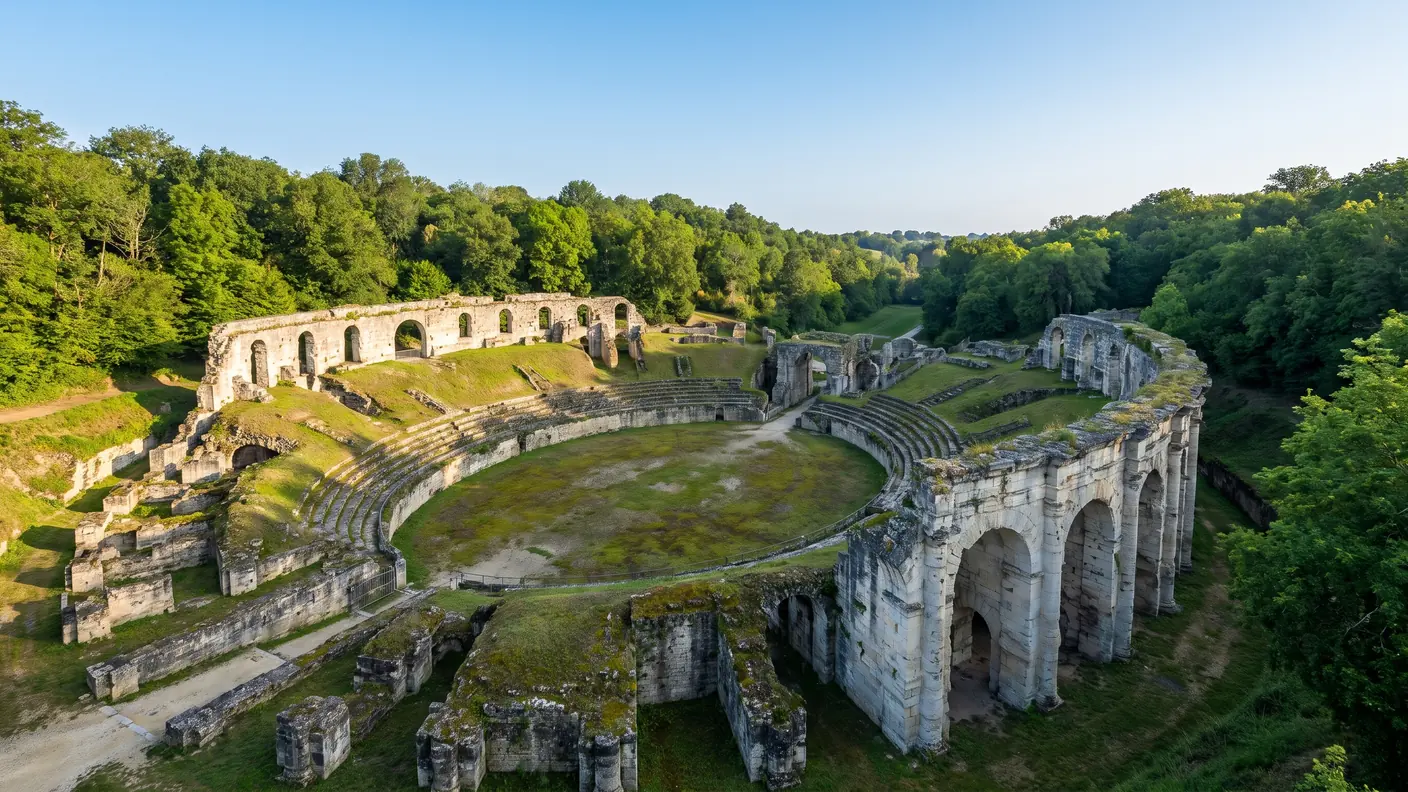
Beyond the island, La Rochelle encompasses a country rich in charming towns. To the south, about 35 kilometers, Rochefort is home to one of the finest collections in French naval history: the Royal Arsenal as envisioned by Colbert, the Royal Rope Factory and the frigate Hermione — the topic of our Rochefort Guide. Further inland, Saintes, the former Mediolanum Rome, with its Arch of Germanicus, ancient amphitheater, and abbey—all waiting to be discovered in our Guide to Saintes. To the east, Niort (~64 km) opens the doors to the Poitevin Marshes, the “Green Venice” with its shaded canals. This makes it possible to plan a multi-day itinerary centered around La Rochelle that combines the ocean, the islands, naval history, and the Charente hinterland—with each stop less than an hour from the prefecture.
| Destination | Distance / Time | Must-See |
|---|---|---|
| Base of the Île de Ré Bridge | ~13 km · ~25 min | Toll: 4–16 € · beaches, salt marshes, white villages |
| Saint-Martin-de-Ré | ~26 km · ~32 min | Vauban-era citadel (a designated historic site), the island's port |
| Rochefort | ~35 km · ~34 min | Royal Arsenal, Royal Rope Factory, the frigate Hermione |
| Niort | ~64 km · ~56 min | Gateway to the Marais Poitevin, the “Green Venice” |
How to get to La Rochelle from Bordeaux
A private transfer from Bordeaux to La Rochelle costs €370 in a sedan (1 to 3 passengers), at a fixed price provided in advance, for a 191-km, 2-hour-and-7-minute drive via the A10. It’s a direct and quick route, with no highway changes, dropping passengers off right at the Old Port, at the foot of the three towers. The rate applies during the day; a surcharge applies at night, on weekends, and on holidays, and is always disclosed before the trip. No meter: the price is confirmed in writing and does not change, regardless of traffic or detours. Whether you’re traveling with family, as a couple, or for business, this is the most relaxing way to reach the Atlantic coast—you board in Bordeaux and get off at the La Rochelle waterfront. Here are the details of the options.
How much does the ride cost?
The reference price is €370 for the sedan for 1 to 3 passengers, door-to-door, during the day. It includes pickup at your address in Bordeaux—or at Mérignac Airport, or at the Saint-Jean train station—and drop-off at the Vieux-Port of La Rochelle, a little over 191 km and 2 hours 7 minutes further on. For a group or family with luggage, a van is available upon request. An extension to the Île de Ré — Saint-Martin, Le Bois-Plage — is also priced based on a quote, plus the bridge toll. The table below summarizes the main options; in all cases, the amount is fixed, written, and without surprises, to be paid on board.
| Route | Duration | Rates |
|---|---|---|
| Bordeaux → La Rochelle (sedan, 1–3 passengers) | 2:07 · 191 km | Starting at €370, fixed price |
| Bordeaux-Mérignac Airport → La Rochelle | 2:07 | Based on a quote, door-to-door |
| Île de Ré Extension (Saint-Martin, Le Bois-Plage) | + option | based on a quote (bridge toll not included) |
Why hire a chauffeur service?
Joining La Rochelle as an executive car service offers tangible benefits. First, the downtime: 2 hours and 7 minutes on the highway on the way there, two on the way back—that’s four hours during which you’d often rather read, work, or doze off than be behind the wheel. Next, the drop-off is as close as possible: the vehicle drops you off at the Old Port, right at the entrance to the pedestrian-only Old Town, without you having to search for—or pay for—a parking spot in a downtown area that’s packed during the summer. This is a major advantage in a city that’s best explored entirely on foot. Whether you’re a family with children and a stroller, a couple wanting to enjoy a seafood lunch without worrying about the cost of drinks, or on a time-sensitive business trip, the fixed-price door-to-door service eliminates all the hassles of driving. And if you feel like heading out to Île de Ré or Rochefort, just mention it when you book: the driver will adjust the route, and you can enjoy the scenery.
Frequently Asked Questions
How much does a trip from Bordeaux to La Rochelle cost with a private chauffeur?
A private transfer from Bordeaux to La Rochelle starts at €370 in a sedan (1 to 3 passengers), at a fixed price quoted before the ride, with no meter and no surprise surcharges. The trip covers 191 km in 2 hours and 7 minutes via the A10, door-to-door: from your address in Bordeaux, Mérignac Airport, or Saint-Jean Train Station to the Old Port of La Rochelle. The rate applies during the day; a surcharge applies at night, on weekends, and on holidays. A van is available upon request for a family or group with luggage.
Where is La Rochelle located?
La Rochelle is the prefecture of Charente-Maritime, in the Nouvelle-Aquitaine region, on the Atlantic coast, 191 km north of Bordeaux (2 hours and 7 minutes via the A10). Formerly the capital of Aunis and the fourth-largest city in Nouvelle-Aquitaine, it opens onto the ocean via the Pertuis d’Antioche strait, sheltered by the islands of Ré, Oléron, and Aix. It has a population of 79,851, known as Rochelais, and is home to three ports—fishing, commercial, and recreational—as well as the deep-water port of La Pallice.
Which of the three towers at La Rochelle is the tallest?
It is the Lanterne Tower, standing 55 meters tall, and not the Saint-Nicolas Tower, as is often believed. The Lanterne, dating from the 15th century (1445–1468), combines a cylindrical base with an octagonal spire in the Flamboyant Gothic style; it served as a watchtower and lighthouse before becoming a prison. Saint-Nicolas stands 37 meters tall, and the Chaîne Tower is about 20 meters tall today (originally 34 meters). All three have been classified as Historic Monuments since February 17, 1879, and are managed by the Centre des monuments nationaux.
Why does the Saint-Nicolas Tower lean?
The Saint-Nicolas Tower leans because it was built in the 14th century on marshy ground. To keep it stable in the mud, it rests on a foundation of oak piles driven into the mud, but its foundations gave way during construction: its tilt, visible to the naked eye, exceeds 20 centimeters, or about 2%. Legend attributes its construction to the fairy Melusine. Completed around 1376, it measures 37 meters and has even served as a giant diving board during diving competitions (26-meter jumps) on six occasions between 2009 and 2016.
What is the Great Siege of La Rochelle?
The great siege took place in 1627–1628 and was one of the deadliest in French history (the city had already endured an earlier siege in 1572–1573). Led by Cardinal Richelieu on behalf of Louis XIII, it began on September 10, 1627, and ended with the city’s unconditional surrender on October 28, 1628, after nearly fourteen months. To cut off the Protestant city from the sea, a seawall approximately 1,500 meters long was built. The population fell from about 28,000 to some 5,400 survivors: nearly 22,000 people died, mostly from starvation.
Who was Jean Guiton?
Jean Guiton, born in 1585 and admiral of La Rochelle since 1621, was elected mayor of the besieged city on May 2, 1628. A leading figure in the Protestant resistance, tradition has it that on the day of his election, he plunged his dagger into the marble council table, swearing that he would pierce the heart of the first person to suggest surrender. Note: The table and dagger on display today actually date from the second half of the 17th century, and thus were made after the event in question. Guiton held out until the city was exhausted, just before its surrender in October 1628; he died in 1654.
Is La Rochelle's aquarium the largest in Europe?
The exact phrase is “one of the largest private aquariums in Europe”: it is a family-owned business (the Coutant Group), not a municipal facility. Located since 2001 on the shores of the Grands Yachts basin, it covers 8,445 m², holds approximately 3 million liters of water, some 12,000 animals representing 600 species distributed across 84 tanks, and welcomes nearly 800,000 visitors per year. It is the top-grossing tourist attraction in Charente-Maritime. Its shark tank alone holds about 1.5 million liters, accounting for nearly half of the facility’s seawater.
What is the France 1 docked at La Rochelle?
The France 1 is a former 76.20-meter meteorological frigate and the flagship of the La Rochelle Maritime Museum (founded in 1988 by Patrick Schnepp, which comprises nine vessels, eight of which are designated as Historic Monuments). Built in Le Havre and launched in 1958, she operated the “Roméo” weather station in the middle of the Atlantic from 1959 to 1985, transmitting readings essential for navigation. Decommissioned on December 31, 1985, she arrived at La Rochelle on June 19, 1988, in front of more than 15.000 people. Now a museum ship, she was designated a Historic Monument on February 24, 2004.
Is the Île de Ré Bridge free to cross?
No, the Île de Ré Bridge is a toll bridge. It is 2,926.5 meters long and was opened on May 19, 1988; it connects La Repentie (near La Pallice) to Sablanceaux, in the municipality of Rivedoux-Plage. The Île de Ré Bridge is subject to an eco-tax. The amount varies depending on the vehicle category and the time of year, and may change annually: check the current rates on the bridge’s official website before your trip. For a private chauffeur service to the island, the quote will specify the applicable crossing fees.
When is the Francofolies festival in La Rochelle?
The Francofolies take place every summer in La Rochelle. The 41st edition was held from July 10 to 14, 2026, primarily around the Saint-Jean-d'Acre Esplanade. Dates and venues vary by edition: check the official program before booking transportation and accommodations.
Did La Rochelle invent bike-sharing?
La Rochelle was a pioneer in France, but not the first city in the world. On August 14, 1976, Mayor Michel Crépeau made 250 free “yellow bikes” available at three stations, three decades before Paris’s Vélib’ system: this was the first time a French municipality had launched such a service. However, Amsterdam had already experimented with its “white bikes” as early as 1965, and Canet-en-Roussillon had made a thousand bikes available in the summer of 1975. The correct term is therefore “French pioneer” of bike-sharing, which remains a remarkable distinction for a city that is now among the most bike-friendly in France.
Is the town hall in La Rochelle really the oldest in France?
The La Rochelle town hall is said to be the oldest French town hall still in use: the city council has been in session there since 1298, representing more than seven centuries of continuous operation. Behind a Gothic perimeter wall, it features a richly sculpted Renaissance façade. Designated a Historic Monument on December 27, 1861, it was severely damaged by an electrical fire on June 28, 2013; its restoration was completed in late 2019. Nearby, the Grosse Horloge—a former city gate equipped with a bell and a clock in 1478—completes this ensemble of civic monuments.
What can you see in one day at La Rochelle?
You can see the highlights in a single day, since everything is within walking distance. Start with the three towers of the Old Port—Saint-Nicolas, La Chaîne, and La Lanterne—then stroll along the quays and beneath the arcaded streets that are more than four centuries old. Walk under the Grosse Horloge, admire City Hall, and stop for a bite to eat at the Halles Centrales (market open every morning). If time permits, add the Aquarium or the Maritime Museum and its frigate, the France 1. Allow at least half a day just for the towers and the old town; the Île de Ré, meanwhile, deserves a trip all its own.
Further Reading
- Colbert's Arsenal: see the Rochefort Guide (the Corderie Royale and the frigate Hermione, about 35 km away)
- The Rome of Aquitaine: see the Saintes Guide (Arch of Germanicus, Roman amphitheater, and abbey)
- The Île de Ré's Wine Region: See the Guide to Bois-Plage-en-Ré (beaches, salt, and the island's wine)
- Book your trip: book online or browse all our destinations
Sources and References
- City of La Rochelle / Tourist Office — landmarks, markets, beaches, events calendar
- La Rochelle Tours — National Monuments Center — The Three Towers, Tours
- Mérimée Database / POP (Ministry of Culture) — Historic Monuments Designations
- La Rochelle Aquarium — Statistics, Species, Visits
- INSEE — Municipality of La Rochelle (17300) — Demographics
- Île de Ré Bridge (Department 17) — toll rates, eco-tax
- Francofolies by La Rochelle — Official Website — Schedule and Lineup
Article updated in July 2026.
Our Latest Guides
On the way to the Old Port of La Rochelle
Direct transfer from Bordeaux (2 hours and 7 minutes via the A10) to the Three Towers, the Old Port, and Les Halles. Written, no-obligation fixed-price quote; payment on board.