Bordeaux to Birac: Cognac Country
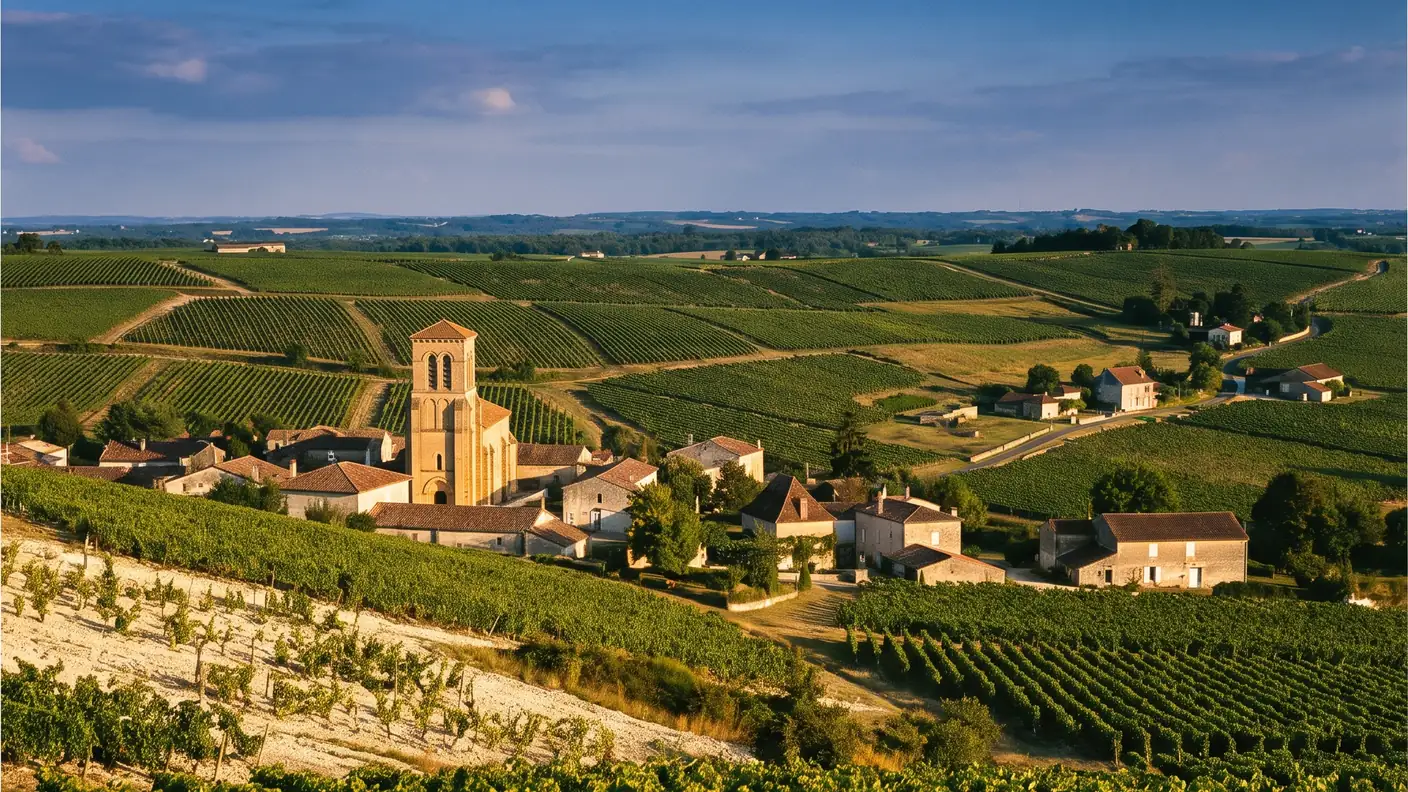
A wine-growing village in the Charente, in the heart of Petite Champagne : a region known for cognac and Pineau, nestled between two grand crus, a Notre-Dame church, and the Route des Crus—and not a river in sight—about 1 hour and 15 minutes from Bordeaux.
Birac at a Glance
Birac is a small wine-growing village in the Charente region, in the heart of the Petite Champagne appellation, within the Cognac appellation area. Perched on a limestone plateau south of Châteauneuf-sur-Charente, it is a town of vineyards and dry hillsides—without a single permanent river—whose economy revolves around Cognac, Pineau des Charentes, and direct sales from the estate. Visitors can explore a modest Notre-Dame Church, scarred by the Wars of Religion—not to be confused with the Romanesque church with frescoes in Birac-en-Gironde, a different town—and we’ll pass through a landscape of farms and traditional Charente farmhouses. All of this is just over an hour from Bordeaux, at the gateway to the great capitals of brandy.
Here are the key details to know before you go. Road distances are calculated door-to-door; rates are based on an executive car service from Bordeaux, with a fixed price provided in advance.
| Key fact | Details |
|---|---|
| Department | Charente (16), Nouvelle-Aquitaine |
| Status | Wine-growing village · Cognac district · Grand Cognac |
| Population | ≈ 374 residents (2023) · the residents of Birac · source: INSEE, municipality 16045 |
| Area | ≈ 11.84 km² · limestone plateau, with no permanent rivers |
| Terroir | Petite Champagne Cru · Cognac AOC region |
| Distance from Bordeaux | about 107 km · a little over an hour's drive |
| Nearest train station | Châteauneuf-sur-Charente (~5.5 km), TER Nouvelle-Aquitaine |
| Don't miss it | Notre-Dame Church, Charente-style houses, a tour of a cellar at a cognac producer's estate |
A word of honesty right off the bat: don’t look for a river in Birac—the town has no permanent river; just a stream that’s often dry. And watch out for places with the same name, because there are many: the “Château de Birac,” listed as a historic monument, is actually located in Birac-sur-Trec (Lot-et-Garonne), and theRomanesque Church of Saint-Laurent, featuring listed frescoes which is often attributed to the village is located in Birac-en-Gironde, in the Bazadais region. Here in Charente, the landmark is the church Notre-Dame and its history.
This guide covers everything you need to know before you come: where Birac is located and why it’s a “riverless” village, what Petite Champagne is and its place among the six Cognac crus, the craftsmanship behind Cognac and Pineau, the Notre-Dame Church and the misleading namesake of Birac-en-Gironde, the traditional houses and farms , a bit of history ranging from Roman roads to phylloxera, notable sites in the surrounding area, and the easiest way to get to Birac from Bordeaux.
Where is Birac located?
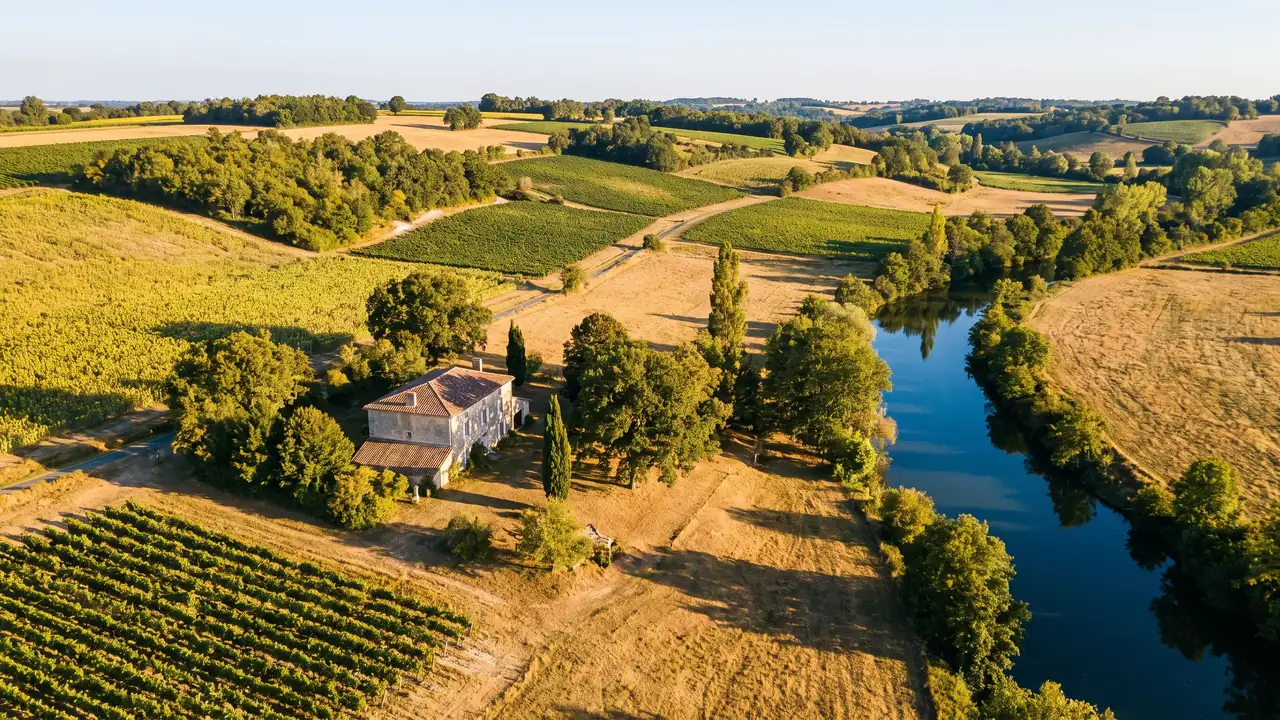
Birac is a commune in the Charente department (16), in Nouvelle-Aquitaine, in southwestern France, a few kilometers south of Châteauneuf-sur-Charente and about 25 km southwest of Angoulême. It is part of the Cognac arrondissement and the canton of Charente-Champagne, and belongs to the “Grand Cognac” urban community. Its coordinates are 45.56° N and 0.06° W, INSEE code 16045, and its ZIP code is 16120. The municipality covers approximately 11.84 km² of plateaus and hillsides, right in the heart of the brandy-producing region, halfway between Angoulême and Cognac.
A village in the Petite Champagne region
Birac is located in the heart of Petite Champagne, one of the six defined crus of the Cognac appellation. It is a terroir of limestone hillsides, renowned for the finesse of its eaux-de-vie, and lies immediately adjacent to the prestigious Grande Champagne. Here, the vineyard is not merely a backdrop: it occupies a large portion of the territory (nearly 44% of the land is under permanent cultivation) and shapes the landscape, the economy, and the village’s rhythm of life. Around the village, rows of vines alternate with woods, isolated farms, and quiet homes, bathed in the soft light typical of the Charente region—a name that has nothing to do with the Champagne region known for its sparkling wine, but which refers to these chalky soils, similar to those that produce the great sparkling wines.
The word “champagne” comes from the Latin *campania*, meaning “cultivated plain ”: it is the same Cretaceous chalk, deposited by ancient seas, that outcrops here as it does in Northern Champagne. In Birac, this soft, deep subsoil retains just the right amount of water for the vines and gives them their sought-after finesse. It is said, in fact, that these hillsides “drink” the rain: this is also why a village here can be both a wine-growing community and devoid of a river at the same time.
A village without a river
Here’s what makes Birac unique: it’s a wine-growing village without a river. The town has no permanent waterways; only the Biau stream, on its northwestern edge, flows intermittently—dry for most of the year—before join the Charente at Châteauneuf. Birac belongs to the Charente watershed, but the river does not flow through its territory. The topography explains it all: the town sits on a Cretaceous limestone plateau, between two cuestas facing northeast, with a low point at 49 m (the Biau valley) and a high point at 131 m (Puycaillon), while the town lies at an altitude of about 75 m. It is a region of dry hillsides and plateaus, where water seeps through the porous rock rather than flowing on the surface—an ideal terroir for vineyards, with a character entirely different from that of riverside villages.
Birac, a region in Petite Champagne
To understand Birac is to understand Petite Champagne. The Cognac appellation is divided into six crus, ranked according to the nature of their soils and the finesse of the eaux-de-vie they produce. Birac belongs to the second of these crus, just behind Grande Champagne—a highly enviable position that explains the reputation of its cognacs. Far from being a mere administrative detail, this affiliation with a defined cru is what gives the Birac vineyard its value: on the same map, two plots just a few kilometers apart can produce very different eaux-de-vie and sell for prices that are worlds apart, depending on the cru to which they belong. The current regulatory framework is available on the official INAO fact sheet (accessed July 24, 2026).
One of the six cognac crus
The six cognac crus, ranked from the most prestigious to the most rustic, are: Grande Champagne (premier cru, with the finest eaux-de-vie that require the longest aging), Petite Champagne (including Birac, very similar to Grande in terms of finesse), the Borderies (the smallest cru, with floral and hazelnut notes), the Fins Bois (fruity and round, maturing more quickly), then the Bons Bois and the Bois ordinaires, which are more rustic. The distinction is based primarily on the soils: the two “Champagnes” owe their names to their chalky, soft, and deep subsoils, which produce eaux-de-vie of great delicacy. A “Fine Champagne” cognac is in fact a blend of Grande and Petite Champagne comprising at least 50% Grande—which is to say that Petite Champagne plays in the big leagues.
| Cognac cru | Reputation | Connection to Birac |
|---|---|---|
| Grande Champagne | 1er cru, the finest brandies | Neighbor (Segonzac, Bouteville) |
| Petite Champagne | 2nd cru, with finesse comparable to Grande Champagne | ✓ Birac is located there |
| Borderies | The smallest cru, with floral notes | North of Cognac |
| Fins Bois | Fruity, full-bodied, quick to mature | Surrounding vineyard belt |
| Bons Bois / Bois Ordinaires | More rustic, close to the ocean | Outer reaches of the appellation |
Between Two Grande Champagne Villages
There’s something charming about Birac’s location: the village is in Petite Champagne, yet it’s nestled between towns in Grande Champagne. Right nearby, Segonzac is considered the capital of Grande Champagne, and Bouteville, just a few kilometers away, also belongs to the premier cru. The “border” between Cognac’s two finest crus thus runs just a stone’s throw from the vineyards of Birac. For the connoisseur, this is a godsend: in a short loop, one can compare eaux-de-vie from Petite and Grande Champagne, understand how a soil that is slightly more or slightly less chalky makes a difference, and gauge just how much geology determines the character of a cognac here. Few terroirs in the world offer, over such a short distance, such an open-air tasting lesson.
Coquand, the geologist who mapped the wine regions
This classification of terroirs is by no means an administrative decision made behind a desk: it bears the mark of one man, the geologist Henri Coquand. Around 1860, surveying the region plot by plot, he ranked the soils according to the finesse of the eaux-de-vie they produced—Grande Champagne at the top, Petite just behind it. The famous Decree of January 13, 1938, which enshrines the six crus in the appellation’s history, merely ratified his classification, established eighty years earlier. In other words: when you taste a Birac cognac, you are tasting the verdict of a 19th-century expert focused on Cretaceous chalk. The Fine Champagne designation, on the other hand, allows for the blending of the two finest crus, provided that at least 50% is "Grande"—a cognac from Birac can therefore legally fall into this prestigious category.
Cognac, Pineau, and direct sales from the estate
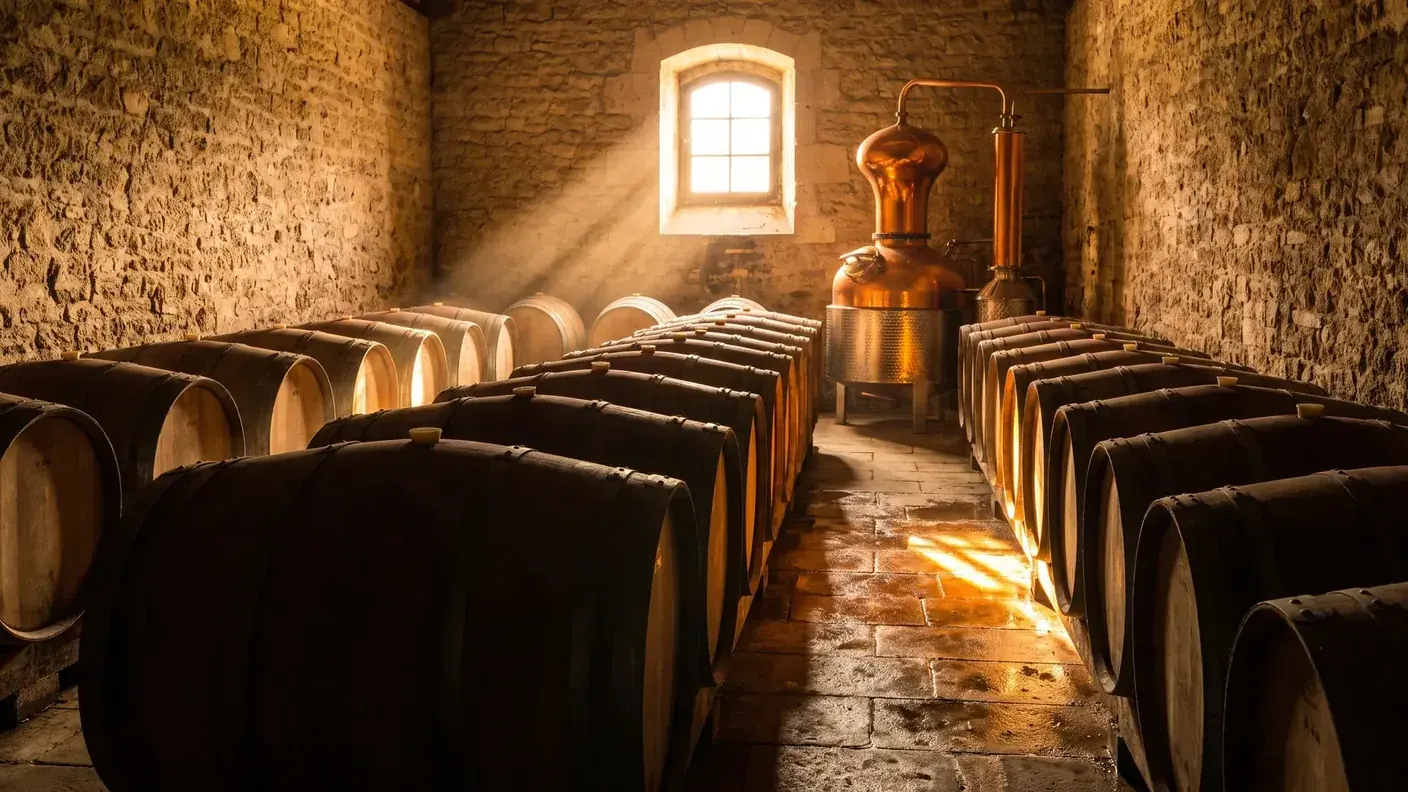
In Birac, winemaking isn’t just a thing of the past—it’s the village’s main industry. A large part of the local economy depends on the vineyards, and many producers sell their cognac, Pineau des Charentes, and wines directly from the estate. This is your chance to meet passionate winemakers, tour a cellar, and gain insight—glass in hand—into centuries-old expertise. These small family-run estates, often passed down through generations, cultivate their own vineyards, distill their own wine, and age their eaux-de-vie on-site. That is what “estate sales” means, in contrast with the large trading houses that buy and blend. Stepping inside a Birac cellar, then, means discovering an intimate, small-scale production—very different from the industrial image we sometimes associate with cognac.
The Charente Double Distillation Process
Cognac is a grape brandy produced through double distillation—the traditional Charentais process—in a direct-fired copper pot still. The white wine, which is acidic and low in alcohol, is distilled a first time to produce a “brouillis,” which is then redistilled to extract the “cœur de chauffe,” the only fraction that is retained. This colorless brandy is then aged for many years in oak barrels, where it develops its amber color, aromas, and roundness. Time does the rest: a cognac bears its designations (VS, VSOP, XO…) only based on the age of the youngest eau-de-vie in the blend. In a cellar in Birac, you can sense this slow alchemy—the scent of oak, the “angels’ share” that evaporates, the dim light where the barrels rest.
It all begins, however, with a modest white wine. The premier grape variety of cognac is Ugni Blanc (the Italian Trebbiano, also known here as “Saint-Émilion of the Charentes”), which is tart and not very sweet, sometimes blended with Folle Blanche and Colombard—grapes that one would hardly drink as is, but which, after distillation, yield eaux-de-vie of great purity. Aging then takes place in oak barrels sourced from French forests, notably from Limousin (with a coarser grain, which releases its tannins quickly) and Tronçais (with a fine grain that releases tannins more slowly): the choice of wood, the size of the barrel, and the aging period shape the color and the aromas of vanilla, candied fruit, and rancio that define a cognac’s signature. It is this painstaking blend of eaux-de-vie of different ages and vintages that the cellar master crafts, year after year.
Pineau des Charentes
In addition to cognac, the region produces an iconic aperitif: Pineau des Charentes . It is a fortified wine made by fortifying fresh grape must with cognac, with both components coming from the same estate . The result—white, rosé, or red—is sweet, fruity, and full-bodied, served chilled as an aperitif or paired with melon, foie gras, or dessert. Legend has it that it was born of an accident: a winemaker is said to have inadvertently poured must into a barrel that still contained brandy. Producers in Birac also make still wines, now grouped under the Charentais PGI (the former “vin de pays” designation). A visit to the estate allows you to taste the entire range and leave with some fine bottles, often unavailable elsewhere. The National Committee for Pineau des Charentes officially defines the appellation and the fortification process on its reference page (accessed July 24, 2026).
| Product | What It Is | In Birac |
|---|---|---|
| Cognac | Double-distilled wine brandy, aged in oak barrels | Sold directly by the producer |
| Pineau des Charentes | Grape must fortified with cognac (from the same vineyard), served chilled | AOC, a Charente aperitif |
| Charentais PGI | Still wines from the region (formerly “vin de pays”) | White, rosé, red |
Notre-Dame Church: A Reminder of the Wars of Religion
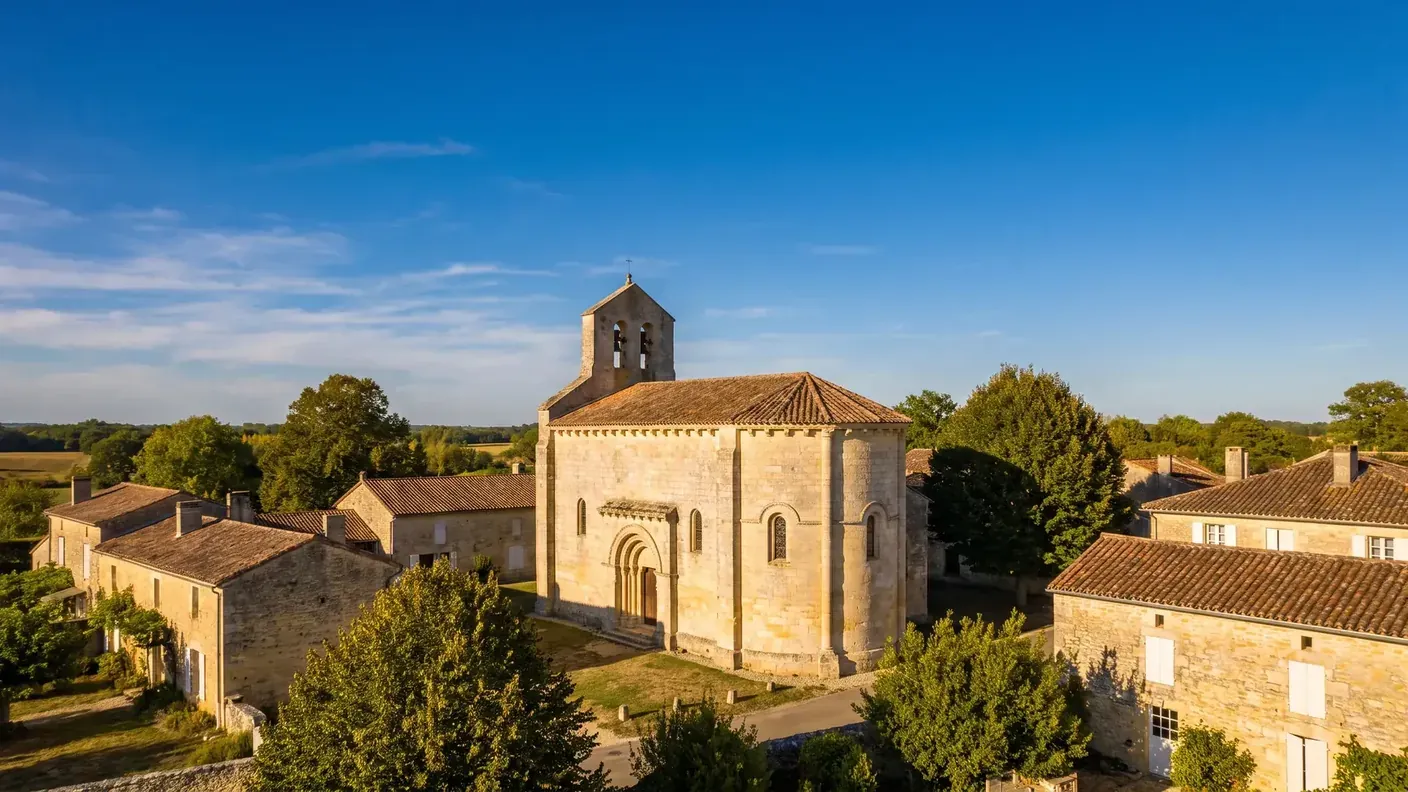
The landmark of Birac is its Notre-Dame Church: a modest country parish church, whose history bears the scars of the Wars of Religion and which is flanked by a fountain reputed to have healing powers. No crowds here, no spectacular treasures—but the silence of an old Charente church, the coolness of the light-colored stone, and that richness of history that makes the detour worthwhile to a village that, otherwise, lives mainly off its vineyards. First, a clarification is in order, since Birac is a frequent source of confusion.
Notre-Dame, not Saint-Laurent: Watch out for the namesake
It is often claimed that Birac is home to a Romanesque church dedicated to Saint Lawrence, adorned with listed frescoes depicting the Last Judgment: this is false, and it is one of the town’s most persistent misconceptions. That church—Romanesque, with medieval murals, designated a historic monument in 2005—is located in Birac-en-Gironde, in the Bazadais region, about 100 kilometers from here (Mérimée entry PA00083144). The town of Birac in Charente, on the other hand, has a church dedicated to Notre-Dame, with no frescoes and no listed status: three French towns bear this name (Charente, Gironde, and Birac-sur-Trec in Lot-et-Garonne), and guidebooks tend to copy one entry for another. Restored, the true face of Notre-Dame de Birac is, however, anything but ordinary.
The Scars of the Wars of Religion
The building probably dates to the 13th century, but its visible history begins amid the turmoil of the Wars of Religion. Devastated by Protestant forces, the church did not regain its roof until 1630, nearly a century after its destruction. The apse was remodeled in the 15th and 16th centuries and features a fine eight-ribbed vault, while the nave was re-vaulted in 1900. A composite church, then, where each century has left its mark on a medieval core: the kind of building that is modest in size but reads like a history book to anyone who takes the time to walk around it.
The Bell of Saint-Émilion and the Healing Fountain
Two details make Notre-Dame all the more endearing. Inside, a 15th-century statue of the Virgin and Child and a stained-glass window from 1883 ; on the bell tower, a bell cast in 1879 in Saint-Émilion — a nice nod from the land of cognac to the neighboring Bordeaux vineyards. And outside, the tradition: a fountain reputed to have healing powers, which was said to be effective against wounds, flowed near the church, while a niche carved into an apse buttress is said to have housed a revered statuette. For a village “without a river” with a population of 374 residents, a church steeped in history and its healing spring: the cultural heritage here is richer than it seems, and that’s the best reason to stop by on your way to the wineries.
Charente-Style Homes and Farms on the Plateau
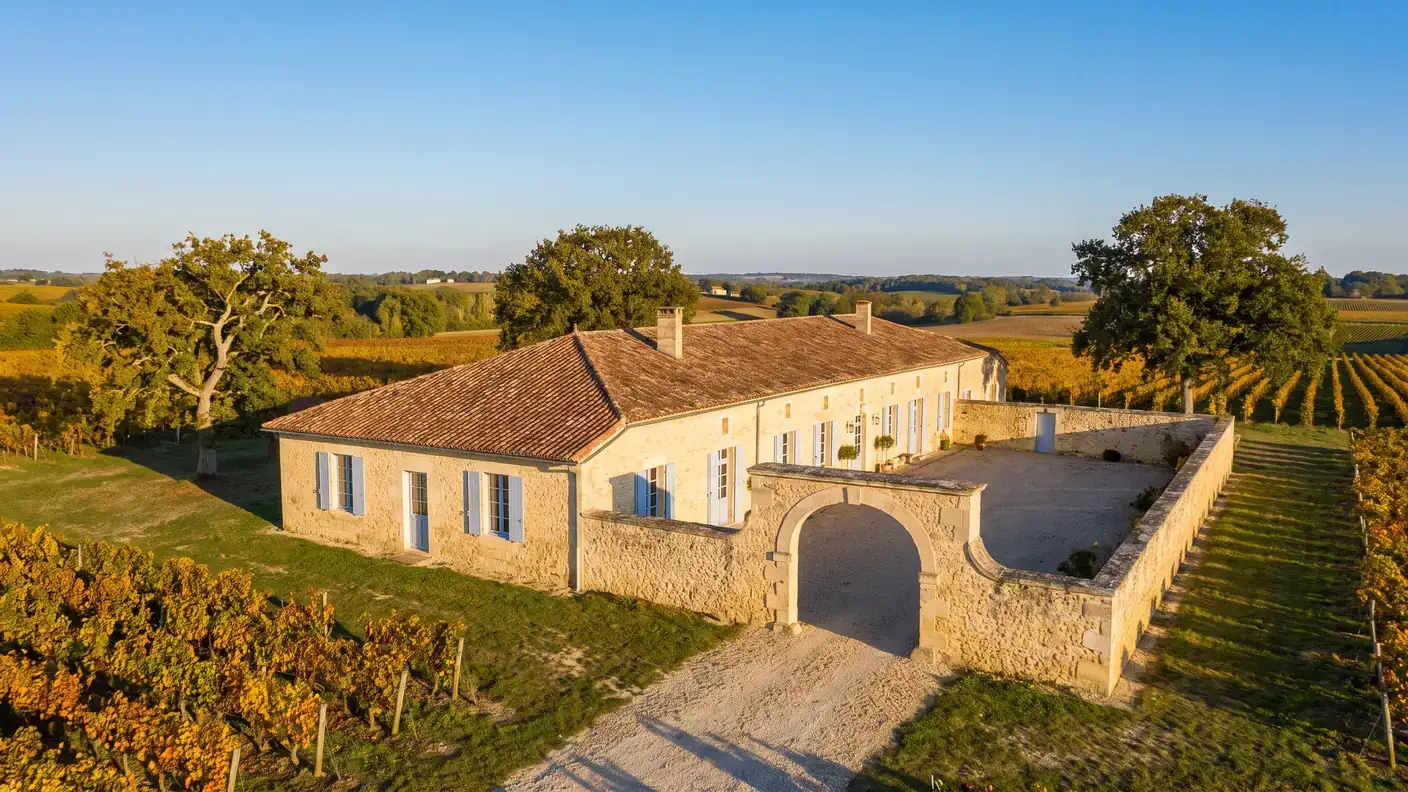
Beyond its church, Birac reveals itself through its mansions and Charente-style farmhouses, scattered throughout the countryside. The Charente-style mansion is a typical residence of the region: a stately home, often belonging to a wealthy winegrower, arranged around a courtyard enclosed by a monumental gate. None of these homes are designated as historic monuments—they are private properties— but together with the farms, they form a built landscape of great harmony.
The Bouries' Home
The oldest is the Logis des Bouries (formerly “ des Beauries”), whose oldest sections date back to the 15th century, with a beautiful Renaissance doorway added in the 16th century. A fief of the Dussault family in the 15th and 16th centuries, expanded over the following centuries, it is the jewel of Birac’s civil architecture. Today, it houses a bed-and-breakfast (a business established in 2011): so guests have the rare opportunity to stay in this residence steeped in history, amidst the vineyards of Petite Champagne. It’s an ideal way to take in the region’s pace of life, between a visit to a winery and a stroll across the plateau.
The other homes (Gilberts, Rosier, the Rectory)
Birac has several other manor houses. The Gilberts’ manor house dates from the 17th century; the Rosier manor house, also from the 17th century but remodeled in the 19th, as well as La Cure and Le Maine Charles, near the village. In addition to these residences are numerous Charente-style farmhouses from the 17th–19th centuries, recognizable by their courtyards and gatehouses (such as the Gallacherie), which dot the countryside. This rural heritage, while not spectacular, tells the story of centuries of winegrowing: each house, every farmhouse, every gate bears witness to a family, an estate, and a history of vineyards and brandy passed down from generation to generation on this plateau of the Charente Champagne region.
| House / Farm | Period | Status |
|---|---|---|
| Logis des Bouries (formerly Beauries) | 15th-century section · Renaissance doorway | Private · Bed and Breakfast |
| Gilberts' Home | 17th century | Private |
| Logis du Rosier | 17th century, revised in the 19th century | Private |
| La Cure · Le Maine Charles | Near the village | Private |
| Farms in the Charente region (La Gallacherie…) | 17th–19th centuries | Private |
Roman roads, vineyards, and phylloxera
The history of Birac is more about the land than about a famous name: a land of travelers and vineyards, in the former Angoumois region. Here you’ll find neither a famous castle nor a renowned battle, but rather the subtle traces of a long history of rural settlement, and the story—shared by the entire region—of a vineyard that was upended and then reinvented.
Along ancient Roman roads
The Birac area is crisscrossed by ancient Roman roads, evidence of settlement dating back to very ancient times: the Boisné Road, which connected Saintes to Périgueux, and the Faye Road. These ancient routes serve as a reminder that Saintonge and Angoumois were, as far back as the Gallo-Roman era, regions of trade and agriculture. The town belonged to the former province of Angoumois, the historic heart of the Charente, before the Revolution redrew the departmental boundaries. As is often the case in these rural areas, the history of Birac is better understood not from books but from the landscape: the course of a path, a farmhouse, a church, or the boundary of a vineyard.
These old routes were used for the trade in salt, wine, and later brandy, long before modern roads were built; they connected the fairs, the ports of the Charente, and the major cities inland. It is therefore no surprise that the village, set apart from today’s major thoroughfares, has long lived at the slow pace of agriculture and viniculture, without ever experiencing either industrial growth or the mass exodus seen in better-located towns.
Vines, Phylloxera, and the Revival of Cognac
Vineyards have dominated this region for centuries. At the end of the 19th century, the entire Cognac wine region was ravaged by phylloxera, an aphid native to America that destroyed a vast portion of the vineyards and threw the region into turmoil: mass exoduses, career changes, and replanting on American rootstocks. It took decades for the Charente vineyards to recover, and this crisis remains etched in the collective memory of the Cognac region. In Birac itself, the winemaking tradition dates back a long time: a local house traces its presence in the village back to 1750, with a hamlet that still bears its name.
The restoration was a Herculean task: in the 1870s and 1890s, the diseased vines had to be uprooted and replanted by grafting Charente grape varieties onto American rootstocks, the only ones resistant to the aphid—a revolution that permanently changed the character of the vineyard and its geography, as some terroirs never fully returned to vine cultivation. Today, the vineyards and brandy remain the beating heart of the village, in a thriving global cognac market driven by exports to Asia and North America.
The Village and the Limestone Plateau
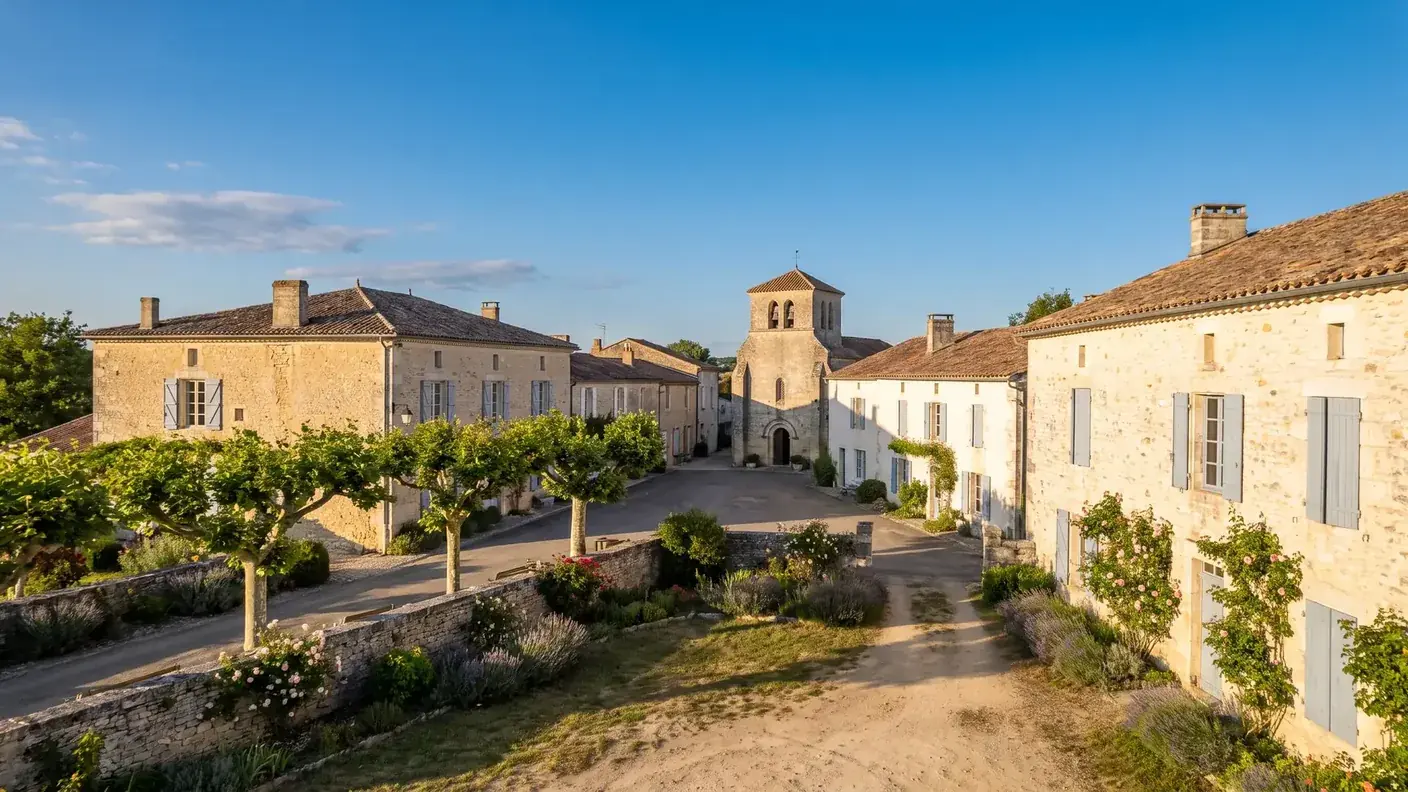
Birac is a quiet, scattered plateau village, typical of the Charente region of Champagne. The village center, gathered around its church, features light-colored stone houses, farms, and dwellings, while the hamlets and farms are spread across the plateau, amidst the vineyards. It is a typical rural community, without a central landmark, where life revolves around the wine estates.
A landscape of cuestas and dry hillsides
Birac is situated on a Cretaceous limestone plateau, flanked by two cuestas — landforms that slope gently on one side and more steeply on the other — running northeast. The elevation ranges from 49 m in the Biau valley to 131 m at a place called Puycaillon, with the village situated at about 75 m. These are dry hillsides with chalky, well-drained soils, where water seeps into the ground rather than runs off: ideal conditions for grapevines, which thrive in these poor, well-exposed soils. Land use confirms this vocation: in 2018, nearly 90% of the territory was agricultural, a large portion of which was vineyards. Walking across the Birac plateau means traversing a mosaic of plots, woods, and farms, bathed in bright light— a landscape that lacks the postcard-perfect charm of riverside villages, but possesses the austere and authentic charm of the great wine-growing regions.
As the seasons change, this plateau transforms: soft green in spring, golden in summer, coppery in fall when the vines turn red, almost mineral-like in winter, when the pruned vines trace their bare outlines against the chalk. It’s a setting more suited to work than to tourism, and that is precisely what appeals to those seeking the real Charente— the one of the winemakers, not the one in the brochures.
What's there to see around Birac?
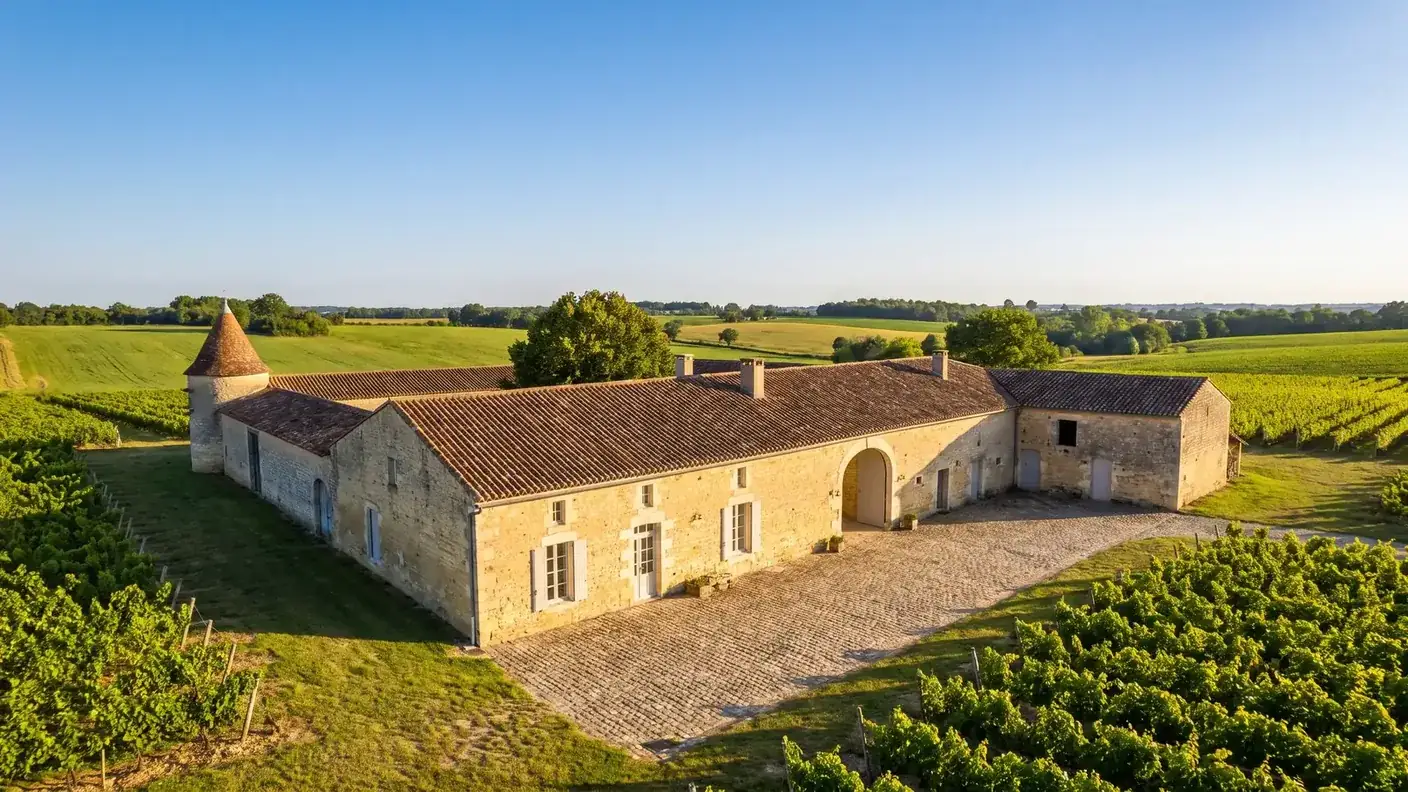
Birac is an excellent starting point for exploring the Cognac region and the Charente Champagne region. Just a few minutes’ drive away are the capitals of brandy, charming towns, and other wine-growing villages, all within a very compact area centered on the Charente Valley. This is one of great assets of Birac: its central location, equidistant from Angoulême and Cognac, makes it an ideal base for a two- or three-day getaway, combining visits to wine cellars, Romanesque heritage sites, and fine dining featuring Charente regional cuisine.
The Cognac Capitals
Cognac, about thirty kilometers away, is the world capital of brandy: the major houses (Hennessy, Martell, Rémy Martin, Camus, and others) open their cellars to visitors along the Charente River. Nearby Segonzac is the heart of the Grande Champagne region, a premier cru, and a mecca for tasting. Jarnac, on the Charente River, is home to other prestigious houses (Courvoisier, Hine) and the grave of François Mitterrand. For anyone interested in cognac, this small area contains everything worth seeing—and Birac lies at its geographical center.
Charming Towns and Villages
Angoulême, about 25 km away, a city of art perched on its plateau, is worth a visit for its ramparts, its Romanesque cathedral, and its famous comic book festival. Châteauneuf-sur-Charente (~5.5 km), the small neighboring town, boasts a beautiful Romanesque church with a carved façade and is home to the nearest train station. Further south, Barbezieux (~13 km), the capital of Petite Champagne, and Bouteville (~11 km), a town in Grande Champagne whose castle—first mentioned in 866, designated a historic monument in 1984, and reopened to the public in 2024 following restoration—rounds out the experience. This entire region offers a condensed taste of authentic Charente—vineyards, light-colored stone, Romanesque churches, and brandy—to be savored at the leisurely pace of the country roads.
Tasting wines, visiting a family-run winery
To really get a feel for the local area, nothing beats a walk: two marked trails start right in the village itself, Le Quinze de Birac (about 14.9 km) and Le Six-Sept Biracois (about 6.6 km), through vineyards, woods, and farms—enough to help you understand, step by step, this landscape of dry hillsides. As for wine tastings, the most iconic winery in the area can be visited at Bouteville (11 km): the Paul Giraud Cognac, a family-owned property since 1635 — eleven generations on some fifty hectares in Grande Champagne — opens its cellars by appointment. It is the perfect embodiment of the Cognac region: an eau-de-vie born of the soil, the climate, and a family lineage, passed down as both a legacy and a craft.
| Around Birac | Distance | Interest |
|---|---|---|
| Châteauneuf-sur-Charente | ~5.5 km | TER train station, Romanesque church, town on the Charente River |
| Barbezieux-Saint-Hilaire | ~13 km | Capital of Petite Champagne, castle |
| Segonzac | ~20 km | Capital of Grande Champagne (1er cru) |
| Angoulême | ~25 km | Hilltop town, cathedral, comic book festival |
| Cognac | ~32 km | The World Capital of Cognac, Leading Houses |
| Jarnac | ~30 km | Cognac houses, F. Mitterrand's grave |
When is the best time to visit Birac and Petite Champagne?
The Cognac region can be visited year-round, but late summer and early fall are the most beautiful seasons. This is when the vineyards are ablaze with color, the grape harvest is approaching, and the golden light enhances the chalky hillsides of the Charente Champagne region.
The spring offers lush green countryside and mild days, perfect for visiting wineries and historic homes without the crowds. Summer is warm and sunny on the plateau: it is the season for markets, walks, and dining al fresco. Fall, with its grape harvest (usually beginning in September–October) followed by the start of distillation (which takes place in the winter, through March 31), keeps the Cognac region in full swing—the best time to understand the cycle of eau-de-vie. Winter, a quieter time, is the distillation season in the cellars: the scent of “brouillis” then wafts throughout the region. To visit a producer on their property, it’s best, no matter the season, to call ahead: these are small family-run farms, not tourist sites that are open around the clock.
Getting to Birac from Bordeaux
Birac is located about 107 km from Bordeaux, or a little over an hour's drive. From Bordeaux, head north on the A10 highway (or the N10) toward Angoulême, before reaching the Châteauneuf-sur-Charente via the valley roads. Birac does not have a train station ; the nearest one is in Châteauneuf-sur-Charente (~5.5 km), served by the TER Nouvelle-Aquitaine trains on the Angoulême–Saintes–Royan/La Rochelle line. You can even take a direct TER train to Cognac from Châteauneuf, via Jarnac.
Train or chauffeured transfer?
The train stops in Châteauneuf, but it’s subject to schedules, limited frequency, and potential connections—and it doesn’t allow you to explore a vineyard region that’s naturally spread out, where the producers are located in the countryside. When you’re traveling with others, carrying luggage, or planning to visit several wineries in a row (Birac, Segonzac, Cognac, a property tucked away in the vineyards), a private driver has the edge: a direct trip from Bordeaux, door-to-door, with no transfers, and the freedom to make stops along the way. And for a day of tastings, it’s also the wisest choice—no one has to choose between tasting cognac and getting behind the wheel. We offer this trip at a fixed price provided in advance: approximately €212 for the one-way trip, in a Mercedes sedan or van seating up to 8 passengers, with a professional driver.
This is the perfect option for a wine-tasting getaway in the Cognac region, a business trip to a distillery or estate, a family event, or simply to explore the Charente at your own pace. The price, set in advance, remains the same regardless of traffic or stops—a real advantage for staying within budget, and the assurance of a safe return trip after a wonderful tasting.
For a typical day in Cognac country starting from Bordeaux, the driver will drop you off in the late morning at a producer’s in Birac for a tour of the cellar and an initial tasting, followed by lunch at a good restaurant in Châteauneuf-sur-Charente or Segonzac. The afternoon is perfect for a detour to the neighboring Grande Champagne region—Segonzac, Bouteville—and then, weather permitting, a stop at a major Cognac or Jarnac house along the Charente River. The driver handles the distances, the schedule, and the cases of bottles; all you have to do is taste and enjoy. This is the perfect way to compare Petite and Grande Champagne in a single day without ever getting behind the wheel—and without missing out on a single tasting.
| Route | Distance | Duration | Landmark |
|---|---|---|---|
| Bordeaux → Birac | ~107 km | ~1 hr 15 min | Starting at ~€178 for a private chauffeur service |
| Birac → Châteauneuf-sur-Charente | ~5.5 km | ~7 min | nearest TER station |
| Birac → Cognac | ~32 km | ~36 min | major cognac houses |
| Birac → Angoulême | ~25 km | ~25 min | prefecture, comic book festival |
Whether you come for the Notre-Dame Church and the village’s history, for a tour of the wine cellar and a tasting at the estate, or to explore the Petite and Grande Champagne regions, Birac is a treat for lovers of authentic Charente—far from the crowds and right in the heart of the vineyards.
Whether it’s for a day of tastings in the Cognac region, a tour of a vineyard estate, or an event in Charente, booking a chauffeured transfer guarantees a comfortable, punctual, and worry-free ride home—book a chauffeur service from Bordeaux to Birac or explore all our destinations.
Frequently Asked Questions
Where is Birac located?
Birac is a wine-growing village in the Charente (16), in Nouvelle-Aquitaine, a few kilometers south of Châteauneuf-sur-Charente and about 25 km southwest of Angoulême. It is part of the Cognac arrondissement, the canton of Charente-Champagne, and the Grand Cognac urban community. Located in the heart of the Petite Champagne wine region, it lies about 107 km north of Bordeaux. Not to be confused with Birac in Gironde or with Birac-sur-Trec in Lot-et-Garonne.
How far is it from Bordeaux to Birac?
About 107 km by road, or a little over an hour’s drive (via the A10/N10 toward Angoulême). With a chauffeured transfer from Bordeaux, the fare is fixed and provided in advance, starting at approximately €212 one way (sedan or van, door-to-door price).
Why is Birac said to be a “village without a river”?
Because the municipality has no permanent waterways. Only the Biau Stream, on its northwestern border, flows there intermittently—dry for most of the year—before joining the Charente River at Châteauneuf. Birac occupies a Cretaceous limestone plateau between two cuestas, where water seeps into the rock rather than running off. It is a terroir of dry hillsides, ideal for vineyards, but with no river running through its territory.
What is Petite Champagne?
Petite Champagne is one of the six defined crus of the Cognac appellation, and Birac is located there. It is the second most renowned cru, just behind Grande Champagne, to which it is very similar in terms of the finesse of its eaux-de-vie. Its name comes from its chalky subsoil (“champagne” = limestone soil), and has no connection to the Champagne region known for its sparkling wines. A “Fine Champagne” cognac is, in fact, a blend of Grande and Petite Champagne, comprising at least half Grande Champagne. The eaux-de-vie from Petite Champagne are renowned for their floral finesse and beautiful balance; they open up a bit more quickly than those from Grande Champagne, without losing any of their elegance.
What is the church in Birac?
This is the Church of Notre-Dame, a modest rural parish church probably dating back to the 13th century. Devastated by the Protestants during the Wars of Religion, it did not regain its roof until 1630; its chancel was rebuilt in the 15th–16th centuries (with an eight-ribbed rib-vaulted crossing), and its nave was re-vaulted in 1900. Inside, one can see a 15th-century Virgin and Child, a stained-glass window from 1883, and a bell from 1879 cast in Saint-Émilion. A fountain reputed to have healing powers once flowed nearby. It has neither frescoes nor listed status— contrary to what is often reported.
Does Birac have a Romanesque church with listed frescoes?
No, and this is a very common misconception. The Romanesque church of Saint-Laurent, adorned with frescoes depicting the Last Judgment and designated a historic monument (Mérimée entry PA00083144, designated in 2005) is located in Birac-en-Gironde, in the Bazadais region, about a hundred kilometers away. The town of Birac in Charente, in the Petite Champagne region, has a church dedicated to Notre-Dame with no frescoes and no historic monument designation. Three French municipalities are named Birac (Charente, Gironde, and Birac-sur-Trec in Lot-et-Garonne), which explains the errors copied from guidebook to guidebook.
Can you visit cognac producers in Birac?
Yes. Winegrowing is the heart of the village’s economy, and many producers sell their cognac, Pineau des Charentes, and wines directly “at the estate.” These are small family-run operations: it’s best to call ahead to arrange a cellar tour and tasting. Birac is also ideally located as a base for exploring the major cognac houses and neighboring Grande Champagne estates. Many producers offer a cellar tour followed by a guided tasting of cognac, Pineau, and sometimes wines, with the option to purchase on-site, often at prices that are more affordable than in stores.
What is Pineau des Charentes?
This is a Charente dessert wine, made by fortifying fresh grape must with cognac, both of which must come from the same estate. Available in white, rosé, or red, sweet and fruity, it is served chilled as an aperitif or with melon, foie gras, or a dessert. Producers in Birac make this wine alongside cognac and still wines under the Charentais PGI designation.
How many people live in Birac?
With a population of approximately 374 according to the 2023 census, it is a small village. Its population has grown significantly since the low point in 1999 (approximately 214 residents), reflecting the appeal of this rural, wine-growing setting. The residents are known as Biracois. The municipality covers approximately 11.84 km², resulting in a population density of about 30 residents per km².
Is there a train station in Birac?
No, Birac does not have a train station. The nearest one is in Châteauneuf-sur-Charente, about 5.5 km away, served by the TER Nouvelle-Aquitaine (Angoulême–Saintes–Royan/La Rochelle line); you can even reach Cognac by direct TER via Jarnac. But in a sprawling wine region, where producers are located in the countryside, a private chauffeur remains the most flexible option for traveling from winery to winery.
What's there to see around Birac?
The entire Cognac region: Cognac and its major houses (~32 km), Segonzac, the capital of Grande Champagne (~20 km), Jarnac and its prestigious houses (~30 km), Angoulême, a city of art and comics (~25 km), Châteauneuf-sur-Charente and its Romanesque church (~5.5 km), Barbezieux and Bouteville. A compact area, ideal for a wine and heritage getaway in the heart of the Charente.
When is the best time to visit Birac?
Late summer and early fall are ideal, with the golden light on the hillsides, the approaching grape harvest, and a pleasant mildness. Spring is lush and peaceful; summer, warm and bright, is the season for markets and tastings; winter is distillation season in the cellars, with the scent of cognac wafting over the region. No matter the season, it’s best to call ahead to arrange a visit to a producer’s estate.
Can I book a private driver from Bordeaux to Birac?
Yes. We offer the Bordeaux → Birac route (~107 km, a little over an hour) at a fixed price, starting at approximately €212 one way, in a Mercedes sedan or van seating up to 8 passengers, with a professional driver. The trip is direct, door-to-door, with no transfers, and you’re free to make stops along the way. It’s the ideal solution for a day of tasting in the Cognac region: no one has to choose between sampling the eaux-de-vie and getting behind the wheel.
Further Reading
- The world capital of brandy, right nearby: see the Cognac Guide (the 4 major houses, the Charente method, the 6 crus)
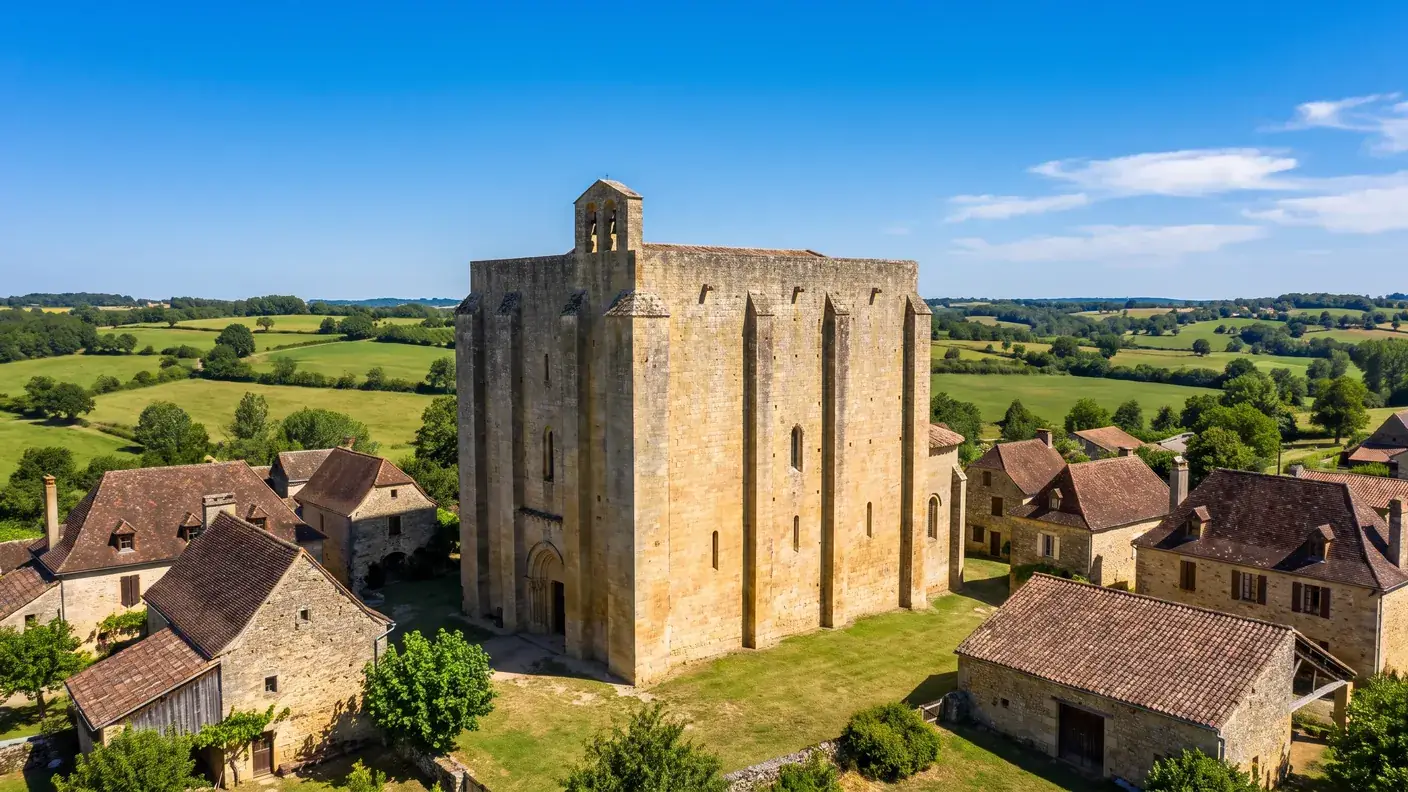
- Another remarkable Romanesque church in the region : see the Guide to Celles (the astonishing keep-church in the Ribérac region)
- The capital of the neighboring Périgord Vert region : see the Ribérac Guide (collegiate church, market, Dronne Valley)
- Plan your Cognac getaway: check out the private transfer from Bordeaux to Birac with its fixed rate, then request a written reservation.
Sources and References
- POP/Mérimée Database — Saint-Laurent Church in Birac (Gironde) —the Romanesque church featuring frescoes of the Last Judgment, designated as a historic monument (2005), is located in Birac-EN-GIRONDE (Bazadais), which shares the same name but should not be confused with Birac in Charente
- INAO — Cognac appellation — specifications and regulatory texts, accessed on July 24, 2026
- National Committee for Pineau des Charentes — appellation, definition, and production method, accessed July 24, 2026
- INSEE — Municipality of Birac (16045) — Population in 2023 (≈374 residents), area, municipal data
- Greater Cognac Urban Community— intermunicipal association, Cognac region
.
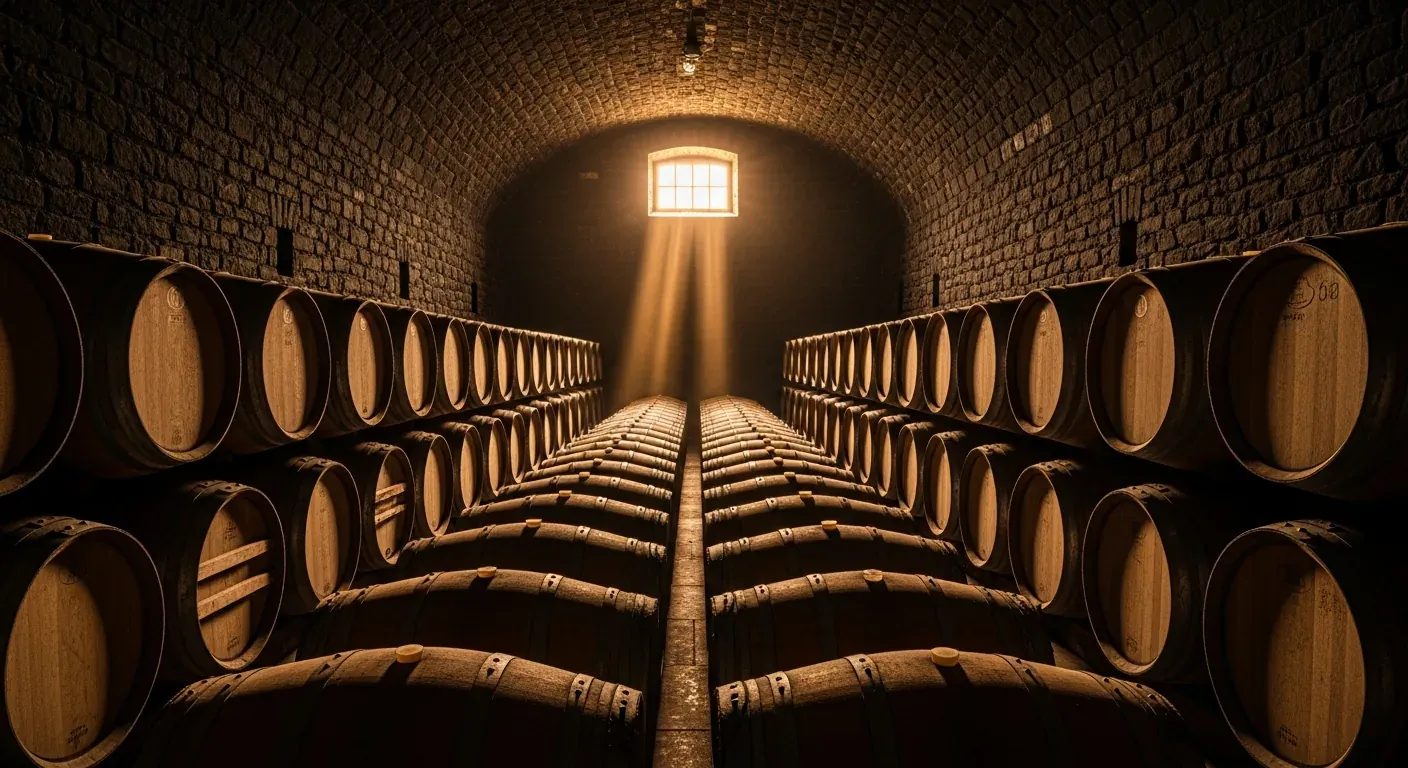
Off to Cognac Country
Direct trip from Bordeaux (~1 hour 15 minutes) to Birac and Petite Champagne, with stops of your choice along the way—Cognac, Segonzac, a vineyard estate. A written, fixed-price quote with no unexpected meter charges, and a stress-free journey back after the tasting.