
Bordeaux to Bourg: Wine & Dordogne Views
The small town perched on its rocky outcrop, overlooking the Dordogne River and at the mouth of the estuary: its narrow streets and terraces, the Côtes de Bourg vineyards and their record-breaking Malbec from the Bordeaux region, and the Pair-non-Pair cave—all less than an hour from Bordeaux.
Bourg-sur-Gironde at a Glance
Bourg—commonly known as Bourg-sur-Gironde—is a small hilltop town in the Gironde department, in the Haute Gironde region, perched on a rocky outcrop overlooking the Dordogne River, just upstream from its confluence with the Garonne. Once a fortress, it has become a picturesque viewpoint overlooking the river, featuring an old town of narrow streets and terraces, medieval gates, and stone houses, and lending its name to a renowned wine region: the Côtes de Bourg, an appellation known for its full-bodied reds that boasts the highest percentage of Malbec in the entire Bordeaux region. Nestled between the river, the vineyards, and the stone architecture, with its views of the water and the outline of the estuary, Bourg is a hidden gem and charming getaway in the Gironde, less than an hour’s drive from Bordeaux—ideal for a day trip combining heritage, wine tasting, and river scenery.
Here are the key details to know before you go. Distances are calculated door-to-door from Bordeaux; the fare shown is for a private driver reservation at a fixed price provided in advance, with no unexpected meter charges regardless of traffic or stops along the way.
| Landmark | Details |
|---|---|
| Department | Gironde (33), Nouvelle-Aquitaine |
| Status | Hilltop Town · Blaye District · Estuaire Canton |
| Population | approximately 2,240 residents (INSEE 2023) · Les Bourquais |
| Area | 10.54 km² · on the right bank of the Dordogne |
| Don't miss it | The old hilltop village, the terrace overlooking the river, the Côtes de Bourg |
| Distance from Bordeaux | about 48 km · about 46 min by car |
| Designation | Côtes de Bourg (red wines, including a Malbec from the Bordeaux region) |
First, a word of clarification: there are a few common misconceptions about Bourg, which this guide corrects with supporting sources. Despite its common name, “Bourg-sur-Gironde,” the town is not located on the banks of the Gironde estuary but on the Dordogne River, a little upstream from the point where it joins the Garonne to form the estuary: the name is a geographical misnomer. In fact, the town’s official name is simply Bourg. Another point to note: the famous Château de la Citadelle, which overlooks the town, was largely rebuilt in the 20th century and is not classified as a historic monument—it is a site and a museum, not a protected ancient monument. Every statement in this guide is based on verifiable sources, cited at the end of the article.
Here’s a rundown of everything you need to know: Bourg-sur-Dordogne’s location and status, the hilltop town and its scenic viewpoints, the river and its confluence, the town’s heritage and listed monuments, the Côtes de Bourg vineyards and their Malbec, the town’s history dating back to antiquity, the best ways to enjoy the local wines, notable sites in the surrounding area (including the prehistoric Pair-non-Pair cave), the best time of year to visit, and the easiest way to get there from Bordeaux by chauffeured transfer—all thoroughly researched and verified.
Where is Bourg-sur-Gironde located?
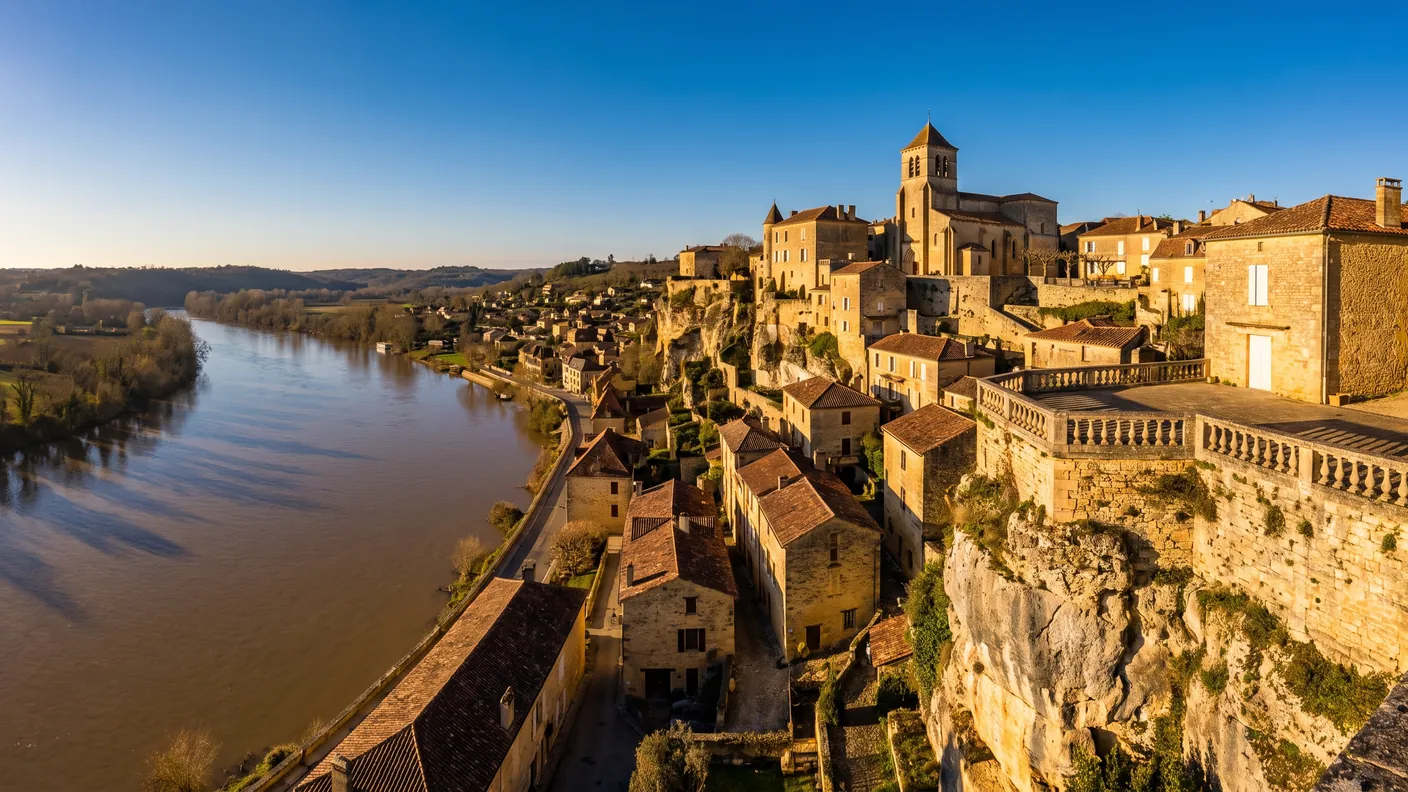
Bourg is located in the northern part of the Gironde department (33), in Nouvelle-Aquitaine, on the right bank of the Dordogne River, about 40 kilometers north of Bordeaux, in the Haute Gironde region. It is a municipality in the Blaye district and the Estuaire canton, and a member of the Grand Cubzaguais Community of Municipalities. The town occupies a remarkable location: a rocky outcrop ranging in elevation from 1 to 81 meters, overlooking the river just upstream from the Bec d’Ambès—the point where the Dordogne and the Garonne converge to form the Gironde estuary. From its heights, the view stretches far across the water and the countryside. Bourg is thus composed of an historic, hilltop “upper town” and a “lower town” on the riverbank, connected by sloping alleyways and old stairways—a spectacular topography that gives the town its unique charm, at the crossroads of vineyards, stone, and the river.
On the Dordogne River, at the mouth of the estuary
Contrary to what its common name suggests, Bourg is not on the Gironde but on the Dordogne, just a few kilometers upstream from where it joins the Garonne. It is there, at the Bec d'Ambès — the headland facing the city, on the opposite bank —, that is where theGironde Estuary, the largest in Europe, which then stretches for dozens of kilometers to the ocean at Pointe de Grave. Bourg thus enjoys a privileged location, at the estuary threshold : Here, the river—still a river—gradually becomes a body of water with a maritime character, set against a landscape of vast waters, islands, and wooded banks. This vantage point overlooking the confluence, combined with the natural protection afforded by the rocky promontory, explains the city’s long history and strategic importance as a gateway and river port since ancient times, at the entrance to Bordeaux.
A quaint hilltop town on a human scale
With approximately 2,240 residents According to the 2023 census, Bourg is a small, peaceful town with a stable population, whose residents are known as the Bourquais. Despite its modest size, it was for a long time an important regional capital of the Haute Gironde and retains a rich heritage from that past: ramparts, gates, a church, the Hôtel de la Jurade, and a castle overlooking the river. Life there revolves around the wine — it is the capital of the Côtes de Bourg region — and of the river, set amid rolling hillsides covered with vineyards. Having remained off the beaten path of mass tourism, Bourg retains the quiet charm of a quaint old village, where visitors can stroll through steep alleyways, along terraces with panoramic views, and take in the vistas of the Dordogne. It’s a hidden gem, beloved by fans of hilltop villages, historic sites, and fine wines, just a stone’s throw from Bordeaux.
The Perched Upper Town
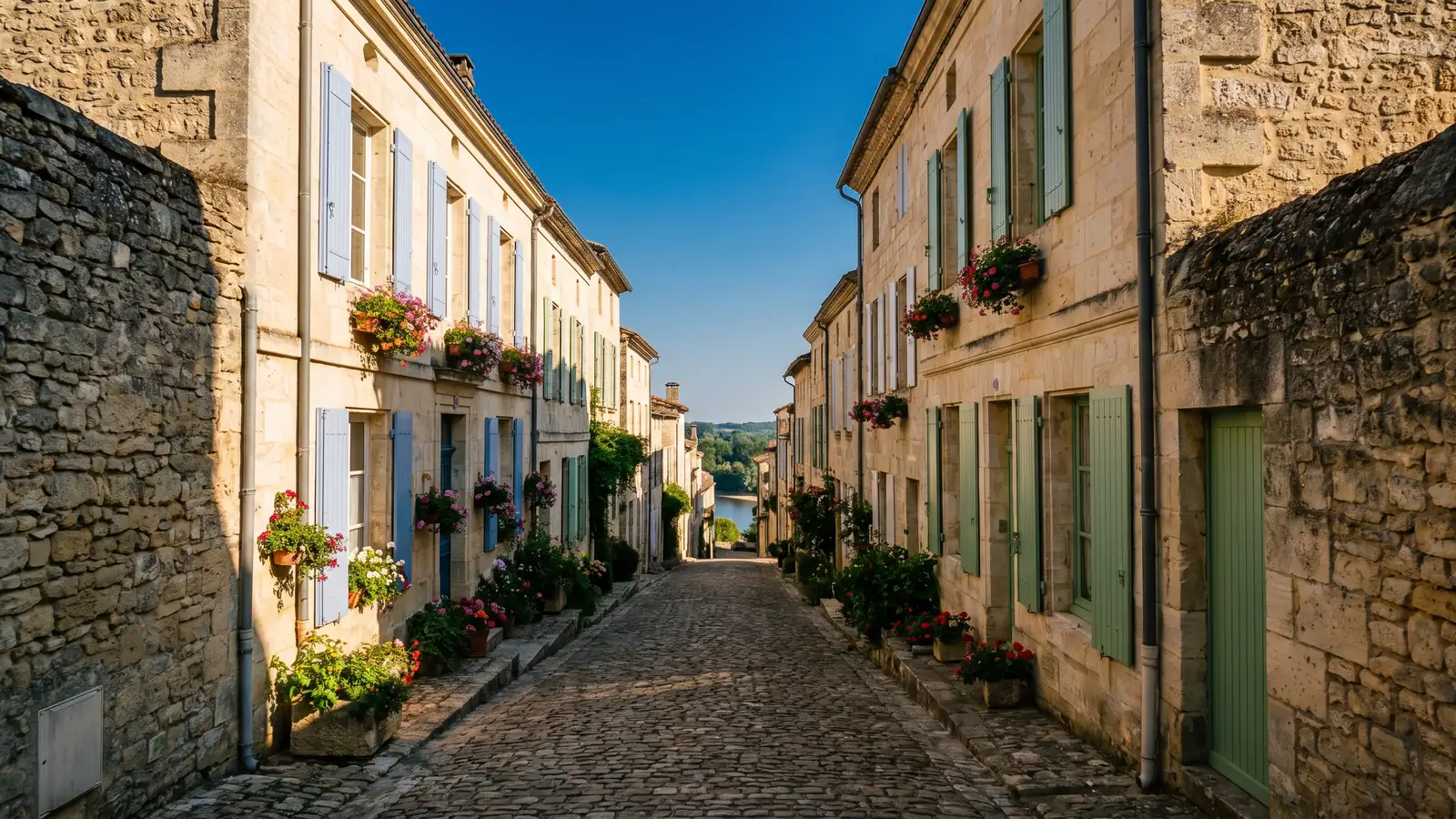
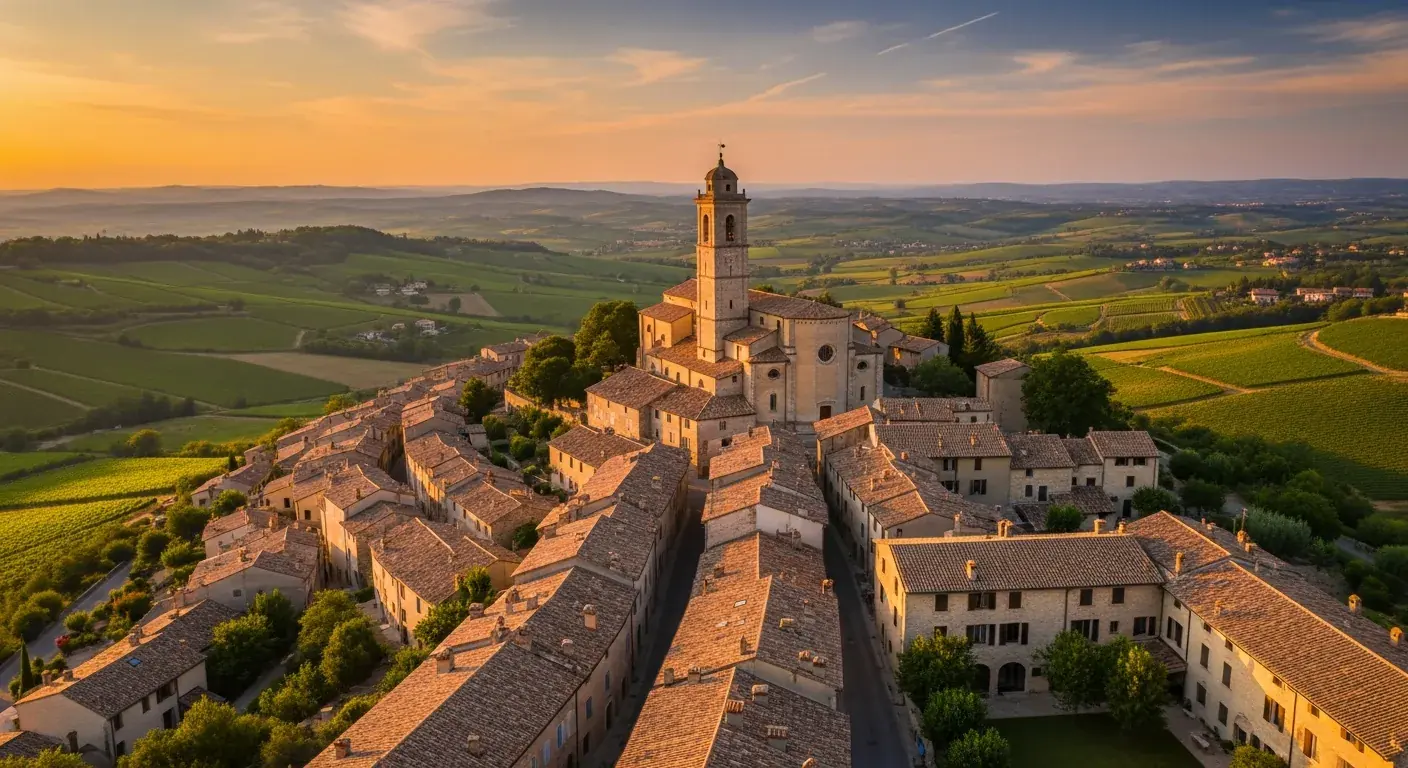
The heart of Bourg is its upper town, perched on the rock: a maze of steep alleyways, old stone houses, medieval gateways, and terraces overlooking the Dordogne. It’s a pleasure to stroll through the area, taking in the historic sites and scenic views.
Narrow streets, terraces, and lookout points
Strolling through the upper town of Bourg means wandering through a maze of cobblestone alleys and stairways that wind their way up between the golden limestone houses, all the way to the terraces perched atop the rock. From up there, the view of the Dordogne River, its banks, and the surrounding countryside is superb: this is the town’s main viewpoint, magnificent in the evening light. The terrace of the Château de la Citadelle, with its garden overlooking the river, offers one of the most beautiful panoramic views in the Haute Gironde. You make your way down from the heights to the lower town and the port through sloping alleyways, discovering—as you round a corner—a fountain, a washhouse, or a glimpse of the water. This vertical topography, rare in the Gironde, gives Bourg the feel of a Mediterranean village perched on a cliff: a timeless atmosphere, where every alley holds its own surprise and vantage point.
Medieval Gates and Ramparts
Bourg was a walled town, protected by fortified ramparts of which two beautiful medieval gates remain, both listed as historic monuments: the Porte de Blaye and the Porte du Port (also known as the Porte de la Mer), both listed as early as 1925. As remnants of the ramparts that once encircled the city, they serve as a reminder of the defensive and commercial role of this river stronghold. In the upper town, visitors can also explore the former Hôtel de la Jurade, the seat of the municipal administration under the Ancien Régime; an 18th-century house listed on the Place de la Libération; and the Church of Saint-Géronce. These monuments, scattered throughout the narrow streets, make up the heritage of a small town that was once far more significant than it is today—a sought-after retreat prized for its fresh air and views. Getting lost in Bourg, with a heritage map in hand, is the best way to appreciate its history and charm.
The Dordogne and the Confluence
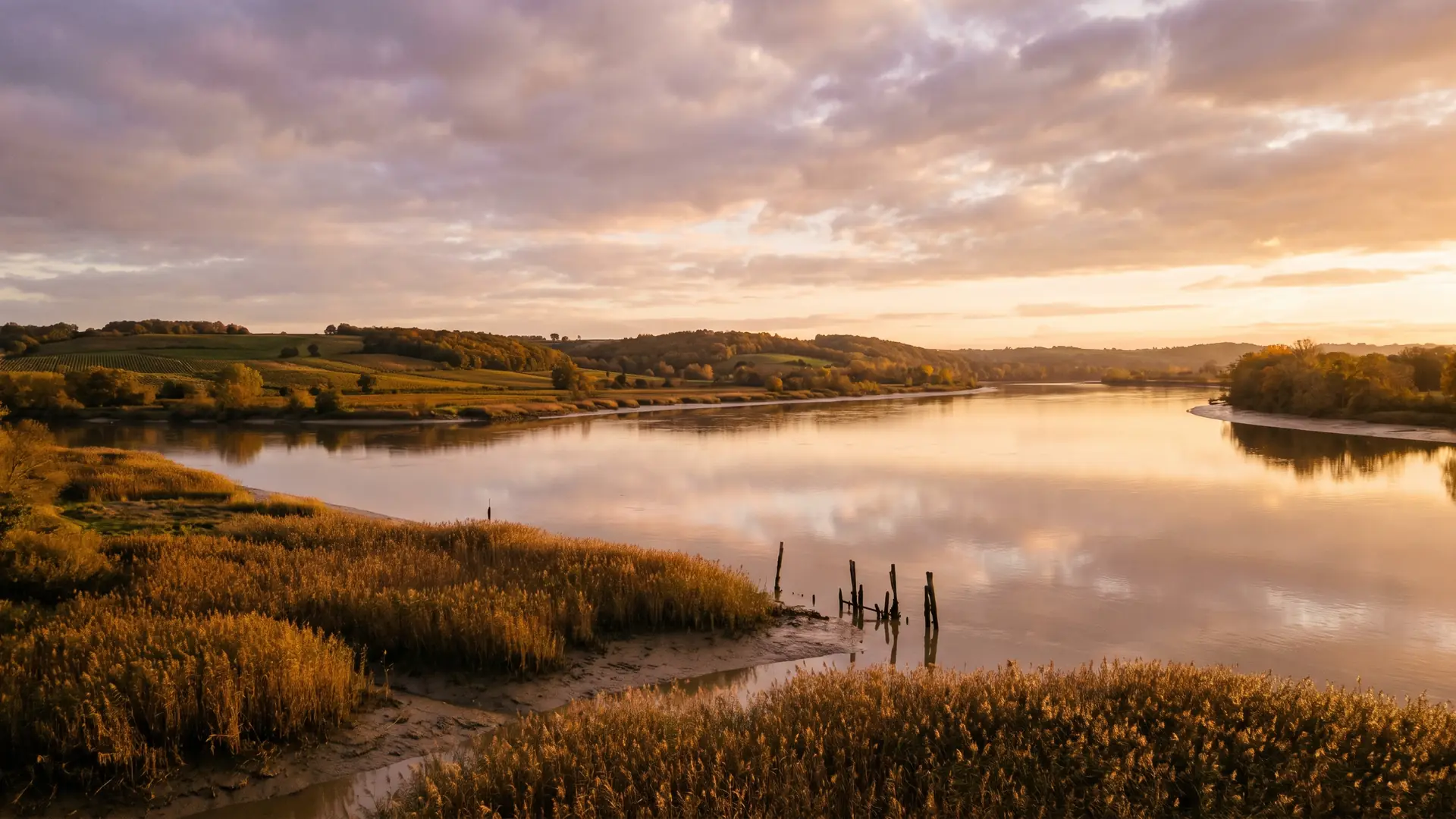
Bourg lives in tune with the Dordogne, which it overlooks from its rocky outcrop: the river, its tides, and its light are all part of the town’s identity, at the point where the Gironde estuary begins. It is a landscape of water and vast skies, best admired from the heights.
At the mouth of the estuary
Downstream from Bourg, the Dordogne widens and carries its brown, silt-laden waters toward the Garonne, which it joins a few kilometers downstream at the Bec d’Ambès: this is where the Gironde estuary—the largest in Europe—begins. Source: City of Bourg, official presentation accessed in July 2026. Bourg thus lies at the threshold of a vast expanse of water, at the junction between the river and the estuary, where the tide makes its presence felt: the level of the Dordogne rises and falls twice a day, exposing the mudflats and constantly reshaping the landscape. From the terraces of the upper town, one can take in this ever-changing spectacle: the wide river, the wooded and vineyard-lined banks, the islands, and in the distance, the tip of the Bec d’Ambès. The sunsets over the water, as seen from Bourg, are among the most beautiful in the Haute Gironde—a vast and peaceful river setting that remains largely undiscovered.
A river port
The Dordogne River brought prosperity to Bourg. From ancient times through the Middle Ages, the town was a bustling river port on the major waterway that connected the hinterland to Bordeaux and the ocean. Goods were loaded and unloaded there—including salt, a precious commodity subject to the gabelle, the heavy tax of the Ancien Régime—as well as wood, stone, and, of course, wine. This river trade explains the city’s past prosperity and its strategic location at the gateway to Bordeaux. Today, port activity has given way to recreational boating and strolling: visitors walk along the quays, admire the river, and sometimes set out on a cruise along the estuary. But the town retains, in its lower town and its old quays, the memory of its past as a river port, when the Dordogne was a major waterway and Bourg was one of its prosperous stops along the way.
The Heritage of Bourg
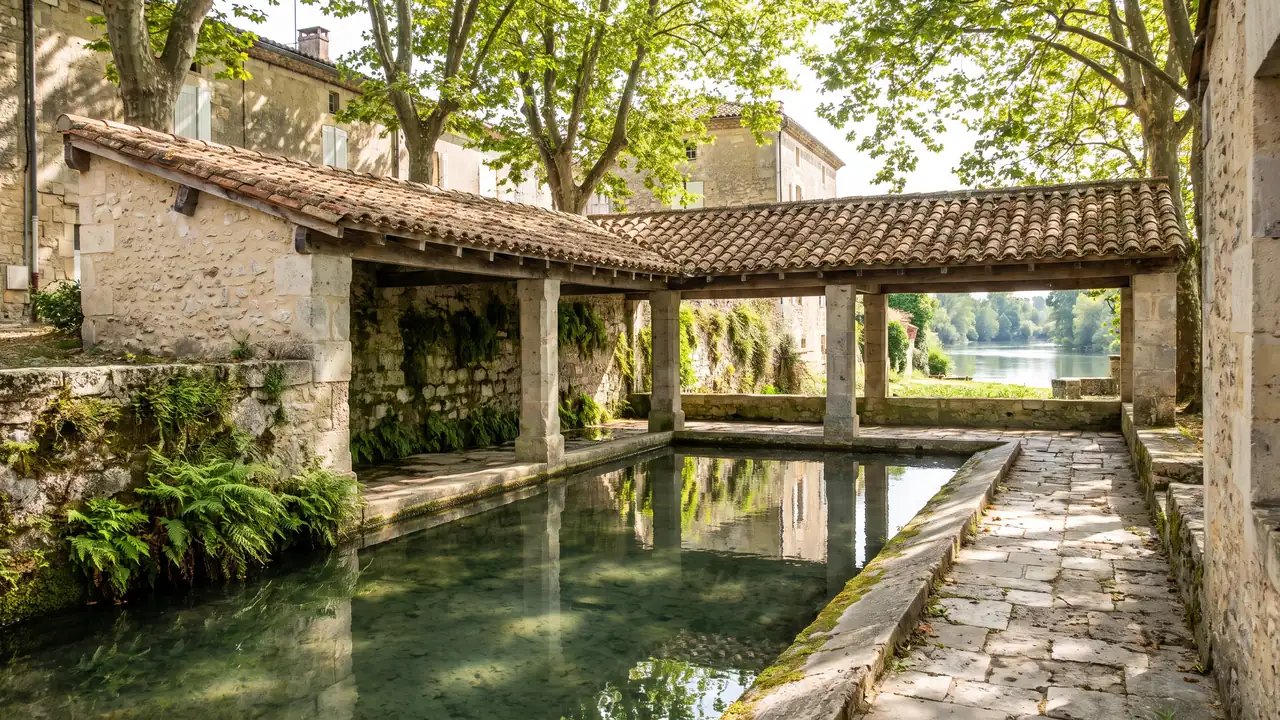
Beyond its narrow streets and scenic views, Bourg boasts a rich heritage for such a small town: a historic church on the outskirts of town, Gallo-Roman ruins, medieval gates, and little treasures like its old washhouse. All of these are reminders of a long history, waiting to be discovered as you stroll through the town.
The Church of Saint-Saturnin in La Libarde
The town’s heritage gem is located a short distance from the village center, in a place called La Libarde: the former Saint-Saturnin Church of La Libarde, whose walls and crypt have been designated as historic monuments since 1965. The church itself, which was very old, was demolished in 1823; its remains—the crypt and the enclosure of the old cemetery—still stand as valuable testimonies to the area’s medieval religious history. Also worth seeing: the Gallo-Roman ruins at a place called Les Gogues—three apsidal rooms, an aqueduct, and water channels—likely the remains of a villa or small ancient baths—which have been listed as historic monuments since 1934 and attest to the site’s long history of occupation. These remains, ranging from the Gallo-Roman to the medieval periods, speak to the deep-rooted history of Bourg, an ancient settlement on the Dordogne waterway, long before the vineyards brought it fame.
The washhouse, the castle, and the Moorish villa
Bourg also offers more modest but charming sights. The covered washhouse, built in 1828, shelters beneath its tiled roof a basin where the women of Bourg used to wash their laundry: a lovely reminder of life in days gone by, in the shade by the water’s edge. The Château de la Citadelle, perched atop the rock, is worth a visit for its terrace and garden overlooking the Dordogne—one of the town’s most beautiful viewpoints—and for the museum it houses; however, it’s important to note that it was largely rebuilt in the 20th century and is not a protected historic monument. As you wander the streets, you may still come across a striking Moorish villa, an architectural fantasy from the early 20th century. These unassuming little treasures add to the pleasure of strolling through a town where every street corner tells a story, blending official heritage with local curiosities.
| Protected Monuments in Bourg | Protection |
|---|---|
| Saint-Saturnin de La Libarde (church walls, crypt) | designated a historic monument (1965) |
| Gallo-Roman Ruins of Les Gogues | designated a historic monument (1934) |
| Blaye Gate | designated a historic monument (1925) |
| Port Gate (also known as the Sea Gate) | designated a historic monument (1925) |
| House on Place de la Libération (18th century) | designated a historic monument (1973) |
The Côtes de Bourg Wine Region
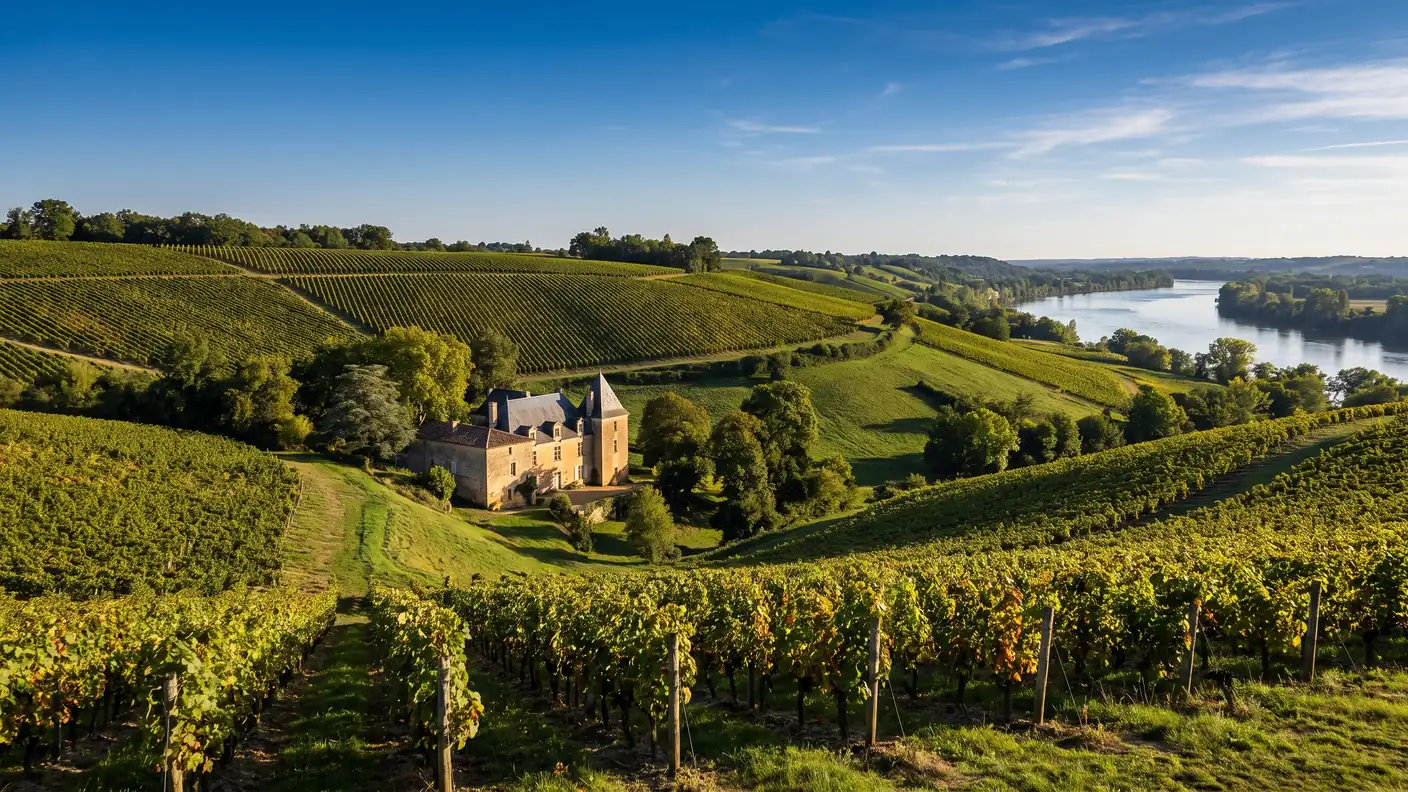
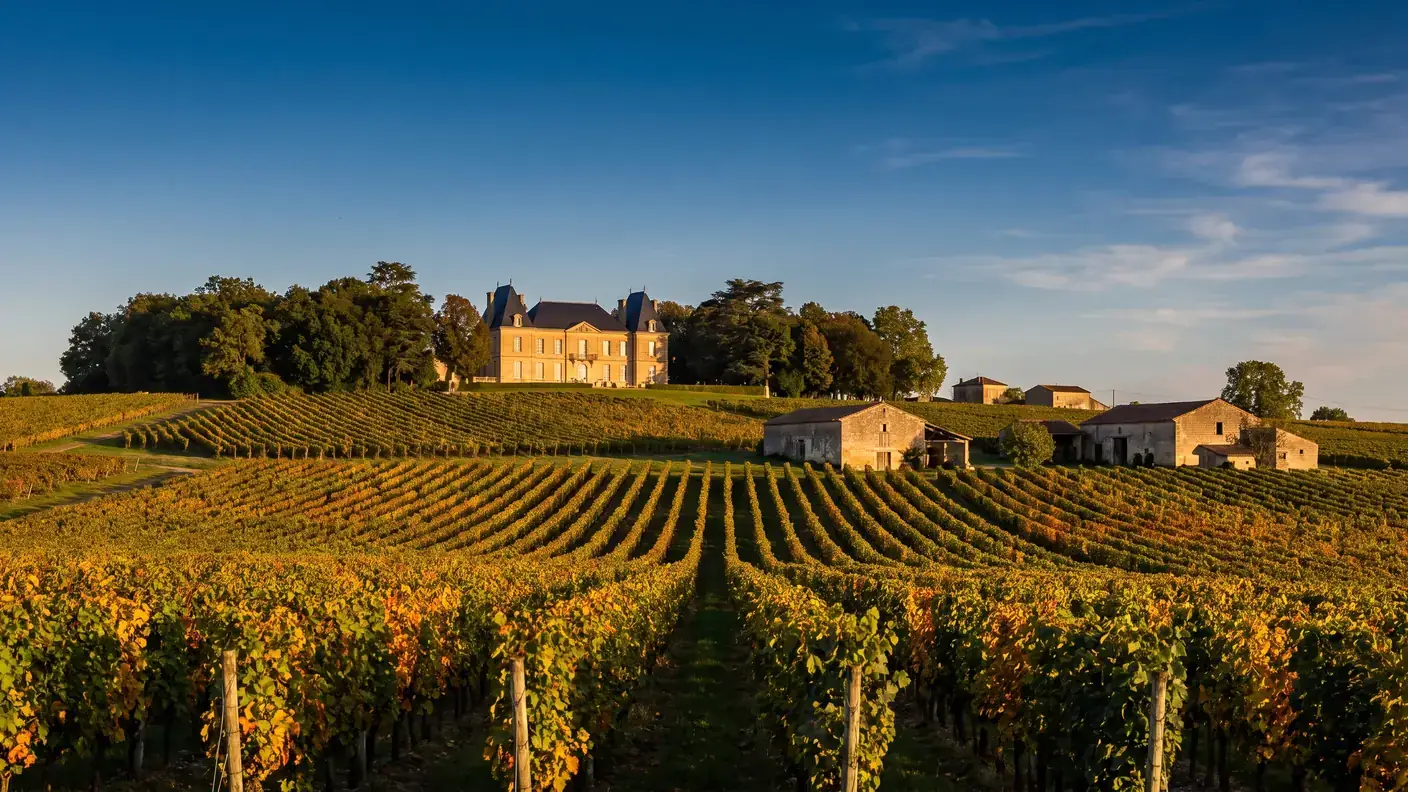
Bourg lends its name to the Côtes de Bourg, an appellation of full-bodied red wines nestled on the rolling hillsides above the Dordogne—a vineyard region that boasts a unique distinction within the Bordeaux region: the highest percentage of Malbec of any appellation. Along with the river and the stone, the wine is the main reason to visit Bourg.
The Côtes de Bourg appellation
The Côtes de Bourg AOC, established by a decree dated September 11, 1936, for red wines (and expanded in 1941 to include white wines), covers approximately 3,000 hectares spread across some fifteen communes on the right bank, at the confluence of the Dordogne and Garonne rivers. It brings together nearly 220 winemakers—both independent growers and cooperative wineries—on a terroir of rolling hillsides composed of clay-limestone and gravel, facing the river. The region produces predominantly red wines (more than 95% of production)—full-bodied, deep-colored, and well-structured—as well as a small quantity of dry whites. The oceanic climate, tempered by the presence of water, and the rugged terrain, which creates a variety of exposures, produce wines with character that often offer excellent value for the price. The Côtes de Bourg is among the most charming and affordable appellations on the right bank: a vineyard on a human scale, best explored by visiting the châteaux one by one.
Malbec, the signature grape variety
What makes the Côtes de Bourg truly unique is its blend of grape varieties: while Merlot dominates (about 65%), followed by Cabernet Sauvignon (about 20%), the appellation stands out for the significant role it gives to Malbec (also known as Côt): it has the highest percentage of Malbec of any Bordeaux appellation. Source: Côtes de Bourg Wine Growers’ Association, official website accessed in July 2026. This historic grape variety of the region—which has become a niche variety elsewhere in Bordeaux (but reigns supreme in Cahors)—brings color, structure, and aromas of black fruit and spices to the wines of Bourg, an identity that is a source of pride for local winemakers. Tasting a Côtes de Bourg, then, is like rediscovering a Bordeaux of yesteryear, where Malbec played a major role. You can taste these wines directly at the estate, at the many winemakers’ properties, or at the Maison des Vins: understanding firsthand the connection between the hillside, the grape variety, and the glass is one of the finest ways to discover this still-underrated and generous terroir on the right bank.
| The Côtes de Bourg AOC | Details |
|---|---|
| Establishment of the AOC | Decree of September 11, 1936 (red) · 1941 (white) |
| Area | approximately 3,000 hectares · about 15 municipalities |
| Winemakers | approximately 220 · independent producers and cooperative wineries |
| Grape Varieties | Merlot ~65%, Cabernet Sauvignon ~20%, Malbec: the highest proportion in the Bordeaux region |
| Distinctive Feature | the highest percentage of Malbec in the Bordeaux region · >95% red wines |
The History of Bourg
A Gallo-Roman site, a thriving river port, a walled town with fortified gates, and a strategic gateway to the Dordogne: Bourg has endured through the centuries at the crossroads of waterways, trade, and vineyards. A few key milestones shed light on the past of this hilltop town.
From the Paulin Family to the Salt Tax
The site of Bourg has been inhabited for a long time: there is evidence of a Gallo-Roman presence there, as shown by the ancient ruins of Les Gogues (a villa or small thermal baths). Tradition traces the town’s founding to the 4th century, attributing it to the Paulin family. In the Middle Ages, protected by its position on the rock and by its ramparts, Bourg became a stronghold and an important river port on the Dordogne, on the waterway to Bordeaux and the ocean. Its trade flourished, particularly in salt—a strategic commodity transported by river and subject to the gabelle, the heavy royal tax. The town, which had a jurade (municipal administration)—whose town hall still stands today—enjoyed considerable importance at the time, far exceeding its current size: people came here to conduct business, store goods, and oversee navigation, right at the gateway to the great city of Bordeaux.
From the Fronde to World War II
Like the rest of Guyenne, Bourg experienced the upheavals of history. After the unrest of the Sling, In the 17th century, the city’s fortifications were dismantled by royal order under Louis XIV: all that remains today are the two gates and some ruins. The 18th century saw the construction of beautiful mansions, such as the Chartreuse, built in 1723, a testament to the burgeoning prosperity of the wine industry. Much later, the World War II left its mark on the city: as early as 1939, the old careers Stone tanks carved out of the rock were converted into fuel tanks, which the German occupiers then used; in August 1944, as they were retreating, the German navy scuttled the Italian oil tanker in the Dordogne River, off the coast of Bourg Clizia. From this rich history—spanning antiquity, the Middle Ages, the modern era, and the contemporary period—Bourg has retained the spirit of an old strategic city, now peaceful, with its focus entirely on its river and vineyards.
Wine Tasting in Bourg
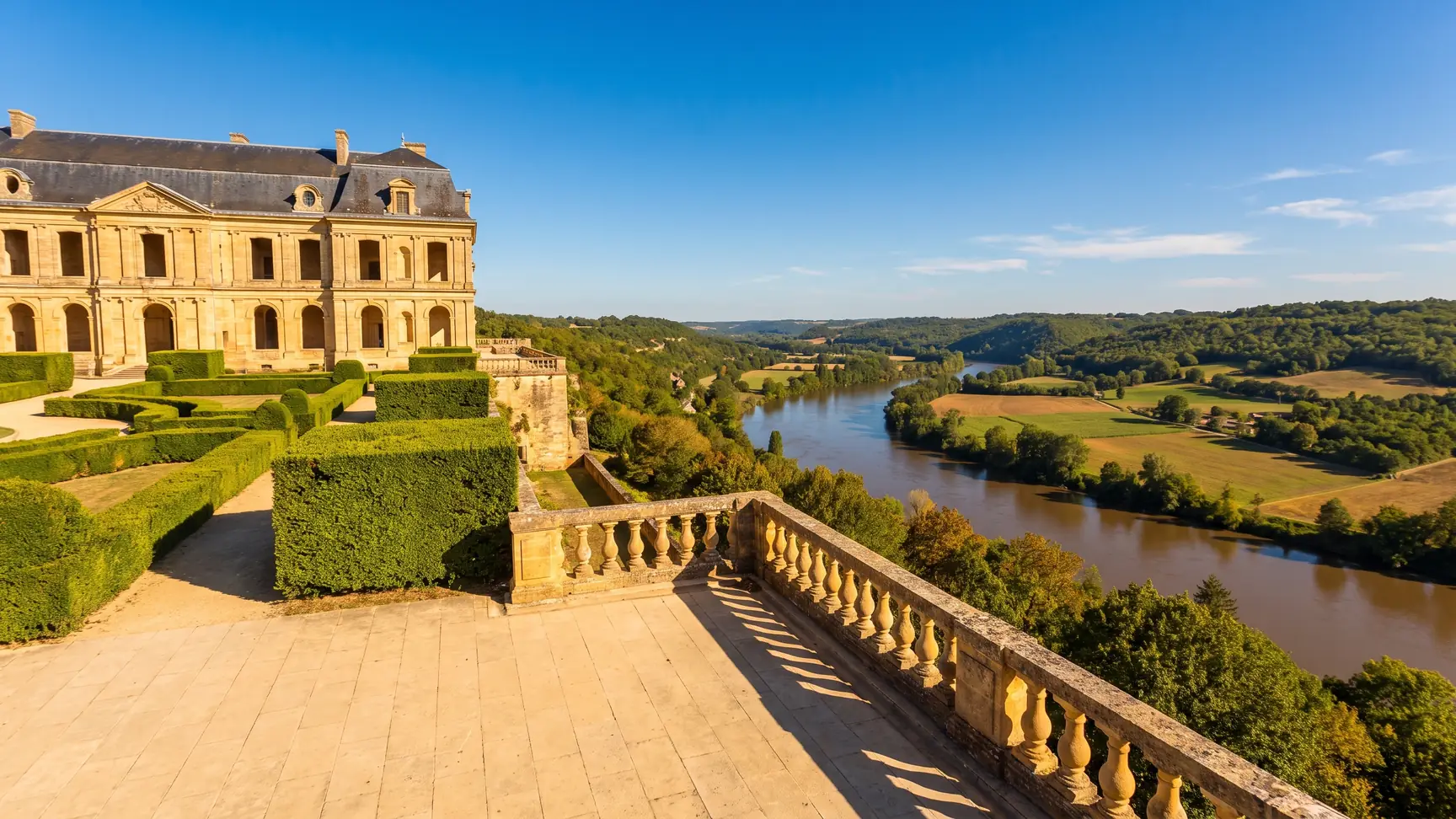
Bourg is a destination that offers both culinary delights and cultural heritage: here, you can sample the Côtes de Bourg—full-bodied reds with distinctive Malbec character—either at the winery or at the Maison des Vins, in the friendly atmosphere of an old wine-growing village by the water. Here’s how to make the most of your visit.
The Terroir and the Wines
The Côtes de Bourg vineyard owes its character to its terroir of rolling hillsides composed of clay-limestone and gravel, and to the soothing presence of the Dordogne River, which moderates the climate and offers a variety of exposures. The reds, dominated by Merlot but featuring a significant proportion of Malbec, are deep in color, well-structured, and full-bodied, with aromas of dark fruit and spices: wines with character, often offering excellent value for the price, capable of pleasing both connoisseurs and those simply curious to explore. This identity, shaped by a grape variety rarely found elsewhere in Bordeaux, is what makes a tasting in Bourg so compelling: here, you discover a lesser-known, more rustic, and more authentic side of the great Bordeaux wine region. Gaining an on-site understanding—at the estates of these often family-run and passionate winemakers—of the connection between the hillside, the river, the Malbec, and the glass is one of the most rewarding ways to explore this lesser-known terroir on the Right Bank.
Where to Eat and What to Try
For wine tastings, the Maison des Vins des Côtes de Bourg offers a comprehensive overview of the appellation, and the region’s many châteaux welcome visitors for cellar tours and tastings—often by appointment—at small, family-run estates. When it comes to dining, the region combines produce from the river and the local countryside: fish from the Dordogne and the estuary, along with local meats and vegetables, all perfectly complemented by the region’s red wines. This is where a private chauffeur really comes into its own: it allows you to organize a full day of wine tourism—a visit to the old hilltop village and its terrace in the morning, lunch overlooking the river, followed by tastings at two or three Côtes de Bourg châteaux in the afternoon—without ever having to worry about driving between the estates or finding parking in the narrow streets. It’s the ideal way to peacefully enjoy the very best that Bourg has to offer: stone, water, wine, and fine dining.
What's there to see around Bourg?
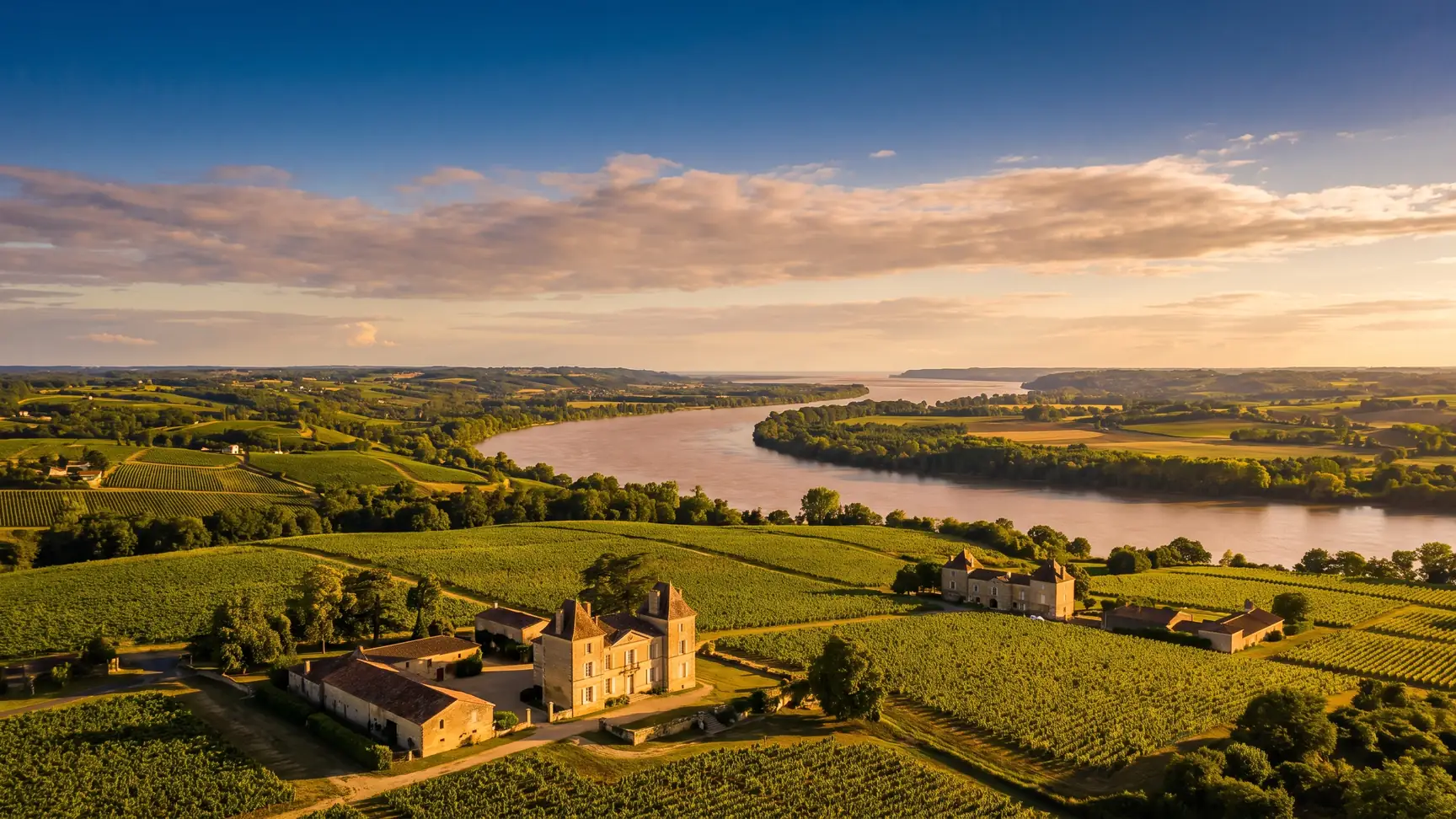
Bourg is an excellent starting point for exploring the Haute Gironde: the prehistoric cave of Pair-non-Pair, Blaye and its citadel, the estuary, and the vineyards are all just a few kilometers away. Landscapes of water, vineyards, and stone follow one after another over short distances.
Pair-non-Pair, Blaye, and the Estuary
A few kilometers from Bourg, in Prignac-et-Marcamps, the Pair-non-Pair Cave is a major prehistoric site: Discovered in 1881 by François Daleau, this cave—adorned with cave engravings dating back tens of thousands of years—is one of the oldest known, and its study was crucial in establishing the authenticity of prehistoric art; Listed and managed by the Centre des monuments nationaux, it is open to visitors. Source: Centre des monuments nationaux, official website accessed in July 2026. Also nearby, Blaye and its magnificent Vauban citadel, a UNESCO World Heritage Site, overlook the estuary about fifteen kilometers to the north: the natural extension of an exploration of the Upper Gironde. Between the two, the coastal road runs along the upper reaches of the estuary, offering superb views of the water, the fishing villages, and the fishing huts. With a chauffeur service, you can easily customize a loop tour to suit your preferences: the cave, the citadel, the vineyards, and the scenic overlooks—whatever takes your fancy.
Bordeaux and the Vineyards
Bourg is only about 40 kilometers from Bordeaux, making it a wonderful day trip: you can easily combine the cosmopolitan city and its UNESCO-listed facade with the old hilltop village and its vineyards. To the east, across the Dordogne River, the Libourne region—Saint-Émilion, Pomerol, and the surrounding villages—extends the exploration of the great vineyards of the right bank, less than an hour away. Nearby, Saint-André-de-Cubzac—the birthplace of Commander Cousteau—and its bridges over the Dordogne (including the famous Eiffel Bridge) mark the entrance to the Cubzaguais region. Within a few dozen kilometers of Bourg, there is a rich concentration of sites: a prehistoric cave, Vauban’s citadel, medieval towns, and renowned vineyards. With a driver to take you between these stops, you can easily turn your visit to Bourg into a customized tour of the Gironde region, at your own pace, without the hassle of driving or finding parking.
| Around Bourg-sur-Gironde | Distance | Interest |
|---|---|---|
| Pair-non-Pair Cave | ~5 km | Prehistoric Decorated Cave (CMN) |
| Blaye | ~15 km | Vauban Citadel (UNESCO), estuary |
| Saint-André-de-Cubzac | ~10 km | Bridges over the Dordogne, Cousteau's homeland |
| Saint-Émilion | ~35 km | UNESCO-designated medieval city, fine wines |
| Bordeaux | ~48 km | UNESCO City, Port of the Moon |
When is the best time to visit Bourg-sur-Gironde?
Bourg is worth visiting year-round, but spring and summer—when the light dances across the Dordogne and the vineyards come to life—are the most beautiful times to visit. The spring It cloaks the hillsides in soft greenery, offers mild days perfect for strolling through the hilltop alleyways and along the terraces overlooking the river, and sees the wineries reopen for tastings: it’s a peaceful and sunny season, perfect for exploring the city without the crowds. Thesummer bathe the old town and the river in abundant light: it’s the perfect time of year to enjoy the scenic views, walks along the Dordogne, cruises on the estuary, and visits to wineries, all in a lively yet peaceful atmosphere. From the hills above, the long evenings offer sumptuous sunsets over the river and the confluence—one of the most beautiful sights in the Haute Gironde, to be savored at a leisurely pace.
Fall Harvest and Winter
Thefall It’s a magnificent time of year to explore Bourg: the grape harvest brings the Côtes de Bourg wineries to life, the vine leaves take on shades of gold and purple on the hillsides above the Dordogne, and the air is filled with the scent of grape must; it’s the perfect time to learn about winemaking and taste the new vintages, while the low-angled sunlight sets the golden stone of the old town aglow. Thewinter, a quieter time of year, reveals the hilltop town and the river in a simple, peaceful atmosphere, beneath the vast, ever-changing skies of the Gironde: you have the narrow streets and terraces almost to yourself, and the Dordogne takes on the appearance of a mirror beneath the mist. In any season, the mild oceanic climate and the beauty of the river and vineyard landscapes make Bourg a relaxing getaway for those seeking an authentic and off-the-beaten-path experience in the Bordeaux region, combining heritage, the river, and fine wines.
Getting to Bourg-sur-Gironde from Bordeaux
Bourg-sur-Gironde is located about 48 km from Bordeaux, or about a 46-minute drive, via the A10 highway, then the Saint-André-de-Cubzac exit and the vineyard road (D669), which runs along the riverbank to Bourg. Please note: the town no longer has an operational train station—the former Bourg-sur-Gironde station is closed. The nearest station is Saint-André-de-Cubzac, about ten kilometers away, which requires a transfer. For a visit from Bordeaux—spanning the old town, the river viewpoints, and the vineyards perched on the hillsides—a chauffeur-driven car is the most practical and flexible option.
Train or chauffeured transfer?
Since there is no direct rail service, use a A private driver is by far the simplest way to get to Bourg and explore the surrounding area: a direct, door-to-door trip from Bordeaux, with no transfers or waiting, and the option to make stops along the way as you please. This is particularly valuable for a day combining cultural heritage and wine tastings—the old town, followed by two or three châteaux in the Côtes de Bourg region—where you’ll want to be able to taste the wines without worrying about driving or parking in the steep, narrow streets. We offer this route at fixed price provided in advance : The Eco transfer is displayed as soon as 84 € For the one-way trip, for 1 to 3 passengers, with a professional driver. The price, set at the time of booking, does not change: it does not depend on traffic, potential traffic jams, or the number of stops requested along the way, unlike a taxi meter.
This is the perfect option for a day of wine tourism with friends, a family visit to the old town, an event (such as a wedding or birthday celebration at a château in the Côtes de Bourg region), or a simple transfer to or from Bordeaux-Mérignac Airport. You can travel alone, as a couple, or in a small group of up to 8 people, with luggage, and request stops in Blaye, at the Pair-non-Pair cave, or at a winery along the way. In practice, booking is quick and easy: simply provide your pickup address in Bordeaux and your destination in Bourg, along with the date, desired time, and number of passengers, and you’ll receive a written, fixed-price quote in return. On the day of the trip, the driver picks up the passengers at the agreed-upon address and takes them directly to Bourg, without any detours—a real advantage for enjoying a stress-free day of cultural heritage and wine.
| Route | Distance | Duration | Landmark |
|---|---|---|---|
| Bordeaux → Bourg-sur-Gironde | ~48 km | ~46 min | Starting at €84 in Economy |
| Bourg → Blaye | ~15 km | ~20 min | Vauban Citadel (UNESCO) |
| Bourg → Pair-non-Pair | ~5 km | ~8 min | prehistoric decorated cave |
| Bourg → Saint-Émilion | ~35 km | ~40 min | UNESCO World Heritage Site, fine wines |
Whether you come for the old hilltop village and its terraces overlooking the Dordogne, for the Côtes de Bourg vineyards and their full-bodied Malbec, for the Pair-non-Pair cave, or for its proximity to Blaye and its estuary, Bourg-sur-Gironde is a treat for lovers of authentic Bordeaux, where the river, vineyards, and stone meet—a hidden gem of a hilltop town that, for those who take the time to stop and explore, offers one of the most beautiful combinations of heritage and landscape in the Haute Gironde.
Whether it’s for a wine-tasting tour, a visit to the old town, or an event, booking an executive car service guarantees a comfortable and punctual ride—book a driver from Bordeaux to Bourg-sur-Gironde or explore all our destinations.
Frequently Asked Questions
Where is Bourg-sur-Gironde located?
Bourg—commonly known as Bourg-sur-Gironde—is a small hilltop town in the Gironde department (33), in the Nouvelle-Aquitaine region, located in the Haute Gironde area, about 40 kilometers north of Bordeaux. It is built on a rocky outcrop overlooking the Dordogne River, just upstream from its confluence with the Garonne (the Bec d’Ambès), where the Gironde estuary begins. Part of the Blaye arrondissement and the Estuaire canton, it has a population of approximately 2,240 (known as Bourquais). It is about a 46-minute drive from Bordeaux (approximately 48 km).
How far is it from Bordeaux to Bourg-sur-Gironde?
About 48 km by road, or about a 46-minute drive, via the A10 highway, then the Saint-André-de-Cubzac exit and the D669 along the vineyards. With a chauffeured transfer from Bordeaux, the fare is fixed and provided in advance, starting at €84 for the Economy class for 1 to 3 passengers, door-to-door. Bourg no longer has an operating train station: the former Bourg-sur-Gironde station is closed, and the nearest one is Saint-André-de-Cubzac, about ten kilometers away.
Is Bourg-sur-Gironde really on the Gironde River?
No, and the name is misleading: despite the common name “Bourg-sur-Gironde,” the town is not located on the banks of the Gironde estuary but on the Dordogne, a little upstream from where it joins the Garonne at the Bec d’Ambès to form the estuary. In fact, the town’s official name is simply “Bourg.” It is therefore situated at the entrance to the estuary, on its home river, which affords it superb views of the water and the confluence from its perched terraces.
What is the Côtes de Bourg appellation?
This is an AOC for red wines from the Right Bank, recognized by a decree dated September 11, 1936, covering approximately 3,000 hectares and some 15 communes around Bourg, at the confluence of the Dordogne and Garonne rivers. It brings together nearly 220 winemakers on rolling hillsides composed of clay-limestone and gravel soils. More than 95% of the wines produced here are red, full-bodied, and well-structured. Its most distinctive feature is that it has the highest proportion of Malbec (Côt) of any Bordeaux appellation—a historic grape variety that gives Côtes de Bourg its color, structure, and character.
Why is the Côtes de Bourg region known for Malbec?
Because this appellation has preserved, more than any other in Bordeaux, this historic grape variety of the region. While Merlot dominates (about 65%), followed by Cabernet Sauvignon (about 20%), the Côtes de Bourg reserves the most prominent place among Bordeaux appellations for Malbec (also known as Côt). Nearly extinct elsewhere in Bordeaux but king in Cahors, Malbec brings color, structure, and aromas of black fruit and spices to the wines of Bourg. It is the identity and pride of the vineyard: tasting a Côtes de Bourg is like rediscovering the essence of Bordeaux as it once was.
What to See in Bourg-sur-Gironde?
The hilltop town, with its steep alleyways, stairways, golden-stone houses, and terraces overlooking the Dordogne—including the terrace at the Château de la Citadelle, a superb viewpoint (and museum). The two listed medieval gates (Porte de Blaye and Porte du Port), remnants of the ramparts. The historic Saint-Saturnin Church in La Libarde, a listed site (crypt and enclosure), and the listed Gallo-Roman ruins of Les Gogues. The old washhouse dating from 1828 and a curious Moorish-style villa. Nearby: the prehistoric cave of Pair-non-Pair (~5 km) and the citadel of Blaye (~15 km). And, of course, the Côtes de Bourg vineyards.
Is the Bourg Citadel Castle a historic monument?
No. The Citadel Castle, which sits atop the Rock of Bourg and houses a museum, is worth a visit for its terrace and garden overlooking the Dordogne—one of the city’s most beautiful viewpoints— but it was largely rebuilt in the 20th century and is not listed as a historic monument. The town’s truly protected monuments are elsewhere: the Church of Saint-Saturnin in La Libarde (listed), the Gallo-Roman ruins at Les Gogues, the two medieval gates, and an 18th-century house (all registered).
How many people live in Bourg-sur-Gironde?
According to the 2023 census, the town has a population of approximately 2,240, which has remained stable. Its residents are known as Bourquais. Today it is a peaceful little town in the Haute Gironde, part of the Blaye district and the Estuaire canton, but it was once a much more important stronghold and river port, as evidenced by its rich heritage (gates, ramparts, Hôtel de la Jurade, and castle). Life there now revolves around wine—it is the capital of the Côtes de Bourg region—and the river.
What is the Pair-non-Pair Cave?
It is a major prehistoric cave with rock art located in Prignac-et-Marcamps, about 5 km from Bourg. Discovered in 1881 by François Daleau, it is one of the oldest known caves with parietal engravings (animal engravings dating back tens of thousands of years), and its study was instrumental in proving the authenticity and antiquity of prehistoric art. Listed as a historic monument and managed by the Centre des monuments nationaux, it is open to visitors. It is one of the major attractions in the area around Bourg, best combined with a visit to the hilltop town, its vineyards, and the nearby citadel of Blaye.
Is there a train station in Bourg-sur-Gironde?
No, no longer in service: the former Bourg-sur-Gironde train station is closed, on a line that no longer carries passenger traffic. The nearest active station is Saint-André-de-Cubzac (or Cubzac-les-Ponts), about ten kilometers away, on the Bordeaux–Saintes line. However, the train does not allow you to explore the area between the old town and the scattered vineyards. To reach Bourg—and especially for a wine and heritage tour (Bourg, Blaye, Pair-non-Pair)—a private chauffeur from Bordeaux remains by far the most flexible option.
What is there to see around Bourg-sur-Gironde?
The prehistoric painted cave of Pair-non-Pair, in Prignac-et-Marcamps (~5 km). Blaye and its magnificent Vauban citadel, a UNESCO World Heritage Site, which overlooks the estuary (~15 km). Saint-André-de-Cubzac, birthplace of Commander Cousteau, and its bridges over the Dordogne (~10 km). Further afield, the medieval town of Saint-Émilion and the Libournais region (~35 km), and Bordeaux, about 40 kilometers away. We are at the threshold of the Gironde estuary, in a land of rivers, vineyards, and stone, where remarkable sites follow one another in quick succession.
What to try in Bourg-sur-Gironde?
The red wines of the Côtes de Bourg, of course: full-bodied, deep in color, and well-structured, characterized by a high proportion of Malbec, which gives them their distinctive character. You can taste them at the Maison des Vins des Côtes de Bourg or directly at the many châteaux in the vineyard—often by appointment—at family-run estates. When it comes to dining, the region combines river produce (fish from the Dordogne River and its estuary) with local specialties, all perfectly complemented by the region’s red wines. A chauffeur service allows you to tour the old town and several estates without worrying about driving between them.
Can I book a private driver from Bordeaux to Bourg-sur-Gironde?
Yes. We offer the Bordeaux → Bourg-sur-Gironde route (approximately 48 km, about 46 minutes via the A10 and then the D669) at a fixed price, starting at €84 one-way in Economy class for 1 to 3 passengers, with a professional driver. The trip is direct, door-to-door, with flexible stops—ideal for a day combining a visit to the old town, the Pair-non-Pair cave, the Blaye Citadel, and wine tastings in the Côtes de Bourg region—where you’ll want to enjoy the wines without worrying about driving. The fixed quote is provided and confirmed in writing before departure.
Further Reading
- The nearby UNESCO-listed citadel: see the Blaye Guide (Vauban’s fortress, the gateway to the estuary), 15 km away
- The Medieval City of Wine: see the Saint-Émilion Guide (UNESCO World Heritage Site, monolithic church, grand cru wines)
- A village in the Libourne region: see the Guide to Gardegan-et-Tourtirac (castles and Castillon wine)
- Plan your trip: Book a chauffeur service from Bordeaux to Bourg-sur-Gironde or explore all our destinations
Sources and References
- Wikipedia — Bourg (Gironde) — geography, demographics, history, heritage
- Wikipedia — Côtes de Bourg AOC — 1936 decree, ~3,000 ha, ~220 winemakers, record for Malbec
- POP/Mérimée Database — Saint-Saturnin de La Libarde — walls and crypt designated as historic monuments (1965)
- Wikipedia — Pair-non-Pair Cave — decorated cave, discovered in 1881 (Daleau), prehistoric art
- INSEE — Municipality of Bourg (33067) — Population in 2023 (~2,240 residents), area
Article updated in July 2026.
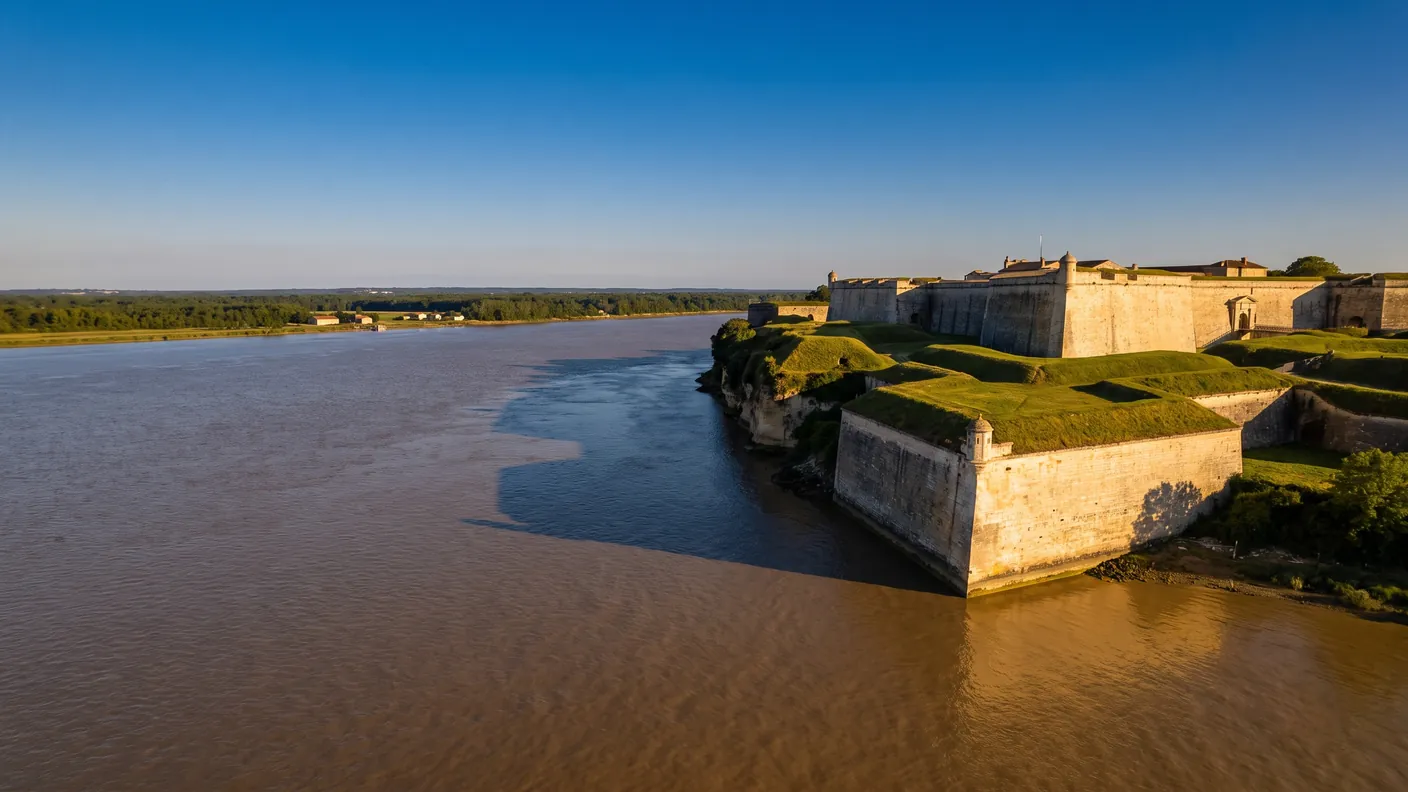
On the way to the old town of Bourg
Direct trip from Bordeaux (~46 min) to Bourg, with its historic hilltop village and the Côtes de Bourg vineyards; stop wherever you like along the way—Blaye, Pair-non-Pair, the wineries. Written fixed-price quote—no surprises on the meter.