Dax, France's Leading Spa Destination
A 64 °C hot spring right in the heart of the city, sixteen spa resorts, and a legendary feria: Dax, the ancient Aquae Tarbellicae, with its Roman ramparts, Art Deco trio, and a type of peloid found nowhere else in the world—plus your private door-to-door transfer from Bordeaux, without having to rent a car.
Dax at a Glance
Dax is France’s leading spa destination: a subprefecture in the Landes department with a population of about 22,000, situated on the Adour River 148 km south of Bordeaux, where water has been naturally gushing at 64 °C since ancient times. Sixteen spa facilities—including a spa hospital—some 60,000 spa guests per year, a thermal mud unique in the world (TERDAX® peloid), and a founding Roman legend: Dax is a spa town in the fullest sense of the word, the ancient Aquae Tarbellicae. But it is also a city of art—Gallo-Roman ramparts listed as a historic site since 1889, a classical cathedral with a hidden Gothic portal, an Art Deco trio from the Roaring Twenties, and a first-class arena—and of celebration, with its August feria. This guide distinguishes fact from fiction: “top destination” (not “top resort”), a classical cathedral, and a listed arena. We then present the easiest way to get there: a private door-to-door transfer.
Here are the key details to know before you go. Distances are calculated door-to-door from Bordeaux; the fare listed is for a private driver reservation at a fixed price provided in advance, with no unexpected meter charges. The information is verified using data from the city of Dax, the Mérimée database, INSEE, and Wikipedia; schedules and itineraries are subject to change and should be confirmed on site.
| Landmark | Details |
|---|---|
| City | Dax (Landes, subprefecture) |
| Location | on the Adour River, in the heart of the Landes region, 50 minutes from Bayonne |
| Residents | 22,109 residents of Dacquois (2023) |
| Must-See | the Hot Spring (64 °C), the thermal baths, the cathedral, the Art Deco trio, the amphitheater |
| Distance from Bordeaux | about 148 km · about 1 hour and 50 minutes by car |
Where is Dax located?
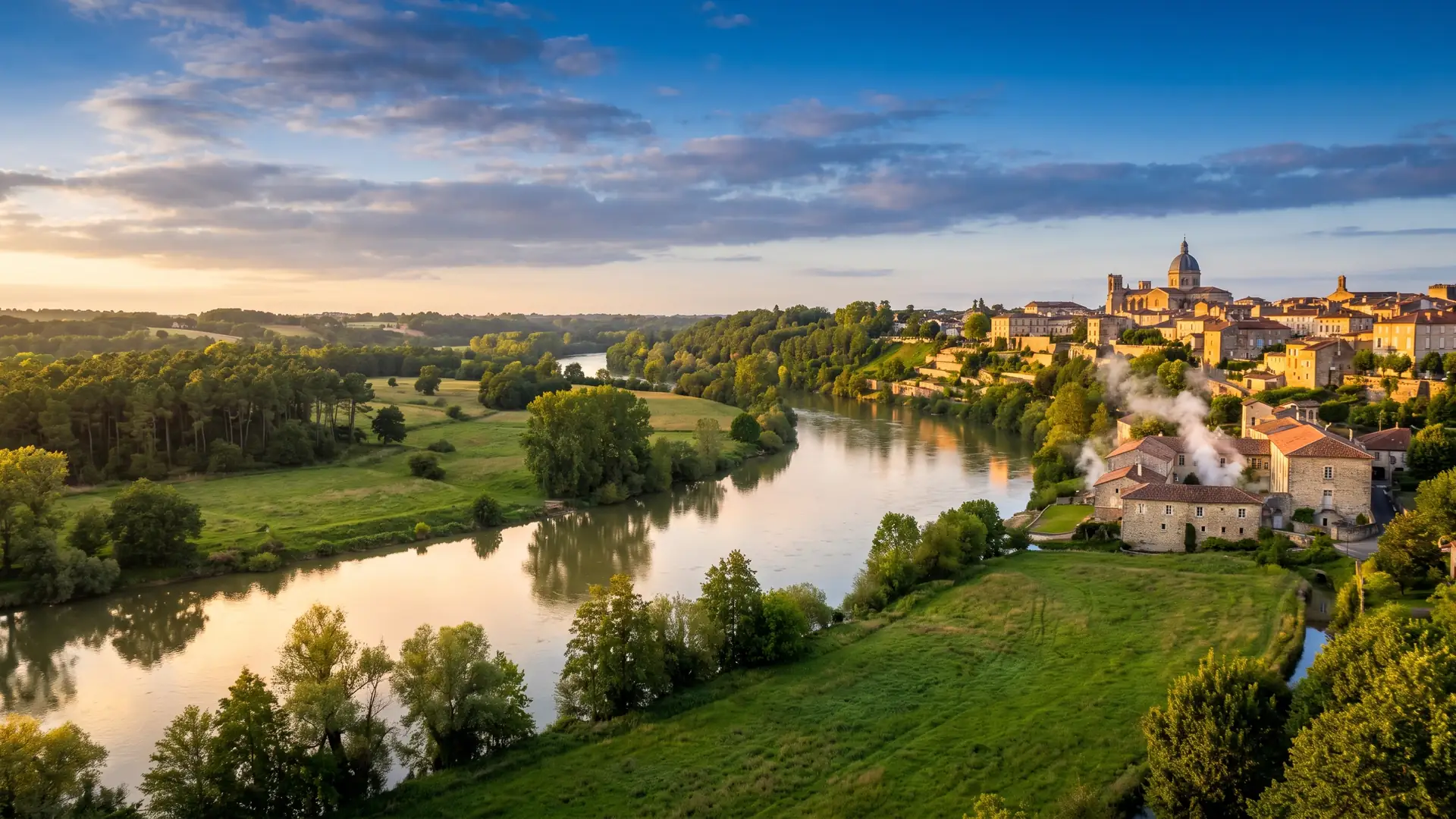
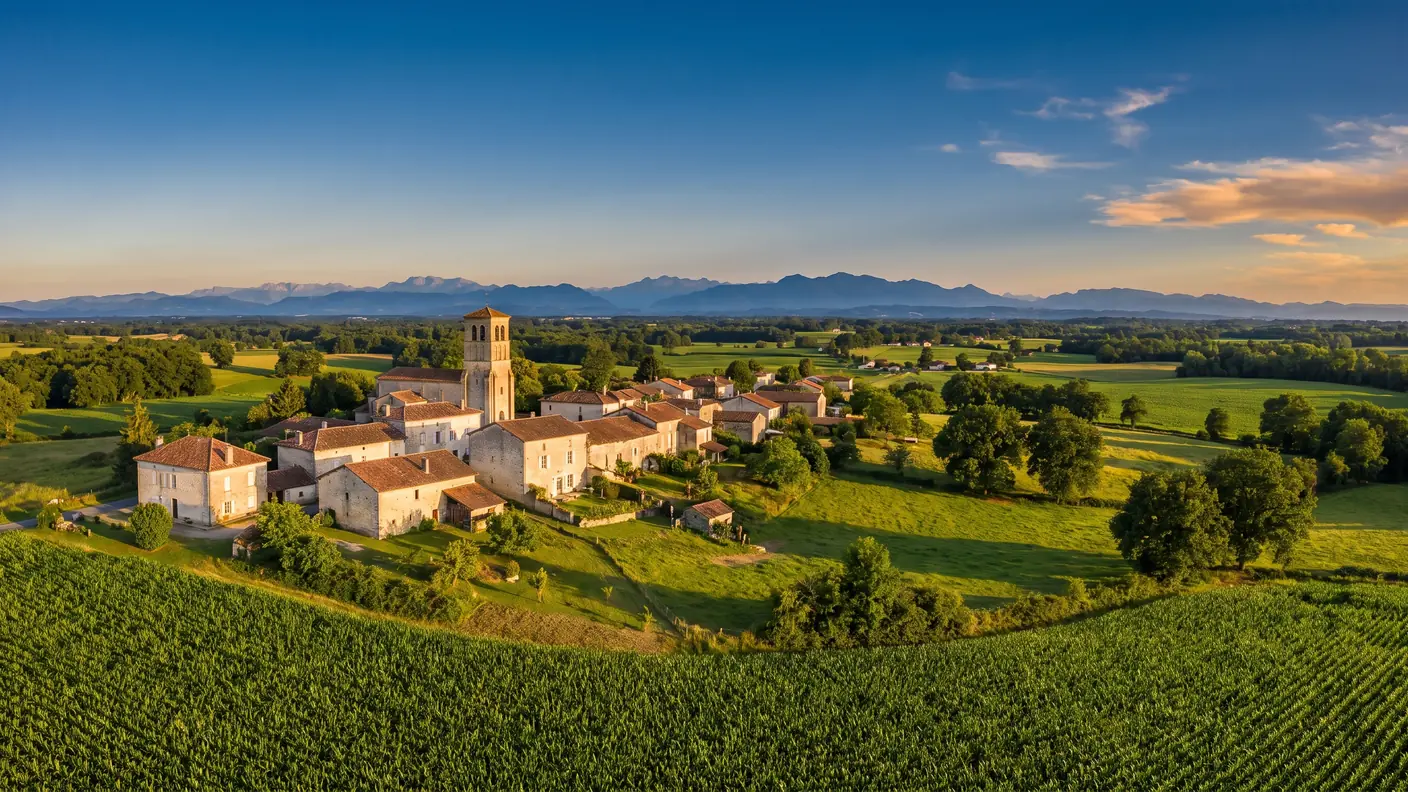
Dax is located in the southern part of the Landes region, on the banks of the Adour River, 148 km from Bordeaux—halfway between the Landes Forest and the gateway to the Basque Country. As the subprefecture of the department (the prefecture is Mont-de-Marsan), the city of 22,109 residents — the Dacquois — extends mainly across the Left Bank along the river, with the Sablar neighborhood located on the right bank. Its location is a crossroads: 42 minutes from Bayonne and the Basque Coast, 45 minutes from Mont-de-Marsan, half an hour from the Orthe region and the mountain streams, at the gateway to the Chalosse hilly. It was the Adour River that gave Dax everything: its waters, its silt—the raw material for the famous thermal mud—its ancient port, and even its very name, Aquae Tarbellicae, “the waters of the Tarbelles,” named after the Aquitani people who inhabited the region. A city of water, in the literal sense, for two thousand years—and an ideal getaway for spa and cultural exploration, less than two hours from Bordeaux.
A spa town on the Adour River
Everything in Dax leads back to water. First, the hot water: the thermal spring that gushes forth at 64 °C at the Fontaine Chaude and supplies the city's sixteen establishments—the Municipal Authority distributes it 800,000 m³ per year from five wells along the banks of the Adour. Then there is the river itself: the Adour, which flows down from the Pyrenees toward the ocean, runs along the city’s landscaped riverbanks and deposits in its barthes (the floodplains of the Landes region) on silt from which the peloid is made. The city’s history has unfolded alongside this dual wealth: the Romans built a fortified spa town there, and the 19th century turned it into a fashionable spa town, and the Roaring Twenties added casinos and Art Deco palaces. Today, Dax cherishes this heritage with a blend of medical expertise—rheumatology, phlebology, fibromyalgia—and the laid-back Gascon way of life, featuring gourmet markets, shaded riverbanks, and the August feria.
Between the Landes Forest, Chalosse, and the Basque Country
Three very different regions stretch out around Dax. To the north and west, the Landes de Gascogne forest stretches its pine trees all the way to the ocean—the beaches on the southern coast of the Landes (Hossegor, Capbreton) are about 40 minutes away. To the southeast, the rolling Chalosse region—known for its mixed farming, Chalosse beef, and foie gras—undulates toward the mountain streams and the Béarn region. Finally, to the southwest, the Orthe region and its abbeys (Sorde, Arthous) mark the gateway to the Basque Country: Bayonne is just 52 km away. This crossroads location makes Dax an ideal base for exploring the entire southern Aquitaine region—especially since its TGV station connects it directly to Paris and Bordeaux. For visitors traveling by private transfer, the flexibility is total: a spa treatment or a spa weekend in Dax, day trips to the coast, the Gaves, or the Armagnac region, and a return to Bordeaux at the agreed-upon time, without any schedule constraints.
France's leading spa destination
With sixteen spa facilities—including one spa hospital—and approximately 60,000 spa guests per year, the Grand Dax region is France’s leading spa destination. These figures are listed on the City of Dax’s spa page (accessed in 2026). The treatments focus primarily on rheumatology and phlebology and are provided by medical prescription.
60,000 spa guests, 16 facilities, one spa hospital
Approximately 60,000 spa guests visit Grand Dax each year, staying at sixteen spa facilities, including one spa hospital: these figures were published by the City of Dax (accessed in 2026). The offerings range from historic spa hotels to modern spas, and the city lives to the rhythm of the spa treatments, mainly from March through November.
TERDAX®: The World's Only Thermal Mud
Dax’s signature feature is its thermal mud: TERDAX® peloid, produced by the Municipal Water Authority. Silt from the Adour River is mixed with thermal water and allowed to mature under controlled conditions before being packaged for use in treatment facilities. Applied as warm poultices, the peloid is a thermal treatment used in rheumatology-focused therapy programs; its use is determined by the prescribing physician and the healthcare team. Below the casino, the “poor people’s hole” marks the spot where, in the past, people without means would come to benefit from the natural mixture of silt and hot water.
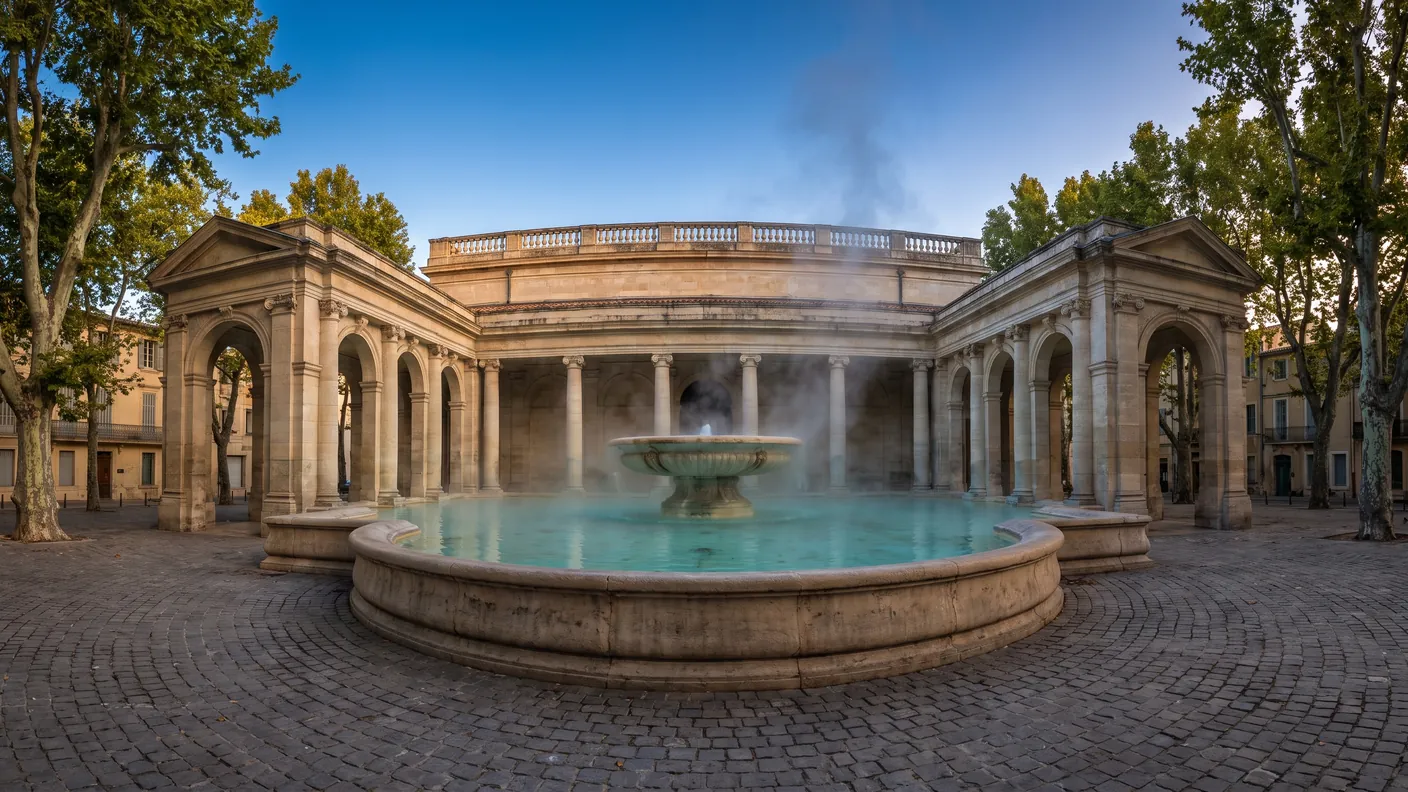
The Hot Spring, 64 °C in the heart of the city
In the center of Dax, the Fontaine Chaude—the source of the Nèhe—naturally supplies approximately 2,400 m³ of water at 64 °C per day. The City of Dax describes this flow rate and temperature (accessed in 2026). The current portico, built in the 19th century over ancient ruins, has become the symbol of the spa town.
2.4 million liters per day, since ancient times
In its steaming basin, framed by Tuscan columns, the water from the source of the Nèhe gushes naturally at 64 °C, with a flow rate of approximately 2,400 m³ per day, or 2.4 million liters, according to the Municipal Heritage Profile (accessed in 2026). The 19th-century monument stands atop ancient ruins. The portico and these ruins have been designated as Historic Monuments since 1988.
For a long time, the fountain was used daily: butchers and housewives would come to draw hot water from it. Today, its steam offers a glimpse into the reality of the spa town right in the heart of the cafés and streets. The water is very hot; visitors can admire it from the landscaped area around it without trying to touch it.
The Legend of the Legionnaire's Dog
Like any great spa town, Dax has its founding legend—one to be told as such. According to legend, a Roman legionnaire, setting off on a campaign, abandoned his old dog—racked with rheumatism—in the warm mud of the Adour River, hoping to put him out of his misery. Upon his return, he reportedly found the animal leaping about and reinvigorated: the healing properties of the warm mud had been discovered. The story is not a documented fact—it is the official legend of Dax’s thermal tradition, passed down for centuries—but it conveys a very real geological truth: here, hot water and silt naturally rise to the surface, and their use for thermal purposes has been documented since antiquity, as evidenced by the Roman baths beneath the Fontaine Chaude and the very name “Aquae Tarbellicae.” As for the dog, it has become a local mascot—it appears in the city’s imagery as the faithful guardian of a spring that is two thousand years old.
Classical cathedral, Roman ramparts
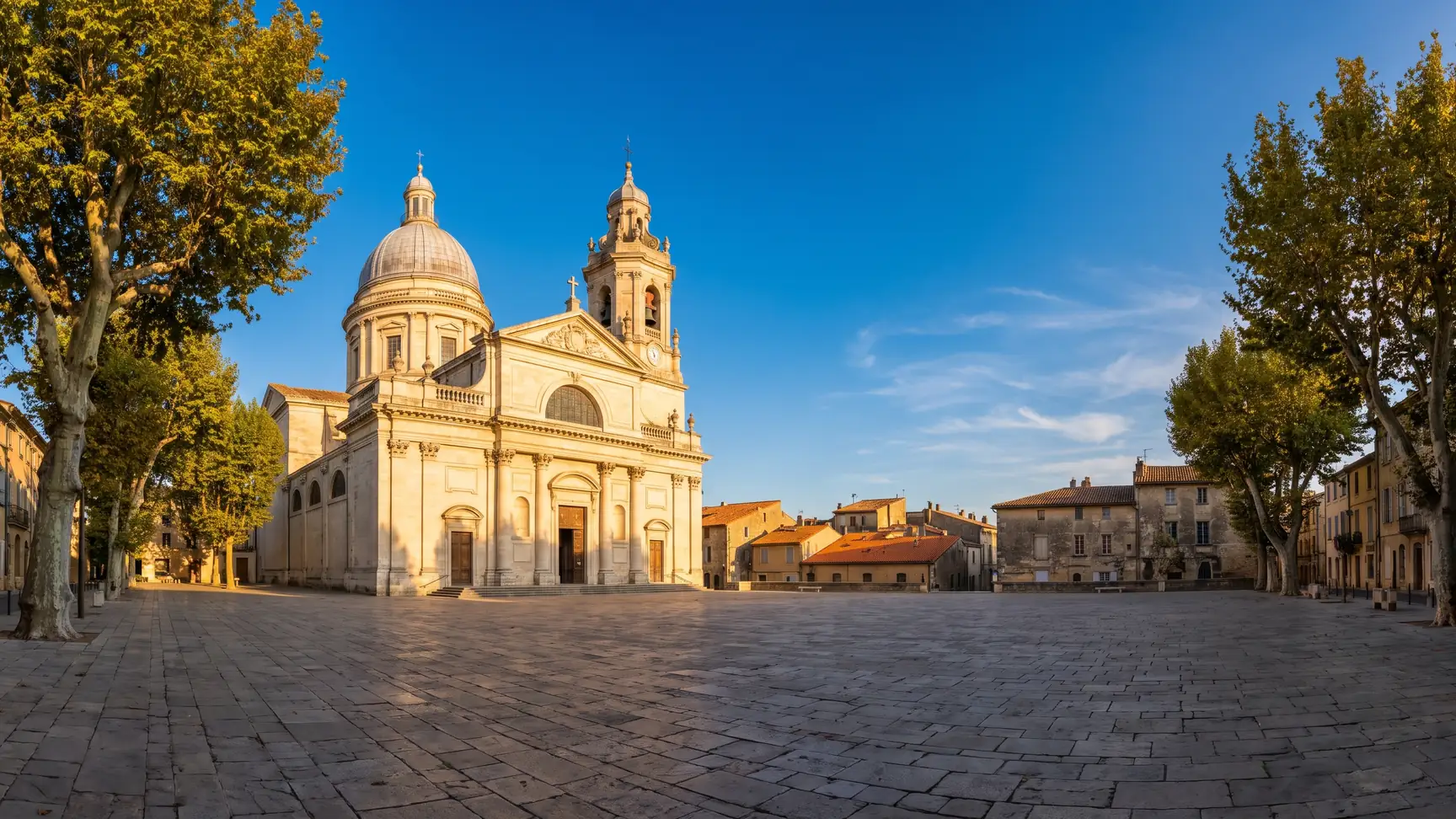
Dax boasts seventeen centuries of heritage: Gallo-Roman ramparts listed as a historic site as early as 1889, a classical cathedral that conceals a Gothic portal that has been relocated to the interior, and an archaeological crypt dating from the 2nd century beneath its streets. Here's what the sources say, along with the key details.
The Cathedral and Its Hidden Portal
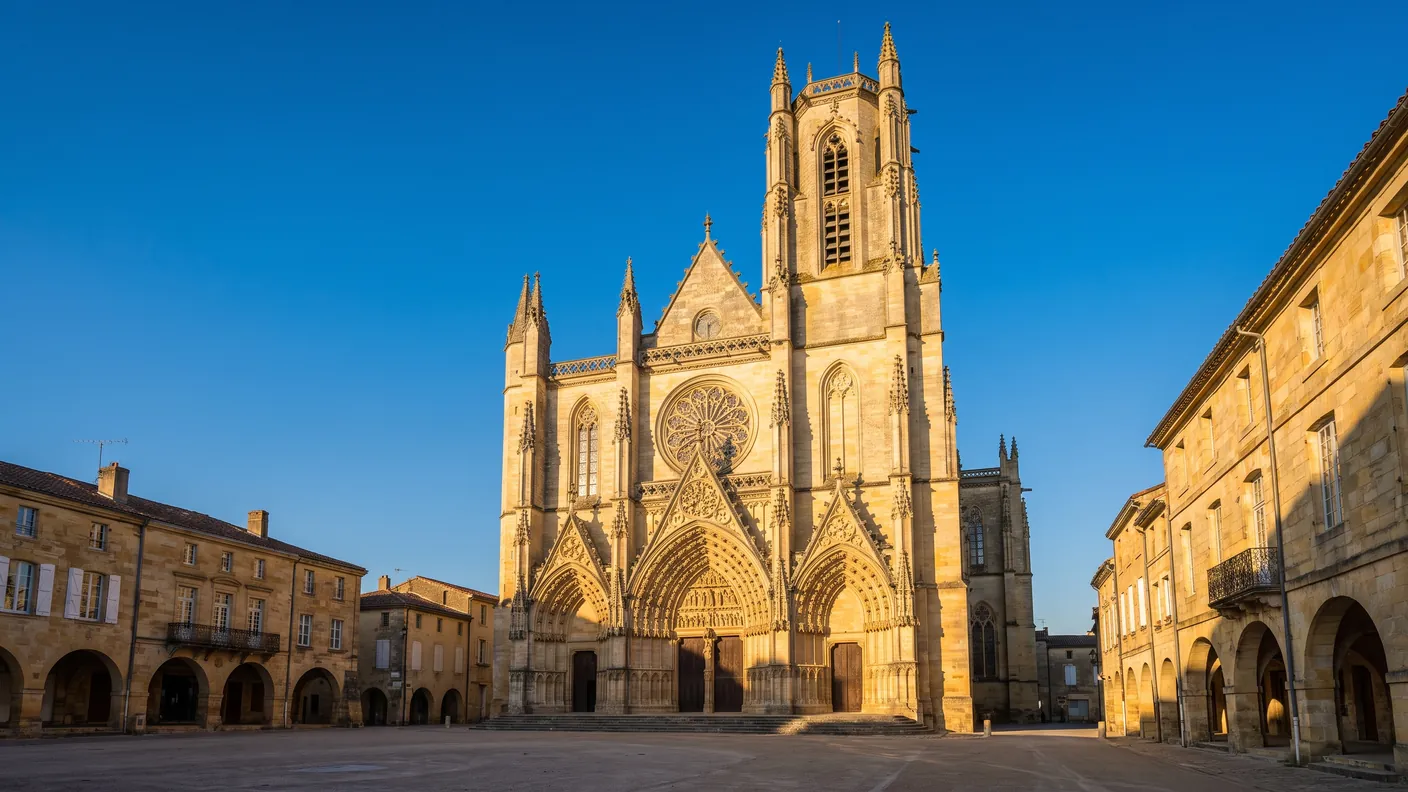
Notre-Dame Cathedral is not the Gothic building you might expect. The old medieval cathedral collapsed in 1646; the current building, rebuilt from 1656 and completed in 1894, is classical, with a dome and a grand organ—the plans are even “attributed to Vauban,” according to the cautious wording of the Mérimée entry. But the real treasure lies inside: the Portal of the Apostles, an early 14th-century Gothic masterpiece and a remnant of the old cathedral, was dismantled and then rebuilt stone by stone in the north arm of the transept in the 19th century. Measuring twelve meters high by eight meters wide and adorned with apostles and angels, it forms a remarkable monument within a monument—a Gothic portal preserved “under the roof” of a classical church. The ensemble was designated a Historic Monument in 1946. This is the must-see heritage site in Dax, just a stone's throw from the Fontaine Chaude.
The 4th-century ramparts and the crypt
Dax has two outstanding reminders of its Roman past. The Gallo-Roman ramparts, raised in the second half of the 4th century, enclosed the city within a wall of 1,465 meters which, according to the authors, consisted of 38 to 46 towers, with walls over four meters thick at the base. Largely demolished in the 19th century, two beautiful sections of it remain—at Place des Salines and at the Théodore-Denis Park, near the arena — and are designated as Historic Monuments as early as 1889, one of the very first protected sites in the department. Beneath Rue Cazade, the archaeological crypt preserves the foundations of a grand edifice of the 2nd century, discovered by chance in 1978: long believed to be a temple, it is now identified as a civil basilica — the civic centre of Aquae Tarbellicae. Excavations in the vicinity have yielded a Bronze Mercury 30.6 cm long, on display at the Borda Museum. Seventeen centuries beneath the feet of spa-goers.
Splendid, Atrium, Arènes: The Roaring Twenties
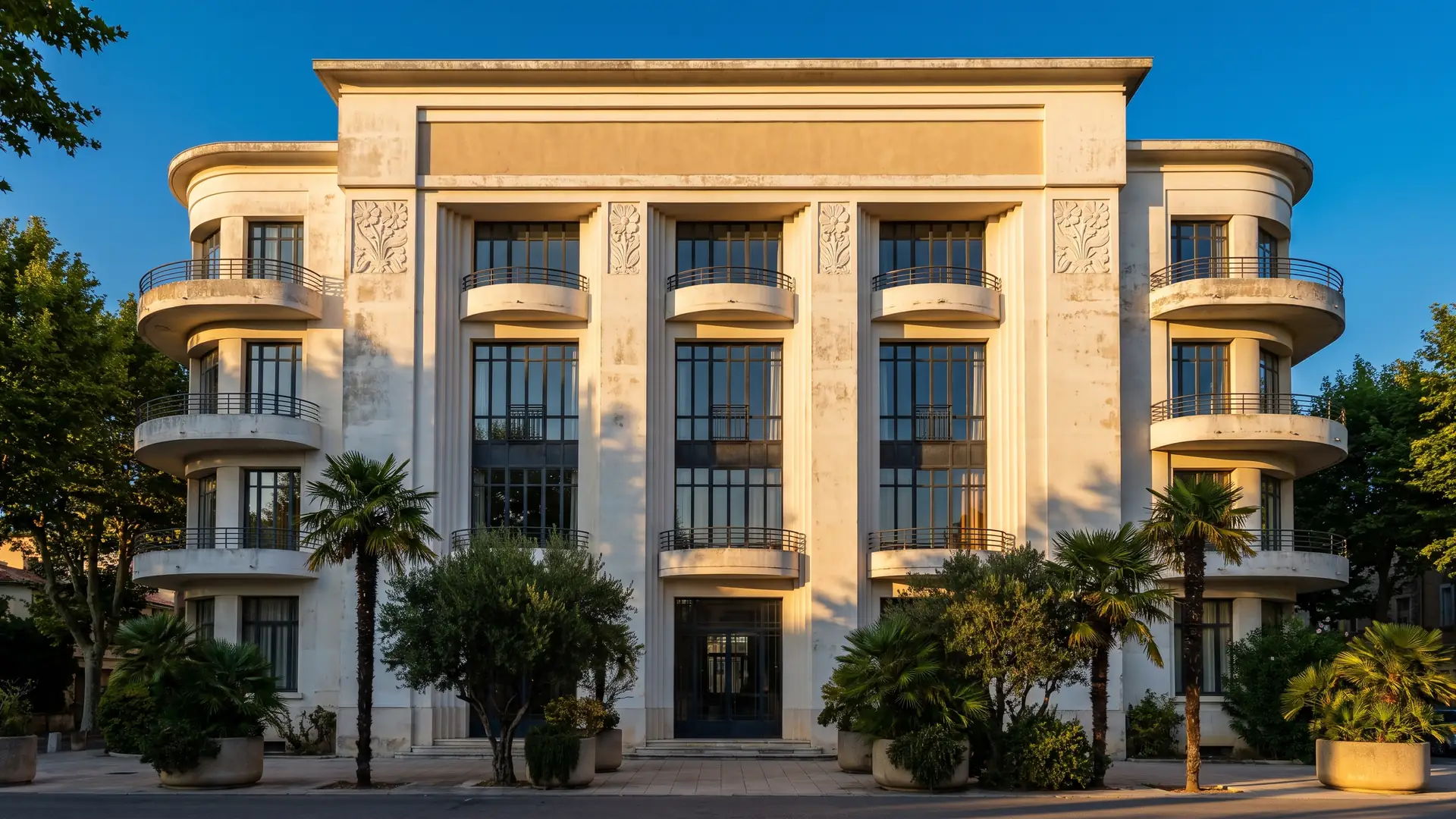
Between the 1910s and 1930s, the popularity of spa towns endowed Dax with a spectacular architectural heritage: the Neo-Moorish amphitheater (1913), the Atrium Casino (1928), and the Hôtel Splendid (1929)—a trio designed by the same architects, now a protected historic site. This was the resort’s golden age, as supported by verified facts.
The Granet-Pomade Trio
Dacquois's golden age is associated with two architects. Albert Pomade designed the white concrete arena in 1913, inspired by Seville—we’ll come back to that. Fifteen years later, the Parisian André Granet — with the assistance of Roger-Henri Expert and that same Pomade — delivered the city’s two Art Deco ships one after the other: the Atrium Casino, inaugurated on 1st July 1928 in front of more than a thousand people with Gounod’s Mireille, its stained-glass windows by Louis Barillet (including those in the American bar, featuring the names of trendy cocktails) and its approximately 800-seat theater, which was restored in 2005; then the Splendid Hotel, which opened in October 1929, a white stone ocean liner with chandeliers by the glassmakers Genet and Michon, which reopened in 2018 with 149 rooms and a 1,800-square-meter spa. The two buildings are officially listed as Historic Monuments (2000 and 1991), the Splendid also bears the “20th-Century Heritage” designation. A unique Art Deco tour in the Landes region.
Top-tier arenas
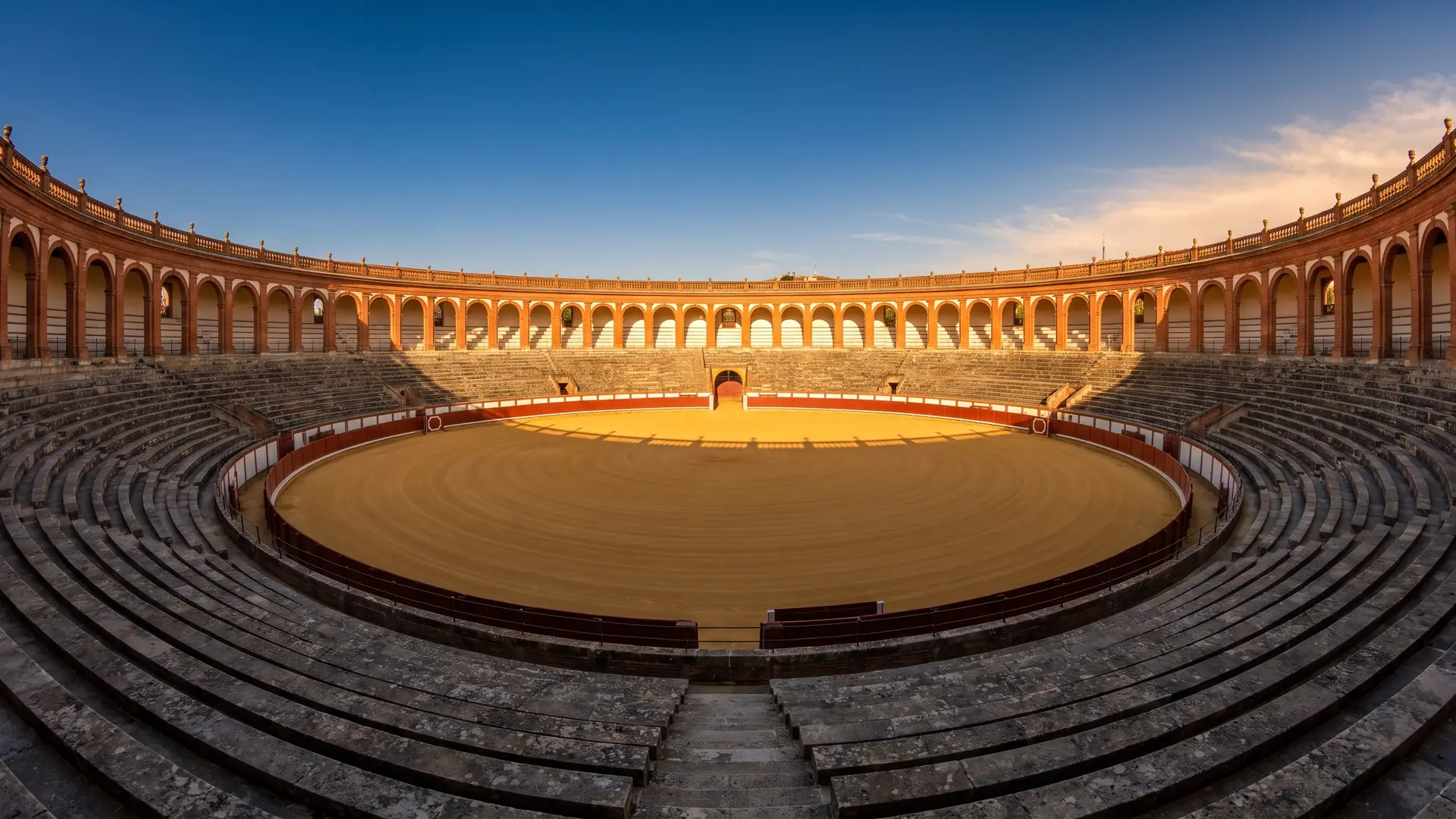
Inaugurated on May 10, 1913, the Dax Arena rises in white, its silhouette inspired by Sevillian and Neo-Moorish architecture next to Théodore-Denis Park, against the Roman ramparts—two thousand years of history condensed into a single glance. Designed by Albert Pomade and built of reinforced concrete and expanded beginning in 1932, they now offer 8,230 seats and are officially listed as Historic Monuments since 2013—registered, not “classified”; the distinction is important. They are among the seven top-tier French arenas, along with Nîmes, Arles, Béziers, Bayonne, Vic-Fezensac, and Mont-de-Marsan. Bullfights and courses landaises — the Gascon discipline of the “écarteurs” and “sauteurs” facing the Landes cow —take place there during the August feria and at the Grand Concours Landais, which we report here objectively, as a documented aspect of the local bullfighting culture. The rest of the year, the building can be viewed from the outside, standing majestically on the edge of the park.
| Building | Period | Protection |
|---|---|---|
| Gallo-Roman ramparts | 4th century | Listed as Historic Monuments in 1889 |
| Notre-Dame Cathedral | rebuilt as early as 1656 | Listed as a historic monument in 1946 |
| Hot Fountain | monument 1814–1818 | portico and ruins designated as historic landmarks in 1988 |
| Arenas | 1913 (A. Pomade) | Listed as MH 2013 |
| Atrium Casino / Splendid | 1928 / 1929 (A. Granet) | Listed as Historic Monuments in 2000 / 1991 |
"Station," Gothic, rankings: what we often read
Several claims are circulating about Dax that deserve to be corrected, backed by sources—which is the whole point of a reliable guide. The thermal ranking, the cathedral, the protective measures: here’s what’s true and what’s false.
First “destination,” not first “resort”
We often read that Dax is “France’s leading spa resort.” The exact official wording used by the town is “France's leading spa destination.” The distinction is not insignificant: in terms of the number of spa guests in a single municipality, the top resort is Balaruc-les-Bains (Hérault); Dax, on the other hand, stands out for the breadth of its offerings — sixteen institutions, a spa hospital one of a kind, and approximately 60,000 spa guests per year throughout the Greater Dax area (including Saint-Paul-lès-Dax). Similarly, “boule dacquoise” is not just any kind of mud: it is the TERDAX® peloid, a registered trademark of the Municipal Authority, the sole producer. And the temperature of 64 °C is the city’s official figure—scientific measurements fluctuate between 60 and 64 °C at the source, hence our use of “approximately.” Far from diminishing Dax’s standing, these details accurately describe it: a spa capital unmatched in France for its concentration of facilities.
Classical cathedral, listed amphitheater, civil basilica
Other useful clarifications. Dax Cathedral is not Gothic: the medieval building collapsed in 1646, and the current church is a classical reconstruction — only the Gate of the Apostles, located inside the transept, is an example of Gothic architecture (early 14th, not 13th century). The arenas are officially listed as Historic Monuments (2013), but not “classified”; their exact capacity is 8,230 seats. The hotel Splendid is not the work of Pomade alone: the lead architect is André Granet, Pomade appears second—he is, however, indeed the creator of the arenas. The archaeological crypt does not house a “Roman temple” but a 2nd-century civil basilica, according to the current interpretation. Finally, the Sarrat Park does not conceal a “castle” but rather a remarkable 1960s glass house. It is these distinctions—verified entry by entry using the Mérimée database—that distinguish a reliable guide from a copied text.
The Dax Fair and Major Events
Every August, the Dax Feria—the “Fêtes de Dax”—transforms the spa town into the festive capital of southwestern France for five days around August 15: in 2026, from August 12 to 16. Brass bands, bullfights, Landes-style races, and dances set the pace for the most anticipated event of the year in Dax. Here are the verified details.
Five days around August 15
The Dax Feria takes place over five days around August 15. The city has scheduled the 2026 event for August 12–16. The program brings together all the traditions of the Gascon festival: bands and street parties, neighborhood meals, dances, children's shows, and at the bullring, the bullfights and the Grand Concours Landais for Landes-style bullfighting—which we mention here simply as a matter of fact, as the documented events of the week. A particularly unique moment: the August 14, more than 600 musicians and choir members —members of Landes bandas and choirs—take over the city center, and on Sunday evening fireworks set the banks of the Adour River are ablaze with light. The entire city is then decked out in white and red, in the style of the ferias of southwestern France. If you’re planning to visit during these dates, book early—accommodations and transfers are in high demand—and arrange for a ride home after the event: this is exactly the kind of night when a private chauffeur comes in handy.
Toros y Salsa and the Dax Season
The feria isn't the only event on the calendar. On the second weekend in September, the Toros y Salsa festival—the 2026 edition is scheduled for September 11–13 in the municipal magazine — combines Latin music and bullfighting events in a more laid-back atmosphere at the end of summer. The rest of the year, life in Dax moves to the rhythm of market halls (the large Saturday morning market, from 7 a.m. to 1 p.m., spills out of the market halls onto the Goussebaire-Dupin Esplanade), Atrium concerts and the spa season, from March to November, which gently fills the terraces. Winter, a quieter time, has the charm of spa towns at rest: steam from the Fontaine Chaude rising in the cold air, Art Deco architecture bathed in low-angled light. No matter the season, Dax is easy to explore in a day or over a weekend—and the major events in August and September are well worth planning for in advance. Detailed, subject-to-change schedules can be confirmed at dax.fr.
What is there to do in Dax?
In Dax, you can see steam rising from the Fontaine Chaude, visit the cathedral and its hidden Gothic portal, walk along the Roman ramparts to the arena, stroll through the market halls on Saturday mornings, and round out the day with a visit to the Borda Museum, the amazing Helicopter Museum, and Sarrat Park. Here, in a nutshell, are the real, verified activities of France’s top spa destination.
- La Fontaine Chaude — the Nèhe spring, flowing at 64 °C beneath its neoclassical portico (1814–1818), the beating heart of the city
- Notre-Dame Cathedral — a traditional church, designated a historic monument, featuring the Gothic "Portal of the Apostles," which has been relocated to the north transept
- The Gallo-Roman ramparts and Théodore-Denis Park—sections dating from the 4th century that were designated as historic landmarks in 1889, at the foot of the amphitheater
- The market halls and the Saturday market — a Baltard-inspired glass roof (renovated 2018–2021), ~20 vendors; large market on Saturdays from 7 a.m. to 1 p.m.
- The Borda Museum—founded in 1807, designated a “Musée de France,” and reopened in 2024: Bronze Mercury, Borda’s “circle of reflection,” a gift from Louis XVI
- The ALAT and Helicopter Museum—some 30 aircraft on display in a 6,000-square-meter indoor space, a collection unique in France
- Sarrat Park—a remarkable garden and a 1960s glass house; guided tours on Tuesdays, Thursdays, and Saturdays at 3 p.m. (March–October)
The Spa and Heritage City Tour
The tour is best done on foot, as a loop starting from the Hot Fountain : the steam rising from the pool, the cathedral and its Gate of the Apostles, the narrow streets of the old town, and then the market halls — beautifully restored in 2021 beneath their Baltard-inspired glass roof — before joining the Roman ramparts at Théodore-Denis Park and the arenas white ones. Plan on a good half-day, or even longer if Saturday morning when the big market brings the area around the market halls to life (7 a.m.–1 p.m.): poultry from Chalosse, beef, foie gras, pastis from the Landes—the full range of Landes specialties. Archaeology enthusiasts can also enjoy the archaeological crypt on Cazade Street (the 2nd-century civil basilica) and the Borda Museum, which reopened in 2024 in the Carmelite Chapel, whose collections range from the Gallo-Roman bronze Mercury to the repeating circle designed by the Dax-born astronomer Jean-Charles de Borda, a gift from Louis XVI. A packed itinerary, easygoing and indulgent—very much in the spirit of a “spa town.”
Points of Interest: Helicopters and the Glass House
Dax has two unexpected visits in store. The ALAT and Helicopter Museum — The Army Light Aviation Branch, whose training school is located in Dax — displays around thirty aircraft Spanning 6,000 square meters of indoor space (the complete collection includes about 70 helicopters): Alouette, Puma, Gazelle... a unique overview in France of the history of military helicopters, which fascinates visitors of all ages. A completely different atmosphere at the Sarrat Park : this estate, spanning more than three hectares, was bequeathed to the city by architect René Guichemerre upon his death in 1988. It pairs an astonishing Californian-inspired 1960s glass house — listed as a historic monument — and a garden certified as a Remarkable Garden, home to more than a thousand trees of 130 species. The full tour is exclusively guided (Tuesdays, Thursdays, and Saturdays at 3 p.m., from March through October) — a hidden gem of botanical and architectural beauty. Opening hours vary and are subject to change; a private chauffeur allows you to visit these sites without worrying about parking.
| Activity | Where / When | Good to Know |
|---|---|---|
| Hot Fountain | Fontaine-Chaude Square | 64 °C, ~2,400 m³/day, free access |
| Cathedral & Gate of the Apostles | historic center | Listed as a historic monument in 1946; Gothic portal in the transept |
| Market Halls & Main Market | Saturday, 7 a.m.–1 p.m. | Baltard-style glass roof, Landes region |
| Borda Museum | Carmelite Chapel | Musée de France, reopening in 2024 |
| Sarrat Park | Guided tours Tue/Thu/Sat at 3 p.m. | Remarkable Garden, 1960s Glass House |
What's there to see around Dax?
From Dax, you can reach the Orthe region and its abbeys, the southern coast of the Landes, the gourmet region of Chalosse, Mont-de-Marsan, and Bayonne in less than an hour. The city is the ideal hub for southern Aquitaine: here are our verified day trips, with actual driving distances.
The Orthe Region, Chalosse, and the Gaves
To the southwest of Dax, less than half an hour away, the Orthe region reveals its hidden treasures: Orthevielle (23 km, 28 minutes), the centuries-old market in Peyrehorade (Wednesdays), the Abbey of Sorde, a UNESCO World Heritage Site on the Way of St. James—with its Roman baths beneath the abbot’s quarters—and the Abbey of Arthous with its archaeological museum. To the southeast, the rolling Chalosse region is the breadbasket of the Landes: Chalosse beef, foie gras, Adour kiwis, hillside villages, and ganaderias (bull ranches) for Landes-style bullfighting. It’s a region of hearty cuisine and farmhouse inns, best explored along the ridge roads, with the Pyrenees on the horizon on clear days. With a private chauffeur, you can plan a full “abbeys and local specialties” day trip departing from Dax—or Bordeaux—without worrying about the itinerary, and sample the local products to your heart’s content.
The coast, Mont-de-Marsan, and Bayonne
To the west, the southern coast of the Landes region is about 40 minutes away: the Atlantic beaches, Hossegor and its marine lake, Capbreton and its harbor—a haven for surfing and coastal pine forests. To the northeast, Mont-de-Marsan, the prefecture (54 km, 45 minutes), is worth a visit for its Lacataye keep, the Despiau-Wlérick Museum of Figurative Sculpture, and the confluence of three rivers. Finally, to the south, Bayonne (53 km, 42 minutes) marks the entrance to the Basque Country: the market halls along the Nive River, the Gothic cathedral, the chocolate, and, beyond that, Biarritz and the Basque Coast. Dax is thus one of the few places in the Southwest where you can, in a single day, take the waters in the morning, have lunch overlooking the ocean, and dine in the Basque Country. With a private transfer, these itineraries become effortless: the driver takes you from one stop to the next according to your preferences and brings you back to Bordeaux—or to your spa hotel—at the agreed-upon time.
When is the best time to visit Dax?
Dax follows the rhythm of its spa season, from March to November, with two festive highlights: the feria from August 12 to 16, 2026, and Toros y Salsa from September 11 to 13. Spring is ideal for a peaceful visit; in summer, it’s best to book early; September offers a more relaxed atmosphere while still featuring a major cultural event.
Fall pleasantly extends the spa season into November—it’s also the season for wood pigeons and porcini mushrooms at the market stalls. Winter, which is quieter, has a special charm: the steam from the Fontaine Chaude rising into the cold air is a sight to behold in itself, and the Art Deco style of the Splendid and the Atrium is best enjoyed without the crowds. No matter the season, the Saturday morning It’s the right day—the big market at Les Halles is in full swing from 7 a.m. to 1 p.m. Plan to spend a full day in the city (thermal baths, Fontaine Chaude, the cathedral, the market halls, and the amphitheater), and a weekend to also visit the museums, Sarrat Park, and take a day trip—to the Pays d’Orthe, the coast, or Bayonne. Less than two hours from Bordeaux, Dax is the perfect spa getaway, summer or winter.
| Season | Atmosphere | Ideal for |
|---|---|---|
| Spring (April–June) | A peaceful spa town; the season is just beginning | sightseeing, thermal baths, Sarrat Park |
| Mid-August (August 12–16, 2026) | Feria: bands, white and red | Gascon Festival — Book Early |
| September (September 11–13, 2026) | Toros y Salsa, Sweetness | balance between festivities and tranquility, markets |
Getting to Dax from Bordeaux
Dax is about 148 km from Bordeaux, which is about a 1-hour-50-minute drive via the A63 and then the A64/N124. The city also has a well-connected TGV station. Whether you’re coming for a spa treatment, a spa weekend, or the feria, a private door-to-door transfer remains the most flexible option.
| Route | Distance | Duration | Details |
|---|---|---|---|
| Bordeaux → Dax | ~148 km | ~1 hr 50 min | Starting at ~€251 for a private chauffeur service |
| Bordeaux-Mérignac Airport → Dax | ~150 km | ~1 hr 50 min | pickup at the terminal |
| Dax → Bayonne | ~53 km | ~42 min | Gateway to the Basque Country |
| Dax → Orthevielle (Orthe region) | ~23 km | ~28 min | the abbeys of Sorde and Arthous |
By car, it takes just under two hours to reach Dax from Bordeaux: take the A63 through the Landes Forest, then the A64/N124 toward the city. By train, Dax’s station is exceptionally well-connected—with direct TGV inOui trains from Paris-Montparnasse via Bordeaux, Ouigo, and TER trains on the Bordeaux–Irun line—serving more than 1.3 million passengers a year: convenient for a one-way trip. A private transfer, however, offers three key advantages: door-to-door service (from your home or Mérignac Airport to the spa hotel, including your spa luggage), the freedom to customize your itinerary (a stop in the Pays d’Orthe, a detour to the coast), and flexible scheduling—especially valuable on feria nights, when you want to return late without having to drive. For a couple on a spa retreat, a family, or a group of friends heading to the festival, this is the simplest and most comfortable option.
Whether you’re heading to a spa resort, the August feria, or an Art Deco and gourmet getaway, booking a private chauffeur guarantees a comfortable and punctual ride—book a driver from Bordeaux to Dax or explore all our destinations.
Frequently Asked Questions
Where is Dax located?
Dax is a subprefecture of the Landes department, situated on the banks of the Adour River, about 148 km south of Bordeaux (a 1-hour-50-minute drive via the A63). The town, with a population of 22,109 (known as Dacquois), extends mainly along the left bank of the river, with the Sablar neighborhood occupying the right bank. Its location makes it a crossroads: Bayonne and the Basque Country are 42 minutes away, Mont-de-Marsan (the prefecture) is 45 minutes away, the southern coast of the Landes—Hossegor, Capbreton—is about 40 minutes away, and the Orthe region with its abbeys is less than half an hour away. Originally a Roman town known as Aquae Tarbellicae (“the waters of the Tarbelles”), Dax is now France’s leading spa destination, with sixteen facilities and approximately 60,000 spa guests per year. Its TGV station provides direct service to Bordeaux and Paris; a private transfer service offers door-to-door transportation.
How much does a transfer from Bordeaux to Dax cost?
We offer a fixed-price transfer from Bordeaux to Dax, starting at approximately €312 one way (about 148 km, approximately 1 hour and 50 minutes by car), in a Mercedes sedan or a van seating up to 8 passengers, with a professional driver. The trip is direct, door-to-door: pickup at your home, at Mérignac Airport, or at Saint-Jean Train Station, and drop-off at your spa hotel or in the city center—including your spa luggage. The fixed-price quote is provided and confirmed in writing before departure, with no unexpected meter charges. This is the ideal option for starting a spa treatment (no transfers or missing door-to-door service), for the August feria (late returns without having to drive), or for a combined getaway—the driver can make a stop in the Pays d’Orthe or along the coast. For groups, this is often the simplest and most economical solution.
Why is Dax France's top spa destination?
Due to the breadth of its offerings: Dax has sixteen spa facilities—including a spa hospital, the only one of its kind in France—and welcomes approximately 60,000 spa guests per year across the Greater Dax area (including Saint-Paul-lès-Dax). This is the city’s official description: “France’s leading spa destination.” The distinction from “leading spa town” is significant: in terms of the number of spa guests in a single municipality, Balaruc-les-Bains leads the way; however, no other urban area concentrates as many spa facilities as Dax. Thermal treatments in Dax are offered primarily for rheumatology and phlebology; individual treatment recommendations and any complementary programs—including those for fibromyalgia—must be confirmed with the prescribing physician and the chosen facility. Dax’s thermal tradition dates back to antiquity—the Roman city was called Aquae Tarbellicae, “the waters of the Tarbelles”—and the season now runs from March through November.
What is the Dax Hot Spring?
It is the city’s iconic landmark: a monumental basin where the Nèhe Spring—named after a water deity—naturally gushes forth at 64 °C, with a flow rate of approximately 2,400 m³ per day, or 2.4 million liters of hot water daily. The neoclassical portico with Tuscan columns that shelters it was built between 1814 and 1818 on the ruins of Roman baths; the complex is protected as a Historic Monument (the portico and ancient ruins were designated in 1988) and was restored in 2003. In the past, butchers and housewives would come here to draw boiling water for cooking. The founding legend of Dax’s thermal baths is linked to this site: a Roman legionnaire is said to have left his old dog, suffering from rheumatism, in the mud of the Adour River and found him revitalized—a story to be taken for what it is, a beautiful legend, but one that reflects the geological reality: here, hot water bubbles up right in the middle of town, freely accessible to all.
What is TERDAX peloid?
It is the thermal mud of Dax—and a registered trademark: TERDAX®, produced exclusively by the Municipal Water Authority, which is the only entity authorized to do so. Its production embodies the essence of the Dax region: silt from the Adour River, extracted from the Saubagnacq floodplains (the river’s floodplains), is mixed with thermal water at 64 °C and then inoculated with “thermal algae ”—specific cyanobacteria that thrive in this hot water—before undergoing controlled maturation and being packaged in 10-kilogram bags for use by establishments. Applied as hot poultices, the peloid is the signature treatment of Dax’s rheumatology tradition. A popular tradition predates it: at the “poor people’s pool,” below the casino, those without means used to bathe for free in the natural mixture of silt and hot water. Two thousand years after the Romans, Dax still draws on the thermal resources of the same river.
When is the Dax Feria held?
The Dax Festival takes place every year over five days around August 15; the 2026 edition is scheduled for August 12–16. The program features bandas and peñas in the streets, neighborhood meals, dances, shows, and, at the bullring, bullfights and the Grand Landes Competition of Landes-style bull-running—the week’s documented bullfighting events, which we report factually. Two highlights: on August 14, more than 600 musicians and singers (from Landes bandas and choirs) take over the city center; and on Sunday evening, fireworks are set off from the banks of the Adour River. The entire city is decked out in white and red, in the tradition of the ferias of southwestern France. A month later, the Toros y Salsa festival (September 11–13, 2026) extends the season in a more laid-back atmosphere. If you’re planning to attend these events, book your lodging and transportation well in advance—and make sure to arrange for a ride home after the evening’s festivities.
What is there to do in Dax?
We start with the Fontaine Chaude, the 64 °C hot spring that steams in the heart of the city, followed by Notre-Dame Cathedral—a classic structure, but home to the spectacular Gothic “Portal of the Apostles,” which has been relocated to its transept. We then walk along the 4th-century Gallo-Roman ramparts (listed as a historic monument since 1889) to Théodore-Denis Park and the white amphitheater built in 1913. On Saturday mornings, the large market brings the market halls and their Baltard-inspired glass roof to life (7 a.m.–1 p.m.)—featuring the full range of Landes regional specialties. Round out your visit with the Borda Museum (Musée de France, reopening in 2024), the archaeological crypt and its 2nd-century civil basilica, the fascinating ALAT and Helicopter Museum (featuring some thirty aircraft on display), and Sarrat Park, a remarkable garden featuring a 1960 glasshouse (guided tours Tuesdays, Thursdays, and Saturdays at 3 p.m., from March through October). And of course: a thermal treatment—from spa treatments to full cures—at one of the sixteen facilities.
Is Dax Cathedral Gothic?
No—and that’s one of the surprises of the tour. The old Gothic cathedral collapsed in 1646; the current building, rebuilt starting in 1656 (construction was not completed until 1894), is in the classical style, with a dome and a large organ—its plans are even “attributed to Vauban,” according to the cautious wording of the Historic Monuments description. The Gothic treasure lies inside: the Portal of the Apostles, an early 14th-century masterpiece salvaged from the old cathedral, was dismantled and then reassembled stone by stone in the north arm of the transept in the 19th century. Measuring 12 meters high by 8 meters wide and featuring depictions of the apostles, it forms a remarkable “monument within a monument.” The entire complex has been designated a Historic Monument since 1946. A visit here pairs perfectly with a trip to the nearby Fontaine Chaude and the narrow streets of the old town center.
How far is it from Bordeaux to Dax?
About 148 km by road, or about 1 hour and 50 minutes: Take the A63 through the Landes Forest, then the A64/N124 to the city. By private driver, the fare is fixed and provided in advance, starting at approximately €251 one way. By train, the Dax station is very well-connected—with direct TGV inOui trains from Paris via Bordeaux, Ouigo, and TER trains on the Bordeaux–Irun route—serving more than 1.3 million passengers per year. A private transfer offers the advantage of door-to-door service: pickup at your home, at Mérignac Airport, or at Saint-Jean Station, drop-off directly at the spa hotel with your spa luggage, and complete freedom to plan your itinerary—a stop in the Pays d’Orthe, a detour along the coast, or a visit to Bayonne. On feria nights, it also guarantees a late return without having to drive.
What's there to see around Dax?
Dax is an ideal crossroads. Less than half an hour to the southwest, the Orthe region is home to the market in Peyrehorade (held on Wednesdays, a tradition dating back to 1358), the UNESCO-listed Sorde Abbey—with its Roman baths and mosaics beneath the abbot’s quarters—and Arthous Abbey with its archaeological museum; Orthevielle is 23 km away. To the southeast, the rolling Chalosse region is the Landes’ pantry: Chalosse beef, foie gras, Adour kiwis, and farm-inns. To the west, the southern coast of the Landes (Hossegor, Capbreton) is about 40 minutes away. To the northeast, Mont-de-Marsan (54 km) is known for its Lacataye keep and the Despiau-Wlérick Sculpture Museum. To the south, Bayonne (53 km, 42 minutes) marks the entrance to the Basque Country. A private chauffeur allows you to customize these excursions from Dax—or to make them stops along the way to Bordeaux.
When is the best time to visit Dax?
The spa season runs from March to November, and each season has its own charm. Spring brings a peaceful atmosphere to the spa town: sightseeing, thermal baths, and Sarrat Park (guided tours resume in March). Summer culminates with the mid-August feria (August 12–16, 2026)—five days of bandas and Gascon festivities, spectacular but in high demand: book early. September may offer the best balance: mild weather, the Toros y Salsa festival (September 11–13, 2026), bountiful markets, and fewer crowds. Fall extends the season with wood pigeons and porcini mushrooms at the market halls; winter, quieter, has the charm of spa towns at rest—the steam from the Fontaine Chaude rising in the cold air is worth the trip on its own. No matter the season, aim for Saturday morning for the big market at the halles (7 a.m.–1 p.m.). Plan on a day for the city, a weekend including the museums, and an excursion.
Is it possible to visit Dax and the Basque Country in a single day?
Yes, very easily: Bayonne is only 53 km from Dax (about 42 minutes by highway), and the Basque coast stretches just beyond. A classic itinerary for a private tour: depart from Bordeaux in the morning, explore Dax—Fontaine Chaude, the cathedral, and the market halls—enjoy a Landes-style lunch, then head to Bayonne to visit the market halls along the Nive River, the Gothic cathedral, and the chocolate shops, before returning in the evening. You can also reverse the order, or replace Bayonne with the southern coast of the Landes: Hossegor and its marine lake, and Capbreton and its harbor are about 40 minutes from Dax. Another popular combination: Dax and the Pays d’Orthe (the abbeys of Sorde and Arthous, and the market in Peyrehorade on Wednesdays), which offers a more intimate experience. That’s the beauty of having a private chauffeur in this area: the distances are short, the roads are pleasant, and you can move seamlessly from one atmosphere to another—spa, ocean, Basque—without worrying about driving or parking.
Further Reading
- The Prefecture of the Three Rivers: see the Mont-de-Marsan Guide (Lacataye Keep and Despiau-Wlérick Museum, 45 minutes away)
- The neighboring Orthe region: see the Orthevielle Guide (the abbeys of Sorde and Arthous, the gaves, and the Adour kiwi)
- Another culinary capital of the Southwest: see the Bazas Guide (UNESCO-listed cathedral and Bazas beef)
- Understanding our rates and vehicles: see the "Book a Driver" page (sedan & van, fixed-price quote)
- Plan your trip: Book a private driver from Bordeaux to Dax or explore all our destinations
Sources and References
- City of Dax — Thermal Baths — 16 facilities, including a thermal hospital, approximately 60,000 visitors per year, and TERDAX® peloid
- City of Dax — Must-See Attractions — A hot spring with a temperature of 64 °C and a daily flow rate of 2.4 million liters
- Dax, the 2026 Feria — official dates: August 12–16, 2026
- Health Insurance — Spa Treatment — Doctor's Prescription, Covered Conditions (including rheumatology and phlebology), Choice of Spa Based on the Condition
- Wikipedia — Dax — subprefecture of the Landes department, population 22,109 (2023); Aquae Tarbellicae, 4th-century Gallo-Roman walled enclosure, archaeological crypt (2nd-century civil basilica)
- POP Mérimée — Fontaine Chaude (source of the Nèhe) — monument built 1814–1818, listed in 1946; portico and ancient ruins classified in 1988; flow rate ~2,400 m³/day at 64 °C
- Wikipedia — Notre-Dame Cathedral in Dax — a classical cathedral rebuilt beginning in 1656 (designated a historic monument in 1946); Gothic Portal of the Apostles (early 14th century, 12 m × 8 m), reassembled in the 19th century in the north arm of the transept
- Wikipedia — Dax Arena — inaugurated on May 10, 1913 (Albert Pomade), 8,230 seats, designated a historic monument in 2013; one of France's seven first-class arenas
- Wikipedia — Hôtel Splendid — Art Deco, 1928–1929, architects André Granet (with R.-H. Expert and A. Pomade), Genet and Michon chandeliers, designated a historic monument in 1991, 20th-Century Heritage label, reopened in 2018
Dates and practical information verified on .
On the way to the spa town
Direct transfer from Bordeaux (~1 hr 50 min) to Dax, France’s leading spa destination—from your home, the airport, or the train station to the spa hotel, including transportation of your spa luggage—followed by optional excursions to the Pays d’Orthe, the coast, or Bayonne. Fixed-price written quote, with no unexpected meter charges.