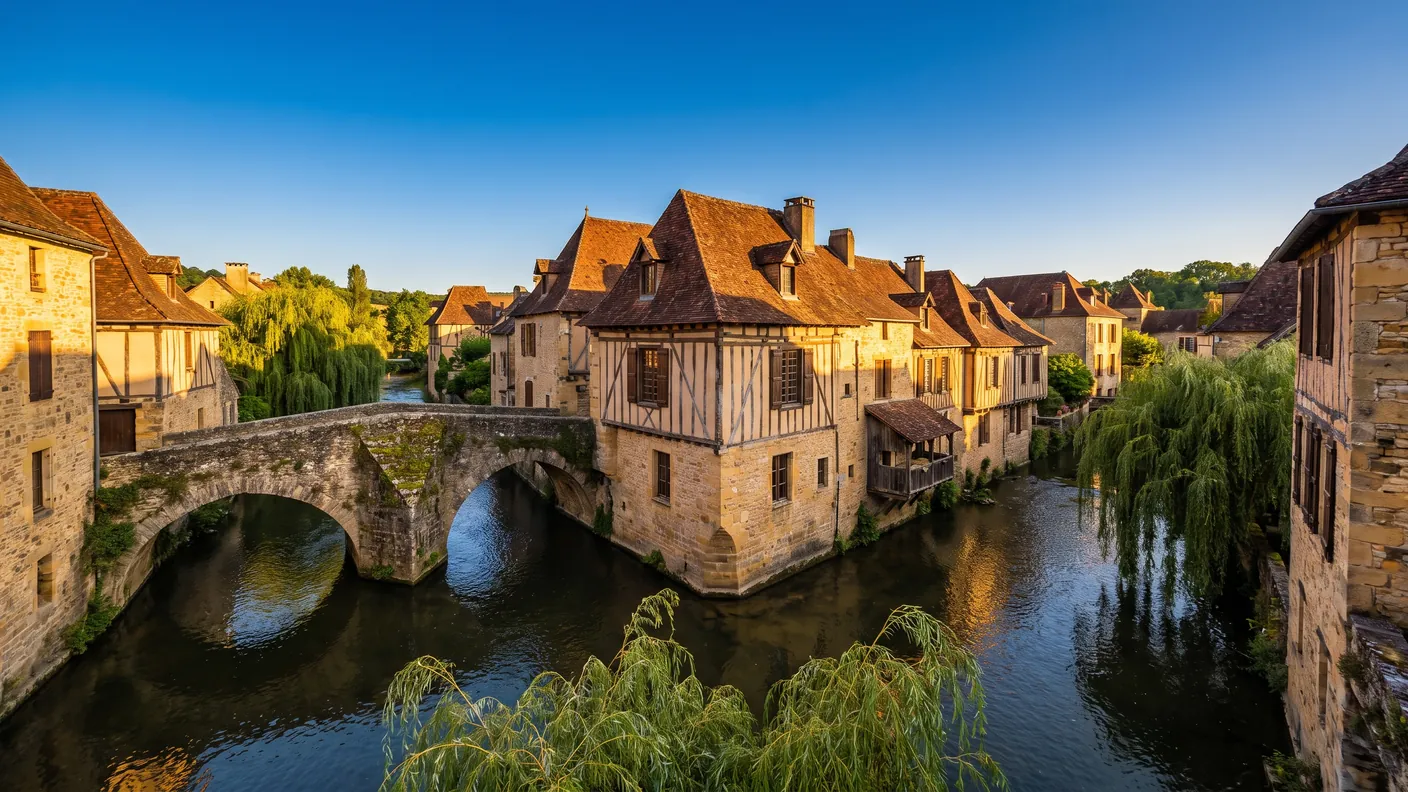
Mont-de-Marsan, the City of Three Rivers
A 12th-century castle town that has become a prefecture, situated at the exact confluence of the Midou and Douze rivers: Mont-de-Marsan, its open-air sculpture, its Lacataye keep, and its blue-and-white Madeleine Festival—plus your private door-to-door transfer from Bordeaux, without having to rent a car.
Mont-de-Marsan at a Glance
Mont-de-Marsan is the prefecture of the Landes department, located at the confluence of the Midou and the Douze rivers, which form the Midouze. According to INSEE, the municipality had a population of 31,592 in 2023. Located 135 km from Bordeaux, it combines medieval heritage, outdoor sculpture, and the Fêtes de la Madeleine.
The distance, duration, and fare are based on the values displayed by the booking engine for Bordeaux → Mont-de-Marsan. The cultural and demographic data are linked below to the corresponding official sources; schedules and itineraries are subject to change prior to departure.
| Landmark | Details |
|---|---|
| City | Mont-de-Marsan (Landes Prefecture) |
| Location | at the confluence of the Midou and the Douze, which form the Midouze |
| Residents | 31,592 Montois residents (2023) |
| Must-See | the Lacataye Keep, the open-air sculpture, the riverbanks, the Madeleine Festival |
| Distance from Bordeaux | about 135 km · about 1 hour and 39 minutes by car (A65) |
Where is Mont-de-Marsan located?
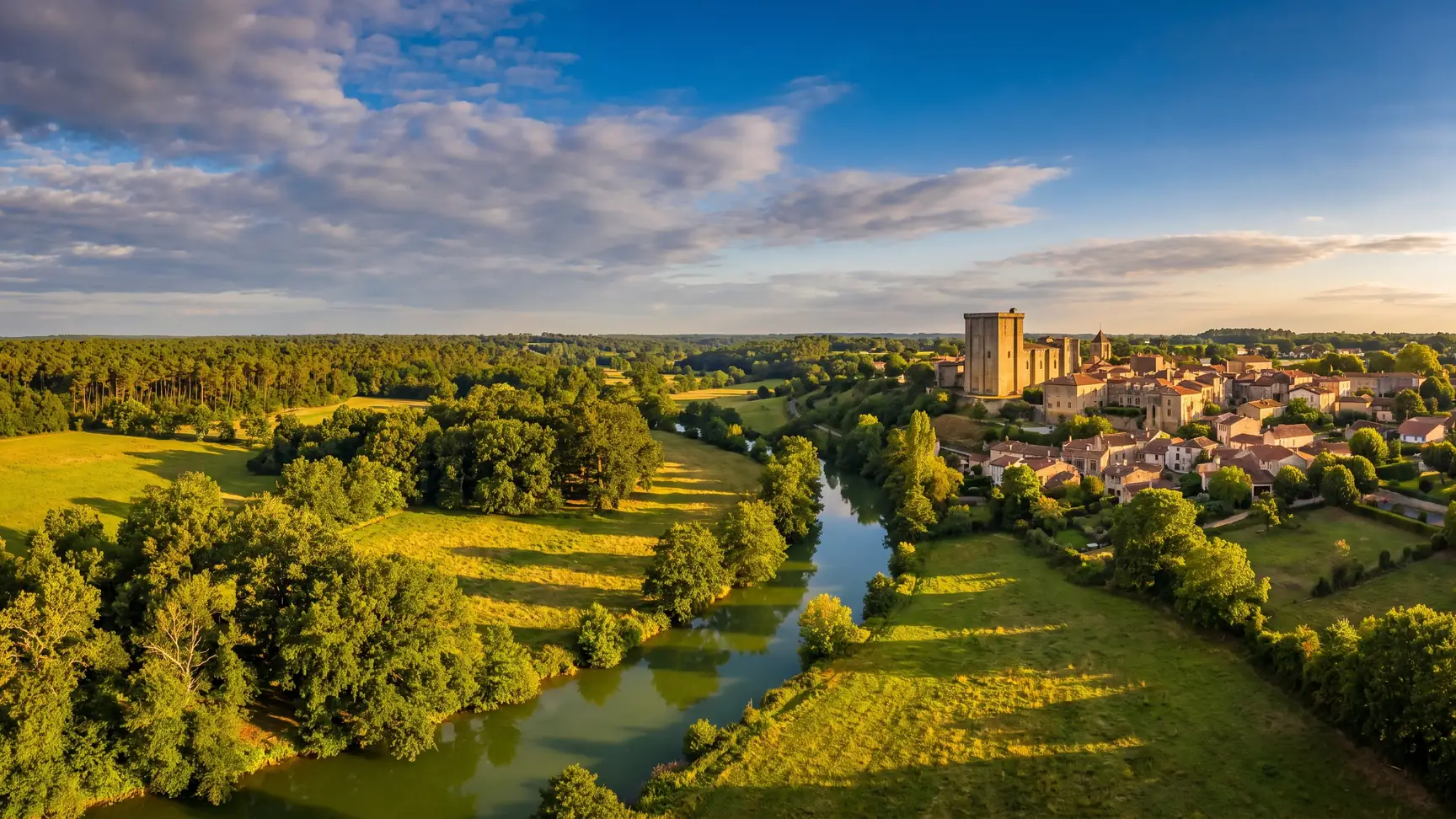
Mont-de-Marsan is located in the eastern part of the Landes department, 135 km south of Bordeaux via the A65, at the point where the Midou and the Douze rivers converge to form the Midouze. As the prefecture of the Landes department, the municipality had a population of 31,592 according to INSEE in 2023. The drive from Bordeaux takes approximately 1 hour and 39 minutes, according to the times displayed by the booking engine.
The City of Three Rivers
Mont-de-Marsan’s defining scene unfolds in the centre of town: the Douze and the Midou, two rivers descending from Armagnac, meet below the old town to form the Midouze, three names and three waterways at a single confluence. The best viewpoint is itself a curiosity: the elliptical washhouse built in 1870, set at the very tip of the confluence, where the third river can quite literally be seen to begin. The quays along the Midouze, including Silguy and Méchin, have become a promenade, while the towpath extends for about 40 kilometres towards Tartas. They recall the city’s river-trading past: from the Middle Ages to the 19th century, gabarres carried wines and Armagnac brandies, wheat, and timber towards the Adour and Bayonne. Water remains the city’s central feature, reinforced by the “Rivers in the City” project restoring 16 km of riverbanks.
The capital of inland Landes
As the prefecture of a department often known only for its beaches, Mont-de-Marsan embodies the inland Landes: the pine forest beginning at the city gates, the arena and Landes bullfighting, Gascon markets, and nearby Armagnac country. It is also an air-force garrison town. Air Base 118 “Colonel Rozanoff”, one of the French Air and Space Force’s largest bases at about 700 hectares, is the largest employer in the Landes. Its Rafale aircraft, including those of the celebrated Normandie-Niemen squadron, regularly cross the sky above Mont-de-Marsan, while the CEAM tests new equipment there. Culture completes the picture: Théâtres de Gascogne, caféMusic’, and the Raymond-Farbos contemporary art centre provide a year-round programme. This is a genuine provincial capital on a human scale, and it rewards a proper stop.
Pierre de Marsan’s castelnau
Mont-de-Marsan was founded in the 1130s: Viscount Pierre de Marsan established a new fortified town, a “castelnau” rather than a “bastide,” at the confluence to control the river port. The town still preserves the plan and stonework of this early seigneurial settlement, together with a royal lineage. Here are the verified facts.
A new town from the 12th century—not a bastide
Let us settle a common source of confusion: Mont-de-Marsan is not a bastide. It is a castelnau, a new fortified town organised around its lord’s castle, a form of settlement earlier than the bastides of the 13th century. Its foundation is documented between 1133 and 1141. Pierre, Viscount of Marsan, separated the site from Saint-Pierre-du-Mont with the consent of the abbot of Saint-Sever, granted the town a charter of privileges, and established it on the hill above the confluence, the “mont” of Marsan. The origin of “Marsan” remains debated, with some theories pointing to ancient Aquitanian roots linked to water. The objective was both economic and military: to control the port where goods from Armagnac were loaded onto the Midouze. The town became the river outlet for eastern Gascony and remained so for seven centuries, until the railway arrived.
From Pierre de Marsan to Henry IV
The town’s foundation has an intriguing genealogy: Pierre de Marsan, who died around 1163, is a sixteenth-generation direct ancestor of Henry IV. The king from Béarn did not forget the connection. In 1594, he officially confirmed 22 July, the feast day of Saint Mary Magdalene, as the date of the Montois celebrations: the royal recognition of the Madeleine Festival, still celebrated more than four centuries later. The town had lived through English rule in Guyenne and the Wars of Religion. According to local tradition, Marguerite of Navarre also made Mont-de-Marsan one of her favoured places to stay; the museum entrance is now on Place Marguerite-de-Navarre. In 1790, the Revolution made the town the prefectural seat of the Landes; in 1808, Napoleon I visited and ordered the construction of the large administrative buildings that still shape the centre. It is the story of an understated but enduring capital.
Lacataye, the “false keep,” and the Romanesque houses
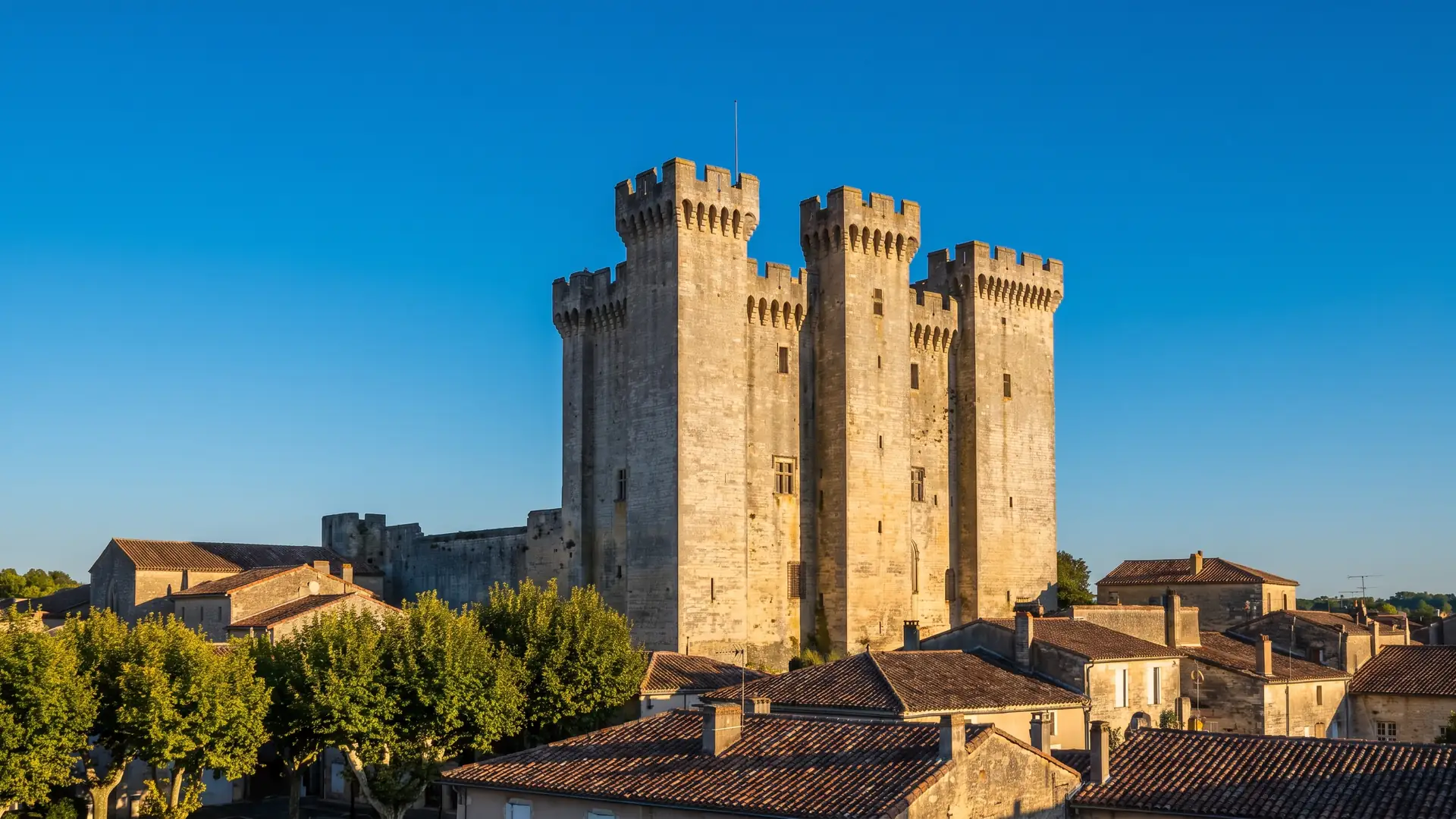
The Lacataye “keep” is a 15th-century fortified structure that was designated a historic monument on July 22, 1942. The Ministry of Culture’s POP/Mérimée listing confirms its protected status and its designation as the Despiau-Wlérick Museum.
Two fortified houses that became a “keep”
Massive and crenellated above the Douze, Lacataye Keep has every appearance of a keep except its origin. The building is in fact formed by two adjoining fortified houses, built of shell limestone, the local stone, and attributed to Marguerite de Moncade around 1313. The battlements were added later; sources differ on their date, so no firmer claim is made here. The complex has been listed as a Historic Monument since 22 July 1942, listed rather than classified, as the Mérimée record confirms. Since 1968, the “keep” has housed the Despiau-Wlérick Museum, entered through a former Romanesque chapel on Place Marguerite-de-Navarre. At its foot, the old town retains sections of city walls and, in all, a dozen protected monuments.
Romanesque Houses: A Hidden Treasure
A few steps from the keep, four Romanesque houses from the second half of the 12th century, two on Rue Maubec and two on Rue Lacataye, are among the city’s most discreet treasures. Rare examples of Romanesque civil architecture, these shell-limestone fortified houses with paired windows were incorporated into the city walls in the 13th century and protected as historic monuments between 1929 and 1984. In other words, at the heart of a 21st-century prefecture, town houses contemporary with its foundation still stand after more than eight centuries. The medieval circuit, taking in the keep, Romanesque houses, walls, and confluence washhouse, can be walked in an hour through the narrow streets descending towards the rivers. It complements the sculpture trail and introduces this former castelnau turned capital. A chauffeur can drop you at the old town, avoiding the search for parking.
| Building | Period | Protection / Status |
|---|---|---|
| Lacataye Keep | 2 fortified houses, c. 1313 | Listed as a Historic Monument in 1942 |
| Romanesque houses (Maubec and Lacataye Streets) | Second half of the 12th century | Protected as Historic Monuments, 1929–1984 |
| Plumaçon Arena | 1889 (7,100 seats in 1933) | "Outstanding Contemporary Architecture" Award, 2007 |
| Despiau-Wlérick Museum | Lacataye Keep, since 1968 | Musée de France — closed until ~2028 |
| Confluence Washhouse | 1870 | A viewpoint over the birthplace of the Midouze |
The Capital of Figurative Sculpture
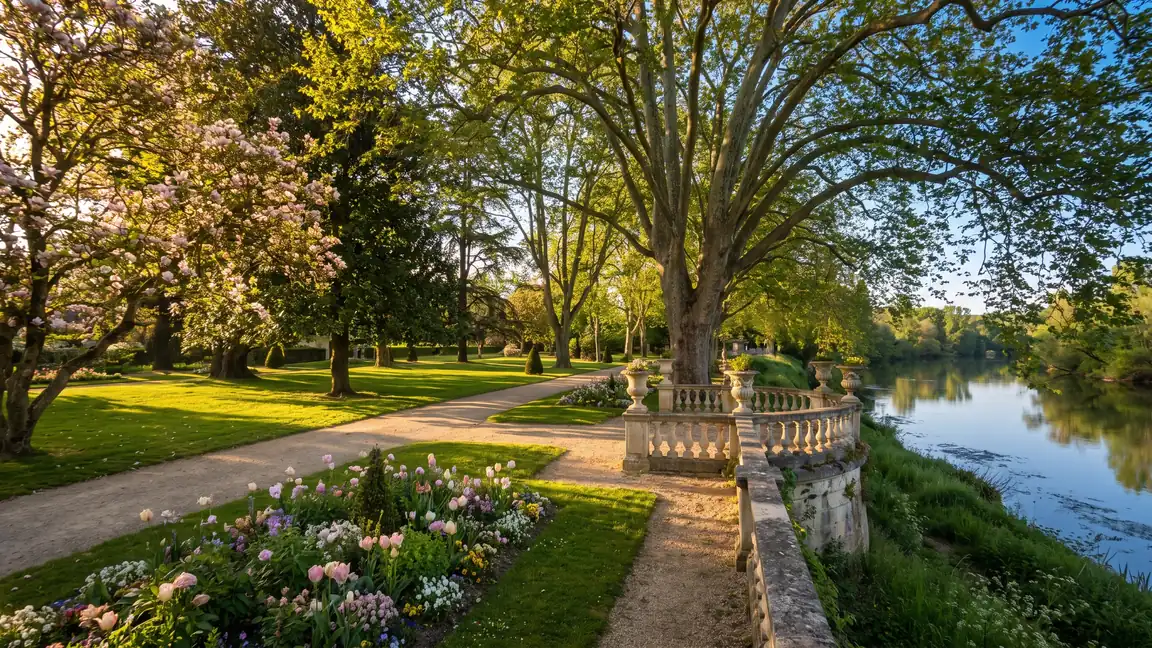
Mont-de-Marsan is France’s capital of figurative sculpture: its Despiau-Wlérick Museum—the only museum in France devoted exclusively to this genre—is closed for renovations until 2028, but a free temporary gallery and some 40 outdoor sculptures are filling in the gap. Here is the verified essential visitor information.
Despiau and Wlérick, two locals
By a remarkable coincidence, Mont-de-Marsan produced two major sculptors: Charles Despiau (1874–1946), a pupil of Rodin who became a master of sculpted portraiture, and Robert Wlérick (1882–1944), notably the sculptor of the monument to Marshal Foch at the Trocadéro. Both were born in Mont-de-Marsan. The museum bearing their names has occupied Lacataye Keep since 1968 and is the only museum in France devoted exclusively to figurative sculpture. Its collection is particularly rich in works from the first half of the 20th century, with about 1,000 works normally displayed from holdings of roughly 2,400 sculptures, 11,000 drawings, and 500 paintings, under the Musée de France designation. Important visitor information for 2026: the museum is closed. A 16.5 million euro renovation begun in March 2025 is expected to double the exhibition space to 1,200 m² and triple the number of works shown, with phased reopening from 2028. Meanwhile, a free temporary gallery at 5 Rue Gaston-Phébus presents a selection from the collections.
An open-air museum—free of charge
The good news is that sculpture in Mont-de-Marsan has never remained indoors. Since 1988, the city has taken its works beyond the museum walls: about forty sculptures now punctuate its squares, quays, and gardens, forming a free sculpture trail. The numbered works are documented by QR codes, creating an open-air museum from the confluence to Jean-Rameau Park. The city long celebrated this focus through the triennial “Mont de Marsan Sculptures.” An ideal route combines the outdoor trail, the temporary gallery on Rue Gaston-Phébus, and the sculpture garden beside the keep, against the medieval old town. Even while the museum is closed, Mont-de-Marsan remains a distinctive place to encounter figurative sculpture on foot, free of charge and year-round. Gallery opening times vary and should be checked with the tourist office.
The Madeleine Festival, in Blue and White
According to the tourist office’s 2026 tourist map, the Madeleine Festival will take place from July 22 to 26, 2026. The program, access information, and traffic regulations are subject to change: please check the official information before you leave.
The tradition is both ancient and royal: Mary Magdalene has been the city’s patron saint since its foundation, and Henry IV, a descendant of Pierre de Marsan, confirmed 22 July as the official date of the festivities in 1594. Mont-de-Marsan has one distinctive convention: revellers dress in blue and white, the colours of the city’s coat of arms, rather than the red and white seen at other south-western festivals. The programme includes the handing over of the keys, a parade, bandas, free concerts, bodegas, and fireworks. At Plumaçon Arena, bullfights, novilladas, and Landes bullfighting with introductory sessions make up the documented bull-related events of the week, reported here factually.
Le Plumaçon, a bullring dating from 1889
The Madeleine’s bullfighting spirit thrives at the Plumaçon Arena, which opened on July 21, 1889, and was expanded to 7,100 seats during its 1933 reconstruction—a beautiful complex designated as “Remarkable Contemporary Architecture ” since 2007. Along with Dax, Bayonne, and Vic-Fezensac, Mont-de-Marsan ranks among France’s major first-class bullfighting venues, and the “course landais”—the Gascon art of the “écarteurs” and “sauteurs” facing off against the cow—holds its own there alongside Spanish bullfighting. The detailed, subject-to-change schedule is to be confirmed on the city’s website.
Bastide, keep, museum: separating fact from fiction
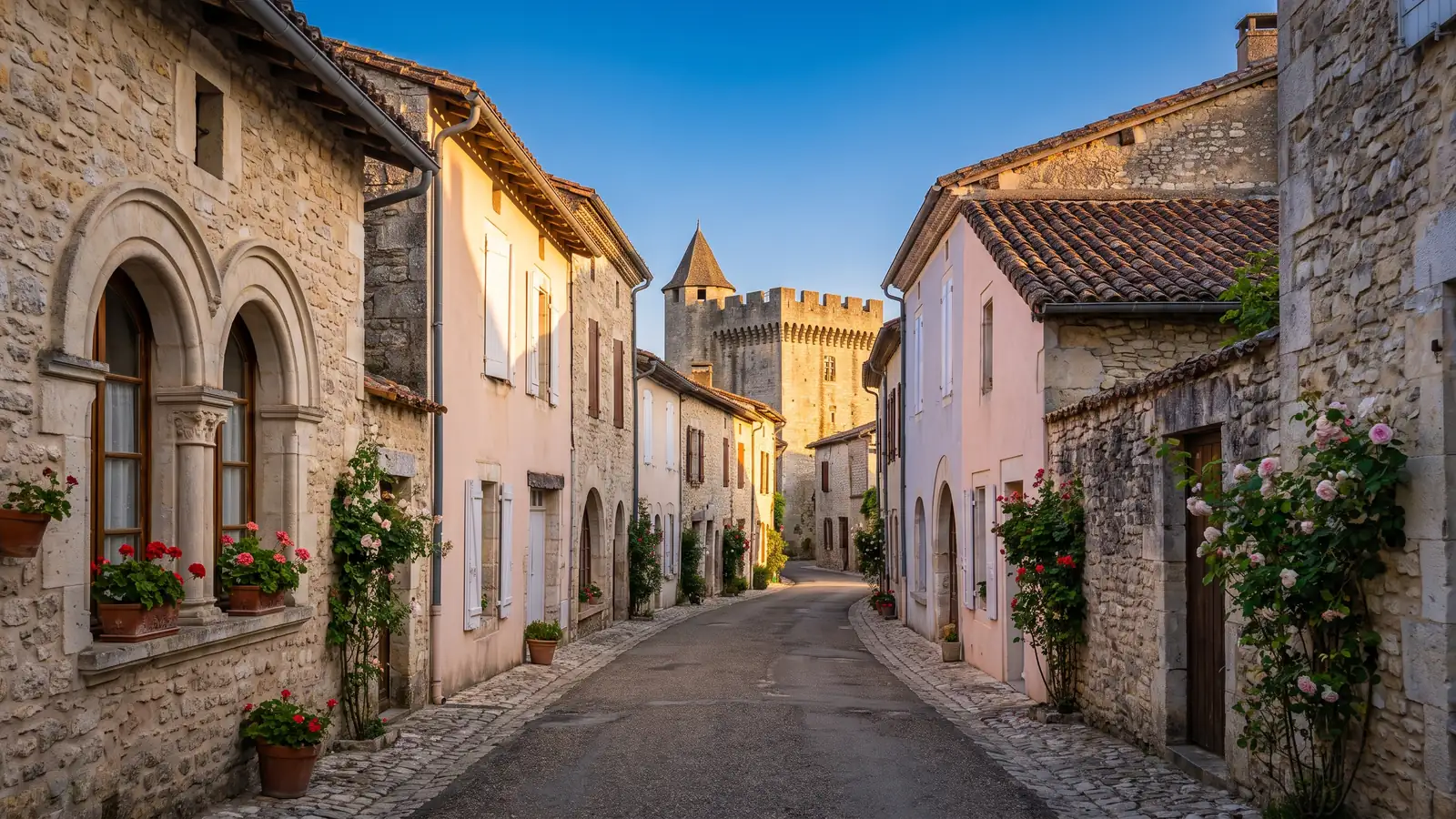
Several claims about Mont-de-Marsan warrant correction, with sources to support the facts, which is the purpose of a reliable guide. The town’s urban form, the keep, the museum, and the figures: here is what is accurate and what is not.
A castelnau, a “keep” that isn’t really one
Mont-de-Marsan is often described as “a bastide,” but that is incorrect. The town is a castelnau, a new fortified settlement of the 12th century organised around a seigneurial castle, a model earlier than the bastides. It was founded between 1133 and 1141, not specifically “in 1133,” and the claim that it was the “first castelnau in Gascony” is not confirmed by a source. Lacataye Keep, meanwhile, is not a true keep: it consists of two adjoining fortified houses dating from around 1313, with battlements added later. The building is listed as a Historic Monument, since 1942, rather than classified. For the Romanesque houses, the unsupported superlative “the rarest example of civil architecture in France” is best avoided; “rare examples of Romanesque civil architecture” is accurate enough. These details reveal an authentic Gascon castelnau whose heritage remains visible at street level.
Museum Closed: The Real Numbers
The most useful piece of information for visitors in 2026: the Despiau-Wlérick Museum has been closed for renovation since March 2025—many guidebooks are still unaware of this and direct their readers to a closed door. The visit has been moved to the free temporary gallery at 5 rue Gaston-Phébus and the outdoor sculpture walk; the museum is scheduled to reopen in 2028 with double the exhibition space. (Under normal circumstances, admission to the museum was not free—it cost about €3—contrary to what is sometimes reported.) As for the numbers: the population is approximately 31,600 (2023 census), and the drive from Bordeaux is 135 km—about 1 hour and 39 minutes via the A65—not “130 km.” It is these checks—entry by entry, figure by figure—that make for a reliable guide.
What is there to do in Mont-de-Marsan?
At Mont-de-Marsan, you can stroll along the open-air sculpture promenade, visit the free Despiau-Wlérick Gallery, climb up to the Lacataye keep and the Romanesque houses, stroll through the Saint-Roch market on Tuesdays or Saturdays, and take a breath of fresh air in Jean-Rameau Park and along the three rivers. Here, in concrete terms, are the actual, verified activities offered by the Landes Prefecture.
- The Sculpture Trail — about 40 figurative outdoor sculptures, free to view, with QR codes, from the confluence to the gardens
- The Despiau-Wlérick Gallery — 5 Gaston-Phébus Street, featuring a free selection from the museum’s collections during its renovation (reopening ~2028)
- The Medieval Tour — Lacataye Keep (listed as a historic monument), 12th-century Romanesque houses on Maubec and Lacataye Streets, city walls
- The Confluence Washhouse—the 1870 ellipse situated where the Midou and Douze rivers come together to form the Midouze
- The Saint-Roch Market—food market, Tuesday and Saturday mornings (approximately 6 a.m.–1 p.m.), ranked among the 100 most beautiful markets in France
- Jean-Rameau Park — 6.5 hectares in a bend of the Douze River: 80 tree species, a Japanese garden, and a gazebo dating from 1907
- The riverbanks and towpath—a renovated walking path along the Midouze River, a historic towpath leading to Tartas (~42 km)
Sculpture, Stone, and Rivers
The ideal visit is a walking loop. Begin at the confluence, beside the elliptical washhouse built in 1870 exactly where the Douze and Midou form the Midouze, the best viewpoint over the “City of Three Rivers.” Continue into the old town for Lacataye Keep, the Romanesque houses of the 12th century, and the remains of the walls. Then follow the free sculpture trail, with about 40 works and QR codes, to the Despiau-Wlérick Temporary Gallery at 5 Rue Gaston-Phébus and the sculpture garden. Finish in Jean-Rameau Park: 6.5 hectares in a bend of the Douze, more than 80 tree species, a Japanese garden, and a cast-iron bandstand dating from 1907. Founded in 1813 as a departmental nursery, the park was used to test species, including maritime pine, for stabilising dunes and draining the Landes. Allow two to three hours for this compact, level, and free route.
The market, the stage, and Mont-de-Marsan’s skies
On Tuesday and Saturday mornings, Saint-Roch Market, a covered food market listed among the “100 Most Beautiful Markets in France,” presents the best of the Landes: free-range poultry, Chalosse beef, foie gras, Armagnac, and sand-grown asparagus in season. It is an excellent start to a visit. Théâtres de Gascogne and caféMusic’ offer year-round programmes, while the Raymond-Farbos contemporary art centre has presented exhibitions since 1986. Rafale aircraft from Air Base 118, home to the Normandie-Niemen squadron, regularly cross the sky above the town. Opening times and programmes can change; a chauffeur makes it easier to combine the market, visits, and performances without parking concerns.
| Activity | Where / When | Good to Know |
|---|---|---|
| Sculpture Trail | downtown, free admission | ~40 works, QR codes, free |
| Despiau-Wlérick Gallery | 5 Gaston-Phébus Street | Free; the keep museum is closed until ~2028 |
| Saint-Roch Market | Tuesday and Saturday mornings | "The 100 Most Beautiful Markets in France" |
| Medieval Tour | Keep, Maubec/Lacataye Streets | 12th-century Romanesque houses, city walls |
| Jean-Rameau Park | Douze Loop | 6.5 hectares, Japanese garden, bandstand (1907) |
What's there to see around Mont-de-Marsan?
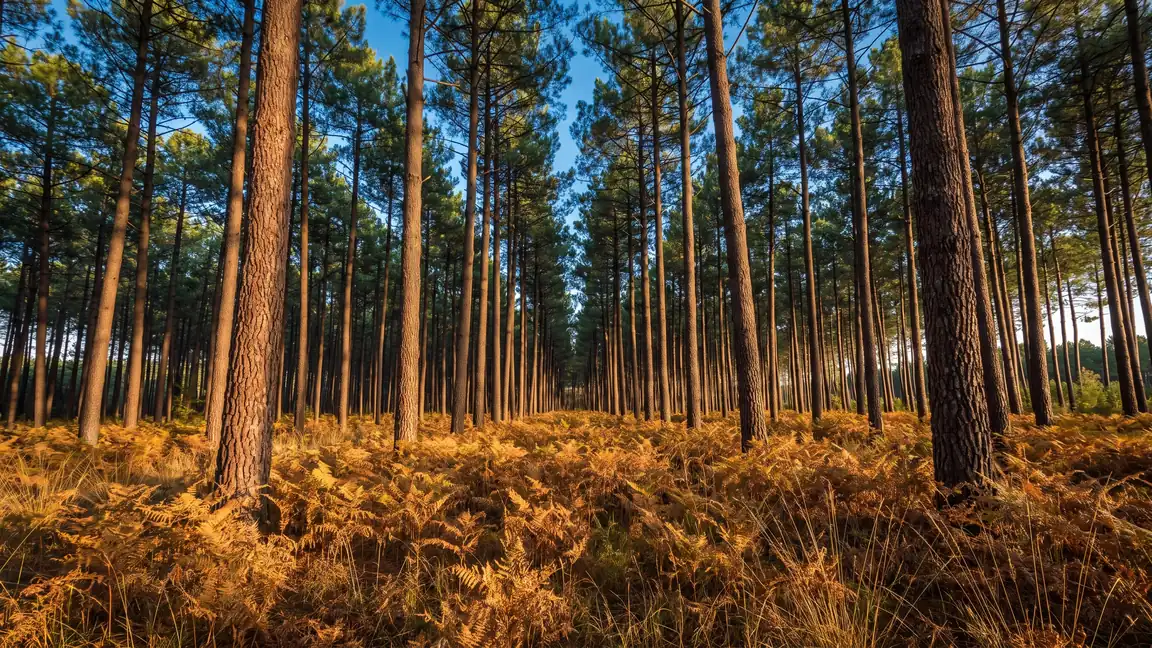
From Mont-de-Marsan, you can reach Dax and its thermal spas in 45 minutes, the Armagnac region of the Landes and its bull ranches to the east, and the vast forest and the Atlantic coast to the west. The prefecture is the perfect link between the two sides of the Landes region: here are our recommended excursions.
Armagnac from the Landes and the Chalosse
East of Mont-de-Marsan begins Bas-Armagnac in the Landes: hillsides, cellars, and Gascon villages around Villeneuve-de-Marsan and Labastide-d'Armagnac, homeland of France’s oldest brandy, once carried downriver by the gabarres of Mont-de-Marsan. Estates and ganaderias, cattle farms associated with Landes bullfighting, dot the countryside; Hontanx, between ponds and vineyards, offers an appealing introduction. To the south-west, Chalosse unfolds as far as Dax (53 km, ~45 minutes). With its 64 °C hot spring and Art Deco buildings, the spa town is a natural excursion from the prefecture. A chauffeured car makes it practical to combine “Armagnac in the morning, thermal baths in the afternoon,” including tastings.
The Forest, the Coast, and the Great Outdoors
To the west, the Landes de Gascogne forest—the largest forest in Western Europe—begins at the city’s outskirts and stretches all the way to the ocean: nearly 80 km of pine trees through which the coastal road winds. At the far end lie Mimizan and its beaches (about 1 hour and 25 minutes away), or, further south, the Capbreton-Hossegor coast: the other side of the Landes, with its ocean views and surf culture. Closer to home, the Midouze towpaths and the bike trails through the pine forest offer half-day getaways into nature. This duality—the Gascon prefecture on one side, the ocean on the other—makes Mont-de-Marsan a prime stop on a comprehensive Landes itinerary: Bordeaux → Mont-de-Marsan (Madeleine, sculpture, market) → Dax (thermal baths) → the coast or the Basque Country. With private transportation, the itinerary is customized to your preferences, with luggage on board and flexible schedules—the most comfortable way to travel through France’s largest department.
When is the best time to visit Mont-de-Marsan?
Mont-de-Marsan is open to visitors year-round, with peak season in late July—during the Fêtes de la Madeleine—and lovely, quiet seasons for enjoying the sculptures and rivers. Spring (April–June) is ideal for exploring: the sculpture-lined promenade beneath fresh foliage, Jean-Rameau Park in full bloom, the terraces along the quays, and the bountiful Saint-Roch Market—the city moving at its own natural pace. Late July changes everything: during the Madeleine Festival, the prefecture becomes the festive epicenter of the Landes region, decked out in blue and white, with bandas, bodegas, and packed arenas.
Summer remains pleasant outside the Madeleine period: the rivers cool the town and the coast is only an hour away. Fall (September–October) is the quintessential Gascon season, with wood pigeons, porcini mushrooms, and young Armagnac on Saint-Roch’s stalls, and golden light on the keep’s shell limestone. Winter is quiet and well suited to gallery and theatre visits. Whatever the time of year, plan for a Tuesday or Saturday morning market. Allow half a day to a full day for the town, or a weekend to add Dax, Armagnac, or the coast. At 1 hour and 39 minutes from Bordeaux via the A65, it is an authentic Gascon break away from standard tourist routes.
| Season | Atmosphere | Ideal for |
|---|---|---|
| Spring (April–June) | A quiet town with parks in full bloom | sculpture, market, rivers |
| Late July | Madeleine Festival, blue and white | Gascon Feria — Book Well in Advance |
| Fall (Sept.–Oct.) | wood pigeons, porcini mushrooms, Armagnac | gastronomy, golden light |
How to get to Mont-de-Marsan from Bordeaux
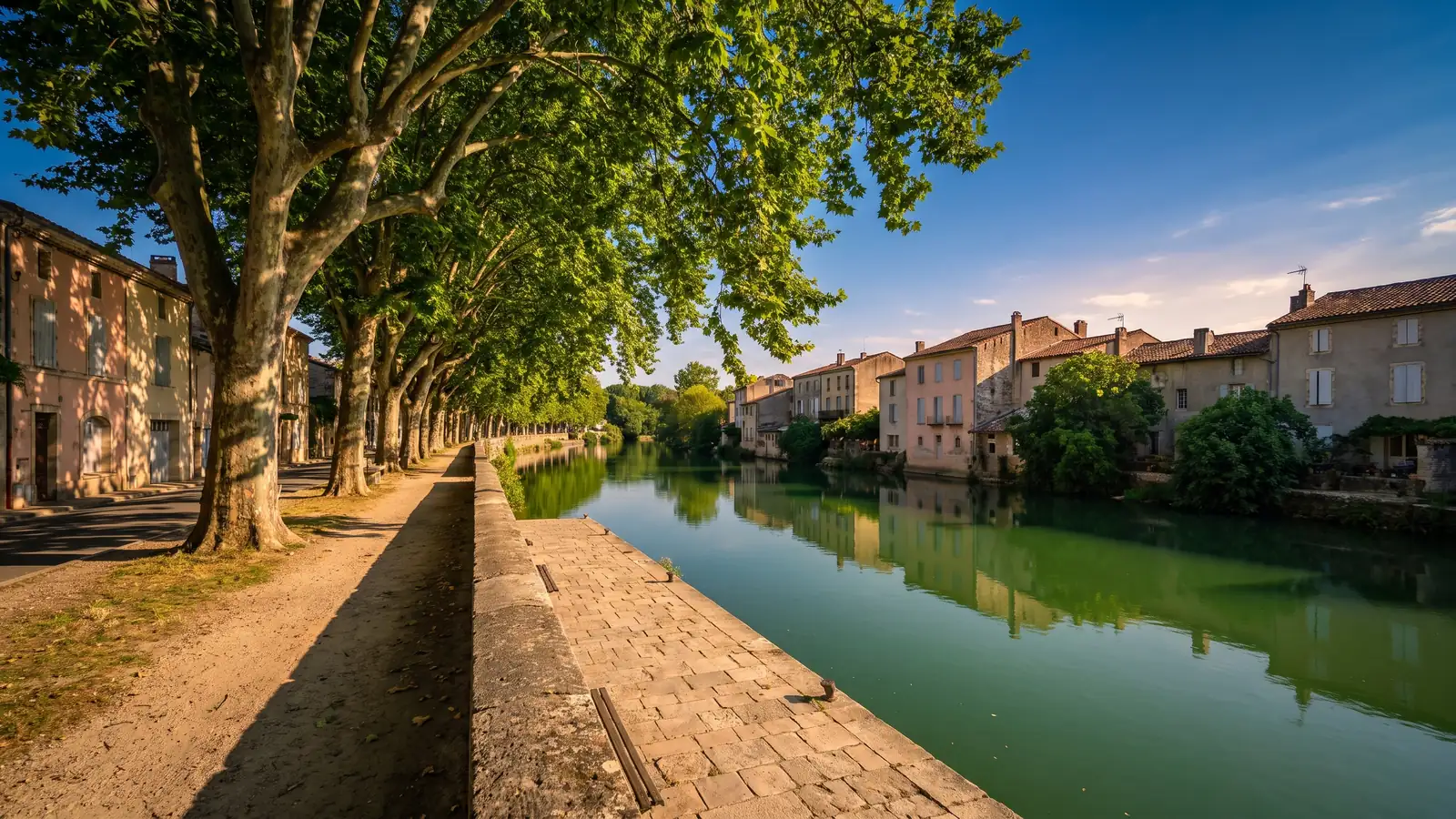
Mont-de-Marsan is about 135 km from Bordeaux, which is about a 1-hour, 39-minute drive via the A65. There is a train, but it takes a long detour; the road, on the other hand, goes straight there. Whether you’re heading to La Madeleine or exploring the Landes hinterland, a private door-to-door transfer is the most direct option.
| Route | Distance | Duration | Details |
|---|---|---|---|
| Bordeaux → Mont-de-Marsan | ~135 km | ~1 hr 39 min | From ~€230 with an executive car service |
| Bordeaux-Mérignac Airport → Mont-de-Marsan | ~140 km | ~1 hr 40 min | pickup at the terminal |
| Mont-de-Marsan → Dax | ~54 km | ~45 min | spa town, Fontaine Chaude |
| Mont-de-Marsan → Mimizan (coast) | ~79 km | ~1 hr 25 min | ocean beaches in the Landes region |
Depending on the timetable, the TER connects the two stations in about 1 hour 20 minutes to 1 hour 40 minutes. A chauffeur service takes about 1 hour 39 minutes by road and differs chiefly through door-to-door pickup, luggage assistance, and the option to add a stop. Compare the available TER timetable with the fixed-price quote of 230 € for your departure point and number of passengers.
Whether it’s for the Madeleine Festival, the open-air sculpture exhibition, or a trip through the Gascon Landes, booking a private driver guarantees a comfortable and punctual ride—book a driver from Bordeaux → Mont-de-Marsan or explore all our destinations.
Frequently Asked Questions
Where is Mont-de-Marsan located?
Mont-de-Marsan is the prefecture of the Landes department, about 135 km south of Bordeaux (1 hour 39 minutes via the A65). The city has 31,592 residents, known as Montois, and was founded where the Midou and Douze meet to form the Midouze, hence the nickname “City of Three Rivers.” It stands between the vast pine forest to the west, with the Atlantic coast about 80 km away, and the Bas-Armagnac hills to the east. Dax is 53 km to the south-west. A chauffeur service may be more convenient for a group, a pickup away from the station, or a late return.
How much does a transfer from Bordeaux to Mont-de-Marsan cost?
We offer a fixed-price transfer from Bordeaux to Mont-de-Marsan, starting at approximately €264 one way (about 135 km, approximately 1 hour 39 minutes via the A65), in a Mercedes sedan or van seating up to 8 passengers, with a professional driver. The journey is direct and door to door: pickup from your address, Mérignac Airport, or Saint-Jean station, and drop-off in the centre, or as close as possible to the pedestrian zone during the Fêtes de la Madeleine. The fixed quote is confirmed in writing before departure, with no unexpected meter charges. An executive car service may suit a group, a pickup away from the station, or a late return.
Why is Mont-de-Marsan known as the “City of Three Rivers”?
Because three waterways converge there: the Douze and the Midou, two rivers flowing down from the hills of Armagnac, meet right in the city center to form the Midouze—three names for a single confluence, which has shaped the entire history of the city. It was to control this strategic point and its river port that Viscount Pierre de Marsan founded the city between 1133 and 1141. From the Middle Ages through the 19th century, flatboats loaded up with wine, Armagnac brandies, wheat, and timber here, bound for the Adour River and Bayonne; the towpath still runs for about 40 kilometers toward Tartas. The best vantage point overlooking the confluence is a curiosity in itself: the elliptical washhouse from 1870, situated exactly at the tip where the Midouze “begins.” The quays, which have been redeveloped into a promenade, and the “Rivers in the City” project (16 km of riverbanks) now extend this riverine identity.
What is Lacataye Keep?
This is the iconic landmark of Mont-de-Marsan—and a “false keep”: the structure is actually composed of two adjoining fortified houses built of shell limestone, attributed to Marguerite de Moncade around 1313, to which the battlements were added at a later date (sources differ on the exact date). It has been listed as a Historic Monument since July 22, 1942—listed, not “classified.” Since 1968, it has housed the Despiau-Wlérick Museum, which is accessed through a former Romanesque chapel on Place Marguerite-de-Navarre—named after the queen who, according to local tradition, enjoyed staying in Mont-de-Marsan. Just a few steps away, four Romanesque houses from the second half of the 12th century (on Maubec and Lacataye Streets), rare examples of Romanesque civil architecture, complete this medieval heart—a surprising feature for a modern prefecture. Please note: the museum is closed for renovation until approximately 2028—however, the outdoor medieval tour remains fully accessible.
Is the Despiau-Wlérick Museum open?
No—this is the most important visitor information for 2026: the Despiau-Wlérick Museum, the only French museum exclusively dedicated to figurative sculpture, has been closed for renovation since March 2025. The renovation project (16.5 million euros) is set to double the exhibition space to 1,200 m² and triple the number of works on display, with a phased reopening beginning in 2028. In the meantime, there are two viable alternatives: the museum’s temporary gallery at 5 rue Gaston-Phébus (the former Dubalen Museum), which offers free admission to a selection of the collections; and the outdoor sculpture trail—some 40 figurative works scattered throughout the streets, squares, and gardens since 1988, freely accessible and documented via QR codes. The museum is named after Charles Despiau (1874–1946) and Robert Wlérick (1882–1944), two great sculptors born in Mont-de-Marsan; its collection includes some 2,400 sculptures, 11,000 drawings, and 500 paintings (Musée de France designation).
When are the Madeleine festivities held?
The Madeleine Festival usually takes place over five days in late July. The dates, program, access information, and traffic regulations change every year: be sure to check the information published by the City of Mont-de-Marsan before you go. The tradition is a royal one: Mary Magdalene has been the city’s patron saint since its founding, and it was Henry IV—a descendant of the founder, Pierre de Marsan—who confirmed July 22 as the official date in 1594. Highlights include the handing over of the keys, a parade, bandas, free concerts, bodegas, fireworks, and—at the Plumaçon Arena (built in 1889, with a capacity of 7,100)—bullfights, novilladas, and Landes-style bullfighting.
What is there to do in Mont-de-Marsan?
We’ll start with the sculpture promenade: about forty figurative outdoor sculptures, free to view, with QR codes—the “open-air museum,” the only one of its kind in France—complemented by the Despiau-Wlérick temporary gallery (5 rue Gaston-Phébus, free during the museum’s renovation). Next, follow the medieval tour: the Lacataye keep, 12th-century Romanesque houses on Maubec and Lacataye streets, the ramparts, and the elliptical washhouse from 1870, situated at the exact confluence of the three rivers. On Tuesday or Saturday mornings, the Saint-Roch Market—ranked among the 100 most beautiful markets in France—showcases the local produce of the Landes region. Next, take a breather at Jean-Rameau Park (6.5 ha, Japanese garden, 1907 bandstand) and along the banks of the Midouze River. For cultural events: Théâtres de Gascogne, CaféMusic’, and the Raymond-Farbos Art Center. And in late July, the Fêtes de la Madeleine transform the entire town—five days of festival celebrations in blue and white.
Is Mont-de-Marsan a bastide?
No—it’s a castelnau, and the distinction is historical. A castelnau is a new fortified town organized around its lord’s castle, a type of Gascon settlement that predates the 13th-century bastides (which are, in turn, settlements laid out in a regular grid pattern around a market square, such as Cadillac or Créon). Mont-de-Marsan was founded between 1133 and 1141 by Pierre, Viscount of Marsan, who separated the site from the territory of Saint-Pierre-du-Mont with the abbot of Saint-Sever’s consent and granted the town a charter of privileges—nearly a century before the first bastides were established. The objective: to control the river port at the confluence, the outlet of the Armagnac River. The superlative “first castelnau of Gascony,” sometimes cited, is not confirmed by the sources—“one of the earliest examples of its kind” is more accurate. An interesting detail: Pierre de Marsan is a sixteenth-generation ancestor of Henry IV, who himself set the date for the Madeleine festivities in 1594.
What is the distance between Bordeaux and Mont-de-Marsan?
About 135 km by road, or about 1 hour and 39 minutes: the A65 runs south through the Landes Forest to the outskirts of the city, not “130 km” as sometimes stated. With a private driver, the fare is fixed and provided in advance, starting at around €230 one way. By train, Mont-de-Marsan is the terminus of a TER line from Bordeaux via Morcenx, with several stops, giving a journey time of about 1 hour 20 minutes to 1 hour 40 minutes depending on the service. A chauffeur service may be more convenient for a group, a departure away from the station, or a late return.
What's there to see around Mont-de-Marsan?
The prefecture links the two sides of the Landes. To the east lies Bas-Armagnac: hillsides, cellars, and ganaderias around Villeneuve-de-Marsan, Labastide-d’Armagnac, and Hontanx. To the south-west, Dax (53 km, ~45 minutes) offers its 64 °C hot spring and Art Deco landmarks. To the west, the Landes de Gascogne forest reaches the ocean: Mimizan and its beaches are about 1 hour and 25 minutes away, with Capbreton-Hossegor further south. Closer by, the Midouze towpath and pine-forest trails offer outdoor escapes. With a chauffeured car, the itinerary can combine Armagnac, thermal baths, or the ocean in a single day.
When is the best time to visit Mont-de-Marsan?
All year round, with a peak in late July. The Madeleine Festival usually takes place over five days in late July; the dates and program change each year. Aside from the Madeleine Festival, spring is ideal: a scenic walk beneath the foliage, Jean-Rameau Park in full bloom, and the bountiful Saint-Roch Market. Fall is the quintessential Gascon season—wood pigeons, porcini mushrooms, and new Armagnac on the market stalls, golden light on the shell-limestone of the keep. Winter, with its calm atmosphere, is perfect for museums and live performances: the Despiau-Wlérick Gallery, Théâtres de Gascogne, and caféMusic’. No matter the season, aim for a Tuesday or Saturday morning to visit the market. Allow half a day to a full day for the city, and a weekend if you want to add Dax, the Armagnac region, or the Atlantic coast to your itinerary.
Can you combine Mont-de-Marsan and Dax on the same day?
Yes. The two towns are 53 km apart, about a 45-minute drive, and together capture the character of the inland Landes. A typical chauffeured itinerary leaves Bordeaux via the A65 (1 hr 39 min), spends the morning in Mont-de-Marsan at Saint-Roch Market, the sculpture trail, the keep, and the river confluence, then continues after a Gascon lunch to Dax for the 64 °C hot spring, the cathedral, or a late-afternoon spa treatment. The route can include Bas-Armagnac or continue to the coast. A private chauffeur makes it possible to link the Landes’ administrative and spa centres without timetable constraints, with luggage on board and tastings included.
Further Reading
- The nearby spa town: see the Dax Guide (64 °C hot spring and the August feria, 45 min away)
- The Pays d’Orthe and the gaves: see the Orthevielle guide (Sorde and Arthous abbeys)
- Another Gascon capital: see the Bazas Guide (UNESCO-listed cathedral and fattened oxen)
- Understanding our rates and vehicles: see the "Book a Driver" page (sedan & van, fixed-price quote)
- Plan your trip: book a chauffeured transfer from Bordeaux to Mont-de-Marsan or explore all our destinations
Sources and References
- Wikipedia — Mont-de-Marsan — prefecture of the Landes, population 31,592 (2023), “City of the Three Rivers” (Midou + Douze = Midouze), a castelnau founded between 1133 and 1141 by Pierre de Marsan
- POP Mérimée — Lacataye Keep — two fortified houses built of shell limestone (c. 1313, Marguerite de Moncade), later crenellated, designated as a Historic Monument on July 22, 1942; has housed the Despiau-Wlérick Museum since 1968
- Wikipedia — Despiau-Wlérick Museum — the only museum in France devoted exclusively to figurative sculpture (Despiau and Wlérick, born in Mont-de-Marsan); closed for renovation since March 2025, with a planned reopening in 2028; temporary gallery at 5 rue Gaston-Phébus
- Wikipedia — Fêtes de la Madeleine — 5 days in late July, blue and white; date of July 22 confirmed by Henry IV in 1594; Plumaçon Bullring (1889, 7,100 seats)
- Mont-de-Marsan Tourist Office — 2026 Tourist Map — Madeleine Festival, July 22–26, 2026
- INSEE — Regional Comparison Tool, Mont-de-Marsan (40192) — 2023 population: 31,592 residents
- Wikipedia — Jean-Rameau Park — 6.5 hectares in a bend of the Douze River, more than 80 tree species, a Japanese garden, and a gazebo dating from 1907; founded in 1813 as a departmental nursery (for experiments with maritime pine)
Article updated in July 2026.
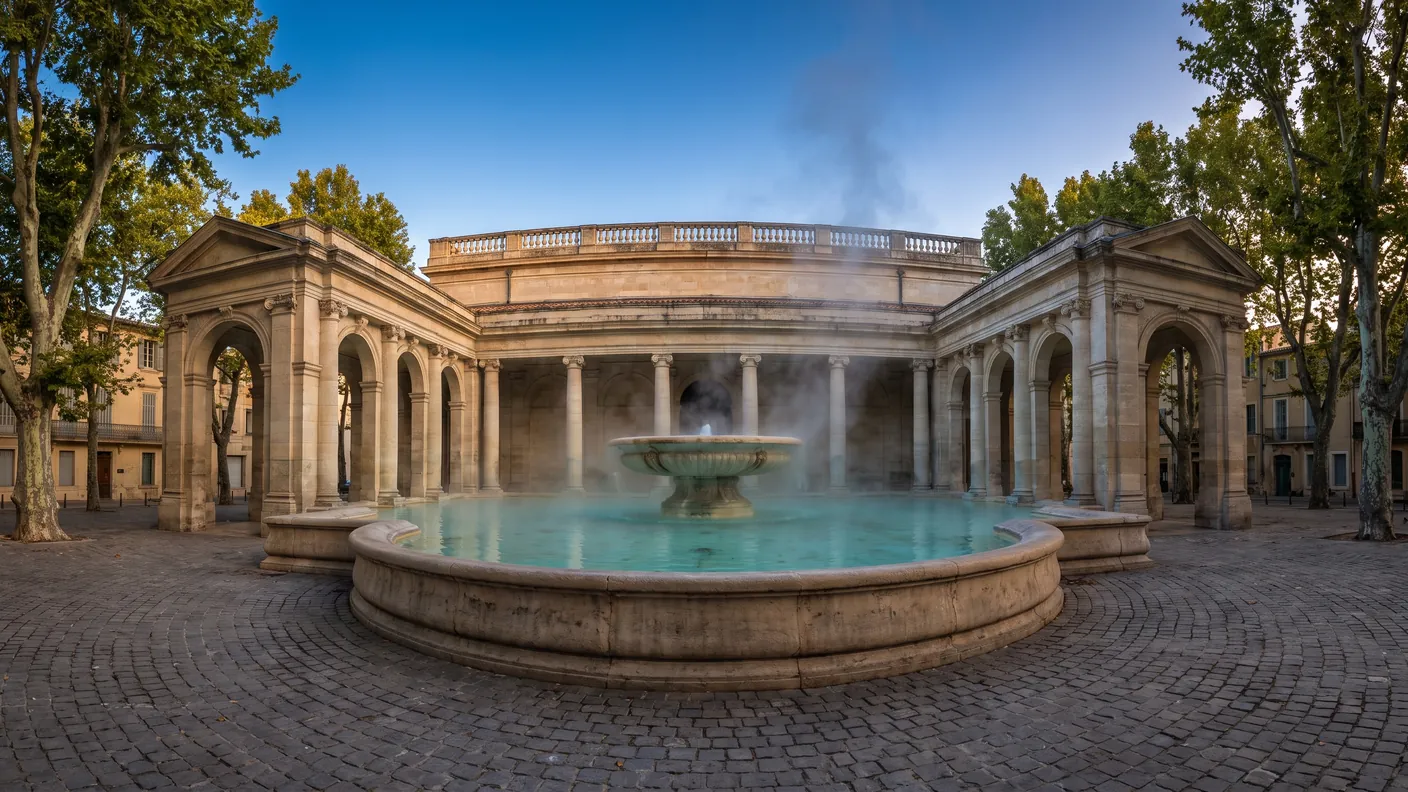
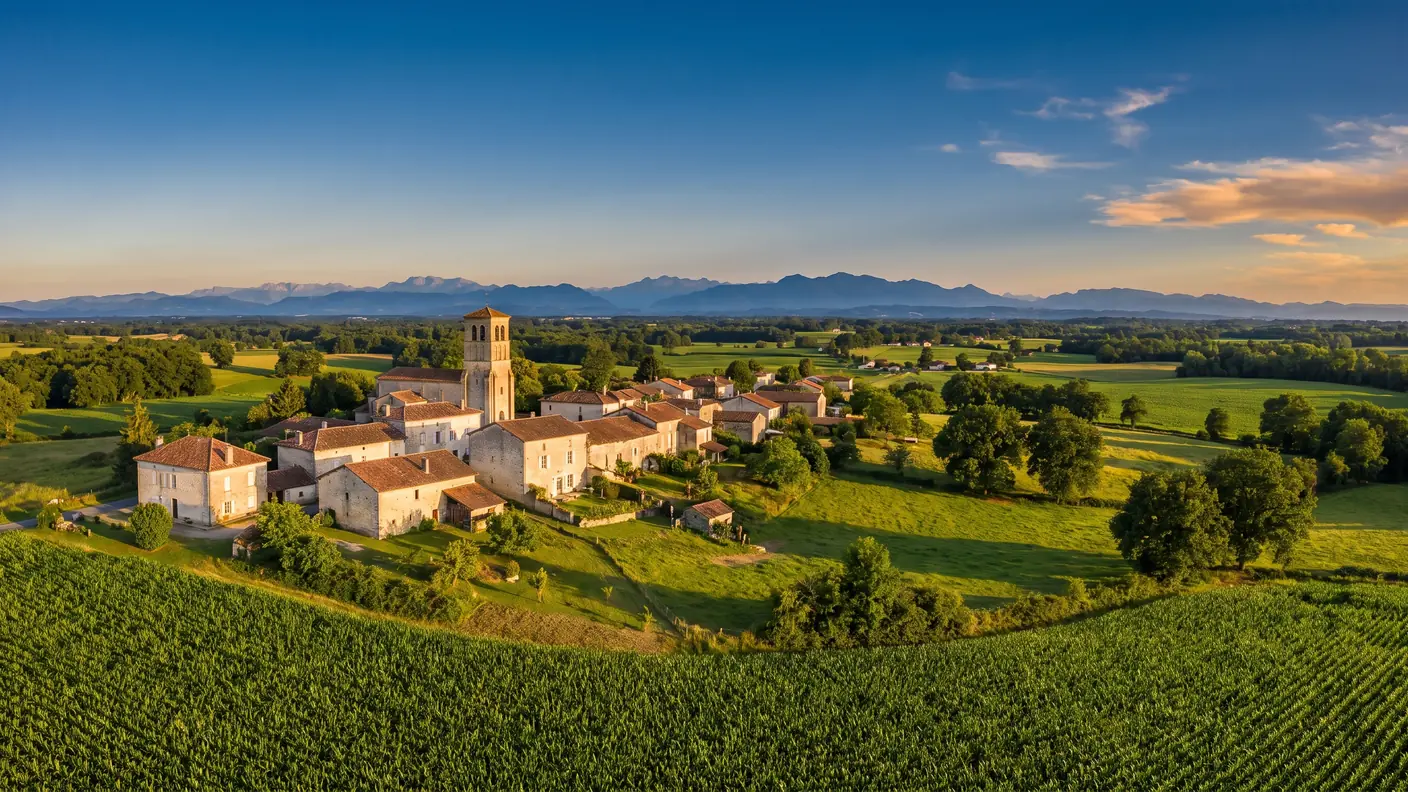
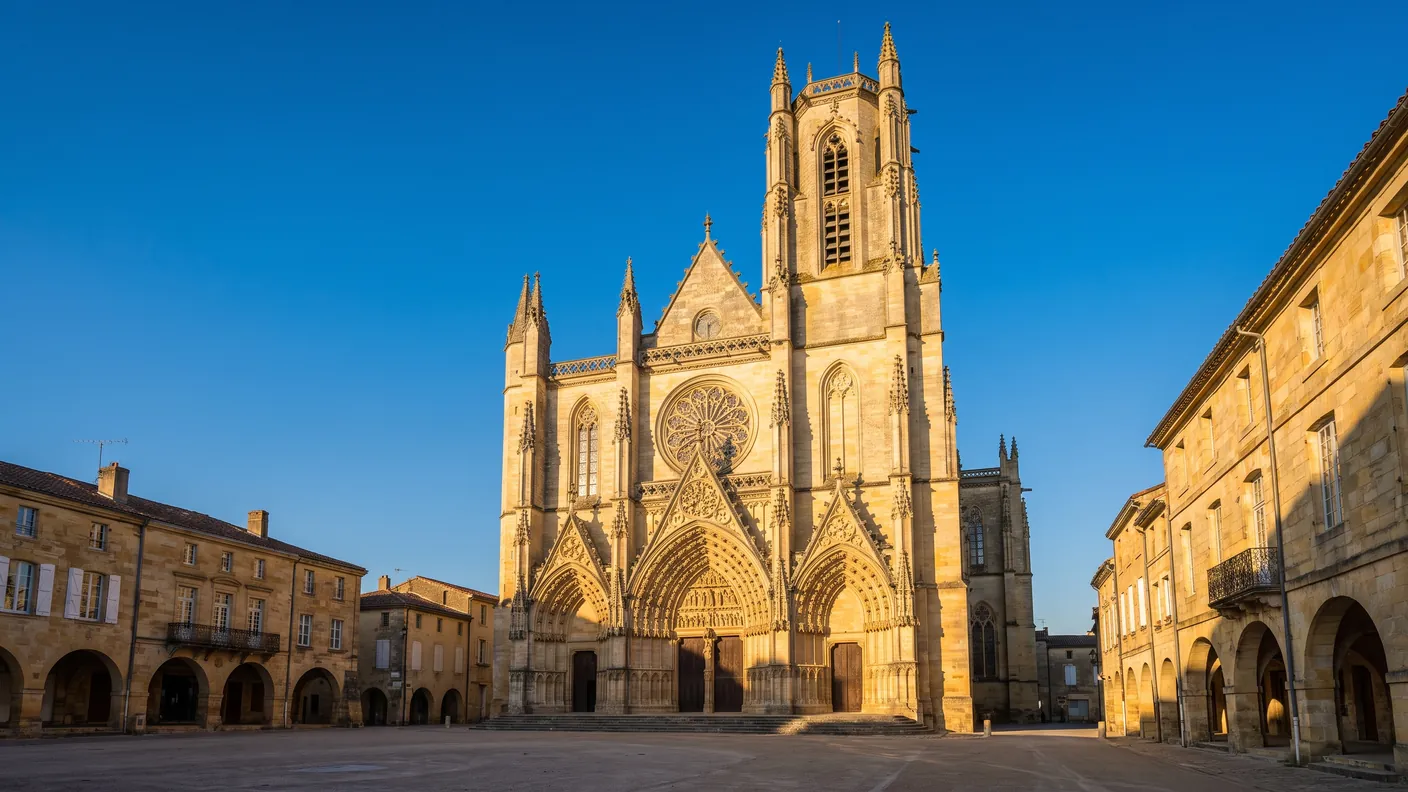
On the way to the City of Three Rivers
Direct transfer from Bordeaux (~1 hr 39 min via the A65) to Mont-de-Marsan—from your home, the airport, or the train station to the city center; return trips from Madeleine are available, followed by optional stops in Dax, Armagnac, or the coast. Fixed, written quote—no surprises on the meter.