Bordeaux to Bazas, cathedral and Bœufs Gras
A Gothic cathedral inscribed in 1998 as part of the UNESCO World Heritage Site “Routes of Santiago de Compostela in France” and a centuries-old tradition of fattened oxen: Bazas, the capital of the Bazadais region, with its three 13th-century carved portals, its arcaded square, and its renowned beef—plus your private door-to-door transfer from Bordeaux, without having to rent a car.
Bazas at a Glance
Bazas is a small “City of Art and History” in the Gironde department, the capital of the Bazadais region, located about 68 km southeast of Bordeaux—famous for its Gothic cathedral, which was inscribed in 1998 as part of the UNESCO World Heritage Site “Routes of Santiago de Compostela in France” and for its fattened beef. A former episcopal see, Bazas is centered around its magnificent Cathedral of Saint John the Baptist, whose façade—featuring three carved 13th-century portals—is listed as a World Heritage Site as part of the Routes of Santiago de Compostela. This guide distinguishes fact from fiction: the current cathedral is Gothic (begun in 1233), not Romanesque or “from the 11th century”; Bazas is no longer a subprefecture (it was one from 1800 to 1926); and the ox festival is officially called the “Promenade des bœufs gras.” We then present the easiest way to get there from Bordeaux: a private door-to-door transfer, without renting a car.
Here are the key details to know before you go. Distances are calculated door-to-door from Bordeaux; the fare listed is for a private driver reservation at a fixed price provided in advance, with no unexpected meter charges regardless of traffic or stops along the way. Information on cultural heritage and demographics has been verified using Wikipedia, the Mérimée database, UNESCO, INSEE, and the city of Bazas; visiting hours may vary and should be confirmed on site.
| Landmark | Details |
|---|---|
| City | Bazas (Gironde, Langon District) |
| Location | the capital of the Bazadais region, in southeastern Gironde |
| Residents | 4,854 Bazadais (2023) |
| Must-See | the cathedral, inscribed in 1998 as part of the UNESCO site “The Routes of Santiago de Compostela in France,” the arcaded square, the apothecary, and the fattened oxen |
| Distance from Bordeaux | about 68 km · 1-hour drive |
Where is Bazas located?
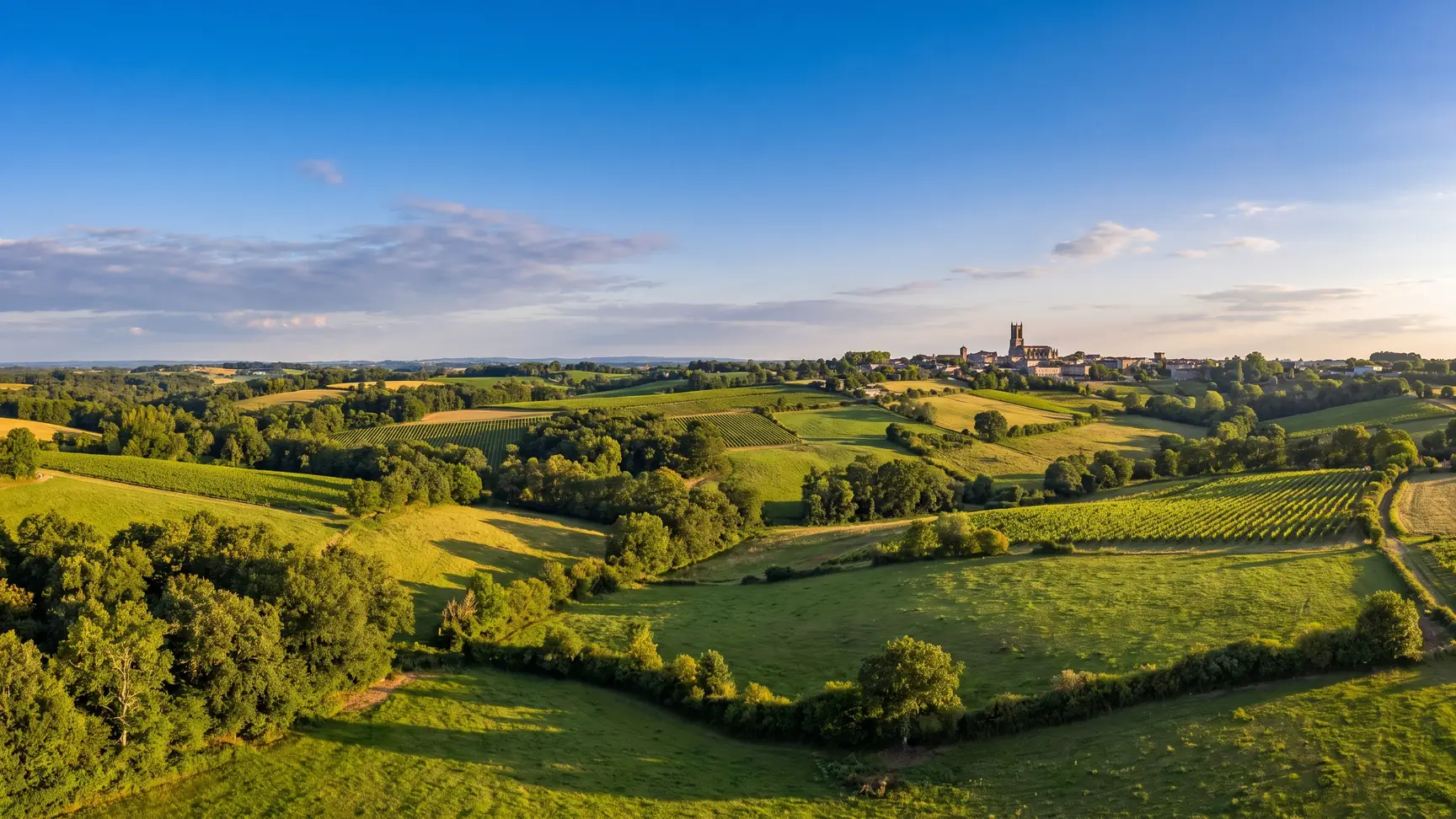
Bazas is located in the southeastern part of the Gironde department, at the junction of the Bordeaux wine region and the Landes de Gascogne—it is the historic capital of the Bazadais, a region of hills, meadows, and forests. The town, with a population of 4,854, overlooks the Beuve Valley and serves as a crossroads between several regions: the prestigious Sauternes and Graves wine regions to the north, the vast Landes de Gascogne forest to the south, and the Garonne Valley and Langon to the north. Administratively, it is part of the Langon district and serves as the seat of the Bazadais Community of Communes. It is located about 68 kilometers from Bordeaux, in a region rich in enduring traditions—Bazas beef, wood pigeons, and porcini mushrooms—and remarkable heritage, dominated by the silhouette of its cathedral. This location makes Bazas an ideal base for exploring southern Gironde—with its fine wines, medieval castles, and natural beauty—just over an hour from Bordeaux.
The Capital of the Bazadais Region
Bazas is the historic capital of the Bazadais, the region in the far south of the Gironde that bears its name. It is an ancient town, the successor to the ancient Cossium, and has been an episcopal see for nearly fifteen centuries: it served as the seat of a bishopric from antiquity through the Revolution. From this long history, Bazas has preserved a rich heritage—its cathedral, its arcaded square, its ramparts, its apothecary—and its status as the regional capital. To clarify, as confusion is common: Bazas is no longer a subprefecture (it held that status from 1800 to 1926, before it was transferred to Langon); however, “capital of the Bazadais” remains entirely accurate. The town serves as the hub of a region known for mixed farming and livestock raising, famous for its cattle breed, its cuisine, and its markets. It is this identity as a small rural capital, rich in history and traditions, that you discover as you stroll through its streets.
Between Sauternes, the Garonne, and the Landes de Gascogne
Bazas owes much of its appeal to its location at a crossroads. About twenty kilometers to the north lie the prestigious vineyards of Sauternes and Barsac—home to some of the world’s finest sweet wines—as well as the Graves region around Langon, the neighboring town on the Garonne River. To the south lies the vast Landes de Gascogne forest, the largest forested area in Western Europe. All around, the Bazadais region is dotted with medieval castles—Roquetaillade, Villandraut, Cazeneuve—and charming villages. Bazas is thus ideally situated for planning an itinerary that combines heritage, fine wines, and nature, all within a radius of about twenty kilometers. A private chauffeur familiar with the area allows you to travel from one site to another—the cathedral in the morning, a château in Sauternes and a wine tasting in the afternoon—covering distances with ease, without worrying about driving or parking.
St. John the Baptist Cathedral, part of the UNESCO World Heritage Site “The Routes of Santiago de Compostela in France”
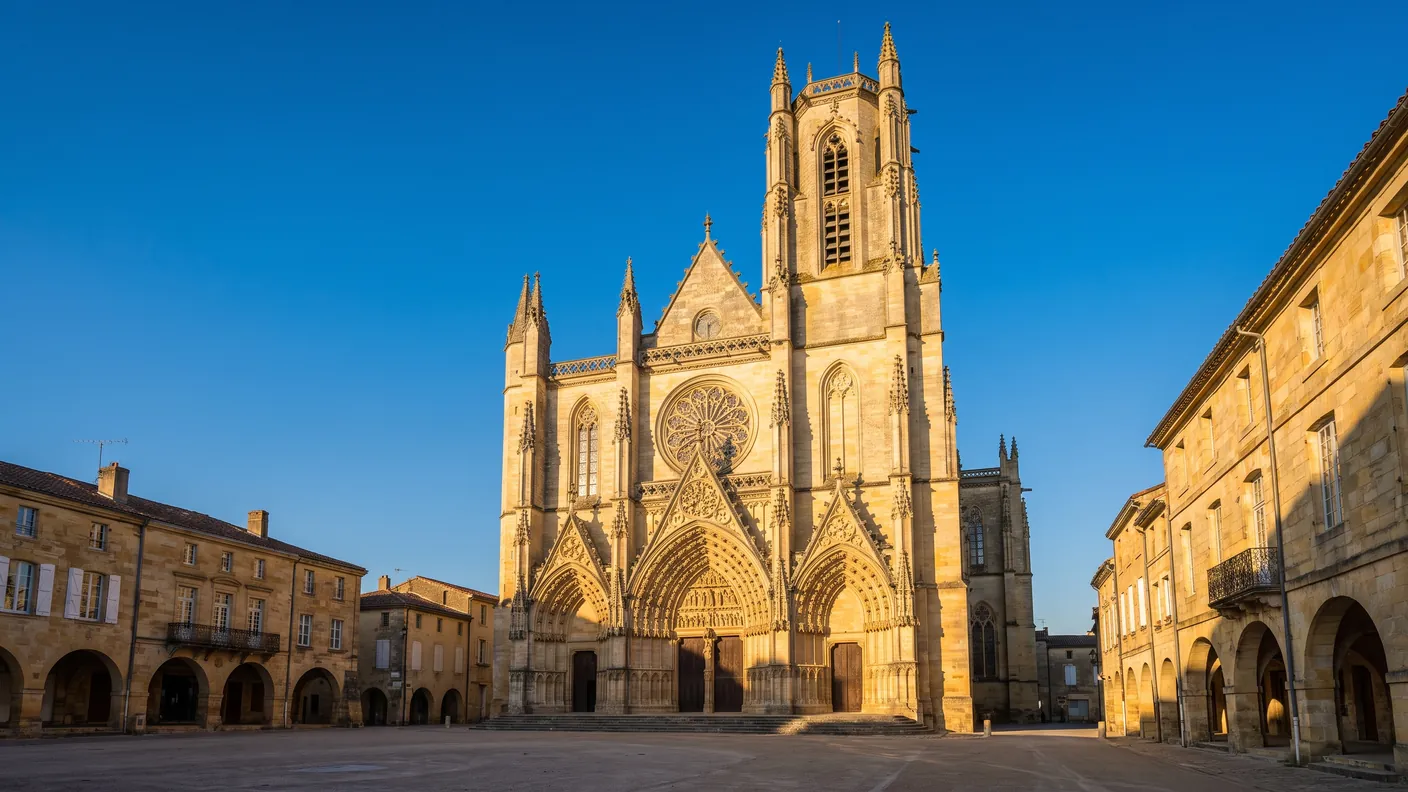
The Cathedral of Saint John the Baptist in Bazas, a Gothic structure designated a Historic Monument in 1840 and inscribed in 1998 as part of the UNESCO property “Routes of Santiago de Compostela in France,” is the city’s most prominent landmark—notable for its façade featuring three carved 13th-century portals. Here is what the sources say, without further elaboration.
A Gothic building, not a Romanesque one
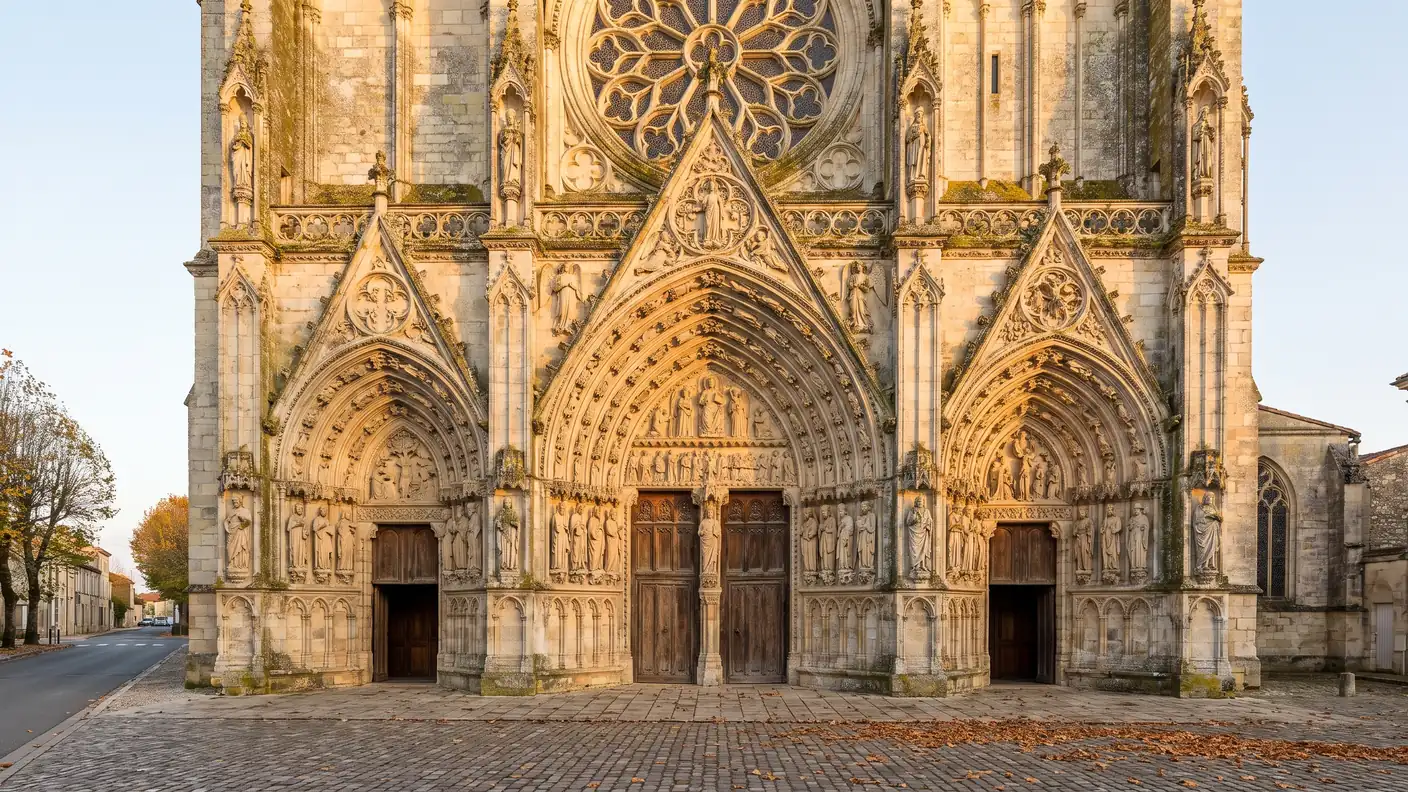
Let’s make this clear from the outset, as this is a common mistake: the current cathedral is a Gothic building, the cornerstone of which was laid in 1233 by Bishop Arnaud de Tontolon—it should therefore never be dated to “the 11th century.” Construction, a very lengthy process, continued through the 13th and 14th centuries; the western façade was completed in 1537, along with its large Flamboyant-style rose window. Severely damaged during the Wars of Religion (Protestant destruction in 1561, then in 1577–1578), the cathedral was restored and its nave rebuilt between 1583 and 1605. The current building is therefore primarily Gothic (13th–14th centuries), with later reconstruction phases. It has been listed as a Historic Monument since 1840—one of the very first such designations in France—and the cathedral was notably inscribed in 1998 as part of the UNESCO World Heritage Site “Routes of Santiago de Compostela in France.” It is the only monument in the region to hold this designation: a compelling reason to visit it when traveling from Bordeaux.
The three carved portals from the 13th century
The cathedral’s greatest treasure is its western façade, adorned with three carved portals dating from the mid-13th century—one of the few surviving examples of Gothic sculpture in southwestern France, miraculously spared during the Wars of Religion. Each one tells a story: the central portal is dedicated to the Last Judgment, with Christ in Majesty surrounded by the heavenly court; the south portal (on the right) is dedicated to the Virgin Mary, depicting her Coronation and the Tree of Jesse; the north portal (on the left) depicts Saint Peter, with the Miraculous Catch and the Handing Over of the Keys. The arch spandrels are filled with a multitude of sculpted figures—angels, saints, the Resurrected—a medieval picture book unfolded in stone. Above it stands the large, flamboyant 16th-century rose window. It is this exceptional ensemble, at eye level, that gives Bazas Cathedral its unique value and alone makes the trip worthwhile. Your chauffeur can drop you off at the square, at the foot of the façade, without any parking concerns.
| Portal | Topic | Details |
|---|---|---|
| Central Portal | The Last Judgment | Christ in Majesty and the Heavenly Court |
| South Gate (right) | The Coronation of the Virgin | with a Tree of Jesse |
| North Gate (left) | Saint Peter | The Miraculous Catch and the Handing Over of the Keys |
Bazas Beef and Fattened Cattle
Bazas is the birthplace of a renowned breed of cattle, the Bazadaise, and of a centuries-old festive tradition: the 2026 Promenade des bœufs gras, a parade that winds through the town on Fat Thursday, before Carnival. It is one of the town’s defining characteristics, blending gastronomy with living folklore. Here is what the sources document, with precision.
The Bazas breed, the “Grise de Bazas”
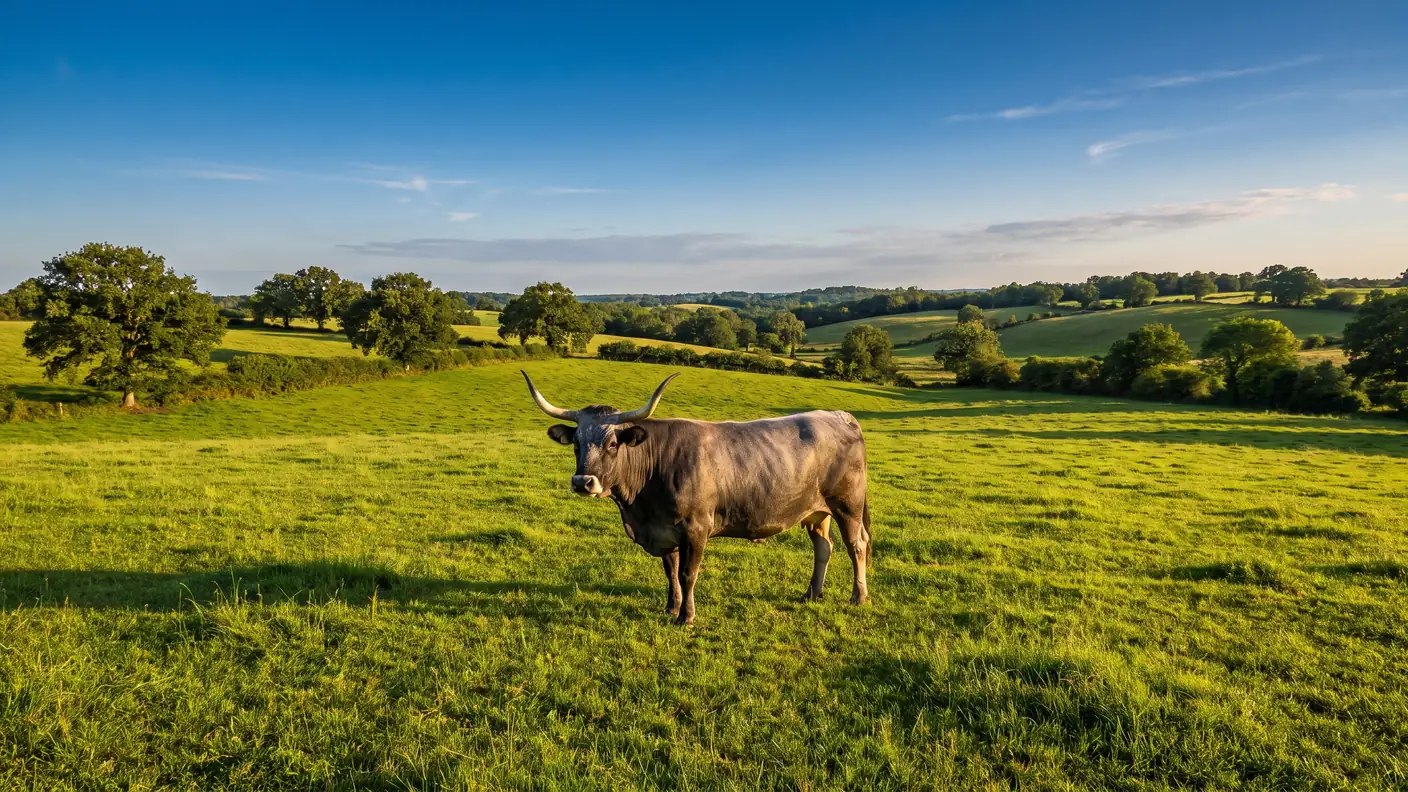
The Bazadaise, or “Grise de Bazas,” is a breed of cattle native to the Bazadais region, at the border of the Gironde, Landes, and Lot-et-Garonne departments. It is recognizable by its slate-gray coat, with charcoal-colored shades especially in bulls, and its crescent-shaped horns. It is a powerful animal: bulls weigh about 1,000 kg, and cows about 750 kg. The breed, once used as draft animals, nearly disappeared in the early 1970s due to agricultural mechanization; renewed interest in the quality of its meat saved it. The breed’s Herd Book (genealogical register) was established on July 31, 1896, by Marcel Courrégelongue, then mayor of Bazas—making the town the breed’s official birthplace. Today, “Bœuf de Bazas” beef holds a Label Rouge (awarded in 1997) and a Protected Geographical Indication (PGI); it should be noted that the label covers both the Bazadaise and the Blonde d’Aquitaine breeds, not just the Bazadaise alone.
The Parade of the Fat Cattle, on Fat Thursday
The major traditional festival in Bazas is the “Promenade des bœufs gras”—that is its exact name, not “fête des bœufs gras ”— which takes place on Jeudi Gras, that is, the Thursday before Mardi Gras, during Carnival week (in 2026, Thursday, February 12). Fattened oxen, with their horns adorned with flowers and decorations, parade in pairs through the town to the cathedral, accompanied by floats, musicians (the “ripatauleras”), and stilt walkers from the Landes region; a team competition judges the animals based on meat quality and breed conformity. To clarify, as confusion is possible: this is by no means a bullfight—the oxen (castrated, fattened males) are adorned and paraded, never fought. The Promenade des bœufs gras is listed on France’s Inventory of Intangible Cultural Heritage: it is a living tradition, one of the last great rural carnivals in the Southwest, well worth experiencing if you visit Bazas in late winter.
The Episcopal Quarter and its arcaded square
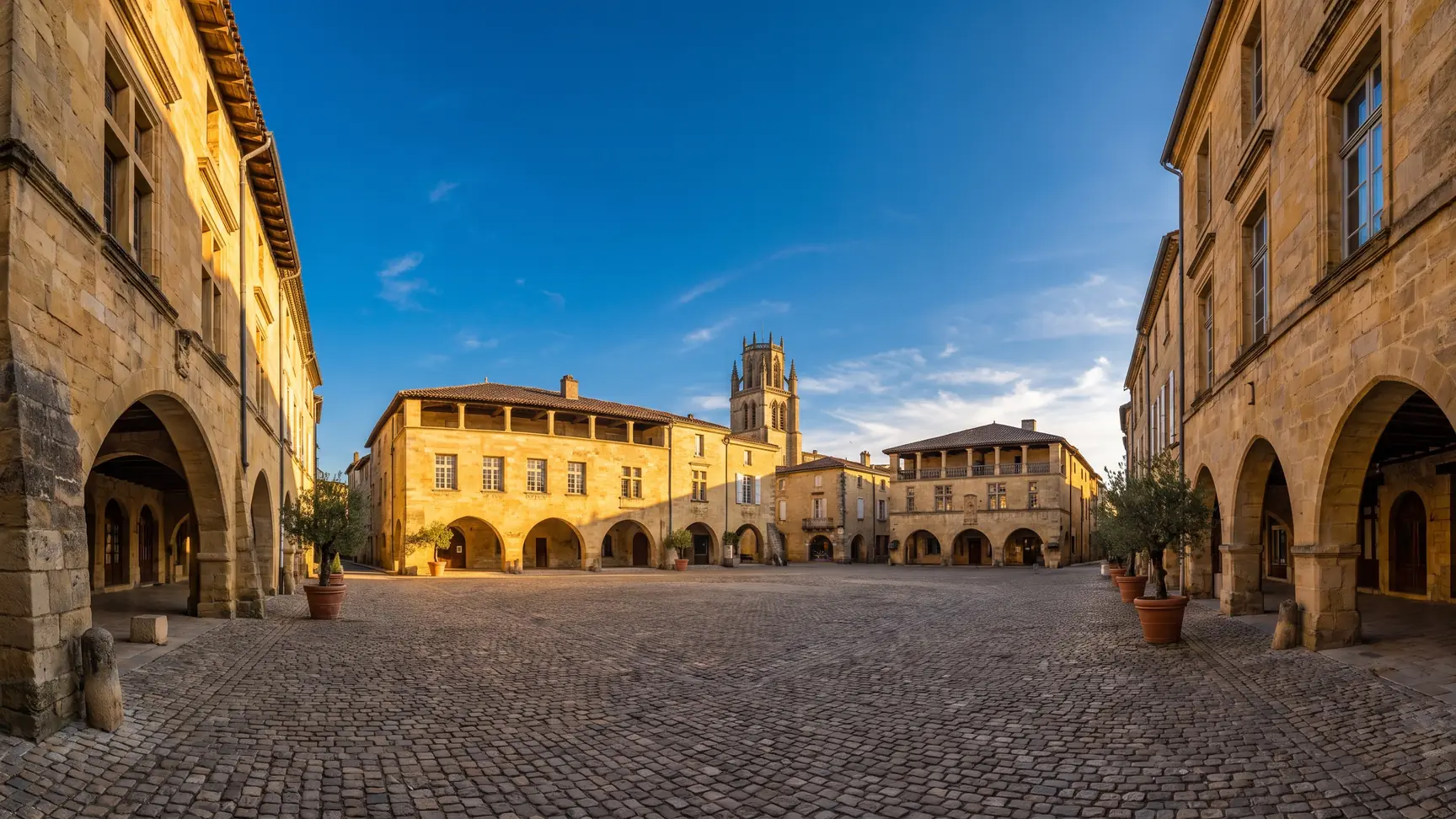
Centered around its cathedral, Bazas boasts a beautiful episcopal town: the vast Cathedral Square lined with arcades, one of the most comprehensive apothecaries in France, and the remains of city walls. This heritage site is best explored on foot. Here is what the sources confirm.
Cathedral Square and its "covered areas"
In front of the cathedral lies the Place de la Cathédrale, one of the most beautiful squares in the Gironde: a vast, fan-shaped square covering about one hectare, once a royal square and a commercial hub. It is lined with 16th- and 17th-century houses and arcades—the “couverts,” built starting in the 16th century to shelter merchants. It’s a harmonious setting, on a scale befitting the cathedral, where it’s pleasant to stroll and sit down at an outdoor table. Every Saturday, the square comes alive with a renowned market where you can find local Bazas specialties: Bazas beef, wood pigeons, porcini mushrooms, and capons. It is the beating heart of the town, both monumental and vibrant. All around, the narrow streets of the old town, lined with stone houses, lead to the remains of the ramparts and to viewpoints overlooking the valley. Bazas is best explored slowly, on foot, amid its heritage and gastronomy.
The Apothecary and the City Walls
Bazas is home to a little-known gem: the apothecary of the former Saint-Antoine Hospital, considered one of the largest and most comprehensive in France. Established in 1767, it houses a remarkable collection of 18th-century glassware from Bazas—with its characteristic blue-green hue—and approximately 110 earthenware jars from the 16th through 18th centuries. The hospice, its chapel, and its apothecary have been designated Historic Monuments since 2003 (guided tours are offered, generally on Tuesdays and Thursdays at 2:30 p.m. and on Saturdays at 2:00 p.m.—times subject to change). Bazas also preserves remnants of its 15th- and 16th-century ramparts: the Brèche postern gate and the Gisquet gate, designated as historic monuments in 1994, serve as reminders of the walled city of yesteryear. The old hospital, located on the Way of St. James, once welcomed pilgrims on their way to Santiago de Compostela—a reminder of this episcopal city’s tradition of hospitality. These treasures, combined with the cathedral and the town square, make for a wonderful half-day visit.
From Cossium to the Episcopal City
An ancient town that served as the seat of a bishopric for nearly fifteen centuries, Bazas owes its heritage to its status as the religious capital of the Bazadais region, from antiquity through the Revolution. A long history, etched into its stones. Here are the verified facts.
Cossium, an ancient city
Bazas is a very ancient town. During the Gallo-Roman period, it was known as Cossium and served as the capital of the Vasates (from whom the names Bazas and Bazadais are derived). From the earliest centuries of Christianity, it became the seat of a bishopric—one of the oldest in southwestern France—and remained so for nearly fifteen centuries. It is this long history as an episcopal see that explains the richness of its heritage: a modest-sized town, yet home to a monumental cathedral, a former episcopal palace, a hospital, and ramparts, all befitting its religious status. Local legend links the cathedral’s founding to a relic of the Precious Blood—the blood of Saint John the Baptist, which a lady from Bazas is said to have brought back from Jerusalem—but this tradition belongs to the hagiography of the city’s founding and should be regarded as legend rather than historical fact. What is certain is that Bazas was a major religious center, of which the cathedral remains a striking testament.
The Diocese Until the Concordat of 1801
The Diocese of Bazas remained in existence until the Revolution; it was abolished under the Concordat of 1801, and its territory was divided among the dioceses of Bordeaux, Agen, and Aire. The Cathedral of Saint John the Baptist then lost its status as a bishop’s seat; today it is a co-cathedral of the Archdiocese of Bordeaux, an honorary title that recalls its past. Similarly, Bazas served as a subprefecture from 1800 to 1926, before that status was transferred to Langon—hence the importance of not referring to it as a subprefecture today. But the town has retained its role as the capital of the Bazadais region: a hub of local culture, gastronomy, and traditions, centered around its cathedral and market. It is this dual identity—a major religious center of the past, a lively small rural capital of the present—that gives Bazas its unique charm, which you can fully appreciate as you stroll through its streets, square, and monuments.
Cathedral, oxen, statue: things we often read about
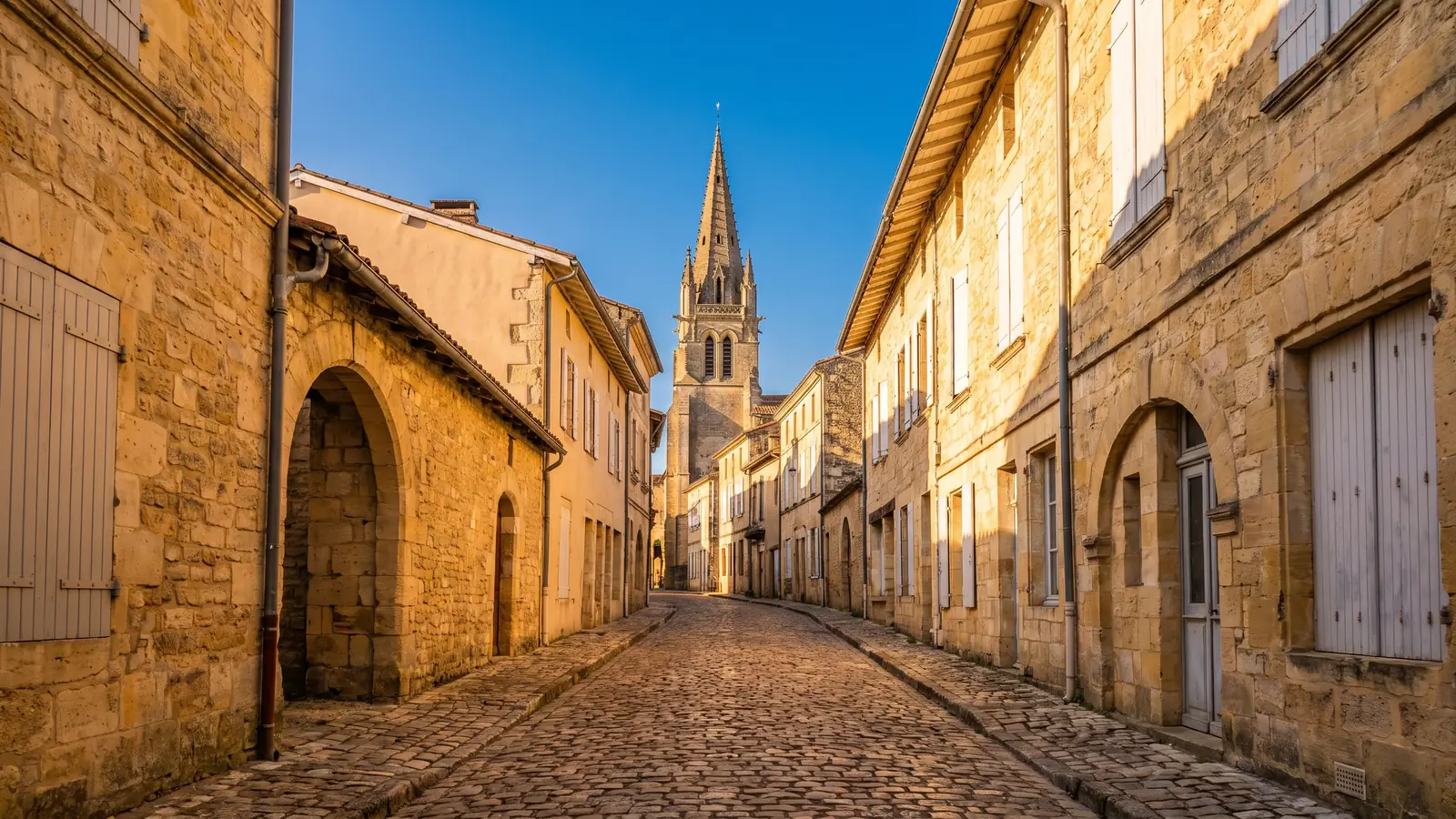
Several claims are circulating about Bazas that deserve to be corrected, with supporting sources—which is the whole point of a reliable guide. The cathedral, the town’s status, the ox festival, and the Château de Roquetaillade: here’s what’s true and what’s false.
A Gothic cathedral, a city that is no longer a subprefecture
It is sometimes claimed that Bazas Cathedral dates back to “the 11th century”; this is incorrect. The current building is a Gothic structure, begun in 1233 and continued through the 13th and 14th centuries, with a façade completed in 1537 and a nave rebuilt after the Wars of Religion (1583–1605). It should therefore be referred to as a Gothic cathedral, not a Romanesque one. Similarly, Bazas is often described as a “subprefecture”: it held that status from 1800 to 1926, but that status was transferred to Langon—today, Bazas is no longer a subprefecture, even though it remains the “capital of the Bazadais,” which, on the other hand, is perfectly accurate. Finally, its UNESCO designation does not apply to the entire town: it is the cathedral that is listed (in 1998) as part of the Routes of Santiago de Compostela. These clarifications matter: they convey the true nature of Bazas’s heritage without exaggerating its significance or misdating it.
"Promenade des bœufs gras," and Roquetaillade is in Mazères
The big festival in Bazas is actually called the “Promenade des bœufs gras” (not the “Fête des bœufs gras,” as the press often calls it): decorated oxen parade in pairs on Fat Thursday—this is not a bullfight; the animals are never fought. It is also sometimes claimed that the “Bœuf de Bazas” PGI applies only to the Bazadaise breed: in reality, the label covers both the Bazadaise and the Blonde d’Aquitaine. Another common geographical misconception: the famous Château de Roquetaillade, whose interiors were restored by Viollet-le-Duc, is not located in Bazas or Villandraut, but in the neighboring town of Mazères (about 9 km away)—it’s still a lovely excursion, provided you know exactly where it is. It is these distinctions—verified, without approximation—that set a reliable guide apart from a copied text. They in no way detract from the appeal of Bazas: an authentic episcopal city, home to a cathedral inscribed in 1998 as part of the UNESCO World Heritage Site “Routes of Santiago de Compostela in France” and to living traditions, to be discovered with a full understanding of its history.
What is there to do in Bazas and the surrounding area?
In Bazas, visitors can explore the Gothic cathedral—listed in 1998 as part of the UNESCO World Heritage Site “Routes of Santiago de Compostela in France”—and its three portals; they can stroll through the arcaded square and its Saturday market, explore the apothecary, and venture out to the castles of Roquetaillade and Villandraut and the Sauternes vineyards. These are, in concrete terms, the actual, verified activities in the area. The highlight of the tour is the episcopal city; the rest takes place in the immediate vicinity—we specify this each time.
- St. John the Baptist Cathedral—a Gothic building inscribed in 1998 as part of the UNESCO World Heritage Site “Routes of Santiago de Compostela in France”—with its three 13th-century carved portals and rose window
- Cathedral Square—a vast square lined with arcades (“covered walkways”), once a royal square, perfect for a break
- The Saturday market—in the town square, featuring local products: Bazas beef, wood pigeons, porcini mushrooms, and capons
- The apothecary at Saint-Antoine Hospital—one of the most comprehensive in France, designated a historic monument (guided tours, times to be confirmed)
- The Parade of the Fattened Oxen — Fat Thursday (February 12, 2026): a parade of decorated oxen, living folklore
- Roquetaillade Castle — in Mazères (~9 km): interiors restored by Viollet-le-Duc, guided tour
- Villandraut and Sauternes — the fortified castle of the future Pope Clement V (~11 km) and the vineyards producing sweet wines (~18 km)
The cathedral, the square, and the apothecary
A visit to Bazas begins with its cathedral: take the time to admire, at eye level, the three 13th-century carved portals (The Last Judgment, The Coronation of the Virgin, Saint Peter) and the large rose window, before entering the vast Gothic nave. You’ll emerge onto the Place de la Cathédrale, a stunning fan-shaped square lined with arcades, where you can stroll among the covered arcades and outdoor cafes. On Saturdays, the market brings the square to life with its stalls of local produce—the best time to visit. Round out your visit with a tour of the apothecary at the former Saint-Antoine Hospital—one of the most comprehensive in France—and a stroll through the narrow streets and along the remains of the city walls. Allow a good half-day for the episcopal city, combined with lunch in the square—a chance to sample the famous Bazas beef. This compact city is best explored on foot, taking in its historic landmarks and culinary delights.
Castles, Sauternes, and Traditions
The area around Bazas offers some wonderful day trips. Nearby, in Mazères (~9 km), the Château de Roquetaillade—a medieval fortress whose interiors were restored by Viollet-le-Duc—is open for guided tours. About ten kilometers away, Villandraut is home to the imposing castle of Bertrand de Goth, the future Pope Clement V, a native of the Bazas region. To the north, about twenty kilometers away, lie the prestigious vineyards of Sauternes and Barsac—home to great sweet wines—and the Graves region around Langon—enough to combine a visit to the cathedral (listed in 1998 as part of the UNESCO site “Routes of Santiago de Compostela in France,” the medieval castles, and a wine tasting all in a single day. And if you visit Bazas at the end of winter, the Promenade des bœufs gras (Fat Thursday) offers a unique traditional spectacle. A chauffeur familiar with the area can tailor an itinerary for you that combines heritage, fine wines, and traditions, without the hassle of driving or parking. Visiting hours and conditions vary and should be confirmed on site.
| Activity | Where / When | Good to Know |
|---|---|---|
| St. John the Baptist Cathedral | on site | Gothic, inscribed in 1998 as part of the UNESCO World Heritage Site “Routes of Santiago de Compostela in France,” 3 carved 13th-century portals |
| Place & Market | Cathedral Square, Saturday | arcades, local products from the Bazadais region |
| Apothecary | Saint-Antoine Hospital | one of the most comprehensive in France, MH |
| Parade of the Fattened Cattle | Fat Thursday (Feb. 12, 2026) | a traditional parade, not a bullfight |
| Roquetaillade / Sauternes | ~9 km / ~18 km | Viollet-le-Duc, Great Sweet Wines |
What is there to see around Bazas?
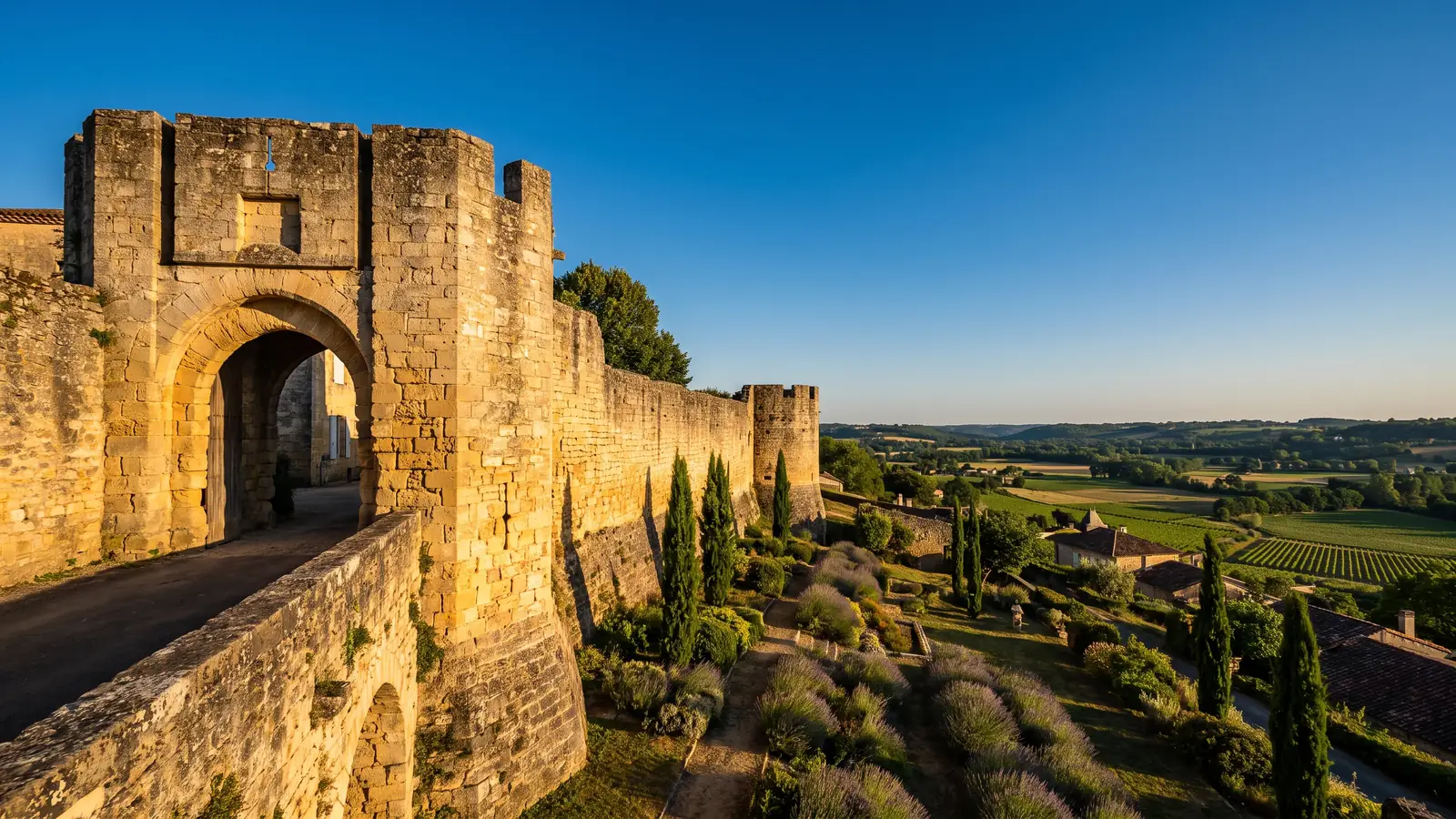
Around Bazas, you can explore the medieval castles of Roquetaillade and Villandraut, the Sauternes vineyards, the town of Langon on the Garonne River, and the Landes de Gascogne forest. The town is ideally situated at the crossroads of several regions: here are the must-see attractions, all of which can be visited on a day trip.
Medieval Castles and Fine Wines
The Bazadais region is a land of castles. Nearby, in Mazères (~9 km), the Château de Roquetaillade—a 14th-century fortress with interiors designed by Viollet-le-Duc—is one of the most beautiful in the region and offers guided tours. About ten kilometers away, Villandraut is home to the imposing fortified castle of Bertrand de Goth, the future Pope Clement V—a remarkable example of military architecture. To the north, about twenty kilometers away, lie the vineyards of Sauternes, home to some of the world’s finest sweet wines, where visitors can tour prestigious châteaux and taste these golden wines. The town of Langon (about 15 km away), on the Garonne River, rounds out the picture with the Graves region and its train station. From Bazas, you can thus plan an itinerary combining the cathedral—listed in 1998 as part of the UNESCO World Heritage Site “Routes of Santiago de Compostela in France”—medieval castles, and fine wines, all within a radius of about twenty kilometers. A chauffeured car lets you travel from one site to another without worrying about driving or parking.
The Landes de Gascogne Forest
South of Bazas lies the vast Landes de Gascogne forest, the largest forest in Western Europe, planted with maritime pines. This is another side of southern Gironde: one of wide-open spaces, forest villages, rivers, and outdoor activities. The Bazadais region serves as a transition between the vineyards and this vast forest, making it a land of contrasts where you can go from the hillsides of Sauternes to the pine forests of the Landes in just a few kilometers. This diversity of landscapes—vineyards, pastures, and forests—also enriches the local cuisine, renowned for its Bazas beef, wood pigeons, porcini mushrooms, and capons, which can be found at the Saturday market and in restaurants. From Bazas, an executive chauffeur who knows the region can tailor an itinerary just for you, combining cultural heritage, fine wines, châteaux, and nature, while easily covering the distances—allowing you to fully enjoy this rich and underappreciated region, just over an hour from Bordeaux.
When is the best time to visit Bazas?
Bazas is worth visiting year-round, with two highlights: the Promenade des bœufs gras at the end of winter, and the warmer months—from spring through fall—when you can explore the cathedral, the town square, and the nearby vineyards. Late winter (February) offers the unique spectacle of the Promenade des bœufs gras on Jeudi Gras (February 12, 2026): a must-see for anyone who loves traditions. Spring (April–June) is ideal for a visit: the soft light highlights the golden stone of the cathedral and the square, the terraces come alive, and the Bazadais countryside is resplendent. Summer (July–August) is peak season, with markets, events, and the welcome shade of the “couverts” during the hottest hours of the day; it’s also the time for castle tours and wine tastings in Sauternes.
Fall (September–October) is a beautiful time of year: it’s grape harvest season in Sauternes, but also the season for porcini mushrooms and wood pigeons—specialties of the Bazadais region—all bathed in golden light. Even winter has its charm, with the town quiet and the prospect of fattened oxen. No matter the time of year, the Saturday market is a highlight, and the cathedral is worth visiting in any season. Allow at least half a day for the episcopal city and its cathedral; a weekend allows you to add Roquetaillade, Villandraut, Sauternes, and a few wine tastings to your itinerary. Bazas thus offers, year-round, a heritage and culinary getaway in southern Gironde, just over an hour from Bordeaux.
| Season | Atmosphere | Ideal for |
|---|---|---|
| Late winter (February) | Parade of the Fat Cattle, Carnival | traditions, folklore, cuisine |
| Spring (April–June) | golden stone, terraces, gentleness | cathedral, square, castles |
| Fall (Sept.–Oct.) | grape harvest, porcini mushrooms, wood pigeons | wine tourism, gastronomy, photography |
Getting to Bazas from Bordeaux
Bazas is about 68 km from Bordeaux, or a 1-hour drive. The route heads southeast on the highway toward Langon before reaching the Bazadais region. The nearest train station is Langon, about 15 kilometers away on the Garonne River, with direct trains from Bordeaux.
| Route | Distance | Duration | Details |
|---|---|---|---|
| Bordeaux → Bazas | ~68 km | 1 hour | starting at ~130 € with a private chauffeur |
| Bordeaux-Mérignac Airport → Bazas | ~75 km | ~1 hour | pickup at the terminal |
| Langon Station → Bazas | ~15 km | ~18 min | Direct TER train from Bordeaux |
| Bazas → Sauternes | ~18 km | ~24 min | great sweet wines |
By car, it takes 1 hour to reach Bazas from Bordeaux: the route follows the highway southeast to the Langon area, then heads into the Bazadais region. By train, the nearest station is Langon (about 15 km away), on the TER Nouvelle-Aquitaine Bordeaux–Agen line, with direct connections from Bordeaux-Saint-Jean; from there, you’ll need to make your way to Bazas, which has no direct rail service. That’s where a private transfer comes in: door-to-door service, it eliminates the need for transfers and drops you off right at the foot of the cathedral, then takes you—if you wish—to Roquetaillade, Villandraut, Sauternes, or a winery, before bringing you back to Bordeaux at the agreed-upon time. For a getaway focused on heritage, fine dining, and wine, this is the simplest and most relaxing option—especially if you want to taste the region’s finest wines without having to drive.
Whether you’re exploring a cathedral listed in 1998 as part of the UNESCO site “Routes of Santiago de Compostela in France,” a day following in the footsteps of the “beaux gras” cattle, or a wine-tasting getaway to Sauternes, booking a chauffeured transfer guarantees a comfortable and punctual journey—book a driver from Bordeaux to Bazas or explore all our destinations.
Frequently Asked Questions
Where is Bazas located?
Bazas is a small “City of Art and History” in the Gironde department, the capital of the Bazadais region, located in the southeastern part of the department, about 68 km from Bordeaux (a little over an hour’s drive). It overlooks the Beuve Valley, at the junction of the Bordeaux wine region and the Landes de Gascogne: Sauternes and the Graves to the north, the Landes Forest to the south, and Langon and the Garonne River nearby. Administratively, it is part of the Langon arrondissement and serves as the seat of the Bazadais Community of Communes. A former episcopal city (the ancient Cossium), it is famous for its Gothic cathedral, listed in 1998 as part of the UNESCO World Heritage Site “Routes of Santiago de Compostela in France,” its cattle breed (Bazas beef), and its “Promenade des bœufs gras” festival. The nearest train station is Langon, about 15 km away. A private transfer from Bordeaux is the easiest way to enjoy a day trip here.
How much does a transfer from Bordeaux to Bazas cost?
We offer a fixed-price transfer from Bordeaux to Bazas, starting at approximately 149 € for the one-way trip (about 68 km and a 1-hour drive), in a Mercedes sedan or a van seating up to 8 passengers, with a professional driver. The route is direct, door-to-door: pickup at the airport, Saint-Jean train station, or your hotel in Bordeaux, and drop-off right at the foot of the cathedral. The fixed-price quote is provided and confirmed in writing before departure, with no unexpected meter charges. This is particularly convenient for a cultural and culinary getaway in southern Gironde: the driver can take you from Bazas to Roquetaillade Castle, Villandraut, Sauternes, or a winery, then bring you back to Bordeaux. For groups, this is often the simplest and most economical way to get to Bazas.
Why was the Bazas Cathedral inscribed in 1998 as part of the UNESCO property “The Routes of Santiago de Compostela in France”?
The Cathedral of Saint John the Baptist in Bazas has been listed as a UNESCO World Heritage Site since 1998, as part of the “Routes of Santiago de Compostela in France,” a serial property that includes monuments along the pilgrimage routes. It is the only monument in the region to hold this designation. The cathedral, a Gothic structure begun in 1233, is notable for its western façade adorned with three carved 13th-century portals—one of the few surviving examples of Gothic sculpture in southwestern France—and for its large 16th-century Flamboyant-style rose window. It has also been designated a Historic Monument since 1840, one of the very first such designations in France. Formerly the cathedral of a diocese abolished in 1801, it is now a co-cathedral of the Archdiocese of Bordeaux.
Is the Bazas Cathedral Romanesque or Gothic?
It is Gothic. One sometimes reads that it dates back to “the 11th century,” but this is incorrect: the current building is a Gothic structure, the cornerstone of which was laid in 1233 by Bishop Arnaud de Tontolon. Construction continued throughout the 13th and 14th centuries; the western façade, with its flamboyant rose window, was completed in 1537. Severely damaged during the Wars of Religion (1561, 1577–1578), the cathedral was restored and its nave rebuilt between 1583 and 1605. The building is therefore primarily Gothic (13th–14th centuries), with later reconstruction phases. Its three carved portals from the mid-13th century—depicting the Last Judgment, the Coronation of the Virgin, and Saint Peter—are among the few surviving examples of Gothic sculpture in southwestern France that were spared by the Wars of Religion.
What are Bazas beef and fattened cattle?
Bazas beef refers to both a cattle breed and a tradition. The Bazadaise, or “Grise de Bazas,” is a breed native to the Bazadais region, with a slate-gray coat and crescent-shaped horns; bulls can reach ~1,000 kg. Once used as draft animals, the breed nearly went extinct in the 1970s before being saved by the quality of its meat, which today bears the Label Rouge (1997) and IGP certifications. The city is its official birthplace: its Herd Book was established in 1896 by Mayor Marcel Courrégelongue. The major traditional festival is the “Promenade des bœufs gras,” held on Fat Thursday (February 12, 2026): decorated oxen, with their horns adorned with flowers, parade in pairs through the city to the cathedral, accompanied by floats, musicians, and stilt walkers. This is not a bullfight: the animals are paraded, never fought. The festival is listed on the Inventory of Intangible Cultural Heritage.
What is there to do in Bazas?
First, we’ll visit the Cathedral of Saint John the Baptist, a Gothic structure inscribed in 1998 as part of the UNESCO World Heritage Site “Routes of Santiago de Compostela in France,” taking the time to admire its three 13th-century carved portals and its rose window. Next, we’ll stroll through the Place de la Cathédrale, a vast square lined with arcades (known as the “couverts”), which comes alive every Saturday with a renowned market (Bazas beef, wood pigeons, porcini mushrooms, capons). Round out your visit with a stop at the apothecary of the former Saint-Antoine Hospital—one of the most comprehensive in France—and a stroll through the narrow streets and along the ramparts. Nearby, just a few minutes away, Roquetaillade Castle (Mazères)—with interiors designed by Viollet-le-Duc—the fortified castle of Villandraut, and the Sauternes vineyards make for wonderful day trips. And at the end of winter, the Promenade des bœufs gras (Fat Ox Parade) on Jeudi Gras offers a unique traditional spectacle. It’s enough to fill a day or a weekend, combining heritage, gastronomy, and fine wines.
Is Bazas a subprefecture?
No, not anymore. Bazas was a subprefecture from 1800 to 1926, before that status was transferred to Langon. Therefore, it should not be referred to as a subprefecture in the present tense. However, it remains the “capital of the Bazadais,” which is perfectly accurate: it is the main and historic town of this region in southern Gironde, from which it takes its name. Bazas was also, and for a much longer period, an episcopal see: the seat of a diocese from antiquity (it was the ancient Cossium) until the Revolution, when its diocese was abolished under the Concordat of 1801. Its cathedral, which lost its status at that time, is now a co-cathedral of the Archdiocese of Bordeaux. It is this history as a major religious center that explains the richness of its heritage, which is disproportionate to its current size (4,854 residents).
When are the Bazas fattened cattle held?
The Bazas Fat Ox Parade is held every year on Jeudi Gras—that is, the Thursday before Mardi Gras—during Carnival week. In 2026, it will be on Thursday, February 12. On that day, fattened oxen with flower-adorned and decorated horns parade in pairs through the town to the cathedral, accompanied by floats, musicians (the “ripatauleras”), and stilt walkers from the Landes region; and a team-driving competition judges the animals. It is an ancient tradition, one of the last major rural carnivals in southwestern France, listed on France’s Inventory of Intangible Cultural Heritage. Be careful not to confuse this with a bullfight—the oxen (castrated, fattened males) are adorned and paraded, never fought. If you visit Bazas in late winter, this is a unique traditional spectacle not to be missed.
What is the distance between Bordeaux and Bazas?
About 68 km by road, or a 1-hour drive. The route heads southeast on the highway toward Langon before entering the Bazadais region. With a chauffeur service, the fare is fixed and provided in advance, starting at approximately 130 € for the one-way trip. The nearest train station is Langon, about 15 kilometers away along the Garonne River, on the Bordeaux–Agen TER line, with direct trains from Bordeaux-Saint-Jean; from the station, you’ll still need to travel to Bazas, which has no direct rail service. This is why a private transfer is particularly convenient here: it drops you off right at the foot of the cathedral, then takes you—if you wish—to Roquetaillade, Sauternes, or the vineyards, before bringing you back to Bordeaux.
What is there to see around Bazas?
Bazas is ideally located at the crossroads of several regions. Nearby, in Mazères (~9 km), the Château de Roquetaillade—a medieval fortress whose interiors were restored by Viollet-le-Duc—offers guided tours. About ten kilometers away, Villandraut is home to the imposing fortified castle of Bertrand de Goth, the future Pope Clement V. To the north, about twenty kilometers away, lie the prestigious vineyards of Sauternes and Barsac, home to great sweet wines, as well as the Graves region around Langon (~15 km), on the Garonne River. To the south lies the vast Landes de Gascogne forest. From Bazas, you can thus plan an itinerary combining the cathedral—listed in 1998 as part of the UNESCO World Heritage Site “Routes of Santiago de Compostela in France”— medieval castles, fine wines, and nature, all within a radius of about twenty kilometers. A private chauffeur familiar with the region can tailor an itinerary just for you, freeing you from the hassle of driving or finding parking.
When is the best time to visit Bazas?
Bazas is worth visiting year-round, with two highlights. Late winter (February) features the Promenade des bœufs gras on Jeudi Gras (February 12, 2026): a unique traditional spectacle. Spring (April–June) is the ideal time to visit: the soft light highlights the golden stone of the cathedral and the square, and the terraces come alive. Summer (July–August) is peak season, with markets and events, and the welcome shade of the arcades; it’s also the time for castle tours and wine tastings in Sauternes. Fall (September–October) is a beautiful time: it’s harvest season in Sauternes, but also the season for porcini mushrooms and wood pigeons, specialties of the Bazadais region. The Saturday market is a highlight no matter the season. Allow at least half a day for the cathedral and the episcopal city, or a weekend to include Roquetaillade, Villandraut, Sauternes, and a few wine tastings.
Is it possible to visit Bazas and Sauternes on the same day?
Yes, very easily: Sauternes is about 20 kilometers from Bazas, or roughly a 25-minute drive. This proximity makes Bazas an ideal base for combining, in a single day, a visit to the Gothic cathedral—listed in 1998 as part of the UNESCO World Heritage Site “Routes of Santiago de Compostela in France,” with a wine tasting in the prestigious vineyards of Sauternes and Barsac, home to some of the world’s finest sweet wines. You can also add the Graves region around Langon, or the medieval castles of Roquetaillade and Villandraut, all just a few kilometers away. A typical itinerary: the cathedral and the square in Bazas in the morning, a lunch featuring Bazas beef, followed by a visit to a Sauternes château and a wine tasting in the afternoon. A chauffeur familiar with the area can tailor this itinerary to your preferences, easily covering the distances, and allow you to enjoy the great wines without worrying about driving or parking.
Further Reading
- A neighboring village in southern Gironde: see the Auros Guide (Rivet Abbey and the Bazadais region)
- The nearby Garonne Canal: see the Castets-en-Dorthe Guide (the Garonne Canal and its locks)
- The nearby medieval town: see the Saint-Macaire Guide (city walls and arcaded square on the Garonne)
- Understanding our rates and vehicles: see the "Book a Driver" page (sedan & van, fixed-price quote)
- Plan your trip: Book a chauffeur from Bordeaux to Bazas or explore all our destinations
Sources and References
- Wikipedia — Saint John the Baptist Cathedral in Bazas — Gothic building, cornerstone laid in 1233, façade completed in 1537, three carved portals from the 13th century (The Last Judgment / The Coronation of the Virgin / Saint Peter), designated a historic monument in 1840, inscribed on the UNESCO World Heritage List in 1998
- UNESCO — The Routes of Santiago de Compostela in France — Bazas Cathedral, inscribed in 1998 as a component (No. 868-004) of the serial property “The Routes of Santiago de Compostela in France”
- Wikipedia — Bazas Fat Cattle Parade — a traditional festival held on Fat Thursday, featuring decorated cattle parading in pairs, a team-driving competition, and stilt walkers; listed in the Inventory of Intangible Cultural Heritage; not a bullfight
- Wikipedia — Bazadaise (cattle breed) — “Grise de Bazas,” slate-gray coat, bulls ~1,000 kg; Herd Book established on July 31, 1896, by Marcel Courrégelongue, mayor of Bazas; Label Rouge 1997 + PGI (Bazadaise and Blonde d’Aquitaine)
- Town of Bazas — Place de la Cathédrale (arcaded square, ~1 ha), Saturday market, the apothecary shop at Saint-Antoine Hospital (designated a historic monument in 2003), city walls (Brèche postern gate, Gisquet gate)
- City of Bazas — Fête des Bœufs Gras 2026 — February 12, 2026 edition, accessed July 24, 2026
- Wikipedia — Bazas — capital of the Bazadais region, ancient Cossium, a bishopric until the Concordat of 1801, subprefecture from 1800 to 1926 (transferred to Langon), population 4,854. (2023), co-cathedral of Bordeaux
Article verified on .
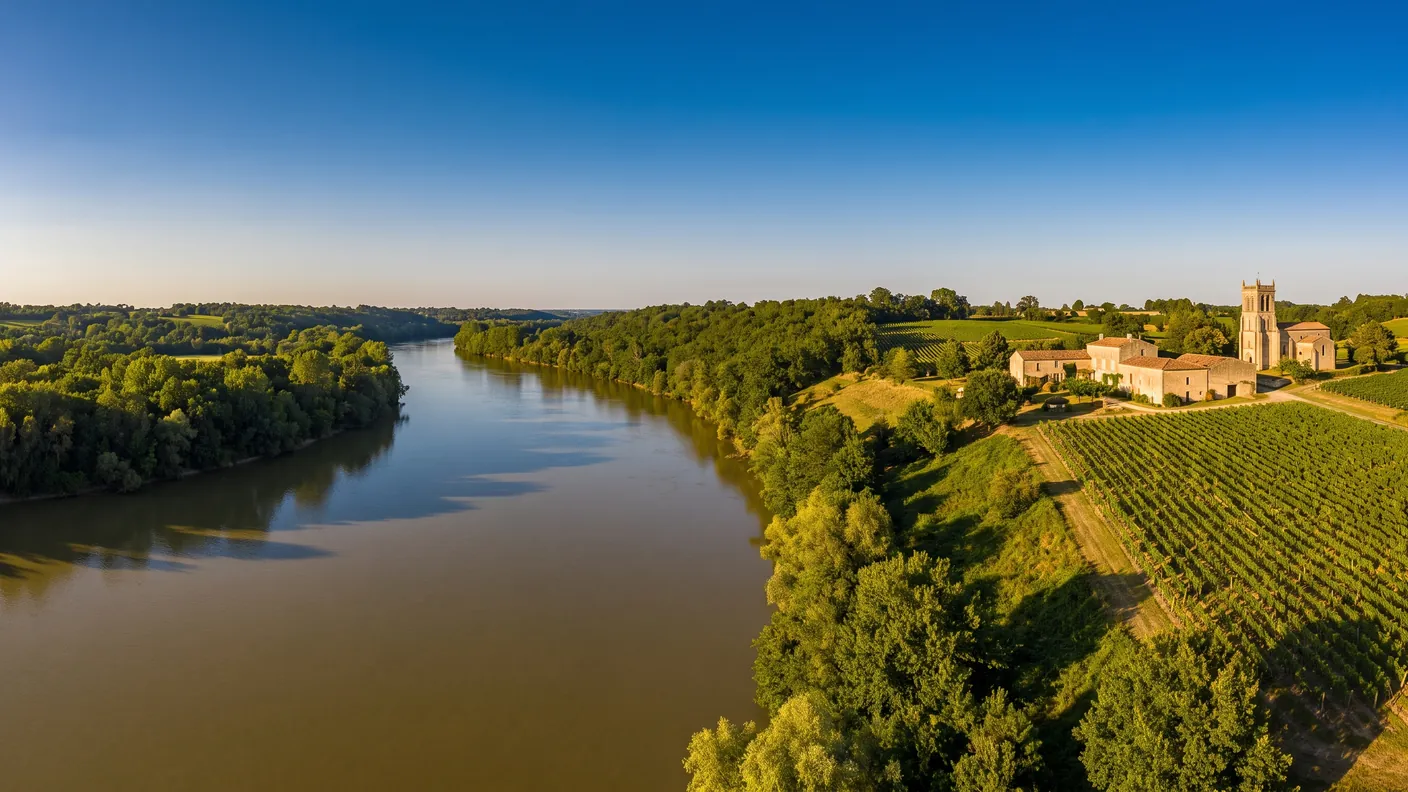
On the way to Bazas Cathedral
Direct transfer from Bordeaux (1 hour) to Bazas and its cathedral, inscribed in 1998 as part of the UNESCO World Heritage Site “Routes of Santiago de Compostela in France”—from the airport, train station, or hotel to the town square, then on to Roquetaillade, Sauternes, or the vineyards. Fixed-price written quote—no surprise meter charges.