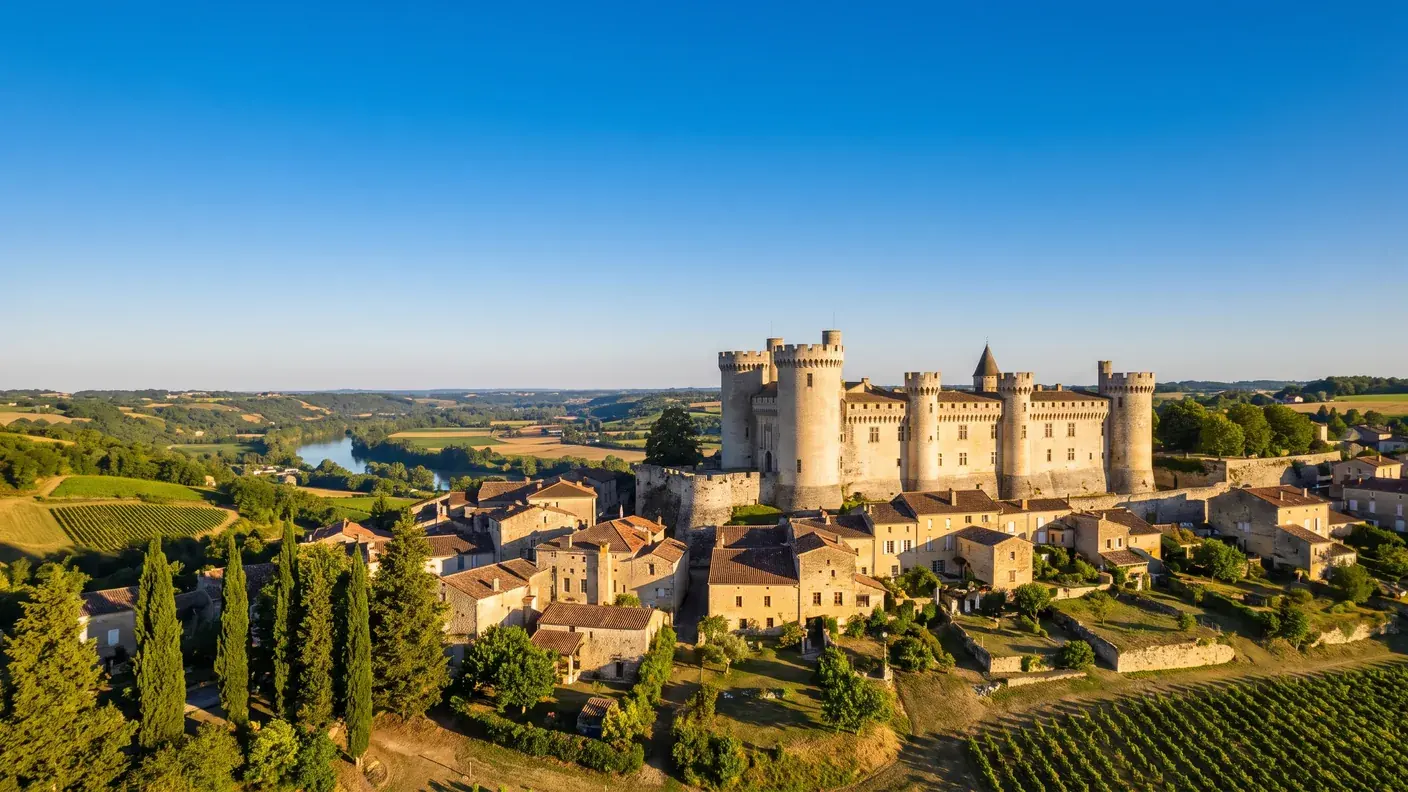
Bordeaux to Duras: the château, vineyards and Marguerite Duras
A small hilltop town in Lot-et-Garonne, in the Dropt Valley: the grand Château de Duras (a listed historic monument and former duchy), one of France’s oldest AOC vineyards, and the village that gave Marguerite Duras her name—about 1 hour and 15 minutes from Bordeaux.
Duras at a Glance
Duras is a small hilltop town in Lot-et-Garonne, north of Marmande, overlooking the Dropt Valley on the border between the Gironde and the Dordogne. It owes its reputation to three things: its imposing castle, a former duchy listed as a historic monument; its AOC Côtes de Duras vineyard, one of France’s oldest appellations; and its name, which the writer Marguerite Duras chose as her pen name. Add to that a medieval clock tower, a rich Protestant heritage, and excellent local restaurants, and you have one of the most charming towns in the Dropt region—about 1 hour and 15 minutes from Bordeaux.
Here are the key details to know before you go. Driving distances are calculated door-to-door; rates are for a private driver booked from Bordeaux, with a fixed price provided in advance.
| Landmark | Details |
|---|---|
| Department | Lot-et-Garonne (47), Nouvelle-Aquitaine |
| Status | Small town · Marmande district · Pays de Duras Community of Communes (seat) |
| Population | approximately 1,208 residents (INSEE 2023) · the residents of Dura |
| Area | ≈ 20.17 km² · in the Dropt Valley |
| Don't miss it | The Château de Duras (a listed historic monument), the Clock Tower, and the AOC Côtes de Duras vineyard |
| Distance from Bordeaux | about 100 km · about 1 hour and 15 minutes by car |
| Nearest train stations | Sainte-Foy-la-Grande, Marmande, La Réole (~22–24 km each) |
A word of honesty right off the bat, because Duras is a place where people are quick to repeat inaccuracies. It is not a bastide founded by Alphonse de Poitiers: it is a castelnau, a town that grew up around its castle in the 12th century. The castle has been classified as a historic monument since 2002 (an earlier classification, from 1970, was revoked). And Marguerite Duras did not live in the town: she borrowed her pen name from it, as her father’s house was located in a neighboring town. This guide distinguishes between verified facts and commonly repeated myths.
Here we go over everything you need to know before you come: where Duras is located and what makes it unique, the history of its castle—which became a duchy—the Clock Tower and the church, the truth about the “castelnau” (not a bastide), the Côtes de Duras vineyards, the exact connection to Marguerite Duras, the town’s Protestant past, notable sites in the surrounding area, and the easiest way to get to Duras from Bordeaux.
Where is Duras located?
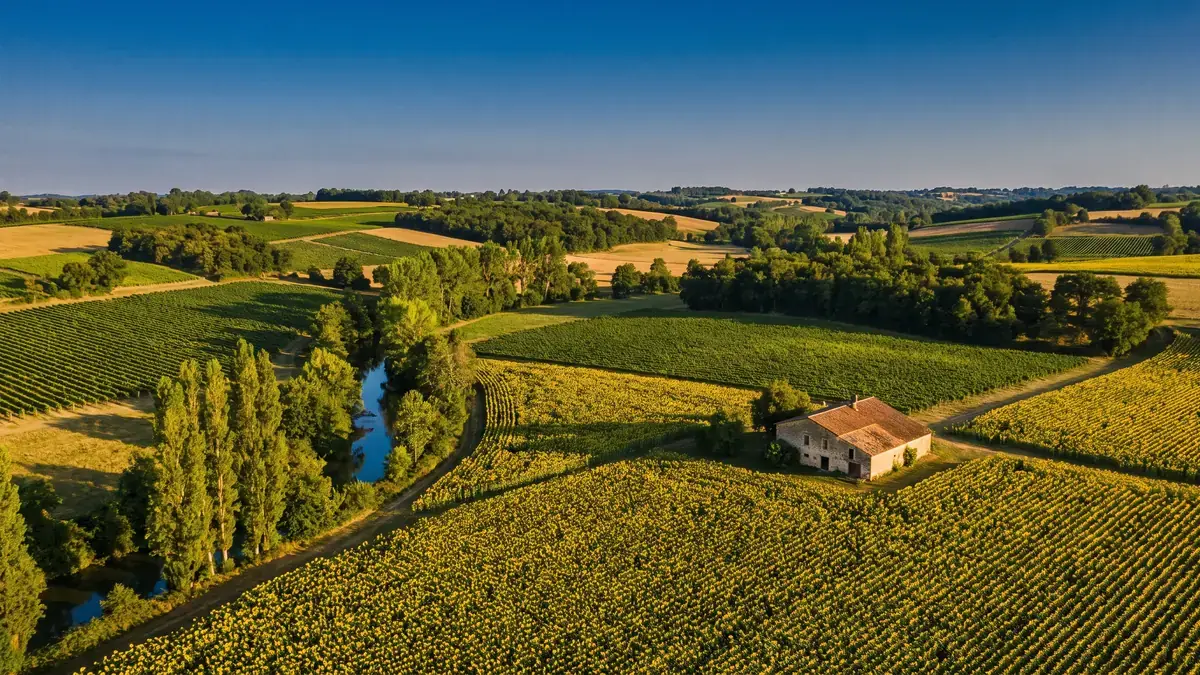
Duras is located in Lot-et-Garonne (47), in Nouvelle-Aquitaine, about 20 kilometers north of Marmande, in southwestern France. The town is the seat of the Pays de Duras Community of Municipalities and is part of the Marmande district and the Coteaux de Guyenne canton. Its coordinates are 44.68° N and 0.18° E; its INSEE code is 47086, and its ZIP code is 47120. It covers approximately 20.17 km² of rolling hills, at elevations ranging from 28 to 128 meters, at the junction of three former provinces—Guyenne, Agenais, and Bordelais—and three current departments: Lot-et-Garonne, Gironde, and Dordogne.
In the Dropt Valley
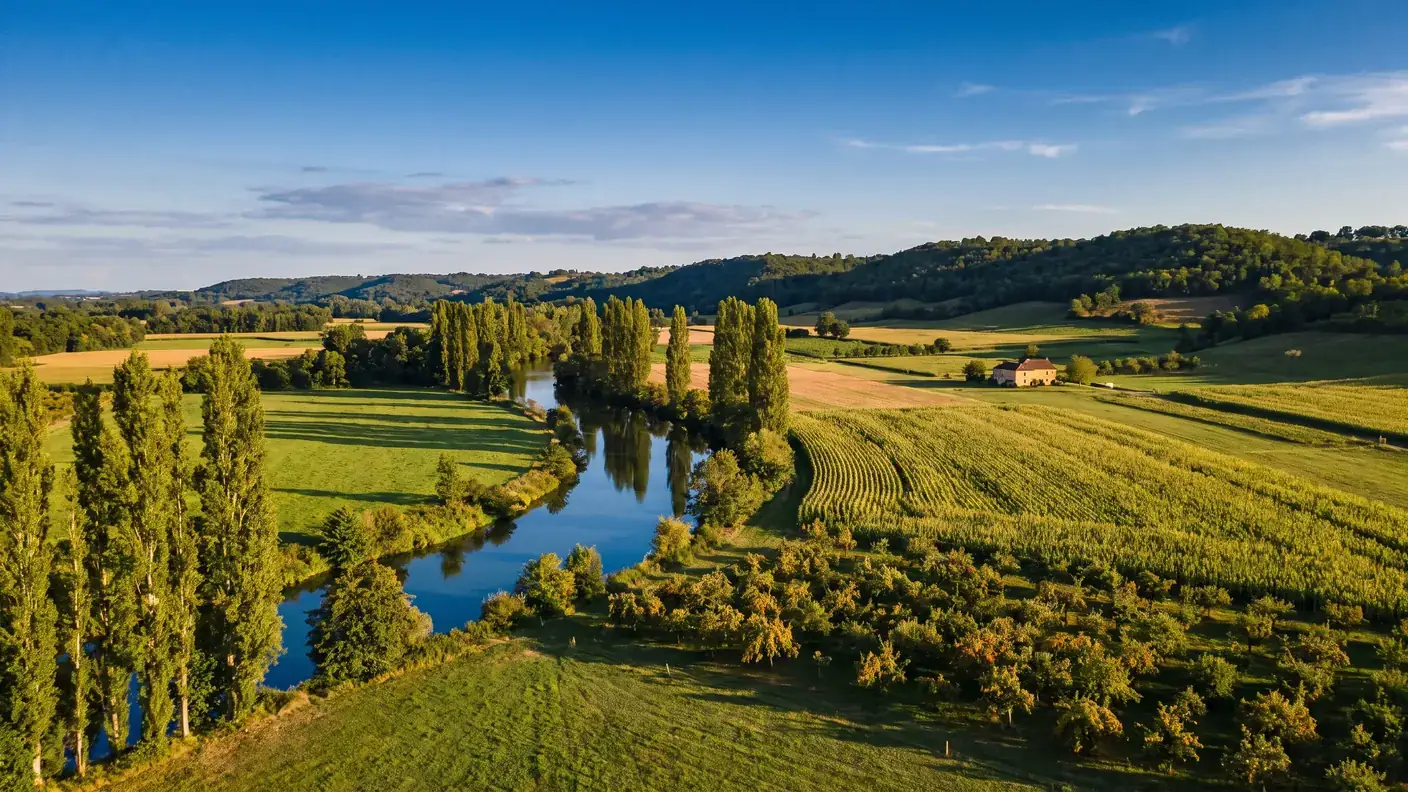
Duras is a hillside town, built on a hill overlooking the Dropt Valley. The Dropt, a tributary of the Garonne, forms the southern boundary of the town: the town looks down on it from its promontory, crowned by the castle. This perched location is no coincidence—it explains the town’s name and its role as a stronghold: one does not build a castle on a hill by chance, but to watch over and protect a crossroads. All around, the hillsides are covered with vineyards: we are in the heart of the Côtes de Duras wine region, a gentle, rolling landscape of rows of vines, groves, and farms built of pale stone—a world apart from the nearby plains of the Garonne. It is a transitional region, lying between the wine-growing region of Bordeaux to the west and the Périgord to the east.
This crossroads location, at the borders of three former provinces, has shaped the entire history of Duras: a contested land and a frontier region, it was long a point of contention between rival powers, which explains its fortress and its turbulent past. Today, this very crossroads is what makes it such a charming tourist destination: in a single day, you can go from the wines of Duras to those of Bergerac, from the bastides of Le Dropt to the banks of the Garonne, all within a radius of just a few dozen kilometers.
A small town with a population of 1,200
According to INSEE, Duras had a population of 1,208 as of the 2023 census. Nevertheless, the town continues to serve as a local hub: it is home to the headquarters of its community of municipalities, local businesses, and a market, and lends its name to the Côtes de Duras wine region. Its residents are known as Duraquois.
Duras Castle, a Listed Duchy
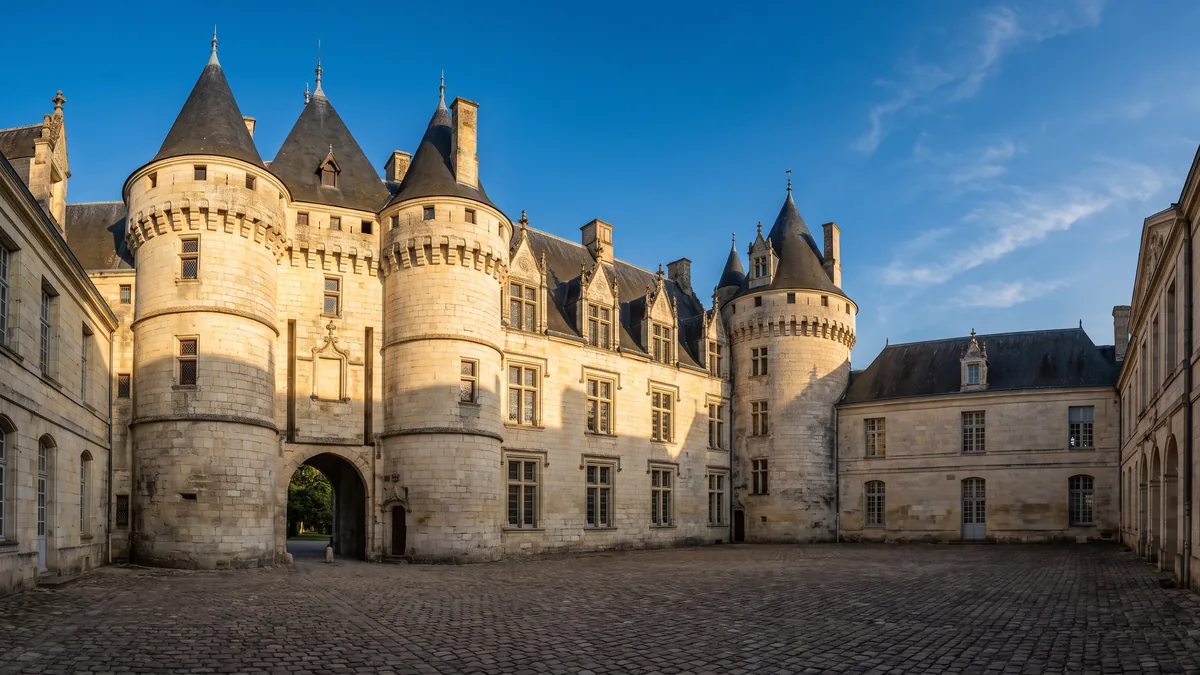
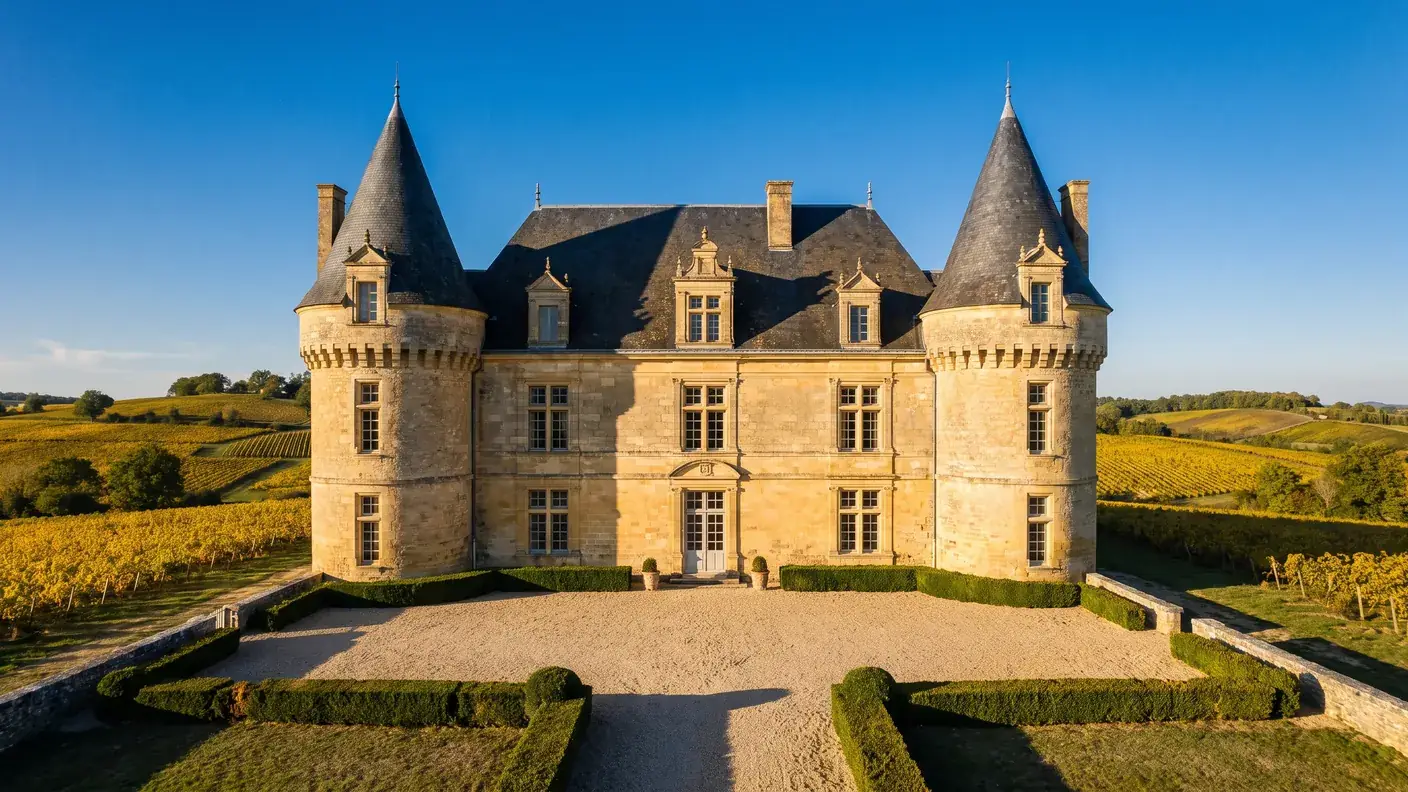
The most prominent landmark in Duras—the one that towers over the town and defines its skyline—is its castle, a former duchy designated as a historic monument. It is one of the largest castles in Lot-et-Garonne; now restored and open to visitors, it alone tells the story of centuries of history in Guyenne.
| Duras Castle | Details |
|---|---|
| Origins | Medieval fortress (12th century), the origin of the town |
| Family | House of Durfort (Durfort-Duras branch) |
| Marquisate | A seigneury elevated to a marquisate in 1609 |
| Duchy | Elevated to the Duchy of Duras in 1689 |
| Revolution | Looted on November 11–12, 1792; towers demolished (except for the south tower) |
| Protection | Listed in its entirety as a historic monument on May 3, 2002 (Mérimée ref. PA00084107) |
| Today | Owned by the municipality · restored · ~30 rooms open to visitors |
From the Medieval Castrum to the Duchy
The castle has its roots in the Middle Ages: A fortress has stood on this promontory since the city's founding in the 12th century. But its fate took a turn with the House of Durfort (the Durfort-Duras branch), one of the region's leading families. The seigneury of Duras was established as marquisate in 1609, then in Duchy of Duras in 1689: The castle then ceased to be a mere stronghold and became the residence of a ducal family, undergoing renovations in the 17th and 18th centuries with a focus on residential rather than defensive features. It is often referred to as a “Medieval and Renaissance” castle; primary sources prefer to describe it as a medieval structure that was extensively remodeled in the modern era. In any case, the complex is impressive in its scale: courtyards, terraces, a game reserve, retaining walls—an entire seigneurial estate set in stone.
The Durfort-Duras were a prominent family during the Ancien Régime: Marshals of France, ambassadors, and courtiers at Versailles, they held their place among the kingdom’s high nobility. Their Château de Duras, far from being a mere provincial fortress, served as a showcase of their power—hence its grandeur and the opulence of its furnishings, which grew in tandem with the family’s rising prestige, from a marquisate to a duchy.
Ransacked during the Revolution
The Revolution left a deep scar on the castle. As a symbol of ducal power, it was plundered on November 11 and 12, 1792, and some of its towers leveled — Only the south tower was spared. Once a ducal residence, it gradually fell into ruin and was abandoned before the municipality acquired it and undertook a major restoration project in the 20th century.
Today, the castle belongs to the town of Duras and is open to visitors: some thirty rooms, including the Duke and Duchess’s apartments, which have been refurnished, take visitors back in time. It is a fine example of a historic site saved by a small town through sheer determination and patient restoration efforts. The tour, which takes you through some thirty rooms—including the Duke and Duchess’s refurnished apartments—holds some wonderful surprises—and, above all, offers remarkable panoramic views from the terraces, which overlook the Dropt Valley and the vineyards of the Côtes de Duras. The château, which hosts events throughout the year, remains the heart of the town’s cultural life—proof that a well-restored historic site can once again become a vibrant place rather than merely a stone backdrop.
Designated a historic monument… in 2002
According to the Ministry of Culture’s POP/Mérimée listing, the Château de Duras has been classified in its entirety as a historic monument since the decree of May 3, 2002. This designation covers its buildings, courtyards, warren, terraces, and their retaining walls; it replaces several earlier designations, which have now been revoked.
The Clock Tower and the Church
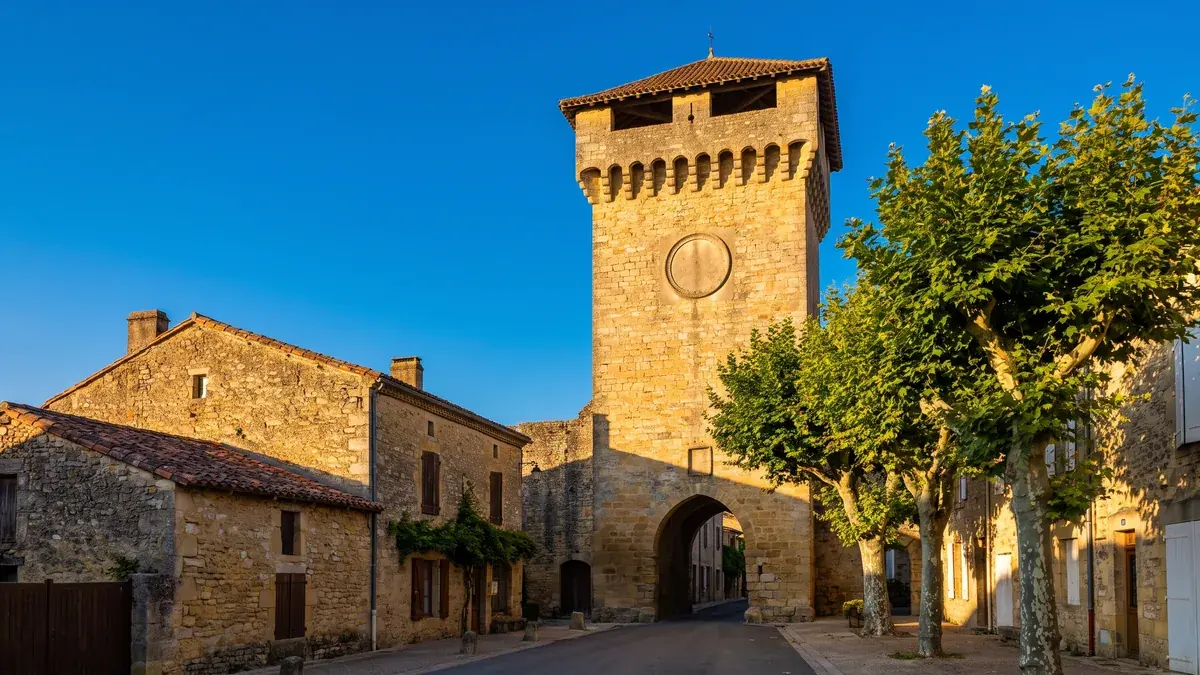
Next to the castle, Duras is home to two other reminders of its past: the Clock Tower and the Church of Sainte-Marie-Madeleine. One evokes the town’s long-gone fortifications, while the other recalls its turbulent religious history.
The Clock Tower, a former city gate
The Clock Tower — whose official name is “City Gate, also known as the Clock Tower” — is one of the rare remnants of the ancient fortifications in Duras, along with the castle; the ramparts, however, have disappeared. It was a city gate medieval gate, through which one entered the fortified town. It dates from the 13th to 17th centuries: the lower part dates from the Middle Ages, while the upper part was raised during the modern era (a local sign sometimes reads “12th century,” but this date is not confirmed by official sources). The tower is Listed as a historic monument by a decree dated September 16, 1953 (Mérimée reference PA00084108). Even today, passing through its arched gateway is still a symbolic entry into the old city.
Along with the castle, the Clock Tower is one of the two defining features of Duras’s skyline: while the castle symbolizes seigneurial power, the tower evokes the city walls and the days when the city gates were closed at nightfall. It is also a beautiful vantage point and a prime spot for photography, situated at the end of the old streets, whose pale stone houses and arcades form a harmoniously unified ensemble.
St. Mary Magdalene Church
The Church of Sainte-Marie-Madeleine has a history linked to Duras’s Protestant past. Its date of construction is a matter of debate: according to some sources, it is a new building from the early 19th century erected on the site of a former Protestant church; according to the tourist office, the church is the former Protestant church itself (dating from the 16th–17th centuries, recognizable by its triangular pediment), which was converted for Catholic worship in 1685 following the revocation of the Edict of Nantes. Both versions agree on one point: this place of worship bears witness to the Wars of Religion, when Duras was a Protestant stronghold. It is this history, more than the architecture itself, that makes the building so interesting.
Duras, a castelnau (not a bastide)
Here’s one of the most persistent misconceptions about Duras: no, it’s not a bastide. We often read that it was “founded in 1255 by Alphonse de Poitiers,” like so many other bastides in the Southwest. That’s false—and setting the record straight sheds light on the town’s entire history.
The Myth of the Bastide of 1255
Bastides are new towns, built from scratch in the 13th and 14th centuries according to a regular geometric plan, centered around a covered square, by a ruling authority (the King of France, the King of England, or a count) who granted privileges to attract residents. Alphonse de Poitiers, brother of Saint Louis, founded many of them in the Agen region. It is tempting to classify Duras as part of this prestigious category—but that would be a mistake: Duras is much older than the bastides, and its layout is not that of a 13th-century new town. The confusion likely stems from the presence of a castle and a fortified city gate, which evoke the world of the bastides—and from the fact that the Dropt Valley is home to many genuine bastides (Eymet, Monségur, Sainte-Foy-la-Grande). In this context, it is easy to lump Duras in with them. The reality is different—and more interesting: Duras was not drawn up on a flat surface by a founder; it grew organically around a castle, like the towns of the early Middle Ages.
A village founded around 1137
Duras is actually a *castelnau*: a village that grew up around its castle, under its protective wing. Its founding dates back to around 1137, when the Viscount of Bezaume (probably Guillaume-Amanieu de Gabardan) destroyed the neighboring town of Saint-Eyrard and resettled its inhabitants near his castle on the hill. The priory of Saint-Eyrard, which was under the jurisdiction of the Benedictine Abbey of La Réole, was also transferred to Duras during the 12th century. This origin is documented in the cartulary of the priory of La Réole, where an entry from 1137 marks the first written record—even though the establishment of the castelnau spanned several decades. Duras thus emerged from an act of seigneurial power, a century before the bastides: a fortified town, nestled beneath its castle on a rocky outcrop overlooking the Dropt River.
Côtes de Duras, an AOC established in 1937
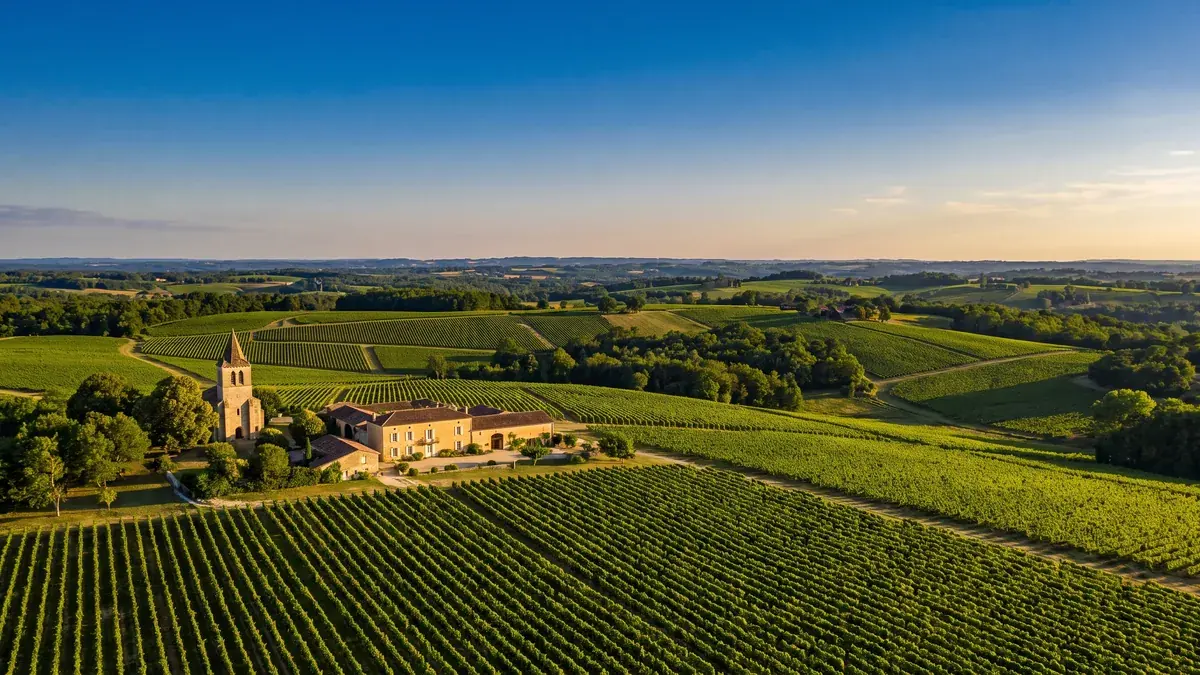
Duras lent its name to one of France’s oldest appellation vineyards: the Côtes de Duras. This is the town’s second major attraction, inextricably linked to its hilly landscape—and reason enough, in and of itself, to make the trip.
One of France's oldest AOCs
According to the INAO, the name Côtes de Duras was recognized in 1937. It encompasses dry and sweet white wines, as well as red and rosé wines, produced in a defined area around the Dropt Valley. This long-standing status explains the vineyard’s central role in the identity and landscapes of Duras.
The terroir of the Côtes de Duras, composed of clay-limestone and boulbènes on the slopes of the Dropt, is a geological extension of the nearby Entre-deux-Mers region of Bordeaux—which is hardly surprising: the border between the Côtes de Duras and the Gironde vineyards is purely administrative; the vines, for their part, know no departmental boundaries. Long overshadowed by its prestigious neighbors, this wine region is experiencing a remarkable revival, driven by a new generation of winemakers focused on quality and often drawn to organic farming.
Four colors, several grape varieties
Côtes de Duras wines come in four varieties: dry white, sweet white, red, and rosé—a fairly rare full range. The whites, often the most renowned, are based on Sauvignon and Sémillon (along with Muscadelle and a few lesser-known grape varieties such as Chenin or Mauzac); the reds and rosés blend Bordeaux grape varieties—Merlot, Cabernet Franc, Cabernet Sauvignon—with Côt (Malbec). Consequently, the region offers a variety of wines, including lively and aromatic dry whites, indulgent sweet whites, supple reds, and refreshing rosés—all at prices far more affordable than those of neighboring Bordeaux.
Visiting a vineyard, complete with a tasting on the estate, is one of the great pleasures of a stay in Duras. This is also what gives this still-off-the-beaten-path wine region its charm: here, you’re welcomed by the winemaker himself, at estates that are often family-run and on a human scale, far from the crowds at the great Bordeaux châteaux. The value for money here is renowned, and visitors are happy to leave with a few cases of wines that can’t be found anywhere else. For those who want to discover a wide range of producers in one place, a wine center and several tasting rooms offer the chance to sample the appellation’s diversity before exploring the hillsides, from estate to estate.
| AOC Côtes de Duras | Details |
|---|---|
| Establishment of the AOC | Decree of February 16, 1937 (one of the oldest in France) |
| Planted area | ≈ 950 ha today (compared to ≈ 2,000 ha in the mid-2000s) |
| Colors | Dry white, sweet white, red, rosé |
| White Grape Varieties | Sauvignon, Sémillon, Muscadelle, Chenin, Mauzac… |
| Red and Rosé Grape Varieties | Merlot, Cabernet Franc, Cabernet Sauvignon, Côt (Malbec) |
Duras and Marguerite Duras
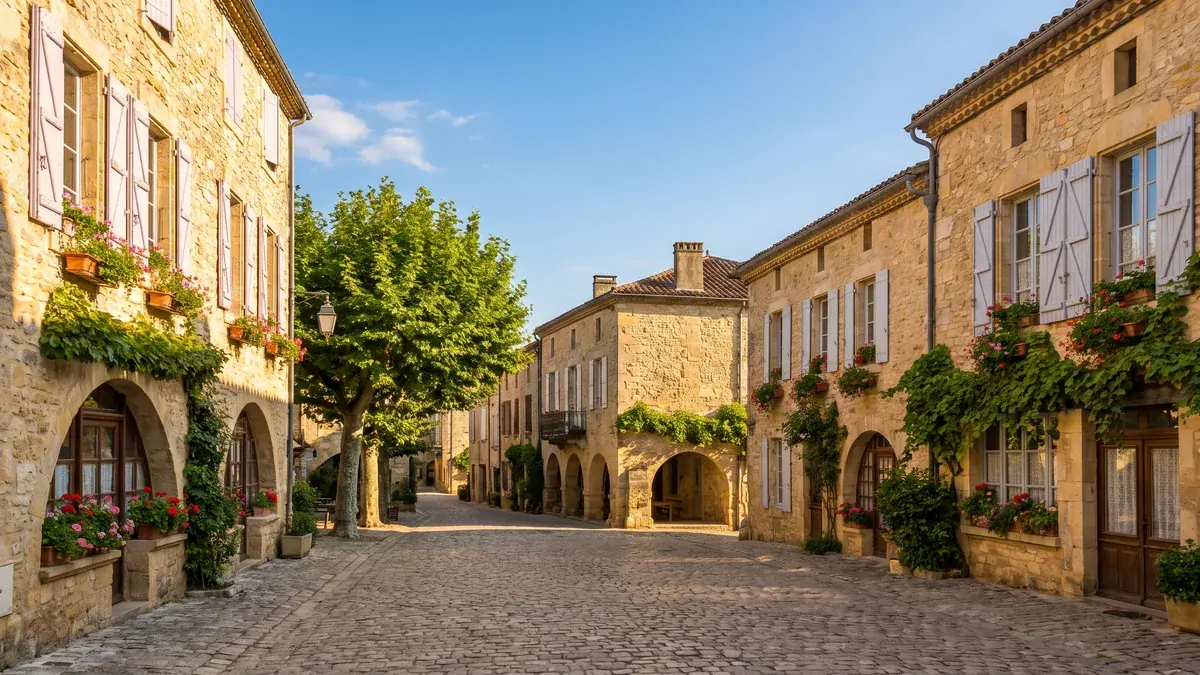
If the name Duras brings to mind a writer rather than a town, it is anything but a coincidence: Marguerite Duras took her pen name from this village. But here again, the reality is more nuanced than the legend, and deserves to be told accurately.
A pen name, not a place of residence
Marguerite Duras, born Marguerite Donnadieu on April 4, 1914, near Saigon (in French Indochina) and who died in Paris in 1996, is one of the leading figures of 20th-century French literature (*A Dam Against the Pacific*, *The Lover*, *Hiroshima, My Love*). She chose “Duras” as her pen name—which she used starting with her first novel, *Les Impudents* (1943)—in reference to the village where her father’s house was located.
Be careful, however, not to read too much into it: the writer did not live in the town of Duras. The family home, known as “du Platier,” was located in the neighboring town of Pardaillan, and the family lived there for only a few years after the father’s death in 1921. The connection to Duras is therefore one of place names and proximity: a borrowed name, not a childhood spent in the town’s streets. Nevertheless, the connection remains strong in the collective imagination: by signing her work “Marguerite Duras,” the writer has forever inscribed this little corner of Guyenne on the pediment of world literature. She herself maintained a complex and reserved relationship with her origins, preferring to allude to them in subtle ways. It would therefore be a mistake to turn Duras into a “Marguerite Duras Village” in the style of a house-museum: it is better to appreciate the accuracy of the facts—a chosen name, a nearby childhood home—than to spin a legend. This is, in fact, more faithful to the spirit of the writer, who detested contrived narratives.
The City and the Writer
This connection, however tenuous, has brought Duras symbolic fame: few villages with a population of 1,200 can boast of having given its name to a writer who is read and translated worldwide. The town honors her, by the way: a square bears the name Marguerite Duras. For visitors, it’s a lovely literary gateway—you can stroll through the village while reflecting that this name, engraved on so many book covers, comes from this hilltop on the Dropt. One must simply keep in mind the facts: Duras lent its name to the writer, but the writer herself belongs to the whole world. It’s a fine example of how a tiny place can, through a series of circumstances, make its mark on cultural history.
Duras, a Protestant stronghold
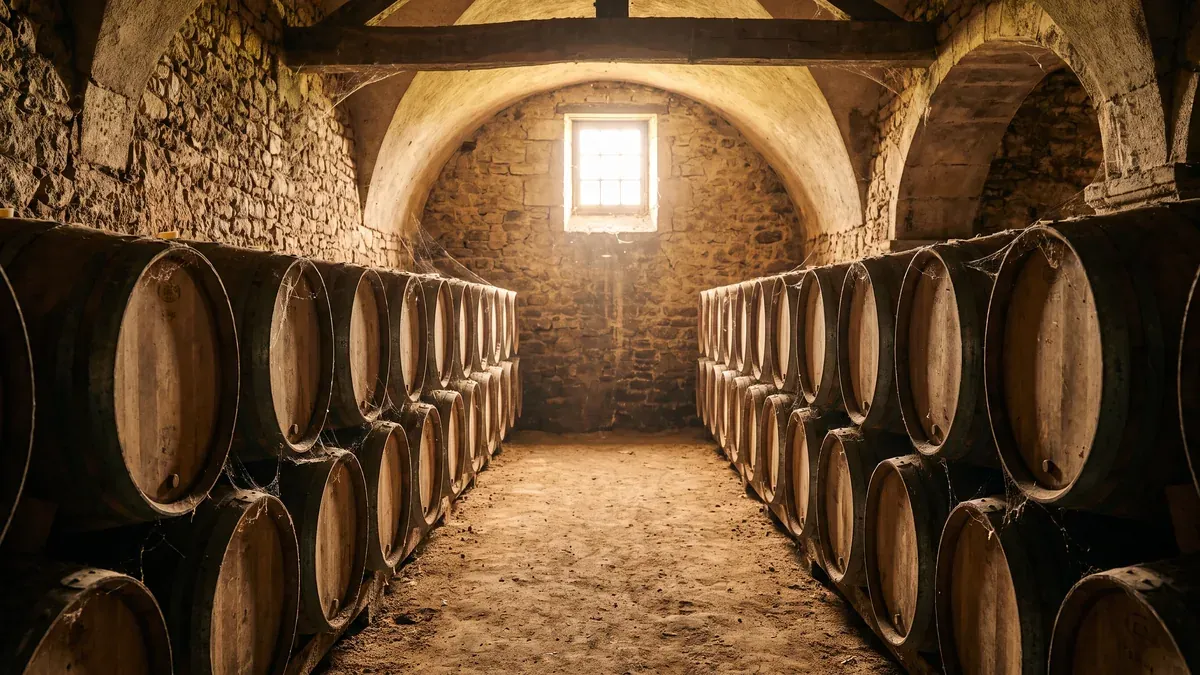
In the 16th century, Duras was one of the strongholds of Protestantism in southwestern France. This history, though less well known than the castle or the wine, has nevertheless left a deep mark on the town and explains many things, starting with the history of its church.
A Safe Haven for the Huguenots
During the Wars of Religion, Duras became a Protestant stronghold and a safe haven for Huguenots. The town hosted the 9th National Protestant Synod in 1578—a sign of its importance in the history of the French Reformation. It was also linked to Henri of Navarre, the future Henri IV, who stayed in the region between 1577 and 1588: it was near Duras, in Fleix, that the Peace of Fleix—one of the truces of the Wars of Religion—was signed in 1580.
Earlier, as early as 1562, a Protestant leader had taken up residence at the castle to organize the Huguenot troops. Duras thus found itself at the heart of the religious conflicts that ravaged the Southwest, pitting Catholic Bordeaux against a hinterland largely won over to the Reformation. Perched atop its promontory, the castle played an obvious strategic role in these wars: commanding the Dropt Valley, blocking a passage, and sheltering troops. It is no coincidence that Duras, like so many other strongholds in Protestant Guyenne, appears regularly in accounts of the Wars of Religion—a conflict that, between 1562 and 1598, pitted Catholics against Huguenots in eight successive wars, before the Edict of Nantes (1598) granted Protestants religious tolerance and places of safety, of which Duras was one.
From Temple to Church (1685)
This Protestant history came to an abrupt end with the revocation of the Edict of Nantes in 1685: the Reformed faith was banned, and the Duras church was repurposed for Catholic worship, becoming the Church of Sainte-Marie-Madeleine (or being replaced by it, depending on the account). As throughout the region, the revocation led to the exile of many Protestants and the official disappearance of a community that was nevertheless deeply rooted. This Huguenot heritage is part of Duras’s deepest identity, just as much as its castle and its wine: a town of borders, power, and faith, which has weathered the great upheavals of French history. It can still be glimpsed, discreetly, in the fabric of the town—in the layout of the streets, the history of the church, the memory of a synod, and the visit of Henry of Navarre. It is this rich historical depth—as much as the castle and the wines—that makes Duras much more than just a pretty village: it is an open-air distillation of the history of the Southwest.
What's there to see around Duras?
Duras is an excellent starting point for exploring the Dropt region, at the border of Lot-et-Garonne, Gironde, and Dordogne. In just a few minutes by car, you can go from a bastide to a vineyard, from a valley to a spa town, all within a very compact area surrounding the town.
The Dropt Region and the Bastides
The Dropt Valley is a string of bastides—the real ones—and charming villages. Eymet, in the nearby Dordogne, is a magnificent 13th-century bastide with an arcaded square, highly sought after. Monségur and Sainte-Foy-la-Grande, in Gironde, are other bastides in the area. To the south, Duras borders the Loubès-Bernac region and the Côtes de Duras, while the Dropt Valley, dotted with mills and old flour mills, is perfect for walking and biking. It is a gentle, unassuming region, still untouched by mass tourism, ideal for strolling from winery to winery and from bastide to bastide. The Dropt itself—a small river that once powered countless water mills—shapes the entire region: you can follow its course from one village to the next, through meadows, poplar groves, and reservoirs, in a peaceful countryside where time seems to slow down. History buffs will find a wealth of Romanesque churches, dovecotes, and old farmhouses scattered throughout a landscape that has remained deeply rural.
Marmande, Bergerac, and the vineyards
A little further on, Marmande (about 24 km away), the subprefecture and capital of the Val de Garonne—known for its famous tomatoes—features a bastide and a train station. Bergerac (about 45 km away), in the Dordogne, charms visitors with its old town, its riverbanks along the Dordogne, and its extensive vineyards (Monbazillac, Pécharmant). This entire region of the middle Garonne and the Dordogne offers a taste of the gourmet delights of southwestern France—wines, Agen prunes, foie gras, and fruit—which you can savor as you drive along the country roads. From Duras, with a driver, you can easily visit a château, one or two wineries, and a fine restaurant all in a single day.
| Around Duras | Distance | Interest |
|---|---|---|
| Sainte-Foy-la-Grande | ~22 km | Bastide-sur-la-Dordogne, train station (Bordeaux–Bergerac line) |
| Marmande | ~24 km | Subprefecture, fortified town, tomato, train station |
| La Réole | ~24 km | Medieval town on the Garonne River, train station (Bordeaux–Agen line) |
| Bergerac | ~45 km | Old Town, vineyards, banks of the Dordogne |
When is the best time to visit Duras?
Duras and its vineyards are open to visitors year-round, but late spring and early fall are the most beautiful seasons. This is when the vines are ablaze with color, when the golden light enhances the beauty of the Dropt hillsides, and when the château is at its most stunning.
The spring covers the hillsides in soft green and brings mild days, perfect for visiting the castle and the estates without the crowds. The summer is warm and sunny: it’s the season for markets, events, and outdoor tastings, but also for crowds of tourists at the castle. The fall, with its grape harvest and coppery hues, is undoubtedly the most photogenic time of year in the Duras region—and the liveliest for the winemakers. The winter, which is quieter, allows you to explore the castle and the village at a leisurely pace, bathed in low-angle sunlight. To tour an estate privately, it’s best to call ahead, regardless of the season; as for the castle, it has specific opening hours and a ticket office, so it’s wise to check these details before visiting.
Duras is perfect for a full day: in the morning, tour the castle and take a leisurely stroll through the medieval village, around the Clock Tower and the old streets; for lunch, enjoy a meal featuring local specialties, washed down with a Côtes de Duras; in the afternoon, a visit or two to wineries to discover the appellation’s four distinct styles, followed—why not?—by a side trip to Eymet or the Dropt Valley. It’s the perfect pace to leisurely savor everything that makes Duras so special—its heritage, its wine, and its landscape. With a driver, you can tailor this itinerary to your liking and enjoy it to the fullest, without worrying about driving or parking.
Getting to Duras from Bordeaux
Duras is located about 100 km from Bordeaux, which is about a 1-hour-and-15-minute drive. The city has a rather unusual transportation feature: it has no no train station, but is located at the junction of three train stations roughly equidistant (~22 to 24 km each)—Sainte-Foy-la-Grande (Bordeaux–Bergerac–Sarlat line), Marmande (Bordeaux–Agen–Toulouse line), and La Réole (Bordeaux–Agen line). However, none of them are in Duras itself: in every case, you’ll need one final mode of transportation to cover the remaining twenty or so kilometers.
Train or chauffeur service?
The train drops you off about 20 kilometers away, but that still leaves the issue of the “last kilometer” to Duras—a town with poor public transportation service. As soon as you’re traveling with others, with luggage, or want to explore the Dropt region (the castle, several estates in the Côtes de Duras, Eymet, and Bergerac), a executive car service (private chauffeur service) has the edge: a direct, door-to-door trip from Bordeaux with no transfers and flexible stops along the way. And for a day of wine tasting, it’s also the wisest choice—no one has to choose between tasting the Côtes de Duras wines and getting behind the wheel. We offer this route at a fixed price provided in advance: €205 for the one-way trip, in a Mercedes sedan or van seating up to 8 passengers, with a professional chauffeur.
This is the perfect option for a wine and heritage getaway, a tour of the château, a business trip to a vineyard, a wedding, or an event in the Duras region. The price, set in advance, remains fixed regardless of traffic or stops—a real advantage for staying within budget, and the assurance of a stress-free ride home after a wonderful wine tasting.
| Route | Distance | Duration | Landmark |
|---|---|---|---|
| Bordeaux → Duras | ~100 km | about 1 hour and 15 minutes | Starting at €180 for a private chauffeur service |
| Duras → Sainte-Foy-la-Grande | ~22 km | ~25 min | train station, bastide on the Dordogne |
| Duras → Marmande | ~24 km | ~25 min | subprefecture, train station |
| Duras → Bergerac | ~45 km | ~50 min | old town, vineyard |
Whether you come to see the Château de Duras and its duchy, for a day of wine tasting in the Côtes de Duras, or to explore the bastides and valleys of the Dropt, Duras is a treat for lovers of the authentic Southwest, with its stone buildings, vineyards, and history.
Whether you’re planning a day trip to a castle and vineyard, a tour of a wine estate, or an event in the Duras region, booking a private chauffeur guarantees a comfortable, punctual, and worry-free journey back—book a driver from Bordeaux to Duras or explore all our destinations.
Frequently Asked Questions
Where is Duras?
Duras is a small town in Lot-et-Garonne (47), in Nouvelle-Aquitaine, about 20 kilometers north of Marmande, in the Dropt Valley, on the border between the Gironde and the Dordogne. It is the seat of the Pays de Duras Community of Municipalities and is part of the Marmande district. Perched on a hillside and crowned by its castle, it has a population of approximately 1,208 and is about a 1-hour-and-15-minute drive from Bordeaux (~100 km).
How far is it from Bordeaux to Duras?
About 100 km by road, or about a 1-hour-and-15-minute drive (the 62 km sometimes cited is a “as-the-crow-flies” distance, not by road). With a chauffeured transfer from Bordeaux, the fare is fixed and provided in advance, starting at €205 one way (sedan or van, door-to-door price).
Can we visit Duras Castle?
Yes. The Château de Duras, a former duchy designated as a historic monument, now belongs to the municipality, which has restored it and opened it to visitors. Visitors can explore some thirty rooms, including the Duke and Duchess’s apartments, which have been refurnished. It’s a good idea to check the hours and ticket information before visiting, as they vary by season.
Is the Château de Duras designated as a historic monument?
Yes, it is listed (at the highest level of protection, above simple registration) in its entirety, by a decree dated May 3, 2002 (Mérimée reference PA00084107): the classification covers the castle, its outbuildings, courtyards, game reserve, terraces, and retaining walls. One sometimes reads “listed in 1970,” but the earlier designations were revoked in favor of the 2002 decree.
Is Duras a bastide?
No, contrary to popular belief, Duras was not founded as a bastide by Alphonse de Poitiers in 1255: it is a castelnau, a town that grew up around its castle around 1137, when the Viscount of Bezaume gathered the inhabitants of the neighboring town of Saint-Eyrard near his fortress. It is therefore much older than the 13th-century bastides, even though bastides (Eymet, Monségur, Sainte-Foy-la-Grande) exist all around it.
What is the Côtes de Duras AOC?
This is the Duras wine region, one of France’s oldest appellations d’origine contrôlée (AOC): the AOC was established by decree on February 16, 1937. Today, it covers approximately 950 hectares planted on the slopes of the Dropt River and offers four styles—dry white, sweet white, red, and rosé—made from the Sauvignon and Sémillon (white) grape varieties, as well as Merlot, Cabernets, and Côt (reds and rosés). Visiting policies, wine selections, and prices vary by estate; please contact each estate directly before visiting, especially to book a tasting.
What is the connection between Duras and Marguerite Duras?
The writer Marguerite Duras (1914–1996), born Marguerite Donnadieu, chose “Duras” as her pen name—which she used starting with her first novel, *Les Impudents* (1943)—in reference to this village, where her father’s house was located. Note: she did not live in the town of Duras. The family home, known as “du Platier,” was in the neighboring town of Pardaillan, where the family lived for a few years after 1921. The connection is a borrowed name, not a childhood spent there; a square in Duras bears her name today.
What is the Duras Clock Tower?
This is a former gate of the medieval town, one of the few remaining vestiges of Duras’s fortifications along with the castle (the ramparts have disappeared). It dates from the 13th to the 17th century (the lower section is medieval; the upper section was raised during the modern era). It has been listed as a historic monument since a decree dated September 16, 1953 (Mérimée reference PA00084108). Visitors still pass through its arched gateway to enter the old town.
Did Duras have a Protestant background?
Yes, very much so. In the 16th century, Duras was a Protestant stronghold and a safe haven for the Huguenots: it hosted the 9th National Protestant Synod in 1578 and was associated with Henri de Navarre (the future Henri IV). When the Edict of Nantes was revoked in 1685, the Protestant church was converted for Catholic worship, becoming (or being replaced by) the Church of Sainte-Marie-Madeleine. This Huguenot heritage is part of the town’s identity.
How many people live in Duras?
According to the 2023 census, the town had approximately 1,208 residents, with a population density of about 60 people per square kilometer. The population has declined slightly in recent years (1,308 residents in 2014, 1,219 in 2019), as is the case with many small rural towns. Despite its size, Duras remains a vibrant local hub: it serves as the seat of its community of communes, is the capital of a renowned wine-growing region, and features local shops and a market.
Is there a train station in Duras?
No, Duras does not have a train station, but it is located at the intersection of three stations that are roughly equidistant (about 22 to 24 km each): Sainte-Foy-la-Grande (Bordeaux–Bergerac–Sarlat line), Marmande (Bordeaux–Agen–Toulouse line), and La Réole (Bordeaux–Agen line). Since none of these stations is right in town, a professional chauffeur remains the most flexible option for traveling from Bordeaux and then exploring the Pays du Dropt and the Côtes de Duras.
What's there to see around Duras?
The Dropt region and its bastides: Eymet, in the Dordogne (~20 km), a magnificent bastide with arcades; Sainte-Foy-la-Grande and Monségur, in the Gironde; Marmande and its tomatoes (~24 km); Bergerac and its vineyards (~45 km); La Réole, a medieval town on the Garonne River. Not to mention the many estates in the Côtes de Duras region and the Dropt Valley, dotted with mills, perfect for walking and biking.
When is the best time to visit Duras?
Late spring and early fall are ideal: the hillsides of the Dropt are lush and green or copper-colored, the light is soft, and both the castle and the estates can be explored under the best conditions. Summer is warm and lively (with markets and wine tastings), but more crowded; winter, being quieter, allows you to visit the castle and the village without the crowds. Be sure to check the castle’s hours and call the wineries before you come.
Can I book a private driver from Bordeaux to Duras?
Yes. We offer the Bordeaux → Duras route (~100 km, about 1 hour and 15 minutes) at a fixed price, starting at €205 one-way, in a Mercedes sedan or a van seating up to 8 passengers, with a professional chauffeur. The trip is direct, door-to-door, with no transfers, and you’re free to make stops along the way. It’s the ideal solution for visiting the château and following it up with a day of wine tasting in the Côtes de Duras: no one has to choose between tasting the wines and getting behind the wheel.
Further Reading
- The neighboring bastide in the Dropt Valley: see the Eymet Guide (the English bastide of the Purple Périgord, with its arcaded square)
- A nearby winery in the Bergerac region: see the Monestier Guide (unfinished bastide, Michelin-starred golf course, and wine)
- Another castle in Lot-et-Garonne: see the Birac-sur-Trec Guide (Birac Castle and the Trec River)
- Plan your trip: Book a chauffeur service from Bordeaux to Duras or explore all our destinations
Sources and References
- Wikipedia — Duras (Lot-et-Garonne) — geography, demographics, history, heritage, Castelnau
- POP/Mérimée Database — Château de Duras — Listed in its entirety as a Historic Monument (May 3, 2002), subject of protection
- POP / Mérimée Database — Clock Tower (City Gate) — Listed as a Historic Monument (September 16, 1953), former city gate
- INAO — Côtes de Duras — recognition of the appellation in 1937, grape varieties, and production area
- Wikipedia — Marguerite Duras — pen name, Maison du Platier in Pardaillan, biography
- INSEE — Reference Population Data for Duras (47086) — Municipal Population 2023
Information verified on .
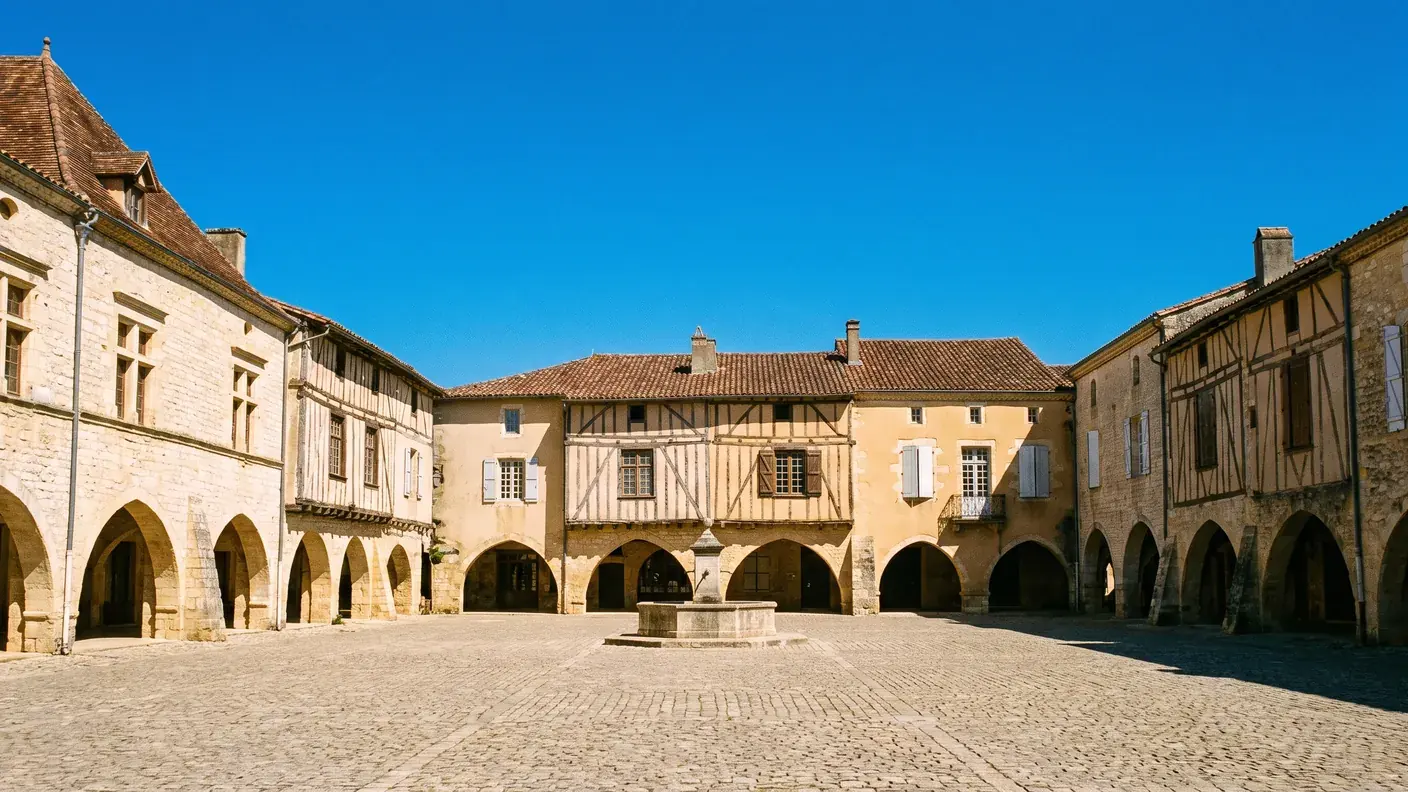
On the Way to the Land of Duras
Direct trip from Bordeaux (~1 hour 15 minutes) to Duras and the Côtes de Duras, with stops along the way at your discretion—the château, a vineyard estate, Eymet. A written fixed-price quote, with no unexpected meter charges, and a stress-free journey back after the wine tasting.