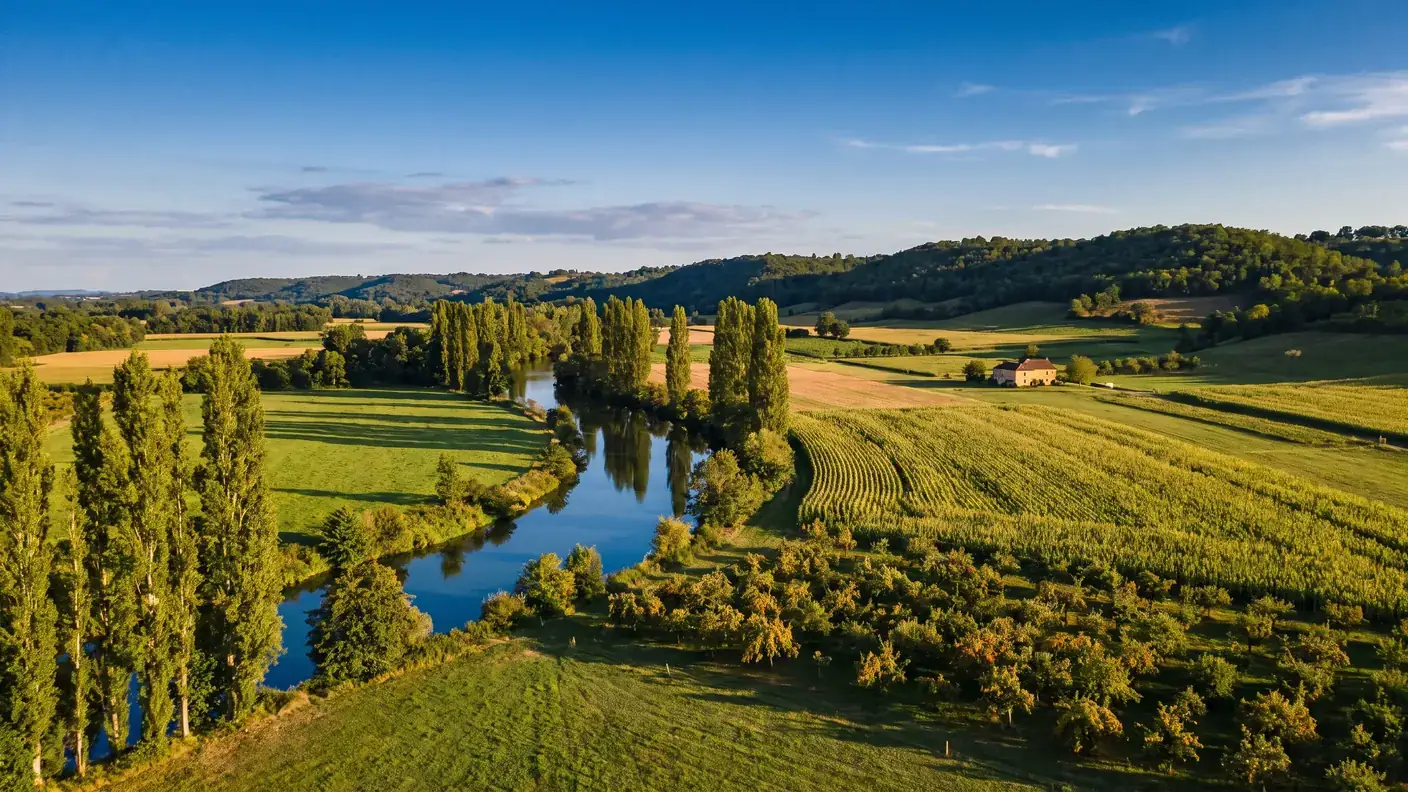
Birac-sur-Trec, its river and ruined castle
A Val de Garonne village on the Trec River, just outside Marmande: the romantic ruins of Birac Castle (a designated historic monument), two country churches, and lush farmland, about 1 hour and 27 minutes from Bordeaux.
Birac-sur-Trec at a Glance
Birac-sur-Trec is a village in Lot-et-Garonne, in the Val de Garonne, about ten kilometers southeast of Marmande. As its name suggests, it is traversed by a small river, the Trec, to which it owes its nickname—a distinction added in the 20th century to set it apart from its namesakes in Charente and Gironde. Here you’ll find the romantic ruins of Birac Castle (listed as a historic monument), two modest country churches, a protected dovecote, and farmland typical of the Garonne Valley. All of this is located about 1 hour and 27 minutes from Bordeaux, in a landscape of fields, poplar trees, and farms built of pale stone, far from the beaten tourist paths.
Here are the key details to know before you go. Driving distances are calculated door-to-door; rates are based on a chauffeur service from Bordeaux, with a fixed price provided in advance.
| Landmark | Details |
|---|---|
| Department | Lot-et-Garonne (47), Nouvelle-Aquitaine |
| Status | Rural village · Marmande District · Val de Garonne Metropolitan Area |
| Population | approximately 812 residents (INSEE 2023) · the residents of Birac |
| Area | ≈ 14.34 km² · on the Trec River |
| Don't miss it | The ruins of Birac Castle (a listed historic monument), Saint-Georges Church, and the countryside of the Val de Garonne |
| Distance from Bordeaux | about 102 km · about 1 hour and 27 minutes by car |
| Nearest train station | Marmande (~10 km), Bordeaux–Toulouse TER/Intercités line |
Let me be honest right off the bat, because Birac-sur-Trec is a village where a lot of inaccurate information is bandied about. Birac Castle is not an intact castle that you can visit: it is a ruin, listed (but not classified) as a historic monument, and only partially so. The two churches are not protected as historic monuments—they are simply listed in the heritage inventory. And the origin of the name “Birac,” often explained with certainty, is in fact not documented for this municipality. This guide distinguishes between what has been verified and what is merely repeated.
Here we cover everything you need to know before you visit: where the village is located and what makes it unique, the origin of its distinctive name, the history of its ruined castle, its two country churches, its dovecote, and its local region, the Trec River and the Garonne Valley, a bit of feudal history, notable sites in the surrounding area, and the easiest way to get to Birac-sur-Trec from Bordeaux.
Where is Birac-sur-Trec located?
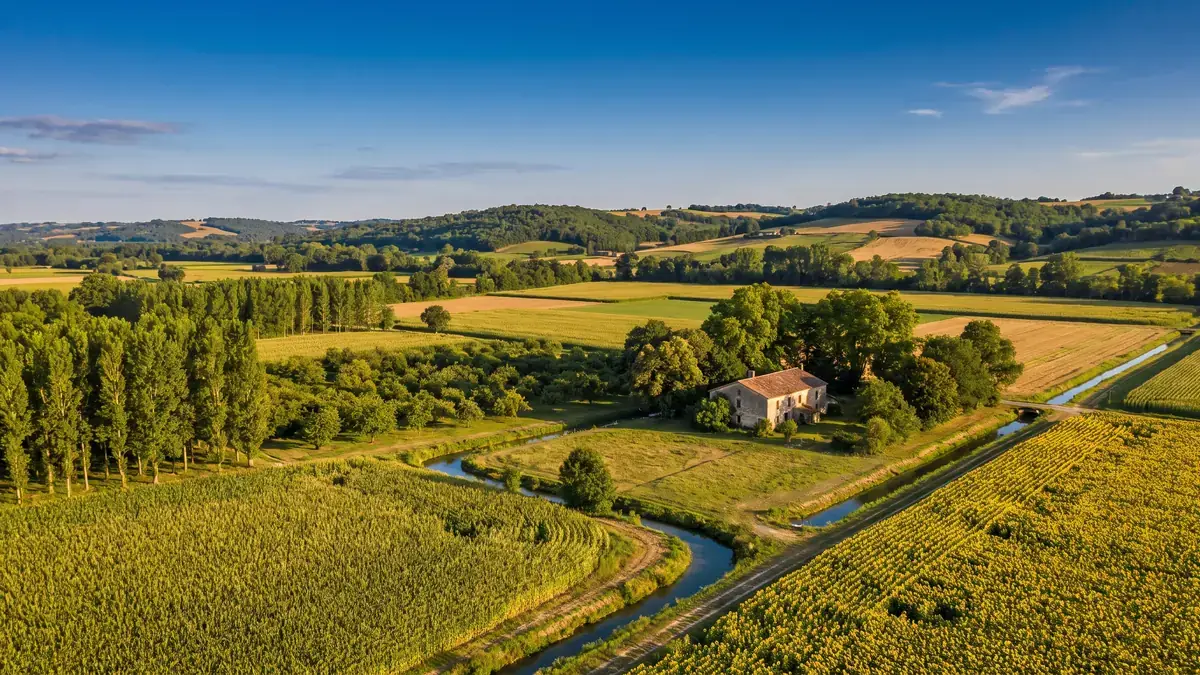
Birac-sur-Trec is a commune in Lot-et-Garonne (47), in Nouvelle-Aquitaine, in southwestern France, about 9 to 10 kilometers southeast of Marmande. It is part of the Marmande district and the Marmande-2 canton, and belongs to the Val de Garonne urban community. Its coordinates are 44.49° N and 0.27° E; its INSEE code is 47028, and its ZIP code is 47200—the same as Marmande’s, which it shares with several small municipalities in the metropolitan area. The municipality covers approximately 14.34 km² of plains and gentle hills, at elevations ranging from 28 to 129 meters, in the fertile Garonne River valley.
On the Trec River
What makes Birac-sur-Trec unique is its name: It's a riverside village.. The Trec, a small stream in the Garonne River basin, flows through the town and gave it its nickname. Source: Sandre, hydrographic database accessed in 2026. It’s quite a contrast for anyone familiar with its Charente namesake, Birac (in Petite Champagne), which is, in fact, a “village without a river” situated on a dry plateau: here, water is everywhere, in the Trec and its tributaries. The town is indeed fed by the Trec as well as by its tributaries, Manet and La Canaule (The latter is 24 km long—it’s not just a simple stream.) The landscape consists of a green, fertile, irrigated agricultural plain, dotted with groves and rows of poplars, very different from the neighboring limestone plateaus or vineyards. This abundance of water is by no means insignificant: it explains the town’s agricultural character, the fertility of its alluvial soils, and the widespread presence of ditches, wet meadows, and poplar groves. In southwestern France, where people often contrast dry hillsides (such as those in the Charente region’s Petite Champagne) with lush valleys, Birac-sur-Trec clearly belongs to the latter category: it is a village nestled in a valley, shaped by the flow of water, where agriculture has always been able to rely on rich, well-watered soils.
A village with a population of nearly 812
With 812 residents (INSEE, 2023 reference population published in 2026), Birac-sur-Trec is a rural village with a modest population density of about 57 inhabitants per km². Its demographic history tells a brief story: the population peaked at 871 residents in 2016, before dropping to 843 residents in 2017 and then to 812 in 2023. As a result, the current figure is exactly the same as in 2011: All the growth achieved in the first half of the 2010s has been wiped out. Over the long term, however, the village’s population has grown from 672 residents in 1999 to 812 today, a growth driven by the appeal of the countryside near Marmande and a peaceful lifestyle. The residents are known as the Biracais. It is a scattered settlement, with no real central landmark, where farms and hamlets are dotted along the country roads.
Where does the name “Birac-sur-Trec” come from?
The village's name is read in two parts: "Birac," which is very old, and "sur-Trec," which was added in more recent times. This is a textbook example of place-name etymology in southwestern France—provided you don't make things up, since reliable sources remain cautious about the exact origin of “Birac.”
Birac: A Name of Uncertain Origin
We often read that “Birac” is said to come from a Gallo-Roman estate, formed from a possessive noun followed by the suffix -acum (“the estate of such-and-such”), as is common in so many villages in the Southwest in -ac. It's plausible based on regional analogies, but let’s be honest: no primary source specifically identifies this owner’s name for Birac-sur-Trec, and there is no “toponymy” entry for it. We will therefore present this explanation as a plausible hypothesis, not as an established fact. One clue, however, is very real: the The Occitan form of the name is “Virac”, with a V—a trace of the betaism Gascon—this confusion between the B and V sounds, so characteristic of the local dialect, which links Birac to the broad family of Occitan place names in -ac.
"sur-Trec": a 20th-century refinement
The supplement “ sur-Trec " is easier to explain: it refers to the the Trec River which runs through the town. It was added to the official name in the early 20th century — around 1920 According to the databases, this is a date that should, however, be cited with caution, as there is no easily verifiable decree (we know only from a reliable source that the name “Birac” alone predates 1943). The objective was crystal clear: distinguish this Birac from its two namesakes, Birac in Charente (the Cognac region) and Birac in Gironde. Naming a village after its river was the simplest way to avoid confusion—a common practice in France, where there are many towns designated as “sur-Garonne,” “sur-Lot,” or “sur-Baïse.” Thus, the very name of the village already conveys the essentials: an agricultural village that grew out of an ancient estate, on the banks of a small river in the Val de Garonne. This story of the village’s name illustrates a classic pitfall of toponymy: the temptation to “explain” the origin of a place at all costs, even if it means embellishing the story. For Birac-sur-Trec, the verifiable and the probable coexist: the connection to the river (“sur-Trec”) is certain, while the relationship to Gascon place names in -ac is well-established, but the exact Gallo-Roman place name remains a matter of conjecture. It is by maintaining this caution that we best do justice to a village’s history—without inventing a past for it that is more prestigious than it actually is.
Birac Castle, a ruined fortress
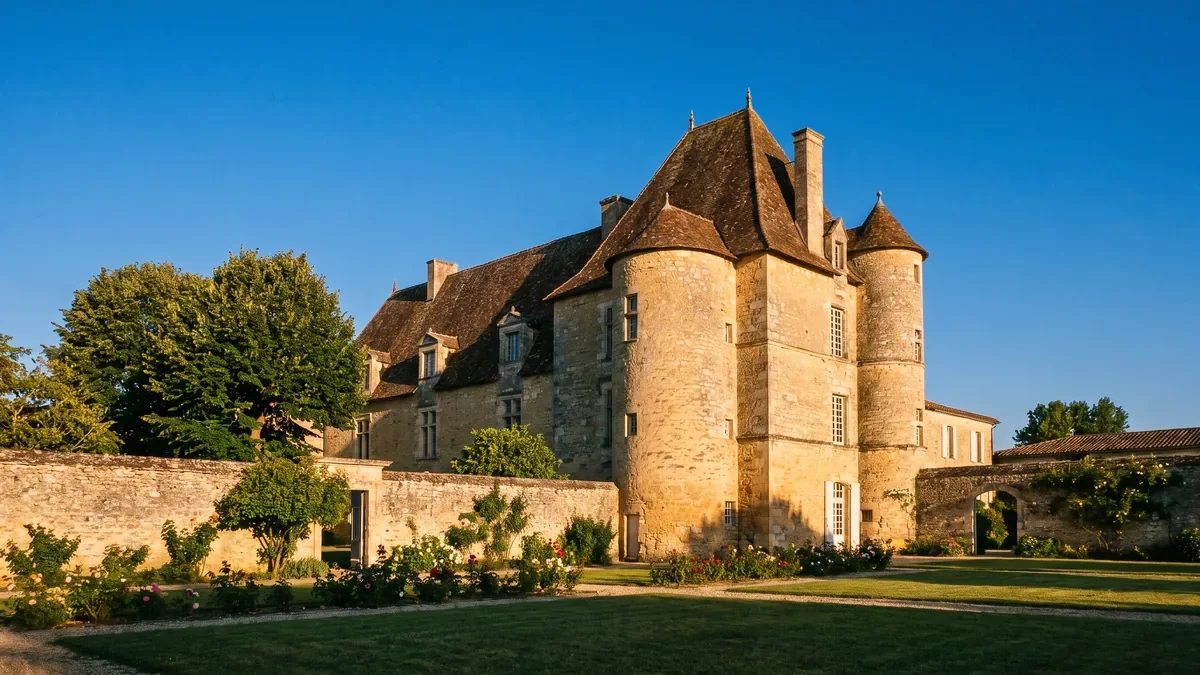
The only protected monument in the town is Birac Castle—and it's in ruins. Don't expect a furnished castle open to visitors: these are the ruins of a seigneurial fortress, listed as a historic monument for its archaeological value. That is precisely what gives it its charm and appeal—a slice of history frozen in stone, in the middle of the countryside. We should also note, for visitors, that this is a private property: The site is not open to the public, and it’s best to check with local authorities to find out how close you can get to it. People come here less to “see a castle” than to read, in a few sections of wall, the long history of a seigneury in Guyenne.
| Birac Castle | Details |
|---|---|
| Type | Quadrangular fortress (curtains, bastion, towers, entrance gatehouse) |
| Origins | A site associated with La Mothe, possibly first mentioned as early as 1259 |
| Current Building | Rebuilt in the first half of the 16th century by the de Birac family |
| Noble Lineages | Birac, then Pins, Lard, and Narbonne (properties seized in 1715) |
| Protection | Listed as a historic monument on December 9, 1993 · Mérimée ref. PA00125249 (ruins + dovecote) |
| Status | Ruins (former barn and hayloft) · private property |
A 16th-century fortress, possibly founded in 1259
Contrary to what is sometimes reported (“15th–17th-century castle”), the protected building was rebuilt in the first half of the 16th century by the Birac family. Its origins, however, date back further: a castle, linked to the nearby site of La Mothe (the “Château Deperche”), is possibly first mentioned as early as 1259, which was then part of the Pils family's estates. The Renaissance fortress had a floor plan quadrangular, with curtain walls, a bastion, towers, and an entrance pavilion—the archetype of a small stronghold in Guyenne, halfway between a medieval castle and a fortified residence. Over the centuries, the lordship passed through several hands: the Birac, then the Pins, the Bacon and finally the Narbonne, to whom the property was seized in 1715. This succession of families is typical of the minor rural nobility of the Southwest: through marriages, inheritances, and reversals of fortune, a single castle would change its name and coat of arms, without ever attaining the status of the great castles of the valley. Birac remained a modest seigneury, on the scale of a farming village—which also explains why its castle, once in ruins, was never rebuilt or converted into a country home: there was neither the wealth nor the incentive to do so.
Designated a historic monument in 1993
The castle is registered — and not “listed”; the distinction matters — as a historic monument by an order dated December 9, 1993 (POP/Mérimée, entry PA00125249, updated in 2026). Furthermore, the protection is partial and deliberately archaeological: It covers “the castle ruins in their entirety” as well as the subsoil of the affected parcels, not a restored building. What is being protected here is a site, a footprint, a historical record—not a stage set. This is an interesting approach to heritage preservation, one that recognizes the value of a ruin as it stands, with its crumbling stones and its history visible right on the ground.
From the dungeon to the stable
There is something poignant, almost melancholic, about the fate of this castle. After centuries of aristocratic life, the ruined fortress has undergone a most humble transformation: its remains have been converted into a cowshed and a hayloft (hay barn). It was in this condition—a former fortress converted into a farm building—that the site was designated a historic monument in 1993. It offers a striking snapshot of French rural history: the power structures of the past converted into shelter for livestock, before finally being recognized as cultural heritage. For visitors, it is a lesson in humility and the passage of time, far more moving than an over-restored castle.
That is also what makes the 1993 designation so interesting: by protecting the ruins “in their entirety” rather than a reconstructed monument, the government chose to recognize the value of an authentic historical site. The aim here is not to pretend or to rebuild a movie set: we are preserving what remains, with its fallen stones and trees that have reclaimed their place. For those who love places steeped in history and romantic ruins—the kind painted by 19th-century artists—Birac Castle possesses that genuine, melancholic charm that overly polished monuments no longer have.
Two country churches: Saint-Georges and Saint-Gratien
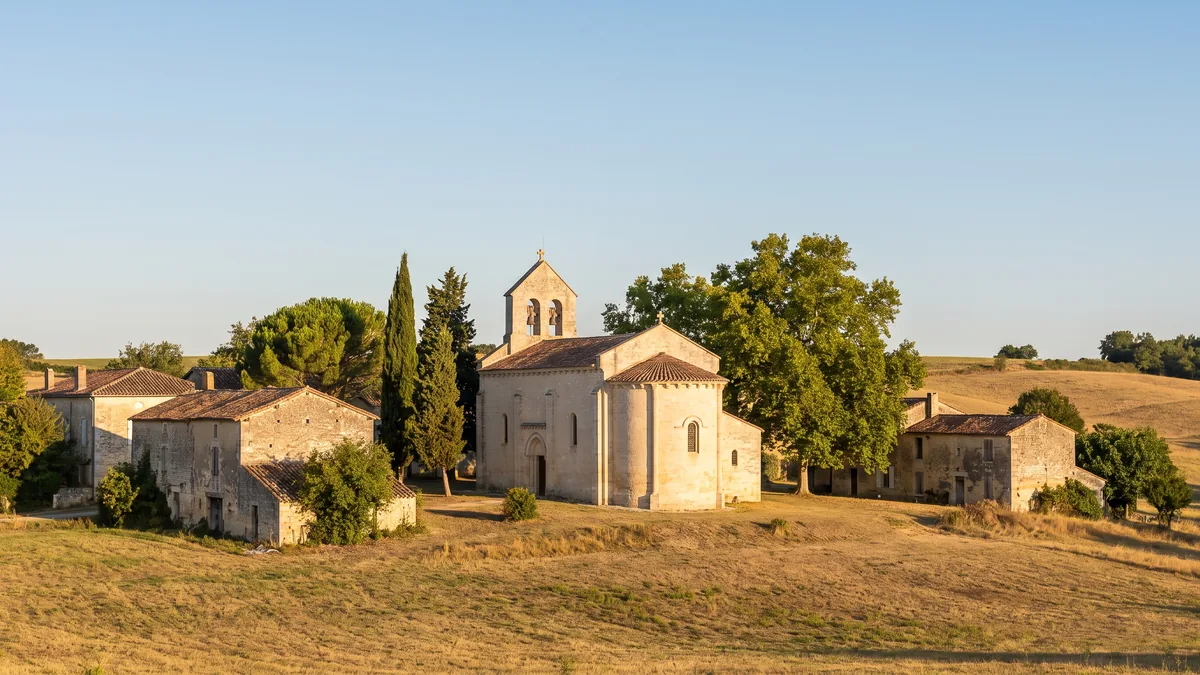
Birac-sur-Trec has two churches, a legacy of its division into several hamlets: Saint-Georges in the village center and Saint-Gratien in the hamlet of Rebec. Let's clarify this right away, since it's a common source of confusion: Neither of them is classified or designated as a historic monument. They are listed only in the General Inventory of Cultural Heritage, a documentary record that does not constitute protection. This in no way diminishes their significance, but it sets the record straight regarding a fact that is often misrepresented online.
Saint-Georges, rebuilt in the 19th century
TheSt. George's Church, in the village, has medieval origins: the parish is mentioned in a Agen Cartulary (the century of which varies depending on the source—the 12th or 13th) and its origins may date back to the Middle Ages. But the building we see today is largely a 19th-century reconstruction: The vaults were restored by the architect Gustave Alaux, between 1854 and 1867, the tall bell tower built between 1868 and 1891, and the stained-glass windows installed between 1876 and 1881. In other words, beneath its seemingly ancient exterior lies a largely Neo-Medieval structure, typical of the 19th-century countryside, where parish churches were rebuilt. It is a fine example of religious art from the Second Empire and the Third Republic in a rural setting.
Saint-Gratien, in the hamlet of Rebec
The second church, Saint-Gratien, is located in the hamlet of Rebec, on the outskirts of town. Its origins are even older — dating back to the 11th century —, with renovations in the 15th and 16th centuries and again in the third quarter of the 17th century. Modest and rural, it serves as a reminder that before modern municipal consolidations, each hamlet functioned much like a small, self-sufficient community centered around its own chapel. These two churches, while not spectacular, together with the castle and the farms, form a cohesive heritage landscape—that of an agricultural village in Guyenne that has endured through the centuries without ever becoming a town.
Dovecote, Bourdieu, and the Agricultural Countryside
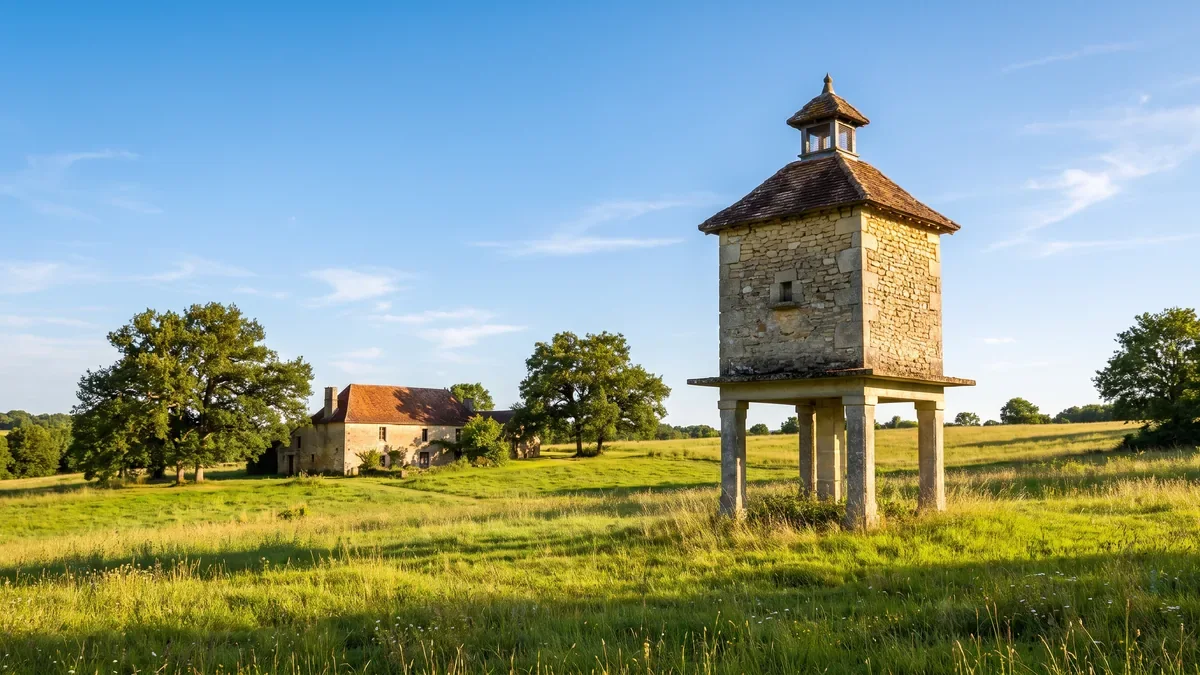
Beyond the castle and churches, Birac-sur-Trec reveals its character through its farms, hamlets, and an iconic feature of the Southwest: the dovecote. It is a humble yet evocative heritage that tells the story of rural life in days gone by better than any monument.
The dovecote, guardian of the farmstead
Noteworthy fact: the dovecote The former castle farmstead is protected in the same decree than the ruins, on December 9, 1993. It was, in fact, part of the seigneurial estate: the local term "Bourdieu" — which is located in the hamlet of Château — refers specifically to a farmstead, a working farm in Gascony. A single heritage preservation measure thus protects an entire complex: the ruined fortress and the dovecote on its farm. Dovecotes, so numerous in the Southwest, were not mere curiosities: pigeon droppings were a valuable fertilizer, and the right to own a dovecote was long a seigneurial privilege. The one at Birac, standing on stone stilts topped by a lantern tower, is a fine example of this rural architecture. The fact that this dovecote was protected at the same time as the castle ruins speaks volumes about how heritage is viewed today: it is no longer just the prestige of a keep that is being preserved, but an entire seigneurial and agricultural complex—the fortress, its farmstead, and its dovecote—because together they tell the story of a way of life that has vanished. The dovecote, a humble outbuilding of a farm, is thus elevated to the status of a historical witness, on par with the castle to which it belonged.
A terroir in the Val de Garonne
Birac-sur-Trec is, above all, a agricultural community: In 2018, more than 81% of its territory was used for agricultural land (nearly 72% arable land, with the remainder consisting of permanent crops and mixed-use areas). This is the classic picture of the Val de Garonne, one of the breadbaskets of the Southwest: while not specifically naming the town’s crops, the valley is renowned for its field crops (corn, grains), its fruit orchards, its early-season produce, and, further south, its vineyards. Nearby Marmande has given its name to a famous tomato variety. This bountiful region, irrigated by the Garonne River and its tributaries such as the Trec, shapes the landscape of Birac: a checkerboard of fields and meadows, dotted with farms built of pale stone, barns, and dovecotes, all bathed in the soft light of the plains.
Even today, the village’s economic life remains shaped by its rural character: a handful of businesses and farms, and a majority of the working population commuting to jobs elsewhere, particularly in the Marmande employment area. Birac-sur-Trec has thus become, like many villages in the Val de Garonne, a community that is both residential and agricultural—people live there peacefully, surrounded by fields, while commuting to the nearby subprefecture for work, shopping, and services. This dual nature—rural and suburban—is the defining characteristic of rural Lot-et-Garonne today.
The Trec River and the Garonne Valley
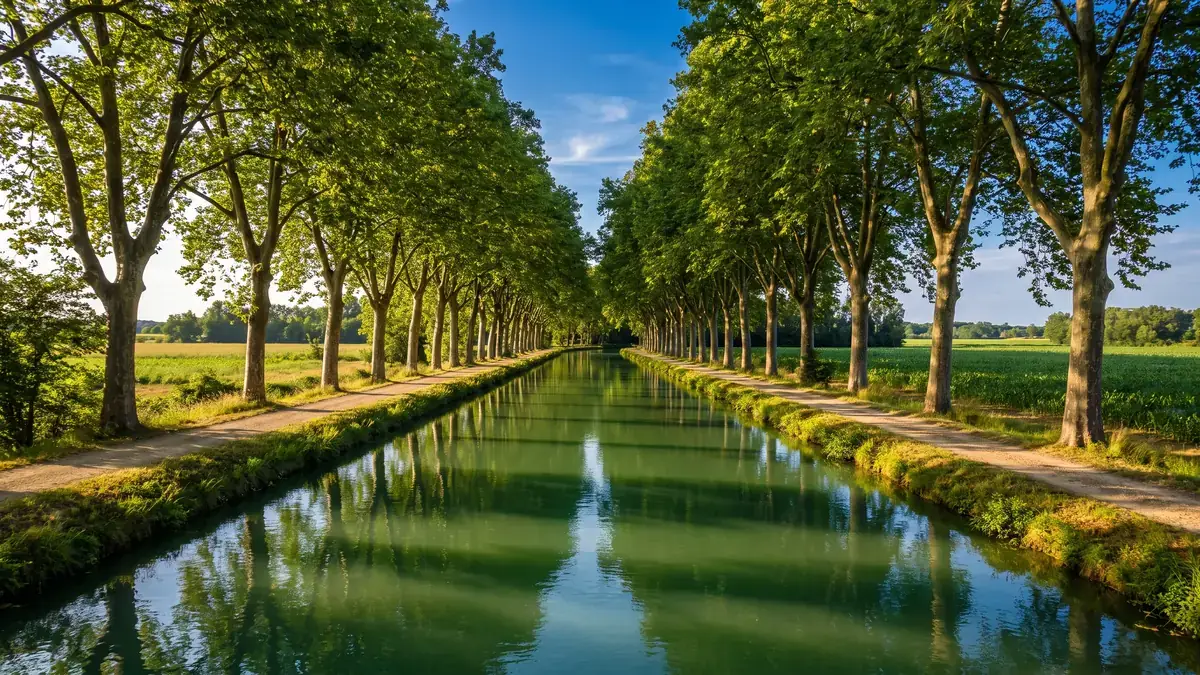
The Trec isn't just part of the village's name: it's a real river that shapes the landscape and connects Birac to the Garonne. Understanding the water here means understanding the place.
The Trec, from Montignac-Toupinerie to Marmande
The Trec is a river in the Garonne basin, approximately 25.6 km, which has its source at Montignac-Toupinerie and flows into the Garonne at right bank, in Marmande. It flows through Birac-sur-Trec, swollen by its local tributaries, Manet and La Canaule. It is a modest but year-round stream, typical of the lowland rivers that drain the Val de Garonne: they lack the power of the great river, but they irrigate the crops, bring life to the valley floors, and lend the landscape its freshness. The Trec is, in short, the village’s humble guardian—discreet enough to be easily forgotten, yet present enough to have given the village its name.
| Water in Birac-sur-Trec | Details |
|---|---|
| Trec | ≈ 25.6 km · source in Montignac-Toupinerie · flows into the Garonne at Marmande |
| Manet | A tributary of the Trec, in the municipality (≈ 10 km) |
| La Canaule | A tributary of the Trec (≈ 24 km)—not just a simple stream |
| The Garonne River & the Lateral Canal | Nearby, toward Marmande — outside the municipal boundaries |
On the banks of the Garonne
A few kilometers away, near Marmande, flows the Garonne the great river of the Southwest itself, as well as the Garonne Side Canal, along with its bike path. Be careful, however, not to overestimate the proximity: neither the Garonne nor the canal runs through the town of Birac-sur-Trec; the nearest river stops (Fourques, Pont des Sables) are on the Marmande side, a few kilometers away. But taken as a whole, the area forms a landscape of water and plains, where one can easily move from a small river to a major river, and where the canal, lined with century-old plane trees, offers superb walking and biking routes throughout the Val de Garonne. This is one of the region’s greatest assets: a gentle, flat landscape, perfect for walking and biking, with no hills in sight.
A Bit of History: Feudal Lordship and the Hundred Years' War
The history of Birac-sur-Trec is that of a small seigneury in the agricultural region of Guyenne, which, like the rest of the region, was torn between the French crown and the King of England. No great feats of arms or famous figures, but the subtle traces of a long rural history, of which the ruined castle stands as the main testament.
The Lordship of Birac
A Lordship of Birac is mentioned as early as 13th century — As we have seen, the earliest known reference to the castle dates back to 1259. It is associated with theAgenais, this region along the middle Garonne River, which was one of the major focal points of medieval rivalries. As everywhere else in the region, life revolved around the lord, his castle, his tenant farms (the famous “bourdieux”), and his parishes. The village has never been a town: century after century, it has remained a rural community of farmers and sharecroppers on the fertile lands of the Trec. The parish of Saint-Georges, however, has even older documented origins: it appears in a cartulary from Agen as early as the Middle Ages, proof that the area was inhabited and organized long before the Renaissance castle was built. One can imagine a modest and repetitive life, marked by the agricultural seasons, dues paid to the lord, and church services—the everyday fabric of thousands of French villages, of which Birac-sur-Trec is a faithful example.
Between English and French
Like the rest of Guyenne, the Agen region was at the heart of the Hundred Years' War (1337–1453): The region shifted repeatedly between English and French rule, depending on the course of military campaigns and treaties. The seigneury of Birac experienced these same vicissitudes, changing hands “between the English and the French” depending on the era. It was not until the end of the war, with the French reconquest of Guyenne (1453), that the region regained lasting stability. This turbulent history explains the abundance of castles and fortified houses in Lot-et-Garonne: in a contested borderland, each lord ensured he could defend himself—hence, in Birac, this quadrangular fortress rebuilt in the 16th century, once peace had returned but caution was still the order of the day. One must imagine the Agenais region of that era as a fiercely contested borderland: fortified towns, new bastides, watchtowers, and fortified houses multiplied there, forming a dense defensive network. Many of these structures have disappeared or blended into the landscape; the ruins of Birac are one of these quiet reminders of a time when, on the banks of the Trec as everywhere in Guyenne, people built to last and to protect themselves. It is this legacy that the 1993 designation as a historic monument sought to preserve.
What is there to see around Birac-sur-Trec?
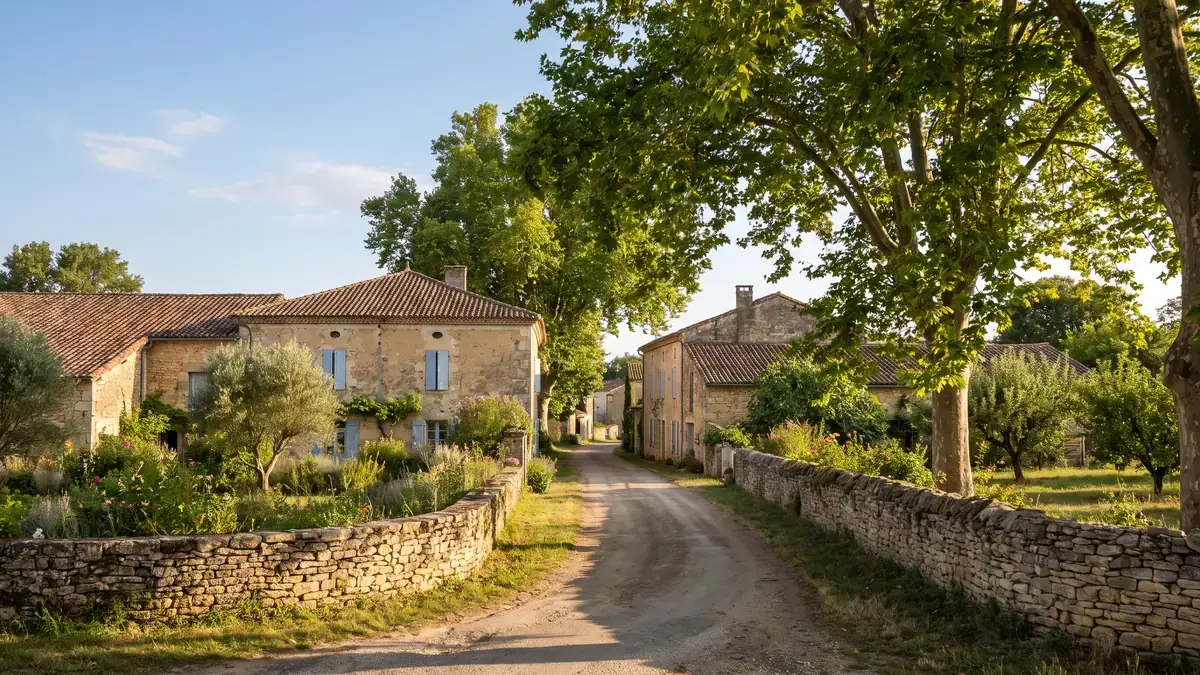
Birac-sur-Trec is a convenient starting point for exploring the Val de Garonne and the middle Garonne Valley. Distances are short, the countryside is inviting, and it’s easy to travel from one town to a vineyard, or from one country town to a river confluence.
Marmande and the Garonne Valley
Marmande, about ten kilometers away, is the subprefecture and capital of the Val de Garonne: a bastide founded in the 13th century, with its Notre-Dame Church, its cloister, and its market—not to mention its famous tomato, which has become a true institution. It is the natural hub of local life, with its train station, shops, and services. All around it lies the Val de Garonne region, a patchwork of fields and orchards where fruit and early-season produce are grown, crisscrossed by the Garonne side canal—a cyclist’s paradise.
The Val de Garonne is, in fact, one of the most pleasant destinations in southwestern France for slow tourism. The Garonne Side Canal, along with its bike route (the major “Canal des 2 Mers” cycling route, which connects the Atlantic to the Mediterranean), crosses the region near Marmande: shaded by plane trees, flat, and safe, it’s ideal for walking or biking along the water’s edge for dozens of kilometers. In addition, there are the farmers' markets, local cuisine (fruit, early-season produce, foie gras, wines from the nearby regions of Buzet and Duras), and an authentic countryside atmosphere, far from the crowds. From a village like Birac-sur-Trec, you can easily explore—at your own pace—the small towns, farms, and canal banks—that’s the charm of the still-unspoiled rural Southwest.
Tonneins, Agen, and the valley
Traveling up the Garonne River, Tonneins (about 14 km away) is worth a visit for its riverfront, its history of tobacco manufacturing, and its Protestant community. Further upstream, Agen (about 60 kilometers away), the prefecture, known for its 23-arch canal bridge, its old town, and its museum housing five Goyas—not to mention the famous Agen prune. To the south, the vineyards of Buzet (about 30 kilometers away) and the spa town of Casteljaloux, on the edge of the Landes de Gascogne, round out the picture. This entire region along the middle Garonne River offers a microcosm of the riverine, agricultural, and culinary delights of southwestern France, which visitors can savor as they travel along the river and country roads.
| Around Birac-sur-Trec | Distance | Interest |
|---|---|---|
| Marmande | ~10 km | Subprefecture, fortified town, tomato, train station |
| Tonneins | ~14 km | Quays of the Garonne, tobacco factory |
| Buzet-sur-Baïse | ~30 km (approx.) | AOC Buzet Vineyard |
| Agen | ~62 km | Prefecture, canal bridge, prune, museum |
When is the best time to visit Birac-sur-Trec?
The Val de Garonne countryside can be visited year-round, but spring and early fall are the most beautiful seasons. This is the time of year when the plain is ablaze with color, the light is soft, and walks along the Trec, the Garonne, and the canal are at their most pleasant.
The spring covers the orchards with flowers and offers a lush green countryside, perfect for strolling on foot or by bike. Thesummer, warm and sunny, is the season of markets (including the one in Marmande), fruits, and early produce, but also of the intense heat of the plains. Thefall, with its harvests and coppery hues, is undoubtedly the most photogenic time of year in the Val de Garonne. Thewinter, which is quieter and sometimes foggy in the valley bottoms, allows you to explore the castle ruins and country churches without the crowds. Since Birac-sur-Trec is not a commercial tourist destination, it’s best to visit at any time of year with a spirit of quiet exploration, combining your visit with a trip to Marmande and the surrounding area.
Getting to Birac-sur-Trec from Bordeaux
Birac-sur-Trec is located about 102 km from Bordeaux, which is about a 1-hour, 27-minute drive via the A62 highway. The village has not no train station: the closest one is the one in Marmande (~10 km), served by the Nouvelle-Aquitaine TER and Intercités trains on the Bordeaux–Agen–Toulouse line. From Marmande, you must then travel to the village by car, as Birac-sur-Trec is not served by regular public transportation.
Train or chauffeur service?
The train takes you to Marmande, but you remain tied to timetables, possible connections and, above all, the need to arrange transport for the final ten kilometers to Birac-sur-Trec. When you are travelling with others, carrying luggage or planning to explore the Val de Garonne (Marmande, Tonneins, the Buzet vineyards, the cycle path along the canal), an executive car service has a clear advantage: a direct, door-to-door journey with no transfers and the freedom to stop along the way. You board in Bordeaux and alight exactly where you need to, whether at a farm, a bed-and-breakfast or the foot of the castle ruins. This route is offered at a fixed price provided in advance: from 180 € one way in Economy class, for 1 to 3 passengers, with a professional chauffeur.
This is an ideal solution for a family event in the Val de Garonne, a countryside getaway, a tour of a farm, or a cultural excursion between Marmande and the valley. The price, set in advance, remains fixed regardless of traffic or stops—a real advantage for staying within budget, and the convenience of a direct trip in a town with limited public transportation.
| Route | Distance | Duration | Landmark |
|---|---|---|---|
| Bordeaux → Birac-sur-Trec | ~102 km | ~1 hr 27 min | from 180 € in Eco |
| Birac-sur-Trec → Marmande | ~10 km | ~12 min | train station, subprefecture |
| Birac-sur-Trec → Tonneins | ~14 km | ~18 min | the Garonne riverbanks |
| Birac-sur-Trec → Agen | ~62 km | ~1 hour | prefecture, canal bridge |
Whether you come for the romantic ruins of Birac Castle, to stroll through the countryside of the Val de Garonne, or to explore Marmande, Tonneins, and the Garonne Valley, Birac-sur-Trec is a delight for lovers of the authentic Southwest, far from the crowds and close to the land and water.
Whether for a heritage and countryside day, a family event or a tour of the Val de Garonne, booking a private chauffeur ensures a comfortable and punctual journey — book a chauffeur from Bordeaux to Birac-sur-Trec or explore all our destinations.
Frequently Asked Questions
Where is Birac-sur-Trec located?
Birac-sur-Trec is a village in Lot-et-Garonne (47), in Nouvelle-Aquitaine, in the Val de Garonne, about 9 to 10 km southeast of Marmande. It is part of the Marmande arrondissement, the Marmande-2 canton, and the Val de Garonne urban community. Crossed by the Trec River, it has a population of about 812 and is located about a 1-hour-27-minute drive southeast of Bordeaux (~102 km). Not to be confused with Birac in Charente or Birac in Gironde.
What is the distance between Bordeaux and Birac-sur-Trec?
About 102 km by road (A62 motorway towards Toulouse, exit towards Marmande), or about 1 hour and 27 minutes. With a chauffeured transfer from Bordeaux, the fare is fixed and provided in advance, starting at 180 € in Economy class for 1 to 3 passengers, door-to-door.
Why is the village called “sur-Trec”?
Because it is traversed by the Trec River, a watercourse in the Garonne basin. The suffix “sur-Trec” was added to the official name in the early 20th century (around 1920, though this date should be treated with caution) to distinguish this village from its two namesakes, Birac in Charente and Birac in Gironde. Naming a municipality after its river was the simplest way to avoid confusion.
Can we visit Birac Castle?
Birac Castle is now in ruins: visitors do not tour a furnished castle, but rather the remains of a 16th-century fortress (whose origins may date back to 1259). These ruins have been listed as historic monuments since December 9, 1993, along with the dovecote of its former farmstead. Since the site is privately owned, visitors should check with local authorities (town hall, Val de Garonne tourist office) for access information. Visitors come to Birac not so much to “tour a castle” as to explore an authentic ruin and, through a few sections of wall and the nearby dovecote, discover the history of a small seigneury in Guyenne—a treat for the curious rather than a traditional guided tour.
Is Birac Castle designated as a historic monument?
No, it is listed, which provides a different level of protection than classification. The listing dates from December 9, 1993 (Mérimée reference PA00125249) and is partial: it covers “the castle ruins in their entirety” as well as the basement and the dovecote of the former farmstead—a designation for archaeological protection, not a restored building.
Are the churches in Birac-sur-Trec protected?
No. Neither the Church of Saint-Georges (in the village) nor the Church of Saint-Gratien (in the hamlet of Rebec) are classified or listed as historic monuments; they are merely included in the General Inventory of Cultural Heritage, a documentary registry. Saint-Georges, of medieval origin, was extensively rebuilt in the 19th century (vaults by architect Gustave Alaux, 1854–1867); Saint-Gratien is older (dating back to around the 11th century).
What is a “bourdieu”?
In the Gascon Southwest, a “bourdieu” refers to a tenant farm—that is, a working farm, often attached to a seigneurial estate. In Birac-sur-Trec, the area known as “du château” bears this name, and the dovecote of its former farmstead is protected just as the ruins are. The word serves as a reminder of the village’s agricultural past and the connection between the castle and its lands.
What is the Trec River?
The Trec is a river in the Garonne basin, approximately 25.6 km long. It originates in Montignac-Toupinerie and flows into the Garonne on the right bank at Marmande. It flows through Birac-sur-Trec—hence the village’s name—swollen by its local tributaries, the Manet and the Canaule. It is a modest but perennial lowland stream, characteristic of the Garonne Valley.
How many people live in Birac-sur-Trec?
According to the 2023 census, the village has a population of approximately 812, making it a rural village. The population peaked at 871 in 2016 before declining, so the 2023 figure is the same as that of 2011. Over the long term, the village’s population has grown from 672 in 1999 to 812 today. The residents are known as Biracais.
Is there a train station in Birac-sur-Trec?
No, Birac-sur-Trec does not have a railway station. The nearest is in Marmande, about ten kilometers away, served by Nouvelle-Aquitaine TER and Intercités trains on the Bordeaux–Agen–Toulouse line. Since the village has no regular public transport, a chauffeur service remains the most flexible option for travelling from Bordeaux and exploring the Val de Garonne.
What is there to see around Birac-sur-Trec?
Marmande, the subprefecture, with its bastide and famous tomatoes (~10 km); Tonneins and its Garonne riverfront (~14 km); the Buzet AOC vineyards (about 30 kilometers away); Agen, the prefecture, with its canal bridge and prunes (~62 km); as well as the Garonne side canal and its bike path. We’re in the heart of the Val de Garonne, nestled among towns, vineyards, and the countryside.
When is the best time to visit Birac-sur-Trec?
Spring and early fall are ideal: the countryside of the Val de Garonne is lush and green or copper-hued, the light is soft, and walks along the Trec, the Garonne, and the canal are most pleasant. Summer is warm and sunny, the season of markets and fruit; winter, quieter, allows you to explore the castle ruins and country churches without the crowds.
Can I book a private chauffeur from Bordeaux to Birac-sur-Trec?
Yes. We offer the route from Bordeaux to Birac-sur-Trec (~102 km, about 1 hour 27 minutes via the A62) at a fixed price, starting at 180 € one-way in Economy class for 1 to 3 passengers, with a professional driver. The trip is direct, door-to-door, with no transfers, and you can make stops along the way as desired (Marmande, Tonneins). It’s the ideal solution for reaching a village with limited public transportation and then exploring the Val de Garonne.
Further Reading
- The town near the Garonne River: see the Guide to Tonneins (the docks, the tobacco factory, the Protestant quarter)
- The Lot-et-Garonne Prefecture: see the Guide to Agen (the canal bridge, the old town, the prune)
- The Lot Country House on Agen Prunes: see the Guide to Villeneuve-sur-Lot (Pont-Vieux, fortified town)
- Plan your trip: Book a private driver from Bordeaux to Birac-sur-Trec or explore all our destinations
Sources and References
- Wikipedia — Birac-sur-Trec — geography, demography, hydrography, cultural heritage, land use
- POP/Mérimée Database — Château de Birac — Partially listed as a historic monument (December 9, 1993), dated to the 16th century, dovecote, ancestral lines, ruins
- Wikipedia — Saint-Georges Church in Birac-sur-Trec — medieval origin, 19th-century reconstruction (Gustave Alaux), inventory
- Wikipedia — the Trec (river) — river (25.6 km), source at Montignac-Toupinerie, flows into the sea at Marmande
- INSEE — Municipality of Birac-sur-Trec (47028) — Population in 2023 (~812 residents), area, municipal data
Article updated in July 2026.
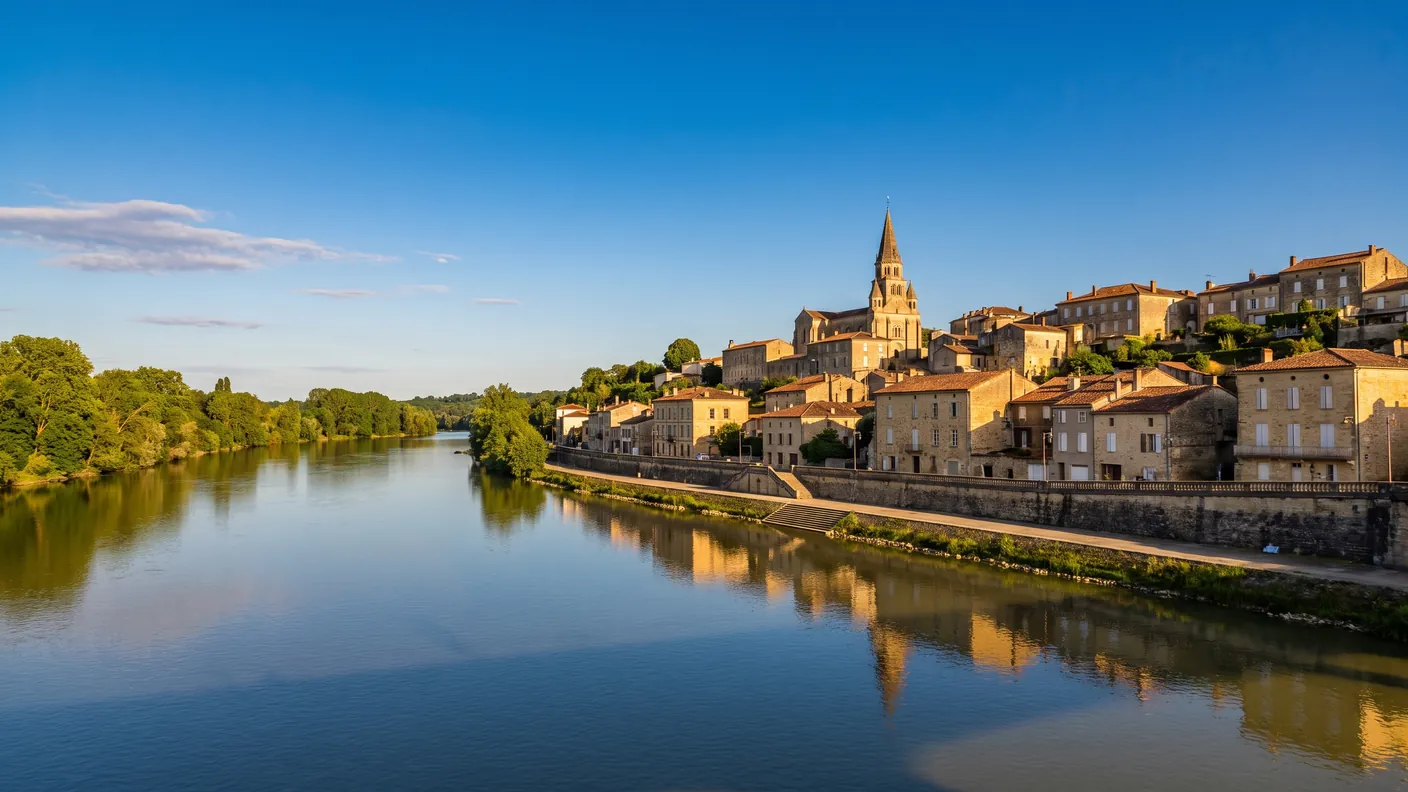
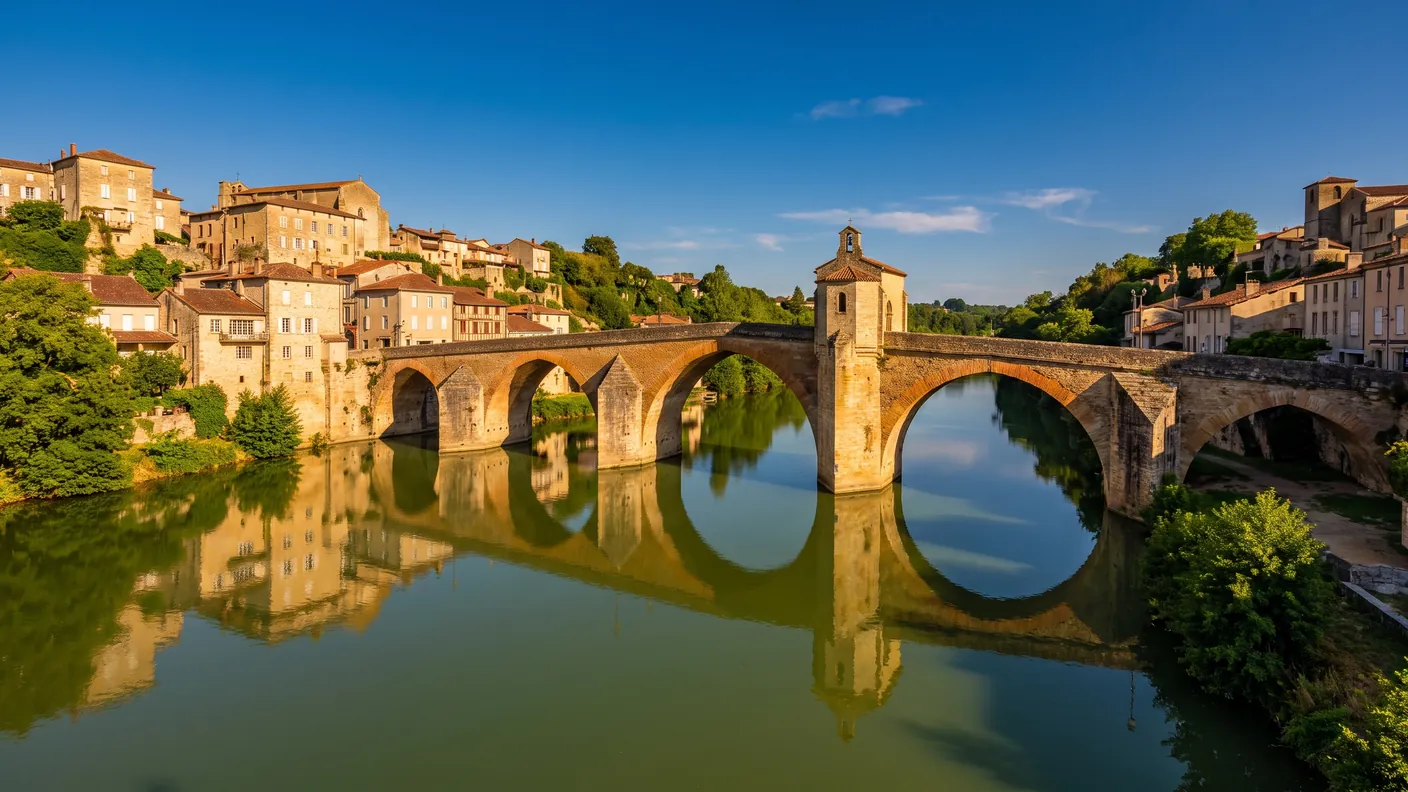
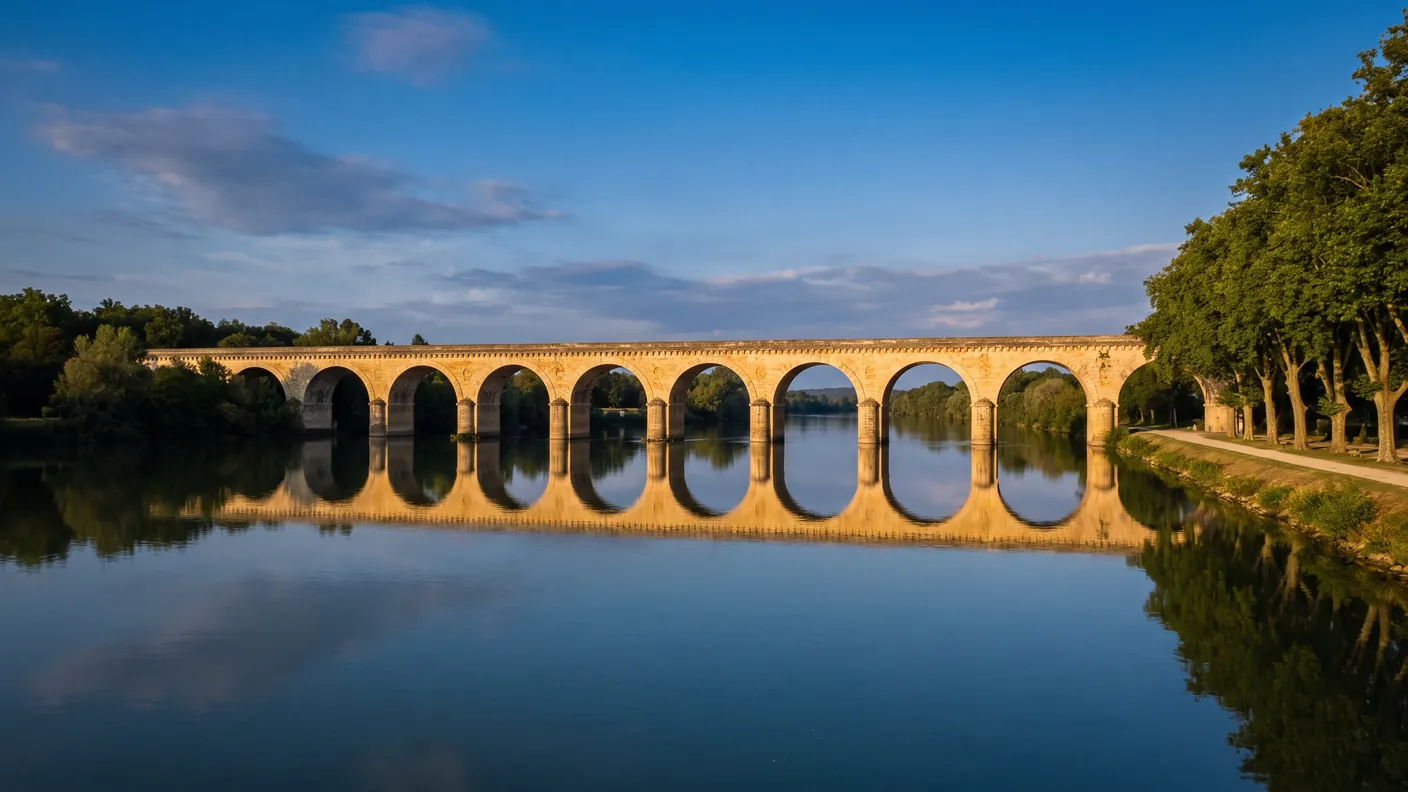
On the Way to the Val de Garonne
Direct trip from Bordeaux (~1 hr 27 min) to Birac-sur-Trec and the Val de Garonne, with stops of your choice along the way—Marmande, Tonneins, and a winery in Buzet. Written fixed-price quote, with no unexpected charges based on the odometer.