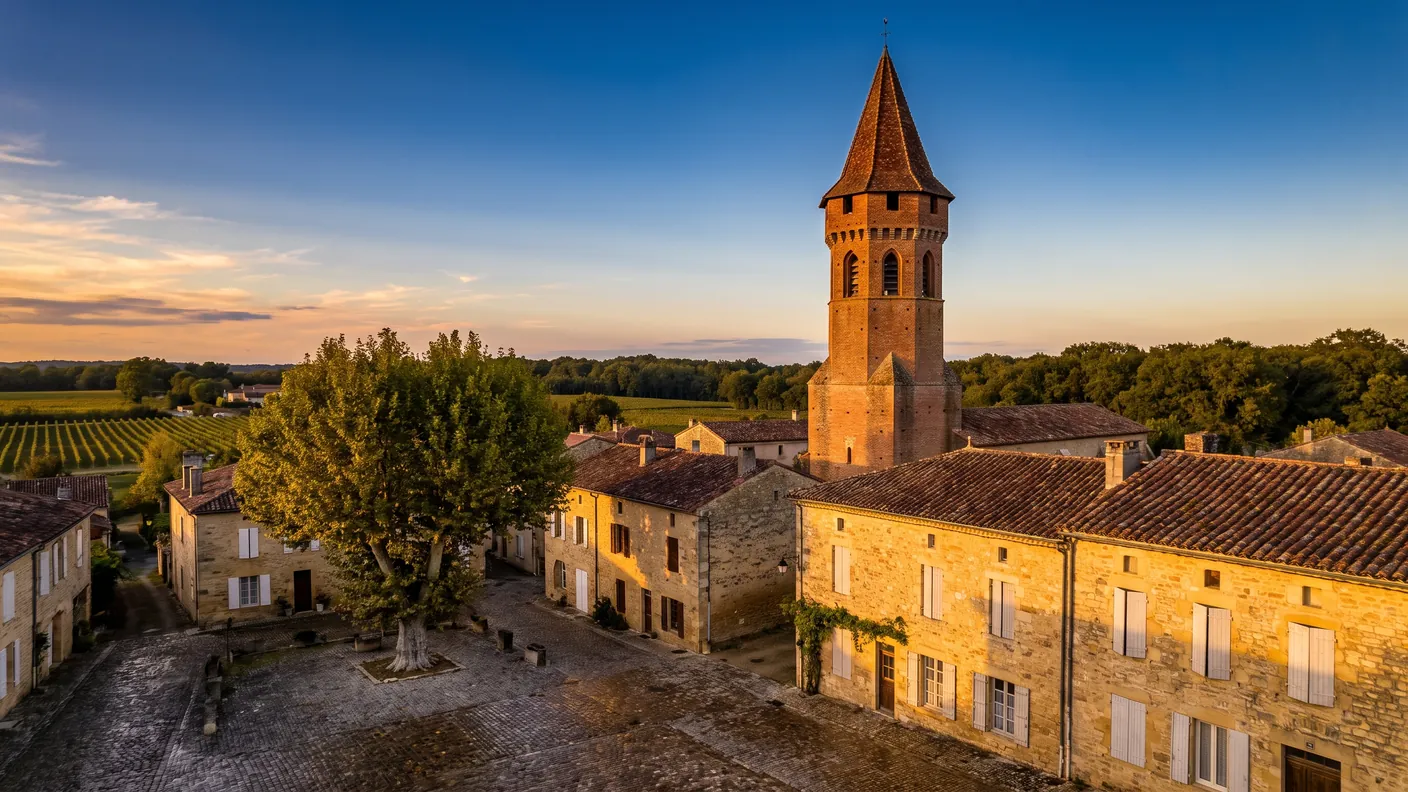
From Bordeaux to Hontanx: a bastide in Bas-Armagnac
A 1331 bastide with a “Tuscan feel,” nestled among the Armagnac vineyards and the Grand Étang: Hontanx, with its 12th-century gate tower—now a bell tower—its thousand-year-old Château d’Aon, and the grand wine cellars of Bas-Armagnac—plus your private door-to-door transfer from Bordeaux, perfect for enjoying the wines without having to drive.
Hontanx at a Glance
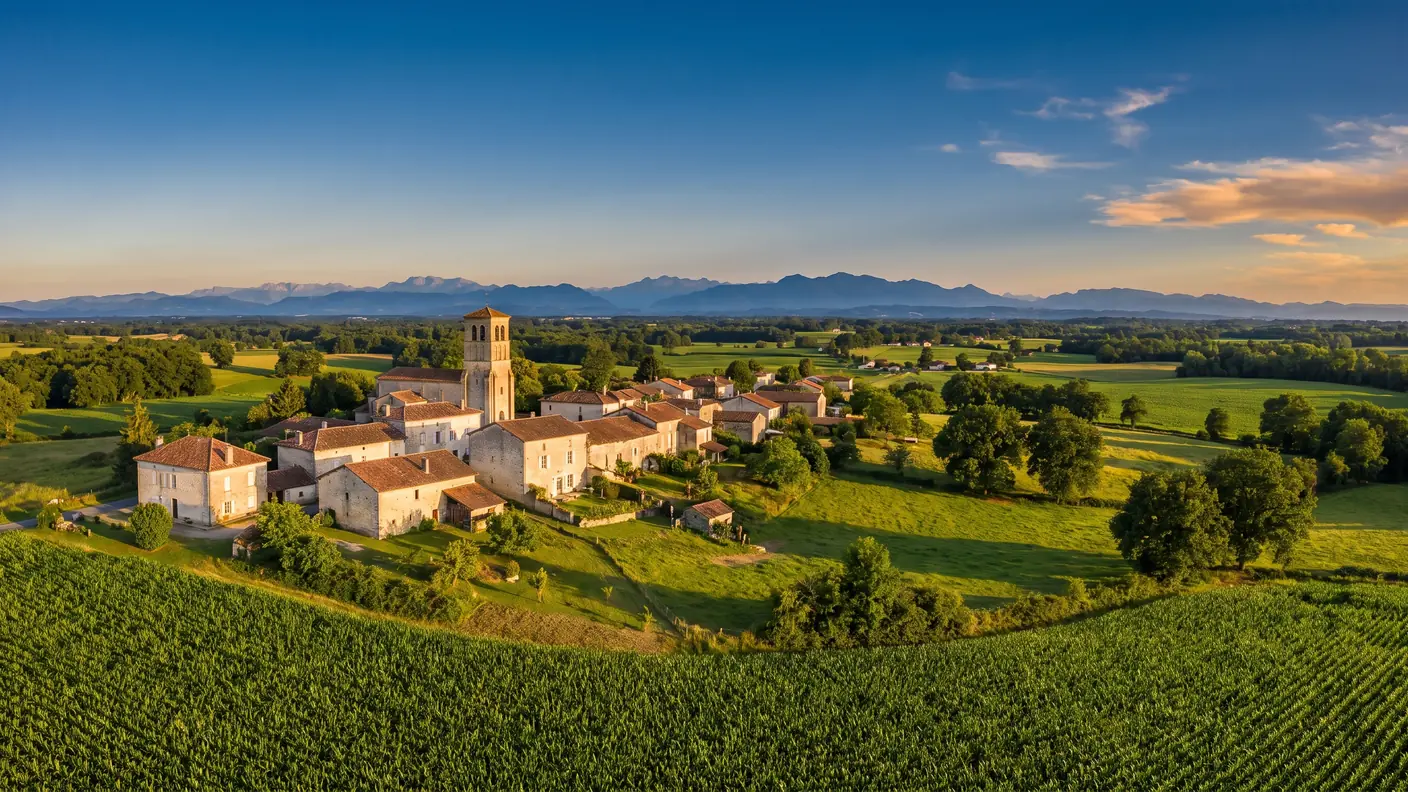
Hontanx is a small village in the Bas-Armagnac region of the Landes department, located about 141 km south of Bordeaux—a former bastide with 611 residents nestled between the Armagnac vineyards and its Grand Étang. It has been compared, and not without reason, to “a little slice of Tuscany”: rolling hills, golden sands, wine cellars, and church steeples.
Its treasure is unassuming but rare: the bell tower of Saint-Martin Church is actually a 12th-century gate tower brick century — a former city gate, designated a historic monument —, and the Aon Castle layers a thousand years of history onto its mound. This guide distinguishes between what has been verified and what has been repeated: Hontanx is a bastide (not a Castelnau), the church is called Saint Martin (not Notre-Dame), and the famous Buros bull ranch is not not Here, but in Escalans. Next, we’ll show you the easiest way to get there: a private door-to-door transfer, perfect for a day of Armagnac tasting without having to drive.
According to INSEE’s regional comparison tool, Hontanx had a population of 611 in 2022, representing a population density of 20 people per km². The page, published on May 5, 2026, links these figures to the 2022 census and specifies the date of the demographic data used in this guide.
Here are the key details to know before you go. Distances are calculated door-to-door from Bordeaux; the fare listed is for a private driver reservation at a fixed price provided in advance, with no unexpected meter charges. The information has been verified using data from the city hall, the Mérimée database, INSEE, the Landes d’Armagnac tourist office, and Wikipedia; schedules are subject to change and should be confirmed on site.
| Landmark | Details |
|---|---|
| Village | Hontanx (Landes, Mont-de-Marsan District) |
| Location | Bas-Armagnac in the Landes region, near Villeneuve-de-Marsan |
| Residents | 611 Residents of Hontano (2022) |
| Must-See | the 12th-century gate tower (Saint-Martin bell tower), the Château d'Aon, the Grand Étang, Armagnac |
| Distance from Bordeaux | about 141 km · about 1 hour and 45 minutes by car (A65) |
Where is Hontanx located?
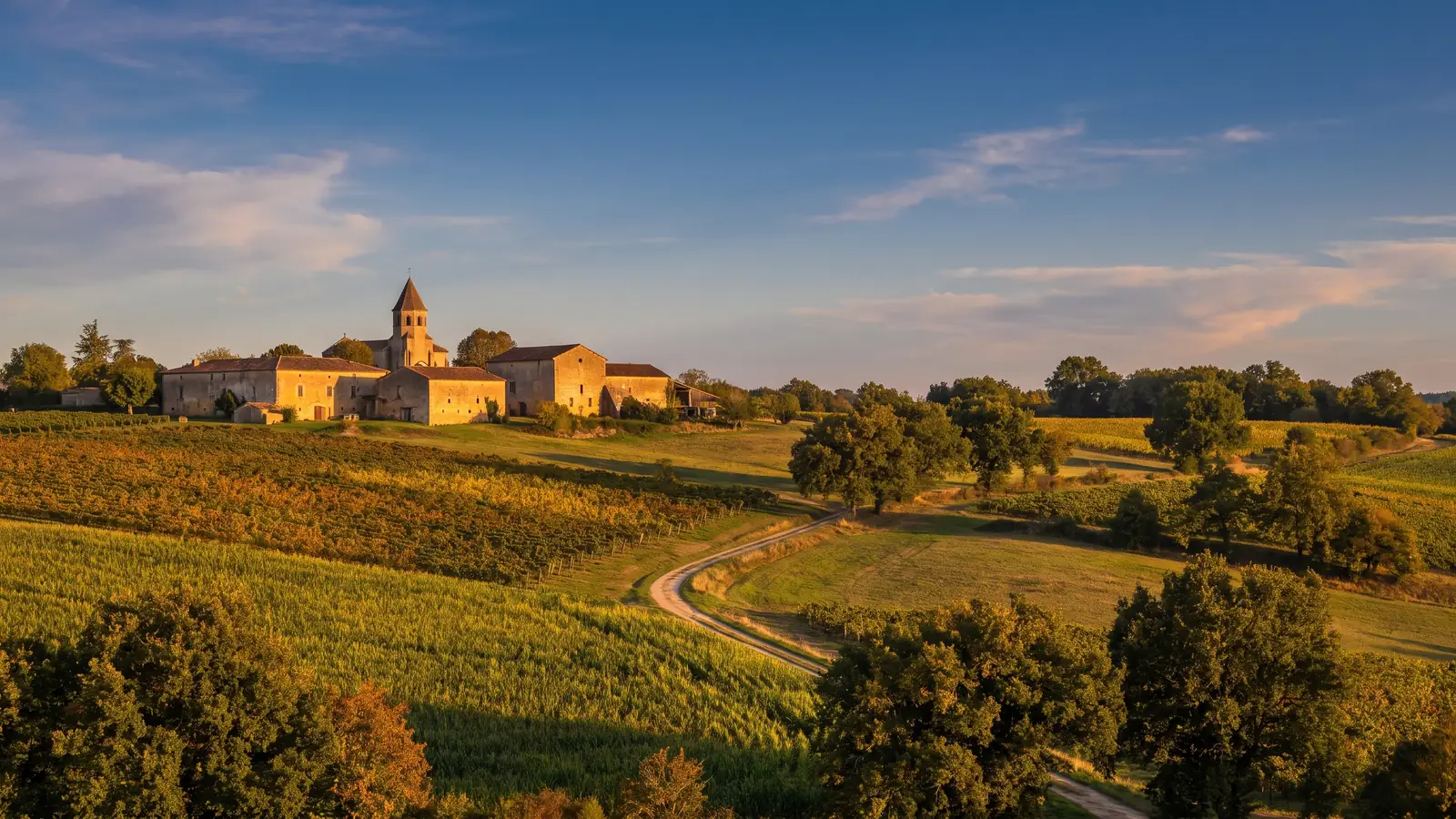
Hontanx is located in the eastern part of the Landes department, in the Bas-Armagnac region of the Landes, about 141 km south of Bordeaux and about 10 kilometers from Villeneuve-de-Marsan. It is a region of rolling hills, vineyards, and oak forests—the Bas-Armagnac, the western part of the brandy-producing wine region that extends from the Gers region of Gascony into the Landes. The village, with a population of 611—known as the Hontanois—is spread across gently rolling terrain (ranging from 77 to 137 meters in elevation), between its historic town center and the Grand Étang.
Administratively, it falls under the jurisdiction of the Mont-de-Marsan district (23 km away) and the Pays de Villeneuve en Armagnac Landais community of municipalities. This is the heart of Gascony, a region renowned for its culinary delights: Armagnac, floc de Gascogne, foie gras, and the Course Landaise—a rural way of life that the major thoroughfares overlook. The Landes tourist office describes it as having “a touch of Tuscany”: for a village nestled on the hillsides between vineyards and a pond, the comparison is well-deserved.
In the heart of the Bas-Armagnac region of the Landes
Bas-Armagnac is the western part of the Armagnac appellation. Its characteristic soils, known as “sables fauves,” are sandy-clay and iron-rich. Hontanx is one of the communes in the Landes department located within this area.
A village of hillsides and a pond
What makes Hontanx unique is its Grand Étang, a body of water covering about twenty hectares that has shaped the life of the village since the Middle Ages—and, together with its vine-covered hillsides, gives it that famous Tuscan feel. The village, formerly bastide founded in the 14th century From that century, it retains from its fortified past a monumental city gate that has been converted into a bell tower, and nearby stands the Aon Castle on its thousand-year-old mound.
This is a village where the heritage isn’t on display: you discover it as you stroll through, looking up at the brick tower, and making your way to the pond and its mill. Off the beaten path, Hontanx offers an authentic immersion in the Gascony region of the Landes—and a convenient starting point for exploring the great Armagnac estates, Villeneuve-de-Marsan, and Mont-de-Marsan. A chauffeur service provides door-to-door transportation, allowing you to use it as a base for a day of wine tasting and exploring local heritage.
The 12th-century gate tower, a bell tower unlike any other
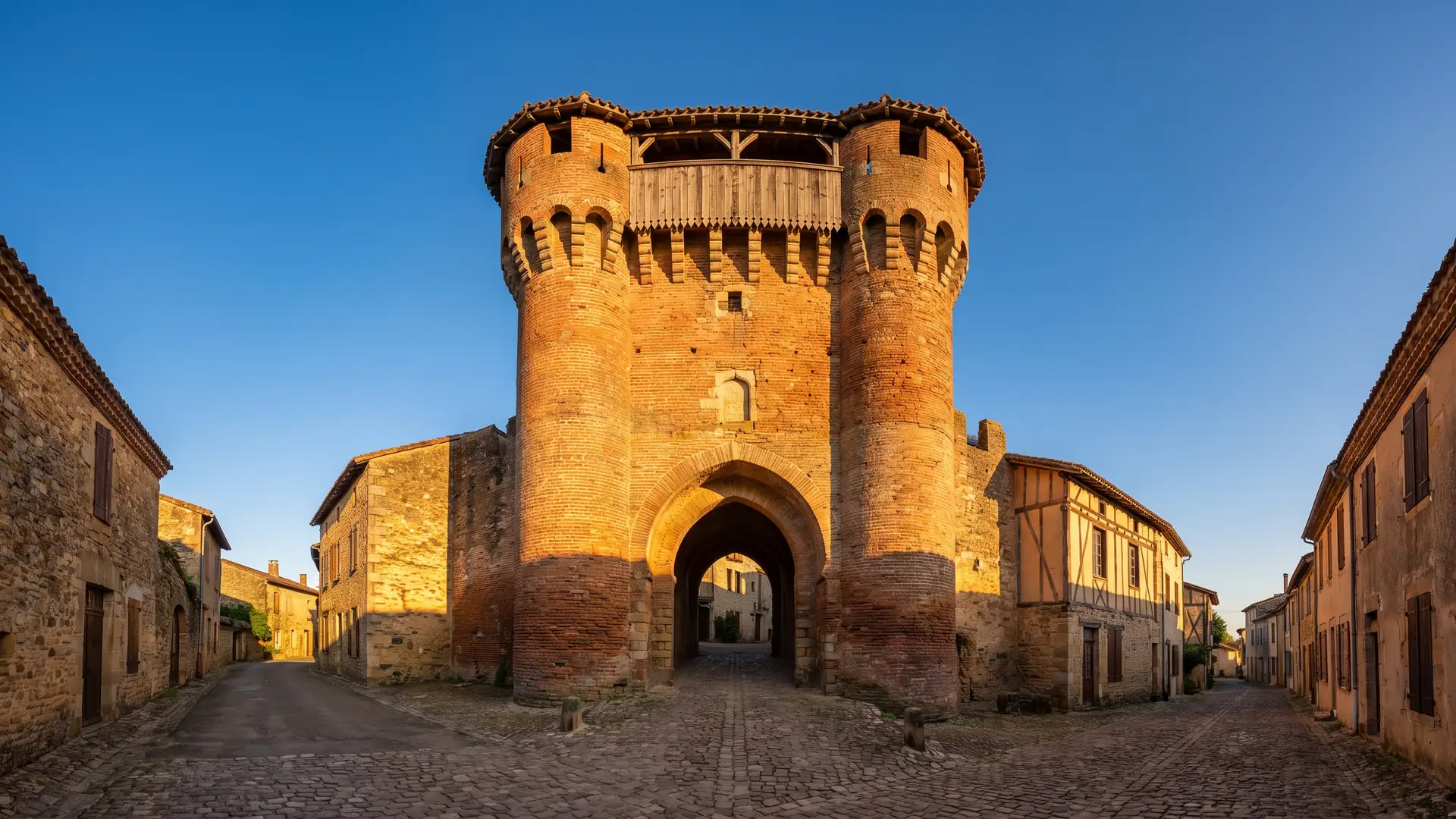
The iconic landmark of Hontanx is the “Hontanx Tower”: a 12th-century gate tower A brick structure dating from the 17th century, the former fortified entrance to the town, now the bell tower of Saint-Martin Church—and listed as a Historic Monument. Here is a documented example of an astonishing reuse.
According to the Ministry of Culture’s POP listings, the Hontanx tower is a former fortified gate listed in 1962, while the Aon castle and chapel, which are municipally owned, have been listed in their entirety since 2019. These designations establish their respective protections.
A city gate turned into a bell tower
Nothing can prepare you for this bell tower: it is actually a 12th-century city gate century, in brick — a material typical of Gascony —, one of the ancient gates of the bastide’s fortified walls. The entry in the Historic Monuments register details its defensive features: a parapet walk, some hourds wooden, some harrow marks, and, above the arched passageway through which the road from the village entered, a room that served as prison. Some water-filled ditches surrounded the enclosure. When the church was rebuilt in the 19th In the [century], the idea arose to attach the new building to this old tower and transform it into bell tower — which explains its unique silhouette, part medieval gate, part bell tower. The tower is Listed as a Historic Monument since 1962 (The designation applies only to the bell tower, not the church) and belongs to the municipality. It is the most eloquent testament to Hontanx’s past as a fortified bastide.
A 19th-century Neo-Romanesque church
The church itself, dedicated to Saint Martin—and not to Our Lady, as is sometimes stated—is much more recent than its tower: it is a Neo-Romanesque building, rebuilt around 1860–1870 by the architect Ozanne, attached to the medieval gate that serves as its bell tower. It should therefore not be described as an ancient “fortified church”: only the tower is medieval and protected.
Far from diminishing the appeal of the place, this detail is actually what gives it its unique charm: in Hontanx, you step into a 19th-century church century through a 12th-century city gate, beneath a former prison. This contrast encapsulates the history of a village that reused its old stones instead of tearing them down. You can explore the site at your own pace as you stroll through the village—and it’s only as you get closer, examining the bricks, the battlements, and the arrowslits, that you truly appreciate what the 1331 bastide was like. an executive car service can drop you off at the foot of the tower, so you don’t have to worry about parking.
Aon Castle: A Thousand Years on a Mound
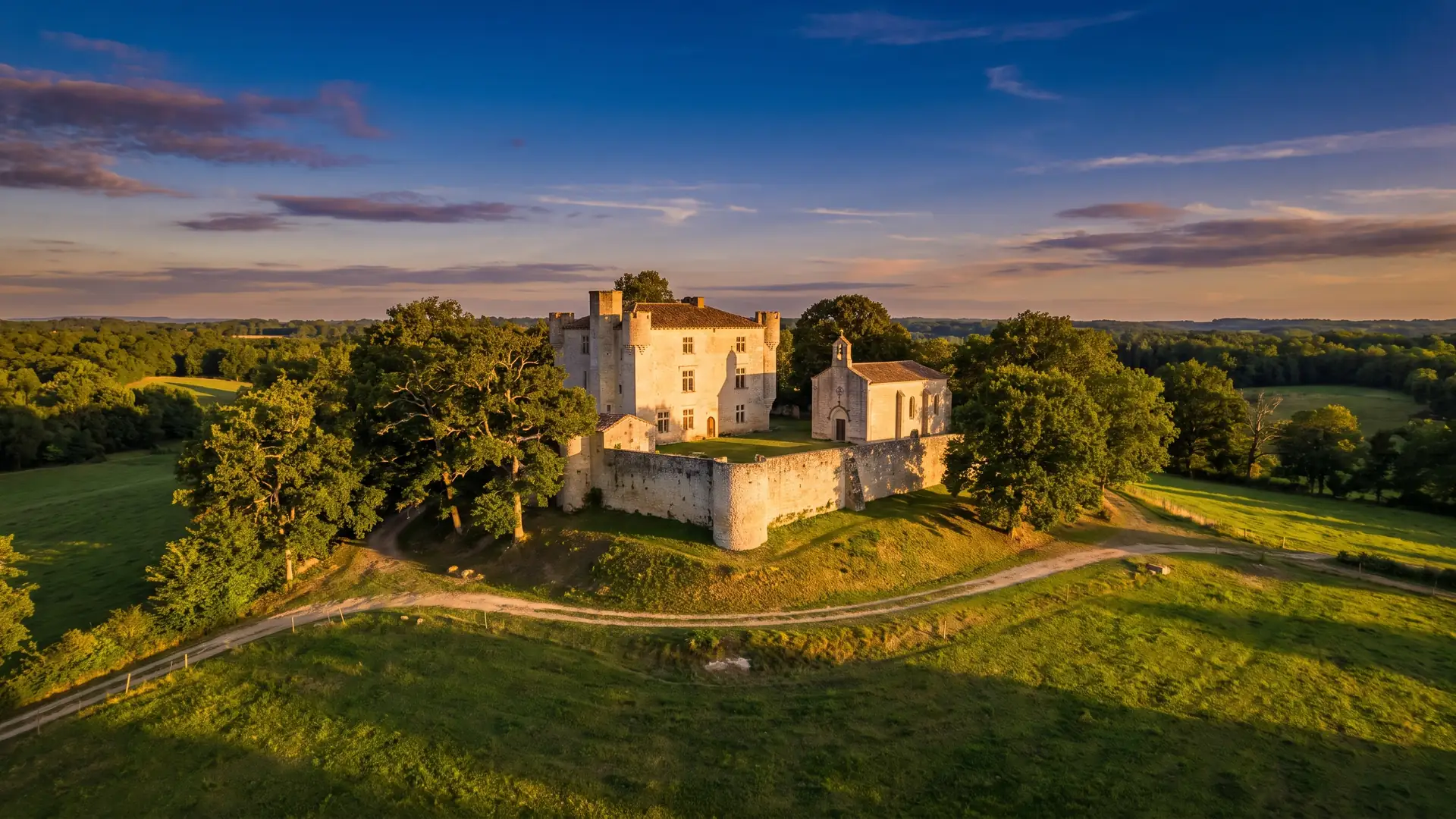
Not far from the village, the Château d'Aon stands on its castle mound, embodying nearly a thousand years of history: an 11th-century chapel-12th century, a fortified house dating from 1300, and a 17th-century residence-18th — all of which is listed in its entirety as a Historic Monument and is owned by the municipality. Here is what the sources report.
A chapel, a fortified house, a residence
Aon Castle is a stone palimpsest. In the beginning, a castle mound — that mound of earth that once supported the first medieval castles — and, atop it, the Saint-Blaise Castle Chapel, from the late 11th or the early 12th century, with its polygonal nightstand and some 17th-century frescoes. Vers 1300, a fortified house A stone building replaced an earlier wooden one; the seigneury of Aon is first documented at the beginning of the 12th century. Then, in the 17th and the 18th centuries, we add a main building more comfortable. The complex—comprising the castle, the main residence, Saint-Blaise Chapel, the motte, and the foundations—is Listed in its entirety as a Historic Monument since 2019, a recent designation that recognizes this rare site. The municipality, which owns it, is planning to restore it. Here we have a distillation of a thousand years of Gascon seigneurial architecture, all concentrated on a single hill.
A heritage to be explored with caution
Aon Castle is more of a heritage site than an organized tourist attraction: as a municipally owned property awaiting restoration, it is best explored from the outside and during occasional open houses (Heritage Days, local events). It’s therefore best to check with city hall or the tourist office before heading there, rather than waiting for a daily guided tour.
This reserve reveals the true nature of Hontanx: a village with a remarkable heritage—a 12th-century city gate, a thousand-year-old castle, a medieval pond—but it hasn’t been turned into a tourist trap. That’s precisely what gives it its charm for those who love quiet discoveries and historic sites that haven’t been staged for visitors. The Château d’Aon, with its chapel and frescoes, is the finest example of this. Access conditions vary and should be confirmed locally; a private chauffeur familiar with the area will be able to guide you.
The Grand Étang and Its Mill
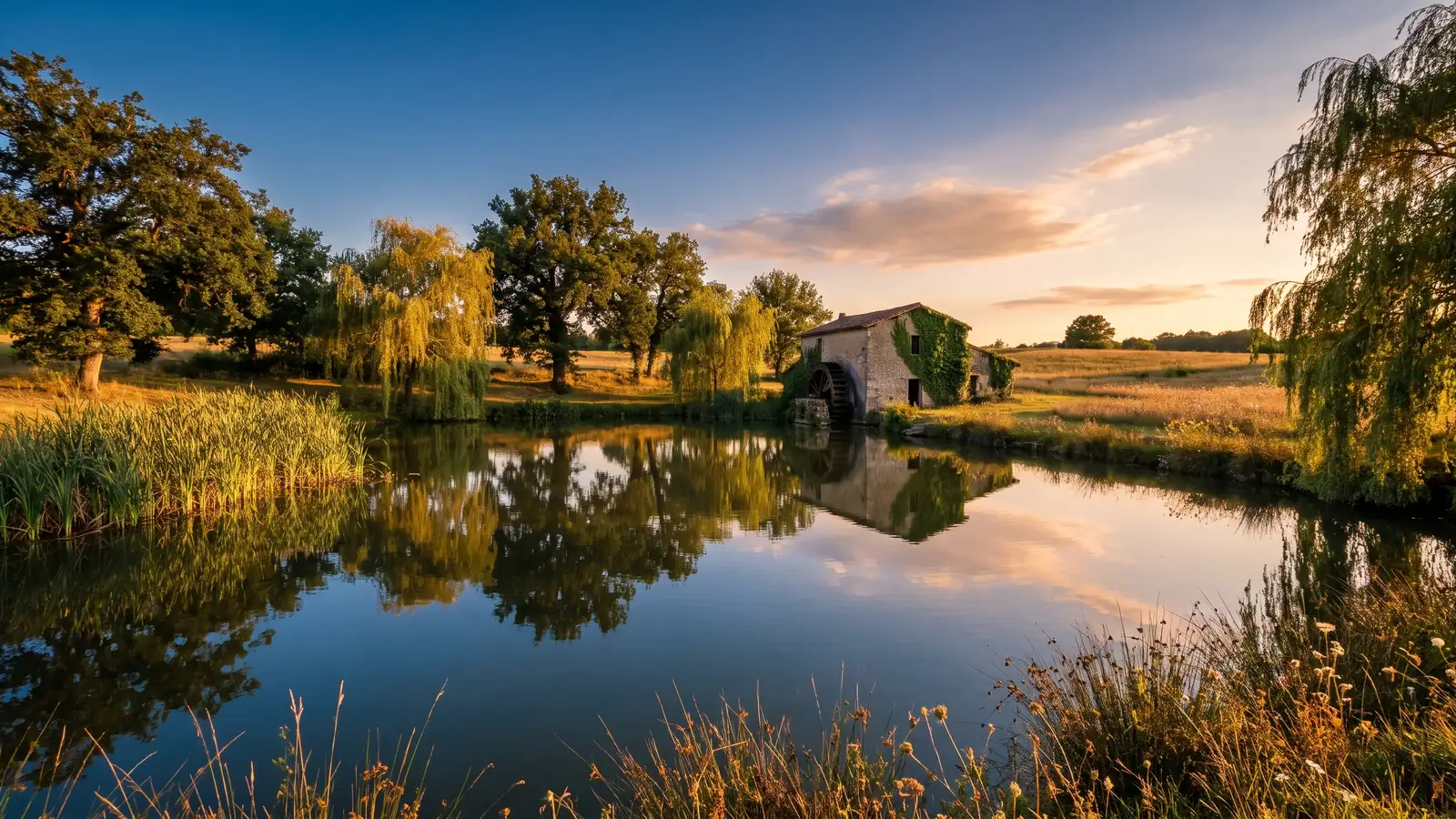
The Grand Étang de Hontanx, a body of water covering about 20 hectares, is the natural heart of the village: its mill is first mentioned as early as 1331, and its Pont des Nasses dates back to the 15th century century, and an interpretive trail winds around it. A nature and heritage site best explored on foot. This is what the sources confirm.
A pond planted with wheat
The Grand Étang, covering about twenty hectares, was for centuries an “infinitely precious resource” for the village, according to the town hall. Its mill is mentioned as early as the 1331 charter that established the bastide, and is attested in 1566. A forgotten fact: the pond was regularly drained to grow wheat or corn—a form of “amphibious” farming that alternated between water and grain throughout the seasons.
On the seawall, the Pont des Nasses, made of cut stone, dates from 15th century; it was originally called “the new bridge.” The municipality purchased the pond in 2007 and now manages it as part of a five-year plan that balances nature conservation with heritage preservation. A fishery and a interpretive trail round out the site. It’s a favorite spot for Hontanois to take a stroll, and the best place to experience that famous “Tuscan atmosphere.”
A nature walk along the water's edge
The walk around the Grand Étang along the interpretive trail is a must-see in Hontanx: an easy loop through reeds, willows, and vineyards, featuring the old mill and the Pont des Nasses bridge, with the Armagnac hills as a backdrop. It’s a peaceful experience, far from the crowds—and let’s be clear, since confusion is possible, that this is a nature and heritage area, not a recreational facility with supervised swimming: people come here to walk, observe, and stroll, not to swim.
The village also has other historic mills (Loubens, Houn—the latter of which remained in operation until the 1930s)—remnants of a rural economy that has since disappeared. This walk pairs perfectly with a tour of the village—the gate tower, the church, and the grounds of the Château d’Aon—for a full morning of exploring local heritage, followed by an afternoon of tastings at nearby Armagnac estates. A chauffeured transfer allows you to enjoy both without worrying about driving.
A bastide dating from 1331 in the Foix-Marsan region
Hontanx is a bastide founded by a paréage agreement dated January 25, 1331: a new, fortified town established in the 14th century century, as part of the circle of the Counts of Foix-Marsan. A specific medieval origin that is often misrepresented. Here are the verified facts.
The Paréage of 1331
Contrary to what is sometimes reported, Hontanx is not a “castelnau” but a bastide — a new medieval town established by a charter of foundation. The document is dated: one Joint Ownership Agreement dated January 25, 1331, which took place between Count of Foix-Marsan and Fortaner of Lescun (The tourist office attributes the foundation to the Counts of Foix-Béarn-Marsan.) The paréage was a partnership between two lords—often a powerful one and a local one—to jointly found and administer a new town, sharing its revenues and judicial authority.
The village was then fortified from fences, by ditches and doors — of which the famous 12th-century gate tower still stands, reused within the walls of the bastide. Hontanx was under the jurisdiction of the Viscountcy of Marsan: The term “Bas-Armagnac,” which is now used to refer to it, denotes the brandy-producing region, and not the neighboring county of Armagnac. This distinction situates the village within the complex feudal geography of medieval Gascony.
A Name Born of Springs
Where does the name Hontanx come from? From the water, most likely. The place is first mentioned as early as 1108 in the Latin form “ by Fontanellis ", and the Gascon word " shame "means" fountain, source. The name is said to evoke the sources like many others in the area—an appealing and well-founded etymology, though one that must be stated in the conditional tense, as place-name etymology always carries a degree of uncertainty. This aquatic origin echoes the Grand Étang and the mills that have shaped the rhythm of village life: Hontanx is indeed a “village of springs,” nestled in a landscape of water and hillsides.
Today, its 611 residents carry on the rural Gascon way of life—vineyards, foie gras, patron saint festivals (July 16–19, 2026)—away from the main thoroughfares. It is this authenticity—this unstaged Gascony—that visitors come to experience in Hontanx, nestled between a medieval gate, a thousand-year-old castle, and a glass of Armagnac. A professional chauffeur provides door-to-door access to the village, less than two hours from Bordeaux.
Ganaderia, church, Castelnau: terms we often see
Several claims are circulating about Hontanx that warrant correction, backed by sources—which is the whole point of a reliable guide. The church, the ganaderia, the town’s origins: here’s what’s true and what’s false.
Saint-Martin, not Notre-Dame—and no bison
First clarification: The church in Hontanx is dedicated to Saint Martin, not "Notre-Dame"; it is a building 19th-century neo-romance century, of which only the door frame The medieval church is listed as a Historic Monument—so we shouldn't refer to it as a "listed fortified church." Second correction, a more surprising one: the famous Buros Ranch, this farm that raises Landaise racing cows—which some people say is located in Hontanx—is actually located in Escalans, about 40 kilometers to the east, in the Gabardan region.
And you won't find anything like that at her place no bison — The idea, which is sometimes put forward, is not cited anywhere: the animals mentioned are cows and young bulls used in the Landaise bullfight, Gascon chickens and pigs, and wood pigeons. Moreover, there is no record of any bullring or ganadería in Hontanx itself: the Landaise bullfight, this Gascon art of using the "écarteurs" when facing a cow, is a tradition of the territory (Villeneuve-de-Marsan, Gabarret, Escalans), not part of the municipality.
A bastide, a pond—not a village, not a recreation center
Other useful details. Hontanx is a bastide (founded by paréage in 1331), not a “castelnau”: this distinction matters, as they are two distinct types of medieval towns. As for the Grand Étang, it is a nature and heritage site—featuring a mill, the Pont des Nasses, and a trail—and not a recreational area with swimming: people walk there, they do not swim there. We should also avoid attributing Historic Monument status to the Château de Loubens (its tower and chapel exist, but no protection is documented), or inventing a “washhouse” for which there is no source.
Finally, Hontanx does not have a weekly market: the main market is the one in Villeneuve-de-Marsan, held on Wednesday mornings. These distinctions—verified using the Mérimée database, INSEE, and official sources—set a reliable guide apart from a copied text. They in no way detract from the charm of Hontanx: a true Gascon village, rich in authentic heritage, in the heart of the most beautiful Armagnac region.
The tawny sands of Bas-Armagnac
Bas-Armagnac is the western part of the Armagnac appellation. Its characteristic soils, known as “sables fauves,” are sandy-clay and iron-rich. Hontanx is one of the communes in the Landes department located within this area.
Bas-Armagnac: The Region of Great Eaux-de-vie
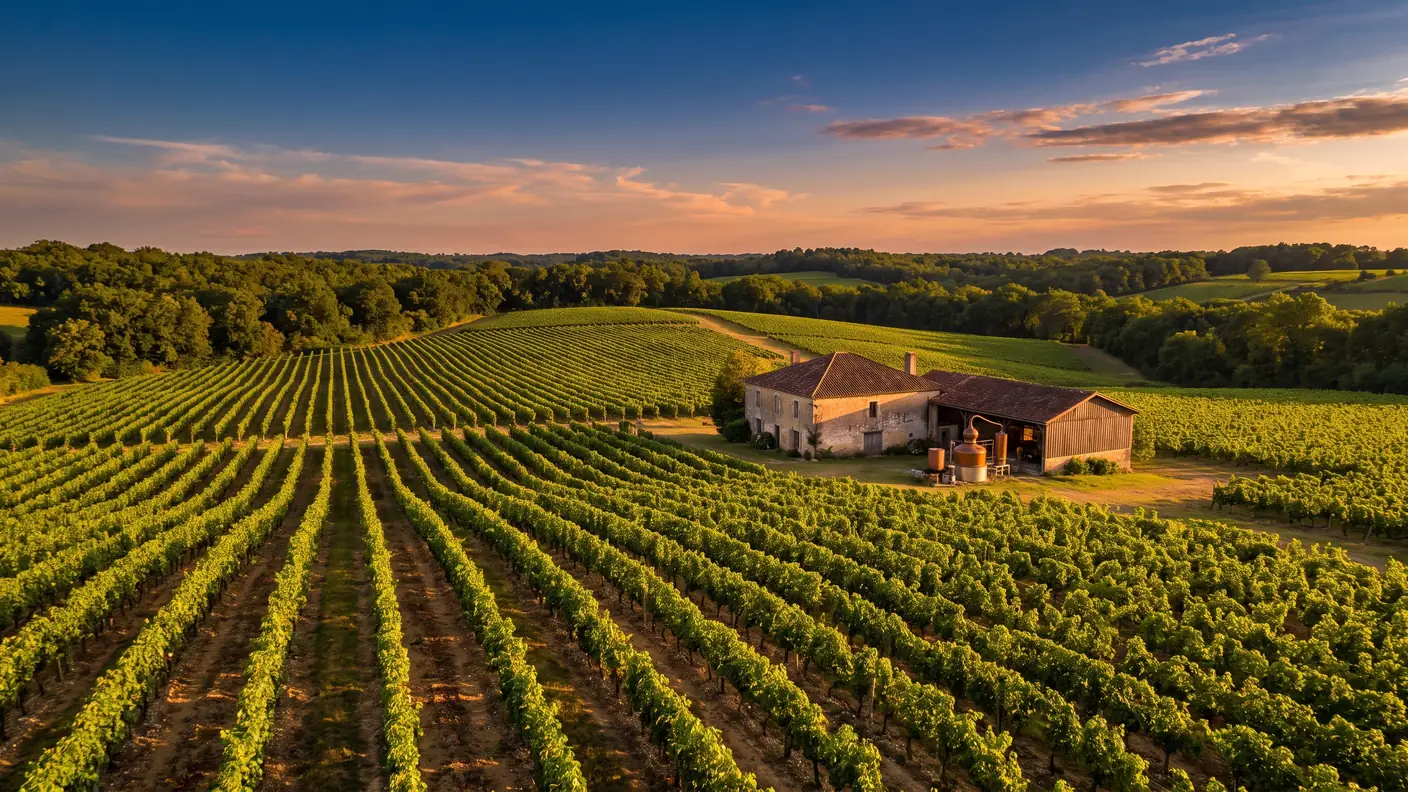
In addition to Armagnac, the region produces Floc de Gascogne (an aperitif made from grape must and Armagnac) and foie gras—Gascogne’s culinary delights in all their glory. It’s a region made for tasting, where you can tour the cellars, sample the vintages, and leave with a few rare bottles. Provided, of course, that you don’t drive afterward—which is why it’s a good idea to hire a private driver for the day.
Ravignan, Ognoas: the large neighboring estates
Two exceptional estates are open to visitors just a few minutes from Hontanx. In Perquie (13 minutes away), the Château de Ravignan has been producing its Bas-Armagnac within the same family since 1732; the Château Louis XIII, built in 1663, is listed as a Historic Monument; the wine cellar is open to the public, and the estate offers workshops, floc, and its specialty: raspberries in Armagnac. In Arthez-d’Armagnac (15 minutes away), the Ognoas Departmental Estate — 650 hectares, owned by the Landes department — is open to visitors year-round and houses a treasure: the 1804 still, the oldest in Gascony still in use, heated by a wood fire and protected as a Historic Monument.
These two stops, combined with a visit to the village of Hontanx, make for an ideal day of wine tasting and cultural exploration in the heart of Bas-Armagnac. A chauffeur service who knows the area will take you from winery to winery and bring you back to Bordeaux—tastings included, with no need to worry about driving. Visit schedules and conditions vary and should be confirmed with each estate.
| The Terroir of Hontanx | Details (according to sources) |
|---|---|
| Designation | Bas-Armagnac (fawn-colored sands) — Hontanx is one of the communes in the Landes department located in this area |
| Also available | floc de Gascogne, foie gras, fattened duck |
| Ravignan Castle (Perquie, 13 min) | A family-owned Bas-Armagnac producer since 1732, Château 1663 (listed as a historic monument), raspberries in Armagnac |
| Domaine d'Ognoas (Arthez-d'Armagnac, 15 min) | 650 hectares of departmental land, a still dating from 1804 (the oldest in Gascony) |
| Good to Know | Wine tastings at the wineries, often by appointment |
What is there to do in Hontanx?
In Hontanx, you can see the 12th-century gate tower From the village of La Bastide, we walk around the Grand Étang, continue on to the Château d'Aon, and explore the Bas-Armagnac region: wine tastings in Ravignan and Ognoas, the market in Villeneuve-de-Marsan on Wednesdays, and the local Landes-style bullfight. Here, in concrete terms, are the actual, verified activities—to be honest: for a village of 611 residents, much of the action takes place in the surrounding area, in the heart of the Landes d'Armagnac.
- The gate tower and the town—the 12th-century brick tower (bell tower of Saint-Martin Church), the former gate of the bastide, designated a historic monument
- The Grand Étang Loop — an interpretive trail around the lake, the mill, and the Nasses Bridge (15th century)
- Aon Castle—a fortified house and the Saint-Blaise Chapel on a motte, listed as a historic monument (access to be confirmed with the town hall)
- Taste Bas-Armagnac — Château de Ravignan (Perquie, 13 min) and Domaine d'Ognoas (Arthez-d'Armagnac, 15 min, still from 1804), by appointment
- The Villeneuve-de-Marsan Market—Wednesday mornings (7 a.m.–12 p.m.) in the market hall, 10 minutes away; livestock market from November 1 to April 15
- The Course Landaise — Villeneuve-de-Marsan Bullring (free guided tours in the summer), a local tradition
- The Hontanx Festival — the village’s patron saint festival; the 2026 edition has concluded; dates for 2027 to be confirmed
The Village and Its Heritage
The exploration of Hontanx begins at the foot of the gate tower: we examine its brickwork, its battlements, and the traces of its portcullis before entering Saint-Martin Church through this former city gate. We then head to the Grand Étang for a walk around its perimeter—past the mill, the Pont des Nasses, with reeds and vineyards in the background—and, if conditions permit, we continue on to the outskirts of the Château d’Aon and its thousand-year-old chapel (access to be confirmed with city hall).
Set aside a good morning for this heritage and nature tour, which is on a village scale. Hontanx has no market or major paid attractions: it’s a place for authentic strolling, where the charm comes from the ancient stone, the water, and the hillsides—“a little taste of Tuscany,” as the tourist office so nicely puts it. The rest of the day naturally unfolds in the surrounding area, as you make your way through the wineries and villages of Bas-Armagnac.
Armagnac and Gascony Day
An afternoon in Hontan is a typical Gascon experience. You can sample Bas-Armagnac at the large neighboring estates—Château de Ravignan (family-owned since 1732) and Domaine d’Ognoas with its 1804 still— and on the way, we stop in Villeneuve-de-Marsan, the region’s capital, to visit its Wednesday market and its bullring (free guided tours in the summer, just like in Roquefort or Gabarret). Lovers of tradition can discover the “course landaise,” the art of the “écarteurs” and “sauteurs” as they face off against the Landes cow, in the region’s bullrings—which we mention simply as a fact, as an element of local culture.
And to the east, in the Gabardan region, the Buros ganaderia (Escalans, about 40 minutes away) opens its breeding farm to visitors in the summer. All of this adds up to a complete immersion in the Landes d’Armagnac region—including brandies, foie gras, bullrings, and villages—centered around Hontanx. an executive car service who knows the area will take you through these stops without any worries about driving or tasting; schedules vary and should be confirmed on site.
| Activity | Where / When | Good to Know |
|---|---|---|
| Gate Tower & Village | in the village | 12th-century tower listed as a historic monument, Saint-Martin bell tower |
| Grand Étang | interpretive trail | mill, Pont des Nasses (15th century) (no swimming) |
| Bas-Armagnac Tastings | Ravignan & Ognoas (13–15 min) | still from 1804, by appointment |
| Market | Villeneuve-de-Marsan, Wednesday morning | + fat market Nov.–April |
| Buros Ranch | Escalans (~40 min) | Landaise bullfighting ranch, summer tours |
What is there to see around Hontanx?
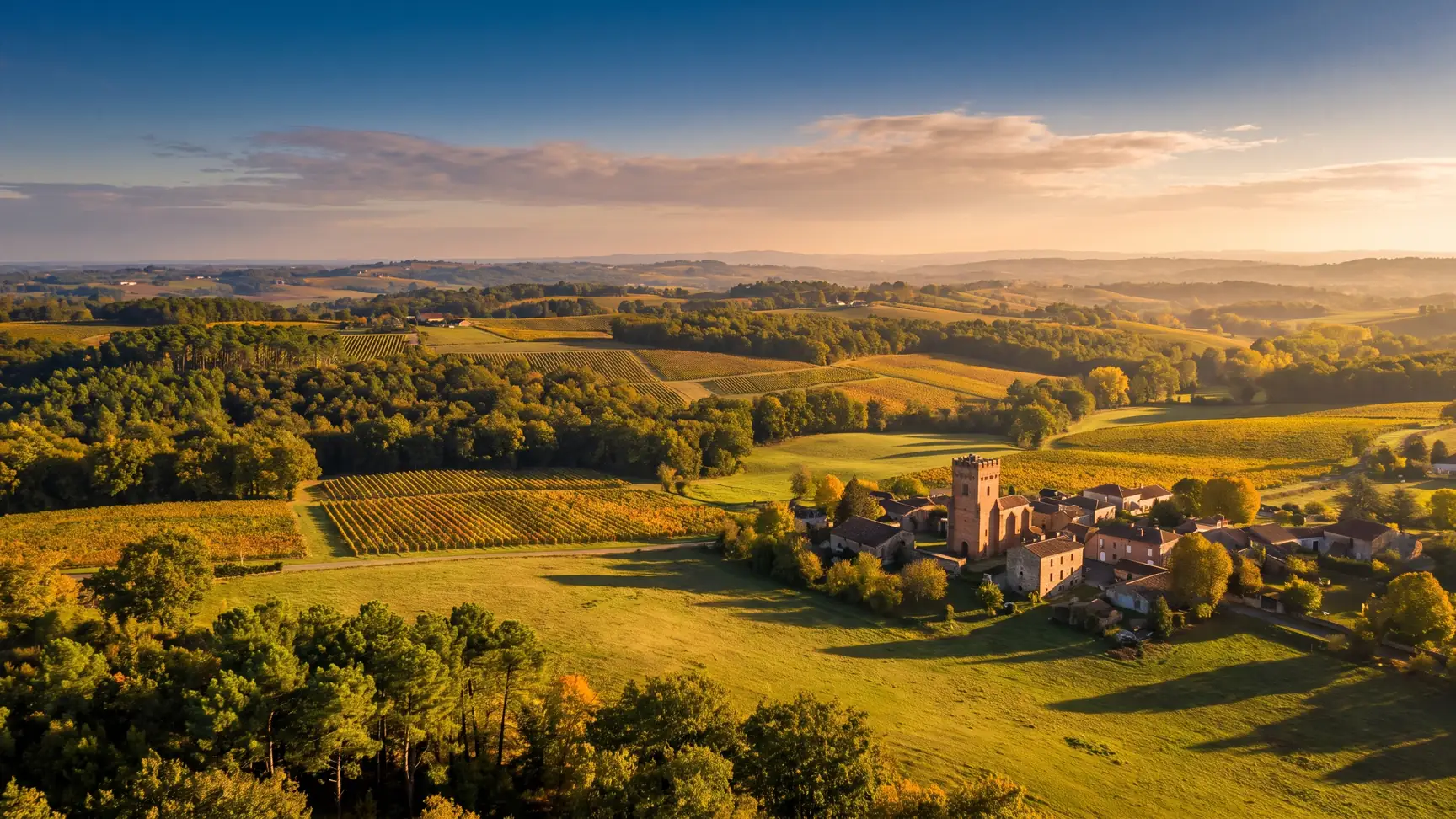
From Hontanx, you can visit Villeneuve-de-Marsan and the major Armagnac estates, the prefecture of Mont-de-Marsan, and easily reach Dax and the Landes coast. The village is an ideal base for exploring the Landes d'Armagnac: here are the must-see attractions, with actual driving distances.
Villeneuve-de-Marsan and the Landes d'Armagnac
10 minutes away (9.5 km), Villeneuve-de-Marsan is the region’s main town: its market hall, Wednesday market, Landes-style bullfighting arena (free guided tours in the summer), and Gascon restaurants make it the perfect culinary stopover on your way from Hontanx. All around lie the Landes d’Armagnac: the estates of Ravignan (Perquie) and Ognoas (Arthez-d’Armagnac), the villages of Labastide-d’Armagnac (a bastide famous for its Place Royale and Notre-Dame-des-Cyclistes) and Gabarret, as well as the ganaderias and wine cellars. This is a region of tastings and traditions, where Armagnac, foie gras, and the Landes-style bullfight come together to form a unique way of life. A private chauffeur allows you to plan a full day exploring “estates and bastides,” covering the distances without worrying about driving—and, above all, without missing out on the tastings.
Mont-de-Marsan, Dax, and the coast
Beyond the Landes d'Armagnac region, Hontanx serves the entire department. In 23 km (25 minutes), Mont-de-Marsan, the prefecture, is worth a visit for its open-air sculpture, the Lacataye keep, and the Madeleine Festival. Further on, Dax and its hot springs, the Chalosse gourmet, and, to the west, the large Landes de Gascogne Forest then the ocean coast (Hossegor, Capbreton) round out the excursion options. Hontanx is thus the starting point for a variety of itineraries—wine tours, heritage tours, and beach getaways—through France’s largest metropolitan department. With a private transfer, these itineraries are easy to arrange: the driver takes you from one stop to the next according to your preferences, with your luggage on board, and brings you back to Bordeaux at the agreed-upon time. For a getaway into the heart of Gascony, amid Armagnac, heritage, and traditions, this is the most flexible and comfortable option—about 1 hour and 45 minutes from Bordeaux.
Calendar — verified on July 24, 2026
According to the official calendar of the Hontanx town hall, regarding the patron saint festivities: the 2026 event has concluded; dates for 2027 are to be confirmed. As of July 24, 2026, no dates for 2027 have been published; please check this municipal source before your visit and do not make plans based on new dates until they have been officially published.
When is the best time to visit Hontanx?
Hontanx is open to visitors year-round, with two highlights: fall and winter for Armagnac, foie gras, and the foie gras market; and summer for the festivals and the mild climate of the hillsides. The fall (September–November) is the peak season for Bas-Armagnac: the grape harvest then the distillation The wine cellars come alive, the light bathes the tawny-sand hillsides in a golden glow, and the vintages are tasted in a working atmosphere. It’s also the start of the livestock market from Villeneuve-de-Marsan (from the 1ster November through April 15), a must-visit event for lovers of foie gras and duck. The winter Extend this season of culinary delights in the peaceful villages—the perfect time for an “Armagnac and foie gras” getaway by the fire.
The spring (April–June) brings the countryside to life: soft-green vineyards, walks around the Grand Étang, hillsides in bloom—a peaceful exploration before the season begins. The summer (July–August) brings the patron saint festivals (at Hontanx, 2026 edition completed; 2027 dates to be confirmed), the guided tours the bullrings and estates, and the lively atmosphere of the Gascon villages; it’s also the time when the Buros ganadería opens its ranch. No matter when, the Wednesday It’s a great day—it’s the market in Villeneuve-de-Marsan, just ten minutes away. Allow half a day for the village (gatehouse, pond, Château d’Aon); a full day if you include tastings and a visit to Villeneuve-de-Marsan; or a weekend to explore as far as Mont-de-Marsan or the coast. Less than two hours from Bordeaux, Hontanx offers an authentic immersion in the Armagnac region of Gascony—without any frills.
| Season | Atmosphere | Ideal for |
|---|---|---|
| Fall (Sept.–Nov.) | grape harvest, distillation, golden light | Armagnac, tastings, hillsides |
| Winter | A bustling market, quiet villages | foie gras, Armagnac, heritage |
| Summer (July–August) | patron saint festivals, guided tours | traditions, pond, ganaderia (Escalans) |
How to get to Hontanx from Bordeaux
Hontanx is about 141 km from Bordeaux, which is about a 1-hour-45-minute drive via the A65. The village does not have a train station; the nearest one is in Mont-de-Marsan, 23 km away. A private door-to-door transfer is the most direct option, especially for a day of Armagnac tastings.
| Route | Distance | Duration | Details |
|---|---|---|---|
| Bordeaux → Hontanx | ~141 km | ~1 hr 45 min | Starting at ~€238 for a private chauffeur service |
| Bordeaux-Mérignac Airport → Hontanx | ~145 km | ~1 hr 45 min | pickup at the terminal |
| Hontanx → Villeneuve-de-Marsan | ~10 km | ~11 min | hall, market, arena |
| Hontanx → Mont-de-Marsan | ~23 km | ~25 min | Landes Prefecture, train station |
By car, it takes about 1 hour and 45 minutes to reach Hontanx from Bordeaux: the A65 (Langon–Pau) heads due south through the Landes Forest before branching off onto the small roads of the Bas-Armagnac region.
There is no train station in Hontanx: the nearest one is in Mont-de-Marsan (23 km), the terminus of a TER line that runs to Bordeaux via Morcenx—which is a long detour by train, followed by a 25-minute drive.
That’s the whole point of a private transfer: door-to-door, it drops you off in the heart of the village or directly at an Armagnac estate, then takes you through the stops on your itinerary—Ravignan, Ognoas, Villeneuve-de-Marsan—before bringing you back to Bordeaux at the agreed-upon time. Whether it’s a day of tastings (when you want to sample the eaux-de-vie without driving), a heritage tour, or the July festivals, this is the simplest, most flexible, and safest option. For groups of passengers, the quote provides a total price for the vehicle before departure; compare this total to other transportation options suitable for your group.
Whether you’re visiting the medieval gate tower, the Grand Étang, or spending a day at the Bas-Armagnac wineries, booking a chauffeured transfer guarantees a comfortable and punctual ride—book a chauffeured transfer from Bordeaux → Hontanx or explore all our destinations.
Frequently Asked Questions
Where is Hontanx located?
Hontanx is a small village in the Landes region, in the Bas-Armagnac area of the Landes, about 141 km south of Bordeaux (1 hour and 45 minutes via the A65) and about 10 kilometers from Villeneuve-de-Marsan. It is a region of rolling hills, Armagnac vineyards, and woodlands, ranging in elevation from 77 to 137 meters, which the tourist office describes as having “a touch of Tuscany.” The village, with a population of 611 (known as the Hontanois), is part of the Mont-de-Marsan district (23 km away) and the Pays de Villeneuve en Armagnac Landais community of municipalities. This is the heart of Gascony’s culinary heritage: Armagnac, Floc de Gascogne, foie gras, and the Course Landaise. Hontanx has no train station—the nearest one is in Mont-de-Marsan—nor any major tourist attractions: it is an authentic village, ideal as a base for a day of wine tasting in the Landes d’Armagnac region, accessible door-to-door via private transfer.
How much does a transfer from Bordeaux to Hontanx cost?
We offer a fixed-price transfer from Bordeaux to Hontanx, starting at approximately €273 one way (about 141 km, approximately 1 hour 45 minutes via the A65), in a Mercedes sedan or van seating up to 8 passengers, with a professional chauffeur. The trip is direct, door-to-door: pickup at your home, at Mérignac Airport, or at Saint-Jean Train Station, and drop-off in the village or directly at an Armagnac estate. The fixed quote is provided and confirmed in writing before departure, with no unexpected meter charges.
This is the perfect way to spend a day of tasting in the Bas-Armagnac region—you can sample the eaux-de-vie without having to drive—as the driver takes you from one winery to the next (Ravignan, Ognoas), Villeneuve-de-Marsan, and Mont-de-Marsan before taking you back to Bordeaux. There is no train station in Hontanx, which makes the private transfer all the more convenient. For multiple passengers, the quote provides a total price for the vehicle before departure; compare this total to other transportation options suitable for your group.
What is the Hontanx Tower?
It is the village’s iconic landmark—and a curiosity: the bell tower of Saint-Martin Church is actually a 12th-century brick city gate, one of the bastide’s former fortified gates. The Historic Monuments listing describes its defensive features: a parapet walk, wooden hoardings, traces of a portcullis, and a room above the vaulted passageway that served as a prison. When the church was rebuilt in the 19th century (a Neo-Romanesque structure designed by architect Ozanne), the new building was attached to this old tower, which was then converted into a bell tower. The tower has been listed as a Historic Monument since 1962 (the listing applies only to the bell tower, not the church) and belongs to the municipality. It is the most eloquent testament to the past of the fortified bastide of Hontanx, founded by paréage in 1331. Visitors can explore it at their leisure while strolling through the village.
What is there to do in Hontanx?
In the village: explore the 12th-century gate tower (the bell tower of Saint-Martin Church), walk around the Grand Étang along its interpretive trail (mill, the 15th-century Pont des Nasses), and continue on to the outskirts of the Château d’Aon, a thousand-year-old fortified castle on its motte (access to be confirmed with the town hall). In the surrounding area, within a few kilometers: taste Bas-Armagnac at the Château de Ravignan (Perquie, family-owned since 1732) or at the Domaine d’Ognoas (Arthez-d’Armagnac, distillation still from 1804), visit the market in Villeneuve-de-Marsan on Wednesday mornings, and explore its Landes-style bullfighting arena (free guided tours in the summer). In July, the patron saint’s festival brings the village to life (the 2026 event has concluded; 2027 dates to be confirmed). Since Hontanx is a small village, most of the day is spent in the surrounding area, in the heart of the Landes d’Armagnac—a professional chauffeur allows you to move from one stop to the next without having to drive.
Is the Buros bull ranch located in Hontanx?
No—that’s a common misconception. The Buros ganaderia, a ranch specializing in Landaise racing cows founded in 1890, is located in Escalans (in the Gabardan region), about 40 kilometers east of Hontanx, or roughly a 50-minute drive. It’s a working farm that offers guided tours in the summer (on Thursday afternoons, from July through September): visitors can see the Landaise racing cows raised in the wild, as well as a traditional Gascon farmyard (chickens, Gascon pigs, wood pigeons). Please note: contrary to what is sometimes reported, there are no bison—this claim is unsourced. And there is neither a bullring nor a ganaderia in Hontanx itself: the “course landaise,” the Gascon art of the “écarteurs” facing off against the cow, is a tradition of the Landes region (Villeneuve-de-Marsan, Gabarret, Escalans), which can be experienced in the local bullrings, not in the town itself.
What is Bas-Armagnac?
Bas-Armagnac is the western part of the Armagnac appellation. Its characteristic soils, known as “sables fauves,” are sandy-clay and iron-rich. Hontanx is one of the communes in the Landes department located within this area.
What is the distance between Bordeaux and Hontanx?
About 141 km by road, or about 1 hour and 45 minutes: the A65 (Langon–Pau) heads due south through the Landes Forest, then along the small roads of Bas-Armagnac. With a private driver, the fare is fixed and provided in advance, starting at approximately €238 one way. There is no train station in Hontanx: the nearest one is in Mont-de-Marsan (23 km), the terminus of a TER line that runs to Bordeaux via Morcenx—a long detour by train, followed by a 25-minute drive.
A private transfer therefore offers a clear advantage: door-to-door service from your home, the airport, or the train station; drop-off at the village or an Armagnac estate; and complete freedom to plan your own itinerary, visiting the various cellars, Villeneuve-de-Marsan, and Mont-de-Marsan. For a day of tasting, it also guarantees that you can sample the eaux-de-vie without having to drive. For groups of passengers, the quote provides a total price for the vehicle before departure; compare this total to other transportation options suited to your group.
Is Hontanx a bastide or a castelnau?
A bastide—the distinction is historical. Hontanx was founded by a paréage agreement dated January 25, 1331, between the Count of Foix-Marsan and Fortaner de Lescun (the tourist office attributes the town’s founding to the Counts of Foix-Béarn-Marsan). A “paréage” was a partnership between two lords to jointly found and administer a new town, sharing revenues and judicial authority. The town was then fortified with palisades, moats, and gates—of which the 12th-century gate tower remains, reused as part of the bastide’s ramparts.
Therefore, we should not refer to it as a “castelnau,” which is another type of medieval new town (organized around a castle, like Mont-de-Marsan). Hontanx was part of the viscounty of Marsan; the term “Bas-Armagnac,” which is now associated with it, refers to the region where brandy is produced, not to the neighboring county of Armagnac. Its name is thought to derive from the Gascon word “hont” (spring, fountain), attested as early as 1108.
What is there to see around Hontanx?
The village is an ideal base for exploring the Landes d'Armagnac region. Just 10 minutes away is Villeneuve-de-Marsan, the central town, with its market hall, Wednesday market, and arènes de course landaise (free guided tours in the summer). All around, the major Armagnac estates are open to visitors: the Château de Ravignan in Perquie (13 min, family-owned since 1732, a listed château dating from 1663) and the Domaine d’Ognoas in Arthez-d’Armagnac (15 min, 650 ha, still from 1804). Further afield, the bastide town of Labastide-d’Armagnac (Place Royale) and Gabarret round out the Landes d’Armagnac tour. Twenty-three kilometers away, Mont-de-Marsan, the prefecture, is worth visiting for its open-air sculpture park and the Lacataye keep; beyond that lie Dax and its thermal spas, the gourmet region of Chalosse, the Landes Forest, and the Atlantic coast. A chauffeur service allows you to plan a “estates and bastides” day trip without worrying about driving or tasting.
When is the best time to visit Hontanx?
All year round, with two highlights. Fall (September–November) is the peak season for Bas-Armagnac: the grape harvest and distillation bring the cellars to life, the light bathes the hillsides in gold, and the vintages are tasted; it’s also the start of the Villeneuve-de-Marsan foie gras market (November 1 through April 15). Winter extends this gourmet season, amid the tranquility of the villages—ideal for an Armagnac and foie gras getaway. Spring awakens the countryside: tender vines, walks around the Grand Étang. Summer brings the patron saint festivals (in Hontanx; the 2026 edition has ended; 2027 dates to be confirmed), guided tours of the bullrings and estates, and the summer opening of the Buros bull ranch (in Escalans). Wednesday is a great day any time of year—it’s market day in Villeneuve-de-Marsan. Allow half a day for the village, a full day with tastings, and a weekend to explore as far as Mont-de-Marsan or the coast.
Is the Château d'Aon open to visitors?
Aon Castle is a remarkable historic site—but it is not open to the public on a daily basis. It is a fortified house built around 1300 on a castle mound that also features the Saint-Blaise castle chapel (late 11th–early 12th century, with 17th-century frescoes), to which a residence was added in the 17th–18th centuries. The entire complex—castle, residence, chapel, motte, and foundations—has been listed in its entirety as a Historic Monument since 2019 and belongs to the municipality of Hontanx, which is planning its restoration. In the meantime, it can mainly be explored from the outside and during occasional open houses (Heritage Days, local events). It is therefore best to check with the town hall or the tourist office before visiting. It is a rare distillation of a thousand years of Gascon seigneurial architecture—a Romanesque chapel, a medieval fortified house, and a classical residence—all stacked atop a single mound, to be explored with the curiosity befitting such discreet treasures.
Is there a market in Hontanx?
No, Hontanx does not have its own weekly market. The area’s main market is in Villeneuve-de-Marsan, about ten kilometers (11 minutes) away: it takes place on Wednesday mornings, from 7 a.m. to 12 p.m., in the market hall on Place des États du Marsan and along the Grand’Rue. From November through April, there’s also a foie gras market there—a must-visit for lovers of foie gras and duck—one of the last remaining markets of its kind in the Landes region.
For a larger market, Mont-de-Marsan (23 km) hosts its Saint-Roch Market on Tuesday and Saturday mornings. In Hontanx itself, local life revolves mainly around the patron saint festivals (the 2026 edition has ended; dates for 2027 to be confirmed) and exploring the local heritage (the gatehouse, Grand Étang, and Château d’Aon). With an executive car service, you can easily combine a visit to the village with a trip to the market in Villeneuve-de-Marsan, followed by a tasting at an Armagnac estate—all in the same day.
Further Reading
- The neighboring prefecture: see the Mont-de-Marsan Guide (Lacataye Keep and the Madeleine Festival, 25 minutes away)
- The spa town in the Landes region: see the Dax Guide (64 °C hot spring and spa treatments)
- The Orthe Region and the Gaves: see the Orthevielle Guide (Sorde and Arthous Abbeys)
- Understanding our rates and vehicles: see the "Book a Driver" page (sedan & van, fixed-price quote)
- Plan your trip: Book a private chauffeur from Bordeaux to Hontanx or explore all our destinations
Sources and References
- Wikipedia — Hontanx — a village in the Landes department, in the Bas-Armagnac region, population 611 (2022); a bastide founded by a paréage agreement dated January 25, 1331; a 12th-century gate tower (Saint-Martin bell tower); Grand Étang and mills; etymology: “hont” (spring)
- POP Mérimée — Hontanx Tower (Saint-Martin bell tower) — 12th-century brick gate tower (parapet walk, hoards, portcullis, prison cell), former gate in the city wall, designated a Historic Monument on June 27, 1962; current Neo-Romanesque church (~1860–1870)
- POP Mérimée — Château d'Aon — a fortified house dating from around 1300 on a motte, the Saint-Blaise castle chapel (late 11th–12th centuries, 17th-century frescoes), and 17th–18th-century residential quarters; designated as a historic monument in its entirety by decree of September 19, 2019; owned by the municipality
- Hontanx Town Hall — village heritage (tower, Château d'Aon, Grand Étang ~20 ha and its mill, 15th-century Pont des Nasses), local festivals; the pond was purchased by the municipality in 2007
- Landes Tourism — Hontanx & Bas-Armagnac — “a touch of Tuscany”; Grand Étang, interpretive trail; Ravignan Castle (Perquie, since 1732) and the Ognoas Estate (Arthez-d’Armagnac, still from 1804); Bas-Armagnac (tawny sands)
- Wikipedia — Bas-Armagnac — western part of the Armagnac AOC (28 municipalities in the Landes department), fawn-colored sands; floc de Gascogne, foie gras
Article updated in July 2026.
Off to Bas-Armagnac
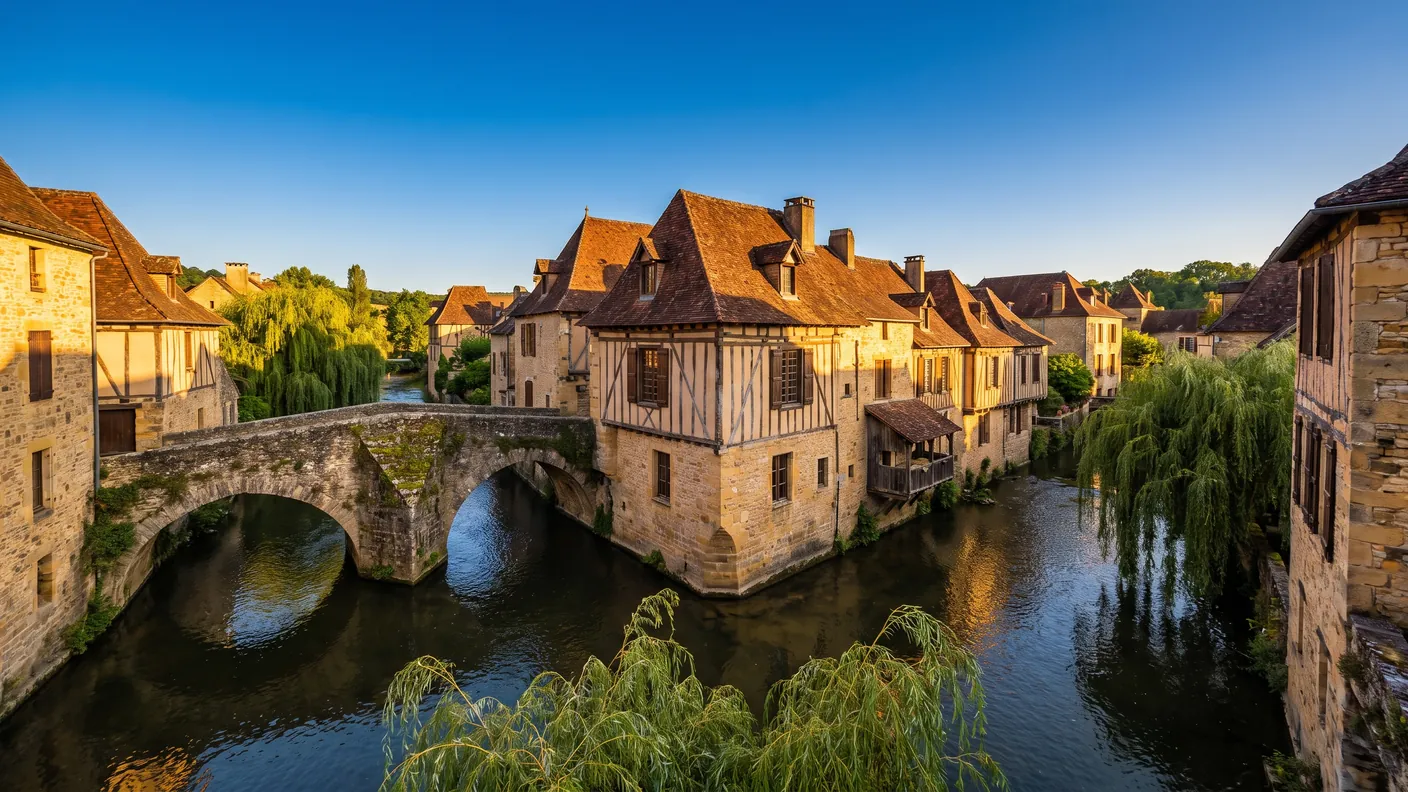
Direct transfer from Bordeaux (~1 hr 45 min via the A65) to Hontanx and the Bas-Armagnac region—from your home, the airport, or the train station to the village or the wineries, then Ravignan, Ognoas, and Villeneuve-de-Marsan on request; wine tastings without having to drive. Fixed, written quote—no surprises on the meter.