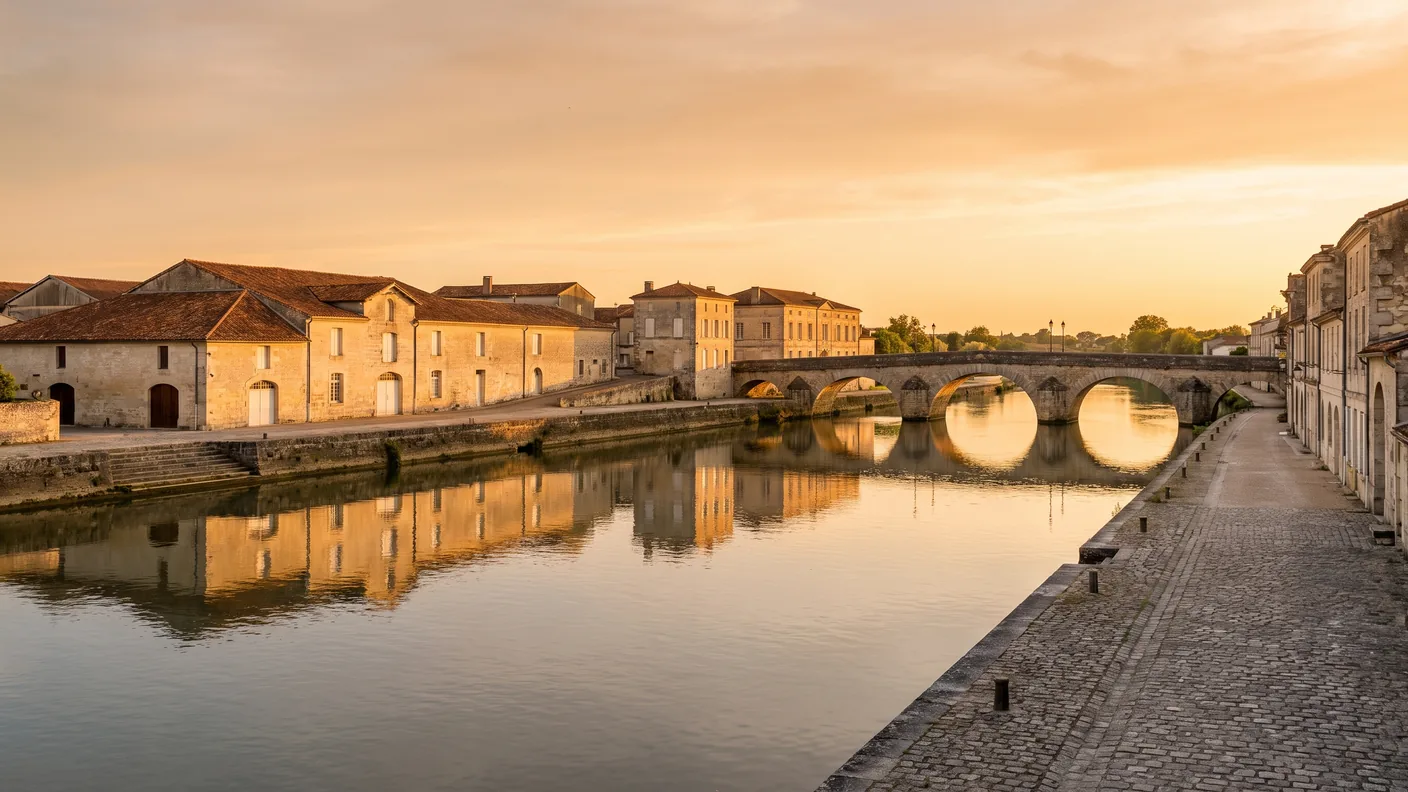
From Bordeaux to Jarnac: cognac houses and Mitterrand
The birthplace of François Mitterrand, four major cognac houses all within a stone’s throw of each other, and old docks where the gabares used to unload their cargo. Nestled on the right bank of the Charente River between Angoulême and Cognac, Jarnac is Cognac’s “quieter twin”—just 1 hour and 45 minutes from Bordeaux.
Jarnac at a Glance
Jarnac (Charente) is a small town on the right bank of the Charente River, between Angoulême upstream and Cognac downstream, in the heart of Cognac country. It is known for three reasons: it is the birthplace of François Mitterrand, who was born there in 1916 and is buried there; it is a major hub for the cognac trade, home to four prestigious houses—Courvoisier, Hine, Delamain, and Louis Royer—all clustered within a very small area; and, by pure coincidence of shared names, it is also the name of a famous battle from 1569 and a renowned “coup.” Take a stroll along its quays lined with wine cellars, where the gabares once unloaded their cargo. It’s about 115 km from Bordeaux, roughly 1 hour and 45 minutes via the A10, or starting at 200 € by chauffeured transfer, door-to-door.
| Landmark | Details |
|---|---|
| Department | Charente (16) · Nouvelle-Aquitaine |
| Status | City in the Greater Cognac Area · “Stopover Village” · Birthplace of François Mitterrand |
| Population | ≈ 4,486 residents (Jarnac residents) |
| Must-Sees | Mitterrand's Birthplace · Cognac Houses (Courvoisier, Hine, Delamain) · the Charente |
| From Bordeaux | ≈ 115 km · ~1 hr 45 min via the A10 · starting at 200 € by chauffeured transfer |
Many travelers head straight for Cognac without realizing that the neighboring town, fifteen kilometers upstream, is home to just as many famous brandy houses and hides the house where a former French president grew up. Yet you can explore Jarnac on foot in a single morning: the wine cellars line the river, François Mitterrand’s birthplace and the museum dedicated to his legacy are just a few streets apart, and the riverbanks offer one of the most beautiful riverside walks in the Charente. It is a quiet town, free of crowds, that could be called Cognac’s “quieter twin.”
This guide tells you everything you need to know before you come: exactly where Jarnac is located and why you shouldn’t confuse it with its near-namesake in Charente-Maritime, what to see while following in Mitterrand’s footsteps, which cognac houses are open to visitors, what the “Coup de Jarnac” and the Battle of 1569 are really all about, what to do once you’re there—and how to arrive well-rested from Bordeaux, without worrying about parking or needing a designated driver for tastings. Every fact cited here has been verified using the official sources listed at the end of the article.
Where is Jarnac located?
According to the INSEE’s Regional Comparison Tool, published on July 9, 2026, Jarnac has 4,486 residents in 2023 over an area of 11.99 km², with a population density of 374.1 people per km². The population grew by an average of 0.3% per year between 2017 and 2023.
Jarnac is located in Charente, in the Cognac district and the Grand Cognac metropolitan community. The town stretches along the right bank of the Charente River, between Angoulême upstream and Cognac downstream. Its residents are known as Jarnacais; its INSEE code is 16167 and its ZIP code is 16200.
One point deserves to be clarified right from the start, because it confuses many search engines: Jarnac (16, Charente) is not Jarnac-Champagne, a separate municipality located in another department, Charente-Maritime (17). Both names appear jumbled together whenever you search for “Jarnac market” or “distance to Jarnac.” Before looking at any practical information—schedules, addresses, events—you should therefore always check the department. This article deals only with the Jarnac of Mitterrand and cognac, in Charente. The town’s name is thought to derive from a Germanized form of the Latin "Agarnacum", “the estate of Agarnus,” a Germanic personal name followed by the suffix -acum, which denotes an estate. Jarnac is also certified "Stopover Village" since 2019, a recognition of the services and cultural heritage offered to passing travelers.
How far is it from Bordeaux?
From Bordeaux, it’s about 115 km and a 1-hour-45-minute drive, mainly along the A10 highway northward, then on the Charente roads connecting Cognac to Jarnac. The route is direct and straightforward: head toward Saintes and Cognac, then reach Jarnac via the N141 along the Charente River. Once there, the town is tiny and everything is within walking distance, from the riverbanks to the wine cellars and from Mitterrand’s birthplace to the covered market. It’s a very pleasant day trip from the Gironde metropolitan area, especially since Jarnac can easily be combined with Cognac, its immediate neighbor, for a single outing centered around brandy.
| From Jarnac | Driving distance | Duration |
|---|---|---|
| Cognac | ≈ 15 km | ~18 min |
| Angoulême (TGV station) | ≈ 34 km | ~34 min |
| Saintes | ≈ 43 km | ~45 min |
| Bordeaux | ≈ 115 km | ~1 hr 45 min |
This role as an unassuming crossroads is nothing new. For a long time, the Charente was the main route: the gabares—those flat-bottomed boats—would sail down the river, loaded with salt and brandy, toward the estuary and the open sea. In fact, there was no bridge at Jarnac until 1827; until then, people crossed the Charente by ferry. Today, the river is no longer a border but a unifying thread: the town is organized around it, with its wine cellars on the quays, its linden trees, and its promenades. Angoulême, just half an hour away, puts Jarnac about two hours from Paris by TGV—an advantage that partly explains why so many international wine trading houses have established their headquarters there.
Jarnac, the birthplace of François Mitterrand
According to the François-Mitterrand Institute, François Mitterrand was born on October 26, 1916, at 22 rue Abel-Guy in Jarnac. The POP entry for his birthplace confirms the address and the “Maisons des Illustres” designation awarded in 2011, the year the Institute took over its management.
It was in Jarnac that, on October 26, 1916, François Mitterrand, future President of the Republic from 1981 to 1995. He spent his childhood there, in a family belonging to the local Catholic middle class involved in the vinegar and cognac trade, before leaving to study. Beware of a very common misconception: Mitterrand is not not dead in Jarnac. He passed away at Paris, January 8, 1996; it is simply buried in his hometown, at the Grand'Maisons Cemetery, in his maternal family's crypt, the Lorrain, following a Mass celebrated at Saint-Pierre Church on January 11, 1996. His grave is remarkably unadorned: a simple stone in the family crypt, without a mausoleum or grandiose monument—reflecting the man’s discreet attachment to his Charente roots.
Born in Jarnac in 1916 and died in Paris in 1996, François Mitterrand chose to be laid to rest in his homeland, in his maternal family’s burial vault.
Two historic sites preserve this connection, and it is important not to confuse them: the birthplace, where he was born and raised, and the museum-collection, which houses the gifts he received during his terms in office. These are two different locations, just a few blocks apart, offering two very distinct experiences.
The birthplace, on Abel-Guy Street
The François Mitterrand's birthplace is located at 22 Abel-Guy Street. Acquired by the city in 2005, it was opened to the public on January 8, 2006, the tenth anniversary of the president's death. The official heritage listing confirms that it bears the label "Homes of the Famous" since 2011 and that it has been managed by the François-Mitterrand Institute since that year.
Here, visitors can explore the furniture, artifacts, and manuscripts of the maternal family spanning four generations, set within a well-preserved provincial bourgeois setting. It offers an intimate glimpse into the childhood of a statesman, far removed from the trappings of power: the bedroom, dining room, and hallways evoke the family’s daily life.
The Donation Museum, Quai de l'Orangerie
Not to be confused with the previous one: the François-Mitterrand Museum, known as “La Donation,” is located at 10 Quai de l’Orangerie and was inaugurated in 1995. It houses the gifts received by the president during his terms in office—works of art, diplomatic gifts, and official mementos from around the world. This is the fourth and final of Mitterrand’s presidential donations, following those in Château-Chinon, Nevers, and Clamecy—all towns linked to his political career in the Nièvre department. The Quai de l’Orangerie, lined with linden trees, runs right past his childhood home and the river’s wine cellars: it is the most pleasant starting point for a stroll in the footsteps of this native son. Between his birthplace, the donated museum, the church where his funeral was held, and the family cemetery, Jarnac offers a comprehensive, understated, and cohesive memorial tour that can be completed in half a day.
| Setting | Address | What You'll See There |
|---|---|---|
| Birthplace (House of Notable Figures) | 22 Abel-Guy Street | Furniture, artifacts, and manuscripts from four generations of the family · “Maisons des Illustres” designation, 2011 |
| Donated Museum | 10 Quai de l'Orangerie | Gifts Received During Terms of Office · The 4th and Final Presidential Donation |
| St. Peter's Church | Downtown | Location of the funeral (January 11, 1996) |
| Grand'Maisons Cemetery | Jarnac | The Lorrain Family Crypt · A Simple Grave |
Jarnac, the city of cognac
According to a BNIC publication, Jarnac remains a hub for the cognac trade thanks to the Courvoisier, Louis Royer, Delamain, and Hine houses. These four major players in the cognac industry are well established in the city; visitors should check their reception and tour policies directly before traveling there.
While Cognac gave its name to the brandy, Jarnac is the other major hub of the trade—less well-known but just as prestigious—a true “quieter twin.” Four leading houses are concentrated along its quays and in its streets: Courvoisier, Hine, Delamain, and Louis Royer, joined by more low-key houses such as Tiffon and Vilquin. The contrast is striking: in Cognac, downstream, you’ll find the giants Hennessy, Martell, Rémy Martin, Camus, and Baron Otard; in Jarnac, upstream, these four big names are all within a stone’s throw of each other, along the same river. For the connoisseur, this is a real treat: you can walk from one cellar to the next, avoiding the crowds of the major tours, in a more intimate setting where the welcome is often personalized.
Courvoisier, the cognac known as “Napoleon’s”
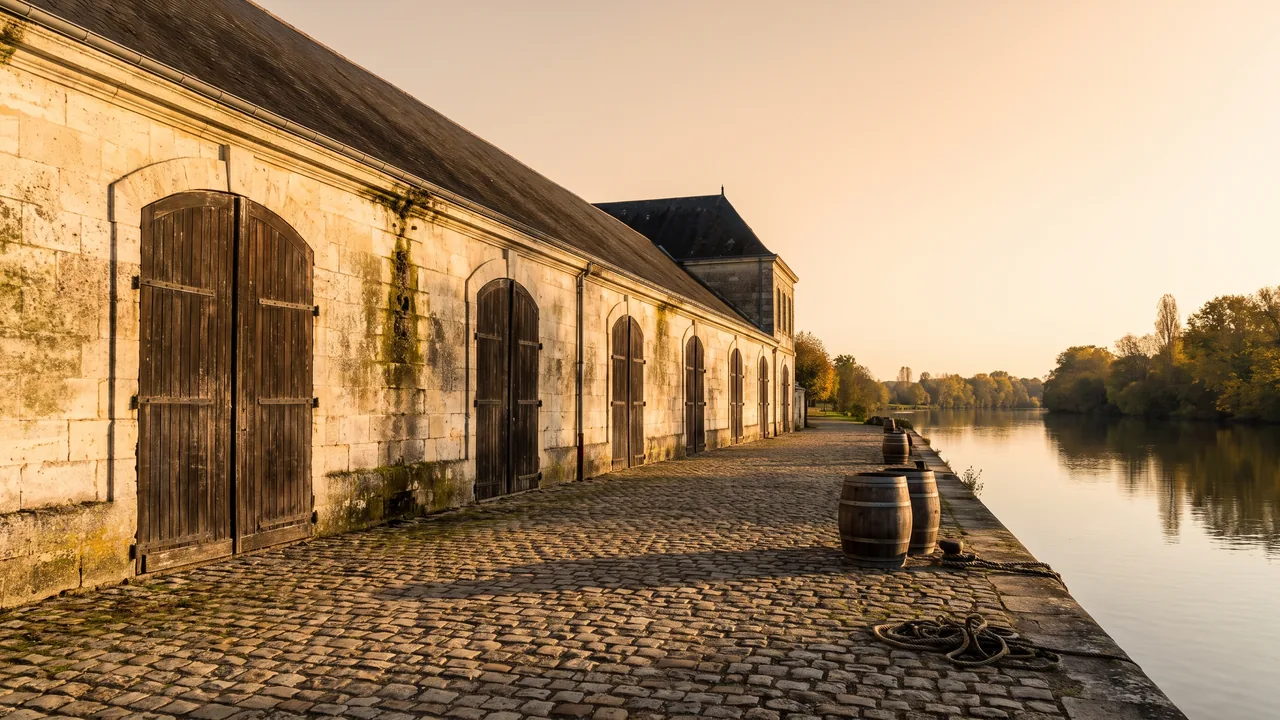
The most prominent of these houses is Courvoisier, whose light-colored stone “château” overlooks the riverbanks. Here, too, some clarification is needed, as legend has blurred the dates. The slogan “since 1828” is a marketing ploy: the company traces its origins to a trading firm founded in Bercy in 1809, and the Courvoisier company wasn’t actually established until 1835, in Jarnac. Its iconic building on the quays dates from 1857 and was inspired by the Pavillon de Flore at the Louvre—there was no “pagoda” or castle from 1907, contrary to what is sometimes claimed.
Above all, the famous “Napoleon’s Cognac” is a marketing tagline: Courvoisier did not exist during Napoleon I's lifetimeer, who died in 1821. The actual event, however, is well documented: the house became official supplier to the Imperial Court of Napoleon III in 1869, and the original patent is on display at the Jarnac Museum.
The brand’s Napoleonic identity—the “Napoleon” quality, the logo silhouette, and the “Joséphine” bottle launched in 1950—was later forged by the Simon family, who bought the business in 1909. Since then, the company has changed hands many times: Simon, then Hiram Walker, Allied Domecq until 2005, Beam/Fortune Brands, Beam Suntory, and a takeover announced by the Italian group Campari in late 2023 for approximately $1.2 billion. A new visitor center reopened there in October 2024.
Hine and Delamain, the Masters of Vintage Wines
Two other distilleries contribute to Jarnac’s reputation for quality. Hine, located on Quai de l’Orangerie, traces its history back to 1763; It was around 1791 that Thomas Hine, an Englishman from Dorset, arrived; he married a woman named Delamain and did not rename the house “Thomas Hine & Co.” until 1817. A purveyor to the Court of England since 1962, Hine is best known for its single-vintage cognacs—cognacs made from a single harvest, a rarity in an industry based on blending. Delamain, for its part, embodies a different kind of commitment: the house of Roullet & Delamain dates back to 1824, but the Delamain family has been in the cognac trade since 1759. It works exclusively with Grande Champagne eaux-de-vie, in XO and beyond, and is among the very few houses—along with Hine and Croizet—to consistently maintain a selection of vintage cognacs. Together, Courvoisier, Hine, and Delamain embody the two souls of Jarnac cognac: the grand international trade and the artistry of aging old eaux-de-vie.
A helpful tip for planning your visits: the house Braastad / Tiffon, often listed as “Jarnac” in directories, has its headquarters and visitor center at 29 Quai de l'Île Madame, but on the opposite bank, on the Mainxe-Gondeville side (16200), a neighboring town—so technically, it’s not Jarnac itself, but “on the outskirts of Jarnac.” The house Louis Royer, founded in 1853, rounds out the list of the city’s top names. Not all of them are open to the public in the same way: it’s best to book your tour and tasting slots in advance, especially during the off-season. This is precisely where a private driver comes in handy—you can move from one appointment to the next without worrying about driving, with the same vehicle handling the logistics from one winery to the next, whether in Jarnac or Cognac.
| Home | Date Marker | Distinctive feature |
|---|---|---|
| Courvoisier | Company founded in 1835 · “château” built in 1857 | Supplier to Napoleon III (1869) · Imperial Eagle mark |
| Hine | Established in 1763 · “Thomas Hine & Co.” in 1817 | Millésimes · Purveyor to the Court of England since 1962 |
| Delamain | Roullet & Delamain 1824 · A family in the wine trade since 1759 | Exclusively Grande Champagne, XO, and higher · vintages |
| Louis Royer | Founded in 1853 | Major Charente Wine Merchant |
| Braastad / Tiffon | Quai de l'Île Madame | ⚠ Near Mainxe-Gondeville, “at the gates of Jarnac” |
The Battle of Jarnac and the “Jarnac Move”
The name Jarnac has gone down in history and become part of the French language through two episodes that are almost always confused—and which, in reality, have nothing to do with one another. There is the Battle of Jarnac (1569), a battle during the Wars of Religion, and the "Jarnac's move", an expression born of a duel… twenty-two years earlier and three hundred kilometers away. Added to this is the hometown of a French president: three very distinct “Jarnac” entries, which are worth untangling before jumping to conclusions.
The Battle of Jarnac (1569)
The Battle of Jarnac takes place on March 13, 1569, during the Third War of Religion. The royal Catholic army, commanded by Henry, Duke of Anjou — the future Henry III, then 17 years old — defeated the Protestant army led by Louis Ier of Bourbon, Prince of Condé. The prince, who was unseated and then taken prisoner after surrendering, was shot and killed by a gentleman named Montesquiou: a cold-blooded execution that left a lasting impression on Protestants. The victory established the young Duke of Anjou’s military reputation very early on. An often-overlooked geographical detail: the battle did not take place in the town of Jarnac, but in the vicinity, on the southern bank of the Charente River, near Bassac and Triac-Lautrait. The established name remains “Battle of Jarnac,” but the fighting did not take place in the town’s streets. Contemporary chroniclers report that Condé’s body, killed treacherously after his surrender, was then paraded on a donkey as a sign of humiliation—a story to be taken as the chroniclers’ account, not as an established fact.
The "Jarnac Incident," a duel in 1547
Here's the most common mistake: the "Jarnac move" doesn't come not of the battle. The expression comes from a the judicial duel of July 10, 1547 — that is, twenty-two years before the battle — delivered not to Jarnac but to Saint-Germain-en-Laye, at the court of King Henry II. On that day, Guy Chabot, Baron of Jarnac, faced off against François de Vivonne, Lord of La Châtaigneraie, who was reputed to be unbeatable. Against all odds, Chabot knocked him down with an unexpected blow to the calf, severing the muscles in his leg: a skillful, ingenious strike that no one had seen coming. Originally, the expression was therefore a praise for skill. It was not until the 18th It was in the 17th century, in the writings of the Jesuits who compiled the *Dictionnaire de Trévoux*—Guy Chabot was a Protestant—that the phrase “coup de Jarnac” took on its current meaning of a stroke unfair and devious. The meaning has literally reversed over the centuries. So there are three “Jarnac” events: the duel of 1547, the battle of 1569, and the city of Mitterrand—three separate episodes that one would be wrong to confuse.
Beyond these two well-known homonyms, Jarnac has a longer history, deeply rooted in its land. The St. Peter's Church, in the city center, is a former Benedictine priory whose origins date back to VIII century — long before the Wars of Religion and the cognac trade. The city hall The current one, on the other hand, dates from 1867, a testament to the prosperity of the Second Empire—the very era when Courvoisier was building his château on the quays and becoming a purveyor to the Imperial Court. It is this layering—a medieval priory, Renaissance battles, a golden age of trade in the 19th century, a president of the 20th — which gives this small town a surprising amount of history for its size.
St. Peter's Church and the Waterfront
At the heart of Jarnac, two sites tell the story of the town’s long history: Saint-Pierre Church, the successor to a thousand-year-old priory, and the banks of the Charente River, where local economic life has unfolded for centuries. One symbolizes sacred time, the other the time of commerce; together, they set the scene for a peaceful stroll along the river, amid stone and linden trees.
A former Benedictine priory
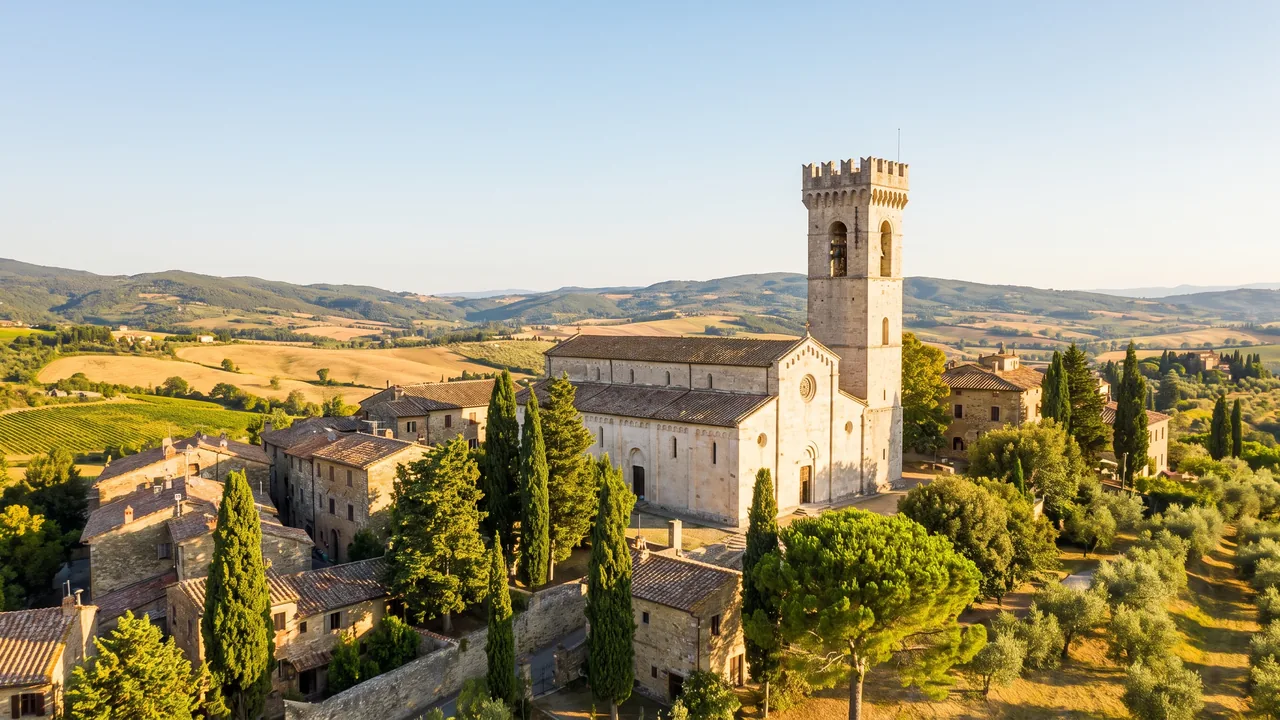
The St. Peter's Church is the oldest monument in Jarnac. Former Benedictine priory, its origins date back to VIII century, making it a testament to the very early Middle Ages in the Charente region, long before the heyday of cognac. It was there that, on the January 11, 1996, the François Mitterrand's funeral, before the procession made its way to the Grand'Maisons Cemetery. On that day, the church in a small town of 4,500 residents became the focus of attention for the nation and the international press during a national farewell to a head of state. Now restored to its peaceful state, it is well worth a visit for its atmosphere and the weight of history it carries: it is one of the natural stops on a journey following in the president’s footsteps, between his nearby birthplace and the family plot.
The docks where the barges unloaded
The true common thread running through Jarnac is the river. The banks of the Charente—most notably the Quai de l’Orangerie, lined with linden trees—run alongside the cellars of the cognac houses and Mitterrand’s childhood home. It was here that the gabares—those flat-bottomed boats that carried salt and brandies down the river—once unloaded their cargo. Before the arrival of the railroad, the Charente was the “highway” of cognac: the barrels were transported down to the Gironde estuary and the ports from which ships set sail for England, Holland, and the rest of the world. This river-based history explains why the major cognac houses settled along the waterfront, and why the city’s most beautiful buildings face the river. Strolling along these quays today is like walking in the wake of two centuries of trade, with the cellars on one side and the gently flowing Charente on the other. Finally, it’s worth noting that it wasn’t until 1827 that a bridge was built across the river: until then, people crossed from one bank to the other by ferry—a sign that the water shaped the city far more than it divided it.
The Charente River and the Gabares
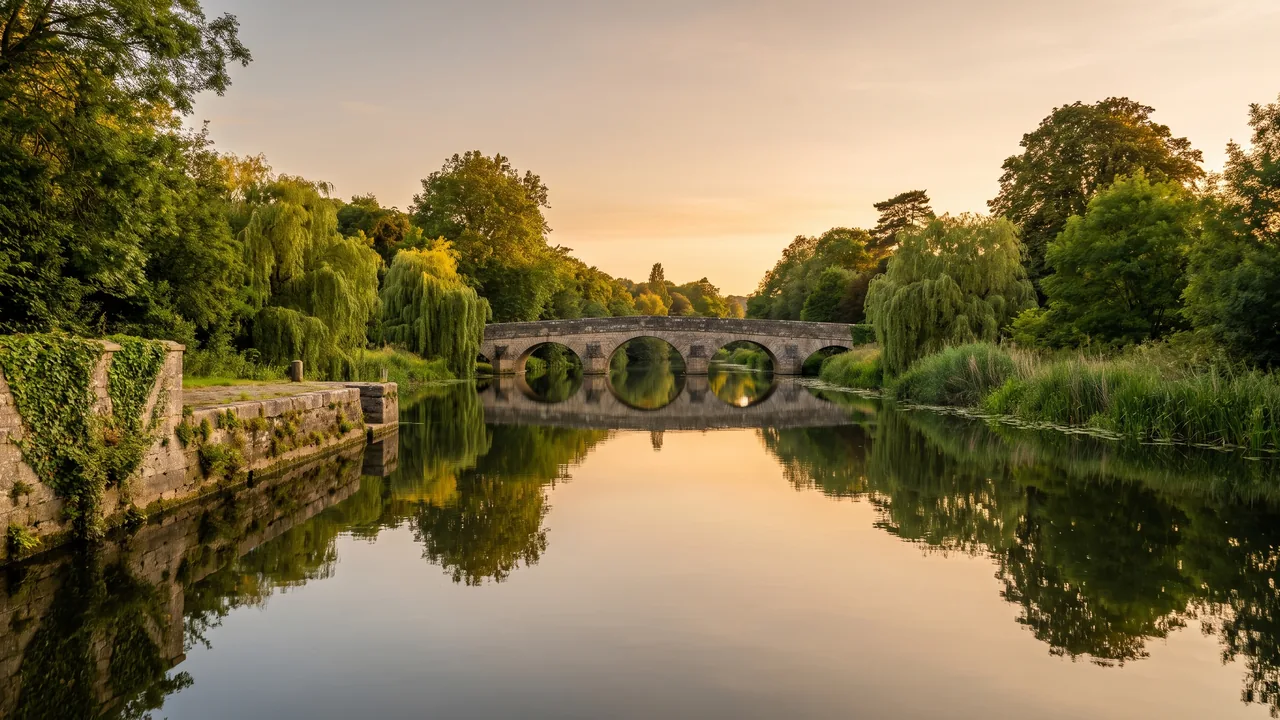
It’s impossible to understand Jarnac without returning to the river that shaped it. The Charente isn’t a spectacular waterway: it’s a slow-moving, wide, and peaceful river that winds its way through meadows and willow groves. Yet it is this river that has sustained the town, fueled its commerce, and shaped its landscape. Today, it offers one of the most beautiful experiences of the visit: a boat ride along the water’s edge aboard a gabare, allowing you to see the town from the perspective of the merchants of yesteryear.
"The prettiest stream in my kingdom"
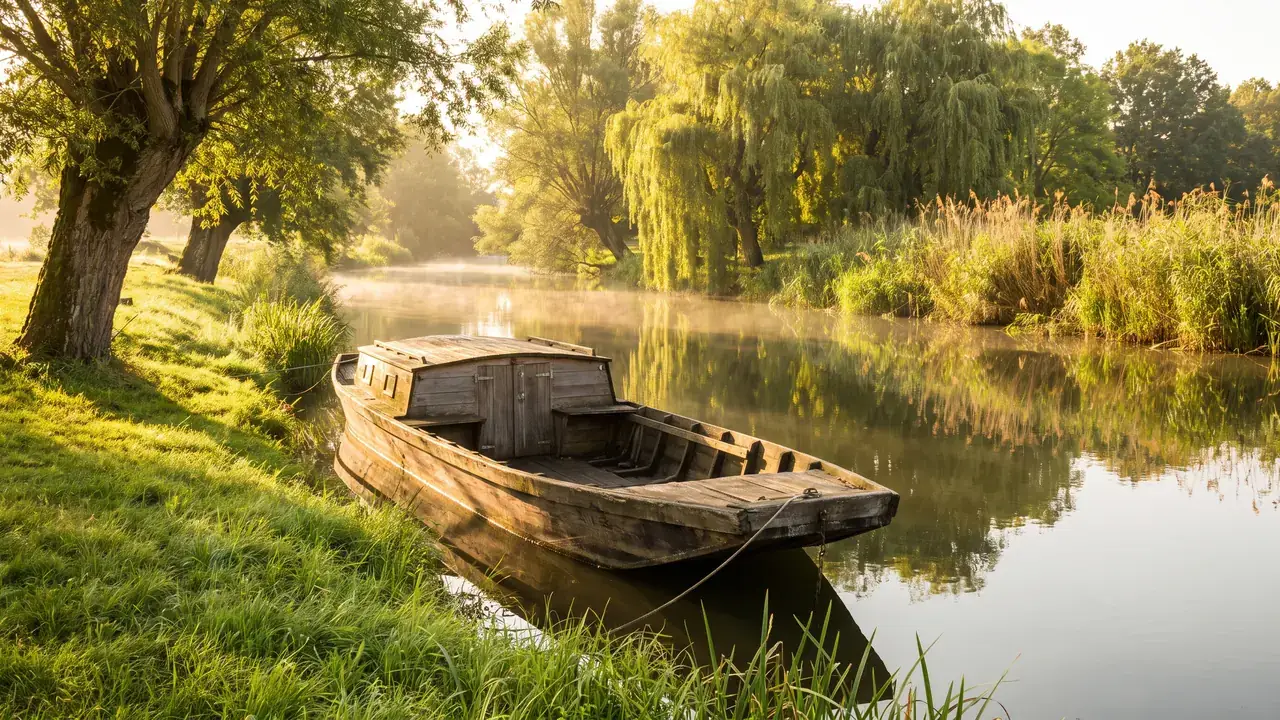
King Henry IV is credited with a famous remark about the Charente: “the prettiest stream in my kingdom.” The phrase appears in every brochure for the region, but its attribution is uncertain—it’s best to treat it with a grain of salt, as a charming saying that tradition has attributed to the king from Béarn. Whether true or not, it captures perfectly what the walker feels: the Charente at Jarnac has a gentle, almost still quality that invites you to slow down. The reflections of the wine cellars and linden trees in the calm water, the moored boats, and the weeping willows paint a picture very different from the hustle and bustle of the major Cognac ports. It is this peaceful character, more than any monument, that gives the town its charm and makes it worth taking the time to stroll through it rather than simply passing through.
The "La Demoiselle" gabare
To experience the river, hop aboard a gabare "La Demoiselle". This boat at flat bottom, at the wood siding and with a capacity of 69 passengers, is a reinterpretation of the flatboats that once carried salt and brandy along the Charente River. Departures are from the docks at Jarnac, every day except Tuesday — and seven days a week in July and August —, operated by the Greater Cognac Urban Community. The promenade follows the river’s meandering course, offering a view of the wine cellars, docks, and riverbanks that can’t be seen from land. It’s a relaxing break in the shade, ideal at the end of the day when the low-angled sunlight gilds the stone of the wine cellars. For many visitors, this is the best way to grasp at a glance what Jarnac once was: a town born of the river, facing the water, whose wealth was transported by boat down to the ocean for centuries.
What to Do in Jarnac?
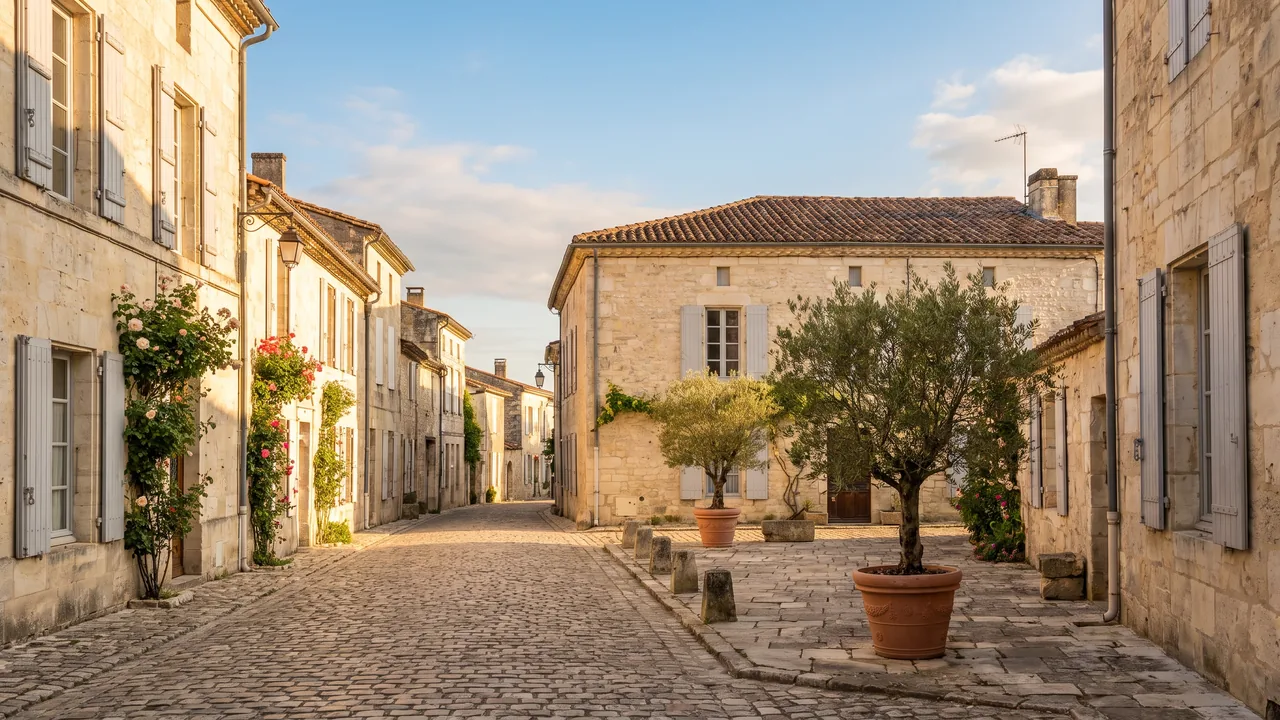
In Jarnac, you can experience the essence of the town in a single, action-packed day: walk in the footsteps of François Mitterrand, from his birthplace to the museum dedicated to his legacy; step inside a major cognac house for a tour and tasting; board a gabare to cruise down the Charente River; shop for fresh produce at the market under the Halles; and stroll along the riverbanks lined with wine cellars and linden trees. The city is small, flat along the river, and perfectly suited for walking: everything can be done on foot, without a car. It’s also a convenient base for exploring Cognac, just a quarter of an hour away, or Angoulême. Depending on the season, a festival or a local event can add a special touch to your visit. Here are the key events to keep in mind to plan your day there, from the morning market to an evening stroll along the river.
- Visit Mitterrand's birthplace—at 22 Rue Abel-Guy, the Maison des Illustres displays furniture, artifacts, and manuscripts from four generations of the family.
- Explore the Donated Art Museum—located at 10 Quai de l'Orangerie—which houses the gifts received by the president during his terms in office, the fourth and final of his presidential donations.
- Visit a cognac house—Courvoisier, whose visitor center reopened in October 2024; Hine and its vintage cognacs; and Delamain and its Grande Champagne: tours and tastings by reservation.
- Board the “La Demoiselle”—a flat-bottomed boat that can carry 69 passengers—which departs from the docks every day except Tuesday (7 days a week in July and August).
- Shopping at Les Halles — from 7 a.m. to 1 p.m. on Tuesdays and from Friday through Sunday; there are more stalls on Tuesdays and Fridays.
- Attend Festi Classique—a classical music festival in August and September—as well as the Fête de la Musique on June 21.
- See the Canobus Grand Prix—an intercompany canoe race on the Charente River, held every June since 2003.
- Visit Île Madame—a riverside setting that hosts the opening of the Cognac Blues Passions festival in early summer.
The Les Halles Market and the Event Calendar
According to the Information page for the City of Jarnac, accessed on July 24, 2026, Les Halles is open from 7 a.m. to 1 p.m. on Tuesdays and from Friday through Sunday, with more stalls on Tuesdays and Fridays. It is closed on Mondays, Wednesdays, and Thursdays; please check this page before your visit.
As for the calendar of events, the Fête de la Musique, Festi Classique, the Grand Prix Canobus, and the events on Île Madame are subject to the annual schedule. Check the municipal calendar before you go to confirm dates, times, and any access requirements.
| Appointment | When | Where |
|---|---|---|
| Les Halles Market | Tuesdays and Fridays through Sundays, 7 a.m.–1 p.m. | Halles (covered market) |
| "La Demoiselle" Gabare | Every day except Tuesday (7 days a week in the summer) | Quays of the Charente |
| Festi Classique | August–September | Jarnac |
| Canobus Grand Prix | Every June (since 2003) | Charente |
The Terroir: Fins Bois Cognac
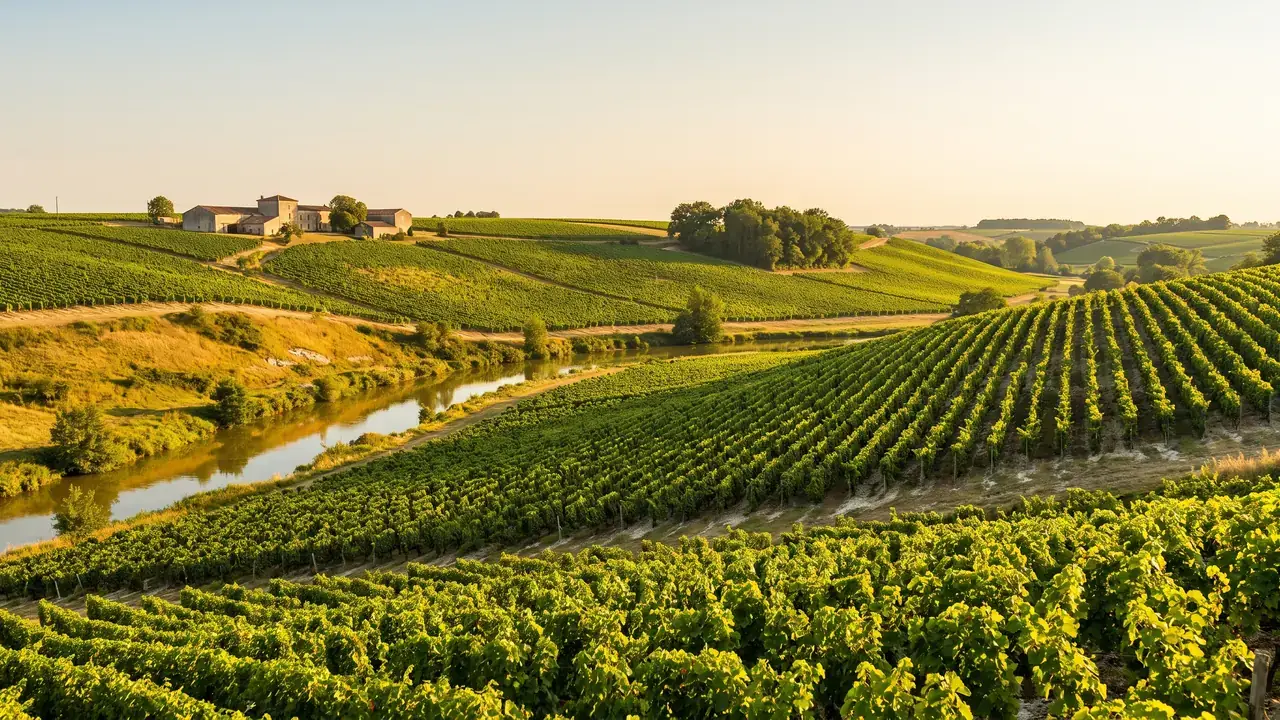
One last point deserves clarification, as it often surprises visitors: the Jarnac vineyard is not not in Grande Champagne, the most prestigious cru in Cognac. The municipal area—approximately 275 hectares of vineyards — is classified as Fine Woods. This in no way detracts from the prestige of the city's houses, for it is important to distinguish between two things that are often confused: the terroir where grapes grow, and the wine cellar where the brandy is aged. Delamain, for example, works exclusively with Grande Champagne brandies… which it ages in its cellars in Jarnac. The grapes come from elsewhere; the aging takes place here. Understanding this distinction means understanding how the entire Charente wine trade operates.
The Six Cognac Grape Varieties
The Cognac appellation is divided into six crus, based on soil type. Ranked from most to least renowned for the finesse of their eaux-de-vie, these are: Grande Champagne, Petite Champagne, Les Borderies, Les Fins Bois, Les Bons Bois, and Les Bois à terroirs (sometimes called Bois ordinaires). The first two, rich in limestone, produce fine eaux-de-vie with excellent aging potential; the Borderies, which are rarer, contribute notes of violet; the Fins Bois—the cru of Jarnac—offer supple, round eaux-de-vie that come into their own more quickly. Each house blends eaux-de-vie from different crus and of different ages in its own way to create its signature style, with the exception of single-cru purists like Delamain. It is this art of blending that defines the skill of the cellar master.
The Winery in Jarnac: Grapes from Elsewhere
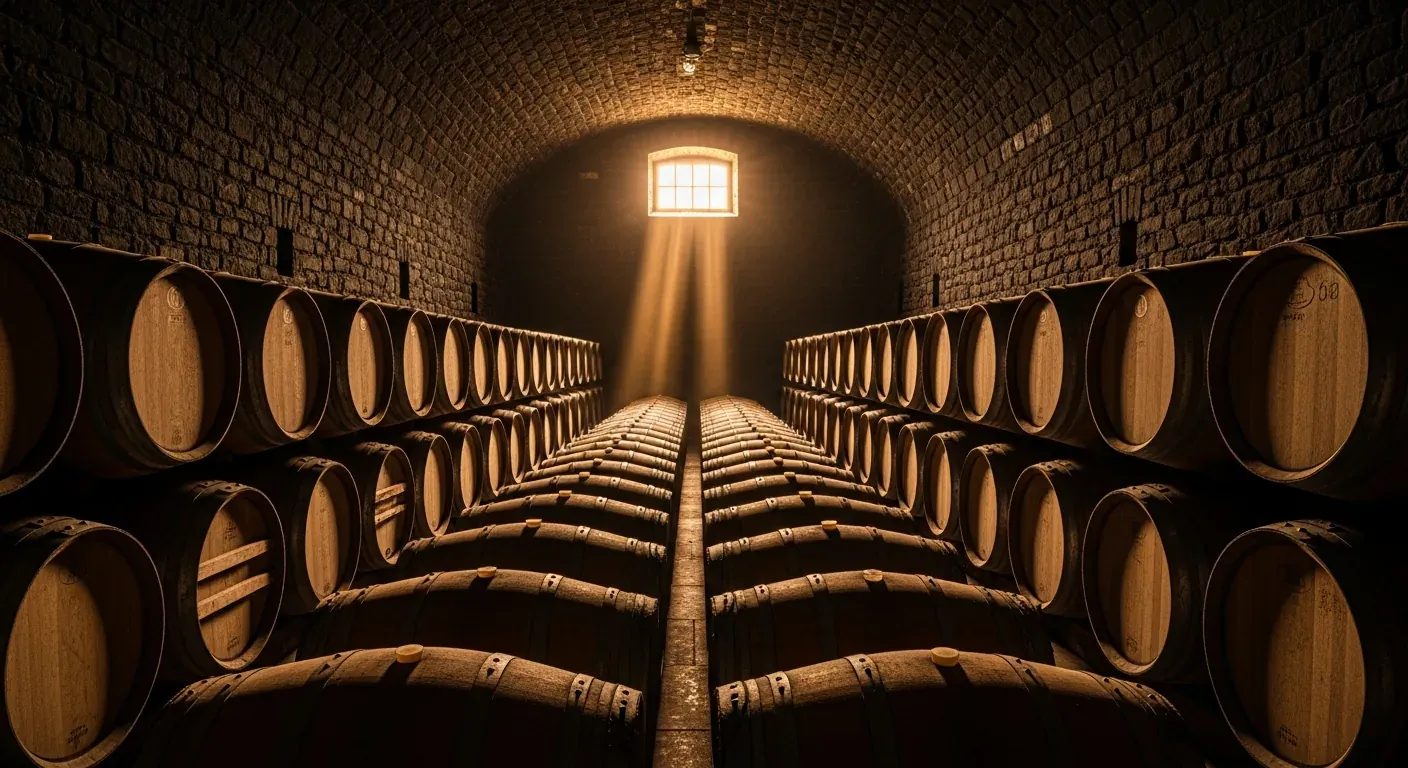
Jarnac’s strength lies precisely in its status as a town dedicated to trading and aging rather than raw production. The houses purchase eaux-de-vie from across the appellation—including the finest crus of Grande Champagne and Petite Champagne—and then mature, blend, and age them in their cellars along the banks of the Charente. The river’s mild, humid climate, the darkness of the cellars, and the long aging process do the rest: a portion of the alcohol evaporates each year—this is the famous “angels’ share.” The region also produces Pineau des Charentes, a fortified wine made by blending grape must with cognac brandy—an iconic aperitif found on every table in the Charente. Visiting a Jarnac cellar, therefore, means discovering not a vineyard but the expertise of a finisher—the art of transforming, through patience, eaux-de-vie from elsewhere into cognacs that will bear the city’s name.
| Cognac Vintage | Character |
|---|---|
| Grande Champagne | The Finest · Long-Aged (Delamain vintage) |
| Petite Champagne | Refined and elegant, reminiscent of Grande Champagne |
| Borderies | The Smallest Vintage · Notes of Violet |
| Fine Woods | Smooth and round · the Jarnac vintage |
| Good Woods | More earthy · rapid maturation |
| Wines from Specific Regions | The most remote part of the appellation |
Around Jarnac
Jarnac is an ideal base for exploring the Charente region. Its immediate neighbor, Cognac, is just a quarter of an hour away and is home to the great cognac houses—Hennessy, Martell, Rémy Martin—; Angoulême, a half-hour away, is the capital of comic books and the gateway to the TGV for Paris; Saintes, a Roman town a little further on, boasts an amphitheater and several sanctuaries. In a single day, it’s very easy to combine a visit to Jarnac with one of these towns, all connected by the Charente River.
Less than an hour
Just about 15 kilometers away, Cognac and its cellars are a natural extension of a visit to Jarnac: check out our guide to Cognac to plan your visits to the distilleries and learn about the Charente method. To the east, Angoulême—about 34 km away—is worth a detour for its walled upper town, its comic book festival, and its TGV station, which puts it just two hours from Paris; our guide to Angoulême covers the essentials. Finally, to the west, Saintes, about 40 kilometers away, reveals its Gallo-Roman past, its amphitheater, and its Abbaye aux Dames: discover more in our guide to Saintes. All these towns are easily accessible by car, and many of our clients combine visits to two of them in a single day, with the same driver managing the routes and schedules.
| Destination | Distance | Must-See |
|---|---|---|
| Cognac | ≈ 15 km | Major brandy houses, wine cellars, the Charente method |
| Angoulême | ≈ 34 km | City walls, Upper Town, Comic Book Festival, TGV station |
| Saintes | ≈ 43 km | Roman Amphitheater, Abbaye aux Dames, Charente |
How to get to Jarnac from Bordeaux
The easiest way to get to Jarnac from Bordeaux is to take the direct route via the A10, then follow the Charente roads that run along the Charente River. With a chauffeur service, you’ll depart from your home or Bordeaux-Mérignac Airport and arrive right at the wine cellars or Mitterrand’s birthplace, without having to worry about parking or train connections. This is especially convenient when visiting cognac houses: no one in the group needs to be the designated driver, and you can enjoy the tastings with complete peace of mind.
How much does the ride cost?
The route from Bordeaux to Jarnac covers about 115 km in 1 hour 45 minutes via the A10 and then the roads of the Charente region. Our rates start at 200 € € During the day, for a sedan carrying up to 3 passengers, a fixed price confirmed in writing before departure—no meter, no surprises upon arrival. The exact quote depends on the specific pickup address, the time of day (a surcharge applies at night, on weekends, and on holidays), and the vehicle you choose. Many customers add a 15-minute detour to Cognac to visit the major cognac houses on the same day; request your quote online, and we’ll respond within 30 minutes.
| Route | Distance | Duration | From |
|---|---|---|---|
| Bordeaux → Jarnac | ≈ 115 km | ~1 hr 45 min | €200 € |
| Bordeaux-Mérignac Airport → Jarnac | ≈ 120 km | ~1 hr 35 min | based on a quote |
| Jarnac → Cognac (extension) | ≈ 15 km | ~18 min | based on a quote |
Why choose an executive car service?
A private chauffeur makes all the difference, especially when the day revolves around cognac. During the ride, you can read, relax, or plan your visits; you’ll be dropped off right near the cellars, and picked up wherever you’d like—on the quays, after a tasting, or following a visit to the Les Halles market. No one has to worry about getting behind the wheel after tasting an aged XO: that’s the whole point of this package for a wine-tasting getaway. The vehicle is clean, air-conditioned, equipped with water, and driven by a uniformed driver, and you travel at your own pace, free from the constraints of train schedules. Whether it’s a trip for two, an outing with friends to visit the cognac houses, or a business trip, the door-to-door service from Bordeaux remains the most comfortable way to reach the City of Mitterrand.
Frequently Asked Questions
How much does a chauffeured transfer cost from Bordeaux to Jarnac?
The trip from Bordeaux to Jarnac (approximately 115 km, 1 hour 45 minutes via the A10) starts at 200 € during the day for a sedan carrying up to 3 passengers. The price is fixed, confirmed in writing before departure, with no meter. The exact amount depends on the pickup address, the time of day, and the vehicle selected. An extension to Cognac is available upon request.
How long does it take to get from Bordeaux to Jarnac?
Allow about 1 hour and 45 minutes for the drive—roughly 115 km north on the A10 highway, then along the Charente region’s roads. The route is direct and drops you off right at the wine cellars or Mitterrand’s birthplace, making for a very comfortable day trip from Bordeaux.
Did François Mitterrand die in Jarnac?
No. François Mitterrand was born in Jarnac on October 26, 1916, but he died in Paris on January 8, 1996. He was buried in his hometown, at the Grand'Maisons Cemetery, in the family vault of his mother’s side of the family, the Lorrains, following a Mass celebrated at Saint-Pierre Church on January 11, 1996. His grave is simple, without a mausoleum.
What can you see while following in Mitterrand's footsteps in Jarnac?
Two separate sites. The birthplace, at 22 Rue Abel-Guy, has held the “Maisons des Illustres” designation since 2011 and displays the family’s furniture, artifacts, and manuscripts. The donation museum, located at 10 Quai de l’Orangerie, houses gifts received during his terms in office. The tour is rounded out by the Saint-Pierre Church and the Grand’Maisons Cemetery.
Which cognac houses should you visit in Jarnac?
Jarnac brings together four big names in a very small area: Courvoisier, whose visitor center reopened in October 2024; Hine and its vintages; Delamain, which works exclusively with Grande Champagne; and Louis Royer. The Braastad / Tiffon distillery can be visited nearby, but on the Mainxe-Gondeville side, on the opposite bank. Tours and tastings must be booked in advance.
Where does the expression “coup de Jarnac” come from?
It does not come from the Battle of Jarnac, but from a judicial duel on July 10, 1547, in Saint-Germain-en-Laye, where Guy Chabot, Baron of Jarnac, defeated his opponent with an unexpected blow to the knee. Originally, the expression praised skill; it was not until the 18th century that it came to mean a dishonest blow. The meaning has thus reversed over time.
What was the Battle of Jarnac?
This was an episode in the Wars of Religion, on March 13, 1569: the royal army of Henry, Duke of Anjou—the future Henry III, then 17 years old—defeated the Protestant army of Louis I of Bourbon, Prince of Condé, who was executed after surrendering. The battle took place in the vicinity of the town, near Bassac and Triac-Lautrait, and not in the town of Jarnac itself.
Is Jarnac cognac from Grande Champagne?
No. The Jarnac estate, comprising approximately 275 hectares of vineyards, is classified as Fins Bois, not Grande Champagne. However, houses in the town, such as Delamain, age eaux-de-vie purchased from Grande Champagne there: the grapes come from elsewhere, but the cellar is in Jarnac. It is important to distinguish between the terroir of the grapes and the location where the eaux-de-vie are aged.
Is Courvoisier's "Napoleon Cognac" a real thing?
This is largely a marketing myth. The Courvoisier company was not founded until 1835, after the death of Napoleon I in 1821; therefore, it could not have supplied him during his lifetime. The established fact is that Courvoisier became the official supplier to the Imperial Court of Napoleon III in 1869, and the original patent is on display at the Jarnac museum.
Can you take a cruise on the Charente River in Jarnac?
Yes. The “La Demoiselle,” a wooden flat-bottomed boat that can accommodate 69 passengers, departs from the Jarnac docks every day except Tuesday, and seven days a week in July and August. Operated by Grand Cognac, it pays homage to the traditional gabares that once carried salt and brandy, and offers the best view of the wine cellars from the water.
When is the market held in Jarnac?
Les Halles is open from 7 a.m. to 1 p.m. on Tuesdays and from Friday through Sunday, with more stalls on Tuesdays and Fridays, according to the City of Jarnac, as of July 24, 2026. It is closed on Mondays, Wednesdays, and Thursdays. Be careful not to confuse this with Jarnac-Champagne, in Charente-Maritime.
What is there to see around Jarnac?
Cognac and its major cognac houses are about 15 km away, Angoulême and its TGV station are about 34 km away, and the Roman town of Saintes is about 43 km away. Jarnac is an ideal base for exploring the Cognac region and the Charente River valley. Many visitors combine a visit to Jarnac with a trip to Cognac in a single day, as the two towns are so close together.
Does the price change at night or on the weekend?
A surcharge may apply at night, on weekends, and on holidays, as is the case for all our trips. The fare is always communicated and confirmed in writing before departure: you’ll know the exact price when you book, with no unpleasant surprises upon arrival. The quote depends on the pickup address, the time, and the vehicle.
Further Reading
- The Cognac Capital: See the Cognac Guide (the major houses and the 6 crus, 15 minutes from Jarnac)
- The Capital of Comics: See the Angoulême Guide (the city walls and the TGV station, 34 km away)
- The Rome of Aquitaine: see the Saintes Guide (the Roman amphitheater on the Charente River, 43 km away)
- Book your trip: book online or browse all our destinations
Sources and References
- City of Jarnac — Practical Information — Market Days and Hours
- Destination Cognac / Grand Cognac — Cognac Houses, Gabare Boats, Tours
- François-Mitterrand Institute — Childhood in Charente — Birth and Address in Jarnac
- POP — François Mitterrand's Birthplace — awarded the "Maisons des Illustres" designation in 2011
- INSEE — Municipality of Jarnac (16167) — Population and Territory
- BNIC — Housing in Charentes — Real estate agencies based in Jarnac
Article updated on July 24, 2026.
On the way to the City of Cognac
Direct transfer from Bordeaux (~1 hour 45 minutes via the A10) to the cognac houses, Mitterrand’s birthplace, and the banks of the Charente River. Fixed-price quote in writing, with no obligation.