From Bordeaux to Jonzac: château, spa and Haute-Saintonge
A castle that houses both the town hall and the subprefecture, France’s newest spa resort, and a water park heated by geothermal energy. The capital of Haute-Saintonge on the Seugne River, Jonzac blends a medieval town with 62°C water—just 1 hour from Bordeaux.
Jonzac at a glance
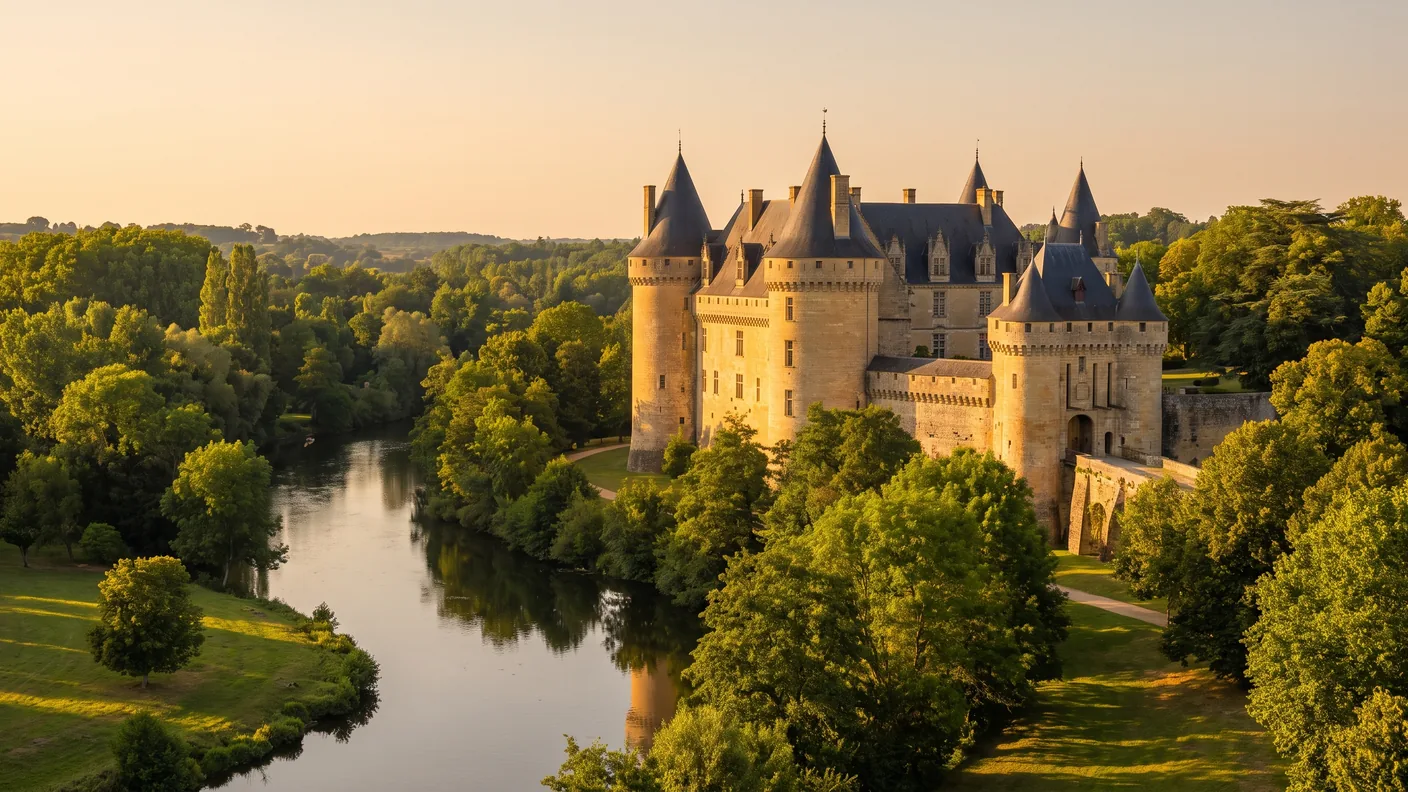
Jonzac (Charente-Maritime), subprefecture and capital of the Haute-Saintonge, on the banks of the Seugne River, brings together two aspects that few cities combine: a medieval town and an ultra-modern spa resort. Its castle, whose gatehouse bears the engraved date “1549,” houses both City Hall and the subprefecture, and its towers have been designated a Historic Monument since 1913. Surrounding it are the Carmelite cloister (1657), now a cultural center; a listed Romanesque church; and two 18th-century mills. century brought back to life. A well drilled in 1979 brought forth water at 62 °C (Chaîne Thermale du Soleil, data accessed in July 2026): In 1986, Jonzac became the spa town the most recent in France, along with a water park, The West Indies, heated by geothermal energy and attracting more than 400,000 visitors a year in the 2022–2027 Local Intermunicipal Program. Count ~87 km from Bordeaux, about 1 hour and 11 minutes via the A10, or as soon as 155 € by chauffeured transfer, door-to-door.
| Landmark | Details |
|---|---|
| Department | Charente-Maritime (17) · Nouvelle-Aquitaine |
| Status | Subprefecture · Capital of Haute-Saintonge · "Station Verte" |
| Population | ≈ 3,602 residents (Jonzacais) |
| Must-Sees | Castle · thermal baths · The West Indies · Carmelite Cloister |
| River | The Seugne, a tributary of the Charente |
| From Bordeaux | ≈ 87 km · ~1 hr 11 min via the A10 · starting at 155 € by chauffeured transfer |
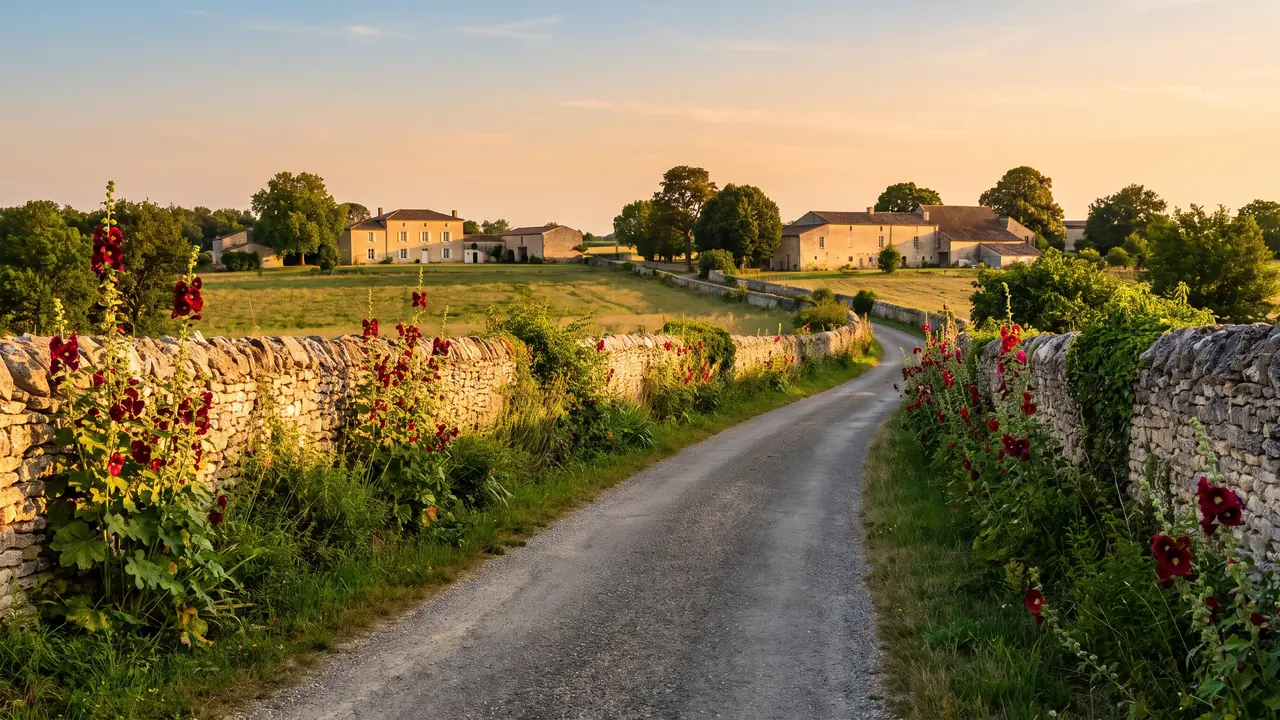
Many travelers are familiar with Jonzac because of its highway exit, yet they never stop there, assuming it’s just a small town they pass through on the road between Bordeaux and Saintes. That’s a misconception. Few towns with a population of 3,600 offer, within a radius of just a few hundred meters, a historic castle that houses two government offices, a spa that originated from an oil well, and a 16th-century convent A village that has become a cultural hub, two mills that have been restored to working order, and a river perfect for canoeing. You can explore it all on foot, between Mont Balaguier—where the castle stands—and the shaded banks of the Seugne.
This guide brings together everything you need to know before you come: what the château is really like—and why you shouldn’t confuse it with its namesakes—how the country’s newest spa resort operates, what you can do in a day exploring historic sites, hot springs, and Cognac vineyards, what the surrounding area has to offer, and how to arrive well-rested from Bordeaux without worrying about parking or driving after a relaxing session. Every date and figure cited here has been verified using the official sources listed at the end of the article.
Where is Jonzac located?
Jonzac stretches along both banks of the Seugne, a tranquil tributary of the Charente, in the southern part of Charente-Maritime, in Nouvelle-Aquitaine. The city is the subprefecture of the department and the seat of its district since 1800; it is also the seat of the Haute-Saintonge Community of Municipalities, of which it is the recognized capital. Its INSEE code is 17197, its ZIP code is 17500, and it covers an area of 13.09 km² ranging in elevation from 26 to 87 meters. Its residents are known as Jonzacais and Jonzacaises. The official population is 3,602 residents (2023 edition, effective as of 1er (January 2026), a figure that has been steadily rising—there were 3,432 in 2017—and the city’s catchment area is home to approximately 16,300 people. Despite its modest size, Jonzac thus exerts its influence across an entire region.
The origin of the name remains uncertain, and it should be treated as a hypothesis rather than an established fact. The most common hypothesis suggests it derives from a Gallo-Roman personal name—Jucundus or Juventius—followed by the Gallic suffix -acum, meaning “the estate of”: Jonzac would thus have originated from “the estate of Jucundus,” a rural property from Late Antiquity. Another, less plausible theory links the name to the nickname Jovius borne by Emperor Diocletian (from 286 onward). These two competing etymologies are equally valid given the current state of the sources: neither can be considered certain, and we must therefore exercise the necessary caution when faced with overly definitive accounts of origin.
How far is it from Bordeaux?
From Bordeaux, it’s about 87 km and a 1-hour, 11-minute drive north on the A10 highway. It’s one of the closest getaways in the Charente region to the city of Bordeaux: the route is direct, with no detours or changes in direction, and takes you to the foot of the castle or near the thermal baths in just over an hour. The highway exit leads directly into town, making this a particularly convenient day trip—you can leave in the morning, enjoy a session at Les Antilles or a tour of the castle, have lunch there, and return the same day without feeling tired.
| From Jonzac | Driving distance | Duration |
|---|---|---|
| Mirambeau | ≈ 17 km | ~19 min |
| Montendre | ≈ 22 km | ~24 min |
| Cognac | ≈ 34 km | ~39 min |
| Saintes | ≈ 40 km | ~45 min |
| Bordeaux | ≈ 87 km | ~1 hr 11 min |
This makes Jonzac a natural hub in southern Charentes. The town overlooks the Seugne Valley and is equidistant from several key destinations: the gateway to the Bordeaux region at Mirambeau, the Double Forest near Montendre, the Cognac distilleries, and the Roman town of Saintes. None of these destinations is more than three-quarters of an hour away, making Jonzac a convenient base for exploring all of Haute-Saintonge—this region of vineyards, cognac, and forests that spans the southern part of the department. One day is enough to get a feel for the region; spending a night there allows you to visit the thermal baths, the castle, and take a side trip to the neighboring wine regions.
The Castle of Jonzac
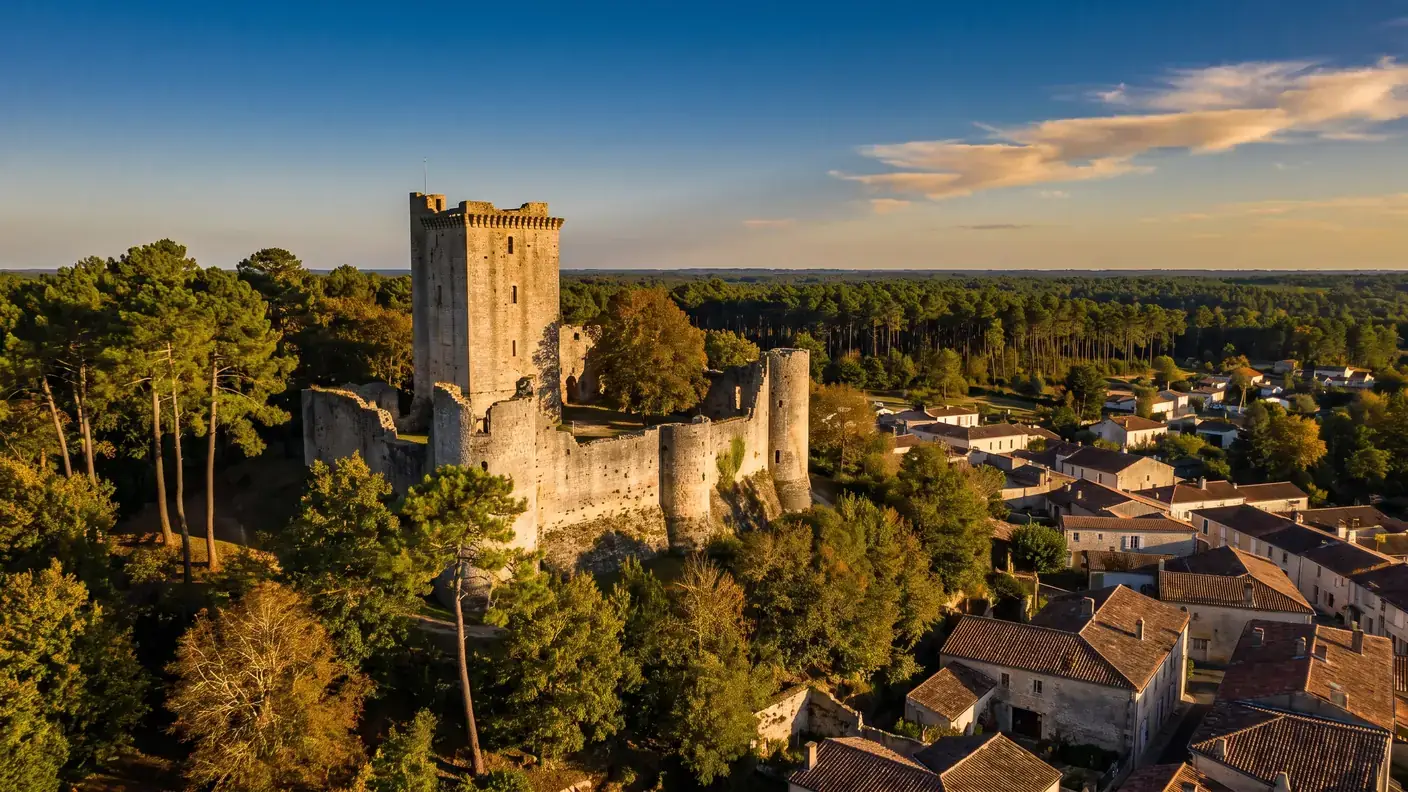
Towering over the city from the Mount Balaguier, the castle is the flagship landmark of Jonzac—and one of the most unique in the Saintonge region, as it is anything but a static setting. The site is a fortress attested as early as the 11th century century: Two cartularies provide the earliest dated references to it—one around 1073, the other around 1059—so it is safer to simply write “attested in the 11th "century" than to choose between the two. Ravaged during the Hundred Years' War, the fortress was rebuilt during the Renaissance: the entrance gate bears an engraved date « 1549 », and the towers flanking it date from the 16th and 17th centuries. One can still find a distinctly feudal vocabulary there—postern, isolated tower, arrowslits, machicolations—remnants of a time when the Seugne Valley was truly defended.
A lock engraved with “1549”
We must avoid a common oversimplification: saying that the castle was “built in the 11th "century" blends two distinct realities. The website, on the other hand, is well documented from very early on; but the building we see today is a reconstruction of the Renaissance and subsequent periods, built after the destruction caused by the Hundred Years' War. The gatehouse, dated “1549,” provides a concrete and reliable reference point in this regard: it marks the reconstruction campaign that gave the castle its current silhouette, with its two turrets, vaulted entrance passage, and inner courtyard. Distinguishing between the site’s antiquity and the date of the structure’s construction is not merely a scholarly detail: it is the key to correctly interpreting what we see before us—a modern castle built on medieval foundations.
City Hall and the Subprefecture Under One Roof
This is the most surprising feature of the place, and it defies our usual conception of a castle: the one at Jonzac is neither a museum nor a private estate, but a building administrative staff currently on the job. Its north wing houses the city hall, its south wing, the subprefecture — a rare dual use, in which municipal and state agencies work side by side within the walls of a Renaissance fortress. The monument has just undergone an extensive restoration project: begun some twenty years ago, the work has to be completed in 2024, restoring the stones, roofs, and interior decorations to their former glory. Visitors come to the castle to admire its architecture and its Italian-style theater, but in its hallways, they also encounter residents who have come to take care of some paperwork—a rather unique continuation of tradition.
A monument that has been listed since 1913
The castle is listed as a Historic Monument under entry PA00104777 in the Mérimée database. Source: POP Database / Mérimée—and it is important not to confuse it with the many similarly named “châteaux de Jonzac” listed in other municipalities. The protection was granted in successive stages. The towers and the postern gate were classified on May 3, 1913; the basement fountain was listed on July 11, 1942; and finally, the theater hall and its decor were listed on March 6, 1979. It is worth noting the distinction—often overlooked—between “classified” and “listed”: classification, reserved for the most remarkable elements—such as the towers in this case—is the highest level of protection. The Château de Jonzac is therefore, strictly speaking, a listed monument—unlike the town’s church, which is only registered, as we will see later.
| Element | Period | Status |
|---|---|---|
| Site / Fortress | First attested in the 11th century | Rebuilt after the Hundred Years' War |
| Entrance Gate | Engraved with "1549" | Renaissance Reconstruction |
| Towers and posterns | 16th–17th centuries | Listed as Historic Monuments (May 3, 1913) |
| Basement Fountain | — | Listed as a Historic Monument (July 11, 1942) |
| Theater and Set Design | — | Listed as a Historic Monument (March 6, 1979) |
| Current Use | Restoration to be completed in 2024 | City Hall + Subprefecture |
The Carmelite Convent and Its Cloister
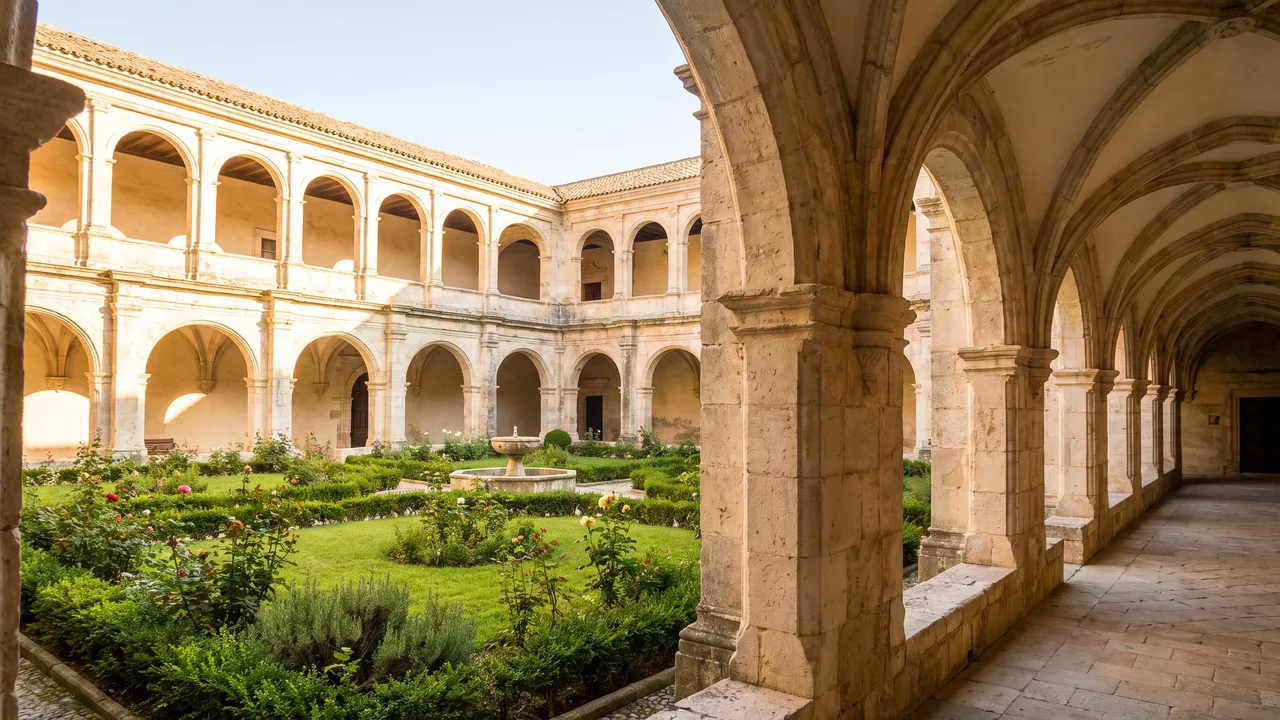
On the left bank of the Seugne River, in the neighborhood that bears its name, the Carmelite Convent is the second major architectural complex in Jonzac. It was founded in 1505 by Jean de Sainte-Maure, lord of the manor, to house the monks of the Carmelite Order. The jewel of the complex, however, is not from this first generation: the cloister was built in 1657—more than a century and a half after the foundation—with its arcaded galleries opening onto an inner garden. It is this light-colored stone cloister, with its simple and regular proportions, that today gives the Carmes neighborhood its distinctive character, nestled among the old houses and the nearby river.
From the 1505 convent to the cultural center
The Carmelite Convent is a fine example of continuity of use—nearly four centuries of uninterrupted life. After the Revolution and the vicissitudes that befell religious sites, the cloister was restored between 1976 and 1978, saving a complex that time had begun to take its toll on. Since then, it has found a new purpose: the city has transformed it into a cultural hub that brings together a media library, workshops, and exhibition spaces beneath its vaults. What Jean de Sainte-Maure had intended for prayer now serves as a space for reading, creativity, and community: few monuments have spanned the centuries in this way without ever ceasing to be useful to the life of their city.
Micro-Folies and Media Library
The digital heart of the venue is a Micro-Folies digital museum, housed within the convent’s walls. This initiative, which has been rolled out in many cities across France, allows visitors to discover, on a large screen in ultra-high definition, thousands of masterpieces from major national cultural institutions—providing access to art that would otherwise be reserved for Parisian museums, here offered free of charge and right at your fingertips in a town of 3,600 residents. The media library and hands-on workshops are centered around this digital museum. All of this makes the Cloître des Carmes an ideal starting point for a visit on a rainy day or a break between sightseeing stops: it’s a pleasant place to spend an hour, sheltered by the galleries, before heading back to the castle or the banks of the Seugne.
The Romanesque church and the two mills
In the Montguimar neighborhood stands the Saint-Gervais-Saint-Protais Church, a testament to the Saintonge novel at Jonzac. Her west facade and the last bay of its choir dates back to the late 12th century century; the rest suffered from the upheavals of history, particularly the Wars of Religion, which caused it to lose its vaults and left its walls with traces of arquebus fire still visible. The building features a rare detail that the attentive eye will not fail to notice: eight small columns topped with conical lanterns, inside which are hidden carved human faces. Unlike the castle, the church is not a listed building, but registered Designated a historic monument since July 2, 2001 (listing PA17000039). Source: POP Database / Mérimée
The Church of Saint-Gervais-Saint-Protais, inscribed in 2001
The distinction between “listed” and “designated” is worth noting, as it is often—and incorrectly—stated that the church is “designated”: this is false. It is listed in the supplementary inventory of Historic Monuments, which provides actual protection but is a lower level than classification. This distinction establishes a hierarchy of heritage sites at the city level: the castle, with its towers designated as early as 1913, holds the highest rank; the church, listed in 2001, ranks immediately below it. Both are worth a visit, but it’s best to use the correct terms—especially since the confusion between “listed” and “classified” is one of the most common mistakes made when discussing Jonzac’s heritage.
A Merovingian necropolis beneath the forecourt
The church hides an archaeological treasure beneath its floor. An excavation reported in 2009 revealed, on the forecourt, a Merovingian necropolis VI and VII centuries, with its limestone sarcophagi. This early Middle Ages cemetery is not an isolated site: it is part of a long history of human occupation at this location. A few hundred meters away, near the Chez Bret mill, excavations in the 2000s uncovered a Gallo-Roman settlement Occupied by Ier at V century. From an ancient village to a Merovingian necropolis, then a medieval stronghold, and finally a modern spa town: Jonzac encompasses, within a single region, nearly two thousand years of continuous human settlement—a depth of history that its modest size does not reveal.
Le Cluzelet and Chez Bret, two restored mills
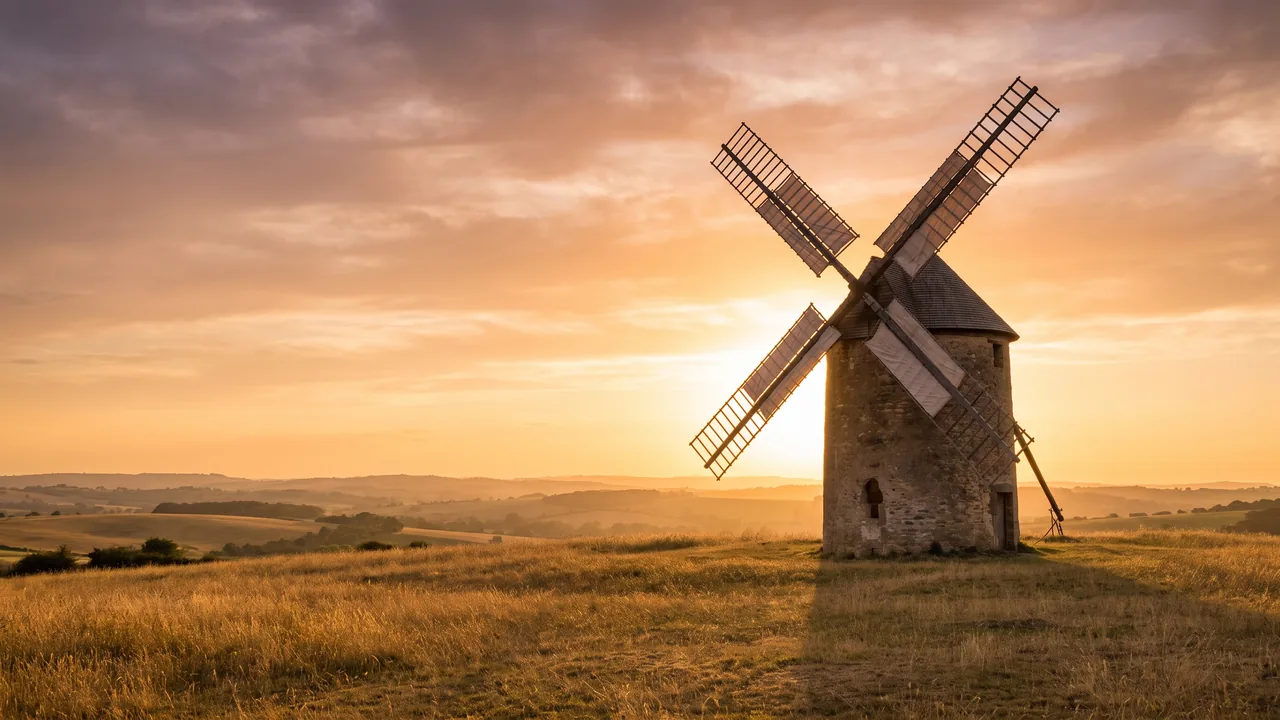
The municipality has restored two 18th-century mills century, both of which are once again in working order—and it’s important not to confuse them, as each has its own specific function. The Cluzelet Windmill product of the flour: Its wings turn in the wind to drive the millstone. The Chez Bret's Watermill, for his part, is pushing for the walnut oil, using the first cold press, thanks to its waterwheel driven by the current. At the Chez Bret mill, the tour offers a unique experience: after a 30-minute presentation on how the wheel works, visitors can bring their own nuts — shelled — to be ground and turned into oil. Two mills, two sources of energy, two products: a living testament to the rural traditions of the Saintonge of yesteryear.
Jonzac, a spa town, and the Caribbean
Here is the other side of Jonzac, a world apart from its medieval castle. Contrary to what one might imagine of a spa town, Jonzac is not an old, historic resort; on the contrary, it is the spa town the most recent in France. Its story begins with a drilling completed in 1979, followed by a second one in 1993: nearly 1,871 meters deep, instead of the expected hydrocarbons, hot water gushed out at 62 °C, a figure published by the Chaîne Thermale du Soleil (accessed July 2026), containing sulfur and sodium chloride. This chance discovery led to the establishment of a resort, which opened in 1986 by the Chaîne Thermale du Soleil, developed as a site cave-dwelling in former quarries. Today, it specializes in three areas: rheumatology, respiratory and ENT, and phlebology.
France's newest spa resort
The story behind the town’s founding is worth telling just as it is, because it captures the spirit of the place: Jonzac owes its thermal baths to a oil and geothermal drilling. While searching beneath its feet for an energy source, the town discovered, at a depth of 1,871 meters, water at 62 °C that would go on to make its fortune in tourism. The development of the site within former quarries gives the thermal baths their cave-like character, unique among French establishments. Born from a modern well rather than an ancient spring, the resort did not receive official recognition until 1986: whereas Vichy, Vittel, and Dax cultivate centuries-old traditions, Jonzac, on the contrary, embraces its youth, that of 20th-century thermalism Century-old, modern, and contemporary, set against the backdrop of a medieval city.
The Antilles, a lagoon heated by geothermal energy
In addition to the spa resort, there is a water park open to the general public, Les Antilles by Jonzac, which opened in 2002 in the Parc du Val de Seugne. Be careful when reading the name: “Les Antilles” is a trademark here that evokes the tropics and has no connection to the Caribbean. The park is heated using geothermal energy, supplemented by a wood-fired system, making it an energy-efficient facility: visitors can swim in a lagoon heated to 29 °C and whiz down a 60-meter water slide, all sheltered by a spectacular fabric canopy spanning approximately 10,000 m², which was presented at the opening as the largest tensioned structure in France. Designed by Dutch architects R. and N. Hendricks, the park attracts more than 400,000 visitors annually, according to the 2022–2027 local intermunicipal plan—by far the city’s top tourist attraction.
Finally, a quick note on vocabulary to avoid a common misunderstanding. In 2023, the West Indies received the “ Remarkable contemporary architecture " (POP database entry ACR0001845). This designation recognizes the building's architectural quality, but it does not confer no protection under the Historic Monuments Act: Therefore, one should not say that the park is “listed” or a “historic monument.” This clarification in no way detracts from the building’s boldness; it merely serves as a reminder that an architectural designation and a heritage listing are two distinct things. In Jonzac, the only listed monument remains the castle; the Antilles, for their part, are renowned for their technical prowess and their year-round hot water.
| Equipment | Opening | Key Figures |
|---|---|---|
| Spa (treatment) | Certified in 1986 | Drilling to ~1,871 m · water at 62 °C · 3 directions |
| The West Indies (water park) | 2002 | Lagoon 29 °C · water slide 60 m · sail ~10,000 m² |
| Visitor Numbers in the Caribbean | — | > 400,000 visitors per year |
| Energy | — | Geothermal Energy + Wood-Fired Heating System |
Jonzac Through the Centuries
To understand Jonzac is to trace a history of human settlement marked by remarkable continuity, from antiquity to the present day. Few small towns can boast so many successive layers within the same area—and it is this layering, more than any single monument, that gives Jonzac its rich history.
From the Gallo-Roman village to the fortress
It all begins on the banks of the Seugne, where excavations in the 2000s revealed, near the present-day Chez Bret mill, a Gallo-Roman settlement Occupied by Ier at V century. After the ancient period, the site was not abandoned: a Merovingian necropolis VI and VII Centuries-old remains, unearthed beneath the forecourt of the Church of Saint-Gervais-Saint-Protais, attest to the continuity of human settlement during the Early Middle Ages. Then came the feudal era: in the XI century, there is evidence of a fortified settlement on Mont Balaguier, which guards the entrance to the Seugne Valley. An ancient village, an early Middle Ages cemetery, and a medieval castle: three historical periods follow one another over a span of just a few hundred meters, with no real break between them.
Religious Wars and Subprefecture
The Middle Ages came to an end amid the turmoil of the Hundred Years’ War, which left the fortress in ruins; it was rebuilt during the Renaissance, as evidenced by the gatehouse bearing the inscription “1549.” Then came the Wars of Religion in the 16th century, the scars of which are still visible in the church with its collapsed vaults and traces of arquebus fire. In modern times, Jonzac took on an administrative role: it became the district seat in 1800 and has remained so ever since, which explains why a subprefecture is still located within the walls of its castle today. The town thus presents two distinct faces held together by the same Seugne River: on one side, the medieval town with its castle, church, convent, and mills; on the other, the modern spa town, born from a borehole and heated by geothermal energy. It is this successful balancing act that makes Jonzac so unique.
What to do in Jonzac?
In Jonzac, you can fill an entire day without ever leaving the city center. Start with the castle From Mont Balaguier, we head down toward the Carmelite Cloister For its Micro-Folies digital museum, it's pushing the boundaries to two mills — Le Cluzelet for flour, Chez Bret for walnut oil —, and we set aside the afternoon for hot springs, thermal baths, or the lagoon at the West Indies. Those who prefer the great outdoors will find on the Seugne where you can go canoeing or stand-up paddleboarding, and along the greenway, where you can go for a bike ride. The city also moves to the rhythm of its markets and its street arts festivals. Here are the events and activities you’ll want to know about to plan your visit—all of them real and unique to Jonzac itself.
- Visit the castle: the listed towers, the “1549” gatehouse, and the Italian-style theater hall, all within a historic building that also houses the town hall and subprefecture (restoration to be completed in 2024).
- Discover the Cloître des Carmes: the Micro-Folies digital museum and the media library, housed in the convent founded in 1505, with a cloister dating from 1657.
- Visit the two mills: the Cluzelet windmill (flour) and the Chez Bret watermill (walnut oil)—at Chez Bret, you can bring your own walnuts to be ground.
- Relax in the Caribbean: a 29°C lagoon, a 60-meter water slide, and pools under a large fabric canopy—open year-round thanks to geothermal energy.
- Take a spa treatment or a spa break: the cave spas of the Chaîne Thermale du Soleil, fed by water from the well at 62 °C.
- Explore the Seugne River: canoeing, kayaking, or stand-up paddleboarding from the recreation center; a nearby tree-top adventure course; and fishing accessible to people with limited mobility.
- Going to the market: the traditional market is held on Tuesday and Friday mornings; the covered market is held on Saturday mornings; and the farmers’ market is held on Sunday mornings at Place du Château.
- Enjoy the festivals in Jonzac: “Étranges Scènes” and “Drôles de Rues” (street arts), as well as “Les Instants Musicaux”—not to be confused with Freemusic, which takes place in Montendre.
| Activity | Where / When | Good to Know |
|---|---|---|
| Castle | Mount Balaguier | City Hall + Subprefecture · Towers Listed in 1913 |
| Cloister of the Carmelites | Carmes Neighborhood | Micro-Folies + Media Center |
| Cluzelet Mills & Chez Bret | Outskirts of the city | Flour (wind) · walnut oil (water) |
| The West Indies | Val de Seugne Park | Lagoon 29 °C · 60-meter water slide |
| Farmers' Market | Sunday morning, Place du Château | Indoor Market on Saturday |
How long should I stay?
A day That’s basically all you need: the castle in the morning, lunch in town, the thermal baths or the Caribbean in the afternoon, with a detour to the Carmelite cloister or the mills, depending on how much time you have. If you’d like to add a canoe trip down the Seugne, a full session at Les Antilles, or a getaway to the nearby Cognac vineyards, you’ll want to plan for a overnight stay. For a day trip from Bordeaux, a day trip is still the ideal option: you leave in the morning, enjoy the warm waters and the local heritage, and return in the late afternoon, feeling relaxed, without having to drive yourself after a spa session.
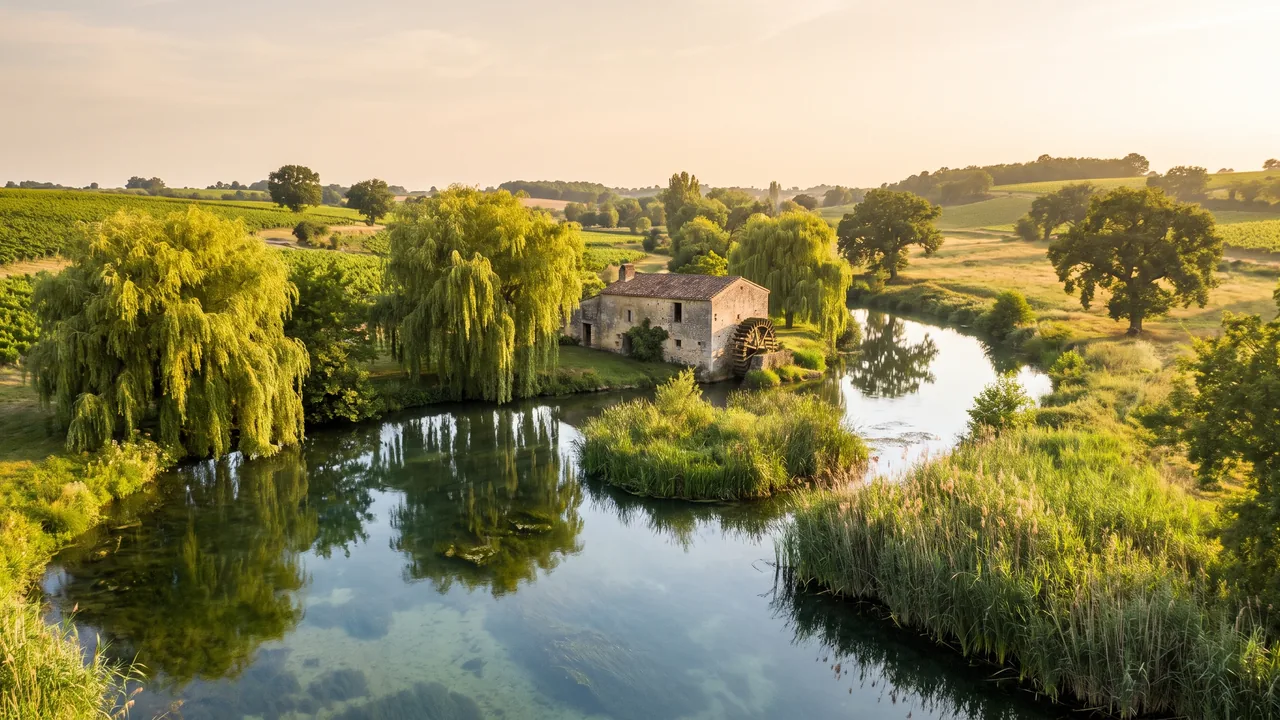
La Seugne and Nature
The Seugne, a tributary of the Charente, flows through Jonzac and provides its green backdrop. Far from being merely a backdrop, the river is the setting for a wide range of outdoor activities: a recreation center offers canoeing, kayaking, and stand-up paddleboarding, complemented by a nearby tree-top adventure course, and fishing is available, with facilities accessible to people with limited mobility. The river, shaded by willows and reeds, offers a cool escape just a stone’s throw from the town center—ideal for taking a break from a day of exploring historic sites with an hour of paddling or a stroll along the water’s edge.
Canoeing, stand-up paddleboarding, and fishing
Canoeing or paddleboarding down the Seugne River is one of the most popular activities during the summer months. The gentle current makes it ideal for families and beginners alike: you glide between the lush green banks, away from the hustle and bustle, with the town’s bell tower peeking out from time to time among the trees. Thrill-seekers will find a tree-top adventure course near the recreation center, and anglers have access to designated fishing spots, some of which are designed to be accessible to people with limited mobility. It’s this combination—heritage, thermal springs, and nature—that sets Jonzac apart: in a single day, you can visit a historic castle, swim in a heated lagoon, and paddle down a river.
The Greenway and EuroVelo 3
Cyclists are particularly well catered for. A greenway built on a former railroad track runs through the area, offering a flat and safe route away from cars. It is part of the “Rayonnantes de Haute-Saintonge” network, a system of bike routes that crisscross the countryside around Jonzac. Even more ambitious is EuroVelo 3—La Scandibérique, the major cycling route connecting Norway to Spain—which passes through Haute-Saintonge: Jonzac is thus located on one of Europe’s major cycling routes. These nature-based designations are well-deserved: the city holds both the “Station Verte” and “Villes et Villages Fleuris” designations, recognizing its well-maintained living environment and preserved natural surroundings.
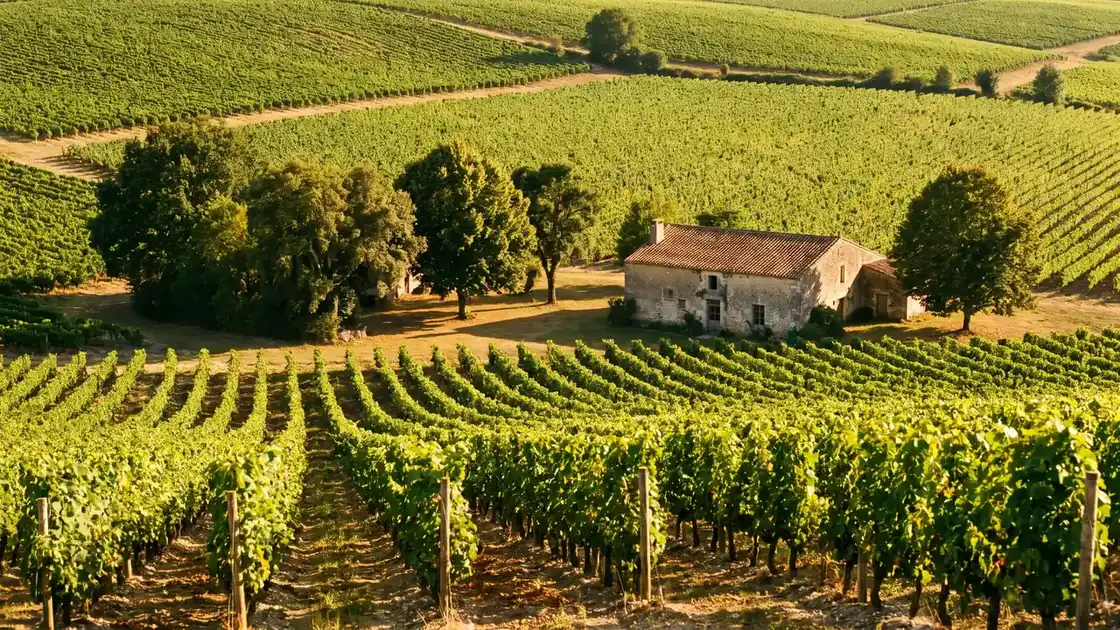
The Terroir: Petite Champagne Cognac
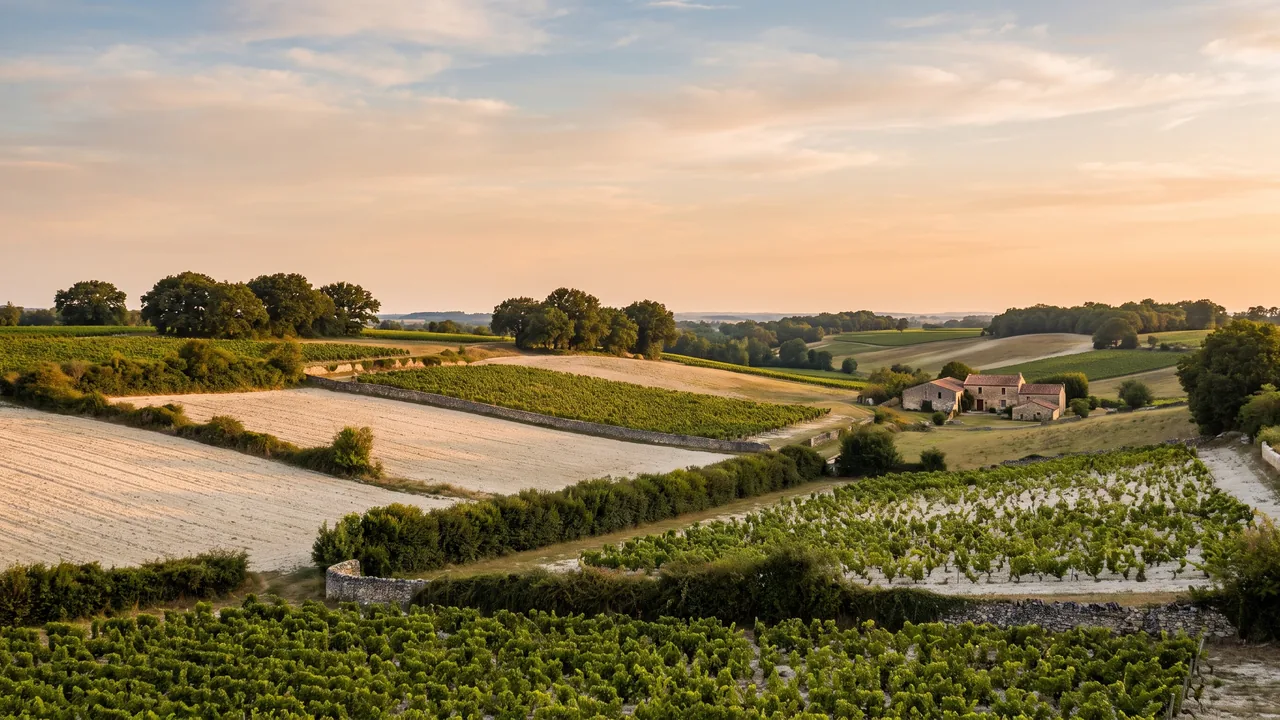
Jonzac is located in the heart of a major wine-growing region: the Cognac region. More specifically, the town is part of the Petite Champagne appellation, one of the region’s classified appellations, renowned for its chalky soils. The Petite Champagne region stretches around Barbezieux, Archiac, and Jonzac, across the limestone hillsides that lend the eaux-de-vie their finesse. Two iconic products originate from this terroir: cognac, of course, but also Pineau des Charentes, a mistelle made by fortifying grape must with brandy, which is served chilled as an aperitif. Around Jonzac, several estates and distilleries are open to visitors and offer tastings.
"Petite Champagne" has nothing to do with Champagne
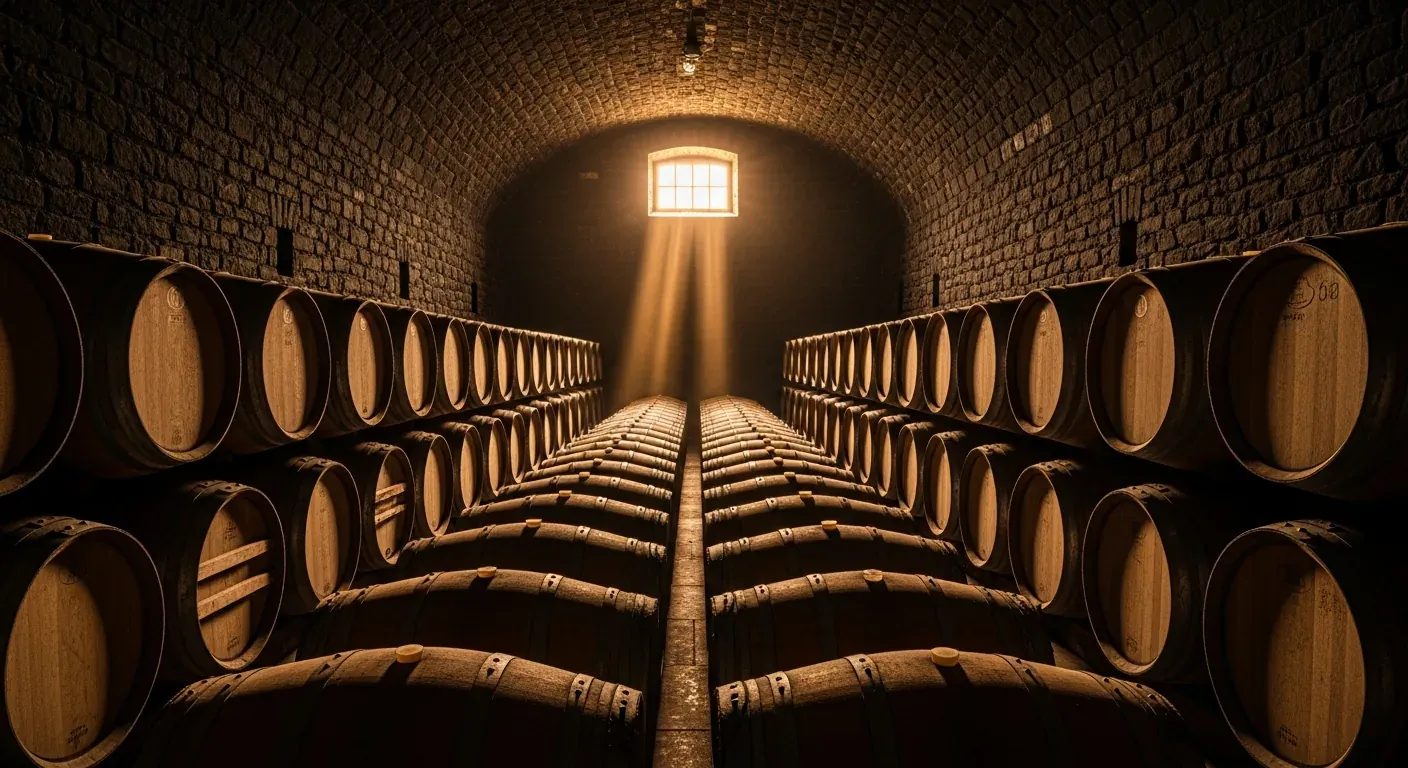
The name is misleading, and it must be made clear: the Petite Champagne region of cognac has no connection to the Champagne wine region and its sparkling wines. It is simply a homonym. The word “champagne” here refers, in its ancient geological sense, to chalky soil—the same type of chalky soil found in Champagne, hence the borrowed name, but nothing more. In Jonzac, neither champagne nor sparkling wine is produced: white wine brandy, aged in oak barrels, is distilled there to make cognac. Using the word correctly helps avoid a common misunderstanding among visitors, who sometimes think they’ve arrived in a part of Champagne when they’re actually in the heart of the Charente wine region.
The Cognac appellation is divided into several crus, distinguished by the nature of their soils and the finesse of the eaux-de-vie they produce. Petite Champagne ranks second among the classified crus, just behind Grande Champagne—two chalk-based terroirs whose eaux-de-vie are prized for their elegance and suitability for long-term aging. Jonzac, as mentioned, is located in Petite Champagne: we are therefore in one of the appellation’s finest terroirs. To learn more about the crus, the Charentaise method, and double distillation, you can consult our guide to Cognac, the capital of eau-de-vie, located just thirty kilometers from Jonzac.
Around Jonzac
Jonzac is an ideal base for exploring the southern Charentes region. The town sits at a crossroads of roads that lead, in less than an hour, to a variety of destinations: another castle overlooking the gateway to the Bordeaux region, a town on the edge of the Double Forest, the world capital of cognac, and a city of art with Roman origins. None is more than three-quarters of an hour away, making it possible to visit two in a single day or to extend a spa stay with a heritage getaway.
Less than an hour
About fifteen kilometers away, Mirambeau and its castle stand guard at the gateway to the Bordeaux region, on the southern edge of the Charentes; you can plan your visit with our Mirambeau guide. A little further west, Montendre—home to the Freemusic Festival, which is often mistakenly attributed to Jonzac—opens onto the Double Forest and its own castle; learn more in our guide to Montendre. To the north, Cognac and its cellars immerse visitors in the world of brandy, while Saintes—the ancient Mediolanum Santonum—boasts a Roman amphitheater and a Romanesque abbey. All these towns are easily accessible by car, and many of our guests combine visits to two of them in a single day.
| Destination | Distance | Must-See |
|---|---|---|
| Mirambeau | ≈ 17 km | Château, gateway to the Bordeaux region, cognac |
| Montendre | ≈ 22 km | Castle, La Double Forest, Freemusic |
| Cognac | ≈ 34 km | Wine cellars, distilleries |
| Saintes | ≈ 40 km | Roman Amphitheater, Abbaye aux Dames |
How to get to Jonzac from Bordeaux
The easiest way to get to Jonzac from Bordeaux is via the direct route on the A10. With a private driver, you’ll depart from your home or the Bordeaux-Mérignac Airport and arrive right at the castle or the thermal baths, without having to worry about parking or train connections. This is especially nice for a relaxing day at the thermal baths: you can fully enjoy the hot springs without having to get behind the wheel afterward—which makes all the difference on the way back.
How much does the ride cost?
The route from Bordeaux to Jonzac covers about 87 km in 1 hour 11 minutes via the A10. Our rates start at 155 € € During the day, for a sedan carrying up to 3 passengers, a fixed price confirmed in writing before departure—no meter, no surprises upon arrival. The exact quote depends on the specific pickup address, the time of day (a surcharge applies at night, on weekends, and on holidays), and the vehicle you choose. This is one of the closest getaways from Bordeaux in the Charente region, and therefore one of the most affordable: request your quote online, and we’ll respond within 30 minutes.
| Route | Distance | Duration | From |
|---|---|---|---|
| Bordeaux → Jonzac | ≈ 87 km | ~1 hr 11 min | 155 € |
| Bordeaux-Mérignac Airport → Jonzac | ≈ 90 km | ~1 hr 15 min | based on a quote |
| Jonzac → Cognac (extension) | ≈ 34 km | ~39 min | based on a quote |
Why hire a chauffeur service?
A executive car service makes all the difference, especially for a spa getaway: You can read, relax, or plan your visit during the ride; you’ll be dropped off right near the château or the entrance to Les Antilles, and we’ll pick you up wherever you’d like—at the spa exit, after a cognac tasting, or along the banks of the Seugne. This option is ideal for a relaxing day with family or friends—without needing a designated driver—as well as for business travel. The vehicle is clean, air-conditioned, equipped with bottled water, and driven by a uniformed chauffeur, and you travel at your own pace, free from the constraints of train schedules—a true luxury after a day spent in 62°C water.
Frequently Asked Questions
How much does a private chauffeur cost from Bordeaux to Jonzac?
The trip from Bordeaux to Jonzac (approximately 87 km, 1 hour 11 minutes via the A10) starts at 155 € during the day for a sedan carrying up to 3 passengers. The price is fixed, confirmed in writing before departure, with no meter. The exact amount depends on the pickup address, the time of day, and the vehicle selected. This is one of the closest day trips from Bordeaux in the Charente region.
How long does it take to get from Bordeaux to Jonzac?
Allow about 1 hour and 11 minutes by car, or 87 km north on the A10 highway. The route is direct, with no detours, making Jonzac one of the most accessible destinations in the Charente region from Bordeaux for a day trip, whether to visit the thermal baths or explore the area’s heritage sites.
Is the Jonzac Castle open to visitors?
Yes. The castle, located on Mont Balaguier, is worth visiting for its Renaissance architecture—the gatehouse is inscribed with “1549”—and its Italian-style theater. Its towers and postern gate have been designated as Historic Monuments since 1913. Its restoration, which took about twenty years, was completed in 2024.
Is it true that City Hall and the subprefecture are located in the castle?
Yes, that's one of the unique features of Jonzac. The castle houses the town hall in its north wing and the subprefecture in its south wing. It is therefore neither a museum nor a private property, but an administrative building in full operation—a rare dual use for a Renaissance fortress.
Is Jonzac an old spa town?
No, on the contrary: it is the newest spa resort in France. It was established following a drilling project in 1979, which brought water at a temperature of 62 °C to the surface from a depth of approximately 1,871 meters. The resort opened in 1986 and is housed in a troglodytic complex built within former quarries.
What is "Les Antilles" by Jonzac?
This is the city’s water park, which opened in 2002 in the Parc du Val de Seugne. “Les Antilles” is a brand name with no connection to the Caribbean. Heated by geothermal energy, it features a lagoon at 29 °C, a 60-meter water slide, and a fabric canopy covering approximately 10,000 m². It welcomes more than 400,000 visitors per year.
Is the Freemusic Festival held in Jonzac?
No, this is a common misunderstanding: the Freemusic Festival takes place in Montendre, a neighboring town located about 22 km away, on the lakefront. Jonzac is merely a partner in the event. The festivals organized by Jonzac are “Étranges Scènes,” “Drôles de Rues” (street arts), and “Les Instants Musicaux.”
What is the difference between the Cluzelet mill and the Chez Bret mill?
These are two separate 18th-century mills, restored by the city. The Cluzelet windmill produces flour. The Chez Bret watermill presses walnut oil using the first cold-press method. At Chez Bret, after viewing an exhibit on the waterwheel, visitors can bring their own shelled walnuts to be ground.
Is Jonzac's "Petite Champagne" actually champagne?
No. Petite Champagne is a Cognac appellation that has no connection to the Champagne wine region. Here, the word “champagne” refers, in a geological sense, to chalky soil. Jonzac belongs to this cru, the second-ranked among the classified Cognac crus, centered around Barbezieux, Archiac, and Jonzac. Cognac and Pineau des Charentes are produced there.
When are the markets held in Jonzac?
The traditional market is held on Tuesday and Friday mornings. On Saturday mornings, it takes place in the covered market hall. On Sunday mornings, a farmers’ market is set up on Place du Château. Jonzac, certified as a “Station Verte” and a “Ville et Village Fleuri,” fosters this vibrant commercial activity throughout the week.
What's there to see around Jonzac?
Mirambeau and its castle are about 17 km away, Montendre and the Double Forest are about 22 km away, Cognac and its wine cellars are about 34 km away, and Saintes and its Roman amphitheater are about 40 km away. Jonzac is an ideal base for exploring the southern Charentes region, where you can enjoy the area’s heritage, cognac, and the natural beauty of Haute-Saintonge.
Is it possible to visit Jonzac and Cognac in a single day?
Absolutely. Cognac is only about 30 kilometers from Jonzac (~39 min). Many customers spend the morning in Jonzac—visiting the château, thermal baths, or windmills—and the afternoon enjoying a tasting at the Cognac houses, with the same driver handling the transportation and schedule.
Does the price change at night or on the weekend?
A surcharge may apply at night (7:00 p.m.–6:00 a.m.), on weekends, and on holidays, as is the case on all our routes. The fare is always communicated and confirmed in writing before departure: you’ll know the exact price when you book, so there are no unpleasant surprises upon arrival.
Further Reading
- The Gate of Bordeaux: see the Mirambeau Guide (the château and cognac, about 17 km from Jonzac)
- The Double Forest: see the Montendre Guide (the castle and the Freemusic Festival, about 22 km away)
- The Cognac Capital: see the Cognac Guide (cognac houses and vintages, about 34 km away)
- Book your trip: book online or browse all our destinations
Sources and References
- City of Jonzac / Haute-Saintonge Tourist Office — castle, cloister, mills, markets, events calendar
- POP/Mérimée Database — Château de Jonzac (PA00104777) — towers, postern gate, and protected features
- POP/Mérimée Database — Saint-Gervais-Saint-Protais Church (PA17000039) — Listed as a Historic Monument
- Chaîne Thermale du Soleil — Jonzac Thermal Baths — spa resort, well, therapeutic indications
- Jonzac's Antilles — water park, geothermal energy
- INSEE — Municipality of Jonzac (17197) — Demographics
- Infiniment Charentes / Haute-Saintonge — Seugne, Greenway, Petite Champagne Cognac
Article updated in July 2026.
Our Latest Guides
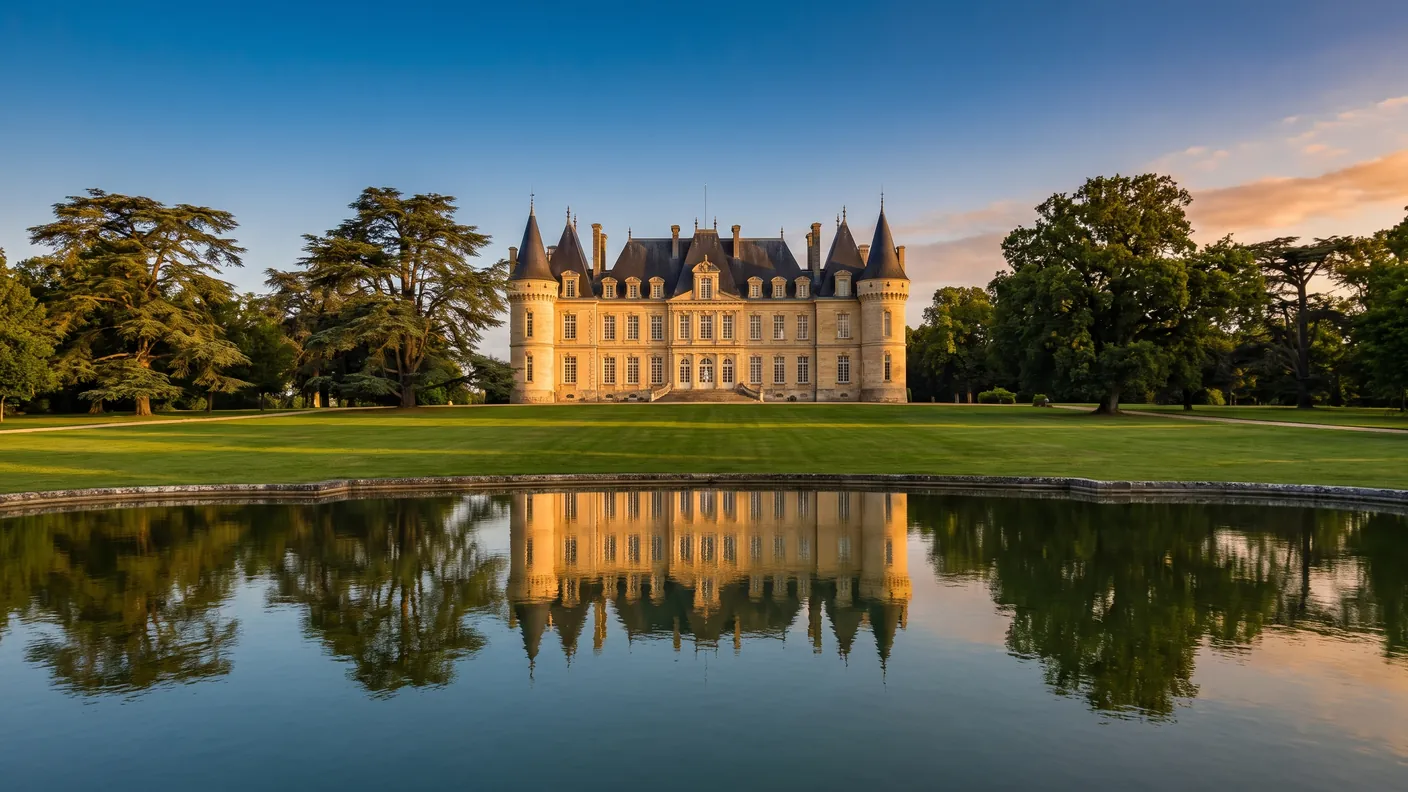
Off to Haute-Saintonge
Direct transfer from Bordeaux (~1 hour via the A10) to the Château de Jonzac, the thermal baths, and Les Antilles. Fixed-price quote in writing, with no obligation.