From Bordeaux to Mirambeau: château and Cognac
A small Haute-Saintonge town and former stronghold known as the “gateway to the Bordeaux region”: a grand 19th-century château converted into a luxury hotel, the listed church at Petit-Niort, and Fins Bois Cognac alongside the wines of Blaye, about an hour from Bordeaux via the A10.
Mirambeau at a glance
Mirambeau is a commune in Haute-Saintonge, in Charente-Maritime, located on the border with the Bordeaux region. Its current castle is a 19th-century reconstruction built on the site of a former stronghold. Notable heritage sites include the Church of Saint-Martin in Petit-Niort, classified as a Historic Monument (source: Mérimée). Mirambeau is part of the Fins Bois cru within the Cognac appellation (source: INAO). The municipality has a population of approximately 1,520 (source: INSEE). From Bordeaux, the listed distance is 74 km, and the trip takes about one hour. The listed rate for the private chauffeur service is €132 one way; this rate is based on the website’s pricing schedule and is confirmed in writing prior to booking.
Here are the key details to know before you go. The distance, travel time, and price shown are based on the booking engine's information for the Bordeaux–Mirambeau route.
Mirambeau: Distances and Landmarks
| Landmark | Details |
|---|---|
| Department | Charente-Maritime (17), Nouvelle-Aquitaine |
| Status | Small town · Jonzac district · Pons canton |
| Population | approximately 1,520 residents (INSEE) · Les Mirambeaulais · source |
| Area | ≈ 26.9 km² · at the foot of a limestone cuesta |
| Don't miss it | The castle, the church in Petit-Niort, and the Cognac vineyards |
| Distance from Bordeaux | about 74 km · about an hour via the A10 |
| Nearest train station | Jonzac (~17 km) · TER and Intercités |
Three common misconceptions to avoid
A word of candour at the outset: several misconceptions about Mirambeau deserve correcting, with sources to support the facts. The town now belongs to the canton of Pons, not the former canton of Mirambeau, which disappeared in 2015. Despite its fortress-like appearance, the present château is not medieval: it is a 19th-century reconstruction, and it is not protected as a historic monument. The vineyards belong to the Fins Bois cru, not Bons Bois as in some neighbouring communes. Finally, Mirambeau has no passenger railway station in service; the nearest is at Jonzac. Throughout this guide, verified information is kept separate from oft-repeated claims.
Here we cover everything you need to know before visiting: the location of Mirambeau, the gateway to the Bordeaux region; the history of its castle and fortress; its past as a border town; its remarkable, historically designated church; Fins Bois cognac; the origin of its name, the notable sites in the surrounding area, and the easiest way to get there from Bordeaux.
Where is Mirambeau located?
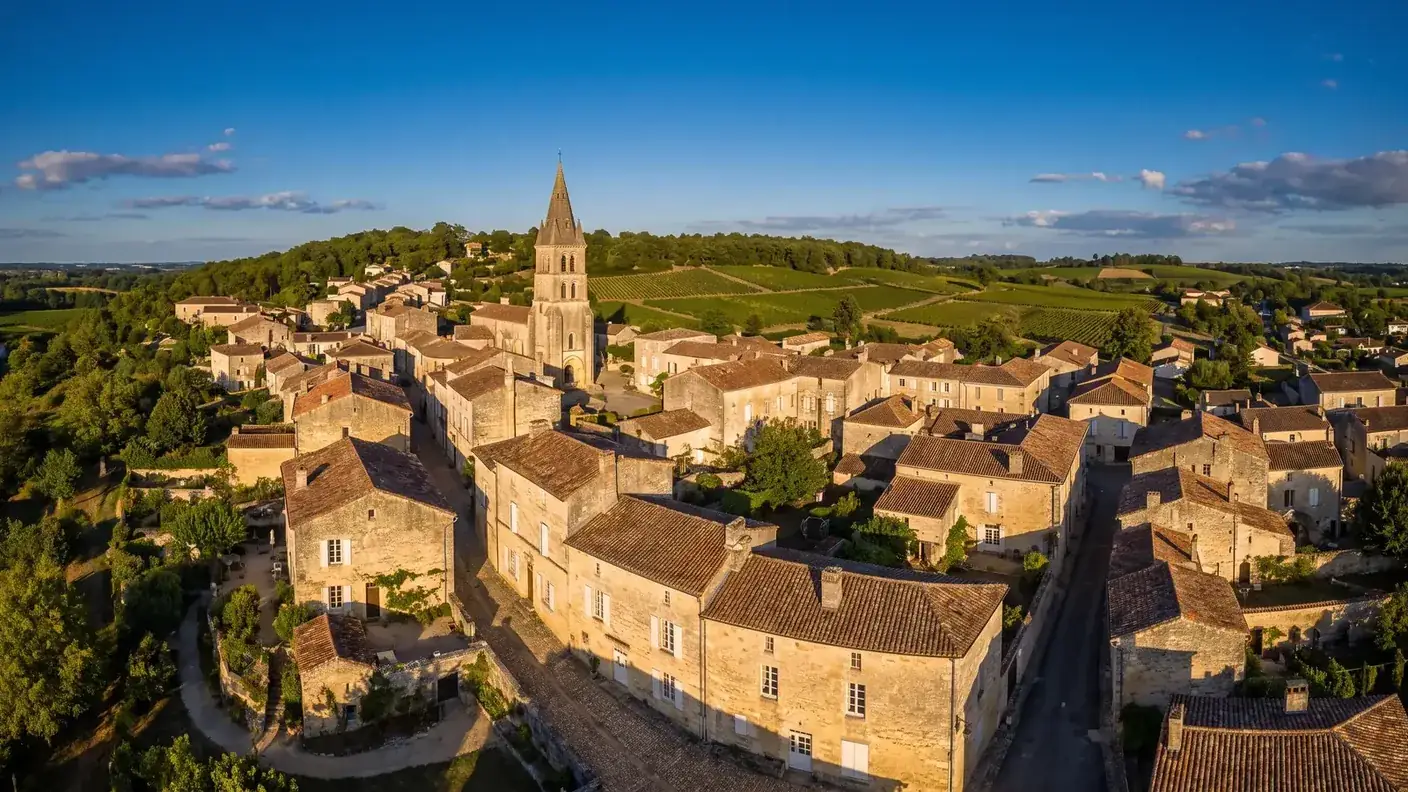
Mirambeau is located in the southern part of Charente-Maritime (17), in Nouvelle-Aquitaine, in the heart of Haute-Saintonge, on the border with the Gironde region around Bordeaux. It is a small town belonging to the district of Jonzac (just 17 km away) and the canton of Pons, and is a member of the Haute-Saintonge Community of Communes—one of the largest intermunicipal communities in France. It covers an area of approximately 26.9 km², at elevations ranging from 9 to 108 meters. Its location is remarkable: the town is situated at the foot of and on the slope of a cuesta, a Cretaceous limestone escarpment that, over the centuries, has formed a major defensive site commanding the region. It is precisely there, on this high ground, that a geological boundary also runs: the Cretaceous limestone of the Saintonge gives way to the Eocene strata of the Blayais region of Bordeaux. It is this terrain—both a rampart and a crossroads—that made Mirambeau a stronghold and, later, a transportation hub.
The “Gateway to the Bordeaux Region”
Mirambeau has a nickname that sums up its role: the “gateway to the Bordeaux region”. The town marks the transition between Charente Saintonge to the north and Bordeaux Guyenne to the south, a meeting point reflected even in the vineyards, where the Cognac and Blaye-Côtes-de-Bordeaux regions meet. This crossroads position also gives it excellent road links: the A10 motorway (Exit 37), the D137, and the D730 intersect here, placing Mirambeau less than an hour from Bordeaux, Saintes, or Royan. Once a medieval stronghold, the town is now a road hub and an active commercial centre in the south of the department.
A local centre in Haute-Saintonge
With approximately 1,520 residents according to the latest census (Source: INSEE), Mirambeau is a town in the heart of Haute-Saintonge. Its residents are called the Mirambeaulais. The town is home to shops, services, and a market, and has direct access to the A10.
Mirambeau Castle
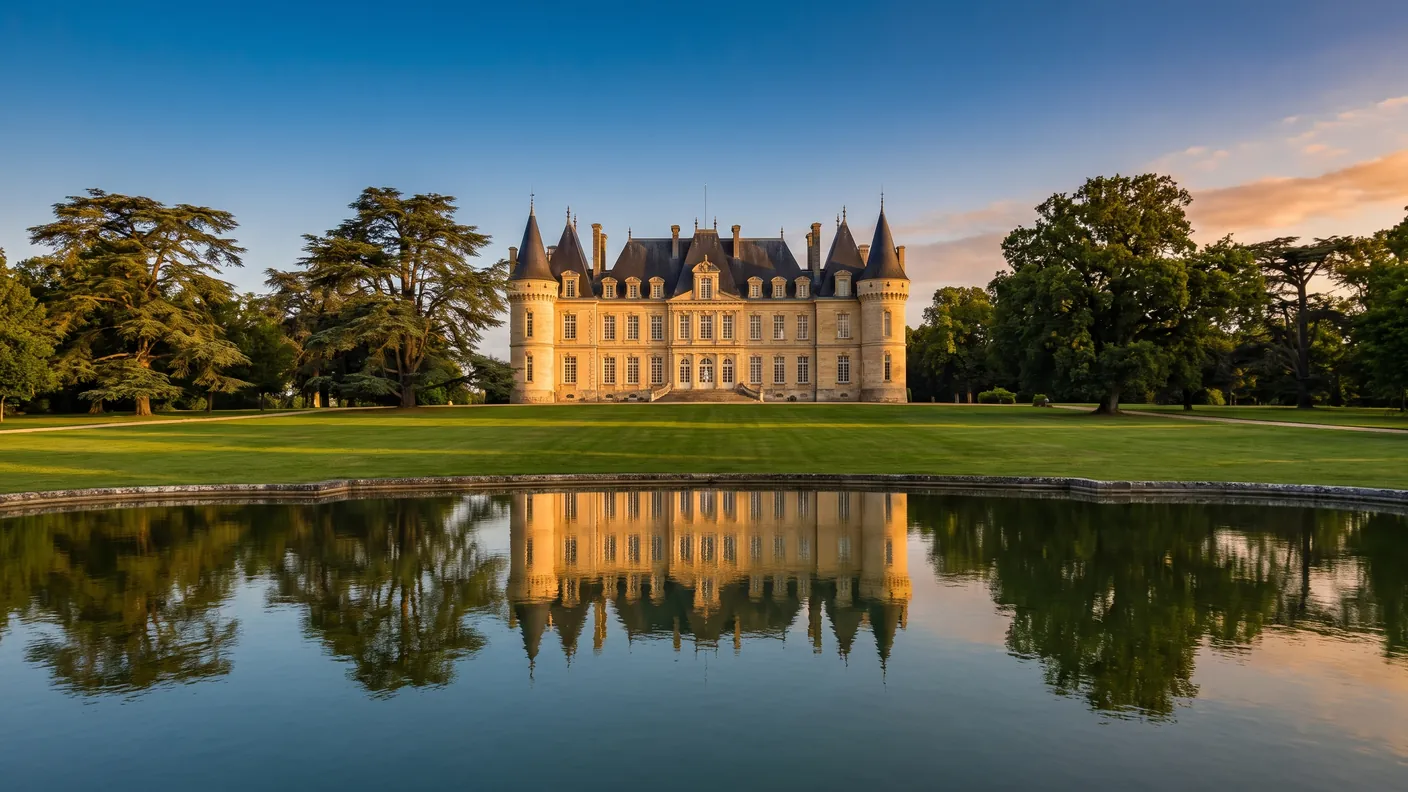
The iconic landmark of Mirambeau is its castle, perched on the hill overlooking the village—a majestic structure, but one whose history holds a few surprises that need to be unraveled. For while this castle may resemble a fortress, its current appearance has nothing medieval about it, and it is not listed as a historic monument.
A 19th-century castle, not a medieval fortress
Let’s make this clear from the outset, since confusion is common: the castle we see today is a 19th-century reconstruction. The former medieval fortress, one of the most powerful in Haute-Saintonge, was almost entirely destroyed during the Wars of Religion, in 1570 and again in 1577. It was Count Charles Duchâtel, who purchased the estate around 1813–1818 and had the current castle built between 1825 and 1836—an elegant Neo-Louis XIII pastiche, with Neo-Renaissance wings and a Neo-Gothic chapel—on the vaulted foundations of the old fortress. All that remains of the medieval castle is a gatehouse flanked by two cylindrical towers and a section of curtain wall, both rebuilt as early as the 17th century. This charming complex is therefore not designated a historic monument: it is a fine example of 19th-century Romantic architecture that reinterprets the medieval past rather than preserving it—a crucial distinction for understanding what one sees.
Eight centuries of history, from fortress to luxury hotel
The history of the site, however, goes back much further. A castle is first mentioned as early as 1079, held by the knight Artaud de Mirambel—hence the original name “Mirambel-l’Artaud.” A strategic stronghold alongside Jonzac and Montendre, the fortress was captured in 1346 during the campaign led by Henri de Grosmont, Earl of Derby, in the Hundred Years’ War (as chronicled by Froissart). Having become a Huguenot stronghold, it was “reduced by fire” in 1577. After its 19th-century reconstruction by the Duchâtel family—one of whom, Tanneguy Duchâtel, served as a minister under Louis-Philippe and was a member of the Institut—the castle was donated to the state in 1916 to serve as a convalescent home for soldiers. Its use as a hotel has shaped its recent history, but its current status and the terms of access to the estate must be confirmed directly with the establishment.
The Duchâtel family, which rebuilt and owned the château for over a century, left a lasting mark on Mirambeau. The most illustrious member of the family, Tanneguy Duchâtel (1803–1867), son of the castle’s original purchaser, served as Minister of Commerce and later Minister of the Interior under the July Monarchy, was a member of the Academy of Fine Arts, and established an orphanage at the castle. A great collector, he assembled an archival collection now preserved at the Château de Serrant in Anjou. His son, the last of the line, served as mayor of Mirambeau for nearly twenty-five years. This dynasty of prominent figures, both deeply rooted in the local community and connected to the highest echelons of government, illustrates the fate of a small provincial town in the 19th century, of which the château was the heart—a far cry from the luxury hotel it has become, yet sharing the same spirit of hospitality and prestige.
Finally, there is one legend worth telling—provided it is presented as such. Tradition has it that attackers once failed to take the castle by surprise because donkeys grazing in the moat sounded the alarm with their braying—a local version of the “geese of the Capitol.” An annuity was then reportedly used to maintain a herd of fifty donkeys, hence the mocking nickname “the donkeys of Mirambeau” long given to the town’s residents. There is nothing historically verifiable about this: it is a charming tale from oral tradition, to be enjoyed as such, which adds to the charm of a town where history and legend readily intertwine.
A border town on the Way of St. James
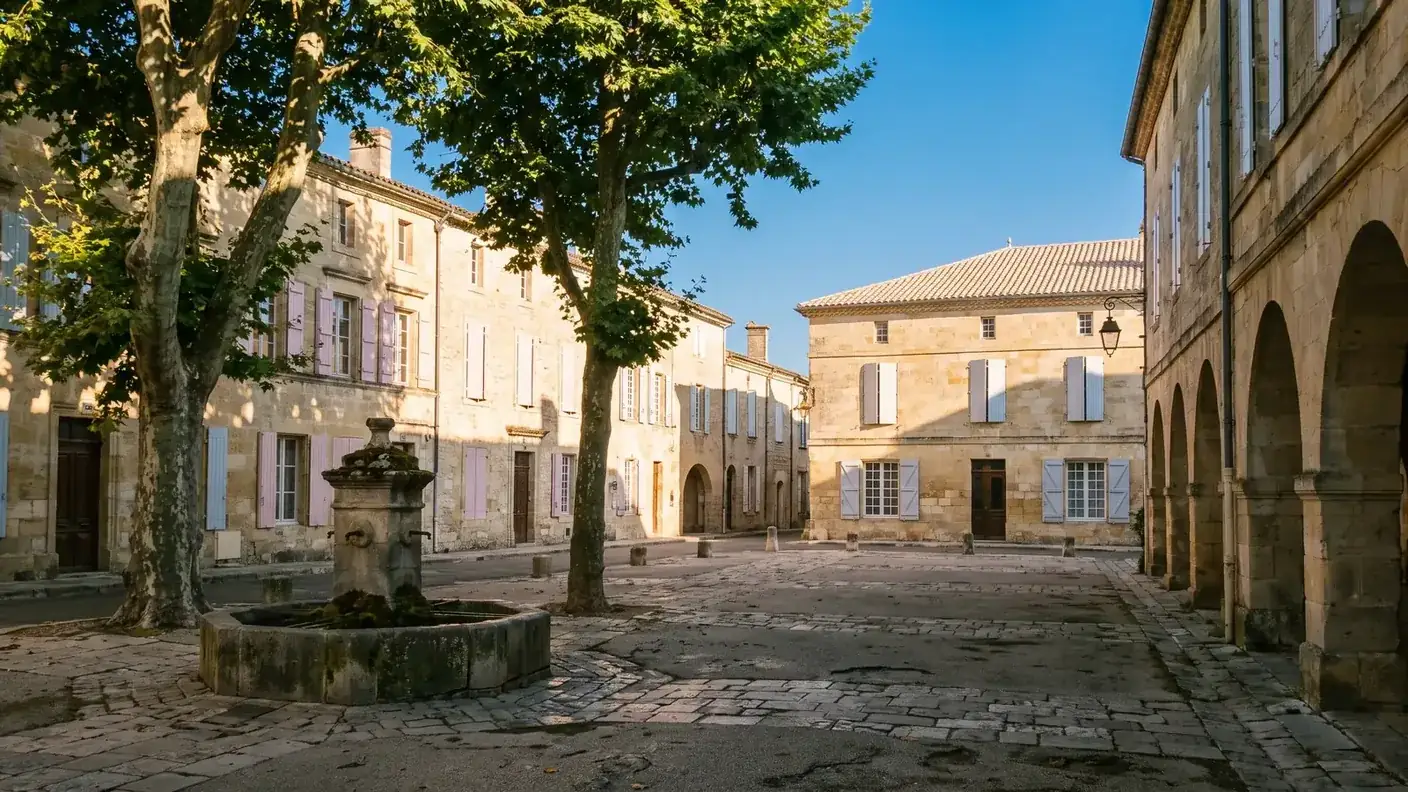
Beyond its castle, Mirambeau has a rich history marked by wars, borders, and pilgrims—the history of a stronghold on the border between two worlds. For centuries, its strategic location made it a key crossing point and a strategic target.
On the border between France and English Guyenne
After Eleanor of Aquitaine married Henry Plantagenet in 1152, the entire region came under Anglo-Aquitanian influence, and Mirambeau remained on the front line for centuries. The nearby hamlet of Petit-Niort was even described in 1380, in a charter issued by the Bishop of Saintes, as “in fronteria inimicorum”, or “on the border with the enemies”. This was the boundary between French Saintonge and English Guyenne, which explains the concentration of fortified towns in the area (Jonzac, Montendre, Montguyon…). Armies passed through, but so did kings: Louis XIV spent the night here in 1650 on his return from the siege of Bordeaux during the Ormée unrest, and King Philip V of Spain crossed the parish in 1700. In 1860, Napoleon III visited the church while it was under construction and presented it with paintings.
A stop along the Way of St. James
Mirambeau also owes a great deal to pilgrims. The town lies on the Via Turonensis, the main route from Paris to Santiago de Compostela via Tours, which crossed the Saintonge region on its way to Spain. The town was built around two centers that no longer exist: “La Ville,” on the hilltop around the castle, with its Church of Saint-Sébastien; and “Le Chemin,” below, around the Priory of Notre-Dame-du-Chemin, a stopover for pilgrims on the Way of St. James run by the Premonstratensians. This history as a stopover town, at the crossroads of military and spiritual routes, has shaped the identity of Mirambeau—a crossroads, even long before the highway was built. The restored old washhouse of Les Sept Fonds still bears witness to life in the lower neighborhood.
Two Kings and an English Ride
Its crossroads position placed Mirambeau in the path of history. In 1346, during his famous chevauchée, Henry of Grosmont, Earl of Derby and a captain under Edward III, retook the town and château from the French. The chronicler Froissart summed up the episode in a single sentence: “They came to Mirabel, stormed the town, and captured the castle.” Later, two kings stopped here half a century apart: Louis XIV spent the night of 16 October 1650 in Mirambeau on his return from the siege of Bordeaux and the Fronde de l’Ormée; then Philip V of Spain crossed the parish on 28 December 1700, sheltering from the rain at an inn in a town described at the time as “poor and miserable”. The contrast with today’s five-star hotel could hardly be greater.
The Church of Petit-Niort and the Town's Treasures
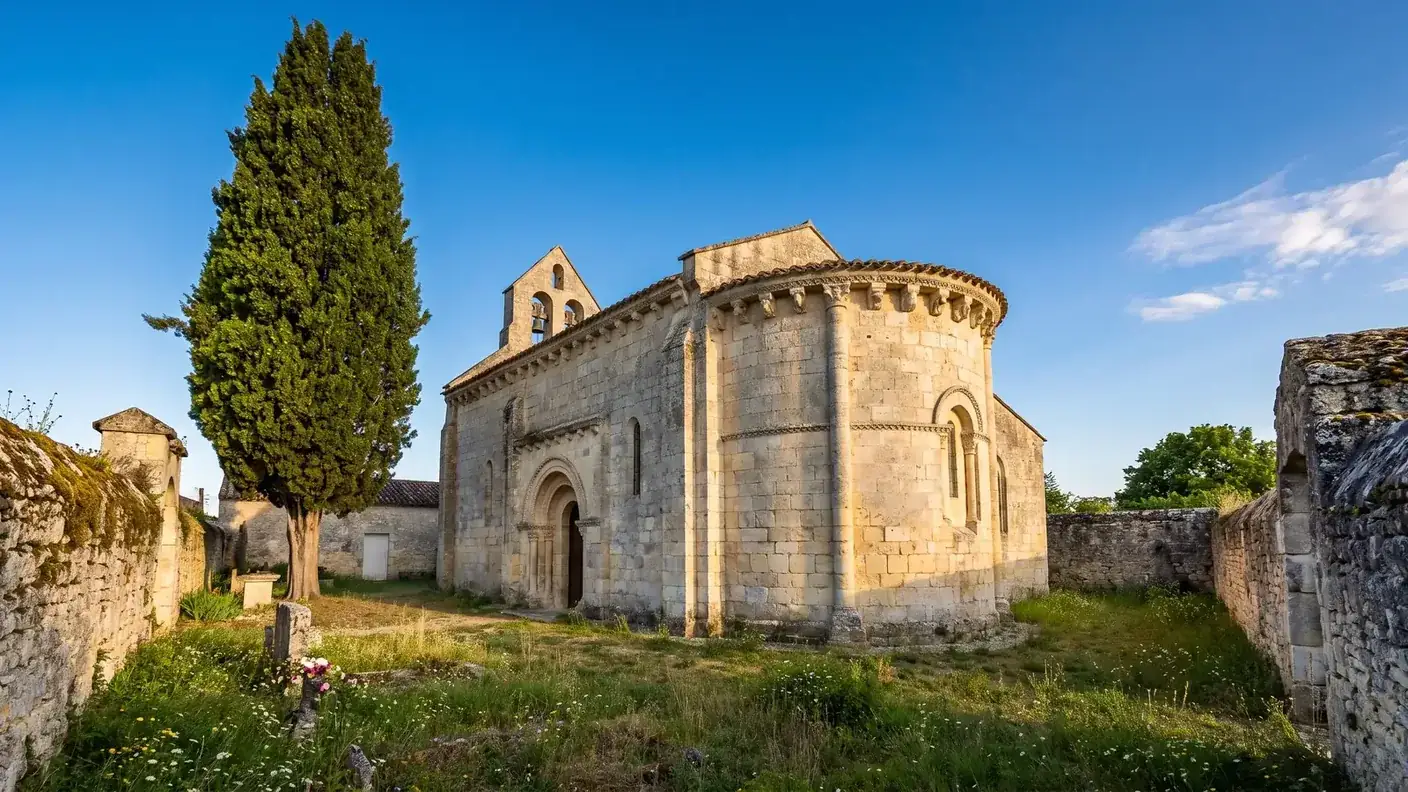
Mirambeau’s heritage gem is not located in the town center, but off to the side, in the hamlet of Petit-Niort: the Church of Saint-Martin, a listed Romanesque building with exceptionally ancient origins. It is the only protected monument in the town—the castle, on the other hand, is not.
A historic church with pre-Romanesque features
The Church of Saint-Martin in Petit-Niort was designated a historic monument by the decree of June 4, 2002, reference PA00104808 (source: Mérimée). This former priory features pre-Romanesque elements, a Saintonge Romanesque façade, and a Flamboyant Gothic side aisle. Access conditions should be checked locally before visiting.
The village church and its listed artifacts
In the town centre, the Notre-Dame-de-l'Assomption Church offers a striking contrast: this large Neo-Romanesque building, begun in 1856, has a slender stone spire and frescoes in the choir. The building itself is not protected, but it houses listed objects: a remarkable 17th-century baptismal font adorned with angels’ heads, listed in 1911. Napoleon III also donated an Immaculate Conception in the style of Murillo during his visit in 1860. The church at Petit-Niort, meanwhile, houses a listed bronze bell dating from 1631. These discreet, scattered treasures reward the curious visitor.
| Protected Heritage of Mirambeau | MH Status |
|---|---|
| Saint-Martin Church in Petit-Niort (building) | Listed (June 4, 2002) · PA00104808 |
| 17th-century baptismal font (object, Notre-Dame-de-l'Assomption) | Listed as an object (1911) · Palissy |
| Bell from 1631 (artifact, Petit-Niort) | Classified under "Object" (1911) · Palissy |
| Mirambeau Castle | unprotected (rebuilt in the 19th century) |
Strolling through Old Mirambeau
Beyond its major monuments, Mirambeau reveals itself as you wander through its streets and hamlets, where a more modest yet endearing heritage lies hidden. It is by strolling leisurely, without rushing, that one best captures the spirit of this former stronghold, now a peaceful town in the Saintonge region—a heritage of stone, water, and memory.
The village grew up around two centers that no longer exist, though traces of them remain: “La Ville,” situated on higher ground around the castle, with its former Church of Saint-Sébastien, the site of which is marked by a stone cross; and “Le Chemin,” located below, around the Priory of Notre-Dame-du-Chemin, a stopover for pilgrims. On the way down to this lower neighborhood, you’ll come across the Sept Fonds washhouse, restored in 1997, fed by the spring that gave its name to the area and the old train station. It’s a charming reminder of daily life in days gone by, when water here sustained an entire neighborhood—and a peaceful spot to linger, away from the hustle and bustle of the major roads that run alongside the town.
Château Chotard and bourgeois follies
The 19th century, a time of prosperity thanks to cognac and trade, left Mirambeau with other beautiful mansions in addition to the count’s castle. The most intriguing is the Château Chotard, a bourgeois extravagance built in 1877 for the banker Alcide Chotard, in a striking style inspired by Flemish, with its stepped gables that stand out against the Saintonge landscape. As it is private property, it is not open to the public, but its unusual silhouette intrigues passersby. These “folies”—the mansions that Second Empire notables had built to flaunt their success—bear witness to the prosperity of this small crossroads town, enriched by viticulture, the wine trade, and the arrival of the railroad. Together with the stone houses in the town center, they form a cohesive and charming architectural ensemble.
Petit-Niort, a hamlet like no other
Just a few kilometers from the town, the hamlet of Petit-Niort is worth a visit—and not just for its historic church. This place, whose name comes from “Saint-Martin de Niort,” flourished as early as Roman times along the major ancient road connecting Saintes (Mediolanum Santonum) to Blaye (Blavia): traces of a semi-industrial pottery production area, complete with kilns, have been found there. A border town in the Middle Ages, situated between the French region of Saintonge and the English region of Guyenne, Petit-Niort has preserved its traditional Saintonge-style houses—low-lying and built of light-colored stone—but it has lost all commercial activity and now moves at a leisurely pace, enveloped in rural silence. It is this contrast—between a rich ancient and medieval past and the tranquility of the present—that gives this unique hamlet its melancholic charm.
Fins Bois Cognac, where Cognac meets Bordeaux
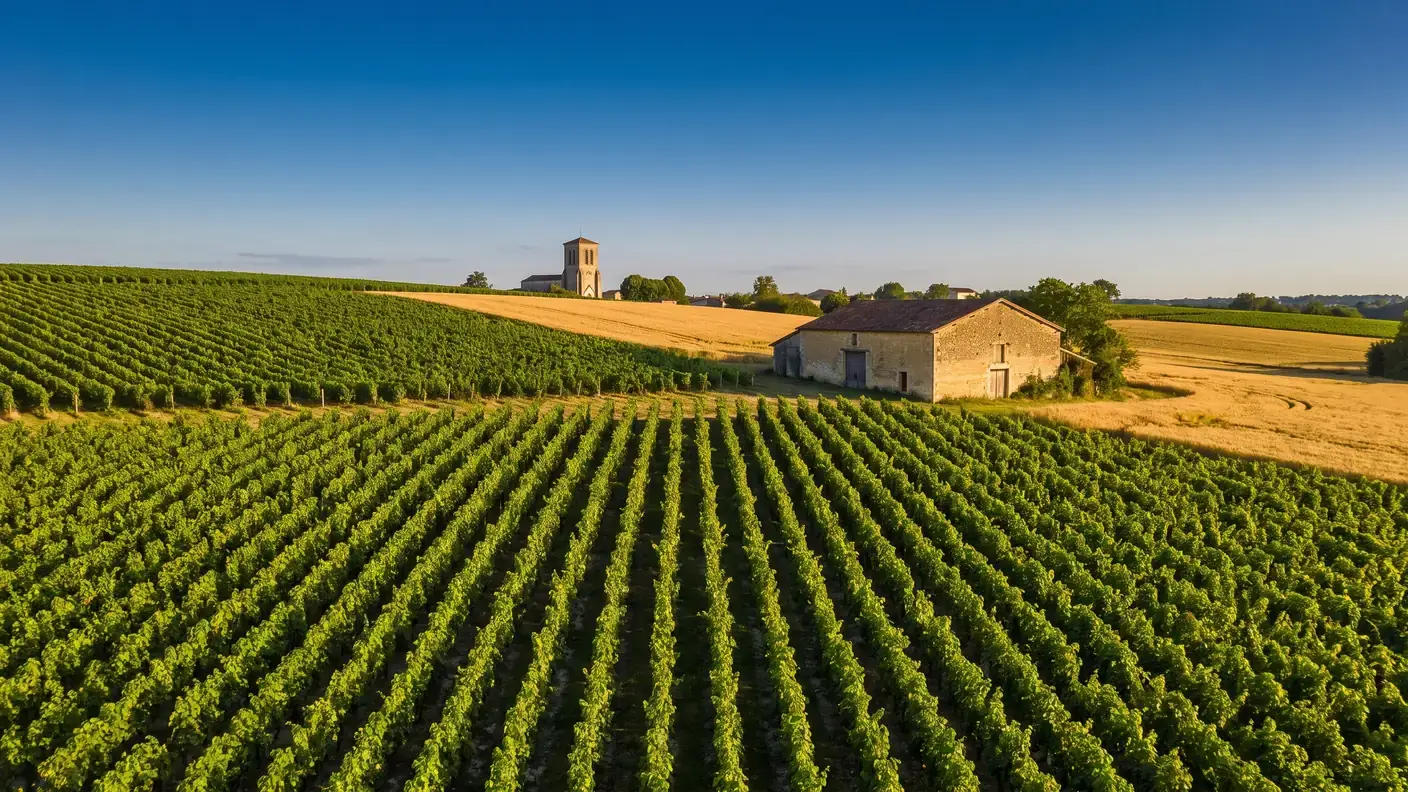
Mirambeau occupies a unique oenological position: it is the exact point where the Cognac region meets the Bordeaux wine region. It is a transitional terroir that must be named with precision—for misconceptions and toponymic pitfalls abound.
The Fins Bois cru, not Bons Bois
Mirambeau is located in the Fins Bois appellation, according to the Cognac AOC specifications (source: INAO). It should therefore not be classified as “Bons Bois.” Neighboring municipalities may fall under a different cru, which explains some of the confusion found in general-interest guides.
Cognac, Pineau, and Bordeaux wines
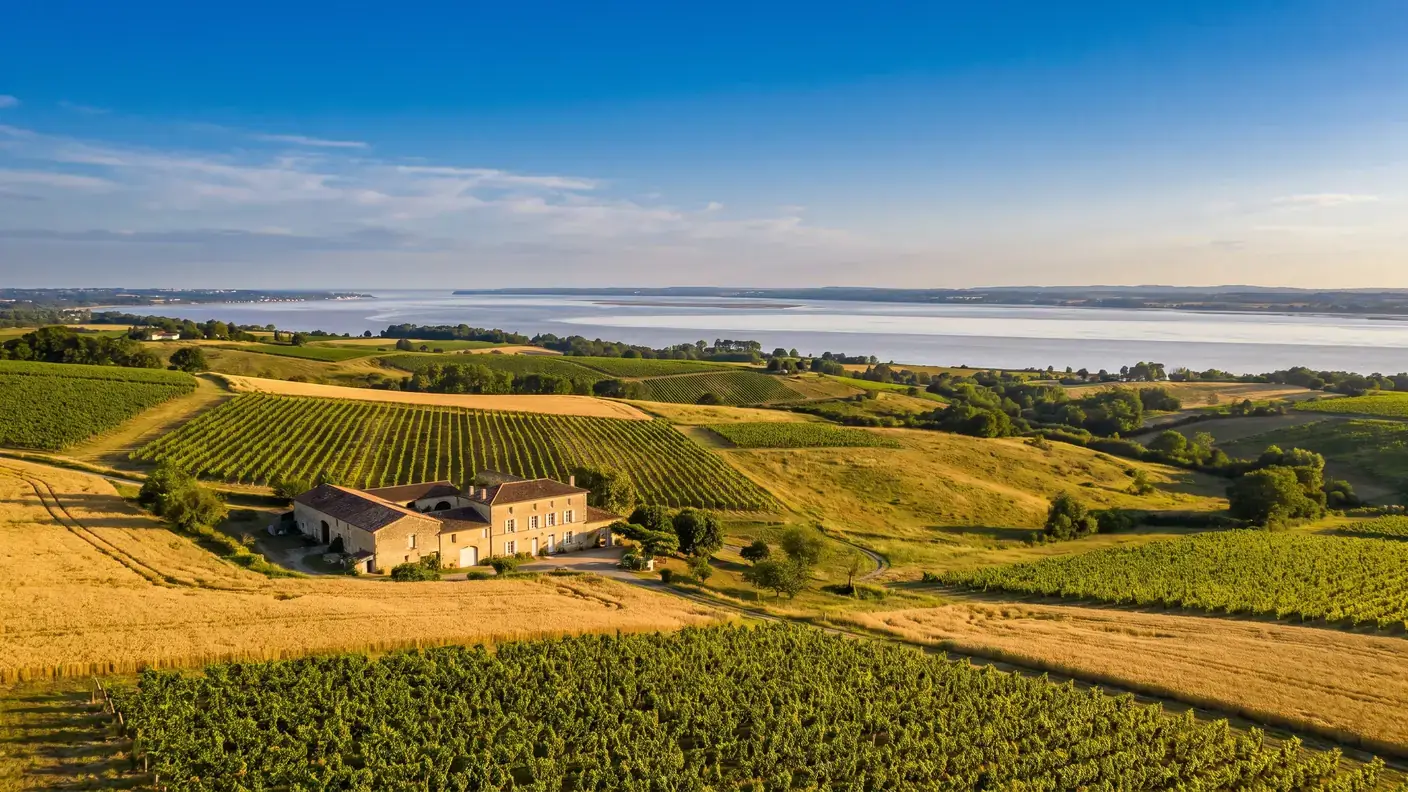
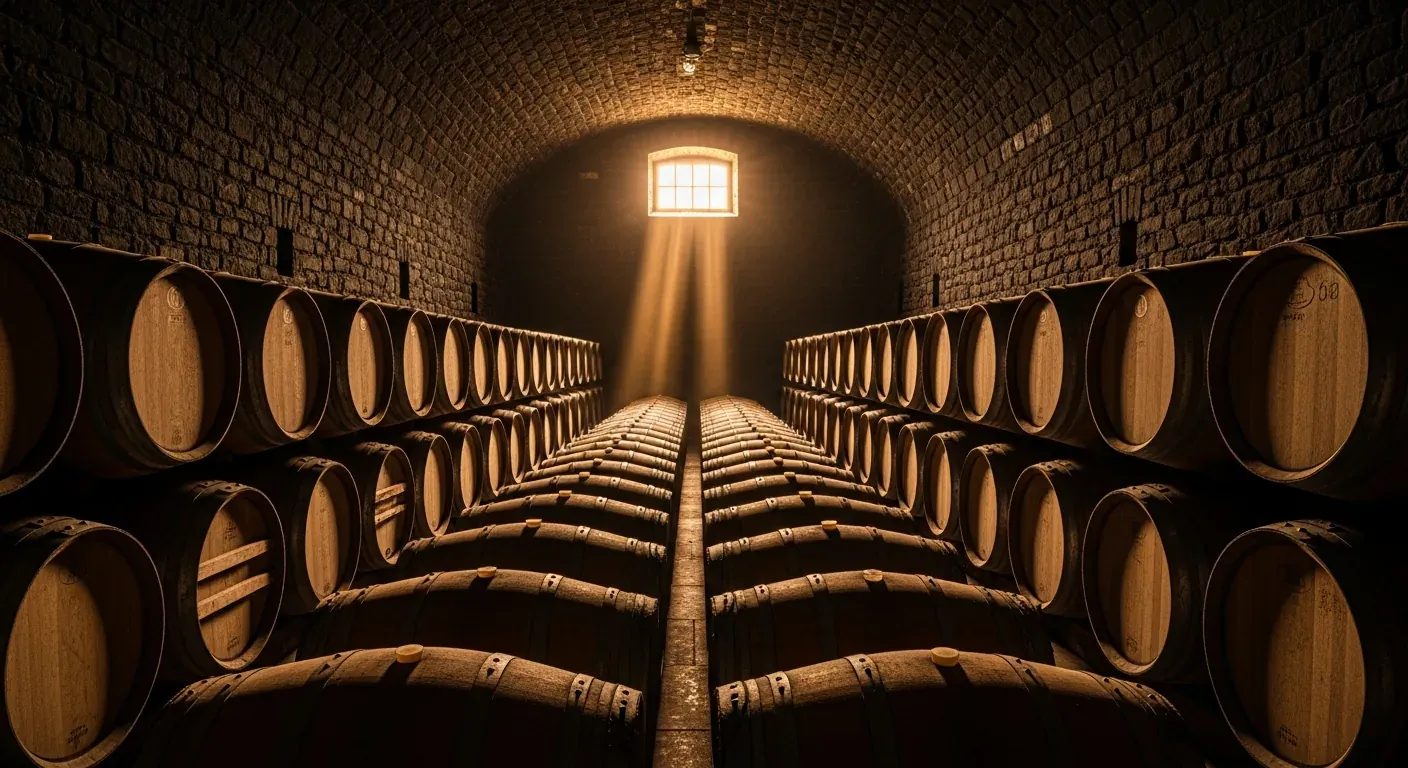
This diverse terroir makes Mirambeau a unique destination for wine enthusiasts. To the north and on the hillsides, the vineyards produce cognac, Pineau des Charentes, and Charente regional wines; just to the south, they already produce the red wines of the Blaye-Côtes-de-Bordeaux appellation. Thus, within a few kilometers, one can go from tasting brandy to tasting a Bordeaux—a rare richness that few places offer. Cognac itself is made here, as throughout the appellation, from the Ugni Blanc grape variety (which accounts for nearly 98% of the region), distilled twice in Charente-style stills and aged in oak barrels. Vineyards, however, do not cover the entire area: they are confined to the best-exposed slopes and share the land with large areas of grain fields and nearly 550 hectares of forest. Mirambeau is therefore a mixed-farming terroir, where vineyards, wheat fields, and woodlands come together to form a varied and vibrant landscape.
| The six Cognac crus | Location |
|---|---|
| Grande Champagne | heart of the region, chalky soils — the most prestigious |
| Petite Champagne | around Barbezieux, Archiac, and Jonzac |
| Borderies | the smallest wine-growing region, north of Cognac |
| Fins Bois (Mirambeau) | broad belt — largest cru by area |
| Bons Bois | outer belt — second-largest cru by area |
| Bois Ordinaires | coastal zone and islands |
Where does the name Mirambeau come from?
The name Mirambeau says it all: it means “beautiful view”—but its exact origin warrants some clarification, as it is often misunderstood. There are two pitfalls to watch out for when trying to explain it.
“Admire the beauty”: an Occitan name
It is sometimes claimed that “Mirambeau” comes from the Latin mira bellum, which would be a misreading because, in Classical Latin, bellum means “war”. The name is in fact a medieval Occitan formation: mira (the imperative “look” or “admire”) followed by bèl (“beautiful”), giving the sense “admire the beauty” or “beautiful view”. The meaning “beautiful viewpoint” is therefore sound, but its origin lies in the medieval langue d’oc, not Classical Latin. Mirambeau belongs to a family of southern place names evoking fine views: Mirabel, Mirabeau, Miramont, and Mirande. Its name has long celebrated the panorama from the château hill.
From Mirambel-l'Artaud to Mirambeau
The name has evolved over the centuries. In the oldest documents, dating from the 11th century, the form “Mirambel-l’Artaud” appears, named after the knight Artaud de Mirambel, the first known lord of the area (mentioned in 1079 in the charter of foundation for the Abbey of La Sauve-Majeure, and again in 1083). The Occitan “-bel” gradually changed to the French “-beau,” and the lord’s name was dropped, resulting in the current “Mirambeau.” This evolution, from medieval Provençal to modern French, tells in its own way the story of the Saintonge region—a land of the langue d’oc that gradually came under the influence of the North and the langue d’oïl. The city’s name thus quietly preserves the memory of its southern origins and its first lord, that 11th-century knight who built a castle on the hill.
What's there to see around Mirambeau?
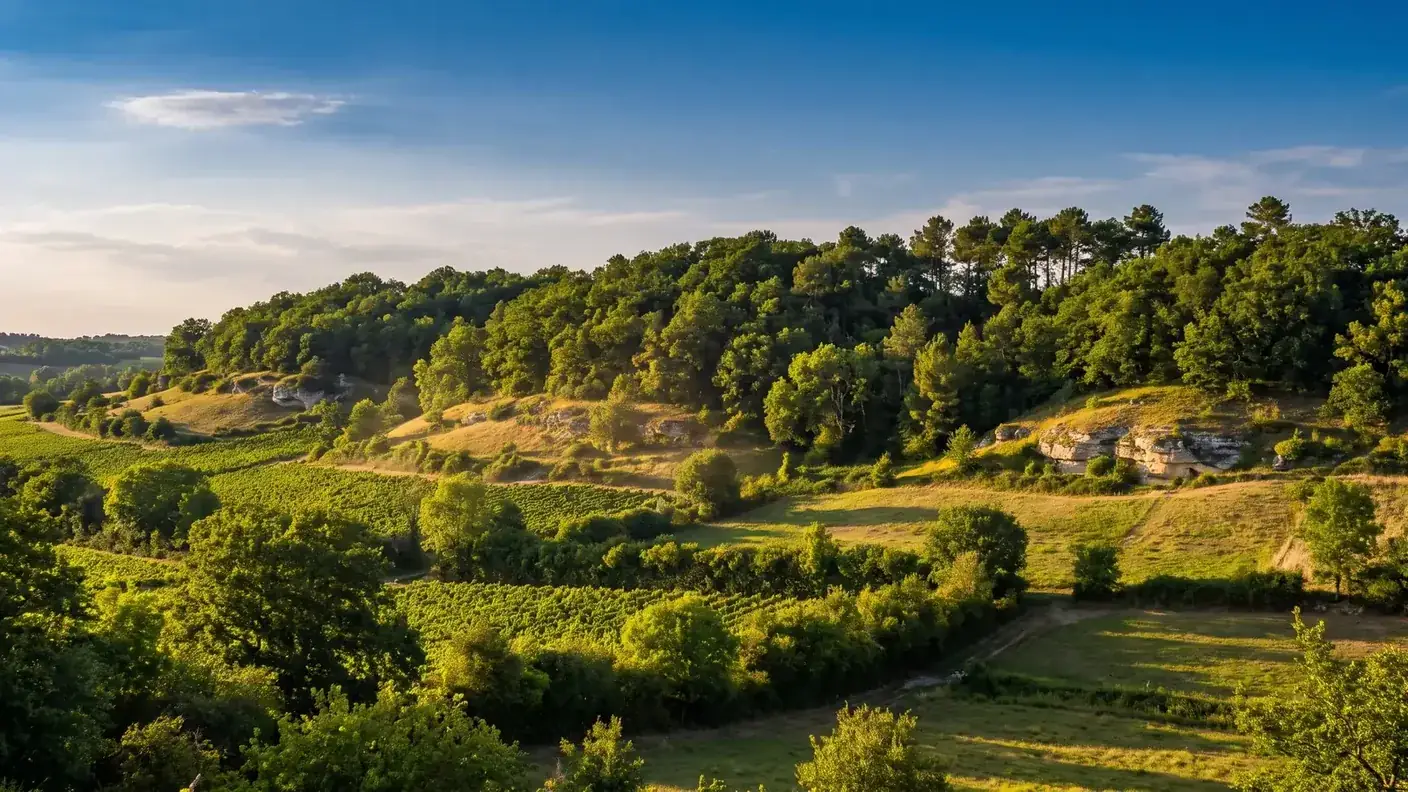
Mirambeau is an excellent starting point for exploring Haute-Saintonge, the Gironde Estuary, and the Cognac region. Its central location puts a wide variety of sites within easy driving distance, from the estuary’s shores to the vineyards.
Jonzac, Pons, and the estuary
Nearby, about 17 km away, Jonzac, the subprefecture, charms visitors with its castle, thermal baths, and old town—it’s also the nearest train station. Half an hour away, Pons, the former canton seat, features an imposing 12th-century medieval keep and a pilgrims’ hospital listed as a UNESCO World Heritage Site as part of the Routes of Santiago de Compostela—a direct echo of Mirambeau’s Jacobean past. To the west, toward the estuary, Saint-Thomas-de-Conac and Saint-Fort-sur-Gironde (with its Port-Maubert harbor, once a major hub for Gironde caviar) feature hillsides that slope down toward the river. And to the south, Blaye and its Vauban citadel, a UNESCO World Heritage Site, guard the entrance to the estuary—which, in turn, serves as the gateway to the Bordeaux vineyards and the Médoc, on the other side of the water.
The Land of Cognac and Forests
To the north and east lies the land of Cognac and forests. The vineyards of Haute-Saintonge, its wine-growing villages, and their Romanesque churches create a gentle, inviting landscape, well suited to tastings at producers’ estates. A little further on, Montendre and its Forest of La Double, the largest in Charente-Maritime, add ponds and pine woods to the scene. This little-known region lies away from the main visitor routes, and a private chauffeur can shape a bespoke loop from château to vineyard or from estuary harbour to forest.
More broadly speaking, Mirambeau is a wonderful gateway to Haute-Saintonge, this little-known region in the south of Charente-Maritime that vacationers often speed through on the highway without stopping. Yet it is a charming region, made up of vineyard-covered hillsides, forests, valleys, small spa towns, and villages with beautiful Romanesque churches—the famous Saintonge school of architecture, renowned for its carved facades. The Haute-Saintonge Community of Communes, one of the largest in France, brings together more than a hundred municipalities in this rural and gastronomically rich region. For those seeking an authentic Southwest, far from the crowds, nestled between Cognac, the estuary, and the Bordeaux region, the Mirambeau region is an ideal starting point—and all the easier to explore with a driver, who effortlessly connects these sites scattered throughout the countryside.
| About Mirambeau | Distance | Interest |
|---|---|---|
| Jonzac | ~17 km | Subprefecture, thermal baths, nearest train station |
| Saint-Fort-sur-Gironde | ~21 km | Port-Maubert, the caviar of the Gironde |
| Pons | ~32 km | Dungeon, Pilgrims' Hospital (UNESCO) |
| Blaye | ~30 km | Vauban Citadel (UNESCO), vineyard |
| Royan | ~52 km | Seaside resort, beaches, estuary |
When is the best time to visit Mirambeau?
Mirambeau is open to visitors year-round, but spring and summer—when the light plays across the hillsides and vineyards—are the most pleasant times to visit. The spring brings a touch of green to the vineyards and makes for mild days—perfect for strolling through the village, visiting the church in Petit-Niort, or walking along the hillsides. Thesummer bathes Haute-Saintonge in golden light, perfect for strolls and tastings of cognac, Pineau, and local wines, at the crossroads of the Charente and Bordeaux vineyards. It’s also the perfect time to enjoy the castle’s grounds and dining experience, or to make Mirambeau a gourmet stop on your journey along the estuary and to Royan.
Thefall, harvest season, brings color to the vineyards and bustles through the region’s cellars—a special time to learn about cognac production and taste the new Pineau. Thewinter, which is quieter, lets you explore the local heritage without the crowds, in the cozy atmosphere of a small town in Saintonge. In any season, the mild oceanic climate and Mirambeau’s location at a crossroads make it a convenient and relaxing destination, away from the major tourist sites—for those seeking an authentic Southwest, amid stone, vineyards, and wide-open horizons. If you plan to visit the church in Petit-Niort, be sure to check the opening hours; it has been restored and has reopened to the public.
A gourmet stop along the Estuary Route
The great strength of Mirambeau, no matter the season, is its location as a stopover. Situated at the crossroads of the Cognac and Bordeaux regions, on the route from Bordeaux to the estuary and Royan, the town is perfectly suited for a culinary or cultural stop. You can visit the historic church in Petit-Niort, treat yourself to a tasting at a cognac or Pineau producer, and then head on to the vineyards of Blaye, the thermal baths of Jonzac, or the port of Port-Maubert. This versatility—a crossroads town, a region where cultures meet, and a heritage that’s understated yet rich—makes Mirambeau an easy destination to incorporate into your itinerary, ideal for a day of exploration starting from Bordeaux, tailored to your preferences with a driver who knows the area well.
How to get to Mirambeau from Bordeaux
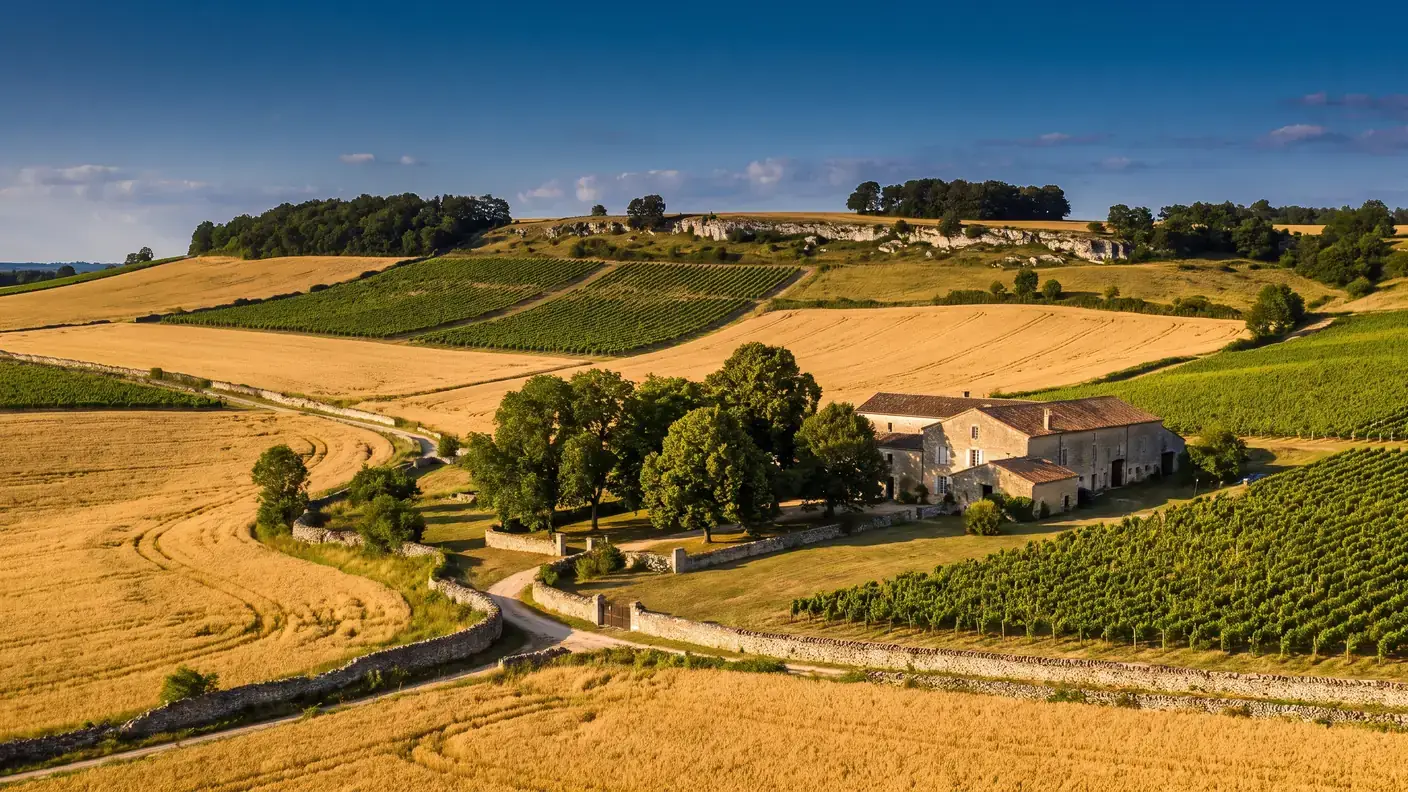
Mirambeau is located about 74 km from Bordeaux, which is about an hour's drive via the A10 highway. The town does not have a passenger train station in operation. The nearest train station is in Jonzac, about 17 km away.
Train or chauffeured car?
A chauffeured transfer provides a direct ride from Bordeaux to the agreed address in Mirambeau. The fare is fixed and provided in advance, starting at €168 one way. Travel is in a Mercedes C-Class saloon or a van seating up to 7 passengers. Stops and luggage requirements must be agreed before booking.
This package is ideal for a trip to Haute-Saintonge, a family visit, or a transfer to Bordeaux-Mérignac. The van can accommodate up to 7 passengers. Luggage, stops, and the drop-off address must be specified in the request. A fixed quote will then be provided in writing before booking.
| Route | Distance | Duration | Landmark |
|---|---|---|---|
| Bordeaux → Mirambeau | ~74 km | about 1 hour | Starting at €132 for a private chauffeur service |
| Mirambeau → Jonzac (train station) | ~17 km | ~18 min | subprefecture, thermal baths |
| Mirambeau → Saint-Fort-sur-Gironde | ~21 km | ~24 min | Port-Maubert, the estuary |
| Mirambeau → Blaye | ~30 km | ~34 min | Vauban Citadel |
Whether you come for the castle and its grounds, the historic church in Petit-Niort, Fins Bois cognac and Blaye wines, or to explore the estuary and the thermal baths of Jonzac, Mirambeau is a treat for lovers of the authentic Southwest, at the crossroads of the Saintonge and Bordeaux regions.
Whether it’s for a day trip to Haute-Saintonge, a gourmet tour, or an event, booking a driver from Bordeaux through Mirambeau allows you to confirm the trip and its price in writing.
Frequently Asked Questions
Where is Mirambeau located?
Mirambeau is a small town in Charente-Maritime, in the heart of Haute-Saintonge and on the border with Gironde. Part of the Jonzac district and the Pons canton, it has a population of approximately 1,520. It is accessible via the A10 highway and is located about 74 km from Bordeaux, or an hour’s drive.
What is the distance between Bordeaux and Mirambeau?
About 74 km by road, or a one-hour drive on the A10 highway. For a private driver from Bordeaux, the fare is fixed and provided in advance, starting at €132 one way. The town does not have a passenger train station; the nearest one is in Jonzac, about 17 km away.
Is the Mirambeau castle medieval?
No, not as it stands today. The original medieval fortress (first mentioned in 1079) was almost entirely destroyed during the Wars of Religion, in 1570 and again in 1577. The castle we see today is a 19th-century reconstruction (circa 1825–1836), a Neo-Louis XIII-style pastiche built by Count Duchâtel on the foundations of the former stronghold. It is not, however, listed as a historic monument. Its use as a hotel has shaped its recent history, but its current status must be confirmed directly with the establishment.
Can we visit Mirambeau Castle?
The Mirambeau Castle is private property and is not open to the public as a historic site. Its use as a hotel has shaped its recent history, but current options for lodging, dining, or access to the estate must be confirmed directly with the establishment before your visit. If you’re looking for a historic site open to visitors, we recommend the Saint-Martin Church in Petit-Niort; please check its local hours of operation.
In which cognac vintage is Mirambeau found?
Mirambeau is located in the Fins Bois appellation, according to the Cognac AOC specifications (source: INAO). It is therefore not part of the Bons Bois appellation. The town is situated near the border between the Cognac and Blaye-Côtes-de-Bordeaux wine-growing regions.
What's there to see in Mirambeau?
The 19th-century castle and its grounds (now a luxury hotel); the Romanesque Church of Saint-Martin in Petit-Niort, a listed historic monument featuring rare pre-Romanesque elements; the Neo-Romanesque Notre-Dame-de-l’Assomption Church in the village and its listed baptismal font; the old Sept Fonds washhouse; the cobblestone alleys and the Fins Bois Cognac vineyards. Nearby, Jonzac and its thermal baths, Pons and its UNESCO-listed pilgrims’ hospital, the Gironde estuary, and Blaye.
Where does the name Mirambeau come from?
The name means “beautiful view”: it comes from the medieval Occitan words “mira” (look, admire) and “bèl” (beautiful), meaning “look at the beauty.” Beware of a common misconception: it does not come from the Latin “mira bellum,” since in Latin “bellum” means “war.” Mirambeau belongs to a family of southern place names celebrating a panoramic view (Mirabel, Miramont…). The original form was “Mirambel-l’Artaud,” named after the first known lord, Artaud de Mirambel (11th century).
Why is Mirambeau called the “Gateway to Bordeaux”?
Because it marks the transition between the Charente region of Saintonge to the north and the Bordeaux region of Guyenne to the south—a geographical, historical, and even viticultural crossroads, since the village lies at the junction of the Cognac and Blaye wine regions. Perched on a strategic hill overlooking the region, and long a stronghold on the border between France and English Guyenne, Mirambeau is today a major road junction (A10, D137, D730) connecting Bordeaux to Saintonge and the estuary.
How many people live in Mirambeau?
With a population of approximately 1,520 at the last census, it is one of the main towns in this part of Haute-Saintonge, with a population density of about 56 people per square kilometer. Unlike many neighboring rural villages, Mirambeau has maintained its population and is even growing slightly (after hitting a low of 1,344 residents in 1982). It is a vibrant community and a hub for commerce and crafts in the area. The residents are known as Mirambeaulais.
Is there a train station at Mirambeau?
No, the town does not have a passenger railway station in service. The former Sept Fonds stop, on a narrow-gauge line operated by the Charentes Economic Railways, closed around 1934. The nearest station is Jonzac, about 17 km away, served by Nouvelle-Aquitaine TER and Intercités trains; Pons (~32 km) is another option. A direct executive car service from Bordeaux remains the simplest way to reach Mirambeau and explore Haute-Saintonge.
What's there to see around Mirambeau?
Jonzac, the spa town and subprefecture, and its train station (~17 km); Saint-Fort-sur-Gironde and its Port-Maubert harbor, a former caviar hub (~21 km); Pons, with its keep and its UNESCO-listed pilgrims’ hospital (~32 km); Blaye and its UNESCO-listed Vauban citadel (~30 km); Montendre and its Double Forest; Royan and its beaches (~52 km). We are in the heart of Haute-Saintonge, nestled between the estuary, vineyards, and forests.
What is the church in Petit-Niort?
The Romanesque Church of Saint-Martin in Petit-Niort has been listed as a historic monument since 2002, under the Mérimée reference PA00104808 (source). This former priory features pre-Romanesque elements, a Saintonge Romanesque façade, and a Flamboyant Gothic side aisle. Please check the access conditions before your visit.
Can I book a private chauffeur from Bordeaux to Mirambeau?
Yes. We offer the Bordeaux → Mirambeau route, approximately 74 km and one hour via the A10, at a flat rate starting at €150 one way. The transfer is provided in a Mercedes C-Class sedan or a van that seats up to 7 passengers. The drop-off address, stops, and luggage restrictions are agreed upon before booking.
Further Reading
- The nearby forest and castle: see the Montendre Guide (the medieval castle, the Forest of La Double, and Bons Bois cognac)
- A village on the estuary: see the Saint-Thomas-de-Conac Guide (the estuary, the County of Cônac, and the Romanesque church), 18 km away
- The Land of Cognac: See the Cognac Guide (the major houses, the Charente method, and the six crus)
- Plan your trip: Book Bordeaux → Mirambeau or explore all our destinations
Sources and References
- Wikipedia — Mirambeau (Charente-Maritime) — geography, demographics, history, castle, heritage
- POP/Mérimée Database — Saint-Martin Church in Petit-Niort — Listed as a Historic Monument (June 4, 2002), pre-Romanesque elements
- Wikipedia — Mirambeau Castle — 19th-century reconstruction, Duchâtel
- INAO — Cognac Fins Bois — Specifications and Appellation Area
- INSEE — Complete file for Mirambeau (17236) — population, area, municipal data
Article updated in July 2026.
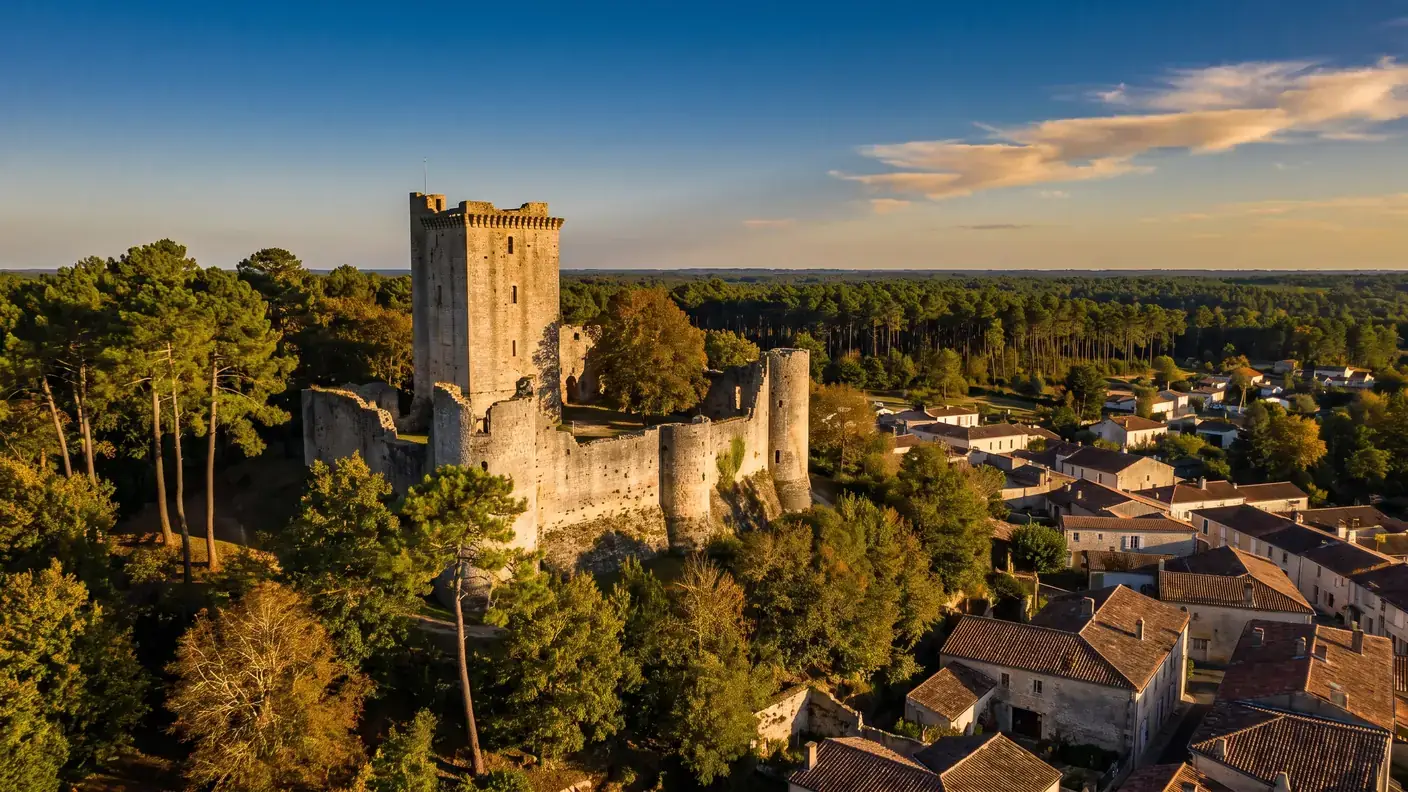
On the way to the Porte du Bordelais
Direct ride from Bordeaux (~1 hour) to Mirambeau and Haute-Saintonge, with stops along the way as desired—Jonzac, the estuary, a Cognac vineyard. Written fixed-price quote, with no surprises on the meter.