Bordeaux to Juillac : castles, market and Corrèze history
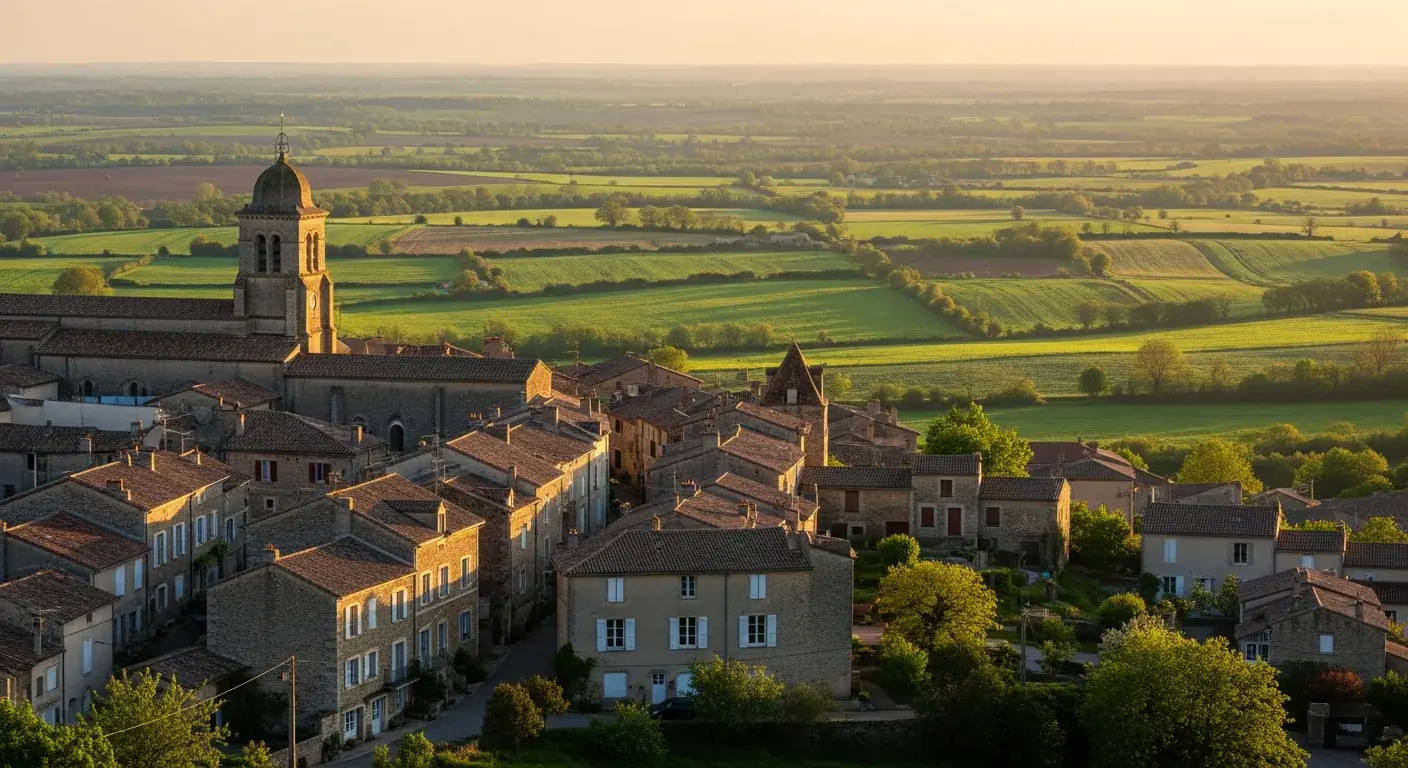
A village in the Corrèze department with 1,153 residents that harbors a thousand years of history : two castles, a church first mentioned around 1100, a Friday market whose origins, according to local tradition, date back to 1363, the legacy of Jeanne Villepreux-Power—a pioneer in observational aquariums—and, all around, Pompadour, Ségur-le-Château, and the Brive region. Learn all about it before you visit—it’s about 2 hours and 31 minutes from Bordeaux.
In a nutshell
- Juillac is a village of 1,153 residents (2023, up 2.4% since 2017, INSEE ) located in the western part of the Corrèze (19350) , 24 km northwest of Brive-la-Gaillarde, on a ridge between Périgord and Limousin .
- The town served as the canton seat for 225 years (1790–2015), before it was incorporated into the canton of Yssandonnais (administrative center: Objat).
- Its heritage is centered on two castles —Beaufort (Renaissance ruins) and La Salle (with Carolingian origins)—and the Church of Saint-Germain , first mentioned around 1100 in the cartulary of Solignac Abbey.
- Local tradition links the Friday market to a privilege granted in 1363 , a date that has yet to be confirmed by any accessible primary source.
- Juillac is the birthplace of Jeanne Villepreux-Power (1794–1871), a pioneering naturalist in the field of observational aquariums, as documented by the National Museum of Natural History (2019) .
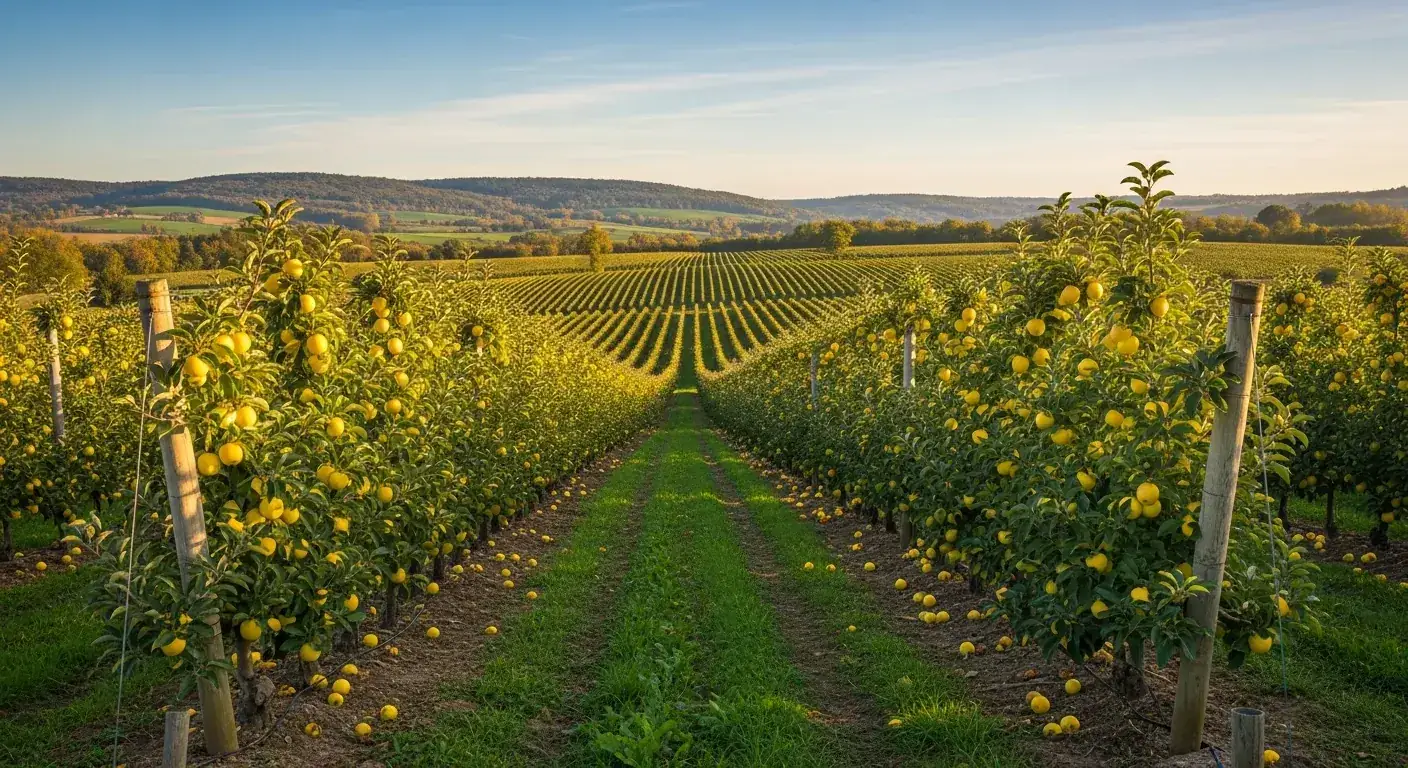
- The local economy depends on apple growing (Limousin apples, AOP) and Limousin cattle breeding ; agriculture accounts for 66% of the municipality's territory.
- Less than 15 km away: the castle and stud farm at Pompadour , and Ségur-le-Château , listed among the "Most Beautiful Villages of France."
- It's about 220 km and roughly 2 hours and 31 minutes by car from Bordeaux—the village doesn't have a train station; the nearest ones are in Objat and Vignols-Saint-Solve.
- This guide is intended for those planning a visit, genealogical research, a relocation project, or a tour of Corrèze and Périgord starting from Bordeaux.
Before You Go: What Juillac Really Is
Juillac is a village in western Corrèze, situated on a ridge between the Brive basin, the Périgord, and the Limousin. The town has a population of 1,153 and is home to two castles, the Church of Saint-Germain, and a Friday market whose origins are locally traced back to 1363, though no identifiable primary source records are available. It is also the birthplace of Jeanne Villepreux-Power, a pioneering naturalist who designed observation cages considered to be the precursors of the aquarium. The area’s economy is based on Limousin cattle farming, Limousin AOP apple orchards, and the services of a former canton seat. Pompadour, Ségur-le-Château, Objat, Uzerche, and Brive-la-Gaillarde are all within a radius of about 25 km. From downtown Bordeaux, the standard route to the site is 220 km and takes approximately two hours and thirty-one minutes. Juillac does not have a train station; a transfer by road is required from Brive, Objat, or Vignols-Saint-Solve.
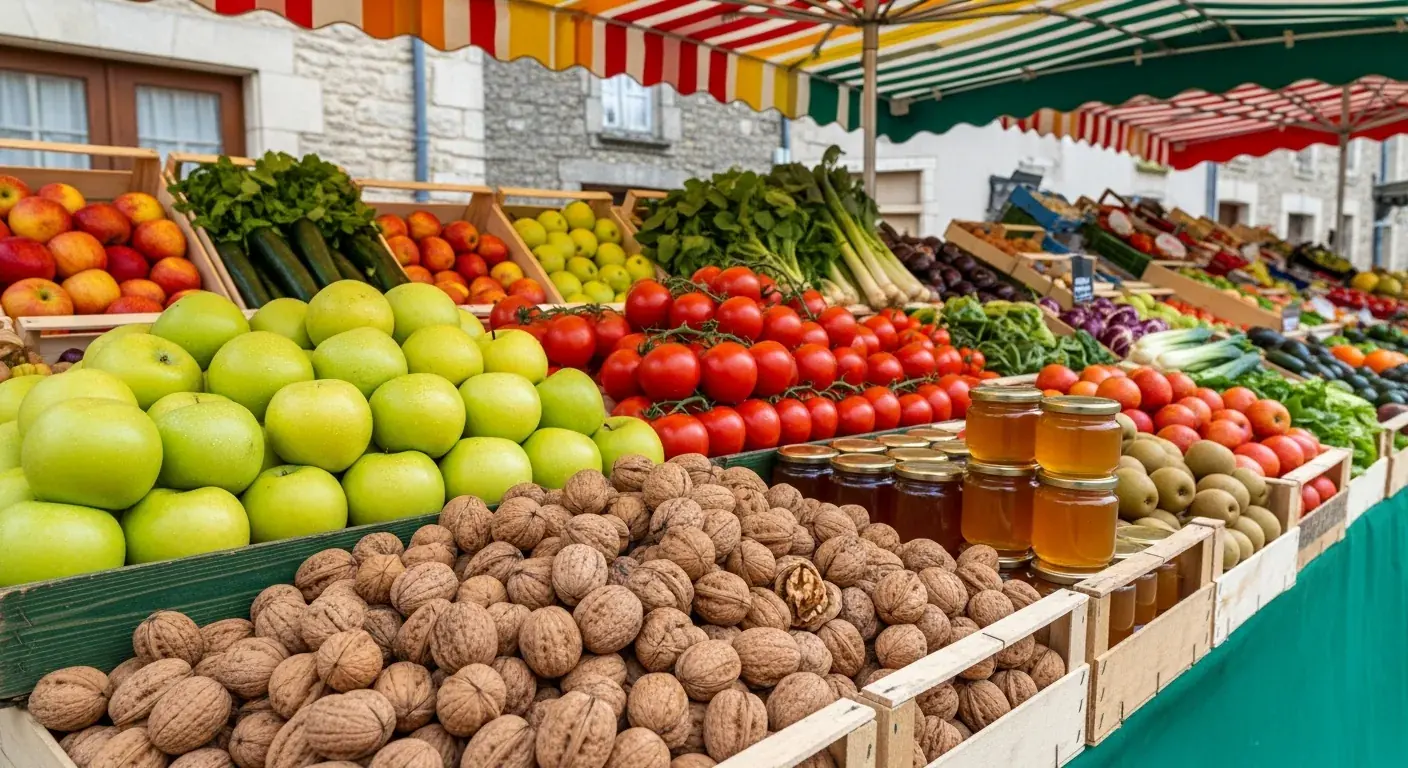
Friday, 9 a.m., Place du Bourg. Market stalls are set up between Saint-Germain Church and the stone facades: Golden Delicious apples from nearby orchards, walnuts, milk-fed veal, and honey from the plateau. A local might tell you, in Occitan, that you’re in “Julhac.” This Friday ritual is an old one. Local tradition traces its origins to a privilege granted in 1363 , a date that has yet to be confirmed in any accessible primary source.
Juillac isn't featured in any tourist guide, and that's precisely what makes it so interesting. This small town in the Corrèze department of 1,153 residents spans 33 km² and boasts a concentration of heritage sites that is rare for a region of its size: two castles , a church remodeled over nine centuries, a history of noble rule documented since the 11th century, and the memory of a servant girl who set out on foot for Paris and would eventually become the first woman admitted to the Academy of Sciences of Catania .
The village is located in a ridge which separates two worlds: to the south, the sandstone lands that mark the beginning of the Périgord; to the north, the schist bedrock of the Limousin. This pivotal location explains just about everything—the lords’ ambitions, the market route, and the landscapes that change from one hillside to the other.
This guide covers everything you need to know before you visit: the history, the heritage, village life today, nearby attractions worth visiting—and practical information, including how to get there from Bordeaux if you don’t want to drive for 2 hours and 31 minutes, for example, with a private driver from Bordeaux (Juillac) .
Where is Juillac located? Geography and Administrative Status
Juillac is part of the Corrèze (19) , in the region Nouvelle-Aquitaine , in the borough of Brive-la-Gaillarde . The town is located on the border of the Brive Basin and the Uzerche region , two entities that define the northwestern part of the department.
The village was established at the intersection of the departmental roads 39, 71, and 901 , on a ridge that marks a true geographical pivot between the Périgord to the south and the Limousin to the north. Juillac also borders eight municipalities, including four in the Dordogne — it lies right on the boundary between the two regions.
| Data | Details |
|---|---|
| Department | Corrèze (19) |
| Region | Nouvelle-Aquitaine |
| Borough | Brive-la-Gaillarde |
| Current Canton | L'Yssandonnais (since 2015, with its central office in Objat) |
| Former canton | Juillac (1790–2015, canton seat) |
| Intermunicipal Cooperation | Brive Basin Urban Community (since 2014) |
| Postal code | 19350 |
| Residents | The Juillacois |
| Area | 33.14 km² |
| Elevation | from 154 m (Roseix Valley) to 410–415 m (Les Bichets) |
Distances to Nearby Cities
- Brive-la-Gaillarde : 24 km (southeast)
- Objat : about 10 km — the nearest service center
- Terrasson-Lavilledieu : 21 km
- Uzerche : 22 km
- Tulle (prefecture): about 36 km
- Arnac-Pompadour : about a dozen kilometers
- Bordeaux : ~220 km by road (about 2 hours and 31 minutes)
Since 1994, Juillac has been part of an intermunicipal organization: first within the Bassin de la Loyre Community of Municipalities, which was renamed Juillac-Loyre-Auvézère in 2006, and then, since January 1, 2014, in the Brive Basin Urban Community , which brings together most of northwestern Corrèze around its urban center.
A Bit of History: From “Julhac” to Juillac
A Latin etymology and a family attested as early as the 11th century
The name Juillac comes from the Latin Julius , combined with the Gallo-Roman suffix “-acum,” which denotes an estate: literally, “the estate of Julius.” The Occitan form, still used locally, is “Julhac.” A family bearing this name is attested as early as the 11th century —evidence of the long history of settlement at this hilltop site.
1298: the “burgum nostrum de Julhac”
The first official mention of the town dates back to 1298 : the Viscount of Limoges refers to the “burgum nostrum de Julhac” , near which Gui Morcel, a knight of Ségur, held a fortified residence. At the time, Juillac was a fief of the viscount’s castellany of Ayen .
1346: The Arrival of the Pérusse Family—Three Centuries of Lordship
The turning point came in the mid-14th century. Ramnulphe de Pérusse , a member of the first noble family documented in Juillac and originally from Ségur, received the fief around 1346 . Between 1357 and 1359, he consolidated his seigneurial rights over the town and the parish in exchange for paying homage to the viscount. The family, which would become the House of Pérusse des Cars , held important offices under the kings of France and the popes of Avignon beginning in the 14th century—a source of the wealth and power that would shape the village for three centuries.
1363: The Friday Market Privilege
According to local tradition, Ramnulphe was granted a Friday market in 1363 . In the absence of any identified primary public records, this date is presented as a tradition that requires confirmation; the weekly market, however, is still held on Fridays. In 1440, his son Gautier also secured an official demarcation between the seigneuries of Juillac and Ayen.
1630: The Plague, as Told by an Eyewitness
In 1630 , Juillac was struck by a severe plague epidemic , which also affected the neighboring towns of Ayen and Yssandon. We know about this event from the “Livre de raison” by Jehan Raffailhac , a contemporary from Badefols-d’Ans in neighboring Périgord, who recorded the spread of the plague. This type of document—a household ledger kept on a daily basis—remains a valuable source for historians.
1643: The Sale to Hautefort
The Juillac estate held a prominent place in the heritage of the Pérusse des Cars family until its sale in 1643 to the Marquis de Hautefort —a distinguished lineage whose spectacular castle still overlooks the neighboring Périgord region. The Hauteforts retained the estate until the Revolution, bringing to a close three centuries of Pérusse rule over the town.
1790–2015: The Legacy of 225 Years as the County Seat
The Revolution redrew the administrative map, and Juillac benefited from this: as early as 1790 , the village became a canton seat . This status, maintained without interruption until 2015 , made it a key administrative hub for the surrounding municipalities for more than two centuries—resulting in a more robust infrastructure of services (police station, school, shops) than in neighboring villages of comparable size. The 2015 territorial reform, which cut the number of French cantons in half, incorporated it into the canton of Yssandonnais .
| Date | Event |
|---|---|
| 11th century | There is evidence of a family "from Julhac" at the site |
| 1298 | First written mention: the “burgum nostrum de Julhac” |
| c. 1346 | Ramnulphe of Pérusse receives the fief of Juillac |
| 1363 | Date traditionally attributed to the market's origins (primary source to be confirmed) |
| 1440 | Official boundary between the seigneuries of Juillac and Ayen |
| Early 16th century | Construction of Beaufort Castle (known by that name as early as 1534) |
| 1630 | Plague Epidemic, Documented by Jehan Raffailhac |
| 1643 | Sale of the seigneury to the Marquis de Hautefort |
| 1777 | The rectory is built on the ruins of the Château de la Salle |
| 1790-2015 | Juillac, canton seat (225 years) |
| 1904 | Reconstruction of the church's current bell tower |
| 2014 | Integration into the Brive Basin Urban Community |
Juillac's Heritage: Castles and Churches
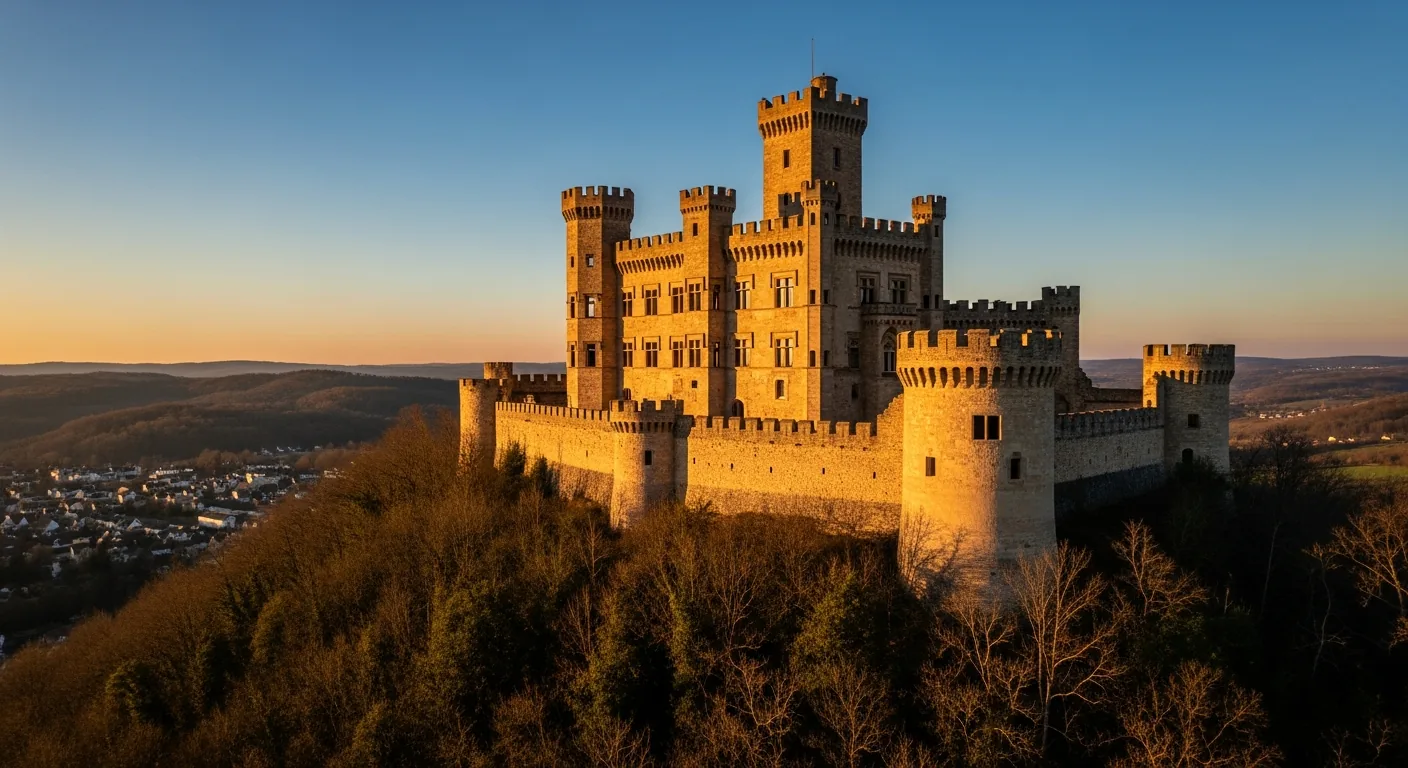
Perched on a hill overlooking the village, Beaufort Castle is the most spectacular building in Juillac—and undoubtedly the least known among enthusiasts of the French Renaissance. The building is privately owned and not open to the public; its silhouette can be seen from the village.
A patron with close ties to royal circles
The exact date of the site’s founding is unknown—it may have been a fortified residence from the 15th century. The current ruins date from the early 16th century , and their construction is attributed to Geoffroi de Pérusse des Cars (1470–1534) , whose motto is engraved in the village church. The name “Beaufort” appears in historical records as early as 1534 .
Between Flamboyant Gothic and the Renaissance
The architecture reflects a stylistic transition typical of the 1500s:
- A residence arranged around a courtyard , flanked by circular towers with embrasures —its defensive function has not yet disappeared;
- A large corner tower housing the lord's chamber, a symbol of the patron's social status;
- A decor blending Flamboyant Gothic and Renaissance motifs —pilasters, carved shells, candelabra—that reveals the influence of the major construction projects along the Loire, which were then in full swing.
Ruins, police station, housing: the successive phases of life
The castle was already in ruins by the end of the 17th century , and some of its Renaissance sculptures were reused in Saint-Germain Church (they can still be seen behind the side altar). In the 19th century, the national gendarmerie set up its offices in the buildings before their conversion into housing . A fate typical of the Corrèze region: here, heritage isn’t confined to museums—it continues to serve a purpose. The building isn’t open to visitors, but its silhouette on the hill can be seen from the village.
The Château de la Salle: From Its Carolingian Origins to the Rectory
In the village itself—unlike Beaufort, which overlooks the area from the heights—stood the Château de la Salle , also known as the Château de Peyrusse des Cars : a fortress that protected the village.
An origin older than it seems
Its original construction is believed to date back to the time of the struggle led by the Duke of Aquitaine Waïfre against incursions from the north, around 759–768 , during the reign of Pepin the Short. Originally, the complex consisted simply of a keep and a fortified enclosure : the archetype of early medieval fortifications.
1777: The rectory was built on the site of the fortress
In 1730 , the castle lay in ruins; the parish priest of Juillac purchased it to establish his rectory there. After protests from the residents—who ultimately contributed to the construction—the rectory was built in 1777 on the ruins of the old fortress . The history of this site encapsulates a thousand years of the town’s evolution: from the Carolingian keep to the parish priest’s house, this same location has always embodied a form of authority over the village.
Saint-Germain Church: Nine Centuries of Architectural Evolution
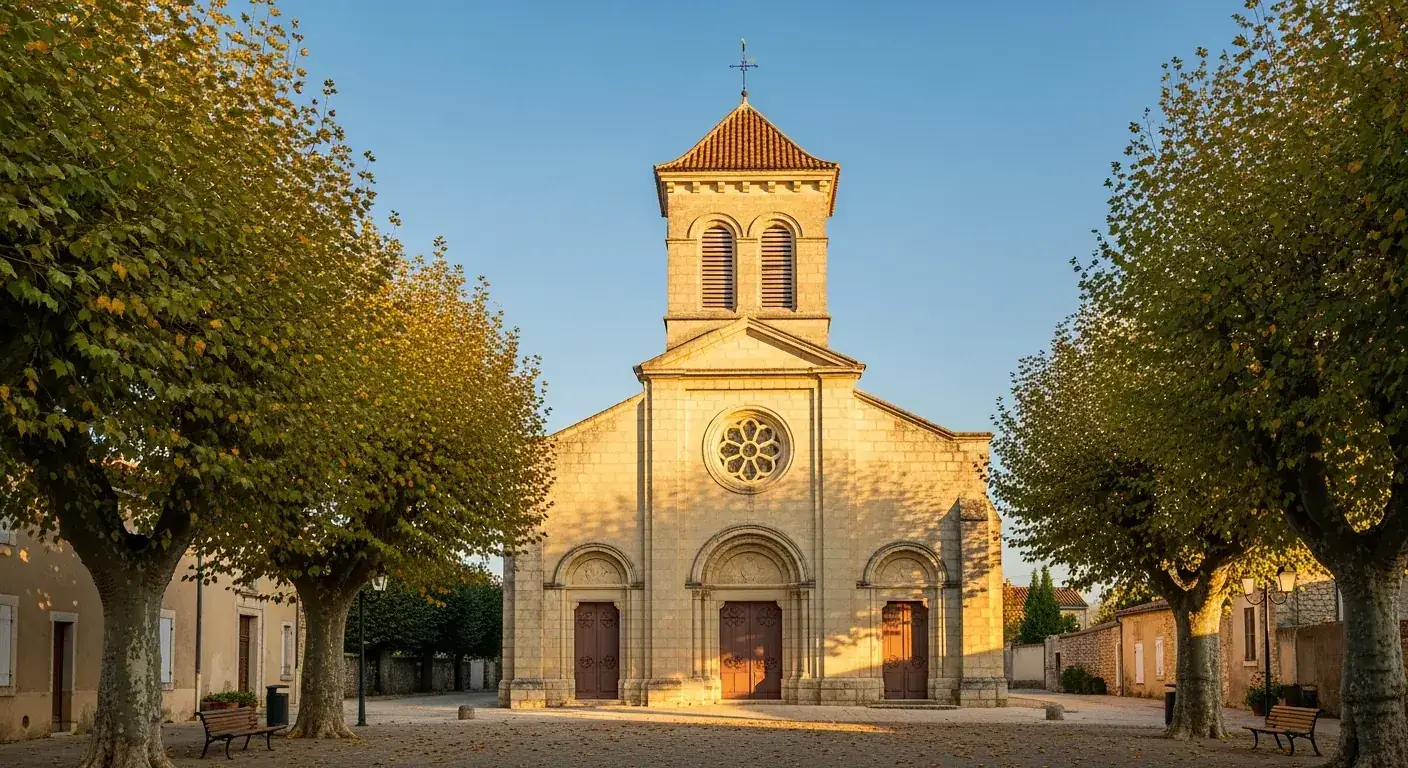
The Saint-Germain Church is the monument that best exemplifies the longevity of Juillac: its stone structure bears witness to nearly a millennium of successive transformations.
Around 1100: a church in the Solignac network
The cartulary of Solignac Abbey mentions, around 1100 , the church and then the parish of “Julac,” dedicated to Saint Germain of Auxerre and under the jurisdiction of the great Limousin abbey; the priests there were appointed by the Bishop of Limoges. The original building had a Latin cross plan —a single nave and two side chapels—and a five-sided polygonal apse , which has been preserved since its construction.
18th century: the transformation into a double-nave church
In the 18th century , the church underwent a major transformation: the Saint-Jean Chapel, on the south side, was removed, while the north chapel was opened up and significantly extended—to the point that the church now appears to have two naves . The new southern chapel now houses the main entrance. The current bell tower, with a gabled roof, dates from 1904 .
Hammered coats of arms and movable treasures
On the exterior, two buttresses bear the coat of arms of the des Cars family —one of which was hammered out , likely during the Revolution. Inside, the most poignant detail remains the reused Renaissance sculptures (pilasters, shells, candelabra) salvaged from the ruins of Beaufort Castle: part of the church’s decor indirectly tells the story of the neighboring castle’s demise.
The building also houses four objects designated as Historic Monuments : a 17th-century painting depicting Saint Hommebon (listed in 1975), an Adoration of the Shepherds from the 19th century (inscribed in 1976), a Virgin and Child from the 19th century (1991) and a 17th-century cabinet (1995).
Jeanne Villepreux-Power: Pioneer of Observation Aquariums
It is the village's most extraordinary story—and one of the most inspiring chapters in the history of French science. Jeanne Villepreux was born in Juillac on September 25, 1794 , the eldest daughter of a cobbler who was also a rural constable. A servant in the village, she lost her mother at age twelve and left Juillac at eighteen… on foot, to Paris — more than 400 kilometers on foot.
From Dressmaking to the Strait of Messina
In Paris, she began working for a prominent dressmaker and made a name for herself by designing the wedding dress for Marie-Caroline de Bourbon-Siciles , wife of the Duke of Berry. It was on this occasion that she met James Power , a merchant of Irish origin who had settled in Sicily. She joined him in Messina in 1818 , married him, and devoted herself—as a complete self-taught scholar—to the island’s natural history.
The Argonaut and the "Power Cages"
Her main focus was an enigmatic cephalopod, the argonaut argo . The question divided scholars of the time: Does the animal secrete its shell, or does it inhabit it like a hermit crab? To observe it alive, she designed “Power cages” —submerged, glass-enclosed observation enclosures that would make her, according to Sir Richard Owen, the pioneer of aquarium science , and according to Edmond Perrier, the pioneer of marine biology stations. Her experiments settled the debate: the argonaut does indeed secrete its shell . She also described the species’ reproductive behavior, which exhibits spectacular sexual dimorphism.
Recognition That Has Gone Global
The first woman to be elected to the Academy of Sciences of Catania and a corresponding member of European learned societies, she published, among other works, her *Physical Observations and Experiments on Various Marine and Terrestrial Animals *. She died in Juillac in January 1871 , where it had all begun. Long forgotten, she has now been widely rediscovered—a crater on Venus bears her name, and in Juillac, the Jeanne Villepreux-Power School keeps her memory alive among the village children.
Juillac Today: Demographics, Schools, and Local Life
A population that has stabilized after a long decline
Like most rural towns in Corrèze, Juillac experienced a long period of population decline during the second half of the 20th century, followed by stabilization and then a slight recovery : in 2023, the municipality had 1,153 residents, representing a 2.4% increase compared to 2017 —while Corrèze as a whole lost residents (−0.26%) over the same period.
| Year | Population | Trend |
|---|---|---|
| 1968 (modern peak) | ≈ 1 450 | — |
| 1999 | ≈ 1 090 | long-term decline (rural exodus) |
| 2016 | 1 127 | stabilization |
| 2022 | 1 147 | gradual recovery |
| 2023 | 1,153 | +2.4% since 2017 |
This modest but real resurgence is due to factors seen throughout rural Limousin: the arrival of newcomers drawn by real estate prices and the quality of life, the rise of remote work , and the proximity to the Brive job market, less than thirty minutes away. More than 40% of residents are 60 or older—an age profile typical of rural Corrèze—but the village is no longer losing population.
The Jeanne Villepreux-Power School and the RPI
The town is home to the Jeanne Villepreux-Power School Complex (preschool and elementary school), which is part of an intermunicipal educational consortium with Chabrignac, Concèze, and Saint-Bonnet-la-Rivière . From 1965 to 1991, the town even had its own general secondary school—a legacy of its status as the county seat.
Rare amenities for a village of 1,150 residents
Its 225 years as a county seat have left it with a surprisingly comprehensive infrastructure: a municipal swimming pool , a gymnasium and multisport fields, a skatepark , a rugby field, a media library , a post office, a fire station, a gendarmerie, a campground open in the summer—and, since 2021 , a multidisciplinary health center that brings together doctors and nurses. Rugby is played here through the USJO (Union Sportive Juillac-Objat), while pétanque and mountain biking have their own clubs, and a network of marked hiking and mountain biking trails winds through the town’s woods.
Patrick Sébastien, Les Penaud: Local Kids
The village has its famous figures. Patrick Sébastien , born in Brive, spent part of his childhood in Juillac—a plaque on the facade of the house where he lived, near the church, commemorates this. Alain Penaud , fly-half for the French national rugby team in the 1990s, was born in Juillac in 1969 ; his son Damian Penaud , an international winger and the French national team’s all-time try-scoring leader, carries on the family tradition. For a village of about a thousand people, the concentration of talent is remarkable.
Moving to Juillac?
Visitors are asking this question more and more often: What if we stayed? The village offers a few things you don't often find in rural areas— on-site school (with RPI), health center Opened in 2021, a pharmacy, a media library, a swimming pool, a police station, a weekly market, and the employment center in Brive is less than 30 minutes away . The population growth (+2.4% between 2017 and 2023, bucking the department-wide trend) shows that this model is already appealing to new rural residents and remote workers. The key factor remains—one that is unique to any move to the countryside: settling in off-season , on a market Friday AND a Tuesday in January, to experience the silence of the ridges before signing.
Landscapes, Agriculture, and Flavors of Juillac
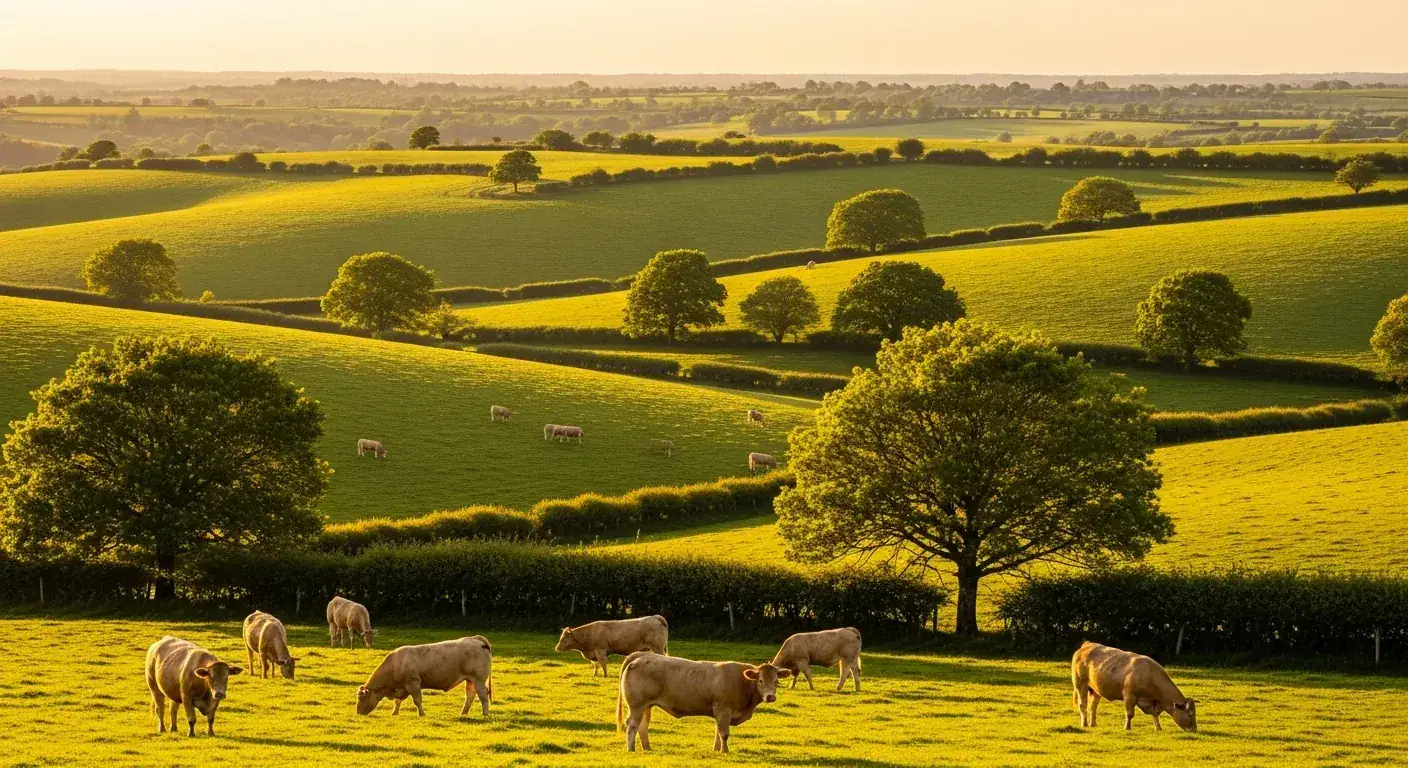
The municipal territory— 33.14 km² —is quite hilly. The elevation ranges from 154 meters in the far south, where the Roseix River leaves the municipality toward Rosiers-de-Juillac, to 410–415 meters at a place called Les Bichets , on the border with Saint-Cyr-les-Champagnes. This elevation difference of over 250 meters explains the diversity of the landscapes, ranging from steep-sided valleys to rolling hedgerow-covered plateaus.
The Roseix, a river that originates in the village
The main river, the Roseix , and its tributary, the Tournerie Stream, are unique in that they both originate within the municipality . At the regional level, two other rivers border the area: the Auvézère —which flows through Ségur-le-Château—and the Loyre , which gave its name to the first local intermunicipal association.
Sandstone to the south, shale to the north: a geological boundary
Geologically speaking, Juillac marks a clear transition: the soils in the southern part of the municipality rest on sandstone , while those in the north rest on a bedrock of schist and quartzite . This is the contact zone between the sedimentary Périgord and the crystalline Limousin —the famous “hinge” that gives the village its dual identity, neither quite Périgord nor quite Limousin.
A region that is two-thirds agricultural
Land use reflects the same balance: 66.2% agricultural land (heterogeneous agricultural areas 37.5%, pastures 22.5%, permanent crops—orchards—5.1%), 31.2% forest , and only 2.6% urban areas. The climate, which is oceanic and warm, tempers winters that are still harsher than those on the Aquitaine coast—we are at an elevation of between 300 and 400 meters here.
Local Economy: AOP Apples, Limousin Cattle, and the Friday Market
The Limousin Apple, a PDO right at the village entrance
Juillac makes its living primarily from apple growing . The village is located in the heart of the Limousin apple : Golden Delicious apples grown at altitudes between 300 and 500 meters on the hillsides of Corrèze, Dordogne, Creuse, and Haute-Vienne, protected by an AOC since 2004 and then an AOP since 2007 : France's first apple to receive a designation of origin. Orchards shape the town's landscape (5% of the area is devoted to permanent crops), and in the fall, the roadsides are lined with crates of Golden Delicious apples.
Limousin Cattle Farming and the Traditions of the Plateau
- Limousin cattle farming —known for its distinctive wheat-colored coat—remains the region’s traditional mainstay, well-suited to the area’s rolling pastures;
- The chestnut tree , a staple of the Limousin region, has long been the primary source of sustenance for the countryside;
- Walnut trees complete the trio, blending seamlessly with the neighboring Périgord region.
The Friday Market: 660 Years and Still Going Strong
Every Friday morning, the market brings the village to life; local tradition traces its origins back to 1363 , though no primary public records have been identified. You’ll find products from the plateau there: AOP apples, walnuts, honey, milk-fed veal, and farm-fresh cheeses. It’s the best time of the week to visit the village.
Shops and Services: A Town That Holds Its Own
Despite the storefronts that bear witness to what was once a busier commercial district, Juillac retains a vibrant local community: a bakery, a bar and tobacco shop, a restaurant, a pharmacy, an auto repair shop , an appliance store, two nearby gas stations, and a business park on the outskirts of town, heading toward Pompadour. More than 200 companies have their headquarters in the town.
Dining: The Best of Corrèze
People don't come to Juillac for a Michelin-starred restaurant—they come for the cuisine of the Corrèze region , one of the most hearty in France, served here without any frills, whether at the town restaurant, the market, or the farm-inns on the plateau.
Milk-fed calves raised with their mothers
It is THE pride of the Brive basin and the Objat region: a calf raised exclusively on its mother’s milk , with pale, melt-in-your-mouth meat, reared according to strict specifications (Label Rouge). Cutlets, sweetbreads, and kidneys are served at all the finest restaurants in the area—and at the Friday markets.
Mique and Tourtous: The Soul of Rural Life
Two Corrèze specialties you have to try at least once: mique , a ball of leavened dough poached in broth, served with petit salé—the dish for large winter gatherings—and tourtous , buckwheat flour pancakes topped with whatever the region has to offer.
Apples, walnuts, chestnuts, honey: the plateau’s pantry
Limousin AOP Golden Delicious apples can be enjoyed here at the source, in the orchards surrounding the village. Walnuts and walnut oil evoke neighboring Périgord, chestnuts recall the Limousin's traditional staple crop, and hedgerow honey rounds out the market baskets.
And in the glass?
Farm-fresh apple juice and AOP orchard cider reign supreme—this is apple country, not wine country. Wine lovers will find, 24 km away at the Brive market halls, the lesser-known wines of Corrèze (straw-covered wines and Coteaux de la Vézère) and the famous purple mustard from Brive made with grape must to accompany veal.
Around Juillac and Outdoor Activities
Juillac is an excellent base camp from which to explore the surprisingly rich Corrèze-Dordogne-Limousin triangle.
Arnac-Pompadour: The Marquise's Castle and the City of Horses (12 km)
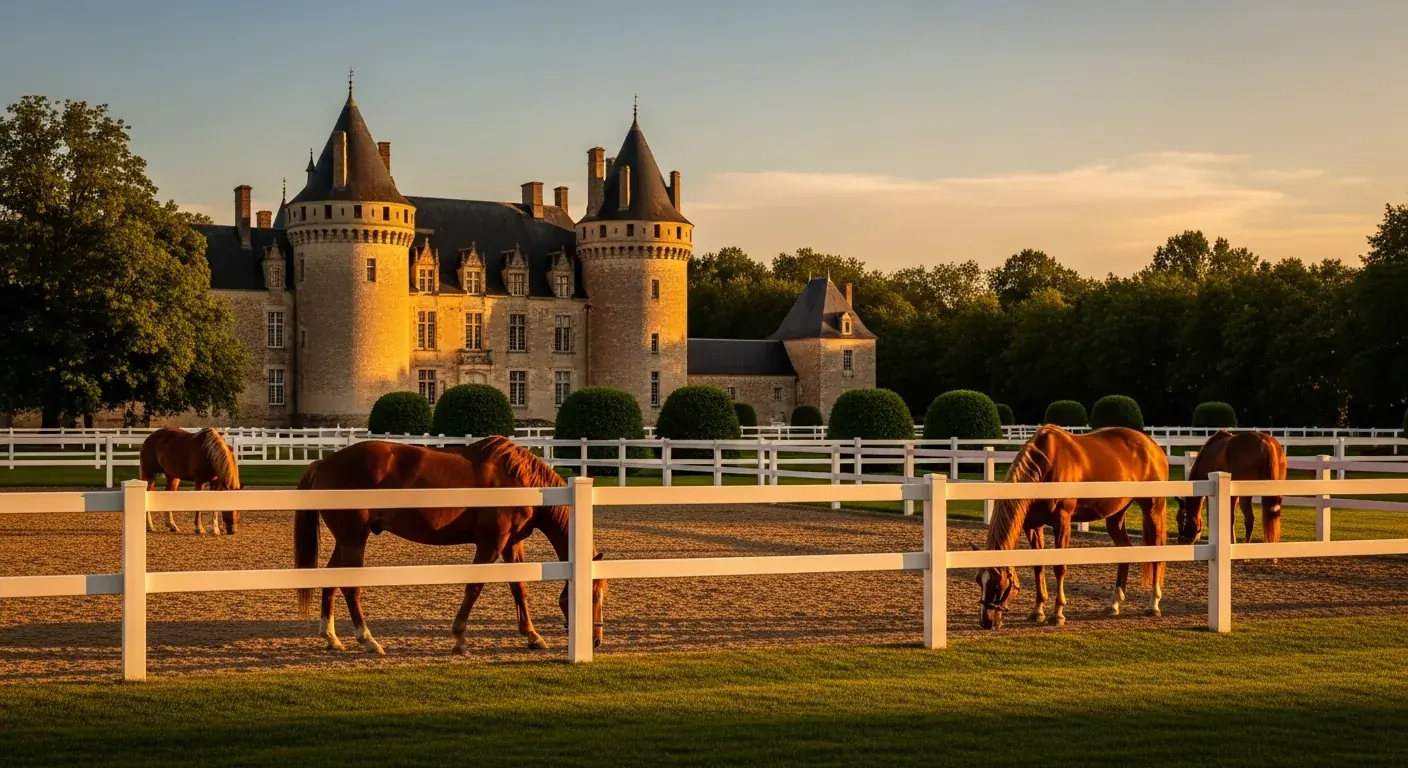
About a dozen kilometers to the north, Pompadour is home to a medieval castle rebuilt in the 15th century (designated a Historic Monument since 1926) and one of France’s premier equestrian destinations . In July 1745 , Louis XV gifted the estate—which had been elevated to a marquisate in 1614—to his mistress, who would take its name: the Marquise de Pompadour . She never lived there, but she promoted horse breeding by establishing the stud farm in 1760 , which was expanded in 1763 to include the royal broodmare herd. The site, the historic birthplace of the Anglo-Arabian breed , still thrives on the rhythm of equestrian competitions and horse races.
Ségur-le-Château: one of the Most Beautiful Villages in France (15 km)
To the northwest, Ségur-le-Château —the birthplace of the Pérusse family, the very same family that ruled over Juillac—is officially listed among the Most Beautiful Villages of France : half-timbered houses nestled in a bend of the Auvézère River , beneath the ruins of a perched medieval castle. The valley is designated a Natural Area of Ecological Interest (ZNIEFF), where the dipper nests.
Objat, the neighboring town (10 km)
Objat , the canton’s administrative center, offers all the amenities of a true town center: supermarkets, a TER train station (Brive-Objat-Saint-Yrieix line), and markets. It is the closest convenient stop to Juillac.
Brive-la-Gaillarde: the Georges-Brassens Market Halls (24 km)
"La Gaillarde" is worth a half-day visit: its Georges-Brassens market halls —the singer famously sang about the brawl in "Hécatombe" that took place at the Brive market—, its old town built of beige sandstone, its purple mustard made with grape must—a local specialty since the Middle Ages—and its Corrèze cuisine (veal raised by its mother, foie gras, walnuts).
Uzerche, the “Pearl of the Limousin” (22 km)
Built on a spur in a bend of the Vézère River , Uzerche is lined with towers, fortified gates, and mansions—hence its nickname, “the pearl of the Limousin,” and the old saying: “Whoever has a house in Uzerche has a castle in the Limousin .” A leisurely one-hour stroll is a must, from the Bécharie Gate to the banks of the Vézère.
Terrasson-Lavilledieu, the gateway to the Périgord Noir (21 km)
To the south, Terrasson marks the entrance to the Périgord Noir: an old town perched above the Vézère River, a 12th-century bridge, and the Jardins de l'Imaginaire , a contemporary terraced garden overlooking the valley. It’s also the direction of Lascaux and Sarlat—the logical next stop on a tour of the Corrèze and Périgord regions.
| Destination | Distance from Juillac | Why Go There |
|---|---|---|
| Objat | ≈ 10 km | Services, TER station, markets |
| Arnac-Pompadour | ≈ 12 km | The Marquise's Castle, stud farm, horse races |
| Ségur-le-Château | ≈ 15 km | Most Beautiful Villages of France, Auvézère |
| Terrasson-Lavilledieu | 21 km | Jardins de l'Imaginaire, Gateway to the Périgord Noir |
| Uzerche | 22 km | "Pearl of the Limousin," a meander of the Vézère River |
| Brive-la-Gaillarde | 24 km | Georges-Brassens Market Hall, Old Town |
| Hautefort (Dordogne) | ≈ 25 km | The castle of the marquises who purchased Juillac in 1643 |
Hiking, mountain biking, swimming: Juillac—outdoor adventures
The town is a small, unassuming paradise for nature lovers—no crowds, no ticket booths.
- Marked trails : The communal woods are crisscrossed by an extensive network of paths, some of which are marked for hiking and mountain biking —ridge lines, orchards, and woodlands alternate over the course of several kilometers;
- Mountain biking and cycling : The local club (VTT Juillac) organizes outings and rides; the small, perfectly rolling roads of the Objat region provide excellent terrain for road cycling;
- Swimming : The municipal pool , open in the summer, is a rare luxury for a village of this size;
- Rugby, pétanque : the USJO (Union Sportive Juillac-Objat) and Pétanque Juillacoise bring the stadium and town squares to life—watching a village rugby match on a fall Sunday is part of the authentic Corrèze experience.
For long-distance hikers, the Auvézère Valley around Ségur-le-Château (designated a ZNIEFF, the realm of the dipper) and the wooded gorges near Uzerche offer day-long hiking routes, just a 15-minute drive away.
Schedule a visit to Juillac
Juillac is open to visitors year-round, but three events define life in the town:
- The market, every Friday morning —a local tradition dating back to 1363;
- Saint-Mesmin Day, the last Saturday in May : a flea market in the town’s streets;
- The first weekend in August : entertainment, a village festival, and a fireworks display over the stadium.
| Season | Atmosphere | Strengths | Good to Know |
|---|---|---|---|
| Spring (April–June) | Orchards in Bloom | Apple Blossoms, Saint-Mesmin, Late May | The Most Photogenic |
| Summer (July–August) | Lively village | August Festival, campground open, municipal swimming pool | Moderate heat at an elevation of 300 m |
| Fall (Sept.–Oct.) | Apple Harvest | Golden AOP, chestnuts, colors of the bocage | Our Favorite Season |
| Winter (Nov.–March) | Complete silence | Friday Market to Go Ahead, Ridge Fog | Some locations are closing |
How to get to Juillac from Bordeaux
Juillac is worth the trip: the village is off the beaten path, which explains why it has retained its unspoiled character. From Bordeaux, it’s about 220 km and a 2-hour, 31-minute drive , mainly along the A89 toward Brive, then on the local roads through the Objat region.
| Mode of travel | Travel time from Bordeaux to Juillac | Estimated cost | Good to Know |
|---|---|---|---|
| Personal car | ≈ 2 hours 31 minutes (220 km, A89 + D) | Gas + tolls ≈ 45–55 € | Total freedom; the last few kilometers on local roads |
| Private chauffeur service (door-to-door) | ≈ 2 hours 31 minutes | Starting at €423 · one-way | No fatigue, stops at your convenience (Périgueux, Hautefort, etc.) |
| Train + taxi/private chauffeur service | Bordeaux → Brive ≈ 2 hours 30 minutes, then a 25-minute drive | ≈ 30–60 € per train ride | There is no train station in Juillac; the nearest ones are Objat and Vignols-Saint-Solve |
| Airplane | No flights between Bordeaux and Brive | — | Irrelevant |
By car: Take the A89, then follow the ridges
The A89 (Bordeaux–Clermont) covers most of the route; you exit the highway in the Brive-Ouest/Objat area and finish the trip on the departmental roads that climb up to the ridge. The last quarter of an hour, winding through orchards and rolling countryside, sets the tone for the trip.
Without a car: take the train to Brive, then drive
By train, allow about 2 hours and 30 minutes from Bordeaux to Brive-la-Gaillarde (TER or Intercités, depending on the schedule), followed by a 25-minute drive. The Brive-Objat-Saint-Yrieix TER line serves the stations at Objat and Vignols-Saint-Solve , a few kilometers from the town—but there isn’t always a direct connection, so it’s best to plan the final leg of your trip in advance.
With a chauffeur service: stress-free door-to-door service
For a direct door-to-door trip from Bordeaux (home, airport, or Saint-Jean train station), an executive car service from Bordeaux–Juillac remains the most comfortable option: approximately 2 hours and 31 minutes, with stops along the way as desired—Périgueux, Hautefort, or Pompadour can easily be included—with a fixed rate guaranteed in writing starting at €423 one-way for 1 to 3 passengers.
Route tip : On the outbound leg from Bordeaux to Juillac, taking the route through the Vézère Valley allows for a lunch break in Terrasson or a detour to Hautefort —the castle of the marquises who purchased Juillac in 1643 is open to visitors. On the return trip, heading back down through Pompadour and then Uzerche completes a full loop through the Corrèze region without ever retracing your steps.
Practical Information
How long will you be there?
Half a day is enough to see the town (the church, the Beaufort silhouette, and the market if you visit on a Friday). A full day allows you to add Pompadour and Ségur-le-Château to your itinerary. A weekend opens up the Brive-Uzerche-Terrasson triangle and the gateway to the Périgord Noir.
Accommodations and Dining
The offering is intentionally simple: a restaurant and a bar-tobacco shop in town, a municipal campground open in the summer, and some rural vacation rentals scattered throughout the hamlets, the option that best captures the spirit of the area. For a wider selection of lodging options, Objat (10 km) and Brive (24 km) are the next best choices.
Useful Services
- Multidisciplinary health center (since 2021): doctors and nurses in the town;
- Pharmacy , municipal post office, media library;
- Gendarmerie and fire station on site—a legacy of the county seat;
- Market: Friday morning ; bakery and food shops in town.
Estimated Budget
| Profile | Daily Budget | Accommodations | Meals |
|---|---|---|---|
| Hiking/Camping | 30-50 € | Municipal Campground (Summer) | Market + Picnic |
| Couple at a bed-and-breakfast | 70-110 € | Rural vacation rental (often a minimum of 2 nights) | Town Restaurant + Tables in Objat |
| Comfort/touring | 120-180 € | Hotels in Brive or Objat | Corrèze restaurants, Brive market halls |
Frequently Asked Questions
Where exactly is Juillac located in Corrèze?
Juillac is located in western Corrèze, in Nouvelle-Aquitaine, 24 km northwest of Brive-la-Gaillarde, 21 km from Terrasson-Lavilledieu, and 22 km from Uzerche, on the border between the Brive basin and the Uzerche region. The village sits on a ridge at an elevation of about 300 m, at the junction between Périgord and Limousin—the municipality, in fact, borders four municipalities in the Dordogne.
How many people live in Juillac?
The municipality had 1,153 residents in 2023 (the residents of Juillac), an increase of 2.4% compared to 2017, while the Corrèze department saw its population decline over the same period. After a long decline linked to rural exodus since the peak in the 1960s, the population has stabilized and is now slowly rebounding, driven by newcomers to rural areas, remote work, and the proximity to the Brive job market.
What to See in Juillac: What Are the Landmarks?
Three landmarks define the town: the ruins of Beaufort Castle (early 16th century, Flamboyant Gothic and Renaissance) on the hill; the site of the Château de la Salle, a fortress dating back to the Carolingian period, on which the rectory was built in 1777; and Saint-Germain Church, first mentioned around 1100, with its 18th-century double nave, the Cars family coat of arms, and four protected artifacts.
Why does Juillac have two castles?
The two buildings are neither the same age nor serve the same purpose: the Château de la Salle, in the village, was the original fortress—a keep and a walled enclosure whose origins are said to date back to the time of Waïfre, Duke of Aquitaine (c. 759–768). The Château de Beaufort, built in the early 16th century on the hillside by the de Pérusse des Cars family, is, by contrast, a prestigious stately home featuring Renaissance-style décor. One provided protection; the other served as a symbol of prestige.
Is Beaufort Castle open to visitors?
No: after falling into ruin at the end of the 17th century, the building served as a gendarmerie in the 19th century before being converted into housing—so the interior is not open to the public. Its silhouette can be admired from the village, and some of its Renaissance sculptures can be found… in the Church of Saint-Germain, where they were reused behind the side altar.
Who is Jeanne Villepreux-Power, born in Juillac?
Born in Juillac in 1794 and died in the village in 1871, Jeanne Villepreux-Power was a self-taught naturalist: She set out on foot for Paris at age 18, became a renowned seamstress, and settled in Sicily after her marriage. There, she invented the “Power cages”—the direct precursors of the aquarium—to study the argonaut, which she proved secretes its own shell. As the first woman admitted to the Academy of Sciences of Catania, she is now the namesake of the Juillac school complex.
Was Juillac an important city in the past?
On its own scale, yes: the county seat for 225 years (1790–2015), the town served as a hub for the gendarmerie, school, shops, and services for the surrounding communities—it even had its own middle school from 1965 to 1991. The 2015 territorial reform incorporated it into the Yssandonnais canton, but its existing infrastructure (swimming pool, gymnasium, media library, health center) remains exceptional for a village of 1,150 residents.
What is the market day at Juillac?
The market is held on Friday mornings. Local tradition traces its origins to a seigneurial privilege dating back to 1363, but no public primary source confirming this date has been identified for this guide. Limousin AOP apples, walnuts, honey, and farm products from the plateau are available there every week.
Is Juillac part of the Périgord or the Limousin?
Neither quite one nor quite the other: the village sits on the ridge that separates the two. Its geology tells the story better than any map—sedimentary sandstone on the south side (toward the Périgord), schist and quartzite on the north side (toward the crystalline Limousin). Historically part of both Corrèze and Limousin, the town borders the Dordogne and looks in both directions.
What is there to do around Juillac?
Within a 25-km radius: the castle and stud farm of Pompadour (12 km), a gift from Louis XV to his famous marquise in 1745; Ségur-le-Château (15 km), listed among the Most Beautiful Villages of France as it nestles in a bend of the Auvézère River; Uzerche, the “pearl of the Limousin” (22 km); Brive-la-Gaillarde and its Georges-Brassens market halls (24 km); and the Château de Hautefort (≈ 25 km), whose marquises purchased the seigneury of Juillac in 1643.
How do I get to Juillac without a car?
The village does not have a train station: take the train from Bordeaux to Brive-la-Gaillarde (about 2 hours and 30 minutes), or take a TER train on the Brive-Objat-Saint-Yrieix line to Objat or Vignols-Saint-Solve, a few kilometers from the town—then continue by local taxi or a private chauffeur booked in advance, as there is no regular transportation service to the village.
How much does a chauffeured transfer cost from Bordeaux to Juillac?
Prices start at €423 for a one-way door-to-door trip (1 to 3 passengers, ~220 km, approximately 2 hours and 31 minutes by car); the fixed rate is confirmed in writing before departure. This is the most comfortable option for a direct trip, with the option to make stops along the way—Périgueux, Hautefort, or Pompadour can easily be combined with the Juillac route.
Further Reading
- Continue on to the Périgord Noir : see the Sarlat Guide and the Lascaux Guide
- A stop at a vineyard along the way : see the Saint-Émilion Guide
- Book your trip from Bordeaux to Corrèze : Get a fixed-price quote in 30 minutes
Sources and References
- Wikipedia — Juillac (Corrèze) — history, heritage, demographics
- Juillac City Hall — Official Website — Municipal Life, Services
- INSEE — Key Statistics for the Municipality — Official Population
- Corrèze Tourism — Plan Your Visit
- National Museum of Natural History — Jeanne Villepreux-Power — Biography of the Naturalist from Juillac
- Wikipedia — Limousin Apple — AOC 2004, AOP 2007
Article updated on July 2, 2026.
Off to Corrèze
Direct door-to-door trip from Bordeaux (~2 hrs 31 mins), with flexible stops along the way—Périgueux, Hautefort, and Pompadour can be easily combined. Written fixed-price quote within 30 minutes; sedan or van; English-speaking driver.