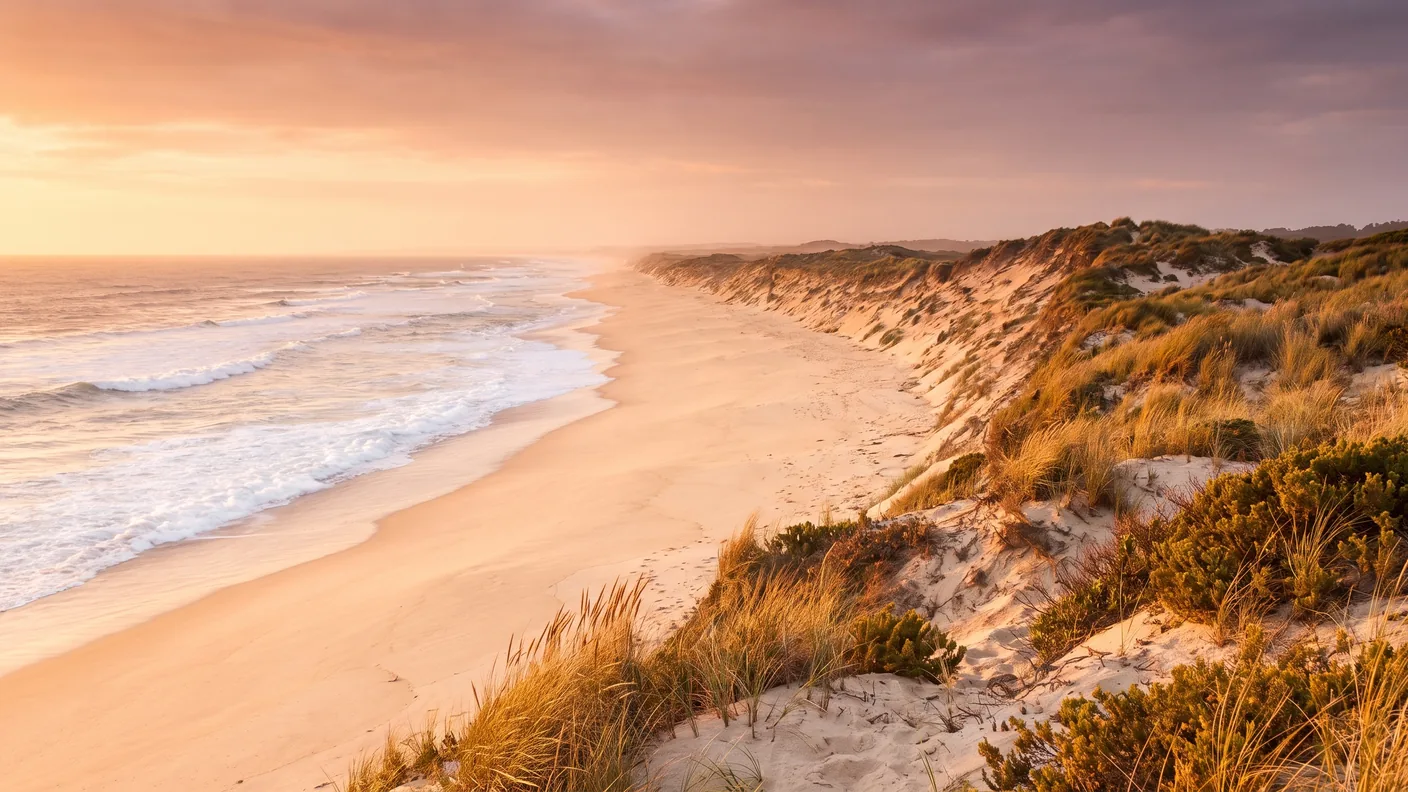
Bordeaux to Le Porge: Atlantic beach and pine forest
A forest-covered municipality spanning nearly 150 km², where the beach is reached after a ten-kilometre journey through the pine forest. Le Porge, on the Atlantic coast north of the Arcachon Basin, features the vast Gressier ocean beach, the dunes, the Landes Forest, and slow tourism by bike—about an hour from Bordeaux.
Le Porge at a Glance
Le Porge is a forested town in the Médoc region of Gironde, located between Lacanau and Lège-Cap-Ferret. Its town center is about ten kilometers from the ocean; the road and bike path run through the pine forest to Gressier Beach, also known as Le Porge-Océan. This beach, which opens onto the Atlantic Ocean, is separate from the Arcachon Basin, and visitors must adhere to the designated supervised swimming areas. The town has a population of approximately 3,465, according to 2023 INSEE data cited on the page, spread across 149 km² largely covered by forest and natural habitats. La Jenny, a naturist resort located to the south, and the Canal des Étangs round out the main local landmarks. From Bordeaux, the page estimates a distance of about 46 km and a 1-hour drive, depending on the starting point. The listed private chauffeur service rates start at €118 during the day for a sedan carrying one to three passengers, with a fixed price confirmed before departure.
Detailed Guidelines
A quick note, too, on what Le Porge is not not, because misunderstandings are common. It is sometimes automatically grouped with the villages of the Arcachon Basin; people imagine it has oyster huts; they believe it to be Romanesque when its church dates from the 19th century; and they claim it is the birthplace of dune stabilization or home to “the most beautiful beach in France.” All these claims deserve to be qualified, if not corrected. We’ll address them one by one, distinguishing in each case between established facts, oral tradition, and brochure-style claims. Le Porge deserves to be known for what it is: a forest community facing the ocean, simple and authentic, with no need for embellishment.
| Landmark | Details |
|---|---|
| Department | Gironde (33) · Nouvelle-Aquitaine |
| Status | A town in the Médoc region, on the Atlantic coast north of the Arcachon Basin |
| Intermunicipal Cooperation | Médullienne Community of Communes |
| Population | ~3,465 residents (INSEE 2023) |
| Demonym | Porgeais, Porgeaises |
| Area | 149 km², largely covered by forest and natural habitats |
| Must-Sees | Gressier Beach, Landes Forest, La Jenny |
| From Bordeaux | 46 km · 1 hr · starting at €118 |
Where is Le Porge located?
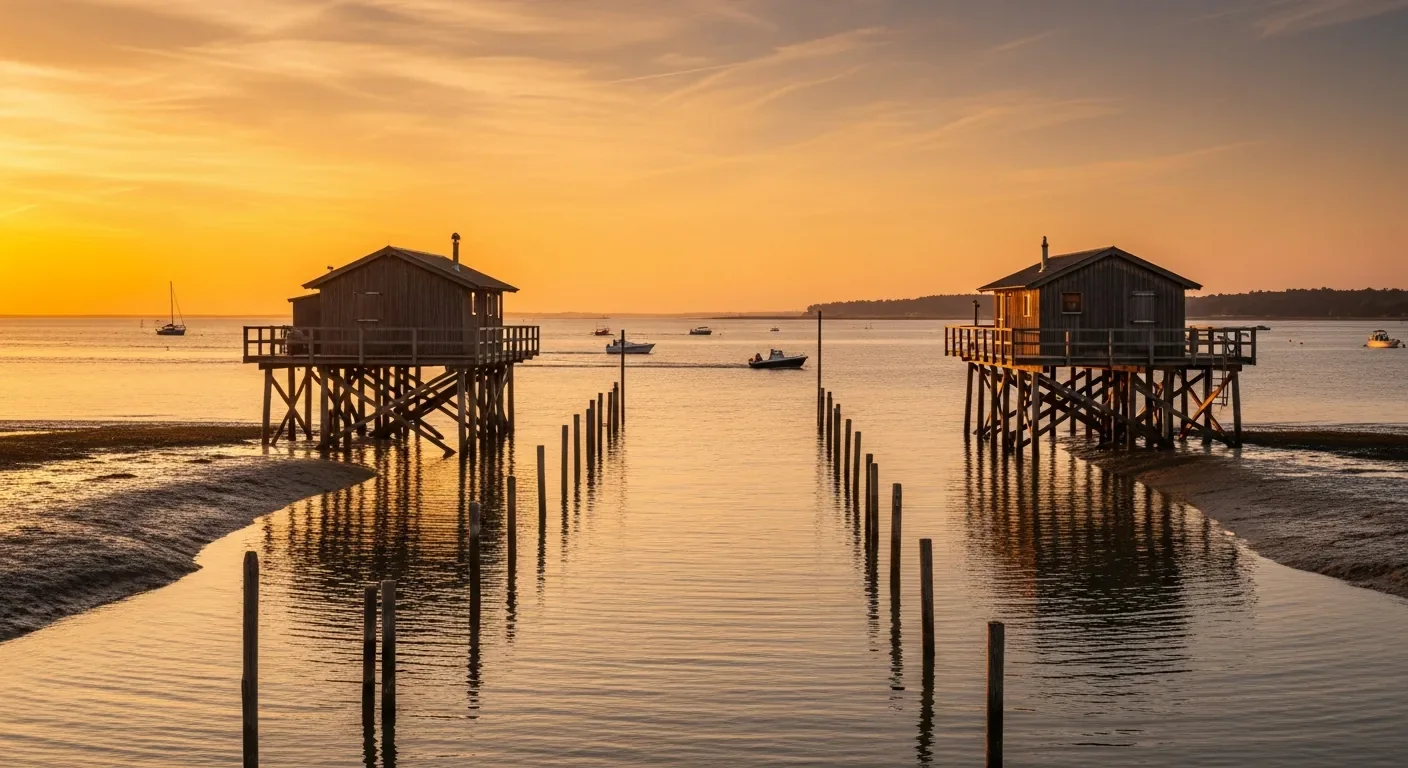
Le Porge is located in the Médoc region, in the district of Lesparre-Médoc and the canton of Sud-Médoc, within the Médullienne Community of Communes. The municipality stretches along the Atlantic coast, between Lège-Cap-Ferret to the south and Lacanau to the north. This is an important point to note right away, as it determines everything else: Le Porge overlooks the open Atlantic Ocean, not the Arcachon Basin. Its beach, Gressier Beach, is an ocean beach battered by waves and currents; there are no tidal flats, no stilted huts, and no oyster beds here. Those scenes belong to the neighboring towns of the Arcachon Basin—Arès, Andernos, Lège—and not to Le Porge.
On the map, the municipality is immediately recognizable by its size: 149 km²[1], making it one of the largest municipalities in Gironde. A very large portion of the territory is covered by forest and natural[3] habitats, within the vast Landes de Gascogne forest. As a result, the population density is approximately 23 inhabitants per square kilometer: a village nestled among the pine trees, surrounded by a sea of conifers. Le Porge borders Arès, Lacanau, Lège-Cap-Ferret, Saumos, and Le Temple.
This layout explains the town’s unique geography, organized into two centers connected by the forest. On one side is the village, inland, with its town hall, church, town square, and market—this is where the year-round residents live. On the other side is Le Porge-Océan, the seasonal seaside area, with its lifeguard stations, summer shops, and huge parking lot behind the dunes. Between the two lies about ten kilometers of pine forest that can be crossed by car or bike. None of this resembles the oyster-farming villages of the Bassin: here, oyster farming, the huts, and the harbors belong to neighboring towns. Le Porge, for its part, faces the open sea.
The INSEE code for the town, 33333, often amuses curious onlookers with its five identical digits. It’s a quirk of chance: nothing more than a statistical classification number, with no particular significance. The ZIP code, meanwhile, is 33680. The town center, where the town hall, church, and market are located, is not on the waterfront: it lies inland, about ten kilometers from the ocean through the pine forest. To reach the beach, you have to cross the forest via a dedicated road and bike path.
How far from Bordeaux?
From Bordeaux, it’s about 46 kilometers and a 1-hour drive via the most direct routes; from the city center, the distance is actually closer to 46 kilometers, as the road passes through a long stretch of forest. Once you arrive, keep in mind that the town isn’t the beach: you’ll still need to travel about 10 kilometers through a pine forest to reach Le Porge-Océan. The distances given here are by road, not as the crow flies—in such a forested area, the difference matters.
| Route | Distance | Duration |
|---|---|---|
| Le Porge town centre → Gressier Beach | ~11 km | 15–20 min |
| Le Porge → Lacanau | ~13 km | ~17 min |
| Le Porge → Andernos-les-Bains | ~18 km | ~24 min |
| Le Porge → Lège-Cap-Ferret | ~21 km | ~25 min |
| Le Porge → Bordeaux | 46 km | 1 hour |
How many people live in Le Porge?
According to the latest census, the population of Le Porge stands at 3,465[2] (INSEE 2023 figure). This is a small number given the vast size of the area, but the town is experiencing continuous and steady growth: there were approximately 2,667 residents ten years earlier, in 2013. Le Porge is attractive for its wooded setting, its proximity to the ocean, and its relatively easy access to the Bordeaux metropolitan area.
The contrast between the area and the population is striking. With 149 km² and approximately 3,465 residents, the population density is around 23 people per square kilometer—one of the lowest along the Gironde coast. The sea, meanwhile, lies “ten kilometers away,” at the edge of the pine forest: the people of Le Porge live in the forest, not right on the water’s edge. This everyday reality is turned upside down every summer, when the influx of tourists far exceeds the resident population.
This dual existence—a quiet village for ten months of the year, a seaside resort overrun with visitors in July and August—is common to many towns along the Aquitaine coast, but here it is particularly shaped by the geography. The permanent population is concentrated in the village center and the forest hamlets, while the waterfront only really comes alive during the summer months. The steady population growth, meanwhile, reflects the long-term settlement of new residents drawn to the setting: today’s Le Porge is no longer just a village of resin workers; it is also a residential town within the Bordeaux metropolitan area.
A Forest Municipality by the Numbers
The residents are known as the Porgeais and the Porgeaises. Here is a summary of the key demographic and territorial characteristics that define the town’s identity.
| Indicator | Value |
|---|---|
| Municipal Population (2023) | ~3,465 residents |
| Population (2013) | ~2,667 residents |
| Demonym | Porgeais and Porgeaises |
| Area | 149 km² |
| Proportion of Forest and Nature | overwhelming majority |
| Density | ~23 people per km² |
Where does the name "Porge" come from?
The origin of the name “Le Porge” is not known with certainty, and it is best to treat it as a hypothesis. The place name is thought to derive from the Latin *porticus*, meaning “portico” or “gate”—conveying the idea of a threshold or an entrance to the territory. The image is evocative for this town situated at the boundary between land and ocean, but it is based on interpretation rather than established evidence.
Le Porge en Buch
We often come across the reference “Le Porge en Buch.” This addition is based on a more solid foundation: “Buch” refers to the ancient Boïates people, who gave their name to the Pays de Buch, this region in the southwest of the Arcachon Basin. Le Porge’s historical connection to this ancient region is well documented and serves as a reminder that, long before the pine forests and seaside resorts, these lands of sand and marshes already had their own identity.
This dual interpretation of the name—a hypothesis regarding its root, a certainty regarding its connection to Buch—aptly summarizes how one should approach Le Porge. Much of what is told stems from oral tradition, passed down and embellished over time; a smaller portion is based on solid documentation. Striking a balance between these two perspectives in no way detracts from the poetry of the place: whether or not the name comes from a “porch” opening onto the ocean, the image fits perfectly with this sandy threshold between the forest and the open sea.
Gressier Beach and Le Porge-Océan
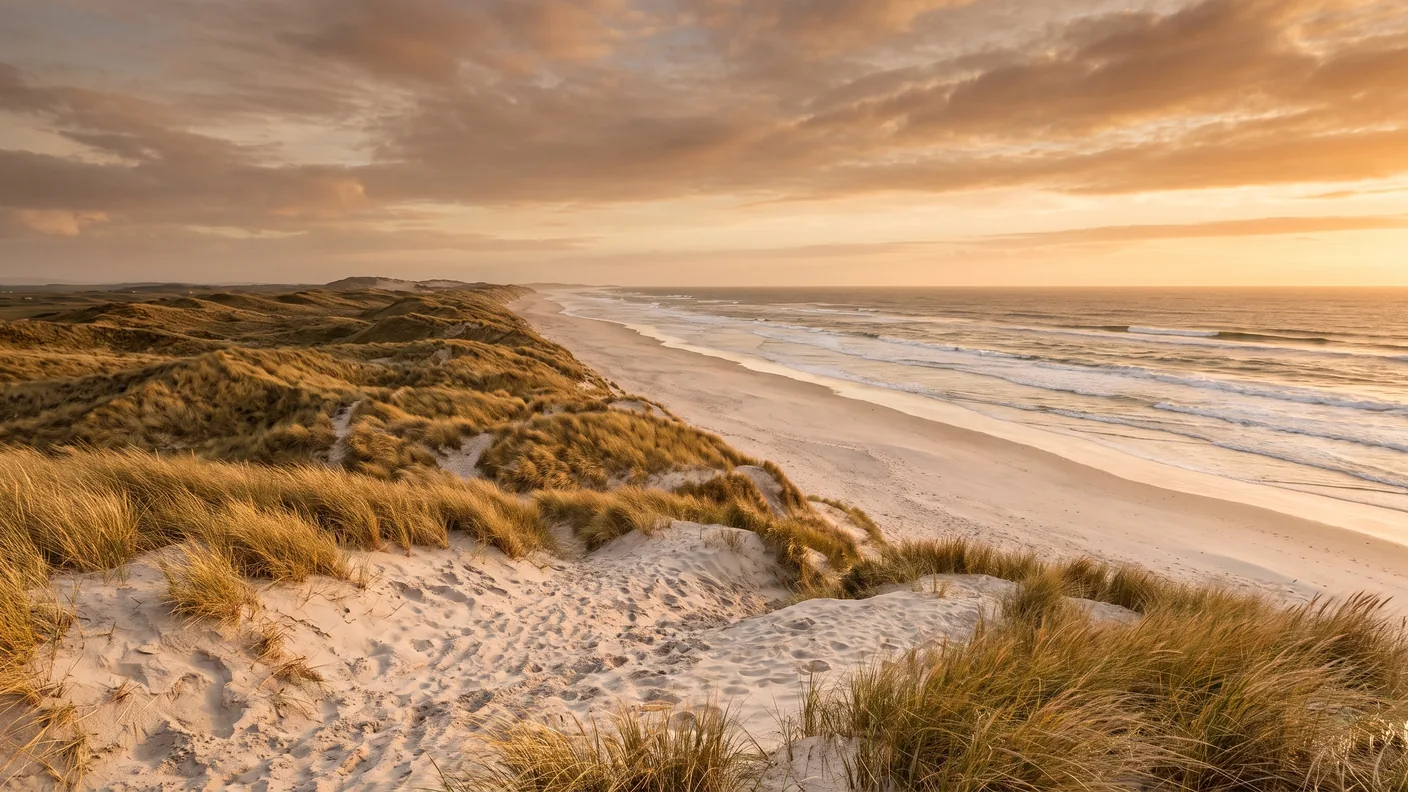
Gressier Beach, also known as Le Porge-Océan, is the town’s[4] main supervised beach. It opens onto the Atlantic Ocean beyond a dune ridge accessible via designated paths. From the town center, a road and a bike path wind through about ten kilometers of pine forest. Swimming must be limited to supervised areas and during the hours posted on-site. Parking is located behind the dunes; its capacity and access conditions may change, so be sure to check the municipal information before planning a summer day trip. This municipal page provides these general guidelines. For details on access, lifeguard coverage, surfing, the bike path, and seasonal services, consult the guide dedicated to Porge-Océan.
The Landes Forest and the Dunes
What strikes one about Le Porge is the omnipresence of the forest: a vast expanse of public forests, part of the Landes de Gascogne forest. It seems eternal; in reality, it is man-made and relatively recent. Where the pine forest now stretches, there was, in the 18th century, nothing but a landscape of unhealthy marshes and shifting dunes that were encroaching on the land, threatening villages and crops. The landscape we admire today is the result of a massive human effort to stabilize the terrain and plant trees, carried out from the 18th to the 19th century, and later completed by the drainage of the wetlands.
Dune Stabilization: A Regional Project
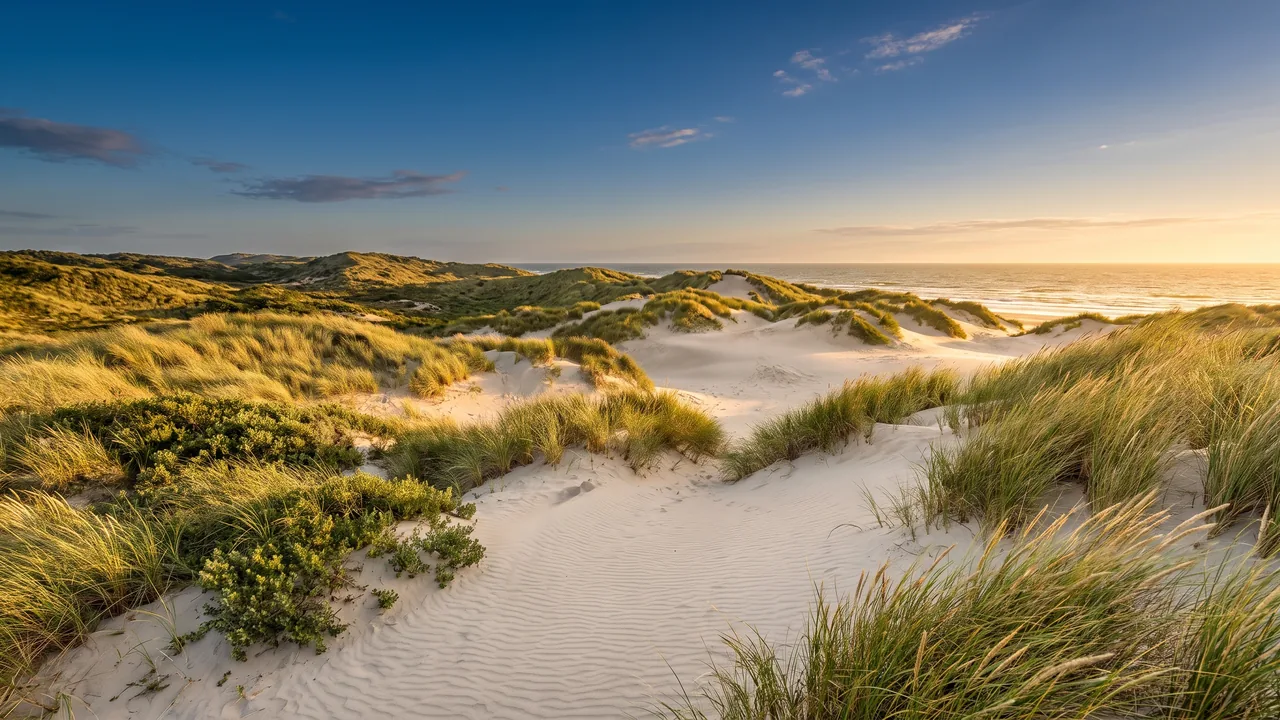
People often attribute the stabilization of the dunes to engineer Nicolas Brémontier, who was commissioned in 1786 and began the first seeding efforts as early as 1787. But this legend needs to be qualified. It was a regional program, spread out over time, and not the work of a single man: the very first operations took place near Arcachon and Le Pyla, not in Le Porge, and the methods had already been tested by pioneers, notably the Desbiey brothers around 1760. Le Porge benefited from this collective effort to stabilize the dunes, though it was not the origin of the initiative. Along the coastal sandbar, marram grass—a grass with long roots—remains the quiet ally that holds the sand in place on shifting dunes, even today.
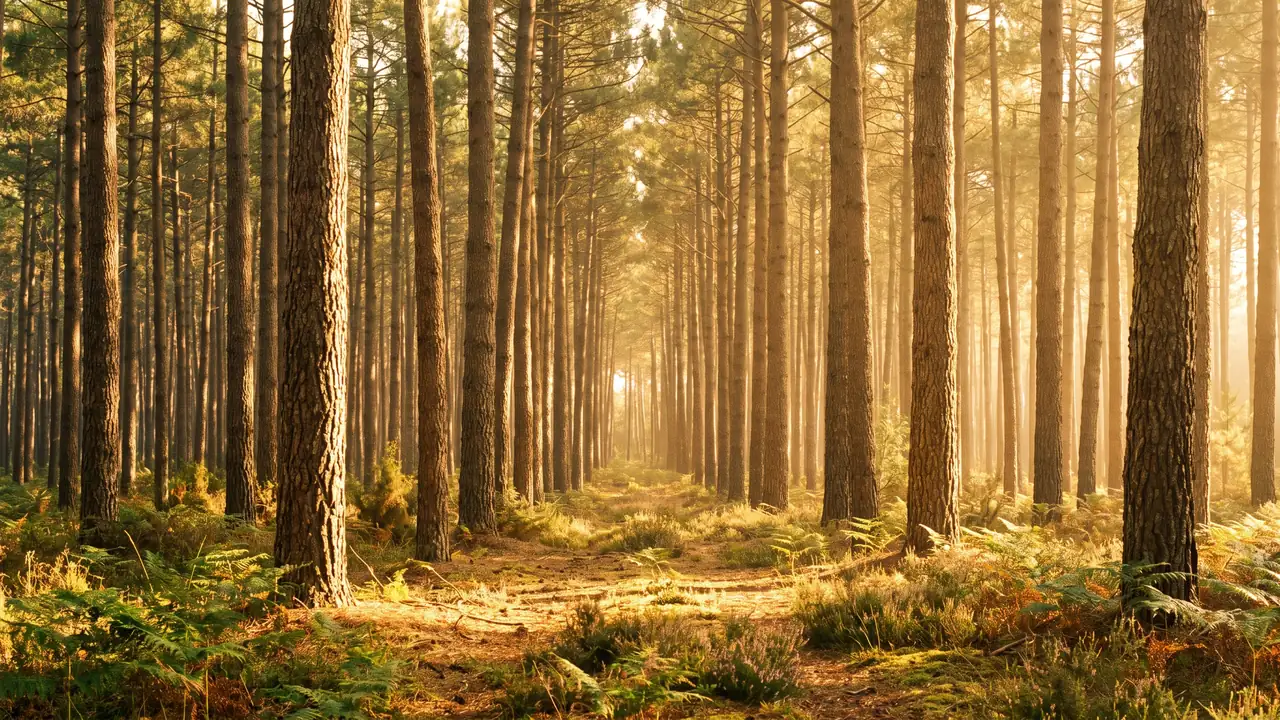
Once the dunes had stabilized, the maritime pine colonized the hinterland and provided a livelihood for generations of people in the Landes region. Resin tapping—the harvesting of resin by making incisions in the bark—was for a long time a major industry, practiced until it was abandoned in 1986. On a human timescale, this date marks the end of a world in the Landes: the resin collector, his resin, and his knife now belong only to the memory of the massif.
Understanding this history changes the way we view the walk. These rows of tree trunks, so evenly spaced, are not a primary forest but a commercial forest—planted, maintained, and harvested for its timber. The sandy soil, carpeted with ferns and heather, retains the memory of the dunes it once was. And the uniform horizon line of pine trees, which we assume to be unchanging, is not even three centuries old. Le Porge is, in short, a landscape entirely shaped by human hands battling the sand—one of the finest examples of this conquest in the Landes region.
The 1989 fire: a scar on the pine forest
A pine forest is also a forest that burns. On July 18 and 19, 1989, a fire ravaged approximately 3,800 hectares of pine trees in the town—a defining moment in the local forest’s history. Walking today through the regenerated plots is like walking over this healed scar. The Landes forest, cultivated and vulnerable, serves as a reminder that the landscape of Le Porge is never static: it is planted, harvested, sometimes burned, and replanted.
The Dune Chain
Between the forest and the ocean, the dune ridge forms a barrier of pale sand crowned with marram grass. These shifting dunes, which are naturally mobile, are fragile: they should be crossed only via designated paths, never by trampling the vegetation that anchors them. It is this narrow rampart that protects the inland from the Atlantic’s onslaught, and its preservation is essential to the very future of the beach.
La Jenny, the naturist village
La Jenny is a naturist residential community established in 1983 in the pine forest south of Le Porge. It offers access to a naturist beach and a six-hole golf course, which the operator describes as naturist. Official source.
Le Porge Through the Centuries
The history of Le Porge is reflected in its landscape. Originally, it was a region of unhealthy marshes and shifting dunes, difficult to inhabit. Then, in the 18th and 19th centuries, a major transformation took place: the dunes were stabilized and afforested, the wetlands were drained, and cultivated forests began to take shape. In just a few generations, a hostile territory became a viable forest community. This shift even altered the village’s center of gravity.
A town that has retreated inland
The original center of the parish was not located where the village stands today. The original church stood at La Gleyze-Vieille, about five kilometers toward the ocean, and was rebuilt in 1662. As the sand dunes advanced and coastal erosion took its toll, the village gradually shifted further inland, where the current church was built in 1892. It is a story of retreating in the face of nature, like so many villages along this coast.
The Porge Canal
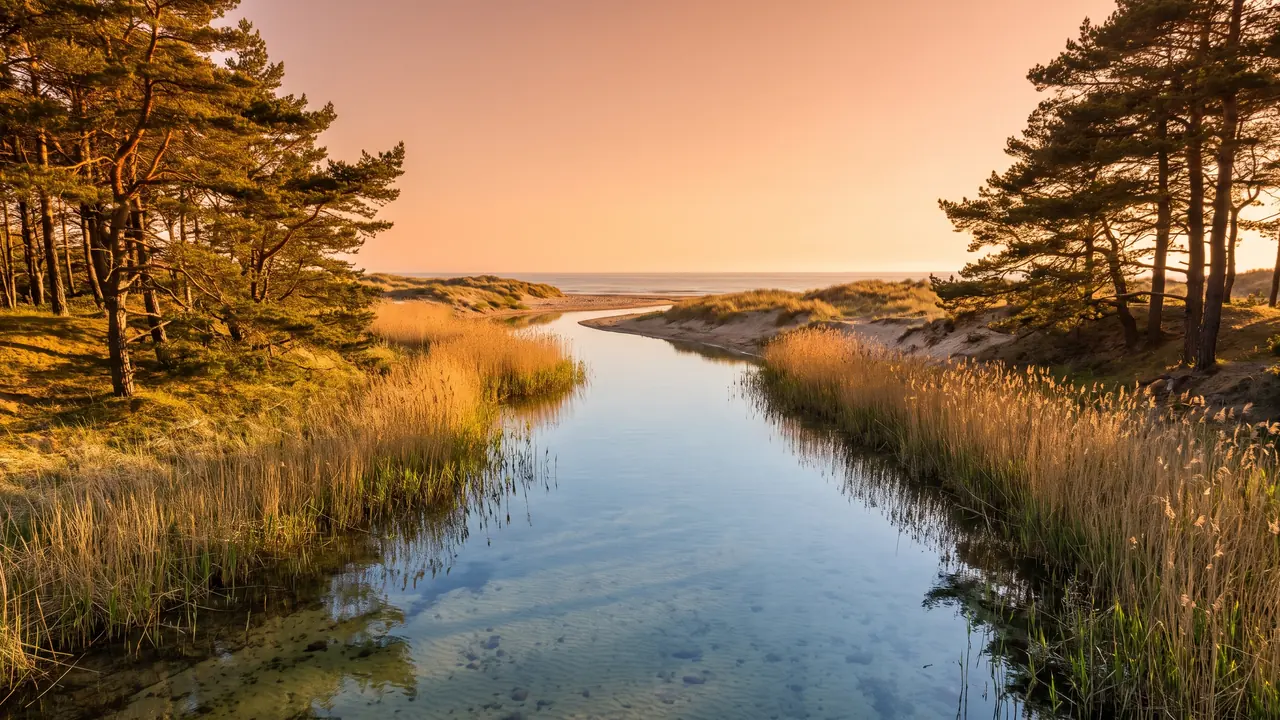
Among the region’s major engineering projects is the Porge Canal, also known as the Canal des Étangs, which connects Lake Lacanau to the Arcachon Basin via Arès and Lège. Dotted with locks—Joncru, La Langouarde, and Le Pas du Bouc—and equipped with fish passes, it was dug by hand in the mid-19th century. Sources differ on the exact dates: a decision in 1858, work mentioned around May 31, 1864, and completion often cited as 1871. Let’s consider this as a range rather than a single date. This canal is part of the major effort to drain and reclaim wetlands that accompanied the reforestation of the mountain range: controlling water as much as sand. Today, this peaceful waterway, lined with forest, is perfect for canoeing.
The Remarkable Plane Tree and the Protected Coastline
In the town square stands a plane tree planted in the late 19th century, designated a “Remarkable Tree of France” in 2003—a venerable tree that watches over the heart of the village. On a larger scale, land protection was strengthened in 2013 when the Conservatoire du littoral acquired 1,587 hectares within the municipality, preserving a significant portion of its natural areas. Finally, Le Porge is a stop along the Way of St. James: the Voie de Soulac, one of the coastal pilgrimage routes, passes through the town.
Saint-Seurin Church in Le Porge
The village church is dedicated to Saint Seurin, bishop of Bordeaux in the 5th century. Contrary to what one might expect from an ancient village, it is not a Romanesque building: The Church of Saint-Seurin in Le Porge is in the Neo-Gothic style; it was built in 1892 and consecrated on July 31, 1893, at a time when the village had definitively settled inland. Its slender spire and pointed-arch windows are characteristic of the late 19th century, not the Middle Ages.
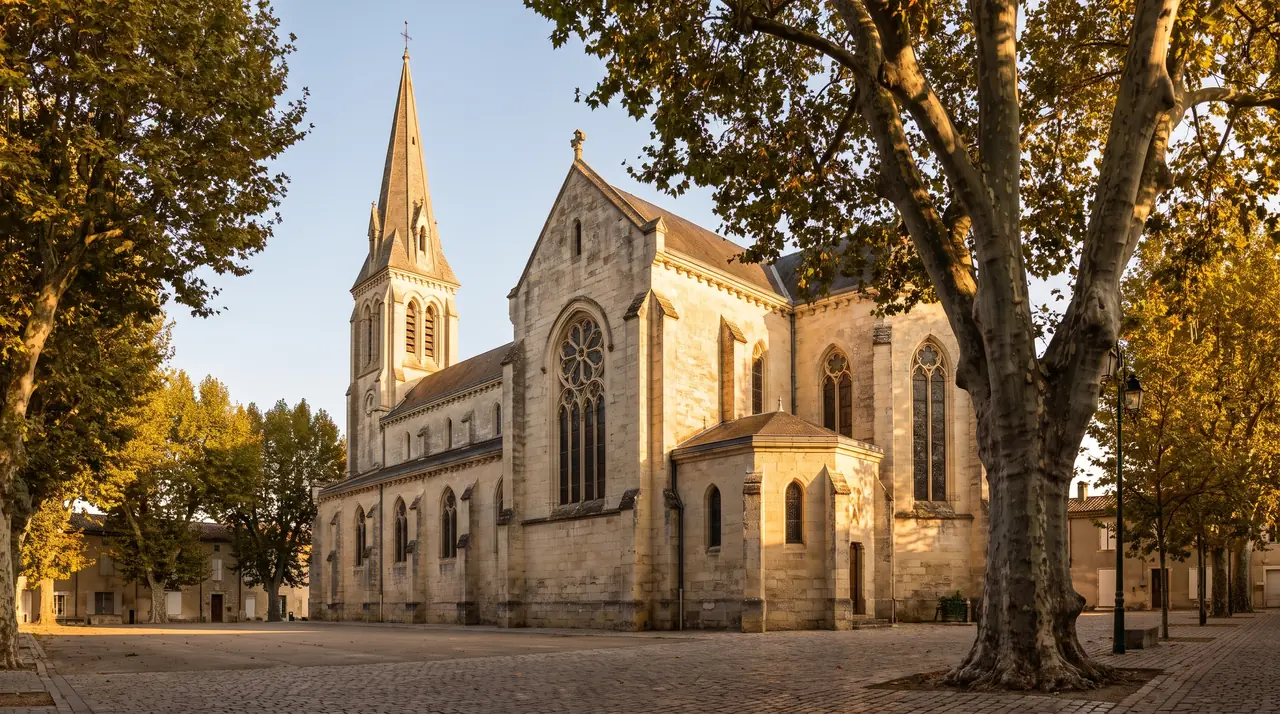
It is important to be clear about its heritage status, as this is a frequent source of confusion. The building itself is not protected as a historic monument. However, some of its furnishings are protected and listed in the Ministry of Culture’s Palissy database: a painted wooden Christ and a statue of Saint Eutropius dating from the 17th century, an 18th-century Virgin and Child, and a large painting of Saint Eutropius. We should therefore refer to “protected furnishings,” clearly distinguishing them from the building that houses them.
Finally, beware of a common documentary pitfall. There is indeed a 12th-century Romanesque Church of Saint-Seurin in Gironde, listed as a Historic Monument since November 21, 1925—but it is located in Galgon, an entirely different municipality. Neither its Romanesque character nor its protected status should ever be attributed to Le Porge. The church in Le Porge is Neo-Gothic, relatively new, and not protected as a historic monument: that is simply the case, and it in no way detracts from the charm of its tree-lined square, a stopover for pilgrims on the Way of St. James.
What is there to do in Le Porge?
In Le Porge, you can spend an entire day without ever getting bored—as long as you love unspoiled nature. In the morning, head to the lifeguard-patrolled Gressier Beach for a swim in the waves, then hop on a bike to ride through the pine forest along the dedicated trail that connects the village to the ocean. Water sports enthusiasts can head to the surf spots, a few hundred meters south of the lifeguard station; those looking for a more leisurely pace can canoe down the Porge Canal in the shade of the pine trees. On Thursday mornings, the town market brings the church square to life, and in the summer, night markets take over at dusk. You can also simply take a walk in the forest, breathe in the scent of pine resin, and listen to the wind in the treetops. Here are the must-see activities you won’t want to miss.
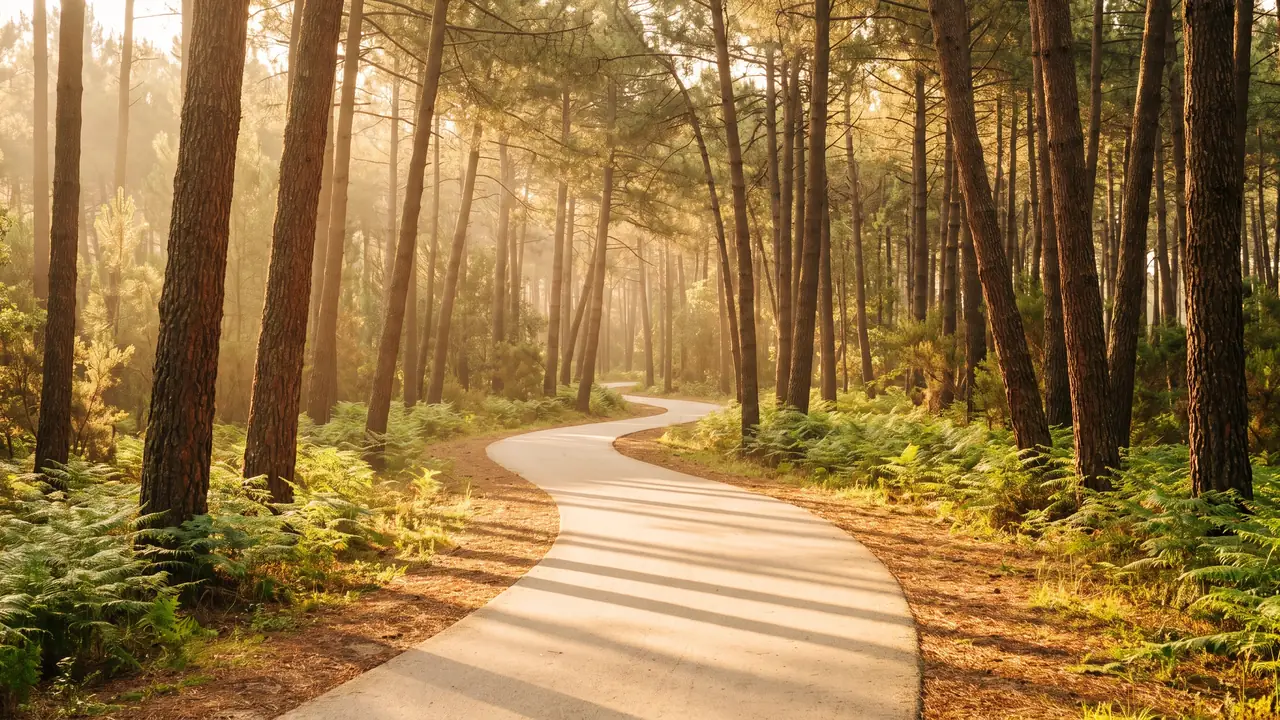
- The lifeguard-patrolled Gressier Beach — Le Porge-Océan, the town’s main lifeguard-patrolled beach: swimming is permitted in designated areas; it features a long stretch of sand and a line of dunes.
- Cycling through the pine forest — a dedicated bike path connects the town to the ocean, stretching about 10 kilometers through the forest, away from traffic.
- The Vélodyssée (EuroVelo 1) — from Le Porge-Océan, the coastal route heads north toward Lacanau-Océan (~11 km) and south toward Grand-Crohot Beach, on the Lège side (~12 km).
- Surfing and water sports — the spots are located a few hundred meters south of the lifeguard station, outside the supervised swimming areas.
- Canoeing on the Porge Canal—a peaceful journey down the Canal des Étangs, past locks and fish passes, in the shade of the surrounding vegetation.
- The town market—Thursday mornings, from 8 a.m. to 1 p.m., at the church square; in the summer, night markets liven up Place Saint-Seurin and La Grigne campground.
- Forest walks—countless sandy trails to explore on foot in the Landes forest, where you can enjoy the peace and quiet and the scent of pine trees.
- La Jenny — for those interested in naturism, the residential area in the southern part of the town, with its beach and unique naturist golf course.
Summary of Activities
| Activity | Where | Good to Know |
|---|---|---|
| Swimming | Gressier Beach | Monitored areas only — watch out for rip currents |
| Bicycle | Town ↔ Ocean + Vélodyssée | Dedicated trail ~10–11 km through the pine forest |
| Surfing | South of the first-aid station | Outside swimming areas |
| Canoeing | Porge Canal | A peaceful paddle along the canal between the locks |
| Market | Church Square | Thursday mornings, 8 a.m.–1 p.m., plus evening hours during the summer |
| Forest | Landes Massif | Sandy trails, the silence of the pine trees |
Cycling deserves a special mention, as it’s undoubtedly the best way to experience Le Porge. The dedicated bike path connecting the town to the ocean winds through the pine forest, sheltered from traffic, along about ten kilometers of gently rolling terrain. Once you reach Le Porge-Océan, you’ll join the Vélodyssée, the major Atlantic Coast bike route (EuroVelo 1): north toward Lacanau-Océan, about eleven kilometers away, and south toward Grand-Crohot Beach on the Lège side, about a dozen kilometers away. It’s the perfect way to hop from beach to beach while cycling in the shade of the pine trees, without ever having to get back in the car.
It’s worth repeating: Le Porge Beach is an ocean beach, and rip currents are very real there. Swim only between the flags during lifeguard hours, and keep a close[7] eye on your children. That’s the only rule for what is otherwise a wonderfully simple day.
Around Le Porge
Le Porge is an excellent base from which to explore the Médoc coast and the northern part of the Arcachon Basin. Just about fifteen minutes away, Lacanau offers a combination of ocean, lake, and a premier surfing destination. To the south, the Lège-Cap-Ferret peninsula boasts beaches, oyster-farming villages, and a lighthouse. On the Arcachon Bay side, Andernos-les-Bains and its long pier offer calm, shallow waters, while Arès marks the northern shore of the bay.
Distances from Le Porge
| Destination | Distance | What You'll Find There |
|---|---|---|
| Lacanau | ~13 km | Ocean, lake, surfing |
| Andernos-les-Bains | ~18 km | Arcachon Bay, pier, calm beaches |
| Lège-Cap-Ferret | ~21 km | Peninsula, villages, lighthouse |
| Arès | neighbouring town | North shore of the Arcachon Basin |
To help you explore further, our neighboring guides provide detailed information on each of these destinations: the Arcachon Basin and its oysters, Cap Ferret and its lighthouse, and Lanton, Cassy, and the Certes Nature Reserve on the eastern shore of the Arcachon Basin.
How to get to Le Porge from Bordeaux
From Bordeaux, the guide highlights 46 kilometers and about 1 hour to Le Porge, in accordance with the fare calculator’s rates. However, the town center and Gressier Beach are not the same drop-off point: the coastline is still beyond the pine forest. Please specify your final address when booking so that the confirmed price matches the requested route exactly.
The drive itself is worth the trip. Over the last few kilometers, you head deep into the pine forest: light filters through the trees, the landscape becomes uniform and soothing, and you can feel the air change as you approach the ocean. This drive through the forest is part of the Le Porge experience—that feeling of leaving the world behind to rediscover a coastline that’s still wild. It’s best to plan your return before nightfall: the forest roads are poorly lit, and wildlife often crosses them.
How much does the ride cost?
Transfers from Bordeaux to Le Porge start at €118 during the day for a sedan that can accommodate 1 to 3 passengers. This price is fixed and confirmed in writing before departure: no meter, no surprises. Surcharges apply at night, on weekends, and on holidays; for groups of more than four people, a van is provided. Pickups from Bordeaux-Mérignac Airport and full-day packages—such as a trip to the beach followed by a visit to the forest—are available upon request.
| Route | Distance / Duration | Rates |
|---|---|---|
| Bordeaux → Le Porge | 46 km · 1 hr | starting at €118 |
| Bordeaux-Mérignac Airport → Le Porge | based on a quote | based on a quote |
| A Day at the Beach and in the Forest | based on a quote | based on a quote |
Why choose a chauffeur service?
The reason is simple: in the summer, the parking lot behind the dunes at the beach fills up quickly, and driving around in circles looking for a spot ruins the start of the day. A drop-off zone right at the beach entrance avoids this hassle, as does the return trip in the late afternoon, with sand on your feet and no driving stress. With a chauffeur service departing from Bordeaux, you simply book your ride, hop in, enjoy the forest scenery, and arrive relaxed at the ocean. It’s, quite simply, the most relaxing way to get to Le Porge.
Frequently Asked Questions
Where is Le Porge located?
Le Porge is a commune in the Médoc region of Gironde, on the Atlantic coast north of the Arcachon Basin, between Lège-Cap-Ferret to the south and Lacanau to the north. It overlooks the open ocean, with Gressier Beach, rather than the Arcachon Bay. The village is located inland, about ten kilometers from the sea, in the middle of a vast pine forest. Bordeaux is approximately 46 km away, or a one-hour drive.
How much does a trip from Bordeaux to Le Porge cost with an executive car service?
Transfers from Bordeaux to Le Porge start at €118 during the day for a sedan accommodating 1 to 3 passengers. The price is fixed and confirmed in writing before departure; no meter is used. Surcharges apply at night, on weekends, and on holidays, and a van is available for groups of more than four people. Trips from Bordeaux-Mérignac Airport and full-day packages are quoted on a no-obligation basis.
Is Le Porge located on the shore of the Arcachon Basin?
No, and this is a common misconception. Le Porge overlooks the open Atlantic Ocean, with its Gressier ocean beach, waves, and currents. The Arcachon Basin, with its oyster huts, tidal harbors, and calm waters, is found in neighboring towns such as Arès, Andernos, and Lège-Cap-Ferret. In Le Porge, you’re facing the open sea: no oyster farming, but Atlantic swells and a vast dune ridge.
What is there to do in Le Porge?
The lifeguard-patrolled Gressier Beach for swimming; biking through the pine forest on the trail that connects the town to the ocean; surfing south of the lifeguard station; canoeing on the Porge Canal; the town market on Thursday mornings; and the night markets in the summer. You can also go hiking in the Landes Forest or explore the La Jenny naturist resort. Watch out for rip currents: swim only in supervised areas.
How many people live in Le Porge?
Le Porge has a population of approximately 3,465 according to the 2023 INSEE census, compared to nearly 2,667 in 2013: the population is growing steadily. Its residents are known as the Porgeais and the Porgeaises. With a total area of 149 km², this results in a population density of about 23 people per square kilometer—one of the lowest along the Gironde coastline—since a very large portion of the territory is covered by forest and natural areas.
Is swimming dangerous in Le Porge?
Swim only in supervised areas, obey the flags, and follow the lifeguards’ instructions. Review the SNSM’s recommendations regarding rip currents.[7] If you get into trouble, avoid exhausting yourself; signal for help immediately. If you witness someone in distress, alert the lifeguard station.
What is La Jenny in Le Porge?
La Jenny is a naturist residential community established in 1983 in the pine forest south of Le Porge. It offers access to a naturist beach and a six-hole golf course, which the operator describes as naturist.
Why is the Porge Forest so vast?
Le Porge is located within the Landes de Gascogne forest, and forests cover the vast majority of its territory[3]. Coastal dunes and the wetlands behind the dunes round out these habitats. This continuous forest stretching from the town to the ocean explains the “forest town” theme that structures this guide.
Is the church in Le Porge a historic landmark?
The building itself, however, is not. The Saint-Seurin Church in the town center is Neo-Gothic, built in 1892 and consecrated in 1893; it is not listed as a historic monument. However, some of its furnishings are listed in the Palissy database: a 17th-century statue of Christ and one of Saint Eutrope, an 18th-century Virgin and Child, and a large painting. Not to be confused with the Romanesque Saint-Seurin Church in Galgon—a different town—which is a listed historic monument.
What is there to see around Le Porge?
About 15 minutes away, Lacanau offers a combination of ocean, lake, and surfing. The Lège-Cap-Ferret peninsula, about 21 km away, features beaches, oyster-farming villages, and a lighthouse. Andernos-les-Bains, 18 km away, offers the Bassin, a long pier, and calm waters. Arès marks the northern shore of the bay. Le Porge is thus a great base camp for exploring both the Médoc coast and the northern part of the Arcachon Basin.
Where does the name "Porge" come from?
The origin remains speculative. The name is thought to derive from the Latin *porticus*, meaning “portico” or “gate,” evoking the idea of a threshold to the territory—but this is an interpretation, not a certainty. The reference to “Le Porge en Buch” rests on a more solid foundation: “Buch” refers to the ancient Boïates people, who gave their name to the Pays de Buch, a region in the southwestern part of the Basin. This historical connection is well documented.
Is it possible to visit Le Porge without a car?
It’s possible but not very convenient: Le Porge is a vast forested area with limited public transportation, and the beach is about ten kilometers from the village. A private door-to-door transfer from Bordeaux, starting at €118, drops you off directly in town or at the beach entrance—a real convenience in the summer, when the parking lot behind the dunes fills up. You can enjoy the drive through the forest without having to drive or worry about finding a parking spot.
When is the best time to visit Le Porge?
Summer brings supervised swimming, night markets, and a seaside atmosphere—but also crowds and parking lots that fill up quickly. Spring and fall offer a magnificent forest, deserted beaches, and soft light—ideal for biking and hiking—though caution is advised due to rip currents year-round. In winter, Le Porge returns to being a village nestled among the pine trees—wild and quiet—for those who love the ocean off-season.
Further Reading
- Book your private chauffeur: check out the Bordeaux → Le Porge transfer, at a fixed price and with no obligation.
- Explore the coast: discover all our destinations from Bordeaux.
- The Nearby Bay: Discover the Arcachon Bay Guide, its oysters, and the Dune du Pilat.
- The Peninsula: Continue on with the Cap Ferret Guide, featuring its lighthouse and ocean beaches.
- The eastern shore of the Bassin: Discover the Guide to Lanton, Cassy, Taussat, and the Certes Nature Reserve.
Sources and References
- Le Porge City Hall — Risk Prevention — Municipal Area
- INSEE — Porge Regional Comparison Tool — Population and Density 2023
- Le Porge City Hall — Municipal Commitments — Natural Environments and Biodiversity
- Médoc Plein Sud Tourist Office — Gressier Beach — Lifeguard Service and Amenities
- POP — Ministry of Culture — Official Heritage Database
- La Jenny — the estate's official website — history, facilities, and directions
- SNSM — Rip Currents and Undercurrents — Official Swimming Recommendations
Article updated in July 2026.
Off to the ocean beach
Direct transfer from Bordeaux (1 hour) to Le Porge-Océan, the Landes Forest, and La Jenny. Fixed-price quote in writing, with no obligation.