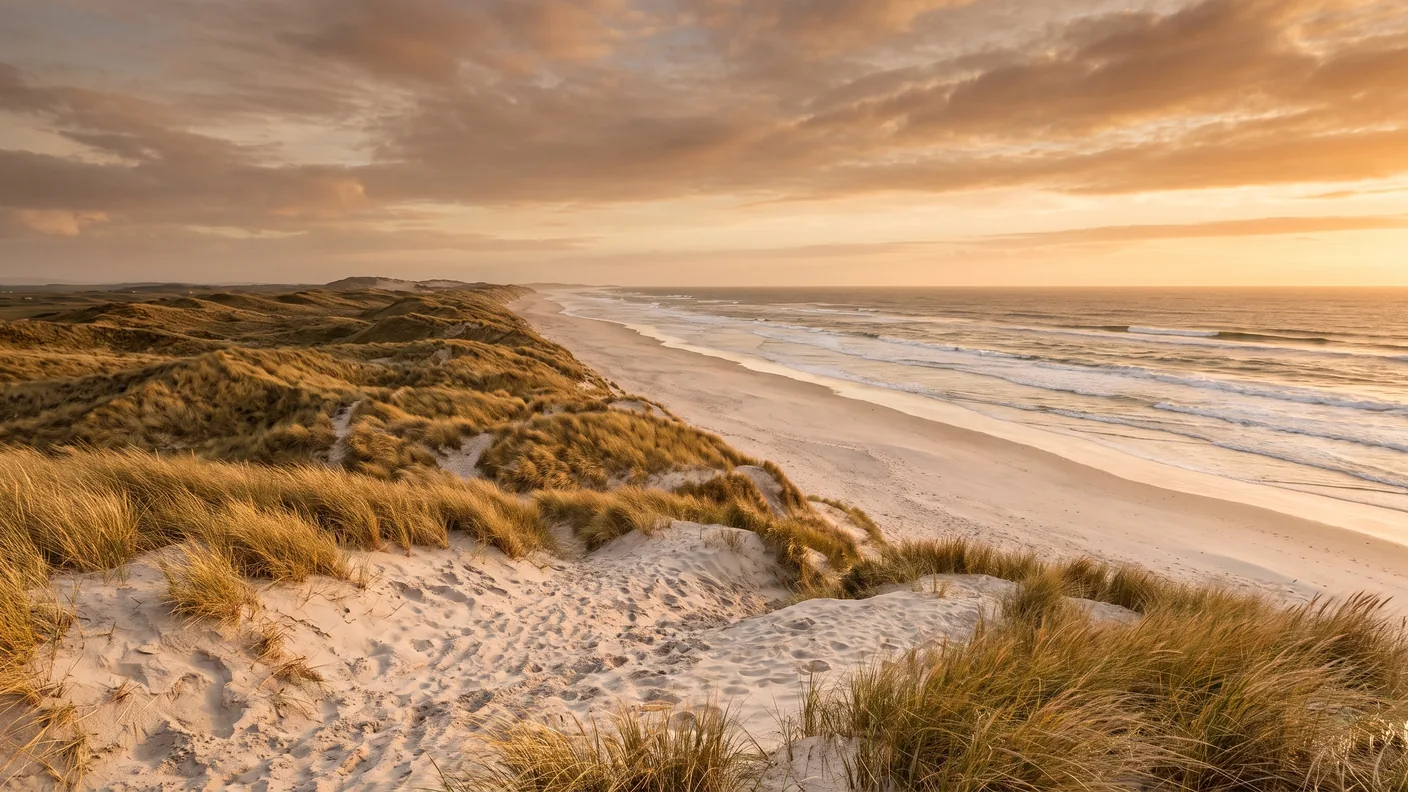
Bordeaux to Le Porge-Océan: Gressier Beach, surf and dunes
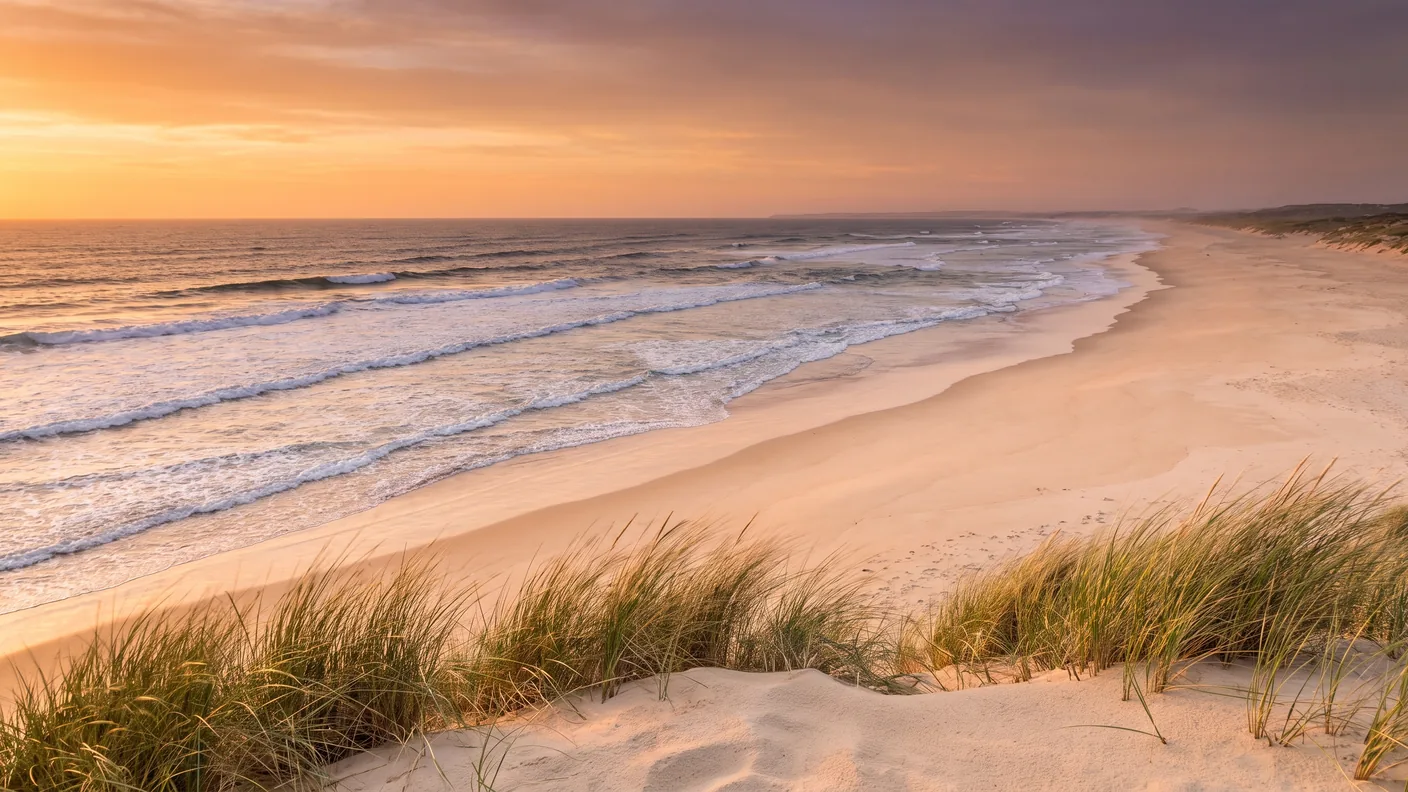
The vast ocean beach at Le Gressier, at the end of a ten-kilometer stretch of pine forest from the town of Le Porge. Known as “the beach of the Bordelais,” it’s both wild and lifeguard-patrolled, with its tidal pools, surf, and parking lot under the pine trees—the Atlantic coast less than an hour from Bordeaux.
Le Porge-Océan at a Glance
Le Porge-Océan refers to the coastal area of the town of Le Porge, in the Médoc region. Its Gressier Beach opens onto the Atlantic Ocean, at the end of a roughly ten-kilometer stretch of pine forest from the town center; it is not located on the Arcachon Basin. The central area is patrolled during the season, but the signs and schedules posted at the lifeguard station always take precedence over any published guide. The site features a sandy beach, a dune ridge, developed access points, surfing areas, and a bike path connecting to the town center. La Jenny is to the south and La Cantine to the north. From Bordeaux, the trip is approximately 57 km and takes 1 hour and 10 minutes in light traffic. The quoted chauffeur service rate is confirmed in writing before departure. In the summer, be sure to check parking conditions and any seasonal[7] bus routes before departure.
| Landmark | Le Porge-Océan |
|---|---|
| Nature of the location | Beach and seaside resort in the town of Le Porge (Gironde, 33), on the Atlantic coast of the Médoc |
| Main Beach | Gressier Beach, the town's[3] main lifeguard-patrolled beach |
| Location | About 11 km from the town of Le Porge, at the edge of the pine forest |
| Must-Sees | Supervised swimming, dangerous rip currents to watch out for, surfing, biking through the forest, La Jenny |
| From Bordeaux | 57 km · 1 hr 10 min · starting at €130 for a private transfer |
First, a bit of vocabulary: Le Porge-Océan is not a municipality, but the coastline of Le Porge. The village itself is about ten kilometers inland. This guide focuses exclusively on the beach and the resort; for information about the village, its church, and the great Landes Forest, please refer to our article on the municipality of Le Porge.
Where is Le Porge-Océan located?
Le Porge-Océan is not a village: it is the coastal stretch of Le Porge, a town in the Médoc region that stretches from the pine forest to the Atlantic Ocean. About ten kilometers west of the town center, at the end of a road that runs straight through the pine trees, the forest suddenly opens up to a strip of dunes and a beach stretching as far as the eye can see. It is there, at Gressier Beach, that all of the town’s seaside life is concentrated.
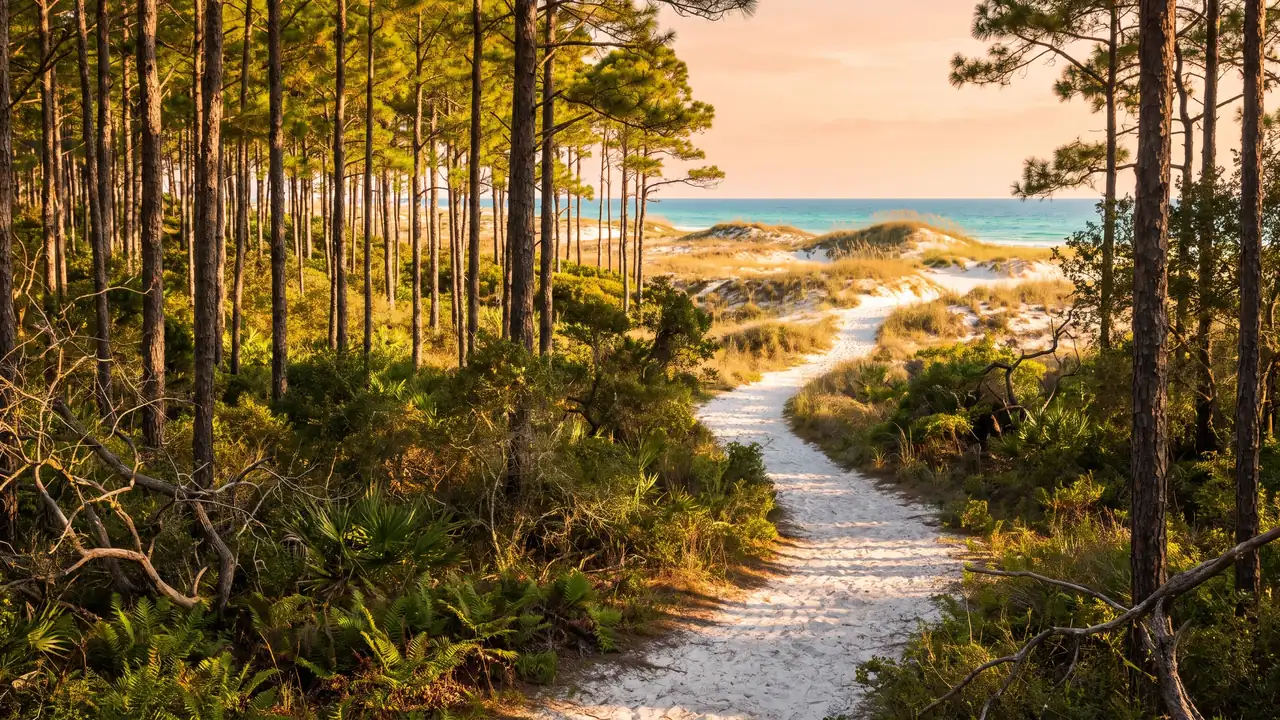
The road leading there is already part of the journey. From the village, you head deep into the Landes forest: a vast pine forest, planted in neat rows, that filters the light and fills the air with the scent of resin. For about ten kilometers, all you see are pine trees, until the vegetation thins out, sand creeps onto the shoulders of the road, and the first line of dunes signals the ocean. This journey, almost like a rite of passage, partly explains the sense of being in a different world that you feel upon arrival: Le Porge-Océan has to be earned, and that’s what makes it so special.
The tourist office likes to call it “Bordeaux’s beach”: of all the ocean beaches, it’s one of the closest to Bordeaux. You leave the banks of the Garonne, and less than an hour later, you’re walking on the sand facing the waves. This proximity explains its popularity—and how crowded it gets once summer arrives.
How far is it from Bordeaux?
It’s 57 km and about 1 hour and 10 minutes from Bordeaux, according to the fare calculator. The route passes through the metropolitan area and then through the Landes Forest to Le Gressier; there is no direct train service to the beach. A seasonal shuttle service may surcharge access by bike. Before you leave, check the Nouvelle-Aquitaine regional transit network for the line number, operating dates, stops, schedules, and the current fare. Check the regional route.[7]
This estimated travel time of 1 hour and 10 minutes is based on the conditions used by the fare calculator; during peak season, on a Saturday in July, you’ll have to contend with vacationer traffic and heavy crowds as you approach the beach. It’s therefore best to allow for some extra time, especially if you’re aiming to arrive during lifeguard hours or to find a parking spot that’s still available. The rest of the year, the road is clear, and the drive—which is very smooth—holds no unpleasant surprises.
| From / To | Approximate distance |
|---|---|
| Le Porge town centre | ~11 km · ~20 min (through the pine forest) |
| Lacanau-Océan (to the north) | ~11 km |
| Bordeaux | 57 km · 1 hr 10 min |
| From Bordeaux by private transfer | starting at €130 |
Ocean, Not Basin: A Common Misconception
Le Porge is often confused with the Arcachon Basin, since the town borders it to the south. But Le Porge-Océan is indeed located on the open Atlantic, not on the calm waters of the Arcachon Basin: here, you’ll find swells, waves, and sandbars, not oyster huts or sheltered bodies of water. If you’re looking for the peaceful swimming spots of the Arcachon Basin, this isn’t the place for you. For information on the town, its forest, and its history, see our article dedicated to the town of Le Porge.
This distinction is more than just a geographical detail. It completely changes the way you approach the day: on the ocean, you keep an eye on the tide, the color of the flag, and the strength of the swell, whereas the Bay invites you to enjoy a carefree swim. Coming to Le Porge-Océan means accepting the rules of the Atlantic—and in return, discovering a beach on a scale that the Bay simply cannot match.
The Wild Beach at Gressier
Gressier Beach is the heart and soul of Le Porge-Océan: it’s the town’s only public, lifeguard-patrolled beach, and one of the largest on the Gironde coast. Depending on the source, the sandy shoreline stretches from about thirteen to fourteen kilometers—nearly 13 km according to the tourist office, up to 14 km according to city hall if you count from La Jenny in the south to La Cantine in the north. In other words, there’s plenty of room, even when the crowds are at their peak.
It’s an unspoiled ocean beach with no built-up waterfront: no high-rises, no seawall promenade—just the dunes, the forest, and the horizon. This lack of urban development is what gives it its unique charm—but also makes it vulnerable, since the sand and heathland are held in place only by the vegetation and the infrastructure. People come to Le Gressier for this sense of raw immensity, which is very different from the more developed coastal resorts.
Its nickname, “Bordeaux’s beach,” says it all: for many residents of the metropolitan area, this is the beach of their childhood—the one where they spent weekends and family summers. People come here for a full day—with a beach umbrella, a cooler, and a surfboard under their arm—rather than just for a quick dip. The wide foreshore, exposed at low tide, offers plenty of space for sandcastles, beach racket games, and long barefoot walks out to the surf. There’s nothing flashy here: the beach stands on its own.
The rhythm of the area follows that of the tides. At low tide, the foreshore opens up widely, revealing a vast strip of firm sand—ideal for walking or running; at high tide, the sea rises to the foot of the dune and narrows the available space. Checking the tide schedule before you come allows you to plan for both scenarios and avoid the surprise of a beach suddenly reduced to a narrow strip of sand on a day with a high tidal range.
A "zero-waste" beach held up as a model
Le Gressier is a “zero-waste” beach: there are intentionally no trash cans on the sand. Everyone takes home what they brought and disposes of their trash at the recycling station at the parking lot exit. This initiative, praised by the ONF as a model for the entire country, has a simple goal: to reduce litter and protect the dune ecosystem, which is already under pressure. So be sure to bring a bag to take your packaging, cigarette butts, and picnic leftovers home with you.
This system requires a little effort to organize, but it pays off: the beach stays surprisingly clean despite the crowds in July and August. It quickly becomes second nature—you fold up your wrappers, gather your bottles, and drop everything off at the recycling station on your way out. Also, remember to protect your belongings from the wind and sand, which are ever-present on such an exposed beach, and be sure to bring water: between the walk from the parking lot and the full sun, you’ll get dehydrated quickly.
What services are available in Le Gressier?
Despite its wild character, the beach is not without amenities. At Le Gressier, you’ll find everything you need to spend the day without having to head back to town—provided you plan ahead for the crowds. Visitor numbers surge during summer weekends and can cause congestion at the access points; check the parking information provided by the town before you leave. Here are the main on-site services:
- Showers and restrooms at the beach
- Food and beverage stand and bar
- Equipped picnic area
- Recycling station at the parking lot exit (beach without trash cans)
- First-aid station at the top of the dune, in the summer
Supervised swimming and rip currents
The ocean here is magnificent but challenging. Le Porge-Océan, like the entire Aquitaine coast, is subject to a phenomenon that you absolutely must understand before entering the water: rip currents. Every summer, these rip currents claim victims along the Atlantic coast. The good news is that Gressier Beach is patrolled during the season, and following a few simple rules is all it takes to enjoy swimming with peace of mind.
The Golden Rules of Supervised Swimming
Swim only in the marked and supervised area on the day of your visit. The signs and schedules posted at the lifeguard station take precedence over this guide. If you encounter any difficulties, signal for help immediately and follow the lifeguards’ instructions; if you witness someone in distress, alert the lifeguard station. SNSM guidelines on rip currents and ocean currents[4].
| Period | 2026 Lifeguard Hours |
|---|---|
| Off-season — June 13–30 | ~1:30 p.m. – 6:00 p.m. |
| High Season — July 1 through August 30 | ~11:00 a.m. – 6:30 p.m. |
| Off-season — August 31 through September 13 | ~1:30 p.m. – 6:00 p.m. |
| Outside the Lifeguarded Season | No lifeguard cover; swimming at your own risk |
| First-Aid Station | At the Top of the Dune · 05 56 26 58 56 (seasonal) · Emergencies: 112 |
When are rip currents the most dangerous?
A rip current is a channel carved into the sand between the beach and a sandbar. As the tide comes in, it fills with water; then, as it empties out toward the open sea, it creates a current that can sweep a swimmer beyond the area where they can touch the bottom. The danger is that the water there appears calmer and more sheltered than elsewhere—which is precisely what draws swimmers and children to the most treacherous spot.
Swim only in the marked and supervised area on the day of your visit. The signs and schedules posted at the lifeguard station take precedence over this guide. If you encounter any difficulties, signal for help immediately and follow the lifeguards’ instructions; if you witness someone in distress, alert the lifeguard station.
It bears repeating, because it’s counterintuitive: good weather guarantees nothing. A glassy sea, a blue sky, and warm water can coexist with treacherous rip currents, because the danger comes from the current, not from surface turbulence. Many accidents occur precisely on the calmest days, when people let their guard down. Since you can’t see the tide from the beach, checking the daily tide tables before heading out and planning your trip around the lifeguard patrol times remains the simplest and most effective precaution.
Surfing and Water Sports
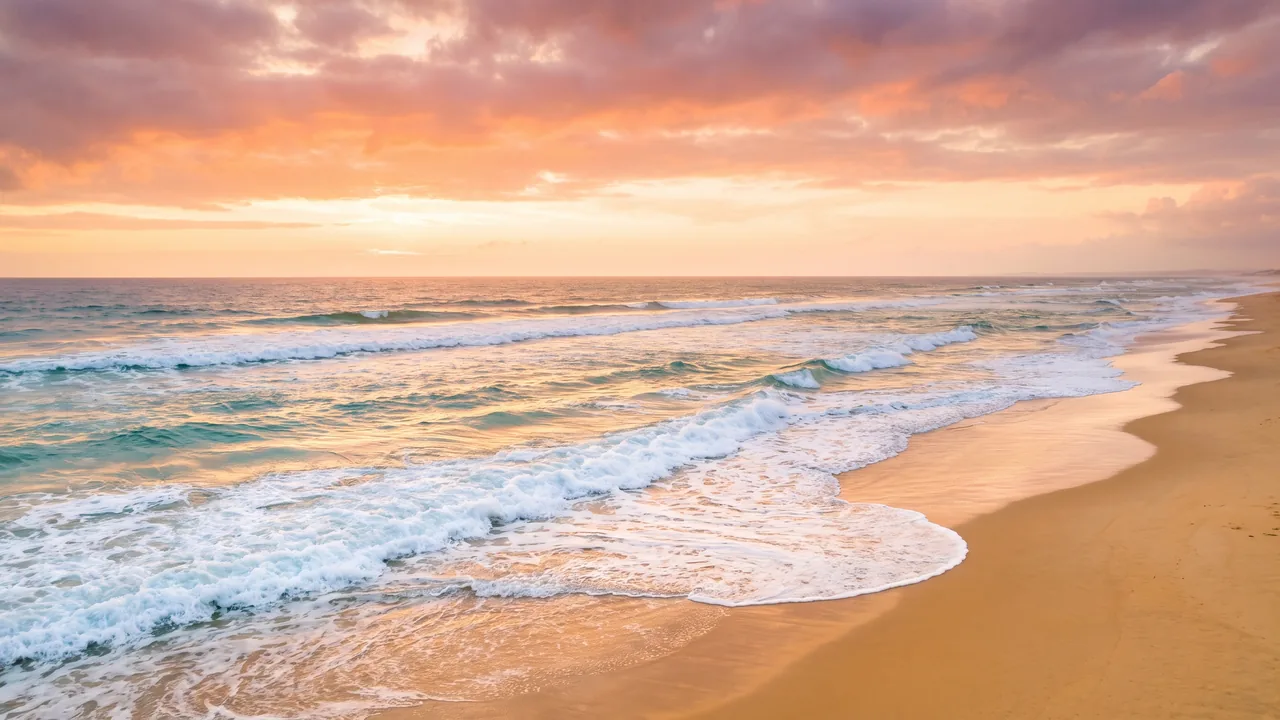
The same swell that makes swimming challenging is a surfer’s delight. Le Porge-Océan is a renowned spot, open to surfers of all skill levels, where you’ll find everything from beginners with instructors to regulars who come to read the sandbars in the early morning. The consistency of the Atlantic waves and the width of the beach play a big part in this.
Le Porge is one of those beaches where the surfing culture has deep roots and is very much alive. At daybreak, you can already spot figures in wetsuits scanning the horizon, gauging the swell period, and choosing their spot. This laid-back atmosphere, so typical of the Atlantic Coast, is part of the place’s charm—even for those who stay on the sand watching the sessions unfold.
People go surfing there, but also bodyboarding and stand-up paddleboarding. Schools offer lessons and equipment rentals during the season—the perfect way to try it out for the first time under supervision, while also learning how to spot the currents and choose the right time of day based on the tide.
Where can you surf without bothering swimmers?
On such a crowded beach, access to the water is regulated. On either side of the supervised swimming area are buffer zones—off-limits to both swimmers and surfers—that serve as safety zones. Beyond these neutral zones, surfing is allowed but swimming is prohibited. In short: swim in the center, between the flags; surf on the sides, away from swimmers. This arrangement prevents most accidents involving surfboards and swimmers.
As for conditions, the beach benefits from a steady swell and sandbars that cause the waves to break across the entire width of the beach: there’s almost always a peak somewhere. Beginners will find gentler waves at high tide and when the sea is calm; experienced surfers, on the other hand, tend to wait for days with swell. As is the case along the entire coast, the condition of the sandbars changes with storms and the seasons, so the best spot today isn’t necessarily the same as yesterday’s—which is why it’s worth taking the time to observe the conditions before hitting the water.
Paddleboarding, bodyboarding, and surf lessons
In La Jenny, to the south, surfing and kitesurfing are typically enjoyed on the northern part of this beach. To help spot the waves, the ONF has also set up observation points called “Les Spots” as part of its dune restoration work: small lookouts from which you can assess sea conditions before heading into the water. It’s handy for picking your spot—or simply watching the surfers from the dune, ice cream in hand, when you’re not getting wet.
For a first-time experience, a school is still the best choice: the right equipment, a wetsuit that fits properly, and an instructor who knows the currents make all the difference and make the experience much safer. Be sure to bring water-resistant sunscreen, something to drink, and sandals if the sand is scorching hot. Stand-up paddleboarding, which is more accessible, is best enjoyed on calm waters in the early morning, when the water is at its smoothest and the beach is still deserted—one of the most beautiful moments of the day.
The Dunes, the Forest, and the Redevelopment
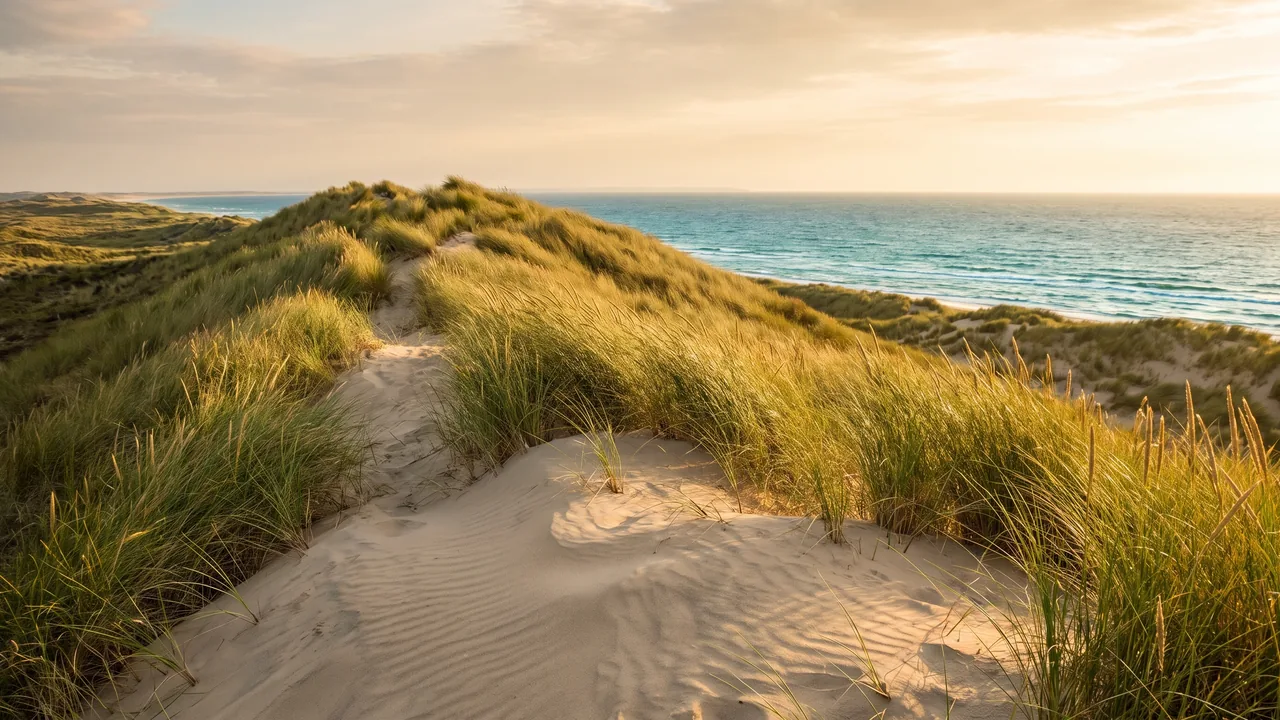
What stands out at Le Porge-Océan is the width of the dune ridge. Between the pine forest and the foreshore, a vast field of shifting dunes, crowned with marram grass, forms a shifting back beach that the wind is constantly reshaping. It is a superb landscape—and a vulnerable one, for it takes very little to destabilize an environment that is held together solely by its vegetation.
To preserve the site while welcoming hundreds of thousands of visitors, the municipality and the ONF carried out a major project: the sustainable redevelopment of Le Gressier, completed in 2017 and 2018[2]. The goal was to make the site more accessible and safer without altering its natural character.
We sometimes forget this in the face of the landscape’s apparent solidity, but a dune is a living, shifting environment that the wind and the sea are constantly reshaping. It is precisely to support this movement—rather than halt it—that the renaturation program was launched: the goal is not so much to build against the ocean as it is to restore the dune’s ability to rebuild itself, season after season.
The Redevelopment of Le Gressier (2017–2018)
The project, led by the National Forestry Office (ONF), represented an investment of approximately 1.066 million euros (excluding tax), funded by the French government, the Nouvelle-Aquitaine region, the Gironde department, the municipality, and the ONF. The guiding principle: to direct visitor traffic to marked access points so that the dune can regenerate elsewhere. The main components of the project:
- Wooden fences at the base of the dunes and grating to channel foot traffic.
- Rearrangement of access points along a central path, with ~5 marked access points.
- Dune restoration and cleanup of approximately 60 hectares of dune ridge.
- Limiting the spread of pine trees on the dune.
- The project will cost approximately 1.066 million euros, excluding tax, and will be funded by the national government, the regional government, the departmental government, the municipality, and the ONF.
The result: a more accessible site, safer access points, and a dune coming back to life where it had been trampled. It was also this project that led to a deliberate reduction in the size of the parking lot, to give space back to the natural environment—an important consideration when it comes time to park.
These features also serve an educational purpose: by clearly marking where to walk, they remind everyone that the dune is not just a backdrop, but a living organism that moves, rebuilds itself, and protects the inland areas from the ocean’s onslaught. The ganivelles—rows of wooden stakes—are not mere barriers: by slowing the wind, they trap sand and help the dune reform naturally. The pine forest, originally planted to stabilize the sand, complements this system. Together, the dune and the pine forest form a barrier that is as fragile as it is essential.
La Jenny and the North-South Beaches
The Porge coastline is more than just the lifeguard-patrolled Gressier Beach. It stretches for several kilometers, with two distinct ends: La Cantine, at the northernmost point, and La Jenny, at the southernmost point. It’s best not to confuse them, as they offer completely different experiences.
In between, the central, lifeguard-patrolled beach serves as a link; at either end, the atmosphere changes—more intimate, less structured. This is where the somewhat unique character of the Porge coastline comes into play, where, within just a few kilometers, you go from a family-friendly, supervised area to much quieter stretches of beach.
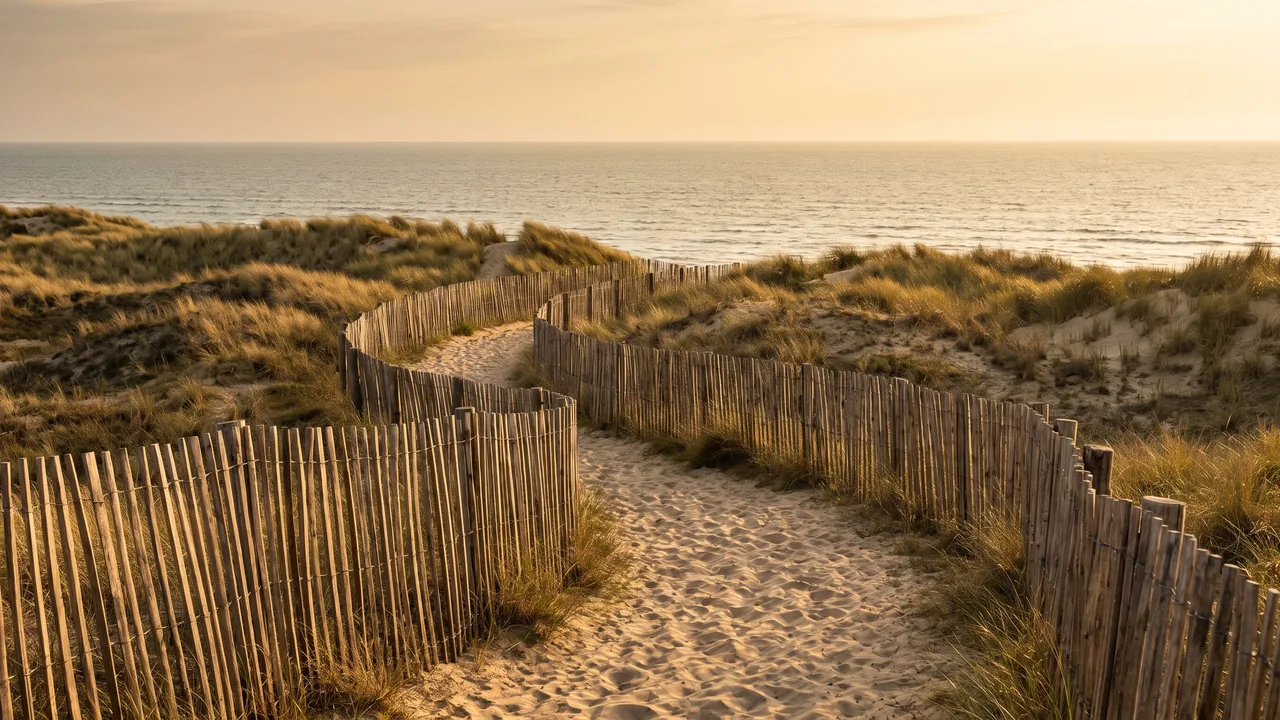
La Jenny, to the south: the naturist resort
In the south, La Jenny is a naturist residential community founded in 1983, covering approximately 127 hectares. It has its own naturist beach and parking lot. Naturism is also practiced there, even on its golf course, which is billed as the only one of its kind—a unique feature to be taken for what it is, without treating it as a guarantee. La Jenny remains a world of its own, with its own set of rules; the naturist beach can be reached from within the resort, south of the Porge coast.
The benefit of this layout for visitors is that they know what to expect depending on where they lay out their towel. The central area, around Le Gressier, remains the most family-friendly and closely supervised; La Jenny, to the south, caters to a naturist crowd and operates as a relatively self-contained area, with its own access points. You won’t end up there by chance: it’s best to understand the nature of the place before you go, so you can make an informed choice.
La Cantine, to the north: an unsupervised beach
On the opposite side, to the north, La Cantine provides access to the beach, but it is unsupervised: there is no lifeguard station and no lifeguards. It’s an even wilder spot, prized for its tranquility, but one where extra caution is essential due to the rip currents. For a family swim, it’s best to choose the supervised area at Gressier, in the center, and reserve La Cantine for a simple stroll or a swim by experienced swimmers.
This variation from north to south is what makes the Porge coast so diverse, but it means you have to know your way around. A single beach, stretching over ten kilometers, can go from a supervised, lively section to nearly deserted stretches in just a few hundred meters. Taking the time to figure out where you are—Le Gressier in the center, La Cantine to the north, La Jenny to the south—helps you avoid many unpleasant surprises, especially when choosing where to swim.
Directions, Parking, and Bicycles
Getting to Le Porge-Océan—and, above all, finding a place to park there—is the real headache during the summer. The beach is at the end of a single road, the one that runs through the pine forest from the village, and everyone arrives at the same spot at the same times.
The town has therefore carefully organized access, offering a large parking lot under the pine trees, a bike path, and a shuttle service that depends on the time of year and the schedules published by the regional[7] transit system. Each option has its advantages, and the best choice depends mainly on what time you plan to arrive.
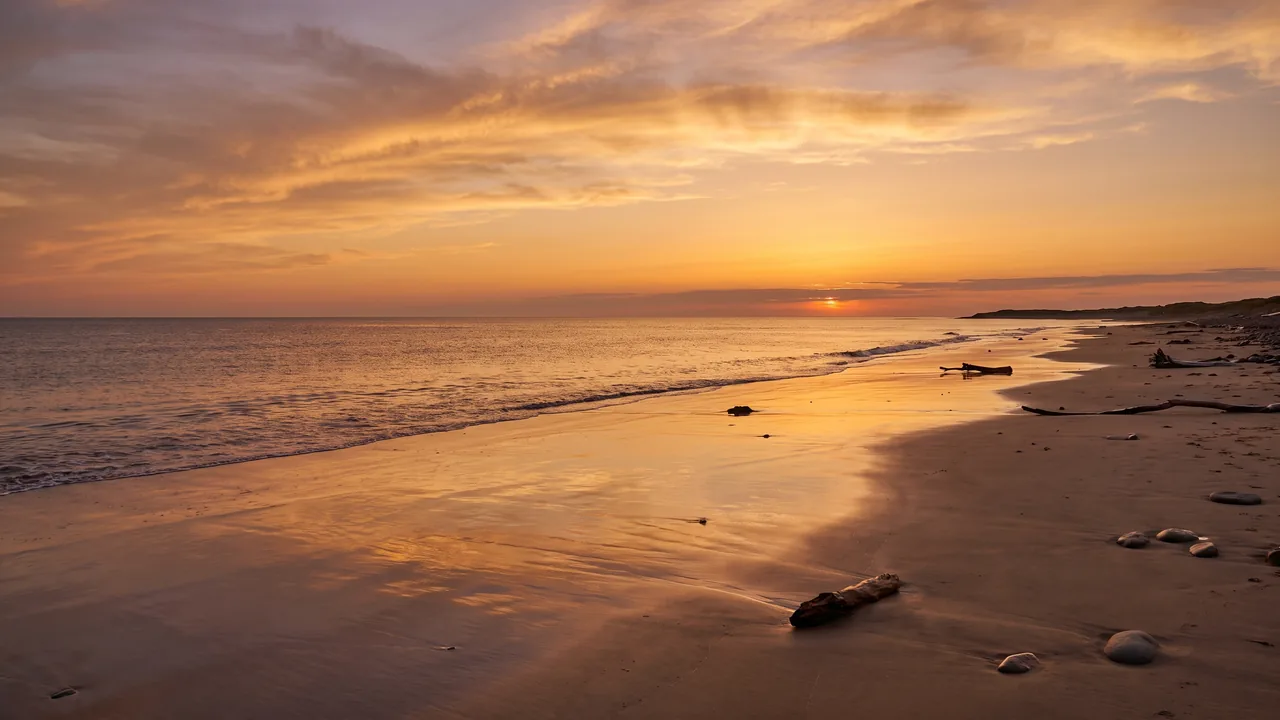
How do you park in Le Porge-Océan?
Parking is available in a large, free lot behind the dunes, shaded by pine trees, with a capacity of approximately 2,500 spaces[1]. Its size was intentionally reduced during the 2018 redevelopment to give space back to the dune, so don’t count on an endless supply of spots. Traffic and parking are regulated[6], and real-time monitoring of visitor numbers is in place during the summer. During peak hours on weekends in July and August, the parking lot fills up—and the wait can be long. Our advice: arrive early in the morning, or leave late.
In practice, the critical window is between mid-morning and early afternoon on sunny days: that’s when traffic converges and the last available spots disappear. Arriving before 10 a.m., or conversely aiming for late afternoon to enjoy the beach until sunset, radically changes the experience. The real-time parking occupancy tracker, displayed during the summer, helps you plan ahead: when the parking lot is nearing capacity, it’s better to stop circling and check your options for getting there by bike or regional[7] bus.
Come by bike or bus
There are two alternatives to driving that are worth checking out. By bike, a bike path about 10 kilometers long connects the town to the ocean through the pine forest; it joins the Vélodyssée (EuroVelo 1), the major cycling route along the Atlantic[5] coast. A seasonal bus service can surcharge the bike route. Before you set out, check the Nouvelle-Aquitaine regional transit network for the route number, operating dates, stops, schedules, and the current fare. Check the regional route.[7]
By bike, the ride alone is worth the trip: about ten kilometers of flat, shaded trail under the pine trees, perfect for families, with the ocean as a reward at the end of the route. Just be sure to bring water and something to lock your bikes with when you arrive. A seasonal bus service can complement your bike trip. Before you leave, check the Nouvelle-Aquitaine regional transit network for the bus line number, operating dates, stops, schedules, and the current[7] fare.
- By bike: ~10–11 km of bike path through the pine forest, along the Vélodyssée (EuroVelo 1)[5], from the town to the ocean.
- A seasonal bus service can surcharge your bike route. Before you set out, check the Nouvelle-Aquitaine regional transit network for the route number, operating dates, stops, schedules, and current fares. Check the regional route.[7]
- By car: Free parking with approximately 2,500 spaces[1]; it's best to arrive early in the morning during the summer.
The Back-Dune and Its Wildlife
Behind the beach, sheltered by the first line of dunes, lies a discreet yet precious environment: the back-dune. Neither quite a beach nor quite a forest, it is a barren heathland where heather, marram grass, and a few mounds of light-colored sand grow.
This landscape may seem unremarkable, but it is actually fragile. It holds the sand in place, slows the advance of the dunes toward the forest, and provides a habitat for plants adapted to sea spray and wind. It is a delicate balance that can be disrupted by trampling in just one season.
Yet just a few simple actions are enough to preserve it: don’t climb the dunes outside the designated access points, keep children and dogs on the trails, and avoid pulling up beach grass, whose long roots are precisely what hold the sand in place. These are simple habits, but their cumulative effect—across hundreds of thousands of visitors—is essential to the site’s future.
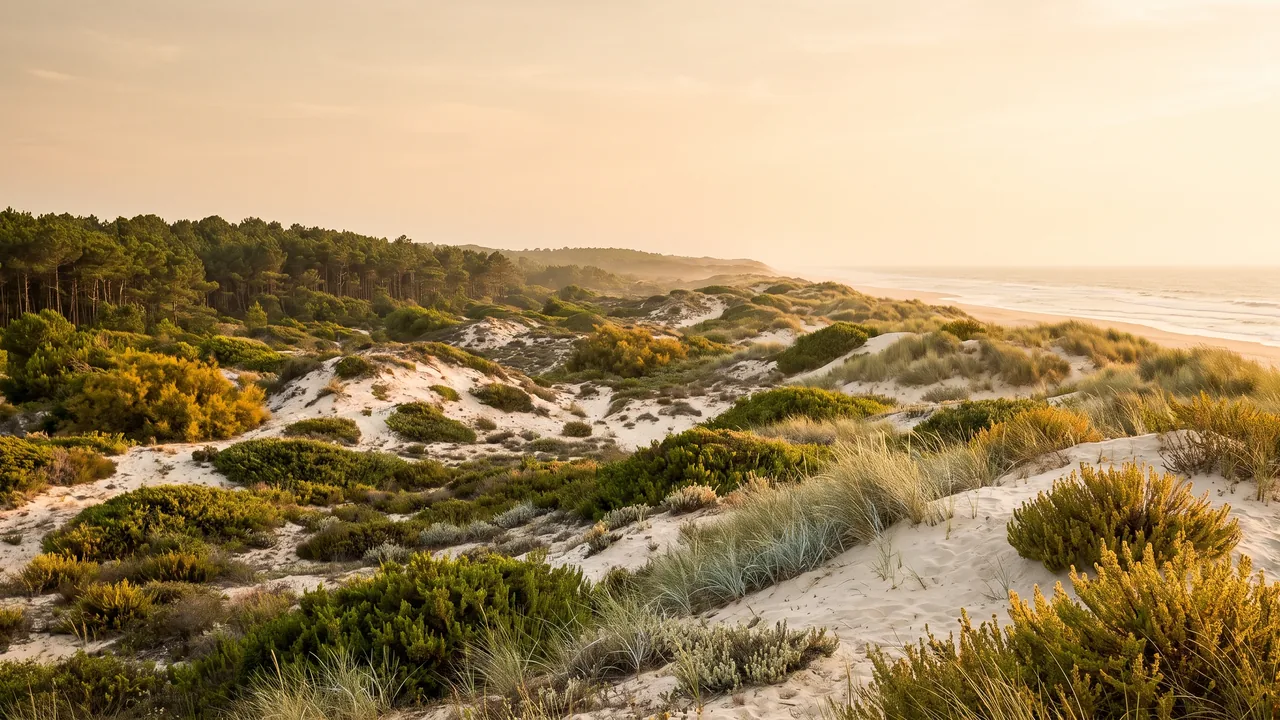
Stay on the trails: a fragile environment
The entire purpose of the ONF’s infrastructure—wooden fences, boardwalks, and marked trails—is to channel foot traffic so that this heathland can regenerate. When you walk off the trails, you trample the vegetation that holds the sand in place, and the dune becomes more vulnerable. The rule is therefore simple and applies to everyone: use only the marked trails, do not pick beach grass, and keep dogs away from protected areas. This is the price we must pay to ensure the beach remains as beautiful tomorrow as it is today.
This heathland is also worth a visit in its own right. In the early morning or late afternoon, when the light skims the beach grass and the wind dies down, the back-dune offers a peaceful setting, very different from the hustle and bustle of the beach. There, you sometimes come across low-growing, hardy vegetation, shaped by salt and sand, and as you walk across the boardwalks, you gain a better understanding of why it deserves to be protected. It is a discreet transitional space that gives the site its full depth.
What is there to do in Le Porge-Océan?
Swim only in the marked and supervised area on the day of your visit. The signs and schedules posted at the lifeguard station take precedence over this guide. If you encounter any difficulties, signal for help immediately and follow the lifeguards’ instructions; if you witness someone in distress, alert the lifeguard station.
Your choice will depend mainly on the tide, the weather, and what you feel like doing that day. Here are the must-sees—pick and choose based on how much time you have:
- Swim only in the marked and supervised area on the day of your visit.
- Try your hand at surfing, bodyboarding, or stand-up paddleboarding outside the swimming area (lessons available during the season).
- Ride your bike to the beach along the pine forest trail (~10–11 km), or check for any seasonal shuttle service before you leave[7].
- Discover La Jenny nudist beach, on the southern coast.
- Walk through the pine forest and along the back of the dune, staying on the marked trails.
- Have a picnic overlooking the ocean—and be sure to take all your trash with you (the beach has no trash cans).
- Watch the sunset over the Atlantic from the top of the dune.
| Desire | Where / How |
|---|---|
| Swimming Safely | A marked-off and monitored area on the day of your visit |
| Surfing / bodyboarding / paddleboarding | Outside the swimming area, on the sides; classes available |
| Getting There Without a Car | Bike path (~10–11 km) or seasonal service—to be confirmed[7] |
| Naturism | La Jenny Beach, on the southern coast |
| Nature Walk | Pine forest and back-dune (stay on the trails) |
| Picnic | Designated Area — Zero-Waste Beach: Take Your Trash Home |
One reminder that takes precedence over everything else: no matter what you’re doing, swim only during supervised hours and within the marked area. Outside of these times, the ocean is still a sight to behold—but leave it to the seasoned surfers. And when it comes to shopping, be sure to stock up on supplies before heading down to the beach, since there’s no market there.
In short, Le Porge-Océan is best enjoyed at a leisurely pace: a full day is just right for combining swimming, walking, and relaxing. Simply adjust your plans to the tides and lifeguard schedules, bring food and drinks, and keep in mind that here, everything takes a little effort—from getting there to finding a spot in the sun. That’s the price of a beach that’s remained wild, and that’s precisely what people come here for.
Around Le Porge-Océan
Le Porge-Océan is just a gateway to a coastline brimming with places to explore. In just a few kilometers, you can go from a village in the Landes region to the large neighboring beach resorts, and you can easily visit two or three places in a single day.
Few ocean beaches offer such diversity within such a short distance. In less than a half-hour drive, you go from a wild coastline to a bustling seaside resort, and then to the more secluded landscapes of the Bassin. It’s the perfect setting for a tailor-made getaway, where Le Porge-Océan serves as the ideal base camp—close to Bordeaux yet nestled in the heart of nature.
| Location | Distance / time from Le Porge-Océan |
|---|---|
| Le Porge town centre | ~11 km · ~20 min |
| Lacanau-Océan | ~11 km north |
| Lège-Cap-Ferret | to the south, toward the peninsula |
| Bordeaux | 57 km · 1 hr 10 min |
| Atlantic Ocean | on site |
The village, Lacanau, and Cap Ferret
About ten kilometers inland, the village of Le Porge is worth a stop for its church, shops, and forest—this is also where the markets are held, not at the beach: a market on Thursday mornings and a night market on Saturday evenings in the summer. To the north, Lacanau-Océan boasts another large, more urban surfing beach with its lively waterfront. To the south, the Lège-Cap-Ferret peninsula and Cap Ferret open onto the Arcachon Basin, with its oyster huts and lighthouse. Three very different atmospheres, all less than an hour apart.
This location—nestled between the forest, the ocean, and the Arcachon Basin—makes Le Porge an excellent base for exploring the area. You can spend the morning at Gressier Beach, head back to town for lunch, and then set out to discover a neighboring resort in the afternoon. The more adventurous can venture as far as the oyster-farming villages of the Arcachon Basin or the expansive beaches of the Médoc, all within a reasonable distance. There’s an itinerary for everyone, whether you prefer the open ocean, the sheltered waters of the Arcachon Basin, or the coolness of the forest.
How to get to Le Porge-Océan from Bordeaux
From Bordeaux, the Le Porge-Océan route covers 57 km, taking about 1 hour and 10 minutes under the conditions used by the fare calculator. The route passes through the metropolitan area and then through the forest to Le Gressier. In the summer, allow for extra time beyond this estimate to account for crowds at the site entrance and finding a parking spot in the parking lot behind the dunes.
The drive itself is straightforward: once you’re out of the Bordeaux metropolitan area, you head due west through the forest on smooth, well-maintained roads. It’s mainly the logistics of getting there—the parking, the crowds, and the walk from the parking lot with your beach gear—that make planning a day at the ocean a bit of a hassle.
How much does the ride cost?
For a private transfer, the Bordeaux → Le Porge-Océan route starts at €130 during the day for a sedan accommodating 1 to 3 passengers. The price is fixed and confirmed in writing before departure—no meter, no surprises. A surcharge applies at night, on weekends, and on holidays; for groups of five or more passengers, a van will be provided. Transfers to the town of Le Porge and Bordeaux-Mérignac Airport are available upon request.
For your information, this flat rate covers the entire one-way trip from Bordeaux, with no hidden per-kilometer surcharges: the price quoted is the price you pay. For a day at the beach, many choose to leave in the morning and return in the late afternoon, once the sun is already setting over the Atlantic. Each route—from a specific address, a hotel, or the airport—can be quoted in advance, allowing you to compare options and make a decision with complete transparency.
| Route | Distance / Time | Rates |
|---|---|---|
| Bordeaux → Le Porge-Océan (Gressier Beach) | 57 km · 1 hr 10 min | starting at €130 |
| Bordeaux → the town of Le Porge | — | based on a quote |
| Bordeaux-Mérignac Airport → Le Porge-Océan | — | based on a quote |
| Return Le Porge-Océan → Bordeaux | 57 km · 1 hr 10 min | based on a quote |
| Night / Weekend / Holiday | — | surcharge |
Why choose a chauffeur service?
The main benefit is simple: parking. During peak hours in July and August, the roughly 2,500 parking spaces[1] under the pine trees fill up quickly, and you sometimes have to drive around for a long time before finding a spot—if you don’t end up leaving empty-handed. Being dropped off right at the beach entrance—and picked up at the same spot at the agreed-upon time—eliminates this uncertainty. You save time, avoid the walk from a distant parking lot, and can fully enjoy your day at the beach. To plan your visit, you can check the route to Le Porge-Océan in just a few minutes.
Beyond just parking, this option is especially appealing to groups, families loaded down with beach gear, and visitors who aren’t familiar with the area: you can enjoy the drive through the pine forest without worrying about the route, arrive feeling relaxed, and be picked up at the time of your choosing, even after a long day in the sun. For a day trip from Bordeaux, it’s a simple way to turn the hassle of transportation into an enjoyable experience, from departure to return.
Frequently Asked Questions
Where exactly is Le Porge-Océan located?
Le Porge-Océan is the seaside area of the town of Le Porge, in Gironde, on the Atlantic coast of the Médoc. Specifically, it refers to Gressier Beach, located about ten kilometers west of the town center, at the edge of the pine forest. It is a wild ocean beach with no built-up waterfront, renowned as one of the closest to Bordeaux—hence its nickname, “Bordeaux’s beach.” For more on the village itself, its forest, and its history, see our article dedicated to the town of Le Porge.
Does Le Porge-Océan overlook the ocean or the Arcachon Basin?
On the Atlantic Ocean, without a doubt. Confusion is common because the town of Le Porge also borders the Arcachon Basin to the south, but Gressier Beach opens out onto the open ocean: swells, breaking waves, tides, and rip currents. It’s a world apart from the calm waters and oyster huts of the Arcachon Basin. If you’re looking for the sheltered swimming spots of the Arcachon Basin, this isn’t the place; Le Porge-Océan is a true surf beach, with all the beauty and caution that the ocean entails.
Is Gressier Beach supervised?
Swim only in the marked and supervised area on the day of your visit. The signs and schedules posted at the lifeguard station take precedence over this guide. If you encounter any difficulties, signal for help immediately and follow the lifeguards’ instructions; if you witness someone in distress, alert the lifeguard station.
What is a "baïne," and why should you be wary of it?
Swim only in the marked and supervised area on the day of your visit. The signs and schedules posted at the lifeguard station take precedence over this guide. If you encounter any difficulties, signal for help immediately and follow the lifeguards’ instructions; if you witness someone in distress, alert the lifeguard station.
How do you park in Le Porge-Océan?
Parking is available in a large, free parking lot behind the dunes, under the pine trees, with approximately 2,500 spaces[1]. Its capacity was intentionally reduced during the 2018 redevelopment to preserve the dunes. Traffic and parking are strictly regulated here, with real-time monitoring of visitor numbers during the summer. During peak hours on weekends in July and August, the lot fills up quickly: arrive early in the morning, or consider biking, a possible seasonal[7] shuttle service, or being dropped off directly at the beach entrance to avoid waiting.
Can you surf at Le Porge-Océan?
Yes, it’s actually one of the coast’s most famous spots, open to surfers of all skill levels. People come here to surf, bodyboard, and stand-up paddle, and schools offer lessons and rentals during the season. Surfing is allowed outside the swimming area: on either side of the supervised zone, buffer zones separate swimmers and surfers, and surfing is permitted where swimming is prohibited. So, you swim in the center, between the flags, and surf on the sides.
What is La Jenny?
La Jenny is a naturist residential community located south of the Porge coast, established in 1983 and covering approximately 127 hectares. It has its own naturist beach and parking lot. Naturism is practiced there, even on its golf course, which is described as one of a kind. It is a unique space with its own set of rules. It should not be confused with La Cantine, at the other end to the north, which provides access to an unsupervised beach.
Are there any trash cans on the beach?
No, and that’s by design: Gressier is a “zero-waste” beach. There are no trash cans on the sand; everyone takes their trash with them and drops it off at the recycling station at the parking lot exit. This initiative, cited by the ONF as a model for the entire country, aims to reduce litter and protect the dune ecosystem. So be sure to bring a bag for your packaging, cigarette butts, and picnic leftovers.
Can we get there without a car—by bike or bus?
A bike path about 10 kilometers long connects the town to the ocean through the pine forest and joins the Vélodyssée (EuroVelo 1)[5]. A seasonal shuttle service may surcharge access by bike. Before setting out, check the Nouvelle-Aquitaine regional transit network for the route number, operating dates, stops, schedules, and current fares. Check the regional route.[7]
Are dogs allowed on the beach?
During supervised hours, dogs are not allowed on Gressier Beach. Outside of these hours, local regulations and common sense apply: keep your dog on a leash, pick up after your dog, and keep it away from protected dune areas, where the vegetation is fragile. If you’re bringing a dog, check with city hall or the tourist office for the current rules, as regulations may change from season to season.
How much does it cost to travel from Bordeaux to Le Porge-Océan with a chauffeur service?
The transfer from Bordeaux to Le Porge-Océan starts at €130 during the day for a sedan carrying 1 to 3 passengers, on the direct route of approximately 57 km, which takes 1 hour and 10 minutes. The fare is fixed and confirmed in writing before departure; no meter is used. A surcharge applies at night, on weekends, and on holidays; for groups of five or more passengers, a van will be provided. Trips to the town of Le Porge and Bordeaux-Mérignac Airport are subject to a quote. The price covers door-to-door service, with drop-off as close as possible to the beach.
Is there a market in Porge-Océan?
Not at the beach itself: the markets are held in the village of Le Porge, about ten kilometers inland. There’s a market on Thursday mornings and a night market on Saturday evenings in the summer, perfect for sampling local products and soaking up the summer atmosphere. People come to the coast for the beach, surfing, and nature—so for shopping and the market, you’ll need to head up to the village. Be sure to stock up on supplies before heading down to the beach.
How is this different from your article on Le Porge?
This guide focuses on Le Porge-Océan, specifically the Gressier resort and beach: swimming, tidal pools, surfing, dunes, La Jenny, and access. Our other article covers the town of Le Porge as a whole—the village center, its church, the vast Landes forest, the village’s history, and its lifestyle. The two articles complement each other: one describes the village inland, while the other covers the oceanfront at the edge of the pine forest. Depending on your plans, one may be more relevant to you than the other.
Further Reading
- Transfer from Bordeaux to Le Porge-Océan — fixed-price quote, confirmed in writing, with no obligation.
- All our destinations from Bordeaux—beaches, vineyards, and villages in the region.
- Le Porge: The Town, the Landes Forest, and the Village's History
- Lacanau-Océan: Beaches, Surfing, and the Waterfront
- Cap Ferret: the lighthouse, the oysters, and the peninsula
Sources and References
- GIP Littoral — Sustainable Beach Management — Approximate Capacity of the Gressier Parking Lot
- GIP Littoral — Sustainable Redevelopment of Le Gressier — 2017–2018 Construction Work and Renaturation
- Médoc Plein Sud Tourist Office — Gressier Beach — Lifeguard Service and Facilities
- SNSM — Rip Currents and Undercurrents — Official Swimming Recommendations
- The Vélodyssée — Cycling Along the Gironde Coast — Passing Through Le Porge
- Le Porge City Hall — Beach Map — Access, Parking, and Regulations
- Nouvelle-Aquitaine Region — CARS33 Regional Buses — Bordeaux–Le Porge Route and Schedule Information
Article published on .
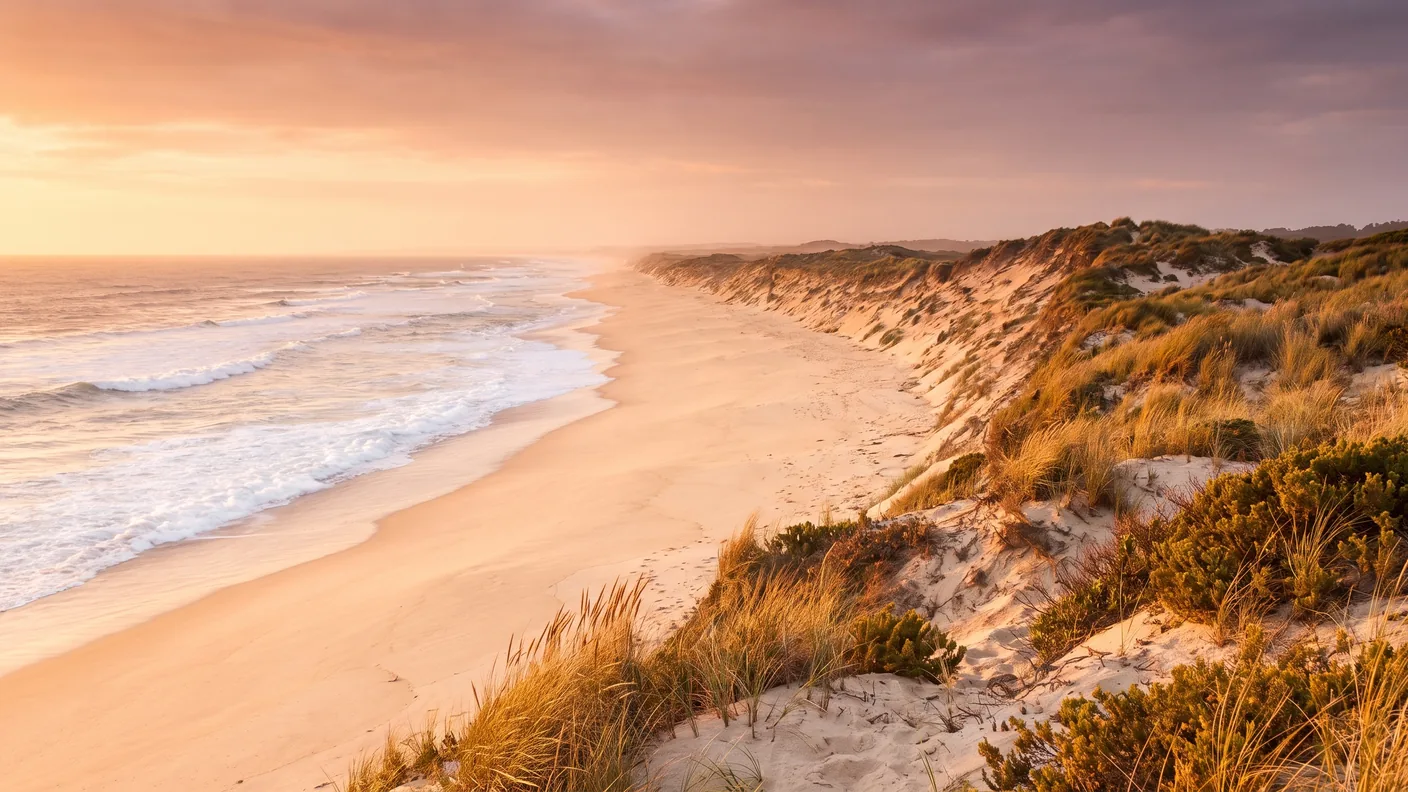
Heading to Bordeaux’s Atlantic Beach
Direct transfer from Bordeaux (1 hour 10 minutes) to Gressier Beach and Le Porge-Océan. Fixed-price quote in writing, with no obligation.