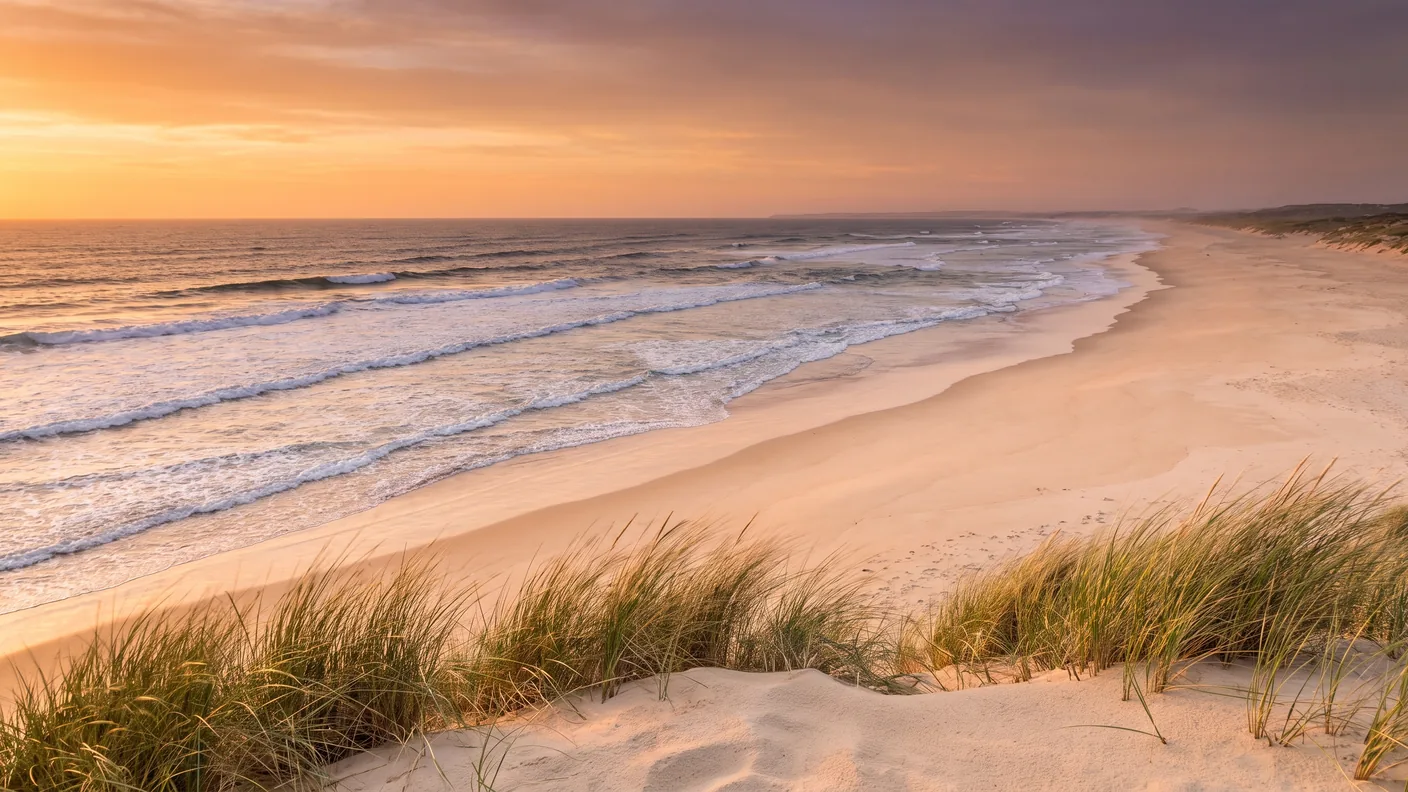
Bordeaux to Lacanau-Océan: Atlantic beaches and surf
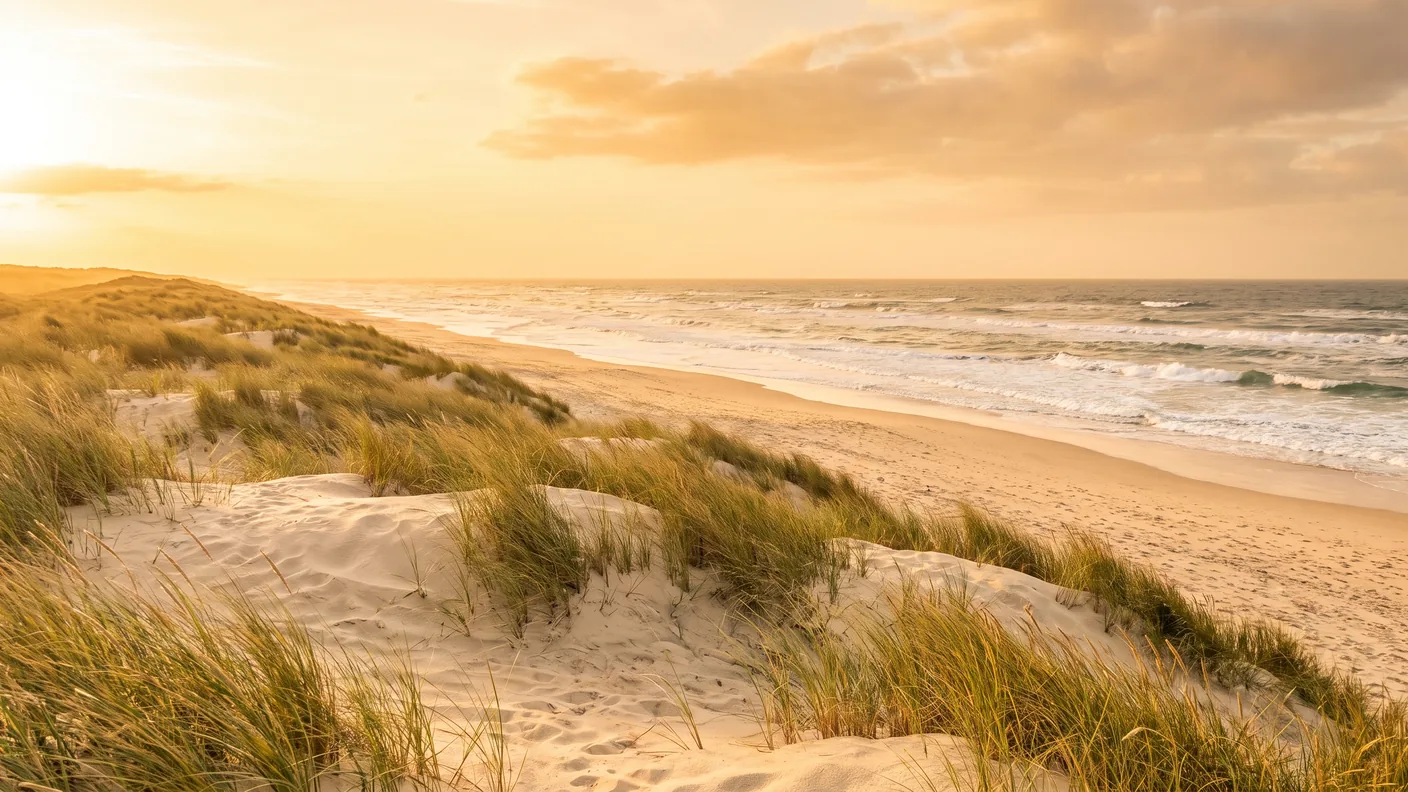
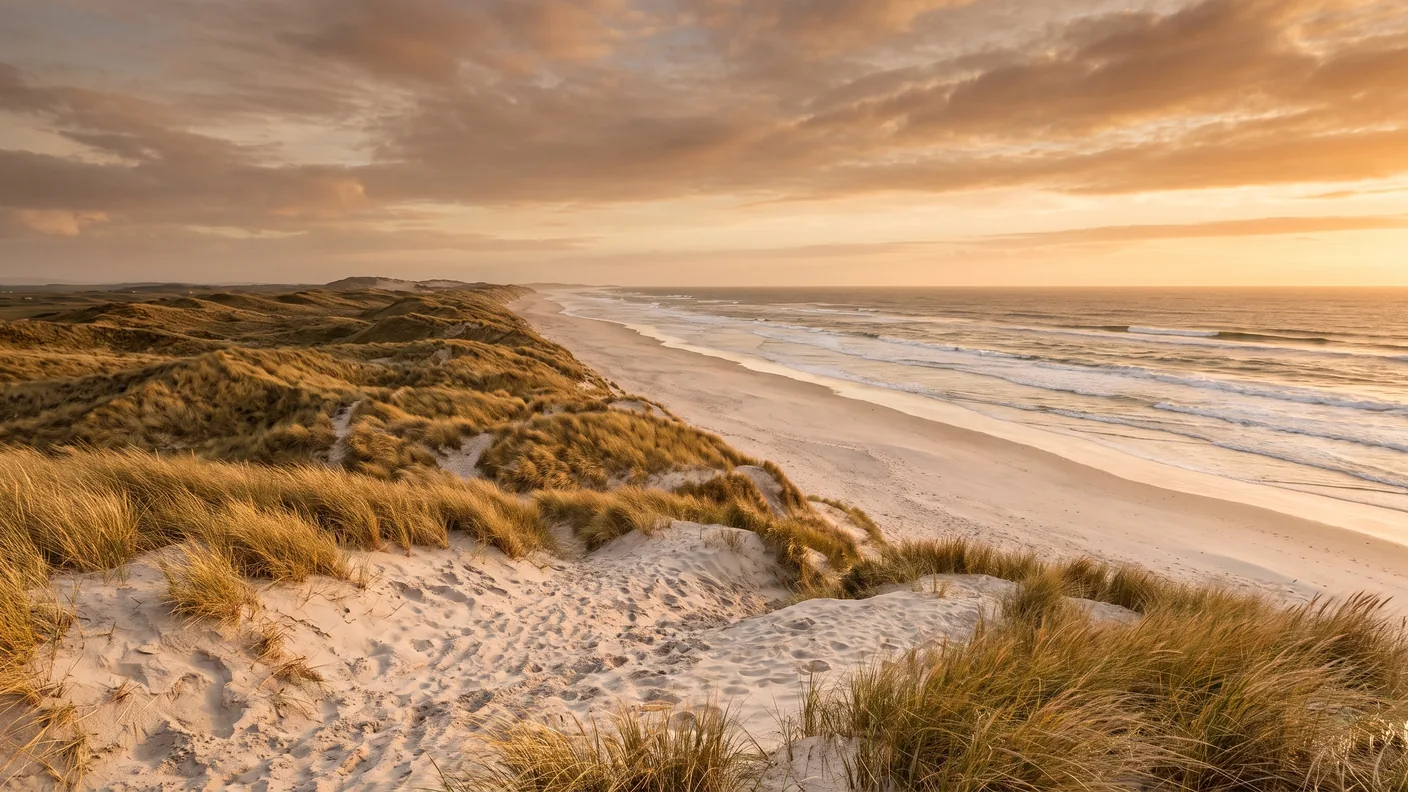
The seaside resort of Lacanau, facing the Atlantic, about a dozen kilometers from the town center and its lake. Four lifeguard-patrolled beaches, Europe’s oldest surfing competition, and a waterfront lined with Belle Époque villas built on the dunes in 1906—the Médoc coast, just 1 hour and 5 minutes from Bordeaux.
Lacanau-Océan at a glance
Lacanau-Océan is the Atlantic coastline of the town of Lacanau: a beach resort nestled on the sand, about a dozen kilometers from the town center and its lake. People come here for the ocean, for its four lifeguard-patrolled beaches stretching from north to south, and for the steady swell that has made the resort one of France’s premier surfing destinations. Along the waterfront, Belle Époque villas emerged from the dunes in the early 20th century and still overlook the esplanade and the beach. It’s also a challenging stretch of coastline, where rip currents mean you should only swim between the flags, in the supervised areas. This guide focuses on the resort—the beach, surfing, and the boardwalk—and distinguishes verified information from mere hearsay. For the town, the lake, and the forest, a separate article takes over.
There are two distinct Lacanau locations. On one hand, there is the town—Lacanau-Ville—situated on the shore of the large freshwater lake, inland. On the other hand, there is Lacanau-Océan, the seaside resort bordering the Atlantic, separated from the town by a strip of pine forest. This guide focuses exclusively on the seaside resort. If you’re interested in the municipality as a whole—the lake, the Cousseau Nature Reserve, its long history, and the forest—the article dedicated to Lacanau covers that topic.
| Landmark | Details |
|---|---|
| What It Is | The seaside resort in the municipality of Lacanau, in Gironde (33), in the Médoc region, on the Atlantic coast |
| Position | About 12 km west of the town (Lacanau-Ville) and its lake, separated by a pine forest |
| Must-Sees | Four lifeguard-patrolled beaches, surfing, and the Lacanau Pro, the Belle Époque villas along the waterfront |
| From Bordeaux | ~57 km · ~65 min · starting at €116 |
The rest of this guide follows a simple thread: first, locating the resort and connecting it to Bordeaux, then heading down to the sand—the four beaches, safety precautions regarding rip currents, surfing, and its major July event. We then head back up to the waterfront and its villas, the resort’s history, and the dune that protects it, before branching out to cover the forest, the lake, and neighboring resorts. Each section sticks to verified facts and refers readers to the town’s official article for detailed information on the town center, the lake, or the forest.
Where is Lacanau-Océan located?
Lacanau-Océan is the seaside resort of the municipality of Lacanau, in the Médoc region of Gironde. It stretches along the municipality’s Atlantic coastline: to the west, the ocean and its long sandbar; behind it, the wooded dune, followed by the pine forest that stretches all the way to the lake. It is an outdoor resort, focused on the water, the swell, and the light of the setting sun—a stretch of the Médoc coastline just over an hour’s drive from Bordeaux.
The resort and the town form two distinct centers within the same municipality, connected by the D6. From Lacanau-Ville, it’s about a dozen kilometers west—a fifteen-minute drive through the pine forest. This road connecting the town to the ocean, opened at the very beginning of the 20th century, remains the main thoroughfare that defines the town. For a description of the town, Lake Lacanau, and the forest, see thearticle Lacanau ; here, we're staying on the sand.
On a map, Lacanau-Océan stands out at first glance: it’s the point where the Médoc’s long stretch of sand meets the first streets of a resort town. To the north and south, the coastline runs straight—almost in a straight line—for dozens of kilometers; to the east, the pine forest forms a green barrier between the ocean and the rest of the town. This geography explains the resort’s relative isolation: you don’t stumble upon it by chance; you make your way there, following a road that cuts through the pine forest before opening out onto the Atlantic.
How far is it from Bordeaux?
The distance between Bordeaux and Lacanau-Océan is approximately 53 kilometers, and the trip takes about 65 minutes. The distance varies depending on your starting point: from downtown Bordeaux, taking the beltway and the exit toward the Médoc, the distance increases to about 60 kilometers, taking a little over an hour. You can reach the resort from the western part of the metropolitan area, heading toward the Médoc, then via the forest roads that cross the pine forest to the ocean. The final stretch, as you approach the waterfront, narrows: in the summer, traffic and parking there can slow you down.
| Route | Distance | Estimated duration |
|---|---|---|
| Bordeaux → Lacanau-Océan | ~57 km | ~65 min |
| From downtown Bordeaux | ~57 km | ~1 hr 5 min |
| Town of Lacanau (Lacanau-City) | ~12 km | ~15 min |
| Carcans-Plage (northern resort) | ~10 km | ~15 min |
The Beaches of Lacanau-Océan
Lacanau-Océan features four supervised ocean beaches, which stretch from north to south along the same sandbar. All open directly onto the Atlantic, with the same swell and the same horizon, but each has its own atmosphere: the lively main beach at the foot of the resort; the southern beaches, which are more family-friendly; and, as soon as you move away from the lifeguard stations, a beach that returns to its wild state among the dunes. Access is via paths cut through the dunes; be careful, as the tide can quickly change the landscape.
From north to south, there is the North Beach, the resort’s main beach, next to the Surf Club; the Central Beach, the most popular one, known in competition circles as the “Grande Plage,” where the Lacanau Pro is held; South Beach, known as “Les Écureuils”; and, further south still, Super South Beach (City of Lacanau, lifeguard-patrolled beaches, accessed in July 2026). These four ocean beaches are what make Lacanau-Océan famous as a seaside resort.
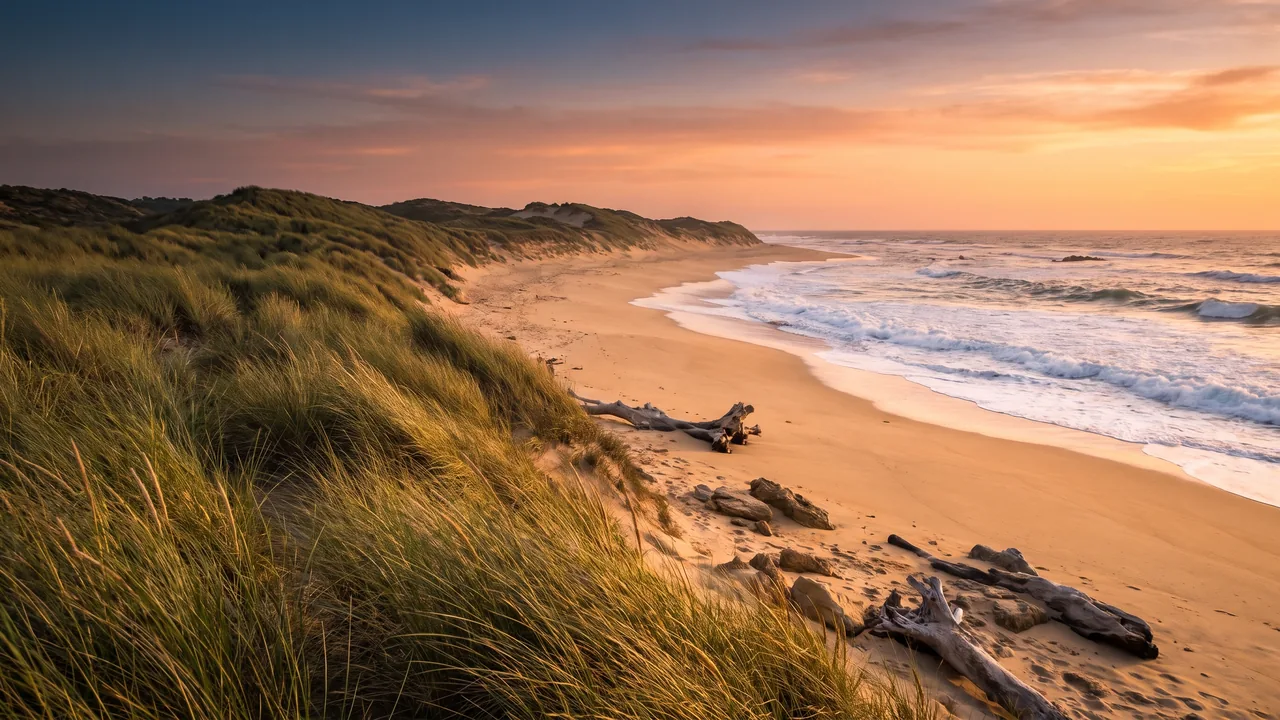
The tide reshapes these beaches twice a day. At high tide, the strip of sand narrows and the ocean laps at the base of the dune; at low tide, it suddenly widens, revealing vast, flat expanses where you have to walk a long way before reaching the water. This ebb and flow determines everything: where you set up camp, the quality of the waves for surfing, and, above all, the strength of the currents. Checking the tide tables before heading down to the beach is one of the basic habits along this coast.
Four beaches, from north to south
The distinction between the four sections serves a practical purpose: it tells you where to lay out your towel. The North Beach and Central Beach are where the action is—that’s where you’ll find the surf schools, the beachfront shops, and the bulk of the swimmers. The South Beach (“Les Écureuils”) and Super South Beach, a little further off, offer more space and a quieter atmosphere, making them popular with families. Beyond these areas, both to the north and south, the sandy beach stretches on without any amenities: the beach there is beautiful and deserted, but it is not lifeguarded.
One point deserves clarification, as it is often misunderstood. The municipality of Lacanau has a total of six lifeguard stations staffed by certified lifeguards—but only four are located along the ocean, specifically these four beaches in Lacanau-Océan. The other two monitor swimming areas at the lake, at Moutchic and Grande Escoure: these are freshwater bodies of water located inland, not beaches at the ocean resort. Four ocean beaches, two lake swimming areas: knowing the difference helps avoid misunderstandings when planning your day.
The beaches are accessed via designated paths through the dunes; these are the only authorized crossing points: anywhere else, you’ll damage the vegetation that holds the sand in place. From the top of the dune, the view stretches far out over the Atlantic, and this is often where you can gauge the swell before heading down. The lifeguard-patrolled beaches are concentrated near the resort; as soon as you venture away from them toward the wild areas, you’ll need to bring everything you need to be self-sufficient, since there are no lifeguard stations or shops there—just sand, dunes, and the ocean.
How does lifeguard coverage work?
During peak season—July and August—the ocean beaches are patrolled daily, generally from around 11 a.m. to 7 p.m. Lifeguard service begins earlier in the year, starting in early May, but only on weekends and during school breaks, and continues through September. Outside of these times and areas, swimming is at your own risk: there are no lifeguards on duty on the beach.
At every supervised beach, a flag system summarizes the situation at a glance. The green flag indicates that swimming is permitted and supervised; the yellow (orange) flag indicates that swimming is dangerous but supervised, and caution is advised; the red flag indicates that swimming is prohibited due to danger. The golden rule remains the same regardless of the color: swim between the two blue flags that mark the supervised area, within sight of the lifeguards. On this coast, venturing outside this zone exposes you to rip currents.
| Beach | Location | Landmark |
|---|---|---|
| North Beach | Main beach, north of the resort | Next to the Surf Club |
| Central Beach | The busiest area, the heart of the resort | The “Grande Plage” at Lacanau Pro |
| South Beach “Les Écureuils” | South of downtown | More family-friendly |
| Super Sud Beach | Even further south | A calm atmosphere, plenty of space |
Rip currents: Understanding the Danger
It’s impossible to talk about the beaches of Lacanau-Océan without mentioning rip currents. They are the number one danger on the Atlantic coast and the leading cause of drowning along this coastline. Understanding this is no trivial matter: it’s what allows you to enjoy the ocean without putting yourself in danger. The good news is that the mechanism is easy to grasp, and the safety guideline can be summed up in a single sentence.
A baïne is a basin—a depression carved into the sand between two sandbars—connected to the sea by a channel. At high tide, this basin fills with water; at low tide, it empties out to sea through the channel. This outflow creates a powerful, concentrated outgoing current capable of sweeping an adult out to sea in a matter of seconds. It’s nothing like a wave: it’s a steady, bottom current that pushes in a single direction—toward the ocean.
How can you recognize a baïne?
The danger of baïnes is that they don’t look dangerous. Where the sea surfs and foams, the water breaks over a sandbar—that’s often the safest spot. A rip current, on the other hand, is marked by a strangely calm, flat area of water with no waves—like a small pool set amid the turmoil. That’s precisely where many swimmers head, thinking they’ll find a quiet spot—and that’s where the rip current is strongest.
The critical zone lies between mid-tide and low tide, when the basin empties the fastest. A smooth patch of water amid the waves, a channel where the water seems to be “sucked” out to sea, swimmers drifting without swimming: these are all warning signs. When in doubt, the best judgment comes from the lifeguards—which is why it’s important to stay within the marked area, where they’ve already identified the rip currents and placed the flags accordingly.
To fully grasp the danger, you have to think in terms of the tide rather than the weather. A rip current can be completely invisible and harmless at high tide, only to become a deadly trap three hours later, when the tide begins to ebb. It’s this time lag that’s deceptive: the same stretch of beach, calm in the morning, can hide a violent current in the afternoon. That’s why lifeguards and flags are indispensable—lifeguards monitor the tide and adjust the swimming area based on the rip currents they spot throughout the day.
What should you do if you get caught in a current?
If you find yourself in trouble, conserve your energy, signal for help immediately, and follow the instructions of the rescue team; if you are on the beach, alert the lifeguard station without delay. These steps follow the SNSM’s recommendations on rip currents, published on March 24, 2025.
Lacanau-Océan and Surfing
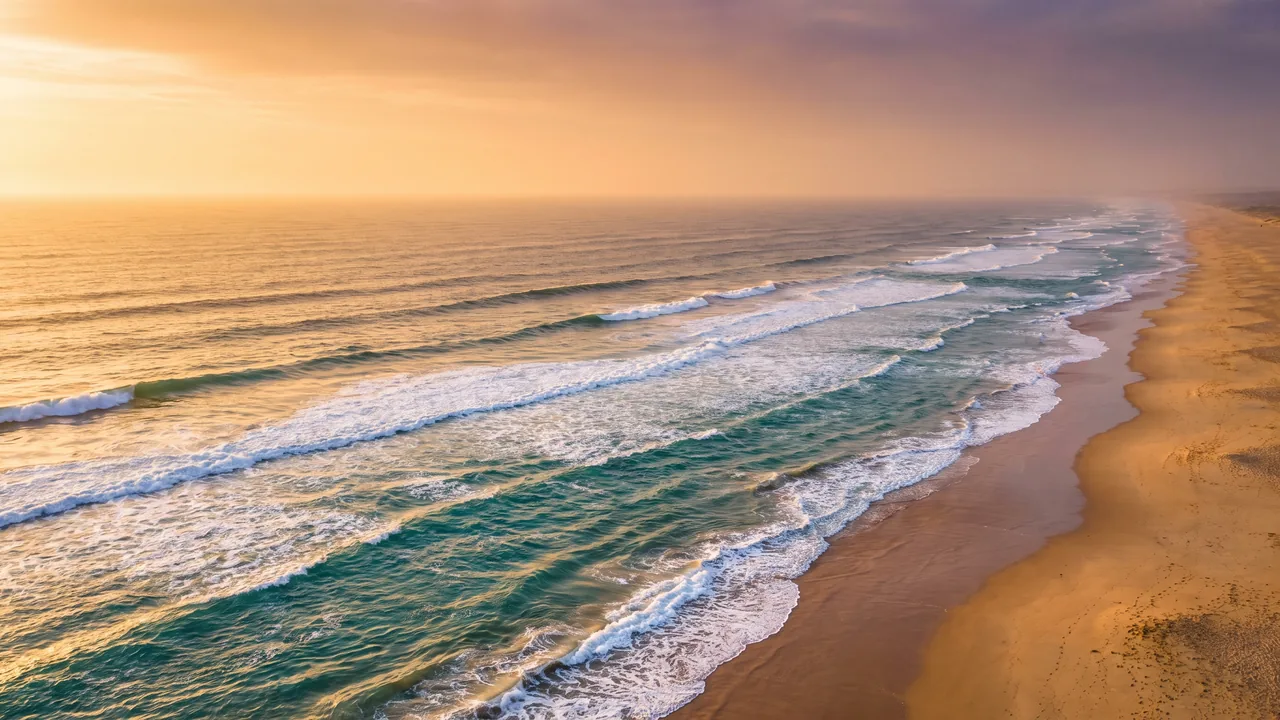
If there’s one image that comes to mind when thinking of Lacanau-Océan, it’s that of a surfer’s silhouette against the setting sun. The resort is one of the top spots on the Aquitaine coast: a steady Atlantic swell, sandbars that shape waves along the entire length of the beaches, and a surfing culture that’s been thriving for over half a century. Surfers of all levels come here—from beginners catching their first waves on the South Beach to international competitors competing at the “Grande Plage” in mid-July.
At the heart of this story is the Lacanau Surf Club, founded in 1968 and now one of the resort’s institutions. It is housed in the Maison de la Glisse, a spacious facility covering more than 600 m² that opened in 1990, situated on the waterfront and overlooking the main beach. Around it, several surf schools share the resort and the beach, offering lessons and camps from spring through fall. One sometimes reads that Lacanau is “the European capital of surfing” and its club “the largest in Europe”: these are phrases used to describe its reputation and image, not official titles—nevertheless, the resort carries real weight in the French surfing scene.
Where can I learn to surf?
Lacanau-Océan is a surf school where you really learn. The surf schools there cater to all skill levels, from your first session on foam waves to advanced training, with appropriate equipment and instructors who know how to read the sandbars and currents—a significant safety advantage on this coast with its rip currents. Beginners are generally directed to the southern beaches and the calmest tide windows; experienced surfers, on the other hand, tend to head for the sandbars at the North and Central beaches.
The resort’s surfing ecosystem isn’t limited to competition. Surrounding the Lacanau Surf Club are schools, clubs, and equipment rental shops that keep the surfing scene alive well beyond the summer. You’ll find group lessons on the sand as soon as the weather turns nice, camps during school breaks, and a community of local surfers who know every sandbar. This abundance of instruction also ensures safety: on a coast with strong currents like this one, learning with an instructor who can read the tides and rip currents is far better than going out on your own.
Beyond the waves, skate culture spills onto the concrete. The resort features the Cousteyre skatepark, a 1,000-square-meter facility that opened in 2018—one of the largest in the region—which brings the Lacanau-Océan board culture to land. Skateboarding, rollerblading, scooters: it’s a gathering spot for local and summer visitors, just a stone’s throw from the beach.
The Caraïbos Lacanau Pro
The 45 edition took place from July 8 to 14, 2026, with the QS events held from July 8 to 13 (Caraïbos Lacanau Pro, 2026 Edition). Visit the event's official page for results and information on the next edition.
The Lacanau Pro has a unique distinction: since 1979, it has been the oldest surfing competition in Europe still in operation, and one of only two French stops on the qualifying circuit. For a week, the resort comes alive with the rhythm of the heats: grandstands facing the ocean, an entertainment village, concerts, and demonstrations. Admission to the event is free on the beach—one of the highlights of the Médoc summer, provided you plan ahead for the crowds and parking.
That week, Lacanau-Océan is transformed: the influx of visitors suddenly swells the resort’s population, and the entire waterfront comes alive to the rhythm of the festival. It’s a festive yet hectic time, so it’s best to plan your lodging, arrival, and transportation in advance, as parking is particularly limited during this period. For a first taste of top-level surfing on a public beach with a lively summer atmosphere, there’s hardly a better spot in the region.
| The Lacanau Pro 2026 | Details |
|---|---|
| Full Name | Caraïbos Lacanau Pro — 45th edition |
| Dates | July 8–14, 2026 (competition July 8–13, festival through July 14) |
| Level | WSL Qualifying Series (QS 2000) |
| Location | Central Beach (the “Grande Plage”) |
| Access | Free, on the beach |
The waterfront and the Belle Époque villas
The Lacanau-Océan boardwalk tells the story of the resort’s origins. The name “Lacanau-Océan” itself first appeared in a municipal document in 1906, just as the first vacation homes were literally springing up from the dunes. Where once there was nothing but sand and beach grass, vacation homes sprang up facing the ocean, laying the foundation for a Belle Époque seaside resort. Part of this heritage still stands today, visible and often restored.
The seaside boulevard and the Esplanade de l’Europe now define the resort: this is the main thoroughfare for strolling, outdoor dining, and entertainment, overlooking the beach. Set back from and running alongside these thoroughfares are the historic villas, which an observant walker can spot by their wooden balconies, bow windows, and distinctive roofs. The city has even marked out a route to explore them: the “Circuit des villas canaulaises,” a heritage walk that connects the most beautiful facades.
A stroll along the boardwalk is a pleasure in itself. The promenade overlooks the beach and offers an unobstructed view of the ocean and the surfers; this is where people stroll in the late afternoon, wait for the sunset, and where the market sets up during the season. Behind all this bustle, the restored villas serve as a reminder that Lacanau-Océan was conceived from the outset as an elegant resort facing the Atlantic—a setting that strikes a balance between a family-friendly seaside destination and the chic resorts of the early 20th century.
Villas to Check Out
Several Belle Époque villas have been identified and can still be seen in the resort. Among the most iconic are: Villa Les Mouettes (1906), one of the very first; Villa Cerbère (1907); Villa Yora (1909), recognizable by its restored bell-shaped roof; Villa Les Dunes (1913); and Villa Beau Site. They bear witness to the era when Lacanau-Océan sought to be a chic seaside resort, much like Arcachon, with mansions facing the setting sun.
Four styles along the same waterfront
The resort’s architecture reads like a frieze. Four major stylistic families can be identified, each succeeding the other. First, the picturesque style of the Belle Époque, combining stone and brick, with balconies and wooden ornamentation—the style of the very first villas. Then came the “Arcachon Basin” regionalist style of the 1920s–1940s, which was more understated and horizontal. Next was the Neo-Basque style of the 1930s–1940s, with its red half-timbering and overhanging roofs. Finally, a more local and urban style, reflecting the resort’s growing density. A stroll along the waterfront takes you through a century of seaside architecture in just a few hundred meters.
The Station's Beginnings
Lacanau-Océan is a deliberate creation, born around 1900 from the convergence of a development project and the trend toward sea bathing. It all began with one man, Pierre Ortal, who announced as early as 1884 his intention to build a resort on this still-pristine coastline. In 1890, a real estate company, Société immobilière de Lacanau, was formed to carry out the project and subdivide the dunes. The first villas were built in 1906–1907, marking the launch of the resort.
From the 1884 plan to the resort
The key to turning the project into reality lay in access. Without roads or railways, an isolated seaside resort hidden behind kilometers of forest and dunes had no future. Two construction projects therefore changed the game. The road connecting the town to the ocean was inaugurated on September 11, 1910: it opened Lacanau-Océan to the first summer visitors arriving by land. To this day, it remains the main thoroughfare linking the two ends of the town.
The Railroad Turned into a Greenway
The other project involved the railroad. The line was extended to the Lacanau-Océan station in 1904–1905, providing the resort with direct rail service. Be aware of a common misconception: this was a local railway—a real train line—and not a “tramway,” as is sometimes claimed. This route has since been decommissioned and converted into a greenway—a bike path that follows the old right-of-way through the forest. For a more comprehensive history of the town, beyond the resort itself, the article “Lacanau” places these events in a broader context.
Having sprung up virtually from nothing on pristine dunes, Lacanau-Océan is a relatively young resort by coastal standards. In just over a century, a wind-swept sandbar has become a seaside resort with a waterfront, surf schools, and an international competition. This brief yet eventful history is still evident in the architecture, from the first villas built in 1906 to contemporary facilities like the Maison de la Glisse or the Cousteyre skatepark—a century of development condensed into a few hundred meters of coastline.
The Dune, the Wooden Fences, and Erosion
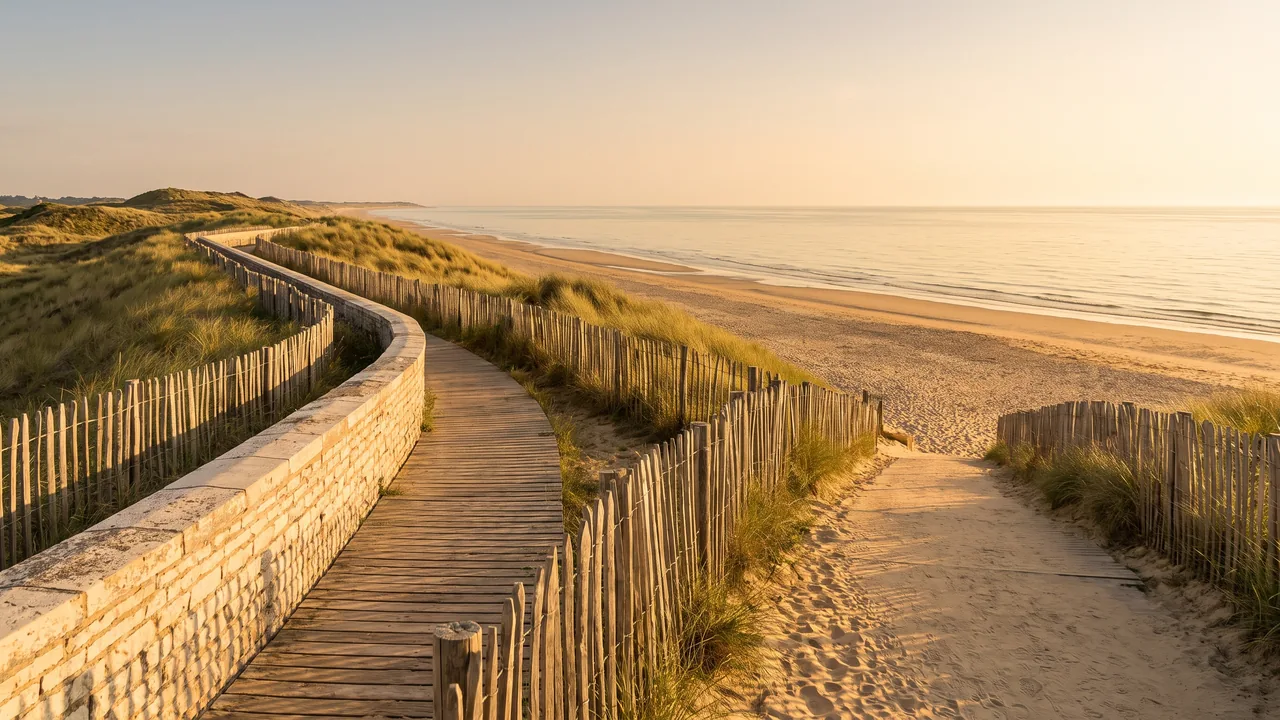
Between the resort and the ocean lies the dune. It’s not just a backdrop—it’s the first line of defense for Lacanau-Océan, the sandy embankment that withstands the Atlantic’s onslaught and protects the waterfront and its villas. Managing it is an ongoing challenge, and it explains a familiar sight: those wooden barriers planted in a zigzag pattern on the sand, which you come across at every beach access point.
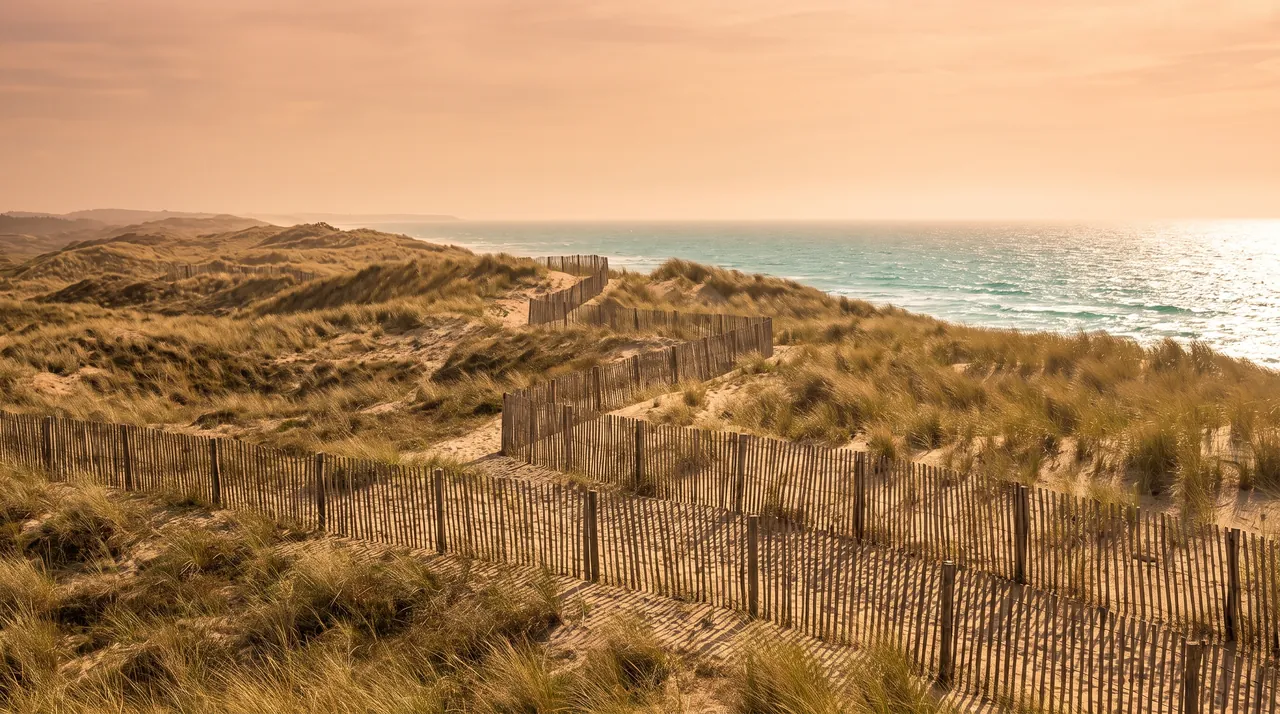
What are ganivelles used for?
These barriers are called ganivelles: wooden stakes and slats spaced apart and driven into the dune. Their function is simple and effective. By slowing the wind at ground level, they trap the sand carried by the wind, which accumulates at the base of the barrier and raises the dune. This is the basis of “soft management” of the dune system: rather than using concrete, we help nature rebuild its own protection. This work is carried out jointly by the National Forestry Office (ONF), the municipality, and local landowners. The beach grass planted on the dune complements the system, with its roots anchoring the sand deep into the ground—hence the importance of not trampling on it and staying on the marked paths.
A resort facing coastal erosion
Coastal erosion is nothing new in Lacanau: it is a long-standing phenomenon, deeply rooted in the geology of the sandy Aquitaine coast. What has changed is the attention being paid to it. A single winter storm can cause a spectacular, localized retreat—with up to twenty meters of dunes washed away in just a few days of heavy weather (CNES Géoimage, study by Lacanau-Océan). In the long term, however, the dunes remain the least expensive and most effective form of protection, far ahead of hard structures.
This “soft” approach—wooden fences, plantings, and maintenance of the upper beach—has one decisive advantage: it works with the ocean rather than against it. A wall or rockfill will always eventually be bypassed or submerged, whereas a well-maintained dune regenerates after storms. But we must still respect it: every time someone walks off the trails, every beach grass plant that’s pulled up weakens the dune line. Protecting the beach therefore starts with a simple action on the part of visitors: staying on the marked paths and not trampling the vegetation.
Lacanau has thus become a textbook example of a coastal community facing climate change. The town has halted construction on the most exposed section of the waterfront and is exploring various adaptation strategies, including relocation—a “strategic retreat” that involves moving certain buildings and activities inland rather than fighting the ocean indefinitely. This is a fundamental debate for the resort: how to continue living along a coastline that is receding meter by meter.
Behind the beach: the forest and the lake
Lacanau-Océan is merely the coastal face of a much larger region. Just beyond the dune begins the Médoc pine forest, a vast pine forest planted in the 19th century to stabilize the sand, which stretches for kilometers inland. It separates the resort from the town, and the road and the greenway run through it. This cool, fragrant forest offers a welcome contrast to the exposed beaches: shade, trails, and tranquility.
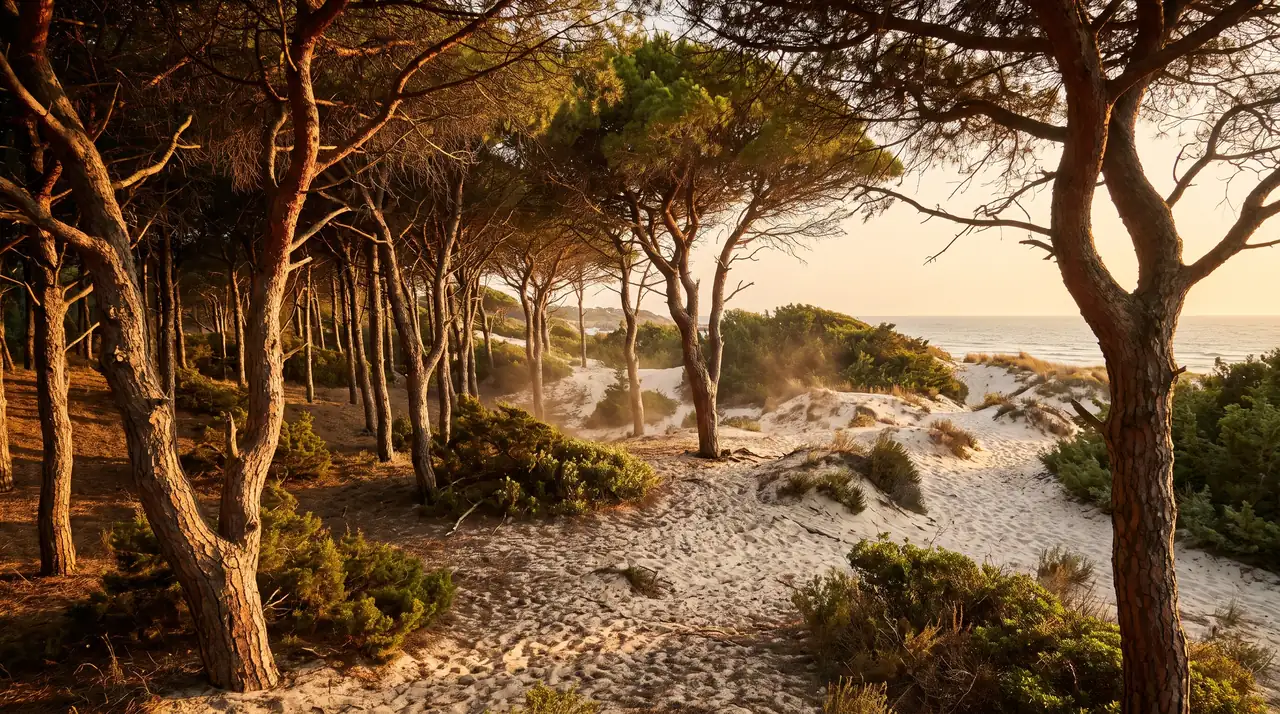
From the Ocean to the Lake, by Bike
A little further on, about a dozen kilometers away, lies Lake Lacanau, a large freshwater lake bordered by the village. There, you’ll find the Moutchic swimming area, water sports such as sailing and windsurfing, and water that’s calmer than the ocean—ideal for young children. Nearby, the Étang de Cousseau Nature Reserve, managed by SEPANSO, can be explored on foot or by bike: marshes, heathlands, and forests are home to protected wildlife.
The great appeal of Lacanau is that these three landscapes—the ocean, the forest, and the lake—follow one another over just a few kilometers and can be explored by bike along the bike paths that connect the resort to the village and the lake. You can go surfing in the morning, have a picnic under the pine trees at noon, and go for a swim in the lake in the afternoon. For more details about the lake, the nature reserve, and the forest, check out the article dedicated to the town of Lacanau.
It is this proximity to three different environments that sets Lacanau apart from a typical beach. In a single day, you can go from the Atlantic’s rolling waves to the cool pine forest, then to the calm waters of the lake—all without traveling long distances. Families particularly appreciate this variety: the ocean for its spectacular views and surfing, the lake for swimming in calm waters—perfect for young children—and the forest for shade and biking. It’s a microcosm of the Médoc coastline, all within the boundaries of a single municipality.
What is there to do in Lacanau-Océan?
At Lacanau-Océan, the program revolves around the ocean, but isn’t limited to it. You can spend the whole day there without ever getting bored: a surfing session or a beginner’s lesson in the morning, a supervised swim between the flags when the tide is right, a stroll along the waterfront in search of Belle Époque villas, a trip to the market for lunch, some time at the skatepark or biking through the pine forest in the afternoon, and the unchanging ritual of watching the sunset over the Atlantic at the end of the day. In mid-July, the Lacanau Pro adds a week of competition and festivities on the central beach. There’s just one rule that applies to this entire seaside program: swim only in supervised areas, between the flags, because of the rip currents. That’s the key to enjoying the resort with complete peace of mind.
- Surfing or learning to surf: certified schools and consistent beach breaks at all four beaches, for everyone from beginners to experienced surfers.
- Come watch the Lacanau Pro: the surfing competition in mid-July, with free admission on the main beach (the “Grande Plage”).
- Swim safely: at the supervised beaches—North, Central, South (“Les Écureuils”), and Super South—between the blue flags.
- The Lacanau-Océan Market: on the waterfront, Wednesday and Saturday mornings (~8 a.m.–1 p.m.) from June through September, with ~120 vendors.
- The night market: Tuesdays and Thursdays (approximately 6:00 p.m.–11:00 p.m.) in July and August, on the Esplanade de l’Europe.
- The Cousteyre Skatepark: 1,000 m² opened in 2018, one of the largest in the region.
- Cycling: the Vélodyssée (EuroVelo 1) and the trails leading to the village, the forest, and the lake.
- The Canaulais Villas Tour and the sunset over the Atlantic, facing the ocean.
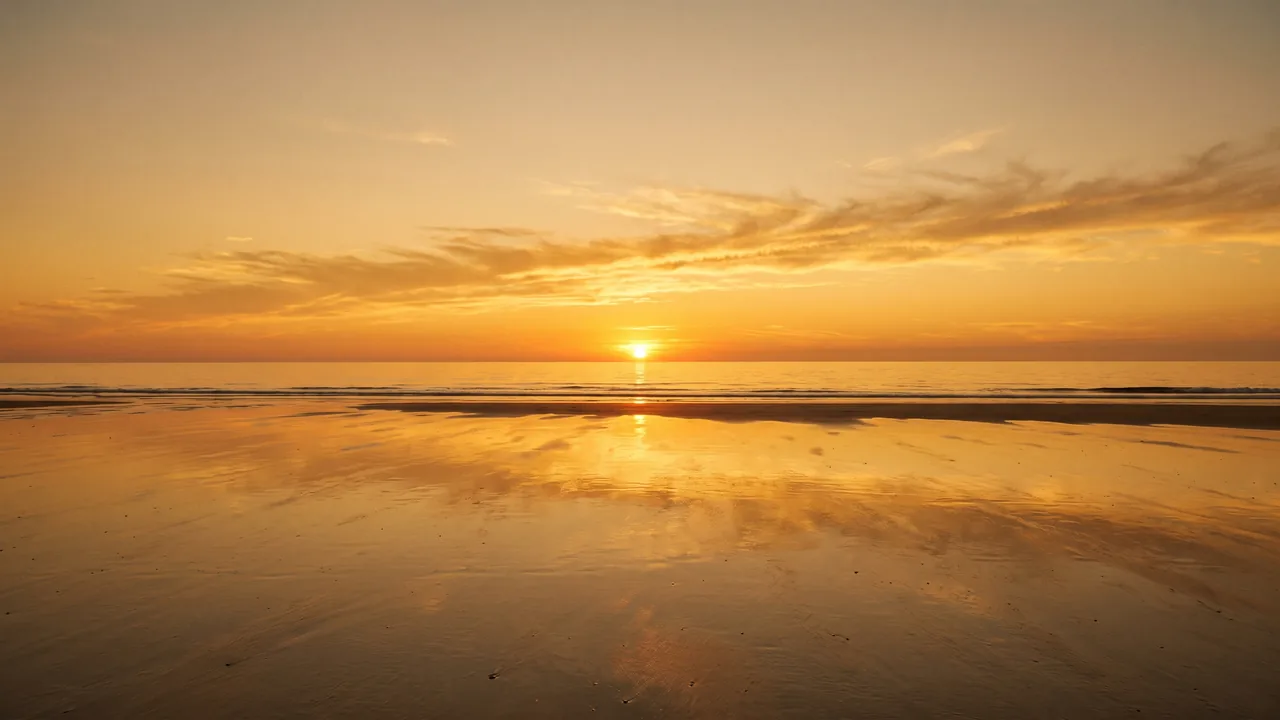
The market is well worth a visit, as it sets the pace for the resort. During the season, the seaside market brings together about a hundred vendors and captures the morning atmosphere of Canaules; while the summer night market extends the beach day with a vacation-like atmosphere, as farmers and artisans set up shop on the Esplanade de l’Europe. Between swims, it’s the best place to put together a picnic or find a souvenir.
Cycling also deserves a place on the itinerary. The Vélodyssée, the French section of EuroVelo 1, runs along the Atlantic coast and passes through Lacanau, while shorter trails connect the resort to the village and the lake through the forest. It’s the best way to avoid summer traffic jams and explore the town’s three distinct landscapes without getting back in the car. And to round out the day, the sunset over the ocean to the west remains the highlight that no one in Lacanau-Océan wants to miss—a final simple, free, and daily pleasure.
| Desire | Where / When | Good to Know |
|---|---|---|
| Surfing & Beginner Classes | The resort's 4 beaches and schools | Beginners: Head south |
| Lacanau Pro | Central Beach, mid-July | Free, very popular |
| Swimming | Lifeguard-patrolled beaches, between the flags | Watch out for rip currents |
| Market | Waterfront, sea. & Saturday morning | ~120 exhibitors (June–Sept.) |
| Night Market | Esplanade de l’Europe, Tue. & Thu. evenings | July–August |
| Bicycle | Vélodyssée & Trails to the Lake | Ocean → forest → lake |
Around Lacanau-Océan
Lacanau-Océan is a great base from which to explore the Médoc coast and the surrounding countryside. The nearest town is Lacanau itself, about a dozen kilometers to the east: the large lake, the Moutchic swimming area, the Cousseau Pond Nature Reserve, and the town’s historic center. All of this is covered in detail in the article on Lacanau, which provides an overview of the town as a whole.
Nearby ocean stations
Along the same stretch of sand, two other beach resorts extend the experience. To the north, about ten kilometers away, Carcans-Plage offers another supervised ocean beach and a renowned surfing spot, in a slightly wilder setting. To the south, Le Porge-Océan and its Gressier Beach mark the end of the Médoc coastline before the Arcachon Basin. Three resorts, the same Atlantic swell, three distinct atmospheres to compare from one beach to the next.
Beyond the coastline, Lacanau-Océan also serves as a gateway to the Médoc wine region to the east and to the Arcachon Basin further south. But the main attraction remains concentrated along this coastal strip, where the towns share similar surf conditions but differ in atmosphere. Comparing Lacanau-Océan, Carcans-Plage, and Le Porge-Océan is like exploring three distinct facets of the same sandy, wild coastline—from the liveliest to the most laid-back—all of which are lifeguard-patrolled and all subject to the same tidal currents.
| Destination | Distance from Lacanau-Océan | In a nutshell |
|---|---|---|
| The village of Lacanau (lake) | ~12 km | Lake, Cousseau Reserve, downtown |
| Carcans-Plage | ~10 km north | Ocean beach, surfing, rugged atmosphere |
| Le Porge-Océan | to the south | Gressier Beach, surfing spot |
How to get to Lacanau-Océan from Bordeaux
Getting to Lacanau-Océan from Bordeaux is easy: it’s about 53 kilometers and a 65-minute drive west, through the Médoc and the pine forest. From downtown Bordeaux, expect a trip of about 60 kilometers and a little over an hour, which is the time it takes to get out of the city. The resort is accessible via forest roads, leading directly to the waterfront and the beaches.
The drive itself has its own charm. After leaving the Bordeaux metropolitan area, the road winds its way into the Médoc, then through a pine forest, until it opens up onto the resort and the ocean. It’s a complete change of atmosphere in less than an hour—from the city to the beach, almost seamlessly. During peak season, only the last stretch, as you approach the waterfront, requires a bit of patience: traffic gets heavier the closer you get to the sand and the beachfront parking lots.
How much does the ride cost?
The Bordeaux → Lacanau-Océan route is available starting at €116 during the day for a sedan (1 to 3 passengers), at a fixed price confirmed in writing before departure, with no meter. A surcharge applies at night, on weekends, and on holidays; for groups of more than four people, a van will be provided, based on a quote. Pickup is at your address in Bordeaux or at Mérignac Airport, with door-to-door service all the way to the resort.
| Route | Distance / Duration | Rates |
|---|---|---|
| Bordeaux → Lacanau-Océan | ~57 km · ~65 min | starting at €116 |
| Town of Lacanau (Lacanau-City) | ~12 km from the resort | based on a quote |
| Bordeaux-Mérignac Airport | door-to-door | based on a quote |
Why hire a private driver?
The reason is very clear in the summer: at Lacanau-Océan, finding a parking spot is a real headache. Parking near the waterfront and beaches fills up by mid-morning during peak season, and during Lacanau Pro week, the entire resort is overrun with visitors. Being dropped off right at the entrance to the waterfront by a driver—without having to drive around looking for a spot or walk a kilometer in the sun—makes all the difference—especially when you’re carrying surfboards, beach bags, or kids.
A chauffeur service also means the peace of mind that comes with a fixed price known in advance, a return trip scheduled for the time of your choosing, and a ride where you can relax after a day of surfing and sun. The quote is provided in writing, with no obligation, and confirmed before departure.
Frequently Asked Questions
How much does it cost to travel from Bordeaux to Lacanau-Océan with an executive car service?
The Bordeaux → Lacanau-Océan route is available starting at €116 during the day for a sedan accommodating 1 to 3 passengers, at a fixed rate confirmed in writing before departure, with no meter. A surcharge applies at night, on weekends, and on holidays. For groups of more than four people, a van will be provided, based on a quote. Pickup is door-to-door, from your address in Bordeaux or Mérignac Airport, to the entrance of the resort and its beaches.
Is it safe to swim at Lacanau-Océan?
An ocean beach is never without risk. Swim only in the designated supervised area for the day, and follow the signs and instructions given by the lifeguards on duty. The coast is prone to rip currents—powerful outgoing currents that are the leading cause of drowning in the Atlantic. Pay attention to the flags and avoid areas of deceptively calm water, which are often the most treacherous. Outside of the designated times and supervised areas, there are no lifeguards stationed on the beach.
How many lifeguard-patrolled beaches are there in Lacanau-Océan?
Lacanau-Océan has four supervised ocean beaches, from north to south: the North Beach (the main beach, near the Surf Club), the Central Beach (the “Grande Plage” at Lacanau Pro), the South Beach (“Les Écureuils”), and the Super South Beach. Be aware of a common point of confusion: the town of Lacanau has six lifeguard stations in total, but only these four are located along the ocean. The other two monitor swimming areas on the lake (Le Moutchic and La Grande Escoure), which are not part of the ocean resort’s beaches.
What are the beach lifeguard hours?
During peak season—July and August—the ocean beaches of Lacanau-Océan are patrolled daily, generally from around 11 a.m. to 7 p.m. Lifeguard service begins earlier in the year, starting in early May, but only on weekends and during school breaks, and continues through September. Outside of these times, swimming is at your own risk. Check with local staff or the town office, as hours may vary depending on the weather and season.
What is a rip current, and why is it dangerous?
A rip current is a channel carved into the sand between two sandbars, connected to the ocean by a channel. It fills with water during high tide and then empties out to sea during low tide, creating a powerful outgoing current capable of dragging a swimmer out to sea in a matter of seconds. The danger lies in the fact that it appears as an unusually calm patch of water, with no waves, where one might think they are safe. The risk is greatest between mid-tide and low tide. It is the leading cause of drowning on the Atlantic coast.
What should you do if you get caught in a current?
If you find yourself in trouble, conserve your energy, signal for help immediately, and follow the instructions of the rescue team; if you are on the beach, alert the lifeguard station right away.
What dates had been announced for the Lacanau Pro 2026?
The 45th edition in 2026 was scheduled for July 8–14, with events taking place July 8–13. Visit the event’s official page for results and information on the next edition.
Where can I learn to surf at Lacanau-Océan?
Lacanau-Océan is one of France’s leading surf schools. Several accredited schools there offer instruction for all skill levels—from introductory lessons on foam waves to advanced training—using appropriate equipment and instructors who know how to read the sandbars and currents. Beginners are generally directed to the southern beaches and favorable tide windows. The Lacanau Surf Club, founded in 1968, is located in the Maison de la Glisse, on the waterfront, above the central beach.
What is the difference between Lacanau-Océan and Lacanau?
These are two distinct areas within the same municipality. Lacanau-Océan is the seaside resort on the Atlantic, with its four beaches, surfing, and waterfront lined with villas. Lacanau, on its own, refers to the municipality as a whole—including the town center (Lacanau-Ville), situated on the shores of the large freshwater lake, about a dozen kilometers inland. The two are connected by the D6 through the pine forest. This article focuses on the resort; for information on the town, the lake, and the forest, see the article on Lacanau.
How far is Lacanau-Océan from Bordeaux?
The drive from Bordeaux to Lacanau-Océan is about 53 kilometers and takes 65 minutes. From downtown Bordeaux, the distance is closer to 60 kilometers and takes a little over an hour, which includes the time it takes to drive through the metropolitan area and reach the Médoc. You reach it from the west, then take the forest roads that wind through the pine forest to the ocean. In the summer, the final stretch as you approach the waterfront can be slower due to heavy traffic and parking.
What is there to see along the Lacanau-Océan waterfront?
The waterfront still features the Belle Époque villas that gave rise to the resort: the name “Lacanau-Océan” appears in a municipal document from 1906, when the first houses began to emerge from the dunes. You can spot Villa Les Mouettes (1906), Villa Cerbère (1907), Villa Yora (1909) with its restored bell-shaped roof, Villa Les Dunes (1913), and Villa Beau Site. The municipality has marked out a route to explore them, the “Circuit des villas canaulaises.” The Esplanade de l’Europe and the seaside boulevard form the backbone of the promenade above the beach.
Is there a market in Lacanau-Océan?
Yes, the resort has a lively seaside market. During the high season, it takes place on Wednesday and Saturday mornings, from about 8 a.m. to 1 p.m., from June through September, with nearly 120 vendors. In July and August, there’s also a night market on Tuesday and Thursday evenings, from around 6 p.m. to 11 p.m., set up on the Esplanade de l’Europe. It’s the perfect place to put together a picnic between swims or extend your day at the beach in a vacation-like atmosphere. Days and times may vary from season to season.
Is it hard to find parking at Lacanau-Océan in the summer?
Yes, parking is one of the resort’s real pain points during peak season. Spots near the boardwalk and beaches fill up by mid-morning in July and August, and during the week of the Lacanau Pro in mid-July, the entire resort is overrun with visitors. This is one of the main reasons to get dropped off right at the waterfront: you avoid having to drive around looking for a spot and the long walk to the beach, carrying your boards and bags.
Further Reading
- Book your trip: direct transfer from Bordeaux to Lacanau-Océan, fixed price starting at €116, confirmed in writing and with no obligation. Request a quote.
- All our destinations from Bordeaux—ocean beaches, villages, and vineyards in the Médoc and Gironde regions.
- Lacanau: The Town, the Lake, and the Forest — an article about the municipality as a whole, beyond just the resort.
- Carcans-Plage — the neighboring seaside resort, about ten kilometers to the north.
- Le Porge-Océan — Gressier Beach and its surf spot, located to the south along the same sandbar.
Sources and References
- City of Lacanau — Lifeguard-Patrolled Beaches — 4 ocean beaches, lifeguard stations, hours of operation
- SNSM — Recommendations on Rip Currents — Safety Measures and Alerting Emergency Services, published on March 24, 2025
- World Surf League — Caraïbos Lacanau Pro — surfing competition, 45th edition, dates
- Gironde Tourism — Tour of the Villas of Canaules — Belle Époque villas, waterfront
- CNES Géoimage — Lacanau, coastal erosion — dunes, wooden fences, shoreline retreat
- Médoc Atlantique / Médoc Océan Tourist Office — markets, directions, events
Article published on .
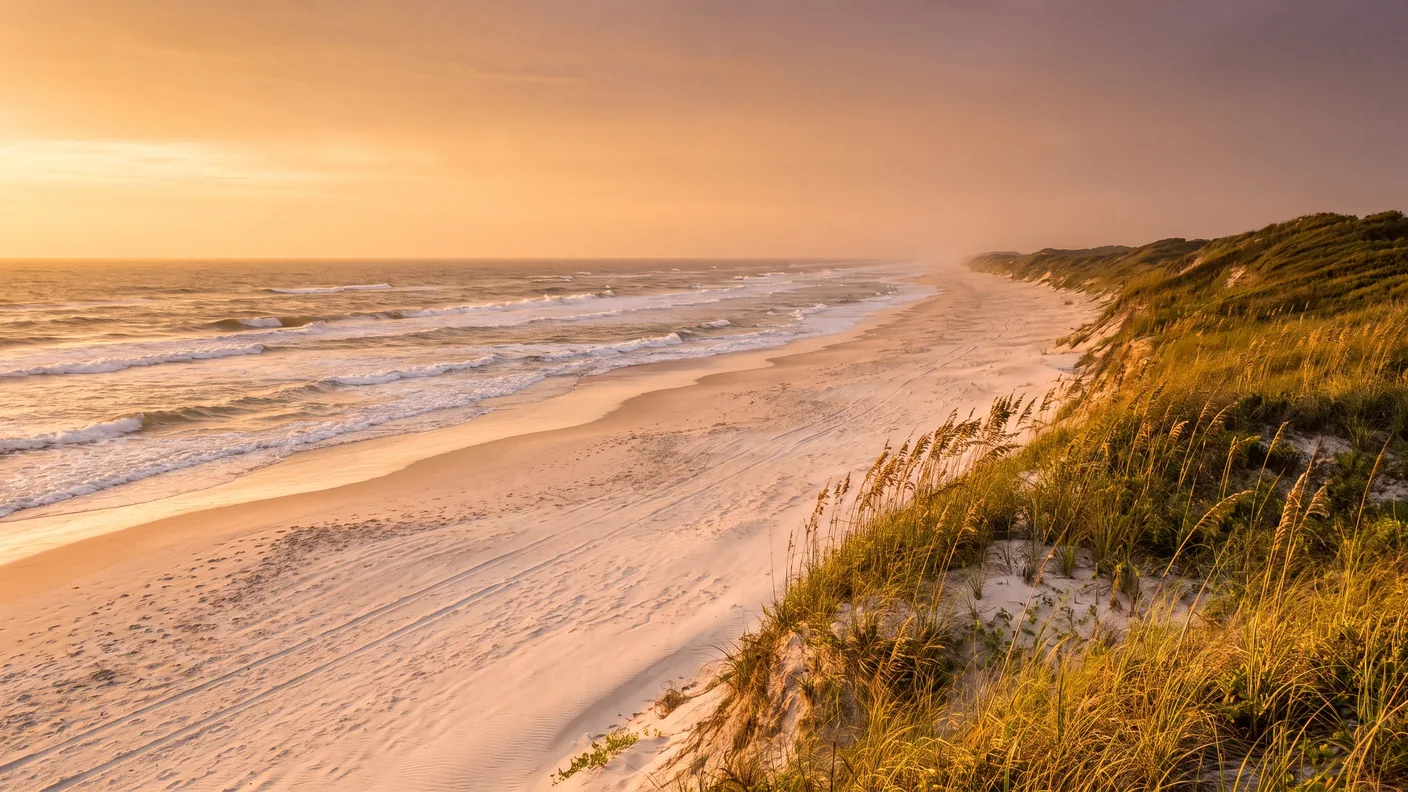
Off to the beach
Direct transfer from Bordeaux (~65 min) to the beaches and waterfront of Lacanau-Océan. Written, fixed-price quote with no obligation.