Bordeaux to Lit-et-Mixe: the Marensin and Cap de l’Homy
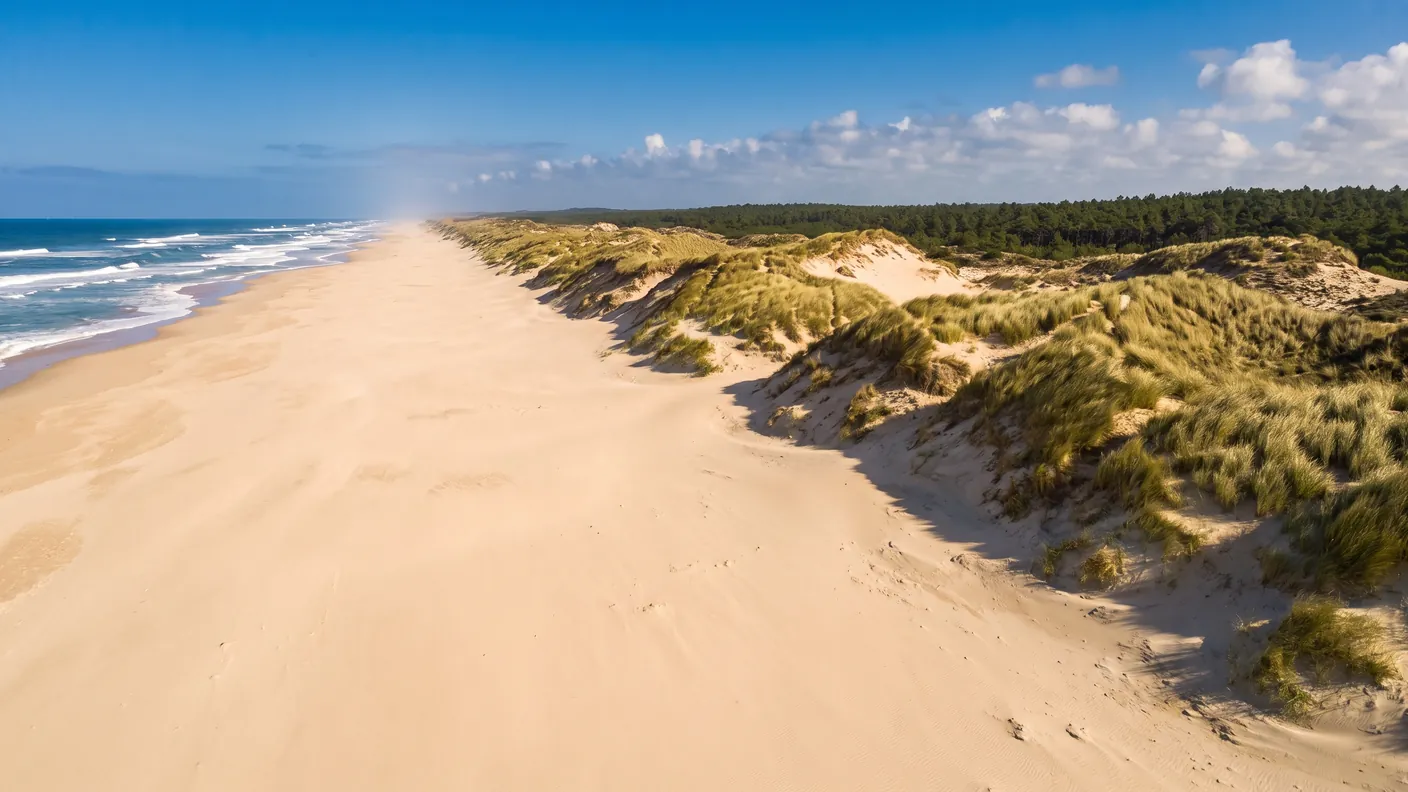
A region that is 92.7% forested, a wild beach at the edge of the forest, and the birthplace of the resin collectors’ union: Lit-et-Mixe brings together Cap de l'Homy, four angels atop a bell tower, a village swallowed up by the sands, and a free museum—all just 1 hour and 41 minutes from Bordeaux.
Lit-et-Mixe at a glance
Lit-et-Mixe brings together a village in the Marensin region, the Landes d'Antan Museum, and the secluded beach at Cap de l'Homy, accessible after an eight-kilometer drive through the forest. From Bordeaux, the drive to the village is 132 km and takes about 1 hour and 41 minutes. The private driver transfer starts at €227 one way, with a fixed price confirmed before booking.
Here are the key details to know before you go. The distance, duration, and price are based on the figures displayed by the website’s booking engine. Municipal data is sourced from INSEE, the Ministry of Culture’s POP databases, the town hall, the ONF, and the Côte Landes Nature tourist office. Event times and dates are subject to change and should be confirmed with the organizers.
| Landmark | Details |
|---|---|
| Village | Lit-et-Mixe (Landes), 1,719 residents of Litois (2023) |
| Location | Landes Coast, Marensin, between Saint-Julien-en-Born and Vielle-Saint-Girons |
| Singularities | 92.7% forest · Cap de l'Homy · the birthplace of the resin collectors' labor movement |
| Must-See | Cap de l'Homy Beach, Notre-Dame de Lit and her four angels, the Landes d'Antan Museum |
| Distance from Bordeaux | 132 km · about 1 hour and 41 minutes by car (A63, Castets exit) |
Where is Lit-et-Mixe located?
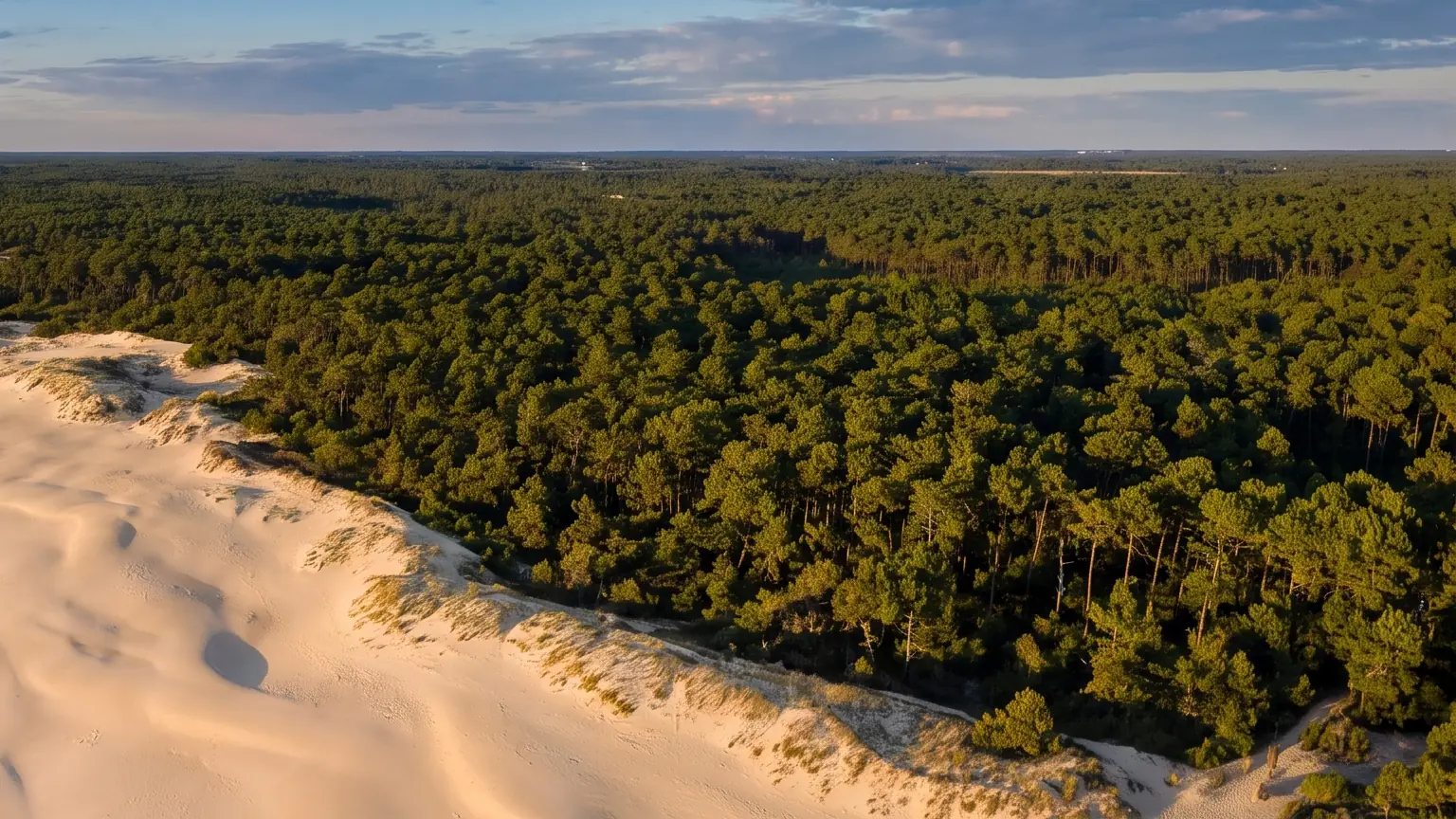
Lit-et-Mixe lies on the Landes coast, in the heart of the Marensin region, between Saint-Julien-en-Born and Vielle-Saint-Girons. The village is 132 km from Bordeaux, about 1 hour and 41 minutes via the A63 and the Castets exit. It had 1,719 residents in 2023 (Source: INSEE), known as Litois, or “lous Lités” in Gascon. It belongs to the Dax arrondissement, the Côte d’Argent canton, and the Côte Landes Nature community of municipalities. Its territory of 112.95 km² is 92.7% forest and semi-natural habitat. The 3,271-hectare state-owned forest is managed by the ONF. The village lies within it, while the seaside resort of Cap de l'Homy is reached after eight kilometres through the forest.
The Marensin, not the Born
Lit-et-Mixe belongs to the Marensin, a region traditionally known for its forests and ponds, and not in the Born region. The border follows the Contis Stream, a coastal river that marks the boundary with Saint-Julien-en-Born. Local place names reflect several interpretations related to water, sand, and passage. The private shuttle service from Bordeaux serves both the town and the beach, with no transfers required.
Cap de l'Homy, the beach at the edge of the forest
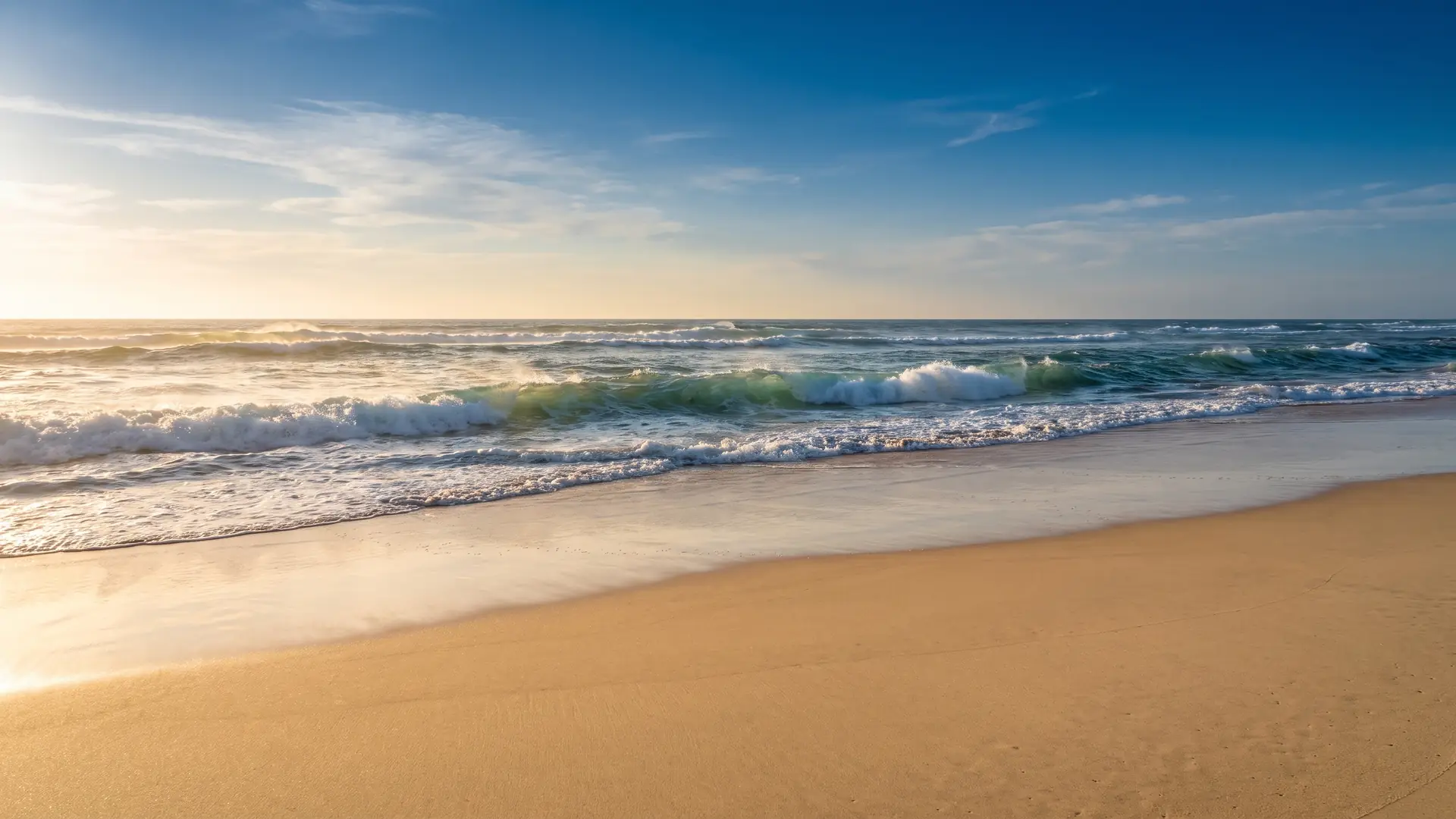
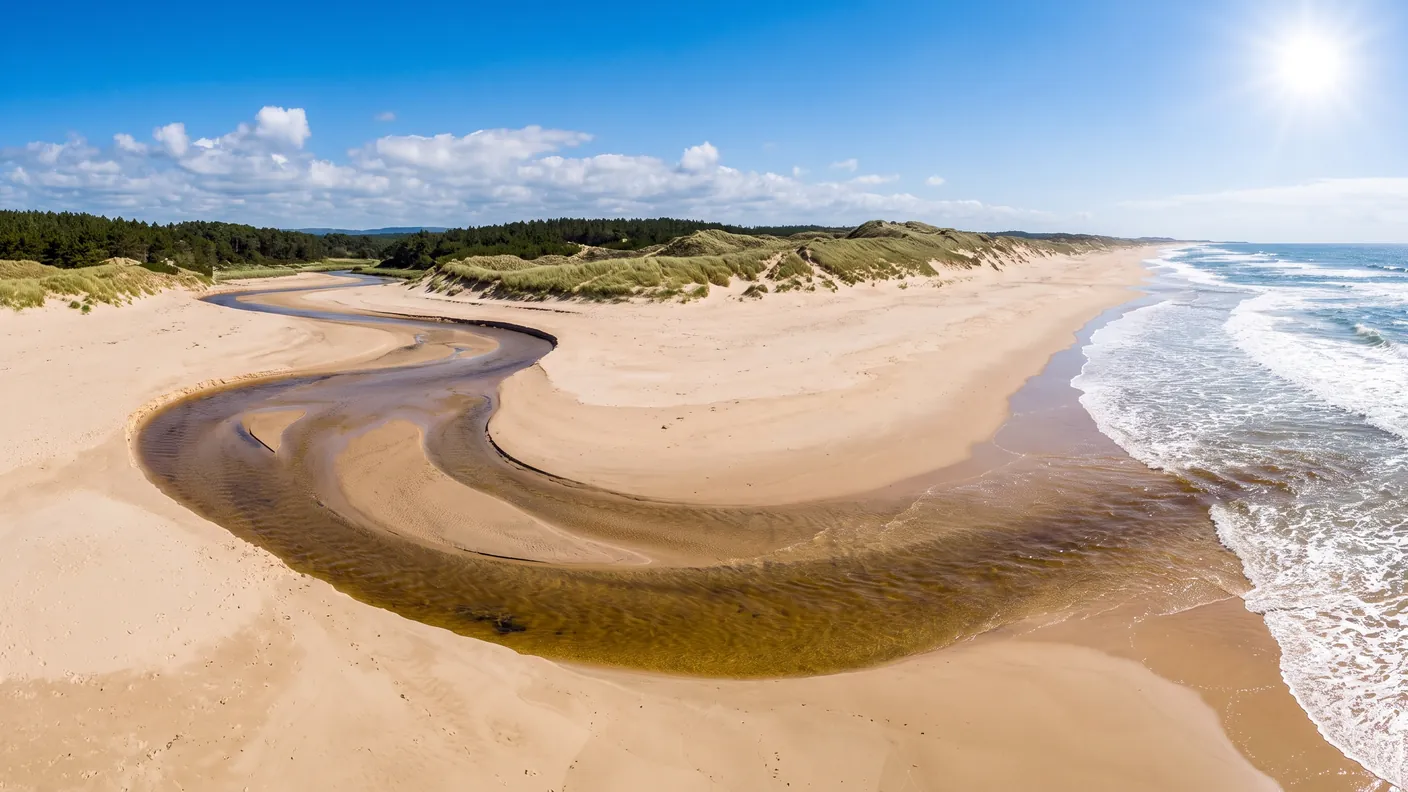
Cap de l'Homy is Lit-et-Mixe’s ocean resort, located at the end of an eight-kilometer stretch of forest. The beach is patrolled during the season and remains set back from the urbanized waterfront (official source). A municipal campground under the pine trees, two restaurants, and a convenience store round out the amenities.
A beach, waves, and almost nothing else
There's no boardwalk here: just the dune, the ocean, and the forest that ends right behind it. Cap de l'Homy Beach is patrolled during the summer season (first-aid station, showers, restrooms, from mid-June to mid-September according to the tourist office), and it is a well-known surf spot with three schools: Cap Surf Cool, located “on the dune at the supervised beach,” Esprit Océan, and Ocean Lovers. The Cap de l'Homy Municipal Campground, a 3-star site, has over 400 pitches and lodges spread across about 10 hectares of pine trees, just 400 metres from the beach, and opens from May through September. That is intentional: two restaurants, a small grocery store, the dune. For anyone looking for the Landes coast as it was before the resorts were built, it doesn't get much more authentic than this. As on all Atlantic beaches, swimmers should be alert to baïnes and stay between the flags; during the off-season, the beach once again becomes a magnificent expanse of sand.
The very name of the place is intriguing: “l’Homy” refers to this unassuming cape where the coastline—which runs straight for dozens of kilometers—takes a barely perceptible turn. Don’t expect to find any cliffs here: on the Côte d’Argent, a “cape” is defined by dunes, not rocks. What really stands out is the height of the dune ridge—among the most imposing along the Landes coastline—and the stark contrast between the shade of the pine forest and the dazzling sand. Regulars know this: the light at the Cape, reflected off the golden dunes, is unique—almost Mediterranean during the hottest hours of the day. It’s also a renowned spot for surfcasting outside the peak season, and a prime vantage point for watching the big autumn swells—when waves born off the coast of Ireland come to break on the Litois shoals.
Cycling from the village to the ocean
The ride from town to the beach is an adventure in itself: eight kilometers of forest bike path—it takes about ten minutes by car via the D88; the bike route intersects with the Vélodyssée (EuroVelo 1), which runs along the back of the dunes on the Mimizan-Plage → Léon leg (47 km). A marked dune-forest loop trail rounds out the offerings at Cap de l’Homy itself. This layout—the village inland, the beach at the edge of the forest—is the very essence of the Marensin region: it has protected the coastline from urbanization and makes every trip to the ocean a journey through a pine forest. The immediate neighbors follow the same pattern: the wild, undeveloped Lette Blanche Beach (Vielle-Saint-Girons), which is lifeguarded in July and August; and Contis-Plage (Saint-Julien-en-Born, 10.8 km), with its lighthouse. Enough to fill a week of beach days without ever seeing a single building—a luxury that has become rare on the Atlantic coast.
Four angels, a submerged village, and a bell from 1789
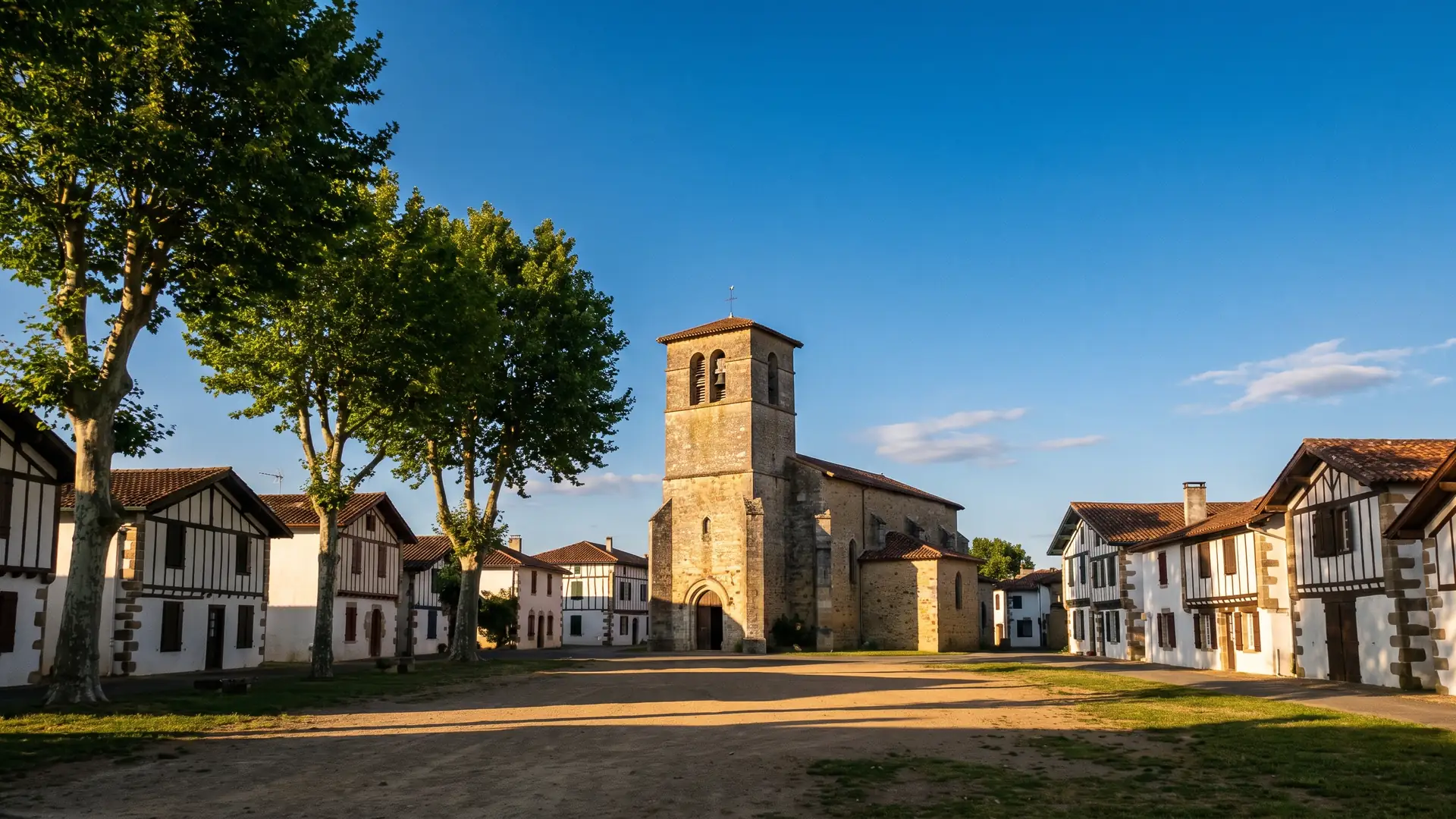
The two parishes, which were merged in 1825, each retained their own church: Notre-Dame de Lit, in the village, whose spire is guarded by four angels facing the cardinal directions, and Saint-Vincent de Mixe, rebuilt in the 17th century 2 km from the original church—which was swallowed up by the sand. Neither is a designated historic site, but their treasures are. Here are the verified facts.
Our Lady of the Bed and Her Four Angels
The village church, Our Lady of Lit, is a fortified medieval church. Sources vary between the 12th and the 15th centuries, so its dating calls for caution. Its bell tower, raised in the 19th century, received at the beginning of the 20th century a spire surrounded by four angels facing the four cardinal directions: the town’s signature silhouette, unique along the coast. Inside are carved wooden door panels from the 15th century, listed as historic objects, a 15th-century stone Pietà , and paintings by the Bordeaux artist François-Maurice Roganeau, whose 1920 work is dedicated to the town’s children who died in World War I. A note from a reliable guide: neither this church nor its sister church in Mixe are historic monuments; the town has none. Their protected objects are.
Saint-Vincent de Mixe and the Submerged Village
The Church of Saint Vincent of Mixe tells one of the Landes’ most distinctive stories: the current building, dating from the 17th century, was rebuilt two kilometres southeast of the old one, which was overtaken by encroaching sand. The hamlet is still called “Old Church”. This pattern of dunes engulfing church steeples stretches along the coast from Soulac to Mimizan, and Mixe bears the place-name trace of it. Its treasure is a bell cast in 1789 by the silversmith Rio Bernard, engraved “ST VINCENT PRAYS FOR NOVS… LAN 1789”. The bell was registered as a historic object in 2004 in the Palissy database and still rings today. Just a few steps away, Yons Spring, an iron-rich spring in the Mixe neighbourhood, is said to relieve stomach aches: a popular belief reported here as such. Two churches, two neighbourhoods, two histories: the town with the hyphen in its name truly lives up to its name.
This division is not merely an administrative detail: it still shapes local life. Lit, at the crossroads, has retained the town hall, the market, and the museum; Mixe, more agricultural, has kept its airials and its spring. The two neighborhoods, two kilometers apart, have long fostered a healthy rivalry—two festivals, two church bells, two histories—that the 1825 merger never quite erased. For visitors, this is a real treat: the stroll from one to the other, along paths shaded by oak trees, offers a glimpse of a pre-tourism Landes village—washhouses, airials, half-timbered farms—that the coastal resorts can no longer showcase. Allow about an hour on foot, or ten minutes by bike, to cross from one parish to another—and from one century to the next.
The Cradle of the Resin Collectors' Union
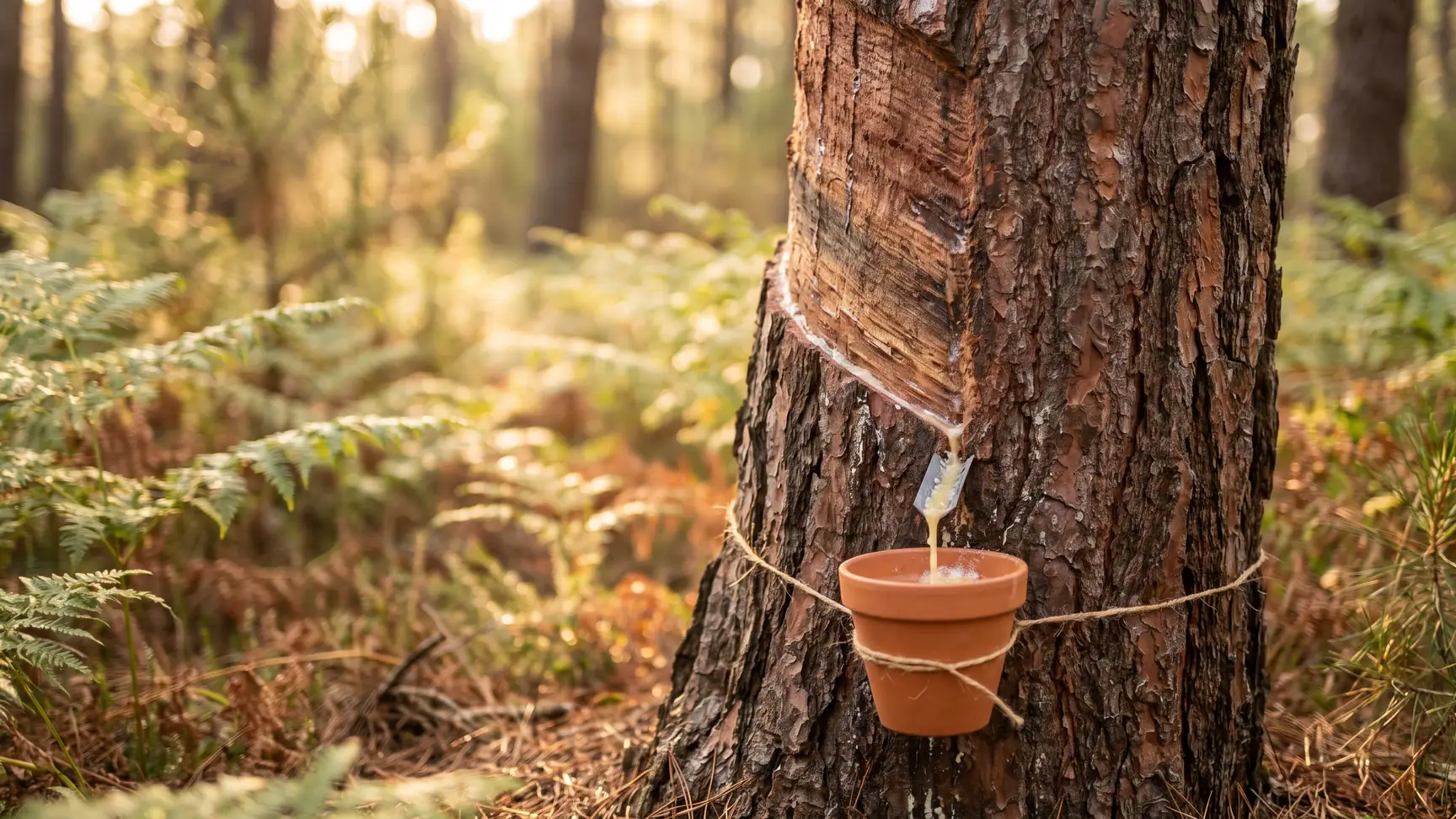
Lit-et-Mixe was a major center for resin tapping—the harvesting of pine resin—and the birthplace of the resin tappers’ labor movement: France’s very first resin tappers’ union was founded there in December 1905. A free museum, founded in 1987, brings this vanished world back to life through hands-on demonstrations. Here is the verified history.
December 1905: The resin collectors organize themselves
At the turn of the 20th century, the Landes Forest was an open-air factory: thousands of resin tappers cut into pine trees with the hapchòt, the local adze, and collected resin in clay pots for distilleries and turpentine factories. Conditions were harsh and incomes depended on market prices. In December 1905, resin workers in Lit-et-Mixe founded France's very first resin-tappers’ union, a few weeks before the major strike in the Marensin region (early 1906). The town became an epicentre of resin workers’ strikes, including the great strike of 1907, which left a lasting mark on the history of the Landes region. This social history, less well known than that of winegrowers or miners, has left a deep imprint on the village’s identity and is still passed down today: in the communal forest, former resin harvesters give resin-tapping demonstrations using the hapchòt, a precise and spectacular technique.
To grasp the significance of these struggles, one must imagine the pine industry at the height of its glory: at that time, resin from the Landes region was used to produce varnishes, soaps, glues, and pharmaceuticals throughout France, and global prices for rosin were set in Bordeaux. The resin collector worked on a piecework basis, paid by the barrel, and was often housed in an isolated airial in the middle of “his” pine grove. When prices plummeted, his family’s livelihood was thrown into turmoil, prompting the union upsurge of 1905–1907 that turned the Landes into a social laboratory watched by the entire country. Competition from American resins and later petroleum derivatives eventually brought an end to the trade over the course of the 20th century; all that remains are the gestures passed down through demonstrations and the healed gouges that a trained eye can still make out on old tree trunks in the forest.
The Landes d'Antan Museum: A Free Record of Marensin's History
The Landes d'Antan Museum showcases the rural heritage of the Marensin region. It highlights resin tapping, forestry work, fishing from a pinasse, and daily life in the 19th and 20th centuries. Admission is free, and it is open seasonally (official source); check the hours before your visit. The museum, the resin-tapping demonstrations, and the Anne-Marie pinasse together tell the story of the pine-forest economy.
A sea of pine trees before the ocean
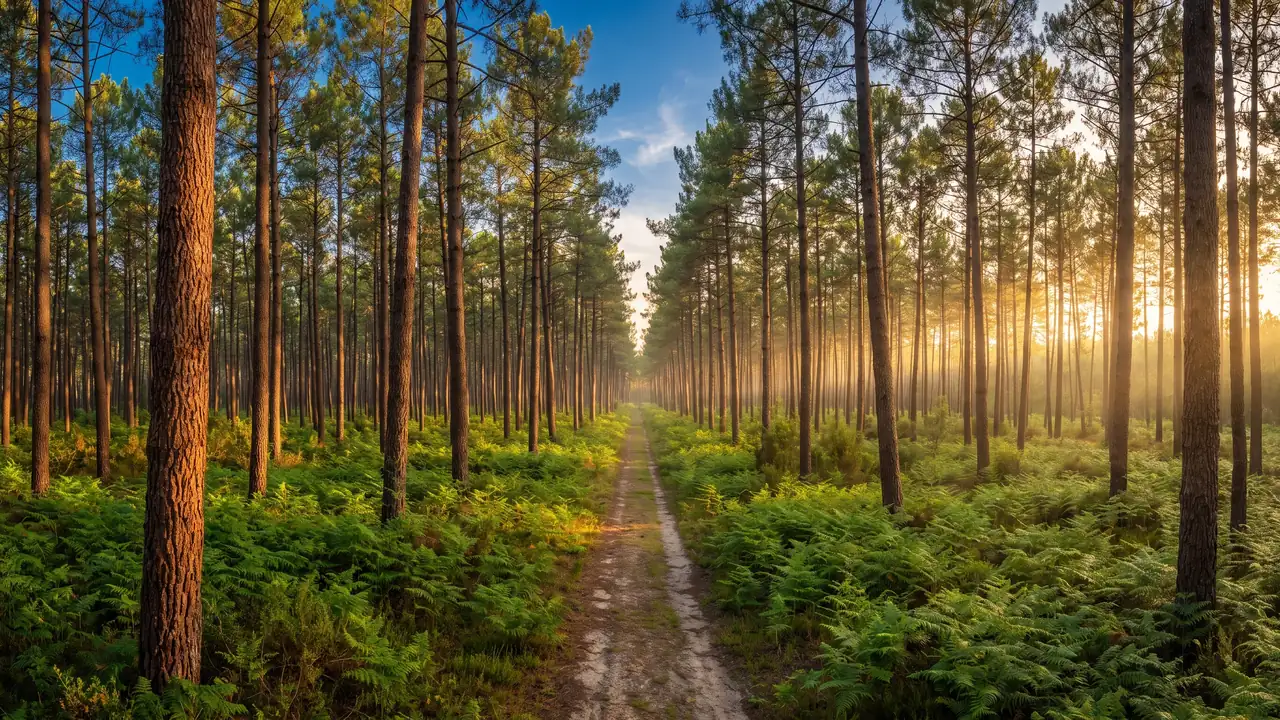
The forest is the true ruler of Lit-et-Mixe: 92.7% of the municipality’s 112.95 km² is covered by forests and semi-natural habitats, including the 3,271-hectare state-owned forest managed by the ONF. An ocean of pine trees to explore on foot, by bike, and to breathe in. That’s what the sources say.
Pines, Trails, and the Pigeon Plain
This figure is worth savouring: 92.7% of the territory consists of forests and semi-natural habitats (2018 land-use data), one of the highest proportions along the French coastline. At its heart lies the Lit-et-Mixe state forest, 3,271 hectares managed by the ONF under a management plan running through 2031, alongside communal woodland, where resin-tapping demonstrations take place, and private forests. This forest area is crisscrossed by a dense network of cycle paths and forest trails, including the 8 km route connecting the town to Cap de l’Homy, and by the Vélodyssée trail along the edge of the back dunes. To the north of the town, the Pigeon Plain, a Natura 2000-designated wetland, is home to rare orchids and protected birds, a precious counterpoint to the pine monoculture. Finally, be wary of the figure “10,850 hectares of communal forest” that circulates: it lacks a reliable source and confuses communal land with state-owned forest. The verified figure, 3,271 hectares of state-owned forest in a territory that is 92.7% forested, is more than enough to explain the area’s character.
Understanding the Landes Forest
This forest is not pristine wilderness: it is a man-made monument, planted beginning in the 19th century to stabilize the dunes and drain the marshes—the largest artificial forest in Western Europe. At Lit-et-Mixe, we read it like a history book: the regular rows speak of forestry, the plots of varying ages tell the story of logging and replanting, and the straight firebreaks serve as a reminder of the fear of wildfire—the very same threat monitored by the Messanges semaphore station, thirty kilometers to the south. Beneath the pines, the undergrowth of eagle ferns, gorse, and heather turns golden in the fall, the prime season for photography in the massif. Mushroom hunters search here for October porcini—respecting local customs—roe deer appear at dawn, and the sandy trails bear the tracks of wildlife far more often than those of humans. An ocean of pines, yes—but an ocean that has been tended for two centuries.
1827, Le Born, the historic church: what you often read
Several claims are circulating about Lit-et-Mixe that deserve to be corrected, with supporting sources—which is the whole point of a reliable guide. The date of the merger, the country, the protections, the bell tower: here’s what’s true and what’s false.
1825, the Marensin, and listed sites—but not the churches
First correction: The parishes of Lit and Mixe merged in 1825, during the Restoration—the “1827” date that is often cited has no source. Second: the town is in the Marensin, not in the Born region, which begins north of the Contis River. Third, and most common: “listed church.” In reality, Neither of the two churches is a historic landmark. — The municipality is not included on the list of historic monuments in the Landes department; the protections apply to objects: the carved door panels from the 15th century at Notre-Dame de Lit (listed) and the 1789 bell at Saint-Vincent de Mixe (listed in 2004, Palissy entry PM40000985).
Beware of homonyms that confuse compilers: the entries for “Saint-Vincent Church” in Preignac or Carcassonne, or the bells of Ychoux and Trensacq, have nothing to do with Lit-et-Mixe. And the bell tower with the four angels is the one at Notre-Dame de Lit, in the village—not Saint-Vincent’s, which has only a simple bell tower with a porch.
The renowned museum and the up-to-date local population
Other clarifications. The village museum is no longer called the “Musée des Vieilles Landes” but the “Musée Landes d’Antan”—and no source lists it as a “Musée de France”: do not claim that it is. The population is not “approximately 1,400–1,600 residents” but 1,719 (INSEE 2023), up 7%—the village is gaining residents, driven by net migration. The distance from the village to the beach varies depending on the route: approximately 8 km, about ten minutes by car—the coexisting figures of “7 km” and “10 km” come from different measurement points.
The date of the “Spire of the Angels” is disputed, with sources citing either 1904 (City Hall) or 1906 (Wikipedia); it is therefore safest to date it to the early 20th century. Finally, the market does not have a single weekly day: it takes place on Thursday and Sunday mornings year-round, expanding to five mornings a week during the summer, with Thursday Night Events in July and August. These details are what set a verified guide apart from a copied text.
What is there to do at Lit-et-Mixe?
At Lit-et-Mixe, you can swim and surf at Cap de l'Homy, visit the Landes d'Antan Museum free of charge and watch its resin-tapping demonstrations, cycle the 8 km through the forest between town and beach, visit the Thursday or Sunday market, and climb the 192 steps of Contis Lighthouse, just ten minutes away. The village combines the wild ocean with the legacy of the pine forest, with Thursday evening events in summer. Here are the verified activities, along with their days and locations.
- Cap de l'Homy Beach — lifeguarded during the summer season; three surf schools (Cap Surf Cool, Esprit Océan, Ocean Lovers)
- The Landes d'Antan Museum — Rue de l'Église, free admission, open in the summer: resin tapping, pinasses, rural life in the Marensin region
- Tapping demonstrations—using the hapchòt method, by former resin collectors, in the community forest
- The market—Thursdays and Sundays in the morning year-round; five mornings a week and Thursday evening hours (7:00 p.m.–11:30 p.m.) in July and August
- The Bourg-Plage Trail — an 8-km bike ride through the forest, crossing the Vélodyssée behind the dunes
- The Contis Lighthouse—the only lighthouse in the Landes region, 10.8 km from Saint-Julien-en-Born: 41.50 m, 192 steps, open to visitors
- Canoeing on the Contis River—a descent from Saint-Julien-en-Born on the Marensin, the river that forms the border
- The local festival on August 15—featuring the blessing of the "Anne-Marie," a traditional boat made of pine from the Landes region
Summer Markets, Festivals, and Evening Events
The Lit-et-Mixe market follows the rhythm of the seasons: Thursdays and Sundays in the morning year-round, then five mornings a week (Tuesdays, Wednesdays, Thursdays, Saturdays, and Sundays, 8:30 a.m.–1:30 p.m.) from July 7 to September 6, 2026. The most popular event remains the Thursday night market, from 7:00 PM to 11:30 PM in July and August: farmers, artisans, and summer dining tables in the town center, with that unique village-square atmosphere that the coast is known for. The local festival in mid-August—four days centered around the 15th, featuring Landes-style bull runs, bandas, and dances depending on the year—culminates with the blessing of the Anne-Marie pinasse; detailed schedules can be confirmed at city hall. Add the “toro de fuego” from the neighboring Gascon evenings, wine tastings at the nearby Vignoble des Sables, and the summer calendar fills up effortlessly—all on a human scale, far from the crowds of Hossegor.
The Perfect Day in Litois
Start with the town market on Thursday or Sunday, then visit Notre-Dame de Lit to see the four angels and the paintings by Roganeau. Continue on to the Landes d'Antan Museum, which offers free admission. In the afternoon, head to Cap de l'Homy for the beach. At the end of the day, choose between the Contis Lighthouse or the Old Church of Mixe and its Yons Spring. On Thursdays in the summer, the night market extends your visit.
| Activity | Where / When | Good to Know |
|---|---|---|
| Cap de l'Homy Beach | about 8 km from the town | Supervised during the season; 3 surf schools |
| Landes d'Antan Museum | Church Street, in the summer | Free admission; resin-tapping demonstrations |
| Market | Thu. + Sun. mornings (5 days/week in the summer) | Late-night hours on Thursdays, 7:00 p.m.–11:30 p.m., in July and August |
| Contis Lighthouse | Saint-Julien-en-Born · 10.8 km | 41.50 m, 192 steps, designated a Historic Monument (2009) |
| Canoeing | Contis Stream | Departure from Saint-Julien-en-Born |
| Bicycle | Bourg-Plage Trail, 8 km + Vélodyssée | Marked trail through the forest to Cap de l’Homy |
What to see nearby: Contis, Léon, Mimizan
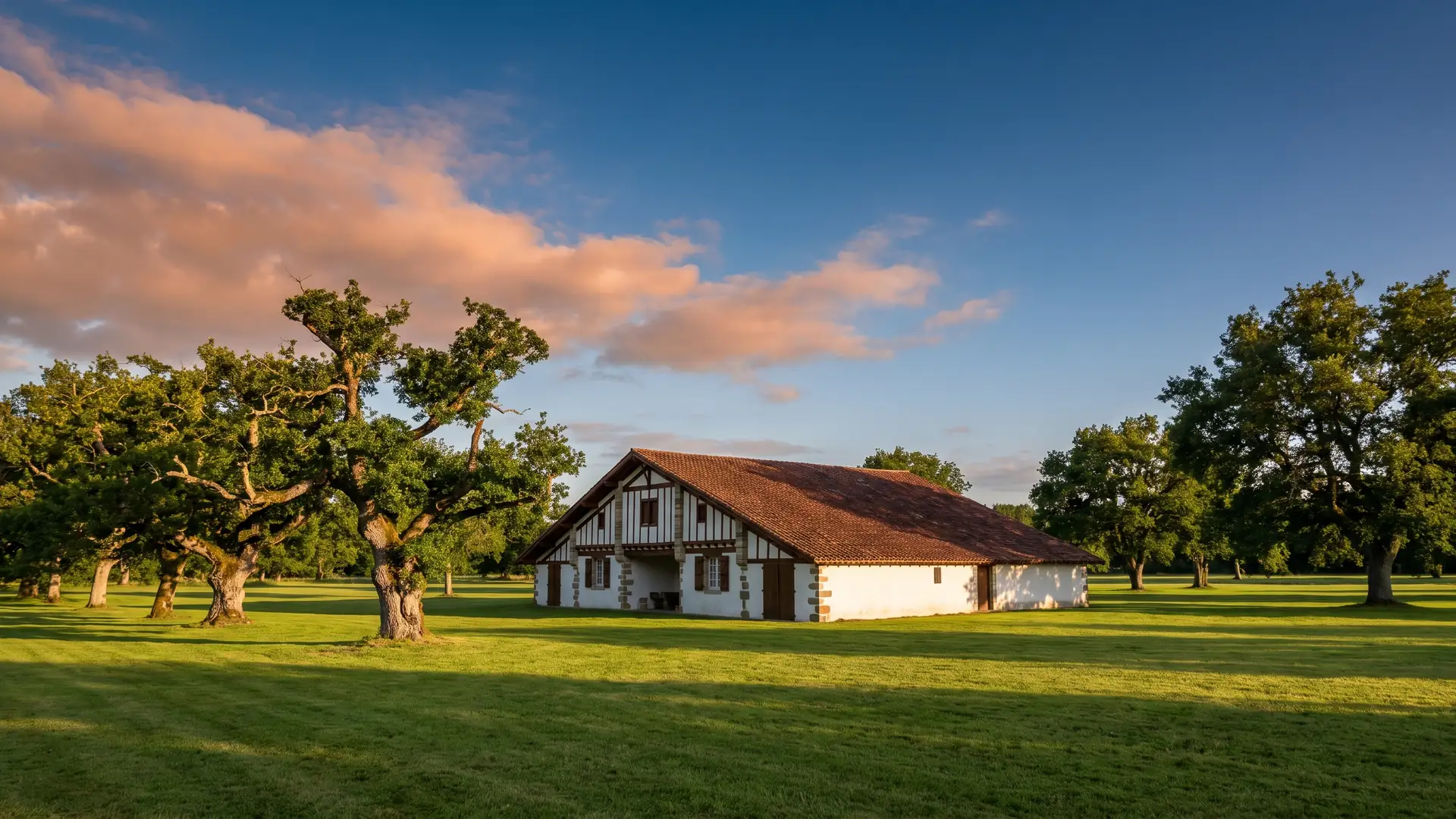
Lit-et-Mixe is a great base: the Contis Lighthouse is 11 km away, Léon and the Huchet Current are 21 km away, Mimizan is 22 km away, Castets is 24 km away, and Dax is 55 km away. The rugged northern coast of the Landes region is right on its doorstep. Here are the verified distances.
The only lighthouse in the Landes and "Little Amazonia"
The local star is the Contis Lighthouse, in the neighboring town of Saint-Julien-en-Born: the the only lighthouse in the Landes department, lit during the night of December 19–20 1863 — 41.50 meters, 192 steps, designated a Historic Monument in 2009, and this astonishing double black spiral "in the shape of an Archimedes screw" Painted in 1937 to serve as a daytime landmark. It is open to visitors during the season: the view takes in the entire Marensin region, from the dune to the sea of pine trees. Below, the Contis Stream You can canoe down the river from Saint-Julien.
Further south, Léon (21 km) is home to its pond and the starting point of the Huchet River’s sandbars—the “little Amazon of the Landes”— a 618-hectare nature reserve whose mouth at Moliets is the only one in the Bay of Biscay that has not been stabilized: see our guide to Moliets-Plage. To the north lies Mimizan with its bell tower; to the east, Castets, the gateway to the region; and finally, to the south, the coastal resorts—Vieux-Boucau, Hossegor—and Dax, known for its thermal springs: see our guide to Dax.
| Destination | Distance / time from the town center | Must-See |
|---|---|---|
| Contis-Plage | 10.8 km · 21 min | The only lighthouse in the Landes region, the Contis Current |
| Léon | 21.1 km · 29 min | the pond, the rapids of the Huchet River |
| Mimizan | 21.8 km · 35 min | beaches, bell tower with porch |
| Castets | 24.3 km · 32 min | Gateway to the Côte Landes Nature Region |
| The White Letter | ~12 km · 15 min | unspoiled beach with no buildings (Vielle-Saint-Girons) |
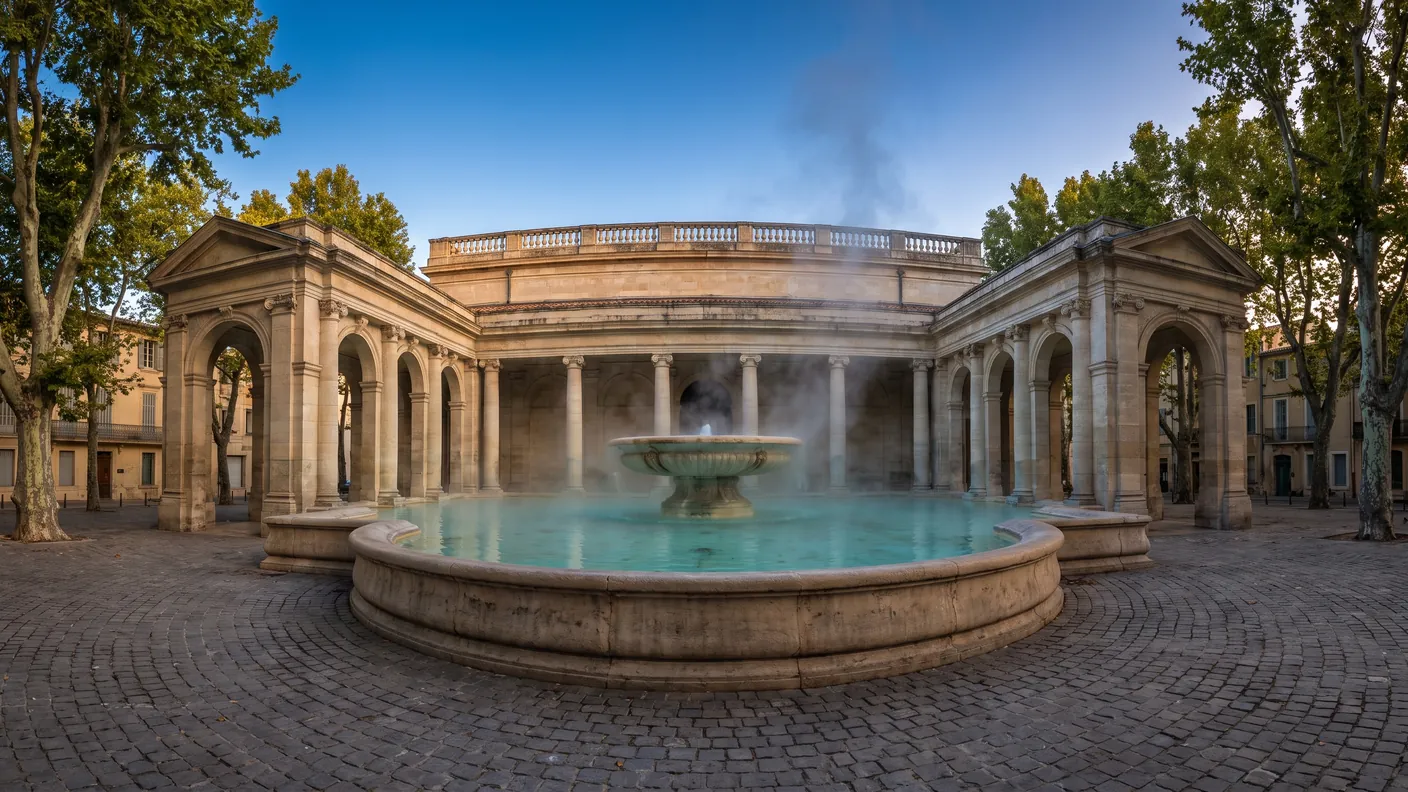
| Dax | 54.6 km · 59 min | Fontaine Chaude, thermal baths, amphitheater (TGV station) |
When should you visit Lit-et-Mixe?
Cap de l'Homy Beach is patrolled during the summer season; the Landes d'Antan Museum is open in the summer; the markets are held five mornings a week from July 7 to September 6, 2026; and the local festival reaches its peak in mid-August: the heart of the year in Litau runs from June to September. Here is the verified calendar.
| Season | What's in Store for You |
|---|---|
| Spring (April–June) | A forest in full bloom, bike trails all to yourself, the ocean coming to life, municipal campground open starting in May |
| Summer (July–August) | Supervised beach, market 5 mornings a week + Thursday night market, museum open, tree-tapping demonstrations, August 15 festival |
| Fall (Sept.–Oct.) | Seasonal swells for surfers, golden forest, markets on Thursdays and Sundays |
| Winter | the authentic forest village, deserted beaches, and high tides at the Cape |
Seasonal Tip
To truly experience the spirit of Lit-et-Mixe, aim for August 15: the local festival is in full swing, the Anne-Marie sailboat is being blessed, and the village reveals its two sides—Gascon and seaside. Those seeking tranquility will prefer June or September: accessible beaches, deserted forest trails, and authentic markets. Summer brings out the seasonal hustle and bustle, but with a restraint rarely seen on this coast: Cap de l’Homy, with no boardwalk or high-rises, fills up quickly with parked cars but never with concrete—arriving by car service solves the problem. Winter, finally, belongs to hikers and seasoned surfers: 92.7% forest all to yourself, a wild ocean, and the museum closed—but the four angels on the bell tower watch over the village all year round. A useful tip for everyone: the market schedule (Thursday through Sunday in winter, almost daily in summer) is the best barometer of the village’s rhythm.
How much does the trip cost, and how do I get there?
A private transfer from Bordeaux to Lit-et-Mixe starts at 227 € one way for a 132 km trip that takes about 1 hour and 41 minutes. The fixed price is provided in advance. Without a car, the nearest train station is Morcenx, 40 km away; the final leg of the journey is by road.
By car from Bordeaux
The route follows the Bordeaux bypass, the A63 southbound, the Castets exit, and then the D42. The website’s calculator shows 132 km and approximately 1 hour and 41 minutes to the village. The road to Cap de l'Homy then continues through the forest. With a chauffeur service, the trip is door-to-door from your home, Mérignac Airport, or Saint-Jean station. The listed price starts at 227 € and is confirmed before the ride.
Without a car: Morcenx or Dax, then by road
Lit-et-Mixe does not have a train station. The closest stop on the Bordeaux–Dax TER line is Morcenx-la-Nouvelle (~40 km, 44-minute drive), and TGVs serve Dax (~55 km); in both cases, you’ll need to finish the trip by car, as there’s no convenient public transportation to the coast. For travelers with a lot of luggage—such as families, surfboards, or bicycles—the smoothest option is still a private transfer all the way from Bordeaux, or taking the train to Dax followed by a driver for the final third of the journey. Once there, cycling reigns supreme: the 8-km forest trail connects the village to the beach, the Vélodyssée runs behind the dunes, and the network of trails in the massif serves both Contis and La Lette Blanche. The Marensin formula is consistent: you plan your trip there, and you spend your stay cycling—and that’s just the way it should be.
One last tip from someone who’s been there: In July and August, aim to arrive before 11 a.m. or after 6 p.m.—the D88 toward Cap de l’Homy and its terminal parking lot get packed during peak beach hours, and being dropped off right at the foot of the dune becomes a much-appreciated perk. During the off-season, the forest road is all yours—deer and all—and it’s one of the most beautiful stretches of the Atlantic coast.
| Option | Duration | What You Need to Know |
|---|---|---|
| Executive car service (Door-to-Door) | about 1 hour and 41 minutes | €227 (1–3 people), fixed price, 7-passenger van available upon request |
| Personal car | about 1 hour and 41 minutes | A63, take the Castets exit, then the D42; the Cap parking lot is full in August |
| TER Bordeaux → Morcenx + by car | ~1 hr + 44 min | 40 km remaining without public transportation |
| TGV from Bordeaux to Dax + drive | ~1 hr + 59 min | 55 km remaining; limited taxis and shuttles |
Frequently Asked Questions
Where is Lit-et-Mixe located?
Lit-et-Mixe is a large forest village on the Landes coast, in the heart of the Marensin region. As of 2023, it has a population of 1,719 and covers an area of 112.95 km², 92.7% of which is forested. From Bordeaux, the drive to the village is 132 km and takes about 1 hour and 41 minutes. Cap de l'Homy Beach is eight kilometers further on.
What is Cap de l'Homy?
This is the Lit-et-Mixe ocean resort, located about 8 km from the town at the end of a forest road: a wild beach that’s patrolled during the summer season, a 3-star municipal campground under the pine trees (400 m from the sand), two restaurants, a small grocery store—and that’s it, by design. Three surf schools operate there (Cap Surf Cool, Esprit Océan, Ocean Lovers) at a well-known spot. It’s one of the most unspoiled beaches on the Landes coast, with no boardwalk or high-rises.
Why is Lit-et-Mixe called that?
The name combines two former parishes, Lit and Mixe, which were merged in 1825 during the Restoration. There are two interpretations of the place name: according to Wikipedia, “Mixe” comes from the Gascon word mescle (referring to the mixture of fresh and salt water in the Contis marshes) and “Lit” from lède (a wet depression between the dunes) or from the Latin litus, meaning “shore”; the town hall favors the “littus” theory and links Mixe to Mosconum, a stop on the Roman road to Spain. Each neighborhood has retained its own church—Notre-Dame in Lit, Saint-Vincent in Mixe.
How much does a trip from Bordeaux to Lit-et-Mixe cost with a chauffeured transfer?
A private transfer from Bordeaux to Lit-et-Mixe starts at €227 one way, with a fixed price provided before the trip. The trip covers 132 km and takes approximately 1 hour and 41 minutes via the A63 and the Castets exit. The service connects a residence, Mérignac Airport, or the Saint-Jean train station to the town center or Cap de l'Homy.
What is there to do at Lit-et-Mixe?
Swim and surf at Cap de l'Homy (beach patrolled during the season, three surf schools), visit the Landes d’Antan Museum for free and watch demonstrations of resin tapping at the hapchòt, bike the 8 km forest trail between town and beach, visit the market (Thursday and Sunday mornings, almost daily in summer, late-night market on Thursday evenings in July and August), climb the 192 steps to the Contis Lighthouse—just ten minutes away—canoe down the Contis River, and experience the local mid-August festival with the blessing of the pinasse Anne-Marie.
What is sap collection?
Harvesting resin from maritime pines: the resin collector cuts into the bark with a hapchòt (a traditional Landes adze) and collects the sap in a jar; it is then distilled into turpentine and rosin. This industry sustained the Landes region until the mid-20th century—and Lit-et-Mixe was a major hub for it: France’s very first resin harvesters’ union was founded there in December 1905, before the major strikes of 1907. Demonstrations are still held in the communal forest, and the Landes d’Antan Museum tells the whole story.
Are the churches in Lit-et-Mixe listed as historic landmarks?
No—and this has been verified: the municipality has no historic monuments. The protected items are specific objects: the 15th-century carved wooden door panels of Notre-Dame de Lit (listed) and the 1789 bell of Saint-Vincent de Mixe, cast by Rio Bernard and listed in 2004. Notre-Dame de Lit, a medieval church with defensive features, is particularly notable for its spire guarded by four angels facing the cardinal directions (early 20th century) and its paintings by the Bordeaux artist François-Maurice Roganeau.
What is the sunken village of Mixe?
The current 17th-century Saint-Vincent Church in Mixe was rebuilt two kilometers southeast of the original church, which had gradually been swallowed up by the advancing sand—the area is still known as “Vieille Église” (Old Church). This is a common occurrence in the Landes region: before the dunes stabilized in the 19th century, shifting sand engulfed or forced the relocation of several coastal villages. Mixe preserves this memory in its place name, and its bell from 1789—engraved with “ST VINCENT PRIES POUR NOVS”—rings out in the rebuilt church.
Can you visit the Contis Lighthouse from Lit-et-Mixe?
Yes, it’s 10.8 km away (about 20 minutes)—but it’s in the neighboring town of Saint-Julien-en-Born, a detail that’s worth noting. It is the only lighthouse in the Landes department: lit in December 1863, 41.50 meters tall (192 steps), listed as a Historic Monument in 2009, and recognizable by its double black “Archimedes’ screw” spiral painted in 1937 to serve as a daytime landmark. It is open to visitors during the season, and the view from the top takes in the dune, the ocean, and the vast Marensin Forest.
On what day is the Lit-et-Mixe market held?
All year round on Thursday and Sunday mornings. In the summer (July 7 through September 6, 2026), the schedule expands to five mornings a week—Tuesday, Wednesday, Thursday, Saturday, and Sunday, from 8:30 a.m. to 1:30 p.m.—and, most importantly, the town comes alive with Thursday night markets, from 7:00 p.m. to 11:30 p.m. in July and August: farmers, artisans, and summer dining tables—the authentic atmosphere of a Gascon village. The market schedule is the best barometer of life in Litau.
What is the closest train station to Lit-et-Mixe?
Morcenx-la-Nouvelle is located about 40 km away, on the Bordeaux–Dax TER line; the nearest TGV station is Dax. In both cases, a short drive to the coast is still required. A direct trip from Bordeaux covers 132 km in about 1 hour and 41 minutes, starting at 227 €. Once there, an eight-kilometer forest trail separates the town from the ocean.
When is the best time to visit Lit-et-Mixe?
From June through September for the lifeguard-patrolled beach at Cap de l'Homy and the museum’s opening hours; in mid-August for the local festival and the blessing of the Anne-Marie pinasse; in July and August for the nearly daily markets and Thursday evening night markets. The off-season months offer the forest and the ocean all to yourself; in winter, the village returns to its purely forested character—92.7% pine trees, deserted beaches, and high tides at Cap de l'Homy. Surfers will want to visit in the fall, the prime season for the Landes swell.
Further Reading
- The Gateway to the Region: See the Castets Guide (ironworks, the Camino de Santiago, and pine chemistry, 24 km away)
- The Wild River: See the Moliets-Plage Guide (mouth of the Courant d'Huchet and Galupes, 30 min away)
- Wine from the Dunes: see the Messanges Guide (Vignoble des Sables and Sémaphore, 35 min away)
- The spa town: see the Dax Guide (Fontaine Chaude, the arena, and the peloid spa, 55 km away)
- Book your trip: book online or browse all our destinations
Sources and References
- INSEE — Population of Lit-et-Mixe — 2023 Municipal Reference Population
- Lit-et-Mixe Town Hall — Heritage, Markets, and Tapping Demonstrations
- POP Palissy — bell from 1789 — bell from Saint-Vincent de Mixe cast by Rio Bernard, listed as a historic monument (MH) under the “object” category on December 14, 2004 — no historic monuments (MH) classified as buildings in the municipality
- ONF — Lit-et-Mixe State Forest — 3,271 ha managed by the National Forest Service, 2012–2031 management plan
- Lit-et-Mixe City Hall — Cap de l'Homy Beach — official information about the beach and its lifeguard services
- Lit-et-Mixe Town Hall — Landes d'Antan Museum — Collections, Free Admission, and Hours of Operation
- Wikipedia — Contis Lighthouse — the only lighthouse in the Landes region (Saint-Julien-en-Born): lit in December 1863, 41.50 m, 192 steps, designated a historic monument in 2009, “Archimedes screw” spiral staircase (1937)
- Cap de l'Homy Municipal Campground — 3-star, ~10 ha under pine trees, 400+ campsites and lodges, 400 m from the beach, open May–September
Article updated in July 2026.
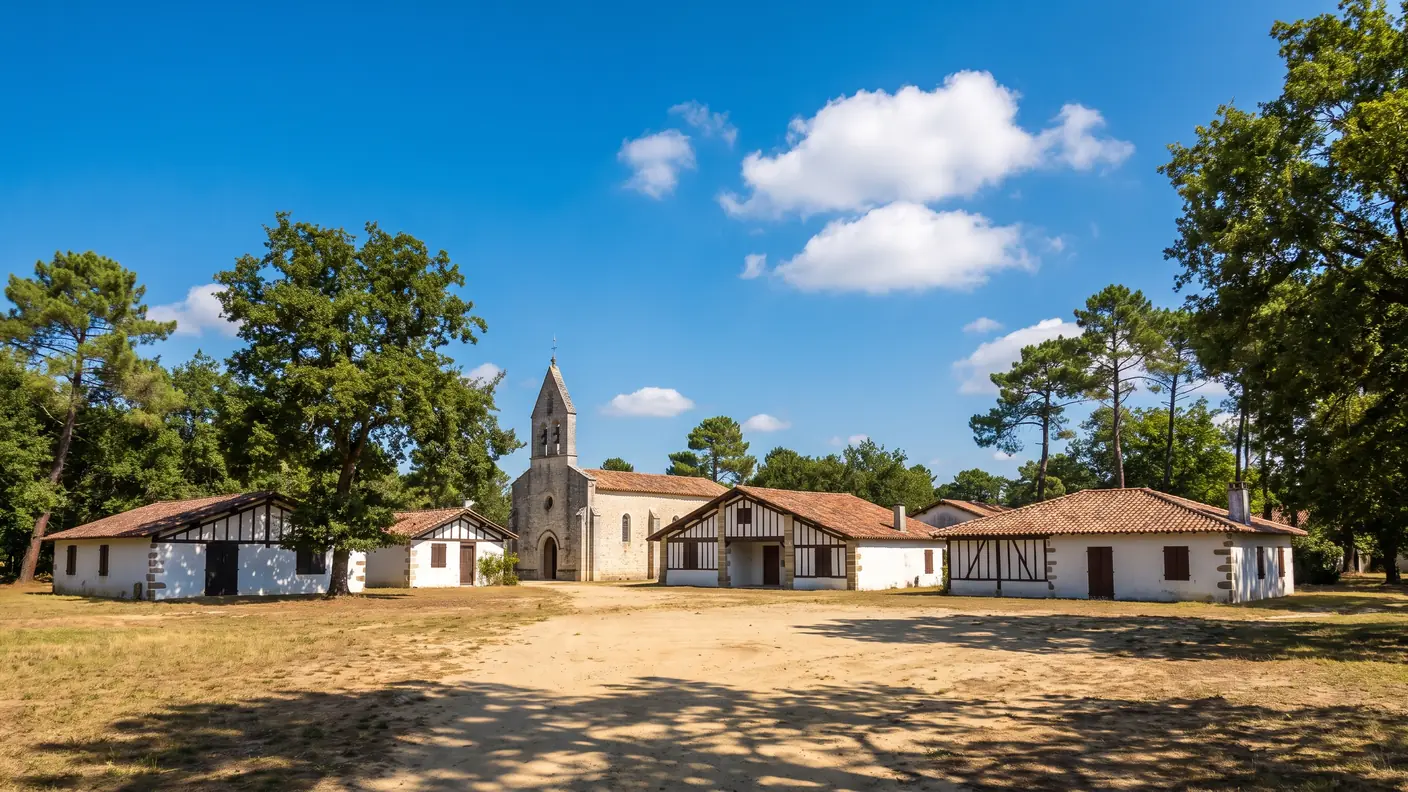
On the Way to the Grande Dame du Marensin
Direct transfer of 132 km from Bordeaux to Lit-et-Mixe, taking approximately 1 hour and 41 minutes via the A63. Fixed price starting at €227 one-way, confirmed before departure.