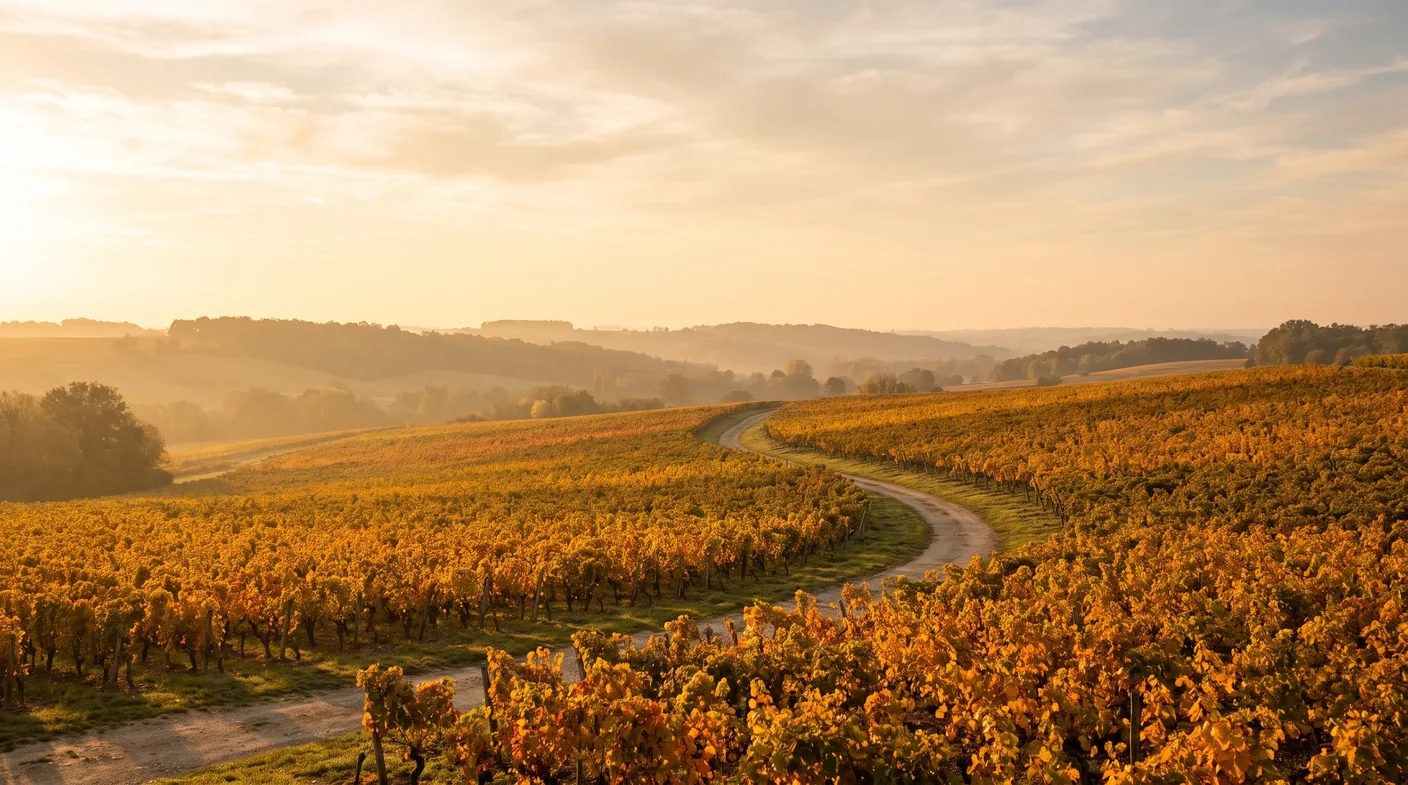
Bordeaux to Sauternes: the gold of sweet wine
The village that gave its name to the world’s greatest sweet white wine. Here, the morning mist from the Ciron River sweetens the grapes, Château d’Yquem has reigned supreme since 1855, and the grapes are harvested one by one—a tiny terroir south of the Garonne River, less than an hour from Bordeaux.
Sauternes at a Glance
Sauternes is a small wine-growing village in southern Gironde, known for its sweet white wines. The Ciron River contributes to a microclimate favorable to noble rot, while Château d’Yquem stands alone as a Premier Cru Supérieur in the 1855 classification. From Bordeaux, the posted distance is 56 km, 55 minutes, and starting at 107 € in the Eco class.
The grapes are harvested by hand in successive passes as their concentration increases. The village is home to the Church of Saint-Pierre-ès-Liens and the Maison du Sauternes; the wineries generally welcome visitors by appointment. The guide provides detailed information on the appellation, the role of the Ciron River, winemaking, the 1855 classification, and practical details for planning a visit, while taking care not to confuse the town with the surrounding wine-growing region.
| Landmark | Details |
|---|---|
| Location | Gironde (33), Nouvelle-Aquitaine |
| Status | Wine-growing village · Langon district · Sud Gironde Community of Communes |
| Population | ~788 residents (INSEE 2023), the residents of Sauternes |
| Must-Sees | The sweet AOC wine, Château d'Yquem, and Maison du Sauternes |
| From Bordeaux | ~56 km · ~55 min · starting at 107 € |
The tour covers everything from geography to wine tasting: the origin of the name, the appellation’s territory, the Ciron mists, selective harvesting, the 1855 classification, cultural heritage, and how to get there from Bordeaux. Technical statements are referenced to the relevant official bodies, and practical information that may vary is presented as such. This structure helps distinguish the appellation’s regulations from practices specific to each estate.
Where is Sauternes located?
Sauternes is a commune in the southern part of the Gironde department (33), in the Nouvelle-Aquitaine region. It has the INSEE code 33504 and the ZIP code 33210, and covers a modest area of approximately 11.32 km². Administratively, it falls under the Langon district, the Sud-Gironde canton, and the Sud-Gironde Community of Communes. The village stretches along the left bank of the Garonne, set back from the river, on hillsides nestled between the vast Landes Forest to the south and the river valley to the north. A discreet yet crucial waterway, the Ciron, flows through the town: this small, cool, wooded river is the cornerstone—invisible to the hurried visitor—of the entire vineyard and its reputation.
The landscape can be summed up in a few words: gentle hillsides, crisscrossed by rows of vines, interspersed with groves and valleys through which streams meander. The terrain, while not spectacular, plays a crucial role: the best plots are located on well-drained, well-exposed hillsides, while the more humid lowlands support vegetation and trap cold air. It is this unassuming topography, combined with the presence of water, that creates the microclimate of the Sauternes region. Here, we find ourselves in authentic countryside, away from major roads, where the silence is broken in the fall only by the comings and goings of the grape pickers among the rows.
Sauternes: Is it a municipality or a designation?
We need to clear up a common misunderstanding right away. The term “Sauternes” refers to both a place and a wine, but the two do not exactly overlap. The municipality of Sauternes is a village covering barely 11 km²; the Sauternes AOC, on the other hand, spans five neighboring municipalities. In other words, a wine bearing the Sauternes appellation may very well come from a vineyard plot located in Barsac, Bommes, Fargues, or Preignac, without ever having been near the village of Sauternes itself. When we refer to the “village of Sauternes,” we are therefore referring to the historic and symbolic heart of a vineyard region that is far larger than its mere municipal boundaries. Keeping this distinction in mind helps avoid many misunderstandings, particularly regarding the actual origin of a bottle.
How far is it from Bordeaux?
From downtown Bordeaux, it’s about 56 km and roughly a 55-minute drive (an OSRM route calculation gives a distance of about 55.7 km). You reach the Sauternes region by taking the left bank of the Garonne River toward Langon, then following the small wine-growing roads that wind up the hillsides. The subprefecture of Langon, the true gateway to the vineyards, is only about ten kilometers from the village. The other villages in the appellation—Preignac, Barsac—are also within easy reach, less than a quarter of an hour away. This proximity makes Sauternes an ideal destination for a half-day or full-day getaway from Bordeaux, without ever feeling like you’re traveling far.
Within the Gironde department, the Sauternes region forms a small, well-defined natural area: a pocket of limestone and gravelly hillsides, nestled between the Landes Forest and the Garonne River, and irrigated by the Ciron River. You enter it almost without realizing it, as its boundaries blend seamlessly into the continuous vineyard landscape of the left bank. It is this unassuming nature that gives the place its charm: Sauternes does not reveal itself at first glance; it must be earned as you travel along the narrow roads that wind up and down among the rows of vines. Travelers coming from Bordeaux first pass through the Graves; then the vineyards grow denser, the châteaux multiply, and you realize you’ve arrived in a world of its own, where every plot has a name and a reputation.
| From Sauternes | Approx. distance | Note |
|---|---|---|
| Preignac | ~9 km | AOC municipality, on the banks of the Garonne |
| Langon | ~10 km | Subprefecture, Gateway to the Sauternes Region |
| Barsac | ~11 km | Dual appellation: Barsac / Sauternes |
| Bazas | ~19 km | UNESCO-listed cathedral |
| Bordeaux | ~56 km | ~55-minute drive |
How many people live in Sauternes?
Sauternes is a very small village. Its municipal population stood at 788 residents according to the 2023 INSEE census—a figure that has remained stable over the years and accurately reflects the reality of a rural village entirely focused on viticulture. Relative to the municipality’s total area, this population results in a low density of about 70 residents per square kilometer: here, it is the rows of Sémillon vines—not housing developments—that dominate the landscape. It is far from being a small town; Sauternes is more like a sizable hamlet, where life revolves around the town hall, the church, a few shops, and above all the wineries that sustain the community and set its rhythm throughout the year.
A clarification is in order, as figures are sometimes misreported online. Here and there, one finds a population of 1,627 attributed to Sauternes: this number is incorrect and does not correspond to any recent INSEE data for the municipality. The reliable reference remains the municipal population figure published by INSEE, which is around 788 residents. When faced with data copied from one site to another without verification, it’s always best to go back to the official source. This attention to detail may seem nitpicky, but it changes how the place is perceived: Sauternes is not a small town with more than 1,500 residents; it is a very small village, and it is precisely this intimate scale that gives it its unique atmosphere.
Who are the people of Sauternes?
The residents of Sauternes are known as the Sauternais and the Sauternaises. Many live, directly or indirectly, in tune with the rhythm of the vineyards: estate owners, vineyard workers, seasonal workers who come to lend a hand during the harvest, and artisans and shopkeepers whose livelihoods revolve around the wine industry. The sorting season in the fall transforms the village: teams take turns in the vineyards, row by row, picking only the grapes that have reached perfect ripeness. It’s the busiest time of the year, when the village’s working population seems to multiply. The rest of the time, Sauternes returns to the tranquility of a rural village, where the landscape of golden hillsides serves as a permanent backdrop and where everyone knows one another.
There is something dizzying about gauging the gap between the village’s size and the reach of its name. This hamlet of fewer than eight hundred souls is known to wine lovers around the world; its name appears on the menus of the finest restaurants, from Tokyo to New York, and is whispered in auction houses. Yet, locally, the economy remains almost entirely monocultural: vineyards, nothing but vineyards, and the trades that revolve around them. Few shops, no large industrial park, just a school, a town hall, and a church. This concentration explains both the fragility and the cohesion of the place: in Sauternes, everyone makes their living from the same land, and even the slightest spring frost or September storm is a matter that concerns the entire village.
| Data | Value |
|---|---|
| Municipal Population | ~788 residents (INSEE 2023) |
| Area | 11.32 km² |
| Density | ~70 people/km² |
| Demonym | Men and women from Sauternes |
| ZIP Code | 33210 |
| INSEE Code | 33504 |
Where does the name Sauternes come from?
The origin of the name Sauternes is uncertain, and one should be wary of the overly confident explanations that are sometimes put forward. Toponymists have proposed several theories, all of which are hypothetical. The ancient form “Salternas” is attested as early as the 11th century, suggesting a Latin root. One appealing hypothesis links the name to “Saltus Ternis,” which could be translated as “the three leaps” or “the three valleys”: the village would then be situated at the confluence of three valleys—those of the Piquant, the Pineau, and the Aygue Morte—separating three hillsides: those of Arche, Lamothe, and Commarque. The geographical consistency of this interpretation makes it plausible, but does not prove it.
There are other theories, just as speculative. Some link the place name to “saltu terra,” meaning “wooded land”—an image that fits well with the forested landscape of the Ciron—while others connect it to “salva terra,” meaning “land of refuge” or “protected land.” There is no consensus on any of these hypotheses, and honesty dictates that they be presented in the conditional tense: we do not know with certainty where the name Sauternes comes from. This uncertainty is not unusual for such an ancient place name, shaped by centuries of oral tradition before being recorded in writing, and distorted by Gascon dialects and the scribes who transcribed it. We should therefore be wary of websites that make categorical claims.
Should it be spelled Sauternes or Sauterne?
The correct spelling is “Sauternes,” with an “S” at the end, for both the municipality and the appellation. The form “Sauterne,” without an “S,” is primarily an Anglo-Saxon usage: in some countries, “sauterne” has long served as a generic term for a more or less sweet white wine, with no connection to the Gironde AOC or to any specific terroir. This generic term has no legal standing in France and does not refer to the true Sauternes. So be sure to include the final “S”: it is the only spelling that refers to the village, its five appellation communes, and the 1855 classification. This distinction is not merely cosmetic—it separates the authentic from the imitation.
The Sauternes AOC, the largest of the sweet wines
Here is the most important point to understand—and the one most often misunderstood: the Sauternes AOC produces exclusively sweet white wine. It is not a red wine, nor is it a Graves: it is a distinct appellation in its own right, reserved for still white wines made from grapes harvested when overripe and showing signs of noble rot (source: INAO specifications, accessed July 24, 2026). The sugar comes from the natural concentration of the grapes left on the vine.
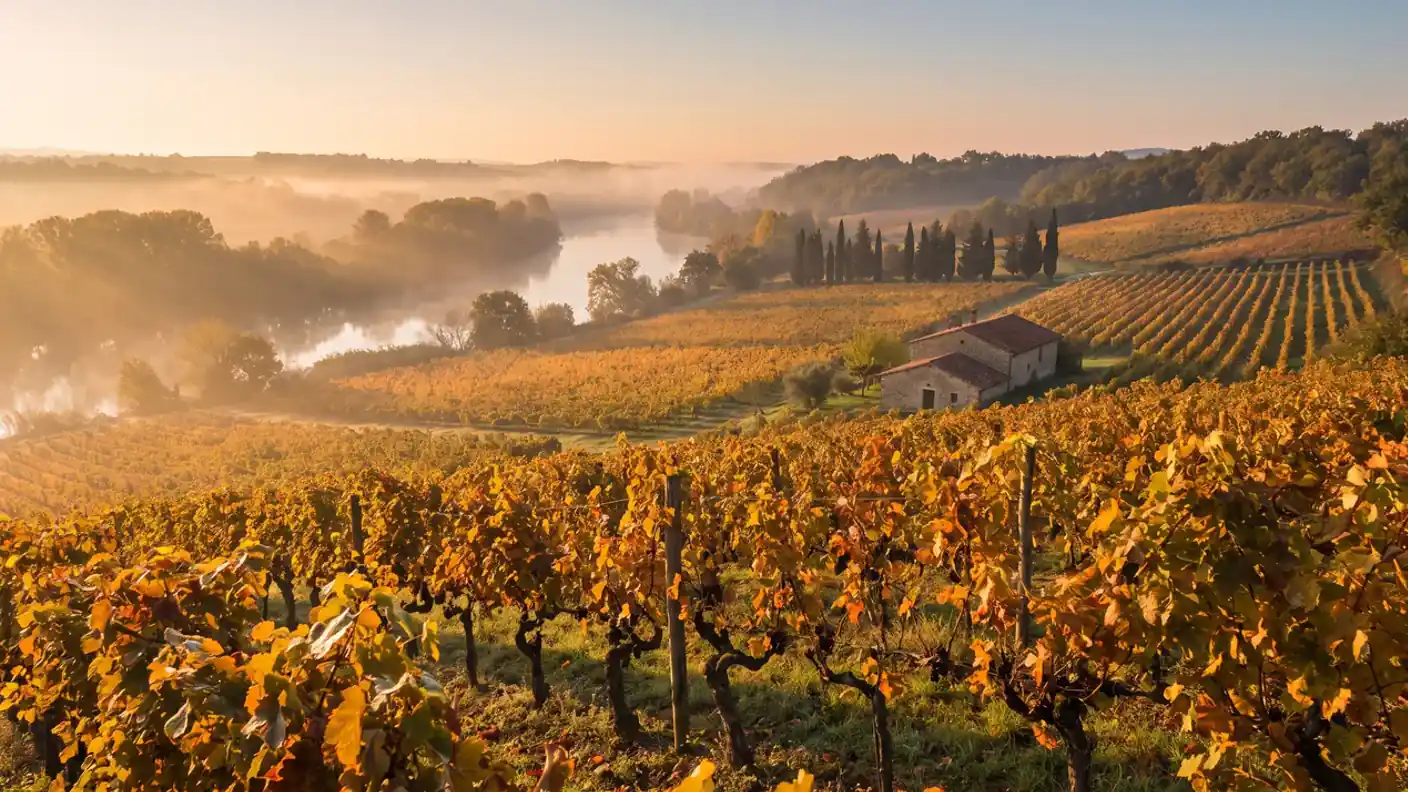
The appellation spans five communes, all located on the left bank of the Garonne: Sauternes, Barsac, Bommes, Fargues, and Preignac. Three white grape varieties are authorized here. Sémillon, which is by far the dominant variety, has thin skin and is particularly susceptible to noble rot; it forms the backbone of the wines. Sauvignon brings freshness, tension, and lively notes that balance the sweetness. Muscadelle, a less common variety, contributes only a subtle aromatic touch. The vineyard covers approximately 1,416 hectares: on the immense scale of the Bordeaux region, it is a mere speck, which already partly explains the rarity of the wines and their high prices, not to mention the labor involved in tending the vines. (source: INAO, accessed July 24, 2026)
What sets a Sauternes apart?
What truly sets a Sauternes apart is its yield, which is among the lowest in the entire Bordeaux region. The specifications cap production at 25 hectoliters per hectare, with a maximum yield of 28 hl/ha—whereas many appellations produce two to three times as much. (source: INAO, accessed July 24, 2026) In practical terms, an entire vine may yield just a single glass of wine. This parsimony is not a marketing choice: it stems directly from the grain-by-grain harvest and the dehydration of botrytized grapes, which yield only a single drop of extremely concentrated juice. Rarity, patience, and manual labor are therefore inherent in the very definition of wine, even before any consideration of style or reputation.
Is Barsac a Sauternes?
The case of Barsac deserves special mention. This commune has a dual appellation: its wines may be marketed either under the “Barsac” label or under the “Sauternes” label, at the producer’s discretion. A Barsac wine is therefore, strictly speaking, a potential Sauternes—though the reverse is not true. Barsac wines often have a reputation for being slightly lighter, livelier, and more taut than the Sauternes wines from neighboring slopes, though this stylistic distinction is neither rigid nor guaranteed. This flexibility in the appellation highlights an essential point: Sauternes encompasses a true mosaic of terroirs and styles, ranging from the most opulent and candied to the most delicate and crystalline. You never taste exactly the same wine twice.
The dominance of Sémillon is no accident. This grape variety, with its thin and delicate skin, is particularly susceptible to Botrytis cinerea: whereas other varieties would either resist the fungus or rot uncontrollably, Sémillon yields to noble rot with a welcome consistency, while retaining enough body to produce wines suitable for aging. It contributes the richness, roundness, and aromas of honey and yellow fruits that form the backbone of the Sauternes. The livelier Sauvignon adds a touch of acidity and citrus to the blend, while the Muscadelle contributes a subtle floral note here and there. This blend, the proportions of which vary from estate to estate, explains why no two Sauternes wines are exactly alike—even those growing just a few rows apart.
Ciron and Noble Rot
The Ciron is a tributary of the Garonne around which the Sauternes microclimate is formed. The national reference system identifies its course under the code O95-0400 (source: SANDRE, accessed July 24, 2026). At the confluence, nighttime humidity followed by daytime breezes promote the development of Botrytis cinerea and the concentration of the grapes, a phenomenon described in the appellation’s specifications.
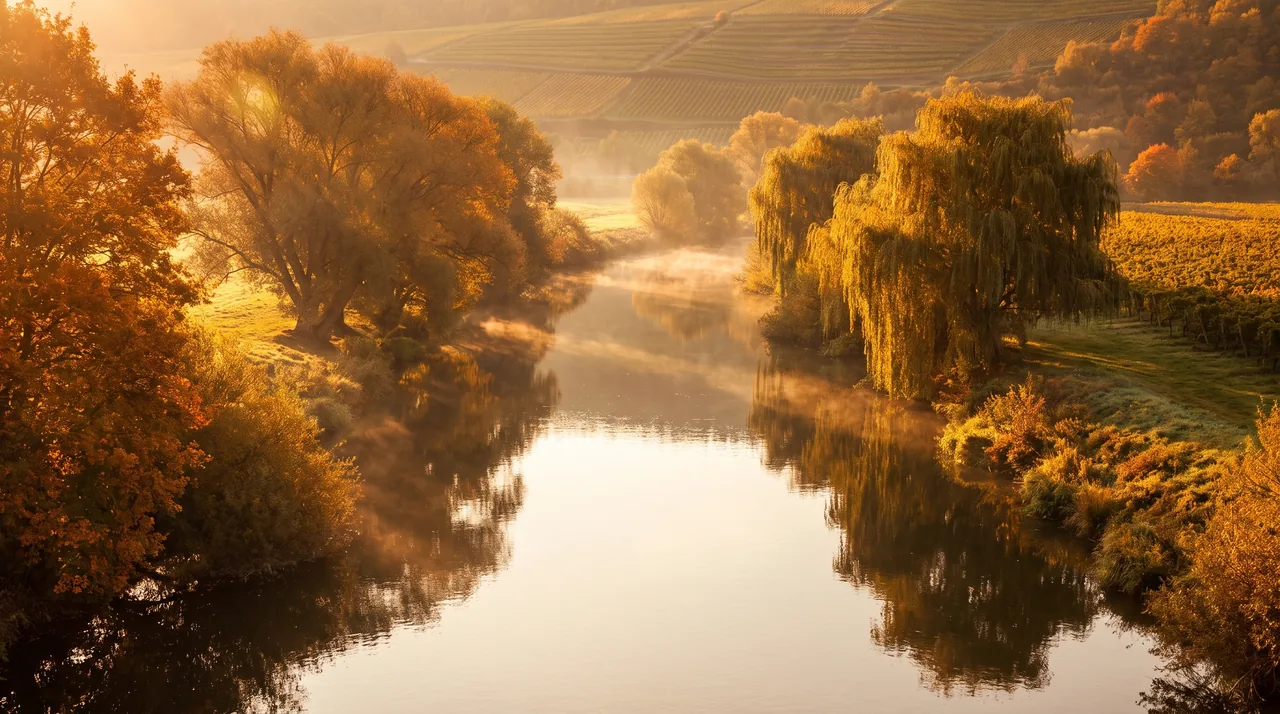
- The Ciron River marks the boundary between several municipalities within the appellation before flowing into the Garonne.
- At the confluence, nighttime condensation and daytime ventilation create the alternating cycles of humidity and dryness described by the INAO (official source, accessed July 24, 2026).
- Under these conditions, Botrytis cinerea causes noble rot, which dehydrates and concentrates the grapes.
What is noble rot?
Noble rot is the growth of Botrytis cinerea on ripe grapes. The fungus breaks down the grape skin and facilitates water evaporation: the grape dehydrates, shrinks, and loses much of its volume. This process concentrates the sugars, as well as the acids and aromatic compounds that subsequently give the wine its structure in the glass.
The wines can then develop notes of candied fruit, honey, dried apricot, orange peel, or quince. This phenomenon remains unpredictable: its development depends on the vintage and is never guaranteed. This uncertainty explains the risk taken by producers and the need to select the grapes as they ripen in the vineyard during harvest.
Why is the grape harvest sold by the grape?
Noble rot does not progress uniformly across a cluster. Some berries reach the desired stage, while others are just beginning to concentrate or remain healthy. The harvesters therefore return to the rows to pick only the grapes that are ready. The specifications require a manual harvest in successive passes, without setting a universal number of passes for all estates.
- Select the grains that have reached the proper stage of concentration.
- Return to the plot as the other grains continue to develop.
- Adjust the harvest to the conditions of the vintage and the health of the grapes.
Sauternes combines a specific geographical area, authorized grape varieties, and expertise governed by the appellation. Other regions produce wines from botrytized grapes, but each has its own climate, grape varieties, and winemaking practices. The role of the Ciron River must therefore be understood in the context of the hillsides, the Garonne River, the nighttime humidity, and the daytime breezes observed in the production area during the fall.
This combination does not automatically guarantee an identical harvest every year. It creates favorable conditions, and then the growers select the grapes based on their ripeness and health. Noble rot thus remains a natural phenomenon that is monitored throughout the harvest, rather than a formula that can be replicated at will in every vineyard or vintage within the appellation.
Château d'Yquem and the 1855 Classification
In 1855, at the request of Napoleon III, wine brokers in Bordeaux compiled a wine classification for the Paris World’s Fair. It included a section dedicated to sweet white wines from Sauternes and Barsac, organized into three tiers: Premier Cru Supérieur, Premiers Crus, and Seconds Crus (source: Bordeaux.com, accessed July 24, 2026).
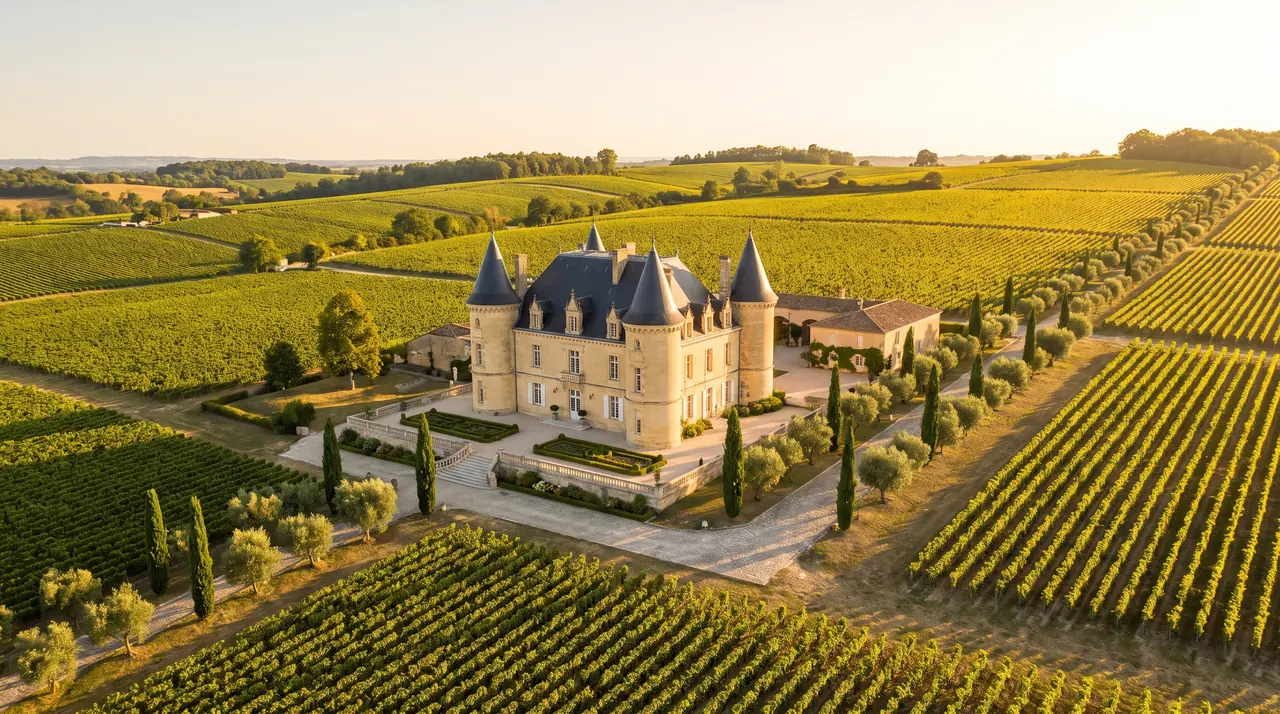
At the very top of this pyramid stands a single name: Château d'Yquem, the only “Premier Cru Supérieur” in the 1855 classification. This distinction, created specifically for it, places it alone above all other classified growths in the appellation. Let’s be clear about this, as confusion often arises: Château d’Yquem is indeed located in the commune of Sauternes itself, and not in Langon. Its estate, perched on the highest point of the vineyard, overlooks the surrounding hillsides—a location that is by no means insignificant, as it promotes both soil drainage and ideal exposure of the vines to morning mists and afternoon sun. Geography, once again, comes before prestige.
How do you interpret the 1855 rankings?
The 1855 classification for Sauternes-Barsac is organized into three tiers. At the very top is the Premier Cru Supérieur: Yquem, and Yquem alone. Next come the Premiers Crus, followed by the Seconds Crus. Originally, there was 1 Premier Cru Supérieur, 9 Premiers Crus, and 11 Seconds Crus—for a total of 21 classified growths. Since then, some estates have been divided up through inheritances, marriages, and sales, so that today there is 1 Premier Cru Supérieur, 11 Premiers Crus, and 15 Seconds Crus—for a total of 27 classified wines. The number has thus increased simply due to the division of historic estates, but the underlying hierarchy has remained unchanged for a century and a half. (source: Bordeaux.com, accessed July 24, 2026)
| Level | In 1855 | Today |
|---|---|---|
| Premier Cru Supérieur | 1 (Château d'Yquem) | 1 (Château d'Yquem) |
| Premier Crus | 9 | 11 |
| Second Growths | 11 | 15 |
| Total | 21 vintages | 27 vintages |
Why is Château d'Yquem unique?
The history of Yquem is intertwined with that of prominent families. Long owned by the Sauvage family, the estate passed to the Lur-Saluces family through a marriage in 1785; and this family would ensure its renown for more than two centuries, establishing standards of quality that remain legendary. In 1999, the LVMH Group acquired a majority stake, and since 2004 the estate has been managed by Pierre Lurton. Yquem covers approximately 126 to 133 hectares and produces only about 90,000 to 95.000 bottles per year, with a minuscule yield of about 9 hectoliters per hectare. The château itself has been listed as a historic monument since 2003 (reference PA33000071; source: POP, accessed July 24, 2026)—listed, not classified, a very real legal distinction that is best respected.
Certain vintages of Yquem have become legendary: 1847, 1921, 1937, 1947, 1967, and 2001 are among the most revered by wine enthusiasts and collectors. Rarity naturally drives up auction prices: a bottle of 1811 Yquem sold for around £75.000 in 2011, making it, at the time, one of the most expensive bottles of white wine ever sold at auction. One sometimes reads that it holds an officially recognized “world record”: this claim has not been verified, and it is best to stick strictly to the facts—an exceptional price for an exceptional bottle, without attaching an official label to it that has not been established. The true story speaks for itself.
Yquem, however, should not overshadow the other classified growths, which together form a constellation of great sweet wines. Among the Premiers Crus of the 1855 classification are revered names such as Château La Tour Blanche, Château de Rayne-Vigneau, Château Suduiraut, Château Rieussec, and Château Guiraud, while Barsac boasts such iconic estates as Château Climens and Château Coutet. Each cultivates its own style, ranging from the richest and most opulent to the most taut and fresh, and many are open to visitors by appointment. Discovering Sauternes is therefore much more than just tasting a single prestigious wine: it’s about exploring a dynamic hierarchy, comparing neighboring terroirs, and refining your palate. The Maison du Sauternes, located in the village, allows you to explore this diversity all in one place, without having to knock on every door.
Wine Production and Aging
Once the botrytized grapes have been harvested, sort after sort, the work continues in the winery. The resulting must has an impressive density: packed with sugar, it ferments slowly, as the yeasts struggle to convert such a high concentration into alcohol. Fermentation eventually stops on its own when the balance between alcohol and sugar is reached, leaving a significant amount of residual sugar in the wine—it is this residual sugar that gives Sauternes its creamy sweetness and velvety texture. Nothing is added: all the richness comes solely from the overripe, candied grapes. The art lies in preserving this delicate balance between sweetness and liveliness, without letting it tip into heaviness.
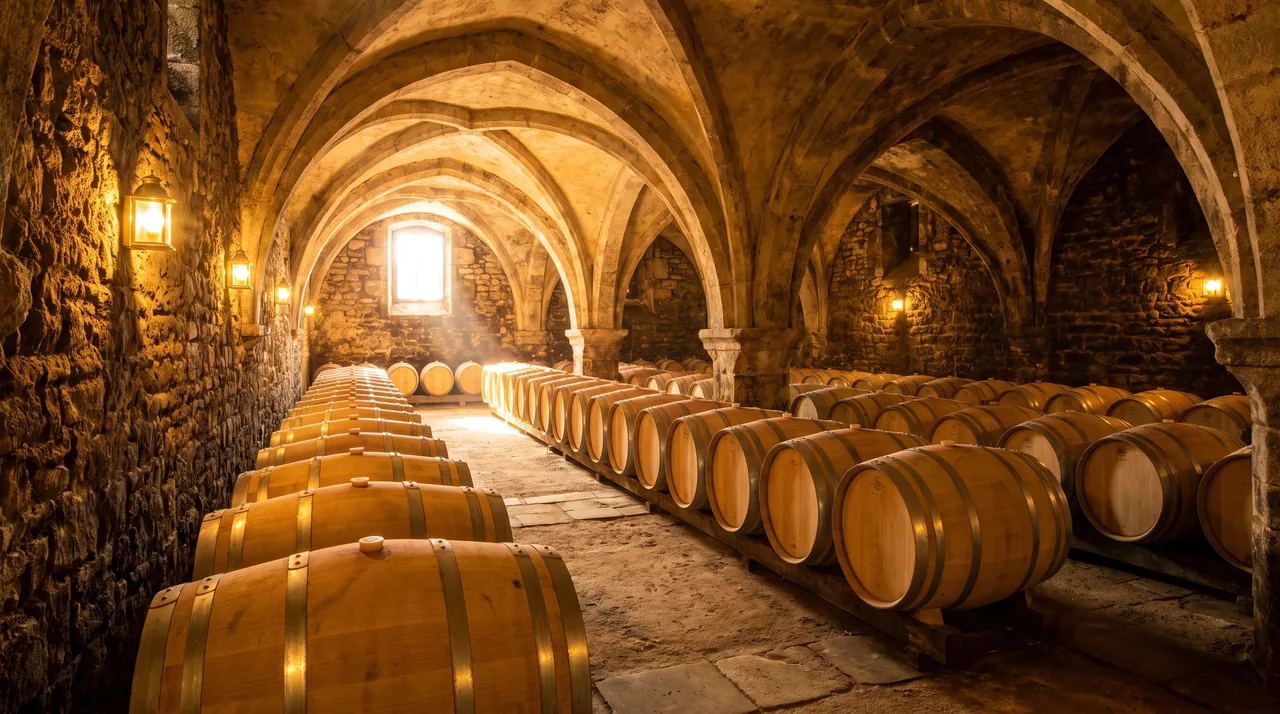
Next comes aging, most often in oak barrels—frequently new ones for grand crus. The wood imparts structure, toasty and vanilla aromas, and, above all, a slow process of micro-oxygenation that refines the wine and helps it improve with age. The great Sauternes wines are, in fact, wines with exceptional aging potential, capable of maturing over several decades while gaining in complexity: their color gradually evolves from straw yellow to deep gold, then to amber, while the candied fruit gives way to notes of honey, dried fruit, wax, and spices. This patient aging process, carried out without any haste, plays a key role in shaping the identity and mystery of this sweet wine.
Why is the Sauternes so expensive?
The price of a grand Sauternes is by no means arbitrary: it reflects very real costs, all of which stem from the nature of the wine itself. First, the minuscule yield—often less than 25 hl/ha—which drastically limits the available volume. Second, labor: harvesting in multiple manual passes requires large teams over several weeks, with constant weather risks weighing on every decision. Finally, the extended aging in barrels, which ties up the wine—and thus the capital—for years before it reaches the market. Added to this is the uncertainty of the vintage: in some years, noble rot does not develop properly, and the harvest is downgraded or even completely sacrificed. Rarity, labor, and risk together explain the value of these bottles.
Sweet and semi-sweet: What's the difference?
The terminology deserves clarification, as it is often used incorrectly. A “moelleux” wine contains a moderate amount of residual sugar; a “liquoreux” wine, such as the Sauternes, contains much more, with a rich, coating texture on the palate. The difference isn’t just a matter of perception: it relates to distinct sugar thresholds and production methods. We also use the term “roasted” grapes to describe berries candied by botrytis. Another essential nuance, often overlooked: the Sauternes is neither an “easy” sweet wine nor a cloying one; its high acidity counterbalances the sugar and gives it a remarkable balance, a world away from a simple sensation of sweetness. It is this tension that makes it a wine for fine dining, rather than a conventional dessert wine.
What should you pair with a Sauternes?
The Sauternes isn’t just for dessert. Its sweetness, acidity, and aromas make it a great pairing for both savory and sweet dishes. The choice depends on the wine’s style, age, and the concentration of the vintage. Portion sizes and the order of service also matter; when visiting the estate, the recommendations provided by the winery remain the best guide for the bottle being tasted.
- Foie gras: a classic pairing based on the richness of both ingredients.
- Blue-veined cheeses: The saltiness contrasts with the wine's sweetness.
- Poultry, white meats, or spicy dishes: the acidity prevents the meal from feeling too heavy.
- Desserts made with yellow fruits: Choose a dessert that is less sweet than the wine.
The Village and Its Heritage
Beyond its wines, Sauternes is an authentic Gironde village, built entirely of light-colored stone and nestled among the vineyards. Houses with shutters, tiled roofs, and quiet alleyways make up a village on a human scale, which you can walk through in just a few minutes. The town hall square forms the small village center, around which most of the services and places to visit are concentrated. Here, there are no crowds or overwhelming tourist traffic: the charm lies precisely in this rural tranquility, punctuated by the occasional passing tractor and, in season, by the bustle of the grape harvest. It’s a setting that invites you to slow down, to stroll between wine tastings, and to look up at the hillsides rather than just checking items off a list.
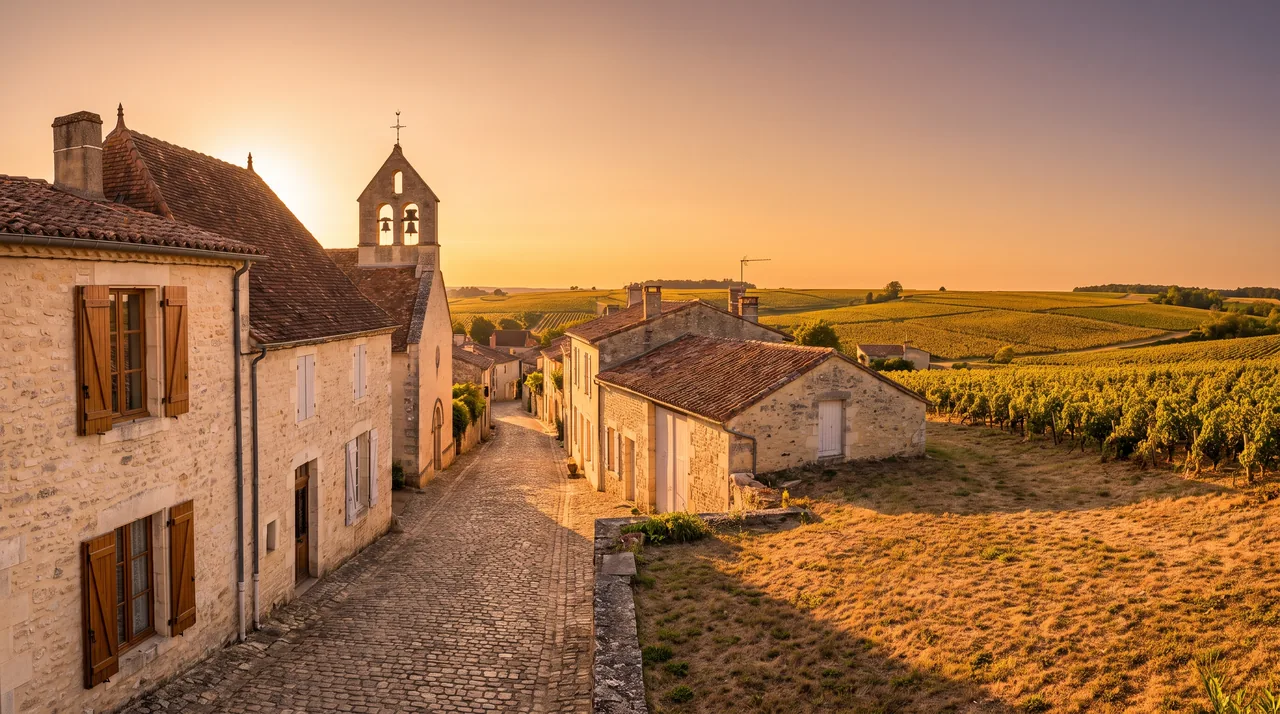
The town’s most significant historic building is the Church of Saint-Pierre-ès-Liens, the oldest parts of which date back to the 12th century. Its apse was designated a historic monument by a decree dated December 21, 1925 (reference PA00083831); the building is owned by the municipality. This simple and sturdy Romanesque church, with its compact proportions typical of Gironde Romanesque architecture, bears witness to the village’s long history. It serves as a reminder of a fact that the prestige of the wine might otherwise cause us to forget: the Sauternes region was inhabited, cleared, and cultivated long before it became the birthplace of the world’s greatest sweet wine. The village has its own distinct history—medieval and rural—that predates the fame of its wines by several centuries.
What's there to see in the village?
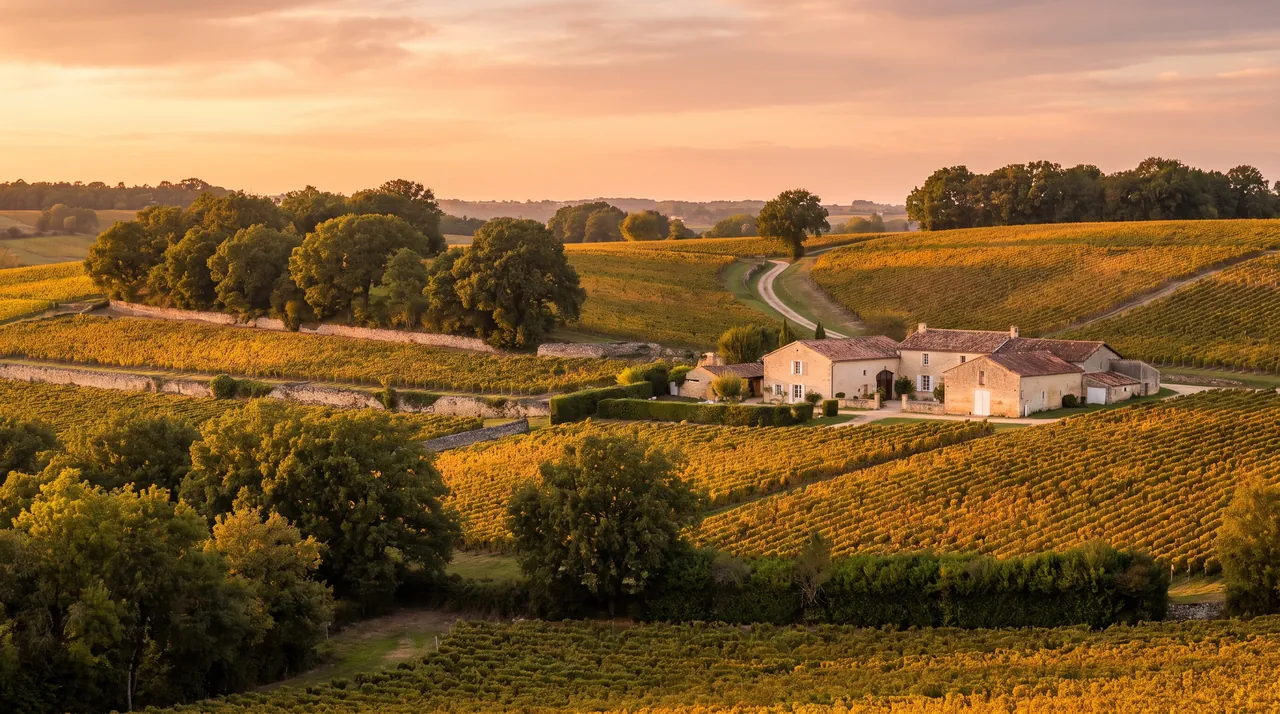
The heart of the village is best explored by strolling through it, without a map or any rush. There, you’ll discover the Church of Saint-Pierre-ès-Liens, the town hall square, and—not to be missed—the Maison du Sauternes, a wine cellar and shop located in the center of town that brings together and offers for sale a wide selection of wines from the appellation. It’s the ideal starting point for understanding the diversity of the wines before perhaps heading out to visit the wineries themselves. All around the village, the hillsides planted with Sémillon offer beautiful views, particularly in the low morning light—when the mist has not yet lifted—or in the late afternoon, when the vines take on a golden hue and shadows stretch between the rows. This is undoubtedly the most beautiful image one takes away from Sauternes.
What is there to do in Sauternes?
A day at Sauternes typically includes an introduction to the appellation, a winery tour (by reservation), and a stroll through the village. The Maison du Sauternes helps visitors compare styles, while the wineries explain their cellars and the process of sorting grapes during harvest. Schedules, any applicarle fees, and visitor policies must be confirmed with each establishment before your visit.
Between tastings, the Church of Saint-Pierre-ès-Liens, the cobblestone streets, and the views of the hillsides round out the tour. The major wineries have limited availability and do not always accept walk-in visits. Seasonal open houses occasionally expand your options, but you should also check the schedule with the organizers before planning your day and your return trip from Bordeaux.
- La Maison du Sauternes: a wine cellar and shop located at 14 Place de la Mairie. Hours vary by season: check the day and time on the official Maison du Sauternes website before visiting. It offers approximately 150 wines at château prices and boasts an impressive wall of 768 bottles.
- Tastings at the estates: Many châteaux in the Sauternes region welcome visitors for a tour of the cellars followed by a tasting, usually by appointment. It’s best to make a reservation and confirm in advance.
- Château d'Yquem: This legendary estate, located in the town of Sauternes, is open to visitors by appointment only, under very strict guidelines. Time slots are limited and must be reserved well in advance.
- The Maison des Vins de Sauternes-Barsac, in Barsac: a helpful information and tasting center offering a comprehensive overview of the appellation, located about ten minutes from the village.
- The Sauternes-Barsac Open House Days: a recurring fall event during which many wineries open their doors to the general public on a special basis.
- Markets and services in Langon: the nearby subprefecture (~10 km) offers a wide range of restaurants, shops, and markets, perfect for a lunch break or to stock up on supplies.
- A leisurely stroll through the village: the Church of Saint-Pierre-ès-Liens, cobblestone streets, and panoramic views of the hillsides—best explored at a leisurely pace on foot between wine tastings.
Can we tour Château d'Yquem?
Yes, but there are specific conditions you need to be aware of to avoid disappointment. Château d'Yquem is not a tourist site open to the public: tours are by appointment only, in small groups, and availability is limited. It is therefore essential to plan well in advance and, above all, not to expect a last-minute visit on the same day. For wineries in general, the same caution applies: call or book online before heading out, as many estates are open only by request and are closed on Sundays. Sauternes is not a wine theme park, but an active vineyard: this relative exclusivity, which may seem a bit frustrating at first, is also part of its prestige and authenticity.
| Activity | Where / When | Good to Know |
|---|---|---|
| Sauternes House | 14 Place de la Mairie · every day | ~150 items, a wall of 768 bottles |
| Wine Tasting at the Winery | Châteaux of the Sauternes Region · By Appointment Only | Book and confirm in advance |
| Château d'Yquem | Sauternes Municipality · By appointment | Limited availability; advance reservation required |
| House of Wines | Barsac (~11 km) | Panorama of the entire appellation |
| Open House | Fall (recurring event) | Many open fields |
| Services & Markets | Langon (~10 km) | Restaurants, shops, market |
About Sauternes
Sauternes is ideal for exploring the wider area, as the points of interest are concentrated within a radius of just a few kilometers. To the north, Langon (~10 km) is the subprefecture and the true gateway to the Sauternes region, with its shops, restaurants, market, and train station. Nearby, Barsac (~11 km) boasts two appellations and is worth a stop to compare the styles of sweet wines. Preignac (~9 km), on the banks of the Garonne, rounds out the trio of neighboring AOC towns. A little further south, Bazas (~19 km) boasts the Cathedral of Saint John the Baptist, a UNESCO World Heritage Site as part of the Routes of Santiago de Compostela. Finally, just a few minutes away, Villandraut is home to the imposing fortified castle built by Pope Clement V—a striking medieval counterpoint to the gentle charm of the vineyards.
Which steps should be combined with Sauternes?
Several itineraries are easy to plan, depending on whether you’re more interested in wine or cultural heritage. To stay in the world of sweet wines, combine Sauternes with Langon, the gateway to the vineyards, before continuing on to Barsac and Preignac to explore a variety of scenic views and wineries. To explore the area’s history, a detour to Bazas and its UNESCO-listed cathedral provides the perfect counterpoint to a morning of wine tasting. And for wine enthusiasts who want to compare two contrasting worlds—the great sweet whites of the south and the prestigious reds of the Left Bank—another day trip can take you to the Médoc and its Château Route. All these stops are included in our itineraries departing from Bordeaux.
Nature lovers will be happy to extend their visit along the Ciron Valley. The river that forms the Sauternes offers, upstream from the vineyard, wooded gorges, cool water, and a forest atmosphere that contrasts sharply with the sun-drenched hillsides. It is a remarkable natural environment, prized for its coolness and its forest, and as you ride along it, you gain a better understanding of where the mists that sweeten the grapes come from. More broadly, the southern Gironde blends vineyards, stone villages, medieval castles, and tranquil rivers: Sauternes is its oenological gem, but it is part of a broader landscape of gentle scenery that, in and of itself, is worth spending an entire day exploring, far from the hustle and bustle of the city.
| Destination | Approx. distance | Interest |
|---|---|---|
| Preignac | ~9 km | AOC municipality, on the banks of the Garonne |
| Langon | ~10 km | Subprefecture, Gateway to the Sauternes Region |
| Barsac | ~11 km | Dual Appellation, Maison des Vins |
| Bazas | ~19 km | UNESCO-listed cathedral |
| Villandraut | very close by | Pope Clement V's Fortress |
How to get to Sauternes from Bordeaux
Getting to Sauternes from Bordeaux is easy: it’s about 56 km and a 55-minute drive along the left bank of the Garonne, heading toward Langon and then the vineyard-covered hillsides. The route winds through a countryside of vineyards and woods that already hints at your destination and sets the mood. It’s the perfect distance for a day trip: leave Bordeaux in the late morning, have lunch in the Sauternes region or in Langon, spend the afternoon visiting wineries and tasting wines, and head back in the evening without feeling tired or having to worry about train schedules. Sauternes is thus the perfect base for exploring sweet wines at your own pace, taking as much time as you need at each stop.
How much does the ride cost?
The Bordeaux → Sauternes route is available starting at 107 € during the day, for a sedan that seats 1 to 3 passengers. This rate is fixed and confirmed in writing before departure: no meter, no surprises upon arrival. Surcharges apply at night, on weekends, and on holidays, and a van replaces the sedan for groups of more than 3 passengers. Extensions to nearby châteaux—Barsac, Preignac, Bommes, Fargues—or from Bordeaux-Mérignac Airport are priced on a quote basis, depending on the desired itinerary and schedule. The principle remains the same: a price known in advance, tailored to the number of passengers and the day’s itinerary, with no unpleasant surprises.
| Route | Distance / Duration | Rates |
|---|---|---|
| Bordeaux → Sauternes | ~56 km · ~55 min | starting at 107 € |
| Nearby châteaux (Barsac, Preignac, etc.) | variable | based on a quote |
| Bordeaux Airport → Sauternes | variable | based on a quote |
Why hire a private driver?
The answer can be summed up in one word: tasting. At Sauternes, you’ll taste powerful sweet wines—sometimes at several consecutive estates—and find yourself dreaming of sampling a legendary wine like Yquem. Getting behind the wheel after these tastings would be neither ideal nor sensible. Hiring a private driver lets you fully enjoy the visits, savor every glass to your heart’s content, and leave the driving—including on the winding country roads through the vineyards—to someone else. It also offers the freedom of a true door-to-door service: you depart from your address in Bordeaux and return the same way, at your own pace throughout the day, without a set schedule or the hassle of finding parking. For a relaxed wine-tasting experience, it’s the most comfortable option available.
Frequently Asked Questions
Is the Sauternes a red wine?
No. Sauternes is a sweet white wine, meaning it is a white wine that is naturally very high in sugar. It is neither a red wine nor a dry Graves: it is a distinct appellation in its own right, made from white grapes (primarily Sémillon) affected by noble rot. No sugar is ever added; it comes from the concentrated juices of the grapes left on the vine. Any association of Sauternes with a red wine is a misunderstanding: the appellation produces only sweet white wine.
Where is Château d'Yquem located?
Château d'Yquem is located in the commune of Sauternes itself, in the Gironde department, and not in Langon as is sometimes stated. The estate occupies the highest point of the vineyard, which promotes soil drainage and optimal sun exposure for the vines. It is the only Premier Cru Supérieur in the 1855 Sauternes-Barsac classification, the sole estate at this level. The château has been listed as a historic monument since 2003. Tours are available by appointment only, with limited availability.
How much does a trip from Bordeaux to Sauternes cost with a chauffeur service?
The Bordeaux → Sauternes route is available starting at 107 € during the day for a sedan accommodating 1 to 3 passengers. This rate is fixed and confirmed in writing before departure, with no meter and no surprises upon arrival. Surcharges apply at night, on weekends, and on holidays; for groups of more than 3 passengers, a van will be provided instead of a sedan. Extensions to nearby châteaux or from Bordeaux-Mérignac Airport are priced on a quote basis, depending on the itinerary and the day’s schedule.
How many people live in Sauternes?
Sauternes had a population of approximately 788 according to the 2023 INSEE census. It is a very small wine-growing village, with a low population density of about 70 inhabitants per square kilometer across an area of 11.32 km². The figure of 1,627 residents is sometimes cited; however, it is incorrect and does not correspond to any recent INSEE data for the municipality. The reliable reference remains the municipal population figures published by INSEE. The residents are known as Sauternais and Sauternaises.
What is noble rot?
Noble rot is the controlled growth of a fungus, Botrytis cinerea, on ripe, healthy grapes. Facilitated by the morning mists of the Ciron River, it penetrates the grape’s skin, causing the fruit to dehydrate and become candied. The result is a spectacular concentration of sugars and aromas, with notes of honey, dried apricot, and candied fruit. It is this phenomenon that gives the Sauternes its richness. Elsewhere, the same fungus is nothing more than a harmful gray mold; here, under these specific conditions, it becomes an ally.
Which municipalities produce the Sauternes AOC?
The Sauternes appellation spans five municipalities, all located on the left bank of the Garonne: Sauternes, Barsac, Bommes, Fargues, and Preignac. Therefore, the tiny municipality of Sauternes should not be confused with the much larger Sauternes AOC. A wine bearing the Sauternes appellation may come from any one of these five municipalities. Barsac is a special case: its wines may be labeled either “Barsac” or “Sauternes,” at the producer’s discretion.
Should it be spelled Sauternes or Sauterne?
It is written “Sauternes,” with an “S” at the end, for both the municipality and the appellation. The form “Sauterne,” without an “S,” stems from Anglo-Saxon usage: in some countries, this word has long been used generically to refer to a more or less sweet white wine, with no connection to the Gironde AOC. This generic term has no legal standing in France and does not refer to the genuine Sauternes. Therefore, be sure to use the final “S,” which is the only form linked to the terroir, the five communes, and the 1855 classification.
Is Château d'Yquem designated as a historic monument?
Château d'Yquem has been listed as a historic monument since 2003 (reference PA33000071; source: POP, accessed July 24, 2026)—listed, not classified, which is a real legal distinction between the two levels of heritage protection. This should not be confused with its status as a wine estate: Yquem is also the only Premier Cru Supérieur in the 1855 wine classification, which falls under an entirely different hierarchy. The estate is located in the municipality of Sauternes and has been majority-owned by the LVMH group since 1999.
What is the difference between Sauternes and Barsac?
Barsac is one of the five municipalities in the Sauternes AOC, but it has dual appellation status: its wines may be marketed under the “Barsac” label or the “Sauternes” label, at the producer’s discretion. A Barsac is therefore, strictly speaking, a potential Sauternes. In terms of style, Barsac wines are often considered slightly lighter and livelier than the Sauternes wines from neighboring hillsides, though this distinction is not rigid. Both share the same dominant grape variety, Sémillon, and the same noble rot.
How far is Sauternes from Bordeaux?
Sauternes is located about 56 km southeast of Bordeaux, which is roughly a 55-minute drive (a route calculation shows it to be about 55.7 km). You can reach it by taking the left bank of the Garonne River toward Langon, then following the small wine-growing roads through the hillsides. The subprefecture of Langon, the gateway to the vineyards, is only about ten kilometers away. This proximity makes Sauternes an easy destination for a half-day or full-day getaway from Bordeaux.
Can we tour Château d'Yquem and the vineyards?
Yes, but only by appointment. Château d'Yquem is not open to the general public: tours are conducted in small groups under supervised conditions, and slots are scarce—you’ll need to book well in advance. The same rule applies to other estates in the Sauternes region: many are open only by request and are closed on Sundays. It’s therefore best to make a reservation before visiting. The Maison du Sauternes offers tastings; check its official hours and visitor policies before coming.
Why is the Sauternes so sweet?
The sugar in Sauternes is entirely natural: it comes from the overconcentration of grapes affected by noble rot, which dehydrate and turn into candied fruit while still on the vine. Fermentation converts only a portion of this sugar into alcohol, leaving a significant amount of residual sugar that gives the wine its smooth, velvety sweetness. Nothing is added. Yet it is by no means a heavy wine: high acidity balances its richness and prevents it from becoming cloying, which is why the Sauternes is a wine for fine dining rather than a simple dessert wine.
How much time should I plan for a day at Sauternes?
A full day is ideal for enjoying the Sauternes region at a leisurely pace. You can start at the Maison du Sauternes to get your bearings among the wines, follow that with one or two tastings at a vineyard (by appointment), have lunch on-site or in nearby Langon, and then stroll through the village and its cobblestone streets. Add a detour to Barsac or Bazas, and you’ll have a full day. From Bordeaux, allow about 55 minutes each way by car.
Further Reading
- Book your trip from Bordeaux to Sauternes: fixed-price quote confirmed in writing, door-to-door service, no obligation.
- All our destinations departing from Bordeaux: castles, vineyards, and villages in the Gironde.
- Langon: the Garonne River, the church, and the gateway to the Sauternes region.
- Médoc: Grand Crus, appellations, and the wine route.
- Bazas: the UNESCO-listed cathedral and the fattened oxen.
Sources and References
- INAO — Sauternes AOC specifications — five municipalities, grape varieties, and yields (accessed July 24, 2026)
- Château d'Yquem — POP/Mérimée PA33000071 — protected as a historic monument (accessed July 24, 2026)
- Bordeaux.com — 1855 classification — Sauternes-Barsac, three levels (accessed July 24, 2026)
- SANDRE — The Ciron, O95-0400 — Watercourse Profile (accessed July 24, 2026)
- Maison du Sauternes — Tasting and Sale in the Village
- INSEE — Municipality of Sauternes (33504) — Demographics
Article published on .
Our Latest Guides
 Entre-deux-Mers & Southern Gironde
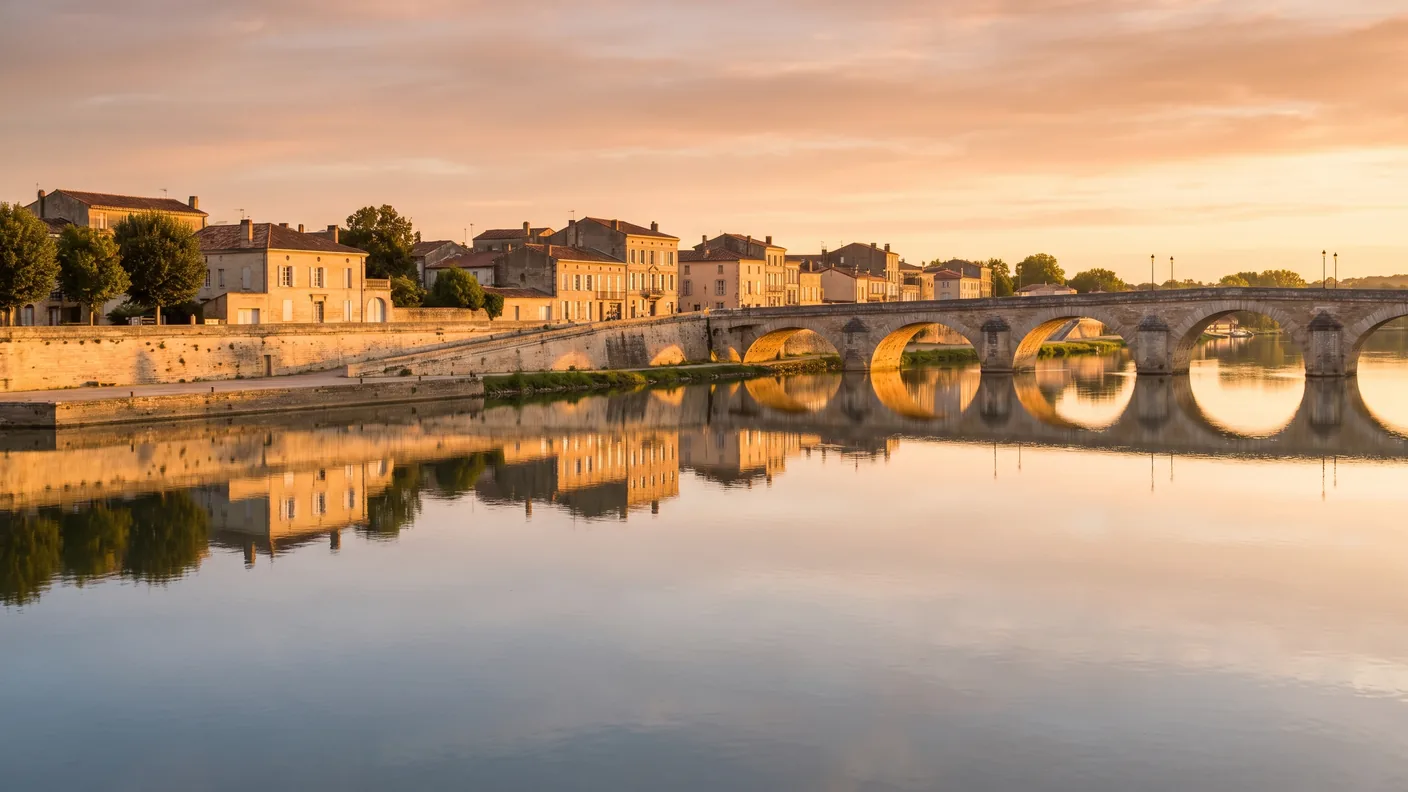
Langon: the Garonne River, the church, and the gateway to the Sauternes region
Read the guide →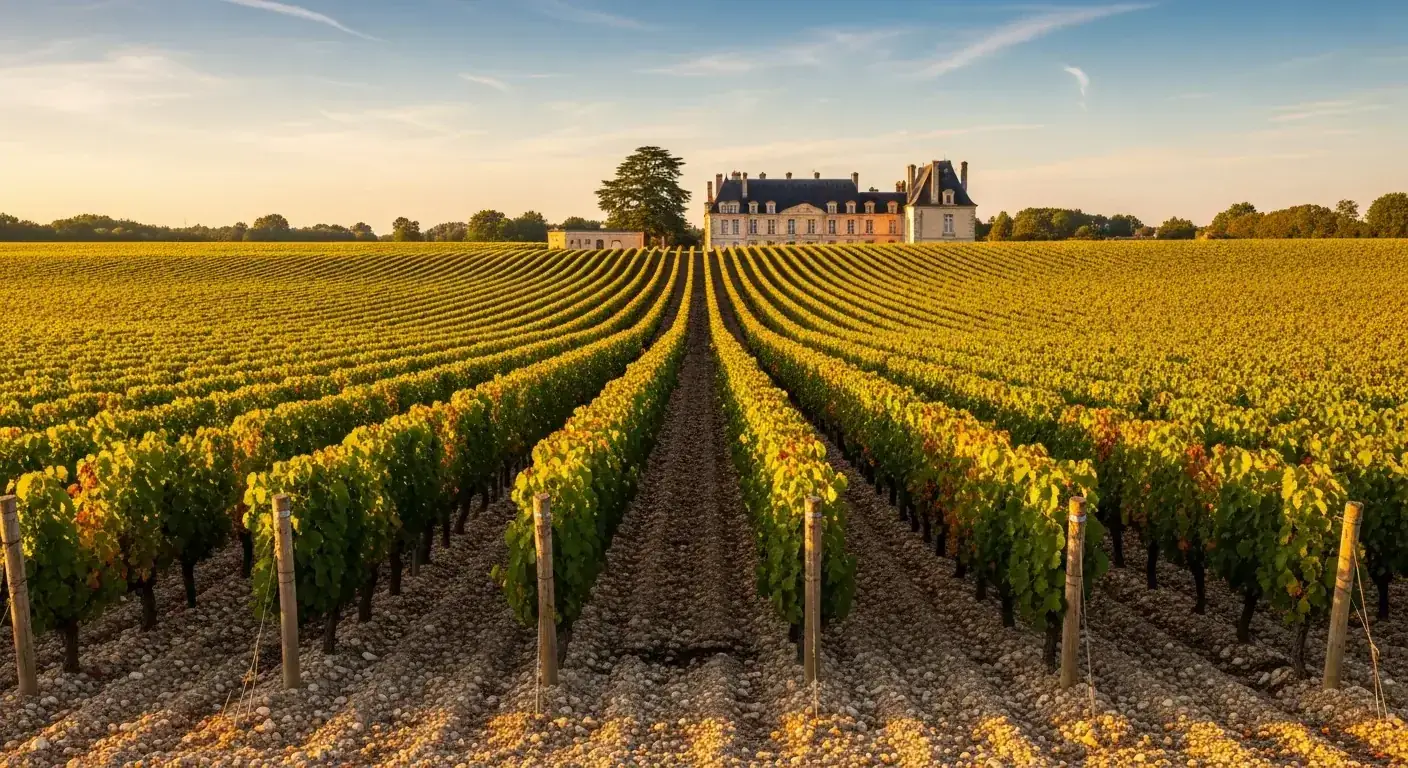 Médoc Vineyards
Médoc: Grand Crus, Appellations, and the Wine Route
Read the guide →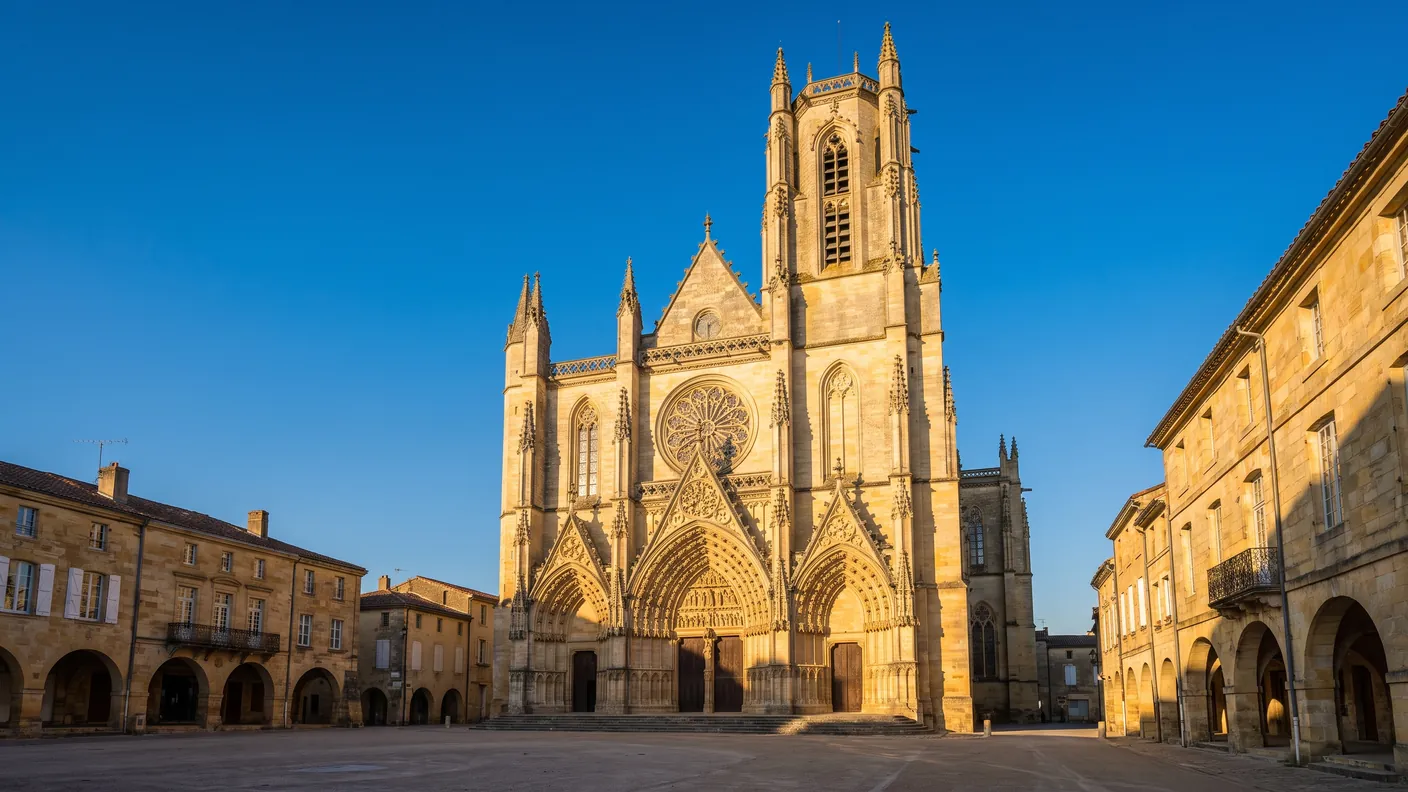 Entre-deux-Mers & Southern Gironde
Bazas: The UNESCO-listed cathedral and the fattened oxen
Read the guide →Off to the Sauternes region
Direct transfer from Bordeaux (~55 min) to Sauternes, with its châteaux and wine tastings. Fixed-price quote in writing, with no obligation.