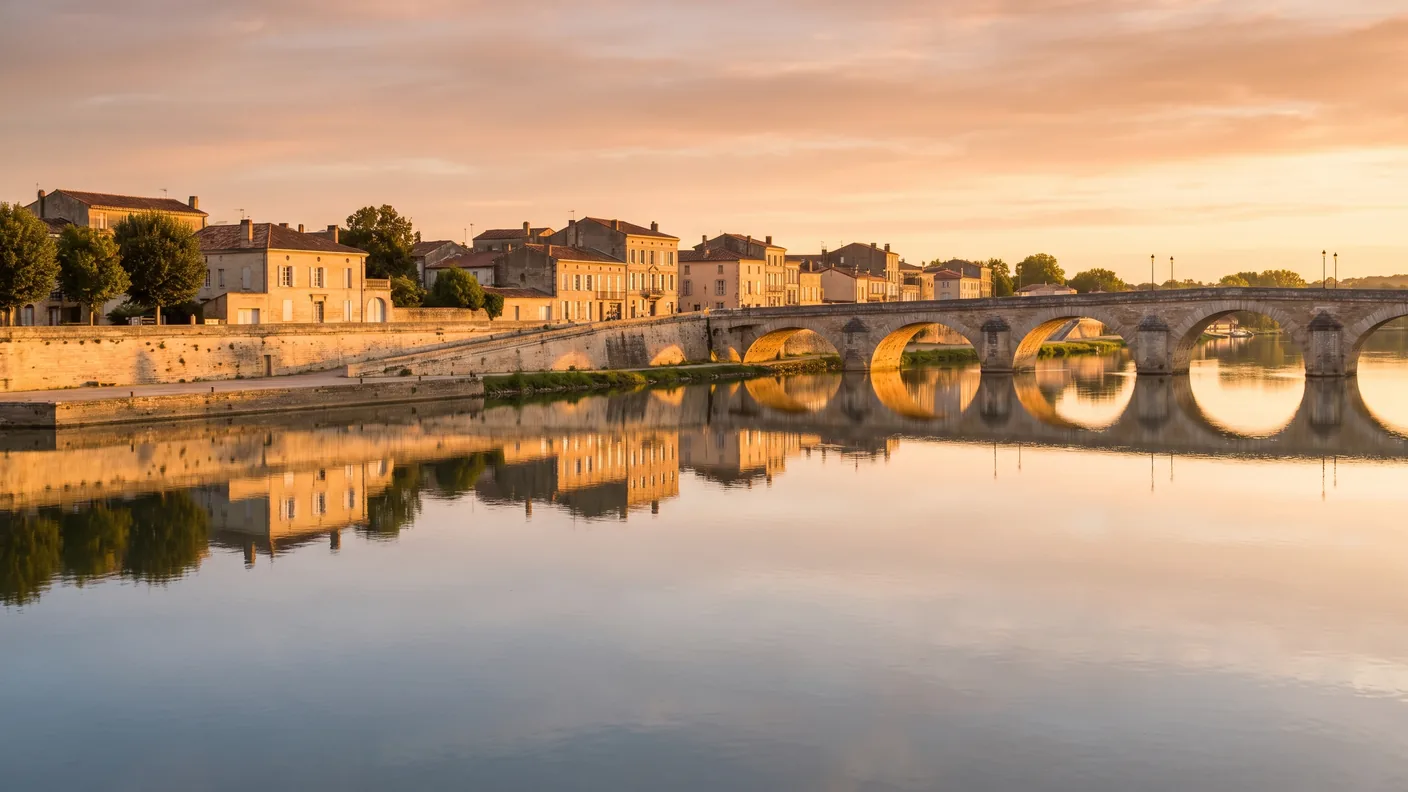
Bordeaux to Langon: the Garonne and gateway to Sauternes
A subprefecture of the Gironde department on the left bank of the Garonne River, serving as the gateway to the Sauternes and Graves regions. A church with a choir that has been relocated to New York and a Cavaillé-Coll organ, a large Friday market, and, all around, Sauternes, Bazas, and Saint-Macaire—less than an hour from Bordeaux.
Langon at a glance
Langon is the subprefecture of southern Gironde, situated on the left bank of the Garonne, 52 minutes from Bordeaux. A bustling market town known for its large Friday market, it serves as the gateway to the Sauternes and Graves regions: all around it stretch the vineyards producing sweet wines and great dry whites. Its Saint-Gervais Church houses two treasures—an “Immaculate Conception” by Zurbarán and a Cavaillé-Coll organ—and is crowned by a bell tower that is a scaled-down replica of the south tower of Chartres Cathedral. Even more astonishing: the Romanesque choir of a former chapel in Langon crossed the Atlantic to be reassembled at the Met Cloisters in New York, where it is known as the “Langon Chapel.”[5] This guide separates fact from fiction—since a few persistent legends circulate about Langon—and sets you on your way to Sauternes, Bazas, and Saint-Macaire.
A quiet yet strategically located subprefecture, Langon (Gironde) sits at the crossroads of the Garonne Valley, the Graves wine region, and the road leading to Sauternes and the Bazadais. People sometimes drive right through it without stopping on the highway connecting Bordeaux to Toulouse—but that’s a mistake, as the town and its surroundings are brimming with history, wine, and delightful surprises. Here’s what you need to know before hitting the road.
Langon is often thought of simply as a highway sign or a stopover station. Yet the town boasts a rich heritage and some unusual stories: a Spanish work of art from the Golden Age, an organ built by a renowned organ builder, a bell tower reminiscent of one of France’s most famous cathedrals, and a Romanesque choir that found a new home in New York. Add to that a large market, historic riverbanks, and an exceptional vineyard right on its doorstep, and you have one of the most rewarding starting points in southern Gironde. The table below provides the details; the following sections separate fact from fiction, as a few deeply ingrained myths circulate about Langon.
| Landmark | Details |
|---|---|
| Department / Region | Gironde (33) · Nouvelle-Aquitaine |
| Status | Subprefecture and district seat, on the left bank of the Garonne |
| Population | ~7,674 residents[2] (INSEE 2023) · the residents of Langon |
| Code / Area | INSEE 33227 · ZIP Code 33210 · 13.71 km² |
| Must-Sees | Saint-Gervais Church, the banks of the Garonne, the Porte du Sauternais, and the Graves |
| From Bordeaux | 50 km · 52 min · starting at €97 |
Where is Langon located?
Langon is the subprefecture of southern Gironde: as the seat of one of the department’s districts, it administers the entire southeastern quarter of the department. The Langon district is relatively recent—it was created in 1926 through the merger of the former districts of Bazas and La Réole, making this market town the administrative hub of a vast region of vineyards, hillsides, and forests. In terms of administrative identifiers: INSEE code 33227, ZIP code 33210, a compact area of 13.71 km², and membership in the Sud-Gironde Community of Communes.
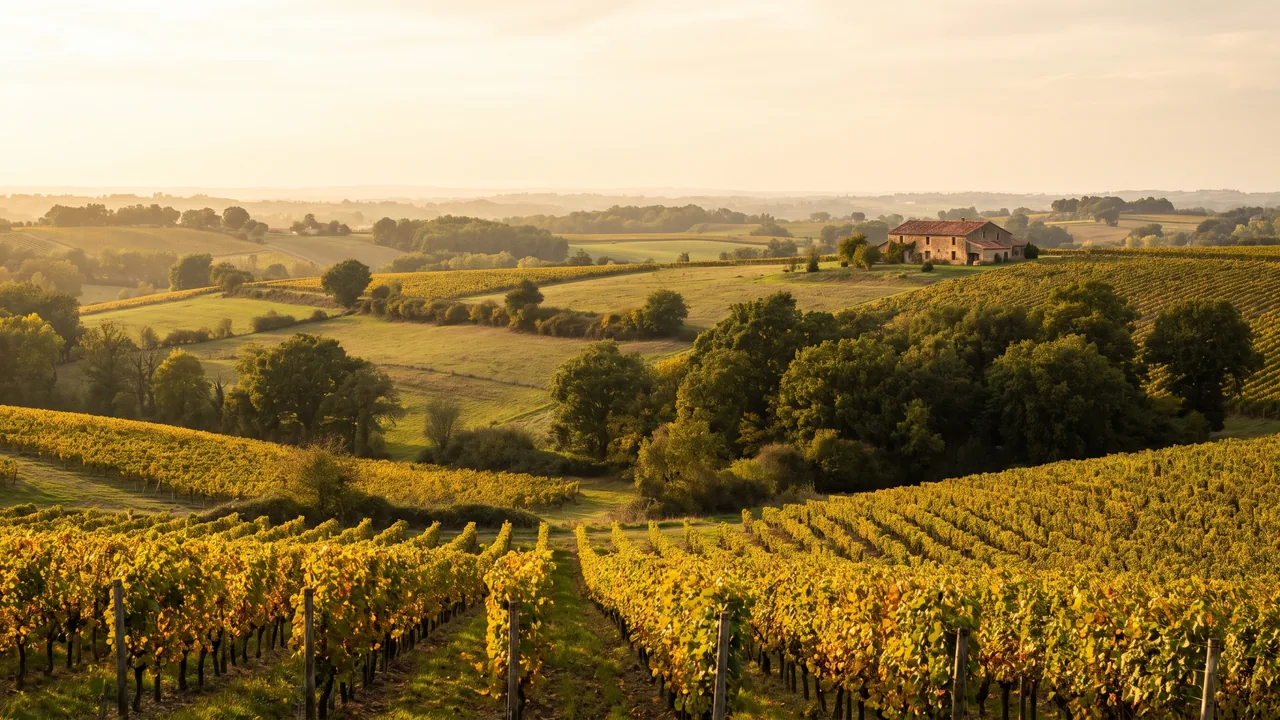
Surrounded by vineyards, the city stretches along the Garonne River, at the junction of several wine-growing regions: the Graves to the north, the Sauternes region to the southwest, the Bazadais further south, and the Entre-deux-Mers on the opposite bank. This crossroads location explains it all: its role as a market town, its function as a subprefecture, and the concentration of businesses and government offices. Langon is not a city one visits for a single monument; it is a gateway, a meeting point, a base from which to explore the surrounding area. Understanding its geography is the first step toward understanding why it’s worth a visit.
For visitors, this status as a subprefecture is by no means trivial: it signifies a town with a true center, a variety of shops, services, and a train station—whereas many of the surrounding wine-growing villages consist of nothing more than a few houses clustered around a church. Langon thus serves as a regional hub for an entire area stretching from the Graves to the Bazadais. This also makes it a convenient base: here you’ll find places to stay, eat, and stock up on supplies before setting out to explore much smaller but equally prestigious wine-producing towns. Few towns of this size combine such a central role with such wealth right on their doorstep.
How far is it from Bordeaux?
It’s about 50 kilometers and 52 minutes door-to-door from downtown Bordeaux to Langon. The most direct route takes the A62 highway toward Toulouse, with an exit specifically for the town; measured from center to center, the distance is around 50 kilometers. Langon is thus located on the outskirts of Bordeaux’s inner circle of day-trip destinations: far enough away to offer a complete change of scenery and atmosphere, yet close enough for a day trip—including wine tastings. It is this combination—an immediate change of scenery and proximity—that makes the town one of the easiest day trips from the city.
Langon and Saint-Macaire: On Which Bank of the Garonne?
One point deserves to be clarified once and for all, as it is often a source of confusion: Langon is located on the left bank of the Garonne. Here, the river separates two worlds—the left bank of the Graves and Sauternes regions on one side, and the right bank of the Entre-deux-Mers region on the other. Directly across the river, its neighbor Saint-Macaire watches over from the right bank, just 4.6 kilometers away, connected by a bridge. The two towns are often confused, as they face each other from opposite sides of the water. Langon’s location on the left bank is no mere detail: it places it within the geography of the great wines, all of which are situated to the west and south of the river.
Where does the name Langon come from?
The name Langon has its roots in antiquity. It is believed to derive from the Celtic word *Alingo*, which is thought to have given rise to *Alangon*, and then to *Langon* through the gradual erosion of syllables—a typical evolution for place names in the Southwest. Be careful, however, not to confuse our Langon in the Gironde with its namesakes: there is a Langon in Ille-et-Vilaine (35), in Brittany, and another in Loir-et-Cher (41). To avoid any confusion—whether you’re making a reservation, setting your GPS, or sending mail—it’s always best to specify “Langon (Gironde)” or “Langon (33).” An incorrectly set GPS could send you several hundred kilometers away from the Garonne River.
| Destination | Distance from Langon | Interest |
|---|---|---|
| Saint-Macaire | ~4.6 km | Medieval town, right bank |
| Sauternes | ~11.6 km | Château d'Yquem, sweet wines |
| Bazas | ~15.7 km | St. John's Cathedral, UNESCO |
| La Réole | ~20.3 km | Medieval town on the Garonne River |
| Bordeaux | 50 km | City, train station, airport |
How many people live in Langon?
Langon is a small, intimate town whose influence extends far beyond its population. According to the latest available census, the municipality had 7,674 residents (municipal population, INSEE 2023).[2] That’s the size of a large town—and we must be careful not to inflate the figure. But its status as a subprefecture, its government offices, its public services, and above all its market make it the true center of gravity for the entire southern Gironde. A much larger catchment area than just its municipal boundaries revolves around it.
How many people from Langon are there today?
The residents are called Langonnais and Langonnaises. With a population of nearly 7,700, Langon remains a market town in the Garonne Valley rather than a large urban center: people enjoy getting around on foot, and the town’s activity is concentrated around the alleys, the riverbanks, and the church. But its influence is measured differently. On market days, the town seems to fill up all at once, as people from all over southern Gironde flock to its market stalls. This contrast between a modest local population and a wide catchment area is the key to understanding Langon.
So it’s not a “landmark” destination you can check off your list in an hour, but a vibrant city—a hub of commerce and government—where people come to enjoy the atmosphere as much as the historic sites. Its role as the district seat, a status it has held since 1926, has given it a range of services—schools, a courthouse, a hospital, and shops—that exceeds what one would expect from a town of this size. Langon serves, within the southern part of the department, as a small regional hub, situated between Bordeaux and the Agen region.
This factor also explains the town’s commercial vitality: while a town of 7,000 residents might seem sleepy, Langon benefits from a steady influx of people from the surrounding rural area who come there to work, shop, and run errands. The market is merely the most spectacular manifestation of this phenomenon. On weekdays and weekends alike, the town draws a customer base far larger than its residents alone, which keeps the downtown area bustling—a rarity for a town of this size in the rural Southwest, where many small towns have fallen into decline.
| Indicator | Value |
|---|---|
| Municipal Population | 7,674 residents (INSEE 2023) |
| Demonym | Langonnais / Langonnaises |
| Status | Subprefecture, district seat |
| Borough | Founded in 1926 (merger of Bazas and La Réole) |
| Intermunicipal Cooperation | South Gironde Community of Municipalities |
| Area | 13.71 km² |
Saint-Gervais Church and Its Treasures
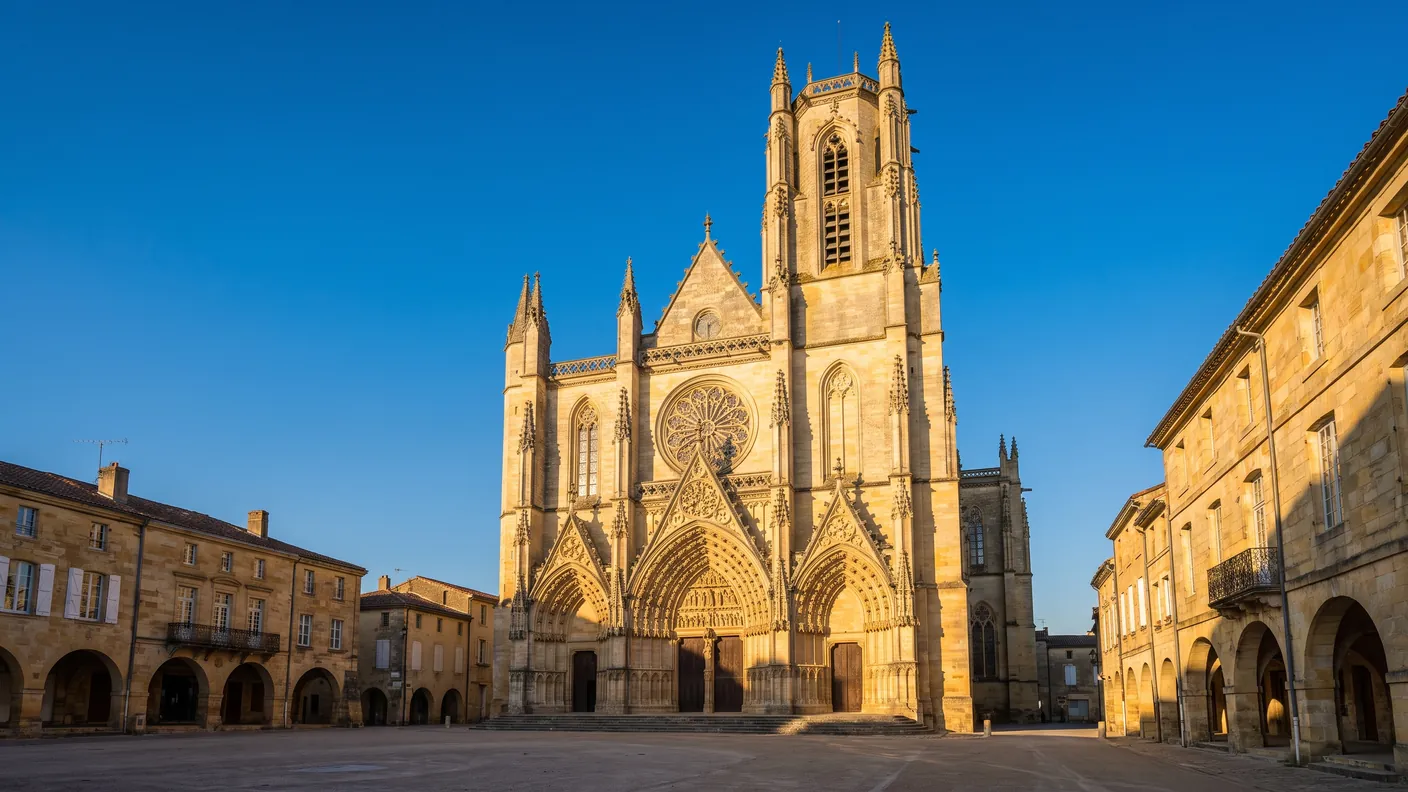
In the heart of Langon stands the Church of Saint-Gervais—whose full name is Saint-Gervais-et-Saint-Protais. Its nave and flat apse date back to the late 13th century, and the building continued to evolve through the 15th century. Its history bears the scars of major regional upheavals: partially destroyed in 1576 during the Wars of Religion, damaged again in 1652 during the Fronde, it was significantly expanded and rebuilt in the mid-19th century in the Neo-Gothic style. It is this long succession of destruction and restoration that explains its eclectic appearance, where medieval elements are visible beneath the 19th-century additions.
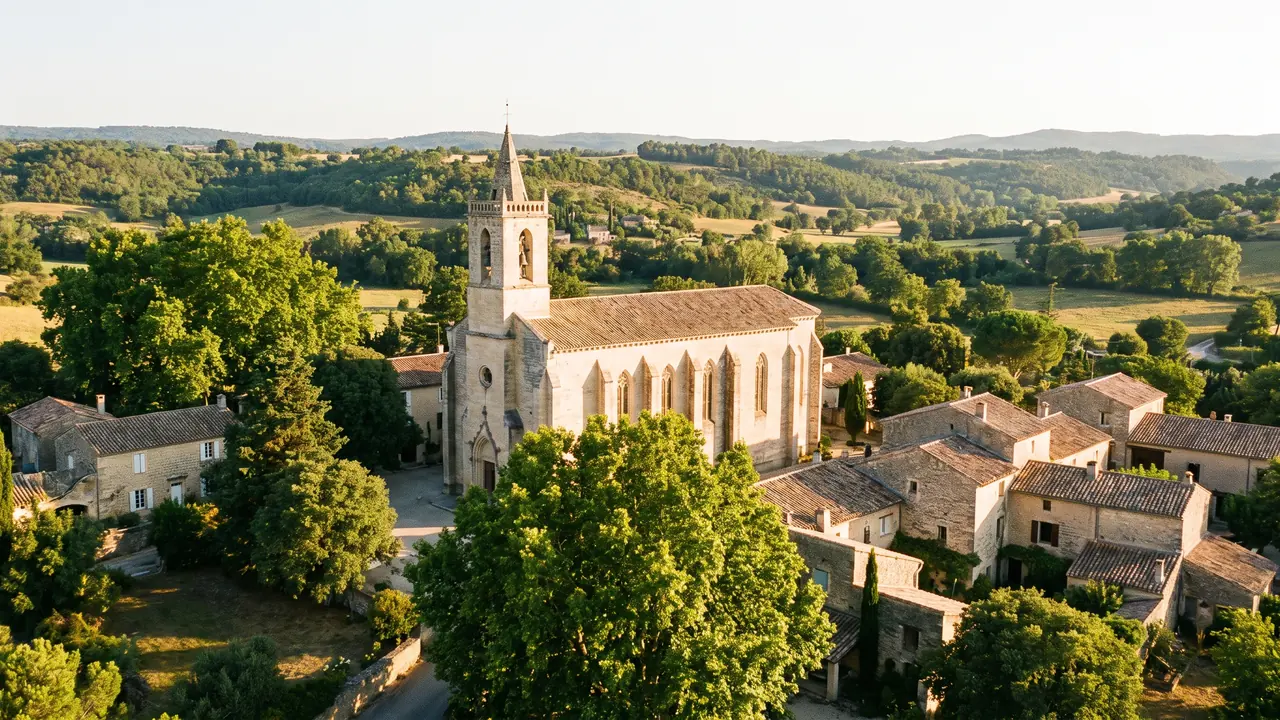
A note for heritage enthusiasts: The church has been listed as a historic monument since September 21, 2006[4]—listed, not classified, which are two distinct levels of protection under French law. This relatively recent recognition honors both the architecture and the exceptional works of art it houses. For behind a façade that might seem ordinary to those passing by too quickly lie treasures that, on their own, would justify a stop in Langon. You have to push open the door, let your eyes adjust to the dim light, and look up.
Why does the bell tower remind us of Chartres?
The tall, square bell tower of Saint-Gervais is visible from a distance, towering over the town’s rooftops and trees. Its silhouette is no accident: it is a near-exact, scaled-down reproduction of the famous South Tower—the “old bell tower”—of Chartres Cathedral. This architectural tribute, a product of the major 19th-century Neo-Gothic construction project, makes Langon one of the few places where you can admire a miniature version of one of France’s most famous Gothic masterpieces, standing on the banks of the Garonne. Once you know the connection, the resemblance is striking: the same slender ascent, the same stone pyramid. It’s a curiosity that, on its own, makes it worth taking the time to walk around the building to view it from various angles.
A Zurbarán and a Cavaillé-Coll organ
The first treasure is a painting: an *Immaculate Conception* attributed to Francisco de Zurbarán, one of the masters of the Spanish Golden Age, alongside Velázquez and Murillo. The work is dated 1661 and was donated to the church in 1863.[3] Finding a painting of such renown in a church in a subprefecture of the Gironde is nothing short of a small miracle. The second treasure is an instrument: a grand organ built by Aristide Cavaillé-Coll, the most illustrious French organ builder of the 19th century—the very same man who built the organs for Saint-Sulpice and Notre-Dame de Paris—installed here in 1859. A painting by a Spanish master and a first-rate Romantic organ, brought together under a bell tower inspired by Chartres: this is exactly the kind of unexpected combination that makes Langon so charming. You expect nothing, and you leave completely blown away.
Taken as a whole, the Church of Saint-Gervais epitomizes Langon quite well: an exterior that gives no hint of anything extraordinary, and an interior that rewards the curious. The layers of history are visible to anyone who takes the time to look—the late 13th-century Gothic style beneath the 19th-century renovations, the scars of the Wars of Religion and the Fronde healed by restorations, and the fervor of the Second Empire evident in the decor and the organ. You leave the building feeling as though you’ve seen far more than the façade promised, and it is precisely this contrast between its modest appearance and its hidden richness that makes a visit to Langon so worthwhile.
How the Langon Chapel Reached New York
The most astonishing story about Langon doesn't take place in Langon, but in New York. In the quiet neighborhood of Fort Tryon Park, at the northern tip of Manhattan, The Cloisters—the Metropolitan Museum of Art’s branch dedicated to medieval art—houses a gallery officially named the “Langon Chapel.” Thousands of visitors pass through it every year, often unaware that these stones come from a small town in the Gironde region, nestled on the banks of the Garonne River.
These remains are, however, genuine. They are Romanesque elements—notably the south wall of the choir and a series of carved capitals—from the former priory church of Notre-Dame-du-Bourg in Langon. The priory was founded in 1126 as a dependency of the powerful Benedictine Abbey of La Sauve-Majeure, whose ruins still stand today in the Entre-deux-Mers region. Decommissioned, neglected, and then dismantled over the centuries, the building saw its most beautiful parts taken apart, transported across the Atlantic, and reassembled stone by stone within the American museum, where they now form one of the most visited reconstructed chapels in the collection.
How did a chapel from Langon make its way across the Atlantic?
Like many European medieval artifacts of that period, these pieces were acquired on the art market in the early 20th century and later incorporated into the collection that would become The Cloisters, which opened to the public in 1938. One detail fuels the legend: among the capitals are crowned heads, long interpreted as portraits of Henry II Plantagenet, King of England, and Eleanor of Aquitaine—the couple is said to have come, in 1155, to the mother abbey of La Sauve-Majeure. The identification remains a matter of debate and is by no means certain, but it speaks volumes about the prestige of this small Gironde priory, a piece of which now watches over Manhattan. For the traveler, it is a delightful sensation: the Romanesque choir that is missing from Langon can be admired from seven thousand kilometers away, while the city itself retains its Saint-Gervais Church and its own treasures.
This story also says something about the legacy of Langon. The Notre-Dame-du-Bourg priory, once the town’s Romanesque gem, has partly left France; only the memory and the name remain on site, while its most precious stones have found a second life in a museum in Manhattan. For the curious visitor, this is an invitation to see Langon in a new light: beneath today’s market town lies a medieval monastic city whose influence once extended far beyond the Garonne Valley—all the way to the halls of one of the world’s greatest museums. Few French subprefectures can claim the same.
The Garonne River, the riverfront, and the train station
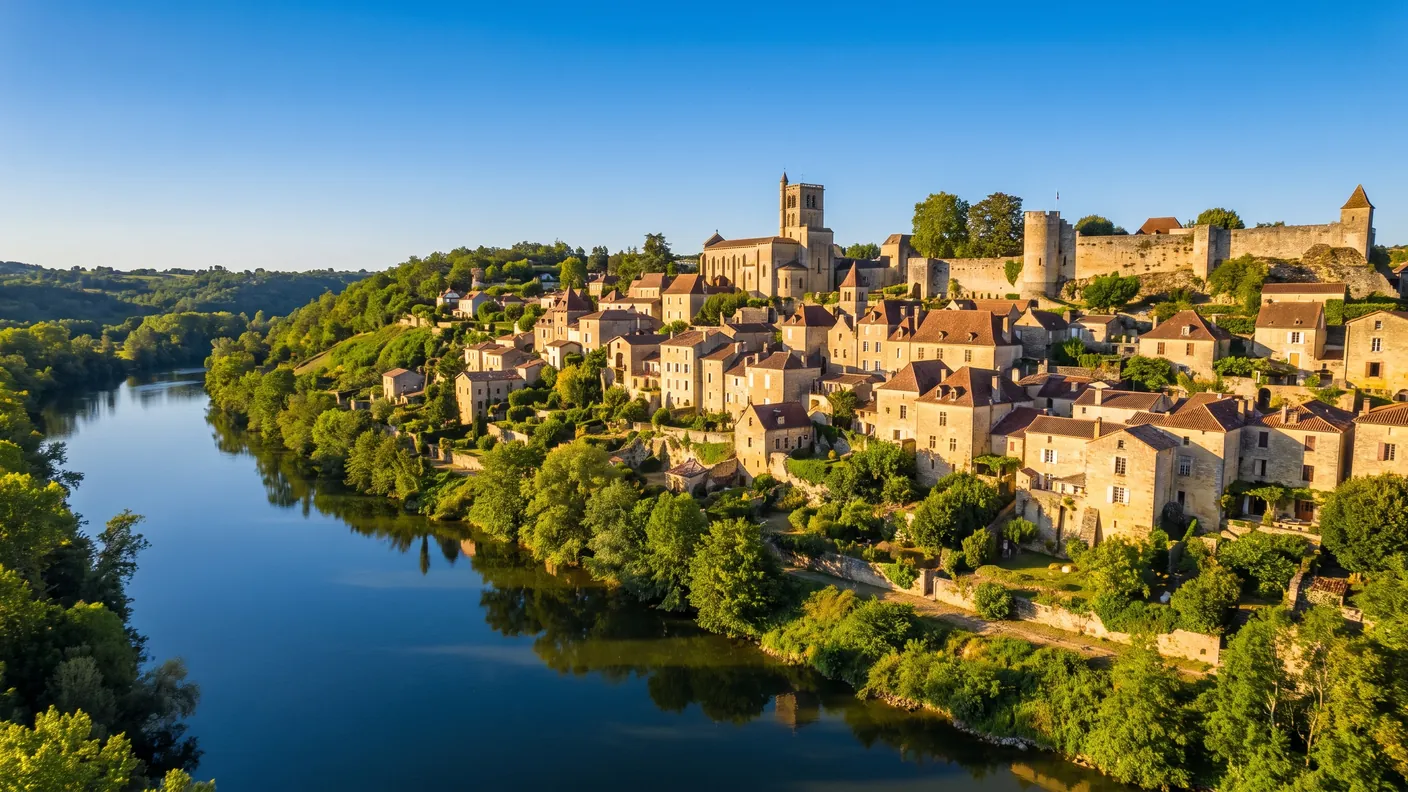
If Langon has had an impact far beyond its size, it is primarily thanks to the Garonne River. In the 17th century, the city was a major river port, entirely focused on wine exports. It was here that barrels from the Sud-Gironde and Haut-Pays regions were loaded onto gabares to be transported downriver to Bordeaux and, from there, out to the open sea and the markets of Northern Europe. The river was not merely a backdrop, but a commercial highway—the only express route of the time.[1]
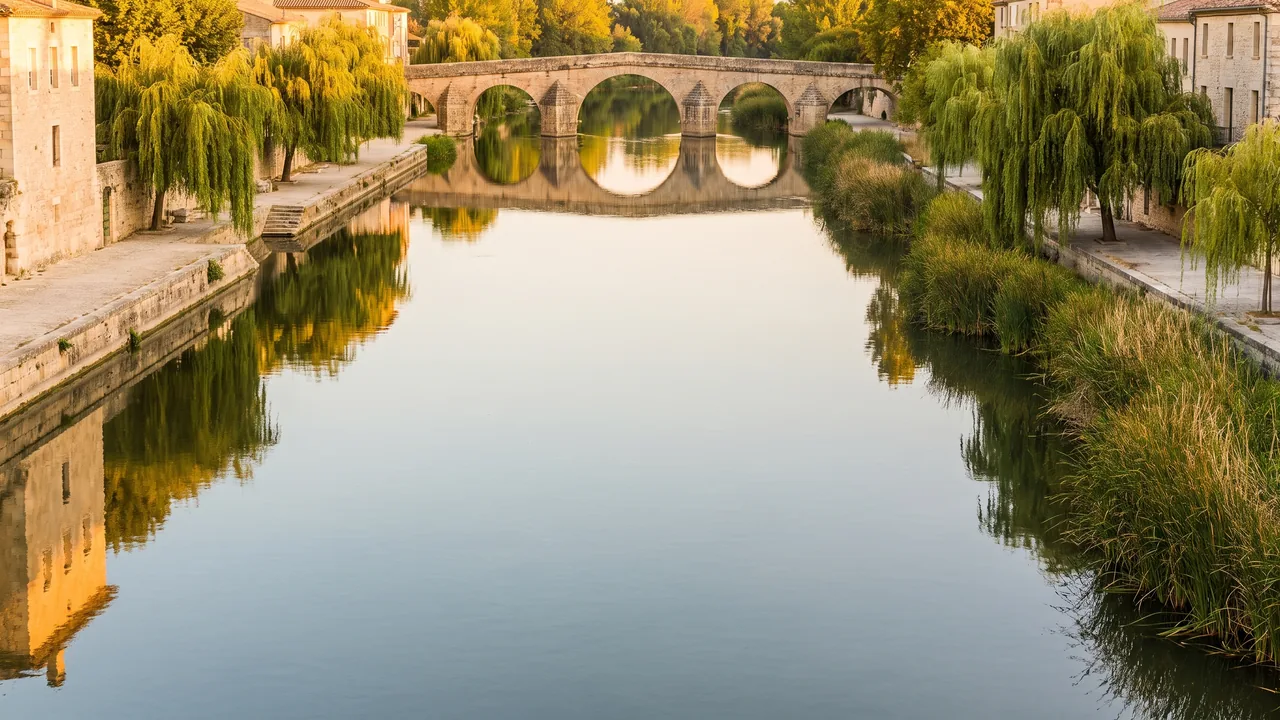
A traditional stop along the Bordeaux-Toulouse route, Langon has long lived in step with the river barges and merchants. The stone quays that line the Garonne today are a reminder of this riverine prosperity: people now stroll along them for pleasure, amid the wide-flowing water, willow trees, and historic facades, yet they preserve the memory of the trade that made the city’s fortune. At sunset, when the light gilds the stone and reflects off the current, these banks of the Garonne offer one of the most beautiful walks in southern Gironde.
A Port for Wine
The wine trade has shaped Langon just as much as its stone buildings. Situated at the crossroads between the vineyards of the Left Bank and the waterway to Bordeaux, the town served as a transshipment point and wholesale market: wine was gathered, stored, and shipped from here. This tradition has never faded; it has simply taken on a new form. The large Friday market, the role still played by the local wine trade, and the ever-present wine-growing culture are its direct heirs. In Langon, wine is not just folklore: it is an economy, an identity, a way of life.
The Train Station and the Bordeaux–Sète Line
The railroad has taken over from the river. The Langon train station is located on the Bordeaux-Sète line, one of the major rail corridors in southwestern France, served by Nouvelle-Aquitaine’s TER trains along the Bordeaux-Toulouse route. It therefore connects Langon directly to Bordeaux’s Saint-Jean station, making it a convenient gateway for exploring the Garonne Valley without a car. The train drops you off in the heart of the city, just a stone’s throw from the riverbanks and the church; but to then venture out to Sauternes, Bazas, or Saint-Macaire—villages that are poorly connected by public transportation—you’ll need to find a car. This is where the issue of transportation really comes into play.
Between the river of yesterday and the railroad of today, Langon has always thrived on its role as a crossroads. It is a city of movement: wines flowed downstream toward Bordeaux, travelers headed upstream toward Toulouse, and goods were transported from one bank to the other. This culture of movement is still evident in the city’s layout, which faces the Garonne and the major thoroughfares that run through it. For visitors, this offers a very practical advantage: no matter where you go in southern Gironde, you almost always pass through Langon, which remains the natural hub of all the valley’s roads. You don’t bypass Langon; you always come back to it.
The Gateway to Sauternes and the Graves
Langon is unanimously described as “the gateway to the Sauternes region.” The statement is accurate—as long as you don’t read it too quickly. The vineyards in the commune of Langon itself are not part of the Sauternes appellation, but rather the Graves AOC: approximately 282 hectares there produce red and white Graves wines, as well as “Graves supérieures”—sweet white wines that are less famous than their neighboring sweet Sauternes wines but are often delicious. Strictly speaking, Langon is therefore a commune in the Graves region that opens onto the Sauternes region, and not a commune within the Sauternes appellation.
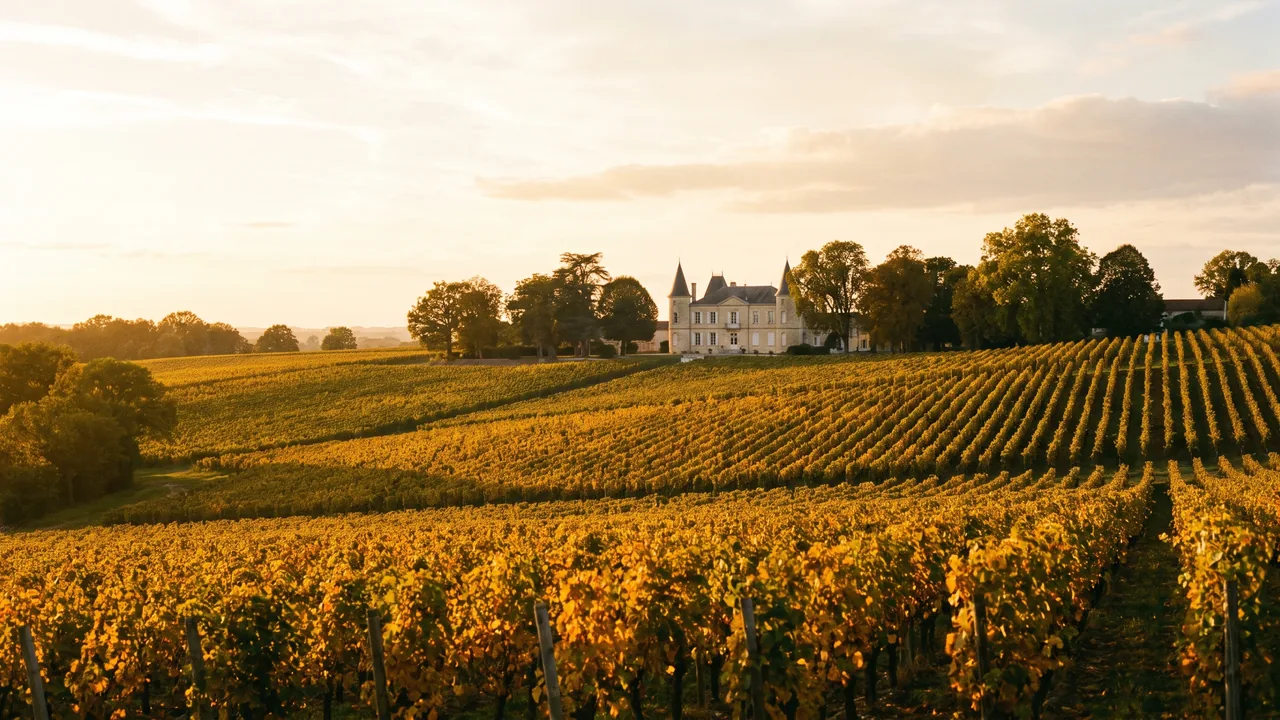
In other words, Langon is the gateway, the antechamber, the starting point of the Sauternes region—not its heart. But what a gateway: as soon as you leave town, you enter one of the world’s most famous sweet wine regions, where the renowned “noble rot”—the fungus that concentrates the sugars in the grapes amid the morning mist along the banks of the Garonne—creates exceptional sweet wines. It is this proximity that makes Langon the ideal base: you can sleep, eat, and shop there before setting out to explore the hillsides.
Is Langon a Sauternes or a Graves?
In Graves, then, for its own vineyard. The sweet wine appellations of Sauternes and Barsac—established by the 1936 decrees—begin right next door, in the neighboring communes that border Langon to the south and west. This distinction is important for wine lovers: in Langon itself, you can taste Graves wines, both dry and sweet; it’s only a few kilometers further on that you reach the great sweet wines of Sauternes and Barsac. The two worlds almost touch, but they do not merge—and understanding this boundary is the first step toward better interpreting a map of the region’s wines.
Where is Château d'Yquem located?
Another clarification that helps avoid many misunderstandings: Château d'Yquem—the only estate to have been awarded the rank of Premier Cru Supérieur in the famous 1855 classification, the absolute and undisputed pinnacle of Sauternes—is not located in Langon. It is located in the town of Sauternes, about 11.6 kilometers from the city. Langon is simply the natural gateway town: visitors stay there, dine there, and shop for produce there before setting out to explore the Yquem hillsides, the Barsac estates, and, a little further south, the nearby Bazadais region. It’s common to confuse Langon with Sauternes; distinguishing between them means understanding the intricate geography of this corner of the Gironde, where every hill has a name and a reputation.
Langon should therefore be seen as a window into the world of fine wines. The town itself produces its own Graves wines—honest and sometimes remarkable—but its true luxury lies in its access to a unique array of wines: sweet wines to the south, Graves to the north, Entre-deux-Mers on the opposite bank, and Bazadais beyond. In a single day, you can go from a crisp dry white to a golden Sauternes, from a Graves red to a neighboring sweet wine. Few towns offer such a diversity of terroirs within such a compact area—and it is here, even more so than in its monuments, that the understated richness of Langon lies, a richness that fills cellars and tables as much as it delights the eye.
Langon and Its Figures
Beyond its vineyards and stone buildings, Langon has a turbulent history and a fascinating cast of characters. A town in the Garonne Valley, situated at a strategic crossroads, it bore the brunt of the kingdom’s great upheavals: the Wars of Religion, which left their mark in 1576 with the partial destruction of its church, and then the Fronde in 1652, which caused further damage. These events largely explain the successive reconstructions of its buildings and the partially restored appearance of its Saint-Gervais Church. Like many towns in the region, Langon has been destroyed and rebuilt several times, and its current appearance reflects this resilience.
Which figures were born in Langon?
Langon is proud to have produced two sons who left a lasting mark on their respective fields. Louis Ducos du Hauron, born here in 1837, was one of the pioneers of color photography: he was the one who theorized and perfected trichromatic color reproduction, the principle of breaking down and recomposing color into three layers that still forms the basis, in one form or another, of all color reproduction today—from print to screen. Raymond Oliver, another native of Langon, also born in the city, became one of the greatest French chefs of the 20th century: as head chef of the Grand Véfour in Paris and a pioneer of cooking on television, he brought fine dining into people’s homes. The city has also inspired literature: François Mauriac, the Bordeaux-born Nobel Prize-winning writer, set his 1923 novel *Genitrix* there.
Did Toulouse-Lautrec die in Langon?
This is the most common misconception in this part of the Gironde, and it needs to be clearly corrected: no, Henri de Toulouse-Lautrec did not die in Langon. The painter passed away on September 9, 1901, at Château Malromé, in the neighboring town of Saint-André-du-Bois, where his mother lived and where he spent his final summers. Nor is his grave in Langon, but rather in Verdelais, at the Basilica of Notre-Dame, a major pilgrimage site located nearby. Langon is indeed the market town and railway station of this small region encompassing Malromé and Verdelais—an excellent starting point for following in the painter’s footsteps—but it is neither the place of his death nor his burial site. This distinction is worth noting: it prevents Langon from being credited with a posthumous fame that actually belongs to its neighbors, Saint-André-du-Bois and Verdelais.
This gallery of characters and misunderstandings paints an endearing portrait of Langon: a city that gave France an inventor of color photography and a great chef, that fueled the imagination of a Nobel Prize winner in literature, and to which people sometimes attribute glories that actually belong to its neighbors. Distinguishing fact from fiction is by no means a pedantic exercise: it is about giving Langon its due—which is considerable—without attributing to it what does not belong to it. The city has no need for borrowed legends; its proven treasures—from Ducos du Hauron to the Zurbarán in its church—are more than enough to justify the trip.
What is there to do in Langon?
In Langon, start by getting a feel for a town that’s truly alive. The main event is the Friday morning market: nearly 130 vendors take over the town center and the banks of the Garonne, with stalls offering farm-fresh produce, fish, cheeses, flowers, and specialties from the Southwest—one of the most beautiful markets in southern Gironde. On Sunday mornings, a second, more intimate market sets up along the Allées Jean-Jaurès. You can then stroll along the riverbanks, step inside Saint-Gervais Church to see its Zurbarán, its Cavaillé-Coll organ, and its “Chartres-style” bell tower, and then set out to meet the winemakers. Langon is, above all, a base: from here, you can explore Sauternes and its Château d’Yquem, Bazas and its cathedral, the medieval town of Saint-Macaire, and Verdelais. A single day isn’t enough to take in everything the town has to offer.
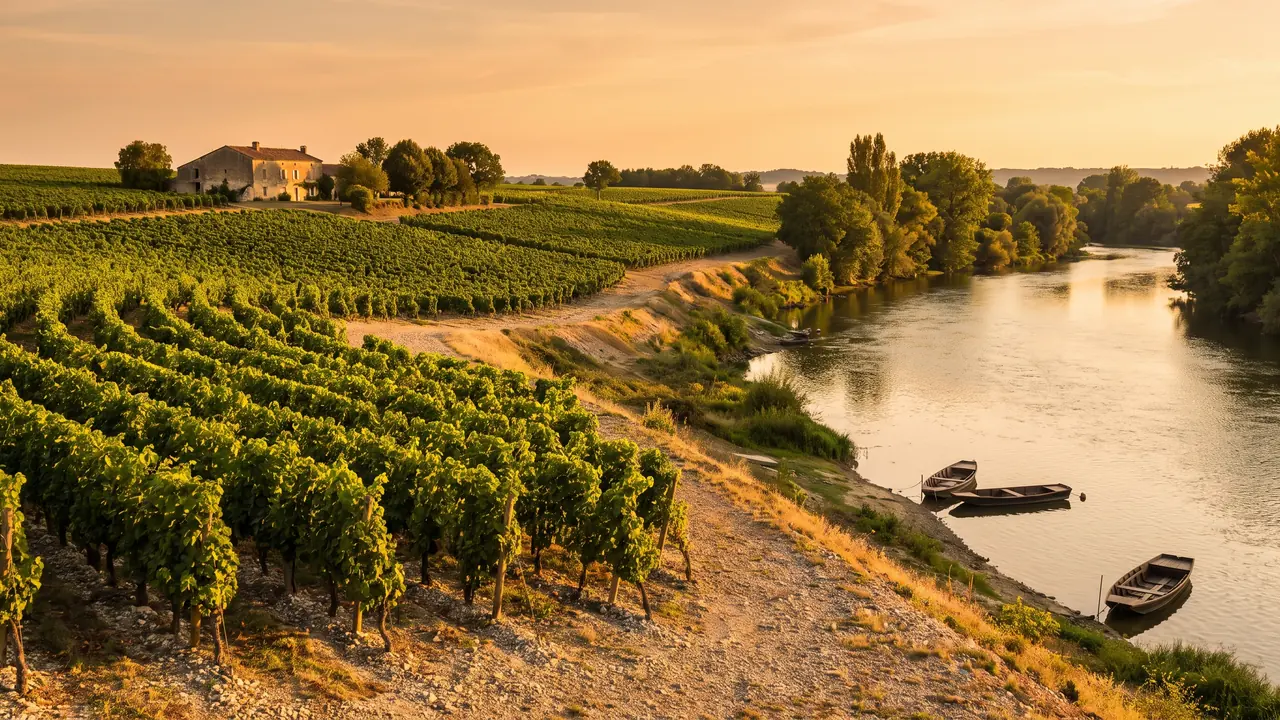
- Stroll through the large Friday morning market (~130 vendors), in the city center and along the banks of the Garonne, and then, on another day, visit the Sunday morning market on the Allées Jean-Jaurès.
- Visit the Church of Saint-Gervais to see its "Immaculate Conception" by Zurbarán (1661), its Cavaillé-Coll organ from 1859, and its bell tower, inspired by the south tower of Chartres Cathedral.
- Take a stroll along the banks of the Garonne, following in the footsteps of the old port from which barrels were shipped to Bordeaux.
- Taste the Graves wines from Langon—both dry and sweet—before moving on to the great sweet wines of the Sauternes region.
- Head to Sauternes and Château d'Yquem (~11.6 km) for a wine tasting in the heart of one of the world's most famous vineyards.
- Head up to Bazas to admire the Saint-Jean Cathedral, a UNESCO World Heritage Site (~15.7 km), and make a detour to Pope Clement V’s fortified castle in nearby Villandraut.
- Head toward Saint-Macaire (~4.6 km), a medieval town with intact ramparts, on the right bank of the Garonne.
- Stop in Verdelais, home to the Notre-Dame Basilica and the tomb of Henri de Toulouse-Lautrec, as well as the nearby Château Malromé.
A tip for planning your visit: if possible, schedule your trip for a Friday, when the big market is held—that’s when Langon is at its best, lively and full of culinary delights, with the quays and alleys packed with people. The rest is up to you: a morning exploring the historic sites between the church and the quays, an afternoon in the vineyards, or a grand loop connecting Sauternes, Bazas, and Saint-Macaire. Whatever you choose, plan to be flexible: in this land of wine tastings and leisurely strolls, the best discoveries are rarely made on a tight schedule, and you’ll always regret having planned too much into your day.
| To Do | Where / When | Good to Know |
|---|---|---|
| The Big Market | Downtown and along the Garonne River, Friday morning | ~130 exhibitors |
| Sunday Market | Allées Jean-Jaurès, Sunday morning | More intimate |
| Saint-Gervais Church | Heart of the City | Zurbarán, Cavaillé-Coll organ, “Chartres-style” bell tower |
| The banks of the Garonne | Riverbanks | Former wine port |
| Wine Route | Graves and the Surrounding Sauternes Region | Yquem, about 11.6 km away |
| Bazas | ~15.7 km | St. John's Cathedral (UNESCO) |
Around Langon
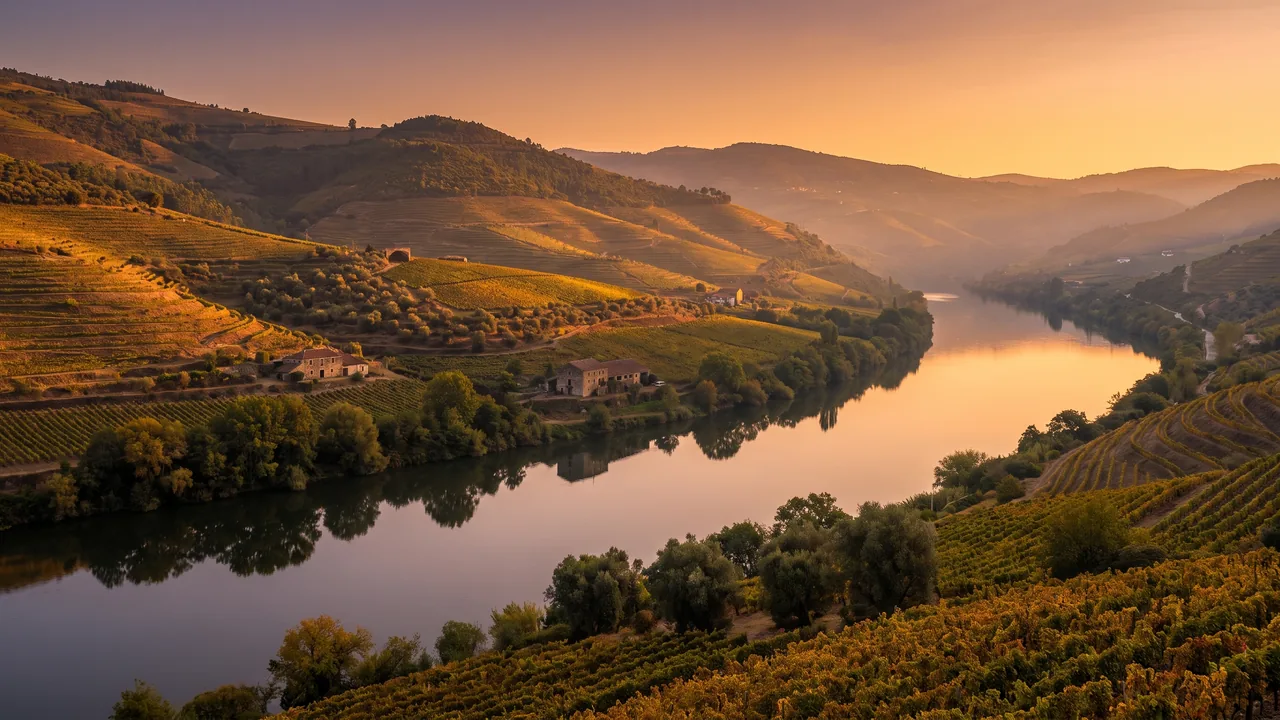
One of Langon’s greatest assets is its location. In less than twenty minutes by car, you can go from the sweet wines of Yquem to medieval ramparts, from a listed Gothic cathedral to a papal castle. Few subprefectures boast so many remarkable sites right on their doorstep. This is what makes Langon a base for excursions rather than just a stopover: you can set up camp there and explore the area for several days without ever straying far from the Garonne Valley.
What's there to see within twenty minutes?
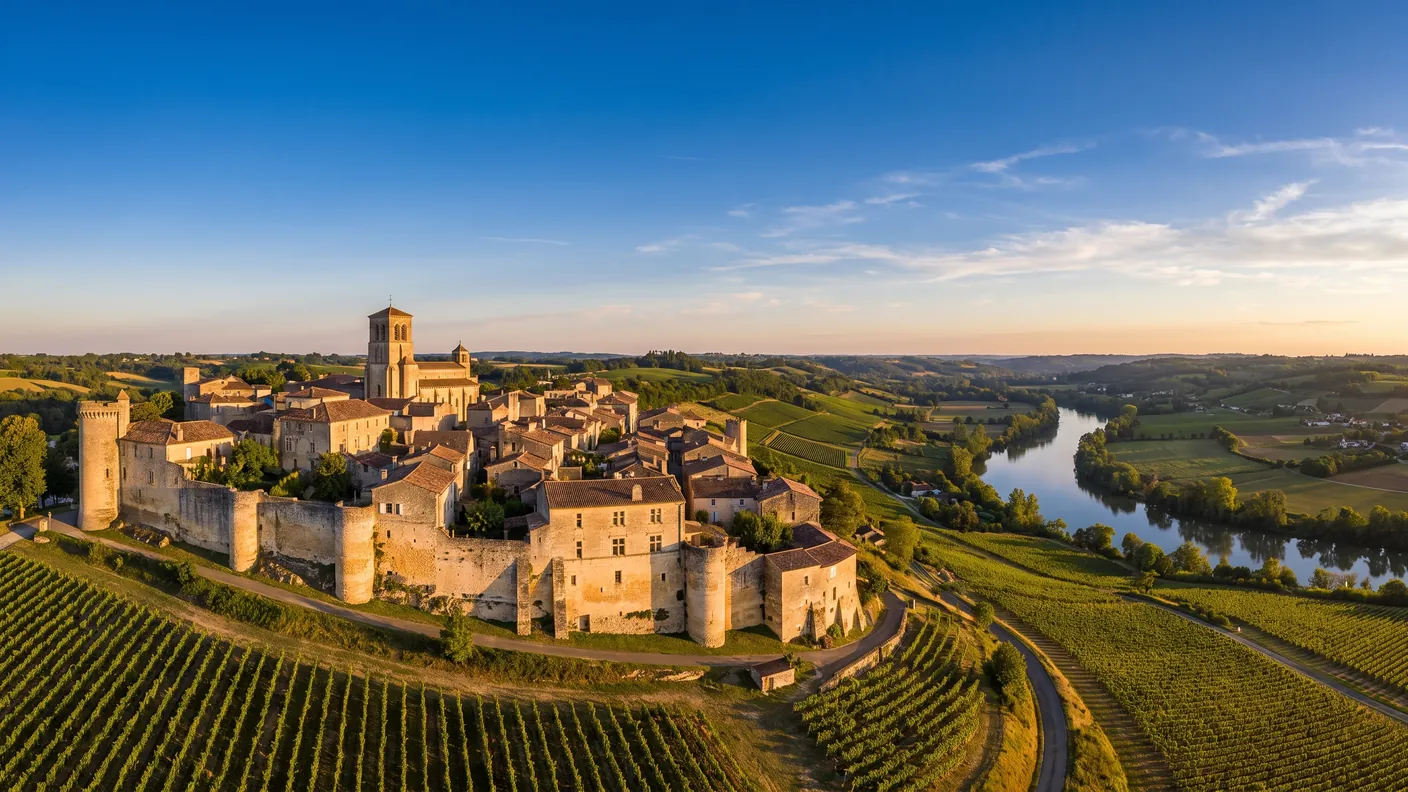
Saint-Macaire (~4.6 km) is the immediate neighbor: an exceptionally well-preserved medieval town, situated on the right bank of the Garonne, with its fortified gates, stone houses, and covered square. Sauternes (~11.6 km) features its sweet wine-growing hillsides surrounding the legendary Château d’Yquem. Bazas (~15.7 km) features, around its royal square, the superb Saint-Jean Cathedral, a UNESCO World Heritage Site as part of the Routes of Santiago de Compostela; just a few minutes away, Villandraut preserves the imposing fortified castle built by Pope Clement V, the first Pope of Avignon and a native of the region. Finally, La Réole (~20.3 km), another medieval town in the valley, rounds out this string of villages to visit starting from Langon—not to mention nearby Verdelais and its pilgrimage site. In just a few days, you can experience a thousand years of history and wine, without ever having to ride for very long.
What strikes one about this area is its density and variety. In just a few minutes, you go from one world to another: sweet wines and prestige in Sauternes, medieval stone architecture in Saint-Macaire and La Réole, the fervor of pilgrimage in Verdelais, Gothic grandeur in Bazas, and the papal fortress in Villandraut. None of these sites are alike, and they all converge on Langon, which serves as the hub. It is this star-shaped layout—rare on such a compact scale—that makes it worth setting up base here rather than just passing through in a flash: each excursion can be completed in half a day, and you can return in the evening to the city’s riverbanks and restaurants.
| Location | Distance | Must-See |
|---|---|---|
| Saint-Macaire | ~4.6 km | Medieval town, city walls, Place du Mercadiou (right bank) |
| Sauternes | ~11.6 km | Château d'Yquem, sweet wines |
| Bazas | ~15.7 km | St. John's Cathedral (UNESCO), Place Royale |
| Villandraut | Near Bazas | Pope Clement V's Fortress |
| La Réole | ~20.3 km | Medieval town on the Garonne River |
| Verdelais | Neighbor | Notre-Dame Basilica, Toulouse-Lautrec's grave |
How to get to Langon from Bordeaux
From Bordeaux, Langon is located 50 km away, or about 52 minutes via the A62 highway, according to the posted estimate. The sedan transfer for 1 to 3 passengers starts at €111 during the day. From this gateway to the Sauternes region, you can then travel to Sauternes, Bazas, or Saint-Macaire based on a quote.
How much does the ride cost?
The Bordeaux → Langon transfer is available starting at €97 during the day for a sedan accommodating 1 to 3 passengers. The price is fixed and confirmed in writing before departure, with no meter and no surprises upon arrival. Please allow for a surcharge for nighttime, weekend, and holiday trips, as well as for van service for groups of more than four passengers or those with bulky luggage. From Langon, trips to Sauternes, Bazas, or Saint-Macaire, as well as transfers to or from Bordeaux-Mérignac Airport, are priced based on a quote, depending on the number of stops and passengers. The city serves as an ideal base for exploring the Sauternes and Graves wine regions—Sauternes, Barsac, Yquem—as well as for trips to Bazas and Saint-Macaire.
| Route | Distance / Duration | Starting at |
|---|---|---|
| Bordeaux → Langon | 50 km · 52 min | starting at €97 |
| Langon → Sauternes (Yquem) | ~11.6 km | based on a quote |
| Langon → Bazas | ~15.7 km | based on a quote |
| Langon → Saint-Macaire | ~4.6 km | based on a quote |
| Bordeaux-Mérignac Airport → Langon | direct connection | based on a quote |
Why hire a private driver?
The South Gironde region is meant to be savored in the truest sense of the word: Sauternes, Barsac, Graves, and great sweet wines can all be explored with a glass in hand. Leaving the driving to a private chauffeur means you can move from one tasting to the next with complete peace of mind, without worrying about mileage or keeping track of the time for your return. It also offers the convenience of door-to-door service from Bordeaux and the flexibility of a customized itinerary—the market in Langon in the morning, Yquem in the afternoon, a detour to Bazas or Saint-Macaire along the way—and the peace of mind that comes with a price you know in advance. Where the train only stops in the city center and the villages in the wine region remain poorly connected to one another, a private transfer connects everything, from the doorstep of your Bordeaux hotel to the gates of the vineyards.
In practice, a typical day starting from Bordeaux works out just fine: arrive in Langon mid-morning for the market and the church, have lunch there or at a vineyard estate, spend the afternoon exploring Sauternes and its golden hillsides, and return at the end of the day along the banks of the Garonne. All without worrying about parking, narrow vineyard roads, or train schedules—the convenience of reaching each stop at your own pace, and heading back with a few bottles in tow without having to drive. It’s this freedom, more than speed, that makes all the difference when you set out to explore the South Gironde and its great wines.
Frequently Asked Questions
Where is Langon located?
Langon is a commune in the Gironde department (INSEE code 33227, ZIP code 33210) in the Nouvelle-Aquitaine region. It is located on the left bank of the Garonne River, about 50 kilometers southeast of Bordeaux—a trip of nearly 52 minutes via the A62 highway. As the department’s subprefecture and the seat of the arrondissement, it serves as the market town of southern Gironde, at the crossroads of the Graves, Sauternes, Bazadais, and Entre-deux-Mers regions. Beware of homonyms: there is also a Langon in Ille-et-Vilaine and another in Loir-et-Cher—always specify “Langon (Gironde).”
How many people live in Langon?
Langon had a population of 7,674 at the last census (municipal population, INSEE 2023). Its residents are known as Langonnais and Langonnaises. It has the size of a large town, but its status as a subprefecture—and especially its large market—give it a reach far greater than its size would suggest: on market days, the entire southern Gironde region converges on its market aisles. Langon thus functions as the true commercial and administrative hub of the Garonne Valley, between Bordeaux and the Agen region.
Is Langon in Sauternes?
No, not exactly. Langon is often described as “the gateway to the Sauternes region,” and that’s true geographically. But the vineyards in the commune of Langon itself are classified as AOC Graves—about 282 hectares of red and white Graves wines, as well as sweet Graves Supérieures—and not as Sauternes. The sweet wine appellations of Sauternes and Barsac begin in the neighboring communes. In Langon itself, therefore, you’ll taste Graves wines; it’s only by traveling a few kilometers south that you enter the realm of the great sweet wines.
Where is Château d'Yquem located?
Château d'Yquem is not located in Langon, but in the town of Sauternes, about 11.6 kilometers away. It is the only estate to have been elevated to the rank of Premier Cru Supérieur in the 1855 classification, the absolute pinnacle of Sauternes wines. Langon is the ideal base: you can stay there, dine there, and shop at the market there before setting out to explore the hillsides of Yquem, Barsac, and Bazadais. A private transfer allows you to visit these estates one after another without having to drive between tastings.
What is there to see at Saint-Gervais Church?
The Church of Saint-Gervais-et-Saint-Protais, in the heart of Langon, holds two treasures. The first is a painting of the Immaculate Conception attributed to Francisco de Zurbarán, a 17th-century Spanish master: the canvas is dated 1661 and was donated to the church in 1863. The second is a grand organ by Aristide Cavaillé-Coll, France’s most famous organ builder, installed in 1859. An interesting detail: the tall bell tower is a scaled-down replica of the south tower of Chartres Cathedral. The church has been listed as a historic monument since 2006 [4].
Is it true that there is a Langon chapel in New York?
Yes, that's true. Romanesque elements—the south wall of the choir and carved capitals—from the former priory church of Notre-Dame-du-Bourg in Langon were dismantled and then reassembled at The Cloisters, the medieval wing of the Metropolitan Museum of Art in New York. The gallery there is officially named the “Langon Chapel.” This priory, founded in 1126, was a dependency of the Abbey of La Sauve-Majeure. Some of the capitals featuring crowned heads have long been interpreted as depicting Henry II Plantagenet and Eleanor of Aquitaine.
Did Toulouse-Lautrec die in Langon?
No. This is a common misconception, but Henri de Toulouse-Lautrec did not die in Langon. The painter passed away on September 9, 1901, at Château Malromé, in the neighboring town of Saint-André-du-Bois. His grave is located in Verdelais, in the Notre-Dame Basilica, and not in Langon. The town remains, however, the natural gateway to this small region: Langon is the most convenient starting point from which to explore Malromé and Verdelais and follow in the artist’s footsteps.
On what day is the Langon market held?
The large Langon market is held on Friday mornings: nearly 130 vendors set up shop in the city center and along the banks of the Garonne, making it one of the largest and liveliest markets in southern Gironde. You’ll find farm-fresh produce, fish, cheeses, flowers, and local specialties. A second, more intimate market takes place on Sunday mornings on the Allées Jean-Jaurès. These markets are the best time to soak up the town’s atmosphere and stock up on local products.
How do I get from Bordeaux to Langon?
From Bordeaux, Langon is about 50 kilometers and a 52-minute drive via the A62 highway toward Toulouse, with a dedicated exit. By train, the Langon station is served by Nouvelle-Aquitaine TER trains on the Bordeaux-Sète line (Bordeaux-Toulouse corridor), with direct connections from Bordeaux’s Saint-Jean station. Whether by car or train, access is therefore easy. For a comfortable door-to-door experience—especially if you plan to go wine tasting at nearby estates—a private transfer remains the most flexible option.
How much does it cost to travel from Bordeaux to Langon by private car?
The Bordeaux → Langon route with a chauffeur service is available starting at €97. This rate applies during the day, for a sedan carrying 1 to 3 passengers, door-to-door, with a fixed price confirmed in writing before departure and without a meter. Surcharges apply at night, on weekends, and on holidays, as well as for vans carrying more than four passengers or with a large amount of luggage. Excursions to Sauternes, Bazas, or Saint-Macaire and airport transfers are priced on a quote basis.
What is there to do around Langon?
The area surrounding Langon is exceptional. About 4.6 kilometers away, Saint-Macaire is a medieval town with intact ramparts, located on the right bank. Sauternes (~11.6 km) features its sweet wine-growing hillsides surrounding Château d’Yquem. Bazas (~15.7 km) charms visitors with its UNESCO-listed Saint-Jean Cathedral and its royal square; nearby, Villandraut preserves the fortified castle of Pope Clement V. La Réole (~20.3 km) and Verdelais, with its basilica and the tomb of Toulouse-Lautrec, round out this string of villages to explore from Langon.
Who was born in Langon?
Langon was the birthplace of two notable figures. Louis Ducos du Hauron (1837) was one of the pioneers of color photography: he is credited with developing the trichromatic process, a principle that still forms the basis of color reproduction. Raymond Oliver, also born in Langon, became head chef at the Grand Véfour in Paris and one of the pioneers of cooking on television. Finally, the writer François Mauriac set the action of his novel *Genitrix* (1923) in Langon.
How much time should I set aside to visit Langon?
For Langon itself, plan on half a day: just enough time to visit the market (ideally on a Friday morning), tour the Saint-Gervais Church, and stroll along the banks of the Garonne. But the city really comes into its own as a base: add another half-day, or even a full day, to explore Sauternes and Château d’Yquem, Bazas and its cathedral, or the medieval town of Saint-Macaire. With wine tastings included, a full day starting from Bordeaux fills up easily.
Further Reading
- Saint-Macaire, the medieval town on the right bank of the Garonne, just ~4.6 km from Langon.
- Bazas and its Saint-Jean Cathedral, a UNESCO World Heritage Site, located about 15.7 km south of Langon.
- La Réole, another medieval town in the Garonne Valley, about 20.3 km away.
- All our destinations departing from Bordeaux, from Entre-deux-Mers to the southern Gironde.
- Book your transfer from Bordeaux to Langon—fixed price confirmed in writing, starting at €97.
Sources and References
- Town of Langon / South Gironde Tourist Office — church, heritage
- INSEE — Municipality of Langon (33227) — Demographics, Subprefecture
- Palissy / POP Base — PM33000558 — The Immaculate Conception by Zurbarán
- Mérimée Database / POP — PA33000092 — church listed as a historic monument in 2006
- The Met Cloisters — Langon Chapel — Romanesque choir of Notre-Dame-du-Bourg
Article updated on July 18, 2026.
Our Latest Guides
Heading to the South Gironde
Direct transfer from Bordeaux (52 min) to Langon, the gateway to the Sauternes and Graves regions. Written, fixed-price quote with no obligation.