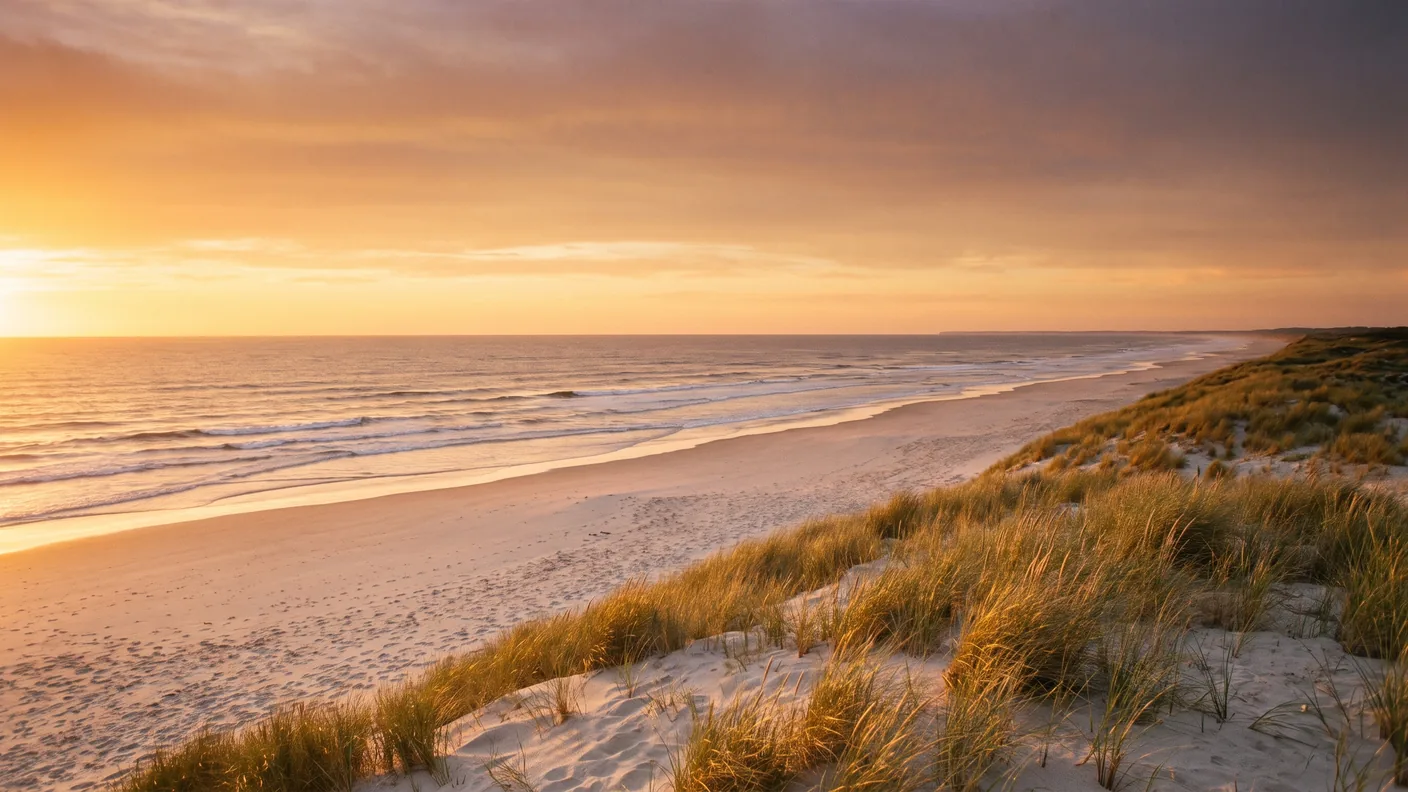
Bordeaux to Soulac-sur-Mer: Belle Époque by the Atlantic
At the northern tip of the Médoc, between the ocean and the estuary, lies a Belle Époque resort with 500 villas and a Romanesque basilica rising from the sands. Notre-Dame-de-la-Fin-des-Terres, a UNESCO World Heritage Site, ocean beaches, and surfing at L’Amélie—Soulac, 1 hour and 38 minutes from Bordeaux.
Soulac-sur-Mer at a Glance
At the northernmost tip of the Médoc, where the Gironde estuary flows into the Atlantic, Soulac-sur-Mer exudes a rare charm: that of a resort born of the Belle Époque and a Romanesque basilica that the sands had nearly erased. On this strip of land wedged between the ocean and a pine forest, nearly five hundred villas with pastel-colored facades line streets laid out in the late 19th century, while Notre-Dame-de-la-Fin-des-Terres, now freed from its dune, watches over the town from its center. Add to that vast ocean beaches, the renowned Amélie surf spot, and the salty sea air at the far end of the Gironde region: Soulac is well worth the trip, about 1 hour and 38 minutes from Bordeaux. This guide brings together what makes the resort so endearing—its history, its heritage, its beaches—while carefully distinguishing verified facts from oft-repeated legends.
Before getting into the details, here’s the basics: where Soulac is located, who lives there, what’s worth seeing, and what you need to plan for when traveling there from the Bordeaux metropolitan area. The resort may seem far away on the map, but it’s perfectly possible to visit it in a single day.
| Landmark | Details |
|---|---|
| Department / Region | Gironde (33) · Nouvelle-Aquitaine |
| Status | Seaside resort, northern tip of the Médoc · Médoc Atlantique Community of Communes |
| Population | ~3,100 residents (INSEE 2023) · the residents of Soulac |
| Must-Sees | UNESCO-listed basilica, ~500 Belle Époque villas, ocean beaches |
| From Bordeaux | ~92 km · ~1 hr 38 min · starting at 181 € |
A word about the approach taken in this guide: Soulac is one of those places where verified history and legend have coexisted for centuries. A sunken city, a vanished ancient port, a basilica miraculously rediscovered beneath the sands—stories abound, often embellished over generations, to the point where it becomes difficult to distinguish verified facts from myths passed down by word of mouth. We have therefore taken care, throughout these pages, to distinguish between what is firmly established (dates, official classifications, INSEE figures) and what stems from oral tradition and local folklore. This rigor in no way detracts from the magic of the place; on the contrary, it allows us to appreciate it for what it truly is, without succumbing to the inaccuracies that all too often circulate about it.
Where is Soulac-sur-Mer located?
Soulac-sur-Mer is located at the northernmost tip of the Médoc Peninsula, a long strip of land bordered by the Atlantic Ocean to the west and enclosed by the Gironde Estuary to the north and east. The municipality (INSEE code 33514, zip code 33780) covers 28.89 km² and has a modest population density of about 107 inhabitants per square kilometer: in other words, the pine forest, dunes, and marshes take up far more space here than built-up areas. It is part of the Médoc Atlantique community of municipalities, which brings together the coastal towns from Pointe de Grave to the Médoc lakes. Its location, literally at the edge of the land, explains both its relative isolation and the unique atmosphere that surrounds it.
The very name “Soulac” tells a long story of human settlement. Toponymists interpret it as a Gallo-Roman estate formed by combining the suffix -acum with the personal name Solus: “the estate of Solus,” in short, an ancient villa of which the seaside resort is a very distant descendant. It would be wrong, however, to imagine Soulac as completely isolated: its immediate neighbor, Le Verdon-sur-Mer, at the very tip of the Pointe de Grave, was for a long time simply a district of Soulac before becoming an independent municipality in 1874. This separation, as we shall see, explains some persistent confusion about what actually belongs to Soulac.
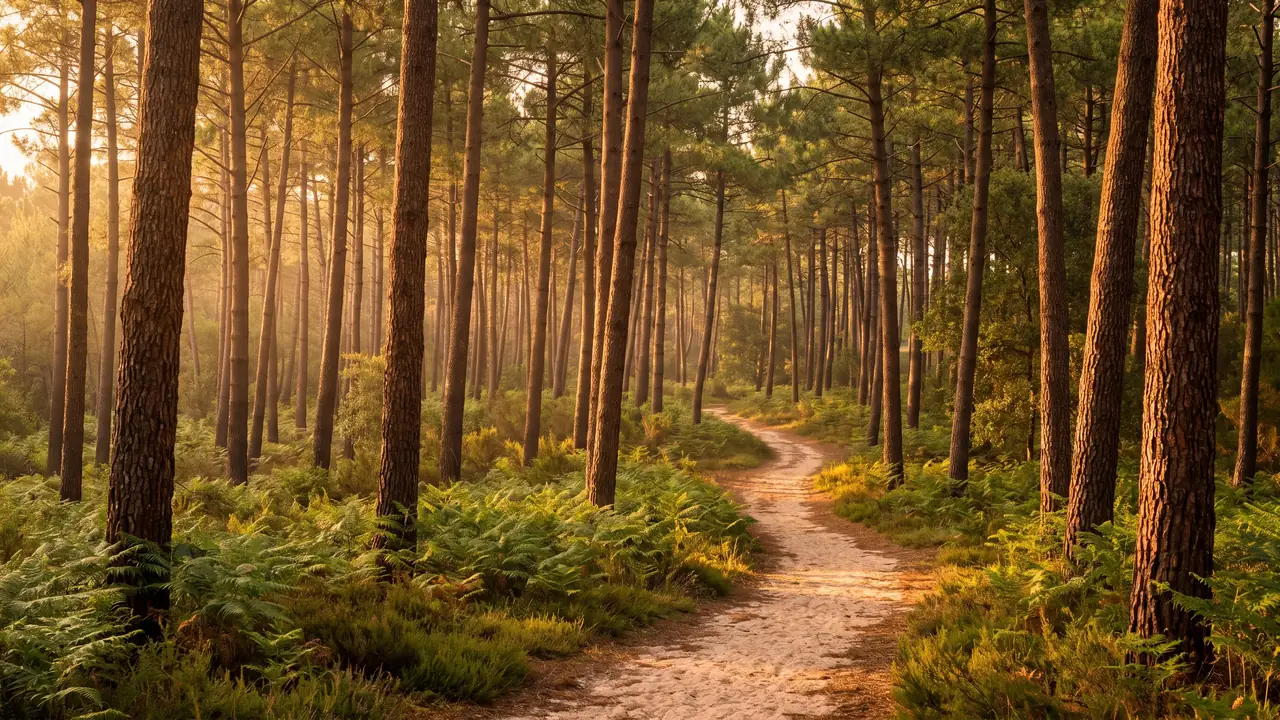
In fact, this landscape is not natural in the strict sense: the vast forest of maritime pines that covers the Médoc was largely planted in the 19th century to stabilize the shifting dunes that threatened the land and villages—the same encroaching sands that, a century earlier, had buried the old town of Soulac. Today, this pine forest protects the town from westerly winds and gives it its distinctive character, with slender trunks, an underbrush of ferns, and sandy paths crisscrossed by bike trails connecting the town to the beaches. Here, once again, one can appreciate just how much Soulac’s geography is the result of a long struggle against the sand and the wind.
How far is it from Bordeaux?
The distance between Bordeaux and Soulac-sur-Mer is approximately 92 kilometers, and the drive takes about 1 hour and 38 minutes. The route winds its way through the Médoc region along the N215 and then the D1215, passing through vineyards, pine forests, and wine-growing villages; route calculators put the distance at around 97 kilometers, depending on the exact starting point in the metropolitan area. The railroad line, meanwhile, still exists and continues to serve the resort: it was this line that once made its fortune. For a day trip to the tip of the Médoc, however, driving remains the most flexible option, especially if you want to visit the basilica, villas, and beaches without being tied to a schedule. The table below shows Soulac’s location relative to its closest neighbors.
| From Soulac-sur-Mer | Distance | Driving time |
|---|---|---|
| Le Verdon-sur-Mer | ~8 km | ~12 min |
| Lesparre-Médoc | ~30 km | ~35 min |
| Bordeaux | ~92 km | ~1 hr 38 min |
Le Verdon, a town that grew out of Soulac
The separation of 1874 explains a common source of confusion: several iconic sites that people instinctively associate with Soulac actually belong to Verdon-sur-Mer, about eight kilometers to the north. This is the case with Pointe de Grave and the famous Cordouan Lighthouse, which will be discussed later. Soulac retains its basilica, villas, and beaches; Le Verdon watches over the river mouth and the headland. The two towns thus share the tip of the Médoc, each facing a different horizon—the ocean for one, the meeting of the river and the sea for the other. Keeping this distinction in mind helps avoid many misunderstandings about the geography of the area.
How many people live in Soulac?
How many people live year-round at the tip of the Médoc? According to the latest INSEE census (2023 municipal population), Soulac-sur-Mer has approximately 3,100 residents. This figure is significant: the town has just crossed back over the symbolic threshold of 3,000 residents, whereas it had only 2,720 in 1999. Growth is therefore slow but steady, driven by new residents and retirees drawn to the seaside setting and the mild late-season weather.
The residents are known as Soulacais and Soulacaises. This municipal population figure, however, tells only part of the story of a coastal town, where life changes dramatically with the seasons.
A population that swells in the summer
Like all seaside resorts, Soulac lives at two different paces. During the off-season, it’s a quiet town of a few thousand people, where the only sounds you hear are the wind rustling through the pine trees and the surf in the distance. When summer arrives, vacation homes, campgrounds, and rental properties fill up, and the actual population swells to a number far exceeding the official figure for year-round residents. This marked seasonality shapes all aspects of local life: shops that are open from April to October, markets that double in size, beaches supervised according to a seasonal schedule published by the town, and events concentrated in July and August. It is also what gives Soulac, in the off-season, that slightly suspended charm of resorts catching their breath: the villas return to silence, the beaches empty out, and the basilica seems to watch over a theater set at rest.
This dual lifestyle also explains the town’s network of businesses and organizations, which is largely geared toward handling the summer rush: restaurants, campgrounds, surf schools, bike rentals, and markets operate at a slower pace in the winter, then run at full speed from June through September. For visitors, this effectively creates two distinct versions of Soulac: the lively, sun-drenched one of the high season, with its packed outdoor dining areas and lifeguard-patrolled beaches; and the more intimate one of the late season, when the autumn light on the villas and the long, deserted beaches reveals a completely different side of the resort. In fact, many regulars prefer May, June, or September to enjoy the setting without the crowds.
| Indicator | Value |
|---|---|
| Municipal Population (INSEE 2023) | ~3,100 residents |
| Population in 1999 | 2,720 residents |
| Area | 28.89 km² |
| Density | ~107 people per km² |
| Demonym | Men and women from Soulac |
The Basilica Emerging from the Sands
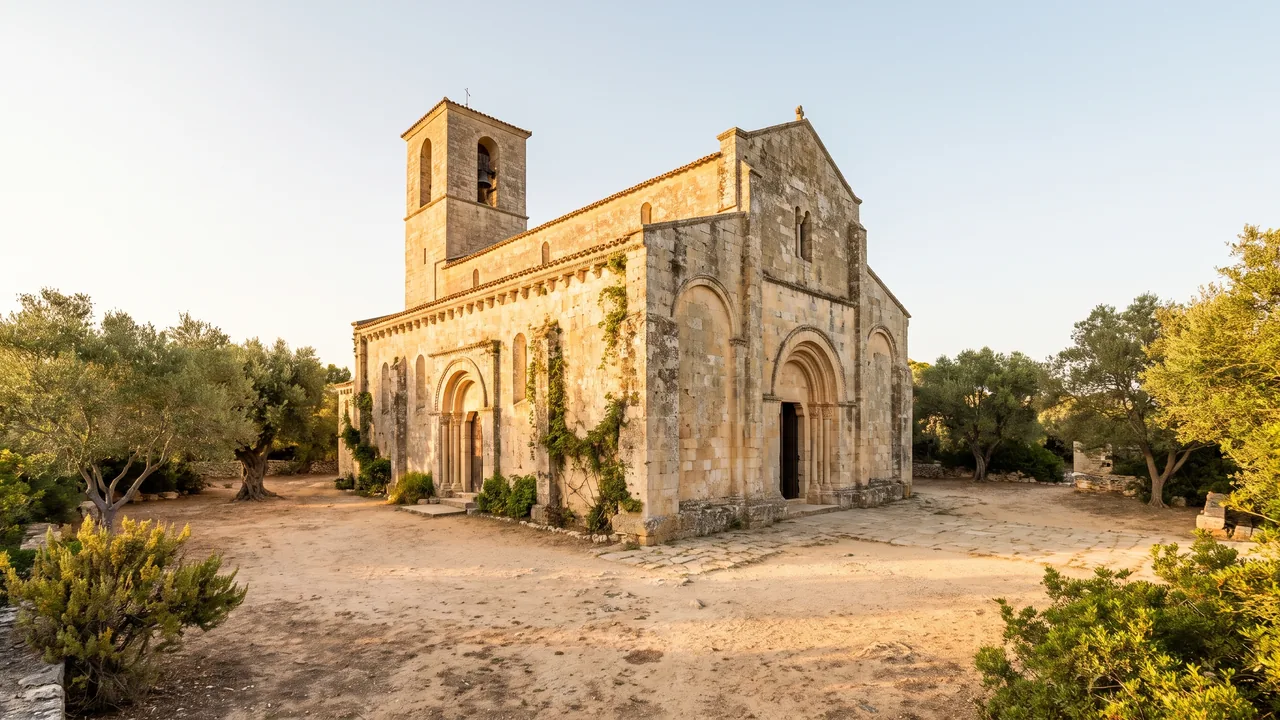
If you had to choose just one monument in Soulac, it would be this one: the Basilica of Notre-Dame-de-la-Fin-des-Terres. This Romanesque church, built in the second half of the 12th century, bears the influences of the nearby Saintonge art style—carved capitals, semicircular arched portals, and a harmoniously proportioned apse. Elevated to the rank of a minor basilica, it owes its fame above all to an extraordinary story: that of a church that the sands nearly swallowed up forever, only to be patiently brought back to light by human hands. Its very name, “the end of the lands,” says it all about its location at the farthest reaches of the Médoc.
Why was the basilica buried?
In the 18th century, the relentless advance of the dunes threatened the old town. Sand invaded the streets, piled up against the walls, and seeped in everywhere. In 1741, the residents resigned themselves to abandoning “Vieux-Soulac”; they moved uphill to a safer location and, in 1745, built a new parish church, that of “Jeune-Soulac.” Left to the elements, the ancient basilica gradually disappeared beneath the dune, to the point that, according to tradition, only the top of its bell tower still emerged from the sand. Hence the nickname that has become inseparable from it: “the basilica of the sands.” This is not merely a poetic image, but rather the memory of a real process of silting up that has left a lasting impression on the people of the Médoc.
How was it saved?
The rescue effort owes a great deal to one man: Cardinal Donnet, Archbishop of Bordeaux, who provided the decisive impetus in the mid-19th century. The excavation and restoration work began as early as 1859—and not, as is sometimes claimed, in 1849—and continued, in stages, until 1905. Stone by stone, the building was freed from its sandy matrix, reinforced, and restored to its original nave and bell tower. The government recognized the monument’s value by listing it as a Historic Monument on July 20, 1891 (source: POP/Mérimée entry PA00083841, accessed July 24, 2026). This restoration effort has made Notre-Dame-de-la-Fin-des-Terres one of the symbols of the Médoc region.
What should you know about its UNESCO designation?
One point deserves clarification, as it is often misreported: it is the basilica alone—and not the city or its villas—that is listed as a UNESCO World Heritage Site. It was inscribed in 1998 under the title “The Routes of Santiago de Compostela in France ” (source: UNESCO World Heritage Center, accessed July 24, 2026), a serial property comprising monuments along the pilgrimage routes. This status applies only to the church itself; the rest of Soulac’s heritage is protected under other designations.
For visitors, this dual recognition—as a listed historic monument and a World Heritage Site—translates into a simple yet powerful experience: that of entering an authentic, austere, and massive Romanesque church, every stone of which was literally hewn from the sand. Inside, the dim light, the barrel vaults, and the carved capitals tell the story of the Middle Ages in the Médoc and the fervor of the pilgrims on the Way of St. James who stopped here before crossing the estuary. The basilica is open to visitors outside of service times, and its square—once covered by the dune—now forms the peaceful heart of the village, where visitors are happy to take a moment to sit. Few monuments, on their own, so perfectly encapsulate the entire history of a town.
Soulac Through the Years
The history of Soulac reads like a series of disappearances and rebirths. Before becoming a seaside resort, it was, according to tradition, an ancient port; then a medieval village buried beneath the sand; and then, in the 19th century, one of the first seaside resorts on the Atlantic coast. Let’s sort out what we know from what is merely repeated, for local lore and legend tend to intertwine here.
Noviomagus, the Sunken City: Myth or Reality?
A persistent legend holds that a thriving ancient city, Noviomagus, once stood where the ocean now rolls, before being swallowed up by the waves. The image is beautiful and the story captivating—but it must be taken for what it is: an old hypothesis, now widely disputed by researchers. Archaeological research instead places Noviomagus at the site of Brion, in Saint-Germain-d’Esteuil, further south inland. The “sunken city of Soulac” is therefore more a matter of local tradition and legend than established historical fact. This in no way detracts from the charm of the story, passed down from generation to generation; it simply serves as a reminder not to confuse it with actual history. What is certain, however, is the well-documented silting up of the town in the 18th century.
1874: The train gave rise to the station
The true date of the modern resort’s birth is more prosaic—and thoroughly documented: on August 2, 1874, the railroad reached Soulac. The inaugural train reportedly brought more than a thousand passengers at once to a town that had scarcely more residents than that. It was a revolution. Bordeaux was now just a few hours away; beachgoers flocked to the area; land was subdivided; and villas sprang up. Without the railroad, there would undoubtedly never have been a “Soulac Belle Époque.” The resort owes everything—or almost everything—to that 1874 locomotive, which transformed a village in the Médoc into a fashionable vacation spot in just a few years. That same year, it’s worth noting, the neighboring town of Le Verdon became an independent municipality: the tip of the Médoc was changing its face.
Georges Mandel, a Mayor Who Made History
Soulac also played a part in major historical events through one of its political figures. Georges Mandel, a statesman close to Clemenceau, a minister under the Third Republic, and a staunch opponent of the 1940 armistice, served as mayor of Soulac from 1919 to 1940. Arrested during the Occupation and then handed over to the Milice, he was assassinated on July 7, 1944. This solemn and dignified tribute links the peaceful seaside town to one of the darkest—and most heroic—episodes of 20th-century French history. It serves as a reminder that, behind the pastel-colored facades and sun-drenched beaches, Soulac also has a history shaped by committed individuals and tragic fates—a history the town has not forgotten.
From the Gallo-Roman villa to the buried village, from the triumphant train of 1874 to the dark days of the Occupation, Soulac has indeed lived through many different eras. Perhaps this explains the deep-seated attachment of Soulac’s residents to their heritage: every villa, every stone of the basilica, every street name bears the mark of these successive rebirths. The seaside resort we visit today is neither a static backdrop nor a mere postcard image, but the latest layer in a history spanning nearly two millennia, where the sea and the sand have always had the final say. This knowledge changes the way one strolls through its streets: behind the gentle seaside atmosphere lies a tenacious memory, woven from departures, returns, and reconstructions.
The Belle Époque and the Villas of Soulac
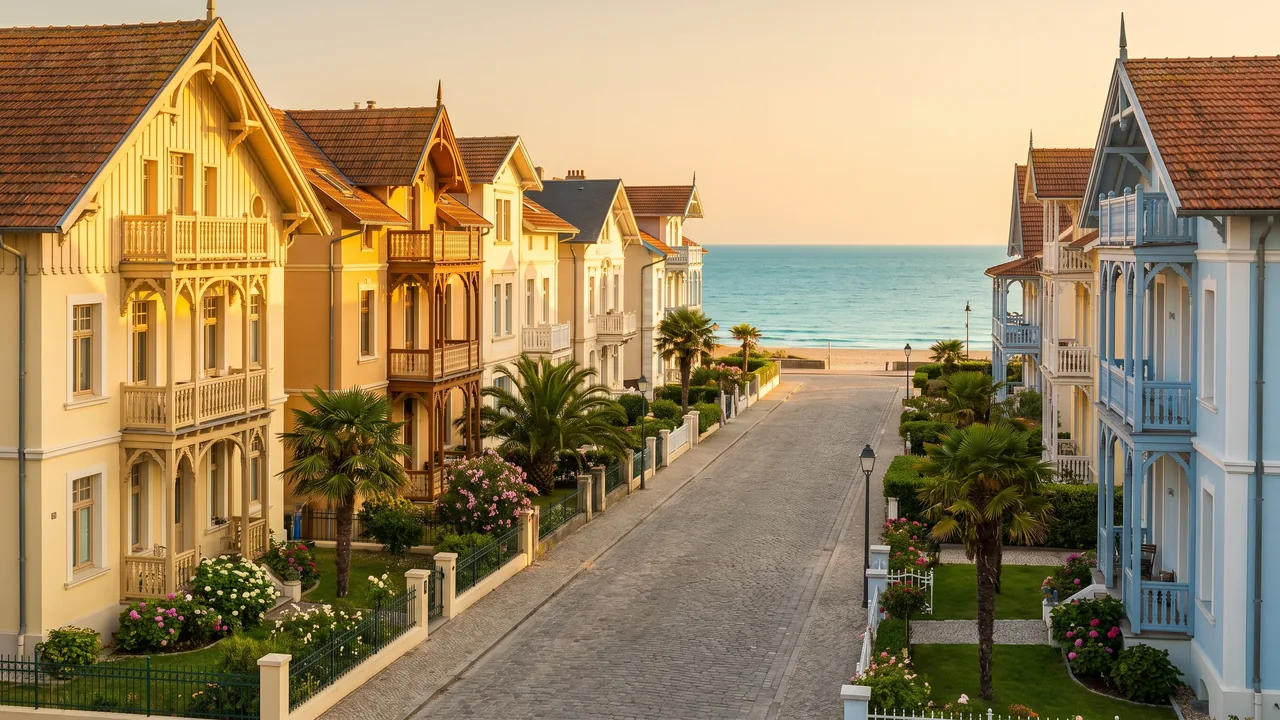
Strolling through Soulac is like walking through a veritable open-air museum of seaside architecture. There are nearly five hundred villas, most of which were built between the 1860s and 1930s—the resort’s golden age, spanning the period from the arrival of the train to the interwar years. They are known as the “Soulac villas,” and they give the town a look that is unique along the entire Médoc coast. No neighboring resort has preserved such a cohesive and dense collection of historic vacation homes.
What is a Soulacaise villa?
The Soulac villa features a decorative style that is instantly recognizable: facades with pastel-colored stucco—pink, ochre, pale blue, and aqua—, balconies and balustrades made of intricately carved wood, ridge finials, pediments, and, most often, a small enclosed garden that frames the house from the street. Each one bears a name, engraved or painted on the facade, often a woman’s name or one evocative of vacations and the open sea. This built environment is not subject to arbitrary demolition: the resort is protected as a “Remarkable Heritage Site” (SPR), a designation that succeeded the ZPPAUP classification established in 2002. Any modifications are now strictly regulated, which has helped preserve the coherence of this Belle Époque setting and prevent recent constructions from spoiling the historic character of the area.
How can I explore the villas?
The best way to explore is on foot. A “Soulac Villas Tour” lets you stroll through the streets radiating out from the town center and the waterfront, discovering the most beautiful facades. The tourist office offers brochures and, during the season, guided tours that recount the history of the resort, its bathers of yesteryear, and the families who had these mansions built. Allow a good hour for a leisurely stroll: it’s one of the most enjoyable activities in Soulac—free and accessible to everyone—and ideal in the late afternoon when the low-angled sunlight gilds the pastel-colored stucco and highlights the wooden details of the balconies. As you wander through the streets, you’ll encounter a whole world of yesteryear’s resort life, blending exoticism, regional charm, and architectural whimsy.
Beyond the facades, it is the names of the villas that make the promenade so charming: they evoke, at times, the original owners; at other times, an ideal of seaside vacations; and at still other times, distant, dreamlike destinations from the Belle Époque. This collection of homes, patiently maintained by the residents, makes Soulac a prime example of late 19th- and early 20th-century resort architecture, on par with the most renowned resorts along the Atlantic coast. The difference here lies in the density and coherence of the ensemble, which, as you stroll through it, gives the impression of traveling back in time from one street to the next, without any breaks or discordant notes.
Beaches and Surfing
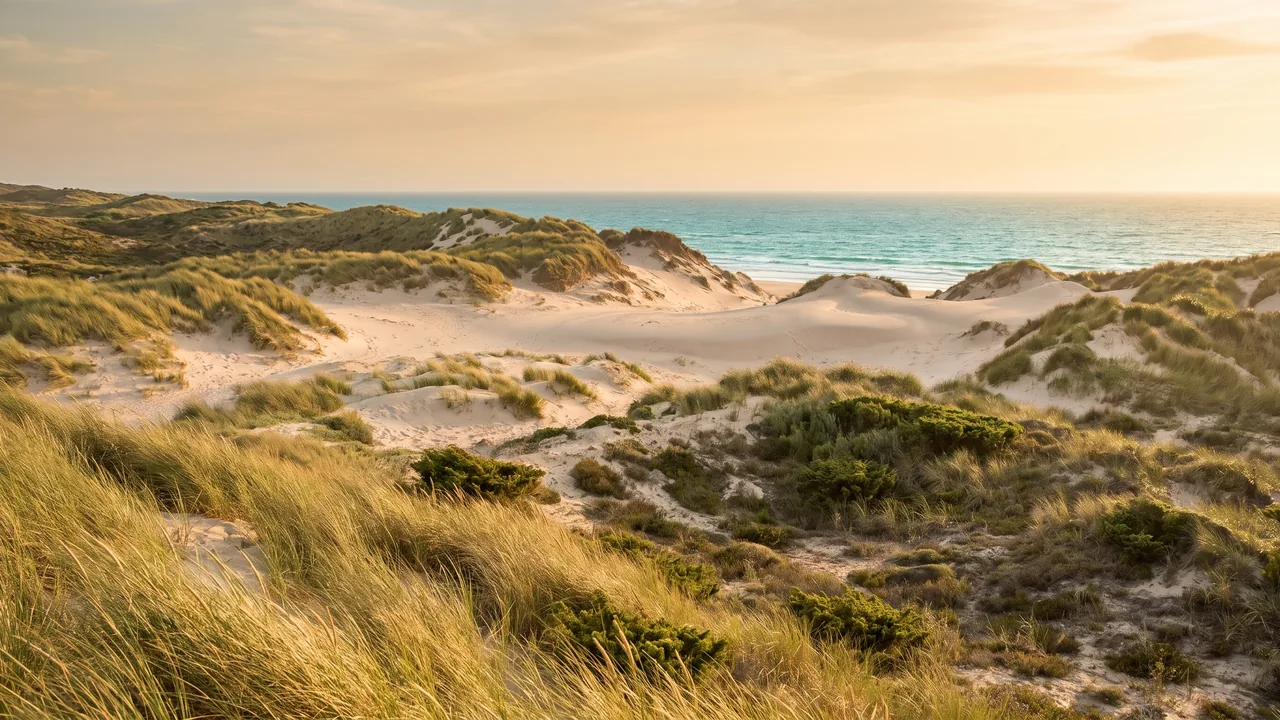
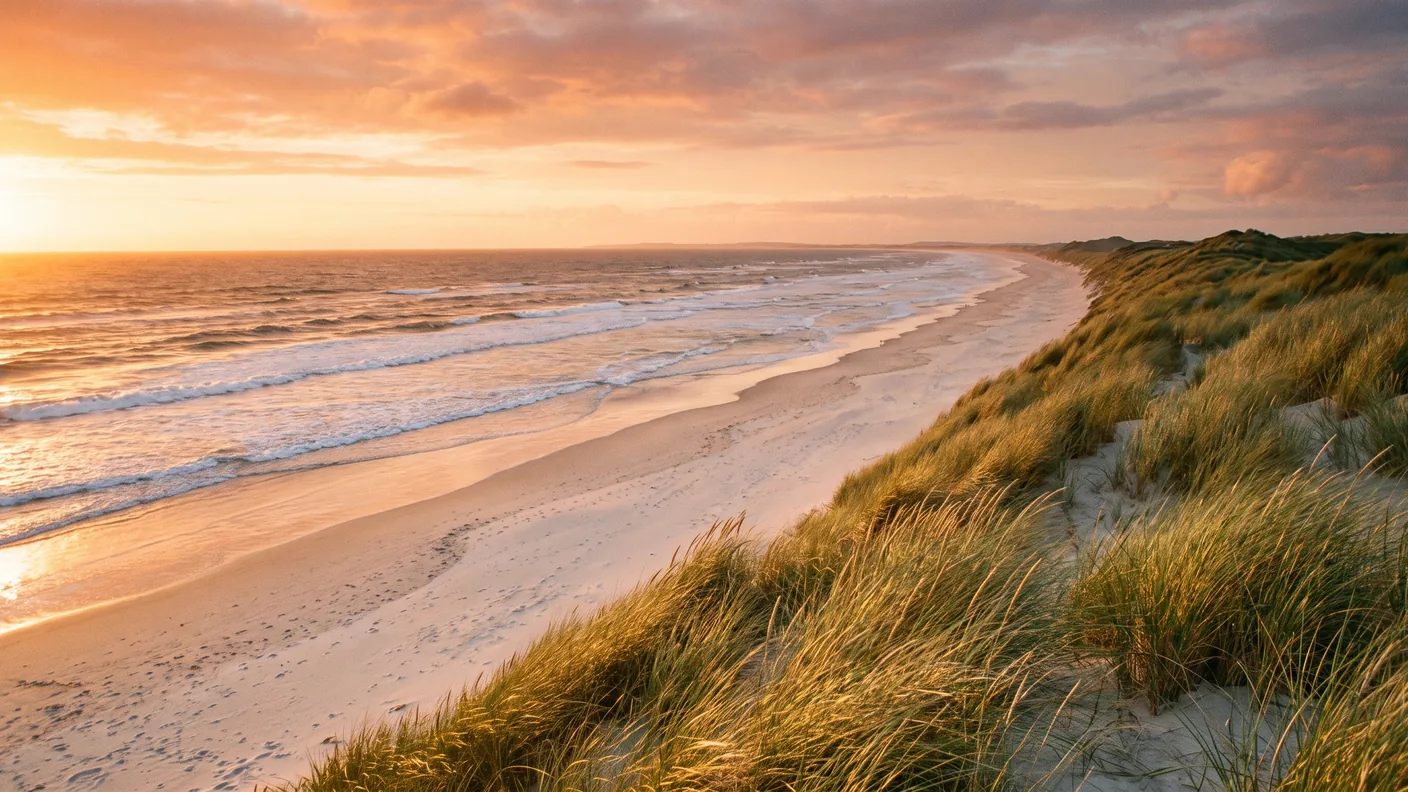
Soulac is, first and foremost, all about the ocean. The town boasts vast stretches of light-colored sandy beaches along its entire Atlantic coastline, backed by a dune ridge and a pine forest. Four of these beaches have lifeguard service according to dates and times specific to each site (source: City of Soulac-sur-Mer, 2026 calendar accessed on July 24, 2026). At low tide, the foreshore reveals wide strips of firm sand.
What are the beaches in Soulac?
There are four main supervised beaches: the Centrale Beach, at the foot of the resort and the liveliest; the Olives Beach; the Amélie Beach, to the south; and the Naïades Beach. Centrale Beach, which extends along the boardwalk and its shops, is a favorite among families, thanks to its easy access and close proximity to the town center; the others offer a more dune-like and wild atmosphere as you move further from the center. All share the same exposed ocean coastline, with beautiful expanses at low tide, fine sand, and that distinctive light found at the tip of the Médoc.
| Beach | Atmosphere | Supervised during the summer |
|---|---|---|
| Central Beach | Waterfront, shops, families | June 5 through September 13, 2026 |
| Olives Beach | Quieter, dune setting | June 27 through August 31, 2026 |
| Amélie Beach | South Hamlet, surf spot | June 13 through September 6, 2026 |
| Naïades Beach | Nature, dune ridge | June 13 through September 6, 2026 |
On this coast, the tide rules everything. At high tide, the sea laps at the base of the dunes and the beaches shrink; at low tide, on the other hand, they stretch out for dozens of meters, revealing a firm foreshore that’s ideal for walking, children’s games, or shore fishing. Checking the tide tables before heading to the beach is therefore second nature to locals, just as much as locating the day’s designated lifeguard zone. The westerly wind, which often blows in the afternoon, also means you should pack a windbreaker and something to shelter under, even in the middle of summer: out on the ocean, the weather changes quickly, and a thermal breeze picks up almost every day.
What is a rip current, and how can you swim safely?
A rip current can create a current pulling you back out to sea. Swim only in supervised areas, follow the flag signals, and check with the lifeguard station for the day’s conditions. If you get into trouble, signal for help immediately and follow the lifeguards’ instructions without exhausting yourself. The beaches, dates, and hours of lifeguard supervision change each season: check the official Soulac-sur-Mer bulletin before swimming.
Soulac-l'Amélie, a hotspot for surfers
South of the resort, the hamlet of Soulac-l'Amélie has its own beach, renowned for surfing. Fully exposed to the Atlantic swell, it attracts surfers and surf schools during the season. L'Amélie is also connected to the rest of the coast by the Vélodyssée, the major cycling route that runs along the coastline: you can therefore ride there by bike from downtown Soulac, in the shade of the pine trees, without having to take the car. A little-known historical detail: the Arros pools, built in the 1930s, bear witness to the area’s long seaside tradition and serve as a reminder that people were already coming here to swim long before the era of mass tourism.
Between the ocean and the estuary
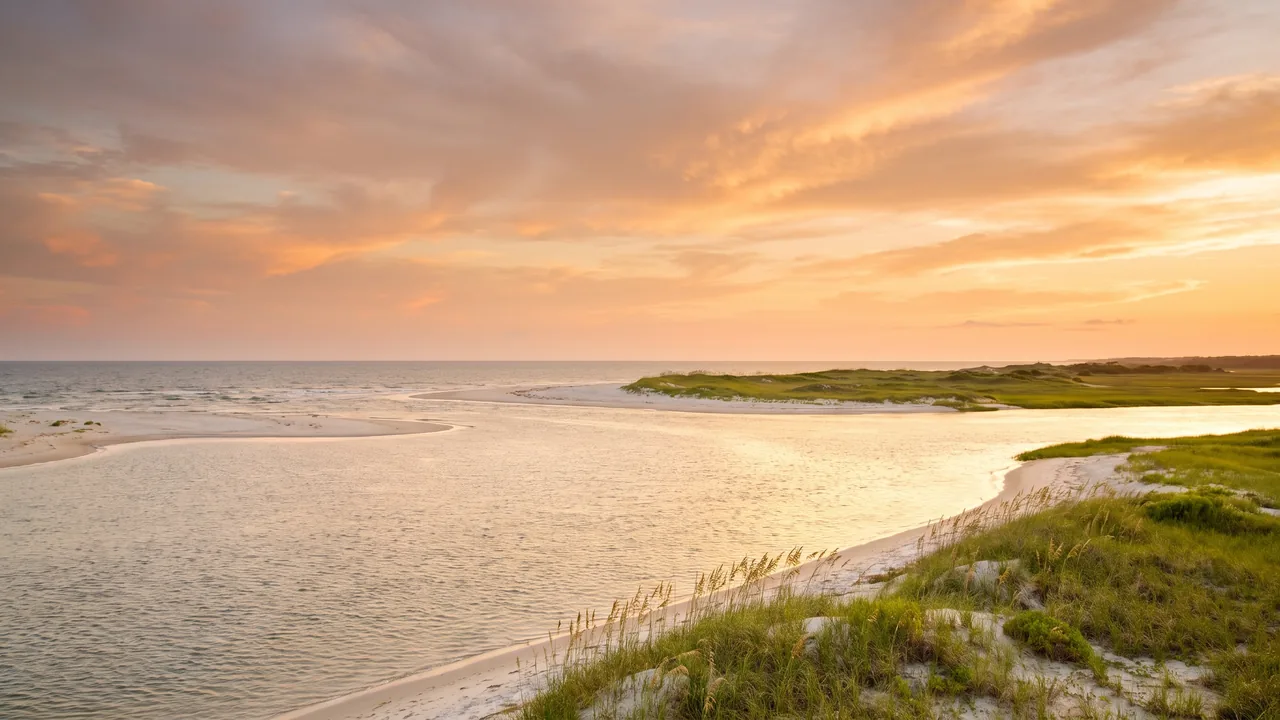
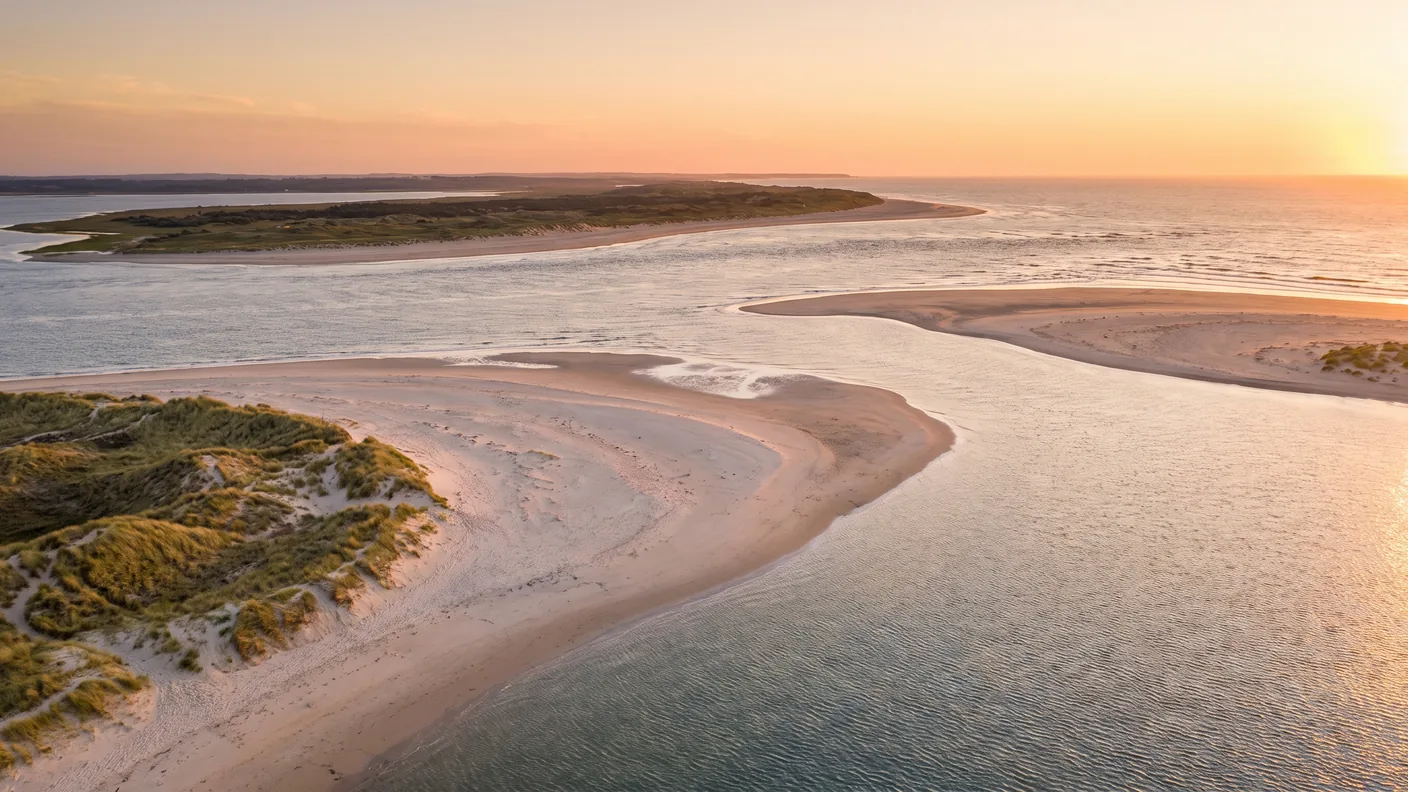
Soulac occupies a unique geographical position: it lies at the tip where the Gironde Estuary—the largest in Europe—flows into the Atlantic Ocean. On one side, the brown, brackish water of the river, laden with silt from the Massif Central and the Pyrenees; on the other, the salty blue-green of the sea; between the two, a landscape of shifting dunes, maritime pines, and marshes. This meeting of the waters makes the tip of the Médoc a unique, wild, and ever-changing landscape, where the scenery is constantly reshaped by the tides and winds.
The Saint-Nicolas and Cordouan lighthouses offshore
The Soulac Lighthouse is called the Saint-Nicolas Lighthouse. First lit in 1873, it was designed to operate in alignment with the nearby Grave Lighthouse; together, they guided ships through the treacherous entrance to the estuary, which is littered with sandbars. From the beaches of Soulac, you can also see, silhouetted against the horizon, another, far more famous lighthouse: Cordouan, the “king of lighthouses” and the “lighthouse of kings.” Be careful, however, not to fall for a common misconception: Cordouan is not in Soulac. This landmark, the oldest lighthouse in France still in operation, stands at the mouth of the estuary and can be visited from Le Verdon-sur-Mer, the neighboring town. It’s clearly visible from Soulac on a clear day; you can reach it from Le Verdon at low tide.
"Le Signal," the building swept away by the ocean
No description of Soulac’s natural landscape would be complete without “Le Signal.” This apartment building, constructed in 1967 about two hundred meters from the shore, has been overtaken by erosion over the decades: the coastline has receded until it lapped at its foundations. Evacuated due to the danger, it became a national symbol of coastal retreat and the challenges it poses to coastal communities—until its demolition, completed in 2023. The story of the Signal reminds us, better than any speech, that the Médoc coastline is alive and ever-changing, and that the sand that once buried the basilica continues, in its own way, to reshape the shoreline. Here, nature is never a static backdrop: it advances, retreats, and imposes its own rhythm on humankind.
This coastal mobility is also what makes the Pointe du Médoc so ecologically rich. Dunes, forests, marshes, and the estuary form a mosaic of habitats where migratory birds, sand-stabilizing beach grass, and wind-swept pine trees coexist. Taking a walk in Soulac, away from the beaches, means learning to interpret this ever-changing landscape: the reforested dune patches, the wooden fences that hold back the sand, and the trails winding between the ocean and the pine forest. These subtle interventions bear witness to an age-old—and never quite finished—struggle between the land and the elements. Here, protecting the shoreline is a matter of patience and vigilance, passed down from generation to generation.
What is there to do in Soulac-sur-Mer?
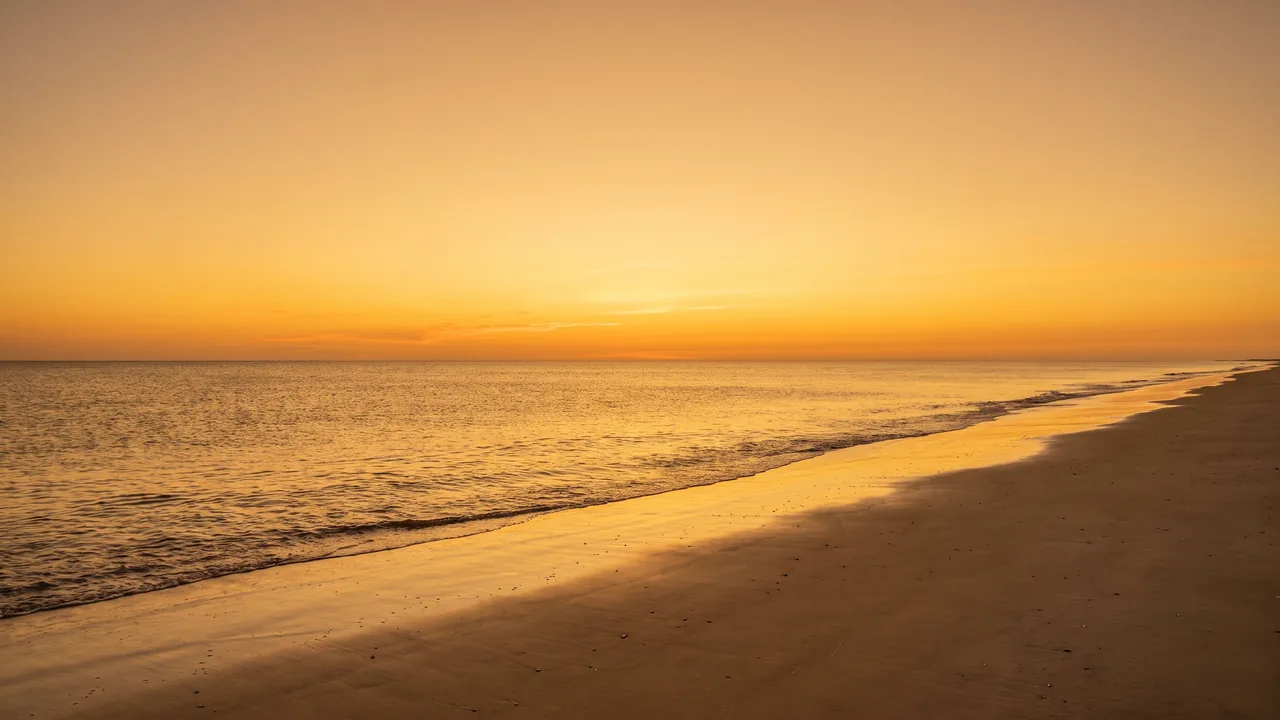
At Soulac-sur-Mer, there’s never a dull moment, no matter the season. A typical day often begins with a visit to the Notre-Dame-de-la-Fin-des-Terres Basilica, a UNESCO World Heritage Site, before strolling through the streets lined with Belle Époque villas along the marked trail. The afternoon belongs to the ocean: swimming at one of the four lifeguard-patrolled beaches, relaxing on the sand, or a surfing session at L’Amélie for the more athletic. Cycling enthusiasts can hop on the Vélodyssée trail to ride along the coast in the shade of the pine trees, while food lovers keep an eye out for the markets—the Amélie night market on Tuesdays in July and August, and the Soulac market on Saturday evenings. During the season, seaside festivals and entertainment liven up the evenings. And always, in the background, are those sunsets over the Atlantic, which alone are worth the trip to the tip of the Médoc.
- Visit the Notre-Dame-de-la-Fin-des-Terres Basilica, the only site in Soulac listed by UNESCO.
- Take a walking tour of the villas in Soulac and admire their Belle Époque pastel-colored facades.
- Go swimming at one of the four beaches that are patrolled during the summer: La Centrale, Les Olives, L'Amélie, and Les Naïades.
- Try your hand at surfing—or just watch the surfers—in Soulac-l'Amélie.
- Cycle along the Vélodyssée, through pine forests and dunes, all the way to the southern beaches.
- Go shopping at the Amélie Night Market (Tuesdays, July–August) and at the Soulac Market on Saturday evenings.
- Enjoy the beach festivals and summer events, followed by the sunset over the ocean.
| Desire | On site | Good to Know |
|---|---|---|
| Heritage | UNESCO Basilica, Villa Tour | Guided tours during the season through the tourist office |
| Beach & Swimming | Four beaches with lifeguards during the summer | Swim only in supervised areas (shallow areas) |
| Sports & Water Sports | Surfing at L'Amélie, Vélodyssée | Surf schools and bike rentals during the season |
| Markets & Festivals | Amélie Night Market (Tuesday), Saturday Night Market | Especially in July and August |
One final word of caution, which is worth more than any other recommendation: on this stretch of ocean coastline, never swim outside the supervised areas. Rip currents are no laughing matter, and even the most beautiful beach remains dangerous outside the flagged areas. By following this rule and the lifeguards’ instructions, you can enjoy Soulac without a care in the world, from morning until nightfall.
Depending on the season, the atmosphere of a visit changes completely. In the summer, Soulac comes alive with crowded beaches, bustling outdoor cafes, and evening markets; it’s the ideal time for families and those who enjoy supervised swimming. In spring and fall, the resort is better suited for strolling—exploring the villas, long deserted beaches, and bike rides through the pine forest—amid softer light and a renewed sense of tranquility. Winter, finally, offers the raw spectacle of the ocean and the vast Médoc sky to those who enjoy walking against the wind, before warming up in one of the few establishments still open. To each their own season, to each their own Soulac.
About Soulac-sur-Mer
The tip of the Médoc is more than just Soulac. Starting from the resort, you can explore sites just a few minutes or a few dozen minutes away that perfectly round out a getaway, offering a mix of ocean, estuary, and vineyards. Here are the must-see attractions in the area, along with their distances from the resort.
Verdon-sur-Mer and Pointe de Grave
About eight kilometers to the north, Le Verdon-sur-Mer marks the very tip of the Médoc region. There you’ll find the Pointe de Grave, facing Royan, where a ferry crosses the estuary to reach Charente-Maritime, and, most notably, the pier leading to the Cordouan Lighthouse, which you can visit at low tide. It’s the perfect outing to complement a visit to Soulac: half a day is enough to soak up the “end-of-the-world” atmosphere of Pointe de Grave, amid wartime bunkers, dunes, and the open sea. The proximity of the two towns makes for an easy round trip, and you’ll gain a better understanding of the geography of this headland, divided between the ocean and the river.
Lesparre, the vineyards, and the nearby beaches
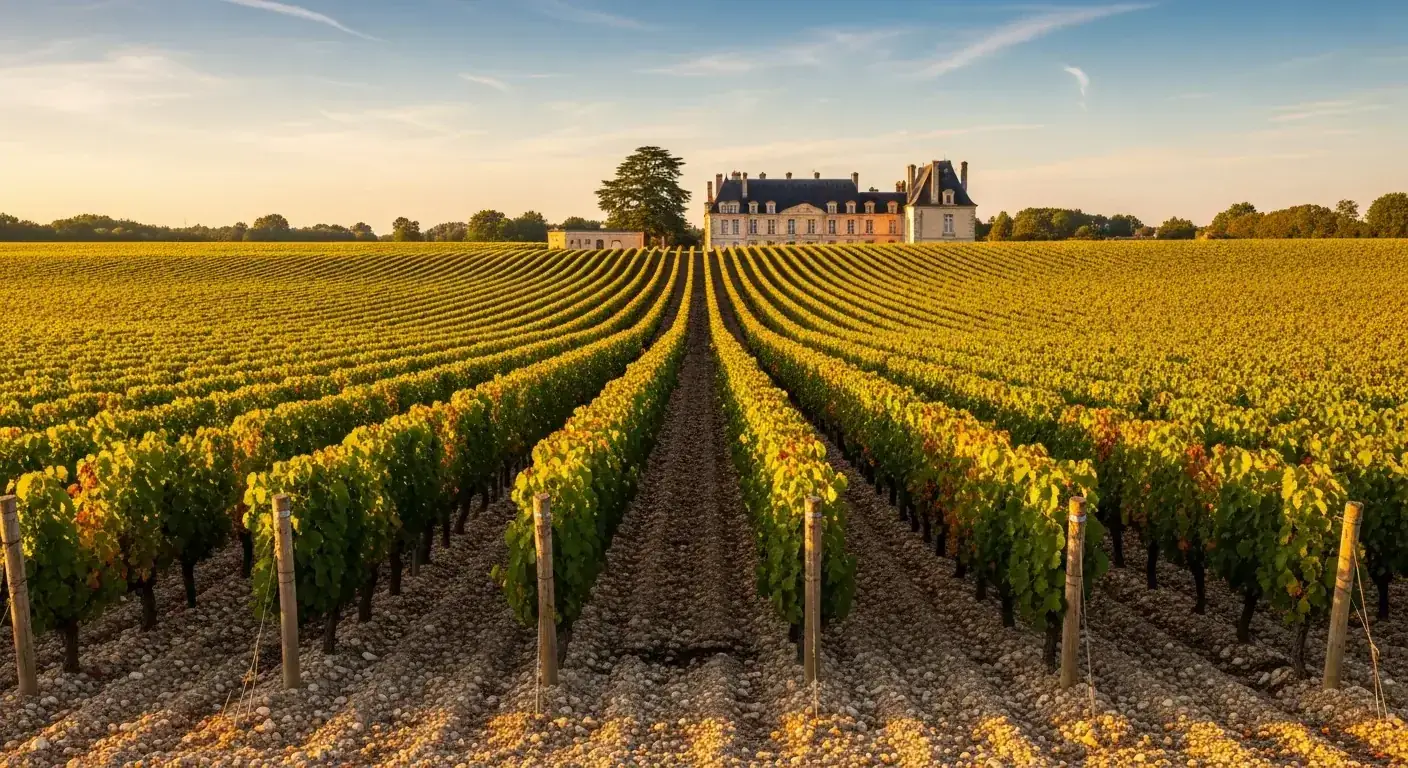
Heading back inland, Lesparre-Médoc—about 30 kilometers away—stands out as the historic capital of the Médoc, with its Tour de l’Honneur, train station, and shops. Further south still lie the famous Médoc vineyards and the Château Route, where the world’s most prestigious grands crus classés are lined up one after another. On the ocean side, the coastline continues with other beach and forest resorts, such as Hourtin-Plage and its immense freshwater lake, just over a three-quarter-hour drive away. This easily transforms a simple visit to Soulac into a true tour of the Médoc peninsula, featuring ocean beaches, cultural heritage, and fine wines.
| Destination | Distance | What You'll Find There |
|---|---|---|
| Le Verdon-sur-Mer | ~8 km | Pointe de Grave, boarding for Cordouan, ferry to Royan |
| Lesparre-Médoc | ~30 km | Historic capital of the Médoc, Tour de l'Honneur, train station |
| Hourtin-Plage | ~40 km | An ocean beach and one of the largest freshwater lakes in France |
By connecting these different points, it becomes clear that the tip of the Médoc forms a small, cohesive world, facing the ocean, the estuary, and the vineyards. A day trip from Bordeaux is enough to visit both Soulac and one of its immediate neighbors; two days, with an overnight stay, open the door to a full itinerary—beaches in the morning, the Cordouan Lighthouse and Pointe de Grave at midday, followed by a wine tasting at a Médoc château on the way back south. The resort, long viewed as merely a final stop at the tip of the peninsula, turns out to be the ideal starting point for exploring the entire northern Médoc, with its blend of heritage, nature, and fine wines.
How to get to Soulac-sur-Mer from Bordeaux
Getting to Soulac-sur-Mer from Bordeaux involves a bit of a drive: the station is located at the very tip of the Médoc, and there are no shortcuts to get there. The most direct route takes you along the N215 and then the D1215, which wind their way up the entire peninsula through vineyards and pine forests, covering about 92 kilometers in 1 hour and 38 minutes. The drive itself has its charm, winding through wine-growing villages and pine forests, but it’s followed by an equally long return trip at the end of the day: this is the main factor to keep in mind when planning a comfortable visit.
How much does the trip from Bordeaux to Soulac-sur-Mer cost?
With a private driver, the trip from Bordeaux to Soulac-sur-Mer starts at 181 € during the day for a sedan that seats one to three people. This is a fixed price: it is calculated and confirmed in writing before departure, with no meter and no surprises upon arrival. A surcharge applies at night, on weekends, and on holidays; for more than four passengers, or with a large amount of luggage, we’ll switch to a van, based on a quote. The fare is door-to-door, from your address in Bordeaux or from Mérignac Airport. The table below summarizes the main scenarios for departures from the city.
| Route | Distance / Duration | Rates |
|---|---|---|
| Bordeaux → Soulac-sur-Mer | ~92 km · ~1 hr 38 min | starting at 181 € |
| Le Verdon-sur-Mer (near Soulac) | ~8 km from Soulac | based on a quote |
| Bordeaux-Mérignac Airport → Soulac | ~100 km | based on a quote |
Why choose a private chauffeur for Soulac?
The main attraction is the round trip: nearly three and a half hours of driving in total for a single day at the tip of the Médoc. Leaving the driving to a chauffeur means arriving well-rested, leaving relaxed after a swim or dinner watching the sunset, and enjoying the Médoc scenery without having to watch for traffic signs or search for parking during peak season, when the resort gets crowded. It’s also the perfect option for families, groups of friends, and visitors from out of town who want to experience Soulac for a day without the hassles of driving their own car. You save time, you gain peace of mind, and you turn both trips into scenic breaks rather than chores.
The road itself, after all, is already part of the journey. As you travel up through the Médoc, you pass through the region’s most famous vineyards, drive along kilometers of pine forests, and, as you approach the tip, you can feel the air becoming charged with the scent of the sea. Arriving in Soulac by land, after crossing the entire peninsula, gives you the feeling of truly reaching the edge of the Gironde world—an introduction that few other destinations offer. That’s also why many visitors prefer to take their time on the road rather than rush through it: when well-planned, the drive becomes one of the day’s pleasures, rather than a chore.
Frequently Asked Questions
How much does a trip from Bordeaux to Soulac-sur-Mer cost with a private driver?
The Bordeaux → Soulac-sur-Mer trip starts at 181 € during the day for a sedan accommodating one to three people. This is a fixed rate confirmed in writing before departure, with no meter—you know the price in advance. It covers the approximately 92 kilometers and 1 hour 38 minutes of travel, door-to-door from your address in Bordeaux or from Mérignac Airport. Please note that a surcharge applies for nighttime, weekend, and holiday trips; for groups of more than four passengers or those with a lot of luggage, a van is available upon request and will be quoted separately.
How far is Soulac-sur-Mer from Bordeaux?
Soulac-sur-Mer is located about 92 kilometers northwest of Bordeaux, a drive of nearly 1 hour and 38 minutes. The route runs the entire length of the Médoc peninsula via the N215 and then the D1215, passing through vineyards, pine forests, and wine-growing villages. Depending on the exact starting point in the metropolitan area, navigation systems show a distance of around 97 kilometers. It is the northernmost town on the Médoc coast: beyond it lie only the Pointe de Grave, the Gironde estuary, and the ocean.
Why is the Soulac Basilica called “the Basilica of the Sands”?
Because it was actually buried under a dune. In the 18th century, the encroaching sands forced the inhabitants to abandon the old village in 1741; the Romanesque church, left to its own devices, gradually disappeared beneath the sand, to the point that only the top of its bell tower remained visible. It wasn’t until Cardinal Donnet took the initiative and work began in 1859—continuing through 1905—that it was excavated and restored. This spectacular rescue earned it the nickname “Basilica of the Sands.”
Is the Basilica of Soulac really a UNESCO World Heritage Site?
Yes, but with one important caveat: it is the basilica alone that is listed as a UNESCO World Heritage Site, not the town or its villas. It has been listed since 1998 as part of the “Routes of Santiago de Compostela in France,” as it marked a pilgrimage route to Santiago de Compostela along the coast. Furthermore, the building has been designated a Historic Monument since July 20, 1891—a designation that is distinct from and predates the UNESCO recognition.
Can you see or visit the Cordouan Lighthouse from Soulac?
Cordouan is clearly visible from the beaches of Soulac: its silhouette stands out against the horizon at the mouth of the estuary. However, the lighthouse is not located in the town of Soulac but off the coast of Verdon-sur-Mer, the neighboring town; that’s where the tours depart from to visit it at low tide. The Soulac lighthouse, meanwhile, is called Saint-Nicolas: lit in 1873, it operated in conjunction with the Grave lighthouse to guide ships into the estuary.
How many Belle Époque villas are there in Soulac?
Soulac is home to nearly five hundred seaside villas, known as “Soulac villas,” most of which were built between 1860 and 1930. They are recognizable by their pastel-colored facades, their ornate wooden balconies, and their small gardens. This exceptional collection is protected as a “Remarkable Heritage Site” (SPR), which replaced a ZPPAUP designation established in 2002: the facades cannot be altered at will. A marked trail allows visitors to explore them on foot, ideally in the late afternoon when the light warms the stucco facades.
Which beaches in Soulac are lifeguard-patrolled?
Soulac has four main beaches that are patrolled according to a schedule and hours published for each season: the Central Beach, at the foot of the resort and the liveliest; the Olives Beach; the Amélie Beach, to the south, known for surfing; and the Naïades Beach. All are ocean beaches exposed to Atlantic swells, with beautiful stretches of sand at low tide. Outside of supervised hours and areas, swimming is strongly discouraged due to rip currents.
What is a rip current, and how can you swim safely?
A rip current can create a current pulling you back out to sea. Swim only in supervised areas, follow the flag signals, and check with the lifeguard station for the day’s conditions. If you get into trouble, signal for help immediately and follow the lifeguards’ instructions without exhausting yourself. The beaches, dates, and hours of lifeguard supervision change each season: check the official Soulac-sur-Mer bulletin before swimming.
Soulac-l'Amélie—what is it?
Soulac-l'Amélie is a hamlet located south of downtown Soulac, right on the ocean. Its beach, exposed to the swell, is one of the area’s popular surfing spots, with surf schools operating during the season. L'Amélie is connected to the rest of the coast by the Vélodyssée, the major Atlantic coastal bike path: you can therefore ride there from Soulac, in the shade of the pine trees. You’ll also find the Arros pools there, built in the 1930s, which bear witness to the area’s long tradition as a seaside resort.
Is the legend of the sunken city of Noviomagus true?
It’s a beautiful story, but one to be taken with a grain of salt. Tradition places an ancient port named Noviomagus at Soulac, which is said to have been swallowed up by the waves following a catastrophe. This long-held hypothesis is now widely disputed: archaeological research places Noviomagus instead at the site of Brion, in Saint-Germain-d’Esteuil, inland to the south. The “sunken city” of Soulac is therefore more a matter of local legend than established fact. What is certain, however, is that the medieval town was indeed buried by sand in the 18th century.
When are the markets in Soulac held?
During the summer season, two events liven up the resort. The Amélie Night Market is held on Tuesday evenings in July and August in the hamlet of the same name: it’s the perfect time to stroll among artisans and local producers in the cool evening air. The Soulac Market, meanwhile, is held primarily on Saturday evenings. Operating hours and the variety of goods on offer expand significantly in the summer and are reduced during the off-season; it’s a good idea to check the exact dates with the Médoc Atlantique tourist office before heading there.
How many residents are there in Soulac-sur-Mer?
According to the INSEE census (2023 municipal population), Soulac-sur-Mer has approximately 3,100 residents, known as Soulacais. The town has just surpassed the 3,000-resident mark again, up from just 2,720 in 1999: growth is slow but steady. This figure represents the permanent population; in the summer, second homes, campgrounds, and vacation rentals significantly swell the resident population, far exceeding the official year-round population count.
Do you need a car to visit Soulac-sur-Mer?
Not necessarily within the resort itself: the town center, the basilica, the villas, and the Central Beach are all easily accessible on foot, and the Vélodyssée bike path lets you reach L’Amélie by bike. However, if you’re coming from Bordeaux and want to explore the surrounding area—Le Verdon, Lesparre, the vineyards—a car is very convenient, since public transportation is limited to the tip of the Médoc. A day without driving, with a ride to and from the resort, remains the most comfortable option.
Further Reading
- Book a driver in Bordeaux → Soulac-sur-Mer — fixed-price quote, confirmed in writing, with no obligation.
- All our destinations departing from Bordeaux—the Médoc, the Arcachon Basin, and beyond.
- Le Verdon-sur-Mer: Pointe de Grave and the Cordouan Lighthouse, about 8 km from Soulac.
- Hourtin-Plage: the ocean, France's largest freshwater lake, and the vast dunes of the Médoc.
- The Médoc: Grand Crus Classés, appellations, and the Château Route.
Sources and References
- City of Soulac-sur-Mer / Médoc Atlantique Tourist Office — basilica, villas, beaches, markets
- City of Soulac-sur-Mer — Beach Patrol 2026 — Beaches, Official Dates, and Hours of Operation for the 2026 Season
- UNESCO — The Routes to Santiago de Compostela in France — Basilica inscribed in 1998
- Mérimée Database / POP PA00083841 (Ministry of Culture) — basilica designated as a historic monument (1891)
- INSEE — Municipality of Soulac-sur-Mer (33514) — Demographics, Area
- Gironde Tourism — Soulac-l'Amélie, Vélodyssée, Heritage
Article updated on July 18, 2026.
Heading to the tip of the Médoc
Direct transfer from Bordeaux (~1 hr 38 min) to the basilica and the villas of Soulac-sur-Mer. Written fixed-price quote, with no obligation.