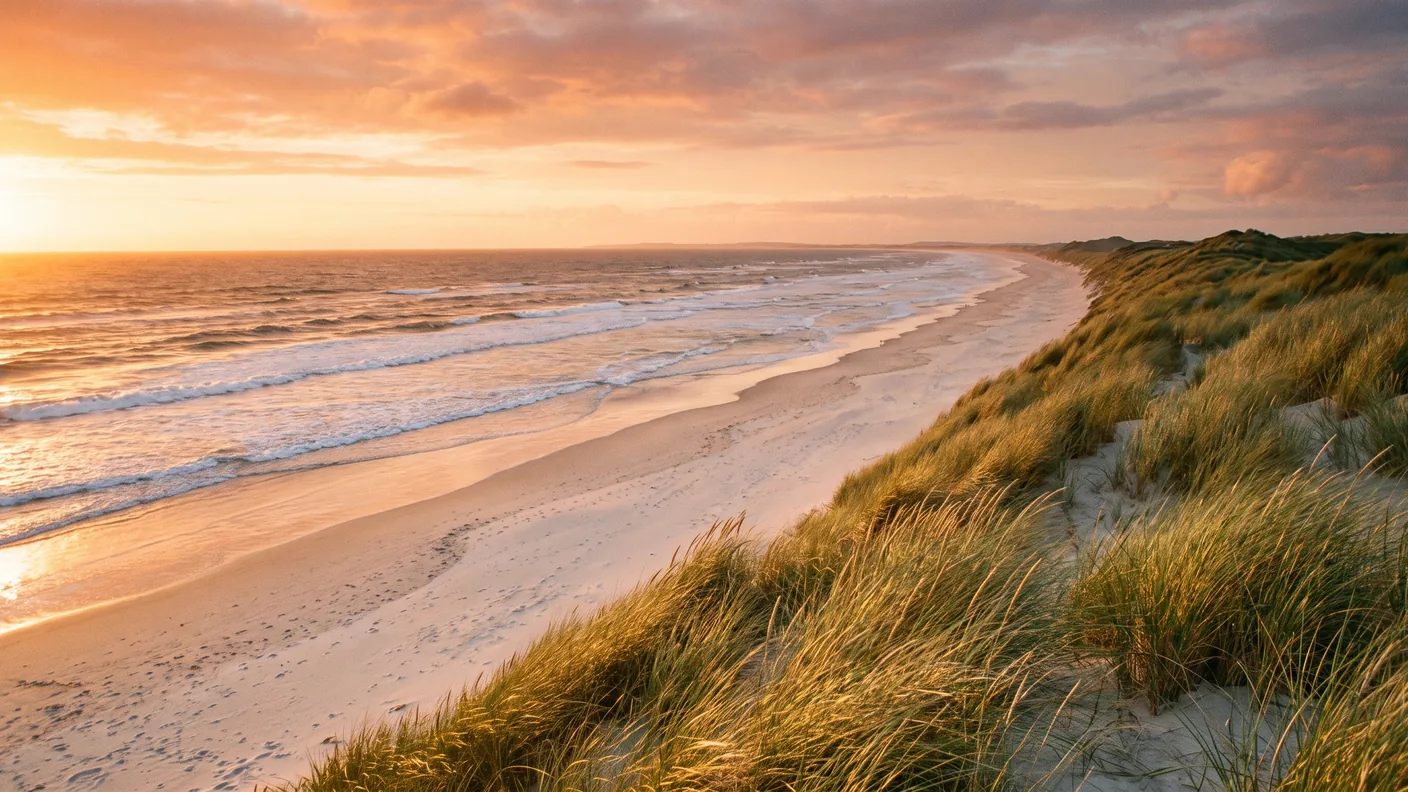
From Bordeaux to Hourtin-Plage: ocean, lake and dunes
The seaside resort of Hourtin, in the Médoc region, nestled between the Atlantic Ocean and France’s largest natural freshwater lake. A supervised surfing beach, protected dunes, a pine forest, and a marina on the lake: Hourtin-Plage, about 1 hour and 20 minutes from Bordeaux.
Hourtin-Plage at a glance
Hourtin-Plage is located on the Atlantic coast of the town of Hourtin, in the Médoc region, just over an hour from Bordeaux. A long sandy beach at the foot of tall dunes, a renowned surfing spot, a pine forest stretching as far as the eye can see—and, on the other side of the town, the largest natural freshwater lake entirely located in France, shared with Carcans. Between the ocean and the lake, a dozen kilometers and three distinct areas: Hourtin-Ville, the town center; Hourtin-Port, on the freshwater side; and Hourtin-Plage, on the Atlantic side. This guide separates fact from fiction: what truly belongs to the ocean resort, what pertains to the lake and the port, and what the brochures tend to gloss over a bit too quickly. It also covers the tidal pools, the nature reserve, the twin lighthouses, and the history of the Maritime Training Center—since there isn’t yet an article dedicated to the town of Hourtin.
| Landmark | Details |
|---|---|
| Type of venue | Oceanfront resort town in the municipality of Hourtin (Gironde, 33, Médoc, Nouvelle-Aquitaine) |
| Intermunicipal Cooperation | Médoc Atlantique Community of Municipalities |
| Local Distances | ~12 km from the town of Hourtin, ~13 km from Hourtin-Port (on the lake) |
| Must-Sees | Supervised surfing beach, protected dunes, Lake Hourtin-Carcans, twin lighthouses |
| From Bordeaux | ~73 km · ~1 hr 20 min · starting at 138 € |
Hourtin-Plage is not a city: it is a resort that grew out of seaside tourism, nestled between the maritime pine forest and the dune ridge, facing due west toward the Atlantic. There’s no concrete boardwalk or grand boulevard here, just streets that lead to dune trails, seasonal shops, a lifeguard station, and the ocean horizon as the only backdrop. The town of Hourtin, however, is much larger than just its beach: life there revolves mainly around its agricultural and forestry village and its lake. It is this duality—the ocean on one side, France’s largest body of freshwater on the other—that gives Hourtin its unique character within the Médoc region and forms the framework of this guide.
Where is Hourtin-Plage located?
Hourtin-Plage is the oceanfront resort town in the municipality of Hourtin, right in the heart of the Médoc region, on the Atlantic coast of the Gironde department. It is located about 12 kilometers from the town of Hourtin, which lies inland, and just over 10 kilometers from Hourtin-Port, the municipality’s other main center, situated on the shore of the lake. To reach the beach, you walk through a long stretch of maritime pine forest: this is what physically separates the saltwater of the ocean from the freshwater of the lake, and explains why the three distinct parts of Hourtin are never visible to one another.
According to the INSEE’s Regional Comparison Tool, published on July 9, 2026, Hourtin has 4,045 residents in 2023, a population density of 21.2 people per km² and an average annual growth rate of 2.4% between 2017 and 2023. The same fact sheet lists its area as 190.5 km².
Its residents are known as Hourtinais. Its large area gives it the character of a “forest town,” where the inhabited areas form scattered clearings among the pine trees. Hourtin is part of the Médoc Atlantique community of municipalities.
How far is it from Bordeaux?
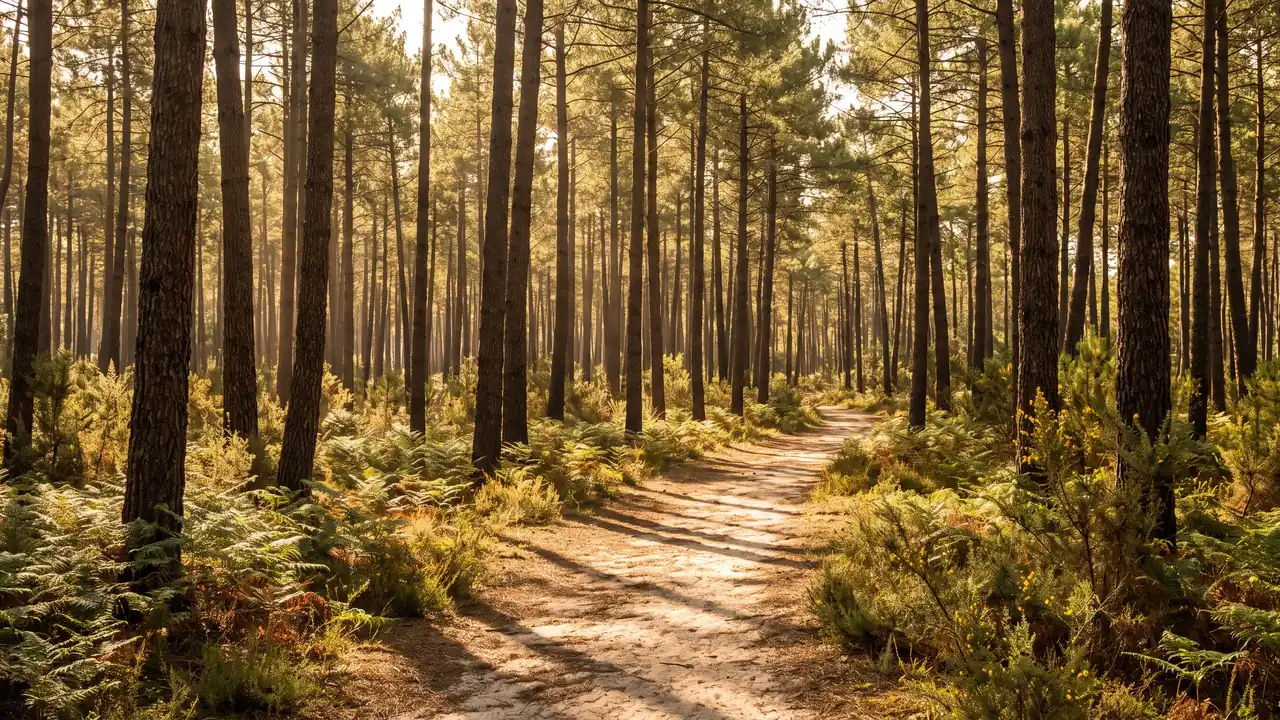
From Bordeaux, it’s about 73 kilometers and roughly an hour and twenty minutes by car to reach Hourtin-Plage. The route heads up through the Médoc, then winds through the Landes Forest before turning toward the coast. The distance seems modest on paper, but the last part of the journey winds through the pine forest and ends at beach access roads that are intentionally restricted: during peak season, figuring out parking often plays a bigger role in planning a day out than the distance itself. It’s therefore better to factor in travel time and access constraints rather than just the straight-line distance.
This trip also offers a quick change of scenery. You leave the banks of the Garonne, pass through the Médoc wine regions, and then the vineyards give way to pine trees as the light shifts as you approach the coast. In just over an hour, you go from the city to the open sea. It’s this proximity that makes Hourtin-Plage one of the easiest Atlantic getaways to plan on a whim from Bordeaux—whether for a day at the beach or a peaceful weekend between the ocean and the lake.
Hourtin-Ville, Hourtin-Port, Hourtin-Plage: Which Is Which?
To avoid getting lost, keep in mind that Hourtin is not a single place but a mosaic of distinct neighborhoods, often far apart from one another. Hourtin-Ville, or the “bourg,” is the town’s historic village, centered around agriculture and the forest. Hourtin-Port is the hub located on the lakefront, with its water sports center, shops, and lakeside resort atmosphere. Finally, Hourtin-Plage is the ocean resort—the one this guide focuses on most. In addition to these three main areas, there are more secluded neighborhoods, such as Contaut, Lachanau, and Piqueyrot, scattered throughout the forest. Each of these areas is generally about a dozen kilometers apart: in Hourtin, you don’t go from the ocean to the lake by crossing the street, but by crossing the forest.
This diversity has a very practical implication for visitors: you need to choose your base and itinerary with full knowledge of the facts. Booking accommodations “in Hourtin” doesn’t mean much unless you specify the neighborhood, as the atmospheres differ greatly between the sleepy village, the bustling harbor on the freshwater shore, and the ocean resort battered by the offshore wind. Similarly, it’s always best to specify an address or meeting point: Hourtin-Plage, Hourtin-Port, or the village. This is the first habit to adopt when planning a stay here to avoid unpleasant surprises—and to understand why distances within the town seem, at first glance, so surprising.
| From Hourtin-Plage | Approximate distance |
|---|---|
| Bourg d'Hourtin (Hourtin-Ville) | ~12 km, through the forest |
| Hourtin-Port (on the lake) | ~13 km |
| Carcans-Plage (neighboring resort) | ~37 km by road, via an inland detour |
| Lacanau-Océan | to the south, with no direct coastal road |
| Bordeaux | ~73 km (~1 hr 20 min) |
Hourtin, a town surrounded by water
Since there isn’t yet a guide dedicated to the town of Hourtin, we’ll take a moment here to introduce the town as a whole—not just its beach. Hourtin is a unique town in the Médoc: nestled between France’s largest freshwater lake to the east and the Atlantic Ocean to the west, it literally lies between two bodies of water. Between the two lies a vast expanse of maritime pines, a legacy of the major dune stabilization and land development projects carried out in the Landes region during the 19th century. This geography explains it all: the scattered layout of the neighborhoods, the low population density, the prominence of the forest, and the dual character—lakeside and oceanic—of a single town.
Each of Hourtin’s districts has its own character. The town center, with its agricultural and forestry roots, maintains a year-round village atmosphere, far from the seasonal hustle and bustle. Hourtin-Port, on the lakefront, comes alive with sailing, fishing, and freshwater swimming. Hourtin-Plage, on the ocean, really comes into its own during the summer months, when surfers, families, and lovers of the great outdoors flock to the area. These three communities are separated by an average of twelve to thirteen kilometers: you can only get from one to another by crossing the forest, which reinforces the feeling that each neighborhood is a world unto itself.
Why was Hourtin once called Cartignac?
The history of the name holds a surprise. Until 1628, the town was not called Hourtin but Cartignac: “Hourtin” was then merely the name of a small hamlet, in its Gascon form, Hortin. Over time, the hamlet eventually gave its name to the entire town, supplanting the old name Cartignac, which had fallen into oblivion. This shift in place names speaks volumes about how these Medoc towns came into being: through the gradual merging of hamlets and neighborhoods around a central hub, in a region of forests and marshes where distances matter and where identity is first and foremost tied to the local place name.
A sparsely populated forest community
With an area of 190.5 km² and a population of just over 4,000, Hourtin has a population density of about 15 people per square kilometer—one of the lowest in the coastal Gironde region. In practical terms, this means vast expanses of forest and marshland, punctuated by a few inhabited areas, with nature present everywhere right up to the edges of built-up areas. This vast expanse of land is also what allows the town to encompass, within its own municipal boundaries alone, a long ocean beach, a protected dune ridge, a nature reserve, a substantial forest, and the northern half of France’s largest natural freshwater lake. Few municipalities boast such a diverse range of habitats.
| Hourtin Neighborhood | Character |
|---|---|
| Hourtin-Ville (the town center) | A historic village with a farming and forestry tradition, home to year-round residents |
| Hourtin-Port | Lakeside resort: sailing, fishing, freshwater swimming |
| Hourtin-Plage | Oceanfront resort: beach, surfing, dunes, forest |
| Contact | Former Maritime Training Center complex, in the forest |
| Lachanau, Piqueyrot | Scattered forest areas |
This scattered layout is no accident: it follows the geography. The town settled on farmland, away from the shifting sands of the past; the port was established where the lake offered shelter and access to the sea; the beach resort emerged much later, driven solely by the allure of the ocean and sea bathing. Between these two centers, the pine forest—planted to stabilize the dunes—filled the entire space in between. To understand Hourtin, therefore, is to view a territory in three phases and three locations, where water—fresh on one side, salty on the other—has always dictated where people settled.
The ocean beach and swimming
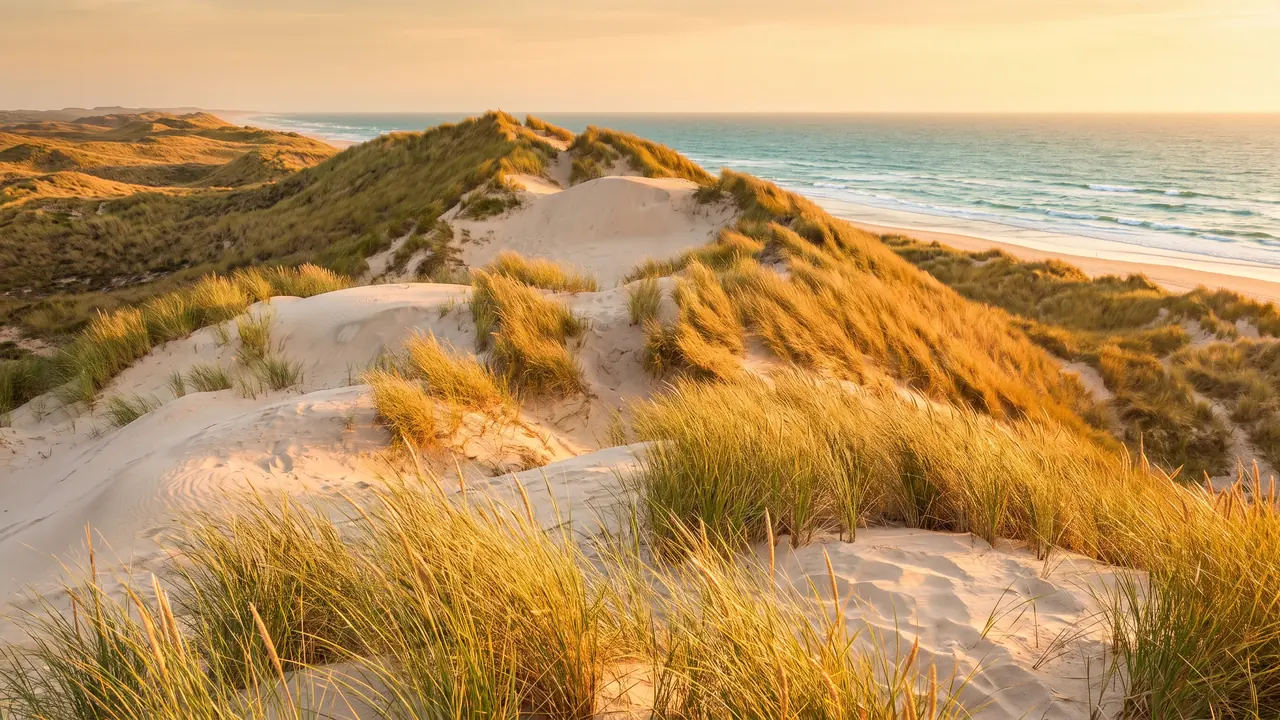
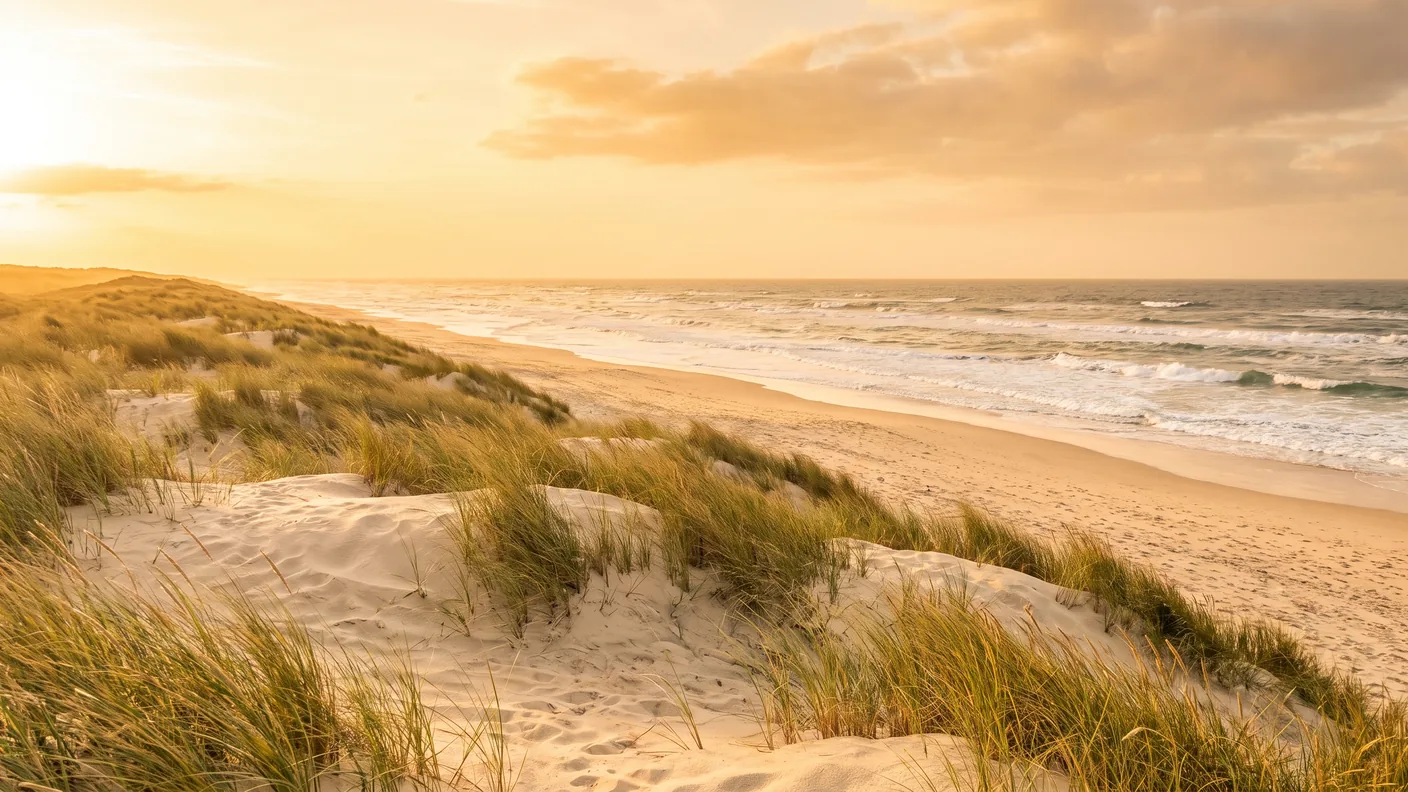
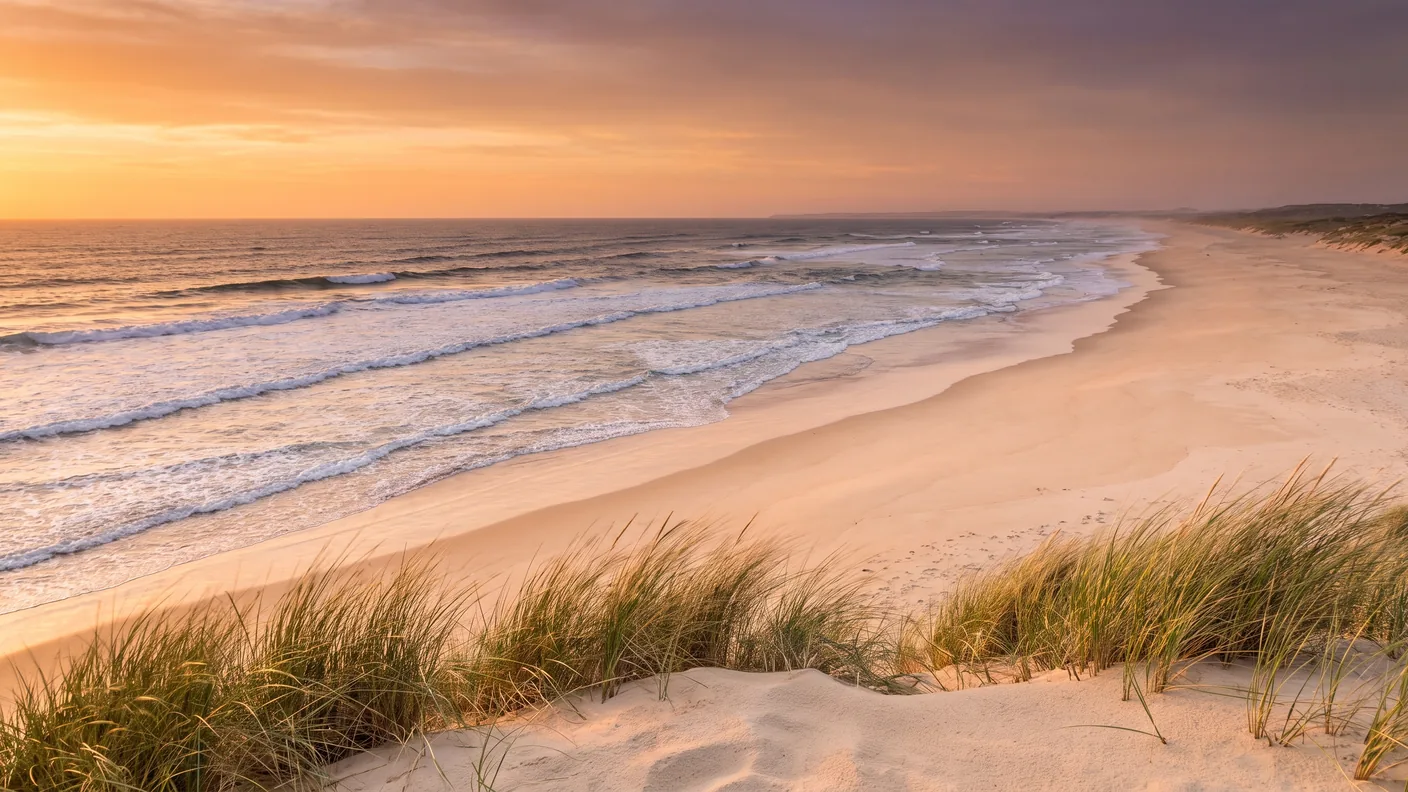
Hourtin Beach is, first and foremost, a vast expanse of light-colored sand, backed by tall dunes and bordered by a pine forest. You don’t reach it via a boardwalk, but through maintained trails that cross the dune ridge: you climb among the marram grass, pass the crest, and the ocean suddenly appears, immense. This landscape, typical of the Médoc coast, gives the beach a wild character that few more urbanized resorts retain. The tide sculpts the sand here, there’s always plenty of space, and even in the height of summer, you only need to walk a few minutes to find peace and quiet at the water’s edge.
Swimming is supervised during the season, but only in a marked area and during specific hours. The main lifeguard station monitors the South Beach area, where the swimming zone is marked by flags; during peak season, a second supervised area may open a little further south to help spread out the crowds. Supervision generally covers the height of summer—typically from early July to late August—but the exact dates and hours are set each year by the municipality and posted on-site. Outside these marked areas and time slots, swimming is not supervised: on this coast, swimming is permitted only between the flags.
Is swimming supervised at Hourtin-Plage?
Yes, but with some conditions. Lifeguard supervision is limited to the area marked by flags, during the lifeguard station’s operating hours, and only during the peak summer season. The rest of the beach, as inviting as it may be, is not supervised, and the Atlantic Ocean is never a safe body of water there. The rule is simple and applies to everyone, including experienced swimmers: enter the water only within the designated swimming area, between the flags, and follow the posted instructions and the lifeguards’ signals. This is the only way to enjoy the beach safely, especially with children.
Hourtin-Plage isn’t just a swimming beach—it’s also a playground for other activities. At low tide, the wide, firm sandy beach is ideal for mountain biking and horseback riding, which are permitted in certain areas and at certain times. Many people also come simply to walk along the water’s edge, go for a run in the early morning, or watch the sunset—a daily, free spectacle on this west-facing coast. The beach is therefore bustling at all hours, well beyond the supervised swimming hours, and it is this versatility that gives it its charm.
The sheer scale of the place never fails to impress visitors accustomed to sheltered beaches. Here, space is measured not in meters but in horizons: the sandy shore stretches north and south as far as the eye can see, the dunes form the backdrop, and nothing breaks the immensity of the ocean. This vastness has a downside—a natural environment that does not forgive carelessness—but in return, it offers a sense of freedom rarely found along the coast. One then comes to appreciate what the protection of the dunes and the absence of large-scale development have helped preserve: a beach that still resembles what it was a century ago.
Surfing and the rip currents
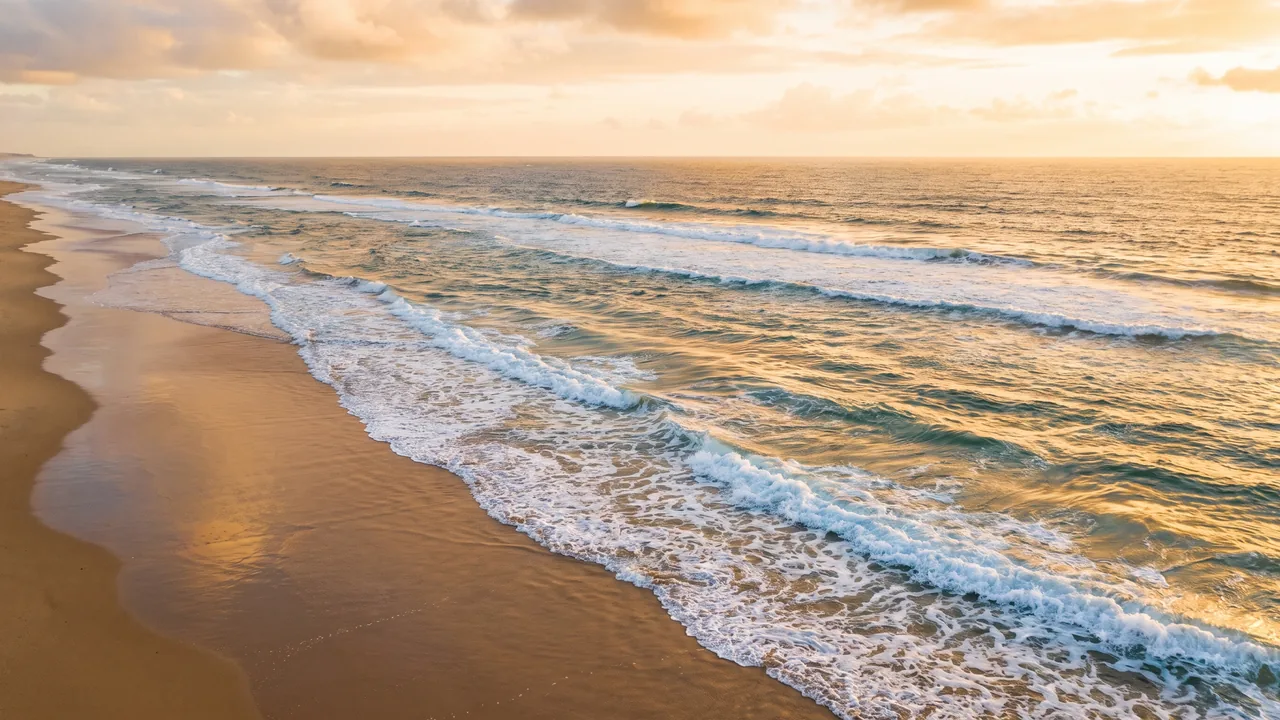
Hourtin-Plage is a renowned surf spot on the Médoc coast. The steady swells from the Atlantic, the gently sloping sandy beach, and the absence of obstacles make it a beach break appreciated by both beginners under supervision and more experienced surfers in search of clean waves. During the season, surf schools offer lessons and camps, and you’ll see just as many foam boards as shortboards on the sand. As is the case everywhere along this coast, conditions depend on the tide, the wind, and the swell of the day: an ocean beach never offers two identical sessions, and that’s part of what makes the place so appealing.
But where there are waves, there are currents, and this is where caution is essential. The Atlantic coast of the Landes and Médoc regions is famous for its “baïnes”—powerful rip currents that pose the greatest danger along this coastline, far more so than the height of the waves. They aren’t always visible, and that’s precisely what makes them so dangerous. No spot in the region is immune to them, and Hourtin-Plage is no exception: surfing and swimming there should be done with full awareness of the risks and in strict compliance with the designated supervised areas.
What is a rip current, and why is it dangerous?
A baïne is a basin carved into the sand between the beach and a sandbar, just offshore. At low tide, it resembles a calm pool of water, often more sheltered than the surrounding waves—hence its deceptive reputation as a “natural swimming pool.” The trap snaps shut at high tide: the water filling the basin must flow back out to sea, and it escapes through a narrow channel, forming a violent rip current capable of dragging a swimmer far from the shore in a matter of seconds. The natural instinct—to swim against the current to get back—is the worst thing you can do: you’ll exhaust yourself and sink.
The SNSM recommends swimming at a supervised beach, between the flags, after checking with the lifeguard station and reviewing the signage. If you are caught in a rip current, the SNSM recommends that you do not swim against the current, stay calm, signal your presence, and try to swim parallel to the beach before returning to shore once the current weakens. The instructions of local lifeguards always take precedence.
Where and when can you go surfing at Hourtin-Plage?
Surfing is possible year-round in Hourtin, but the number of surfers and the level of supervision peak in the summer, when the surf schools are in full swing and the beach is patrolled. Spring and fall often offer more favorable conditions and a less crowded beach, though the water is cooler and lifeguard coverage is limited or even nonexistent. No matter the season, the best approach remains the same: check the day’s conditions, choose a time slot suited to your skill level, and stay close to the supervised area when it’s active. For first-timers, a lesson with a local surf school is by far the best way to get started.
Beyond surfing, there’s a whole ocean culture thriving on this beach. Bodyboarding, longboarding, stand-up paddleboarding in calm waters, and introducing kids to the waves: everyone can find an activity suited to the conditions and their skill level. This diversity explains the loyalty of the regulars, who return year after year to read the swell and the wind just as others check the weather forecast. But that never means you can let your guard down: the sea at Hourtin is beautiful and bountiful, yet it remains powerful, and respecting the supervised area and the lifeguards’ instructions is key to a successful session, whether you’re a beginner or an experienced surfer.
The Dunes and the Nature Reserve
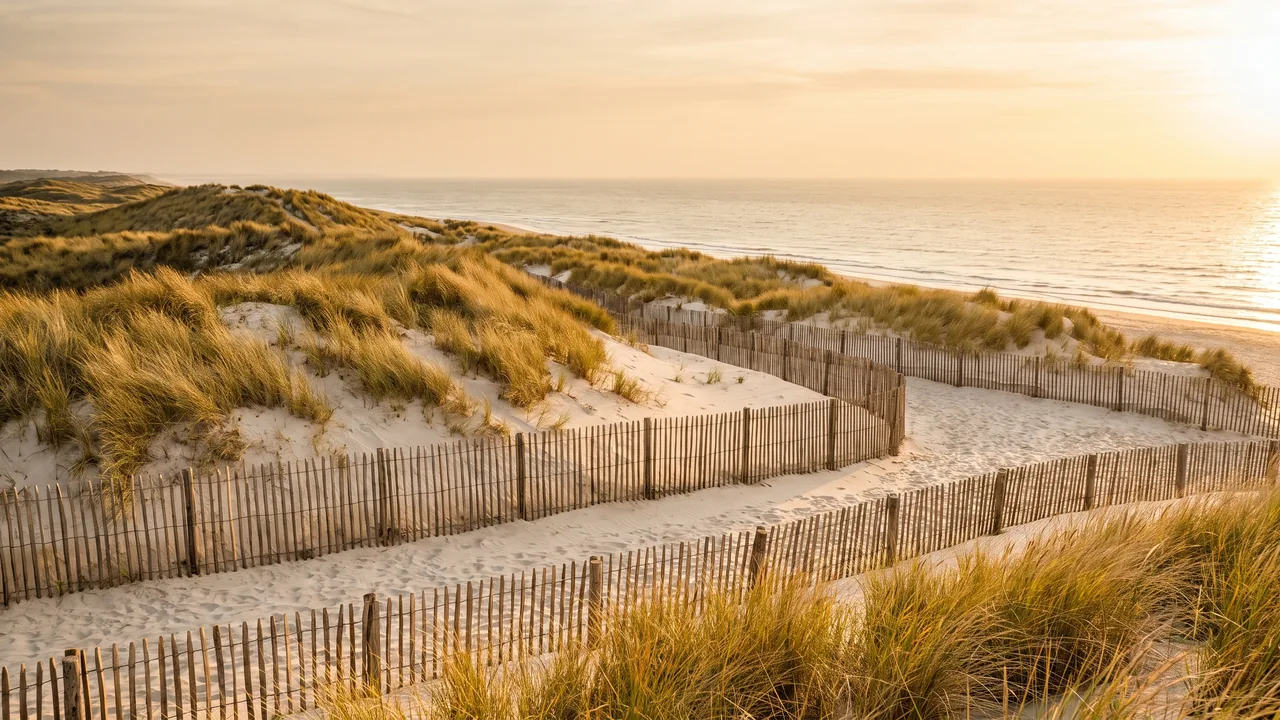
Behind the beach lies one of Hourtin’s treasures: a chain of living dunes, extending into wooded dunes, marshes, and a forest—all of which together form a rich coastal ecosystem. This is not a static setting but a dynamic landscape, shaped by the wind and the sea, where the sand advances, retreats, and stabilizes with the changing seasons. It is also a fragile ecosystem, the preservation of which is essential to the very existence of the beach: without its dune barrier, the coastline would be far more exposed. As you walk along the trails, you’ll understand why park managers take care to direct foot traffic and protect the vegetation.
According to the ONF’s Biodiversity Atlas, the Hourtin Dunes and Marshes National Nature Reserve, established in 2009, covers 2,150 hectares. It includes 1,200 hectares of wooded dunes, 80 hectares of dunes, and 300 hectares of marshes; visitors must stay on the designated trails.
Why is the dune ridge protected?
The Hourtin dune system owes nothing of its current stability to natural processes: it is largely the result of 19th-century efforts. To stabilize the sand, which until then had been advancing inland and threatening marshes and villages, maritime pines were planted on a massive scale and the shoreline was stabilized. Today, this stabilization continues using gentler techniques: ganivelles—wooden barriers that break the wind and hold back the sand—and plantings of marram grass, a dune grass whose roots anchor the soil. Trampling on the dune pulls up the marram grass and reopens the door to erosion—hence the importance of staying on the designated paths.
In practical terms, enjoying the nature reserve and the dunes requires a few simple steps. Use the marked trails and access points to reach the beach; do not cut through the vegetation. Do not pick anything, do not disturb the wildlife, and take your trash with you. Keep dogs on a leash where required and respect restricted areas. These rules, far from being constraints, are essential to ensuring that the beach, forest, and lake retain the beauty that draws visitors here for years to come. In Hourtin, nature isn’t just a backdrop—it’s the main attraction.
For those who take the time to observe, the reserve reveals itself as an open book on the mechanisms of the coastline. The shifting dune continues to advance wherever the wind pushes it; the wooded dune, further back, has stabilized and given way to pine trees; between the two, a wet sandbar is home to a unique flora. Further inland, the marshes and the lake’s shores form another world—quieter and teeming with birds. Exploring these environments—on foot or by bike along the authorized trails—allows you to understand in a single morning how sand, water, and forest have been vying for and sharing this corner of the Médoc for centuries.
Lake Hourtin-Carcans and the harbor
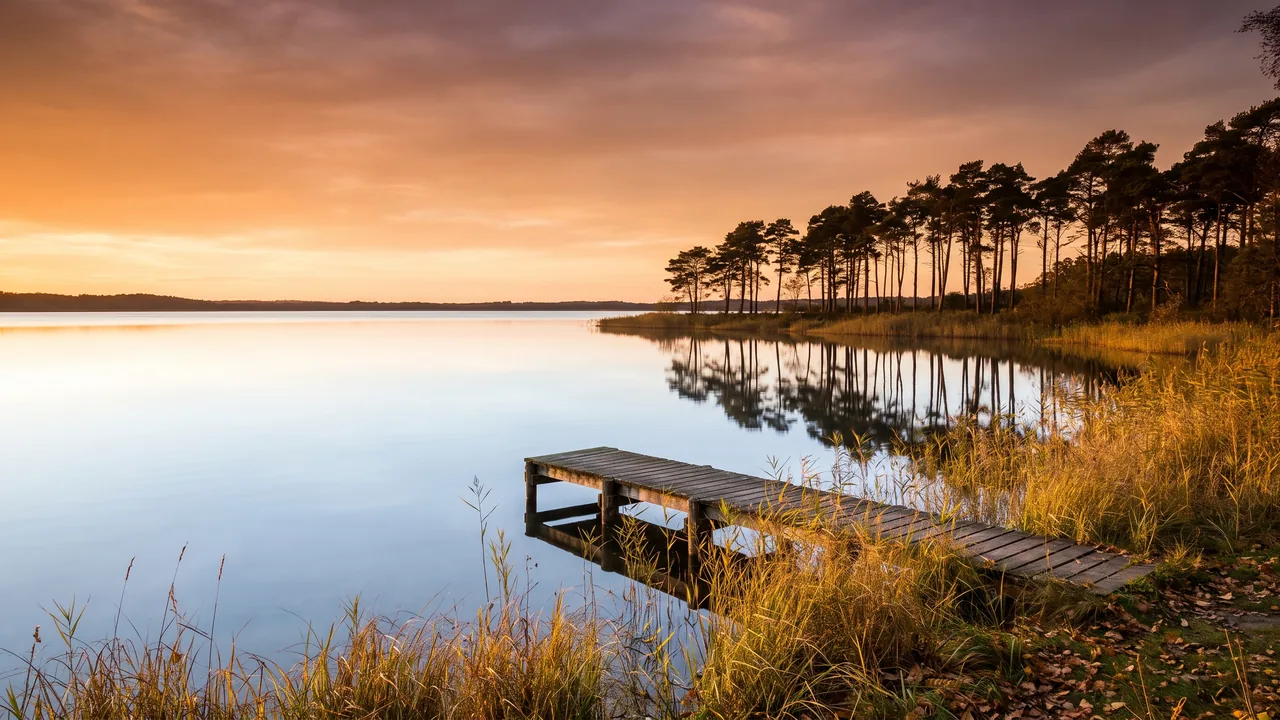
According to the Médoc Atlantique Tourisme's 2025 Local Guide to Hourtin–Naujac, Lake Hourtin-Carcans covers approximately 6,000 hectares and is the largest natural freshwater lake located entirely within France. Divided between Hourtin and Carcans, it stretches behind the dune ridge and connects to the Lacanau Lagoon via the Canal des Étangs.
A clarification is in order, as this fact is often misrepresented. Lake Hourtin-Carcans is frequently described as “the largest natural freshwater lake in France.” The exact statement is more nuanced: it is the largest natural freshwater lake located entirely within France. Lake Geneva is larger, but it is shared with Switzerland; Lake Hourtin-Carcans, on the other hand, is entirely French. It is this distinction that justifies its title—a title that is indeed accurate, but one that deserves to be stated correctly rather than rounded off.
The largest natural freshwater lake in France?
Yes, provided that you specify “entirely located in France.” Another point that’s often overlooked: the lake doesn’t belong solely to Hourtin. As its name suggests, it is shared between two municipalities, Hourtin to the north and Carcans to the south, each bordering one half of the lake. On the Hourtin side, the shore offers supervised freshwater swimming, sailing, and fishing; on the Carcans side, you’ll find the Maubuisson resort and the Bombannes recreation center. The lake is therefore a shared resource—a bridge as much as a border—and it would be wrong to claim it as an exclusive feature of Hourtin.
Hourtin-Port, the lake's only port
On the north shore, Hourtin-Port is the town’s lakeside hub. It is a freshwater marina built on the lake’s edge, around which a small resort town has sprung up, complete with shops, summer entertainment, a water sports center, and lakeside promenades. One sometimes reads that it is “the largest freshwater marina in France” or in Europe: this claim is not supported by a reliable source, and it is best to stick to the facts. Hourtin-Port is the lake’s only marina, and it offers between 471 and 500 berths—enough to accommodate sailboats and pleasure craft in a setting entirely focused on freshwater.
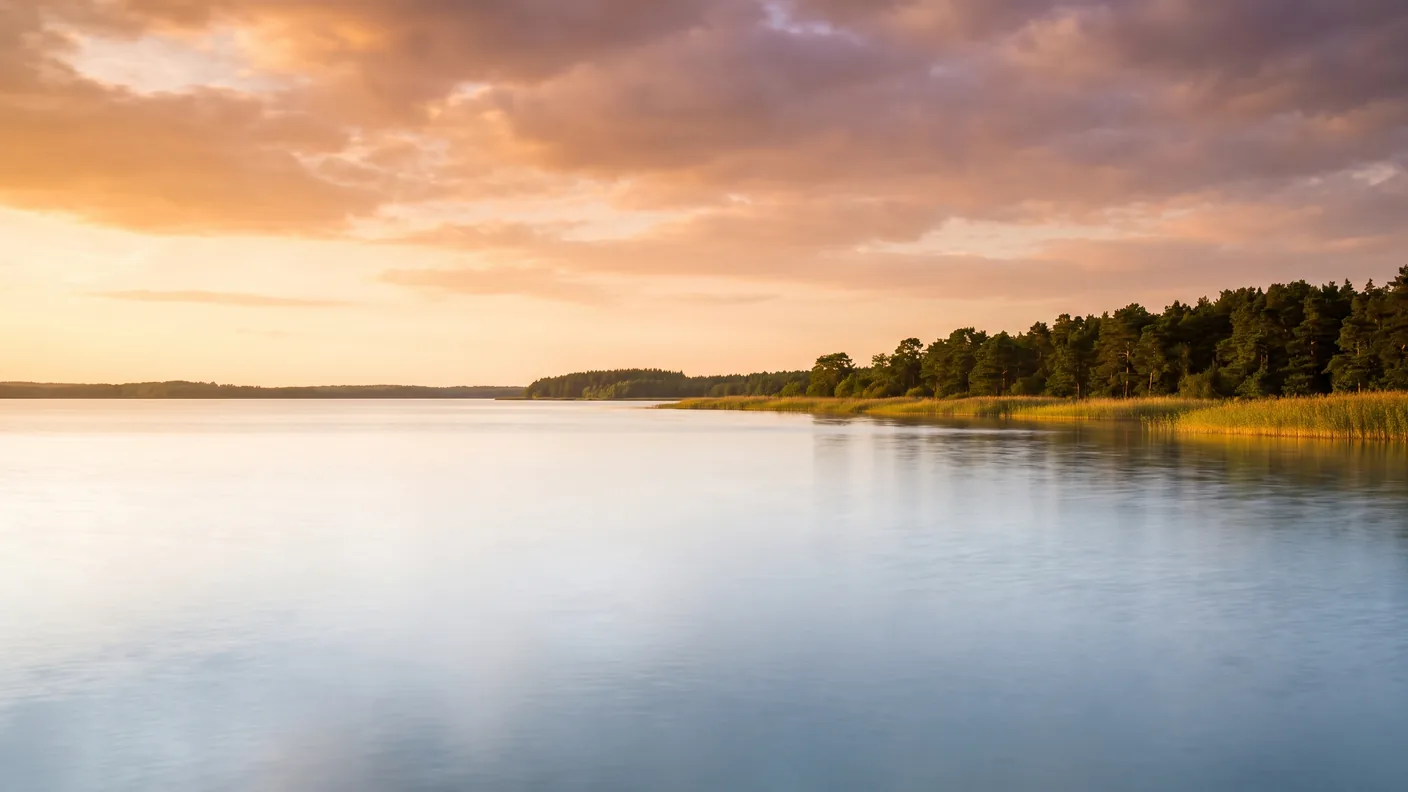
The lake, just a few kilometers from the ocean, offers a whole new range of recreational activities. Here, you can go sailing or windsurfing, go fishing, or swim in supervised areas during the season, sheltered from the swells and currents that dominate the coast. In fact, many families enjoy a mix of both: the ocean and its waves in the morning, and the calm, fresh water of the lake in the afternoon—or vice versa, depending on the wind. That’s the beauty of Hourtin—offering, within a single town, two radically different bodies of water, separated only by a belt of pine trees.
| Lake Hourtin-Carcans | Landmark |
|---|---|
| Area | ~6,000 ha (Médoc Atlantique 2025 Local Guide) |
| Dimensions | ~18 km long and ~5 km wide |
| Depth / Altitude | ~10.5 m maximum · ~14 m elevation |
| Riverside municipalities | Hourtin (north) and Carcans (south) |
| Related to | Lacanau Pond, via the Étangs Canal |
| Port | Hourtin-Port, the lake's only marina (~471–500 berths) |
The Two Lighthouses of Hourtin
According to the entry in the Ministry of Culture’s General Inventory, the two brick towers of the Hourtin lighthouse, built in 1860, are 200 meters apart. This double lighthouse was intended to bridge the unlit gap between Cordouan and Arcachon while distinguishing itself from their signals; the south tower was decommissioned as early as 1894.
Why two twin headlights?
The two towers did not share the same fate. The north tower still houses an active lighthouse—automated in 1981—that continues to guide shipping; in recognition of its heritage value, it has been listed as a historic monument since November 6, 2009. The south tower, however, no longer lights the sea: it is occupied by the Directorate General of Armaments (DGA). This pair of towers—one a working lighthouse, the other repurposed—tells a story of Hourtin’s military and maritime history, spanning civilian navigation aids and the presence of the French Ministry of Defense along this strategic coastline.
The tallest lighthouse on the Atlantic coast? No.
We need to set the record straight on a common exaggeration here. One sometimes reads that the Hourtin lighthouse is “the tallest on the Atlantic coast”—but that’s not true. At 27 meters, it is a modest structure compared to the region’s other major lighthouses. The title of France’s tallest lighthouse goes to the Île Vierge Lighthouse in Brittany, which stands at 82.5 meters. What makes Hourtin unique, therefore, is not its height but its twin lighthouses: few sites feature two twin lighthouses so close together. It is this rarity that makes it worth a visit, not a nonexistent height record.
The lighthouses of Hourtin serve as a reminder that this coastline—now associated with vacations and surfing—was once a perilous stretch of shore for sailors. Between the Gironde estuary and the Arcachon Basin lies a long, straight stretch of coastline with no natural landmarks, where more than one ship was lost before the navigation aids were completed in the 19th century. Lighting the two towers in Hourtin made a previously unmarked stretch of coastline navigable. Even today, the light from the north tower watches over the waters, serving as a link between the town’s maritime history and its modern role as a tourist destination.
Hourtin Through the Years
The history of Hourtin is that of a land long contested between the sand, the water, and the forest, before it became the town it is today. As we have seen, the name itself is a legacy: until 1628, the town was called Cartignac, with “Hourtin” being merely the name of a hamlet that eventually prevailed. In the 19th century, like the entire coastline of the Médoc and the Landes, Hourtin was transformed by large-scale projects to stabilize the dunes and plant pine trees: the pine forest replaced the shifting sands, an economy based on resin and timber took shape, and the landscape took on the forested character we still recognize today.
The 20th century brought Hourtin an unexpected role: military and maritime. As early as 1917, an auxiliary seaplane school was established on the lake, which offered a vast, sheltered body of water—ideal for aircraft taking off and landing on water. This was the first sign of an aviation and naval history that would leave a lasting mark on the town. The lake, a natural asset, became a training ground—a role it has never quite lost, as evidenced by the continued presence of the French Ministry of Defense on the site.
The CFM in Hourtin: A Memory That Lives On
The most memorable chapter remains that of the Maritime Training Center, the CFM in Hourtin. Opened on October 1, 1950, in the Contaut neighborhood, it served for half a century as the main training center for conscripts in the French Navy: Generations of young French men completed their training there, with up to approximately 1,800 trainee sailors admitted each month at the height of its activity. The center closed on June 30, 2000, with the end of mandatory military service. For many veterans, “Hourtin” remains first and foremost the name of this rite of passage in uniform, and the town retains a strong sense of remembrance, kept alive by associations of former sailors.
One detail deserves to be clarified, as confusion is common: the Contaut neighborhood in Hourtin has nothing to do with Contis, the well-known beach and lighthouse located further south in the Landes region. The two names sound alike but refer to distinct places, separated by dozens of kilometers. Contaut is a wooded neighborhood of Hourtin, inextricably linked to memories of the CFM; Contis is a resort town in the Landes region. This attention to place names is not a whim: in a forested region where place names sound alike, distinguishing Contaut from Contis, Hourtin-Port from Hourtin-Plage, or Hourtin from Carcans is already a step toward understanding the region.
What is there to do in Hourtin-Plage?
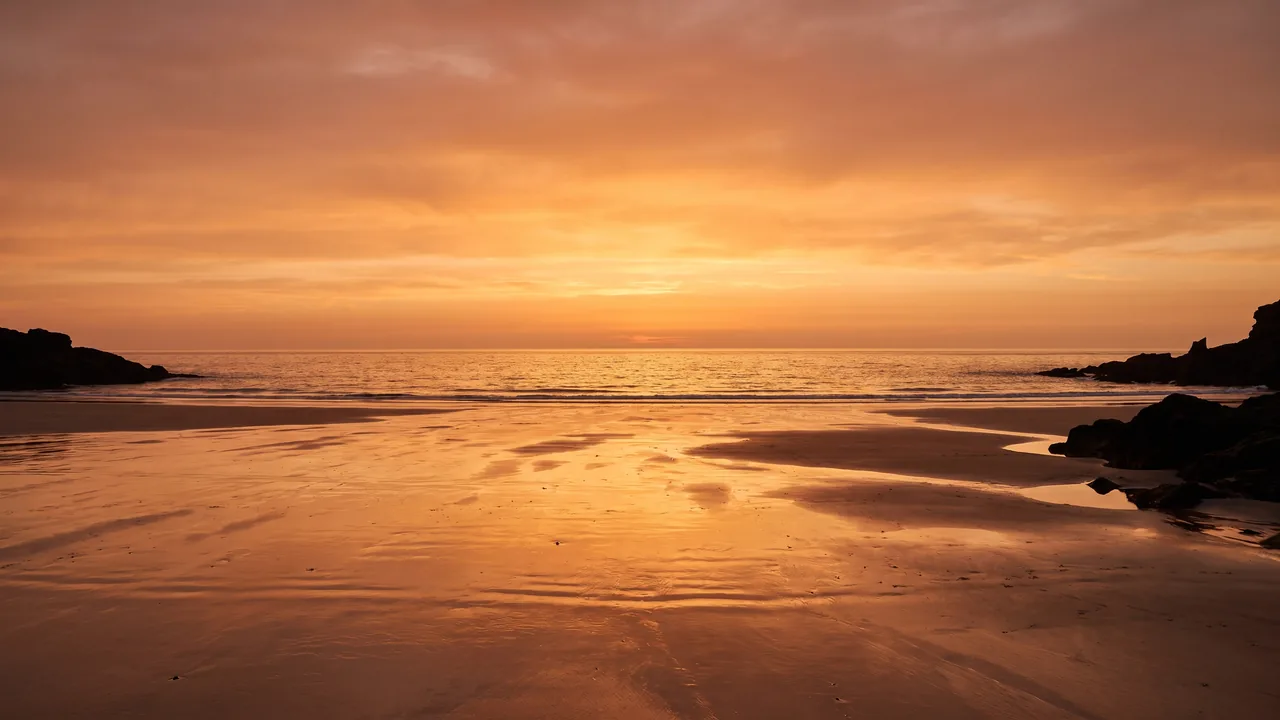
At Hourtin-Plage, a day is never just about swimming. You can spend the morning on the sand at Plage Sud, in the lifeguard-patrolled area, then head to the lake in the afternoon—about a dozen kilometers away—to enjoy the calm, fresh water and stroll around Hourtin-Port. You can take your first surfing lesson at a renowned beach break, under the guidance of a local school, or explore the forest and dunes of the nature reserve on foot. Cycling enthusiasts can ride from the ocean to other resorts along the Vélodyssée, in the shade of the pine trees. And when evening falls, the west-facing beach offers one of the most beautiful sunsets on the Médoc coast—a daily, free spectacle. The one rule that’s never up for debate is water safety: in the ocean, swim only between the flags.
- Swimming in the supervised area of the ocean beach (South Beach, flags, summer season)
- Take a surfing lesson at a famous spot with a local school
- Ride a mountain bike or go horseback riding on firm sand, where it's allowed
- By the lake: sailing, supervised swimming in freshwater, and the marina in Hourtin-Port
- Cycling along the Vélodyssée (EuroVelo 1), from Hourtin-Plage to Lacanau-Océan (~31.8 km through the forest)
- Hike through the nature reserve—with its dunes, marshes, and pine forest—on the designated trails
- Enjoy the market and the resort's summer activities
- Watch the sunset over the Atlantic, facing due west
| Desire | On site |
|---|---|
| Swimming in the ocean | South Beach is supervised; marked swimming area (summer) |
| Surfing | A well-known beach break; surf schools during the season |
| Freshwater | Lake: sailing, supervised swimming, Hourtin-Port |
| Bicycle | Vélodyssée to Lacanau-Océan (~31.8 km through the forest) |
| Nature | Dune and Marsh Reserve (2,150 ha), pine forest |
| End of the Day | Market, sunset overlooking the Atlantic |
One final note to clear up a persistent misunderstanding: Hourtin does not have a naturist resort. The large naturist beach resort sometimes associated with this part of the Médoc—the CHM in Montalivet—is located in Vendays-Montalivet, the neighboring town, and not in Hourtin. The misunderstanding stems from their proximity and the similarity of the landscapes, but the two towns are quite distinct. At Hourtin-Plage, you can enjoy a family-friendly beach and a surf spot, with the lake and its harbor just a few kilometers away—enough to fill an entire day without ever running out of things to do, between the ocean and freshwater.
How to get to Hourtin-Plage from Bordeaux
The drive from Bordeaux to Hourtin-Plage is about 73 kilometers and takes roughly one hour and twenty minutes, passing through the Médoc region and then through the forest. The route is straightforward, but the resort is worth the effort: limited beach access, parking lots that are often full in the height of summer, and a final stretch under the pine trees. These are all minor inconveniences that can weigh on a family day out loaded down with beach gear—and it’s best to plan for them before you leave. The drive takes you through some of the Médoc’s most beautiful landscapes—from vineyards to pine forests—before opening up to the ocean.
One point worth noting for anyone dreaming of driving along the coast: there is no direct coastal road connecting the ocean resorts. To get from Hourtin-Plage to Carcans-Plage or Lacanau-Océan by car, you have to go back inland through the forest, which significantly lengthens the journey—hence the 37 kilometers by road to Carcans-Plage, even though it’s close as the crow flies. By bike, however, the coastal bike path connects these beaches in a much more direct and much shorter way. This is something to keep in mind when planning to visit several beach towns during the same trip.
How much does the ride cost?
The transfer between Bordeaux and Hourtin-Plage starts at 138 € during the day for a sedan carrying one to three passengers. This rate is fixed and confirmed in writing before departure: no meter, no surprises upon arrival. A surcharge may apply at night, on weekends, and on holidays. For groups of more than four passengers, a van will be provided. Trips to the town of Hourtin, to Hourtin-Port, or from the Bordeaux-Mérignac Airport are also priced based on a quote, depending on the distance and the selected time.
This starting rate includes door-to-door service: pickup at the address of your choice in Bordeaux or at the airport, a comfortable vehicle, and a direct route with no detours or mandatory stops. The advertised price is what you pay, regardless of traffic conditions along the way. For a group, a family loaded down with surfboards and beach umbrellas, or a same-day round trip, this budget clarity is often just as important as comfort—you know in advance how much the trip will cost, even before you get in the car.
| Route | Distance | Duration | Starting at |
|---|---|---|---|
| Bordeaux → Hourtin-Plage | ~73 km | ~1 hr 20 min | starting at 138 € |
| Bordeaux → the town of Hourtin | — | ~1 hr 10 min | based on a quote |
| Bordeaux → Hourtin-Port (lake) | — | ~1 hr 10 min | based on a quote |
| Bordeaux Airport → Hourtin-Plage | — | — | based on a quote |
| Return from Hourtin-Plage | ~73 km | ~1 hr 20 min | starting at 138 € |
Why Hire a Private driver for Hourtin-Plage?
Because a day spent between the ocean and the lake is best enjoyed without the hassle of driving. With door-to-door transportation, you won’t have to deal with the hassle of finding a parking spot at the height of summer, the fatigue of driving back at sunset, or detours through the forest to get between the different areas of Hourtin. You load up your beach gear, leave at the time you choose, and return whenever you like—with the price set in advance and confirmed in writing. Whether you’re heading out with family or friends, taking a one-way trip to the resort, or a round-trip for the day, this is the most stress-free way to fully enjoy Hourtin, its beach, its forest, and its lake.
Frequently Asked Questions
Hourtin-Plage and Hourtin—are they the same place?
Not quite. Hourtin is a large municipality in the Médoc region, divided into several areas spread out over a dozen kilometers: the town center (Hourtin-Ville), Hourtin-Port on the lake, and Hourtin-Plage on the Atlantic Ocean. Hourtin-Plage therefore specifically refers to the municipality’s oceanfront resort, separated from the town center and the port by a pine forest. When people talk about the beach, surfing, and dunes, they’re referring to Hourtin-Plage; when they talk about the lake, sailing, and the port, they’re referring to Hourtin-Port.
How far is Hourtin-Plage from Bordeaux?
It's about 73 kilometers and roughly an hour and twenty minutes by car from Bordeaux. The route winds through the Médoc region, then crosses a pine forest before reaching the ocean. The distance is short, but the final stretch winds through the pine trees, and access to the beach is intentionally limited: in the summer, finding parking often poses a bigger challenge than the distance itself when planning a day trip. It’s therefore better to factor in travel time and access constraints rather than just the straight-line distance.
Is swimming supervised at Hourtin-Plage?
Yes, but only in a marked area and during specific hours, during peak season. Lifeguard supervision is concentrated in the South Beach area, with a swimming zone marked by flags, generally during the height of summer; a second zone may open further south during peak season. Outside these areas and time slots, swimming is not supervised. On this Atlantic coast, the rule is simple and applies to everyone: swim only between the flags, never anywhere else.
What is a rip current, and why is it dangerous?
A rip current is a shallow area near the shore where the returning current can pull swimmers out to sea. The SNSM recommends swimming in the supervised area and following the signs. If you are swept out to sea, do not fight against the current: stay calm, make yourself visible, and try to swim parallel to the beach, then toward the shore when the current weakens.
Can you go surfing at Hourtin-Plage?
Yes, Hourtin-Plage is a well-known surf spot on the Médoc coast, popular for its consistent swells and accessible beach break. Surf schools offer lessons and camps during the season, for both beginners and experienced surfers. Conditions depend on the tide, wind, and swell of the day. Spring and fall often offer great waves and a less crowded beach, but the water is cooler and there are fewer lifeguards on duty. If it’s your first time, it’s best to go through a local surf school and stay close to the supervised area.
Is Lake Hourtin really the largest freshwater lake in France?
To be precise, Lake Hourtin-Carcans is the largest natural freshwater lake located entirely within France. Lake Geneva is larger, but it is shared with Switzerland; the Hourtin-Carcans Lake, on the other hand, is entirely French. It covers approximately 6,000 hectares, measures about 18 km by 5 km, and is only about 10 meters deep. Another fact that is often overlooked: it does not belong solely to Hourtin, but is shared between Hourtin, to the north, and Carcans, to the south.
What is Hourtin-Port?
Hourtin-Port is the town’s lakeside hub, located on the shores of Lake Hourtin-Carcans, about a dozen kilometers from the ocean beach. It is the lake’s only marina, with between 471 and 500 berths, and a small resort has sprung up around it, featuring shops, a water sports center, summer activities, and lakeside promenades. One sometimes reads that it is “the largest freshwater marina” in France or Europe, but this claim is not supported by a reliable source; we will therefore stick to the facts: it is the lake’s only marina.
Can you go swimming in the lake at Hourtin?
Yes. On the Hourtin side, Lake Hourtin-Carcans offers freshwater swimming, with lifeguards on duty during the season in designated areas, sheltered from the swells and currents of the ocean. People also enjoy sailing, windsurfing, and fishing there. Many families enjoy the best of both worlds: the ocean and its waves on one side, and the calm, freshwater lake on the other, just a dozen kilometers away. This is one of Hourtin’s greatest assets, as it brings together two very different bodies of water within a single town.
Why are there two lighthouses in Hourtin?
Hourtin has two twin square lighthouses, 27 meters tall and located about 200 meters apart, built in 1860 and first lit in 1863 to fill a gap in navigation aids between Pointe de Grave and Cap Ferret. The north tower still houses an active light, which was automated in 1981, and has been listed as a historic monument since November 6, 2009. The south tower, meanwhile, is occupied by the Directorate General of Armaments. Please note: contrary to what is sometimes reported, this is not the tallest lighthouse on the Atlantic coast—the tallest in France is the one on Île Vierge, at 82.5 meters.
What is the Hourtin Dunes and Marshes Nature Reserve?
It is a national nature reserve established in 2009 and managed by the National Forest Service, which protects approximately 2,150 hectares of coastal habitats: the foreshore, shifting and wooded dunes, the forest, the lake shores, and the marshes. It is home to remarkable flora and fauna and can be explored on foot or by bike along designated trails. The dune ridge, stabilized in the 19th century by the planting of pine trees, is protected by wooden fences and marram grass plantations: visitors must stay on the designated trails to avoid damaging this natural barrier.
Is there a nudist beach in Hourtin?
No, Hourtin does not have a naturist resort. The large naturist beach resort sometimes associated with this part of the Médoc—the CHM in Montalivet—is located in Vendays-Montalivet, the neighboring town, and not in Hourtin. The confusion stems from their proximity and the similarity of the landscapes, but the two towns are quite distinct. Hourtin-Plage is a family-friendly beach and a surfing spot, with the lake and its harbor just a few kilometers away: enough to keep you busy for a whole day between the ocean and freshwater.
Is it possible to get to Carcans-Plage or Lacanau-Océan from Hourtin-Plage along the coast?
Not directly by car. There is no coastal road connecting the ocean resorts to one another: to get from Hourtin-Plage to Carcans-Plage or Lacanau-Océan, you have to go back inland through the forest, which significantly lengthens the journey—about 37 kilometers by road to Carcans-Plage, even though it’s close as the crow flies. By bike, however, the coastal bike path connects these beaches in a much more direct and much shorter way. This is something to keep in mind if you want to visit several beach towns during the same trip.
How much does a trip from Bordeaux to Hourtin-Plage cost with a chauffeur service?
The Bordeaux → Hourtin-Plage route is available starting at 138 € during the day for a sedan accommodating one to three passengers. The price is fixed and confirmed in writing before departure, with no meter and no surprises upon arrival. A surcharge may apply at night, on weekends, and on holidays; for more than four passengers, a van will be provided. Trips to the town of Hourtin, to Hourtin-Port, or from Bordeaux Airport are priced on a quote basis. Expect a distance of approximately 73 kilometers and a travel time of one hour and twenty minutes, door-to-door.
Further Reading
- Book your transfer from Bordeaux to Hourtin-Plage: fixed-price quote, confirmed in writing, with no obligation.
- All our destinations departing from Bordeaux and the surrounding area.
- Carcans-Plage: the ocean beach and surfing in the Médoc—the neighboring resort, facing due south.
- Lacanau-Océan: beaches, surfing, and the waterfront.
- Carcans: Lake Hourtin-Carcans, the ocean, and Bombannes—the other side of the lake.
Sources and References
- Médoc Atlantique Tourist Office — Hourtin — beach, lake, harbor, lifeguards
- INSEE — Hourtin (33203) — demographics, area, neighborhoods
- POP — Hourtin Twin Lighthouses — the two towers, Historic Monument (MH), DGA
- ONF — Hourtin Dunes and Marshes Nature Reserve — 2,150 ha reserve, dunes, marshes
- SNSM — Rip Current Phenomenon and Recommendations — Supervised Swimming, Reporting, and What to Do in the Event of a Rip Current
- The Vélodyssée (EuroVelo 1) — Hourtin-Plage ↔ Lacanau-Océan
Article updated on July 24, 2026.
On the way to the Médoc coast
Direct transfer from Bordeaux (~1 hr 20 min) to the ocean beach and Lake Hourtin. Fixed-price quote in writing, with no obligation.