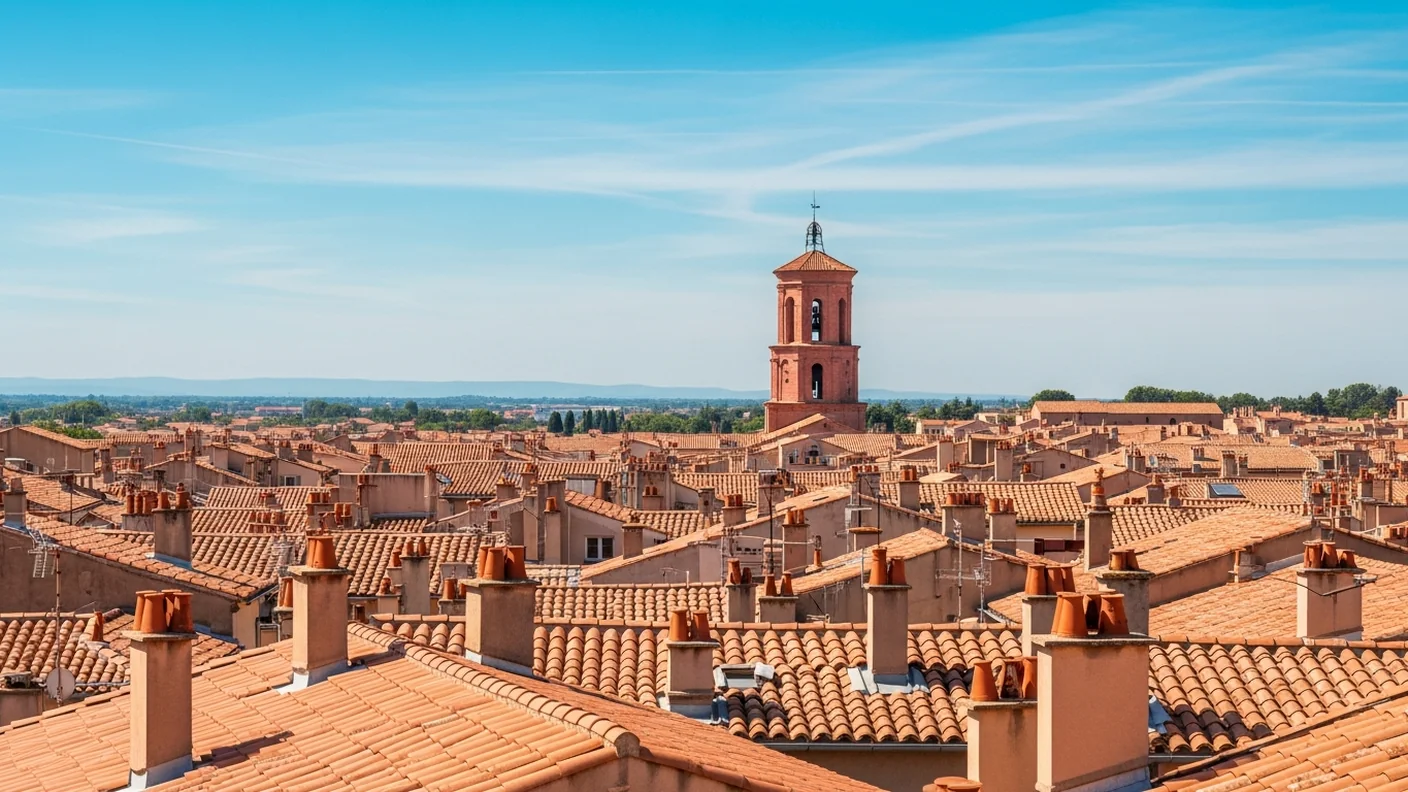
Toulouse, the ‘Pink City’ and its eight ‘Capitouls’
France’s fourth-largest city, and the one growing the fastest: the Capitole, which owes nothing to Rome; a nickname barely a century old; a canal that doesn’t originate from the river; and the oldest bridge over the Garonne. This guide separates fact from fiction.
Toulouse at a glance
- Wondering what to do in Toulouse is like choosing between two thousand years of history and a rapidly expanding industrial hub: the city covers 118.3 km², whilst its historic centre – the real highlight for visitors – occupies just 5.18 km².
- With a population of 514,819 according to the 2023 census, Toulouse is France’s fourth-largest city, behind Paris, Marseille and Lyon. Its catchment area exceeds 1.5 million inhabitants.
- The Capitole owes nothing to the Roman Capitol: its name derives from the capitulum, the ‘chapter’ where the capitouls – the city’s elected magistrates from 1147 to 1790 – held their sessions. The eight pink marble columns on its façade symbolise them.
- A visit to the Capitole — the Henri IV Courtyard and the Salle des Illustres — is free during the town hall’s opening hours.
- ‘The Pink City’ is a recent nickname: the earliest recorded references date back to 1906–1910, not to antiquity. The building material, however, is ancient — ‘brique foraine’ (a type of brick) first appeared around 1080 on the construction site of Saint-Sernin.
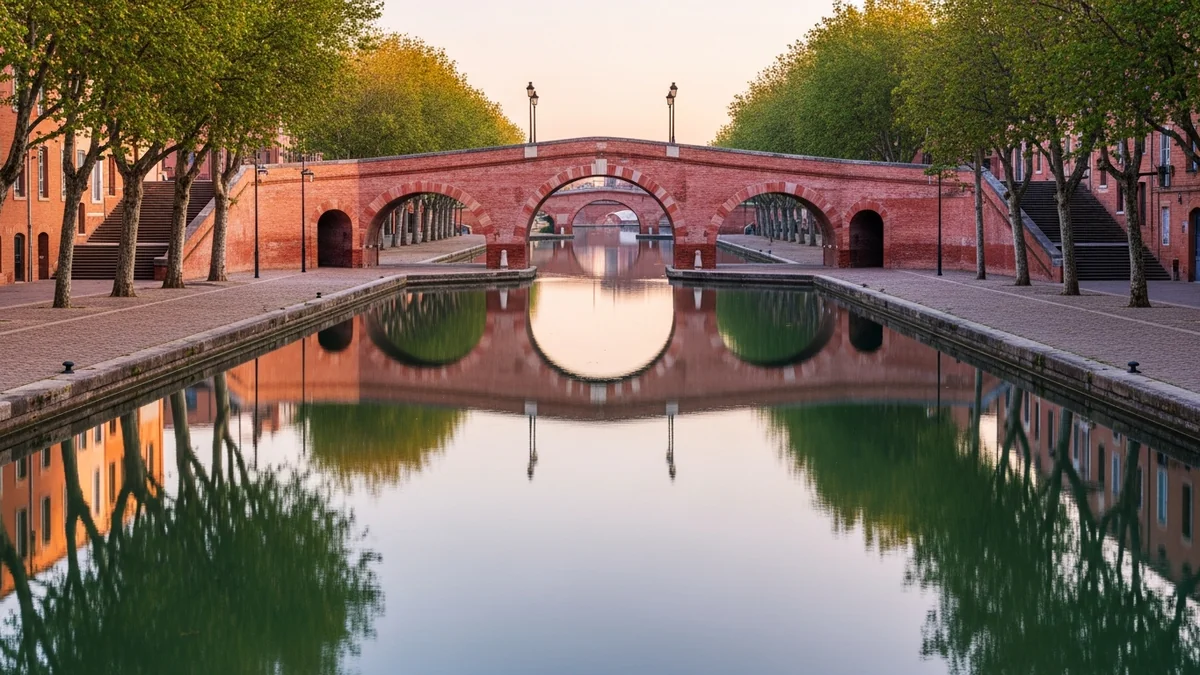
- The Canal du Midi, a UNESCO World Heritage Site since 1996, does not begin on the Garonne but at the Port de l’Embouchure. Dug between 1666 and 1681 under the supervision of Pierre-Paul Riquet, it runs for 241 km to the Étang de Thau.
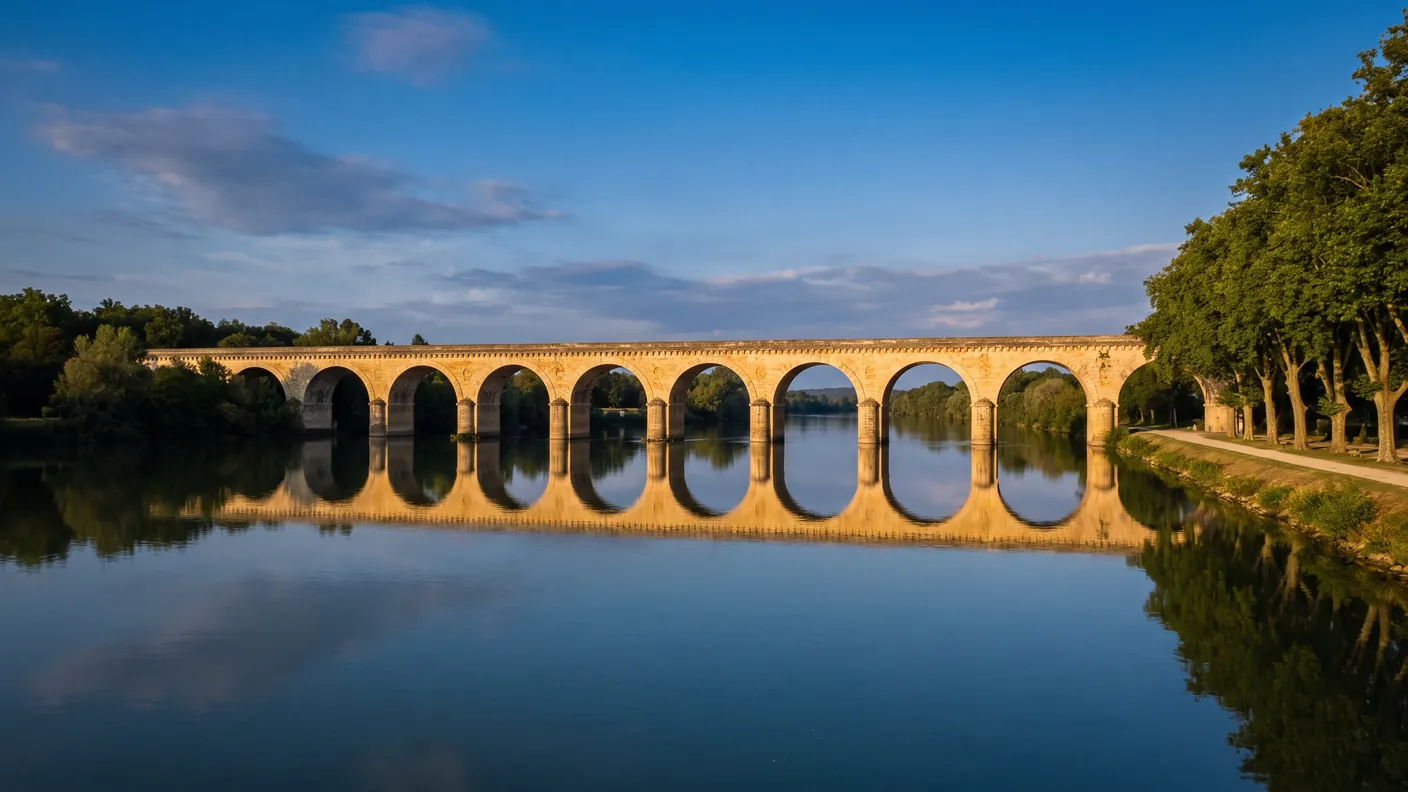
- The Pont-Neuf is somewhat misnamed: it is the oldest bridge in Toulouse. Construction began in 1543 and it opened in 1632; for nearly two centuries, it was the only permanent bridge across the entire Garonne – until the Pont de Pierre in Bordeaux opened in 1822.
- From Bordeaux: ~245 km via the A62, a direct journey of 2 hours 39 minutes.
Before you go: what Toulouse is really like
Toulouse is the prefecture of Haute-Garonne and the regional capital of Occitanie, France’s fourth-largest city: a historic centre covering 5.18 km² that can be explored entirely on foot. Late afternoon, Place du Capitole, in June. The low sun strikes the façade designed by Guillaume Cammas and the brickwork begins to do exactly what you’d expect: it turns a rosy hue. Beneath your feet lies an 18-metre-high, 20-tonne bronze Occitan cross; above it, eight pink marble columns that are not merely decorative — they represent the eight magistrates who governed this city for six centuries. Hardly anyone looks up beneath the arcades to the west: Raymond Moretti painted twenty-nine murals there, recounting two millennia of Toulouse’s history. Knowing what to do in Toulouse means, first and foremost, knowing where to look.
What common misconceptions about Toulouse need to be corrected?
This guide separates fact from fiction, and when it comes to Toulouse, the list of myths is a long one. No, the Capitole does not take its name from Rome’s Capitoline Hill: the city council states it in black and white, ‘the name Capitole comes from the word “chapter”, meaning the place where the Assembly is held’. No, Toulouse does not have a Mediterranean climate: the Köppen classification places it in the Cfa category, a humid subtropical climate with no dry season — rainfall is spread throughout the year, and May is the wettest month. No, the Autan wind is not a dry wind blowing down from the Pyrenees: it comes from the south-east, is an extension of the Mediterranean sea breeze, and is rather humid.
Three further useful corrections. The Canal du Midi does not start at the Garonne: it begins at the Port de l’Embouchure, and it is another structure, the Canal de Brienne — 1,560 metres long, inaugurated on 14 April 1776 — that provides the link to the river. Toulouse is no longer the capital of Midi-Pyrénées, a region that ceased to exist on 1 January 2016: it is the prefecture of Occitanie. And the famous ‘gold of Toulouse’ was probably not the treasure of Delphi – we’ll come back to this, because the true story is better than the legend.
Do you need a car to visit Toulouse?
A word on the best approach. Visiting Toulouse requires less planning than you might think: the historic centre is tiny – 5.18 km², or 4.4 per cent of the municipality – bordered by the Garonne to the west and the Canal du Midi to the north and east. Everything can be done on foot. A car is only really useful for getting there, getting away, and reaching outlying attractions (Cité de l’Espace, Aeroscopia, Halle de La Machine) which are not all equally well served by public transport. It is with this in mind that a private chauffeur service from Bordeaux is available: door-to-door, at a time of your choosing.
Geography: the Garonne, the plain and the wind
Toulouse covers an area of 118.3 km² on a plain, at an altitude of between 115 and 263 metres. The city is situated in a bend of the Garonne, which flows in from the south-west, joins the Ariège just upstream at Portet-sur-Garonne, then turns sharply north-west at Toulouse before continuing towards the Atlantic — and towards Bordeaux. This bend is by no means insignificant: it is what shaped the city, establishing it as the transhipment point for river traffic.
The distinction between the two banks still shapes the city. The right bank is an unsubmersible terrace: it was here that the Roman city, and later the merchant city, were established. The left bank, the Faubourg Saint-Cyprien, lies a few metres lower, outside the city walls and in a flood-prone area — long the poor quarter, and the first to be submerged during the flood of 1875.
Does Toulouse have a Mediterranean climate?
It is often claimed that Toulouse enjoys a Mediterranean climate. This is incorrect according to the Köppen classification, which classifies it as Cfa — humid subtropical, warm temperate with no dry season. Météo-France’s average figures for 1991–2020, measured at Toulouse-Blagnac, show an average annual temperature of 14.2 °C, 627 mm of rainfall spread throughout the year, and 2,075 hours of sunshine — the often-cited threshold of 2,100 hours is not reached over this reference period.
Two other figures are worth correcting. The record high temperature is not 44 °C in 1923: according to the official Blagnac data series, it stands at 42.4 °C on 23 August 2023 — the 44 °C figure comes from a different, earlier station. The coldest temperature, however, is confirmed: −19.2 °C on 15 February 1956. On average, there are 33 days a year when the temperature exceeds 30 °C and 27 days of frost. The wettest month is May (73.6 mm), the driest is July (40.1 mm): the opposite of the typical Mediterranean pattern.
The Autan wind: a common misconception
It is Toulouse’s signature weather phenomenon, and it is almost always misdescribed. The Autan wind does not blow down from the Pyrenees and bears no resemblance to a dry foehn: it comes from the south-east. It is an extension of the Mediterranean ‘sea breeze’, accelerated through the narrow Lauragais pass between the Corbières and the Montagne Noire, which crosses the Naurouze threshold. It therefore reaches Toulouse rather humid, and it keeps maximum temperatures in check, much as a sea breeze would.
Its name comes from the Occitan ‘autan’, from the Latin ‘altanus’: the ‘wind from the high sea’ — in the Occitan-speaking regions, the sea is the Mediterranean. It is nicknamed ‘the wind that drives you mad’ and ‘the devil’s wind’, and is said to cause irritability and sleep disturbances; on 4 May 1916, it derailed the Toulouse–Revel train. An elegant detail: the Naurouze weir, the highest point of the Canal du Midi at 189 metres, is precisely the narrows through which the autan rushes. The same geographical constraint explains both the canal’s route and the city’s wind.
| Data | Value |
|---|---|
| Area | 118.3 km² · historic centre just 5.18 km² |
| Altitude | 115 m to 263 m |
| Population | 514,819 inhabitants (2023 census) — France’s fourth-largest city |
| Region / department | Prefecture of Occitanie and Haute-Garonne (31) · INSEE 31555 |
| Metropolitan area | Toulouse Métropole: 37 municipalities, 841,524 inhabitants (2023) |
| Climate | Cfa (humid subtropical) · 14.2 °C · 627 mm · 2,075 hours of sunshine |
| Records | 42.4 °C on 23 August 2023 · −19.2 °C on 15 February 1956 |
| River | The Garonne · Pont-Neuf, listed as a historic monument since 14 March 1991 |
How many people live in Toulouse?
Toulouse had a population of 514,819 according to the 2023 census, making it the fourth-largest city in France after Paris, Marseille and Lyon. This figure should be considered at several levels, as each tells a different story: the metropolitan area has a population of 1,093,783, also the fourth largest in France, whilst the catchment area — the actual catchment area — exceeds 1.5 million people, ranking fifth nationally.
Between the two lies Toulouse Métropole, established on 1 January 2015: 37 municipalities, 841,524 inhabitants, approximately 46,000 hectares — accounting for 57 per cent of the population of Haute-Garonne. Note the discrepancy: the institutional metropolitan area comprises only 37 of the 81 municipalities in the conurbation, and a small fraction of the municipalities within the catchment area. As is often the case, the administrative boundary is narrower than the actual city.
A French exception
Whilst Paris is losing residents and many city centres are stagnating, Toulouse is gaining them — consistently, and has been doing so for a long time. This is why its national ranking has shifted over the decades, and why guidebooks published ten years ago still give out-of-date figures. There is therefore one essential rule when it comes to Toulouse: always state the year a population figure was recorded, because it will have changed by the time the next publication appears.
There is a clear reason for this growth: jobs in the aerospace sector, and the university. Toulouse is one of France’s leading student hubs, which gives the city centre a distinctive demographic — young, mobile, and very much out and about in public spaces in the evenings. This also explains the bustling nightlife around Saint-Pierre and the canal, and the difficulty in finding accommodation in September.
An administrative structure that has changed
Beware of outdated information that is still widely circulating: Toulouse is no longer divided into six administrative sectors. Created by a city council resolution on 18 December 2009, they were phased out at the end of 2023 in favour of five metropolitan areas, following the administrative reform of Toulouse Métropole. What remains – and what concerns you as a visitor – are the twenty local democracy neighbourhoods, and above all their common names: Les Carmes, Saint-Cyprien, Saint-Aubin, Les Chalets and Compans.
| Scale | Population (2023) | National ranking |
|---|---|---|
| Toulouse municipality | 514,819 | 4th largest city |
| Toulouse Métropole (37 municipalities) | 841,524 | — |
| Conurbation (urban area) | 1,093,783 | 4th |
| Catchment area | 1,529,112 | 5th |
Tolosa, the ‘Pink City’ and the ‘Cursed Gold’
The name Toulouse is one of the oldest in France still in use, and one of the least understood. Tolosa appears in ancient texts from the 2nd century BC onwards — Τολώσσα in the works of Posidonius and Strabo, Tolosa in those of Cicero, Caesar and Pliny the Elder. On one point, place-name scholars are unanimous: it is an indigenous place-name, which Greek and Latin authors simply transcribed. As for its meaning, however, no one can say for certain.
The Celtic hypothesis — a root *tol-, meaning ‘hill’ — comes up against a stubborn obstacle: Toulouse lies on a plain. Most specialists therefore classify the name as pre-Celtic, perhaps Iberian, with an indeterminate meaning. Two more flattering etymologies are in circulation, but they are worthless: the Greek tholos, and above all Tholus, Noah’s great-grandson — a humanist myth which the Toulouse poet Pèire Godolin placed at the beginning of his Ramelet Mondin. As for the appealing idea of a ‘city of tolerance’ derived from a Proto-Italic root, it is not supported by any reliable sources.
The Volques Tectosages occupied the region from the mid-3rd century BC onwards, and the local sub-group, the Tolosates, had their capital at Vieille-Toulouse — an oppidum urbanised ‘in the Italic style’, with an orthogonal layout, whose estimated area ranges from 90 to 200 hectares depending on the excavations. The move to the plain, on the site of the present-day city centre, was by no means a natural development: it was an authoritarian decision by Augustus, around 10 BC. In the 20s and 30s AD, the new city was enclosed by a 3-kilometre-long rampart, 12 metres high, protecting 90 hectares.
The gold of Toulouse: legend versus historical sources
In 106 BC, the consul Quintus Servilius Caepio seized the riches of Tolosa. Legend has it that this was the treasure of Delphi, plundered by the Gauls in 279 and brought back here. However, this version was already disputed in antiquity: Posidonius of Apamea, who travelled to Gaul and Tolosa shortly after the events, objected that the Toulouse treasure consisted of raw metal in ingots, whereas that of Delphi was made up of crafted objects — and that the Greek sanctuary had in any case been emptied beforehand. His explanation is simpler: the region was rich in gold mines, and the Gallic sanctuaries were overflowing with offerings.
Two clarifications regarding terminology, which are often misunderstood. Caepio was consul in the year 106, not proconsul — he would not become proconsul until 105. And the spoils, according to Strabo citing Posidonius, amounted to around 15,000 talents of gold and silver combined: the figure of ‘70 tonnes of gold’ that is commonly cited has no ancient source. As for the famous ‘sacred lakes’ where the treasure is said to have been submerged, neither archaeological excavations nor the geomorphology of the area provide any evidence of their existence — the Greek word limné and the Latin word lacus can refer equally to a basin, a vat or a pit.
The proverb, however, is well attested. Aulus Gellius reports in the 2nd century that anyone who laid hands on this booty ‘died a miserable and atrocious death’, and lists the ‘aurum Tolosanum’ alongside the ‘horse of Seius’ amongst the cursed possessions. The meaning is therefore not ‘ill-gotten gains never prosper’ but rather that of the evil eye: an object that brings misfortune to its owner. Caepio would ultimately fall from grace, be expelled from the Senate, stripped of his citizenship, and die in exile in Smyrna — after inflicting on Arausio, on 6 October 105, the worst Roman rout since Cannae.
Why is Toulouse called the ‘Pink City’?
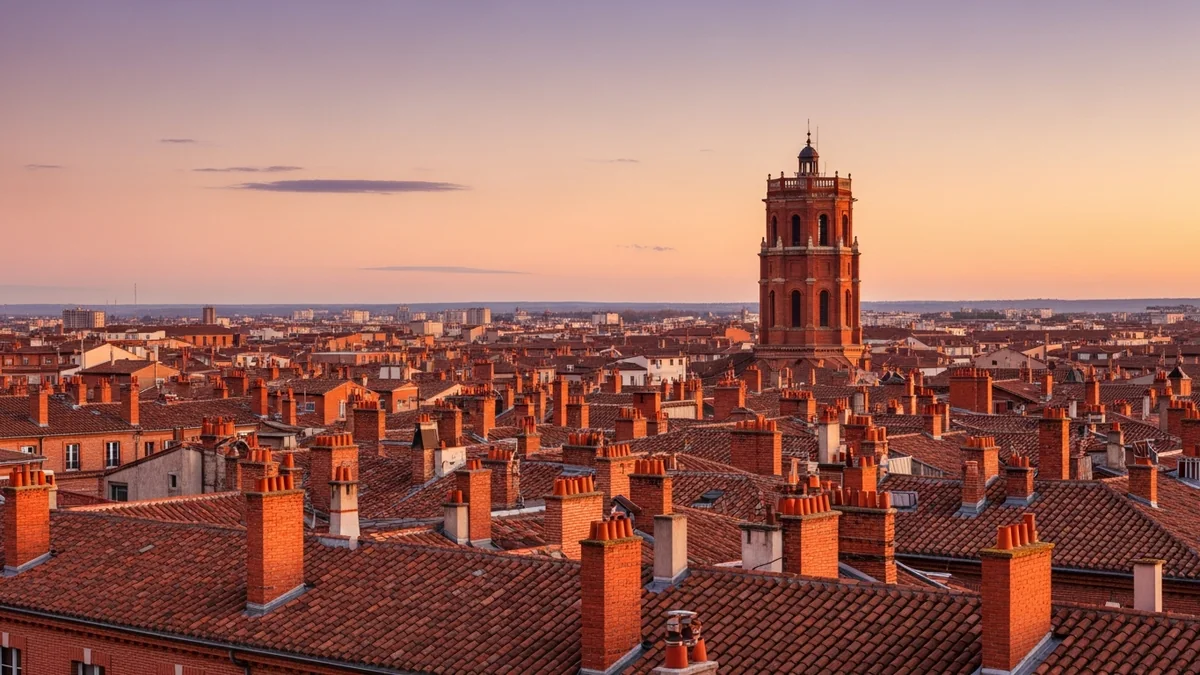
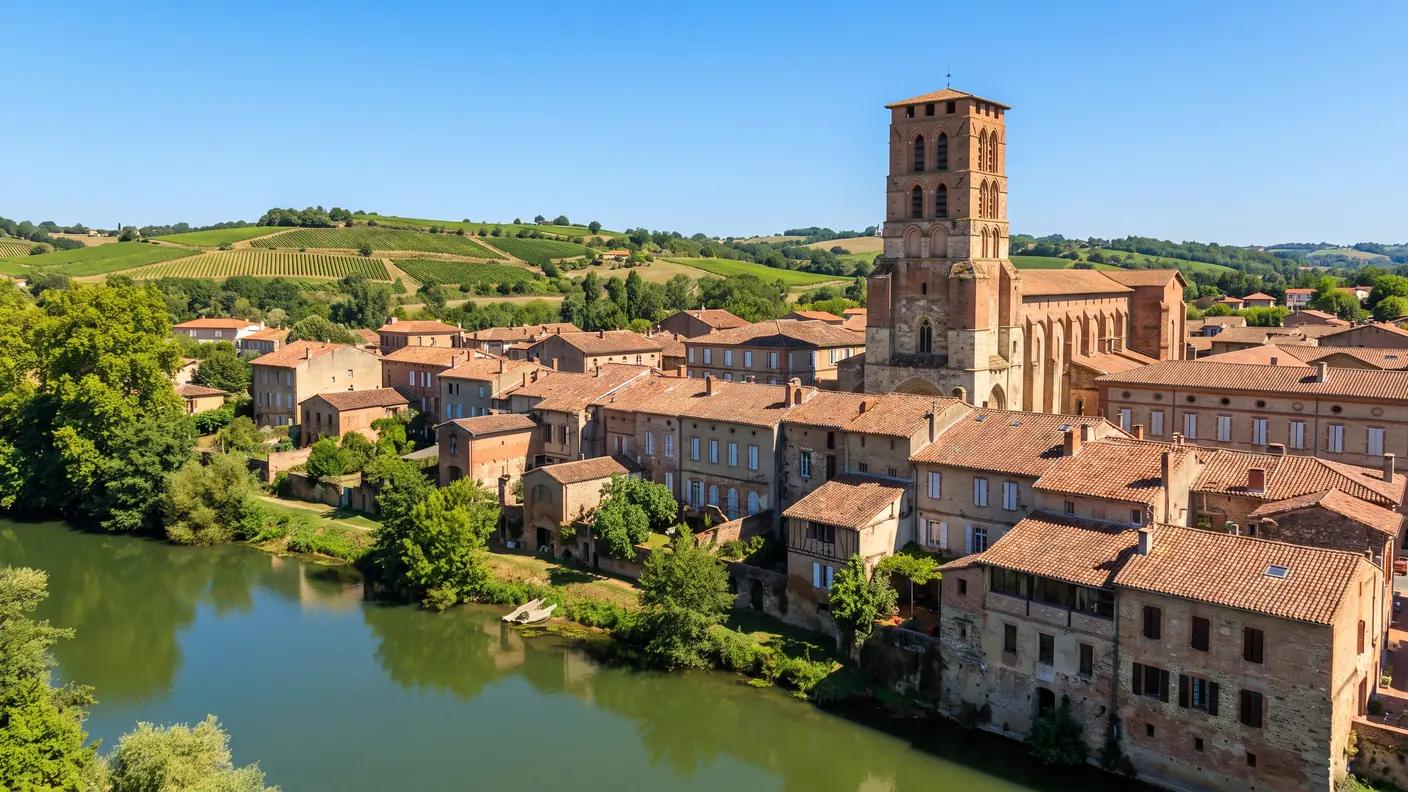
The building material is ancient, but the nickname is not. The first recorded use of ‘brique foraine’ dates back to around 1080, on the construction site of Saint-Sernin, and its widespread adoption owes much to the ban on timber following the fire of 1463, and subsequently to the influx of wealth from the pastel trade. But the expression ‘the Pink City’ itself did not appear until the very beginning of the 20th century: on the pink covers of the tourist office newsletter in 1906 and 1907, and then in a 1910 guide entitled *Three Days in Toulouse: The Pink City*, which states that the phrase was ‘often heard’.
Two common misconceptions to clear up whilst we’re at it. ‘Foraine’ does not mean ‘sold at fairs’ but comes from the Latin *foraneus*, ‘coming from outside’: these bricks were not made on site but transported from brickworks. And Toulouse has not always flaunted its brickwork — quite the opposite, in fact. Until the 18th century, high-quality brick was an expensive and prestigious material, to the extent that simply rendered façades were painted with faux joints to simulate brickwork. It was the nationwide fashion for cut stone, in the second third of the 18th century, that shifted perceptions and relegated brick to the category of humble building materials.
Finally, the other nickname. ‘The City of Violets’ is real but far more low-key, and it dates from a later period than one might imagine: historians date the arrival of the Toulouse violet to around 1854, and not to the time of Napoleon I’s soldiers. It belongs to the Parma violet group — highly fragrant, double-petalled, sterile flowers that propagate via stolons. Its golden age was in the first half of the 20th century: 600 growers, around twenty hectares, and up to 600,000 bouquets exported each year, as far afield as Russia. The terrible winter of 1956 brought the industry to a standstill.
The Capitole: what lies behind the façade
Let’s start with the name, because it is almost always misinterpreted. The Capitole in Toulouse owes nothing to Rome’s Capitoline Hill: the town hall was called a ‘capitulum’, meaning ‘chapter’, because the ‘capitouls’ (councillors) sat there and voted on a per-member basis, in the manner of ecclesiastical chapters. Toulouse City Council puts it plainly: ‘the name Capitole comes from the word “chapter”, the place where the Assembly is held.’ The Roman reference is a flattering addition, tacked on later. The building itself has been the seat of municipal power for over eight centuries — the first town hall was purchased in 1190 — and today it houses, under one roof, the town hall and the Théâtre du Capitole, which became the National Opera in October 2021. The city council itself highlights the uniqueness of this combination: ‘an opera house within the town hall – a situation that is almost unique in France’.
The ‘capitouls’ were the elected municipal magistrates who administered Toulouse from 1147 — when Count Alphonse Jourdain granted privileges to the inhabitants — until the institution was abolished in 1790. Their number varied over the years: six, then twelve, twenty-four, four, six again… It was not until the ordinance of 1438, under Charles VII, that the number was set at eight – six for the city, two for the market town. And it is this number eight that the façade depicts.
Eight columns, eight magistrates
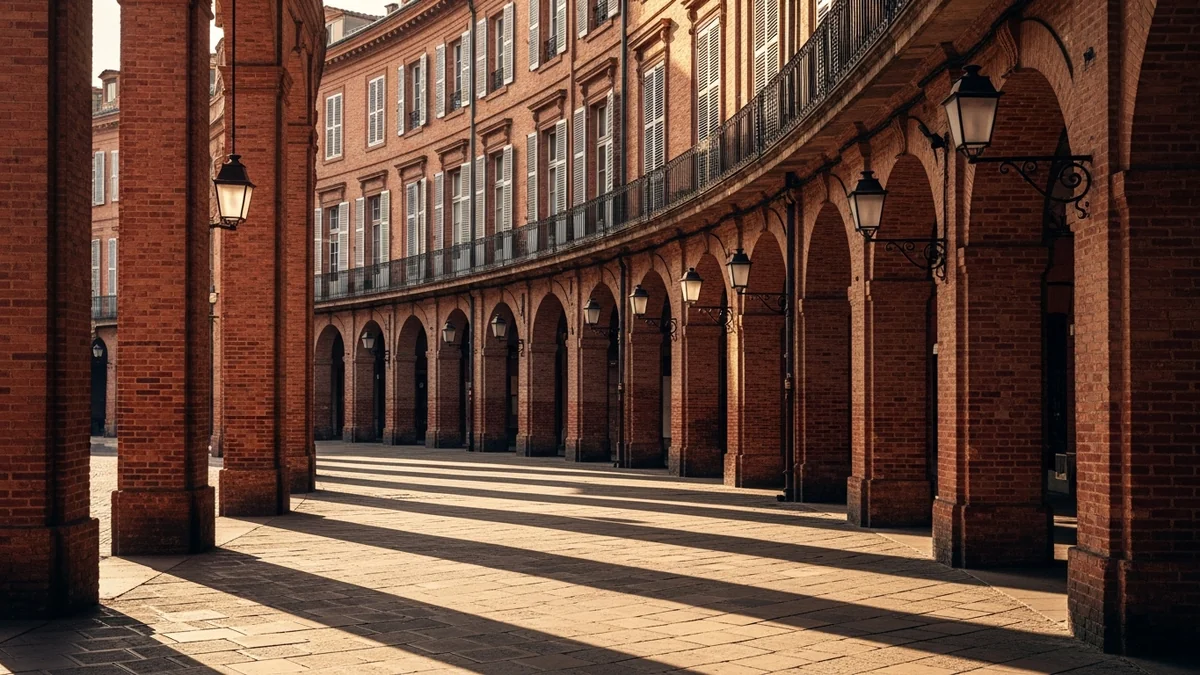
The current façade is the work of Guillaume Cammas, the city’s painter and architect, and was built between 1750 and 1760. On the central section, eight pink marble columns symbolise the eight ‘capitouls’ — this is confirmed by the town hall itself, and their number has never changed since. A word on its length: the tourist office quotes 128 metres, whilst the town hall is more cautious, stating ‘over 120 m’, and neither cites a survey. Let’s say around 130 metres, without pretending to measure it to the nearest centimetre.
The two-tone brick-and-stone colour scheme we admire today has not always been visible. The façade was painted white with lead white in 1771, against Cammas’s wishes, who wanted to combine white and red; the bricks were not repainted red until 1883, and it was not until the renovation of 1988 that the building regained its current appearance. Look up at the pediment: it has successively featured the effigy of Louis XV, the Goddess of Liberty, Napoleon I, a marble statue of Louis XVIII, a motto — and, since 1871, the seal of the Republic. A summary of French history in a single location.
The keep, which isn’t where you’d expect it to be
The Capitole’s keep dates from 1525: that year, the Capitouls decided to build it to protect the archives and gunpowder in the face of the Spanish threat. It does not stand on the square itself but behind the Capitole, on the side facing Square Charles-de-Gaulle — many visitors search for it in vain. Its silhouette stands out in a city of brick and tile: the Flemish-style belfry, clad in slate, was added by Viollet-le-Duc, who restored it between 1873 and 1887. It has housed the tourist office since 1948.
It was in this keep that Jean Calas was interrogated in 1761, in the case that would later draw Voltaire’s attention. Another detail that nobody notices: the internal staircase, which every visitor uses today, is a journeymen’s piece created in 1948 by five Compagnons Charpentiers du Devoir — including an eighteen-year-old from Toulouse — in the form of a hollow column assembled ‘like a wooden jigsaw puzzle’.
The Hall of Notables, and why it’s free
Some handy news: admission is free. The Henri IV Courtyard and the Hall of Illustrious Figures are freely accessible during the town hall’s opening hours, without a ticket — the tourist office confirms this in no uncertain terms. Allow between thirty minutes and an hour. A fair word of warning: the hall may close at short notice for an official ceremony, and opening times vary slightly depending on the source; check the town hall’s website on the day itself.
The current hall is more recent than it appears: built between 1892 and 1898 by the architects Paul Pujol and Pierre Esquié, it replaces an earlier Hall of Illustrious Figures dating from 1674, which was demolished in 1887. The painters are from the Toulouse School — Jean-Paul Laurens (The Defence of Toulouse against Simon de Montfort), Benjamin-Constant, Henri Martin and Paul Gervais. Look out for Jean Jaurès: he appears in Henri Martin’s *Les Rêveurs*, a disguised group portrait in which the painter’s family can also be recognised, and a monumental bust greets visitors at the entrance.
In the Henri IV courtyard, two things are worth a closer look. A slab set into the ground commemorates the beheading, on 30 October 1632, of Duke Henri II de Montmorency, on the orders of Richelieu and Louis XIII. And the polychrome marble statue of Henri IV that dominates the courtyard, sculpted by Thomas Hurtamat in 1607, is the only statue of the king created during his lifetime — he had insisted on it. For those who like their details, the listing reference is PA00094497: it was included in the 1840 list, France’s very first list of historic monuments.
History of Toulouse, from the Visigothic Kingdom to the Place de la Concorde
Toulouse was once the capital of a kingdom, and almost nobody knows it. Having occupied the city as early as 413, the Visigoths obtained, in 418, through a treaty with Emperor Honorius, the status of a federated people and settled in Aquitaine: Toulouse became the seat of a kingdom that would extend as far as Spain, and which lasted until the defeat at Vouillé in 507. Theodoric I died there in 451 on the Catalaunian Fields, fighting alongside Aetius against Attila; the Toulouse court of his son Theodoric II is described by Sidonius Apollinaris.
One disappointment worth mentioning: there is nothing left to see of this royal palace. Its remains were indeed unearthed during preventive excavations at the site of the former Larrey military hospital, in 1988 and then in 1990, but they were not preserved. More broadly speaking, ancient Toulouse has almost entirely disappeared, and for a very practical reason: it was built of brick, a material that is salvaged and reused. What remains consists of a few sections of rampart, Place Saint-Jacques and some underground passages.
721: the battle overshadowed by Poitiers
On 9 June 721, Eudes, Duke of Aquitaine, defeated the army of al-Samh outside Toulouse; the army had been laying siege to the city. This event took place eleven years before Poitiers and is regarded by historians as at least as decisive in halting the Arab advance northwards — yet it has never enjoyed the same prominence in school textbooks as 732. It is one of the most Toulouse-specific and least explored aspects of French history.
The Albigensian Crusade, and a well-aimed stone
The 13th century was a time of upheaval. The assassination of the legate Pierre de Castelnau on 14 January 1208 triggered the Albigensian Crusade the following year. Simon de Montfort was defeated outside Toulouse in 1211, but emerged victorious at Muret on 12 September 1213, some thirty kilometres to the south. A methodological note: the ‘fifteen to twenty thousand’ dead reported by medieval chroniclers for this battle are implausible given the actual numbers involved — a few thousand men on each side.
Toulouse’s revenge was to come five years later. On 25 June 1218, during the great siege that had begun on 8 October 1217, the people of Toulouse made a sortie to destroy a wooden tower. Simon de Montfort rushed to the aid of his brother Guy, who had been unhorsed — and was struck on the head by a stone fired from a trebuchet, a machine which, according to tradition, was operated by women from Toulouse. He died on the spot. The irony of the matter is that he did not remain in the city he was besieging; his body was laid to rest in Carcassonne, then repatriated to Île-de-France by his son.
Peace was signed on 12 April 1229 – the Treaty of Meaux-Paris – between Raymond VII and Blanche of Castile. The count appeared as a penitent and was flogged on the forecourt of Notre-Dame. One clause of this treaty was to have unexpected consequences: Raymond VII was required to fund fourteen professors for a period of ten years. Thus, in 1229, the University of Toulouse was founded — explicitly conceived as a weapon against Catharism. Its first professors, who came from the north, were so poorly received that the local population rebelled against them.
Pastel: a fortune born of a fire
Toulouse’s golden age began with a disaster. On 7 May 1463, a fire that started in the bakery of two bakers on Rue Sesquière and was fanned by the Autan wind ravaged the city for fifteen days, destroying two-thirds of the town. The reconstruction necessitated the use of brick – and gave rise to the luxury drapery trade. In the wake of this, the age of woad began – a plant (Isatis tinctoria) from which a blue dye is extracted: the leaves, ground in a mill, produced a paste – ‘pasta’ in Latin, hence the name – which was shaped into balls, the famous ‘coques’.
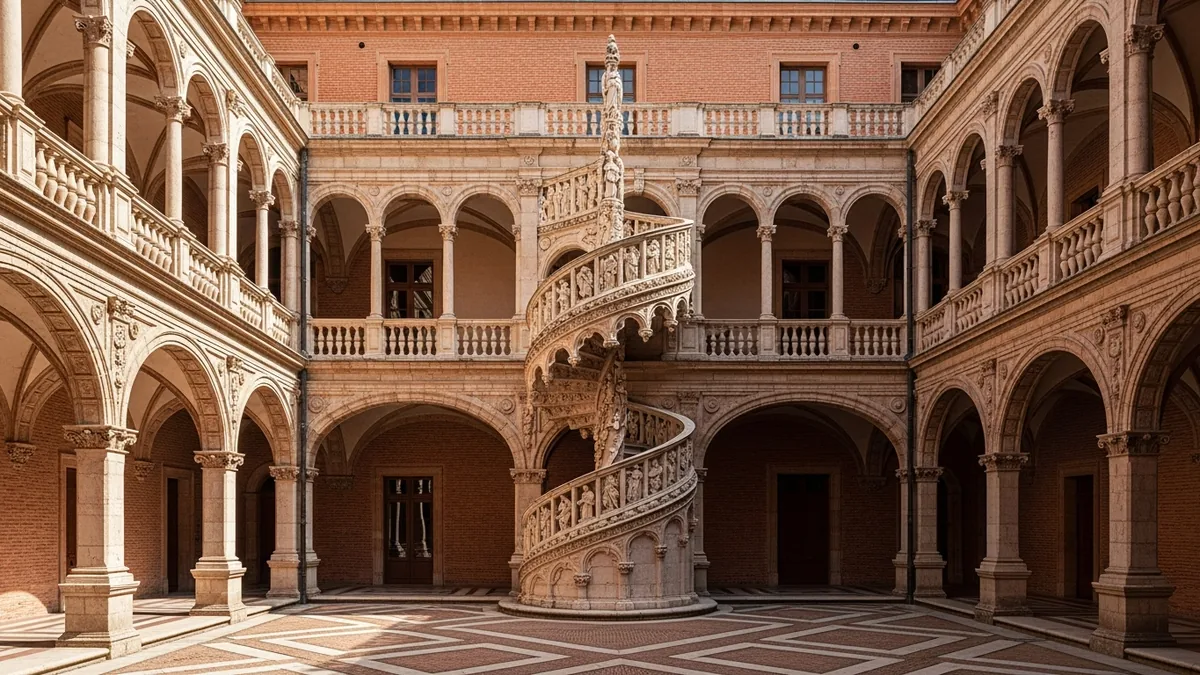
This wealth has left its mark on the city’s architecture. The Hôtel de Bernuy, built between 1503 and 1536 for Jean de Bernuy—a woad merchant, probably born in Burgos, and a member of the city council—and the Hôtel d’Assézat are 16th-century monuments—not 15th-century, as is sometimes claimed. The golden age lasted from 1463 to 1561, when competition from indigo ‘from the Indies’ began to ruin the industry. The arcaded courtyards and stair towers of these mansions are now among the city’s most beautiful places to stroll.
At the same time, Toulouse became a judicial capital. Contrary to what is often claimed, the Parliament of Toulouse was not established in the 15th century: an early parliament was established by Philip the Fair in 1302, with an inaugural session the following year in front of Saint-Étienne Cathedral, before being abolished in 1315 and subsequently re-established. It would hand down the most notorious judgements in the Midi during the Ancien Régime: the Martin Guerre case (1560), the Vanini trial (1619), that of the Duke of Montmorency (1632), and the Calas affair (1762) — four cases, four death sentences.
Latécoère, Caravelle, Concorde
Contrary to a persistent myth, Toulouse’s aviation adventure did not begin with Mermoz and Saint-Exupéry: it began with an industrialist, Pierre-Georges Latécoère, who founded the airline in 1918, operating from Toulouse-Montaudran, with Didier Daurat in charge of operations. Mermoz was not hired until late September 1924; on 10 and 11 October 1927, he successfully completed the non-stop flight from Toulouse to Saint-Louis-du-Sénégal. The pilots have become the heroes of the story, but the infrastructure was in place before them.
What followed reads like a roll of honour. The first Caravelle prototype took off from Toulouse on 27 May 1955. The Concorde prototype 001, assembled here, made its maiden flight on 2 March 1969, with André Turcat at the controls. The circle was completed on 27 June 2003: the final French Concorde flight connected Paris with Toulouse — with Turcat on board. The aircraft is now on display at the Aeroscopia museum.
Recent history has left a lasting scar. On 21 September 2001 at 10.17 am, in Building 221 of the AZF factory (Grande Paroisse, part of the Total group), 300 to 400 tonnes of decommissioned ammonium nitrate exploded, creating a crater 70 metres by 40 metres. The legal proceedings were protracted: a general acquittal at first instance on 19 November 2009, followed by the conviction of Grande Paroisse and its director on appeal in 2012. What has been established in law is criminal liability for negligence; whilst the exact mechanism of the explosion remains less firmly established. One detail that speaks volumes about the mark left by the disaster is that, at the request of the local MP, the letter combination ‘AZF’ has never been allocated to number plates in Haute-Garonne.
Saint-Sernin and the Jacobins: two masterpieces of brick architecture
The Basilica of Saint-Sernin is by far the most visited monument in Toulouse: 974,000 visitors in 2025, an increase of 8 per cent according to the visitor figures published by the City of Toulouse in January 2026. Built at the end of the 11th century to house the relics of Saint Saturnin — Sernin in Occitan —, the first bishop of Toulouse who was martyred on 29 November 250, it has been listed as a Historic Monument since 1840, featured on France’s very first list, and has been inscribed on the UNESCO World Heritage List since 1998 as part of the ‘Routes of Santiago de Compostela in France’. It also holds significance that goes beyond its status as a monument: it was on this building site, around 1080, that ‘brique foraine’ was first documented — in other words, the very material from which Toulouse would derive its nickname ‘the Pink City’ eight centuries later – began its history on that very building site.
It is also, according to its own website, ‘one of the largest reliquaries in the world’, housing nearly a hundred relics. The story of his martyrdom can still be traced in the city’s layout: Saturnin is said to have refused to sacrifice to Jupiter at the foot of the Capitolium — now Place Esquirol — before being tied to a bull and dragged along the cardo. Rue du Taur retains the name, the Church of Notre-Dame du Taur marks the spot where his body is said to have become detached, and the name of the station, Matabiau, derives from the same legend: ‘mata biau’, meaning ‘ox-slayer’.
A practical warning, as this misconception is quite widespread: you cannot climb the bell tower. The basilica’s official website does not offer any tours of the octagonal bell tower. The areas that are actually open to the public are the basilica, the sacristy, the crypt, the ambulatory and the tomb of Saint Saturninus. If you’re looking for a viewpoint, you’ll have to look elsewhere — and that’s what we’re coming to.
The Jacobins and the ‘brick palm tree’
Halfway between the Capitole and the Garonne, the Jacobins convent is the other pinnacle of southern Gothic architecture — built entirely of brick, too. It was built by the Order of Preachers, the Dominicans, founded in Toulouse by Dominic of Guzmán on 25 April 1215. The church houses the remains of Saint Thomas Aquinas, transferred here with the authorisation of Pope Urban V on 16 June 1368, and its famous 22-metre ‘palm tree’ vault, whose ribs radiate from a single pillar.
Two points worth noting. The name ‘Jacobins’ does not originate from Toulouse but from Paris: the Dominicans occupied a convent there on Rue Saint-Jacques. And whilst the complex is sometimes presented as the mother church of the order, this title is disputed — Santa Sabina in Rome also lays claim to it. The convent welcomed 182,000 visitors in 2025, an increase of 15 per cent. It is also the venue for the Piano aux Jacobins festival, with the cloister hosting one of Europe’s finest piano programmes every September.
| Monument | Landmark | Visitor numbers in 2025 |
|---|---|---|
| Basilica of Saint-Sernin | Late 11th century · Listed in 1840 · UNESCO 1998 · no access to the bell tower | 974,000 (+8%) |
| Jacobins Convent | Brick Gothic · 22-metre palm-leaf vault · Saint Thomas Aquinas | 182,000 (+15%) |
| Cité de l’Espace | Opened in 1997 · record of 452,289 visitors in 2024 | 394,248 (stable) |
| La Machine Hall | Asterion the Minotaur: 47 tonnes, 14 metres high | > 300,000 per year (excluding municipal budget) |
| Toulouse Museum | Closed on Mondays · official advice: visit around 4 pm | 310,202 (stable) |
Where does the Canal du Midi start in Toulouse?
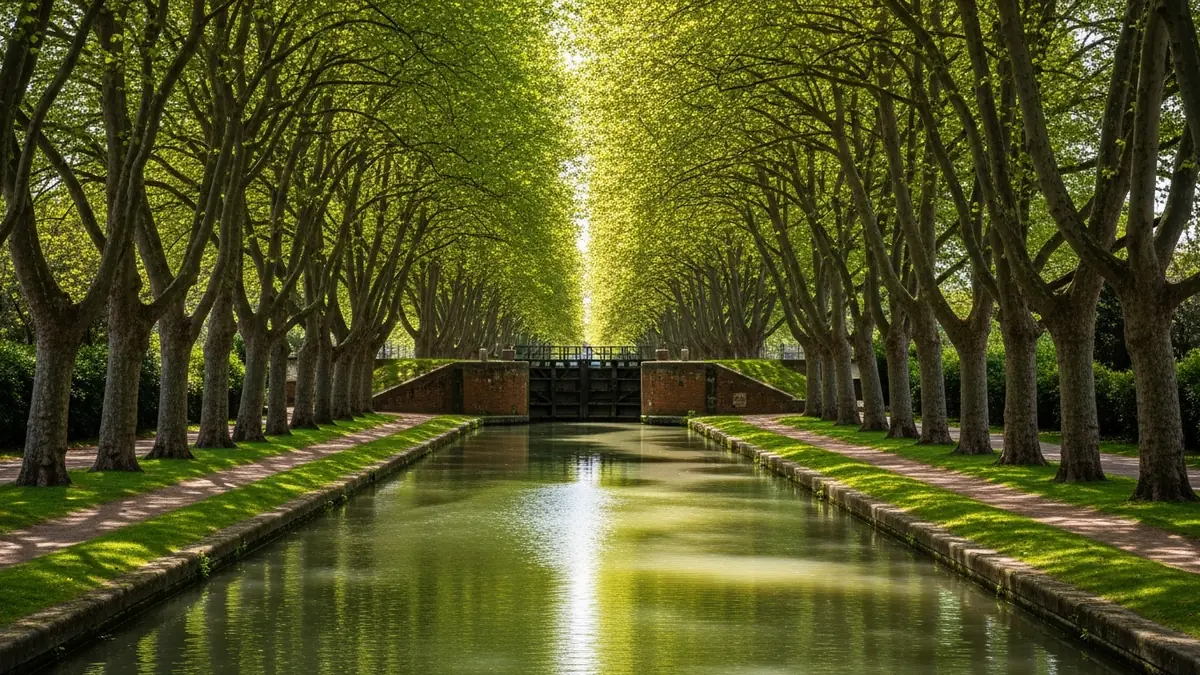
Let’s start by clearing up the most common misconception: the Canal du Midi does not start at the Garonne. Its starting point is the Port de l’Embouchure, at Ponts-Jumeaux, to the north of the city. The connection to the river is provided by a separate, later-built structure, the Canal de Brienne — 1,560 metres long, excavated from 1765 and inaugurated on 14 April 1776 — which originates from the Garonne at the Saint-Pierre lock. Without it, the centre of Toulouse would simply not have been accessible by water, as the canal runs beyond the city walls. This detail is worth noting whilst you’re there: the plane trees lining the Brienne Canal are designated ‘Remarkable Trees’, and all of Toulouse’s canals — the Canal du Midi, the Canal de Brienne and the Canal Latéral — form a 130-kilometre network owned outright by the City, a rare example of a municipal waterway in France.
The canal itself is the work of Pierre-Paul Riquet, authorised by a royal edict of October 1666 and built between 1666 and 1681 under Colbert’s supervision. Originally known as the ‘Royal Canal of Languedoc’, it did not take its current name until 1789. It links Toulouse to the Étang de Thau over a distance of 241 kilometres and has been listed as a UNESCO World Heritage Site since 1996 — the listed site includes the Brienne Canal. The real technical challenge was not the digging but the water supply: it was the mountain channel and the Saint-Ferréol reservoir that made the project possible.
The Pont-Neuf, the city’s oldest bridge
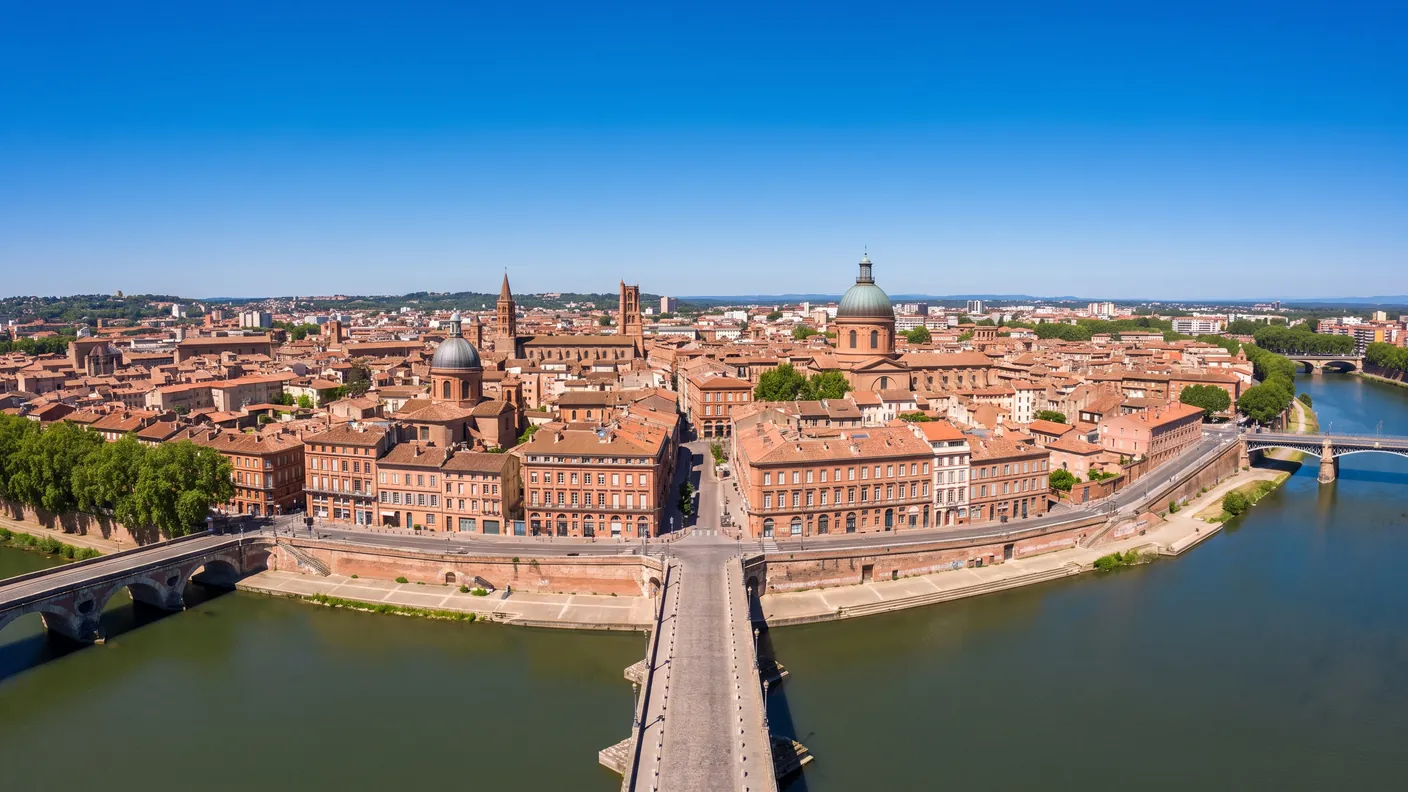
Its name is misleading: the Pont-Neuf is the oldest bridge in Toulouse, and for a stark reason — all other bridges dating from before the 20th century were swept away by floods. The construction work was interminable: a special tax was authorised by François I in 1541, work began in 1543, the first pier was laid in 1544 under Nicolas Bachelier, and it was not opened to traffic until 1632. It was listed as a Historic Monument by decree of 14 March 1991.
The construction project was so dreaded that the city had to abandon the lowest-bid tender process and switch to a ‘public works’ system, employing master builders and labourers directly: no contractor was willing to take on the risk, and one of them had even ended up in prison. The structure is a masterful synthesis — superimposed spouts and openings in the piers inherited from Roman bridges, oculus windows inspired by the Ponte Sisto in Rome, and lowered arches borrowed from the Ponte Santa Trinita in Florence.
Two facts make it all the more remarkable, and the second will resonate with the people of Bordeaux. Firstly, its resilience: during the catastrophic flood of 1875 — with a flow rate thirty-six times higher than normal, 208 deaths in Toulouse and more than 1,200 houses destroyed — it was the only bridge in the city to hold firm. Secondly, its status: for nearly two centuries, until the opening of the Pont de Pierre in Bordeaux in 1822, the Pont-Neuf in Toulouse was the only permanent bridge across the entire Garonne. Two cities, one river, and a single crossing.
Below lies the Prairie des Filtres, on the left bank. It bears no resemblance to a natural meadow: the area was built up until the early 15th century, and it was the floods of 1430 and 1437 that discouraged any resettlement. Its name comes from the filtration tunnels dug from 1821 onwards to purify the water pumped from the Garonne. It has served in turn as a manoeuvring ground, sheep pasture, allotments, a landing strip for the first aeroplanes — and as the original home ground of Stade Toulousain.
What to do in Toulouse?
In Toulouse, five things alone are worth the trip, and three of them are free. Step inside the Capitole to see the Salle des Illustres, with no ticket or booking required. Explore the Victor-Hugo market, then have lunch in one of the restaurants lining its first floor. Take a boat through a lock, right in the city centre, on the Canal du Midi. Hop on an urban cable car that crosses over the Garonne and a hill. And watch a 47-tonne Minotaur walk whilst carrying passengers on its back. The rest — museums, basilicas, festivals — needs to be planned around a somewhat tricky local quirk: closing days aren’t what you’d expect, and the city’s most famous museum closes two days a week, and it’s not the one you’d think.
- Visit the Capitole for free — the Henri IV Courtyard and the Salle des Illustres are freely accessible during Town Hall opening hours. Allow 30 minutes to an hour. The hall may close at short notice for a ceremony.
- Explore the market halls — Toulouse has nearly 50 markets. The three covered markets (Victor-Hugo, Carmes, Saint-Cyprien) are closed on Mondays and open from Tuesday to Sunday from early in the morning. The Saint-Cyprien market is the only one to have retained its original appearance.
- The Saint-Aubin market, on Sunday mornings — this is the only major market in Toulouse that takes place on that day alone: a mix of food stalls and fairground attractions, set around the Basilica of Saint-Aubin, between the Canal du Midi and La Colombette. The city’s Sunday ritual.
- Passing through a lock by boat — Les Bateaux Toulousains set off from Quai de la Daurade, five minutes from the Capitole. From March to June, the ‘3 Écluses’ cruise (1 hour 15 minutes) passes through three locks on the Canal du Midi right in the city centre; from July to October, the cruise takes place on the Garonne.
- Take the Téléo — France’s second-longest urban cable car (3 km, approx. 10 minutes), in service since 14 May 2022. It connects the Oncopole to Paul-Sabatier University via Rangueil Hospital, crossing the Garonne and Pech-David Hill.
- See Astérion in action — at the Halle de La Machine, on the former Aéropostale site in Montaudran: a 47-tonne, 14-metre-tall Minotaur made of gilded wood and steel, which carries passengers on its back every day.
- Get around on VélôToulouse — 448 stations and around 3,650 bikes, half of which have been electric-assist models since September 2024. The people of Toulouse call them ‘les vélouses’.
- Catching the sunset on the quays — the Quais de la Daurade and Saint-Pierre, and the promenade between the Pont-Neuf and the Pont Saint-Pierre: this is where the brickwork really glows, and it’s free.
Museums, and the pitfall of closing days
The big news is recent: the Musée des Augustins reopened on 18 December 2025, after being closed since 31 May 2019 — six and a half years. An important point to bear in mind before you visit: the reopening is only partial. Restoration work on the columns and capitals of the main cloister is set to continue until spring 2027, and the north and east wings of the cloister remain closed. The restoration work has yielded a discovery: a Renaissance chapel unearthed during the works.
And here’s the catch: the Musée des Augustins is closed on Tuesdays and Wednesdays. This is unusual, and it catches out the assumption that ‘museums are closed on Tuesdays’. The other major institutions each have their own opening patterns: the Toulouse Natural History Museum is closed on Mondays, whilst Les Abattoirs is closed on Mondays and Tuesdays. The Bemberg Foundation, for its part, reopened on 2 February 2024 after three years of renovation work, in the sumptuous setting of the Hôtel d’Assézat — built between 1555 and 1557 to plans by Nicolas Bachelier and listed since 1914.
Here are two tips from the institutions themselves. The Muséum recommends arriving between 4.00 pm and 4.30 pm to avoid the peak visitor numbers at 3.00 pm, and allowing around two hours for your visit. And at Les Abattoirs, make sure you know what you’re looking at: the venue brings together three collections under one roof — that of the museum, the Frac Occitanie, and the Daniel Cordier collection on loan from the Centre Pompidou. As opening times are subject to change, check the official websites the day before.
When do Toulouse’s festivals take place in 2026?
Toulouse is unique in that it spreads its major events throughout the year, meaning you can time your visit to coincide with a festival at almost any time of year. The dates below are those announced by the organisers and verified on 9 August 2026: please double-check them on the tourist office’s calendar before booking. The Marathon des Mots kicks things off from 8 to 12 April 2026 (22nd edition, literature). Next up is Le Nouveau Printemps, from 27 May to 28 June 2026, with Rossy de Palma as the guest artist — please note that this contemporary art festival used to be called Le Printemps de septembre and has not been held in September since 2023.
June is the busiest month: Rio Loco takes over the Prairie des Filtres from 10 to 14 June 2026 for its 31st edition, on the theme ‘Insulae’, followed by Les Siestes — formerly Les Siestes électroniques, now dedicated to ‘adventurous music ’ — from 25 to 28 June 2026. The Toulouse Festival takes over from 30 June to 11 July 2026. Summer brings Toulouse Plages, from 20 July to 23 August 2026, and in the autumn, Piano aux Jacobins (8–30 September 2026, 47th edition) followed by Toulouse les Orgues (2–18 October 2026). In December, the Christmas market takes over the Place du Capitole.
A clarification on swimming, as there is often some confusion: you cannot swim in the Garonne. Toulouse Plages comprises not one but three sites, and only two of them allow swimming – in a lake: La Ramée in Tournefeuille and the Reynerie leisure centre. At the Prairie des Filtres, right in the city centre, there is only a water play area with jets and water features; there is no swimming.
When it comes to food, two points need clarifying. ‘Toulouse sausage’ is not a protected designation of origin: its composition varies from one producer to another, and only the Label Rouge specifications set out strict requirements for a particular version (at least 80 per cent lean pork, natural casing). As for cassoulet, it did not originate here: the dispute with Castelnaudary and Carcassonne dates back to 1890, and the dish owes its name to the container — the cassole, a deep earthenware dish from Issel — rather than its contents. That leaves the violet, and a detail few people know: it is harvested from October to March. It is a winter speciality.
| Activity | Where / when | Good to know |
|---|---|---|
| Capitole, Salle des Illustres | Place du Capitole · Town Hall opening hours | Free, no ticket required · 30 mins to 1 hour |
| Victor-Hugo Market | Place Victor-Hugo · closed on Mondays | A row of restaurants on the first floor |
| Saint-Aubin Market | Around the basilica · Sunday mornings only | Food and market stalls · organic producers |
| ‘3 Écluses’ cruise | Quai de la Daurade · March to June | 1 hour 15 minutes · passing through three locks in the city centre |
| Téléo cable car | Oncopole ↔ Paul-Sabatier University | 3 km, approx. 10 mins · the second longest in France |
| Musée des Augustins | 21 Rue de Metz · closed on Tuesdays AND Wednesdays | Reopens 18 Dec 2025 · cloister under renovation until 2027 |
| Halle de La Machine | Montaudran, former site of the Aéropostale | Astérion: 47 tonnes, 14 metres · takes passengers on board |
| Rio Loco | Prairie des Filtres · 10–14 June 2026 | 31st edition · theme: ‘Insulae’ |
| Toulouse Plages | 3 venues · 20 July – 23 August 2026 | Swimming in lakes only (Ramée, Reynerie) |
Toulouse, capital of air and space
No other French city has woven aeronautics so deeply into its identity, and this is something you can experience for yourself. The Cité de l’Espace, to the east of the city, broke its visitor record in 2024 with 452,289 visitors (+12.8 per cent), driven by the first full year of operation of its lunar simulator; it welcomed 394,248 visitors in 2025, a stable figure. The exhibits are full-scale – that’s what sets it apart from a museum of models.
In Blagnac, the Aeroscopia museum, which opened on 14 January 2015, displays more than forty aircraft, including two Concordes. One of them brings to a close a story that began in this very city: the F-BVFC, which on 27 June 2003 made the final French Concorde flight, from Paris to Toulouse, with André Turcat on board — the pilot of the very first flight on 2 March 1969. The museum is about 10 km from the Capitole, a quarter of an hour’s drive away.
Montaudran, where it all began
The most significant site, however, remains Montaudran, the airfield from which Latécoère launched the Ligne in 1918 and from which Mermoz, Guillaumet and Saint-Exupéry took off. It is here that the Halle de La Machine has been established, attracting over 300,000 visitors a year since it opened — a figure provided by the venue itself, which does not appear in the municipal accounts. The Nantes-based company La Machine exhibits its animated creations there, including Astérion the Minotaur and Ariane the spider, described by its creators as a ‘dancer’ who straddles street furniture.
A word on factory tours, which are often misunderstood: they do exist, they are run by a service provider, and you must book them in advance, presenting a form of ID. It is not an open day where you can just turn up on the day. As conditions change regularly, do check the current terms and conditions before planning your day around them.
Around Toulouse
Toulouse is best explored on foot, which is fortunate: the city is an excellent base, and three very different regions meet in its vicinity. To the south-east, the Canal du Midi winds its way towards the Naurouze Pass and the Lauragais, that corridor of wind and wheat which explains both the canal’s route and the autan wind. To the north, the Fronton vineyards — ‘the wine of the people of Toulouse’, some thirty kilometres away — cultivate a grape variety found almost nowhere else: the Négrette. The appellation was granted AOC status by decree on 7 February 1975 under the name ‘Côtes-du-Frontonnais’, before being simply renamed Fronton in 2005.
Finally, to the south lie the Pyrenees: on a clear day, the mountain range is visible from the heights of the city. These distances give a sense of Toulouse’s location — 122 km from the Pic d’Aneto, 144 km from the Mediterranean at Gruissan, and 233 km from the Atlantic at Capbreton. Toulouse lies roughly equidistant from the two seas, which, historically, is precisely the reason for the canal’s existence.
Two nearby destinations are well worth a detour for contrasting reasons. Muret, some thirty kilometres to the south, where on 12 September 1213 the battle took place that turned the tide of the county’s fate. And Vieille-Toulouse, on the hillsides to the south of the city: the Gallic oppidum from which the population was displaced on the orders of Augustus. There is almost nothing left to see, but this is where the city began — and knowing that a site covering several dozen hectares was cleared by administrative decree two thousand years ago lends the landscape a different depth.
| Destination | Landmark | Good to know |
|---|---|---|
| Fronton vineyards | ~30 km north | Négrette grape variety, rare elsewhere · AOC since 1975, renamed ‘Fronton’ in 2005 |
| Muret | ~30 km south | Battle of 12 September 1213, a turning point in the Albigensian Crusade |
| Vieille-Toulouse | Hills to the south | The original Gallic oppidum, razed on the orders of Augustus around 10 BC |
| Aeroscopia (Blagnac) | ~10 km, ~15 mins | Over 40 aircraft, including two Concordes |
| Naurouze weir | On the canal, heading east | Highest point of the canal (189 m) and the Autan wind corridor |
How to get from Bordeaux to Toulouse?
Bordeaux and Toulouse are the two major cities on the Garonne, yet the journey between them takes longer than one might imagine. By road, it’s around 245 km and a 2-hour 39-minute direct journey via the A62, which follows the valley, passing through Agen and Montauban. This is the simplest route: a motorway, no need to change vehicles, and a direct arrival in the city centre.
By train, the Bordeaux–Toulouse line does not yet have a high-speed service — the project is currently under construction, but it won’t make a difference to your journey today. The fastest journey time is still around 2 hours 5 minutes, which is half an hour quicker than by road: for a solo traveller booking in advance, the train remains faster and significantly cheaper, and we prefer to point this out. The advantage of a door-to-door journey lies elsewhere, in the absence of any breaks in the journey. The train drops you off at Matabiau, whose name, as you now know, comes from a bull and a saint dragged through the dust.
What a door-to-door journey changes
On this specific route, the benefit of a private chauffeur service from Bordeaux to Toulouse isn’t the sheer time saved but the elimination of transfers: departure from your address at the time you choose, luggage included, drop-off right outside your hotel or meeting point, and the option to stop along the way — Agen, Moissac and the canal are all on the route. Prices start from 407 € one way in the Eco class, for 1 to 3 passengers, with a fixed price confirmed in writing before departure.
If, on the other hand, you need to travel to Toulouse-Blagnac Airport rather than the city itself, we have a dedicated page for this journey: see Bordeaux → Toulouse Airport, which covers flight timetables, recommended time allowances and the specific conditions for airport drop-offs.
| Mode | Duration | Landmark |
|---|---|---|
| Car (A62) | 2h 39m · ~245 km | Garonne Valley · Agen and Montauban along the way |
| Train | ~2 hours 5 minutes at best | Arrival at Matabiau · no high-speed rail line on this route yet |
| Private driver | 2 hours 39 minutes · door-to-door | From 407 € one way · 1 to 3 passengers (Eco) · stops available |
Frequently asked questions
What to do in Toulouse over a weekend?
On the first day in the city centre: the Capitole and its Salle des Illustres (free entry), followed by the Basilica of Saint-Sernin, the Jacobins Convent with its palm-leaf vault, and the sunset on the quays of the Daurade. On the second day, visit the Victor-Hugo market in the morning — closed on Mondays — followed by a boat trip passing through the locks of the Canal du Midi, departing from the Quai de la Daurade. If you’re staying an extra day, add the Cité de l’Espace or the Halle de La Machine, to the east of the city.
Why is Toulouse known as the ‘Pink City’?
Because of ‘brique foraine’, a traditional building material from the Toulouse region of southern France, whose first recorded use dates back to 1080 on the construction site of Saint-Sernin. Its widespread adoption owes much to the ban on timber following the great fire of 1463. However, the nickname itself is a recent one: the earliest recorded instances date back to 1906–1910, on the covers of the tourist information office’s newsletter and then in a guide entitled *Three Days in Toulouse, the Pink City*.
Is entry to the Capitole free?
Yes. The Henri IV Courtyard and the Hall of Notables are freely accessible, without a ticket or booking, during the town hall’s opening hours. Allow thirty minutes to an hour. Please note: the hall may close at short notice for an official ceremony, and opening times vary slightly depending on the source, so check the City Hall website on the day itself. The keep, behind the Capitole, has housed the tourist office since 1948.
How far is it from Bordeaux to Toulouse?
Around 245 km by road, or a 2h 39 direct journey via the A62 motorway, which follows the Garonne valley, passing through Agen and Montauban. By train, allow around 2 hours and 5 minutes at the best of times: the Bordeaux–Toulouse route does not yet have a high-speed line, but the train is still slightly faster than the road. Trains arrive at Toulouse-Matabiau station, about a fifteen-minute walk from the Capitole.
How much does a journey from Bordeaux to Toulouse cost with a private chauffeur?
From €407 one way, in the Eco category, for one to three passengers. The price is fixed and confirmed in writing before departure: it covers the 245 km, tolls and fuel, with no additional charge per kilometre. This is a door-to-door service, departing from your address in Bordeaux or the Gironde region, at a time of your choosing, with the option to stop along the way. A 7-seater van is available on request.
Why is the Capitole called that?
Contrary to what is often claimed, the name does not derive from the Capitoline Hill in Rome. It comes from the Latin ‘capitulum’, meaning ‘chapter’: the ‘capitouls’, elected municipal magistrates, would sit there and vote on a per-person basis, in the manner of ecclesiastical chapters. Toulouse City Council states this explicitly. There were eight of them following the ordinance of 1438 — six for the city, two for the market town — and the eight pink marble columns on the façade symbolise them.
Which museums should you avoid on which days when visiting Toulouse?
This is the real local pitfall, because the days vary. The Musée des Augustins is closed on Tuesdays and Wednesdays — two days, which catches many visitors out. The Muséum de Toulouse is closed on Mondays. Les Abattoirs is closed on Mondays and Tuesdays. These opening hours change regularly: check the official websites the day before. The Musée des Augustins reopened on 18 December 2025, but only partially, as the cloister remains under renovation until spring 2027.
Can you swim in the Garonne in Toulouse?
No. Swimming is not permitted in the Garonne, including at the Prairie des Filtres during Toulouse Plages: there is only a water play area with jets and water features. The Toulouse Plages initiative comprises three sites, and only two of them allow swimming in a lake: La Ramée in Tournefeuille and the Reynerie centre. The 2026 edition runs from 20 July to 23 August.
Does the Canal du Midi start at the Garonne?
No, and this is the most common misconception about Toulouse. The Canal du Midi begins at the Port de l’Embouchure, at Ponts-Jumeaux, to the north of the city. The link with the river is provided by a separate, later structure, the Canal de Brienne, which is 1,560 metres long and was opened on 14 April 1776. Without it, the centre of Toulouse would not have been accessible by water, as the canal runs beyond the city walls.
Is Toulouse’s Pont-Neuf really the city’s oldest bridge?
Yes, despite its name. All other bridges in Toulouse dating from before the 20th century were swept away by floods. Construction took place between 1543 and 1632, and it has been listed as a Historic Monument since 14 March 1991. Two facts further set it apart: during the flood of 1875, which claimed 208 lives in Toulouse, it was the only bridge in the city to withstand the flood; and until the opening of the Pont de Pierre in Bordeaux in 1822, it was the only permanent bridge across the entire Garonne.
Is cassoulet a Toulouse speciality?
Only partly. The dish’s origins are the subject of a long-standing dispute between Castelnaudary, Carcassonne and Toulouse, which dates back to 1890. Cassoulet actually takes its name from the container rather than the contents: the ‘cassole’, a deep earthenware dish made in Issel, in the Aude department. As for Toulouse sausage, it is not a protected designation of origin — its composition varies from one producer to another, with only a Label Rouge specification setting out strict requirements for one particular version.
When do Toulouse’s major festivals take place?
They are spread throughout the year. In 2026: the Marathon des Mots from 8 to 12 April, Le Nouveau Printemps from 27 May to 28 June, Rio Loco at the Prairie des Filtres from 10 to 14 June, Les Siestes from 25 to 28 June, the Festival de Toulouse from 30 June to 11 July, Toulouse Plages from 20 July to 23 August, Piano aux Jacobins from 8 to 30 September and Toulouse les Orgues from 2 to 18 October. Please note: Le Nouveau Printemps used to be called Le Printemps de septembre and no longer takes place in September.
How many people live in Toulouse?
514,819 inhabitants according to the 2023 census, making it the fourth-largest city in France behind Paris, Marseille and Lyon — it is just 4,308 inhabitants short of overtaking Lyon for third place. It is also the French municipality with the highest population growth: an increase of 35,266 between 2017 and 2023, according to INSEE. Its urban area has a population of 1,093,783 and its catchment area 1,529,112. Always check the year these figures relate to: they change every year.
To find out more
- The journey to the city: see Bordeaux → Toulouse by private chauffeur (prices by category, packages and terms and conditions)
- The same journey, but to the airport: see Bordeaux → Toulouse Airport (flight timetables and time allowances to allow for)
- Halfway along the route: see the Agen Guide (the canal bridge, the old town, prunes)
- The abbey and Romanesque cloister, 1 hour from Toulouse: see the Moissac Guide (carved portal, Chasselas grapes)
- Get a fixed price for Bordeaux → Toulouse: request a quote (written reply, fixed price)
- All our destinations from Bordeaux: see our destinations
Sources and references
- City of Toulouse — the Capitole — origin of the name (capitulum), columns and capitouls, free tour
- INSEE — Regional comparison tool, Toulouse municipality — 2023 population, density, growth, catchment area
- POP / Mérimée — entry PA00094497, Le Capitole — classifications of 1840, 1911, 1995; authors and dating
- Basilica of Saint-Sernin — official website — areas open to visitors, relics, no access to the bell tower
- Toulouse Tourist Office — markets and opening days, must-see attractions, viewpoints
- Musée des Augustins — reopening on 18 December 2025, closed on Tuesdays and Wednesdays, cloister renovation works
- Météo-France — Toulouse-Blagnac climate profile — 1991–2020 averages, temperature records, sunshine
- Cité de l’Espace — visitor numbers, exhibition content
- City of Toulouse — press centre, 2025 visitor figures — 2025 figures for Saint-Sernin, the Jacobins Convent, the Muséum and the Cité de l’Espace (published in January 2026)
- Toulouse Museum — closed on Mondays, advice on visitor numbers (arrive between 4.00 pm and 4.30 pm), duration of visit
- La Machine Exhibition Hall — Asterion the Minotaur (dimensions, mass) and visitor numbers announced on the website
- Toulouse Tourist Office — events calendar — festival dates announced by the organisers
- SNCF Connect — Bordeaux to Toulouse journeys — train timetables, journey times and fares; please check for your specific date
- Autoroutes.fr — routes and tolls — distance and toll charges on the A62
Article updated on 9.
Off to the ‘Pink City’
Direct journey from Bordeaux (~2h39) to Toulouse: depart at a time of your choosing, door-to-door, luggage included, with the option of stops along the way. Saloon car or minivan, English-speaking driver, fixed price confirmed before departure.