Bordeaux to Agen with a Private Driver: Canal Bridge and Prunes
The prefecture of Lot-et-Garonne, on the Garonne: discover its 23-arch canal bridge, half-timbered old town, museum with five works by Goya, rugby tradition and world-famous prunes, just over 1 hour 30 minutes from Bordeaux.
Agen at a Glance
Agen is the prefecture of Lot-et-Garonne, in the Garonne Valley between Bordeaux and Toulouse. It is best known for its famous prunes, but the city has much more to offer: a spectacular canal bridge carrying a canal over the river, a medieval old town with half-timbered houses, a museum with five works by Goya and a rugby tradition embodied by SU Agen. This heritage-rich destination lies just over 1 hour 30 minutes by road from Bordeaux.
Here are the key details to know before you go. Driving distances are calculated door-to-door; rates are based on a chauffeured transfer from Bordeaux, with a fixed price confirmed in advance.
| Landmark | Details |
|---|---|
| Department | Lot-et-Garonne (47), Nouvelle-Aquitaine |
| Status | Prefecture · largest municipality in the department |
| Population | 32,801 residents (INSEE 2023) |
| Area | 11.49 km² · at the foot of the Ermitage hillside |
| River | The Garonne River, between Bordeaux and Toulouse |
| Distance from Bordeaux | about 142 km · a little over 1 hour and 30 minutes by car |
| Train Station | Agen, on the Bordeaux-Toulouse route (TER, TGV inOui, Intercités) |
| Don't miss it | The canal bridge, the old town, Saint-Caprais Cathedral, and the Museum of Fine Arts |
One point deserves clarifying from the outset: Agen prunes are not actually grown in the city. Agen was chiefly the shipping port from which the prunes travelled to Bordeaux and the rest of the world; the true production area lies farther north, around Villeneuve-sur-Lot. We return to this unexpected history below.
This guide covers everything you need to know before visiting: Agen’s location and character, its Gallo-Roman past, major landmarks including the canal bridge, cathedral and Church of the Jacobins, the museum and its five works by Goya, the true history of the prune, its rugby culture, nearby places to visit, the best season to travel and the easiest way to arrive from Bordeaux.
Where is Agen located?
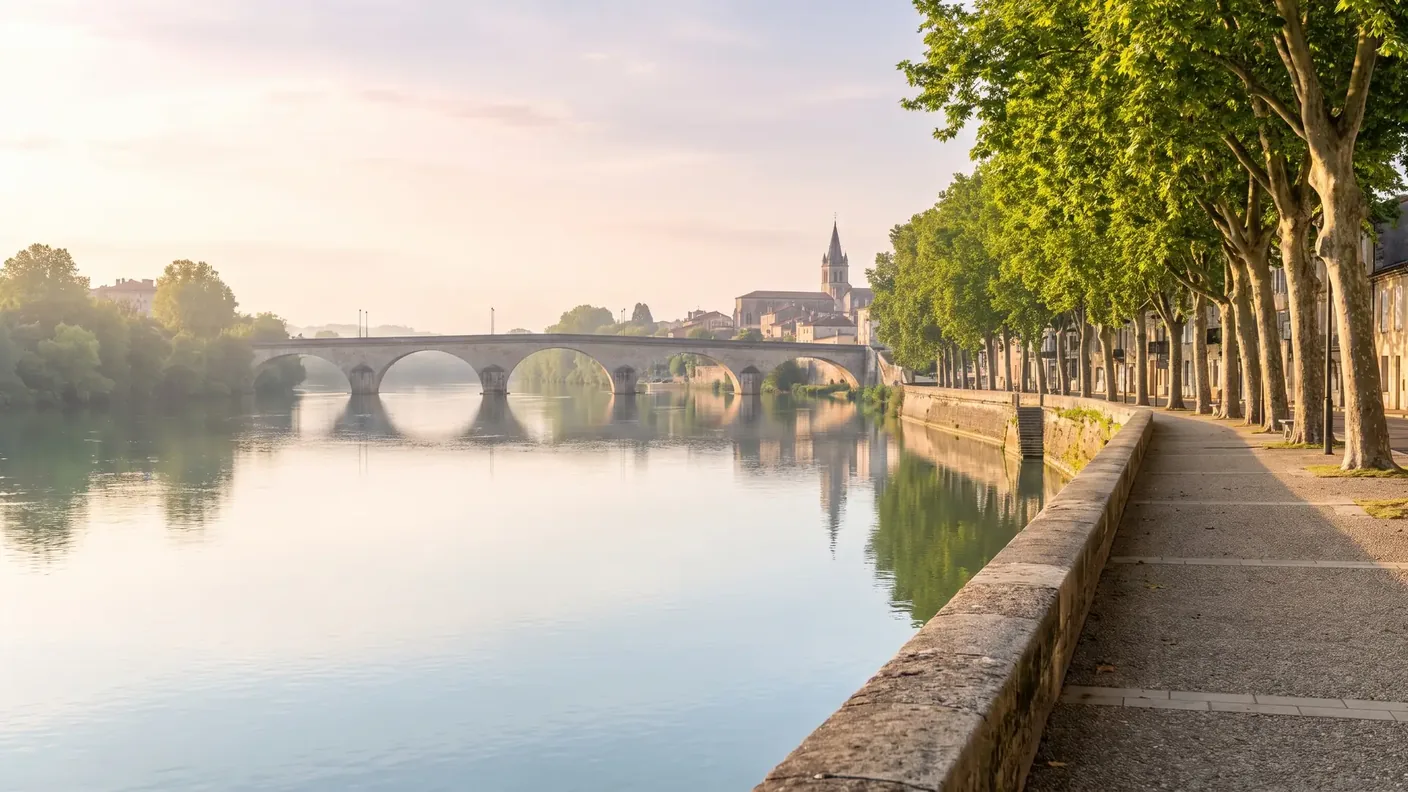
Agen is the prefecture of Lot-et-Garonne (47), in Nouvelle-Aquitaine, on the right bank of the Garonne between Bordeaux and Toulouse. The city lies below the Ermitage hillside, which overlooks the valley and was the area’s first settled site in antiquity. Its coordinates are 44.20° N and 0.62° E; its INSEE code is 47001 and its postcode is 47000. With 32,801 residents in the 2023 census, it is the department’s most populous municipality, ahead of Villeneuve-sur-Lot. At just 11.49 km², its municipal area is unusually small for a prefecture because the town is hemmed in by the river and hillside.
Closer to Toulouse than to Bordeaux
People often say that Agen is ‘halfway between Bordeaux and Toulouse’. Broadly speaking, that is true, although the city is actually a little closer to Toulouse (about 118 km, 1 hr 25 min) than to Bordeaux (about 138 km, 1 hr 35 min). Its position on the A62 motorway and the main Bordeaux–Toulouse railway has shaped its history as a trading crossroads.
This location between two major cities has always been a double-edged sword: it has brought commerce and trade to Agen—the city thrived on through-traffic, first via the river, then by rail and highway—but it has also placed it in the shadow of two powerful regional capitals. Agen has responded by doing what it does best: cultivating its identity as a city on a human scale, proud of its local character, its heritage, and its rugby club.
This narrow passage between the water and the hill determined everything: the old town nestled along the riverbank, the suburbs climbed up the slopes, and today the Ermitage hillside offers one of the most beautiful views of the valley, taking in the rooftops of Agen, the Garonne, and the surrounding orchard-dotted countryside.
A compact city center, a growing metropolitan area
Agen illustrates a common paradox among medium-sized prefectures: the municipality itself has a modest population, but its wider catchment area is large. The Agen metropolitan authority, founded on 1 January 2013, now comprises 44 municipalities (compared with 31 in 2016), while the city’s catchment area has approximately 120,000 residents, nearly four times the municipal population. The city proper has seen a slight decline (it had around 34,500 residents in 2016), a pattern shared by many centres affected by suburban growth. Agen’s residents are known as the Agenais.
This geography makes Agen a crossroads rather than a metropolis: a centre for services, commerce and administration across an agricultural department, shaped by its valley and transport routes. It is also easy to visit, as most historic sights are concentrated in a compact centre between the river, canal and old town, which can be explored on foot in half a day.
The canal bridge: a river above a river
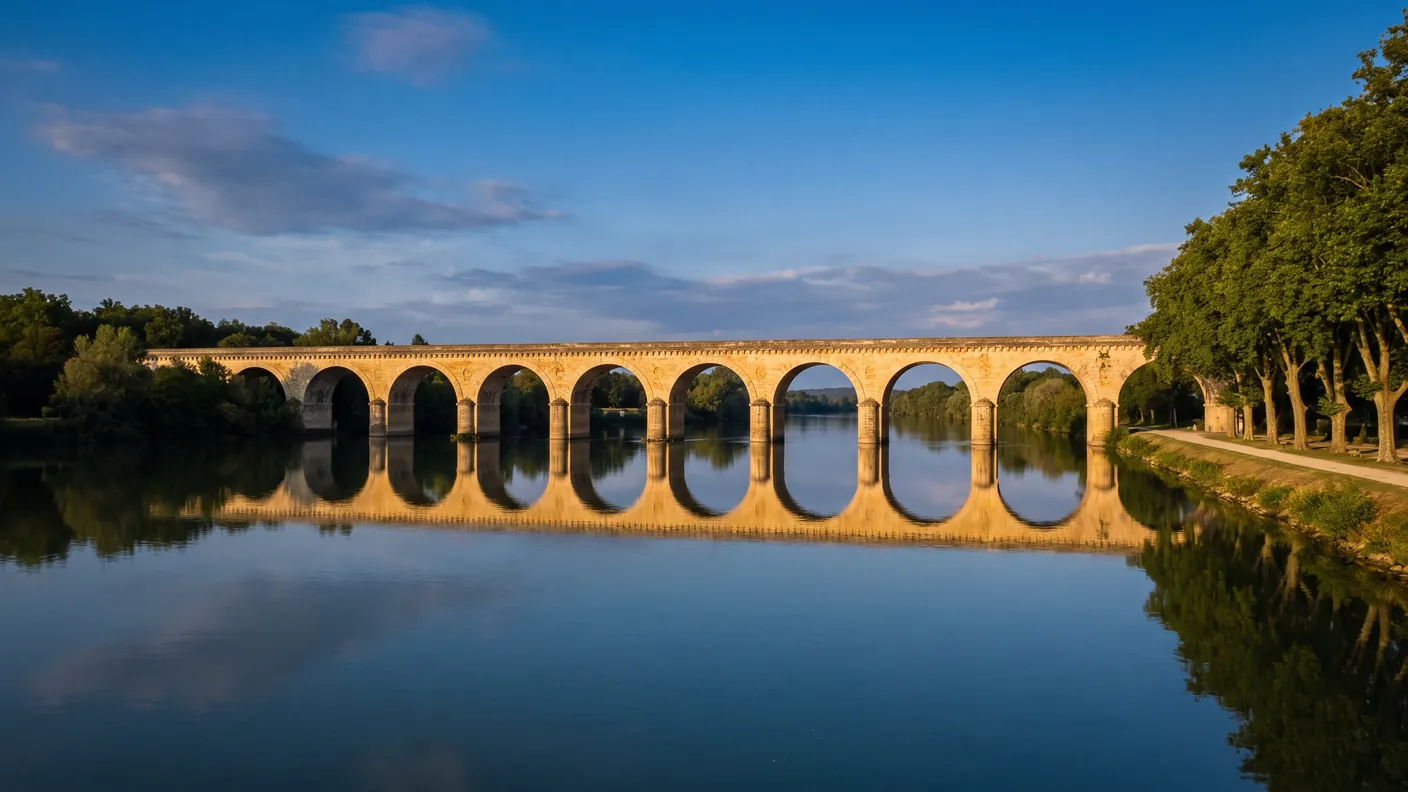
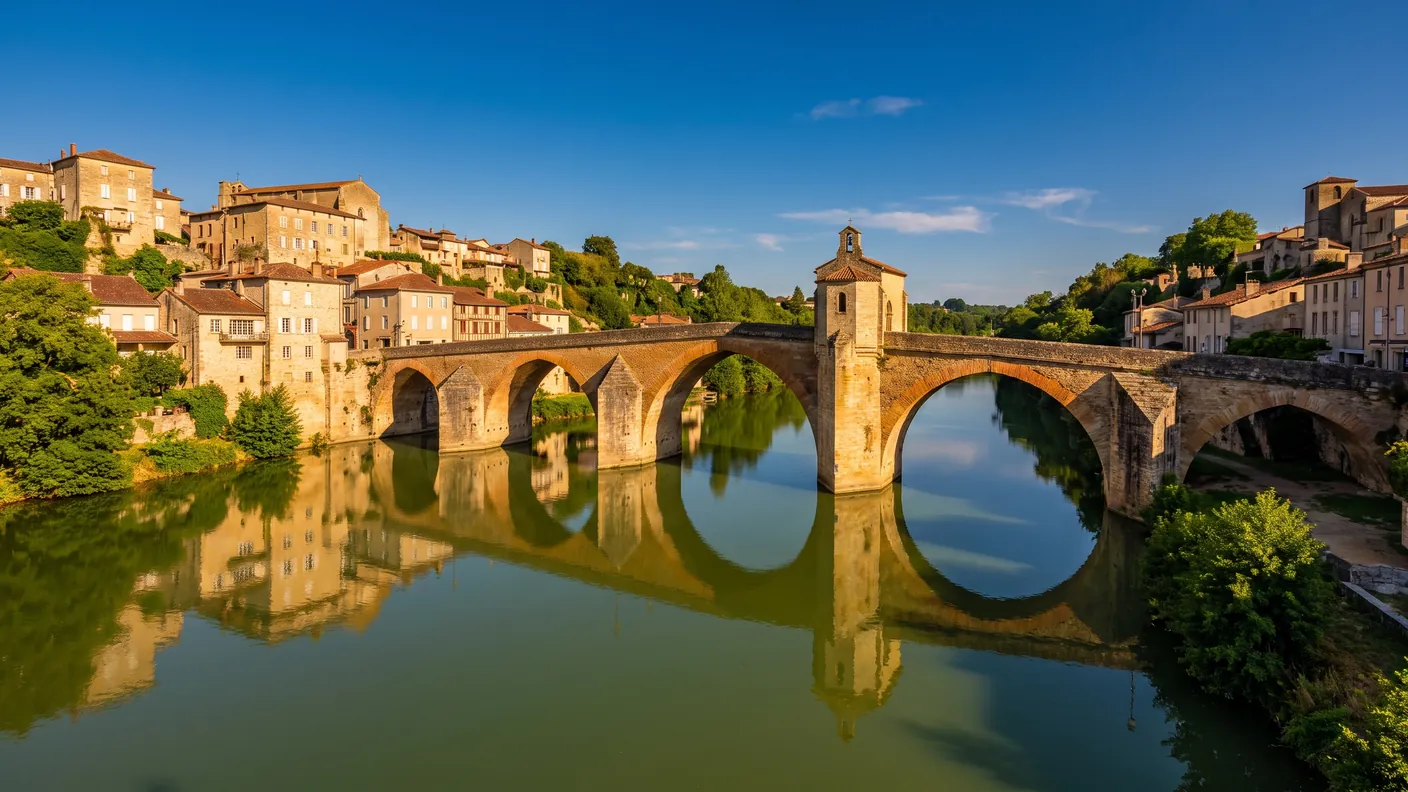
The Agen Canal Bridge is the city's most spectacular landmark: a stone aqueduct that carries a canal over the Garonne River. In other words, a body of water that spans a river—the barges on the Garonne Side Canal cross the river over dry land, about ten meters above its waters. More than 500 meters long and supported by 23 arches of pale stone, it is the second-longest canal bridge in France, after the one at Briare. The sight is breathtaking, especially at sunset when the arches are reflected in the water.
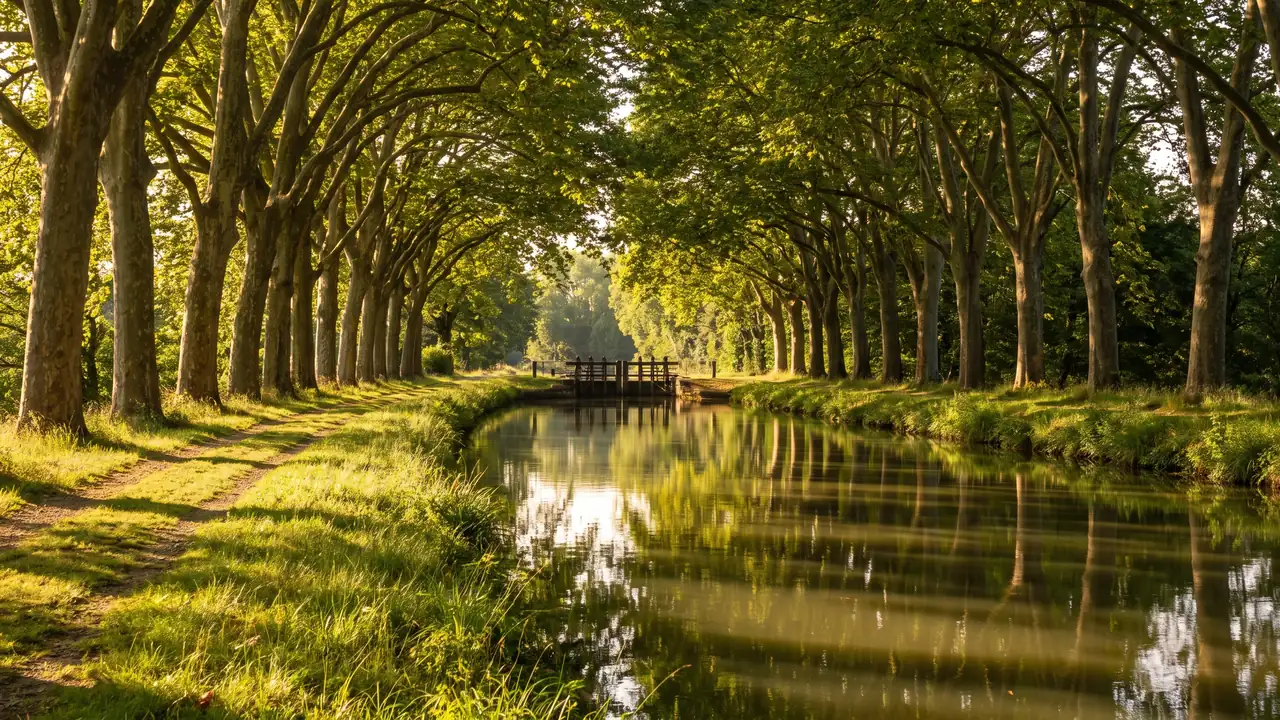
It can be admired in several ways: from below, from the banks of the Garonne, where the long row of arches stretches across the horizon; or from above, walking along the towpath that runs alongside the canal and crosses the structure, with the river flowing below. It’s an easy, free stroll—whether on foot or by bike—and offers one of the most beautiful views in Agen. In the spring and summer, the plane trees lining the towpath form a canopy of greenery over the water.
Twenty-three arches and a princely cornerstone
The structure is built entirely of cut stone. The cornerstone was laid on 25 August 1839 by the Duke of Orléans, heir to King Louis-Philippe. The bridge extends for 550 metres across 23 arches, according to the French Ministry of Culture’s POP record PA47000059, accessed 24 July 2026. Construction began in 1839 and was completed in the 19th century.
The second-longest in France
Long described as France’s longest canal bridge, the Agen structure now ranks second in the country, behind the 662-metre Briare canal bridge opened in 1896. The Agen canal bridge is listed as a historic monument under decrees issued in 2003 and 2012.
A canal built to bypass a capricious river
To understand the canal bridge, you have to understand the Garonne Side Canal. The Garonne, between Toulouse and its estuary, is a capricious river: violent floods, severe low water levels, sandbars—making it impassable for regular navigation. In the 19th century, it was therefore decided to dig a navigable canal parallel to the river that would extend the Canal du Midi toward the Atlantic: the Garonne Lateral Canal. At Agen, this canal had to cross from one bank to the other—hence the canal bridge, a structure that allows it to cross the river without getting wet.
The irony is that the completed canal soon faced competition from the Bordeaux–Sète railway line, opened in the 1850s. Faster rail services quickly captured the freight traffic the canal had only just begun to carry. The canal survived by finding a new role in leisure boating and recreation. Its towpath, lined with a double row of plane trees, is now a favourite place for locals to walk and cycle, while crossing the canal bridge on foot gives a bird’s-eye view of the Garonne.
| The Canal Bridge at a Glance | Data |
|---|---|
| Function | Carries the Garonne side canal over the river |
| Groundbreaking Ceremony | August 25, 1839 (by the Duke of Orléans) |
| Completion | around 1845–1847 |
| Length | more than 500 m (≈ 539 m) |
| Arches | 23 |
| Rank in France | 2nd longest (after Briare, 662 m) |
| Protection | Listed as a historic monument |
Aginnum: From a Gallic Oppidum to a Roman City
Before it became Agen, the city was known as Aginnum, one of the most important Gallo-Roman cities in southwestern France. Its story begins in the hills: the Ermitage hillside was home to an oppidum, a fortified settlement of the Gallic people of the Nitiobroges, before the population moved down to settle in the plain along the Garonne River during the Roman era.
The Roman city of Aginnum covered nearly 80 hectares and had the major amenities of a prosperous settlement: a theatre and an amphitheatre. The latter dates from around AD 215 and could seat between 10,000 and 15,000 spectators, evidence of a considerable urban population for the period. An amphitheatre of this capacity points to a city of several thousand inhabitants with a leading regional role. Agen’s first known bishop, Phoebadius, is recorded in the 4th century, making the city a very ancient episcopal see and an important centre of late Roman Aquitaine.
Few visible remnants of this ancient era remain on the surface—the modern city has covered the Roman settlement—but the museum’s collections and the archaeological excavations bear witness to this rich history. To understand Aginnum is to understand why Agen has remained, for two millennia, a crossroads city in the middle Garonne region.
The name "Agen," inherited from the Gauls
The very name of the city dates back to this origin: Aginnum likely derives from a Gallic root, and has endured through the centuries to become today’s “Agen.” This continuity—from an oppidum of the Nitiobroges to a modern prefecture, via the Roman city and the medieval bishopric—is rare: most cities change locations or names in the wake of invasions. Agen, however, has remained faithful to its river and its hillside.
In the Middle Ages, the city became a contested stronghold in the Agenais region—a county that was torn between the kings of France and England during the Hundred Years’ War—and later a hotbed of the Wars of Religion. From this long and turbulent history, Agen has retained a dense urban fabric, ancient churches, and an old town that encapsulates eight centuries of architecture—a landscape that visitors can still explore today.
Saint-Caprais Cathedral and the Church of the Jacobins
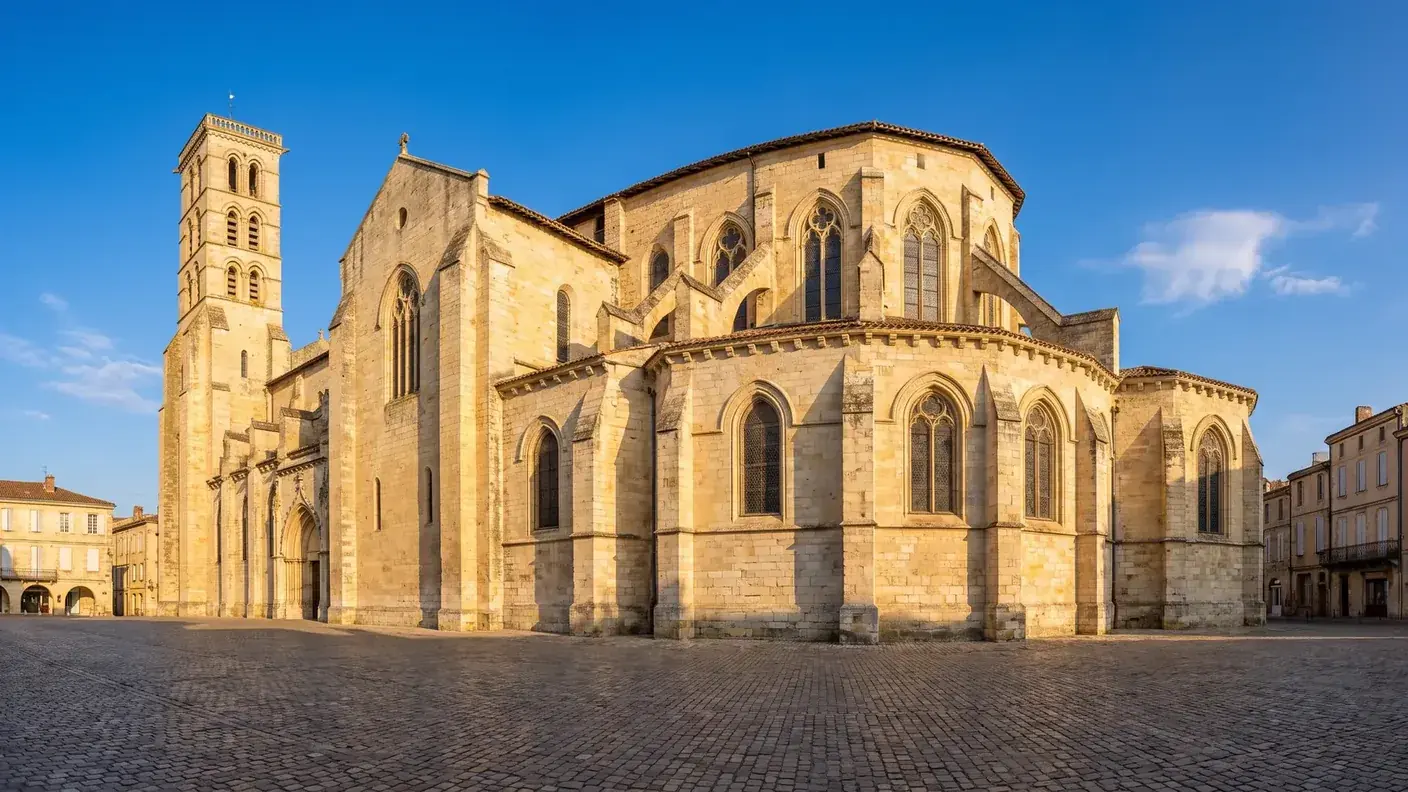
Agen has two large, protected medieval churches: Saint-Caprais Cathedral and the Church of the Jacobins. Both tell, in their own way, the religious history of the city—one as the seat of the bishopric and a stop on the Way of St. James, the other as a testament to the establishment of the mendicant orders in the Middle Ages. They are just a few minutes’ walk from each other, in the heart of the historic center.
Saint-Caprais, a collegiate church that became a cathedral
Saint-Caprais Cathedral was not always a cathedral. Originally a collegiate church, it was elevated to cathedral status in 1802 under the Concordat, having served that role since 1796 after the former Saint-Étienne Cathedral was destroyed during the Revolution. The building combines a fine Romanesque apse with a single-nave Gothic church, a blend characteristic of major religious buildings in south-western France. It has been listed as a historic monument since 1862 and, since 1998, as a UNESCO World Heritage Site within the Routes of Santiago de Compostela.
Saint Caprais, to whom the building is dedicated, is the great martyr of Agen: according to tradition, he was beheaded during the persecutions of the early 4th century, along with Saint Foy—two major figures of early Christianity in Agen. The collegiate church built over his tomb became a place of pilgrimage, which explains its size and, later, its inclusion on the routes to Santiago de Compostela.
Les Jacobins, a brick hall church
The Church of the Jacobins is the former church of a Dominican convent founded in 1249. A distinction matters here: although the convent dates from the 13th century, the church itself dates from the 14th century. Built entirely of brick, it is a remarkable Southern Gothic hall church with two naves of equal height. Brick is characteristic of the Agen region, where abundant valley clay long replaced rarer and more expensive cut stone. Listed as a historic monument since 1904, the church now serves as an exhibition space, giving this medieval building a new cultural role.
| Building | Style | Protection | Landmark |
|---|---|---|---|
| Saint-Caprais Cathedral | Romanesque apse + Gothic nave | Listed as a Historic Monument (1862) · UNESCO 1998 | Cathedral since 1802 |
| Church of the Jacobins | Southern Gothic, hall church, brick | Listed as a Historic Monument (1904) | 14th-century church (convent founded in 1249) |
Strolling Through Old Agen: Rue Beauville
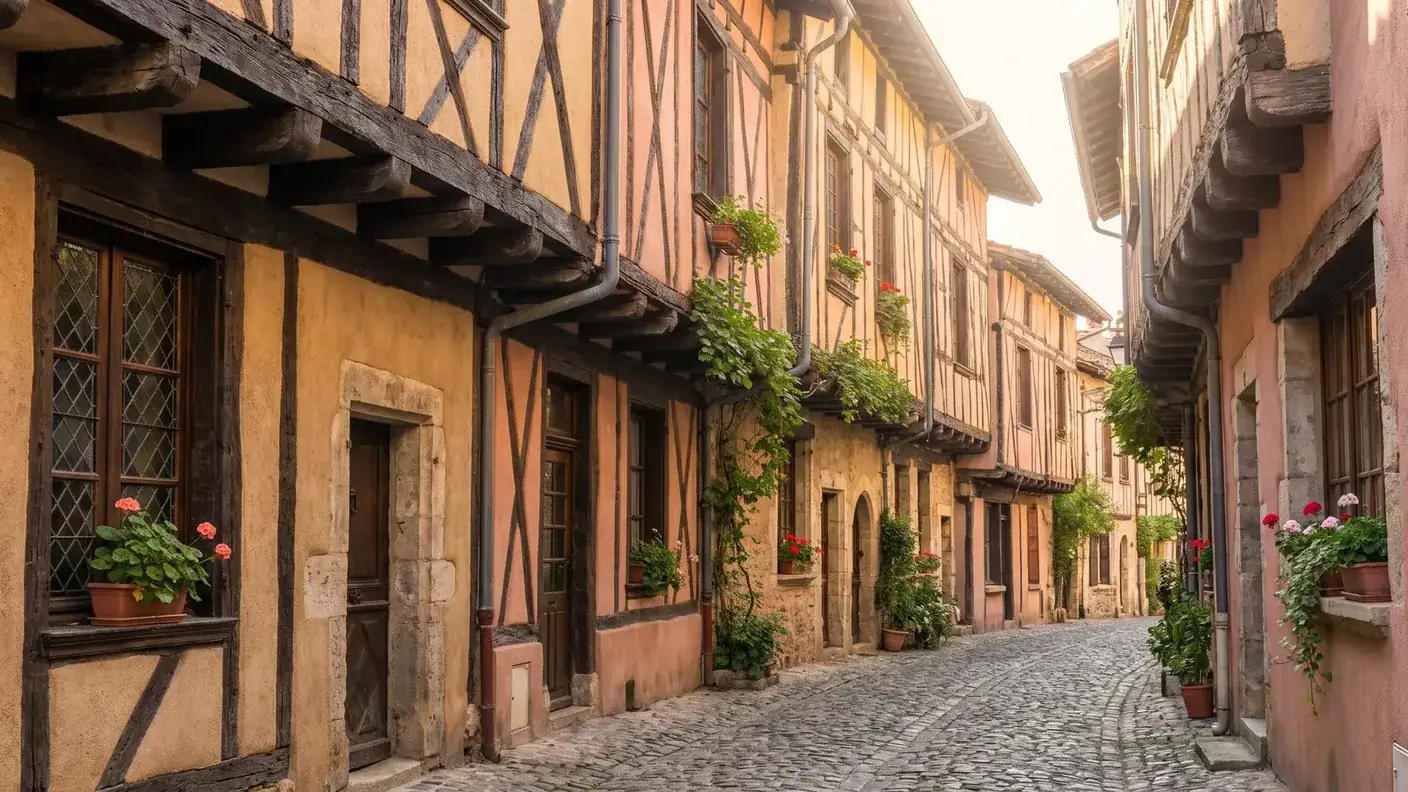
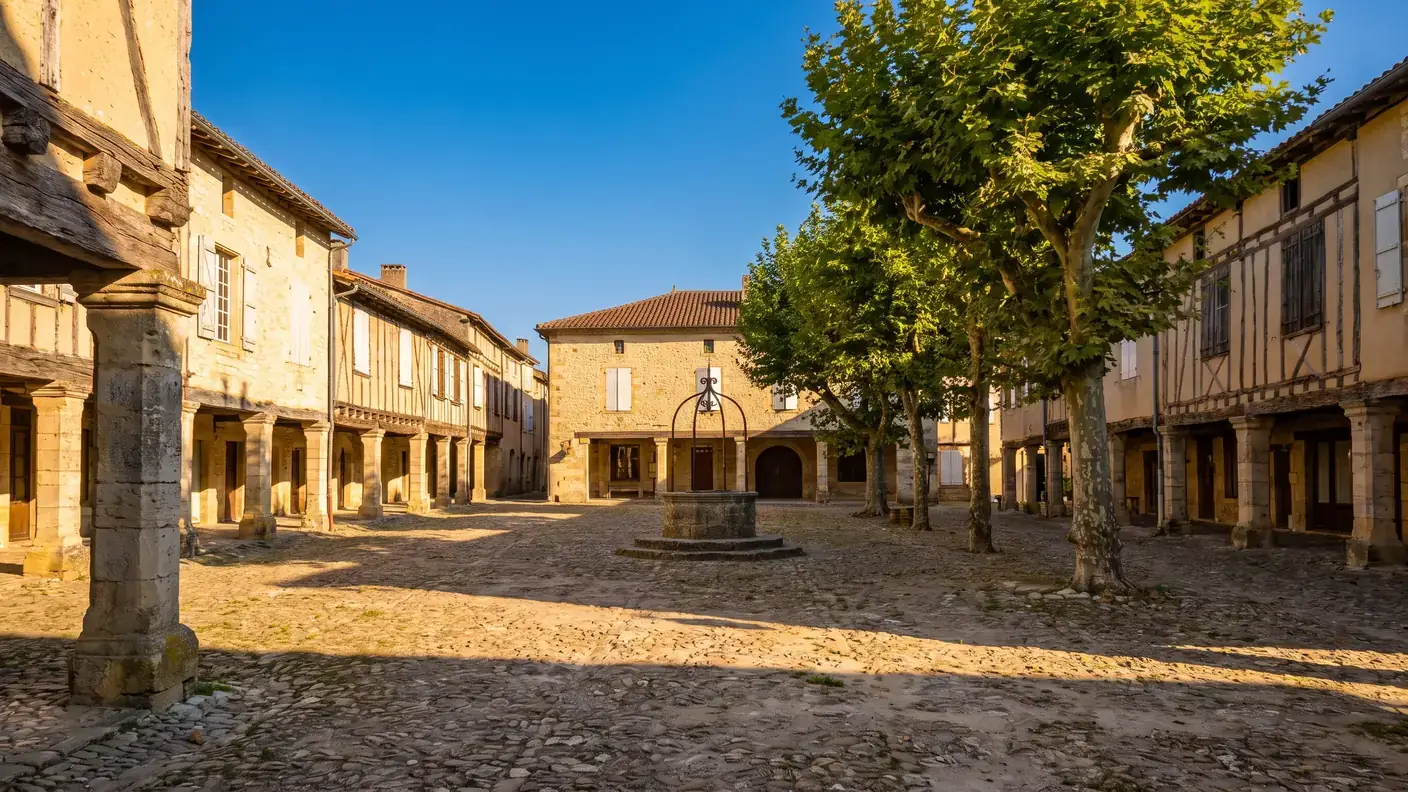
Agen’s historic centre is best explored on foot, through a maze of medieval lanes led by the celebrated Rue Beauville. This narrow street is lined with half-timbered houses whose upper floors are corbelled, each level projecting beyond the one below. This medieval technique created more living space without taking up additional ground. Dark timber frames and ochre or pink plaster make it one of the best-preserved medieval streets in south-western France and a vivid example of late medieval domestic architecture.
Old Agen extends around it, from Place des Laitiers, once the commercial hub, to the cornières, arcaded galleries where market stalls once stood. These features preserve a form of medieval commercial architecture found throughout towns along the middle Garonne. Walking through the neighbourhood feels like stepping back in time between pavement cafés and historic façades.
As you stroll through the streets, you'll also come across some beautiful mansions, testaments to the city’s commercial prosperity in the 16th and 17th centuries—some of which now house the Museum of Fine Arts. Carved doorways, inner courtyards, spiral staircases: Old Agen rewards the attentive visitor—the one who looks up and steps through the half-open doorways.
The city has preserved its lively market tradition. On market days, the streets and squares of the centre fill with local produce: valley fruit, vegetables and, of course, prunes in every form. It is one of the best ways to experience present-day Agen, where heritage and food culture meet.
The Museum of Fine Arts: the Venus and five works by Goya
The Agen Museum of Fine Arts is one of the most extensive in the region, housed in four Renaissance-era mansions. Founded in 1876, it is housed in the Hôtel d’Estrades, Hôtel de Vaurs, Hôtel de Vergès, and Hôtel de Monluc—an architectural gem that alone makes the visit worthwhile. Its collections range from Gallo-Roman archaeology to European painting from the classical periods, but it is two treasures in particular that have made its reputation: an ancient statue considered one of the most beautiful in France, and a set of five paintings by Goya—a rarity outside the major Parisian museums.
The Venus of Mas d'Agenais
The centerpiece is the Venus of Mas d'Agenais, an ancient statue discovered in 1876 in the village of Mas-d'Agenais, downstream on the Garonne River. Contrary to what is sometimes claimed, it is not a Greek work: it is a Roman sculpture (1st–2nd century A.D.) carved from marble, based on a Hellenistic Greek original. This Venus, with her perfectly proportioned figure but missing her arms, is one of the most beautiful ancient statues preserved in France.
Five Paintings by Goya
The other gem is five paintings attributed to Francisco de Goya, which were added to the museum’s collection thanks to a bequest from the Count of Chaudordy, a diplomat and collector. The Agen Museum of Fine Arts, accessed on July 24, 2026, provides details on this collection and the attribution issues surrounding it.
Beyond these two highlights, the museum holds extensive collections of European paintings from the 16th to the 20th century, earthenware, furniture and, above all, archaeological finds that continue the story of Aginnum and the valley. Everything is displayed in an exceptional setting of four connected mansions with courtyards, staircases and Renaissance façades.
That is what makes the Agen museum special: despite being in a medium-sized city, the quality of its exhibits and setting allow it to rival much larger institutions. Allow one to two hours for a visit, sheltered from summer heat or winter rain. Art lovers can extend the day along the lower Garonne: the church in Mas-d’Agenais, where the Venus was found, houses an authentic Christ on the Cross by Rembrandt.
The Agen prune: the town that gave it its name
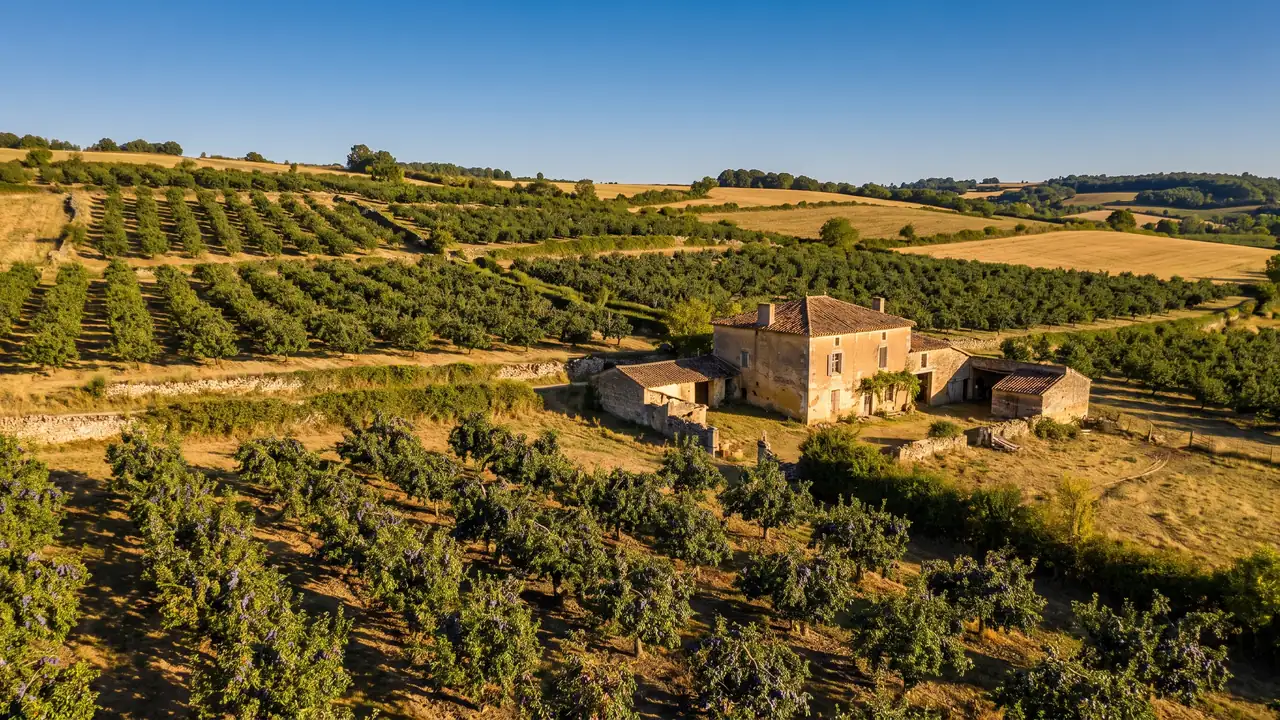
The Agen prune is one of south-western France’s best-known products, but it is not actually grown in the city. It has held Protected Geographical Indication (PGI) status since 2002 and is made by drying a single variety, the Ente plum. Its name comes from the Old French word ‘enter’, meaning ‘to graft’: the Ente plum is literally a grafted plum. The production area spans six departments in south-western France, with Lot-et-Garonne accounting for about 76% of the harvest, but the heartland lies in the Lot Valley north of Agen.
"People didn't pick plums in Agen; they were shipped there."
So why “d'Agen,” then? Because Agen was the great port of embarkation of the fruit. From the docks along the Garonne, the prunes were shipped out on the gabarres — those flat-bottomed boats — to Bordeaux, and then, via the major Atlantic port, to the rest of the world. It was river trade that made the name famous: Agen shipped, labeled, and sold the fruit. The fruit traveled under its name, and the name has stuck. Agen thus gave its name to the product through trade, not through cultivation.
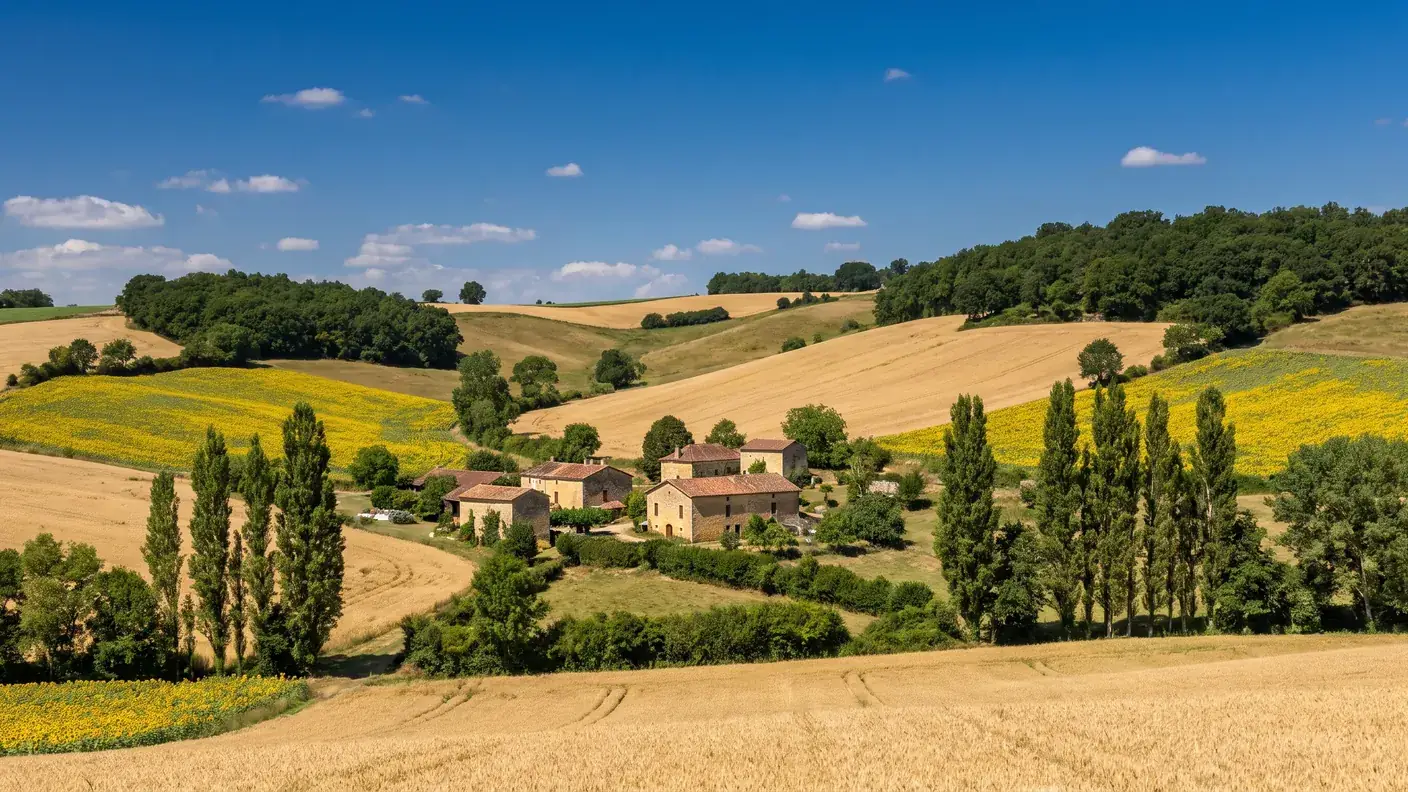
The true production area lies 30 to 40 kilometres north, around Villeneuve-sur-Lot and Sainte-Livrade in the Villeneuvois region and Lot Valley. The PGI area covers six departments across the South West, with approximately 76% of production in Lot-et-Garonne. In short, the plums were shipped through Agen rather than picked there. That distinction has done nothing to diminish local pride in a product now recognised around the world.
The Great Winter of 1709
One climatic event helps explain today’s production map: the severe winter of 1709, among the coldest in French history, destroyed orchards in exposed areas and gradually shifted cultivation to the sheltered hillsides of Lot-et-Garonne. The story of a Damascus plum brought back by Crusaders and grafted by the monks of Clairac belongs to local tradition; official sources do not support it. What is certain is that drying expertise, passed from farm to farm, established the prune as a regional staple.
From Fresh Plums to Prunes
A prune is simply a dried Ente plum, but the skill lies in the drying process. Harvested at full ripeness in late summer, the plums are dried until most of their moisture has evaporated. It takes several kilograms of fresh fruit to make one kilogram of prunes, concentrating both flavour and sugar. Traditional drying rooms have given way to hot-air tunnels, but the standards remain just as exacting.
Prunes are more than a delicacy: they are an economic pillar for the region and appear in countless forms, from stuffed or Armagnac-soaked prunes to confectionery and pastries. In Agen and the surrounding area, they feature everywhere from market stalls to restaurant menus. They make a fitting souvenir and offer the chance to taste, at its source, a speciality exported around the world for centuries.
| Agen Prunes at a Glance | Data |
|---|---|
| Protection | IGP since 2002 |
| Variety | Dried Ente Plum (“ente” = grafted) |
| Origin of the name "d'Agen" | Port of embarkation (barge → Bordeaux) |
| True production base | Villeneuvois / Lot Valley (~30–40 km north) |
| PGI Area | 6 departments · ~76% in Lot-et-Garonne |
SU Agen and the Passion for Rugby
Agen is a powerhouse of French rugby: SU Agen—Sporting Union Agen Lot-et-Garonne—has won eight French championships. Founded in 1908, the club won the Brennus Shield eight times between 1930 and 1988 (1930, 1945, 1962, 1965, 1966, 1976, 1982, 1988), making it one of the most successful clubs in the country and a true institution of rugby in the Southwest. Few cities of this size can boast such a track record.
By number of titles, SU Agen ranks fourth among French clubs, level with Lourdes and behind Stade Toulousain (23 titles), Stade Français (14) and Béziers (11). For a city of 33,000 residents, it is a remarkable record that shows how deeply rugby is woven into Agen’s identity.
The club plays at Armandie Stadium, its home since 1921, which can seat approximately 14,400 spectators. On game days, the whole city comes alive: here, rugby isn’t just a sport—it’s a way of life, a family legacy, and a source of local pride. Attending a match at Armandie means experiencing the South West at its most authentic.
Founded in 1908, SU Agen has trained and seen generations of international players come and go, and its rugby academy remains a breeding ground for talent. This great club, based in a modest city, embodies a tradition of French rugby where local roots take precedence: you’re part of SU Agen from father to son. For visitors, understanding this passion means grasping a part of Agen’s soul—and, why not, timing your visit to coincide with a home game to experience the atmosphere in the stands.
What's there to see around Agen?
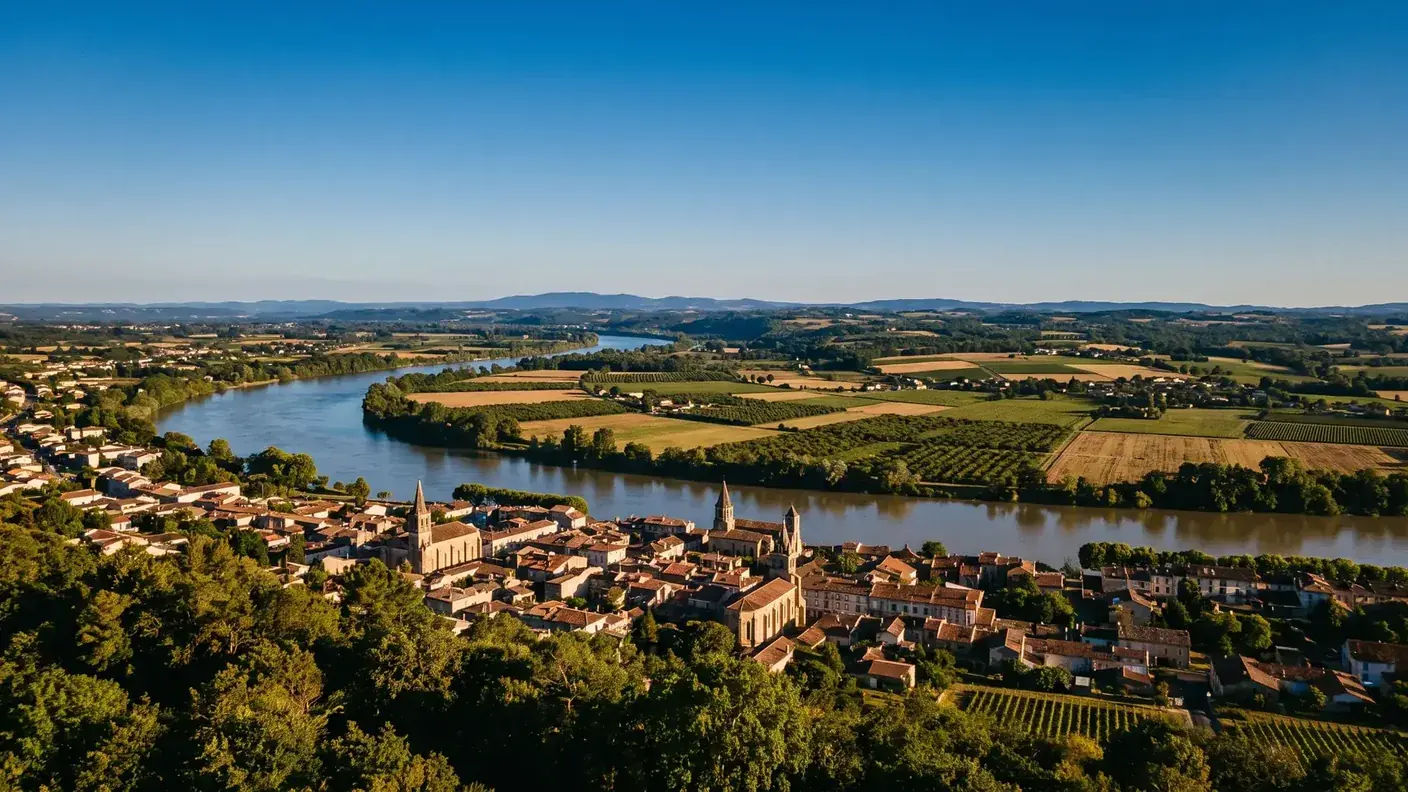
Agen is an excellent starting point: castles, abbeys, and fortified towns dot the middle Garonne region, all within an hour's drive. Stay in Agen and explore the surrounding area—the city is ideally located between the Pays d'Albret to the west, the Villeneuvois region to the north, and Quercy-Tarn-et-Garonne to the east, three regions rich in heritage and cuisine.
Nérac, Moissac, Villeneuve-sur-Lot
Nérac, about thirty kilometres away, was the capital of the Albret region and home to the future Henry IV. An early centre of the Reformation under Jeanne d’Albret in the 1530s, the city later hosted negotiations for the Edict of Nérac (1578–1579) between Henry of Navarre and Catherine de’ Medici. To the east, Moissac is home to Saint-Pierre Abbey and its extraordinary Romanesque tympanum (c. 1110–1130), included in the UNESCO listing for the Routes of Santiago de Compostela. Villeneuve-sur-Lot, a neighbouring bastide at the heart of prune country, lies only about 29 km north.
Le Mas-d’Agenais and Family Attractions
Each of these sites is worth taking the time to explore. At Moissac, beyond the tympanum, it is the entire abbey complex that is truly impressive, with its famous cloister featuring historiated capitals—one of the masterpieces of Romanesque sculpture. At Nérac, the Château des Albret and the banks of the Baïse form a Renaissance setting steeped in history—that of the brilliant and tolerant court of Marguerite of Navarre. And at Villeneuve-sur-Lot, the medieval bastide and its orchards transport visitors to the heart of plum country.
Downstream on the Garonne, Le Mas-d'Agenais is well worth a visit: the museum’s Venus was discovered here, and the village church houses a crucifix by Rembrandt. For families, Walygator Sud-Ouest (formerly Walibi) stands in Roquefort just outside Agen, beside the Aqualand water park. With a chauffeur handling the journeys, two or three of these attractions can be combined comfortably in one day.
| Around Agen | Distance / Marker | Interest |
|---|---|---|
| Nérac | ~30 km | Castle of Henry IV, Albret region, Reformation |
| Villeneuve-sur-Lot | ~29 km | Bastide, Pont-Vieux, the land of prunes |
| Moissac | ~40 km | Saint-Pierre Abbey, Romanesque tympanum, UNESCO |
| Le Mas-d'Agenais | downstream on the Garonne | Venus, Rembrandt's Christ |
| Walygator Sud-Ouest | Roquefort, just outside Agen | Amusement Park + Aqualand |
| Toulouse | ~118 km | Ville Rose, 1 hour and 25 minutes away |
When is the best time to visit Agen?
Agen is worth visiting year-round, but late summer and early fall offer the best of the region's local flavors and climate.
From late August through September, the Ente plum orchards are harvested. This is the high point of the fruit season, a chance to understand the geography of prune production and visit markets filled with fresh plums, summer fruit and local produce. Spring (April to June) fills the valley with blossom and brings ideal temperatures for walking through the old town and along the canal. Summer is warm and bright, perfect for shaded walks on the towpath and time on the centre’s terraces.
Autumn, after the harvest, colours the hillsides and valley. Winter is quieter, but it is also rugby season: a SU Agen match at Stade Armandie is an experience in its own right. At any time of year, the canal bridge, cathedral and Rue Beauville can be explored at a relaxed pace, while a chauffeur service keeps the day smooth and avoids parking in the busy centre.
One full-day itinerary begins with a late-morning arrival and a walking tour of the old town: Saint-Caprais Cathedral, Rue Beauville and Place des Laitiers, followed by the canal bridge and towpath. After lunch featuring prune specialities, choose between the Museum of Fine Arts and its works by Goya, a trip to Nérac or Moissac, or a drive through the orchards around Villeneuve-sur-Lot. With a chauffeur handling each journey, all this can fit into one day, including the return to Bordeaux.
Getting to Agen from Bordeaux
Agen is located about 142 km from Bordeaux, which is a little over 1 hour and 30 minutes by car via the A62 highway. The city has excellent transportation links: its train station, located on the main Bordeaux–Toulouse line, is served by TER, TGV inOui, Ouigo, and Intercités trains. By train, Agen is therefore easily accessible from both Bordeaux and Toulouse—the city is even a little closer to Toulouse.
Train or chauffeur service?
The train remains convenient for a simple city-centre journey. When travelling as a group, carrying luggage or exploring beyond Agen (Nérac, Moissac, Villeneuve-sur-Lot or the orchards), an executive car service offers greater flexibility: direct door-to-door travel with no changes or timetables to manage, plus the option of stops along the way.
From Bordeaux, we offer this route at a fixed price confirmed in advance: approximately 321 € one way, in a Mercedes saloon or van for up to 8 passengers, with a professional chauffeur. The written quote avoids any unexpected meter charges and suits a business journey, a weekend exploring the region or a transfer to Bordeaux-Mérignac Airport.
Door-to-door travel is particularly appealing for couples, families and small groups with luggage. A private chauffeur removes the need for individual train tickets, timetable constraints and travel to the departure station. You board in Bordeaux and leave the car at your chosen address in Agen, making the drive part of the day. To explore the valley, an orchard, Nérac or Moissac, the chauffeur can wait or connect several stops, something no scheduled bus can offer.
| Route | Distance | Duration | Landmark |
|---|---|---|---|
| Bordeaux → Agen | ~142 km | a little over 1 hour and 30 minutes | From ~€230 with a chauffeur service |
| Agen → Toulouse | ~118 km | ~1 hr 25 min | a little closer than Bordeaux |
| Agen → Villeneuve-sur-Lot | ~29 km | ~30 min | land of the prune |
| Agen → Nérac | ~30 km | ~35 min | Castle of Henry IV |
Whether you want to explore the canal bridge and old town, attend a SU Agen match or tour the Garonne Valley, a chauffeured transfer provides a comfortable, punctual journey. Book a chauffeur from Bordeaux to Agen or explore all our destinations.
Frequently Asked Questions
Where is Agen located?
Agen is the prefecture of Lot-et-Garonne (47), in Nouvelle-Aquitaine, on the Garonne River, halfway between Bordeaux and Toulouse. It is the most populous municipality in the department, with 32,801 residents (2023), located about 140 km southeast of Bordeaux.
How far is it from Bordeaux to Agen?
About 142 km via the A62 motorway, or a little over 1 hour 30 minutes by car. With a chauffeur service from Bordeaux, the fare is fixed and confirmed in advance, starting at approximately €321 one way (saloon or van, door-to-door price).
What is the Agen Canal Bridge?
It is a stone aqueduct that carries the Garonne side canal over the Garonne River: a canal that spans a river. Over 500 meters long with 23 arches, its cornerstone was laid in 1839, and it was completed around 1845–1847. It is the second-longest canal bridge in France, after the one at Briare.
Are Agen prunes grown in Agen?
Not really. Agen gave its name to the prune because it was the port of shipment: prunes were shipped from its docks on the Garonne River to Bordeaux and around the world. The actual production area is located 30–40 km to the north, in the Villeneuve region and the Lot Valley. The Agen prune (dried Ente plum) has held a Protected Geographical Indication (PGI) designation since 2002.
What is there to see at the Agen Museum of Fine Arts?
Two treasures: the Venus of Mas d'Agenais, a Roman marble statue (1st–2nd century) modeled after a Greek original, and five paintings by Goya, acquired through a bequest from the Count of Chaudordy. The museum, founded in 1876, is housed in four Renaissance-era mansions.
How many titles does SU Agen have?
SU Agen has won eight French rugby championships between 1930 and 1988. This ranks it fourth among French clubs, tied with Lourdes, behind Toulouse (23 titles), Stade Français (14), and Béziers (11). The club has played at the Stade Armandie since 1921.
Is Agen Cathedral old?
Saint-Caprais Cathedral was originally a collegiate church; it did not become a cathedral until 1802. The building combines a Romanesque apse with a single-nave Gothic nave. It has been classified as a historic monument since 1862 and has been listed as a UNESCO World Heritage Site (Routes of Santiago de Compostela) since 1998.
What is Rue Beauville?
This is Agen’s most famous medieval street, lined with half-timbered houses featuring corbelled upper stories. It is one of the best-preserved half-timbered streets in southwestern France, located in the heart of the old town, near Place des Laitiers and the arcaded corners.
Is Agen closer to Bordeaux or Toulouse?
A little closer to Toulouse: about 118 km (1 hr 25 min) compared to 138 km (1 hr 35 min) to Bordeaux, despite the “halfway” label. The city lies on the Bordeaux-Toulouse highway and rail corridor.
What is there to do around Agen?
Nérac (Castle of Henry IV, Albret region) ~30 km away, Moissac (Saint-Pierre Abbey and its Romanesque tympanum, UNESCO) ~40 km away, Villeneuve-sur-Lot (bastide and home of the prune) ~29 km away, Le Mas-d'Agenais (Rembrandt’s “Venus” and “Christ”), and the Walygator Sud-Ouest amusement park in Roquefort for families.
When is the best time to visit Agen?
Spring and early fall are great times to stroll through the old town and along the canal in the soft light. Late August and September coincide with the Ente plum harvest—the best time to explore the region. Winter is rugby season at Armandie Stadium.
Is there a train station in Agen?
Yes. Agen station is on the main Bordeaux–Toulouse line and is served by TER, TGV inOui, Ouigo and Intercités trains. It has good connections to both cities. For direct door-to-door travel without changes, however, a private chauffeur remains the most flexible option.
Can I book a private driver from Bordeaux to Agen?
Yes. We offer the Bordeaux → Agen route (~142 km, just over 1 hour and 30 minutes) at a fixed price, starting at approximately €269 one way, in a Mercedes sedan or a van seating up to 8 passengers. The trip is direct, door-to-door, with optional stops along the way (Villeneuve-sur-Lot, an orchard, Nérac).
Further Reading
- The neighbouring bastide and heart of prune country: see the Villeneuve-sur-Lot guide (bastide on the Lot, Pont-Vieux and Agen prunes)
- The oldest bastide in the Gers, within easy reach: see the Montréal-du-Gers guide (1255 bastide and Villa de Séviac)
- A village in Lot-et-Garonne: see the Armillac guide, in the Dropt Valley
- Plan your journey: see the fixed-price transfer from Bordeaux to Agen, then request a written quote.
Sources and References
- Wikipedia — Agen — geography, demography, history (Aginnum), cultural heritage, economy
- Wikipedia — Agen Canal Bridge — dated 1839–~1847, 23 arches, length, row, historic landmark status
- Wikipedia — Saint-Caprais Cathedral — collegiate church, cathedral (1802), architectural style, listed as a historic monument, UNESCO
- Wikipedia — Agen Prune — IGP 2002, Ente plum, port of shipment, production area
- INAO — Agen Prune (PGI) — Official Protected Geographical Indication (PGI) Profile (2002), Specifications
- Wikipedia — SU Agen — 8 French championship titles, Armandie Stadium, list of achievements
- POP / Mérimée Database — Ministry of Culture — MH-designated sites: canal bridge, cathedral, Church of the Jacobins
Article updated in July 2026.
Off to the Prune Capital
Direct trip from Bordeaux (~1 hr 35 min) to Agen, with stops along the way as desired—Villeneuve-sur-Lot, an orchard, Nérac. Written fixed-price quote, with no unexpected charges based on the odometer.