Private driver from Bordeaux to Montréal-du-Gers: royal bastide and Séviac
The oldest “Most Beautiful Village” in the Gers: a royal bastide founded in 1255 by Saint Louis’s brother, with its intact square featuring corner towers, and just a stone’s throw away, the Gallo-Roman villa of Séviac with its 625 m² of mosaics. Right in the heart of the Armagnac region, about 2 hours from Bordeaux.
Montréal-du-Gers at a Glance
- Montréal-du-Gers (officially “Montréal”) is a bastide in the Gers department (32250), in Occitanie, recognized by the association Les Plus Beaux Villages de France [source].
- Founded on March 30, 1255, by Alphonse de Poitiers, brother of King Saint Louis, on an orthogonal grid plan centered around a square with corner towers [source].
- Two kilometers from the town, the Gallo-Roman villa at Séviac features an extensive collection of mosaics and thermal baths [official website].
- Its Saint-Philippe-et-Saint-Jacques collegiate church, a Gothic structure that is partially fortified, has been listed as a Historic Monument since 1925 [source].
- Montreal claims to be the capital of Ténarèze, one of the three regions of the Armagnac AOC, home to Floc de Gascogne and Côtes de Gascogne.
- A village in 1,171 residents in 2023 [Source: INSEE].
- From Bordeaux: ~149 km, about 2 hours by car — starting at 259 € with an executive car service. No train stations (Condom and Eauze are ~15 km away).
Before You Go: What Montréal-du-Gers Is Really About
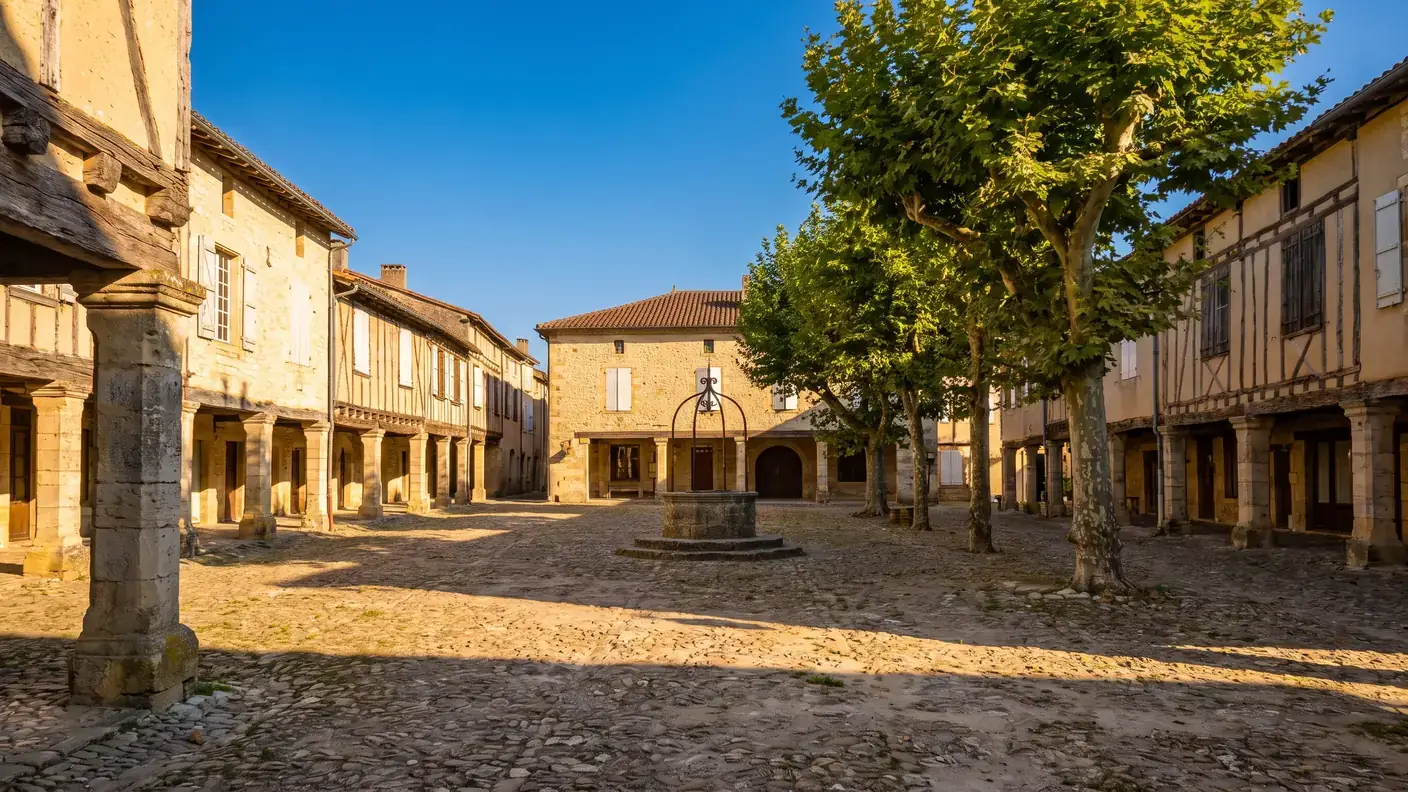
Late afternoon on the square with its corner posts. The sun skims the stone and wooden roofs, the fountain murmurs, and it’s hard to believe that this sleepy village of a thousand residents was, nearly eight centuries ago, a cornerstone of the Capetian strategy in Gascony. Just a stone’s throw away, beneath glass shelters, lie 625 m² of Roman mosaics that a country priest rescued from oblivion. Welcome to Montréal-du-Gers, the oldest fortified town in the Gers—one of the “Most Beautiful Villages of France,” where antiquity, the Middle Ages, and Armagnac converge within a few square kilometers.
Montréal-du-Gers belongs to the Ténarèze, this heart of the Gers region of Gascony, nestled between Bas Armagnac and Haut Armagnac. People come here for three things that are rarely found together elsewhere: a medieval fortified town intact in its layout, a Gallo-Roman villa leading, and a terroir (Armagnac, Floc, Côtes de Gascogne) that extends the dining experience. It is a destination for slow tourism, away from the crowds, between Condom and Eauze.
This guide carefully distinguishes verified facts from information that is simply copied from one entry to another. It is often claimed that Montréal is “the first bastide in Gascony”: this is an oversimplification—Cordes-sur-Ciel predates it by thirty-three years (1222). Let us say instead, as the Mérimée database does, “the oldest bastide in the Gers.” The church is sometimes said to be dedicated to “Notre-Dame”: the current collegiate church is in fact dedicated to Saints Philip and James. And the villa at Séviac was not discovered in 1868, but by chance in 1864. We are setting the record straight on these points, with supporting sources—accuracy does not detract from the charm; it anchors it.
As for access, Montréal has no train station: the entire northwestern part of the Gers department lacks passenger train service. You can get there by car—it’s about a 2-hour drive from Bordeaux. To visit the bastide, the Villa de Séviac, and stop for an Armagnac tasting without worrying about driving or the route, hiring a chauffeured transfer from Bordeaux remains the simplest door-to-door option.
A Gers Village Where Three Historic Regions Meet
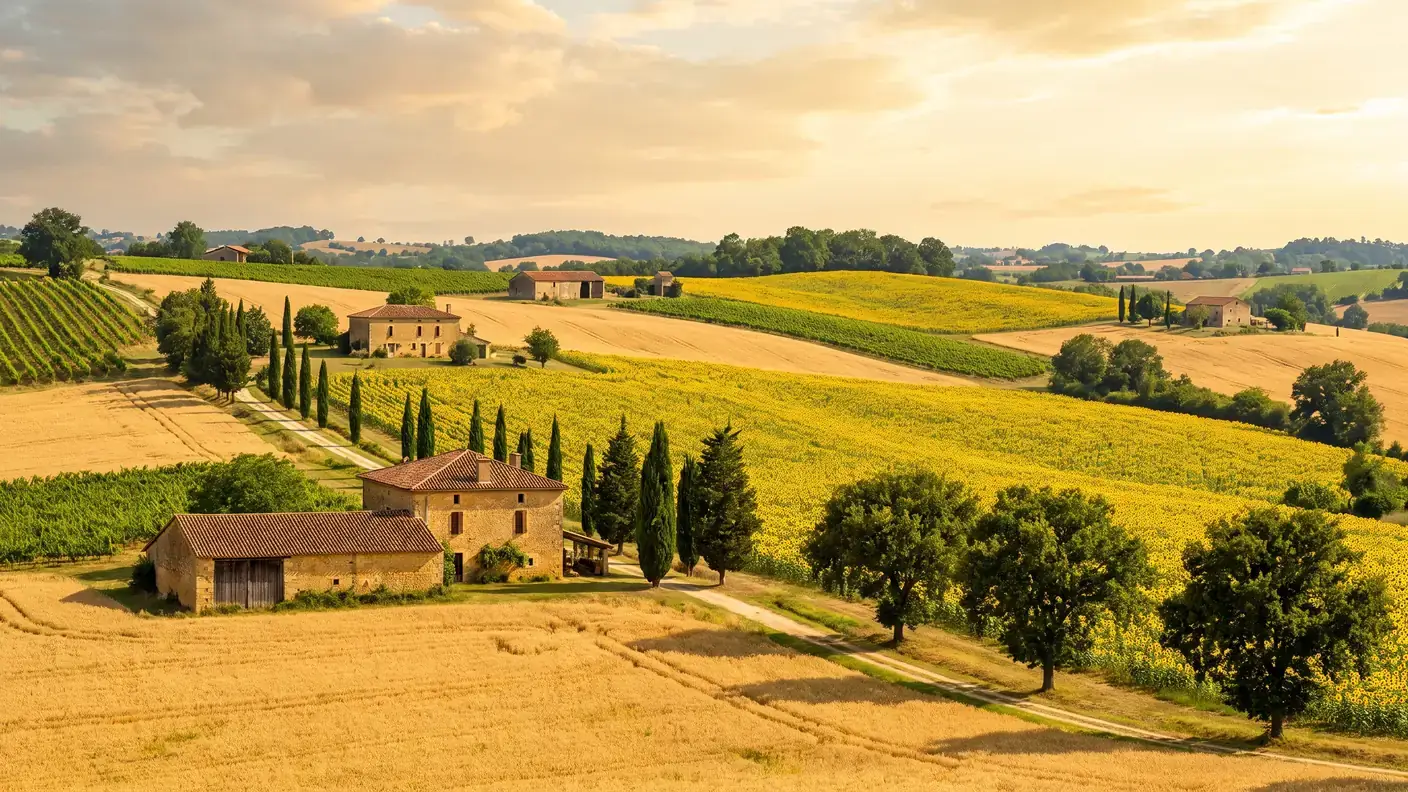
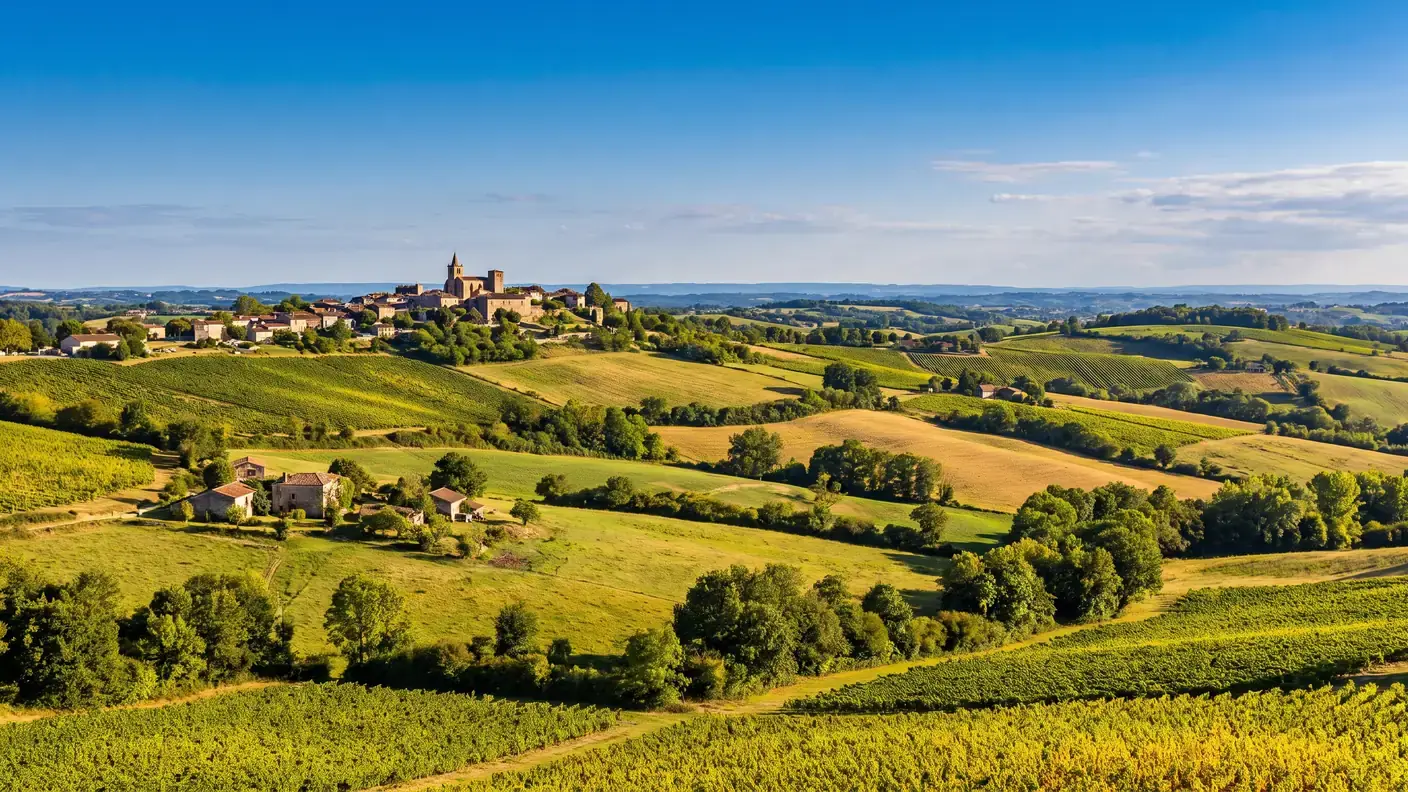
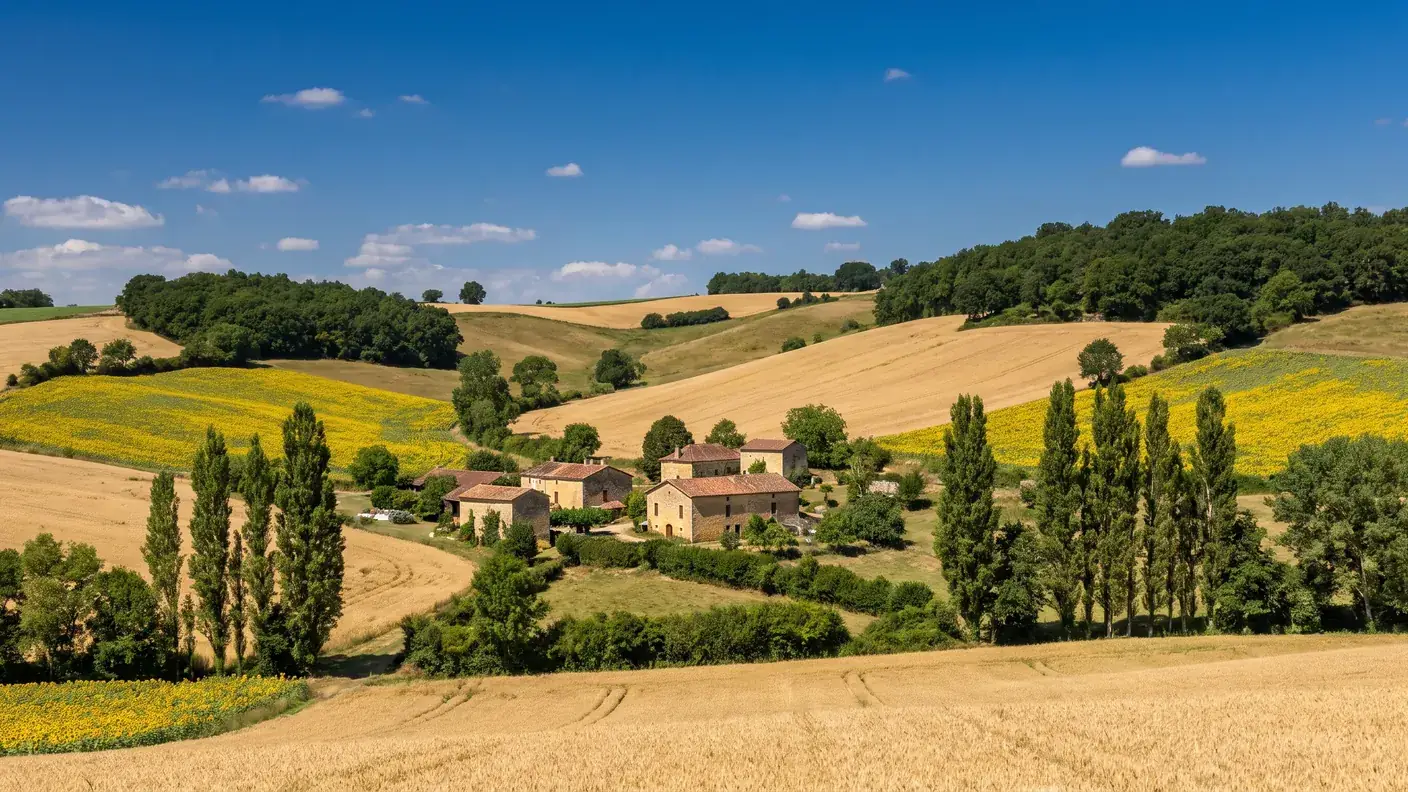
Montréal-du-Gers is located in the northwestern part of the Gers department, in the Occitanie region, within the Condom district and the Ténarèze Community of Municipalities. The territory—which is vast for a village, covering approximately 63 km²—stretches across gentle hills ranging in elevation from 73 to 183 meters, drained by the Auzoue River and several streams (the Izaute, the Larluzen, and the Répassat). It is a typical Gascon landscape: long, undulating fields, vineyards, and woods; isolated ochre-colored stone farmhouses; and a vast sky.
The town borders ten neighboring municipalities, and its location on the border is by no means insignificant: two of them—Poudenas and Sainte-Maure-de-Peyriac—are already in Lot-et-Garonne. Montréal thus marks the northwestern edge of the Gers region of Gascony, at the junction of the Gers, Armagnac, and Agenais regions. This is a point worth clarifying, as it can be confusing: the ZIP code is 32250, but the INSEE code is 32290—and the suffix “-du-Gers” (a common name; the INSEE simply lists “Montréal”) serves to distinguish the town from other Montréals in France.
| Data | Value |
|---|---|
| ZIP Code / INSEE | 32250 / 32290 |
| Department / Region | Gers (32) / Occitanie |
| Borough | Condom |
| Intermunicipal Cooperation | Ténarèze Community of Communes |
| Area | ~63 km² |
| Elevation | 73 m to 183 m |
| Population | 1,171 residents (2023) — Montrealers · Source: INSEE |
| Labels | "Most Beautiful Villages of France," "Station Verte," "Village Fleuri" |
| Must-See | Bastide and square with corner buildings, Séviac villa, collegiate church, Armagnac |
The Ténarèze, a long ridge with no river to cross
Montréal readily proclaims itself "capital of Ténarèze", this transitional region that lends its name to one of the three zones of Armagnac. The term “Ténarèze” originally referred to a ridge line, an ancient high-altitude trail that allowed travelers to cross Gascony from north to south without ever having to cross a river — a major advantage before bridges were built. This ridge route, used since prehistoric times, still shapes the landscape. Three designations coexist there — The Most Beautiful Villages of France, "Station Verte" and "Village Fleuri" —, and the town has no fewer than seven churches, scattered throughout the hamlets: a figure that speaks to the extent of the rural population in days gone by.
From 3,400 residents to 1,170: Two Centuries of Depopulation
Montreal’s demographics tell, in miniature, the entire history of rural Gascony. One might imagine these villages as having always had a population of a few hundred; that is not true. In the first census taken during the French Revolution, in 1793, Montréal had 3,407 inhabitants—nearly three times its current population. At that time, it was a large agricultural town, relying on mixed farming and viticulture.
| Year | Population |
|---|---|
| 1793 | 3,407 residents (all-time high) |
| 1901 | ~2 300 |
| 1962 | ~1 600 |
| 1999 | ~1 200 |
| 2023 | 1,171 residents |
What followed was a long, steady decline spanning nearly two centuries: agricultural mechanization, the disappearance of small farms, and the pull of cities. The town lost nearly two-thirds of its population between 1793 and the end of the 20th century. Then the trend leveled off: since 2017, the population has remained virtually unchanged (zero variation), hovering around 1,170–1,180 residents. Neither a spectacular resurgence nor a collapse—just a plateau.
With a population density of approximately 18.6 inhabitants per square kilometer—one of the lowest in the entire rural region of southwestern France— Montréal remains a town with a highly dispersed settlement pattern: the market town is where services are concentrated, but most of the territory consists of hamlets and isolated farms, each of which once had its own chapel. This is a glimpse of a Gascony that was once much more densely populated than it is today.
This low population density, often perceived as a weakness, is also the region’s greatest asset. Where other tourist regions are overcrowded, the Gers offers space, tranquility, and authenticity—quality tourism rather than mass tourism, driven by its cuisine, vineyards, and well-preserved heritage. Montréal, with its well-preserved bastide and historic villa, perfectly embodies this unassuming corner of Gascony that guidebooks readily describe as the “French Tuscany”—without the crowds of the real Tuscany.
1255: The Royal Bastide of Alphonse de Poitiers
The March 30, 1255, Alphonse of Poitiers Here, he founded a bastide centered around a square with corner towers. This medieval origin and the town's layout are documented in the association's presentation The Most Beautiful Villages of France.
"Mont-Royal": A Propaganda Name
The choice of the name is worth noting. Montréal means “Royal Mountain”—an affirmation of the Capetian presence in this Gascon region, which was still being contested with England. It was a popular name for new settlements: there are several towns named Montréal in France (in the Aude, Ardèche, and Yonne departments…), and the name would later spread around the world all the way to Quebec. To avoid confusion, the name is commonly used with the suffix “-du-Gers”; the INSEE, however, simply lists it as “Montréal.” On the hill, the medieval message was clear: here reigns the King of France.
A New Town Laid Out by Settlers from Agen
Behind the king’s brother’s signature, it was men from the Agenais region who laid out the town. The site was chosen in the spring of 1255 by Guillaume de Balneolis (Bagnols), seneschal of the Agenais; the town plan and charters were drawn up by a notary from Agen, Pons Maynard. This connection to the north is hardly surprising: Alphonse held the county of Toulouse through his marriage to Jeanne, daughter of Raymond VII—the very same Count of Toulouse who, a generation earlier, had founded the bastide of Cordes.
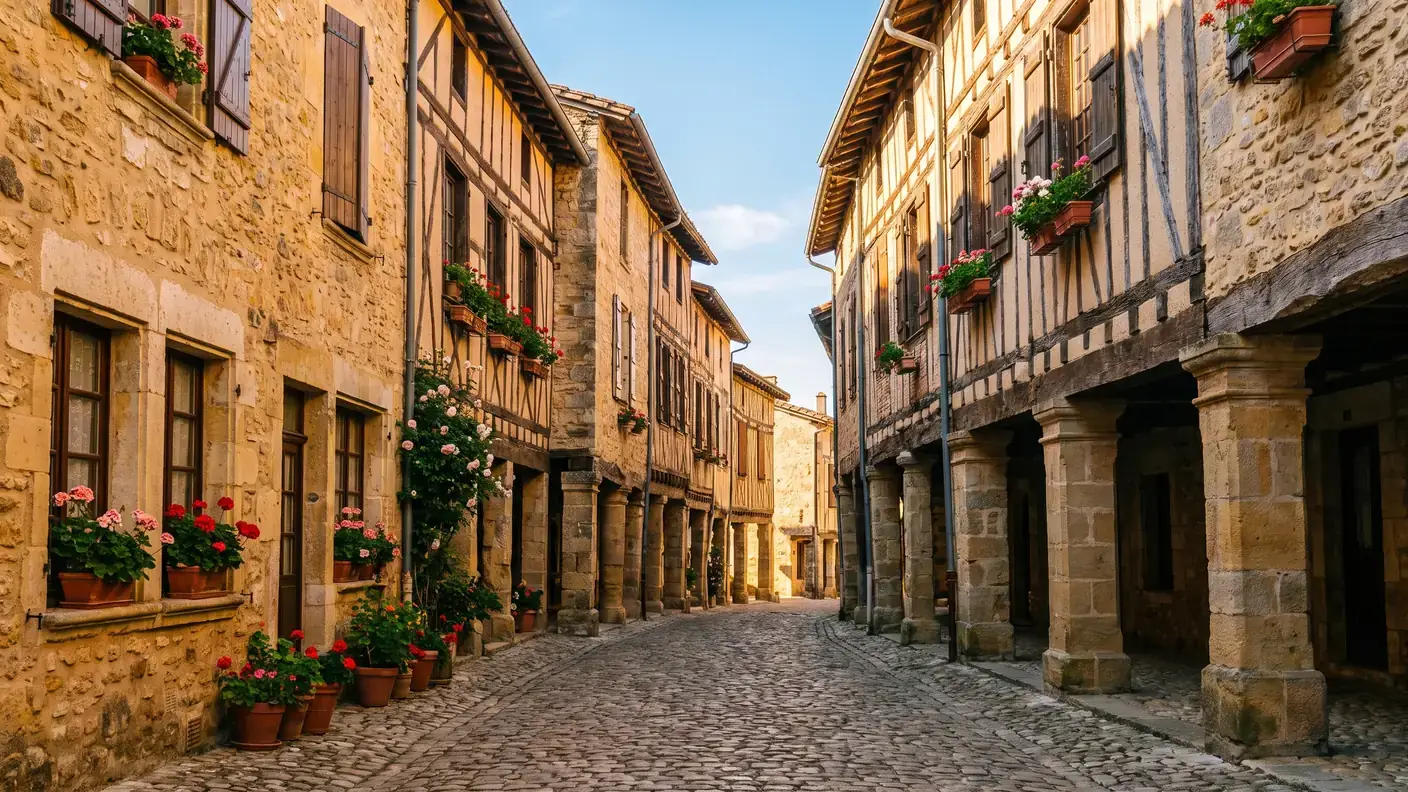
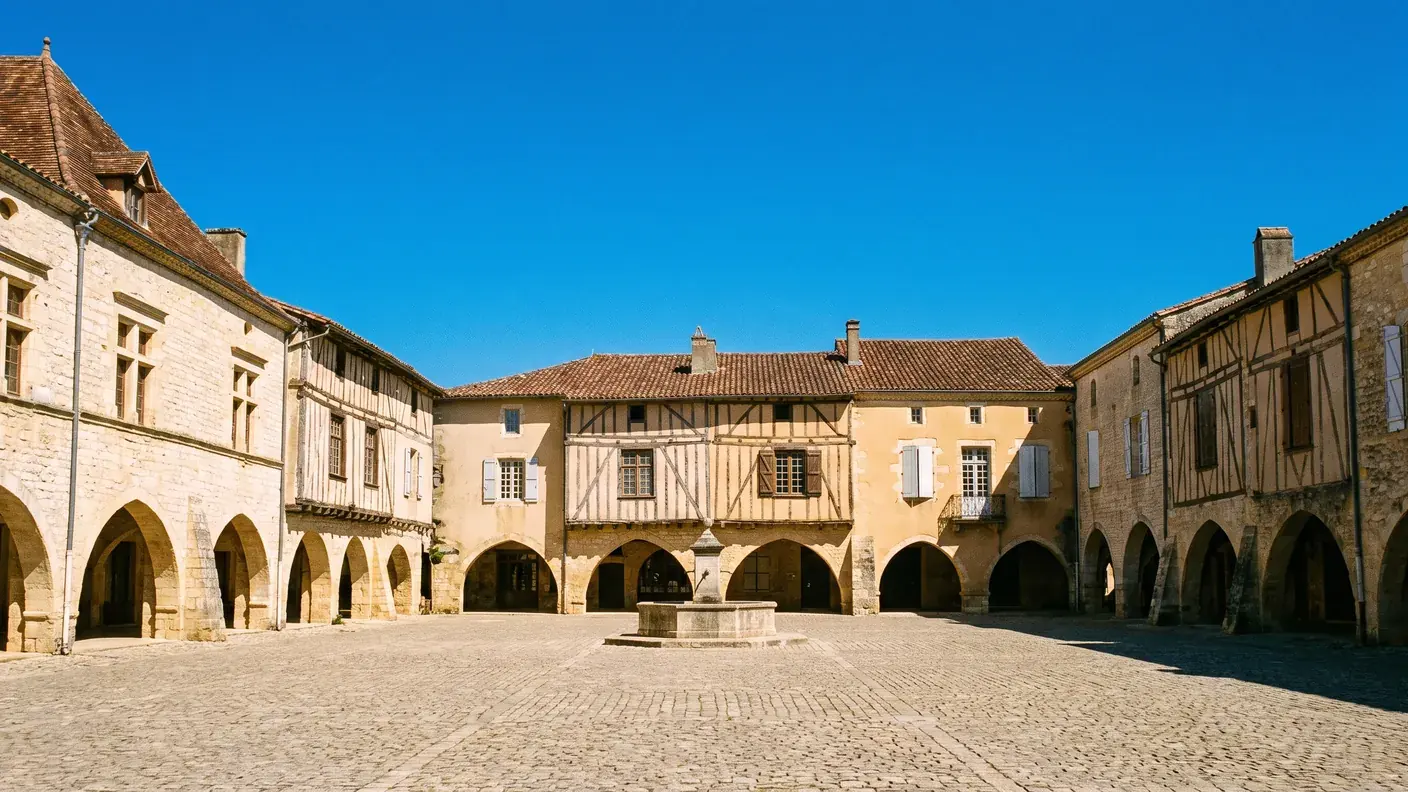
The result is a classic example of its kind: an orthogonal layout, a central square with corner sections (the “couvertes”—covered galleries supported by stone and wooden pillars—run along three of its sides), regularly shaped lots, and streets that intersect at right angles. Eight centuries later, this layout is still perfectly discernible: it is what earned Montréal its designation as one of the Most Beautiful Villages of France.
The oldest in the Gers, but not the first in Gascony
A word of caution, as superlatives can be tempting. Montréal is sometimes described as “the first bastide in Gascony.” Strictly speaking, this is inaccurate: Cordes-sur-Ciel, founded in 1222, predates it by thirty-three years. The accurate descriptions are those found in the sources: “the oldest bastide in the Gers” (Mérimée database), “one of the first Gascon bastides,” or “the first royal bastide of Gascony” (Most Beautiful Villages label). This nuance matters—it places Montréal at the very beginning of the great wave of bastides in the Southwest, without attributing to it a record it does not hold.
What is a "bastide"?
To understand what Montreal was like, you have to understand the phenomenon of bastides. Between the mid-13th century and the early 14th century, several hundred of these new towns sprang up in the Southwest, from Périgord to Gascony. They met a threefold need of the great lords—the King of France, the King-Duke of England, and the Count of Toulouse: to populate land, develop the economy and trade (through fairs and markets in the main square), and to consolidate power in a changing region. To attract residents, the founders granted them a charter of customs — privileges, freedoms, and a favorable legal framework. Montreal, with its city plan drawn up and its customs codified as early as 1255, is an early and accomplished example of this model.
The arcaded central square is its beating heart. Bordered by covered walkways — these vaulted or timber-framed arcades, supported by stone and wooden pillars, under which people walk in the shelter — it was the setting for the market, trade, and public life. In Montreal, these covered walkways still run along three sides of the square, and people stroll there today just as they did seven centuries ago. It is this continuity—this intact visibility of the medieval layout—that gives the village its heritage value far more than any single monument.
Torn Between France and England
A frontier settlement, Montreal was a contested territory during the Hundred Years' War: it came under English control in 1279, returned to France in 1324, and fell to the English again in 1360. These changes in allegiance did not follow a fixed boundary: medieval Gascony was a mosaic of loyalties in which every town and every lord could switch from one side to the other depending on treaties and the balance of power. For a bastide, whose prosperity depended on trade and peaceful markets, this chronic instability was a constant ordeal—but it also explains its strategic importance and the attention it received from the nobility.
Two centuries later, Montreal enjoyed a brief period of splendor: the king Charles IX made a solemn entry there on July 26, 1565, during the grand tour of France he undertook with his mother, Catherine de’ Medici, to restore peace to a kingdom on the brink of civil war. The attempt failed: Gascony quickly descended into the Wars of Religion. Around 1569–1570, the city was burned to the ground during the devastating campaign of Montgomery, lieutenant to the Protestant Queen Jeanne d'Albret—the same campaign that earned him his victory at Orthez. A cruel coincidence: barely five years after a king’s triumphant entry, Montreal burned. The collegiate church still bears the scars of that violence, as we shall see.
The Collegiate Church of Saints Philip and James
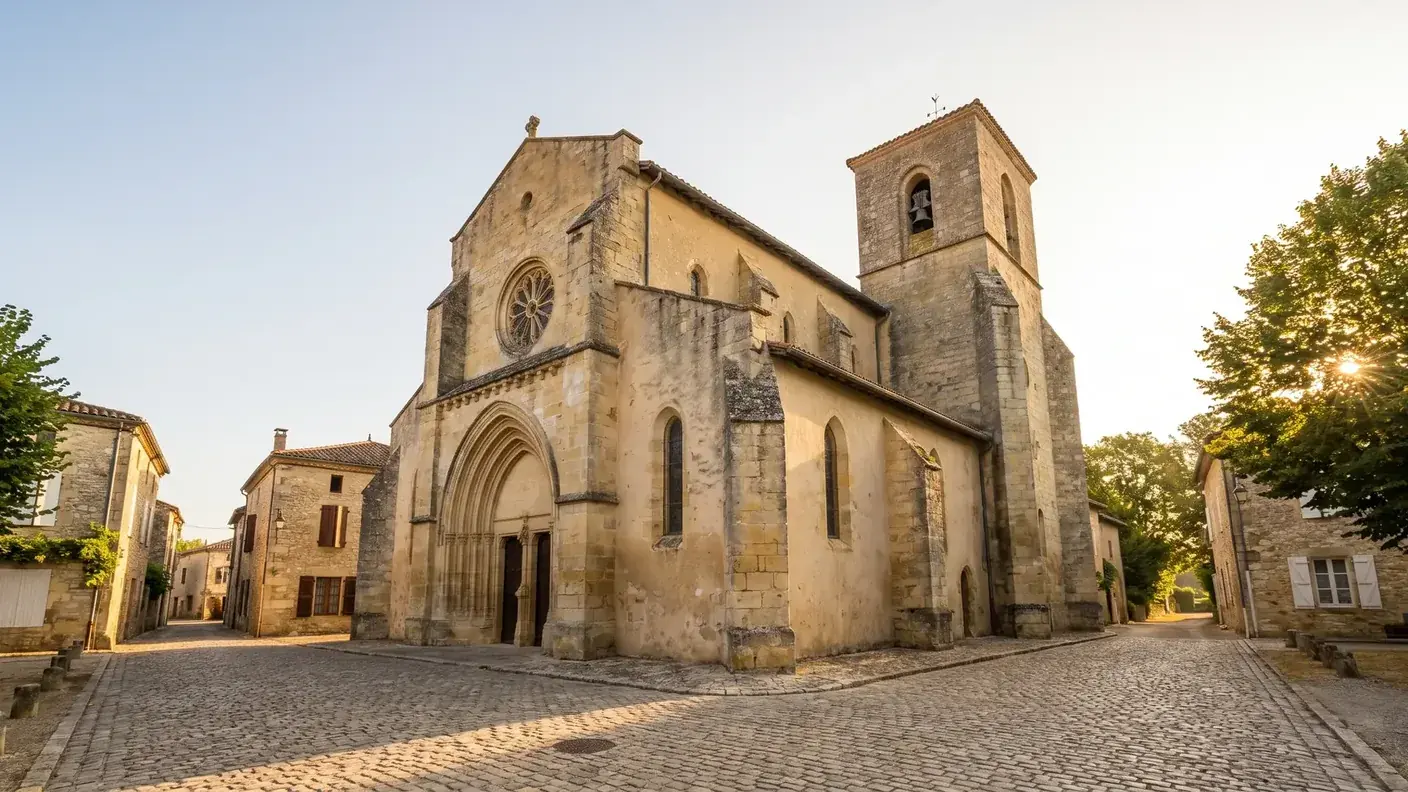
On the edge of the square stands the town’s most important monument: the Collegiate Church of Saints Philip and James. Note the name—it is sometimes referred to as “Notre-Dame,” which was actually the name of the first church on the site, dating from before 1300. The current building, however, is dedicated to the two apostles, including Saint James: a fitting patronage for a stop along the Camino de Santiago.
A project spanning three centuries
Construction of the collegiate church began around 1300 and continued for several centuries. The Mérimée database lists the 14th, 15th, and 17th centuries. From plan to three naves, partially fortified, she is Listed as a Historic Monument since July 16, 1925 [official notice].
A church that served as a refuge, scarred by wars
Like many churches in the medieval Southwest, the collegiate church was partially fortified: in a region regularly traversed by armies, the religious building also served as a last refuge for the local population. The Wars of Religion left a lasting mark: the Gothic north portal was stripped of its sculptures, which were smashed by iconoclasts. A fascinating detail that connects the site to its ancient past: the collegiate church houses a reused Gallo-Roman mosaic—a direct echo of the nearby villa at Séviac, as if the stones from the ancient site had found their way into the church. And against its south wall stands an ancient fortified city gate, also protected as a Historic Monument, a remnant of the bastide’s ramparts.
Seven churches and two hidden gems
The collegiate church is just the tip of the iceberg when it comes to the area's surprisingly rich religious heritage: the town has seven churches, dating back to the time when each hamlet had its own parish. Two of them even outrank the collegiate church in status: the churches of Genens (designated a historic monument in 1979) and Luzanet (listed in 1984) benefit from a ranking — greater protection than just registration of the town's collegiate church. A heritage paradox that rewards the curious enthusiast willing to venture outside the village to explore the countryside.
The Gallo-Roman villa at Séviac and its mosaics
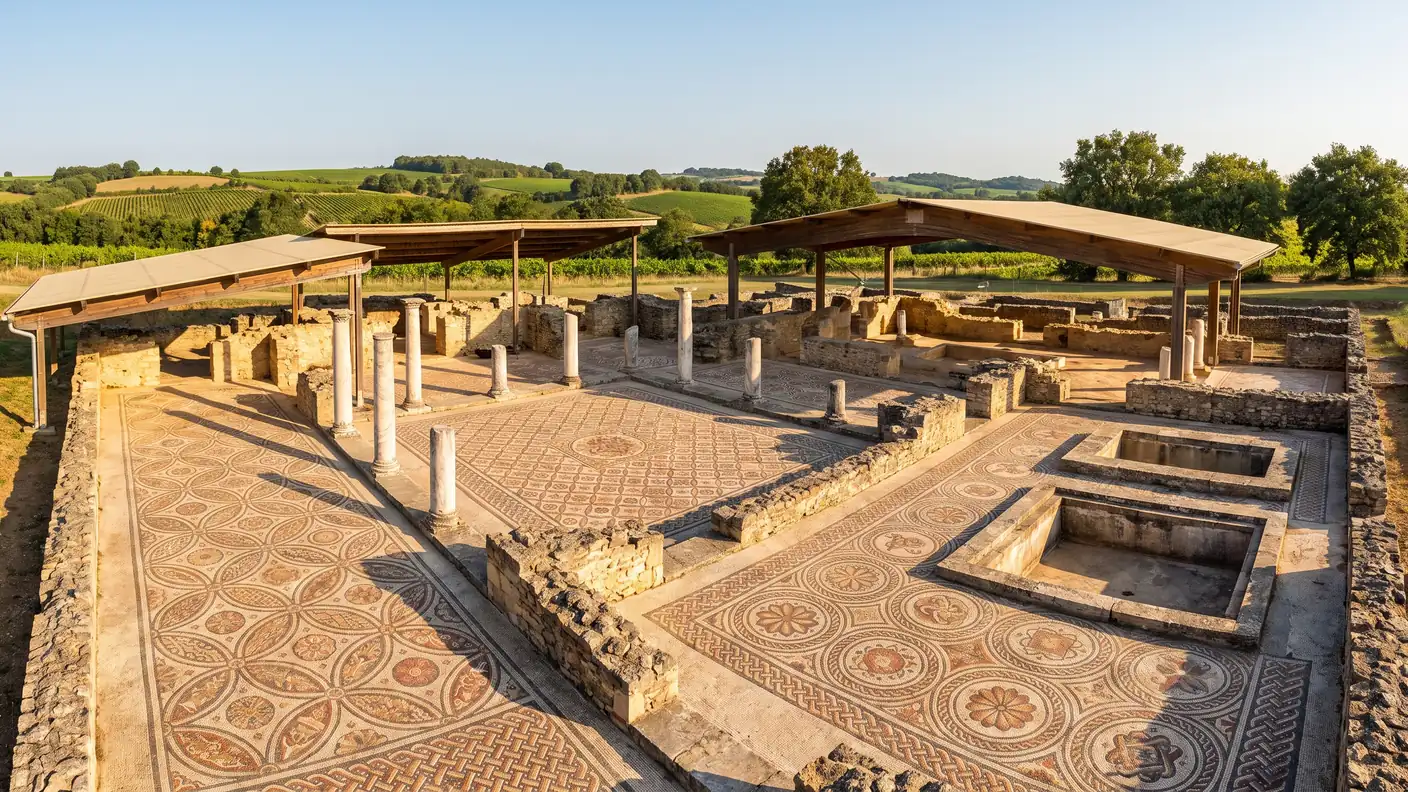
It is Montreal’s unexpected treasure, and undoubtedly its greatest surprise. About two kilometers from the town, the Gallo-Roman villa at Séviac reveals the remains of a vast ancient aristocratic residence—“one of the largest residences in southwestern Gaul,” according to archaeologists, though they refrain from using the absolute superlative.
625 m² of mosaics under glass
What makes Séviac famous are its mosaics: some 625 m² preserved in situ (out of an estimated original area of ~1,500 m²), among the largest sets preserved on site in France. Works of the Aquitaine School—an artistic hub that flourished throughout the southwestern region of Gaul in Late Antiquity—they feature interlacing patterns, rosettes, Solomon’s knots, and polychrome floral motifs of remarkable finesse—an abstract and geometric art, full of rhythm and color.
In addition to that, there are spacious private bathhouses (over 500 m²): The villa featured its own bath complex, with hot, warm, and cold rooms—a hallmark of absolute luxury among the late Gallo-Roman aristocracy. One can imagine a large agricultural and residential estate, run by a powerful family, combining land management with courtly refinement. The site's prestige phase dates from the last third of the 4th century and the first half of the 5th century — at a time when the Western Roman Empire was faltering, yet its provincial elites were still living a lavish lifestyle.
A Thousand-Year-Old Palimpsest
Séviac isn't just a villa—it's a palimpsest, which has been continuously inhabited for nearly a millennium. On the ruins of the ancient dwelling, a settlement was established in the early 6th century, an early Christian baptistery; then, from the 8th–11th centuries, a cemetery. From the Roman villa to the medieval necropolis, the soil of Séviac tells the story of Gaul’s gradual transformation into the Christian West.
The site is associated with the ancient city of Elusa—now known as Eauze—which lies about a dozen kilometers away. But Elusa was no ordinary town: it was the capital of Novempopulania, the “province of the nine peoples” established in the 4th century, which roughly corresponds to present-day Gascony. Séviac was thus part of a network of large rural estates centered around a regional metropolis—which explains the opulence of its mosaics and thermal baths. A visit to Séviac, combined with a visit to the “Eauze Treasure” (a hoard of 28,000 Gallo-Roman coins and jewels, on display at the Eauze Museum), perfectly complements the other, offering a comprehensive glimpse into the wealth of ancient Gascony.
A priest, an emperor, and an archaeologist
The villa was unearthed in the 19th century and subsequently studied by several generations of researchers. Séviac was designated a Historic Monument on March 28, 1978 [official listing]. For current visiting hours and conditions, please contact Elusa Capitale antique directly.
Visit Séviac Today
Having been exposed to the elements for a long time, the mosaics underwent an extensive conservation program. The site, which has been completely renovated, reopened to the public on June 4, 2018, under elegant contemporary shelters that protect the floors while providing visitor walkways above the mosaics—a modern museum design that has transformed the visitor experience. Séviac is now managed as part of the “Elusa, Ancient Capital” complex, which brings together the villa and the archaeological museum in Eauze (the famous “Trésor”): one ticket, two sites, to explore all of Roman Gascony. Along with the bastide, this is the main reason to visit Montréal—and a must-see for anyone interested in Late Antiquity.
The Armagnac Region: Ténarèze, Floc, and Côtes de Gascogne
It's impossible to understand Montreal without its terroir. The village is located in the heart of the Ténarèze, one of the three regions of the Armagnac AOC — including Bas-Armagnac (further west, renowned for the finesse of its brandies) and Haut-Armagnac.
Armagnac-Ténarèze: Appellation and Terroir
Montréal-du-Gers is located in the Armagnac-Ténarèze region. The profile of a brandy varies depending on the grape varieties, the distillation process, the container, and the aging period: compare the specifications of each estate rather than attributing a single style to the entire region. Production rules and designations must be verified in the current specifications prior to publication.
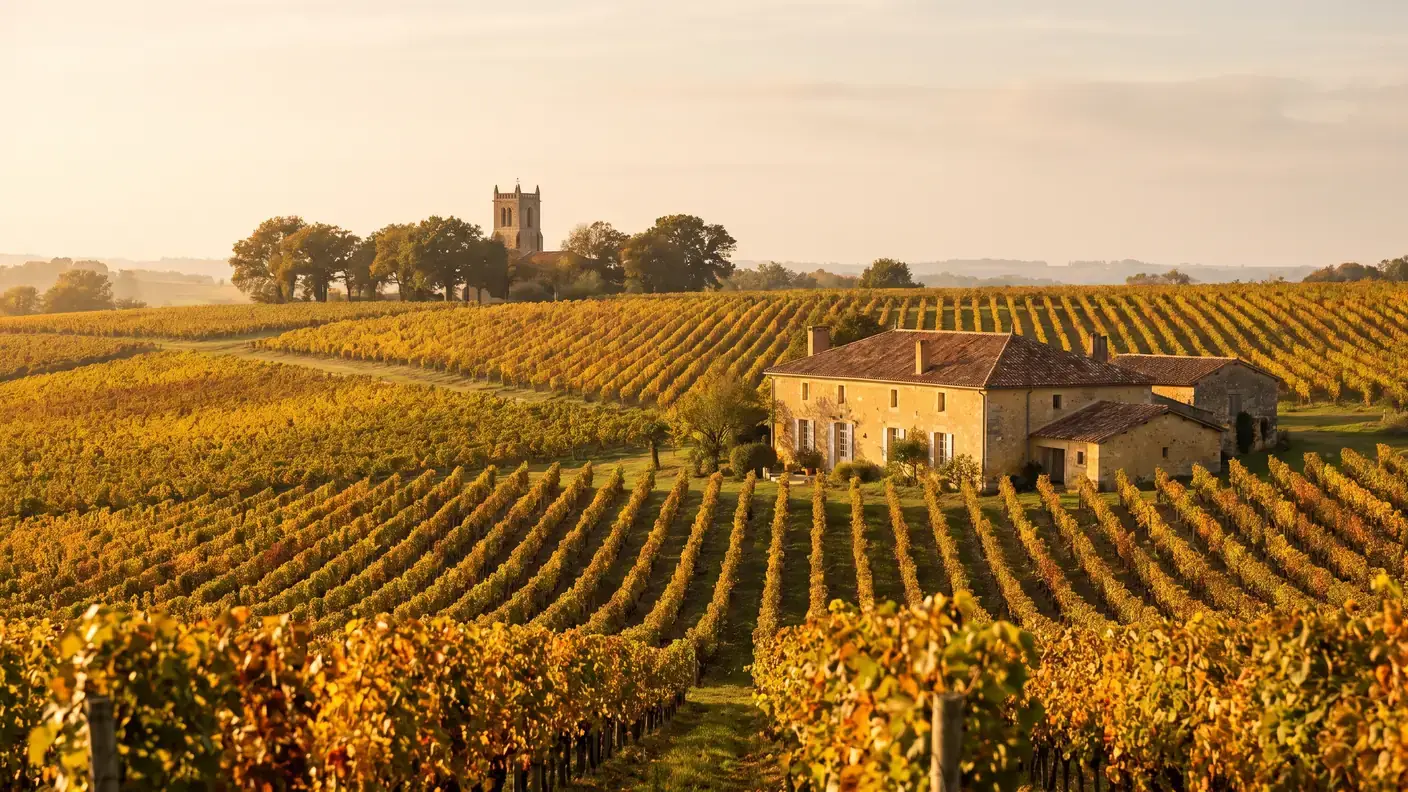
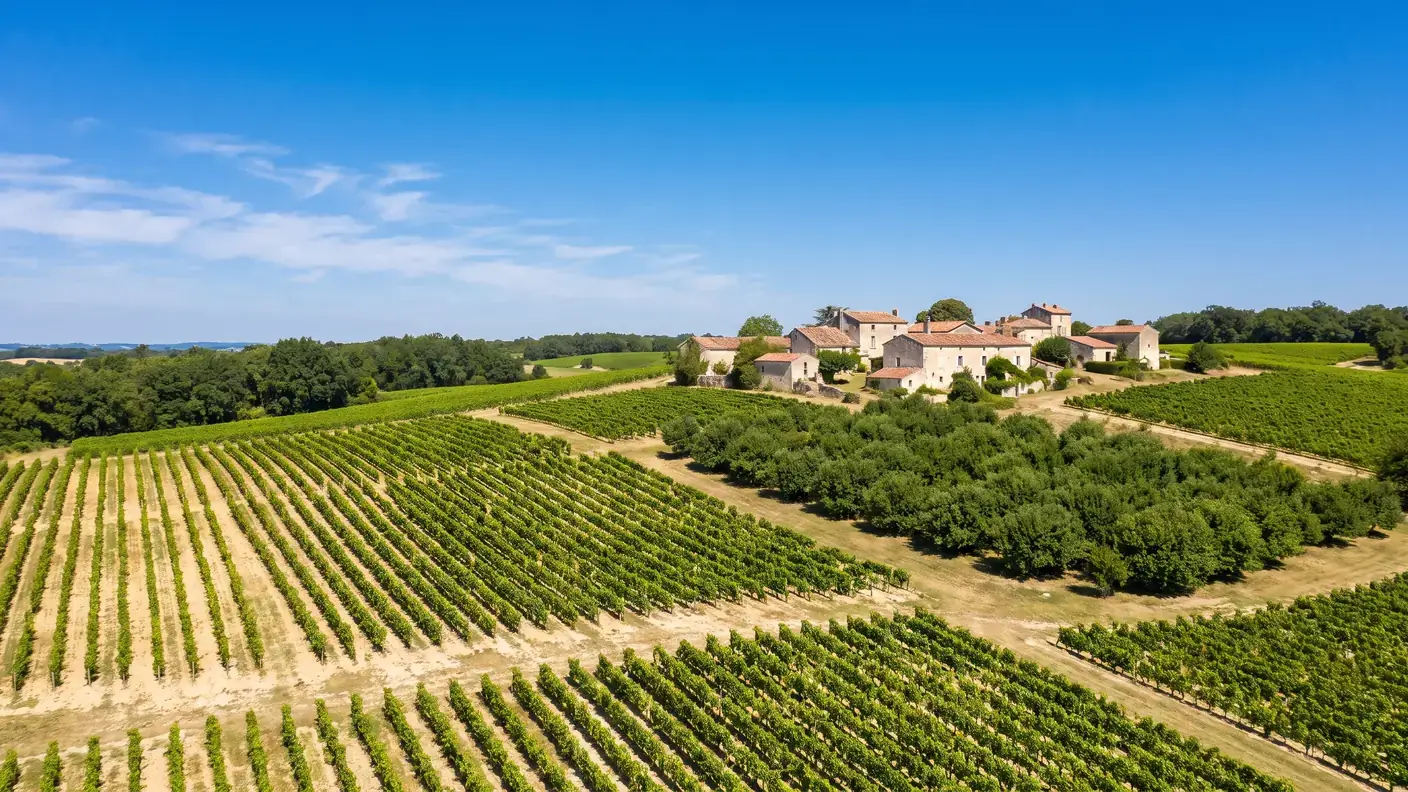
In addition to Armagnac, there are two other local specialties: Floc de Gascogne and Côtes de Gascogne. In fact, viticulture is the dominant agricultural activity in the town.
In practical terms, for visitors, this means estates and cellars open for tastings all around the village, where you can sample and purchase a vintage Armagnac, a Floc, or a Côtes de Gascogne. Many offer cellar tours with explanations of the distillation and barrel-aging processes. At the end of the year, the “Flamme de l’Armagnac”—a series of open houses at producers’ facilities during the distillation season—gives visitors the chance to watch the stills in operation, amid the steam, heat, and aromas of heated grapes.
It’s the natural next step in the tour: after the bastide and the villa, it’s time for a meal and a drink. The Gers is, in fact, one of the top destinations for Southwestern cuisine — foie gras, duck, garbure, croustade —, and Armagnac is the quintessential digestif. This is where a private chauffeur really comes into its own: it allows you to Enjoy a drink without driving and return to Bordeaux with peace of mind.
One of France's Most Beautiful Villages on the Way to Santiago de Compostela
The association "Les Plus Beaux Villages de France" has included Montréal-du-Gers in its network [official listing]. The village's charm lies in particular in the bastide's grid-like layout, its square with corner posts, and its covered walkways.
On the route from Le Puy to Santiago de Compostela
Montreal is also a stop along the Way of St. James: the village lies on the Via Podiensis (GR 65), the route from Le Puy-en-Velay, the most heavily traveled of the French pilgrimage routes. The very name of the collegiate church—Saint-Jacques—reflects this. Pilgrims and hikers thus pass through the village throughout the seasons, continuing a tradition that dates back a thousand years. This location on the GR 65 also explains the village’s vitality: lodging, overnight shelters, and small eateries line the route, sustaining a level of activity that many rural communities of this size have lost.
The best way to experience this is on foot and at a leisurely pace: stroll around the square under the arcades, linger at a sidewalk café, walk on to the collegiate church, and then head to Séviac, two kilometers away. Allow about a half-day for the village and the villa, or a full day if you include a wine tasting and a detour to the neighboring villages. Montréal has, in fact, earned three distinctions—"Most Beautiful Villages of France," Green Station and Village in Bloom—a sign of a well-maintained setting.
What is there to do in Montréal-du-Gers?
Opening hours, closing days, market hours, and admission requirements vary by season; please check with each operator before you go.
In Montréal-du-Gers, you can visit the Gallo-Roman villa in Séviac and its 625 m² of mosaics (check with Elusa for seasonal opening hours), stroll through the market (days and hours to be confirmed with city hall) under the arcades of the bastide, hike along the PR Trail No. 19 “In the Footsteps of the Romans” (route and accessibility to be confirmed with the tourist office), cycle along the Armagnac Greenway (route and accessibility to be confirmed with the tourist office), head out to Fourcès-la-Ronde (5 km) and Larressingle (9 km), and sample Ténarèze Armagnac at nearby estates. Here, in concrete terms, are the actual, verified activities for a stop in Montréal—the first bastide in the Gers proves to be a surprisingly comprehensive hub for activities, ranging from archaeology to historic villages and local specialties. In winter, the Flamme de l’Armagnac warms the region’s wine cellars.
- Visit the Séviac Villa—2 km from the town center: 625 m² of mosaics from a 4th-century residence, located within the “Elusa Capitale antique” complex; check with Elusa for seasonal opening hours
- Strolling through the market — day and hours to be confirmed with city hall
- Hike “In the Footsteps of the Romans” — PR Trail No. 19; route and accessibility to be confirmed with the tourist office
- Cycling along the Armagnac Greenway — route and accessibility to be confirmed with the tourist office
- A Tour of the Villages — Fourcès, the circular bastide (5 km, flower market on the last weekend of April), and Larressingle, the fortified town (9 km)
- Taste Armagnac from the Ténarèze region—such as at the Domaine de Magnaut in Fourcès: an “Art & Wine” tour through the vineyards, followed by a tasting at the end
- Swimming in Gondrin — Recreation Park (Summer)
Séviac and Traces of the Romans
The flagship activity remains, of course, Séviac, two kilometers from the town: the magnificent 4th-century villa and its 625 m² of mosaics, open to visitors during the season as part of the “Elusa: Ancient Capital” tour; check with Elusa for seasonal opening dates. Hikers can get information about the trail PR Trail No. 19: “In the Footsteps of the Romans”; route and accessibility to be confirmed with the tourist office. A hidden gem for the curious: the town is also home to the Béon Paleontological Site, discovered in 1987—a Miocene site dating back about 17 million years, one of the richest in Europe, whose finds are presented by the tourist office in its “Memory Factory” exhibition, across four interactive rooms.
Market, villages, and Armagnac
The market brings the square to life; dates and times are to be confirmed with city hall. Nearby, a tour of the surrounding villages is a must: Fourcès, the only circular bastide in the Gers, five kilometers away, with its famous flower market, and Larressingle, the tiny fortified town, nine kilometers away. As for local specialties, the estates of the Ténarèze region open their cellars: at the Domaine de Magnaut in Fourcès, the “Art & Wine” trail winds through the vineyards before a tasting of Armagnac and floc. In summer, the Gondrin amusement park is a possible stop; in winter, the Flamme de l’Armagnac (from October to February) opens the cellars at the foot of the still—dates vary each year depending on the estate, so check the official program.
| Activity | Where / When | Good to Know |
|---|---|---|
| Villa de Séviac | 2 km away | Please check with Elusa for seasonal opening hours |
| Market | corner space | Day and times to be confirmed with City Hall |
| Press Release No. 19: “In the Footsteps of the Romans” | Route and accessibility to be confirmed with the tourist office | |
| Armagnac Greenway | Route and accessibility to be confirmed with the tourist office | |
| Fourcès / Larressingle | 5 km / 9 km | Fourcès Flower Market |
| Swimming | Gondrin Amusement Park (summer) | Access requirements to be verified |
When to Visit Montréal-du-Gers
The Gers is worth visiting any time of year, but each season has its own charm. The spring (April–June) offers lush green countryside and villages in full bloom before the crowds arrive; summer brings sweeping sunflower fields and the evenings are long, but it’s also peak tourist season and the time of year for Gascon night markets. The fall (September–October) is undoubtedly the most beautiful time of year: the grape harvest, golden light on the vineyards, and the start of Armagnac distillation in the cellars.
| Season | Strengths | Good to Know |
|---|---|---|
| Spring | Green countryside, flower-filled villages, tranquility | Perfect for hiking and the Camino de Santiago |
| Summer | Sunflowers, night markets, outdoor cafes | High Season — Séviac and Other Busier Villages |
| Fall | Grape Harvest, Distillation, Golden Light | The Best Time for Armagnac Cellars |
| Winter | Tranquility, affordable rates, mist over the limestone plateau | Check the schedules for Séviac (seasonal) |
A practical note: the villa in Séviac is closed for part of the winter and operates on a seasonal schedule—it’s best to check before heading there. In late fall and winter, La Flamme de l’Armagnac also opens its cellars to visitors so they can watch the distillation process—an unforgettable sight and aroma. To time your day just right and travel from village to villa and on to a tasting without any stress, a professional chauffeur that takes you from door to door lets you adapt to the opening hours.
Nearby: The Best of Ténarèze
Montreal is an ideal base for exploring the Ténarèze, one of the regions of the Gers with the greatest concentration of villages and cultural heritage sites. Everything is less than half an hour away, along quiet country roads.
| Destination | Distance | Why stop there? |
|---|---|---|
| Fourcès | ~6 km | A rare circular-plan country house with a round courtyard (One of the Most Beautiful Villages) |
| Larressingle | ~12 km | "The smallest fortified town in France," a medieval castle village |
| Condom | ~16 km | Saint-Pierre Cathedral, the banks of the Baïse River, the Armagnac Museum |
| Eauze | ~15 km | Formerly Elusa, “Treasure of Eauze” (28,000 Gallo-Roman coins) |
| Flaran Abbey | ~25 km | A 12th-century Cistercian abbey, one of the best-preserved in Gascony |
The comparison with Fourcès is particularly telling: six kilometers from “square” Montreal lies “round” Montreal, one might say—since Fourcès is one of the very few circular-plan bastides in France, with its round square lined with covered arcades and its castle. Seeing both in a single day allows you to grasp the full variety of the medieval new town model: the same principle, yet two opposing geometries. Add to that Eauze and its fabulous Gallo-Roman “Treasure,” a direct echo of Séviac, and Larressingle, a tiny village entirely surrounded by ramparts, and you have an ancient-and-medieval itinerary of uncommon richness—all within a fifteen-kilometer radius.
Coming from Bordeaux: Distances and Directions
Montréal-du-Gers is a municipality rural and without a train station: The entire northwestern part of the Gers has no passenger train service (the former Eauze-Auch line is closed). From Bordeaux, allow about 149 km and 2 hours by road, through Lot-et-Garonne and the Agen region. The two nearby towns, Condom and Eauze are about 15 km away (about 15 minutes) and are home to a concentration of shops and services.
| From / To | Distance | Weather |
|---|---|---|
| Bordeaux → Montréal-du-Gers | ~149 km | ~2:00 |
| Condom | ~16 km | ~18 min |
| Eauze (formerly Elusa) | ~15 km | ~18 min |
| Agen (the most convenient TGV station) | ~56 km | ~1:00 |
| Auch (prefecture) | ~56 km | ~1:00 |
To reach a train station, there are two options that are roughly the same distance away: Auch (55.7 km) is the closest as the crow flies, but it’s a dead-end station (with only one active line toward Toulouse); Agen (56.4 km), on the Bordeaux–Toulouse TGV line, is in practice the most convenient rail gateway. In other words, regardless of your route, a car is essential to reach Montréal and, above all, to explore the Ténarèze region.
That's the whole point of the door-to-door From Bordeaux: for a day trip that takes in the bastide, the Villa de Séviac, an Armagnac cellar, and one or two nearby villages (Fourcès, Larressingle)—without having to worry about the route, parking, or driving after the tasting—a Door-to-door car service departing from Bordeaux allows you to proceed through the steps at your own pace. A fixed, written estimate is provided before departure.
Frequently Asked Questions
Where is Montréal-du-Gers located?
In the northwestern part of the Gers (32) department, in Occitanie, within the Condom district and the Ténarèze Community of Municipalities. Officially named “Montréal,” the town has the ZIP code 32250 and the INSEE code 32290. It is a village with a population of approximately 1,171, located about 149 km (2 hours) from Bordeaux, between Condom and Eauze (about 15 km from each).
Why is Montréal-du-Gers a famous bastide?
Because it is the oldest bastide in the Gers, founded on March 30, 1255, by Alphonse de Poitiers, brother of King Saint Louis. Its name means “Mont-Royal.” It retains its medieval orthogonal layout and its central square with corner posts, surrounded by covered arcades on three sides—which has earned it a place among the Most Beautiful Villages of France.
Is Montréal-du-Gers the first fortified town in Gascony?
This is a common but inaccurate assumption. Cordes-sur-Ciel, founded in 1222, predates it by thirty-three years. The correct terms are “the oldest bastide in the Gers” (Mérimée database), “one of the first Gascon bastides,” or “the first royal bastide in Gascony.” Montréal dates back to the very beginning of the bastide movement, though it does not hold the absolute record.
What is the Gallo-Roman villa at Séviac?
It is a vast ancient aristocratic residence, located about 2 km from the town of Montréal, famous for its 625 m² of polychrome mosaics preserved in situ and its extensive private baths (over 500 m²). It reached the height of its splendor during the 4th and 5th centuries. Discovered by chance in 1864 and designated a Historic Monument in 1978, it reopened to the public in 2018 under contemporary protective structures.
What is the name of the church in Montréal-du-Gers?
The town’s collegiate church is dedicated to Saints Philip and James (and not to Our Lady, the patron saint of the earlier church). Built in the Southern Gothic style, construction began around 1300 and continued through the 14th and 15th centuries; it is partially fortified and has been listed as a Historic Monument since 1925. Notably, two churches in the hamlets—Genens and Luzanet—are classified as Historic Monuments, a higher designation.
How much does a trip from Bordeaux to Montréal-du-Gers cost with a chauffeured car?
Starting at €298 for a one-way, door-to-door trip for 1 to 3 passengers (sedan) — approximate price for ~149 km and about 2 hours of driving. The exact price depends on the schedule, the vehicle (sedan or van seating up to 8 passengers), and any requested stops. A fixed, written quote is provided before departure; this is the ideal option for visiting wineries without having to drive.
What are Ténarèze and Armagnac?
Montréal-du-Gers is located in the Armagnac-Ténarèze region. The profile of a brandy varies depending on the grape varieties, the distillation process, the container, and the aging period: compare the specifications of each estate rather than attributing a single style to the entire region. Production rules and designations must be verified in the current specifications prior to publication.
Is Montréal-du-Gers on the Camino de Santiago?
Yes. The village is a stop along the Via Podiensis (GR 65), the route from Le Puy-en-Velay, the most popular of the French routes to Santiago de Compostela. The very name of the collegiate church (Saint-Jacques) is a reminder of this pilgrimage route. Pilgrims and hikers pass through the village throughout the seasons.
Is there a train station in Montréal-du-Gers?
No. The entire northwestern part of the Gers has no passenger train service (the former Eauze-Auch line is closed). The nearest train stations are Auch (~56 km, at a dead end toward Toulouse) and Agen (~56 km, on the Bordeaux-Toulouse TGV line, which is the most convenient). Therefore, you’ll need to travel by car or with an executive transfer from Bordeaux (~2 hours).
What's there to see around Montréal-du-Gers?
Fourcès (~6 km), a rare circular-plan bastide; Larressingle (~12 km), “the smallest fortified town in France”; Condom (~16 km) and its Armagnac Museum; Eauze (~15 km), formerly known as Elusa, with its Gallo-Roman hoard of 28,000 coins; and the Cistercian Abbey of Flaran (~25 km). A wealth of bastides, fortified villages, and ancient heritage.
How long does it take to visit Montréal-du-Gers?
Allow half a day to explore the bastide (with its square with corner towers and collegiate church) and the Villa de Séviac, two kilometers away. Plan for a full day if you include an Armagnac or Floc tasting at a winery and a detour to Fourcès or Larressingle. This is a destination for slow tourism, best enjoyed at a leisurely pace.
What is there to do in Montréal-du-Gers?
In practice: visit the Gallo-Roman villa in Séviac, 2 km away, with its 625 m² of mosaics (check seasonal opening hours with Elusa); stroll through the market (day and hours to be confirmed with city hall); hike along the PR No. 19 trail, “In the Footsteps of the Romans,” and bike along the Armagnac Greenway (route and accessibility to be confirmed with the tourist office); head out to Fourcès and Larressingle; explore the “Art & Wine” trail at the Magnaut estate; and visit the Gondrin amusement park. Access conditions vary by season; check with each facility’s management before you go.
Why has the population of Montréal-du-Gers declined so much?
Montréal had a population of 3,407 in 1793, its all-time high. Like the rest of rural Gascony, it has lost nearly two-thirds of its population over the past two centuries, due to agricultural mechanization and rural-to-urban migration. Since 2017, the population has stabilized at around 1,170–1,180 residents, with a very low population density of approximately 18.6 residents per square kilometer.
Further Reading
- An English-style country house in the Purple Périgord: see the Eymet Guide (arcaded square, medieval castle)
- A neighboring village in Lot-et-Garonne: see the Armillac Guide
- The Côtes de Duras vineyards, on the outskirts: see the Loubès-Bernac Guide
- Plan your trip: book a dedicated chauffeur from Bordeaux to Montréal-du-Gers or explore all our destinations
Sources and References
- INSEE — Complete Report on Montréal (32290) — Population and Territory, accessed July 24, 2026
- POP/Mérimée Database — Villa de Séviac — Listed as a Historic Monument on March 28, 1978
- POP/Mérimée Database — Montreal Collegiate Church — Church of Saints Philip and James, designated a historic monument on July 16, 1925
- Elusa, Ancient Capital — Opening Hours — Access to the Villa de Séviac, accessed July 24, 2026
- Association Les Plus Beaux Villages de France — Montréal-du-Gers — membership in the network and description of the bastide, accessed July 24, 2026
Article updated in July 2026.
Off to Ténarèze and Armagnac
Direct trip from Bordeaux (~2 hours) to Montréal-du-Gers and the Ténarèze region, with stops along the way as desired—the Villa de Séviac, Fourcès, Larressingle, and an Armagnac distillery. Fixed-price quote in writing within 30 minutes; sedan or 8-passenger van; English-speaking driver.