Bordeaux to Anglet with a Private Driver: Beaches and Surf
The large beach town in the Basque Country, located between Bayonne and Biarritz, with its eleven beaches and surfing : the Chambre d'Amour and its legend, the Pignada Forest, the Chiberta Golf Course, and the Basque way of life; just over two hours from Bordeaux.
Anglet at a Glance
Anglet is a city in the Basque Country, in the Pyrénées-Atlantiques department, on the Atlantic coast, located exactly between Bayonne and Biarritz; together with its two neighbors, it forms the “BAB” metropolitan area. Serving as a bridge between the city of Bayonne and the chic resort town of Biarritz, Anglet is first and foremost the large beach town in the area: nearly 4.5 kilometers of coastline and eleven beaches, two landmarks confirmed by the Official website for Anglet's beaches (accessed July 24, 2026). It also features the famous Chambre d'Amour, a vast pine forest and a lifestyle centered around the ocean.
Here are the key details to know before you go. Distances are calculated door-to-door from Bordeaux; the fare shown is for a chauffeur service at a fixed price provided in advance, with no unexpected meter charges regardless of traffic or stops along the way.
| Landmark | Details |
|---|---|
| Department | Pyrénées-Atlantiques (64), Nouvelle-Aquitaine |
| Basque name · demonym | Angelu · the Angloys |
| Population | approximately 43,300 residents (INSEE 2023) |
| Area | ≈ 26.85 km² · 3rd-largest city in the Pyrénées-Atlantiques department |
| Location | Basque Coast, between Bayonne and Biarritz (BAB metropolitan area) |
| Don't miss it | The beaches and surfing, the Chambre d'Amour, the Pignada Forest |
| Distance from Bordeaux | about 188 km · about 2 hours and 20 minutes by car |
| Coastline | ~4.5 km of coastline · 11 sandy beaches |
First, a word of clarification: Anglet is sometimes misunderstood, but this guide corrects that misconception with supporting sources. Anglet is a municipality in its own right, the third most populous in the department, and not just a neighborhood of Bayonne or Biarritz: it is a city in its own right, which, together with its two neighbors, forms the metropolitan area “ BAB " (Bayonne-Anglet-Biarritz). The famous lighthouse visible from its beaches, known as the Biarritz Lighthouse, stands on Pointe Saint-Martin, on the border between the two municipalities. Finally, the Chambre d'Amour is not a room, but a cave on the coast, linked to a tragic legend. Every statement in this guide is based on verifiable sources, which are cited at the end of the article.
Here’s a rundown of everything you need to know: Anglet’s location between Bayonne and Biarritz, its eleven beaches and surfing culture, the Chambre d’Amour and its legend, the Pignada Forest and the Chiberta Golf Course, the town’s heritage and churches, the coastal promenade and the Basque way of life, the town’s history, notable sites in the surrounding area, the best time of year to visit, and the easiest way to get there from Bordeaux with an executive car service, all thoroughly researched and verified.
Where is Anglet located?
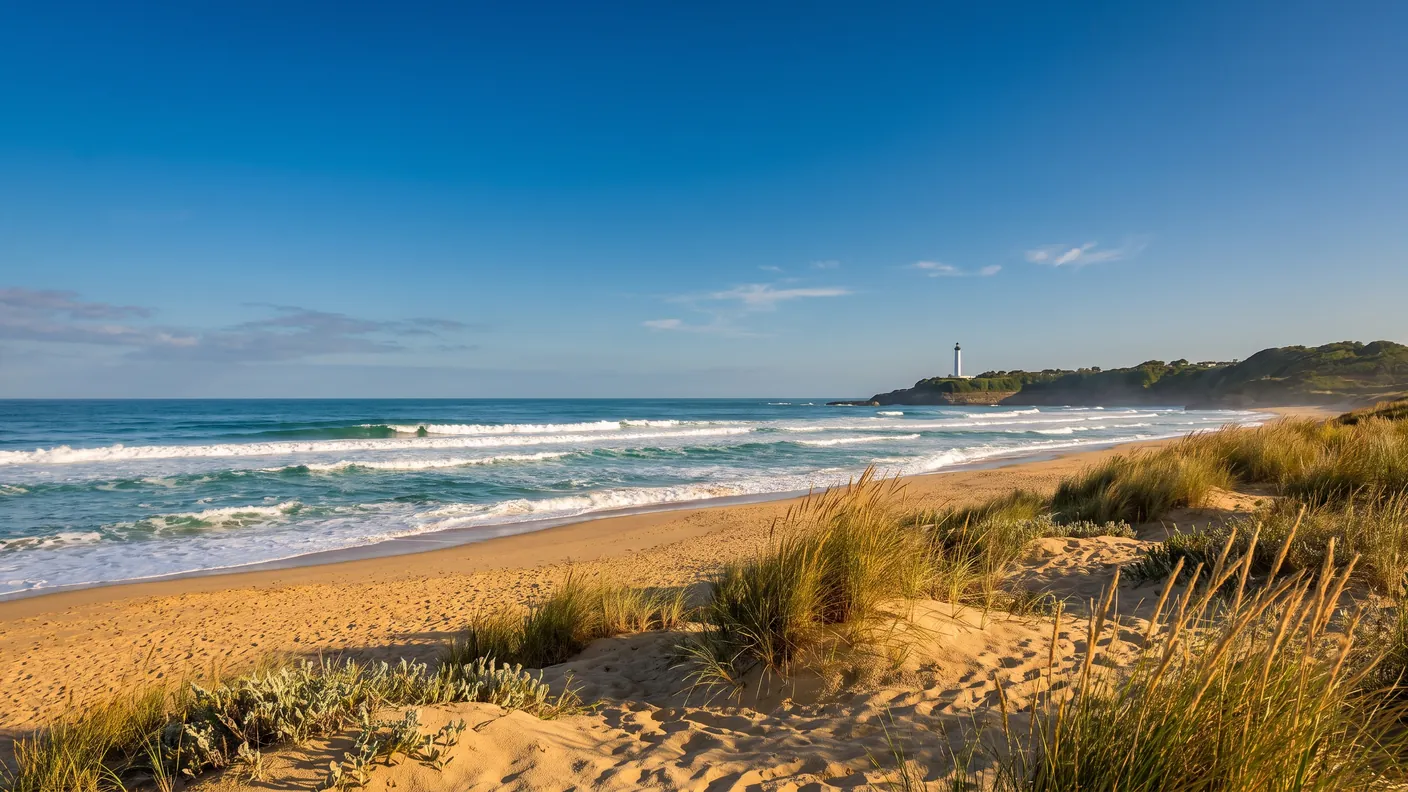
Anglet is located in the far southwest of Nouvelle-Aquitaine, in the Pyrénées-Atlantiques department (64), on the Atlantic coast, nestled between Bayonne to the northeast and Biarritz to the southwest, with which it forms the metropolitan area known as “BAB.” It is a municipality in the Bayonne district and a member of the Basque Country Urban Community, the large intermunicipal association that encompasses the entire French Basque Country. Its location is unique: Anglet stretches along the entire coastline between the mouth of the Adour River to the north and Pointe Saint-Martin to the south, offering nearly four and a half kilometers of sandy beaches opening onto the ocean. Inland, it extends over former dune and marshlands that are now urbanized and forested. A pivotal city between historic Bayonne and the seaside resort of Biarritz, Anglet is the green, maritime heart of the Basque metropolitan area, entirely oriented toward the ocean.
Between Bayonne and Biarritz, on the ocean
The defining feature of Anglet is its coastline. Over a distance of nearly four and a half kilometers, the coast features eleven beaches of golden sand, separated by rocky headlands, from north to south: from La Barre beach, near the mouth of the Adour River, all the way to the Chambre d'Amour, on the edge of Biarritz. These beaches, which open wide onto the Atlantic, are renowned for their waves and make Anglet one of the top spots for surfing in France. The rest of the city, set back from the coast, is a mix of residential neighborhoods and a large pine forest (the Pignada), a golf course, and the banks of the Adour, the coastal river that separates it from Bayonne. This combination—ocean, beaches, forest, and river—makes Anglet a surprisingly green and open city for a town of its size, where nature and sports play a central role along the waterfront.
The beach town in the Basque Country
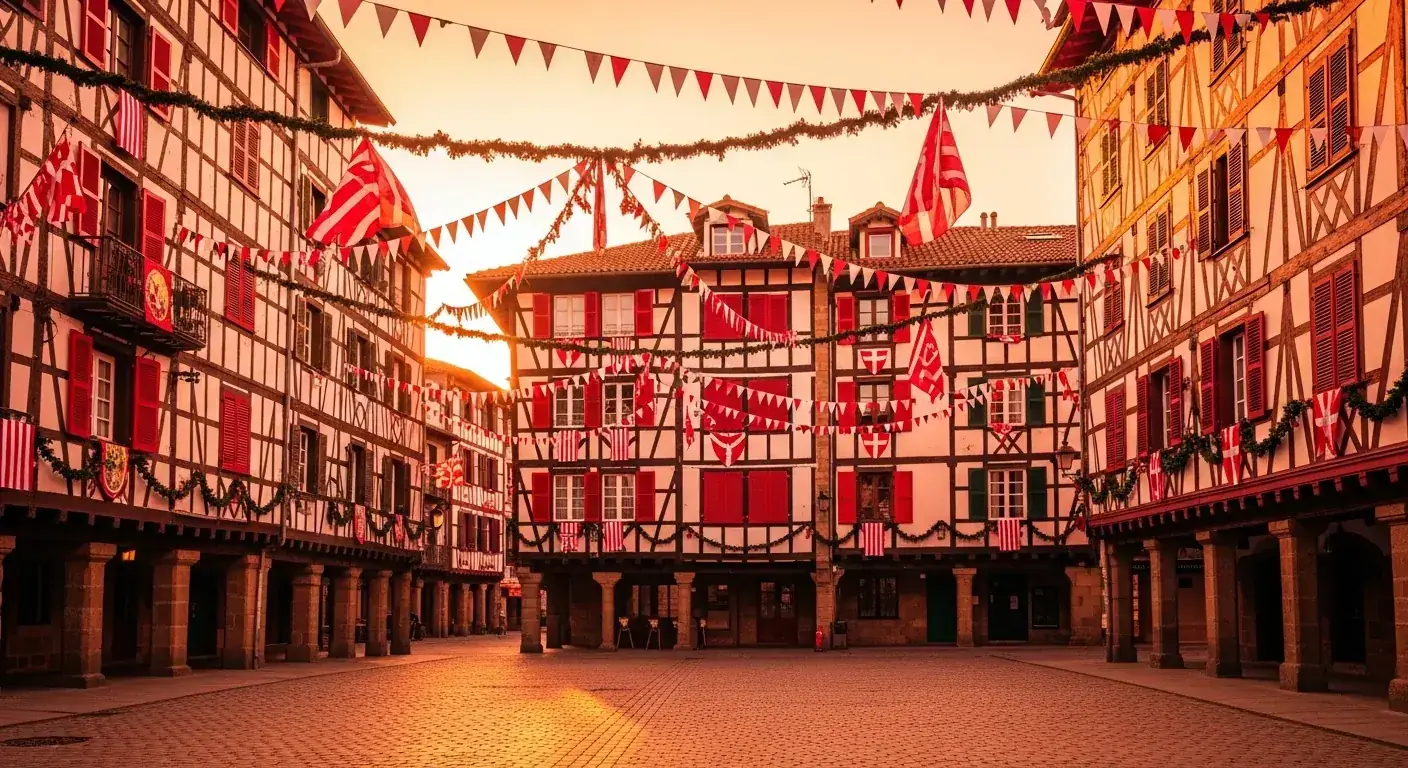
With approximately 43,300 residents in the 2023 census, Anglet is a full-fledged city, the third most populous in the Pyrénées-Atlantiques department, after Pau and Bayonne. Its residents are called the Angloys, and the town's Basque name is Angelu. Long rural in character, with barthes (wet meadows) and dunes, Anglet became a popular residential and seaside town in the 20th century, within the BAB metropolitan area. Life there revolves around the ocean and the outdoors: surfing, beaches, coastal promenade, forest, golf, thalassotherapy. More family-friendly and less glamorous than Biarritz, and less historic than Bayonne, Anglet has forged its own unique identity: that of a large yet intimate beach town, green and active, where people come to enjoy the sand, the waves, and the Basque way of life on the Atlantic coast.
The Eleven Beaches and Surfing
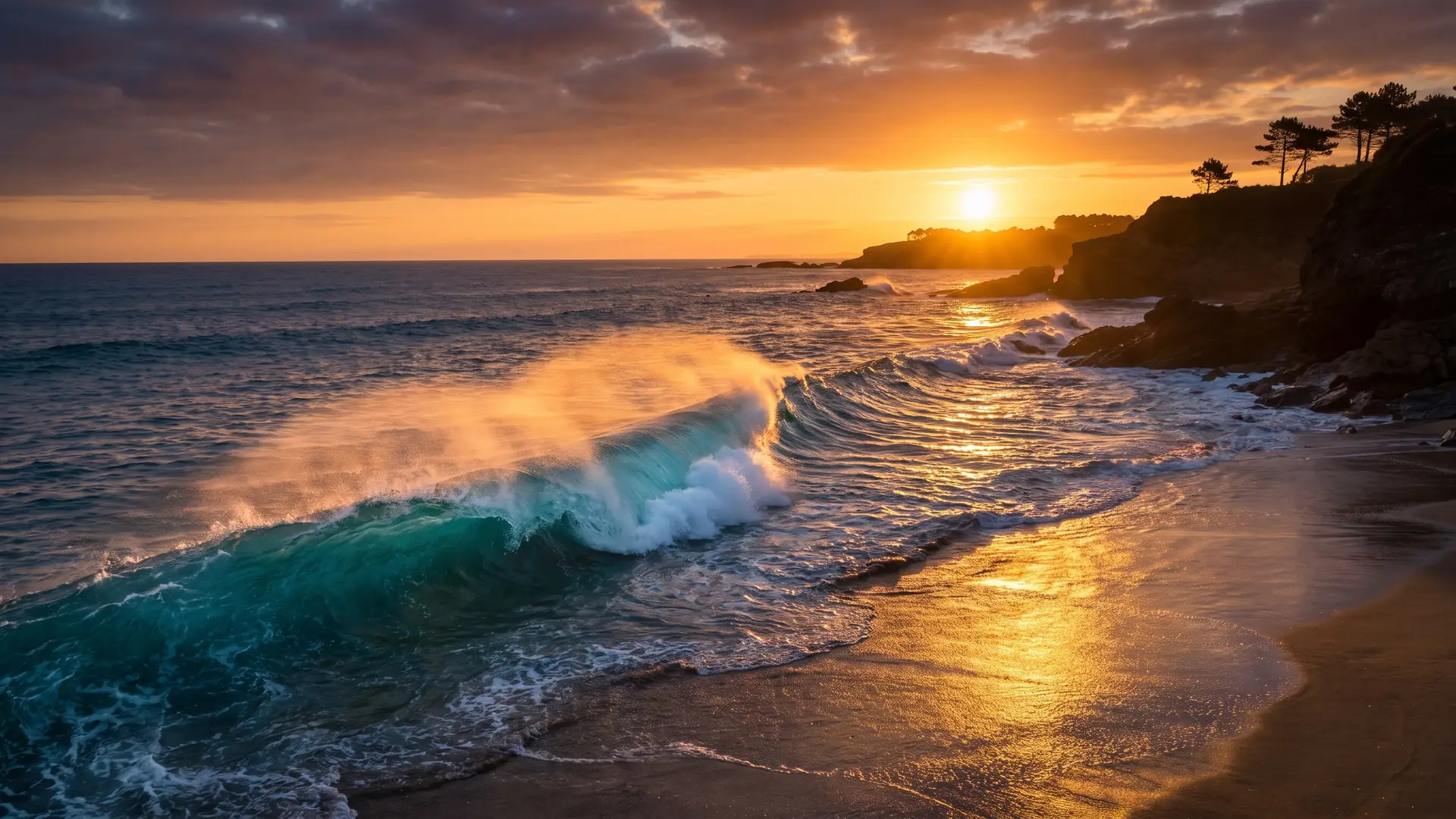
Anglet is first and foremost a beach and surfing destination: eleven golden-sand beaches stretching nearly four and a half kilometers, and waves that are among the most famous on the Basque Coast. That's the main reason to come here, for ocean lovers.
Eleven ocean beaches
The Anglet coastline features eleven sandy beaches, from north to south: La Barre, Les Cavaliers, Les Dunes, L'Océan, La Madrague, La Petite Madrague, Les Corsaires, Marinella, the Sables d'Or, the Club and the Chambre d'Amour. Separated by rocky groynes, they offer a wide variety of atmospheres: some are family-friendly and supervised during the season, while others are wilder and better suited for water sports. The golden sand, the dunes, the promenade that runs along them, and the view of the ocean make this one of the most beautiful waterfronts on the Basque coast. In summer, these beaches are lively and supervised; off-season, they offer superb walks overlooking the rolling waves of the Atlantic. It’s a vibrant and bountiful coastline, the heart of Anglet’s identity, where swimmers, surfers, strollers, and lovers of ocean sunsets come together.
A legendary surf spot
Anglet is one of the birthplaces of surfing in France. Its powerful, consistent waves make it, as the saying goes, “a world-renowned spot,” which has been attracting surfers since the 1950s and 1960s. Anglet is also home to France’s largest surf club, the Anglet Surf Club (more than 1,200 members), and regularly hosts international competitions. An entire culture has developed around surfing: surf schools, shapers, a laid-back yet athletic atmosphere, and seaside shops and cafés. Anglet pulses to the rhythm of the ocean and the swell seasons, in the “surf” spirit that originated in California and was adopted by the Basque coast as early as the 1950s and 1960s. Whether you’re a seasoned surfer, a beginner taking a lesson, or simply a spectator admiring the riders taking on the waves, you can feel the unique energy of a town facing the Atlantic. Surfing isn’t just a sport in Anglet: it’s a way of life, part of the very soul of the place.
| The Beaches of Anglet | from north to south |
|---|---|
| Toward the Adour | La Barre · Les Cavaliers · Les Dunes |
| Coastal Center | The Ocean · The Madrague · The Little Madrague |
| Toward Biarritz | Les Corsaires · Marinella · Les Sables d'Or · Le Club · Chambre d'Amour |
| Surfing | "A world-renowned surf spot" · Anglet Surf Club (1,200+ members) |
| Coastline | ~4.5 km of sand · 11 beaches |
Chambre d'Amour and the lighthouse
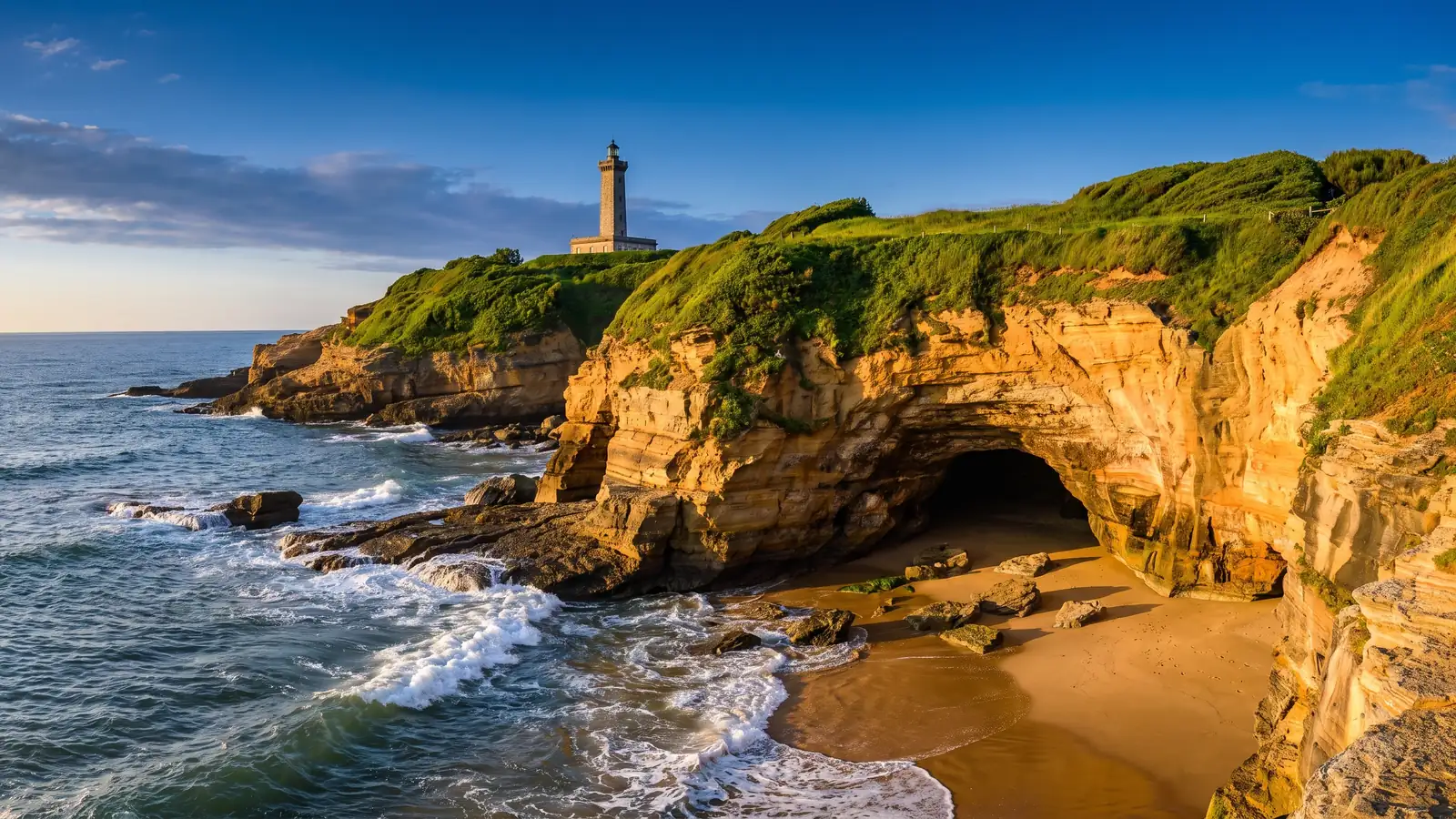
On the outskirts of Biarritz, the Chambre d'Amour is Anglet's most famous site: a coastal cave linked to a tragic love legend, overlooked by the Pointe Saint-Martin lighthouse. A place steeped in romance and untamed beauty.
A Cave and Its Legend
The Chambre d'Amour is a sea cave carved into the cliffs south of the Anglet coastline, on the border with Biarritz: it gave its name to the entire seaside neighborhood. Its name comes from a tragic and romantic legend: the story of two young lovers who met in secret in the cave in the 17th century and were reportedly caught by the rising tide and swept out to sea. This story, blending love and fate on the shores of the Atlantic, has made the place famous and fueled its romantic appeal. Today, the Chambre d’Amour is a major tourist attraction on the Basque Coast: visitors can admire the cliffs, the cave accessible at low tide, the crashing waves, and one of the most beautiful panoramic views of the ocean. It is a place for strolling and contemplation, especially at sunset, when the rugged beauty of the coast and the air of legend come together.
The Lighthouse and Pointe Saint-Martin
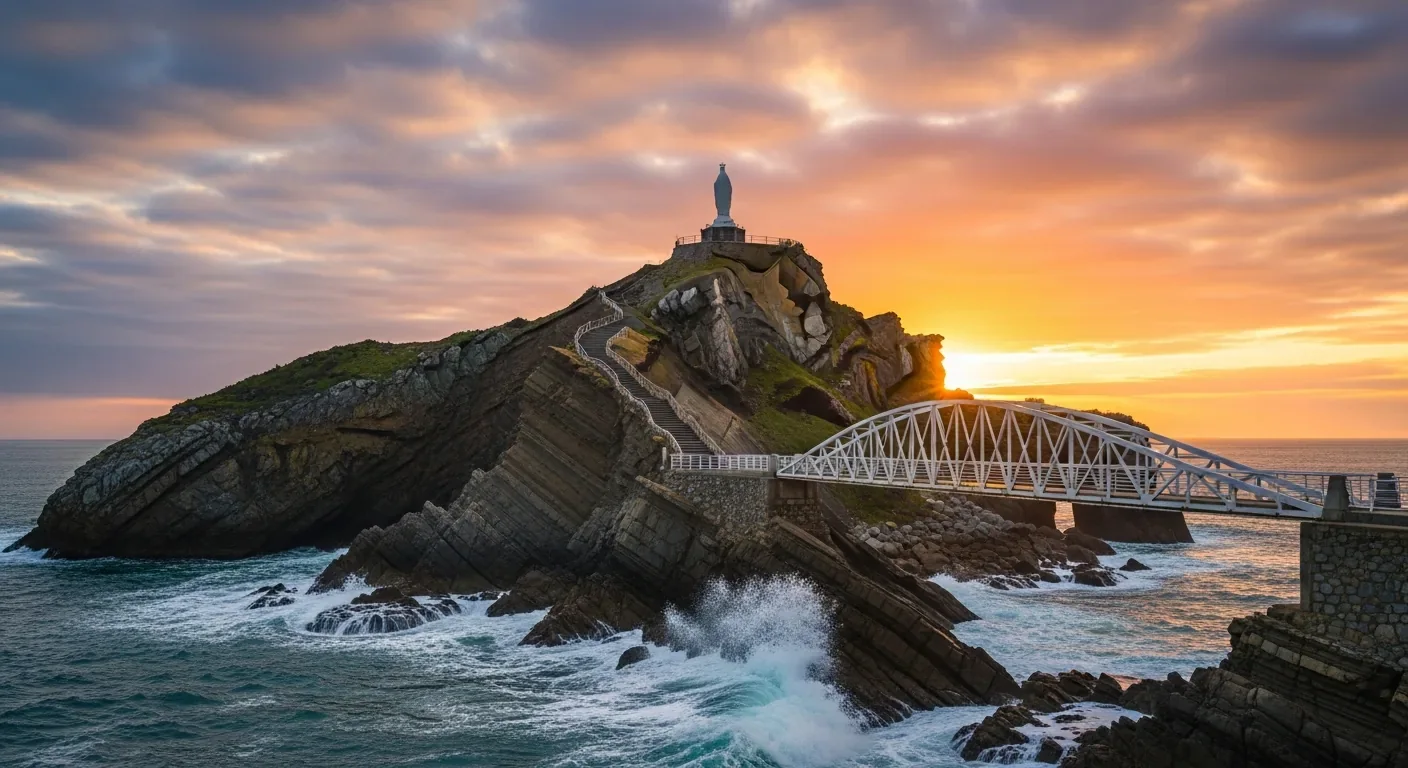
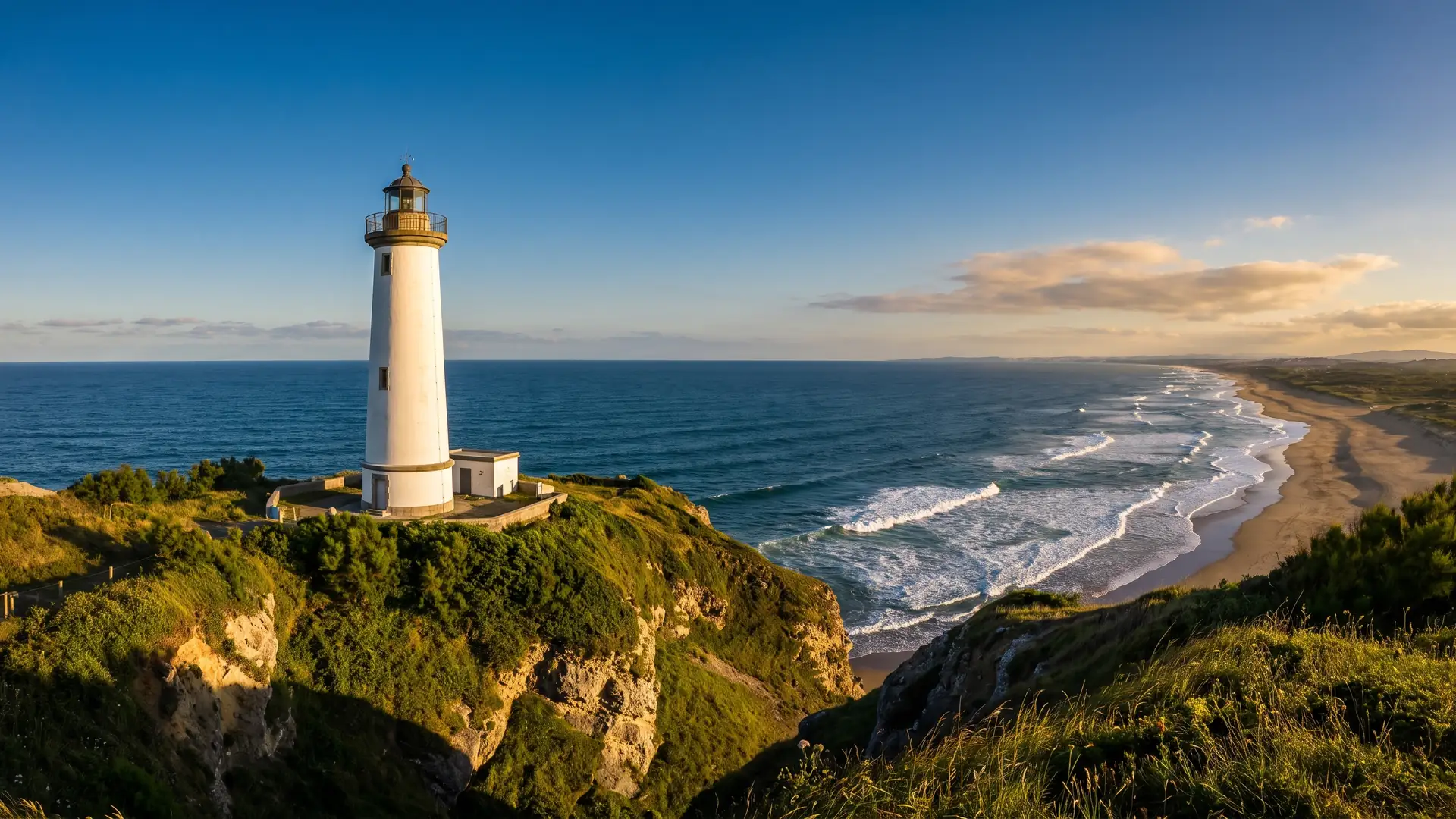
Above the Chambre d'Amour stands the famous lighthouse, known as the “Biarritz Lighthouse,” on Pointe Saint-Martin, right on the border between the two municipalities. This elegant white tower, which has guided sailors since 1834 and symbolizes the Basque coast, watches over the entrance to the Bay of Biscay; during the season, visitors can climb its steps to enjoy an exceptional panoramic view stretching from the Landes to the Basque mountains. From the beaches of Anglet, its silhouette is a familiar landmark, magnificent at sunset. The headland itself, with its cliffs, trails, and lookout points, offers one of the most beautiful coastal walks. Between the cave and its legend, the lighthouse and its panoramic view, the cliffs and the ocean, this area of the Chambre d’Amour embodies everything that makes the Basque Coast so magical: nature, beauty, history, and the open sea. It is the romantic heart of Anglet and an essential stop on any visit.
| Chambre d'Amour & the Lighthouse | Landmark |
|---|---|
| Chambre d'Amour | Coastal Cave · 17th-Century Legend |
| Location | Anglet-Biarritz border · start of the Basque Coast |
| Lighthouse (known as the Biarritz Lighthouse) | Pointe Saint-Martin · In service since 1834 |
| Panorama | from the Landes to the Basque Mountains |
| Must-See | cliffs, cave at low tide, sunset |
The Pignada Forest and Chiberta
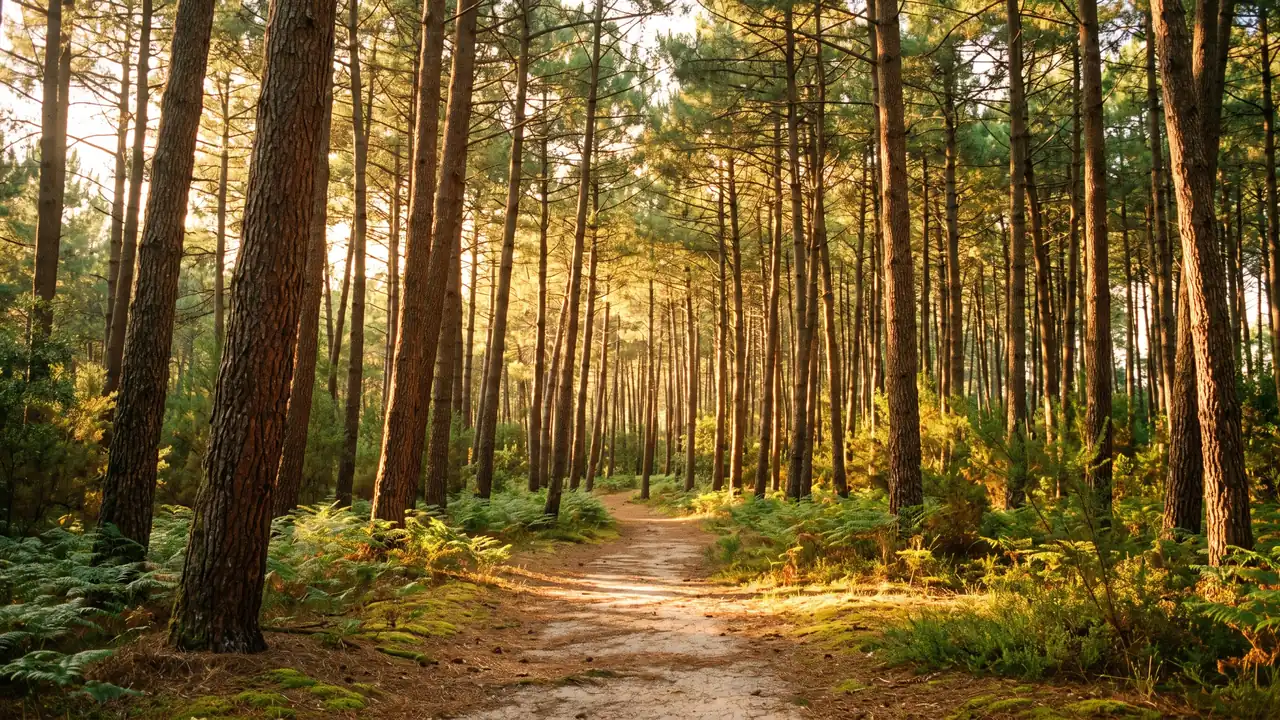
Anglet isn't just a beach town; it's also a green city, home to a vast pine forest, the Pignada, and a legendary golf course, Chiberta, nestled between the ocean and a lake. The green lung of the Basque Coast, just a stone's throw from the beach.
A pine forest on the dunes
The Pignada Forest (from pinhadar, the "pine forest" in Gascon) is one of Anglet's treasures: a vast pine forest of maritime pines, planted in the 19th century, under Napoleon III, to stabilize the dunes, as in the entire neighboring Landes forest. Over time, it has become a magnificent natural area covering approximately 300 hectares. It offers a green oasis right in the heart of the city, crisscrossed by walking trails, bike paths, and fitness trails, all in the fragrant shade of tall pine trees. It’s the perfect spot for a stroll, a jog, or a family outing, just a few minutes from the beaches. The Pignada Forest, along with the nearby Chiberta and Izadia woods, makes Anglet a surprisingly wooded and breathable town, where the nature of the Landes meets the Basque Ocean. It offers a refreshing contrast to the waterfront and is one of the reasons for Anglet’s charm.
The Chiberta Golf Course and the Lake
To the north of the city, between the ocean and a lake, lies the famous Chiberta Golf Course, one of the most beautiful and oldest courses on the Basque Coast, designed in 1927 by the British architect Tom Simpson, set against a stunning backdrop of pine trees, dunes, and water. This course, which features a mix of holes ranging from ocean links to woodland fairways, is renowned among golf enthusiasts worldwide for its layout and unique natural setting, nestled between the forest and the Atlantic. Next to it, Lake Chiberta, a former branch of the Adour River, adds a touch of peaceful natural beauty, prized by walkers and birds alike. This residential and lush green area of Chiberta, with its villas, forest, golf course, and lake, embodies another side of Anglet: that of an elegant seaside resort surrounded by nature, far from the hustle and bustle, where sports and tranquility come together amid a backdrop of pine trees and water, just a short walk from the ocean.
Anglet's Heritage and Churches
Long a rural town, Anglet has a heritage that is more understated than that of its neighbors, but nonetheless genuine: beautiful churches, seaside villas, the Château de Brindos, and, above all, an exceptional natural heritage. A unique character to discover as you explore the city.
The Churches of Sainte-Marie and Saint-Léon
Anglet has several notable churches. Sainte-Marie Church, in the Cinq-Cantons neighborhood, has been listed as a historic monument since 2015. It is the city's main protected landmark. Saint-Léon Church marks the historic and traditional center of Anglet, the heart of the old rural town before it became a popular seaside resort. These buildings, along with the chapels and religious heritage of the area, bear witness to Anglet’s ancient history, which predates its development as a tourist destination by a long time. Strolling through the old neighborhoods, away from the waterfront, allows you to discover this more intimate and traditional side of the town—that of a Basque village that has grown into a major seaside resort. This is a little-known aspect of Anglet, a town often reduced to its beaches, but which, like all towns in the Basque Country, has its own roots and heritage, set apart from the hustle and bustle of the coast.
Villas, Castles, and the Basque Lifestyle
Like the rest of the Basque coast, Anglet has preserved some beautiful beachfront villas from the 19th and 20th centuries, dating back to the golden age of seaside bathing, particularly in the residential neighborhoods of Chiberta and along the coast. The Brindos Castle, a magnificent lakeside estate that is now a luxury hotel, is one of the jewels of this exceptional heritage; the city also preserves the Beatrix Enea Villa, an elegant mansion dating from 1900 that has been converted into a municipal cultural center. But Anglet’s true treasure remains its natural heritage: the coastline, the beaches, the Pignada Forest, Lake Chiberta, and the banks of the Adour River. It is this rare blend of nature and city life, of ocean and forest, that gives Anglet its charm and appeal. Add to that the Basque way of life, gastronomy, pelota, festivals and thalassotherapy, and you have a well-rounded destination where the more understated architectural heritage takes a back seat to the beauty of the surroundings and the gentle pace of life on the Atlantic coast.
Coastal Walks and the Basque Lifestyle
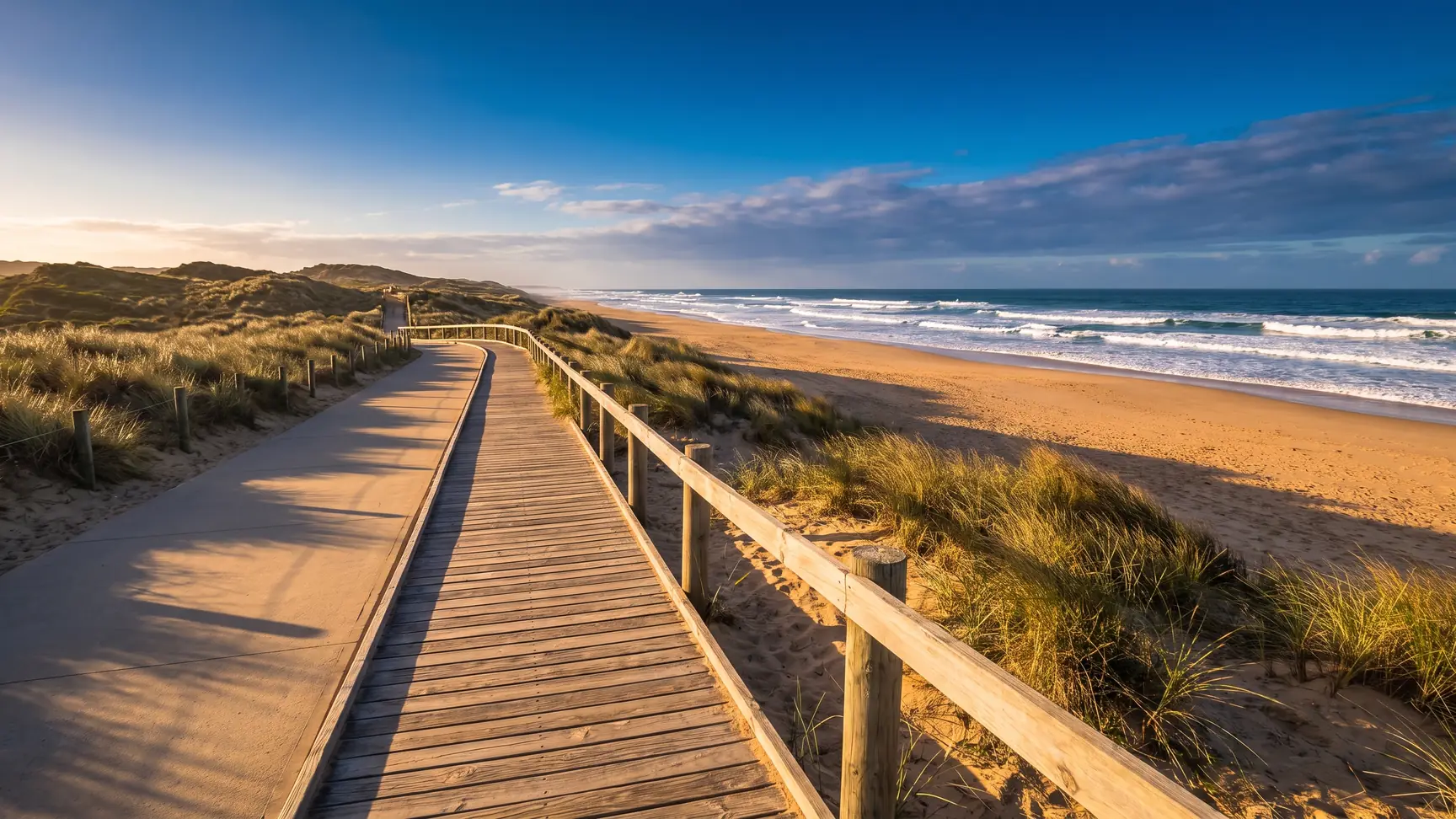
Anglet embraces a lifestyle centered on the ocean and the outdoors: a stunning coastal promenade, thalassotherapy, fine dining, and Basque traditions set the pace of life in the town. That's the joy of living on the Atlantic coast.
The Coastal Walk
One of Anglet's greatest assets is its coastal walk, a beautiful, landscaped promenade that runs along the beaches and dunes the entire length of the coast. Whether on foot, by bike, or on rollerblades, you can stroll along it facing the ocean, winding your way between the eleven beaches, with the sea breeze, the sound of the waves, and the sunsets as your backdrop. Dotted with terraces, cafés, surf schools, and scenic overlooks, this promenade is the heart of Anglet’s seaside life: here you can feel the pulse of the city at any time of day and in any season. It’s also a magnificent nature trail that highlights the beauty of the waterfront and the central role the ocean plays in Anglet’s identity. There’s nothing quite like a stroll along the water’s edge at sunset to capture the full charm of this beach town facing the Atlantic.
The Basque Way of Life
Anglet is also about the Basque way of life in a seaside setting. Thalassotherapy is a local speciality, with renowned spas that harness the benefits of seawater right by the ocean. The region's gastronomy, coastal fish, ham and cold cuts, Espelette pepper, sheep’s-milk cheeses, Basque cake and Irouléguy wines, can be enjoyed in restaurants and at markets. Basque traditions are very much alive: pelota at the trinquet and fronton, festivals, the language, and songs. Add surfing, golf, sailing, and all kinds of outdoor sports, and you’ll understand what makes life in Anglet so enjoyable: a rare balance between the ocean, nature, sports, fine dining, and culture, all bathed in the light of southwestern France. It’s a destination where people come as much for the beaches as for this way of life: Basque, seaside and oriented toward the open ocean.
The History of Anglet
From a village of beaches and dunes to a major seaside resort in the Basque Country: Anglet has undergone a spectacular transformation, shaped by the ocean and the forest. A few milestones shed light on the history of this coastal town.
Beaches, dunes, and a forest
For a long time, Anglet was a rural town, made up of barthes (wet meadows along the Adour River) and unstable dunes bordering the ocean and the moors. Its very name, Angelu in Basque and Anglet in French, reflects two forms of the same Latin root (such as castellum gave castet and gaztelu) and, according to toponymists, refers to “low-lying land”, the sandy coastal terrain on which the town is situated. The major transformation came in the 19th century, with dune stabilization through pine planting. The Pignada Forest followed the model used to reclaim the neighboring Landes region. This control over sand and water paved the way for urbanization. Like the rest of the Basque Country, Anglet lived in step with the Adour River, fishing, agriculture, and crafts, in the shadow of the mighty Bayonne. This quiet rural and maritime past is the foundation upon which today’s seaside town was built: a history of tamed dunes and planted forests by the ocean.
The Birth of a Seaside Town
It was especially in the 20th century that Anglet became the major beach town we know today. Driven by the boom in sea bathing and tourism along the Basque Coast, following in the footsteps of Biarritz under Empress Eugénie, and then by the rise of surfing, following the trend that originated in California in the 1950s and 1960s, Anglet developed its beaches, boardwalk, amenities, and residential neighborhoods. The city urbanized rapidly while preserving its vast natural spaces, forests, dunes and a lake, which today give it its unique character. As part of the metropolitan area BAB (Bayonne-Anglet-Biarritz), it has become a vibrant and sought-after municipality, serving as a residential, sports, and tourist destination. From a region of barren lands and dunes, Anglet has transformed itself into a leading green seaside city, without ever turning its back on the ocean that has shaped its history and identity.
What is there to see around Anglet?
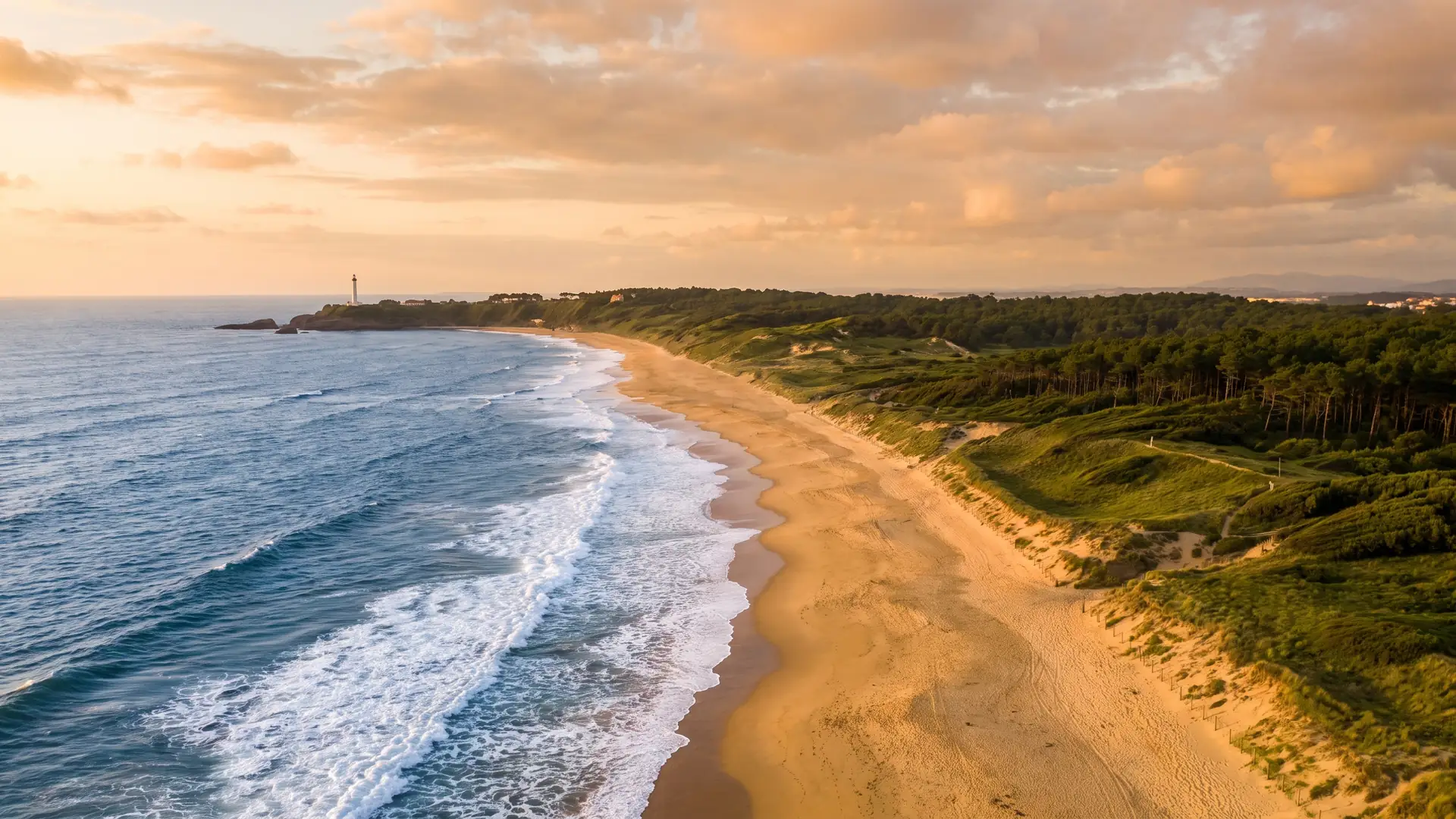
Anglet is the perfect base for exploring the entire Basque Coast: Bayonne, Biarritz, Saint-Jean-de-Luz, and even nearby Spain are just a few minutes away. The most beautiful sites in the Basque Country are within easy reach.
Bayonne, Biarritz, and the BAB
Anglet's two immediate neighbors are must-see destinations. Bayonne, to the north, is the historic and cultural capital of the French Basque Country: its cathedral, its Vauban ramparts, its half-timbered houses, its ham and chocolate, and its famous festivals make it a magnificent city, just a few minutes away. Biarritz, to the south, is the chic and legendary seaside resort, developed in the 19th century: its Rocher de la Vierge, its Grande Plage, its villas, its casino, and its elegant atmosphere make it the other jewel of the coast. Anglet, situated between the two, serves as the natural link in this “BAB” trio, which is easy to explore. An executive car service makes it easy to explore the three towns and their attractions without worrying about parking, which is often difficult on the Basque coast during peak season. This is one of Anglet’s greatest assets: its location right in the center of the Basque metropolitan area.
The Basque Coast and Spain
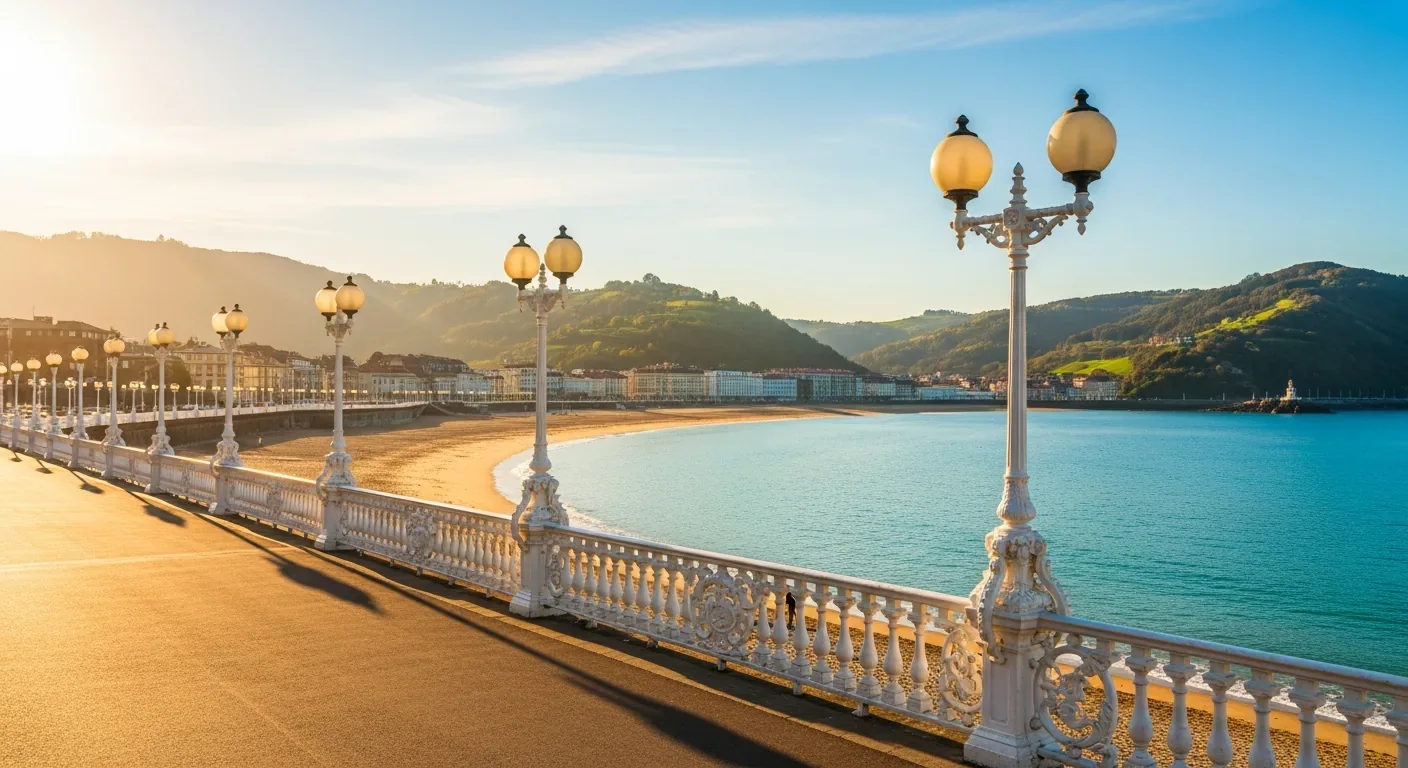
Beyond the BAB, the entire Basque Coast can be explored from Anglet. To the south, Saint-Jean-de-Luz and its bay, Guéthary, Bidart, then Hendaye and the Spanish border; beyond that, the Basque region of Spain, with San Sebastián (Donostia), La Concha Bay and its pintxos, and Bilbao and its Guggenheim Museum are between one and two hours away, depending on the destination. Further inland, the Basque Country of villages such as Espelette, Ainhoa and Saint-Jean-Pied-de-Port, together with the surrounding mountains, completes the picture. Anglet is thus the ideal gateway to this exceptional region, nestled between the ocean, the mountains, and two countries. With a driver to take you between these stops, you can easily turn a stay in Anglet into a tailor-made tour of the Basque Coast and its treasures, on both sides of the border, at your own pace.
| Around Anglet | Distance | Interest |
|---|---|---|
| Bayonne | ~5 km | Cathedral, Vauban ramparts, ham, chocolate |
| Biarritz | ~4 km | Rocher de la Vierge, Grande Plage, villas |
| Saint-Jean-de-Luz | ~20 km | Bay, harbor, Basque resort |
| San Sebastián (Spain) | ~50 km | La Concha, pintxos, cuisine |
| Bilbao (Spain) | ~150 km | Guggenheim Museum |
When is the best time to visit Anglet?
Anglet is a great place to visit year-round, but summer—for the beaches—and fall—for the waves and mild weather—are the most popular times to visit. Summer is the height of beach season: all eleven beaches are supervised and bustling with activity, the water is warm, the coastal promenade is teeming with people, and the town comes alive with swimming, surfing, and evenings by the ocean. It’s the perfect season to enjoy the sand and the sea, but it’s also the busiest time of year along the entire Basque coast. The spring and early fall offer an appealing alternative: mild, sunny days, quieter beaches, stunning natural scenery, and often great waves for surfers. The light in the Southwest is magnificent, and the atmosphere is more peaceful than in the height of summer. These are perfect seasons for walking, sports, and exploring, all in the mild Basque climate.
Autumn Surf and Winter Storms
Fall is particularly popular with surfers: Atlantic swells return, the water remains warm, and the beaches—now empty of summer crowds—offer superb conditions bathed in golden light. It’s also a wonderful time for walks along the coast and through the Pignada Forest, ablaze with fall colors. Winter, which is quieter and sometimes windy, reveals the rugged beauty of the coast: ocean storms, high tides, and spectacular waves crashing against the breakwaters and cliffs of the Chambre d’Amour offer a breathtaking spectacle, while thalassotherapy—very popular during this season—invites you to unwind. In any season, the mild Basque oceanic climate, the beauty of the coastline, and the relaxed Basque lifestyle make Anglet an invigorating and rejuvenating getaway, nestled between the ocean, the forest, and the mountains, just over two hours from Bordeaux.
Getting to Anglet from Bordeaux
Anglet is located about 188 km from Bordeaux, which is about a 2-hour-and-20-minute drive via the A63 highway, which runs through the Landes region to the Basque Coast (Exit 5, Anglet). Please note: Anglet is served by the train station at Bayonne, located nearby on the Bordeaux–Hendaye–Spain line, and the airport in Biarritz–Basque Country Airport. Despite its name, two-thirds of its facilities are located within Anglet. But once you’re there, the train doesn’t make it easy to get around between the beaches, the forest, and the sites along the Basque coast, which are scattered throughout the metropolitan area. For a visit from Bordeaux—to enjoy the beaches, take walks, and explore the BAB—a car with a driver is the most practical and flexible option—especially since parking is often difficult along the coast during the high season.
Train or chauffeured transfer?
To get to Anglet, and especially to explore the entire Basque coast, a private driver from Bordeaux offers true freedom: a direct, door-to-door trip from Bordeaux, with no transfers or waiting, and the option to stop wherever you like along the way. This is especially valuable for a day trip or weekend getaway combining the beaches of Anglet, Bayonne, and Biarritz with the Basque villages, where you’ll want to be able to get around and park without any hassle. We offer this route at fixed price provided in advance: allow about 365 € for the one-way trip, in a Mercedes sedan or a van seating up to 8 passengers, with a professional driver. The price, set at the time of booking, remains fixed: it does not depend on traffic, potential traffic jams, or the number of stops requested along the way, unlike a taxi meter.
This is the perfect option for a family beach vacation, a surfing weekend with friends, an event (wedding, bachelor or bachelorette party on the Basque Coast), or a simple transfer to or from the Bordeaux-Mérignac or Biarritz airports. You can travel alone, as a couple, or in a small group of up to 8 people, with luggage and surfboards, and request stops in Bayonne, Biarritz, or a village along the way. In practice, booking is quick and easy: you simply provide the pickup address in Bordeaux and the drop-off location in Anglet, along with the date, desired time, and number of passengers, and you’ll receive a fixed-price quote in writing. On the day of the trip, the driver picks up the passengers at the agreed-upon address and takes them directly to Anglet, without any detours—a real plus for starting your stay on the Basque Coast with peace of mind.
| Route | Distance | Duration | Fare / destination |
|---|---|---|---|
| Bordeaux → Anglet | ~188 km | ~2 hours 20 minutes | Starting at ~€317 for a private chauffeur service |
| Anglet → Bayonne | ~5 km | ~12 min | capital of the Basque Country |
| Anglet → Biarritz | ~4 km | ~10 min | chic seaside resort |
| Anglet → Saint-Jean-de-Luz | ~20 km | ~25 min | bay and Basque port |
Whether you come for the eleven beaches and surfing, for the Chambre d’Amour and its legend, for the Pignada Forest and the Chiberta Golf Course, or for the Basque way of life by the ocean, Anglet is a delight for lovers of beaches, nature, and the great outdoors: a large, green, and active beach town in the heart of the Basque coast, between Bayonne and Biarritz, which has managed to preserve its maritime spirit and relaxed way of life overlooking the Atlantic.
Whether it's for a beach vacation, a surfing weekend, or an event, booking a private chauffeur guarantees a comfortable, punctual ride. Book a driver from Bordeaux to Anglet or explore all our destinations.
Frequently Asked Questions
Where is Anglet located?
Anglet is a city in the Basque Country, in the Pyrénées-Atlantiques department (64), in the Nouvelle-Aquitaine region, on the Atlantic coast, located exactly between Bayonne to the northeast and Biarritz to the southwest; together with these two cities, it forms the “BAB” metropolitan area. Part of the Bayonne district and the Basque Country Urban Community, it has a population of approximately 43,300 (known as Angloys, or Angelu in Basque) and stretches along nearly 4.5 km of coastline. Famous for its beaches and surfing, it is about a 2-hour-and-20-minute drive from Bordeaux (approximately 188 km).
How far is it from Bordeaux to Anglet?
About 188 km by road, or about 2 hours and 20 minutes, via the A63 highway, which runs through the Landes region to the Basque Coast. With a chauffeur service from Bordeaux, the fare is fixed and provided in advance, starting at approximately €365 one way (sedan or van, door-to-door price). Anglet is served by the nearby Bayonne train station, and Biarritz-Pays Basque Airport is partially located within its boundaries; however, the train does not allow for easy travel between the beaches and coastal attractions, which are often best explored with a driver.
How many beaches are there in Anglet?
Anglet has eleven golden-sand beaches, spread out along nearly 4.5 kilometers of coastline and separated by rocky groynes. From north to south, they are: La Barre, Les Cavaliers, Les Dunes, L’Océan, La Madrague, La Petite Madrague, Les Corsaires, Marinella, Les Sables d’Or, Le Club, and La Chambre d’Amour. Some are family-friendly and lifeguarded during the season, while others are wilder and better suited for water sports. These beaches, which open widely onto the Atlantic, are renowned for their waves and make Anglet one of France’s premier surfing destinations, particularly at the spots known as La Barre and Les Cavaliers.
What is the Chambre d'Amour in Anglet?
The Chambre d'Amour is a sea cave carved into the cliffs along the Anglet coastline, on the border with Biarritz, which gave its name to the entire seaside neighborhood. Its name comes from a tragic legend: that of two young lovers who, while meeting secretly in the cave in the 17th century, were reportedly caught by the rising tide and swept out to sea. Today, it is a major tourist attraction on the Basque Coast: visitors can admire the cliffs, the cave at low tide, the waves, and a superb panoramic view of the ocean, dominated by the Pointe Saint-Martin lighthouse. It is a romantic and untamed place, magnificent at sunset.
Can you surf in Anglet?
Yes, Anglet is one of the birthplaces and hotspots of surfing in France. Its eleven beaches, which open wide onto the Atlantic, offer powerful, consistent waves that have been attracting surfers since the 1950s and 1960s. The spots at La Barre and Les Cavaliers are particularly well-known, with the latter having hosted international competitions. A whole surfing culture has developed here: schools for beginners, board shapers, shops, and a laid-back seaside atmosphere. Whether you’re an experienced surfer, a beginner taking a lesson, or just a spectator, in Anglet you can feel the unique energy of a town focused on the ocean and water sports.
What is the Pignada Forest?
The Pignada Forest (from “pinhadar,” meaning “pine forest” in Gascon) is a vast maritime pine forest located in Anglet, planted in the 19th century under Napoleon III to stabilize the dunes. Now a magnificent natural area covering about 300 hectares, it serves as a green lung in the heart of the city, crisscrossed by walking trails, bike paths, and fitness trails. Together with the nearby Chiberta Forest, it makes Anglet a surprisingly wooded city, where the natural landscape of the Landes meets the Basque Ocean. It’s an ideal spot for a stroll, a jog, or a family outing, just a few minutes from the beaches.
Is Anglet a city or a neighborhood of Biarritz?
Anglet is a municipality and a city in its own right, not a neighborhood of Bayonne or Biarritz. In fact, it is the third-most populous city in the Pyrénées-Atlantiques department, with approximately 43,300 residents, after Pau and Bayonne. Together with its two neighbors, it forms the “BAB” (Bayonne-Anglet-Biarritz) metropolitan area, a continuous urban zone along the Basque coast, though each retains its own identity and local government. Anglet has its own distinct character: that of a large beach town—green and active, more family-oriented than Biarritz and less historic than Bayonne—focused on the ocean, the beaches, surfing, and nature.
What to See in Anglet?
The eleven beaches and the boardwalk, first and foremost, for swimming, surfing, and strolling. The Chambre d’Amour, a legendary coastal cave, and the Pointe Saint-Martin lighthouse, which offers a superb panoramic view. The Pignada Forest, a vast pine forest perfect for walks, and the Chiberta area, with its legendary golf course and lake. The coastal promenade, which runs along the beaches for kilometers. The churches of Sainte-Marie and Saint-Léon, and Brindos Castle. And, of course, the Basque way of life: fine dining, thalassotherapy, and pelota. Nearby: Bayonne, Biarritz, and the entire Basque coast.
What is there to see around Anglet?
Anglet is ideally located for exploring the entire Basque coast. Its two immediate neighbors are must-see destinations: Bayonne, the historic capital of the Basque Country (cathedral, ramparts, ham, chocolate), and Biarritz, the chic resort town (Rocher de la Vierge, Grande Plage). To the south: Saint-Jean-de-Luz, Guéthary, Bidart, then Hendaye and the border; beyond that, the Basque Country in Spain with San Sebastián and Bilbao (Guggenheim). Inland, the Basque villages (Espelette, Ainhoa) and the mountains. Anglet is the ideal gateway to this exceptional region, nestled between the ocean, the mountains, and two countries—and easy to explore with a driver.
Is Anglet a great surfing destination?
Yes, Anglet is one of France's top surfing destinations, often described as a "world-renowned spot." Its eleven beaches, which open wide onto the Atlantic, offer powerful, consistent waves that have been attracting surfers since the 1950s and 1960s. The city is home to France’s largest surf club, the Anglet Surf Club (with over 1,200 members), which has trained several champions and regularly hosts international competitions. An entire surf industry has developed there, particularly around the Olatu Leku business center (“the place of the wave” in Basque). In Anglet, surfing is a true way of life.
Can I book a private chauffeur from Bordeaux to Anglet?
Yes. We offer the Bordeaux → Anglet route (approximately 188 km, about 2 hours and 20 minutes via the A63) at a fixed price, starting at approximately €365 one-way, in a Mercedes sedan or a van seating up to 8 passengers, with a professional driver. The trip is direct, door-to-door, with flexible stops—ideal for a beach vacation, a surfing weekend, or exploring the Basque Coast (Anglet, Bayonne, Biarritz, the villages), where you’ll want to be able to get around and park without any hassle, since parking can be difficult along the coast during peak season. You can bring luggage and surfboards. The fixed quote is provided and confirmed in writing before departure.
Further Reading
- The capital of the Basque Country: see the Bayonne guide (cathedral, Vauban ramparts, ham, chocolate), 5 km away
- The chic resort next door: see the Biarritz guide (Rocher de la Vierge, Grande Plage, surfing), 4 km away
- Basque Country, Spain: see the San Sebastián Guide (La Concha, pintxos, cuisine)
- Plan the journey: check the Bordeaux to Anglet route and its fixed fare, then Submit the reservation request.
Sources and References
- Wikipedia — Anglet — geography, demographics, beaches, Pignada, history
- Wikipedia — Chambre d'Amour — cave, legend, Anglet beach district
- Wikipedia — Biarritz Lighthouse — Pointe Saint-Martin, on the border between Anglet and Biarritz
- Golf de Chiberta — official website — Anglet's historic links course
- INSEE — Municipality of Anglet (64024) — Population in 2023 (~43,300), area
Article updated in July 2026.