Bordeaux to Annepont with a Private Driver: Saintonge Guide
A Romanesque church listed as a historic landmark since 1907, a village with fewer than 400 residents and two protected monuments, and the Battle of Saint Louis just three kilometers away. Nestled in the Charente Valley, in Saintonge, Annepont is a peaceful retreat in the heart of a region steeped in cognac and history—just 1 hour and 40 minutes from Bordeaux.
Annepont at a Glance
Annepont is a small village in Charente-Maritime, in Saintonge, tucked away from the main roads in the Charente Valley. It has fewer than 400 residents yet two protected monuments: the Romanesque Church of Saint-André, listed as a Historic Monument in 1907, and the Logis de Maine-Moreau. The surrounding countryside belongs to the Fins Bois Cognac cru. Just three kilometres away lies Taillebourg, where Saint Louis fought a battle in 1242 that Delacroix later immortalised. Twenty minutes away are the Royal Abbey of Saint-Jean-d’Angély, part of a UNESCO World Heritage site, and the Roman town of Saintes. This guide offers an honest overview of Annepont and its immediate surroundings; every fact has been checked against the official sources listed at the end of the article. Allow for about 139 km from Bordeaux and 1 hour 40 minutes via the A10, with a chauffeured transfer from €218, door-to-door.
| Landmark | Details |
|---|---|
| Department | Charente-Maritime (17) · Nouvelle-Aquitaine |
| Status | Village of Les Vals de Saintonge · Saint-Jean-d'Angély District |
| Population | ≈ 399 residents (Annepontois) |
| Terroir | Cognac, Fins Bois cru · Charente Valley |
| Must-Sees | The listed Romanesque Church of Saint-André · Logis de Maine-Moreau · Taillebourg nearby |
| From Bordeaux | ≈ 139 km · ~1 hr 40 min via the A10 · chauffeured transfer from €218 |
Let’s just say it right off the bat: Annepont is a village—a real one, with fewer than four hundred residents—and not a museum town. You don’t come here to spend three days. But it would be a mistake to dismiss it out of hand, because this tiny speck of land in Saintonge boasts a heritage that’s rare for its size—two monuments classified or listed as Historic Monuments—and, above all, it lies at the center of a constellation of major sites that are just a few minutes’ drive away. A royal battlefield, a UNESCO-listed abbey, a Roman town, and millennia-old stone quarries: it’s all right there, within a 15-minute drive.
This guide, therefore, makes no secret of its bias: it begins by presenting Annepont for what it is—a listed Romanesque church, an old manor house, a village of pale stone bordered by the Charente River and surrounded by Cognac vineyards—and then it zooms in on the immediate surroundings, which are what make a visit here so worthwhile. We have verified every date, every distance, and every protected status using official databases, and in the process corrected several persistent misconceptions about the village. The entire area is accessible from Bordeaux via a direct trip of about 1 hour and 40 minutes, with no transfers or connections.
Where is Annepont located?
Annepont lies in Charente-Maritime (17), in Nouvelle-Aquitaine, in the north-east of the department and within the district and canton of Saint-Jean-d'Angély. The municipality belongs to the Vals de Saintonge Communauté, one of Charente-Maritime's largest intermunicipal authorities, in a landscape of cereal plains, vineyards and wet valleys. Its INSEE code is 17011 and its postcode is 17350. Across its 8.81 km², elevations range from 3 to 62 metres, a good indication of the setting: a village on the valley floor, open to the river and backed by gentle hills. According to the latest census (2023), Annepont had about 399 residents, nearly 6% more than in 2017. They are known in French as Annepontois. It remains a small village, but one gaining residents while many rural communities in the region are losing them.
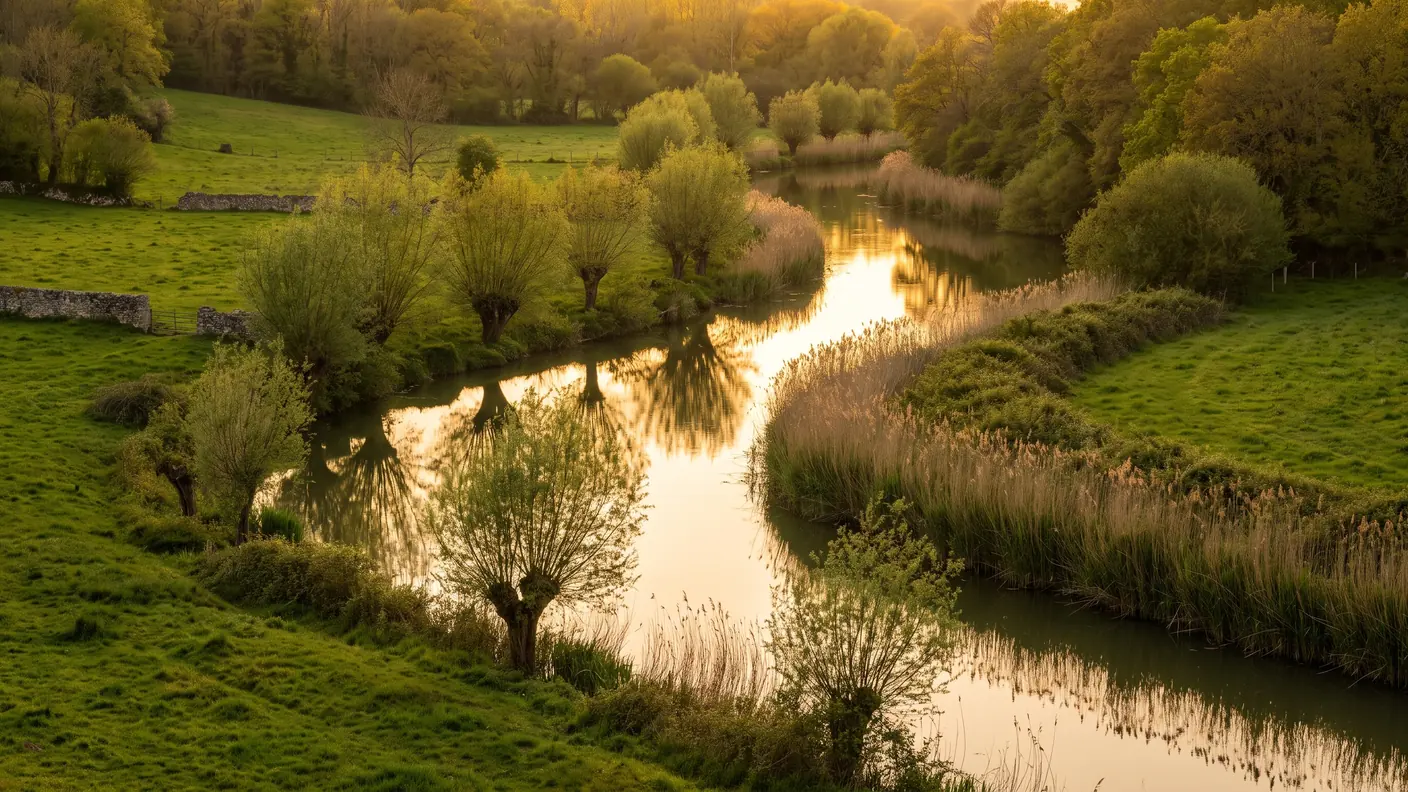
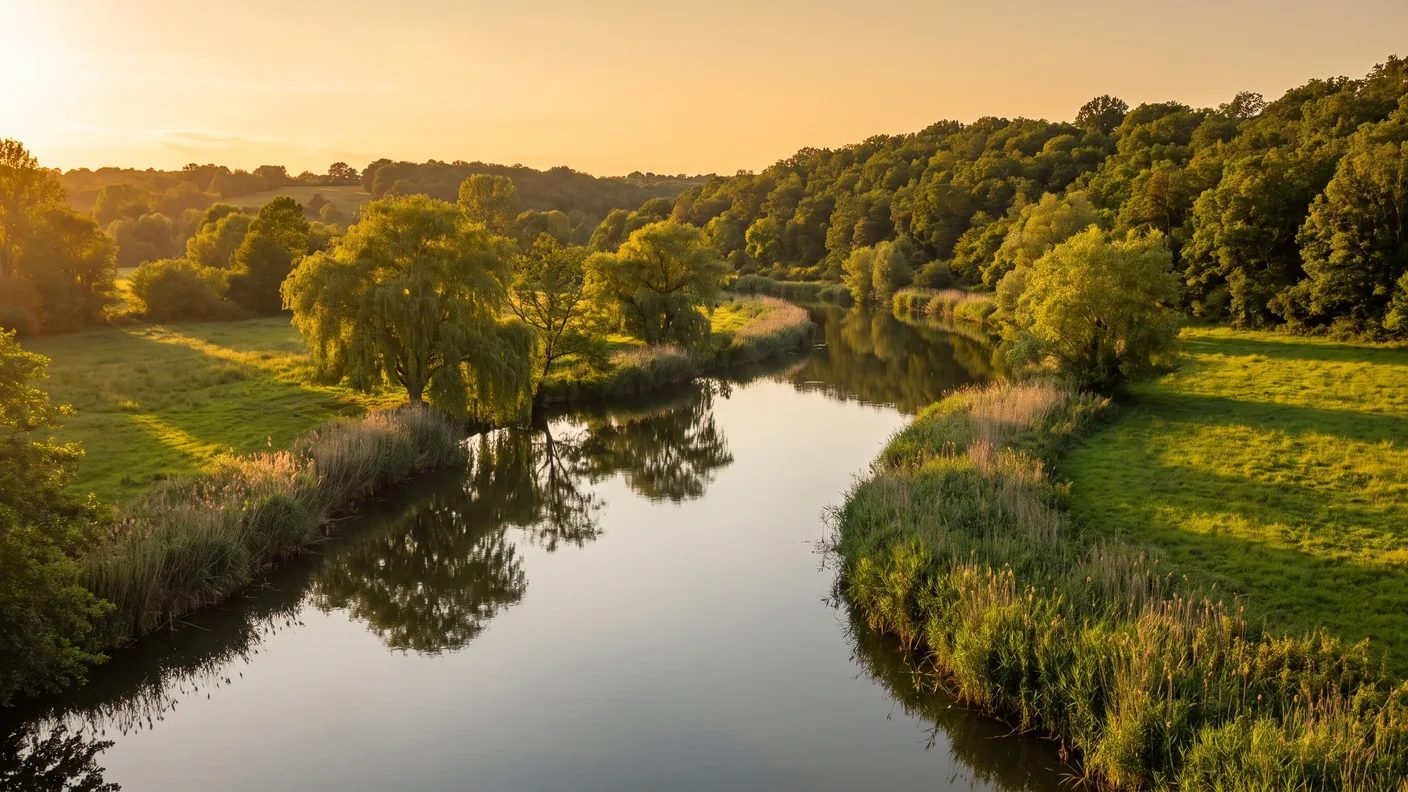
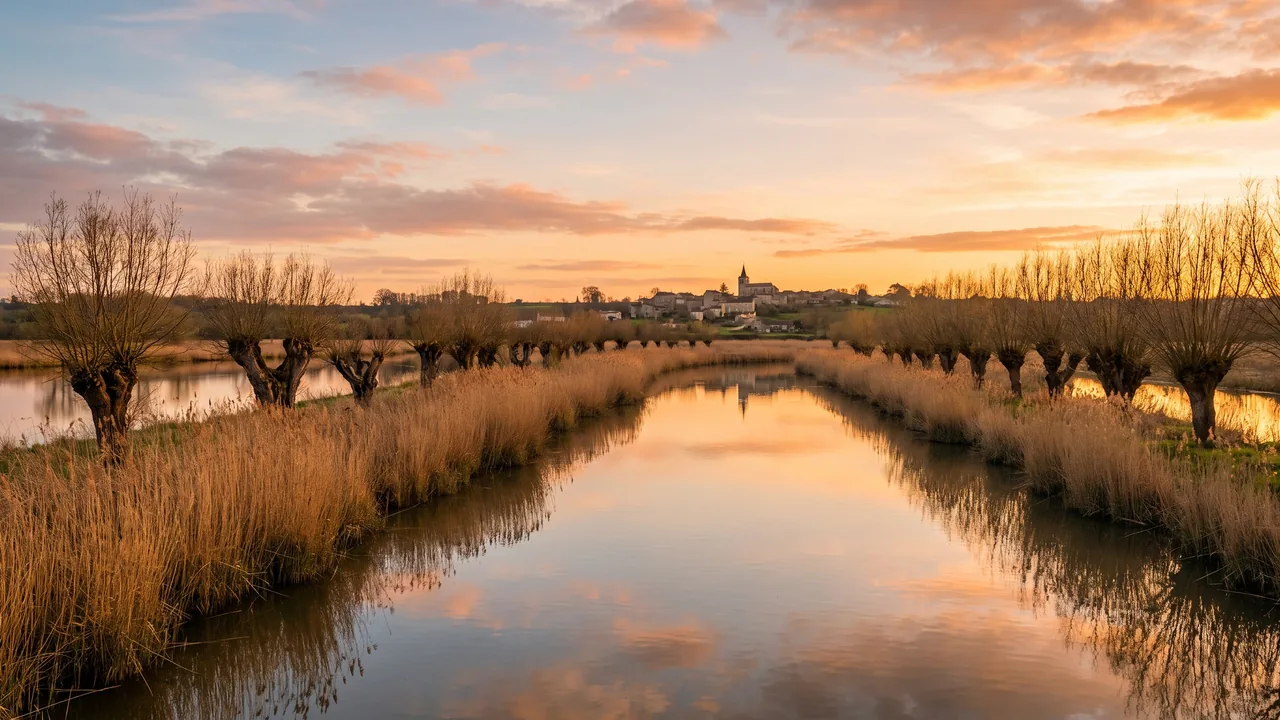
This point matters because the opposite is often reported: Annepont is bordered by the Charente, not the Boutonne. The confusion is understandable because the Boutonne, a tributary of the Charente, also flows through Saintonge, but farther north. Here, the broad, tranquil Charente runs beside the village, the same river that links Angoulême to the ocean via Saintes and Rochefort. Annepont sits near Taillebourg, known for its battle and riverside castle, as well as Saint-Hilaire-de-Villefranche and Juicq. Its valley-floor setting among wet meadows, reed beds and the first rows of vines gives the village a flat, green, water-reflected landscape, quite unlike the limestone plateaux farther south.
How far is it from Bordeaux?
From Bordeaux, allow about 139 km and 1 hour 40 minutes by car. Take the A10 north, then follow the smaller roads through the Charente Valley for the final few kilometres. The route is straightforward: head towards Saintes, turn off towards Saint-Jean-d’Angély and descend to the valley floor. Annepont has neither a railway station nor a convenient bus service, which makes travelling by car particularly practical, with drop-off in the village or at Taillebourg. The table below shows actual driving distances from Annepont to nearby sights, not the straight-line distances sometimes quoted elsewhere.
| From Annepont | Driving distance | Duration |
|---|---|---|
| Taillebourg | ≈ 3 km | ~5 min |
| Port-d'Envaux (Les Lapidiales) | ≈ 7 km | ~10 min |
| Saint-Jean-d'Angély | ≈ 14 km | ~20 min |
| Saintes | ≈ 15 km | ~20 min |
| Cognac | ≈ 39 km | ~43 min |
| Bordeaux | ≈ 139 km | ~1 hr 40 min |
What this table shows better than a long explanation is Annepont's real strength: its central location. In less than twenty minutes, you can travel from a medieval battlefield to a Roman town, or from monumental sculptures to a UNESCO-listed abbey, while Cognac's cellars are only about 45 minutes away. Few villages of this size place so many major sights within easy reach. Think of Annepont as a peaceful base in the heart of Saintonge for a series of half-day excursions. A chauffeur who knows these roads also saves valuable time: the small departmental roads are attractive but winding, and parking in historic town centres can be difficult.
The Romanesque Church of Saint-André
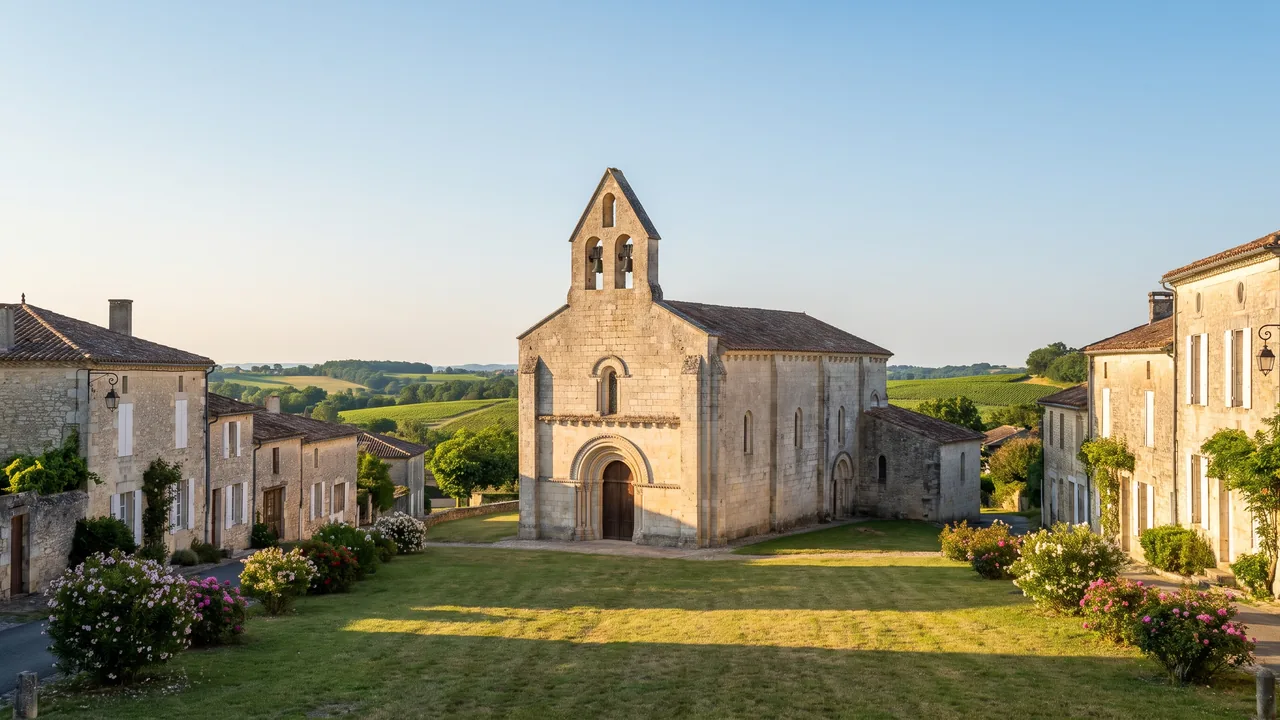
Annepont's defining landmark is Saint-André Church, a 12th-century Romanesque building in the Saintonge style. It has been listed as a Historic Monument since the decree of 21 January 1907: see the official POP record PA00104592 (accessed 24 July 2026). Its status is a classement, the higher of France's two levels of historic-monument protection.
A Romanesque portal without a tympanum
Saint-André has a detail that few visitors notice at first: there is no tympanum above the portal. While many Romanesque churches feature a carved tympanum, perhaps Christ in Majesty or the Last Judgment, Saint-André is more restrained. Its semicircular arch rests on Corinthian capitals decorated with stylised acanthus leaves. This simplicity is not a sign of poverty but a recognised variation of Saintonge Romanesque, the art of pale limestone that made the region between Saintes and Aulnay famous. The west façade carries discreet geometric and plant motifs at eye level. Look closely: they reveal the skill of 12th-century stonemasons, heirs to an ancient decorative repertoire reinterpreted through medieval faith.
Two traditions surround the church and should be treated as hypotheses rather than verified facts. Saint-André is said to have been linked to the Camino de Santiago because the via Turonensis, one of the main routes towards Spain, crosses Saintonge. An altar against the west façade is also said to have been built for pilgrims in the 15th century. These accounts fit the geography of the pilgrimage, but the sources do not confirm them. They add a layer of tradition without forming part of the church's documented history, a distinction worth keeping in mind when interpreting the heritage of small villages.
One village, two protected monuments
Annepont's real distinction is that a village of fewer than 400 residents preserves two protected monuments: Saint-André Church, classified in 1907, and the Logis de Maine-Moreau, listed in 1949. That heritage-to-population ratio is remarkable and reflects a broader truth about Saintonge, where Romanesque art and historic residences are dense enough for even the smallest villages to hold treasures. One caution for curious visitors: the municipality has only these two protected monuments. Claims that the Château de la Forêt or the village wells are also protected have not been verified and probably arise from confusion. Since “Saint-André Church” is also a very common name in France, record PA00104592 is the precise reference linking this classification to Annepont.
| Annepont Monument | Period | Protection |
|---|---|---|
| St. Andrew's Church | Romanesque, 12th century | Designated a Historic Monument on January 21, 1907 (PA00104592) |
| Logis de Maine-Moreau | 17th-18th centuries | Listed as a historic monument in 1949 (decree of August 22) |
The Village, Its Name, and the Logis de Maine-Moreau
Beyond its church, Annepont is a small village of pale stone, tucked into a bend in the valley, with low shuttered houses, garden walls and greenery. It centres on the church and extends into several hamlets scattered through the countryside. Nothing is theatrical, but the village has the quiet authenticity of Saintonge communities that have not been remade for tourism. The name Annepont itself has inspired two scholarly interpretations that place-name specialists have never resolved, a small mystery that may recall an ancient bridge over the Charente or one of its tributaries.
Where does the name Annepont come from?
Two leading figures in French toponymy proposed competing explanations. For Albert Dauzat, Annepont may combine the Germanic personal name Anna with the French word pont, meaning a bridge associated with someone named Anna. For Ernest Nègre, the first element may instead derive from asne, the Old French word for “donkey”, again combined with a bridge, perhaps a narrow crossing used by pack animals. Neither explanation can be proved. What is certain is that “pont” appears in both, a clue to the importance of crossing the water in a valley shaped by the Charente and its bridges.
The Logis of Maine-Moreau
Annepont's second protected monument is the Logis de Maine-Moreau. Its remains have been listed as a Historic Monument since 22 August 1949, according to the official POP record PA00104593 (accessed 24 July 2026). The record dates the residence to the early 17th century and notes that it is private property, so visitors must respect authorised access.
These two monuments perfectly capture the spirit of the place. Annepont isn’t a destination that impresses with its grandeur, but rather a village that rewards close attention: a historic church whose portal you can examine in detail, a manor house whose history you can sense behind its walls, and a name that holds its secret. For those who love rural France at its most authentic—the kind of place with unassuming villages where heritage is something to be discovered rather than flaunted—this is exactly the kind of stop that leaves a lasting impression. And the great advantage of Annepont—as we’ve said before—is that this stop is set in an area of exceptional historical richness, starting with the neighboring town of Taillebourg, just three kilometers away.
A Cognac Terroir: Les Fins Bois
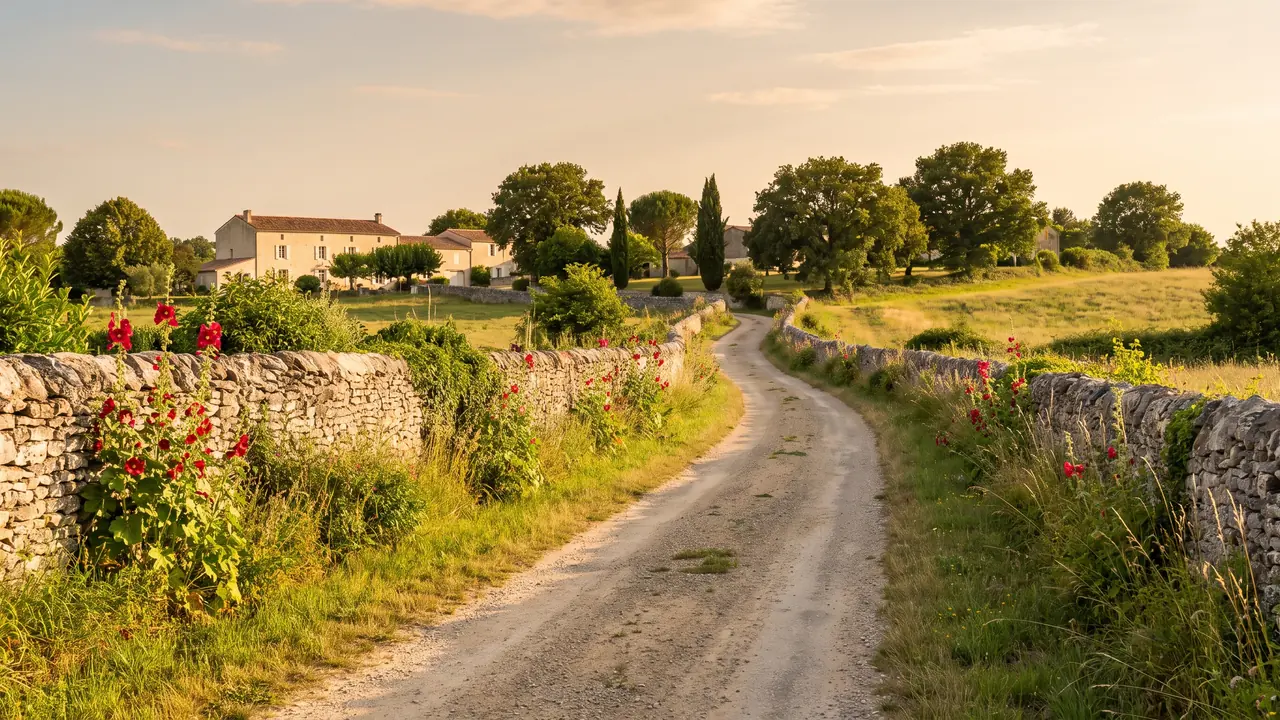
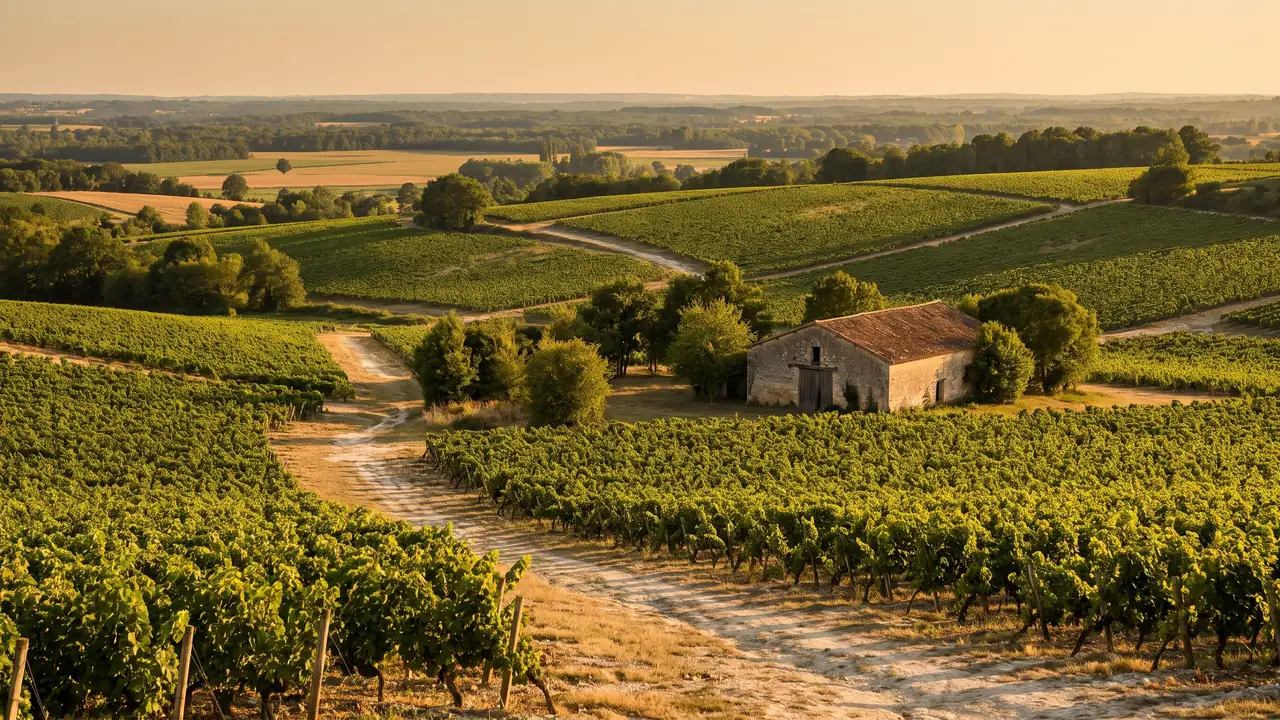
Annepont is more than a village of churches and stone houses: it also lies in the Cognac appellation, specifically within the Fins Bois cru, not the Bons Bois as sometimes claimed. The distinction matters because each Cognac cru corresponds to particular soils and gives its eaux-de-vie a different character. Fins Bois vines grow on clay-limestone soils known as “groies”, a terroir that produces cognacs that are round and supple, with aromas of fresh grapes and relatively rapid ageing. It is the largest of the six crus, covering much of Saintonge and supplying a substantial share of the blends created by the leading houses. Around Annepont, the first rows of vines announce a production area that extends east towards Cognac itself.
The six Cognac crus
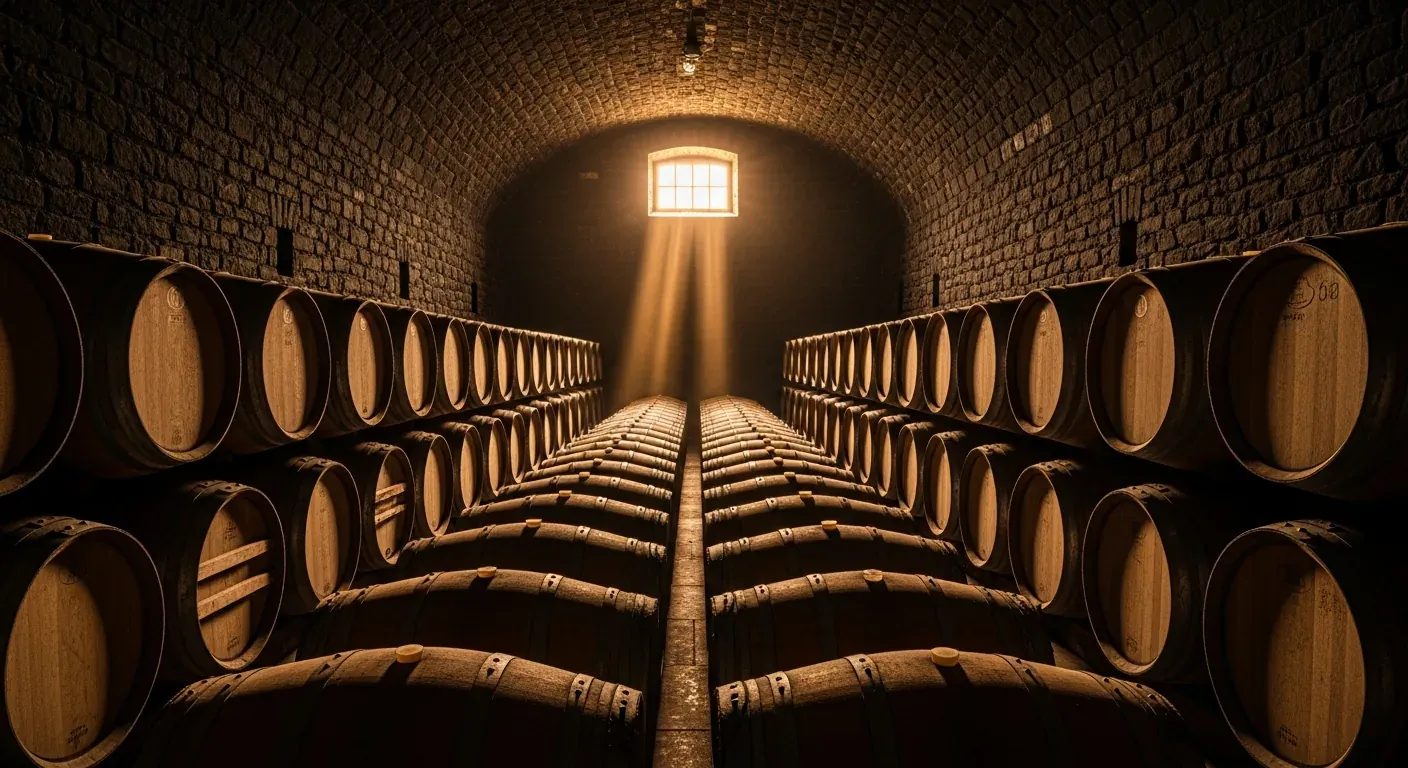
The Cognac appellation is divided into six crus, arranged in concentric zones around the town of Cognac according to soil and the expected finesse of the eaux-de-vie. At the centre, Grande Champagne and Petite Champagne have the chalkiest soils and produce the finest cognacs, particularly suited to long ageing. They are followed by the Borderies, the smallest cru, known for nut and violet notes; then Fins Bois, where Annepont lies, whose spirits are rounder and mature sooner; and finally Bons Bois and Bois Ordinaires towards the coast. This zoning, inherited from the work of 19th-century geologist Henri Coquand, is one of France's oldest organised wine classifications. Annepont's place in Fins Bois sets it firmly within Cognac's geography, between the vines and the cellars where the spirit slowly takes on its amber colour.
| Cognac cru | Soils | Character |
|---|---|---|
| Grande Champagne | Soft chalk | The finest, long-aged |
| Petite Champagne | Chalk | Delicate, floral, similar to the Grande |
| Borderies | Flint-bearing clays | Round, with notes of walnut and violet |
| Fins Bois (Annepont) | Clay-limestone, “groies” | Smooth, fresh grape flavor, ages quickly |
| Bons Bois / Bois Ordinaires | Sandy soils, coastal areas | Lively, short aging period |
Pineau des Charentes
No account of the terroir is complete without the region's other great product, Pineau des Charentes. This mistelle is made by stopping the fermentation of fresh grape must with Cognac, creating a sweet white, rosé or red fortified wine served chilled as an aperitif. Pineau des Charentes was the first French vin de liqueur to receive appellation d'origine contrôlée status, under the decree of 12 October 1945. Tradition traces it to a cellar accident in which Cognac was poured into a barrel of grape must. Around Annepont, numerous estates produce both Cognac and Pineau and welcome visitors for tastings. It is an ideal way to extend a village visit before continuing to Cognac, about 45 minutes away, to explore its celebrated houses.
Taillebourg and the Battle of 1242
Just three kilometres from Annepont, on the right bank of the Charente, neighbouring Taillebourg gave its name to one of the major events of medieval French history. The Battle of Taillebourg was fought here in July 1242, one of the defining military episodes of Saint Louis's reign. King Louis IX and his brother Alphonse of Poitiers defeated a coalition led by Hugh X of Lusignan, Count of La Marche, and backed by King Henry III of England. At stake was control of the bridge over the Charente, a strategic passage between the north and south of the kingdom. A few days later, around 23 July, the French victory was followed by the Battle of Saintes, which sealed the coalition's defeat and consolidated Capetian authority in the south-west. This quiet valley village is where a chapter of French history was decided.
The Battle of 1242 and Saint Louis
To understand the battle, consider its 13th-century context. The English Crown still held vast estates in Aquitaine, while the great lords of Poitou and Saintonge shifted between the two kingdoms. The revolt led by Hugh X of Lusignan, with Henry III's support, threatened the authority of the young Louis IX. By taking control of Taillebourg Bridge, the key crossing of the Charente, the royal army split the coalition and forced its retreat. The victories at Taillebourg and Saintes became a turning point: they weakened English influence north of the Gironde and prepared the gradual incorporation of these lands into the royal domain. Standing by the bridge today means visiting one of the decisive settings in the long Anglo-French rivalry that shaped the Western Middle Ages.
Delacroix, Versailles, and the 1892 Monument
The battle's legacy owes much to painting. In the 19th century, Eugène Delacroix created the large canvas “The Battle of Taillebourg” (1837), a tumult of horses and banners in which Saint Louis charges into the fighting. It now hangs at Versailles in the Gallery of Battles commissioned by Louis-Philippe. That a small Charente village inspired a work displayed in the Palace of Versailles is one of the threads connecting quiet provincial landscapes to France's national story. Near the bridge, a marble memorial erected on 24 July 1892 marks the battle's 650th anniversary and offers a useful point from which to picture the confrontation beside the river.
Taillebourg Castle
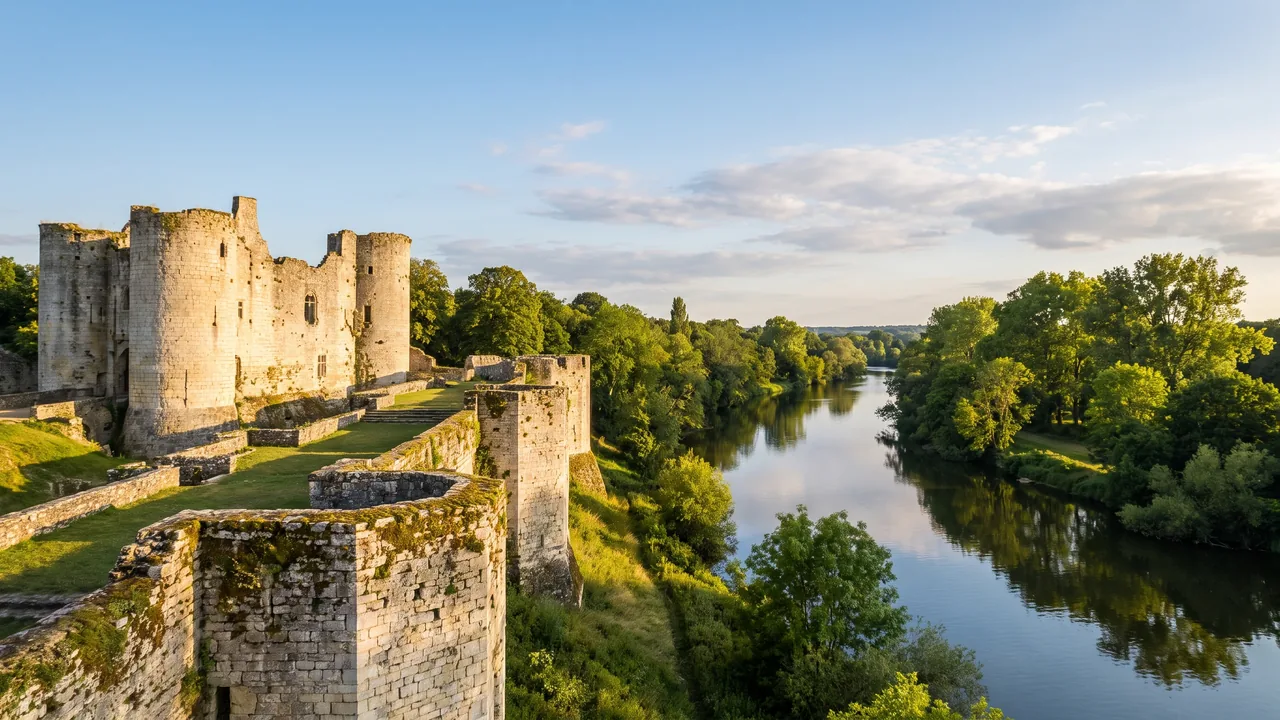
Taillebourg also preserves the remains of one of Saintonge's oldest castles, with origins in the 11th century. Perched on a rocky spur above the right bank of the Charente, it controlled the river crossing and played a leading military role throughout the Middle Ages. Its fortifications have been classified as a Historic Monument since 10 March 1995, while the other remains were listed on 8 March 1991. The castle burned in 1822; today, romantic ruins stand within a terraced park overlooking the valley. Tradition attributes the gardens to Le Nôtre, Louis XIV's gardener, but this claim is poorly documented and should be treated with caution. The walk through the park and along the ramparts, with the river below, remains one of the finest and easiest outings near Annepont, just five minutes away by car.
What is there to do in Annepont?
In Annepont itself, the programme is short but rewarding: visit the Romanesque Church of Saint-André, stroll through the pale-stone village and walk beside the Charente. The main attractions, however, lie in the immediate surroundings, within ten to twenty minutes, and that proximity is precisely what makes the area special. Three kilometres away, Taillebourg has its castle, bridge and 1242 battlefield. Ten minutes away, Les Lapidiales at Port-d'Envaux form a remarkable, free open-air sculpture site. Saintes and its Roman heritage lie about fifteen minutes away, while the UNESCO-listed Abbey of Saint-Jean-d'Angély is around twenty minutes away. The valley also suits cycling on La Flow Vélo, canoeing and Cognac or Pineau tastings. Here is a practical day itinerary from Annepont.
- See Saint-André Church, the village's listed 12th-century Romanesque monument, whose portal has no tympanum and is framed by Corinthian capitals.
- Explore Taillebourg (~3 km) — the castle ruins on its rocky outcrop, the terraced park, the bridge over the Charente River, and the monument commemorating the Battle of 1242.
- Visit Les Lapidiales in Port-d'Envaux (~7 km) — an open-air site featuring monumental sculptures in former quarries, established in 2001; free admission year-round.
- Explore the Crazannes Quarries Nature Center — 13 hectares of limestone cliffs overgrown with vegetation, featuring a museum; a spectacular setting that has served as a film location.
- Cycling Along the Charente River — The Flow Vélo, a bike route that follows the river; Taillebourg is a gateway to the Vals de Saintonge and a stop along the way to Port-d'Envaux and Saint-Savinien.
- Go to the market in Saint-Jean-d'Angély (~14 km) — Wednesday and Saturday mornings, at the Place du Marché; combine this with a visit to the UNESCO-listed royal abbey.
- Explore Saintes (~15 km) — the Gallo-Roman amphitheater and the Arch of Germanicus, just twenty minutes from the valley.
- Tasting Cognac and Pineau — in the Fins Bois vineyards around the village, or by continuing on to the grand estates of Cognac (~43 min).
| Activity | Where / When | Good to Know |
|---|---|---|
| St. Andrew's Church | Annepont, village | Listed monument, 12th-century Romanesque |
| Castle and Battle | Taillebourg, ~3 km | Listed historic remains; 1892 commemorative monument |
| Les Lapidiales | Port-d'Envaux, ~7 km | Open-air sculpture exhibition, free admission |
| Market & Abbey | Saint-Jean-d'Angély, ~14 km | Market Wed. & Sat. mornings · UNESCO Abbey |
| Roman Saintes | Saintes, ~15 km | Amphitheater, Arch of Germanicus |
| Cognac & Pineau | Nearby Estates · Cognac ~39 km | Tastings, wine cellars, distilleries |
A well-planned day is all it takes to cover the highlights: the churches of Annepont and Taillebourg in the morning, lunch in the valley, followed by Les Lapidiales and a wine tasting in the afternoon; or the abbey and market in Saint-Jean-d’Angély, followed by Saintes. The great thing about this area is that everything is close by: you don’t waste time on the road, and you can adjust your itinerary based on the weather and your mood. Being driven from one site to another—without having to worry about finding parking in the historic towns or navigating the small country roads—turns the day into a true escape. This is especially true for those who want to enjoy a wine tasting without worrying about driving back.
The Lapidiales, Port-d'Envaux, and Crazannes Stone
About ten minutes from Annepont, farther down the valley, lies one of Saintonge's most unusual and least-known areas. Port-d'Envaux and Crazannes sit above a vast deposit of white limestone quarried since antiquity. Their disused quarries have been transformed, some into an open-air sculpture site and others into striking natural spaces. Do not confuse them: they are separate sites in different municipalities, even though the same seam of stone links them underground. Here is how to distinguish them and what each offers.
The Lapidiales of Port-d'Envaux
On the left bank of the Charente, about 7 km from Annepont, Port-d'Envaux (INSEE 17285, population about 1,188) is home to Les Lapidiales, a site devoted to monumental open-air sculpture in the former “Les Chabossières” quarries. Sculptor Alain Tenenbaum founded it in 2001 with a bold idea: invite artists from around the world to carve directly into the limestone cliff, turning the quarry faces into a permanent, evolving gallery. Faces, bodies and abstract forms emerge from the white rock, and admission is free throughout the year, making this an excellent family outing. Port-d'Envaux also merits a stop for its fortified Saint-Saturnin Church, dating from the early 12th century, and Château de Panloy, remodelled around 1760, whose park appears in the preliminary inventory of remarkable gardens.
Was stone from Crazannes used to build the Statue of Liberty?
No. The Statue of Liberty's pedestal is made of concrete and Connecticut granite, not Crazannes stone. This white limestone was quarried for nearly two thousand years, from the Gallo-Roman period until around 1948, and exported throughout France and beyond. It was used at Fort Boyard, Fort Liédot and the Saintes amphitheatre.
A little farther on, the separate municipality of Crazannes (INSEE 17134, about 442 residents) has the Pôle-Nature des Carrières: thirteen hectares of quarry faces and cliffs reclaimed by luxuriant vegetation, together with a museum open since 1997. The photogenic setting has also served as a filming location. The 15th-century Flamboyant Gothic Château de Crazannes is nicknamed the “Puss in Boots Castle”. Local legend claims it inspired Perrault's Marquis de Carabas, a charming story without proven historical support.
The Charente Valley and La Flow Vélo
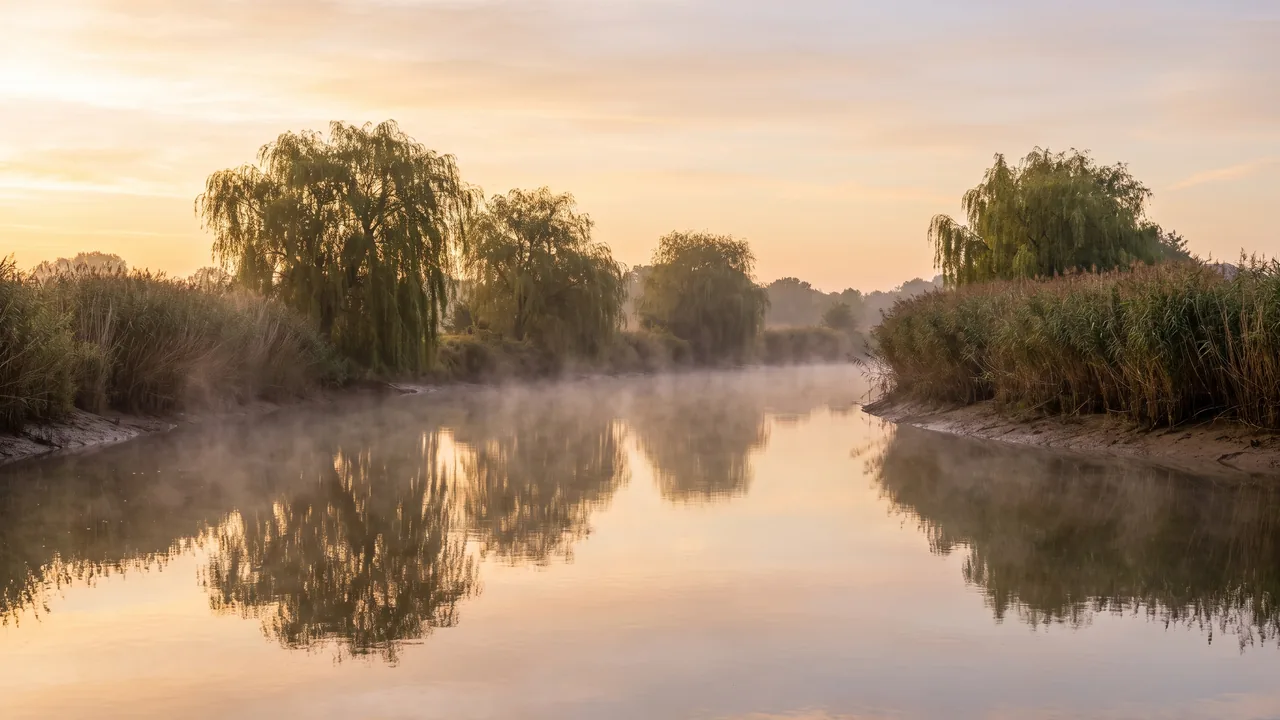
The common thread running through the entire region is the river. The Charente, which runs alongside Annepont, is one of the most peaceful waterways in France, flowing leisurely through wet meadows, reed beds, and pollarded willows. It is said to have been called “the prettiest stream in the kingdom,” a phrase attributed to Henry IV — to be taken as a charming description, not as an established historical fact. Whether true or apocryphal, the phrase aptly captures the river’s character: slow-moving, reflective waters, conducive to contemplation and gentle leisure activities. Around Annepont, the valley unfolds into this water-rich landscape, very different from the neighboring wine-growing plateaus, where people come to walk, bike, paddle, or simply sit by the water’s edge.
The Flow Vélo, along the river
The area's great slow-travel route is La Flow Vélo, a cycle trail of about 400 kilometres linking Sarlat in Dordogne to Île d'Aix on the Atlantic coast, much of it following the Charente. Taillebourg, Annepont's immediate neighbour, is one of the gateways to the Vals de Saintonge. The flat, signposted route follows the river from village to village. The section from Saintes to Saint-Savinien via Port-d'Envaux is among the finest, with green banks and locks. Many visitors cycle in the morning and visit a heritage site in the afternoon. A chauffeur can collect cyclists at the end of a stage and bring everyone back, avoiding the need to retrace the full route.
Canoeing and the Valley's Villages
On the water, the Charente River is perfect for canoeing and kayaking, which can be rented in several riverside villages. Paddling down the river, between the willows and under the ancient bridges, offers a unique perspective on the valley: that of the boatmen of yesteryear, when the Charente was a major transportation route, particularly for barrels of cognac and salt being transported down to the estuary. The villages of the valley—Taillebourg, Port-d’Envaux, and Saint-Savinien a little further north—dot the riverbanks with their Romanesque churches, stone quays, and historic homes. For those who love peaceful landscapes and heritage on a human scale, this stretch of the Charente is enchanting, and Annepont serves as a quiet starting point, away from the tourist crowds. It is this gentle charm, more than any single monument, that lingers in the memory after a day in the Vals de Saintonge.
Saint-Jean-d'Angély, Saintes, and the Saintonge region
Annepont is close to two remarkable historic towns, each less than twenty minutes away, which make a visit to the area truly worthwhile. To the northeast, Saint-Jean-d'Angély, the subprefecture, with its UNESCO-listed abbey; to the south, Saintes, the ancient Roman city. Together, they tell the story of nearly two thousand years of Saintonge’s history, from the Gallo-Roman forum to the medieval pilgrimage routes. Here’s what you need to know to prepare for your visit.
Saint-Jean-d'Angély and its UNESCO-listed abbey
About 14 km from Annepont, Saint-Jean-d'Angély (population about 6,784) is an elegant subprefecture and a historic stop on the via Turonensis, the Camino de Santiago route between Aulnay and Saintes. Its landmark is the former royal abbey, whose history begins with a monastery founded around 817 by Pepin I of Aquitaine. The Normans destroyed it around 860, and it was re-established as a Benedictine and Cluniac abbey in 1010. The Huguenots destroyed the abbey church in 1568; reconstruction begun in the 18th century was never completed, leaving the two vast, truncated façade towers that became the town's emblem. One distinction is often misunderstood: the “Former Royal Abbey”, not the whole town, has formed part of the UNESCO-listed “Routes of Santiago de Compostela in France” since 1998. The market takes place on Wednesday and Saturday mornings at Place du Marché, not on Thursday, while a fair is held on the third Saturday of each month.
Saintes, the Roman city
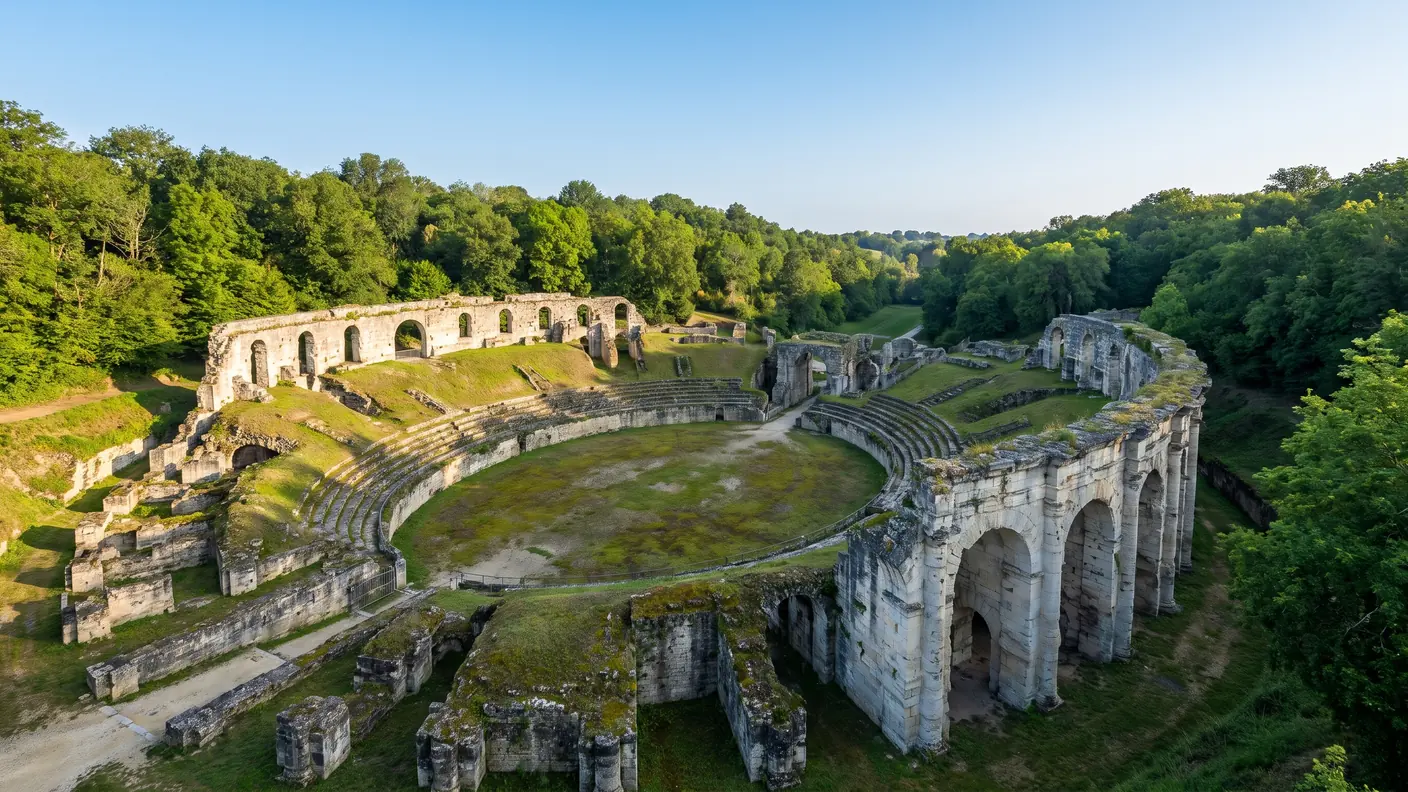
About 20 minutes south, Saintes holds one of western France's richest collections of ancient remains. Mediolanum Santonum was the capital of Roman Aquitania before Bordeaux and still has remarkable monuments: an elliptical Gallo-Roman amphitheatre, about 126 by 102 metres, which seated 15,000 to 20,000 spectators and ranks among the oldest in the Roman world; and the Arch of Germanicus, erected around AD 18-19. Writer and historic-monuments inspector Prosper Mérimée saved the arch from demolition by having it dismantled stone by stone from 1843 and reassembled at Place Bassompierre. For a fuller visit, read our guide to Saintes. Our nearby guide to Asnières-la-Giraud continues the exploration of Saintonge's villages. This landscape of white limestone and vineyards is ideal for a Romanesque and ancient-heritage itinerary, with Annepont as a quiet base.
| From Annepont | Distance | Must-See |
|---|---|---|
| Taillebourg | ≈ 3 km | Castle, bridge, Battle of 1242 |
| Saint-Jean-d'Angély | ≈ 14 km | UNESCO-designated Royal Abbey, market |
| Saintes | ≈ 15 km | Amphitheater, Arch of Germanicus |
| Cognac | ≈ 39 km | Distilleries, wine cellars |
Getting to Annepont from Bordeaux
The easiest way to explore Annepont and its valley from Bordeaux is to take the direct route via the A10. With a private driver, you’ll depart from your home or Bordeaux-Mérignac Airport and arrive in the heart of the Saintonge region without having to worry about transfers, parking, or figuring out local roads. This is especially convenient since Annepont, a small village with no train station or convenient public transportation, is difficult to reach by any means other than by car. You’ll be dropped off directly in the village or in Taillebourg, depending on your itinerary.
How much does the ride cost?
The Bordeaux to Annepont journey covers about 139 km in 1 hour 40 minutes via the A10 and the Charente Valley. Our daytime fare starts at €218 for a saloon carrying up to three passengers, with a fixed price confirmed in writing before departure, no meter and no surprise on arrival. The exact quote depends on the pickup address, travel time and chosen vehicle, whether saloon or van. Night, weekend and public-holiday supplements may apply. Groups, families and guests combining several valley villages can request a personalised itinerary and receive a prompt written quotation.
| Route | Distance | Duration | From |
|---|---|---|---|
| Bordeaux → Annepont | ≈ 139 km | ~1 hr 40 min | 218 € |
| Bordeaux-Mérignac Airport → Annepont | ≈ 135 km | ~1 hr 35 min | based on a quote |
| Saintes–Taillebourg Extension | ≈ 15 km | ~20 min | based on a quote |
Why choose a chauffeur service?
For Annepont, where the main sights lie within a twenty-minute radius, an executive car service changes the day completely. There is no need to search for parking in historic towns or navigate minor valley roads. Travel from the church to Taillebourg, Les Lapidiales, Saint-Jean-d’Angély and Saintes at your own pace, with collection wherever it suits you. This is an elegant way to combine several villages in one day, enjoy a Cognac or Pineau tasting without driving back, or organise a family escape in Saintonge. The clean, air-conditioned vehicle carries bottled water and is driven by a uniformed chauffeur. Browse all our destinations to plan your Charentes itinerary.
Frequently Asked Questions
How much does a chauffeured transfer cost from Bordeaux to Annepont?
The trip from Bordeaux to Annepont (approximately 139 km, 1 hour 40 minutes via the A10 and then through the Charente Valley) starts at 251 € during the day for a sedan carrying up to 3 passengers. The price is fixed, confirmed in writing before departure, with no meter. The exact amount depends on the pickup address, the time of day, and the vehicle chosen—a sedan or a van.
How long does it take to get from Bordeaux to Annepont?
Allow about 1 hour and 40 minutes by car—nearly 139 km—via the A10 highway heading north, followed by the small roads of the Charente Valley for the final few kilometers. The route is direct, with no changes or transfers. Since Annepont does not have a train station, a chauffeured transfer is the easiest way to get there and explore the surrounding area.
Which river runs alongside Annepont?
Annepont is bordered by the Charente River, not by the Boutonne, as is sometimes stated. This confusion is common in the region, but it is indeed the large, tranquil river that runs alongside the town—the one that connects Angoulême to the ocean as it flows through Saintes. Annepont is located near Taillebourg, famous for its castle and the battle that took place there, on the same Charente River.
Is the Saint-André Church in Annepont a designated historic site?
Yes. The 12th-century Romanesque Church of Saint-André has been designated a Historic Monument—the highest level of protection—since the decree of January 21, 1907, under the Mérimée listing PA00104592. It is sometimes referred to as “listed,” which is inaccurate: it is, in fact, classified. Its portal, which lacks a tympanum and is framed by Corinthian capitals, is characteristic of the Romanesque art of the Saintonge region.
What is there to see in Annepont itself?
In Annepont itself, visitors can explore the Romanesque Church of Saint-André, which has been a listed historic monument since 1907, and stroll through the village built of blond stone on the banks of the Charente River. The village is also home to the Logis de Maine-Moreau, designated a Historic Monument in 1949. It is a small village with fewer than 400 residents; most of the sightseeing takes place in the immediate vicinity, in Taillebourg, Port-d’Envaux, or Saintes.
Where does the name Annepont come from?
Two hypotheses put forward by toponymists are at odds with each other, with no clear resolution. According to Albert Dauzat, Annepont combines a Germanic personal name, “Anna,” with the word “pont.” According to Ernest Nègre, the first element refers instead to “asne,” the Old French word for “donkey,” which is also linked to a bridge structure. Both interpretations remain plausible; what is certain is that “pont” appears in both, a sign that crossing the water has shaped the character of the place.
Is Annepont a Cognac-producing region?
Yes. Annepont falls under the Cognac appellation, in the Fins Bois cru—not the Bons Bois, as is sometimes stated. This cru, the largest of the six, is situated on clay-limestone soils known as “groies” and produces round, supple cognacs with a bouquet of fresh grapes that age relatively quickly. Many estates in the surrounding area also produce Pineau des Charentes and welcome visitors for tastings.
What was the Battle of Taillebourg?
In July 1242, at Taillebourg (3 km from Annepont), King Louis IX (Saint Louis) and his brother Alphonse of Poitiers defeated the coalition led by Hugh X of Lusignan, who was supported by King Henry III of England. At stake was control of the bridge over the Charente River. The victory, followed by the Battle of Saintes, permanently weakened English influence. Eugène Delacroix immortalized the event in a 1837 painting, now housed in Versailles.
What are the Lapidiales of Port-d'Envaux?
Les Lapidiales is an open-air monumental sculpture site located in former limestone quarries in Port-d'Envaux, about 7 km from Annepont. Created in 2001 by sculptor Alain Tenenbaum, the site invites artists from around the world to carve directly into the cliff face. Admission is free year-round, making it an ideal family outing just ten minutes from the village.
Was stone from Crazannes used to build the Statue of Liberty?
No, that’s a common but false myth. The pedestal of the Statue of Liberty is made of concrete and Connecticut granite, not Crazannes stone. This white limestone, quarried for nearly two thousand years in nearby quarries, has indeed been used in many structures—Fort Boyard, the amphitheater in Saintes, and numerous Romanesque churches—but not in the base of the statue in New York.
On what day is the market in Saint-Jean-d'Angély?
The market in Saint-Jean-d'Angély (14 km from Annepont) is held on Wednesday and Saturday mornings at Place du Marché—and not on Thursdays, contrary to what is sometimes reported. A neighborhood market takes place on Sunday mornings at Place André-Lemoyne, and a fair is held on the third Saturday of the month. This is a great opportunity to combine a visit to the market with a tour of the royal abbey, a UNESCO World Heritage Site.
What's there to see around Annepont?
Three kilometers away, Taillebourg features its castle and the battlefield from 1242. Ten minutes away are Les Lapidiales in Port-d'Envaux and the Pôle-Nature in Crazannes. Twenty minutes away are the UNESCO-listed Abbey of Saint-Jean-d’Angély and the Roman ruins of Saintes (amphitheater, Arch of Germanicus). Cognac and its cognac distilleries are a three-quarter-hour drive away. Annepont is an ideal base for exploring the Vals de Saintonge.
Can the driver visit several villages in a single day?
Absolutely. That is the advantage of a chauffeured transfer around Annepont, where the major sights lie within a twenty-minute radius. Many guests visit Annepont, Taillebourg, Les Lapidiales, Saint-Jean-d’Angély and Saintes in one day, with the same chauffeur coordinating the route and timing. It is also an elegant way to enjoy a Cognac or Pineau tasting without worrying about the drive back.
Further Reading
- The Rome of Aquitaine: see the guide to Saintes (the Roman amphitheatre and Arch of Germanicus, 20 minutes from Annepont)
- The Donkey Village: see the guide to Asnières-la-Giraud (another nearby village in the Vals de Saintonge)
- The Cognac Capital: see the Cognac guide (the houses and six crus, 43 minutes from the valley)
- Plan the complete journey: explore the private transfer from Bordeaux to Annepont, then request your fixed fare on the booking page.
Sources and References
- Vals de Saintonge Tourist Office — Annepont, Saint-Jean-d'Angély, calendar
- Mérimée Database / POP (Ministry of Culture) — Saint-André Church (listed as a historic landmark, PA00104592), Logis de Maine-Moreau
- Les Lapidiales — Port-d'Envaux — monumental sculpture, quarries
- UNESCO — The Routes to Santiago de Compostela in France — Saint-Jean-d'Angély Abbey (1998)
- INSEE — Annepont (17011) — demography
- INAO — Cognac / Pineau des Charentes — Fins Bois cru, AOC
Article updated in July 2026.