
Bordeaux to Rivet Abbey: Auros in the Bazadais
A village in southern Gironde, in the Bazadais region, on the Beuve River: the Cistercian Abbey of Le Rivet and its community of nuns, two churches, an orchid trail, and a pilgrimage route to Santiago de Compostela—just 57 minutes from Bordeaux.
Auros at a Glance
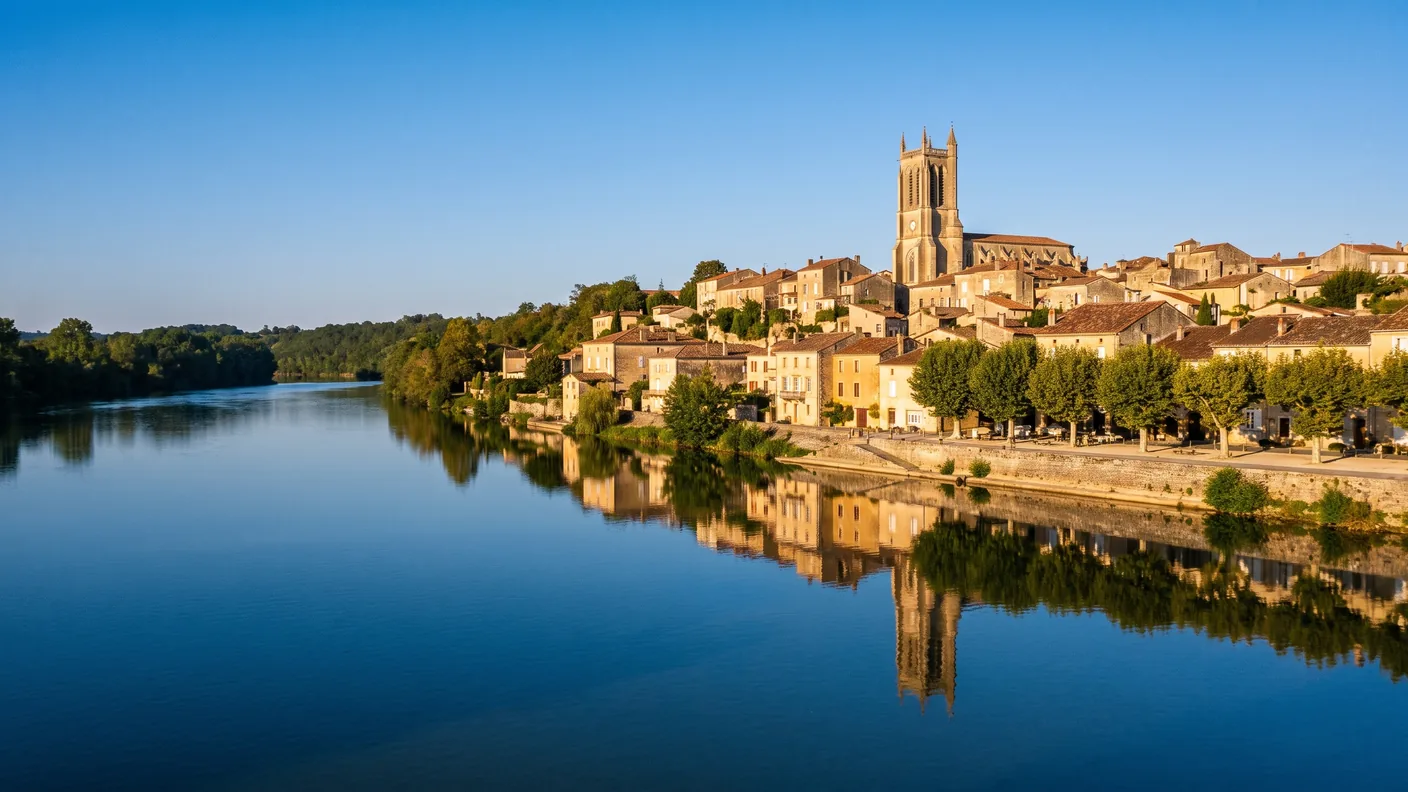
Auros is a village in southern Gironde, in the Bazas region, situated on the small Beuve River, about ten kilometers from Langon and Bazas. Its treasure, set apart from the village center, is the Cistercian Abbey of Sainte-Marie du Rivet, whose former church is listed as a historic monument and is still home to a community of nuns today. Once part of the Bazadais barony, the village still has two churches, the remains of a seigneurial castle, a botanical trail renowned for its wild orchids, and a pilgrimage route to Santiago de Compostela that runs through it. Here, in the rolling, secluded countryside of southern Gironde—nestled between the vineyards of Bordeaux and the meadows of Bazadais, a 57-minute drive from Bordeaux—lies a peaceful rural retreat where heritage and nature come together.
Here are the key details to know before you go. Distances are calculated door-to-door from Bordeaux; the fare shown is for a private driver reservation at a fixed price provided in advance, with no unexpected meter charges regardless of traffic or stops along the way.
| Landmark | Details |
|---|---|
| Department | Gironde (33), Nouvelle-Aquitaine |
| Status | Rural village · Langon District · Réolais and Bastides Canton |
| Population | approximately 1,072 residents (INSEE 2023) · the residents of Aurosses |
| Location | Southern Gironde / Bazadais region, on the Beuve River |
| Don't miss it | Rivet Abbey, the churches, the orchid trail |
| Distance from Bordeaux | about 60 km · 57-minute drive |
| Appellations | Bordeaux · Bordeaux Supérieur |
A word of honesty right off the bat: Auros is the subject of several common misconceptions that this guide aims to correct, with supporting sources. The former church of the Abbey of Rivet is listed as a historic monument, not “classified” as is often stated—these are two distinct levels of protection. Auros is not a bastide, despite the arcades in its center: it is a former medieval barony. Its wine is not an “Entre-deux-Mers” (that appellation lies between the Garonne and the Dordogne; Auros is south of the Garonne) but a Bordeaux or a Bordeaux Supérieur. And its river, the Beuve, is a direct tributary of the Garonne, not the Ciron. Every statement in this guide is based on verifiable sources, cited at the end of the article.
Here’s a rundown of everything you need to know before you come: Auros’s location in southern Gironde and its population, the Cistercian Abbey of Le Rivet and its community, the village’s two churches, the history of this former barony and the legacy of a famous journalist from *Le Canard enchaîné*, the uncertain origin of the name, the Beuve River, the orchid trail and the Way of St. James, the local wine, notable sites in the surrounding area all the way to Bazas, the best time of year to visit, and the easiest way to get there from Bordeaux with a chauffeured transfer—all thoroughly sourced and verified.
Where is Auros located?
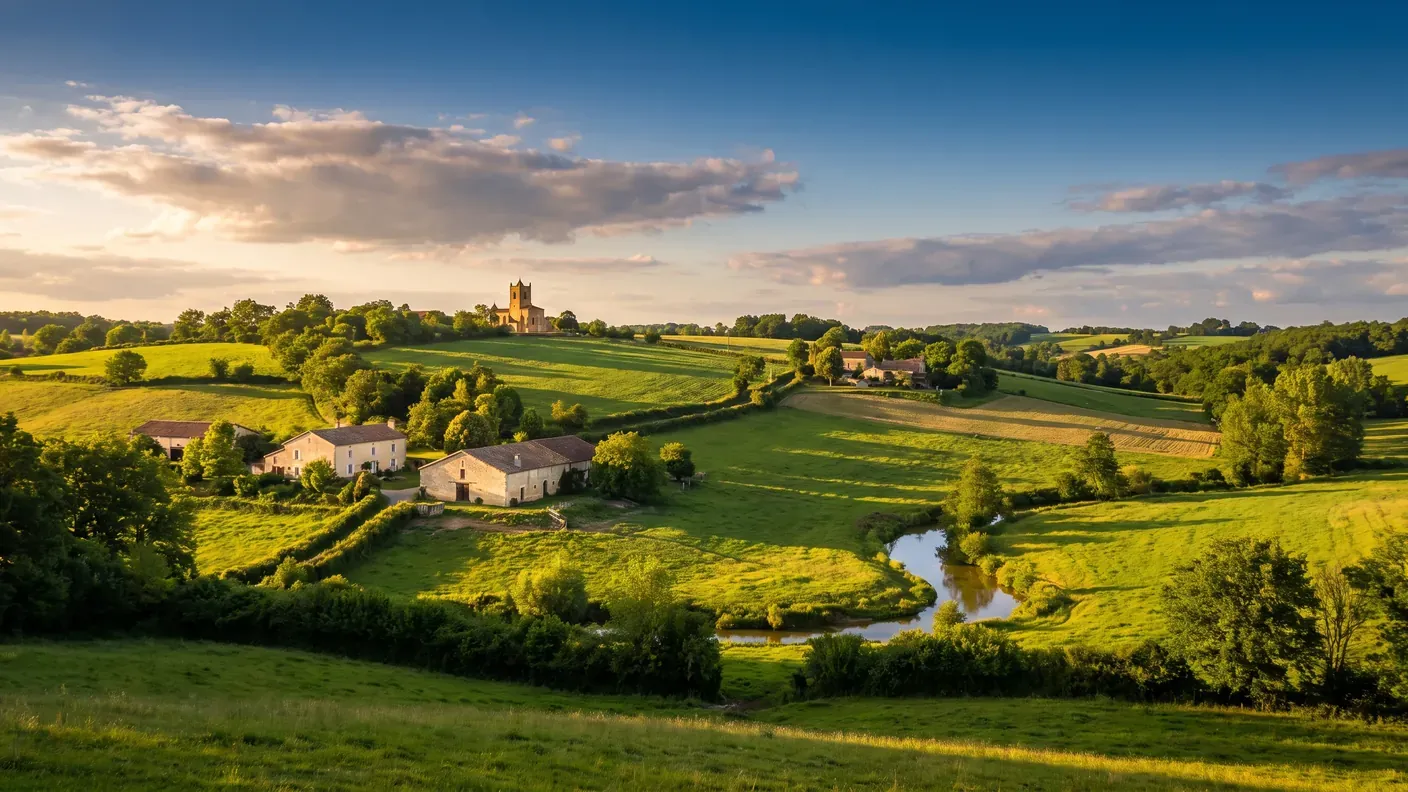
Auros is located in the southern part of the Gironde department (33), in the Nouvelle-Aquitaine region, in the Sud-Gironde and the Bazas region, about eleven kilometers southeast of Langon and about ten kilometers north of Bazas. It is a rural commune in the Langon arrondissement, part of the Réolais-et-des-Bastides canton and the Réolais en Sud-Gironde Community of Communes. It covers a fairly large, hilly area of 15.32 km², where vineyards, fields, meadows, and woods alternate, on the edge of the vast Landes forest. The town is crossed by the Beuve, a small river that originates in Bazas, as well as by the Rivet stream. This area lies in a transitional part of southern Gironde, between the Bordeaux vineyards—which give way here—and the grazing pastures of the Bazadais, home to the famous Bazas beef—a gentle, rural landscape, far from the major tourist routes.
On the Beuve River, in the Bazadais region
The geography of Auros is characterized by rolling hills and gentle valleys, through which the Beuve River flows. Contrary to a common misconception, this river is not a tributary of the Ciron: it is a direct tributary on the left bank of the Garonne, about thirty kilometers long, which rises in Bazas and joins the Garonne between Langon and La Réole. It merely flows through Auros without emptying into it. This network of small rivers and streams—including the Rivet, which gave the abbey its name—shapes a lush landscape of wet meadows, woods, and clay-limestone hillsides. Administratively, Auros is part of Sud-Gironde and the Langon district: its association with the “Bazadais” is a geographical and cultural reference—that of the nearby Bazas region—rather than an administrative reality. It is this crossroads location, between vineyards and livestock-raising regions, that defines the character of the place.
Just over a thousand residents
With approximately 1,072 residents according to the 2023 census, Auros is a vibrant village in this rural area: its population is growing (by about 5% between 2017 and 2023). Source: INSEE, municipality 33021. This encouraging trend stands in stark contrast to the decline seen in many neighboring municipalities. Its residents are known as Aurossais. Growth has been steady since the 1970s: the village had just over 600 residents in 1968, and it has gained nearly three-quarters of its current population since then, driven by its location halfway between Langon and Bazas and its proximity to the highway. With a modest population density of about 70 residents per square kilometer, Auros nevertheless retains all the charm of a true country village, with homes scattered among hamlets, farms, and vineyards—far from the hustle and bustle of the city yet well connected to its neighbors.
The Cistercian Abbey of Le Rivet
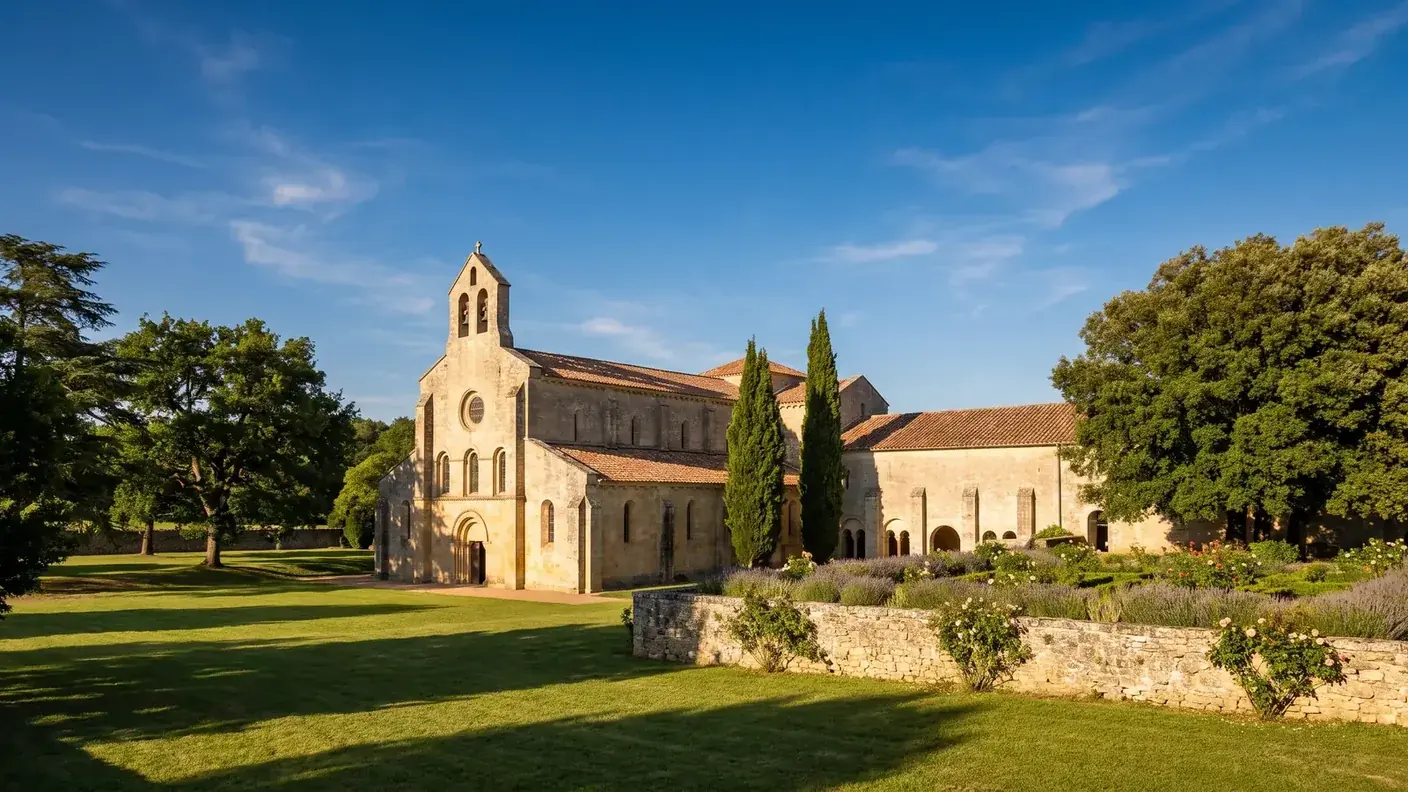
Auros’s most iconic landmark is the Cistercian Abbey of Sainte-Marie du Rivet, located about three kilometers from the town center; its former church is listed as a historic monument and is still home to a community of nuns. It is a place of silence and spirituality, a rare living testament to monastic life in southern Gironde, situated on the banks of the stream that gave it its name.
An abbey founded in the Middle Ages
The Abbey of Rivet (also known as Sainte-Marie or Notre-Dame du Rivet) takes its name from the Rivet stream, a tributary of the Beuve, which flows through its grounds. Its origins likely date back to the Carolingian period or to an ancient Benedictine monastery; it was affiliated with the Cistercian Order in 1189. The old church, which is still standing, is a 13th-century Gothic building that incorporates older elements with a Carolingian appearance. Like so many abbeys in the region, it was severely affected by the Wars of Religion: it was partially burned down by Protestants in 1593. Over the centuries, the estate passed through various hands; in the 19th century, the Tamize family gave it, in 1885, a whimsical neo-medieval design (a keep-style tower, a watchtower, corbelled walls, arrowslits, and even a grotto inspired by Lourdes at the site of a spring), which adds to the picturesque charm of the place.
A registered church, not designated as a historic landmark
An important clarification, as this fact is almost always misreported—even by tourist offices and the online encyclopedia: the former church of Rivet Abbey is listed as a historic monument by decree dated January 7, 1926 (Mérimée reference PA00083117). Source: POP database, PA00083117. It is listed, not “classified.” Listing is the first level of protection, lower than classification; the date is correct, but the status is often misrepresented. Another useful distinction: only the former church benefits from this protection, not the entire complex of monastic buildings. The church also houses a beautiful 15th-century polychrome wooden statue of the Virgin and Child, of Burgundian origin, which is also protected but as an individual object (Palissy database). These distinctions may seem nitpicky; however, they are the hallmark of a guide who verifies the information presented, rather than simply repeating common approximations.
A Community That's Still Thriving
What makes the Abbey of Le Rivet particularly charming is that it is still inhabited. Since 1938–1939, Cistercian nuns from Blagnac, near Toulouse (whose former monastery had been expropriated for the construction of the Toulouse airport), have made their home there. The community is still active: in 2024, about fifteen Trappist nuns (Cistercians of the Strict Observance) live there according to the Rule of St. Benedict, balancing prayer, silence, and work. They welcome retreatants seeking peace and contemplation, and support the monastery through their work: baking cookies, crafting nativity figures and candles, painting scarves, and tending an organic garden. A visit to Le Rivet Abbey, therefore, is not a visit to a ruin, but to a living, active center of spirituality—a rare experience to be savored while respecting the silence of the place.
| Rivet Abbey, at a Glance | Details |
|---|---|
| Order | Cistercian (affiliated in 1189) · today, Trappist nuns |
| Old Church | 13th-century Gothic · Designated a Historic Monument on January 7, 1926 (PA00083117) |
| Event | partially burned down by Protestants in 1593 |
| Community | nuns who came from Blagnac in 1938–1939 · ~15 in 2024 |
| Handicrafts | cookies, nativity figurines, candles, hand-painted scarves, organic garden |
The village's two churches
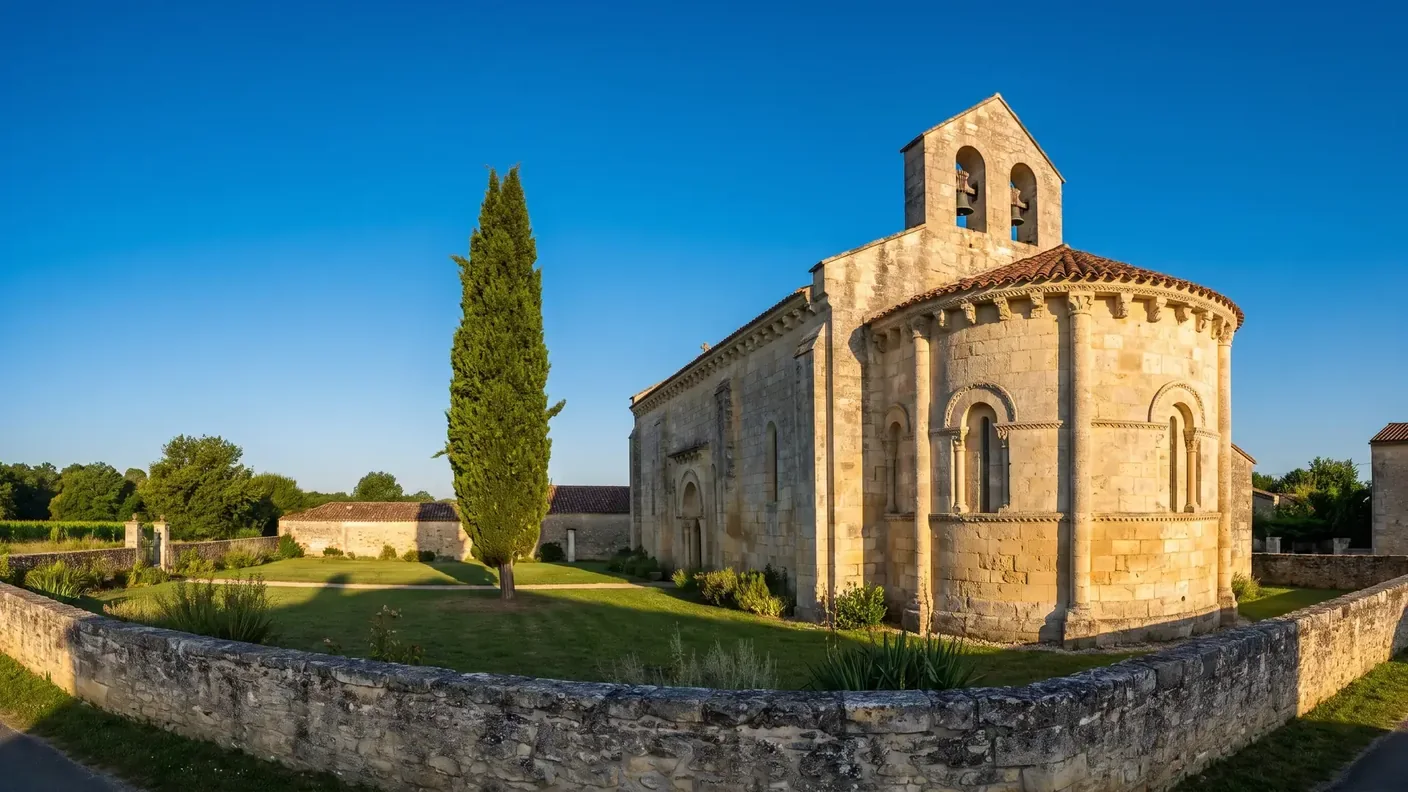
In addition to the abbey, Auros has two parish churches that originated from its two former parishes: Notre-Dame, in the village center, and Saint-Germain, a Romanesque church located a short distance away—neither is designated a historic monument, but both are worth a visit. Each, in its own way, tells the story of the village’s religious and feudal history.
Notre-Dame, the town church
Notre-Dame Church, in the center of the village, was originally the chapel of the castle of the Barons of Auros, who were buried there—its walls date back to the 13th century. It was extensively remodeled in the Neo-Gothic style in the 19th century, during a project documented in 1878, led by the Bordeaux architect Gustave Alaux (the same architect who worked in several towns in the area) under the episcopate of Cardinal Donnet, Archbishop of Bordeaux: an openwork choir, two transept chapels, and a sacristy were added. It is not listed as a historic monument, but it houses a remarkable collection: choir stalls, an abbatial seat, and 18th-century carved wooden paneling from the Abbey of Rivet, which have been listed as individual objects (Palissy database) since 1975. A beautiful example of monastic furnishings that were saved and reused in the village church.
Saint-Germain: The Saved Roman Church
Even more moving is the small Church of Saint-Germain, located on the outskirts of the village and dedicated to Saint Germain of Auxerre. It is a Romanesque building from the 11th–12th centuries, constructed with small masonry blocks reusing Gallo-Roman stones, featuring walls built in the opus spicatum (herringbone) style characteristic of the Early Middle Ages. Owned by the Abbey of Rivet from 1188 onward, it was burned down in 1577 during the Wars of Religion, deconsecrated in 1790, and then long used for agricultural purposes—as a barn, sheepfold, and tobacco drying shed. Saved from ruin by volunteers beginning in 1989, with the support of the Sauvegarde de l’Art français, it has been restored to religious use and today houses a rare Mutin-Cavaillé-Coll parlor organ from 1923, reinstalled in 2012. Its story of patient restoration makes it one of the most endearing sites in the town, a testament to the village’s tenacity in preserving its heritage.
Auros, a former barony in the Bazadais region
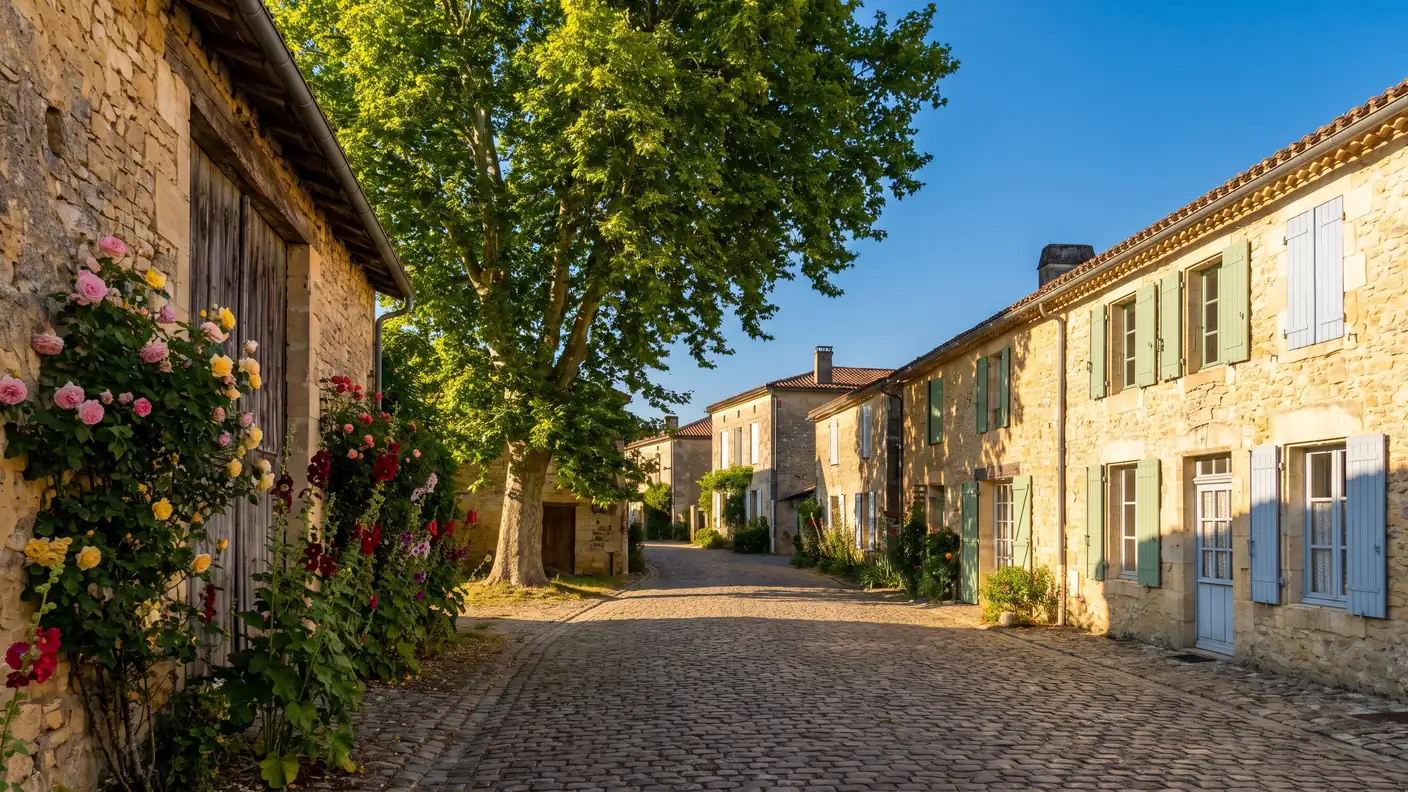
Auros is not a bastide, contrary to what its arcades might suggest: it is a former medieval barony in the Bazadais region, with its own castle and lords, whose history dates back to the 13th century. This feudal past, less well known than that of the neighboring bastides, deserves to be accurately reconstructed.
A medieval barony
Auros was one of the baronies of the Bazadais. A lord of Auros is first attested in the mid-13th century (a certain Guillaume Arnaud, during the reign of Henry III Plantagenet, at a time when Guyenne was under English rule), and the feudal settlement is documented as early as 1274, with a castle rebuilt at the end of the 13th century. The baronial castle still retains a trapezoidal tower and a large round tower from that period. The layout of the town, with its arcades that mimic those of a bastide without actually being one, was established much later, by a notarized deed dated March 12, 1519, signed between the Baron of Auros, Jean de Laminssans, and the representatives of the townspeople. During the Revolution, the municipality was formed by the merger of the parish of Saint-Germain (the oldest, known as the “mother parish”) and its annex, Notre-Dame. This is the true history of Auros: that of a seigneury, not of a new town built from scratch.
Gabriel Macé, a writer for *Le Canard*
Auros is home to a famous figure in the world of journalism: Gabriel Macé (1918–1990), who was born in the town. A member of the Resistance in Bordeaux during World War II, he became, after the war, one of the leading writers for *Le Canard enchaîné*, the famous satirical weekly, which he joined in 1947 and where he served as editor-in-chief from 1969 until his death in 1990. There, he wrote the culture column and published fables in verse under the delightful pseudonym “Jean de la Futaille.” A street in Auros now bears his name, a discreet tribute from the village to this witty and committed journalist, who for more than forty years embodied the humor and independence of France’s most famous satirical newspaper. A lovely nod from such a small village in southern Gironde, which thus gave the French press one of its most outspoken voices.
Where does the name "Auros" come from?
The origin of the name “Auros” remains uncertain, with two hypotheses that experts are reluctant to settle—and, as with its status, we must dispel a persistent misconception: Auros is not a bastide. Here is what the sources actually say, without exaggerating.
"Au Ros" or "Aurus"?
There are two competing theories to explain the name "Auros," and authors consistently use the conditional tense. The first, and most commonly cited, links the name to the Occitan “Au Ros,” which is understood to mean “the rock” or “the crag”—referring to a rocky outcrop. The second theory derives it from the Latin “Aurus” (“gold,” aure in Gascon), though it is unclear exactly what this “gold” refers to. Neither of these theories has been definitively established, and it would be dishonest to present either as the truth. This guide therefore sticks to what the sources say: the origin of the name is uncertain, lying somewhere between “rock” and “gold”—two appealing but unproven hypotheses. This is a good opportunity to recall that in toponymy, humility is often called for, and that a beautiful name sometimes retains its mystery.
Not a country house
We should also clear up a common misunderstanding. With its arcades in the center of town, Auros has the feel of a bastide—those new towns founded according to a regular grid pattern in the 13th and 14th centuries, so numerous in the Southwest. But Auros is not a bastide: it is an ancient barony, a seigneurial village with an older and more organic layout. The arcades we see today, rebuilt in the 18th century, merely imitate those of neighboring bastides—they in no way prove the village’s status as a new town. The distinction is not merely a scholarly debate: a bastide and a barony tell different stories—one that of a settlement planned by a governing authority, the other that of a seigneury rooted in the long term. Auros belongs to the second category, and it is precisely this aspect of its identity that should be restored, without succumbing to the easy label of “bastide.”
La Beuve, Orchids, and Santiago de Compostela
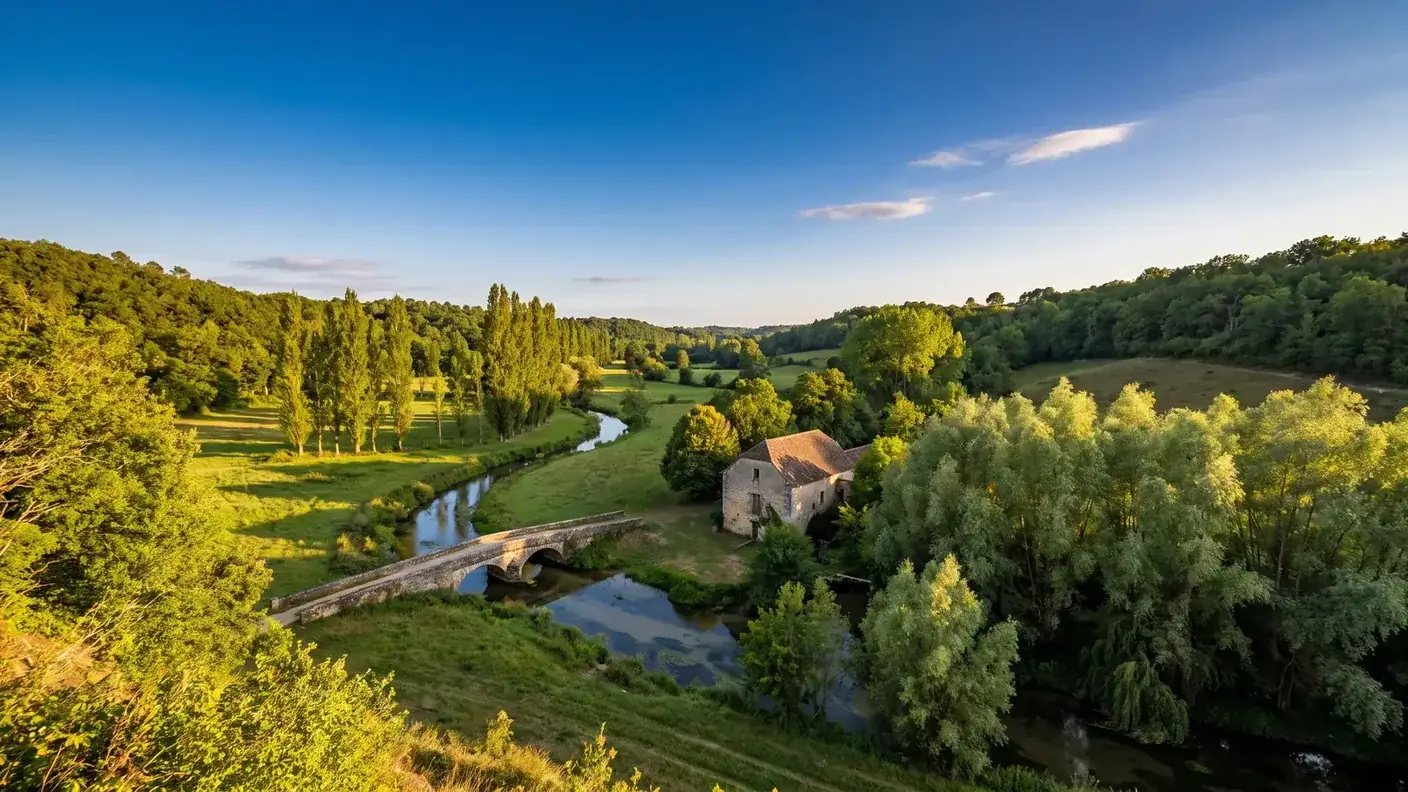
Auros also appeals to nature lovers: the Beuve Valley, a botanical trail renowned for its wild orchids, and a route along the Way of St. James that passes through the village make it a wonderful stop for hikers and curious travelers. Here’s what the town has to offer those who love gentle landscapes and hiking.
The Monco Orchid Trail
About five hundred meters from the village, the Monco botanical trail winds its way up a south-facing clay-limestone hillside, through a small forest of old trees—including junipers—and a dry limestone meadow. This unique environment is home to rare flora, notably numerous wild orchids: about fifteen species have been recorded (up to nineteen according to some surveys), which bloom in the spring. The trail, approximately one and a half kilometers long, is maintained by the town and the “Friends of the Auros Orchids” association, which offers guided tours from mid-April to mid-June, during the blooming season. It’s an ideal outing for botany and nature enthusiasts—a unique way to discover the hidden riches of these hillsides in southern Gironde. Be sure to wear sturdy shoes and bring a little patience to spot these delicate and fascinating flowers growing close to the ground.
On the Way to Santiago de Compostela
Auros is also a stop along the Way of St. James. The town is crossed by the Voie de Vézelay (GR 654), one of the four major historic pilgrimage routes to Santiago de Compostela, on the section connecting La Réole to Bazas. The route passes at the foot of the church, crosses the Beuve River at a place called “Le Parc,” runs alongside a pigeon loft, and reaches Lake Brouqueyran before continuing on to Bazas, about ten kilometers away. For centuries, pilgrims have traversed this tranquil landscape on their way to Spain, and the GR 654 continues to bring both long-distance hikers and day-trippers to the area today. This adds another dimension to Auros: it is not only a village rich in heritage and natural beauty, but also a link in one of Europe’s oldest spiritual routes, following in the footsteps of pilgrims past and present.
Wine: Bordeaux and Bordeaux Supérieur
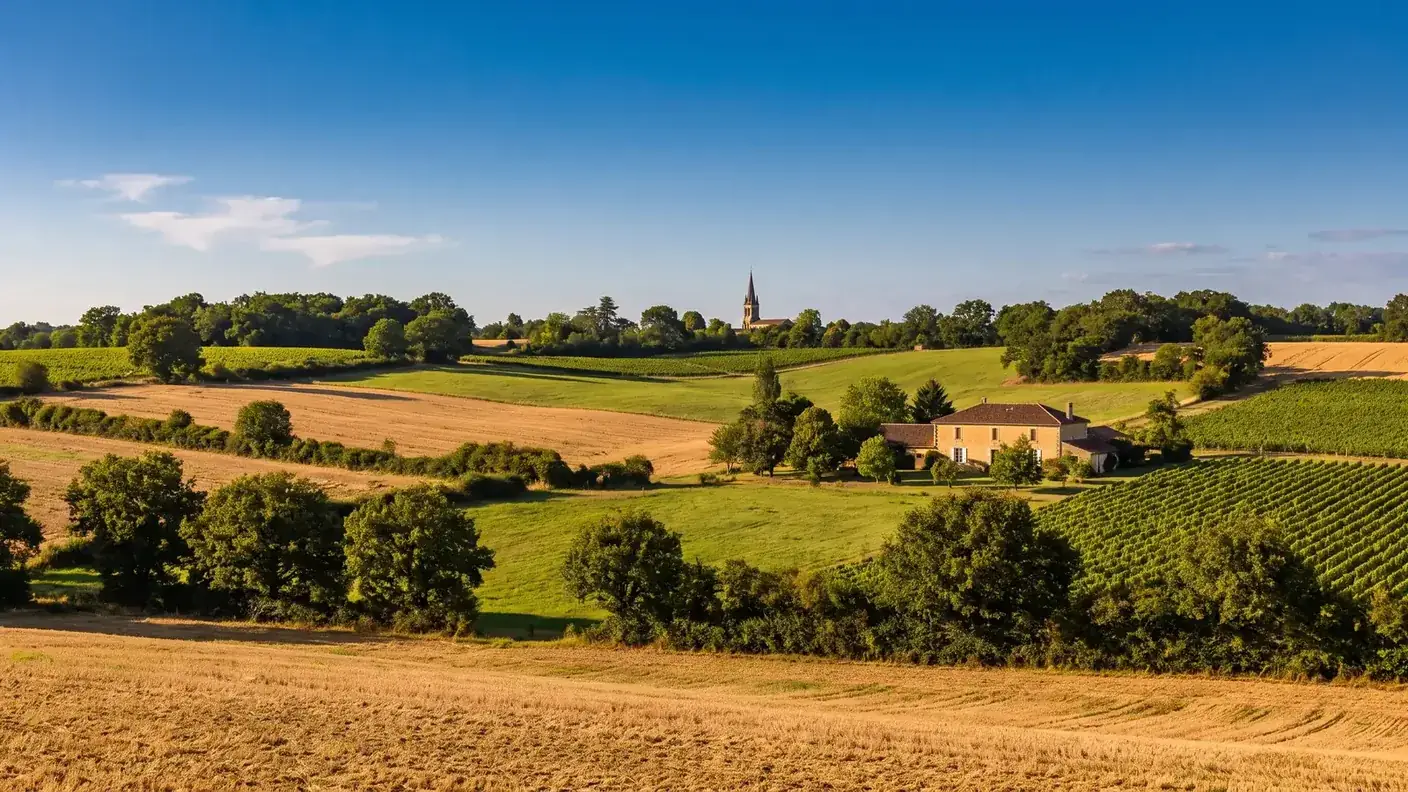
Auros produces wine, but its appellation must be specified accurately: it is not an Entre-deux-Mers, despite its proximity, but a Bordeaux or a Bordeaux Supérieur—the major regional appellations of the Gironde wine region. The village’s terroir clearly illustrates the transition between the Bordeaux region and the Bazadais aging region.
A regional appellation in Bordeaux
Auros is specifically listed in the Bordeaux AOC specifications: the commune’s winemakers can therefore produce wines under the Bordeaux and Bordeaux Supérieur regional appellations, which cover the vast majority of the Gironde’s vineyards (more than 500 of the 542 communes in the Gironde). These are primarily red wines—often smooth and fruity, made from Merlot and Cabernet—as well as a few whites—wines meant to be enjoyed and shared, offering excellent value for the price. However, two misconceptions need to be dispelled: Auros does not produce Entre-deux-Mers (this appellation refers to the vineyards located between the Garonne and the Dordogne; whereas Auros lies south of the Garonne); and it is not “outside the AOC” despite its proximity to the Landes Mountains. The Auros vineyard is indeed part of the great family of Bordeaux wines.
Between the vineyards and the wine-aging region
What makes Auros unique is its location on a dividing line, where the Bordeaux vineyards gradually give way to the pastures and forests of the Bazadais and the Landes. This border location gives the landscape its diversity: here, rows of vines; there, pastures where the famous Bazas beef (the Bazadaise breed) is raised; and a little further on, the first pine trees of the vast Landes mountain range. For visitors, this offers the chance to enjoy, all within the same area, an authentic Bordeaux wine at a winemaker’s estate and exceptional meat at a restaurant in the Bazas region. This duality between wine and livestock farming, between hillsides and forest, is what makes this transitional region of southern Gironde so special—less well-known than the famous wine regions, yet rich in gastronomy and breathtaking landscapes. With a private chauffeur, you can easily put together a customized day trip.
| The Auros Region | Details |
|---|---|
| Wine Regions | Bordeaux · Bordeaux Supérieur (regional) |
| DO NOT confuse | NOT “Entre-deux-Mers” (north of the Garonne) |
| Red Grape Varieties | Merlot, Cabernet — smooth, fruity wines |
| Related specialty | Bazas beef (Bazadaise breed), about 11 km away |
What is there to do in Auros?
In Auros, you can follow in the footsteps of the pilgrims on the Way of St. James. The village is an official stop on the Camino de Santiago (GR654 West, the “Vézelay Route”), between La Réole and Bazas. Visit the Cistercian Abbey of Le Rivet, where the community of nuns runs a retreat center and a shop selling monastic products; stroll along the Monco botanical trail and admire its wild orchids; we’ll follow a marked loop bike trail through the Beuve Valley; and we’ll head on to Bazas, about ten kilometers away, for its Saturday market and famous beef. Auros also has its summer events: the agricultural fair and an outdoor barbecue-and-movie night. Here’s a detailed look at what you can actually do in Auros and the nearby Bazadais region.
- A Stopover on the Way of St. James — Auros is a stop on the GR654 West (Vézelay Route): ~22 km from La Réole, then ~17 km to Bazas
- Visit the Cistercian Abbey of Le Rivet—a community of nuns, designated a Historic Monument (1926): a monastic guesthouse for retreats and a shop selling local products (cookies, santons, candles); guided tours during Heritage Days
- Explore the Monco Botanical Trail—about 1.5 km along a limestone hillside 500 m from the village, featuring about 15 species of wild orchids; guided tours are available from mid-April to mid-June
- Follow Bike Loop No. 10—an easy, marked trail (~19.5 km) starting from the village in the Beuve Valley, with a picnic area
- Visit the Bazas market—Saturday mornings (8 a.m.–1 p.m.), Place de la Cathédrale, about 50 vendors, the mecca of Bazas beef, ~10 km away
- Enjoy the events in Auros—the agricultural fair (mid-July) and the summer barbecue and outdoor movie night in the village
- Discover Bazas beef—the Bazas breed and its Fête des Bœufs Gras in Bazas (Fat Thursday, in February), about 10 km away
Compostela, the Abbey, and the Orchids
Auros is a major stop on the Way of St. James: the GR654 West, one of the branches of the Vézelay route to Santiago de Compostela, passes through the village. It comes from La Réole (~22 km, where it crosses the Garonne via a footbridge) and continues toward Bazas (~17 km) across the Bazas Plateau. On the outskirts of the village, at a place called Le Rivet, the Abbey of Sainte-Marie du Rivet—a Cistercian nunnery designated a Historic Monument in 1926 — welcomes those seeking silence to its monastic guesthouse and operates a shop selling homemade goods (cookies, santons, candles, embroidered ornaments); it opens its doors for guided tours during Heritage Days. For nature lovers, the Monco Botanical Trail, located 500 meters from the village, features about fifteen species of wild orchids, with guided tours offered from mid-April to mid-June, when the flowers are in full bloom.
Bicycles, the Market, and Bazas Beef
Starting from the village, Bike Loop No. 10, recommended by Gironde Tourisme, offers an easy route of about nineteen and a half kilometers through the Beuve Valley, featuring a shaded picnic area—perfect for a leisurely morning. For food lovers, Bazas—about ten kilometers away—is the place to be: its Saturday morning market (8 a.m.–1 p.m., Place de la Cathédrale, with about fifty vendors) is the area’s premier foodie destination, a mecca for Bazas beef (the Bazadaise breed) and local Bazadais products. This beef even has its own festival, the Fête des Bœufs Gras, held every Fat Thursday (in February). Auros, for its part, comes alive in the summer with its agricultural fair in mid-July and its barbecue evening followed by an outdoor movie—a chance to experience village life in the Bazas region.
| Activity | Where / When | Good to Know |
|---|---|---|
| Way of St. James (GR654 West) | runs through the village | Stage: La Réole → Auros → Bazas |
| Rivet Abbey | in Auros (Le Rivet) | convent, shop, tours during European Heritage Days |
| Monco Trail | ~500 m from the village | orchids, tours from mid-April to mid-June |
| Bike Loop No. 10 | leaving the village | ~19.5 km, easy, Beuve Valley |
| Bazas Market | ~10 km | Saturday morning, 8 a.m.–1 p.m., Bazas beef |
What's there to see around Auros?
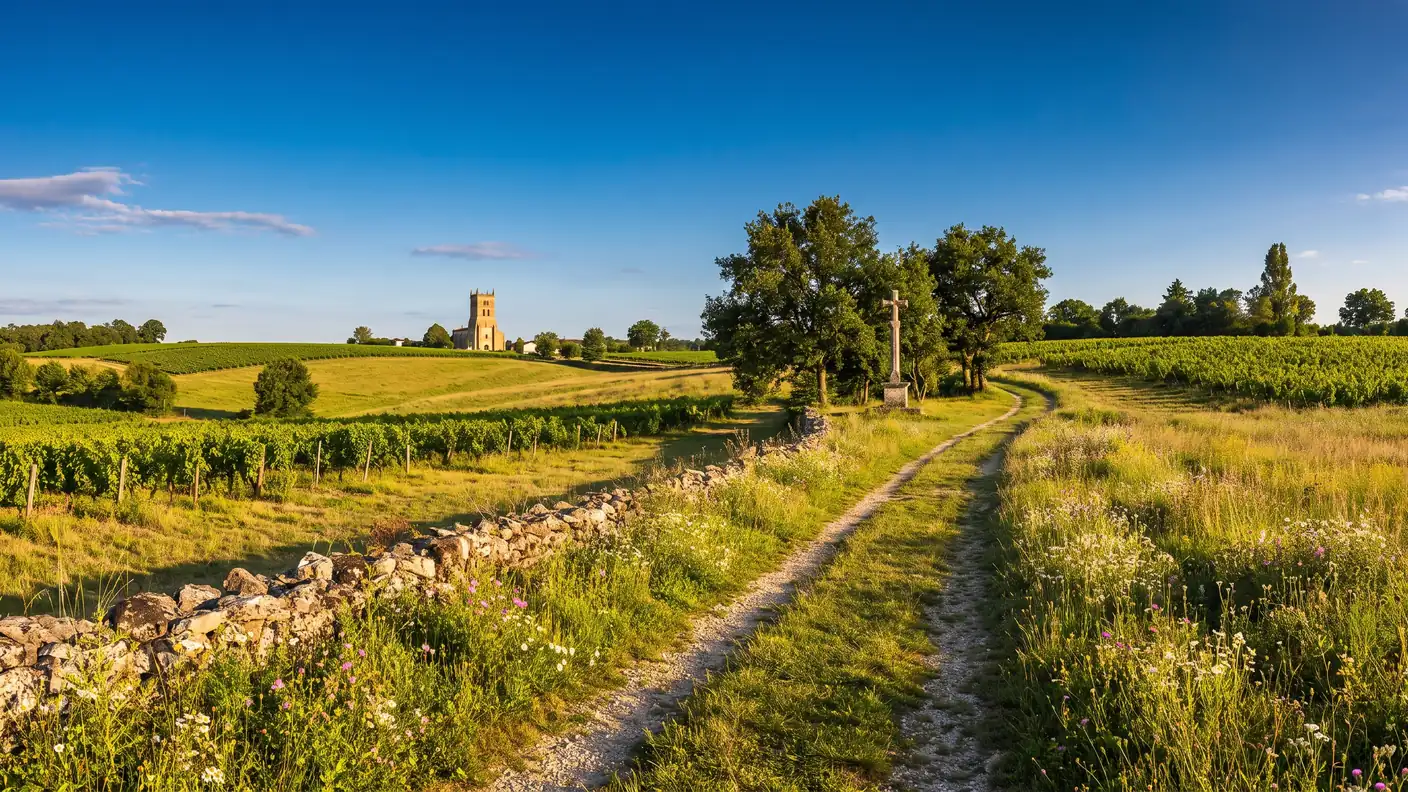
Auros is ideally located for exploring southern Gironde: Bazas and its cathedral, Langon, La Réole, Sauternes, and the Garonne Canal at Castets are all just a few kilometers away. The distances are short, and it’s easy to go from a medieval town to a vineyard, or from an abbey to a cathedral.
Bazas, Langon, and La Réole
About ten kilometers to the south, Bazas is the nearest town and one of the most beautiful in the area: a former episcopal see, it boasts the magnificent Saint-Jean-Baptiste Cathedral, a UNESCO World Heritage Site as part of the Routes of Santiago de Compostela, whose carved Gothic façade overlooks a stunning arcaded square. Bazas is also the capital of the Bazas region and the birthplace of the famous Bazas beef, celebrated each year with a traditional festival. To the north, Langon, a lively subprefecture, features a market, shops, and a train station on the Bordeaux–Toulouse line. To the east, La Réole, a superb medieval town perched above the Garonne River, is well worth a visit for its former Benedictine abbey and its Romanesque town hall. The rich heritage of southern Gironde thus unfolds all around Auros.
The Vineyard and the Canal
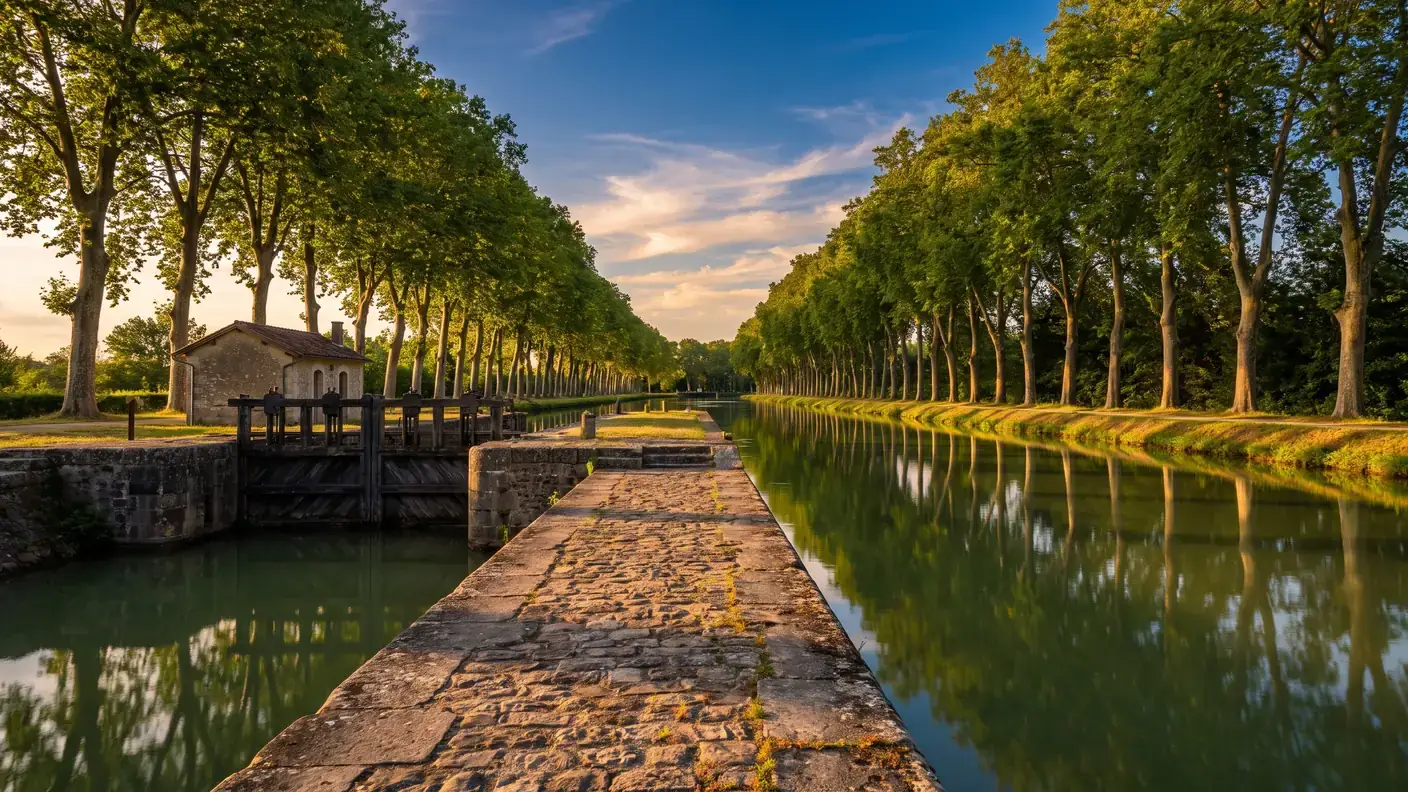
Wine lovers and those who enjoy waterfront scenery will not be disappointed. To the northwest, on the opposite bank of the Garonne, lies the prestigious Sauternes wine region—home to some of the world’s finest sweet white wines—stretching all the way to the legendary Château d’Yquem. To the north, in Castets-en-Dorthe (just over eleven kilometers away), you’ll find the end of the Garonne Canal and its final lock, where the Grand Canal des Deux-Mers joins the river—a lovely destination for a stroll or bike ride along the towpath. Add to that the hillsides of the Bordeaux vineyards, the meadows of the Bazadais, and the nearby Landes Forest, and you have a region of great diversity, where every excursion holds a surprise. With an executive car service, you can plan a customized loop without worrying about the route or parking.
| Around Auros | Distance | Interest |
|---|---|---|
| Bazas | ~11 km | UNESCO-listed cathedral, Bazas beef |
| Langon | ~11 km | Subprefecture, market, train station |
| Castets-en-Dorthe | ~11 km | The End of the Garonne Canal |
| Sauternes | ~18 km | Vineyards of the Great Sweet Wines |
| La Réole | ~20 km | Medieval town on the Garonne River |
When is the best time to visit Auros?
Auros can be visited year-round, but spring—the season of orchids—is undoubtedly the most magical time to visit, followed closely by fall with its vibrant colors. Spring is the village’s peak season: from mid-April to mid-June, the Monco botanical trail is blanketed with wild orchids, and guided tours allow visitors to discover its fifteen or so species; the Bazadais countryside, now a soft green, invites you to take walks along the Camino de Santiago and the banks of the Beuve River. It’s also a mild and sunny season to visit Rivet Abbey and the local churches, before the summer crowds arrive. The days are getting longer, nature is coming to life, and the entire southern Gironde region is regaining its colors and scents.
Summer bathes the countryside in warm, abundant light, perfect for long walks, exploring historic sites, and culinary discoveries—from Bordeaux wine to Bazas beef; it’s also the season for village festivals and farmers’ markets. Fall, with its grape harvest and golden foliage, casts a superb light over the hillsides and meadows and brings a renewed sense of calm after the summer; it’s a wonderful time to taste the new wines and stroll along the country lanes. Winter, with its more austere charm, is ideal for those who seek silence and contemplation—especially for a retreat or a visit to Rivet Abbey, set in the hushed atmosphere of the sleepy countryside. In any season, the mild Gironde climate and the variety of landscapes make Auros a relaxing getaway, less than an hour from Bordeaux.
Getting to Auros from Bordeaux
Auros is located about 60 km from Bordeaux, a 57-minute drive via the A62 highway toward Toulouse (Langon exit), followed by a few kilometers on local roads heading south. Notable feature: The A65 highway (Langon-Pau, known as the “Gascogne Highway”) runs through the western part of the town, and the major interchange between the A62 and A65, to the north of the town, is called the “Auros Interchange .” However, the town does not have its own exit: the most convenient highway access remains the Langon interchange on the A62, about a dozen kilometers away. The village also has no train station: the nearest one is in Langon, on the Bordeaux–Sète line, about twelve kilometers away.
Train or chauffeur service?
To get to Auros—and especially to explore the surrounding area—a private chauffeur service offers true freedom: a direct, door-to-door trip from Bordeaux, with no transfers or waiting, and the option to make stops along the way as you please. This is particularly convenient for a day that combines a visit to Rivet Abbey, a stroll along the orchid trail or the Camino de Santiago, and a detour to Bazas or Sauternes—where you’ll want to enjoy yourself without worrying about driving or parking. We offer this route at a fixed price quoted in advance: expect to pay approximately 142 € for the one-way trip, in a Mercedes sedan or a van seating up to 8 passengers, with a professional driver. The price, set at the time of booking, remains fixed: it does not depend on traffic, potential traffic jams, or the number of stops requested along the way—unlike a taxi meter.
This is the perfect option for a day of wine tourism and cultural exploration, a retreat at the abbey, a botanical outing along the orchid trail, a stop on the Camino de Santiago, or a simple transfer to or from the Bordeaux-Mérignac Airport. You can travel alone, as a couple, or in a small group of up to 8 people, with luggage, and request stops in Bazas, Sauternes, or Castets along the way. In practice, booking is quick and easy: simply provide your pickup address in Bordeaux and your destination in Auros, along with the date, desired time, and number of passengers, and you’ll receive a fixed-price quote in writing. On the day of the trip, the driver picks up the passengers at the agreed-upon address and takes them directly to the village, with no detours or unpleasant surprises—a truly comfortable way to explore this beautiful corner of southern Gironde.
| Route | Distance | Duration | Landmark |
|---|---|---|---|
| Bordeaux → Auros | ~60 km | 57 min | starting at ~113 € with a private chauffeur |
| Auros → Bazas | ~11 km | ~12 min | UNESCO-listed cathedral, Bazas beef |
| Auros → Castets-en-Dorthe | ~11 km | ~16 min | the end of the Garonne Canal |
| Auros → Langon | ~11 km | ~13 min | subprefecture, train station |
Whether you come for the Cistercian Abbey of Le Rivet and its community, for the churches and castle of this former barony, for the orchid trail and the Way of St. James, or for the wine and beef of the Bazadais region, Auros is a treat for lovers of the authentic South Gironde, where vineyards, meadows, and spirituality converge—a quiet village that, to those who take the time to stop and explore, reveals a wealth of heritage and natural beauty that many more popular destinations envy.
Whether it’s for a wine-tasting tour, a heritage tour, or a retreat at the abbey, booking a chauffeured transfer guarantees a comfortable and punctual journey—book a driver from Bordeaux to Auros or explore all our destinations.
Frequently Asked Questions
Where is Auros located?
Auros is a village in southern Gironde (33), in Nouvelle-Aquitaine, in the Bazadais region, about 11 km southeast of Langon and about 10 km north of Bazas. It is a rural commune in the Langon arrondissement, part of the Réolais et des Bastides canton and the Réolais en Sud-Gironde Community of Communes. It has a population of approximately 1,072 and is crossed by the Beuve River. Auros is a 57-minute drive from Bordeaux (about 60 km).
How far is it from Bordeaux to Auros?
About 60 km by road, or just under an hour’s drive, via the A62 highway toward Toulouse (Langon exit), then south on the departmental roads. By private chauffeur from Bordeaux, the fare is fixed and provided in advance, starting at approximately 142 € for the one-way trip (sedan or van, door-to-door price). The village does not have a train station: the nearest one is in Langon, about 12 km away, on the Bordeaux–Sète line.
What is the Rivet Abbey in Auros?
It is a Cistercian abbey located about 3 km from the village of Auros, on the banks of the Rivet stream. Affiliated with the Cistercian Order in 1189, its former 13th-century Gothic church has been listed as a historic monument since 1926. Partially burned down by Protestants in 1593, the abbey is now home to a community of about fifteen Trappist nuns, who have lived there since 1938–1939. They welcome retreatants and support themselves through their crafts (cookies, nativity figurines, candles, and painted scarves). It remains a vibrant center of life and spirituality.
Is Rivet Abbey designated as a historic monument?
No: it is listed, not classified—a very common confusion, even on Wikipedia and at tourist offices. The former church of Rivet Abbey was listed as a historic monument by decree dated January 7, 1926 (Mérimée reference PA00083117). Listing is the first level of protection, which is lower than classification. Furthermore, only the former church is protected, not the entire complex of the abbey’s convent buildings.
Is Auros a bastide?
No. Despite the arcades in its center, Auros is not a bastide (those new towns founded on a regular grid pattern in the 13th and 14th centuries). It is an ancient medieval barony in the Bazadais region, a seigneurial village with its own castle, whose lord is first attested as early as the mid-13th century. The arcades we see today, rebuilt in the 18th century, merely imitate those of neighboring bastides. A barony and a bastide do not tell the same story: Auros belongs to the former category.
What kind of wine does Auros produce?
Wines from the Bordeaux and Bordeaux Supérieur regional appellations—and not from Entre-deux-Mers, contrary to popular belief. Entre-deux-Mers refers to the vineyard area located between the Garonne and the Dordogne rivers, whereas Auros lies south of the Garonne. Auros is specifically listed in the Bordeaux AOC specifications. The area primarily produces smooth, fruity red wines made from Merlot and Cabernet. The village lies on the dividing line between the Bordeaux vineyards and the grazing pastures of the Bazadais region.
What to See in Auros?
The Cistercian Abbey of Le Rivet and its historic church (3 km away, home to a community of nuns); the Notre-Dame church in the village (formerly the castle chapel, with 18th-century furnishings); the Romanesque Saint-Germain Church, saved by volunteers; the Monco botanical trail and its wild orchids; the section of the Voie de Vézelay (Way of St. James). Nearby: Bazas and its UNESCO-listed cathedral, Langon, La Réole, Sauternes, and the terminus of the Garonne Canal in Castets-en-Dorthe.
Can we visit Rivet Abbey?
The Abbey of Le Rivet is a monastic community that is still active today, home to a community of Trappist nuns. Visitors are welcome to explore the grounds while respecting the silence and tranquility of the place; the abbey particularly welcomes retreatants seeking peace and quiet, and the nuns sell the fruits of their labor (cookies, nativity figurines, candles, and painted scarves). It is advisable to check with the community regarding visiting hours and conditions before visiting, as the abbey is not a traditional tourist site but an active monastery.
Who was Gabriel Macé?
Gabriel Macé (1918–1990), born in Auros, was a journalist. A member of the Resistance during World War II, he became one of the leading writers for *Le Canard enchaîné*, the famous satirical weekly, after the war; he joined the publication in 1947 and served as its editor-in-chief from 1969 until his death in 1990. There, he wrote the culture column and published fables in verse under the pseudonym “Jean de la Futaille.” A street in Auros bears his name, in tribute to this native son of the village who became one of the most outspoken voices in the French press.
What does the name "Auros" mean?
The origin of the name Auros is uncertain, and experts are reluctant to reach a definitive conclusion. Two hypotheses have been put forward, both of which remain speculative: the first, and most commonly cited, links the name to the Occitan “Au Ros,” understood to mean “the rock” or “the stone”; the second derives it from the Latin “Aurus” (“gold”). Neither has been definitively established. This guide therefore sticks to what the sources say: a name whose meaning is uncertain—somewhere between “rock” and “gold”—and which retains an air of mystery.
How many people live in Auros?
Approximately 1,072 residents according to the 2023 census. Notably, its population is growing (by about 5% between 2017 and 2023), bucking the trend of decline seen in many rural communities. Its residents are known as the Aurossais. Growth has been steady since the 1970s: the village had just over 600 residents in 1968 and has since gained nearly three-quarters of its current population, driven by its location between Langon and Bazas and its proximity to the A65 highway.
What's there to see around Auros?
Bazas and its UNESCO-listed Saint-Jean-Baptiste Cathedral, the capital of Bazas beef (~11 km); Langon, a subprefecture with a market and train station (~11 km); Castets-en-Dorthe and the terminus of the Garonne Canal (~11 km); the Sauternes vineyards and their great sweet wines (~18 km); La Réole, a medieval town on the Garonne River (~20 km). We are in the heart of southern Gironde, rich in heritage, wine, and landscapes, nestled between the Bordeaux vineyards and the Bazas cattle-raising region.
Can I book a chauffeur from Bordeaux to Auros?
Yes. We offer the Bordeaux → Auros route (approximately 60 km, 57 minutes via the A62) at a fixed price, starting at approximately 142 € one way, in a Mercedes sedan or a van seating up to 8 passengers, with a professional driver. The trip is direct, door-to-door, with the option to make stops as desired—ideal for a day trip combining a visit to the Abbey of Le Rivet, the Orchid Trail, the Way of St. James, and a detour to Bazas or Sauternes. The fixed quote is provided and confirmed in writing before departure.
What is there to do in Auros?
Auros is a stop along the Way of St. James (GR654 West, Vézelay Route), between La Réole and Bazas: it’s the ideal starting point for a pilgrimage to Santiago de Compostela. Visitors can explore the Cistercian Abbey of Le Rivet, where the nuns run a retreat center and a shop selling monastic products, and walk the Monco Botanical Trail, renowned for its wild orchids (open from mid-April to mid-June). A marked cycling loop (~19.5 km) winds through the Beuve Valley. For the market and local cuisine, head to Bazas, about ten kilometers away: Saturday morning market and the famous Bazas beef.
Further Reading
- A village near the Garonne River: see the Caudrot Guide (the confluence of the Dropt and the Garonne, Saint-Macaire wine), about 10 km away
- The end of the Garonne Canal: see the Castets-en-Dorthe Guide (the canal, Lock No. 53, and the Château du Hamel), about 11 km away
- On the Garonne River, upstream: see the Marmande Guide (the Garonne Valley, the canal, the wines of Lot-et-Garonne)
- Plan your trip: Book a chauffeur from Bordeaux to Auros or explore all our destinations
Sources and References
- Wikipedia — Auros — Geography, Demographics, Heritage, History
- POP/Mérimée Database — former Rivet Church — listed as a historic monument on January 7, 1926 (the building itself, not “classified”)
- Wikipedia — Rivet Abbey — Cistercian, community of Trappist nuns
- Wikipedia — La Beuve — a tributary on the left bank of the Garonne (~30 km), originating in Bazas
- INSEE — Municipality of Auros (33021) — Population in 2023 (~1,072 residents), area
- Municipality of Auros — History of Auros — document dated March 12, 1519 (accessed July 24, 2026)
- Sainte-Marie du Rivet Abbey — History — Affiliation with the Cistercian Order in 1189 (accessed July 24, 2026)
Article published and updated on .
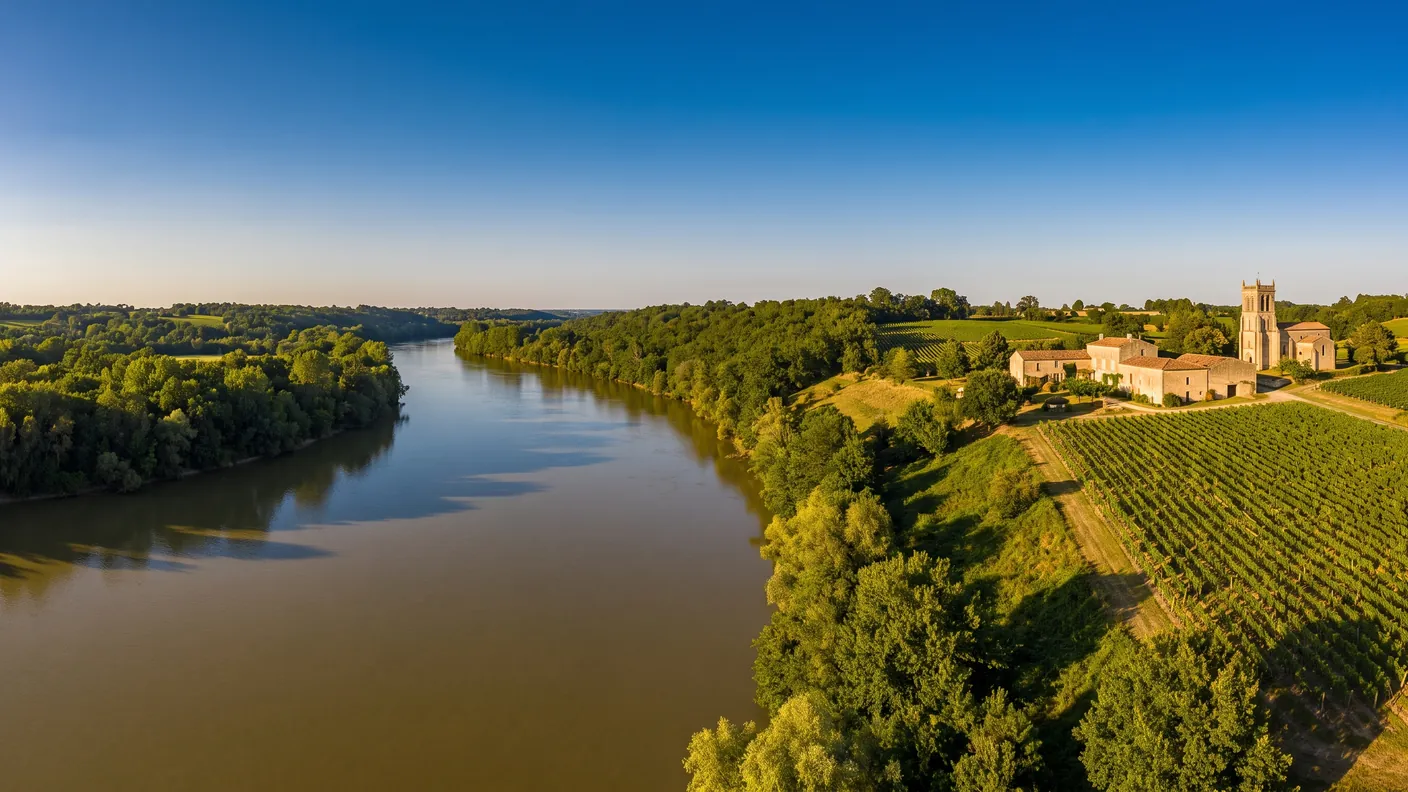
On the way to Rivet Abbey
Direct trip from Bordeaux (57 min) to Auros and the Bazas region, with stops along the way as desired—Bazas, Sauternes, Castets-en-Dorthe. Perfect for a day of exploring heritage, nature, and wine. Fixed, written quote—no unexpected meter charges.