
Bordeaux to Castets-en-Dorthe: the Garonne Canal
Where the Garonne Canal meets the river, at the Atlantic end of the Canal des Deux-Mers: Lock No. 53, a medieval castle, vineyards, and the legacy of François Mauriac—62 km and 1 hour 1 minute from Bordeaux.
Castets-en-Dorthe at a Glance
Castets-en-Dorthe is a village in the Gironde department located at the junction of the Garonne Canal and the Garonne River, at the Atlantic end of the Canal des Deux-Mers. The canal, which runs from Toulouse, joins the Garonne River here via Lock No. 53. The village is also home to two listed historic monuments: the Château du Hamel and the Church of Saint-Romain de Mazérac.
Here are the key details to know before you go. Distances are calculated door-to-door from Bordeaux; the fare shown is for a private driver reservation at a fixed price provided in advance, with no unexpected meter charges regardless of traffic or stops along the way.
| Landmark | Details |
|---|---|
| Department | Gironde (33), Nouvelle-Aquitaine |
| Status | Delegated municipality of “Castets et Castillon” (since 2017) |
| Population | new municipality: ~1,550 residents · the residents of Casteriot |
| Location | left bank of the Garonne · Langon district |
| Don't miss it | The Garonne Canal, Lock No. 53, the Château du Hamel |
| Distance from Bordeaux | 62 km · 1 hr 01 min |
| Designation | Bordeaux and Bordeaux Supérieur |
Since January 1, 2017, Castets-en-Dorthe has been a delegated municipality of the new municipality of “Castets et Castillon,” formed through its merger with Castillon-de-Castets.[6] Its two monuments are listed—but not classified—as historic monuments.
This guide describes Castets-en-Dorthe’s location on the Garonne River, its status as a delegated municipality, the terminus of the Garonne Canal, Lock No. 53, the Château du Hamel, and the Romanesque church in Mazérac. It also covers the neighboring vineyards and how to get there from Bordeaux, distinguishing between official sources and practical information.
Where is Castets-en-Dorthe located?
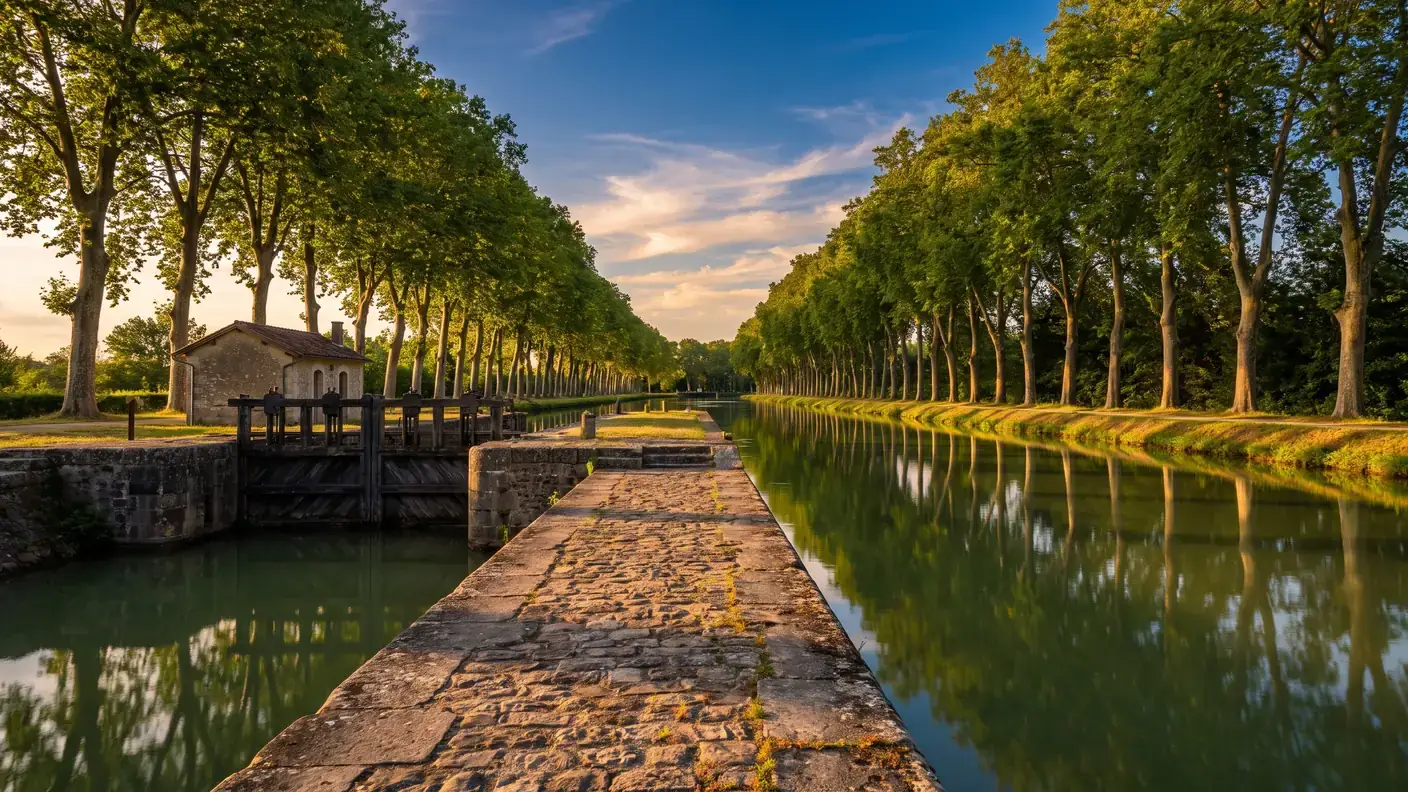
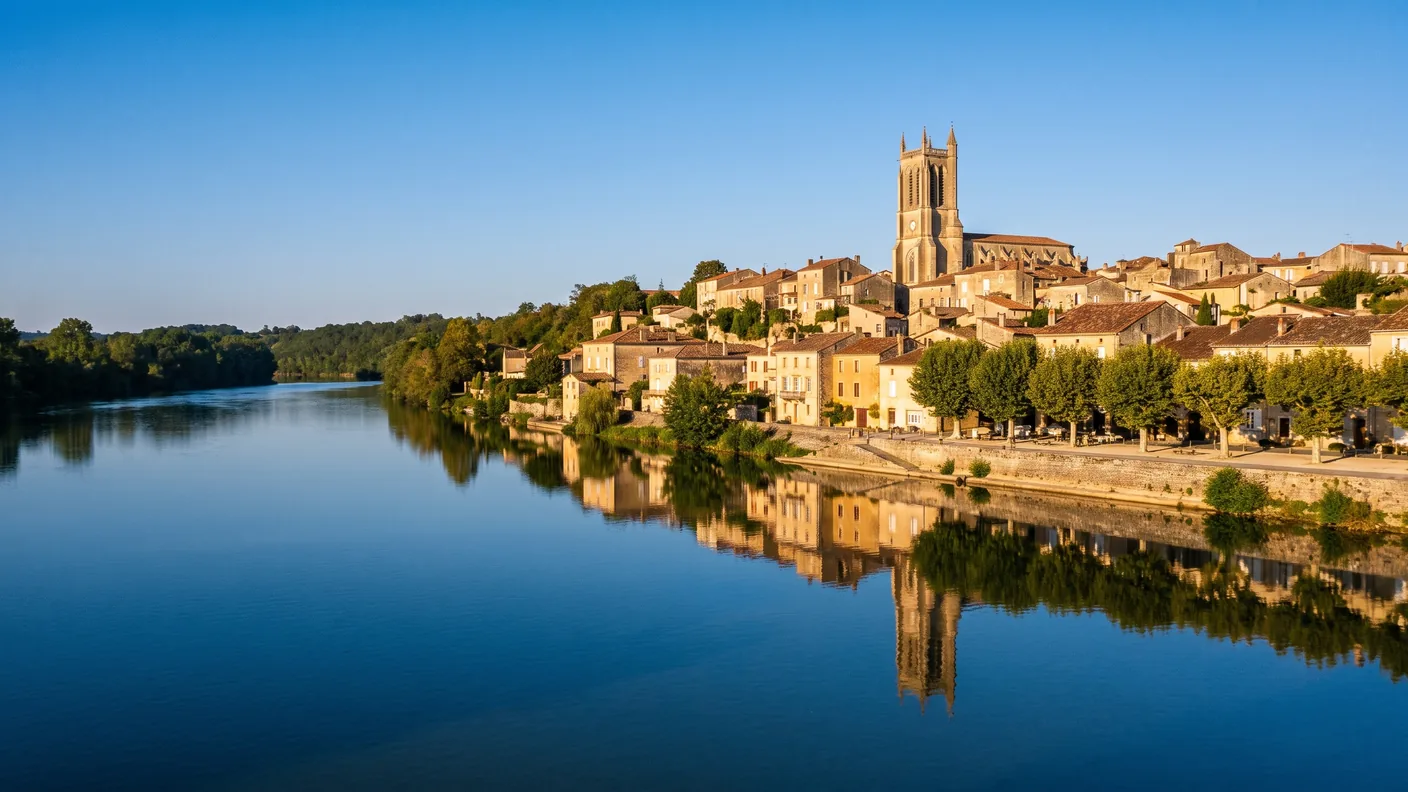
Castets-en-Dorthe is located in the southeastern part of the Gironde department, on the left bank of the Garonne River, east of Langon. The village sits at the junction of the river and the canal coming from Toulouse. Dominated by the Château du Hamel, this riverside landscape combines waterways, marshes, farmland, and vineyards.
A delegated municipality since 2017
Since January 1, 2017, Castets-en-Dorthe and Castillon-de-Castets make up the new municipality of “ Castets and Castillon ". Castets-en-Dorthe is a delegated municipality: it retains its name and local identity while becoming part of the new municipality. The municipal website confirms this merger and the date.[6]
Between the river, the canal, and the vineyard
The geography of Castets-en-Dorthe could not be more straightforward: the Garonne to the north, where it is still subject to the final effects of the tide; the Garonne Canal, which flows in from the east and joins the river via a series of locks; and, on the hillsides and marshes of the left bank, the vineyards of the Bordeaux region.[10] This convergence of three elements gives the village a character that is at once riverboat-oriented, agricultural, and riverine. The metal bridge spanning the Garonne completes this landscape of water and engineering structures.
The Garonne Canal and the Deux-Mers Canal
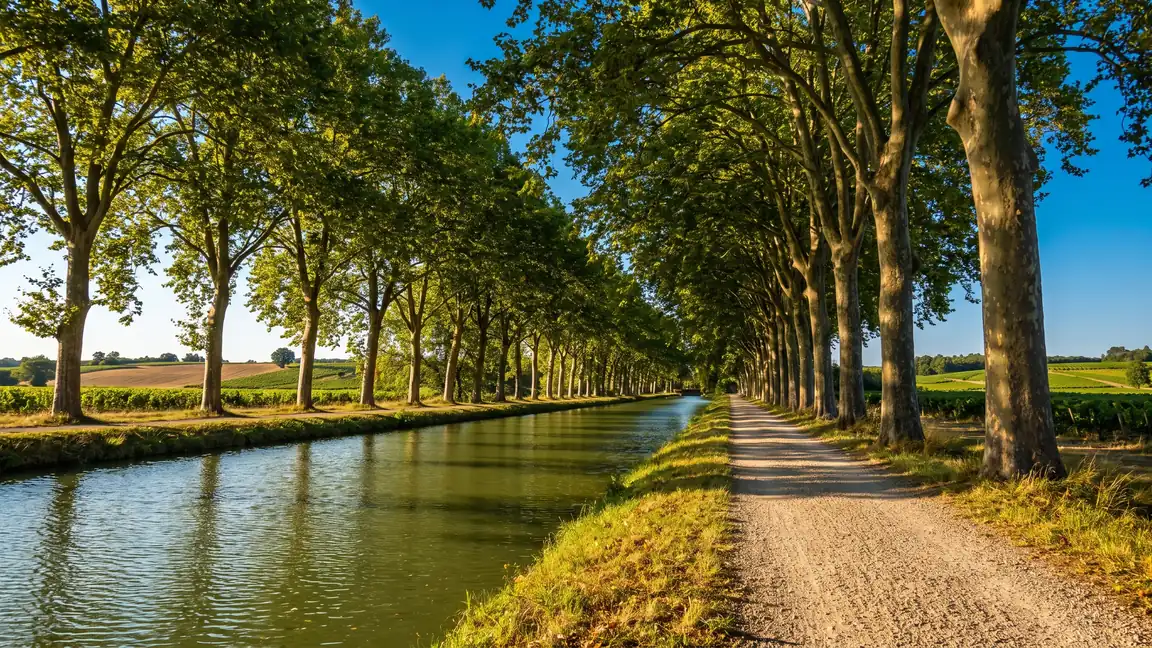
Castets-en-Dorthe takes great pride in marking the end of the Garonne Canal, the Atlantic terminus of the Grand Canal des Deux-Mers, which connects the Mediterranean Sea to the Atlantic Ocean. It is here, after more than 190 kilometers from Toulouse, that this major waterway in French history joins the Garonne, completing one of the country’s longest navigable routes and fulfilling one of the great dreams of engineers from centuries past.
From Toulouse to the Garonne
The Garonne Canal (long known as the “Garonne Lateral Canal”) extends the famous Canal du Midi from Toulouse to Castets-en-Dorthe, covering a distance of approximately 193 kilometers. Together, the Canal du Midi and the Garonne Canal form the Canal des Deux-Mers, which connects the Mediterranean Sea to the Atlantic Ocean without having to go around the Iberian Peninsula—a project that had been envisioned since ancient times and was ultimately realized in two phases. The Garonne Canal was built in the 19th century: construction began in 1838 under the direction of engineer Jean-Baptiste de Baudre, and the waterway was opened to navigation on March 12, 1856. At Castets-en-Dorthe, the canal does not continue toward the ocean: it ends and flows into the Garonne River, which then takes over all the way to Bordeaux and the estuary. The village is therefore, strictly speaking, the western terminus of the canal—the end of the river world.
A towpath for a stroll
Today, the Garonne Canal is home to very few commercial barges, but it has found a new lease on life as a destination for tourism and recreation. Its towpath, once used by horses pulling the gabarres, has become a popular greenway for cyclists and hikers, shaded by a superb double row of century-old plane trees that filter the light and punctuate the landscape. This bike route, which follows the canal for dozens of kilometers, offers a flat, safe, and car-free way to reach villages such as Meilhan-sur-Garonne, Le Mas-d’Agenais, and Buzet. In Castets-en-Dorthe, it’s the perfect opportunity for a lovely stroll along the water’s edge, between the locks and the lockkeeper’s house, with the Garonne River close by. A chauffeur service can drop cyclists off at the starting point and pick them up further along the route, eliminating any logistical concerns or the need to return to the starting point.
| The Garonne Canal, at a Glance | Details |
|---|---|
| Role | Atlantic end of the Canal des Deux-Mers |
| Length (Toulouse → Castets) | about 193 km |
| Construction Site | began in 1838 (engineer J.-B. de Baudre) |
| Opening to Navigation | March 12, 1856 |
| West Terminal | Castets-en-Dorthe, confluence with the Garonne |
Lock No. 53, junction with the Garonne River
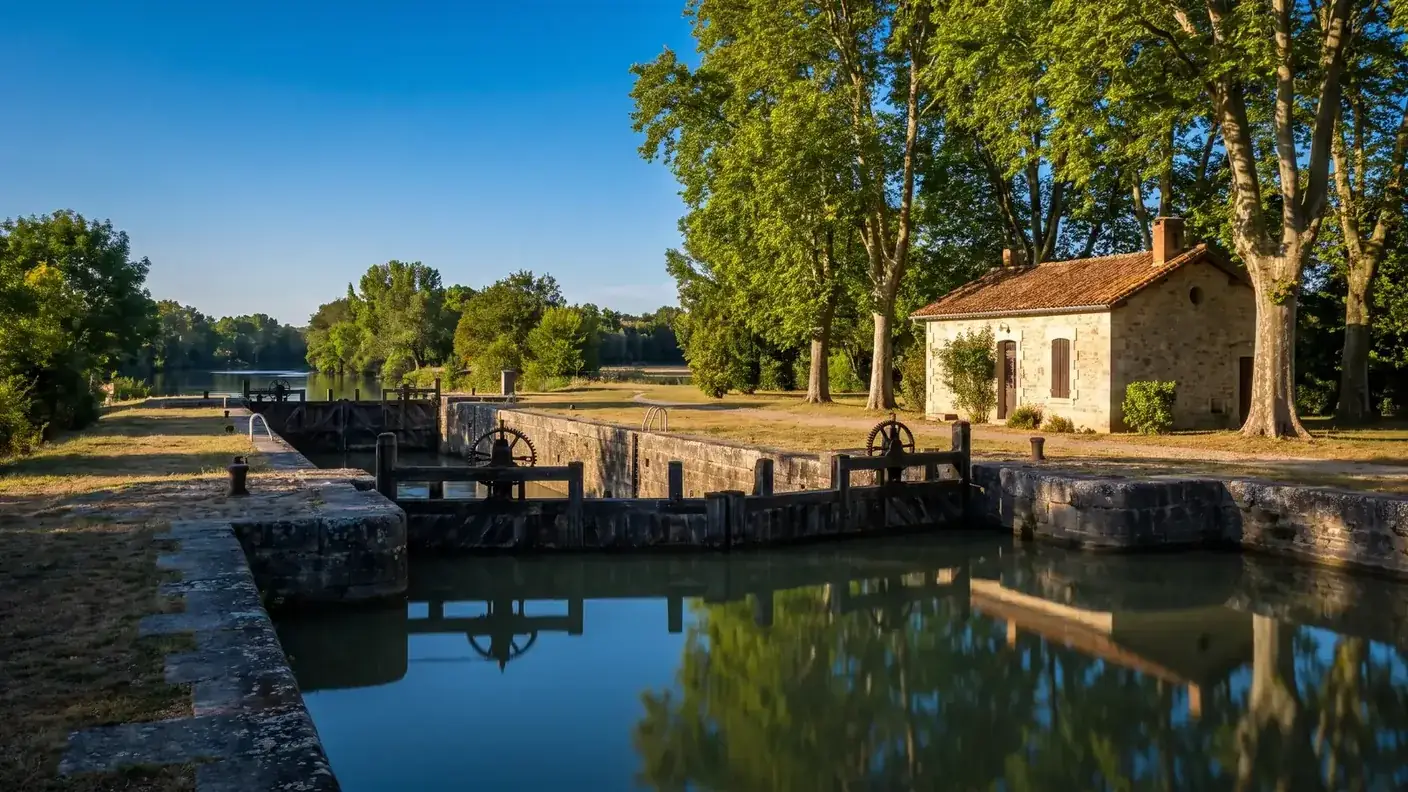
The Garonne Canal connects Toulouse to Castets-en-Dorthe over a distance of 193 km and has 53 locks. At its western end, Lock No. 53 connects the canal to the Garonne River.[7] Navigation and passage conditions must be verified with VNF.
Three locks to reach the river
To descend from the canal’s level to that of the Garonne, boats pass through three successive locks at Castets-en-Dorthe: Lock No. 51 at Mazérac, Lock No. 52 at Les Gares, and Lock No. 53 at L’Embouchure or Castets. The VNF notice to boaters identifies the last one as a mechanically operated double lock and specifies the rules for passing through it.[9]
A Lock That Moves with the Tides
The conditions for passage between the canal and the Garonne River are governed by the navigation advisories issued by Voies navigables de France (VNF). VNF states that passage through Lock No. 53 depends on the water level of the Garonne River and the Atlantic tide schedule.[9] Recreational boaters should therefore check the latest information before passing through.
The Château du Hamel and the Church of Mazérac
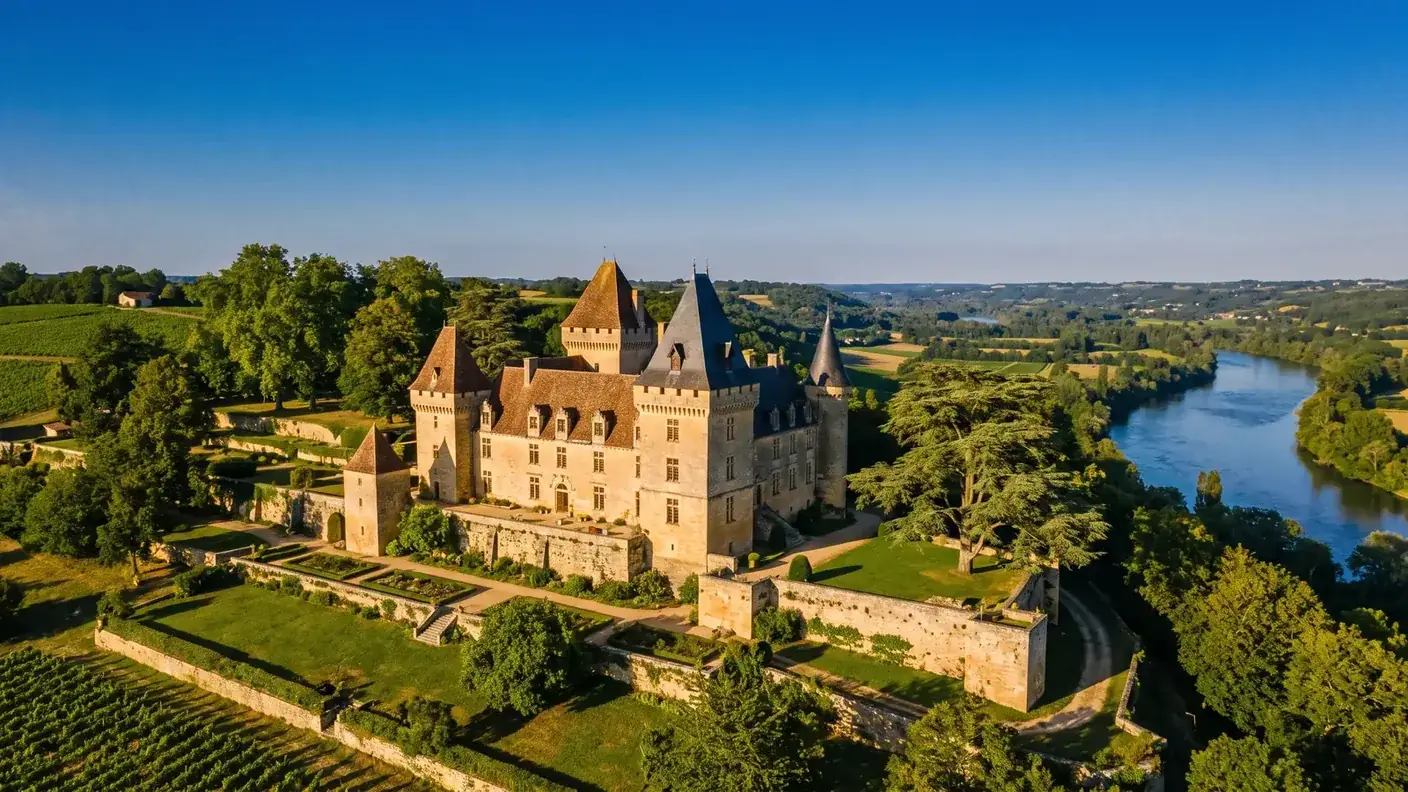
Castets-en-Dorthe has two listed historic monuments: the Château du Hamel and the Church of Saint-Romain de Mazérac. The official POP records confirm that the château was listed in 1963 and the church’s apse in 1925.[3][4]
The Château du Hamel
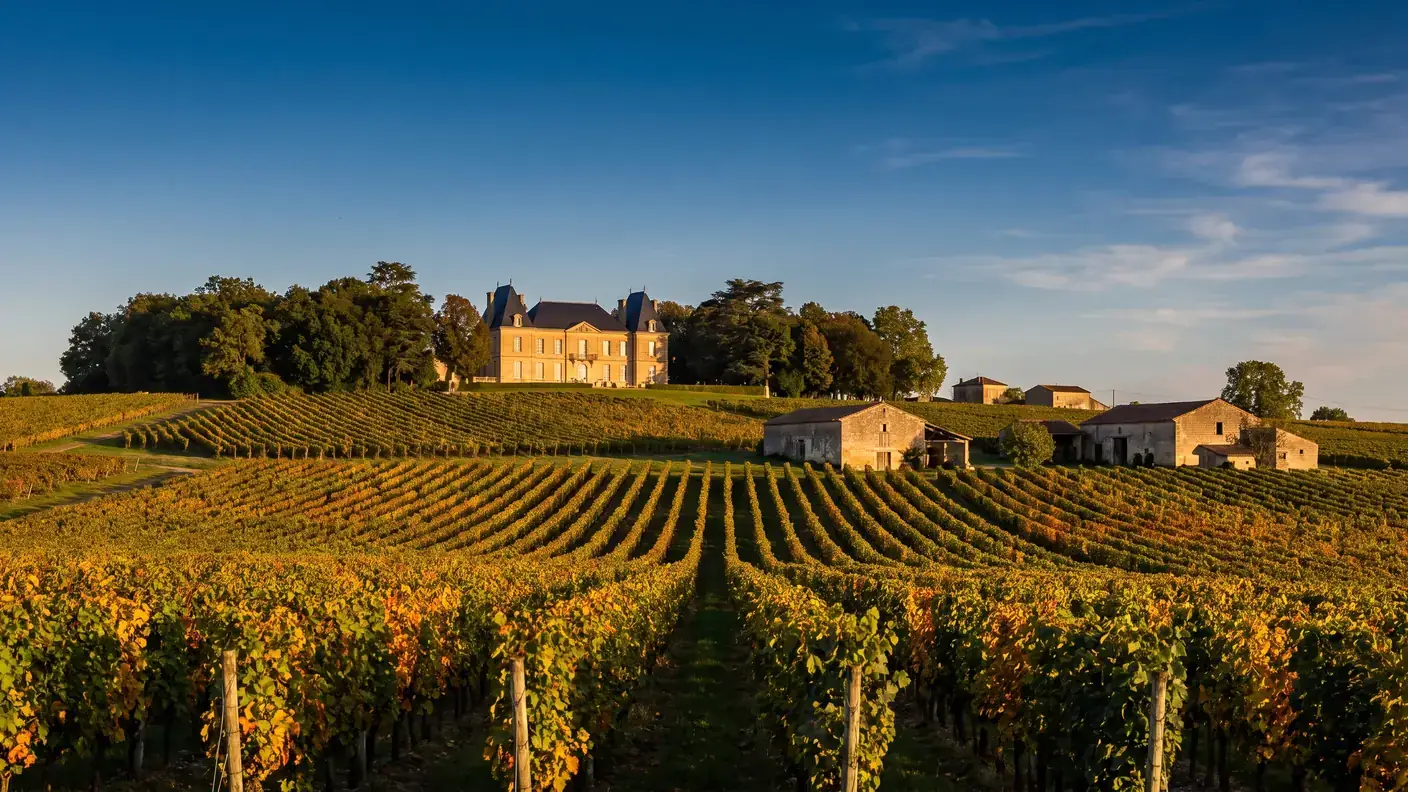
Overlooking the Garonne Valley, the Hamel Castle is the village's most iconic landmark. Its facades and roofs are registered a historic monument since 1963 (Mérimée reference PA00083511). Its history is remarkable: it was built in 14th century by Raymond-Guilhem de Goth, the pope's nephew Clement V (this Gascon pope, the first of the Avignon papacy and a native of the region), thanks to a permit to fortify the city granted on November 15, 1314, by the King of England Edward II — since Guyenne was then under English rule. Extensively rebuilt in the late 17th century by Charles du Hamel, after whom it is named, the castle still retains a curious feature at the base of its old keep heptagonal vaulted room, a seven-sided structure. Although still inhabited, it is not open to the public, but its silhouette watches over the village and the confluence of the canal and the river, bearing witness to seven centuries of Gironde history.
The Romanesque Church of Mazérac
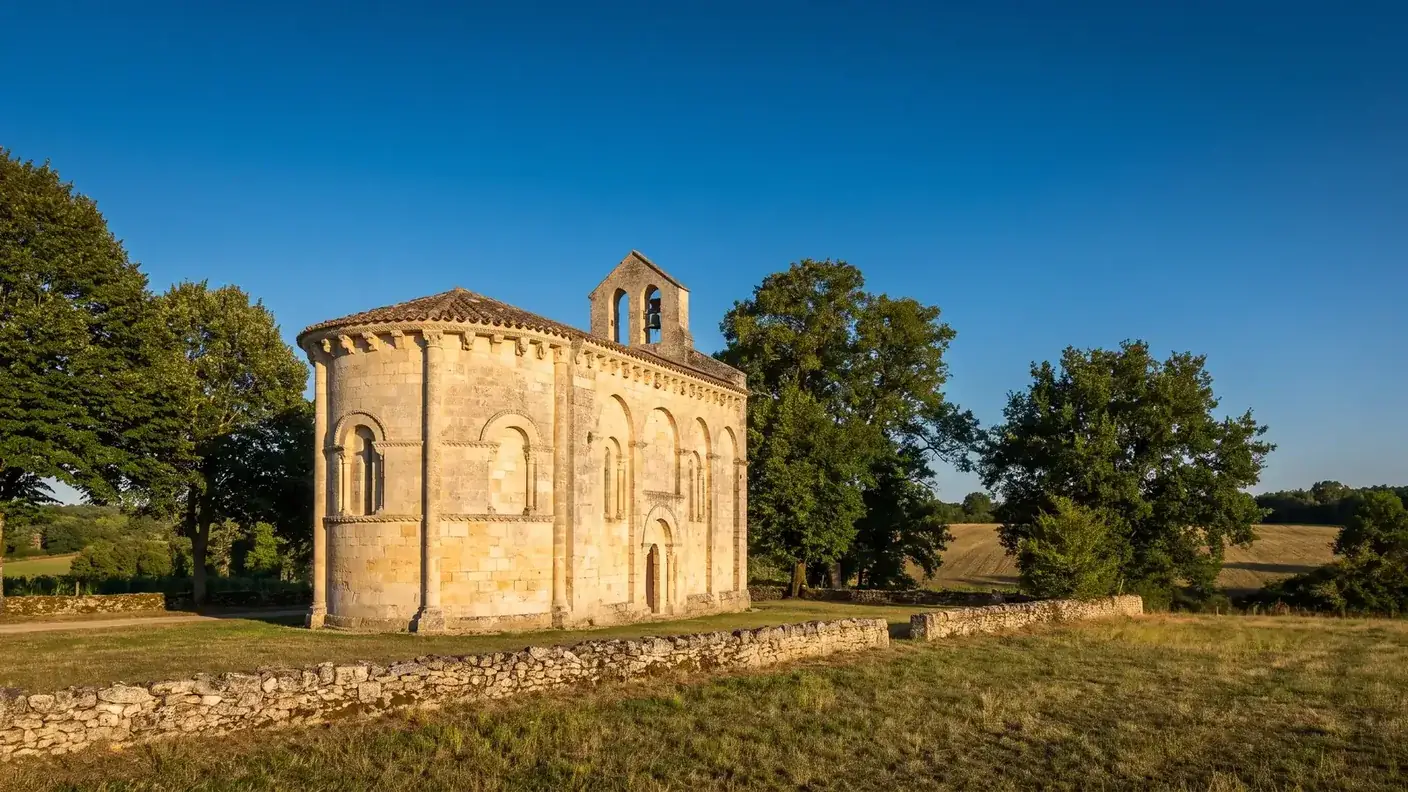
In the hamlet of Mazérac, a short distance from the village center, stands the Church of Saint-Romain de Mazérac, a 12th-century Romanesque building whose apse has been listed as a historic monument since 1925 (Mérimée reference PA00083512). It is a fine example of rural Romanesque architecture: its flat chevet is flanked by two lateral apse chapels, an elegant and rather rare layout that lends the structure a beautiful harmony. The building, which long served as the parish church of the former commune of Mazérac before its annexation, bears witness to the long history of settlement in these lands along the Garonne, long before the canal was built. Together with the Château du Hamel, it forms a modest yet authentic heritage site, befitting a village that has endured through the centuries on the banks of its river. Lovers of Romanesque art will appreciate adding this stop to their itinerary in the South Gironde.
| Listed Heritage Sites in Castets-en-Dorthe | Dating · Reference |
|---|---|
| Château du Hamel (facades, roofs) | 14th century · Listed in 1963 · PA00083511 |
| Saint-Romain Church in Mazérac (chancel) | 12th-century roman · registered in 1925 · PA00083512 |
Wine: Bordeaux and Bordeaux Supérieur
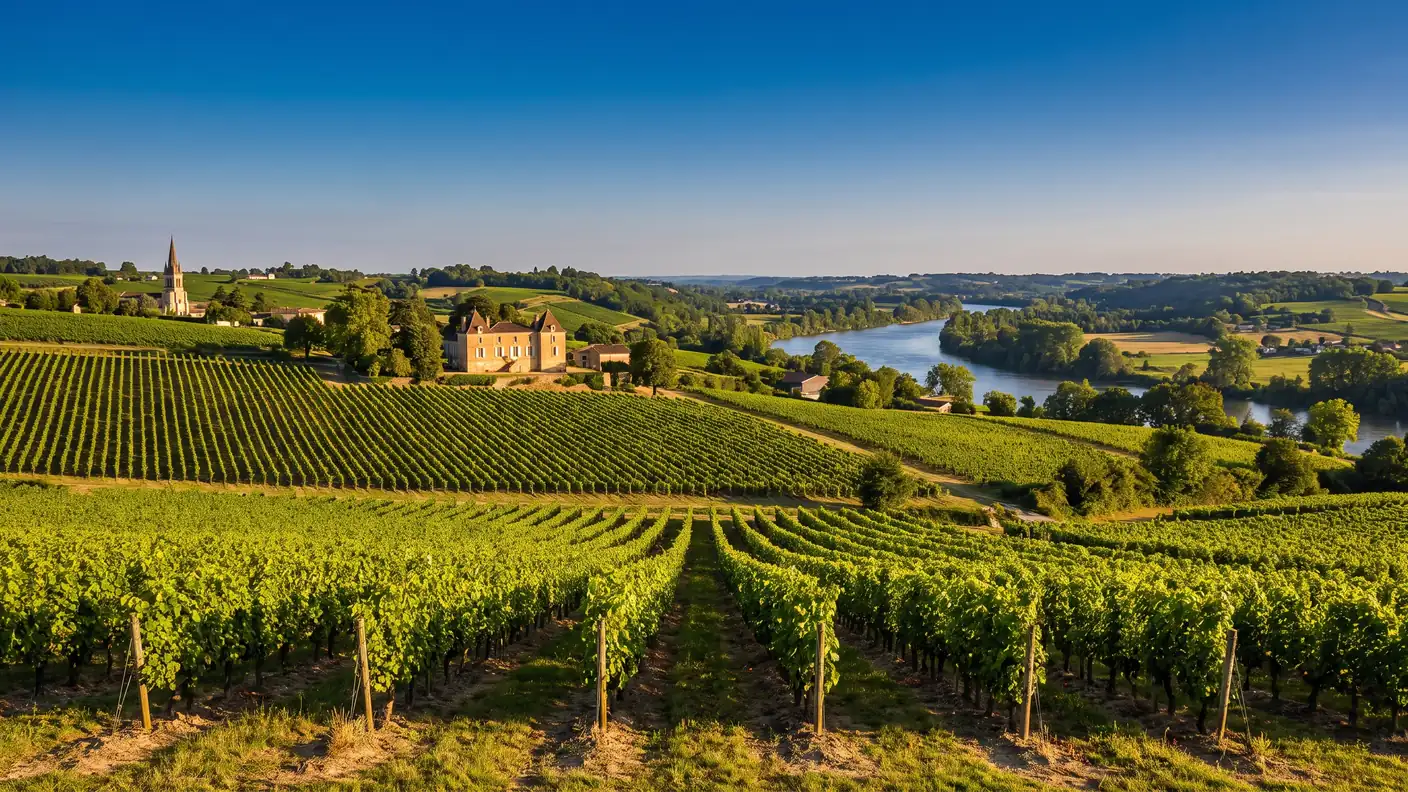
Castets-en-Dorthe is also a wine-growing region, but its appellation must be specified accurately: it is neither a Graves, nor a Sauternes, nor an Entre-deux-Mers, but rather a Bordeaux or a Bordeaux Supérieur. The proximity to very famous wines can be confusing; the town’s unique terroir falls under the regional appellations of the Bordeaux region, which nonetheless offer some excellent wines.
A regional appellation from the Left Bank
In the Castets-en-Dorthe area, winemakers primarily produce wines under the Bordeaux and Bordeaux Supérieur appellations, the major regional appellations that cover the entire Gironde wine-growing region. The terroir here is unique: the area lies on the left bank of the Garonne, partly on palus—the low-lying, fertile alluvial lands along the riverbank—rather than on the dry, stony gravel soils for which the neighboring grand crus are renowned. This explains why the town is not part of the Graves appellation: according to the INAO, its territory is classified only under the regional Bordeaux appellation. The area primarily produces red wines made from Merlot and Cabernet, which are often smooth and fruity, as well as a few whites. These are wines meant for enjoyment and sharing, offering excellent value for the price, best discovered directly from the local winemakers, far from the prices of prestigious appellations.
Do not confuse this with neighboring vintages
The wine-growing geography of southern Gironde is a real puzzle, and it’s easy to get confused. Castets-en-Dorthe is very close to several highly renowned appellations, without actually being part of them: the Graves and, above all, the sweet wines of Sauternes and Cérons on the same bank a little further upstream, and Entre-deux-Mers on the opposite bank, between the Garonne and the Dordogne. There’s also an interesting fact: there’s a grape variety called “Castets,” an old Bordeaux variety that’s now extremely rare—but its name doesn’t come from the village. It owes its name to a certain “Mr. Castets,” who is said to have identified it around 1870 near Saint-Macaire, just nearby. That’s sure to spark some conversation during a tasting! This is where an executive car service really comes into its own, allowing you to plan a wine-tasting tour that seamlessly combines the canal, the river, and a visit or two to estates in southern Gironde.
The History of Castets-en-Dorthe
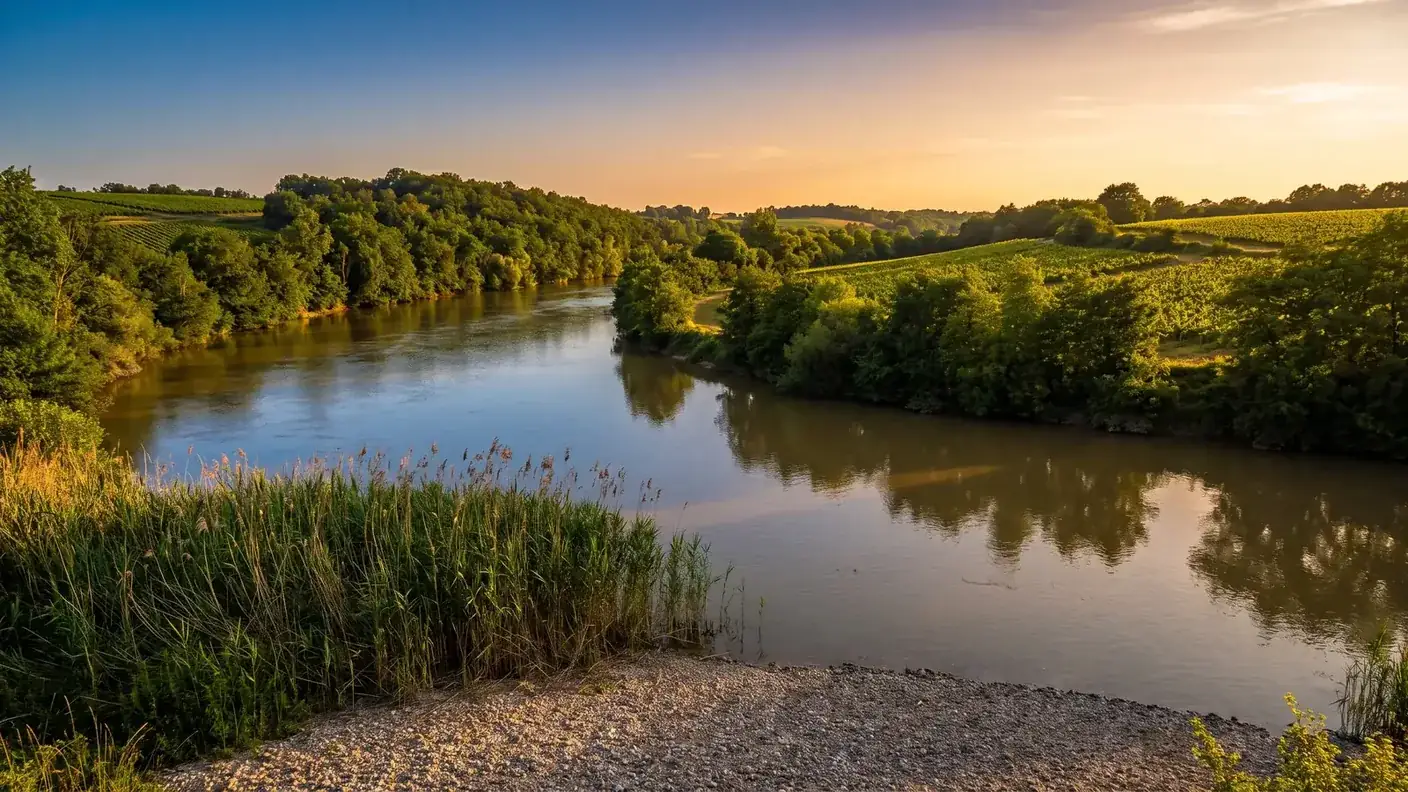
The history of Castets-en-Dorthe unfolds along the Garonne River: a medieval defensive site, a village of boatmen and river pilots, and then the arrival of the canal in the 19th century, which transformed local life. The river, long a major thoroughfare for travel and trade, shaped the town’s destiny long before roads and railroads were built.
From the Medieval Castrum to the Riverside Village
The very name “Castets” refers to a castle: the site is documented as early as the Middle Ages as a defensive stronghold overlooking the Garonne, a strategic river along which people and goods traveled. A “castrum Andorta” is mentioned as early as the late 13th century. The authorization to fortify the site, granted in 1314 by Edward II of England—then Duke of Aquitaine—for the construction of the Château du Hamel, confirms the site’s military importance at a time when Guyenne was under English rule and a contested territory. Over the centuries, the village became primarily a bustling river port, populated by sailors and boatmen who made their living transporting goods down the Garonne—wines, grains, and timber bound for Bordeaux. This tradition of river transport, deeply rooted in the landscape and local memory, naturally set the stage for Castets to become, in the 19th century, the terminus of the great canal coming from Toulouse.
The Canal, the Railroad, and the River
The opening of the Garonne Canal in 1856 briefly turned Castets-en-Dorthe into a bustling hub of inland waterway traffic. But history had an ironic twist in store: no sooner was it completed than the canal found itself facing competition from the rapidly expanding railroad. As early as 1858, the government even leased the canal’s operation to the Compagnie du Midi, the major railroad company—that is, to its own competitor, which had little interest in developing it. Traffic on the canal was permanently reduced as a result—dropping to one-third of its previous level—before the government resumed management of the waterway in 1898. The metal bridge spanning the Garonne, built in the early 20th century (around 1905)—sometimes mistakenly referred to as the “Eiffel Bridge”—completes this history of engineering structures and transportation. Today, the canal has found a new purpose—peaceful and green—a far cry from its former industrial bustle.
The name “en Dorthe” and the memory of Mauriac
The picturesque name “Castets-en-Dorthe” intrigues, and the village preserves the memory of a great writer and Nobel Prize winner in literature. Behind these two points of interest lies a fascinating lesson in etymology and a subtle connection to one of the greatest figures in French literature, whose roots lie in the Gironde region.
"En Dorthe," the twisted willow
The name of the town consists of two parts. “ Castets "comes from Gascon" castèth, “château,” a reference to the medieval defensive site—it’s the same word as the many “Castet(s)” in the Southwest. As for the mysterious “ in Dorthe ", it is the result of a clever wordplay: the original form of the name was Andorta, and eventually “An-dorta” came to be pronounced and written as “en Dorthe,” with the first syllable reinterpreted as the preposition “en.” Andorta derives from Latin intorta, “twisted,” which likely referred to a twisted wicker knot, a flexible branch used to tie bundles of firewood or vine stakes. Contrary to popular belief, “en Dorthe” has nothing to do with a redoubt or a fortification (a confusion with the word “redorte”). The official name “Castets-en-Dorthe” was not established until 1957; prior to that, the town was simply called “Castets.”
François Mauriac, a native of the region
Castets-en-Dorthe can claim a connection to François Mauriac (1885–1970), the great novelist from Bordeaux, winner of the 1952 Nobel Prize in Literature and a member of the Académie Française, who celebrated the Gironde region in novels such as *Thérèse Desqueyroux* and *Le Nœud de vipères*. It was in Castets, in fact, that his paternal family was based: his grandfather was a cooper there, a woodworker who crafted the barrels essential to the Garonne wine trade. It’s a nice nod, incidentally, to the village’s etymology: from the grandfather who shaped the wood for the barrels to the old word for twisted wicker, everything here speaks of supple materials shaped by human hands. This quiet family connection links the village to one of the greatest names in 20th-century French literature, adding a literary depth to the experience of exploring this corner of southern Gironde.
What is there to do in Castets-en-Dorthe?
In Castets-en-Dorthe, visitors come first and foremost for the Garonne Canal and its terminus. You can watch the boats pass through Lock No. 53, known as the “Garonne Lock,” which connects the canal to the river; we hop on a bike along the towpath shaded by plane trees—the village is a junction on the “Canal des 2 Mers à Vélo” (V80) bike route, from where we can head west toward Bordeaux or east toward Toulouse, with almost no elevation gain; visit the Château du Hamel, a castle whose facades and roofs are listed as historic monuments and which overlooks the junction; stroll along the boat dock; and set off to taste the fine wines of southern Gironde on the nearby Route des Graves et Sauternes. The market is held in Langon, four kilometers away. Here is a detailed look at what you can actually do there and in the immediate vicinity.
- Watch the boats pass through Lock No. 53—the “Garonne Lock,” a double-chamber lock where the canal meets the river (with a height difference of about 10 m), in the heart of the village
- Cycling along the “Canal des 2 Mers à Vélo” (V80)—the shaded towpath leads from the village toward Bordeaux (~60 km to the west) or Toulouse (193 km to the east), with virtually no elevation gain
- Explore the Château du Hamel—a castle whose facades and roofs are listed as historic monuments; since access conditions may change, please check with the Sud-Gironde Tourist Office before visiting
- Stroll through the marina—the canal’s small recreational harbor—to watch the barges and boats along the banks lined with plane trees
- Follow the Graves and Sauternes Wine Route — wine tastings at wineries (Sauternes, Barsac, Graves) starting from Langon, four kilometers away
- Shopping at the market in Langon — the large Friday morning market (8 a.m.–1 p.m.) on the banks of the Garonne, and the small Sunday morning food market, about 4 km away
The Canal, the Lock, and the Bike
The heart of Castets is the terminus of the Garonne Canal. After 193 kilometers and 53 locks from Toulouse, the canal joins the river here via Lock No. 53, known as the “Garonne Lock”: a double-chamber lock operated by a certified operator due to the Garonne River’s unique flow conditions. You can spend a moment watching it in action, then walk up the towpath, shaded by century-old plane trees. This is also where the “Canal des 2 Mers by Bike” route passes through, designated as national route V80: the greenway coming from Bordeaux joins the canal towpath here, which leads toward Toulouse. From the village, you can set off by bike toward the west or the east, on a nearly flat route—one of the most beautiful ways to explore southern Gironde along the water.
The Château du Hamel and the Vineyards
Overlooking the junction of the canal and the river, the Château du Hamel is a private residence that is still inhabited; its facades and roofs have been listed as historic monuments since 1963. Since access conditions and any guided tours may change, please check with the Sud-Gironde Tourist Office before visiting. As for vineyards, Castets is right at the gateway to the grand cru regions: the Bordeaux Wine Route through Graves and Sauternes, managed by the tourist office in Langon (about 4 km away), leads to the estates of Sauternes, Barsac, and Graves for tastings of sweet wines and reds. It’s also in Langon, four kilometers away, that the market is held—the big Friday morning event on the banks of the Garonne.
| Activity | Where / When | Good to Know |
|---|---|---|
| Lock No. 53 & Boat Stop | village, along the canal | end of the canal, boat traffic |
| Cycling Along the Canal des 2 Mers (V80) | leaving the village | toward Bordeaux (~60 km) or Toulouse (193 km) |
| Hamel Castle | village | Check with the tourist office for admission requirements |
| The Graves and Sauternes Wine Route | from Langon (~4 km) | Sauternes, Barsac, and Graves Wine Tastings |
| Langon Market | ~4 km | Friday (all day) + Sunday morning, 8 a.m.–1 p.m. |
What is there to see around Castets-en-Dorthe?
Castets-en-Dorthe is ideally located for exploring southern Gironde: the great sweet wines of Sauternes, the medieval town of La Réole, the city of Langon, and the river valley are just a few kilometers away. It’s the perfect base for a vacation combining wine, heritage, and waterways, in a region still untouched by mass tourism and known for its relaxed way of life.
Sauternes, Langon, and La Réole
A few kilometers upstream on the same bank lies the famous Sauternes vineyard, home to the world’s finest sweet white wines—golden and syrupy—born from the “noble rot” that affects the grapes amid the autumn mists of the Garonne and Ciron rivers—a must-see destination, culminating at the legendary Château d’Yquem. Nearby, Langon, a lively subprefecture, offers its market, shops, and train station on the Bordeaux–Toulouse line. Traveling down the Garonne, you’ll soon reach La Réole, a superb medieval town perched above the river, home to an ancient Benedictine abbey, a Romanesque town hall—one of the oldest in France—and charming narrow streets. A little further on, the town of Bazas and its remarkable Gothic cathedral are also worth a visit. The entire heritage-rich and gourmet region of southern Gironde unfolds around Castets.
Along the River and Through the Vineyards
Lovers of waterfront scenery will be delighted: in addition to the canal and its towpath, the Garonne Valley offers beautiful views of the river and its islands, while the Ciron Valley—a cool, wooded tributary—hides gorges and one of Europe’s oldest remnant forests. As for the vineyards, beyond Sauternes, you can venture toward the Graves, the Entre-deux-Mers on the opposite bank, or the slopes of Sainte-Croix-du-Mont and Loupiac—other sweet wine regions on the right bank across from Sauternes. Distances are short everywhere, and you can easily move from one vineyard to a bastide, or from a lock to an abbey. Taking such a loop tour by car with a driver allows you to savor every stop without worrying about the route, parking, or wine tastings—the best way to experience, in a single day, all the richness of southern Gironde.
| Around Castets-en-Dorthe | Distance | Interest |
|---|---|---|
| Langon | ~9 km | Subprefecture, market, train station |
| La Réole | ~15 km | Medieval town, abbey, on the Garonne River |
| Bazas | ~22 km | Gothic cathedral, fortified town |
| Sauternes | ~14 km | Vineyards of the Great Sweet Wines |
| Bordeaux | ~62 km | The City, the Cité du Vin |
When is the best time to visit Castets-en-Dorthe?
Castets-en-Dorthe is worth visiting year-round, but spring and fall—when the light plays on the canal and the Garonne—are the mildest and most beautiful seasons. The spring The plane trees along the towpath are turning a soft shade of green, and recreational boating on the canal is picking up; it’s the perfect season for bike rides along the water’s edge, surrounded by fresh, flower-filled nature, before the summer heat sets in. Thesummer This is the highlight of the canal’s season: rental boats and houseboats bring the locks to life, passing through Lock No. 53 toward the Garonne becomes a popular spectacle, and the long evenings invite you to stroll along the waterfront under the plane trees. It’s also the peak season for visiting Sauternes and the neighboring vineyards, with plenty of refreshing stops along the way.
Thefall There’s a special charm to this corner of the Garonne: the grape harvest is in full swing in the vineyards of southern Gironde, the morning mist rising from the river and the Ciron—the very same mist that gives Sauternes its greatness—bathe the landscape in golden light, and the plane trees along the canal take on shades of russet and gold before shedding their leaves. It’s the perfect season to combine exploring the canal with tasting the new vintages. Thewinter, which is quieter, allows the village to retain its peace and quiet: the canal becomes a mirror, the Garonne carries its high waters to the rhythm of the tides, and visitors can enjoy the historic sites without the crowds. In any season, the mild Gironde climate and the beauty of the watery landscapes make Castets-en-Dorthe a refreshing getaway, just over an hour from Bordeaux.
Getting to Castets-en-Dorthe from Bordeaux
Castets-en-Dorthe is located 62 km from Bordeaux, or 1 hour and 1 minute according to the standard commercial route.[8] The route takes the A62 and exits at Langon. The village does not have a train station; from Caudrot or Langon, a final stretch by road is still required.
Train or private chauffeur?
To get to Castets-en-Dorthe, the chauffeured transfer offers a direct, door-to-door trip from Bordeaux with no transfers. Flat-rate fares start at €134 for a one-way trip in a Mercedes sedan or a van seating up to 8 passengers. The quote, provided before departure, details the route and any requested stops along the way.
This is the perfect option for a day of wine tourism, a bike ride along the canal (drop-off at the starting point, pick-up at the finish), a tour of the South Gironde’s heritage sites, or a simple transfer to or from the Bordeaux-Mérignac Airport. You can travel alone, as a couple, or in a small group of up to 8 people, with luggage and even bicycles, and request stops in Langon, Sauternes, or La Réole along the way. In practice, booking is quick and easy: simply provide the pickup address in Bordeaux and the drop-off location in Castets-en-Dorthe, along with the date, desired time, and number of passengers, and you’ll receive a fixed-price quote in writing. On the day of the trip, the driver picks up the passengers at the agreed-upon address and takes them directly to the village, with no detours or unpleasant surprises—a truly convenient way to explore this beautiful corner of the Garonne region.
| Route | Distance | Duration | Landmark |
|---|---|---|---|
| Bordeaux → Castets-en-Dorthe | 62 km | 1:01 | Starting at €119 for a private chauffeur service |
| Castets → Langon | ~9 km | ~12 min | subprefecture, train station, market |
| Castets → Sauternes | ~14 km | ~19 min | vineyard of great sweet wines |
| Castets → La Réole | ~15 km | ~23 min | medieval city on the Garonne River |
Whether you come for the Garonne Canal and its famous tide-operated lock, for the Château du Hamel and the Romanesque church in Mazérac, for the wine of the left bank, or to pay homage to François Mauriac, Castets-en-Dorthe is a treat for lovers of authentic southern Gironde, at the crossroads of the river, the canal, and the vineyards—a village of water and stone that, to those who take the time to stop and explore, reveals a history and an atmosphere that many more popular destinations envy.
Whether you’re planning a day on the water, a heritage tour, or a wine-tasting getaway, booking a private chauffeur guarantees a comfortable and punctual ride— book a driver from Bordeaux to Castets-en-Dorthe or explore all our destinations .
Frequently Asked Questions
Where is Castets-en-Dorthe located?
Castets-en-Dorthe is a village in the Gironde department located on the left bank of the Garonne River, east of Langon. Since 2017, it has been a delegated municipality of “Castets et Castillon.” The village marks the end of the Garonne Canal, where it joins the river. From Bordeaux, the standard trip covers 62 km in 1 hour and 1 minute.
What is the distance between Bordeaux and Castets-en-Dorthe?
The standard commercial route covers 62 km in 1 hour and 1 minute, via the A62 and then departmental roads along the Garonne River. The flat rate starts at €119 for a one-way trip. The village does not have a train station; the nearest ones are in Caudrot and Langon, with a short final stretch by road.
Why is Castets-en-Dorthe famous for its canal?
The village marks the end of the Garonne Canal, the western section of the Canal des Deux-Mers. After a 193-km journey from Toulouse, the canal joins the Garonne River at Castets-en-Dorthe. Voies navigables de France lists 53 locks along the route; the last one connects the canal to the river.
What is Lock No. 53 in Castets-en-Dorthe?
This is the last lock on the Garonne Canal, at the junction with the river in Castets-en-Dorthe. Navigation conditions may vary depending on operational factors and water levels in the Garonne. Boaters should therefore consult the navigation advisories issued by Voies navigables de France before passing through.
Is Castets-en-Dorthe still a municipality?
Since January 1, 2017, Castets-en-Dorthe is no longer an independent municipality: it merged with Castillon-de-Castets to form the new municipality of “Castets et Castillon.” Castets-en-Dorthe is now a delegated municipality: it retains its name, its church, and its identity, but shares a town hall with Castillon. The new municipality has approximately 1,550 residents; the former municipality of Castets-en-Dorthe alone had just over 1,100 residents before the merger. The residents are known as Casteriots.
What kind of wine is produced in Castets-en-Dorthe?
Wines from the Bordeaux and Bordeaux Supérieur regional appellations—not Graves, Sauternes, or Entre-deux-Mers, despite the proximity of these renowned appellations. The commune’s terroir, located on the left bank of the Garonne and partly on palus (alluvial lands along the river), is classified by the INAO as part of the Bordeaux regional appellation. The area primarily produces smooth, fruity red wines made from Merlot and Cabernet, offering excellent value for the price. Note: The Bordeaux grape variety “Castets” does not take its name from the village, but from a Mr. Castets who is said to have identified it around 1870.
What is there to see in Castets-en-Dorthe?
Must-see sights: the Garonne Canal and its towpath, Lock No. 53 at the confluence with the river, the Château du Hamel, and the Romanesque Church of Saint-Romain in Mazérac, both of which are listed as historic sites. Nearby are Sauternes, La Réole, Langon, and Bazas. From Bordeaux, the standard travel time is 1 hour and 1 minute.
What is the Two Seas Canal?
This is the name given to the system comprising the Canal du Midi (from Toulouse to the Mediterranean) and the Canal de Garonne (from Toulouse to Castets-en-Dorthe). Together, they provide a waterway connecting the Mediterranean Sea to the Atlantic Ocean without having to go around Spain. The Garonne Canal, built in the 19th century (construction began in 1838; it opened in 1856), ends at Castets-en-Dorthe, where it joins the Garonne River. The village thus marks the Atlantic end of the Canal des Deux-Mers, one of the great engineering feats in French waterway history.
Is the Château du Hamel open to visitors?
Overlooking the junction of the canal and the river, the Château du Hamel is a private residence that is still inhabited; its facades and roofs have been listed as historic monuments since 1963. Since access conditions and any guided tours may change, please check with the Sud-Gironde Tourist Office before visiting.
What does the name “Castets-en-Dorthe” mean?
“Castets” comes from the Gascon word *castèth*, meaning “castle,” a reference to the village’s medieval defensive site. “En Dorthe” results from a mispronunciation of the older form “Andorta”: over time, “An-dorta” came to be heard as “en Dorthe.” Andorta derives from the Latin *intorta*, meaning “twisted,” which likely referred to a twisted wicker binding. Contrary to popular belief, the name therefore has nothing to do with a redoubt or a fortification. The official name “Castets-en-Dorthe” was not established until 1957; before that, the town was simply called “Castets.”
What is the connection between François Mauriac and Castets-en-Dorthe?
François Mauriac (1885–1970), the great novelist from Bordeaux and 1952 Nobel Prize winner in Literature, had his paternal family settled in Castets-en-Dorthe, where his grandfather was a cooper—the craftsman who made barrels for the wine trade. It’s a lovely nod to the village’s etymology (“twisted wicker”): from the curved wood of the barrels to the old word for wicker, everything here speaks of supple materials shaped by human hands. This discreet family connection links the village to one of the greatest names in 20th-century French literature.
What is there to see around Castets-en-Dorthe?
Sauternes and its vineyards producing fine sweet wines (~14 km); Langon, a lively subprefecture with a market and train station (~9 km); La Réole, a superb medieval town on the Garonne, with its abbey and historic Romanesque town hall (~15 km); Bazas and its Gothic cathedral (~22 km); the Ciron Valley and its ancient forest. You can also explore the Graves, the Entre-deux-Mers, and the sweet wines of Sainte-Croix-du-Mont and Loupiac. With a chauffeur service, you can plan a lovely day-long loop through southern Gironde.
Can I book a chauffeur service from Bordeaux to Castets-en-Dorthe?
Yes. We offer transportation from Bordeaux to Castets-en-Dorthe—a 62-kilometer trip taking 1 hour and 1 minute according to the benchmark route—at a fixed price starting at €134 one way, in a Mercedes sedan or a van seating up to 8 passengers. The trip is direct, and a quote is provided before departure.
What is there to do in Castets-en-Dorthe?
People come mainly for the Garonne Canal, which ends in Castets-en-Dorthe: we watch the boats pass through Lock No. 53 (the “Garonne Lock,” where the canal joins the river) and cycle along the “Canal des 2 Mers by Bike ” (V80), which runs from the village toward Bordeaux or Toulouse, with almost no elevation gain. We also explore the Château du Hamel, whose facades and roofs are listed as historic monuments; we stroll around the boat dock; and we head to the nearby Graves and Sauternes Wine Route. The market is held in Langon, four kilometers away, on Friday and Sunday mornings.
Further Reading
- On the Garonne River, upstream : see the Marmande Guide (the Garonne Valley, the canal, the wines of Lot-et-Garonne)
- A village in the Libournais region : see the Guide to Gardegan-et-Tourtirac (two Romanesque churches, castles, and Castillon wine)
- The nearby Cité du Vin : see the Guide to Saint-Émilion (UNESCO, monolithic church, grand cru wines)
- Plan Your Trip : Book an executive car service from Bordeaux to Castets-en-Dorthe or explore all our destinations
Sources and References
- Wikipedia — Castets-en-Dorthe — geography, status, canal, locks, heritage, name
- Wikipedia — Garonne Canal— Deux-Mers Canal, construction began in 1838, opened in 1856
- POP/Mérimée Database — Château du Hamel — Listed as a Historic Monument (1963), 14th century, permit no. 1314
- POP/Mérimée Database — Saint-Romain Church in Mazérac — Listed as a Historic Monument (1925), 12th-century Romanesque apse
- INSEE — Municipality of Castets et Castillon (33106) —New municipality formed in 2017, population
- Municipality of Castets and Castillon — official website — formed by the merger of Castets-en-Dorthe and Castillon-de-Castets on January 1, 2017
- Waterways of France — Garonne Side Canal — Toulouse–Castets-en-Dorthe route, 193 km and 53 locks
- Bordeaux → Castets-en-Dorthe Sales Page — Engine-calculated values: 62 km, 61 minutes, and 119 €
- Voies navigables de France — Notice to Vessels 2026, Southwest Network — Lock No. 53: Operation and passage are subject to the water level of the Garonne River and tidal conditions
- Gironde Department — Garonne Valley — the residual effects of the tide on the hydrological regime at Castets-en-Dorthe
Article updated on .
Heading to the Garonne Canal
Direct route from Bordeaux (62 km · 1 hr 01 min) to Castets-en-Dorthe, the canal, and the Garonne River, with stops along the way as you please—Langon, Sauternes, La Réole. Also ideal for a bike ride along the canal. Written fixed-price quote—no unexpected meter charges.