
Bordeaux to Marmande: tomatoes and the Val de Garonne
The Val de Garonne subprefecture, on the right bank of the Garonne River: the famous Marmande tomato, the Notre-Dame Church and its listed cloister, the Côtes du Marmandais vineyards, and a turbulent history—about an hour from Bordeaux, the closest of our destinations in Lot-et-Garonne.
Marmande at a Glance
Marmande is a subprefecture of Lot-et-Garonne and the capital of the Val de Garonne, with 17,328 residents in 2023 [source]. Its heritage includes the Marmande tomato and Notre-Dame Church with its listed cloister [source]. The town has a station on the Bordeaux–Toulouse line. From Bordeaux, the standard 92 km trip takes about 1 hour, with a private driver starting 163 € one way in the Eco class.
Marmande is a small town in Lot-et-Garonne, a subprefecture and the capital of the Val de Garonne, located on the right bank of the Garonne River, between Bordeaux and Agen, and closer to Agen by road based on the distances given here. Its name is known worldwide for a fruit: the Marmande tomato, for which the town claims to be the capital. But Marmande also has a long history—a charter from Richard the Lionheart, a massacre during the Albigensian Crusade—and a rich cultural heritage: the listed Notre-Dame Church and its cloister, a remarkable garden, and a vineyard with an AOC designation. A trading and agricultural town on the riverbank, it offers a taste of the gourmet Southwest, about an hour from Bordeaux—the closest destination in our selection in Lot-et-Garonne.
Here are the key details to know before you go. The distances are for the door-to-door route from Bordeaux; the fares are fixed prices provided in advance.
| Landmark | Details |
|---|---|
| Department | Lot-et-Garonne (47), Nouvelle-Aquitaine |
| Status | Subprefecture · Capital of the Val de Garonne (seat of the metropolitan area) |
| Population | approximately 17,328 residents (INSEE 2023) · Marmandais |
| Area | ≈ 45.06 km² · on the right bank of the Garonne |
| Don't miss it | The tomato from Marmande, the Notre-Dame Church and its cloister, the Garonne River |
| Distance from Bordeaux | about 92 km · about 1 hour by car |
| Train Station | Marmande, on the Bordeaux–Toulouse line (TER + Intercités) |
Let’s clear up a few misconceptions from the start. Marmande is not a bastide: it is an ancient town, a former castrum, with a charter that predates the rise of the bastides by a long way. Its famous tomato isn’t round, but flat and ribbed. Notre-Dame Church dates not from the 13th century but mainly from the 14th–17th centuries. And the beautiful cloister garden, often assumed to be medieval, is in fact a French formal garden created in 1955. This guide separates verified facts from the stories often repeated about the town.
Here we go over everything you need to know before you come: where Marmande is located and what makes it unique, the famous tomato, the history of the 1182 charter and the 1219 massacre, Notre-Dame Church and its cloister, the Côtes du Marmandais vineyards, the Garonne River, the city’s economy, notable sites in the surrounding area, and the easiest way to get there from Bordeaux.
Where is Marmande located?
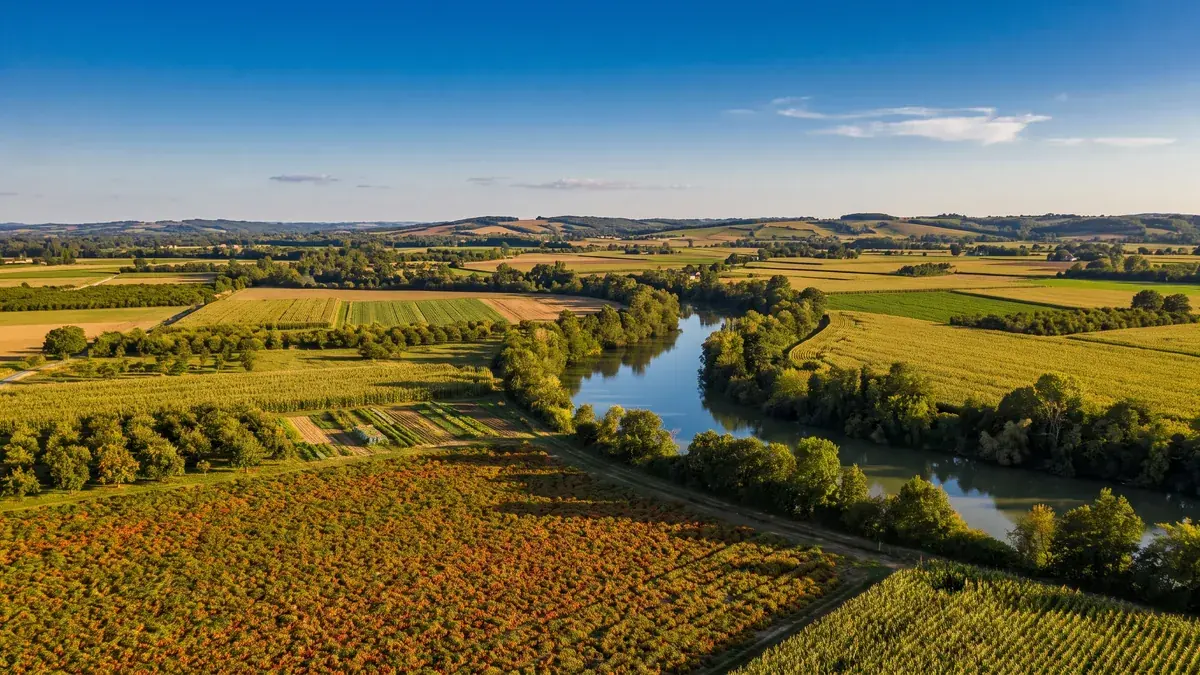
Marmande is located in Lot-et-Garonne (47), in Nouvelle-Aquitaine, on the right bank of the Garonne River, between Bordeaux and Agen; based on the distances given here, it is closer to Agen by road. It is a subprefecture, the seat of its arrondissement, and the headquarters of the Val de Garonne Agglomération. Its coordinates are 44.50° N and 0.16° E; its INSEE code is 47157, and its ZIP code is 47200. The municipality covers approximately 45.06 km² in the broad alluvial plain of the Garonne, at elevations ranging from 12 to 132 meters—a fertile corridor featuring fields, orchards, vegetable gardens, and—of course—tomato farms.
The capital of the Val de Garonne
Marmande is the heart of the Val de Garonne, the region in the middle reaches of the river, between the Agenais and the Bordelais. It is a regional hub: with a population of some 17,000, it serves as a center of attraction for 48 municipalities and is home to the businesses, services, industries, and government offices of a large rural area. Its location, equidistant from Bordeaux and Agen, along the Garonne’s main corridor—the A62 highway, the railroad, the river, and its canal—has always made it a crossroads. This also explains its turbulent past: as a strategic location, Marmande was often contested, besieged, and rebuilt. Today, it is the recognized capital of one of France’s most fertile agricultural regions.
A city with a population of 17,000
With a population of 17,328 (2023 census), Marmande is a major city in the Lot-et-Garonne region—the second-largest in the department after Agen. Its population density, at approximately 385 people per square kilometer, reflects this urban character. A note on the figures: the population has been declining slowly since its peak in the early 2010s (over 18,000 residents), having lost just over a thousand residents in about fifteen years—a phenomenon common to medium-sized towns. The residents are known as Marmandais. Despite this slight decline, Marmande remains an active and vibrant town, boasting a thriving commercial center, a renowned market, and a strong identity rooted in its tomatoes and local terroir.
Right bank, between the river and the hillsides
Marmande is located on the right bank of the Garonne, in a landscape that blends the plain with the hillsides. The historic, commercial lower town stretches along the river, while the gently rolling surrounding hills are home to vineyards, orchards, and farms. The town’s elevation ranges from about a dozen meters at the water’s edge to approximately 132 meters on the hillsides. The climate, which is oceanic with a southern influence—warm, sunny summers and mild winters—is ideal for market gardening and viticulture, and explains the region’s agricultural prosperity. This crossroads location, along the Garonne corridor (highway, railroad, river, and canal), has long made Marmande a hub of trade.
The Marmande Tomato
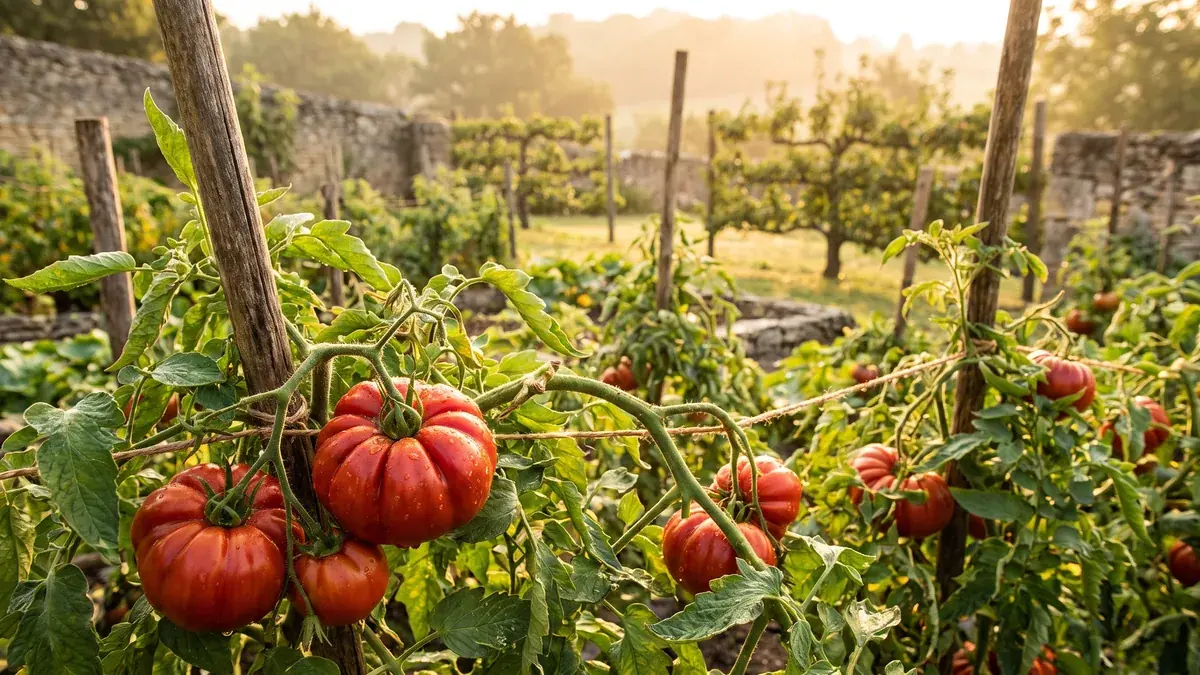
If we had to sum up Marmande in one word, it would be “tomato.” The city has lent its name to a famous variety and calls itself the “tomato capital”—a title it celebrates every summer. Behind this fruit lies a fascinating agricultural history, along with some useful facts.
A flat, ribbed variety
The Marmande tomato is an heirloom variety that’s instantly recognizable: contrary to what one might expect, it isn’t round, but flat and ribbed, with pronounced grooves and a sometimes irregular shape, slightly hollowed around the stem. Fleshy, flavorful, and low in acidity, it is an “old-fashioned” tomato prized in salads and cooking. It arose from a natural cross between two varieties, “Merveille des marchés” and “Mikado,” and has been listed in catalogs since 1926. Far removed from uniform supermarket tomatoes, it is a product with character and a symbol of local market-gardening expertise.
A tomato born of phylloxera
Little-known fact: the rise of tomato farming in Marmande was a consequence of phylloxera. When this aphid ravaged French vineyards beginning in 1863, the region’s farmers, deprived of their vines, sought an alternative crop. Vegetable farming—and tomato cultivation in particular—took root on the rich alluvial soils of the Garonne River. From this misfortune for the wine industry, a thriving vegetable-growing industry emerged: Marmande became one of France’s major tomato-producing regions. Even today, greenhouse and open-field cultivation sustain the region—the cooperative Les Paysans de Rougeline, headquartered in Marmande, alone produces tens of thousands of metric tons of tomatoes each year.
The Tomato Capital and Its Festival
Marmande proudly celebrates its tomato heritage. In 2026, the Tomato Festival is scheduled for August 8 and 9 at Filhole Park [source]. A Tomato Brotherhood preserves this tradition. Beyond folklore, this festival celebrates a genuine local culture, in which the tomato is at once a major agricultural product, a source of pride, and a way of life. For visitors, it’s the perfect opportunity to experience Marmande in its natural setting: a region known for its delicious food, warm hospitality, and pride in its local heritage.
| The Marmande Tomato | Details |
|---|---|
| Form | Flat and ribbed (not round) · fleshy, not very tart |
| Origin | Cross between “Merveille des marchés” and “Mikado” · listed in catalogs since 1926 |
| Boom | Vineyard Conversion Following the Phylloxera Outbreak (Beginning in 1863) |
| Party | Tomato Festival · August 8 and 9, 2026 |
The Tomato Market and Cuisine
Tomatoes don’t just grow in Marmande—they’re also enjoyed there. The city has a renowned market where local farmers sell their tomatoes, fruits, and early-season produce directly to customers throughout the seasons—a must-visit for anyone who wants to experience the true flavors of the Southwest. In local cuisine, tomatoes are prepared in endless ways: in salads, stuffed, in tarts, as coulis, and canned for the winter. The giant tomato tart baked during the Tomato Festival is its most spectacular symbol. Centered around it is a whole gourmet way of life, where market gardeners, chefs, and food lovers come together in a city that has turned this humble fruit into a true source of local pride.
From Richard the Lionheart to the Massacre of 1219
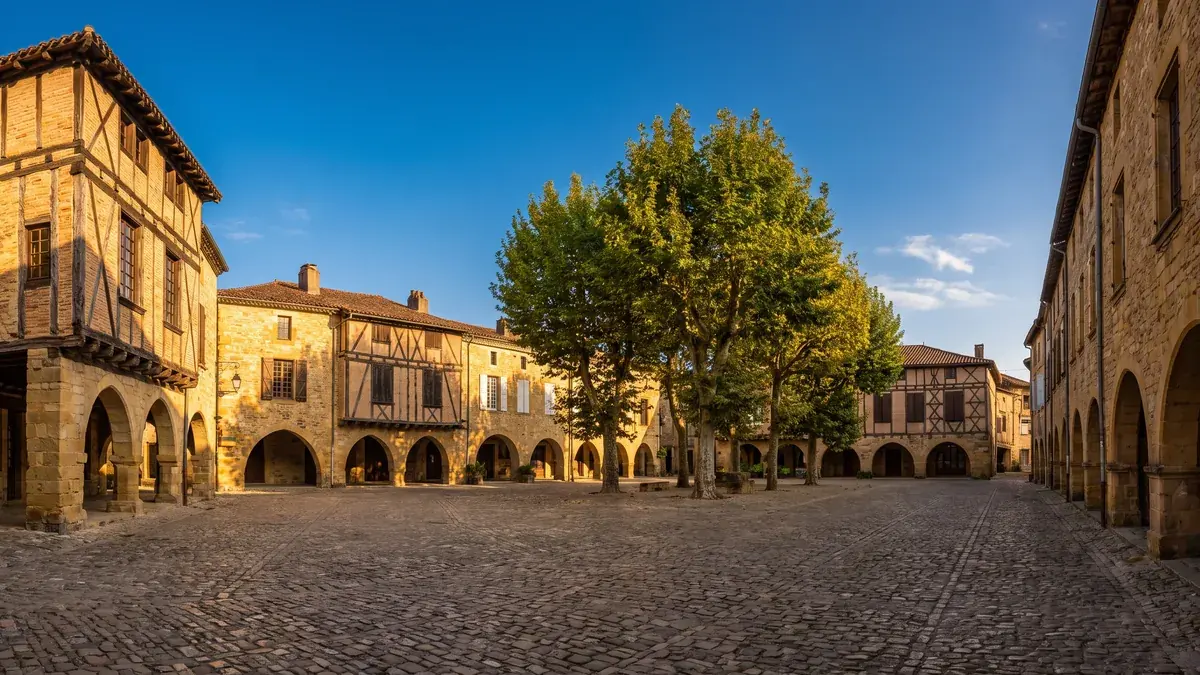
Despite its appearance as a peaceful trading town, Marmande has a rich and at times tragic history, linked to its strategic location on the Garonne River. Two events sum it up: an English founding charter and a massacre during the Albigensian Crusade.
A charter dating from 1182 (but not a bastide)
Marmande received its charter of privileges in 1182 from Richard the Lionheart, then Duke of Aquitaine, before he became King of England. This charter does not make Marmande a bastide. Bastides were new towns founded in the 13th and 14th centuries; Marmande already existed as an ancient castrum, and its charter long predates that movement. It should therefore be described as a chartered town, not a bastide. The charter granted residents certain freedoms and privileges under Anglo-Angevin rule over Aquitaine: Marmande, like the rest of Guyenne, was then held by the King of England as Duke of Aquitaine and vassal of the King of France.
The Siege of 1219 and the Albigensian Crusade
The darkest chapter in Marmande’s history is the Siege of 1219, during the Albigensian Crusade. The city, held by lords aligned with the “heretical” camp, was besieged first by Amaury de Montfort and then by Prince Louis, the future Louis VIII, who arrived with a vast army. Marmande surrendered on June 10, 1219. Although its defender, Centule d’Astarac, had negotiated the population’s safe release, the papal legate Arnaud Amaury demanded his execution, and a terrible massacre followed, reportedly claiming some five thousand lives. The brutality backfired: terrified, Toulouse later refused to open its gates to Prince Louis, whose siege failed.
A stronghold of English Guyenne
Rebuilt after the disaster of 1219, Marmande remained a strategic stronghold on the Garonne, in the heart of Guyenne—that part of Aquitaine that remained under English control following the marriage of Eleanor of Aquitaine to Henry Plantagenet. Throughout the Hundred Years’ War, the city—a key position on the river—was fiercely contested between the French and the English, changing hands several times. It was not until 1453 and the Battle of Castillon—which brought an end to three centuries of English presence in Aquitaine—that Marmande returned definitively to the fold of the Kingdom of France. This long and shifting border explains the city’s character as a stronghold, one that was often fortified, besieged, and rebuilt over the centuries.
The following centuries were no more peaceful: the region, which had embraced the Reformation, experienced the turmoil of the Religious Wars, and Marmande, a trading town on the banks of a capricious river, had to contend with the floods of the Garonne, some of which—such as the one in 1930—remain etched in people’s memories. Despite these hardships, the city has never ceased to thrive on its river and its land: a bustling river port in the era of the gabarres, an agricultural market, and later an industrial city. It is this continuity—a city of commerce and agriculture, resilient and rooted in its valley—that today defines the tranquil identity of Marmande.
Notre-Dame Church and Its Cloister
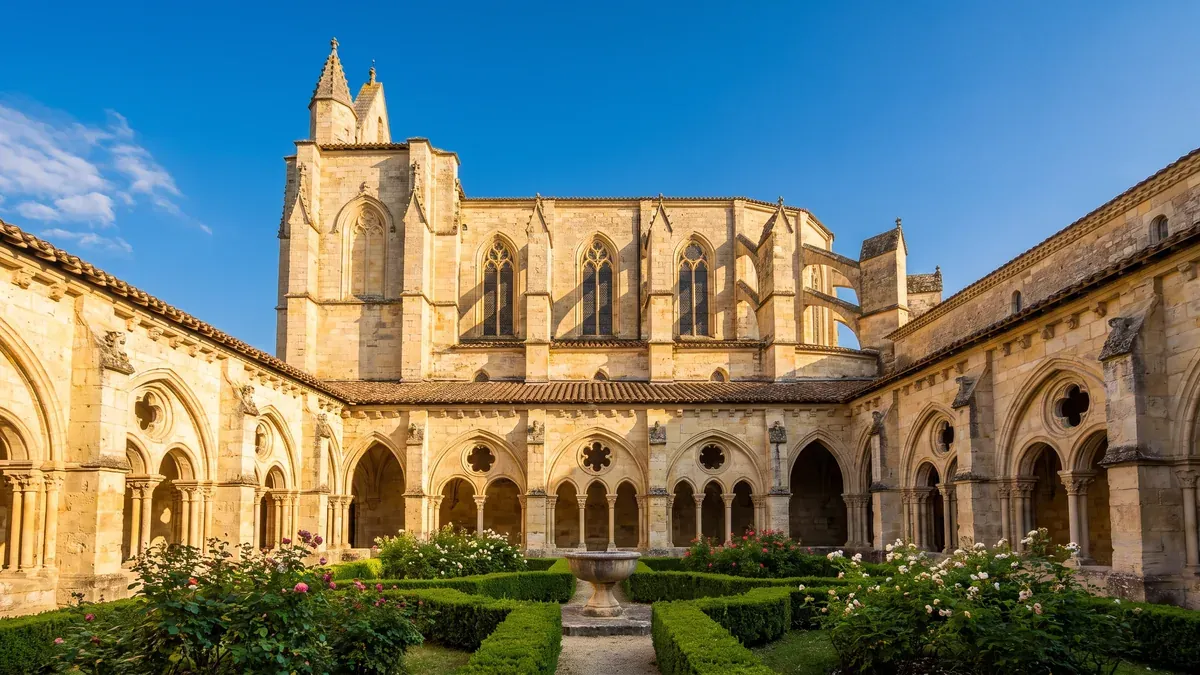
The most notable landmark in Marmande is the Notre-Dame Church, flanked by a cloister and a remarkable garden—a complex designated as a historic monument. It is the historic and spiritual heart of the city and a must-see.
A historic church and its Cavaillé-Coll organ
Notre-Dame Church is a vast Gothic building, with its main construction phases spanning the 14th to the 17th centuries, rather than the 13th as is sometimes stated. Together with its adjoining cloister, it has been listed as a historic monument since 1862 (Mérimée reference PA00084163) [source], making it one of France’s earliest protected sites. Inside is a treasure for music lovers: an organ built in 1859 by Aristide Cavaillé-Coll, the great 19th-century organ builder who also equipped Notre-Dame de Paris and Saint-Sulpice. Finding such an instrument in a town of this size is a delightful surprise.
The cloister and its remarkable garden
Beside the church, the cloister offers a peaceful retreat through its galleries and garden. This beautiful French formal garden, often assumed to be medieval, was actually created in 1955, inspired by the garden at Château de Langeais, with carefully clipped boxwood and yew topiary. It received the official “Remarkable Garden” label in 2007. It is a calm, inviting place in the heart of town. Marmande also has another protected monument, the Saint-Benoît Chapel, a former 17th-century Benedictine convent listed since 2005.
Beyond these listed monuments, Marmande retains the charm of an old town best explored on foot: ancient alleyways, stone and half-timbered houses, squares shaded by plane trees, and shopfronts. The Church of Notre-Dame and its bell tower dominate this historic center and serve as a landmark, visible from both the Garonne River and the surrounding hillsides. It is a heritage site on a human scale—without any spectacular monuments but with a genuine sense of cohesion—that tells the story of a merchant town in southwestern France. A leisurely stroll through the center—between the church, its surroundings, and the riverbanks—is enough to capture its atmosphere: that of an authentic provincial town, vibrant and deeply rooted in its past.
| Marmande's Listed Heritage Sites | Details |
|---|---|
| Notre-Dame Church + Cloister | Gothic (14th–17th centuries) · Designated a Historic Monument in 1862 (PA00084163) |
| Notre-Dame Organ | Built in 1859 by Aristide Cavaillé-Coll |
| Cloister Garden | French-style garden (1955) · “Remarkable Garden” designation (2007) |
| Saint-Benoît Chapel | Former Benedictine convent (17th century) · Designated a historic monument in 2005 (PA00084162) |
The Côtes du Marmandais
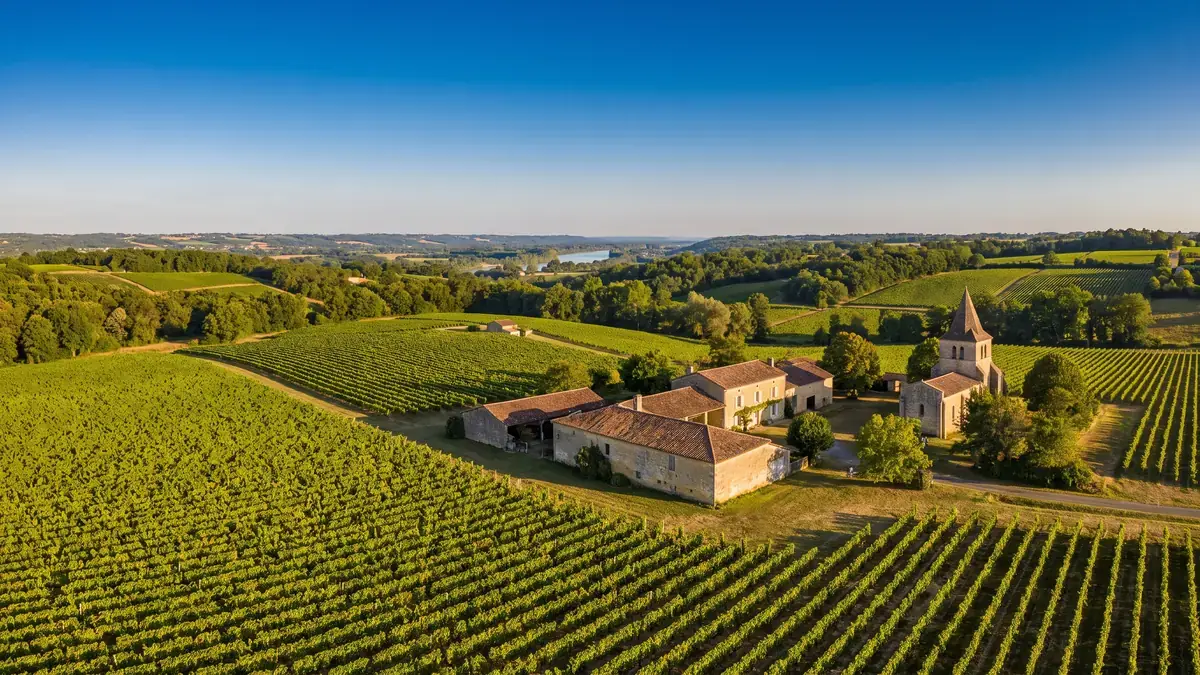
Surrounding Marmande, the hills overlooking the Garonne River are home to a vineyard producing wine under the Côtes du Marmandais appellation. It is a wine that is still relatively unknown but charming, and it rounds out the region’s culinary offerings.
A 1990 AOC
The vineyard of the Côtes du Marmandais was recognized as a controlled designation of origin by a Decree of April 2, 1990, after having long held the more modest VDQS designation (since 1955). Today, it covers an area of approximately 700 hectares on both sides of the Garonne River, on terraces and hillsides. The main products grown there are red (about three-quarters of production) and rosés, plus a small selection of lesser-known white wines. This is a cooperative winery offering affordable prices, located in a region that geologically extends the neighboring vineyards of Bordeaux and Duras—a great find for lovers of Southwest French wines who want to explore the region without breaking the bank.
Abouriou, a heirloom grape variety
The uniqueness of the Côtes du Marmandais lies in a rare grape variety: theabouriou. Be careful, though: contrary to what you might read, the abouriou is not not the primary grape variety of the appellation, but a grape variety supplementary — The reds and rosés are primarily based on Bordeaux grape varieties (Cabernet Franc, Cabernet Sauvignon, Merlot), with Abouriou limited in the blends. In short, it is a "heirloom" grape variety, a hallmark of the Marmande region that adds color and fruitiness. The white wines, meanwhile, feature Sauvignon as the dominant variety. This diversity gives the Côtes du Marmandais a distinct character, blending Bordeaux influences with local originality.
It’s easy to explore the wine region: production is largely handled by cooperative wineries, where you can taste and purchase reds, rosés, and whites at reasonable prices. These wines, still relatively unknown, offer excellent value for the money and pair wonderfully with local cuisine—a red with grilled meat, a rosé with summer tomatoes, and a white with river-caught seafood. For wine lovers, this is an opportunity to venture off the beaten path of Bordeaux and discover a small-scale appellation, deeply rooted in its Garonne terroir. A stop at a winery or vineyard is the perfect way to round out a gourmet day in the Val de Garonne.
Marmande on the Garonne River
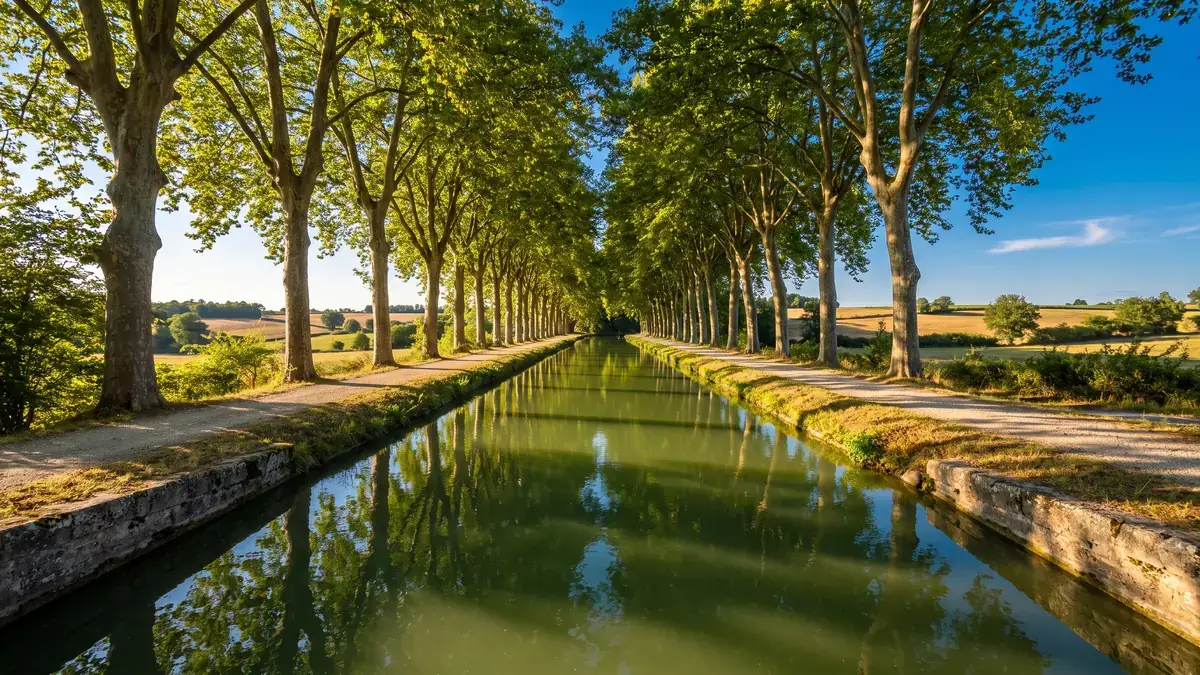
Marmande is a city built around a river: it was the Garonne that gave birth to it, helped it flourish, and caused it to suffer. The great river of the Southwest, along with its side canal, shapes the city’s landscape and history.
The River and the Side Canal
Marmande is located on the right bank of the Garonne, which flows wide and majestic here, halfway between the Pyrenees and the Gironde estuary. For a long time, the river was a vital trade route, bustling with gabarres that carried goods and crops to Bordeaux. It was also a threat: Marmande has experienced memorable floods, such as the one in 1930 that swept away its suspension bridge. Running alongside the river is the Garonne Lateral Canal, dug in the 19th century to provide more reliable navigation; flanked by a bike path and lined with century-old plane trees, it is now a very popular spot for walking and cycling.
A Land of Water and Gardens
This abundance of water explains the purpose of Marmande: the valley’s alluvial soils, rich and well-irrigated, are among the most fertile in France. This is what has made the Val de Garonne a vast vegetable garden—tomatoes, fruits, early-season produce, melons—and one of the country’s major food-producing regions. The landscape is that of a cultivated plain, dotted with farms, greenhouses, and orchards, bathed in soft light, nestled between the river and the hillsides. For visitors, this flat, verdant setting of water and gardens lends itself wonderfully to leisurely strolls or bike rides along the canal, in a peaceful and gourmet-loving Southwest.
Today, the river remains a scenic asset. The developed quays at Marmande, its banks, and the canal towpath invite visitors to stroll, run, or bike amid a setting of water and greenery. The bike route that runs alongside the side canal will eventually connect the Atlantic to the Mediterranean: it winds through the Val de Garonne in a peaceful atmosphere, shaded by plane trees and dotted with locks and rest stops. For visitors, it’s a gentle way to explore Marmande and its surroundings, at the water’s pace, far from the hustle and bustle of major roads—a riverine, luminous, and restful Southwest, where time seems to slow down as the current flows.
A City That Works
Behind its agricultural image, Marmande is also an industrial city, driven by the agri-food, aerospace, and manufacturing sectors. It is a major employment hub that extends far beyond the tomato industry alone.
Agriculture and the Agri-Food Industry
Agriculture remains the backbone of the local economy: alongside tomatoes, the region produces fruit, early-season vegetables, melons, and grain on the fertile lands beside the Garonne. Marmande is home to the headquarters of the Les Paysans de Rougeline cooperative, founded in 1990 and now a major tomato and fruit producer in southwestern France. Food processing extends this activity: the family-owned company St. Dalfour, which specializes in jams and preserves, produces tens of millions of jars each year in Marmande for export around the world; the site also includes a fruit juice plant. Deeply rooted in the area, this agri-food network supports a significant share of local employment.
Aeronautics and Industry
Marmande is also, albeit more discreetly, an aerospace hub: the LISI Aerospace Group, through its Creuzet facility, manufactures parts for the aerospace industry there and is one of the city’s leading employers (even though the workforce has shrunk since the boom years). Other aerospace subcontractors round out this industry cluster. The city also maintains a tradition of glassmaking: the former glassworks, now operating under the name Verres d’Aquitaine (Riou Glass Group), produces flat glass. This industrial diversity, rare for a city of this size, makes Marmande a true economic hub of Lot-et-Garonne, far beyond its image as the “tomato capital.”
A city of commerce and services
As a subprefecture and regional hub, Marmande also serves as a commercial and administrative center for the entire Val de Garonne region. Its bustling downtown shopping district, outlying business parks, renowned market, and fairs attract customers from a large rural area. As the district seat, it is home to government offices, public services, healthcare facilities, and educational institutions, which drive the service sector. This central role—as the city where people come to work, receive medical care, study, shop, and run errands—is essential to the balance of a predominantly agricultural and sparsely populated region. It explains the relative vitality of Marmande, the department’s second-largest city, despite a slight population decline.
What's there to see around Marmande?
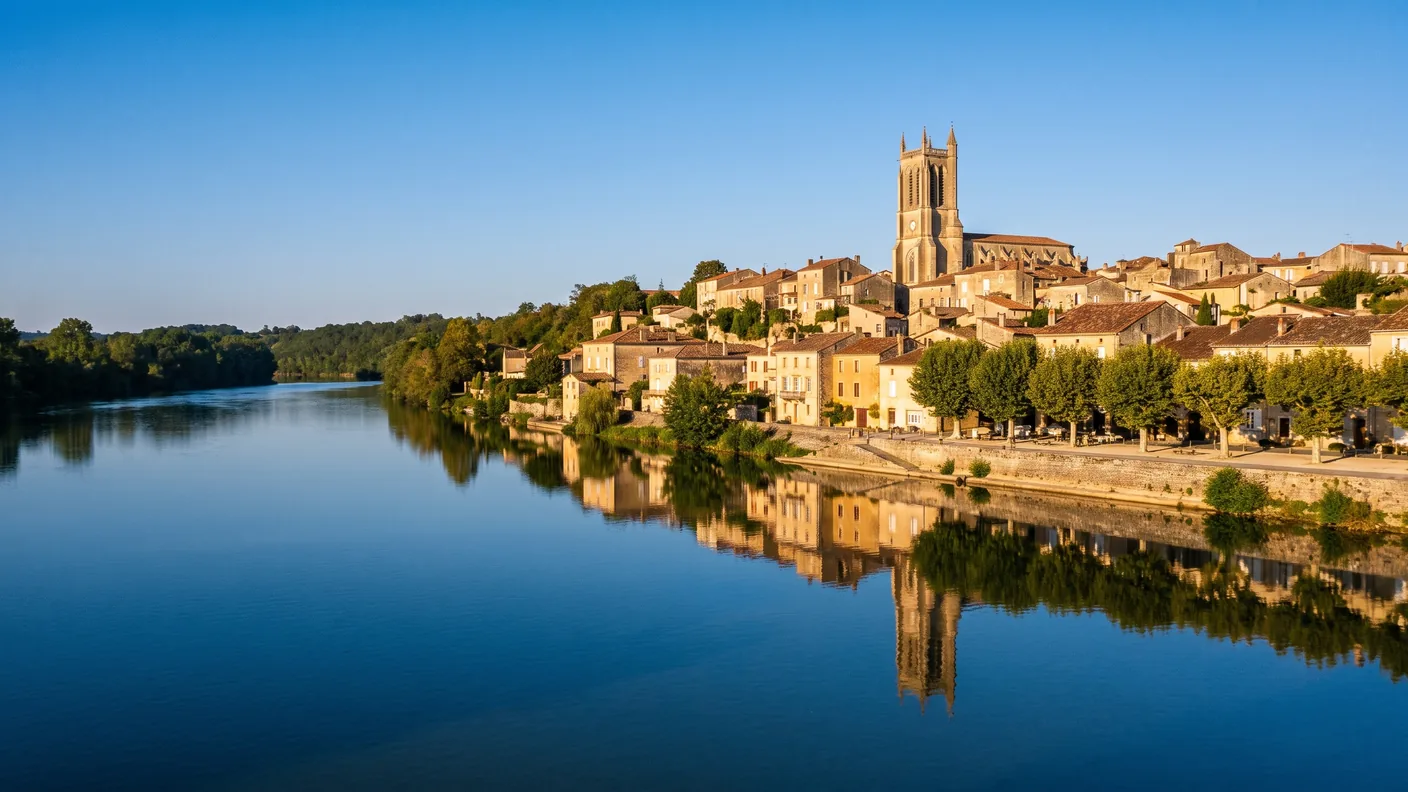
Marmande is an ideal starting point for exploring the Val de Garonne, the Duras region, and the middle reaches of the river. Distances are short, and it’s easy to travel from one town to a vineyard, or from a château to a bastide.
The Garonne Valley
Whether traveling downstream or upstream, several towns are worth a visit. Tonneins, about 20 kilometers upstream, charms visitors with its quays along the Garonne, its history of tobacco manufacturing, and its Protestant quarter. Agen, the prefecture (about 65 km away), boasts its famous canal bridge, its old town, and its museum featuring five Goyas—not to mention its famous prunes. The entire valley is a land of orchards, vineyards, and vegetable farms—a microcosm of the riverine and culinary delights of southwestern France—which you can explore along the river and the side canal, by bike or by car.
The Duras Region and Surrounding Areas
To the north, about 20 kilometers away, lies the Duras region: the small town of Duras and its large historic château, the Côtes de Duras AOC vineyards, and bastides such as Lévignac-de-Guyenne and Eymet. To the southwest, Casteljaloux (about 24 km away), a spa town in the Albret region, offers thermal baths and a recreational lake. Marmande sits at the center of a varied constellation of spa towns, châteaux, vineyards, and bastides, all less than half an hour away. A chauffeur service makes it easy to plan a loop around these stops without having to drive.
| About Marmande | Distance | Interest |
|---|---|---|
| Tonneins | ~23 km | Quays of the Garonne, Tobacco Factory |
| Duras | ~19 km | Château designated as a historic monument (MH), AOC Côtes de Duras |
| Casteljaloux | ~24 km | Spa town, Lake Clarens, Albret region |
| Agen | ~65 km | Prefecture, canal bridge, prune, museum |
More broadly, Marmande is a wonderful gateway to the still-little-known Lot-et-Garonne, an understated department between the Bordeaux region and the Périgord that visitors often cross without stopping. Yet this is a region of bastides and châteaux, vineyards and orchards, rivers and markets, where the food is excellent and life moves at an unhurried pace. From Marmande, you can easily reach the northern bastides (Monflanquin, Villeréal, and Monpazier at the gateway to the Périgord), hilltop villages, the vineyards of Duras and Buzet, or even the Lot Valley. For anyone seeking an authentic Southwest far from the crowds, the Marmande area is an ideal base, and a driver can connect these scattered country sites with ease.
When is the best time to visit Marmande?
Marmande is open to visitors year-round, but summer—the tomato season and the time of the tomato festival—is the most iconic time of year. That’s when the town truly embraces its culinary identity, bathed in the valley’s beautiful light.
Summer is peak season, with the tomato harvest, farmers’ markets, waterfront events, and, above all, the Tomato Festival on its official dates. It is the ideal time to see Marmande in its element. Spring and early autumn bring mild days for strolling through the old town, visiting Notre-Dame Church and its cloister, or walking along the canal; autumn also coincides with the Côtes du Marmandais grape harvest. Winter is quieter and offers crowd-free heritage visits. Whatever the season, Marmande’s renowned market is a must for tasting local produce.
Here’s a tip, no matter the season: don’t miss the market, one of the highlights of life in Marmande, where producers and food lovers come together. And if you can, time your visit to coincide with a major event—the Tomato Festival according to its official calendar, the grape harvest in the fall, or simply a beautiful spring weekend to enjoy the quays and the canal. Marmande isn’t a museum town: it’s a vibrant, agricultural, and commercial city that’s best experienced through its markets, restaurants, and waterfront scenery. Taking the time to stroll through it, basket in hand, is undoubtedly the best way to discover it.
How to get to Marmande from Bordeaux
Marmande is located about 92 km from Bordeaux, which is about a 1-hour drive via the A62 highway (Exit 5). Good news: Marmande has a train station on the main Bordeaux-Toulouse line, served by Nouvelle-Aquitaine TER trains (toward Agen) and Intercités trains (toward Toulouse). It’s one of the most accessible destinations in Lot-et-Garonne—and the closest to Bordeaux among our selections in the department.
Train or chauffeur service?
The train remains a good option for reaching Marmande itself, but it has limits when you want to explore the surrounding area: the Val de Garonne, the Duras region, and villages such as Tonneins, Duras, and Casteljaloux are poorly connected by public transport. For a group, travelers with luggage, or an itinerary with several stops, an executive car service is more practical: a direct, door-to-door trip from Bordeaux with no transfers and flexible stops along the way. We offer this route at a fixed price quoted in advance, starting at 163 € one way, in a Mercedes sedan or an 8-passenger van with a professional chauffeur. For Marmande, this is our shortest and most affordable route in Lot-et-Garonne.
This is the perfect option for a business trip, a family event, a culinary getaway in the Val de Garonne (markets, tomatoes, vineyards), or a transfer to Bordeaux-Mérignac Airport. The price, set in advance, remains fixed regardless of traffic or stops—a real advantage for staying within budget, and the convenience of a direct trip to the heart of the Val de Garonne.
In practice, booking is simple: you provide the pickup address in Bordeaux and the destination at Marmande, along with the date, time, and number of passengers, and you receive a fixed-price quote in writing. On the day of travel, the driver picks up passengers at the agreed-upon address and takes them directly to Marmande, with no detours or waiting. You can travel alone, with family, or in a small group (up to 8 people in a van), with luggage, and request stops along the way. This is the most comfortable and reliable way to reach the Val de Garonne from Bordeaux or its airport, without having to worry about driving, parking, or connecting transportation.
| Route | Distance | Duration | Landmark |
|---|---|---|---|
| Bordeaux → Marmande | ~92 km | ~1 hour | Starting at 163 € for a private chauffeur service |
| Marmande → Tonneins | ~23 km | ~25 min | the Garonne riverbanks |
| Marmande → Duras | ~19 km | ~25 min | Château, Côtes de Duras |
| Marmande → Agen | ~65 km | ~50 min | prefecture, canal bridge |
Whether you come for the tomatoes and the Tomato Festival, for the Notre-Dame Church and its cloister, for the Côtes du Marmandais, or to explore the Val de Garonne and the Duras region, Marmande is a treat for lovers of the authentic, gourmet Southwest, on the banks of the Garonne.
Whether it’s for a day in the Val de Garonne, a food-focused tour, or an event, a chauffeured transfer offers a comfortable and punctual ride: book Bordeaux → Marmande or explore all our destinations.
Frequently Asked Questions
Where is Marmande located?
Marmande is a town in Lot-et-Garonne (47), in Nouvelle-Aquitaine, on the right bank of the Garonne River, between Bordeaux and Agen; based on the distances used here, it is closer to Agen by road. It is a subprefecture, the capital of the Val de Garonne region, and the seat of its metropolitan area. With a population of approximately 17,328, it is the second-largest city in the department after Agen. It is located about an hour’s drive from Bordeaux (~92 km), on the main Garonne corridor (A62, the Bordeaux–Toulouse route).
What is the distance between Bordeaux and Marmande?
About 92 km by road, or roughly a 1-hour drive on the A62 highway (Exit 5). This is the closest destination to Bordeaux in our Lot-et-Garonne selection. With a private chauffeur from Bordeaux, the fare is fixed and quoted in advance, starting at 163 € one way in the Eco class (door-to-door price).
Why is Marmande famous for its tomatoes?
The “Marmande tomato” is a renowned heirloom variety native to the region: a flat, ribbed (not round) tomato that is meaty and flavorful, listed in catalogs since 1926. Its rise in popularity dates back to the phylloxera epidemic: starting in 1863, farmers who had lost their vineyards turned to vegetable farming, and the tomato took root in the rich soils of the Garonne region. Marmande proclaims itself the “tomato capital” and celebrates the tomato with the Fête de la Tomate, traditionally held in the summer; check the official calendar before your visit.
Is the tomato in Marmande round?
No, contrary to popular belief: the Marmande tomato is flat and ribbed, with pronounced ribs and a sometimes irregular shape, slightly hollowed out around the stem. It’s an “old-fashioned” tomato—fleshy and low in acidity—very different from the round, uniform tomatoes found in supermarkets. It’s precisely this irregular shape and its flavor that have earned it its reputation.
Is Marmande a bastide?
No. Contrary to what is sometimes written, Marmande is not a bastide: it is an ancient town (a former castrum) that received a charter of privileges from Richard the Lionheart in 1182—well before the wave of bastides (new towns of the 13th–14th centuries). It should therefore be referred to as a chartered town, not a bastide. However, there are several true bastides in the surrounding area, such as Lévignac-de-Guyenne and Eymet.
What's there to see in Marmande?
Notre-Dame Church and its cloister, designated as historic monuments since 1862, along with their French-style garden designated a “Remarkable Garden” and a Cavaillé-Coll organ (1859); the old town; the banks of the Garonne and the side canal, lined with plane trees; the renowned market; and the Tomato Festival, according to its official schedule. Nearby are the Côtes du Marmandais vineyards, the Duras region, and the Garonne Valley.
What is the Notre-Dame de Marmande Church?
It is the city’s main landmark: a vast Gothic church built in stages from the 14th to the 17th century, flanked by a cloister. The complex has been designated a historic monument since 1862 (Mérimée reference PA00084163). It houses an organ built in 1859 by Aristide Cavaillé-Coll, the great 19th-century organ builder. The cloister garden, a French-style garden laid out in 1955, was awarded the “Remarkable Garden” designation in 2007.
What is Côtes du Marmandais wine?
This is the Marmande appellation vineyard: an AOC recognized in 1990 (after holding VDQS status since 1955), which spans approximately 700 hectares on both sides of the Garonne River. The region primarily produces reds and rosés, along with a few whites. Its distinctive feature is a rare grape variety, Abouriou—a complementary variety that reflects the terroir—grown alongside the classic Bordeaux varieties (Cabernet Franc, Cabernet Sauvignon, and Merlot). Wines with character, at affordable prices.
What happened at Marmande in 1219?
Marmande was the scene of a massacre during the Albigensian Crusade. Besieged first by Amaury de Montfort and then by Prince Louis (the future Louis VIII), the city surrendered on June 10, 1219. Despite a negotiated surrender, the papal legate demanded the execution of the city’s defender, and a massacre ensued, reportedly claiming some five thousand lives. This cruelty backfired: terrified, Toulouse subsequently refused to open its gates to Prince Louis, whose siege failed.
How many residents are there in Marmande?
According to the 2023 census, the city has a population of approximately 17,328, making it the second-largest city in Lot-et-Garonne after Agen, with a population density of about 385 people per square kilometer. The population has been declining slowly since its peak in the early 2010s (more than 18,000 residents), as is the case in many medium-sized cities. Marmande is the center of a catchment area comprising 48 municipalities. Its residents are known as Marmandais.
Is there a train station at Marmande?
Marmande has a train station on the Bordeaux–Toulouse route. Check service details, schedules, connections, and train classes for your travel date on TER Nouvelle-Aquitaine and SNCF Connect.
What's there to see around Marmande?
Tonneins and its banks along the Garonne River (~23 km); Duras, with its listed castle and the Côtes de Duras AOC (~19 km); Casteljaloux, a spa town in the Albret region (~24 km); the bastides of Lévignac-de-Guyenne and Eymet; Agen, the prefecture and its canal bridge (~65 km). We are in the heart of the Val de Garonne and the Duras region, an area of vineyards, orchards, castles, and bastides.
Can I book a chauffeured transfer from Bordeaux to Marmande?
Yes. We offer the Bordeaux → Marmande route (~92 km, about 1 hour via the A62) at a fixed price, starting at 163 € one-way in the Eco class, with a professional driver. This is our shortest and most affordable route in Lot-et-Garonne. The trip is direct, door-to-door, with the option to make stops along the way—ideal for exploring the Val de Garonne (Tonneins, Duras, the vineyards) afterward without having to worry about driving.
Further Reading
- The neighboring town on the Garonne: see the Tonneins Guide (the riverfront, the tobacco factory, the Protestant quarter)
- The château and vineyards of the Duras region: see the Duras Guide (the château, the Côtes de Duras, and Marguerite Duras)
- The spa town of the Albret region: see the Casteljaloux Guide (the thermal baths, Lake Clarens, and the Albret)
- Plan your trip: book a private driver from Bordeaux to Marmande or explore all our destinations
Sources and References
- Wikipedia — Marmande — geography, demographics, history, heritage, economy
- POP/Mérimée Database — Notre-Dame Church and Cloister — Listed as a Historic Monument (1862), dating from the 14th–17th centuries.
- Wikipedia — Marmande Tomato — flat, ribbed variety, hybrid, listed in catalogs since 1926
- Wikipedia — Côtes-du-Marmandais (AOC) — AOC 1990, Abouriou, grape varieties, area
- TER Nouvelle-Aquitaine — Routes and Schedules
- SNCF Connect — Schedules, Connections, and Train Classes
- INSEE — Municipality of Marmande (47157) — 2023 population (17,328 residents), area, and municipal data
- Val de Garonne Tourism — 2026 Tomato Festival — Official Dates and Location
Article updated on July 13, 2026.
Our Latest Guides
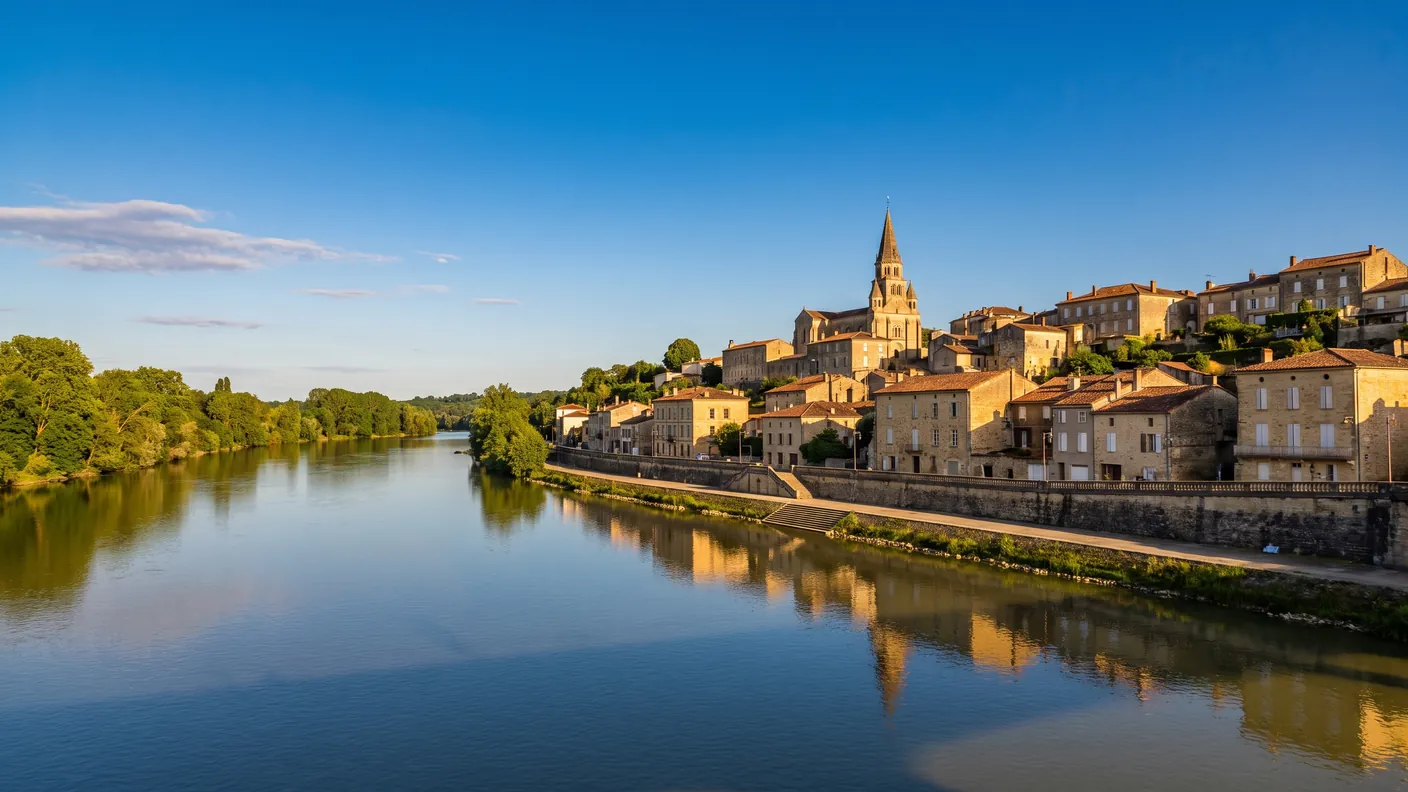
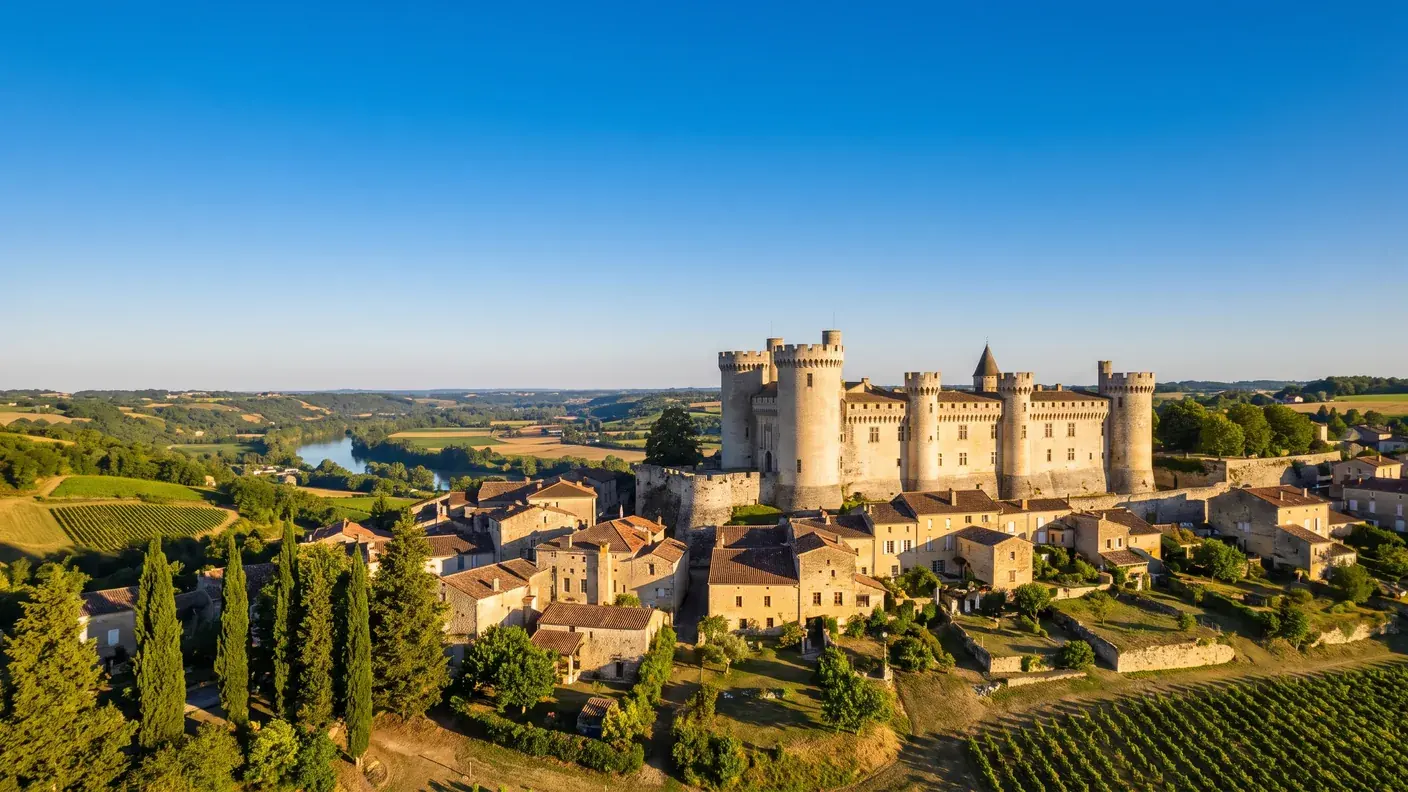
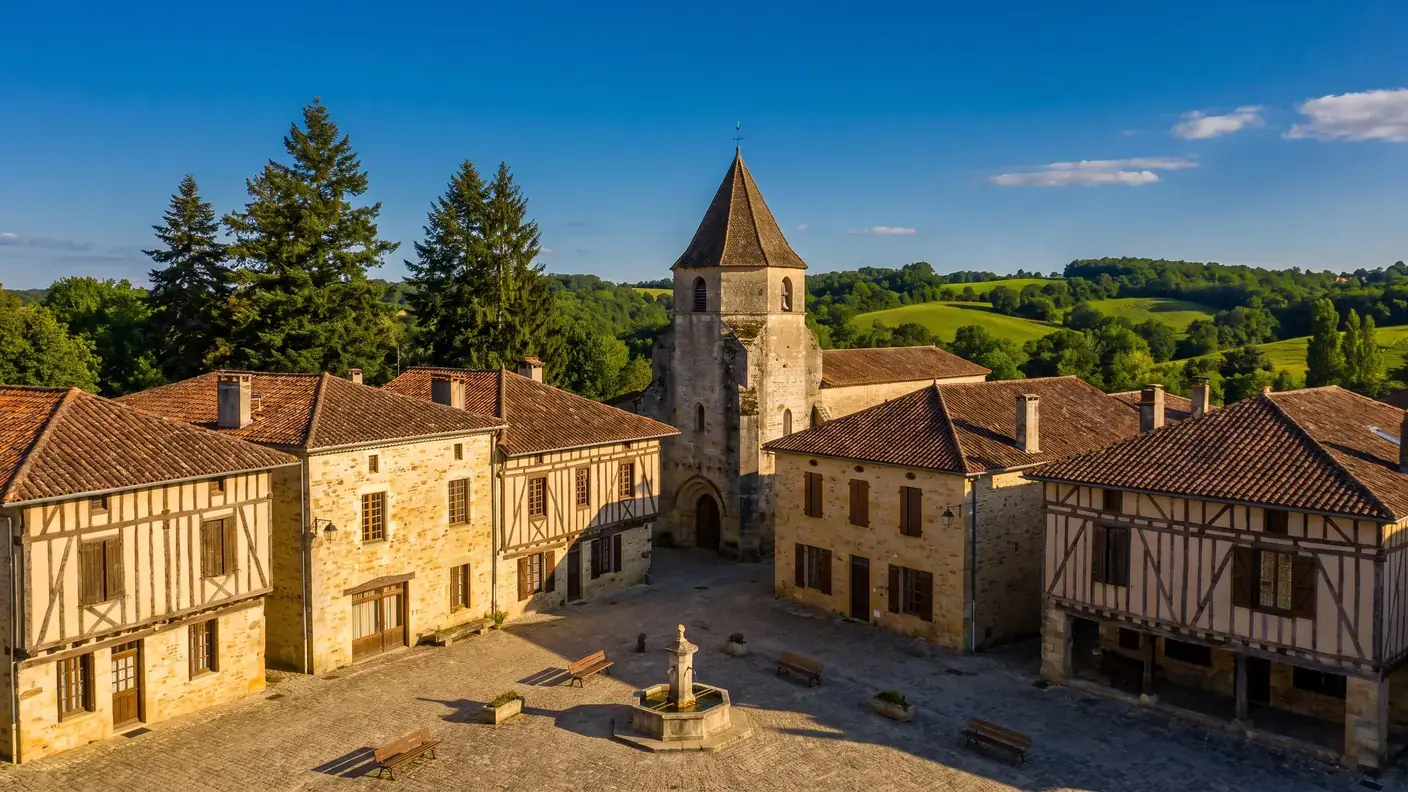
On the Way to the Val de Garonne
Direct trip from Bordeaux (~92 km, ~1 hour) to Marmande, capital of the Val de Garonne, with optional stops in Tonneins, Duras, or a vineyard. Written fixed-price quote starting at 163 €, with no hidden fees.