
Caudrot, where the Dropt River flows into the Garonne
A village on the Garonne, at the exact spot where the Dropt River flows into the Garonne: the “Queue du Dropt,” a priory church with surprising trompe-l’œil paintings, an old river port, and the rare wine of Saint-Macaire—about an hour from Bordeaux.
Caudrot at a Glance
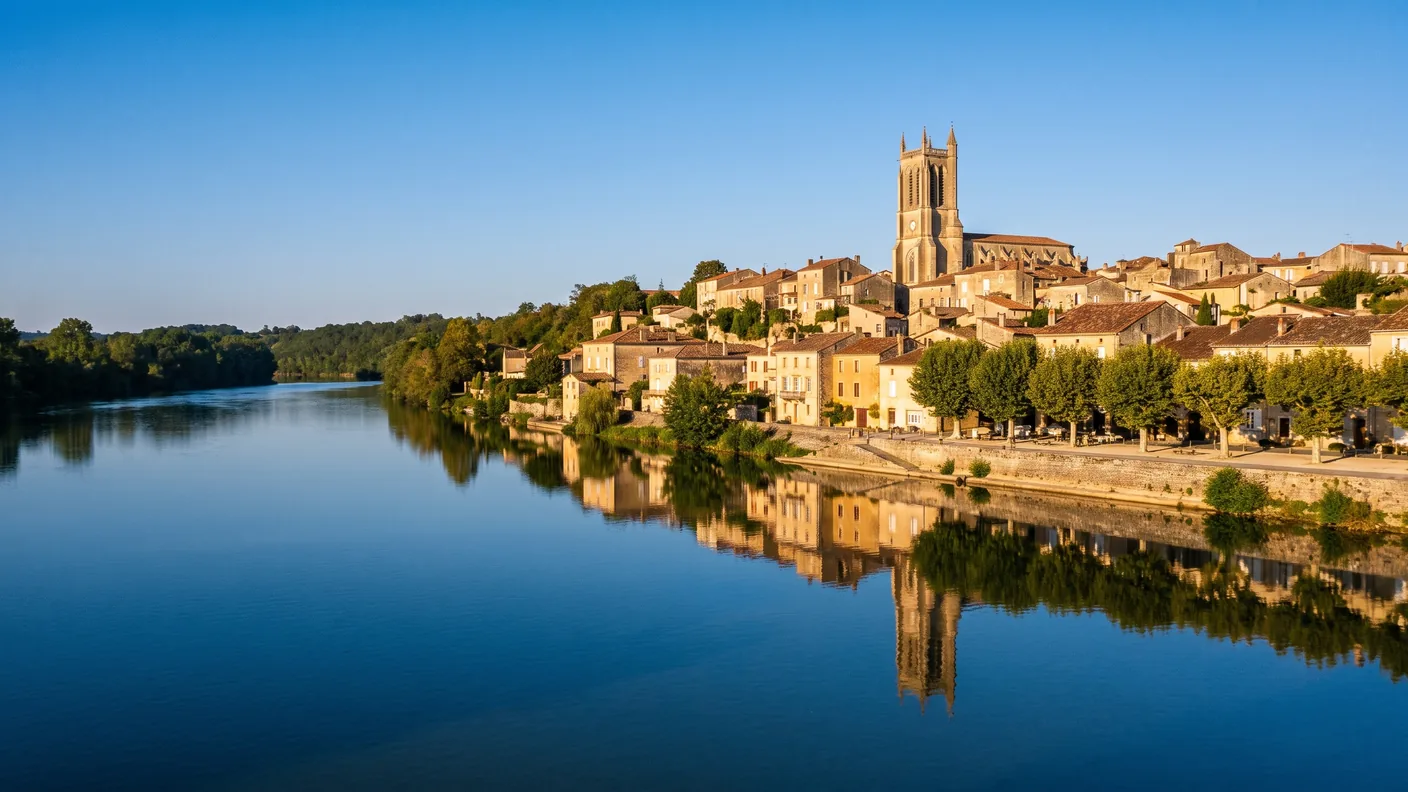
Caudrot is a village in the Gironde department situated on the right bank of the Garonne, at the exact spot where the Dropt River flows into the Garonne, a little downstream from Langon and La Réole. Its very name reflects this confluence of waters: “Caudrot” means “the tail of the Dropt,” referring to the mouth of this river that flows from the Périgord. Nestled among vineyards, the Garonne, and the Dropt, the village is home to the site of an old cobblestone river port and a priory church adorned with stunning trompe-l’œil paintings; across the river, it faces the final lock of the Garonne Canal. Here we are in the heart of the wine-growing region of southern Gironde, in the land of Saint-Macaire white wines, about an hour’s drive from Bordeaux.
Here are the key details to know before you go. Distances are calculated door-to-door from Bordeaux; the fare shown is for a private driver reservation at a fixed price provided in advance, with no unexpected meter charges regardless of traffic or stops along the way.
| Landmark | Details |
|---|---|
| Department | Gironde (33), Nouvelle-Aquitaine |
| Status | Rural village · Langon District · Entre-deux-Mers Canton |
| Population | approximately 1,134 residents (INSEE 2023) · the residents of Caudrot |
| Location | on the right bank of the Garonne, at the confluence with the Dropt |
| Don't miss it | The confluence, the Church of Saint-Christophe, Saint-Macaire wine |
| Distance from Bordeaux | about 59 km · about an hour's drive |
| Appellations | Côtes de Bordeaux Saint-Macaire · Entre-deux-Mers |
A word of honesty right off the bat, as Caudrot is burdened by several misconceptions that this guide aims to correct, with supporting sources. Its Saint-Christophe Church is not classified as a historic monument: only the paintings in the choir are, and they are classified as individual works of art. Its wine is not a “Premières Côtes de Bordeaux” (a common misconception) but a Côtes de Bordeaux Saint-Macaire, a little-known white wine. The famous Garonne Canal does not run through the village: it ends just across the river, on the other bank, in Castets. And the nearby metal bridge, often called the “Eiffel Bridge,” was not built by Gustave Eiffel—it is merely “Eiffel-style.” The sources actually consulted are listed at the end of the article.
Here’s a rundown of everything you need to know before visiting: Caudrot’s location on the Garonne River and its population, the confluence of the Dropt and the Garonne, the fascinating origin of its name, the Saint-Christophe Priory Church and its trompe-l’œil paintings, the river port, the bridge, and the canal on the opposite bank, Saint-Macaire wine, the village’s history and the memory of a young Resistance fighter, the notable sites in the surrounding area, the best time of year to visit, and the easiest way to get there from Bordeaux by private driver—all thoroughly researched and verified.
Where is Caudrot located?
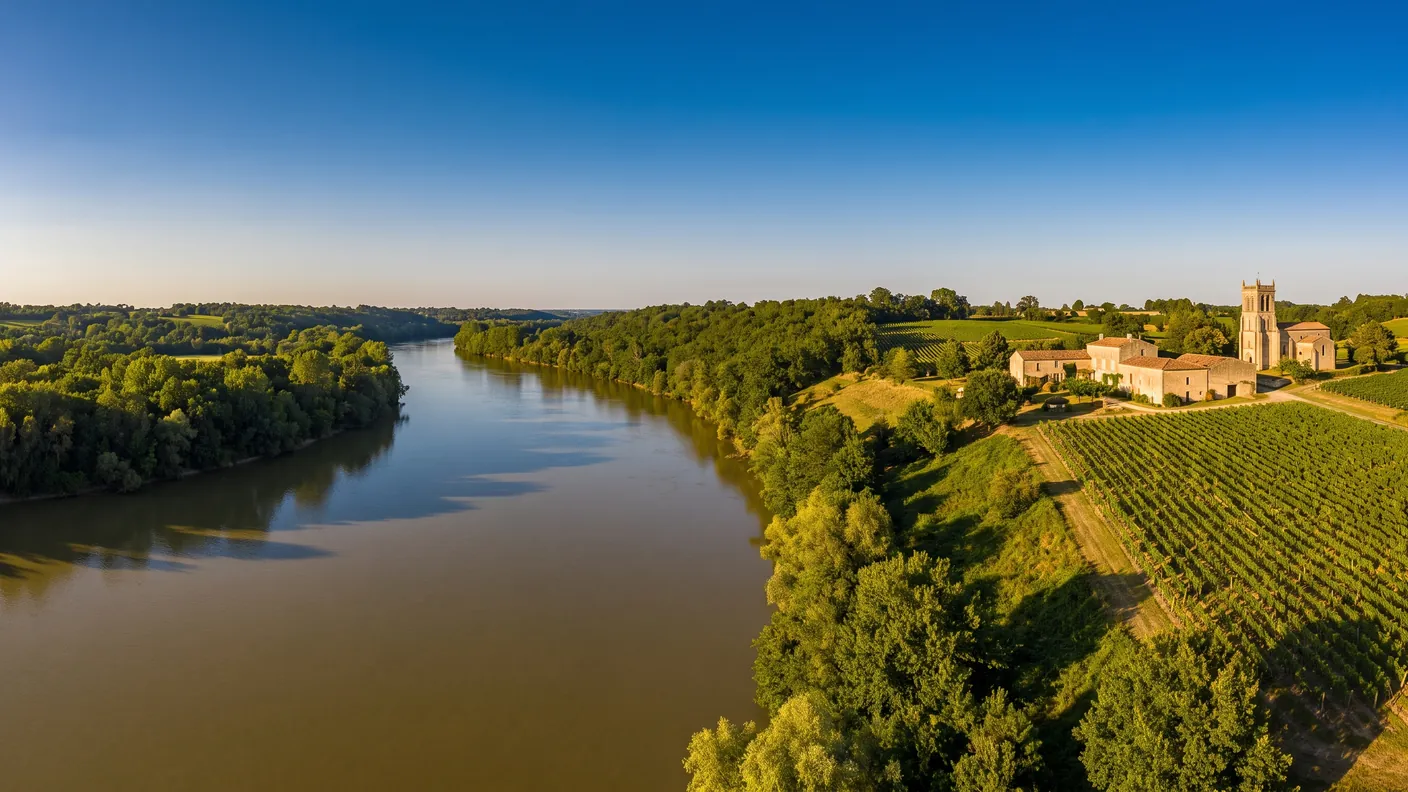
Caudrot is located in the southeastern part of the Gironde department (33), in the Nouvelle-Aquitaine region, on the right bank (north) of the Garonne River, in the Langon district and the Entre-deux-Mers canton. The village is part of the Réolais en Sud Gironde Community of Communes and covers a small area of 6.12 km², nestled between the river and the vineyard-covered hillsides. Its location is remarkable: it is here, within its boundaries, that the Dropt River—flowing from the Dordogne and Lot-et-Garonne departments—completes its journey of more than 130 kilometers and flows into the Garonne, downstream from La Réole. Caudrot is also the central town of the small Saint-Macaire metropolitan area, which comprises eight municipalities in this bend of the Garonne. We are in the heart of a landscape of water and vineyards, on the edge of the Bordeaux region and the Entre-deux-Mers.
A village between a river and a stream
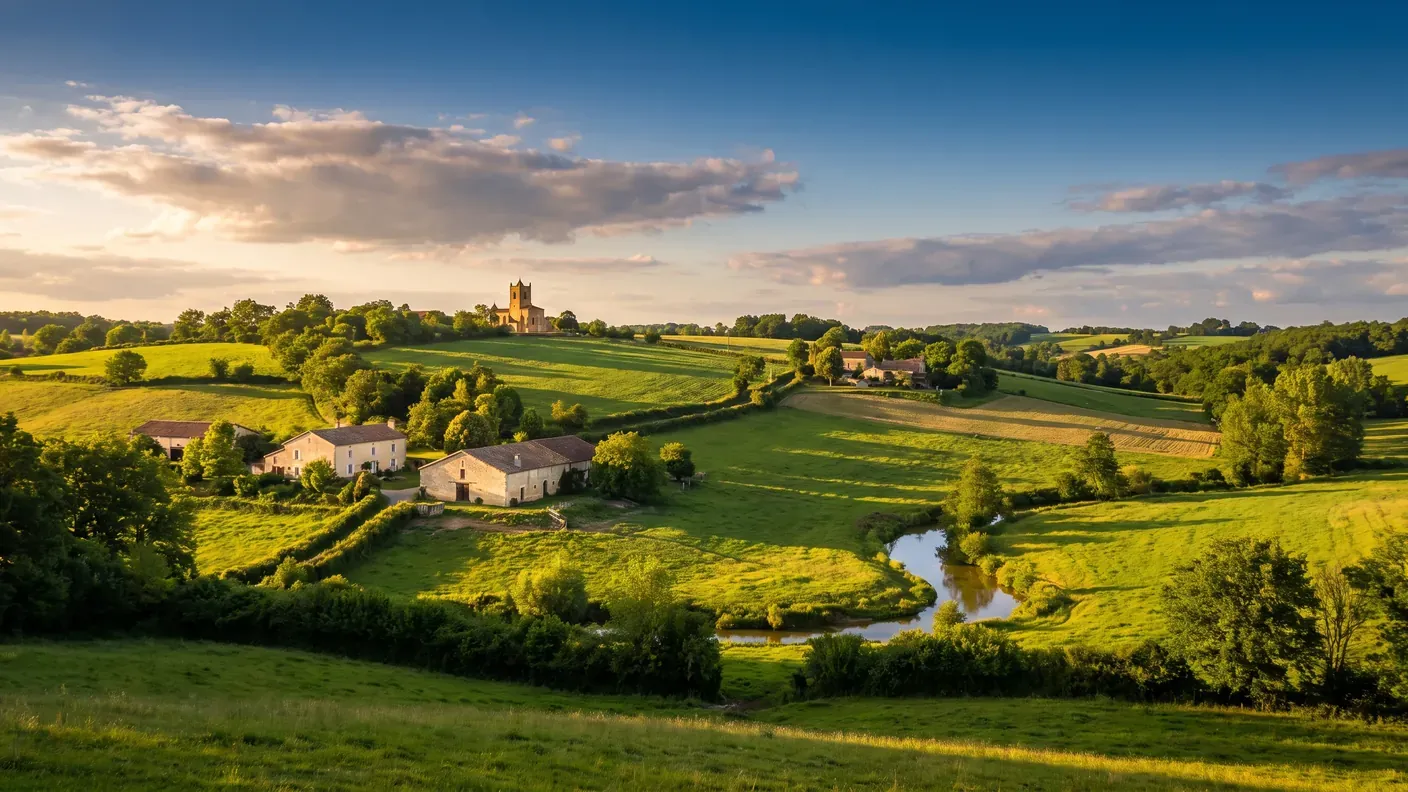
Caudrot’s geography can be summed up in one word: confluence. The village was founded and flourished at this meeting point between the Garonne—a major navigable river flowing toward Bordeaux—and the Dropt, a more modest river that drains a large part of the Périgord and Guyenne regions. This location at a waterway junction—long strategic for river trade—explains the town’s long history and relative prosperity, as it once collected tolls on traffic between Langon and La Réole. The low-lying lands along the riverbank, prone to flooding, are now home to vineyards and crops, while the village is situated a short distance from the water, sheltered from flooding. This is a landscape typical of the middle Garonne, where the wide, tranquil river remains ever-present in the life and imagination of the village.
Just under a thousand residents
With approximately 1,134 residents According to the 2023 census, Caudrot is a medium-sized village for this rural area, falling somewhere between a linear village and a wine-growing community. Its residents are called the Caudrotais. The population, which had peaked at just over 1,220 residents around 2016, has since been declining slightly (about −4% between 2017 and 2023) — a trend that runs counter to that of the Gironde department, one of the most dynamic in France, making the village all the more peaceful and affordable. It’s a far cry from the hustle and bustle of the Bordeaux metropolitan area: Caudrot embodies the quiet charm of the villages along the Garonne, with its unassuming heritage, vineyards, and riverbanks—off the beaten path of major tourist routes but just a few minutes from several remarkable sites.
The confluence of the Dropt and the Garonne
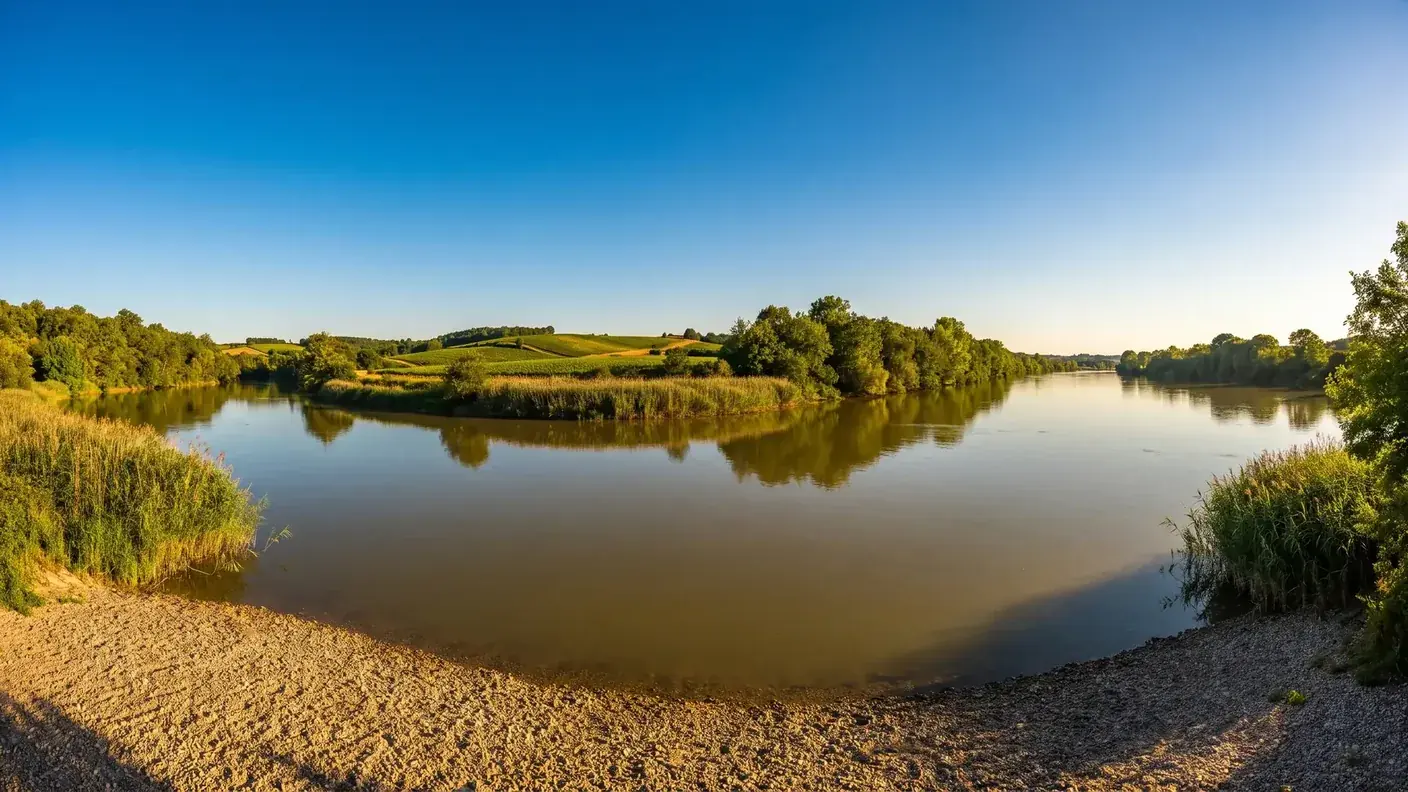
What makes Caudrot truly unique is its location near the mouth of the Dropt, where the river flows into the Garonne. The town explicitly links its history to this confluence and to the ancient name “Codo Droti.”[1] This confluence has shaped the village’s identity.
Where the Dropt River flows into the sea
The Dropt (also spelled “Drot,” an older form that is still valid) is a river approximately 132 kilometers long that originates in the Périgord, flows through Lot-et-Garonne and part of Guyenne, passes through Eymet, Duras, and numerous villages, before flowing into the Garonne in the town of Caudrot, at an elevation of just six meters. This confluence, unassuming yet very real, can be glimpsed from the banks: the small, often peaceful river brings to the great river the waters of an entire region of rolling hills and plum orchards. It is one of those places where waters meet that have always drawn people, offering a crossing point, a fishing spot, and a hub for trade. Here, the Dropt serves as a link between the Bordeaux vineyards and the Périgord hinterland, and Caudrot preserves this legacy even in its name.
An old port on the river
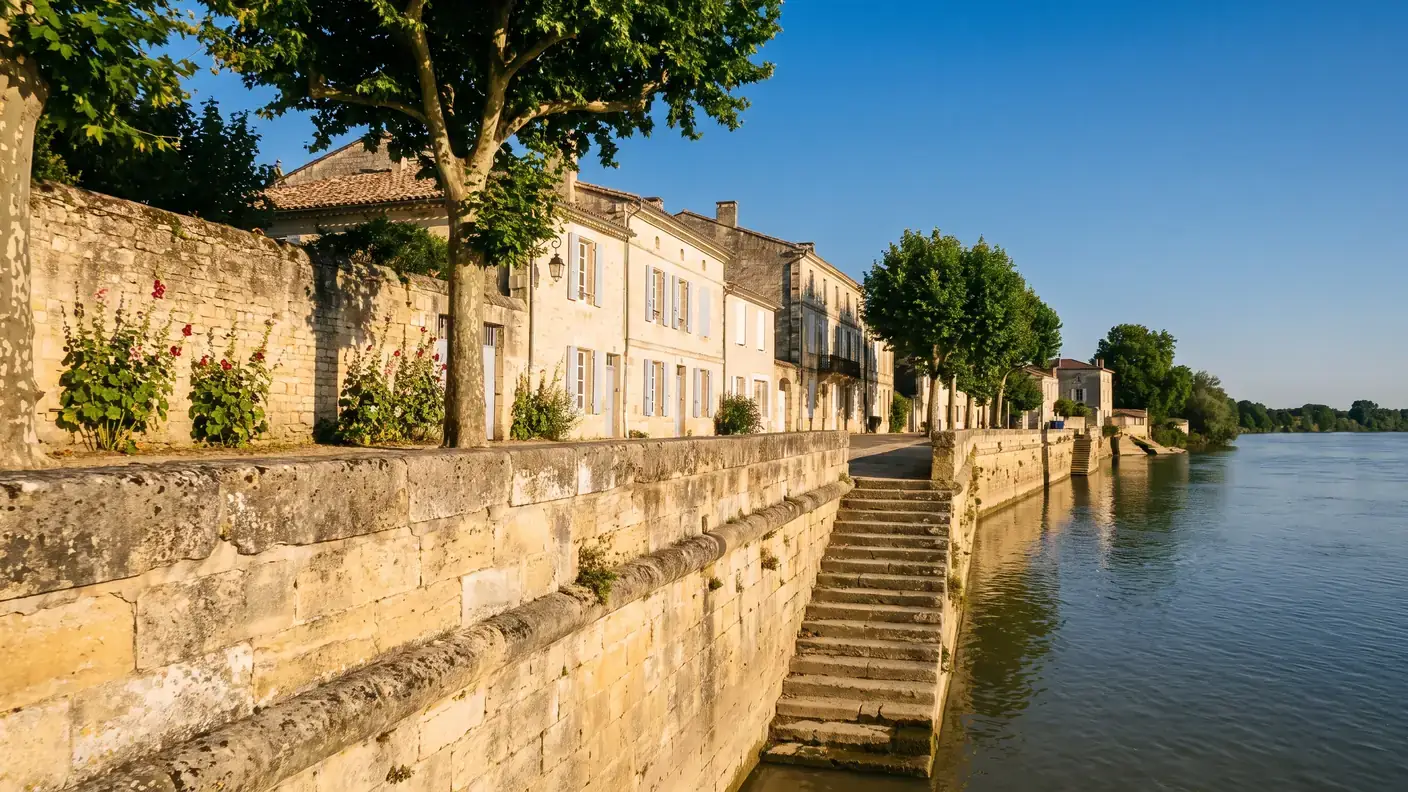
Thanks to its location on the banks of the Garonne, Caudrot long had a river port—which no longer exists—but whose site, along the riverbank, has been landscaped and paved “in the old style” to serve as a promenade and hiking trail. Before the railroad and the highway, the Garonne was the region’s main thoroughfare: barges carried wine, timber, and grain downriver to Bordeaux and the estuary port, and brought back salt and other goods. A village like Caudrot, at the confluence, lived in step with this traffic, river transport, and the boatmen. This riverine past, now discreet in the current landscape, is still evident in the layout of the village, which faces the water, and in this reconstructed wharf, a lovely destination for a stroll along the riverbank. This is also what makes the village so charming: a modest “capital of the waters,” nestled between the Garonne and the Dropt.
Where does the name Caudrot come from?
The town's official website links the old name "Codo Droti" to the "tail of the Dropt," near the river's mouth where it flows into the Garonne.[1] This local explanation directly connects the place name to the village's geography.
The "Drot's Tail"
“Caudrot” can be broken down into “cau” (from the Latin *cauda*, “tail”) and “Drot” (the Dropt): the name refers to the downstream end, the “tail,” or the mouth of the river. Medieval forms confirm this: “Codo Droti” appears during the Carolingian period, followed by “Cauderot” in 1017. The meaning is therefore clearly geographical, linked to the confluence. Here’s a delightful detail that will fascinate the curious: at the other end of the Dropt, near its source in the Dordogne, lies the village of Capdrot—meaning the “head of the Drot” (caput, “head”). Thus, the same river has its head and tail represented in the names of two villages that mark its two ends, spanning approximately 130 kilometers. Geography inscribed in place names, like a subtle poem.
| The Old Forms of the Name | Period |
|---|---|
| Codo Droti | Carolingian period |
| Cauderot | 1017 |
| Calsdrotium | late 11th century |
| Causdrotum | 1274 |
| Calciodroto | 14th century |
Watch out for red herrings
As is often the case, the name has given rise to later scholarly interpretations that must be dismissed. Certain medieval Latin forms, such as “Calsdrotium” (late 11th century) or “Calciodroto” (14th century), seem to link the name to the Latin calx (“lime,” “heel”)—but these are later scholarly reconstructions, and the oldest forms do not support them: the true origin remains “the tail of the Drot.” Similarly, local tradition readily evokes the settlement of colonists as early as the year 450 during the invasions, or a visit by Charlemagne upon his return from Spain: these are appealing but unproven legends, which recent historiography casts doubt upon. This guide mentions them for the sake of the story, without presenting them as facts. The only certainty is the evocative power of this name, born of the meeting of the river and the stream.
St. Christopher's Church and Its Trompe-l'œil Paintings
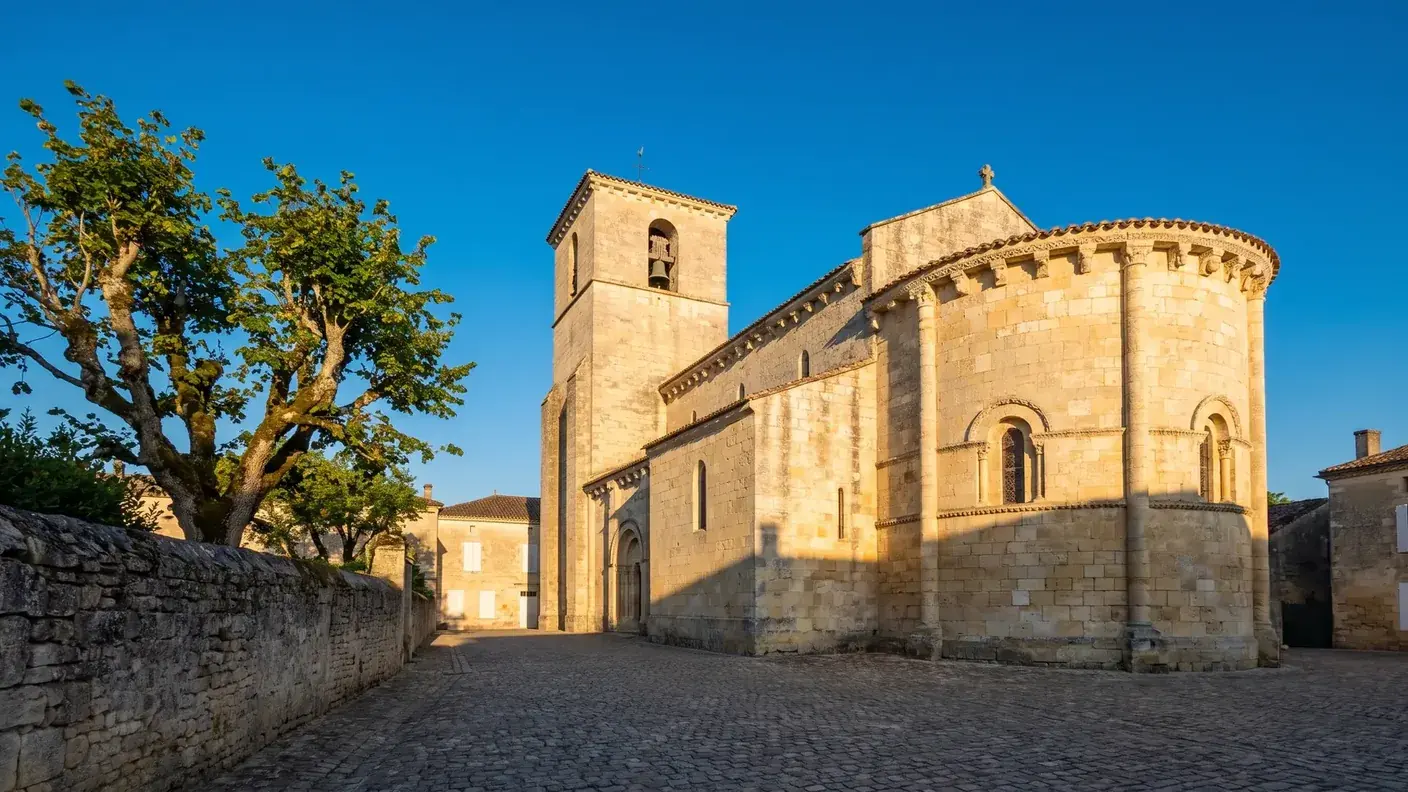
The Church of Saint-Christophe is Caudrot’s main landmark, and its interior holds a real surprise: trompe-l’œil paintings that simulate stone architecture and statuary. But here, too, it is important to be precise in our descriptions, as its heritage status is often misrepresented.
A former priory church
The St. Christopher's Church is an old prioral church: It was once part of a priory affiliated with the great Benedictine abbey of La Sauve-Majeure, in the Entre-deux-Mers region. It retains architectural features of the 11th century, and its apse still shows traces of a pre-Romanesque style on the exterior. However, one should be careful not to refer to it as an intact “Romanesque building”: on September 17, 1847, lightning severely damaged the church, which was extensively restored and remodeled in the 19th century—to the point that this work likely resulted in the loss of some of the original Romanesque features. The current building is therefore a composite structure, blending medieval elements with the 19th-century reconstruction. The church’s patron saint, Saint Christopher, is a nice nod for a travel guide: he is the patron saint of travelers, the one people used to invoke on the roads and when crossing rivers.
The paintings are listed, but the church is not
The main attraction inside is the trompe-l'œil paintings in the choir, painted around 1850 during the restoration by painters from Bordeaux Vincent and Bonnet. The Palissy database protects these paintings as objects, under reference number PM33000462; it does not classify the entire building.[2] It would therefore be inaccurate to describe the entire church as a designated historic monument.
The river, the bridge, and the canal across the way
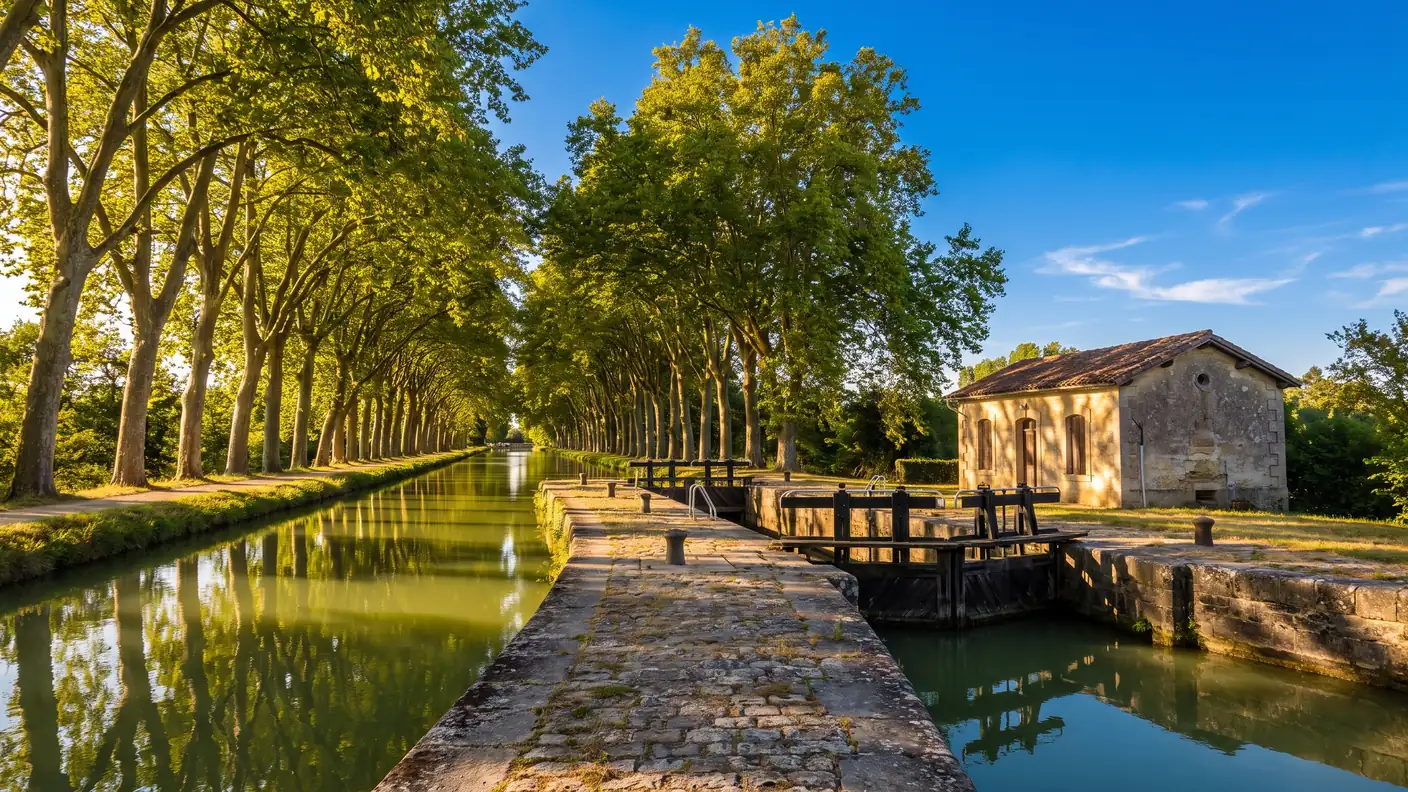
From Caudrot, the view takes in the Garonne River and a remarkable collection of engineering structures: an early 20th-century steel bridge, and, directly across on the opposite bank, the terminus of the Garonne Canal. It is a landscape of water and engineering, best explored from the riverbanks.
The "Eiffel-style" bridge
The Garonne River is crossed here by a beautiful steel bridge, known as the Castets-en-Dorthe Bridge, which connects the right bank (Caudrot side) to the left bank. Built in 1905, which is about 220 meters long and features a truss-beam deck, is often called the “Eiffel Bridge.” However, it is important to clear up a persistent misunderstanding here: this bridge was not built by Gustave Eiffel. It is simply described as “Eiffel-style”, that is, a metal structure inspired by the techniques that the famous engineer had popularized. The name “Eiffel Bridge” is used for tourism purposes rather than reflecting the actual engineering leadership behind the project. Nevertheless, it remains a beautiful structure, a testament to the golden age of steel construction, and an ideal vantage point overlooking the river and its valley.
The Garonne Canal, right across the way
Another useful clarification, since this point is also often misunderstood: the Garonne Canal (the side canal coming from Toulouse) does not pass through Caudrot. The village is on the right bank; the canal, however, runs along and ends on the left bank, directly across the river in Castets-en-Dorthe (now the municipality of Castets and Castillon), where it joins the Garonne at its final lock, No. 53. In other words, to “be on the canal,” you have to cross the river and head to Castets, barely three kilometers away. But from the banks of Caudrot, you can see this remarkable junction, where the Atlantic end of the Grand Canal des Deux-Mers flows into the river. It’s a lovely walk to combine: the port of Caudrot on one side, the end of the canal and its lock on the other, connected by the old metal bridge. A private driver makes it easy to travel between these two banks without any hassle.
| Water Structures Around Caudrot | Details |
|---|---|
| Confluence of the Garonne and the Dropt | within the Caudrot area |
| Former river port | on the Garonne River, developed for walking |
| "Eiffel-style" steel bridge | 1905 · ~220 m · NOT built by Eiffel |
| Garonne Canal (end) | left bank, in Castets (lock No. 53), ~3 km |
The wine: Côtes de Bordeaux Saint-Macaire
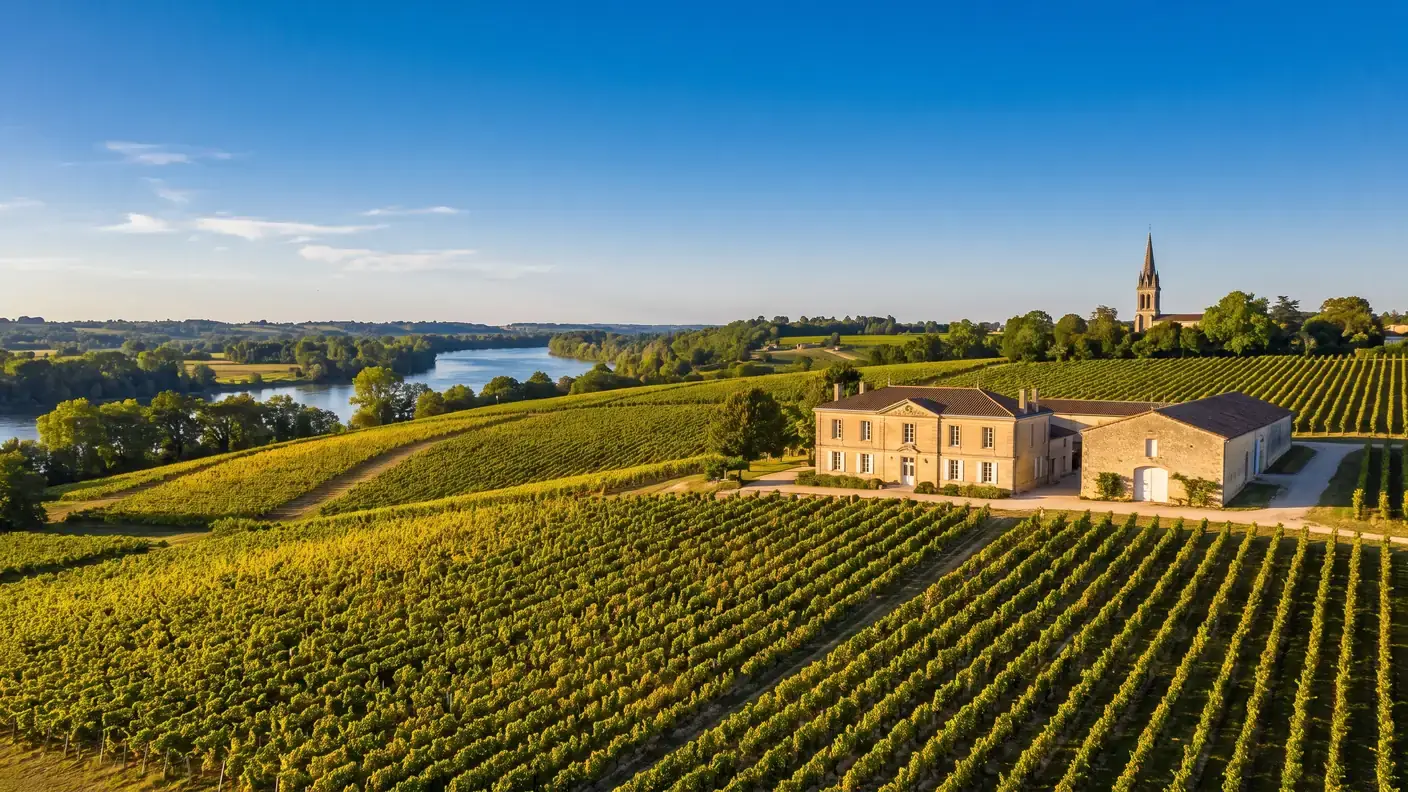
Caudrot is also a wine-growing region, but it’s important to specify its appellation correctly, since even Wikipedia gets it wrong: the village does not produce “Premières Côtes de Bordeaux,” but rather Côtes de Bordeaux Saint-Macaire and Entre-deux-Mers. These are two white wine appellations, one of which ranks among the least well-known in the Bordeaux region.
The Côtes de Bordeaux Saint-Macaire AOC
Caudrot is one of the ten communes in the Côtes de Bordeaux Saint-Macaire AOC, which is reserved for dry, semi-sweet, or sweet white wines. The official INAO fact sheet confirms the type of product, the territory on the right bank of the Garonne, and the current specifications.[3] Production remains limited in the Bordeaux region.
Neither Premières Côtes nor Cadillac
The specifications presented by the INAO do indeed include Caudrot within the Côtes de Bordeaux Saint-Macaire AOC region. The appellation is reserved for white wines; therefore, it should not be confused with the neighboring appellations on the right bank.[3]
Taste these rare white wines
For visitors, a stop at a Saint-Macairais winery is an opportunity to taste wines found nowhere else. Côtes de Bordeaux Saint-Macaire, which nearly disappeared in the 20th century, is now kept alive by a handful of enthusiasts who carry on the tradition of sweet and syrupy white wines on these hillsides overlooking the Garonne—golden wines, often made from Sémillon, perfect as an aperitif or paired with foie gras. The dry whites of Entre-deux-Mers, livelier and fruitier, pair wonderfully with oysters and fish from the estuary. That’s the appeal of a visit to Caudrot: getting off the beaten path of the Bordeaux region to sample lesser-known appellations at prices far more affordable than those of the prestigious neighboring wines. With a private driver, you can visit two or three estates in the area without ever having to worry about driving between tastings.
| The Caudrot Appellations | Type · reference |
|---|---|
| Côtes de Bordeaux Saint-Macaire | dry/semi-sweet/sweet white wines · 1937 decree · 10 municipalities |
| Entre-deux-Mers | dry white wines · Sauvignon, Sémillon, Muscadelle |
| DO NOT confuse | NOT “Premières Côtes” or “Cadillac” (neighboring area) |
The History of Caudrot
The history of Caudrot is that of a village on the Garonne: a thriving confluence site in the Middle Ages, a parish that became a commune during the Revolution, and the memory of a young Resistance fighter who was executed by firing squad during World War II. Given the lack of abundant sources, one must be careful not to invent a detailed medieval past—but the reliable historical markers are enough to give the place its depth.
From a Parish to a Municipality
Caudrot’s distant past is poorly documented, and this guide refrains from speculating about an “English Guyenne” or a seigneury for which there is no evidence. What is certain is that its location at the confluence of rivers contributed to the town’s relative prosperity as early as the Middle Ages: river traffic between Langon and La Réole was taxed here, and the priory church attests to the town’s religious roots, as it was affiliated with the Abbey of La Sauve-Majeure. During the Revolution, the former parish of Saint-Christophe became the commune of Caudrot, as was the case throughout France. The village then lived in harmony with the vineyards, the river, and riverboat transport, before the railroad and the highway gradually supplanted river navigation. This unassuming, quiet history is shared by a thousand villages along the Garonne—a story of water, the land, and the patient labor of its people.
Pierre Gemin, a young member of the Resistance
Caudrot honors the memory of Pierre Gemin, born in the town on June 9, 1921. While a student in Paris, he took part in the patriotic student demonstration held on November 11, 1940, under the Arc de Triomphe—one of the very first acts of resistance against the occupying forces. He joined the Resistance, he was arrested following a tip, and then shot on July 13, 1942, at the Souge camp, near Bordeaux, at the age of twenty-one. The Souge camp was one of the main sites where hostages and members of the Resistance from the region were executed: several hundred men were shot there during the Occupation. The memory of this young man, who died so young in the cause of freedom, links the peaceful village of Caudrot to the tragic and heroic history of France at war. It is a memory that the town keeps alive, and one that deserves to be honored.
What is there to do in Caudrot?
In Caudrot, it all begins by the water. We head to the confluence of the Dropt and the Garonne—the natural site that gave the village its name—and the old cobblestone river port, a remnant of the time when Caudrot was a toll port on the Garonne. We visit the Church of Saint-Christophe and its listed trompe-l’œil paintings, take a stroll along the river, and on Sunday mornings, we shop at the market on Place des Tilleuls. Cyclists can join the “Canal des 2 Mers à Vélo” (V80) trail on the opposite bank, near Castets-en-Dorthe and La Réole, the neighboring medieval town; wine lovers can sample wines from the hillsides of Entre-deux-Mers and Côtes de Bordeaux Saint-Macaire. In the summer, the village celebrates Saint-Christophe’s Day. Here’s a detailed look at what you can actually do in Caudrot and the immediate surrounding area.
- Head to the confluence of the Dropt and the Garonne—the natural site that gives the village its name, with its view of the river’s bend
- See the old cobblestone river port—a remnant of the time when Caudrot was a toll port on the Garonne, between Langon and La Réole
- Visit the Church of Saint Christopher — nave and sanctuary decorated with trompe-l'œil paintings (19th century), listed as a Historic Monument since 1983
- Sunday Market — every Sunday morning at Place des Tilleuls: farmers, market gardeners, cheesemakers, and bakers
- Strolling along the Garonne — walks and hikes along the river, starting from the village
- Cycling along the “Canal des 2 Mers à Vélo” (V80) — the towpath on the opposite bank, heading upstream, can be accessed at Castets-en-Dorthe or at nearby La Réole
- Visit La Réole — the nearby medieval town, a stop on the V80 route: ancient alleyways, the 13th-century Saint-Pierre Church century, former city hall
Along the Water: Confluence, Harbor, and River
Caudrot was born of water: the village is built at the exact point where the Dropt flows into the Garonne, downstream from La Réole—it is this confluence that gave it its name (“the tail of the Drot”). From here, you can enjoy a beautiful view of the river’s bend. Nearby, the old cobblestone river port serves as a reminder that in the Middle Ages, Caudrot was a toll port that levied taxes on trade along the Garonne between Langon and La Réole. The riverbank is perfect for walks and hikes, starting from the village. And in the center of town, the Romanesque-style Saint-Christophe Church hides a surprising interior: its nave and sanctuary were covered with trompe-l’œil paintings by the Bordeaux artists Vincent and Bonnet in the 19th century, a collection that has been listed as a historic monument since 1983.
The Market, the Bike, and La Réole
This week's event is the Sunday morning market, Place des Tilleuls: farmers, market gardeners, cheesemakers, and bakers set the tone for the village here. As for the cyclists, they’re heading for the "Cycling Along the Canal des 2 Mers" (national route V80, from Bordeaux to Sète): The greenway follows the canal running parallel to the Garonne, but it runs along the opposite bank and upstream—it's easiest to catch it at Castets-en-Dorthe or at La Réole. The latter, just a few kilometers away, is worth the detour on its own: a small medieval town, a stop on the V80 route, it features a series of old alleyways, St. Peter's Church of the 13th century and the former town hall. As for wine, the commune’s hillsides produce wines in Entre-deux-Mers and in Côtes de Bordeaux Saint-Macaire, to be enjoyed at local wineries.
| Activity | Where / When | Good to Know |
|---|---|---|
| Confluence of the Dropt and Garonne Rivers | village on the banks of the Garonne | natural site, scenic overlook of the river |
| Old cobblestone harbor | village | remnant of the medieval toll port |
| St. Christopher Church | village | "Trompe-l'œil" Classified as an Object (1983) |
| Caudrot Market | Place des Tilleuls | Sunday morning, local farmers |
| Cycling Along the Canal des 2 Mers (V80) | opposite bank (Castets / La Réole) | shaded greenway along the canal |
| La Réole | neighboring village | Medieval town, 13th-century St. Peter's Church |
What is there to see around Caudrot?
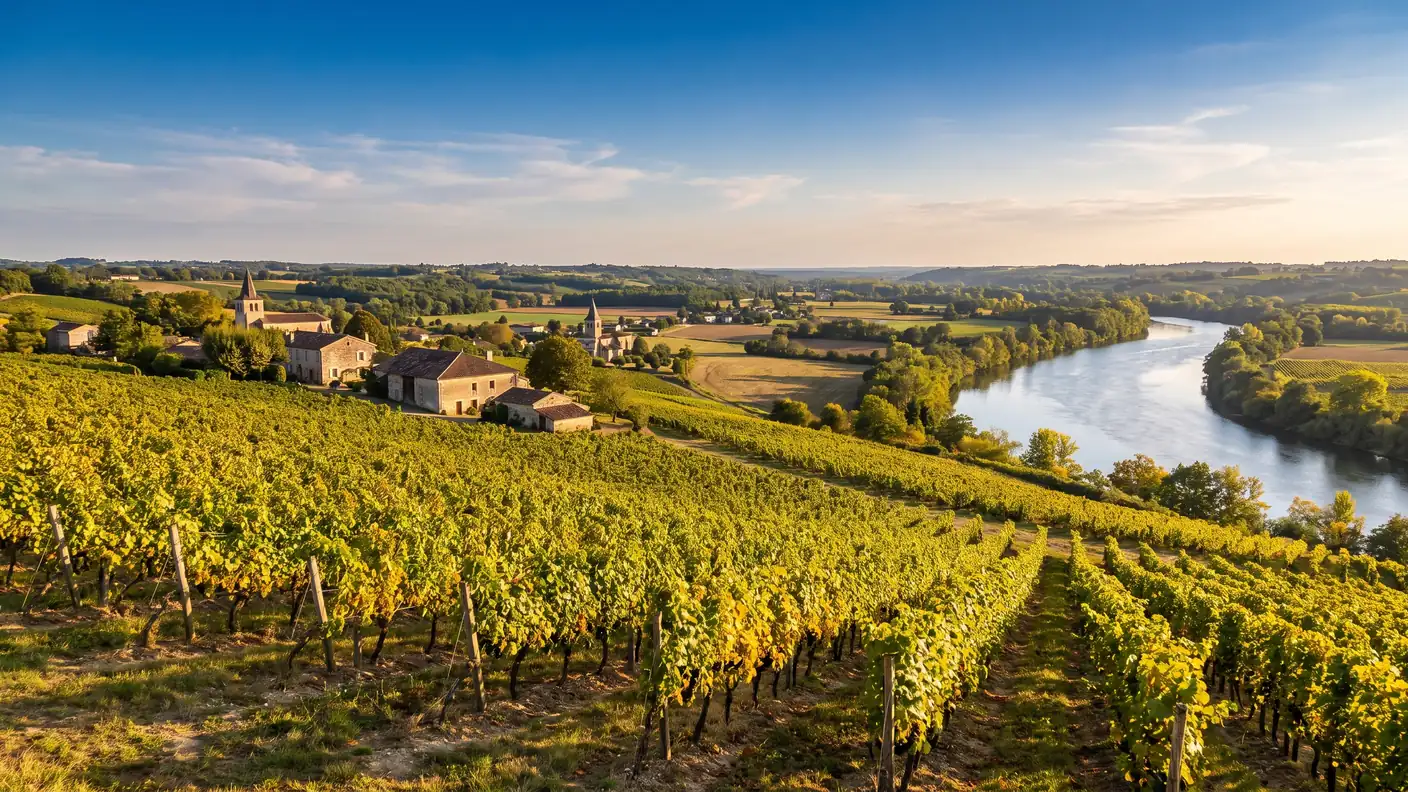
Caudrot is an excellent starting point for exploring southern Gironde: the medieval town of Saint-Macaire, the town of La Réole, Langon, the Garonne Canal, and—a little further away—Sauternes and Bazas are just a few kilometers away. The distances are short, and you can easily go from a stone village to a vineyard, or from the riverbank to a cathedral.
Saint-Macaire, La Réole, and the River
To the west, just nearby, the small medieval town of Saint-Macaire is a gem: surrounded by ramparts, it has preserved its fortified gates, its covered square, its Gothic and Renaissance houses, and a superb church—one of the most beautiful stops in the valley. Traveling east along the Garonne, you’ll soon reach La Réole, another medieval town perched above the river, home to an ancient Benedictine abbey and a Romanesque town hall that ranks among the oldest in France. Upstream, Langon, a lively subprefecture, offers its market and shops. And just across the river, three kilometers away, Castets-en-Dorthe marks the end of the Garonne Canal and its spectacular lock. A whole region of river, stone, and wine thus unfolds around Caudrot, within a radius of a few kilometers.
Sauternes and Bazas, a little further away
A short drive away, two highlights of southern Gironde are well worth a visit. To the southwest, on the opposite bank of the Garonne, the Sauternes vineyards produce the world’s most famous sweet white wines—golden and syrupy—including those from the legendary Château d’Yquem. To the south, the town of Bazas, less than half an hour away, charms visitors with its magnificent Saint-Jean-Baptiste Cathedral—a UNESCO World Heritage Site as part of the Routes of Santiago de Compostela—as well as its market and its famous breed of beef, Bazas beef. Add to that the Entre-deux-Mers vineyards on the hillsides and the banks of the Garonne Canal for cyclists, and you have a region of rare richness, where heritage and wine come together at every turn. With a private driver, you can create a customized loop without worrying about the itinerary.
| Around Caudrot | Distance | Interest |
|---|---|---|
| Castets-en-Dorthe | ~3 km | The end of the Garonne Canal, Lock No. 53 |
| Saint-Macaire | ~7 km | Medieval walled city |
| La Réole | ~9 km | Medieval town, abbey, on the Garonne River |
| Langon | ~10 km | Subprefecture, market, train station |
| Bazas | ~25 km | UNESCO-listed cathedral, Bazas beef |
When is the best time to visit Caudrot?
Caudrot is open to visitors year-round, but spring and fall—when the light plays on the Garonne River and the vineyards—are the mildest and most beautiful seasons. The spring brings new greenery to the hillsides and riverbanks, awakens the vineyards, and offers perfect days for strolling along the banks of the Garonne, exploring the church and its trompe-l’œil, or biking along the canal towpath right across the way. The summer bathes the valley in warm, abundant light: it’s the season for walks along the riverbank, farmers’ markets, and wine tastings at the estates of Saint-Macairais and Entre-deux-Mers. From the hillsides, the view stretches far across the silvery ribbon of the river and the mosaic of vineyards and fields in the Middle Garonne region.
The fall is undoubtedly the most beautiful season to capture the spirit of the place: the grape harvest brings the wineries to life, the vine leaves take on shades of gold and purple, the morning mist rises from the river, and the air is filled with the scents of grapes and damp earth. It’s the perfect time to taste Saint-Macaire’s rare white wines and gain an understanding of the winemaking process. The winter, a quieter spot, lets you explore the area’s heritage and the riverbanks in low-angled sunlight and a peaceful atmosphere, just as the Garonne, swollen by the rains, regains its full power. In any season, the mild Gironde climate and the beauty of the landscapes—with their waterways and vineyards—make Caudrot a relaxing getaway, less than an hour from Bordeaux—for those seeking an authentic and off-the-beaten-path experience in southern Gironde.
Getting to Caudrot from Bordeaux
Caudrot is located about 59 km from Bordeaux, which is about an hour’s drive via the A62 highway toward Toulouse (Langon or La Réole exit), followed by a few kilometers along the Garonne River. A practical feature: the village has a train stop, Caudrot Station, which opened in 1855 on the Garonne Valley line and is served by the Nouvelle-Aquitaine TER trains on the Bordeaux–Langon–Agen route. However, service remains limited in this rural area, and the train does not allow for further exploration of the vineyards, medieval towns, and the canal. For this type of exploration, a car with a driver is the most flexible and relaxing option.
Train or private driver?
To reach Caudrot—and especially to explore the surrounding area—a private driver (private chauffeur service) offers true freedom: a direct, door-to-door trip from Bordeaux, with no transfers or waiting, and the option to make stops along the way as you please. This is particularly appreciated for a day that combines exploring the river, a canal cruise, a visit to Saint-Macaire or La Réole, and a white wine tasting—where you’ll want to enjoy yourself without worrying about driving. We offer this route at a fixed price quoted in advance: expect to pay around €140 for the one-way trip, in a Mercedes sedan or a van seating up to 8 passengers, with a professional chauffeur. The price, set at the time of booking, remains fixed: it does not depend on traffic, potential traffic jams, or the number of stops requested along the way—unlike a taxi meter.
This is the perfect option for a day of wine tourism, a cultural getaway to the towns along the Garonne, a bike ride along the canal (drop-off at the starting point, pick-up at the finish), or a simple transfer to or from Bordeaux-Mérignac Airport. You can travel alone, as a couple, or in a small group of up to 8 people, with luggage and even bicycles, and request stops in Saint-Macaire, Castets, or La Réole along the way. In practice, booking is quick and easy: simply provide the pickup address in Bordeaux and the drop-off location in Caudrot, along with the date, desired time, and number of passengers, and you’ll receive a fixed-price quote in writing. On the day of the trip, the driver picks up the passengers at the agreed-upon address and takes them directly to the village, with no detours or unpleasant surprises—a truly convenient way to explore this beautiful corner of the Garonne region.
| Route | Distance | Duration | Landmark |
|---|---|---|---|
| Bordeaux → Caudrot | ~59 km | ~1 hour | Starting at ~€112 for a private chauffeur service |
| Caudrot → Castets-en-Dorthe | ~3 km | ~6 min | the end of the Garonne Canal |
| Caudrot → Saint-Macaire | ~7 km | ~10 min | medieval walled city |
| Caudrot → La Réole | ~9 km | ~13 min | medieval city on the Garonne River |
Whether you come for the confluence of the Dropt and the Garonne, for the Church of Saint-Christophe and its trompe-l’œil murals, for the rare white wines of Saint-Macaire, or for the old bridge and the canal across from it, Caudrot is a treat for lovers of the authentic South Gironde, at the crossroads of the river, the stream, and the vineyards—a quiet village by the water that, to those who take the time to stop there, reveals a history and charm that many more popular destinations envy.
Whether you’re planning a day on the water, a heritage tour, or a wine-tasting getaway, booking a private driver guarantees a comfortable and punctual ride— book a driver from Bordeaux to Caudrot or explore all our destinations .
Frequently Asked Questions
Where is Caudrot?
Caudrot is a village in the Gironde department (33), in the Nouvelle-Aquitaine region, on the right bank of the Garonne River, in the Langon district and the Entre-deux-Mers canton. It is part of the Réolais en Sud Gironde Community of Communes and has a population of approximately 1,134. What makes it unique is that the Dropt River flows into the Garonne within its boundaries. The village is located about an hour’s drive from Bordeaux (approximately 59 km), very close to Saint-Macaire and Castets-en-Dorthe.
How far is it from Bordeaux to Caudrot?
About 59 km by road, or about an hour’s drive, via the A62 highway toward Toulouse (Langon or La Réole exit), then along the roads beside the Garonne River. By private driver from Bordeaux, the fare is fixed and provided in advance, starting at around €140 one way (sedan or van, door-to-door price). The village also has a TER stop on the Bordeaux–Langon–Agen line, though service is limited.
What does the name Caudrot mean?
Caudrot literally means “the tail of the Dropt”: from *cau* (from the Latin *cauda*, meaning “tail”) and *Drot* (the Dropt), that is, the mouth of this river, which flows into the Garonne within the village’s boundaries. Historical records confirm this (“Codo Droti” during the Carolingian period). An interesting detail: at the other end of the same river, near its source in the Dordogne, lies the village of Capdrot, the “head of the Drot”—the river thus has both its head and its tail represented in the names of two villages.
Is the Saint-Christophe Church in Caudrot a designated historic site?
No—and this is a common misconception. The building itself is neither classified nor listed as a historic monument: it does not appear on any Mérimée protection list. Only the trompe-l’œil paintings in the choir, created around 1850 by the Bordeaux painters Vincent and Bonnet, are protected—and as individual works (Palissy database, ref. PM33000462), classified on December 29, 1983. The church, a former 11th-century priory church that was extensively remodeled after being struck by lightning in 1847, is nonetheless worth a visit for this illusionist decoration.
What kind of wine does Caudrot produce?
Caudrot is part of the Côtes de Bordeaux Saint-Macaire AOC region, an appellation for dry, semi-sweet, or sweet white wines. The official INAO listing confirms the municipality, the types of wines, and the applicable specifications. Production in this area remains limited on a Bordeaux-wide scale.
Does the Garonne Canal pass through Caudrot?
No, not exactly. Caudrot is on the right bank of the Garonne; the Garonne Canal, on the other hand, runs along and ends on the left bank, directly across the river in Castets-en-Dorthe, where it joins the river at its final lock (No. 53). To “be on the canal,” you have to cross the Garonne and head to Castets, just three kilometers away. But from the banks of Caudrot, you can see this junction where the Atlantic end of the Canal des Deux-Mers meets the river.
Is the Caudrot Bridge an Eiffel bridge?
Not strictly speaking. The steel bridge spanning the Garonne River (known as the Castets-en-Dorthe Bridge), built in 1905 and approximately 220 meters long, is often called the “Eiffel Bridge.” But it was not built by Gustave Eiffel: it is merely of the “Eiffel type,” meaning it features a steel truss structure inspired by the techniques Eiffel had popularized. The name “Eiffel Bridge” stems from local tourist usage, not from the actual engineering design. It is a beautiful engineering marvel from the early 20th century.
What is there to see in Caudrot?
The confluence of the Dropt and the Garonne, which gave the village its name; the site of the old river port, now converted into a promenade; the Church of Saint-Christophe and its stunning trompe-l’œil paintings in the choir (designated as a historic monument); the old “Eiffel-style” metal bridge over the Garonne. Directly across the river, in Castets-en-Dorthe, lies the end of the Garonne Canal and its lock. And all around, the vineyards of Saint-Macaire and Entre-deux-Mers.
Who was Pierre Gemin?
Pierre Gemin (born in Caudrot on June 9, 1921) was a young member of the Resistance. As a student in Paris, he took part in the patriotic student demonstration held on November 11, 1940, under the Arc de Triomphe—one of the first acts of resistance against the occupying forces. After joining the Resistance, he was arrested following a denunciation and then executed by firing squad on July 13, 1942, at the Souge camp near Bordeaux, at the age of 21. The village of Caudrot keeps his memory alive, linking this peaceful town on the Garonne River to the history of France during the war.
How many people live in Caudrot?
Approximately 1,134 residents according to the 2023 census. Its residents are known as Caudrotais. The population, which had peaked at just over 1,220 around 2016, has since experienced a slight decline (about −4% between 2017 and 2023), contrary to the trend in the Gironde department, one of the most dynamic in France. Caudrot is the central town of the small Saint-Macaire metropolitan area, which comprises eight municipalities in this bend of the Garonne River.
Is there a train station in Caudrot?
Yes, the village has a train stop, Caudrot Station, which opened in 1855 on the Garonne Valley Line (Bordeaux–Sète). It is served by the Nouvelle-Aquitaine TER trains on the Bordeaux–Langon–Agen route, but service remains limited in this rural area. More importantly, the train does not allow you to explore the surrounding vineyards, medieval towns, and the canal. To explore Caudrot and its surroundings, a private driver from Bordeaux remains by far the most flexible option.
What is there to see around Caudrot?
Castets-en-Dorthe and the end of the Garonne Canal (~3 km); Saint-Macaire, a walled medieval town (~7 km); La Réole, a medieval town on the Garonne River, with its abbey (~9 km); Langon, a subprefecture with a market and train station (~10 km); and, a little further away, the Sauternes vineyards and the town of Bazas with its UNESCO-listed cathedral and renowned beef (~25 km). We are in the heart of southern Gironde, rich in heritage, wine, and water-filled landscapes.
Can I book a private driver from Bordeaux to Caudrot?
Yes. We offer the Bordeaux → Caudrot route (approximately 59 km, about one hour via the A62) at a fixed price, starting at around 140 € one way, in a Mercedes sedan or a van seating up to 8 passengers, with a professional chauffeur. The trip is direct, door-to-door, with flexible stops—ideal for a day trip along the Garonne River, a cycling excursion along the canal (drop-off and pick-up), or a tour of the medieval towns and wine regions of southern Gironde. The fixed quote is provided and confirmed in writing before departure.
What is there to do in Caudrot?
In Caudrot, visitors first enjoy the waterfront: the confluence of the Dropt and the Garonne (the site that gave the village its name) and the old cobblestone river port, a remnant of a medieval toll port. Visit the Church of Saint-Christophe, whose trompe-l’œil paintings are listed as historic monuments, and take a stroll along the river. On Sunday mornings, the market brings the Place des Tilleuls to life. Cyclists can join the “Canal des 2 Mers à Vélo” (V80) route in Castets-en-Dorthe or in La Réole, the neighboring medieval town; wine lovers can sample wines from the surrounding hillsides (Entre-deux-Mers, Côtes de Bordeaux Saint-Macaire).
Further Reading
- The end of the canal, right across the way: see the Castets-en-Dorthe Guide (the Garonne Canal, Lock No. 53, and the Château du Hamel), 3 km away
- A neighboring village in southern Gironde: see the Auros Guide (the Cistercian Abbey of Le Rivet and the Bazadais region)
- On the Garonne River, upstream: see the Marmande Guide (the Garonne Valley, the canal, the wines of Lot-et-Garonne)
- Plan Your Trip: Book a private driver from Bordeaux to Caudrot or explore all our destinations
Sources and References
- Town of Caudrot — History and Heritage — Located near the mouth of the Dropt River and formerly known as “Codo Droti,” meaning “the tail of the Dropt”
- POP / Palissy Foundation — paintings in the choir (Caudrot) — listed as individual objects (1983) — the building itself is not protected
- INAO — Côtes de Bordeaux Saint-Macaire — AOC for white wines, geographical area, and specifications
- INSEE — Municipality of Caudrot (33111) — Population in 2023 (~1,134 residents), area
Article verified on .
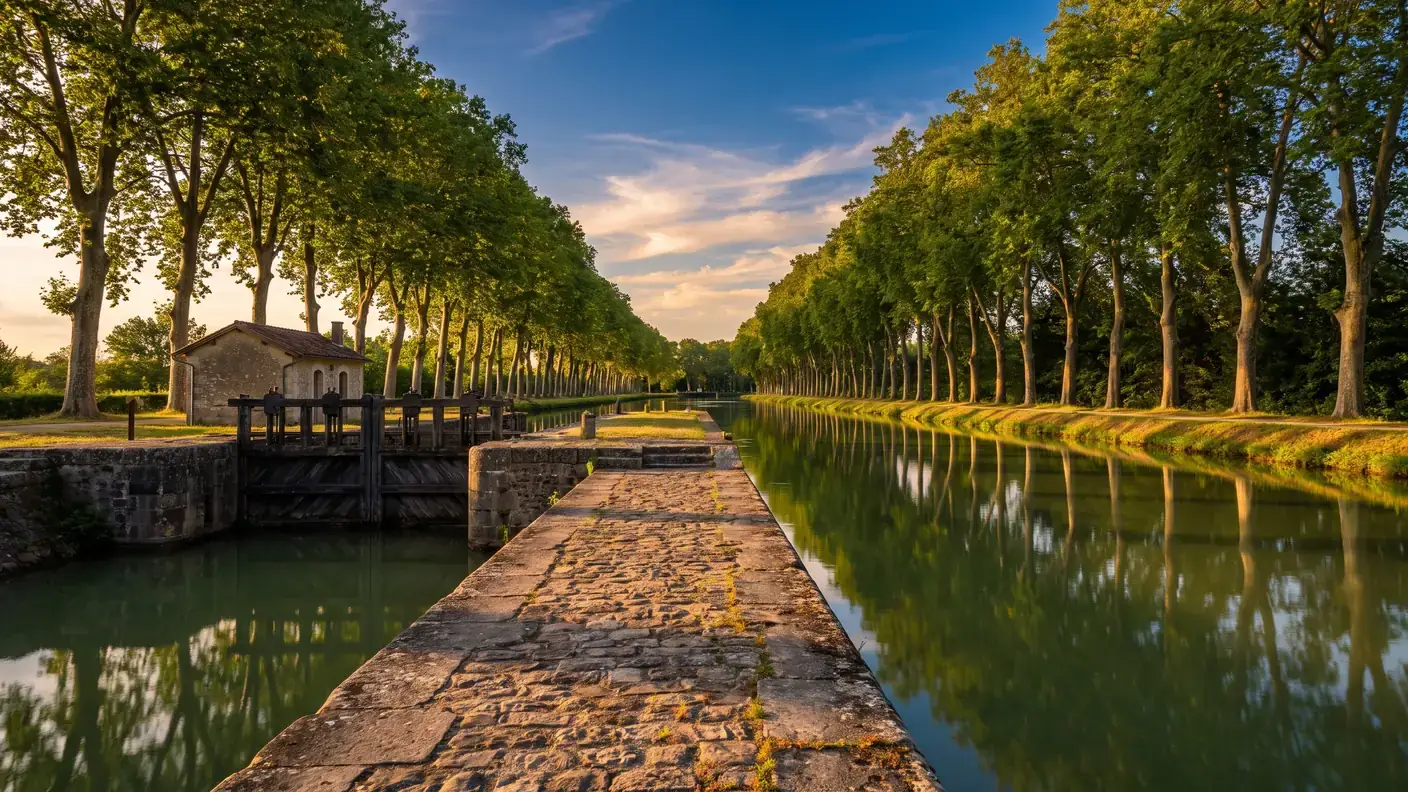
On the way to the confluence of the Garonne
Direct route from Bordeaux (~1 hour) to Caudrot, the Garonne River, and the canal, with stops along the way as you please—Saint-Macaire, Castets-en-Dorthe, La Réole. Also ideal for a bike ride along the canal. Written fixed-price quote—no unexpected meter charges.