Bordeaux to Baigneaux, an Entre-Deux-Mers wine village
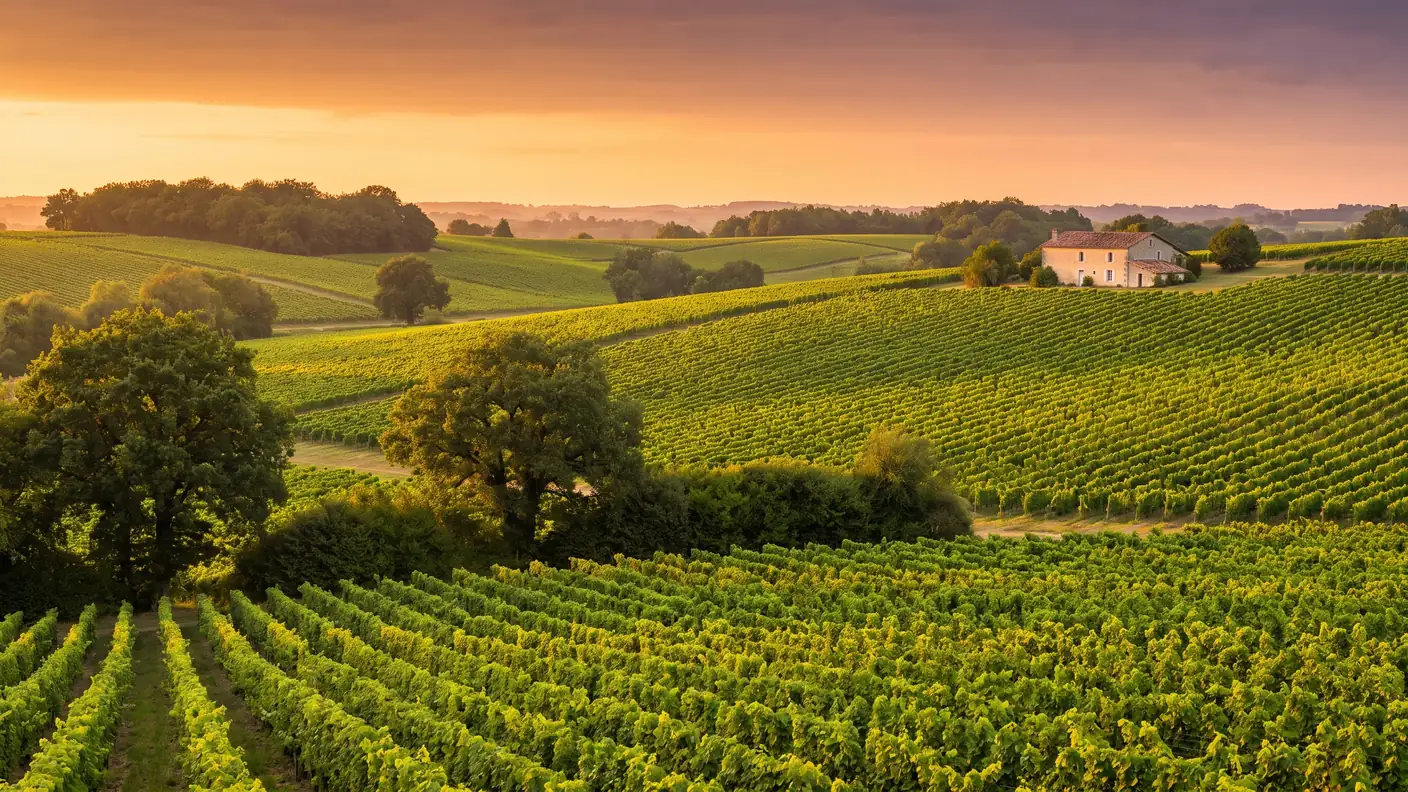
A small village of vineyards and woods in the heart of the Entre-deux-Mers region, between the Garonne and Dordogne rivers. A listed church, the hillsides of the Entre-deux-Mers AOC, and just a few kilometers away, the UNESCO-listed Abbey of La Sauve-Majeure, the fortified town of Sauveterre, and the Château de Rauzan—all just 58 minutes from Bordeaux.
Baigneaux at a Glance
Baigneaux, it must be said right off the bat, is a tiny village: about 451 residents spread across less than eight square kilometers of vineyards and woods, nestled on a plateau in the heart of the Entre-deux-Mers region, between the Garonne and the Dordogne. People don’t come here for a long list of monuments, but for a listed church with an unusual orientation, the hillsides of the Entre-deux-Mers AOC, and the profound tranquility of the Gironde countryside. Its true treasures lie nearby: less than a quarter of an hour’s drive away are the UNESCO-listed Abbey of La Sauve-Majeure, the fortified towns of Sauveterre-de-Guyenne and Créon, and the fortified castle of Rauzan. This guide distinguishes fact from fiction—the namesake of Eure-et-Loir, the “fake” castle, and the church that faces west—to make this small village a peaceful base, less than an hour from Bordeaux, from which to explore the entire Entre-deux-Mers region.
This guide starts with the essentials, then takes the time to double-check everything. Baigneaux can be summed up in a few figures, but each one deserves to be verified rather than simply copied: a village in the Gironde is sometimes confused with its namesake in another region; a vineyard estate is mistaken for a fortified castle; and a church holds a surprise that rushed guidebooks tend to gloss over. Before going into detail, here is Baigneaux’s profile, as it appears in official sources from INSEE and the Ministry of Culture.
Above all, keep in mind one guiding principle that will structure this entire guide: Baigneaux is best experienced in the singular for its tranquility, and in the plural for its surroundings. The village itself can be explored in a morning; the surrounding region, the Entre-deux-Mers, can easily take several days to explore. There’s nothing derogatory about acknowledging its small size—on the contrary, it’s the key to truly enjoying the place, by viewing it as a rural base from which to explore the surrounding abbeys, fortified towns, and vineyards.
| Landmark | Details |
|---|---|
| Department / Region | Gironde (33) · Nouvelle-Aquitaine |
| Status | A village in the Entre-deux-Mers region, Langon district |
| Population | ~451 residents (INSEE 2023), the residents of Baigneaud |
| Must-Sees | The listed church, the AOC vineyards, and nearby sites (La Sauve-Majeure, Rauzan, Sauveterre) |
| From Bordeaux | ~41 km · 58 min · starting at 84 € |
Where is Baigneaux located?
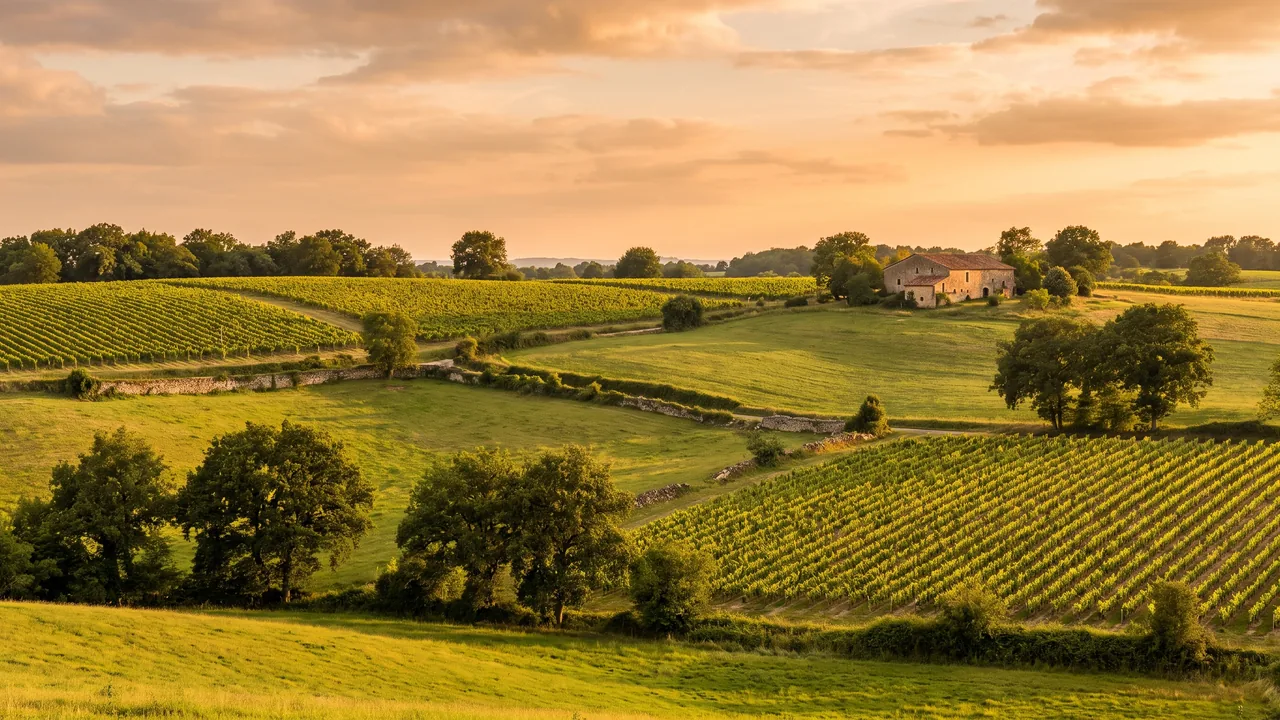
Baigneaux lies at the heart of the Entre-deux-Mers, a vast wine-growing plateau stretching between two rivers: the Garonne to the south and the Dordogne to the north. Administratively, the village is part of the Gironde department, the Langon arrondissement, and the Entre-deux-Mers canton; it belongs to the Entre-deux-Mers Rural Community of Communes. Its ZIP code is 33760, its INSEE code is 33025, and it covers an area of 7.93 square kilometers—a tiny speck on the scale of the department.
The terrain is typical of the entire region: gentle hills, at an elevation ranging from 32 to 90 meters, and valleys through which a few streams meander. The landscape blends rows of vineyards with groves of trees, as forests cover about 36% of the municipality, giving Baigneaux a more wooded character than the wine-growing plains of the Garonne. It is bordered by five municipalities: Bellebat, Cessac, Frontenac, Martres, and Montignac. All share the same rural character, with vine-covered hillsides and oak groves.
Baigneaux in Gironde, not in Eure-et-Loir
First, a clarification, since there’s often confusion on maps and GPS systems: there are two French municipalities named Baigneaux. Ours is in Gironde (INSEE code 33025), southeast of Bordeaux; the other is in Eure-et-Loir (INSEE code 28019), in the Centre-Val de Loire region, more than five hundred kilometers away. Nothing connects them except their name. When searching for this wine-growing village in the Entre-deux-Mers region, always check the department: Gironde, ZIP code 33760, not 28. An incorrectly entered address could send you on a route to the Beauce region instead of to the Bordeaux vineyards.
Administratively, Baigneaux is part of the Entre-deux-Mers Rural Community of Communes, an intermunicipal association that brings together villages with similar characteristics. The district seat is Langon, further south, while daily life often revolves around Targon and Créon, which offer a wider range of shops and services. This arrangement, typical of rural Gironde, explains why a village of 451 residents isn’t expected to provide everything locally: people live there in peace and quiet, do their shopping in the neighboring town, and head to Bordeaux for everything else.
How far is it from Bordeaux?
From downtown Bordeaux, it’s about 41 kilometers and a 58-minute drive along the right bank and the departmental roads of the Entre-deux-Mers region. Baigneaux, however, is very close to its well-known neighbors: Targon is about 8 kilometers away, Créon about 15, and Langon, the subprefecture, 26 kilometers to the south. This central location makes the village a convenient base for exploring the region without ever having to drive very far.
The route from Bordeaux follows the right bank of the Garonne, then climbs up onto the plateau via the departmental roads that serve the Entre-deux-Mers region. You’ll pass through wine-growing villages, wind along the hillsides, and the journey itself becomes a taste of the scenery to come. There is no direct highway to Baigneaux: the route remains on departmental roads, which lengthens the travel time slightly but adds to the charm of the journey—a far cry from an anonymous stretch of highway.
| From Baigneaux | Distance | Estimated time |
|---|---|---|
| Targon | ~8 km | ~12 min |
| Sauveterre-de-Guyenne | ~10.6 km | ~15 min |
| Creon | ~15 km | ~20 min |
| Langon | ~26 km | ~35 min |
| Bordeaux | ~41 km | 58 min |
How many people live in Baigneaux?
Baigneaux is, let’s face it, a very small village. According to the latest INSEE census (2023) for municipality 33025, its population stands at approximately 451, with a population density of barely 57 people per square kilometer. It’s a far cry from a city: here, life revolves around the town hall, a few vineyards and farms, and better-equipped neighboring towns like Targon or Créon. This small size is not a drawback; it promises a rare sense of tranquility, less than an hour from the bustling city of Bordeaux and its hustle and bustle.
What are the residents called?
The residents of Baigneaux are known as Baigneaudais and Baigneaudaises. Like many rural communities in the Entre-deux-Mers region, the village experienced a long period of population decline in the 20th century, followed by a slow recovery driven by the arrival of new residents attracted by the Bordeaux countryside and the proximity to the metropolitan area. Growth remains steady and gradual, and the village’s character has been preserved: there are no large-scale housing developments, just a few establishments sufficient to sustain local life.
This trend is by no means unique. The entire Entre-deux-Mers region has long seen its young people leave for Bordeaux and its jobs, before suburbanization and a renewed appreciation for the countryside partially reversed the trend. In Baigneaux, the recovery remains modest and is evident mainly in the use of local services—schools, shops, and community organizations in neighboring towns—rather than in a transformation of the landscape. The village thus retains its intimate scale and atmosphere, which is precisely what makes it so appealing to those seeking tranquility.
| Data | Value |
|---|---|
| Municipal Population | ~451 residents (INSEE 2023) |
| Demonym | Men from Baigneaud, Women from Baigneaud |
| Area | 7.93 km² |
| Density | ~57 people per square kilometer |
| Elevation | 32–90 m |
| ZIP Code / INSEE | 33,760 / 33,025 |
Where does the name Baigneaux come from?
The origin of the name has not been definitively established, and we must honestly acknowledge this. One hypothesis links Baigneaux to its Gascon form, Banhaus, which may refer to the idea of a bath—from the Latin *balneum*. In the absence of solid and comprehensive sources, we will err on the side of caution: the precise etymology remains a matter of debate, and no certainty can be established. Administratively, however, the history is clearer: during the French Revolution, the former parish of Saint-Paul was established as a commune, like thousands of other parishes in France, defining the boundaries of today’s Baigneaux.
The connection between the parish and the municipality lies at the heart of the history of French villages. Under the Ancien Régime, the parish of Saint-Paul shaped the religious and social life of the community, centered around its church and its parish priest. In 1789–1790, the Revolution transformed these parishes into municipalities, the basic administrative units we still recognize today. Baigneaux was thus established, with its boundaries, its municipal council, and, later, its mayor—a fate shared by the vast majority of small rural municipalities in the Gironde.
Day-to-day life in a village like Baigneaux relies on a network of shared services across the canton. Essential amenities can be found in neighboring towns—bakeries, schools, doctors’ offices, and weekly markets—while Bordeaux, less than an hour away, is home to large retail stores, hospitals, and train stations. This networked structure is characteristic of the Gironde countryside: it requires a car, but it preserves the tranquility and control over land use—two assets that explain the renewed interest in these villages of the Entre-deux-Mers region in recent years.
The Church of Saints Peter and Paul
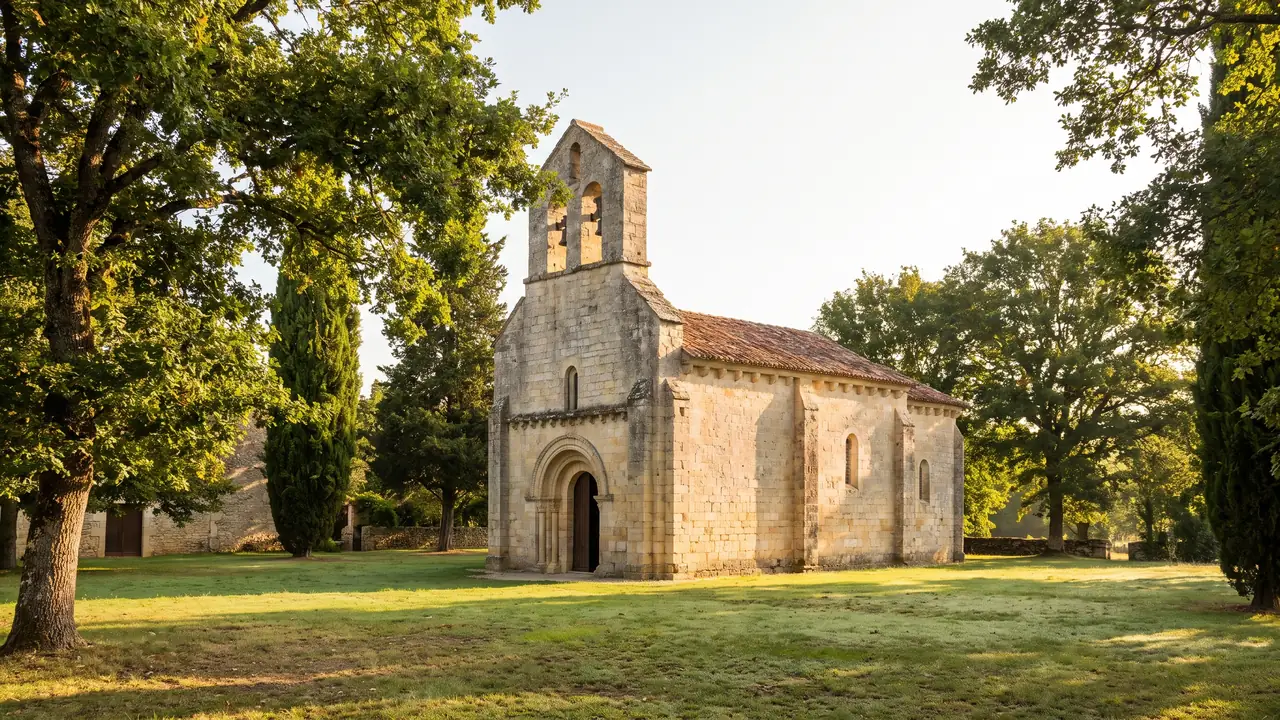
If one had to choose just one landmark in Baigneaux, it would be its church, dedicated to both Saint Peter and Saint Paul. Though modest in size, it embodies several centuries of history and an architectural feature that few visitors notice at first glance. It is the village’s landmark—the one people look up to and around which community life has revolved since the Middle Ages.
It stands on the site of an 11th-century building, of which nothing is visible today. The current nave is Gothic and dates back to the 16th century: a keystone bears the date 1538, a valuable reference point for historians. The choir and bell tower, however, are much more recent—they date from 1854 and were built in the Neo-Gothic style that was in vogue at the time. The church is thus a combination of two major construction phases separated by three centuries, which explains its eclectic appearance, blending ancient stone with 19th-century additions.
A church facing west
Here is a fact that is rarely stated correctly. In the mid-19th century, during the renovations of 1854, the church’s orientation was reversed. Traditionally, a Christian church is oriented so that its choir—where the altar is located—faces east, toward Jerusalem and the rising sun. In Baigneaux, it’s the opposite: the choir was moved to the west. This design choice, no doubt dictated by the layout of the land and the village, makes the building a discreet but very real exception among the churches of the Gironde region.
This reversal is not merely a quirk: it reflects the pragmatism of 19th-century restoration campaigns, in which the building was readily adapted to the village rather than the other way around. The observant visitor will therefore notice that, upon entering, they head toward the choir with their back to the rising sun—a detail that makes perfect sense once you understand the usual rule. It’s the kind of detail you wouldn’t suspect from the outside, and one that alone justifies a stop in front of this listed church.
Registered or classified?
This distinction is important and often leads to confusion. The Church of Saint-Pierre-et-Saint-Paul has been listed in its entirety as a Historic Monument since June 10, 2002 (Mérimée entry PA00083122). Listed, not classified: listing is the first level of protection for French heritage, reserved for buildings of sufficient interest to warrant preservation, whereas classification—which is more restrictive—applies to monuments of national interest. Baigneaux is therefore listed—a very real recognition of its heritage, at least on the scale of this village.
The Mérimée database, maintained by the Ministry of Culture, catalogs France’s architectural heritage; this is where the entry for Baigneaux can be found. Inclusion in the database imposes obligations on the municipality and property owners: work on the building is subject to regulations, and any modifications must preserve the characteristics that justified its protection. For a village of this size, it is both a source of pride and a responsibility—a guarantee that the church will stand the test of time without losing its character, despite the limited resources of a small rural town.
Is there a castle in Baigneaux?
No, not in the sense in which it is usually understood, and this is a misunderstanding that needs to be cleared up. The word “château” is sometimes used in connection with Baigneaux, but here it refers to Château La Grave de Moustey, which is a wine estate—a “château” in the Bordeaux sense of the term, meaning a wine-producing property, not a medieval fortress. The area’s actual fortified castle, with its keep and ramparts, is located in Rauzan, about ten kilometers away. In Baigneaux itself, the architectural heritage is limited to the listed church and the village’s stone houses.
| Period | Element |
|---|---|
| 11th century | Early church, on the same site |
| 16th century | Gothic nave (keystone dated 1538) |
| 1854 | Neogothic choir and bell tower |
| Mid-19th century | Reversed orientation: choir shifted to the west |
| June 10, 2002 | Listed as a Historic Monument, in its entirety |
The Entre-deux-Mers Wine Region
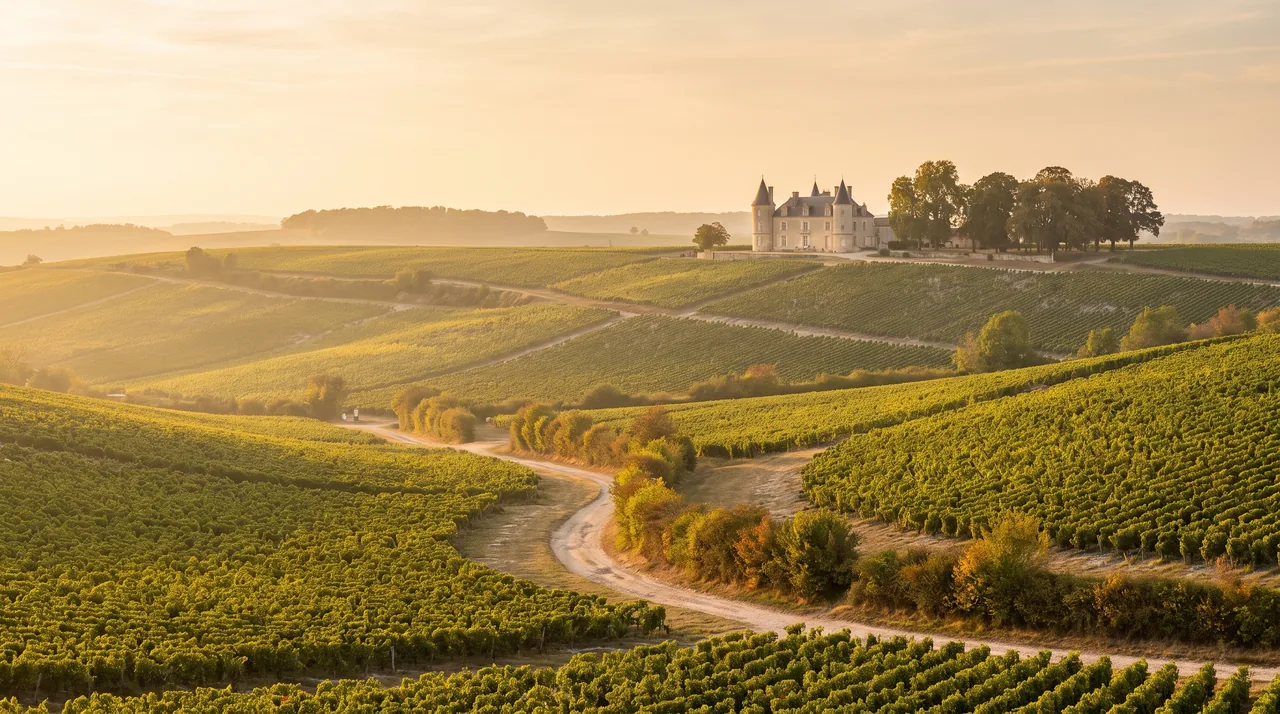
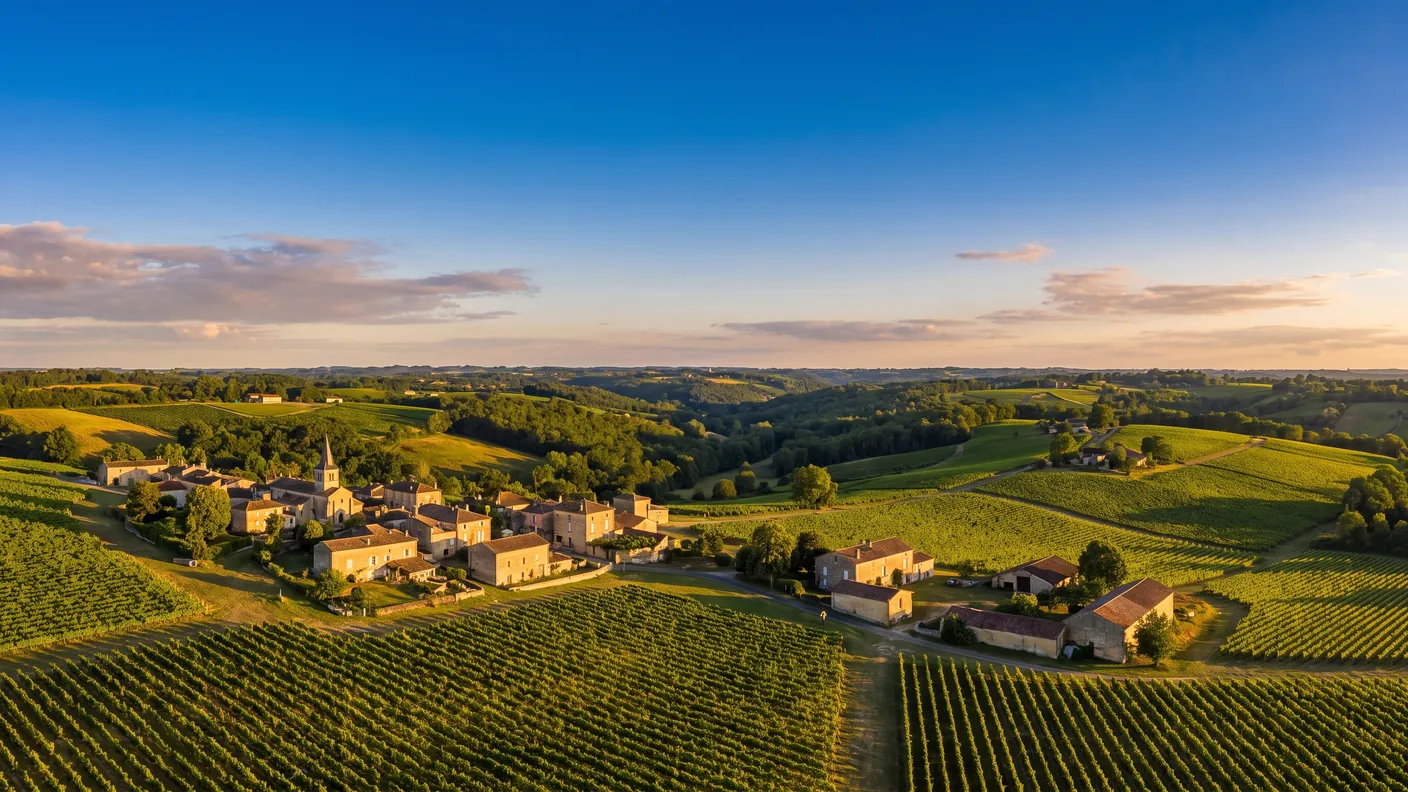
As in most of the Entre-deux-Mers region, vineyards shape the landscape and economy of Baigneaux. They cover about 28% of the municipal territory and form the gentle slopes that come into view as soon as you leave the woods. Although not exclusively a wine-growing village, Baigneaux derives its identity and its skyline from the vineyards: rows of vines lining the slopes, unassuming wine cellars nestled in the hamlets, and straddle tractors on the roads during the harvest season.
The village is located within the Entre-deux-Mers Appellation d'Origine Contrôlée (AOC), reserved for dry white wines, and within the broader Bordeaux and Bordeaux Supérieur regions. In other words, depending on the plots and grape varieties, the region produces both crisp white wines and Bordeaux-style reds. Château La Grave de Moustey is one of the estates in the area—a name that, as we’ve seen, refers to a vineyard rather than a fortress.
What is the Entre-deux-Mers AOC?
The Entre-deux-Mers appellation refers exclusively to dry white wines, made primarily from Sauvignon, Sémillon, and Muscadelle, according to the INAO’s 2025 specifications, consolidated version dated December 23, 2025. It is one of the largest vineyards in the Bordeaux regional appellation, stretching across the vast plateau that gave the region its name. These fresh, aromatic white wines pair perfectly with oysters from the Arcachon Basin and seafood dishes—a quintessentially Girondin pairing. Sipping an Entre-deux-Mers right in its home region, between visits to local sites, is one of the region’s simple, authentic pleasures.
The appellation covers a vast area of clay-limestone hills, ideal for producing lively, fruity white wines, and its production regulations specify precise yield limits and grape varieties. The “Entre-deux-Mers” designation on a label therefore always guarantees a dry white wine from the region—and never a red—contrary to what such a generic name might suggest. This is a distinction that often surprises visitors: the region is called Entre-deux-Mers, but only its dry white wines are entitled to bear that name on the bottle.
What is produced in the Baigneaux area?
In addition to the white wines of the Entre-deux-Mers appellation, the neighboring hillsides produce reds classified as Bordeaux and Bordeaux Supérieur, and occasionally rosés and clairets. The diversity of the soils—clay-limestone on the higher ground, more gravelly in the valleys—explains this variety. The wineries often offer direct sales and tastings; this is an opportunity for visitors staying in Baigneaux to meet the winemakers and leave with a few bottles, without having to go through large retailers.
This coexistence of appellations within the same municipality is common in the Bordeaux region: a winemaker may label his white wines as “Entre-deux-Mers” and his reds as “Bordeaux” or “Bordeaux Supérieur,” depending on the plots and grape varieties planted. In Baigneaux, vineyards do not take up all the land—they occupy just over a quarter of it—but they remain the village’s defining activity, the one that shapes the hillsides and sets the rhythm of the year, from the fall harvest to winter pruning, through the long months of work in the vineyards.
The vineyards also set the pace for the landscape. In spring, budbreak brings a burst of green to the hillsides; in summer, the rows close in to form neat hedges; in fall, the grape harvest brings the wineries to life before the leaves turn red; in winter, pruning leaves bare vines standing against the bare earth. This seasonal rhythm can be found throughout the Entre-deux-Mers region, but in Baigneaux it takes on a special hue, blended as it is with the colors of the woods. It’s a setting that changes with every visit and rewards those who return throughout the year.
| Designation | Type of wine |
|---|---|
| Entre-deux-Mers | Dry white wines (Sauvignon, Sémillon, Muscadelle) |
| Bordeaux | Red, white, rosé, and clairet wines |
| Bordeaux Supérieur | Aged Red Wines |
The Village and Its Natural Surroundings
Baigneaux does not have a centralized, picturesque town center like its neighboring bastides. Instead, the village consists of limestone hamlets scattered across the plateau, connected by narrow roads that wind up and down with the contours of the land. The houses, with their light-colored walls and tiled roofs, blend into the landscape rather than dominate it. It is a rural community, without a grand town square or tourist-filled alleyways, but with the quiet authenticity of villages that have never sought to put on a show.
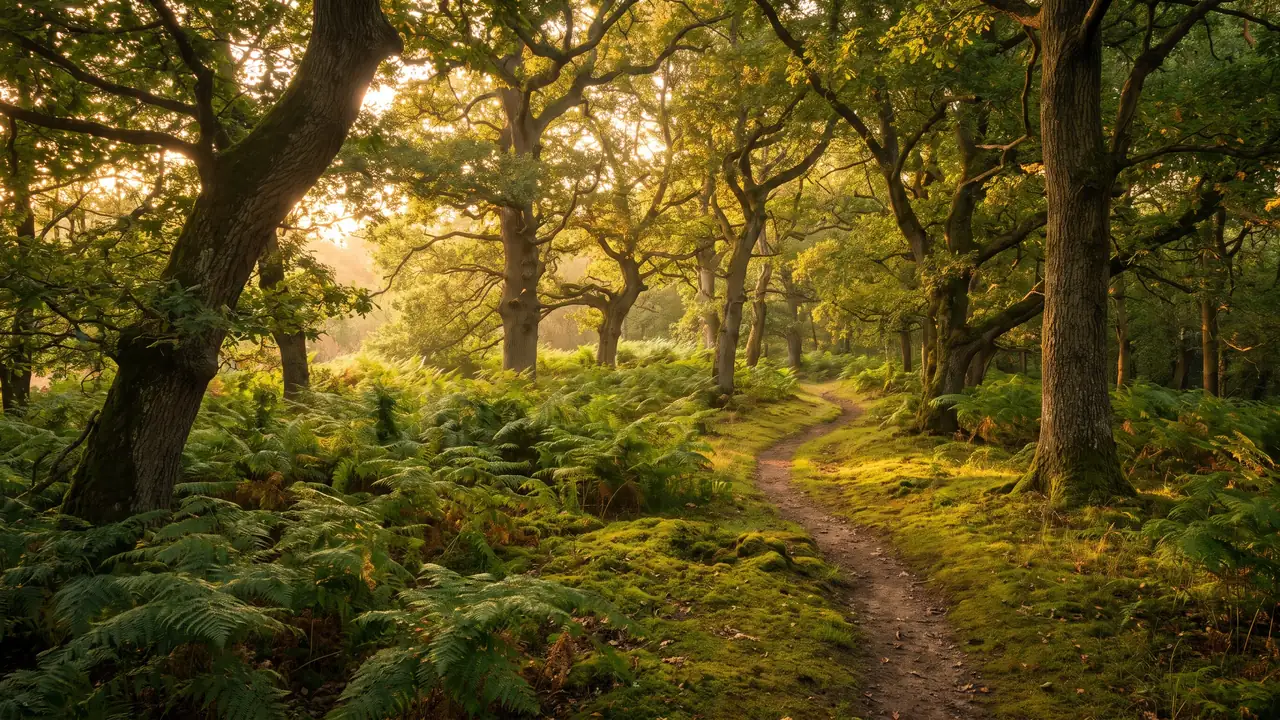
What sets Baigneaux apart from many other wine-growing towns is the proportion of woodland: about 36% of the area is forested, primarily with oak and chestnut trees. The village thus offers a mosaic of vineyards and forest rather than a sea of vines. This mix creates shaded walking paths, forest edges where light dances through the trees, and a richer variety of wildlife than in the wine-growing plains. In just a few steps, you can go from a vineyard-covered hillside to a cool forest understory, which is what makes the local walks so pleasant.
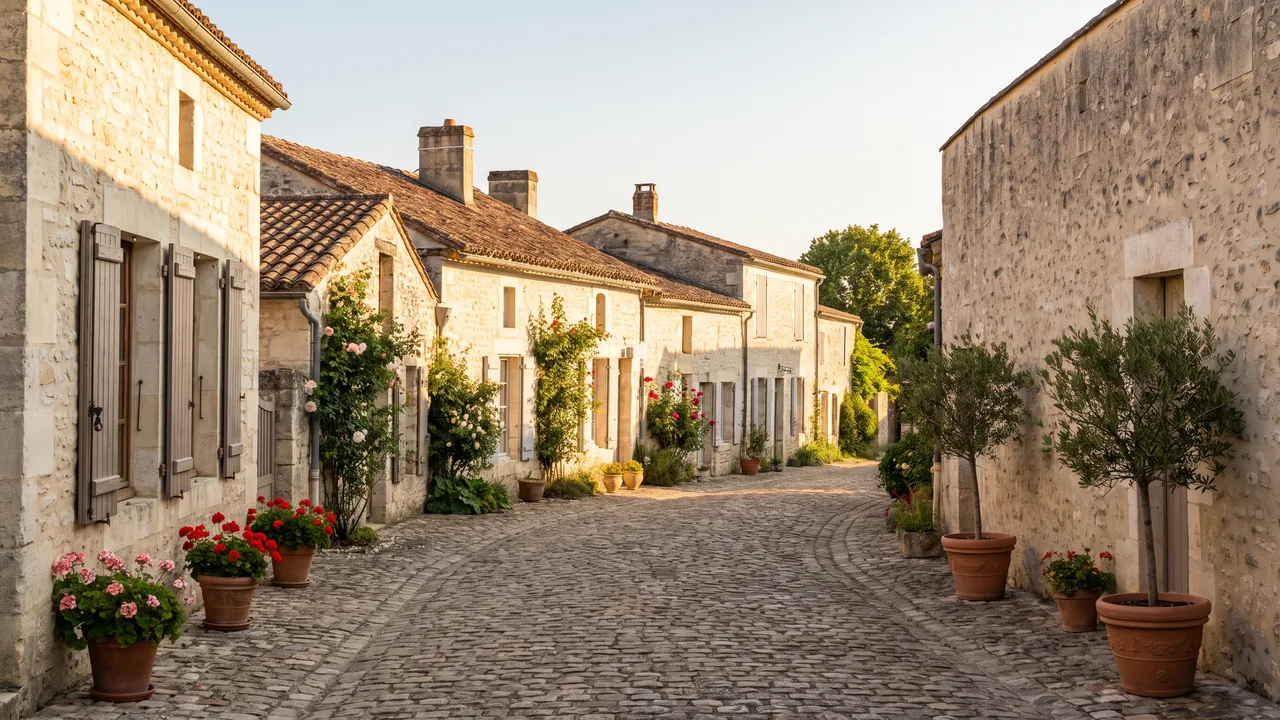
Vines, wood, and limestone
The limestone bedrock, typical of the Entre-deux-Mers region, is visible in the walls of the houses as well as in the outcrops along the paths. It is this same stone that was used, on a larger scale, to build Bordeaux and its great monuments. In Baigneaux, it gives the hamlets a golden hue that warms as the day draws to a close, when the light skims the hillsides and brings out the texture of the old walls. This stone is the village’s quiet soul, the force that unites the church, the farms, and the low stone walls.
This blend of vineyards and forest sets Baigneaux apart from the lowland towns, which are entirely planted with vines. Here, you can go from a row of grapevines to the edge of an oak grove in just a few steps; the woods are home to common but thriving wildlife—deer, wild boars, and birds of prey—and have always provided firewood and chestnuts. This diversity of habitats is what gives the area its understated ecological value, far removed from monocultures: a balance between agriculture and nature that has endured through the centuries.
What do you see when you go for a walk?
Honestly, people don’t come to Baigneaux for a list of sights. They come to walk among the rows of vines, stroll along the edge of a wood, pass a tractor rather than a car, and enjoy the quiet of the countryside—a rarity so close to a major city. The listed church serves as a landmark; the rest is all about the atmosphere. It’s precisely this tranquility that makes Baigneaux an ideal base for exploring the surrounding area, rather than a destination where you’d want to linger for very long.
So don’t expect to find monuments at every turn—and that’s just fine. Baigneaux belongs to that category of villages you have to earn: you appreciate them on foot or by bike, taking your time, stopping to admire a scenic view or an old house. Those looking for a lively atmosphere will find it in the neighboring market towns on market days; those seeking silence will have found it the moment they arrive, without even getting out of the car.
The village thrives mainly on its land and its people. No paid attractions, no souvenir shops: Baigneaux has never sought to put on a show for visitors. Those who stop here do so knowingly, drawn by the quality of the silence and the unassuming beauty of a preserved agricultural landscape. It is this lack of artifice that appeals to a growing number of travelers, weary of overcrowded destinations and in search of an authentic countryside just a short drive from Bordeaux.
The Entre-deux-Mers Region
To understand Baigneaux, you have to take a step back and look at the region that surrounds it: the Entre-deux-Mers. This somewhat mysterious name refers to the large triangle of land wedged between the Garonne and the Dordogne, just before they converge. It is one of the most charming landscapes in the Gironde, dotted with bastides, abbeys, mills, and castles, where you can drive from village to village without ever tiring of the views of the rolling hills.
Baigneaux is just a small link in the chain, but an ideally located one: most of the major sites in the area are less than a quarter of an hour’s drive away. It’s this proximity that turns a tiny village into an excellent base camp. You can settle in peacefully here, then explore the region in every direction, with the feeling that everything is within easy reach without ever having to deal with crowds.
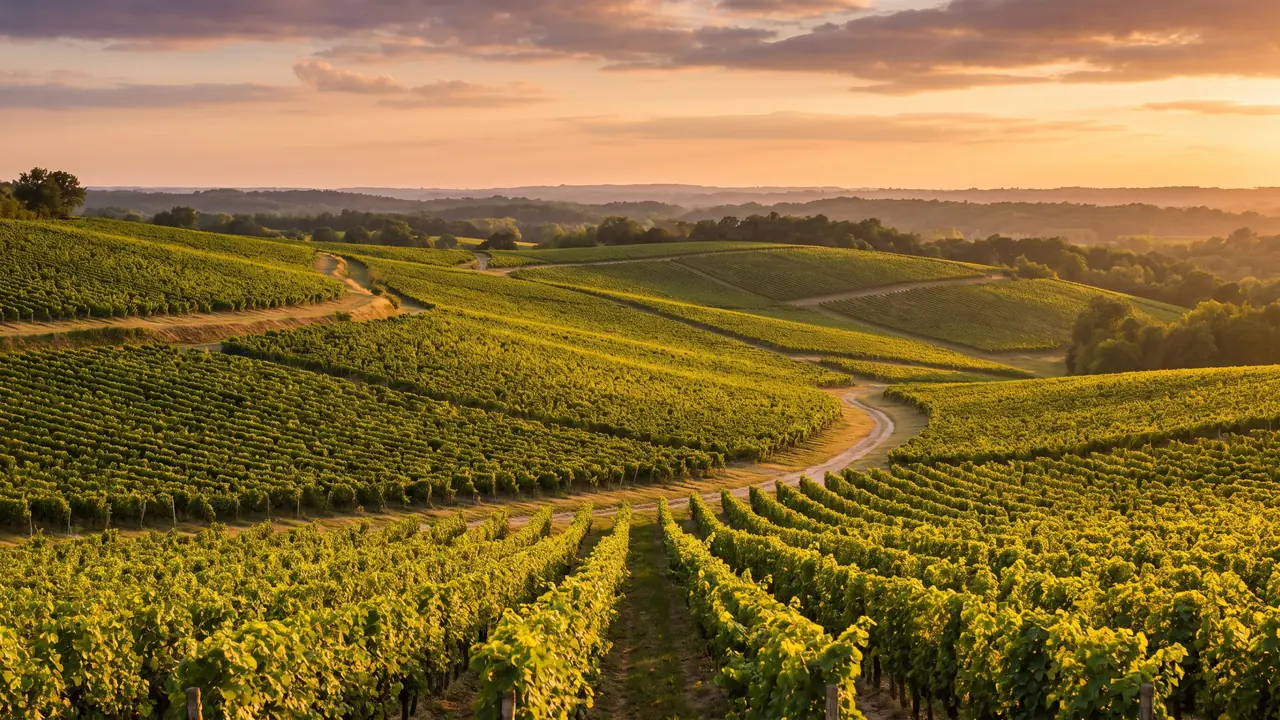
Why do we say “between two seas”?
The name has nothing to do with the sea in the literal sense. It refers to the two rivers that flank the plateau—the Garonne and the Dordogne—both of which are influenced by Atlantic tides well inland. These waters, which rise and fall twice a day, have been likened, since the Middle Ages, to two seas—hence the name Entre-deux-Mers. The region is therefore, literally, the land situated between these two tidal waterways—a plateau perched above the river valleys.
This influence of the tides extends far beyond etymology: it has shaped every aspect of life in the region. The tidal rivers have long served as trade routes, carrying wine, wheat, and stone upstream toward Bordeaux and the estuary. River ports, docks, and tidal mills still bear witness to this water-based economy, on the fringes of a plateau that has remained resolutely agricultural and dedicated to wine production. Understanding this geography means understanding why the Entre-deux-Mers was both isolated on its high ground and connected to the world by its rivers.
Bastides, abbeys, and castles
The Entre-deux-Mers region is an open-air history book. It is home to bastides—new towns founded in the 13th and 14th centuries on a geometric plan centered around a square with arcades—with Sauveterre-de-Guyenne and Créon serving as fine examples. There are also abbeys, starting with the Romanesque gem of La Sauve-Majeure, a UNESCO World Heritage Site. And fortified castles, such as the one at Rauzan. Baigneaux lies at the center of this network, within easy reach of each of these sites.
This wealth of cultural heritage can be attributed to the region’s turbulent history. On the edge of Aquitaine—which had long been under English rule—the Entre-deux-Mers was a land of frontiers and new settlements: bastides were established there to populate, control, and develop the territory; abbeys were built to pray and clear the land; and castles were erected to guard the roads. Baigneaux, an agricultural village with no strategic importance, has weathered the centuries on the sidelines of major historical events—which explains not only its modest architectural heritage but also its intact rural authenticity.
What is there to do in Baigneaux and the surrounding area?
In Baigneaux itself—let’s be honest—the itinerary can be summed up in just a few lines: visit the listed church, take a stroll through the vineyards and woods, and stop at a winery to taste an Entre-deux-Mers white wine. The real treasures lie all around, which is why this section fully embraces the “and around” aspect. In less than a quarter of an hour by car, you go from a Romanesque masterpiece listed by UNESCO to a medieval bastide, from a fortified castle with its cave to an open-air market. The area lends itself perfectly to a day of exploring: you can visit two or three sites, have lunch under the arcades of a bastide on market day, and finish with a wine tasting. Here are the must-sees, all verified and all located just a few kilometers from Baigneaux—without ever claiming for the village what belongs to its neighbors.
- La Sauve-Majeure Abbey, a masterpiece of Romanesque art founded in 1079 and listed as a UNESCO World Heritage Site since 1998, is located about 11 km away.
- The bastide town of Sauveterre-de-Guyenne, founded in 1281, with its arcaded square and Tuesday morning market, is about 10.6 km away.
- The fortified castle of Rauzan and the Célestine Cave, an underground stalactite formation open to visitors, located about 10.2 km away.
- The town of Créon, founded around 1315, and its Wednesday morning market, which draws about 100 vendors, is located about 15 km away.
- The Targon market on Friday morning, in the Haut-Benauge region, about 8 km away.
- Cycling along the Roger-Lapébie Greenway — please note that it does not pass through Baigneaux: the nearest access point is in Sauveterre-de-Guyenne, about 10 km away.
- Wine tastings at the vineyards in Entre-deux-Mers, where you can pick up a few dry white wines from the region to take home.
A day trip from Baigneaux
Here’s a sample itinerary: In the morning, head to Sauveterre-de-Guyenne on a Tuesday for its market under the arcades, then continue on to Rauzan to visit the fortified castle and the Célestine Cave. For lunch, enjoy a picnic in the vineyards or at a country-style restaurant. In the afternoon, head to La Sauve-Majeure Abbey to admire its Romanesque capitals, followed by a wine tasting at a vineyard on the way back. All of this takes place within a radius of about fifteen kilometers around Baigneaux, leaving plenty of time to wander at a leisurely pace without ever having to rush.
You can tailor this itinerary depending on the day and your interests. On Tuesday, head to Sauveterre-de-Guyenne for its market; on Wednesday, visit Créon and its hundred or so vendors; on Friday, explore Targon and the Haut-Benauge region. Cyclists will want to spend their day on the greenway, accessible from Sauveterre, while history buffs will prioritize La Sauve-Majeure Abbey and Rauzan Castle. In any case, the compact nature of the area makes it easy to improvise: nothing is ever very far away, and you can adapt your itinerary to suit both the weather and your mood.
| Website | Interest | Distance |
|---|---|---|
| La Sauve-Majeure | Romanesque Abbey, UNESCO | ~11 km |
| Sauveterre-de-Guyenne | Country house, market on Tuesdays | ~10.6 km |
| Rauzan | Fortified castle, Célestine Cave | ~10.2 km |
| Creon | Country house, market on Wednesdays | ~15 km |
| Targon | Friday Market, Haut-Benauge | ~8 km |
Around Baigneaux
Baigneaux is best enjoyed in the plural. Here, listed by distance, are the destinations that surround the village and make up the true highlight of a stay in the Entre-deux-Mers region. All are within a three-quarter-hour drive, most within ten to twenty minutes, allowing you to combine several in a single day without racking up too many kilometers.
| Destination | What You'll Find There | Distance |
|---|---|---|
| Targon | Haut-Benauge, Friday Market | ~8 km |
| La Sauve-Majeure | Romanesque Abbey, UNESCO | ~11 km |
| Sauveterre-de-Guyenne | Bastide from 1281, arcaded square | ~10.6 km |
| Rauzan | Fortified castle, Célestine Cave | ~10.2 km |
| Creon | Bastide, Roger-Lapébie Greenway | ~15 km |
| Langon | Subprefecture, Gateway to the Sauternes Region | ~26 km |
To the south: Langon and the Sauternes region
If we go a little further, about 26 kilometers to the south, Langon marks the boundary of the Entre-deux-Mers region and the gateway to the Sauternes region. This subprefecture, bustling with its market and riverside life along the Garonne, opens onto the sweet wine vineyards of Sauternes and Barsac—a world apart from the dry whites of Baigneaux. It’s a wonderful complementary excursion for anyone who wants to understand the full range of Gironde wines—from crisp dry wines to exceptional sweet wines—and extend their exploration beyond the plateau.
Neighboring villages you won't want to miss
Each of the neighboring villages is worth a visit, and we’ve dedicated separate guides to them. To the west, Targon stretches across the hillsides of the Haut-Benauge and is home to one of the area’s liveliest markets. Closer to Bordeaux, Créon—a bastide founded in the early 14th century—features a square lined with arcades and serves as the gateway to the Roger-Lapébie greenway. Finally, to the southeast, on the banks of the Garonne, La Réole reveals one of the most beautiful medieval towns in the Gironde. Three complementary ways to continue exploring the Entre-deux-Mers region from Baigneaux.
Getting to Baigneaux from Bordeaux
Getting to Baigneaux from Bordeaux is easy: leave the city on the right bank, drive through the first hills of the Entre-deux-Mers region, and you’ll reach the village in 58 minutes. The trip is about 41 kilometers. There is no train station in Baigneaux, and public transportation is infrequent: a car—whether your own or with a driver—remains the most convenient way to reach the village and, above all, to explore the surrounding area.
How much does the ride cost?
A door-to-door transfer between Bordeaux and Baigneaux is available from 84 € during the day, in a sedan that seats one to three people. The price is fixed and confirmed in writing before departure: no meter, no unpleasant surprises. Surcharges apply at night, on weekends, and on holidays, and a van is used for groups of more than four passengers. Trips to nearby destinations—La Sauve-Majeure, Sauveterre, Rauzan—as well as transfers from Bordeaux Airport are priced on a quote basis, depending on the distance and itinerary.
This base rate applies to a one-way trip during the day; a round-trip with a wait on-site, or a car rental for a day of exploring the Entre-deux-Mers region, are priced differently and require a personalized quote. The advantage of a price quoted in advance is that you can compare options and make a decision with peace of mind, without worrying about the meter running on a trip whose actual duration is hard to predict on the small county roads of the plateau.
| Route | Distance / Duration | Starting at |
|---|---|---|
| Bordeaux → Baigneaux | ~41 km · 58 min | from 84 € |
| Baigneaux → La Sauve-Majeure / Sauveterre / Rauzan | nearby sites (~10–11 km) | based on a quote |
| Bordeaux Airport → Baigneaux | ~1 hour | based on a quote |
Why hire a private driver?
The Entre-deux-Mers region can be explored from one site to the next and from one vineyard to the next, often with wine tastings included. Leaving the driving to a private driver means you can taste the dry whites of Baigneaux and the reds from the hillsides without giving up the chance to drive, visit the abbey, the bastide, and the fortified castle one after another without worrying about parking, and enjoy the rolling countryside rather than the road map. For a day of exploring the region’s heritage and vineyards, this approach really pays off.
In practical terms, a perfect day involves leaving Bordeaux in the morning, heading to Baigneaux and the surrounding area, visiting two or three sites—an abbey, a bastide, an estate—and then returning home in the evening, feeling relaxed. Door-to-door service eliminates the need for transfers: no stopovers at train stations, no searching for parking, and no need to worry about the return trip. For a group of wine-loving friends or a visiting family, this is often the easiest way to fully enjoy the Entre-deux-Mers region and its scattered treasures.
Finally, Baigneaux can easily be combined with other stops in the Gironde. You can pair a visit to the Entre-deux-Mers region with a trip to the Sauternes area to the south, or with a day in the vineyards on the right bank, near Saint-Émilion. The starting point remains the same: Bordeaux, with its train station and airport, from which you can explore the region as you please. Baigneaux, unassuming and centrally located, thus fits naturally into a broader itinerary—as a peaceful stop in the heart of the vineyards rather than as an isolated destination to be visited for its own sake.
Frequently Asked Questions
Where exactly is Baigneaux?
Baigneaux is a village in the Gironde department, in the Nouvelle-Aquitaine region, in the heart of the Entre-deux-Mers—the wine-growing plateau stretching between the Garonne and the Dordogne rivers. It is part of the Langon arrondissement and the Entre-deux-Mers canton, with the ZIP code 33760 and the INSEE code 33025. Located about 41 kilometers from Bordeaux, it is bordered by Bellebat, Cessac, Frontenac, Martres, and Montignac, and neighbors Targon, some 8 kilometers away. It is a small rural village of vineyards and woods.
Should we confuse this Baigneaux with the one in Eure-et-Loir?
No, these are two separate municipalities that share only their name. The wine-growing town of Baigneaux mentioned in this guide is located in Gironde (INSEE code 33025), southeast of Bordeaux. There is another Baigneaux in Eure-et-Loir (INSEE code 28019), in the Centre-Val de Loire region, more than five hundred kilometers away. To avoid any navigation errors, especially when using a GPS, always check the department: Gironde and ZIP code 33760 for the village in the Entre-deux-Mers region, and not 28 for the one in the Beauce region.
How many people live in Baigneaux?
Baigneaux is a very small village: its municipal population stands at approximately 451 residents according to the INSEE census (2023), with a population density of just 57 residents per square kilometer across an area of 7.93 km². The residents are known as Baigneaudais and Baigneaudaises. After a long period of rural decline in the 20th century, the town is experiencing steady growth, driven by new residents drawn to the Bordeaux countryside and the proximity to the city. People come here primarily for the peace and quiet and the natural surroundings.
What does the name Baigneaux mean?
The origin of the name remains uncertain. One theory links Baigneaux to its Gascon form, Banhaus, which could refer to the idea of a bath, from the Latin balneum. In the absence of comprehensive and reliable sources, it is best to remain cautious: the precise etymology is still debated, and nothing is certain. What we do know for certain, however, is that during the French Revolution, the former parish of Saint-Paul was established as a commune, giving rise to the administrative entity of Baigneaux that we know today.
What makes the church in Baigneaux special?
The Church of Saints Peter and Paul features a rare curiosity: its orientation was reversed in the mid-19th century. While churches are traditionally oriented toward the east, the choir here faces west. The building combines a 16th-century Gothic nave—one keystone bears the date 1538—with a Neo-Gothic choir and bell tower dating from 1854. The entire structure has been listed as a Historic Monument since June 10, 2002. It is the village’s main landmark.
Is the church a designated historic site or listed?
It is listed, but not classified. The Church of Saint-Pierre-et-Saint-Paul has been listed in its entirety on the inventory of Historic Monuments since June 10, 2002, under the Mérimée entry PA00083122. Listing is the first level of protection for French heritage; classification, which is more stringent, applies to monuments of national interest. The distinction is technical but real. For a village of this size, the listing is already a significant recognition of the heritage value of its church and its history.
Is there a castle in Baigneaux?
No. The only “château” associated with Baigneaux is Château La Grave de Moustey, which is a winery—a “château” in the Bordeaux sense, meaning a wine-producing estate, not a fortress. The area’s true medieval fortified castle, complete with a keep and ramparts, is located in Rauzan, about ten kilometers away. In Baigneaux itself, the historic sites are limited to the listed church and the limestone houses in the hamlets. So don’t expect to find any ramparts there.
What kind of wine is produced in Baigneaux?
Baigneaux is located within the Entre-deux-Mers AOC region, which produces dry white wines made primarily from Sauvignon, Sémillon, and Muscadelle. The village also falls under the Bordeaux and Bordeaux Supérieur appellations, producing red wines in the Bordeaux style, as well as some rosés and clairets. Vineyards cover about 28% of the municipality. Local wineries, such as Château La Grave de Moustey, often sell directly to consumers: this is the perfect opportunity to taste the wines right at the source, while interacting with the winemakers.
What is there to do around Baigneaux?
There are plenty, once you broaden your horizons. Less than a quarter of an hour’s drive away: the Romanesque abbey of La Sauve-Majeure, a UNESCO World Heritage Site; the bastides of Sauveterre-de-Guyenne and Créon with their markets; the fortified castle of Rauzan and its Célestine Cave; and the market in Targon. You can also hop on a bike along the Roger-Lapébie greenway, with the closest access point in Sauveterre, or visit the vineyards to taste the wines of the Entre-deux-Mers region. The village is an ideal base for exploring the surrounding area.
Does the Roger-Lapébie Greenway pass through Baigneaux?
No, this needs to be clarified because it is sometimes misinterpreted. The Roger-Lapébie Greenway, built along a former railroad line between the Bordeaux region and Sauveterre-de-Guyenne, does not pass through Baigneaux. The closest access point is in Sauveterre-de-Guyenne, about ten kilometers away, at the end of the route. From Baigneaux, you can therefore drive to the trail before cycling through the Entre-deux-Mers region on a flat, safe route—ideal for families or a leisurely outing.
On which days are the markets held around Baigneaux?
Markets set the pace of the week in the Entre-deux-Mers region. In Targon, about 8 kilometers away, the market is held on Friday mornings. In Sauveterre-de-Guyenne, under the arcades of the bastide, it’s on Tuesday mornings. In Créon, about fifteen kilometers away, the large Wednesday morning market brings together around a hundred vendors. By combining one of these market visits with a tour of a nearby site—such as an abbey or a castle—you can easily plan a wonderful half-day of exploration in the land of the bastides.
How much does a trip from Bordeaux to Baigneaux cost with a private driver?
A door-to-door transfer between Bordeaux and Baigneaux is available from 84 € during the day, in a sedan that seats one to three people. The fare is fixed and confirmed in writing before departure—no meter, no surprises. Surcharges apply at night, on weekends, and on holidays, and a van is used for groups of more than four passengers. Trips to nearby destinations—La Sauve-Majeure, Sauveterre, Rauzan—or from the Bordeaux airport are priced on a quote basis, depending on the distance and the day’s itinerary.
How long does it take to get to Baigneaux from Bordeaux?
Allow 58 minutes from downtown Bordeaux, covering a distance of about 41 kilometers along the right bank and the departmental roads of the Entre-deux-Mers region. From Mérignac Airport, the travel time depends on your starting point and traffic conditions. The route passes through the first vineyard-covered hills and offers an early glimpse of the rolling countryside. Once you arrive, all the major sites of the Entre-deux-Mers—the abbey, the bastides, and the fortified castle—are just another ten to fifteen minutes’ drive away.
Further Reading
- View the Bordeaux → Baigneaux transfer—route, flat rate, and vehicles—then request a reservation.
- All our destinations—Entre-deux-Mers, Médoc, the Arcachon Basin, and the rest of the Gironde region, departing from Bordeaux.
- Targon, Haut-Benauge—the village next to Baigneaux, about 8 km away—and its Friday market.
- Creon, the country house, and the greenway—the 14th-century new town and its Wednesday market, about 15 kilometers away.
- La Réole, a medieval town on the Garonne River—to continue your exploration toward the southeast of the Entre-deux-Mers region.
Sources and References
- INSEE — Municipality of Baigneaux (33025) — ⚠ Gironde (33025), not Eure-et-Loir (28019)
- Mérimée Database / POP (Ministry of Culture) — PA00083122 — church listed as a historic monument in 2002
- Entre-deux-Mers Tourist Office — markets, attractions, greenway
- La Sauve-Majeure Abbey (UNESCO) — a nearby Romanesque abbey
- INAO — Specifications for the Entre-deux-Mers AOC — 2025 version, finalized on December 23, 2025, accessed on July 24, 2026
Article published and verified on .
Our Latest Guides
 Entre-deux-Mers & Southern Gironde
Targon: Haut-Benauge in the Heart of the Entre-deux-Mers Region
Read the guide →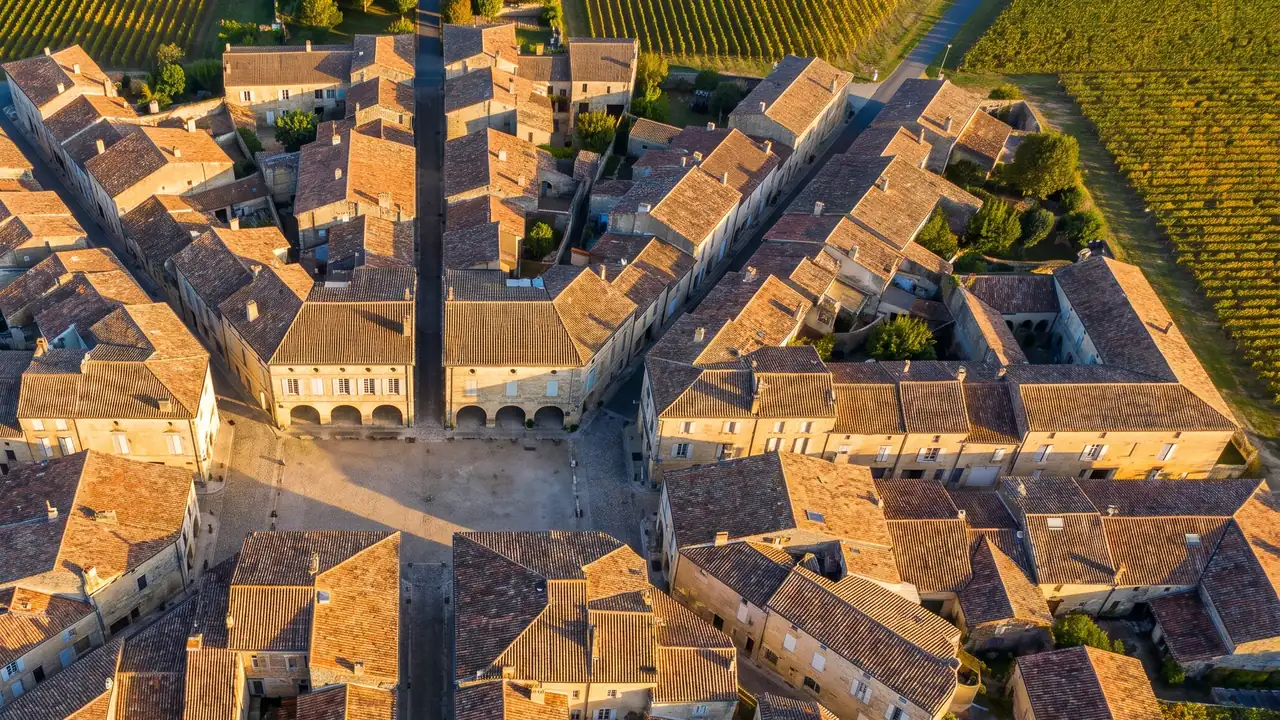 Entre-deux-Mers & Southern Gironde
Créon: The Country House and the Entre-deux-Mers Greenway
Read the guide →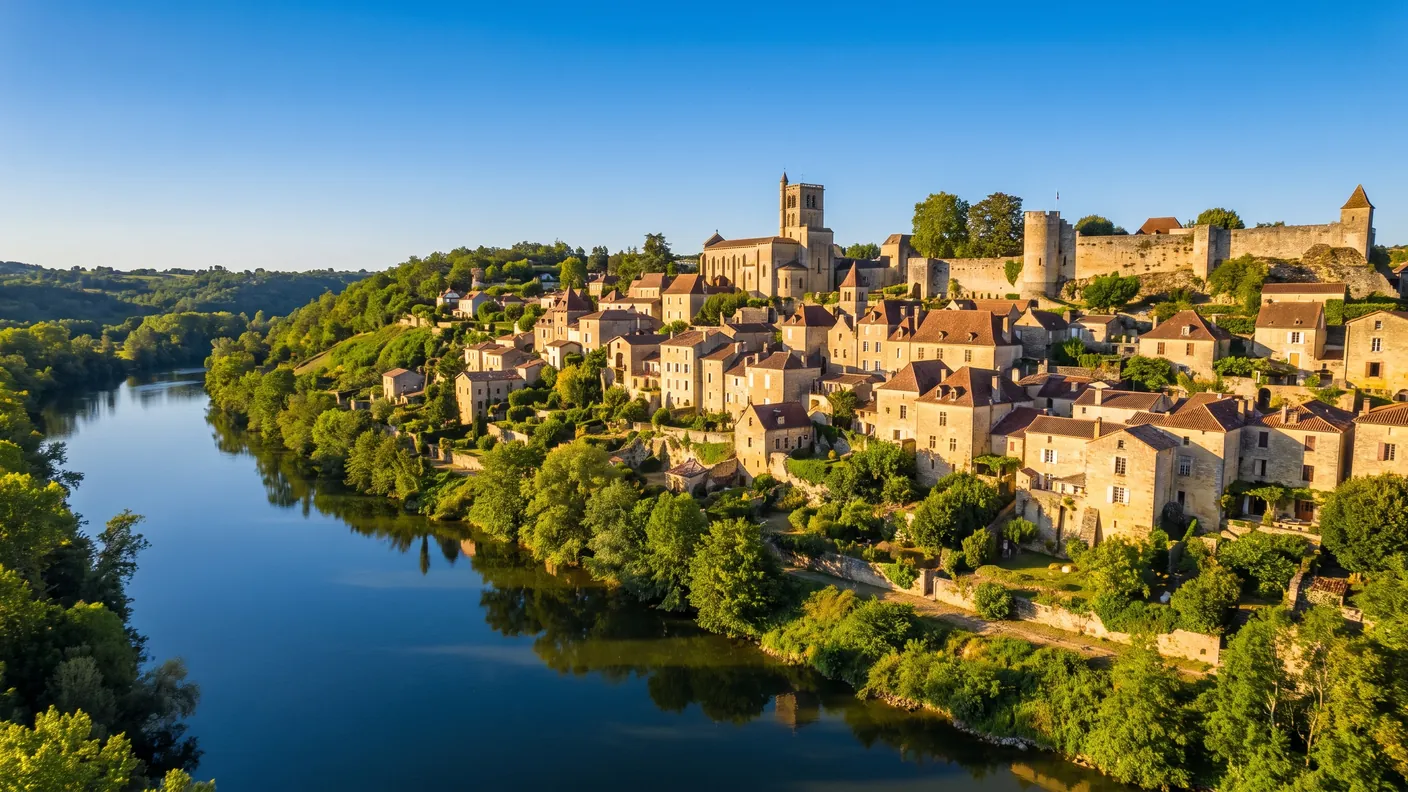 Entre-deux-Mers & Southern Gironde
La Réole: The Medieval Town on the Garonne River
Read the guide →Off to Entre-deux-Mers
Direct transfer from Bordeaux (58 min) to Baigneaux and the treasures of the Entre-deux-Mers region. Fixed-price quote in writing, with no obligation.