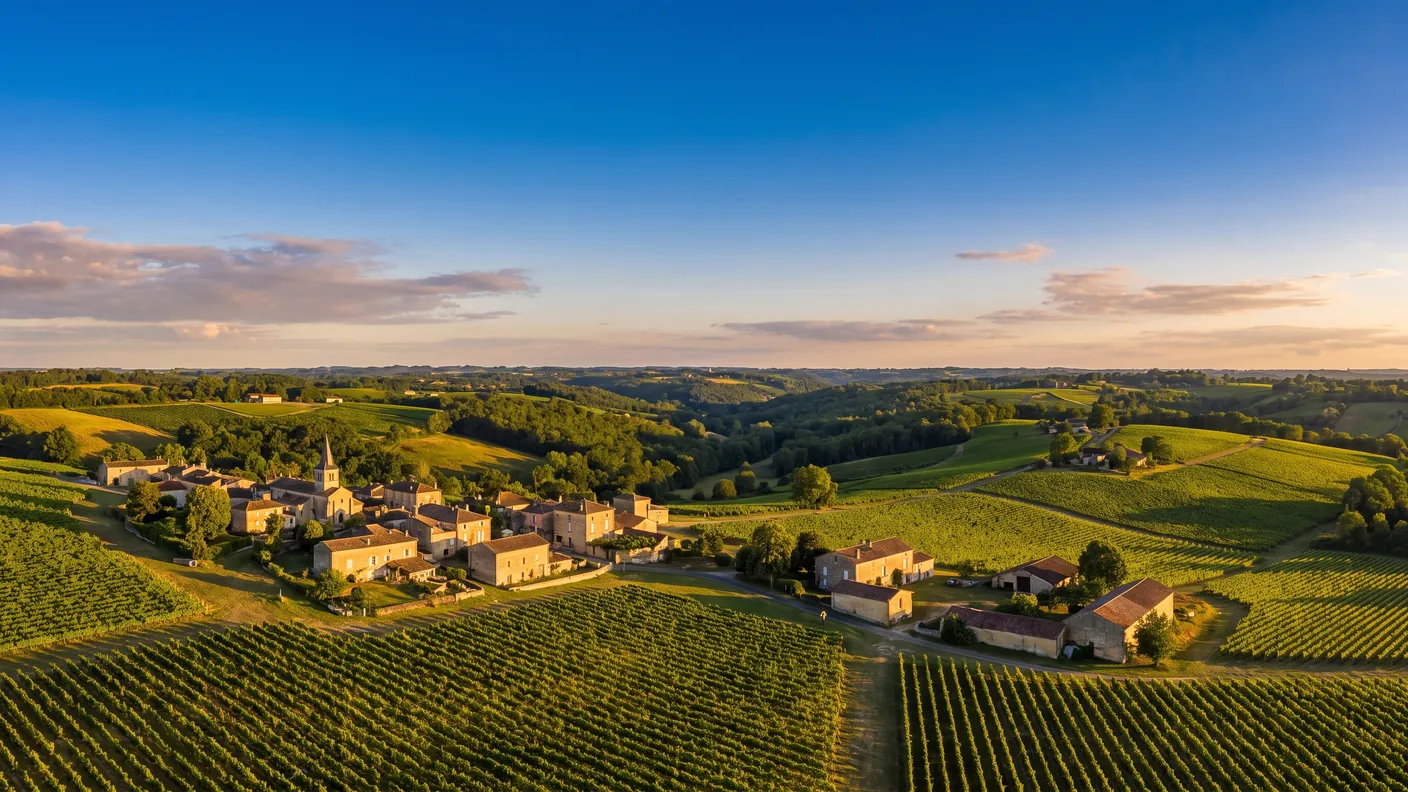
Bordeaux to Targon: the heart of Entre-deux-Mers
A fortified Romanesque church, the protected ruins of Montarouch, and the “cru within a cru” of Haut-Benauge: Targon, a crossroads town in the heart of the Entre-deux-Mers region, offers a wealth of cultural heritage and wine-growing traditions just a short drive from Bordeaux.
Targon at a Glance
Targon is a wine-growing village in the heart of the Entre-deux-Mers region, in Gironde, about 35 km southeast of Bordeaux, featuring its fortified Romanesque church and the ruins of the church at Montarouch. Formerly the county seat and a hub for services in a wine-growing region, Targon is home to the Church of Saint-Romain, a listed historic monument, featuring a chancel converted into a vaulted chamber with arrowslits and a carved Romanesque portal.
This guide distinguishes between verified facts and local lore: the Saint-Romain Church is listed, not classified; the Roger-Lapébie greenway does not pass through Targon; the Entre-deux-Mers AOC has historically been a designation for white wines. The Templar association with Montarouch is not established by the official heritage listing and is still presented as a tradition.
Here are the key details to know before you go. The commercial page lists a distance of 35 km, a travel time of about 54 minutes, and a flat rate starting at €78 for a one-way daytime trip. The historical and demographic data have been verified using the sources listed at the end of the article; the schedules, which are subject to change, should be confirmed on site.
| Landmark | Details |
|---|---|
| Village | Targon (Gironde, Langon District) |
| Location | in the heart of the Entre-deux-Mers region, between Créon and Sauveterre |
| Residents | 2,079 Targonnais (2023) |
| Must-See | the fortified church of Saint-Romain, the ruins of the church in Montarouch, the estates |
| Distance from Bordeaux | about 35 km · about 54 min by car |
Where is Targon located?
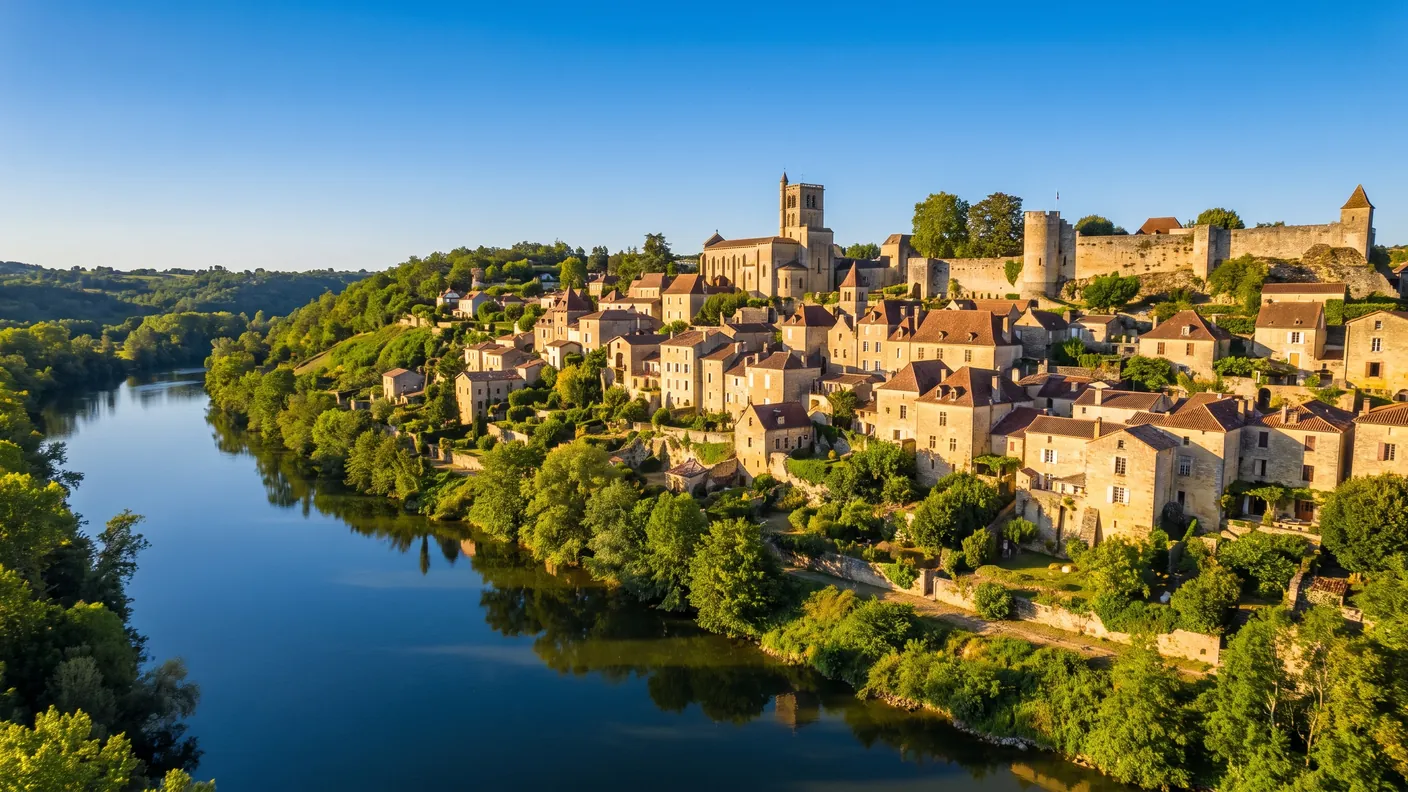
Targon is located in the geographical heart of the Entre-deux-Mers region, about 35 km southeast of Bordeaux, along the route connecting Créon to Sauveterre-de-Guyenne. It is a region of vineyard-covered hillsides, woodlands, and stone villages—the plateau between the Garonne and the Dordogne, one of the largest appellation vineyards in Bordeaux. The town has a population of 2,079.
It is part of the Langon district and the Entre-Deux-Mers Rural Community of Communes, of which it is the most populous municipality and the western hub—featuring shops, a health center, and a France Services office—even though the community’s headquarters are located in Sauveterre. Formerly the county seat until the 2014–2015 redistricting, Targon has retained its role as a small regional hub. For visitors, it serves as a discreet and well-located base: the Entre-deux-Mers region can be explored from here in a radial pattern, with La Sauve-Majeure Abbey 8 minutes away, Créon 12 minutes away, Cadillac-sur-Garonne 19 minutes away, and Sauveterre 20 minutes away.
Right in the center of the Land of the Two Seas
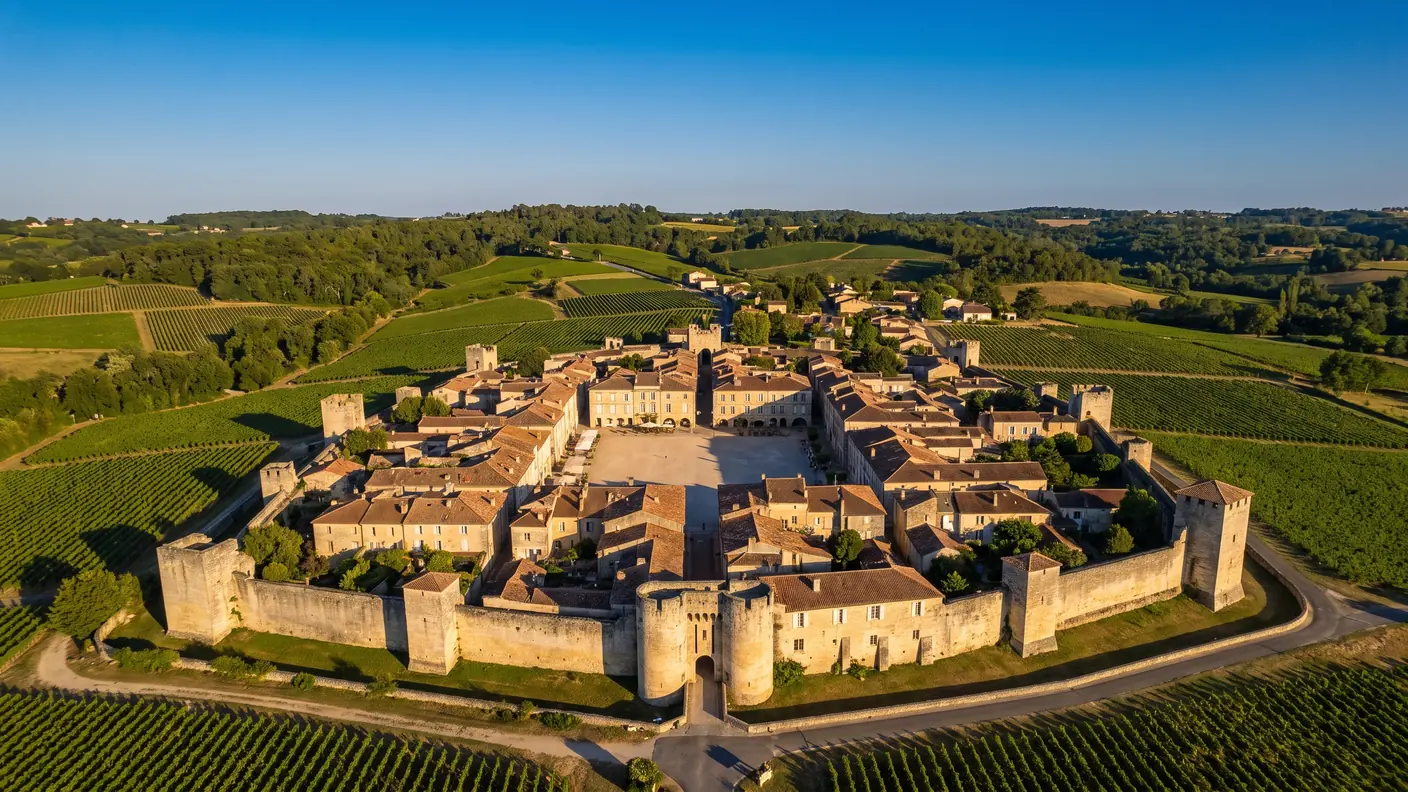
Few towns can claim to be as centrally located: Targon lies practically at the geometric center of the Entre-deux-Mers region, on the D671, the old main road from Bordeaux to Sauveterre. All around, the landscape unfolds, showcasing the charm of the plateau: vineyards on the hilltops, wooded valleys, hamlets built of pale stone, Romanesque churches, and windmills.
The village, with its town square, shops, and Friday market, lives to the rhythm of a wine-growing region, in the heart of the Entre-deux-Mers appellation and the Haut-Benauge designation. Its history is linked to the monks of La Sauve-Majeure, the Order of Malta—which is documented in Montarouch—and the Wars of Religion.
A service hub in the heart of the vineyards
Targon is not a museum village: it is a thriving town and the service hub of a rural canton. It features shops, a school, a health center, a commercial district, and a France Services office—a role as a local “small capital” inherited from its past as the canton seat. The Friday morning market and the organic and artisanal market held on the first Sunday of the month bring the town to life.
In October, the Le Pressoir festival brings a wave of marching bands and street performances, with admission by donation. This authentic atmosphere gives the visit a special charm: you’ll discover the real Entre-deux-Mers, unstaged and unpretentious, where family-run estates have been passed down through generations and where the fortified church watches over the village. With a chauffeur service, you can use it as the starting point for a day of exploring the surrounding area—visiting an abbey, fortified towns, and wine tastings—without worrying about driving or parking.
Saint-Romain, a fortified Romanesque church
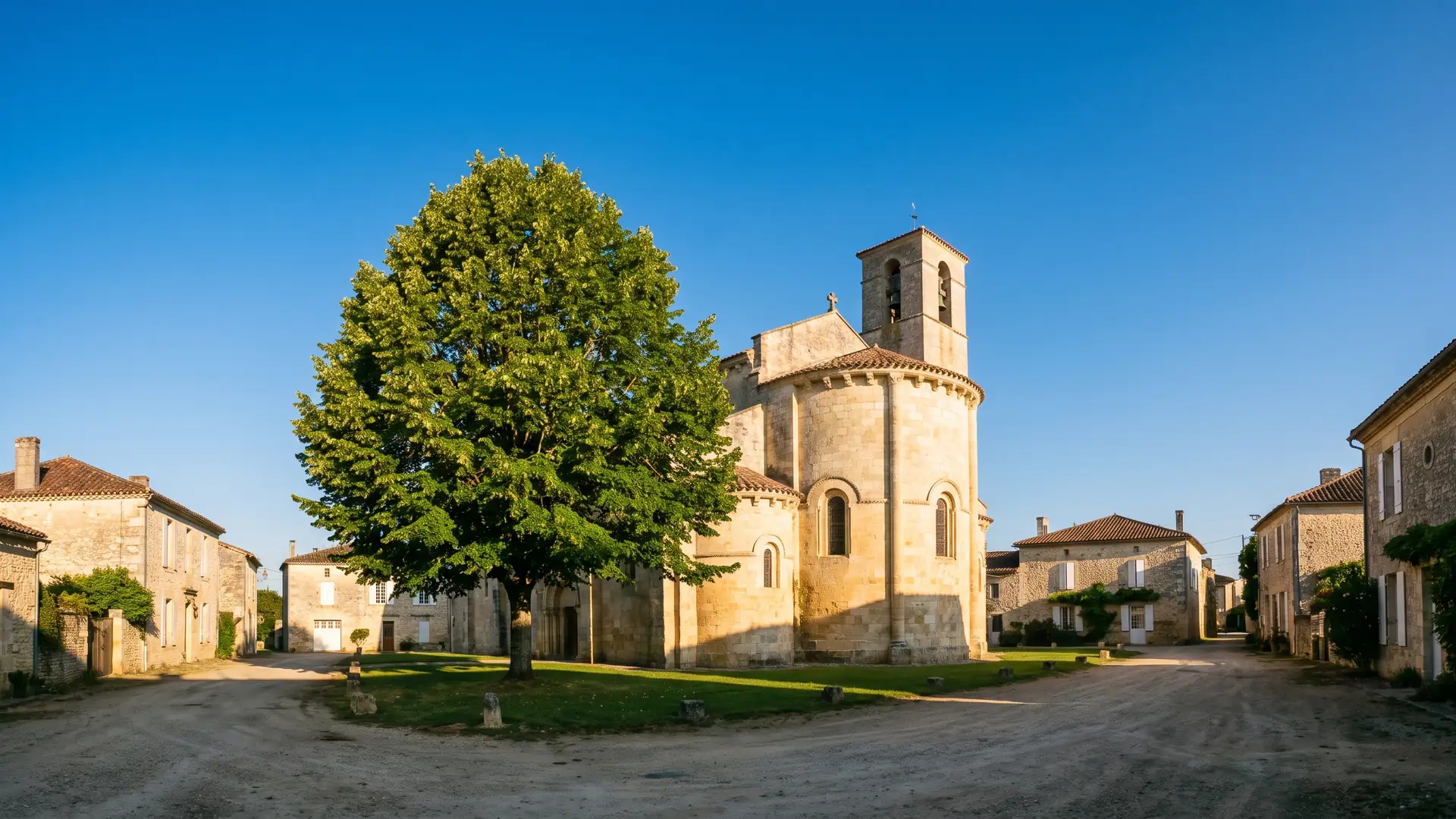
Saint-Romain Church, listed as a Historic Monument since 1925, is Targon’s principal landmark: a Romanesque church built in the 12th century and literally fortified during the Wars of Religion, when its apse was raised to form a defensive chamber with arrow slits. The sources establish this much, without embellishment.
A Church That Served as a Refuge During the Wars of Religion
Saint-Romain is first and foremost a 12th-century Romanesque church that once depended on the powerful neighbouring La Sauve-Majeure Abbey. A Gothic aisle was added in the 15th century, while the bell tower dates from the 17th century. Its defining feature lies elsewhere: during the Wars of Religion, which hit the area hard, Blaise de Monluc’s troops took the town in 1562 and the church was fortified.
Sound The Roman-style bedside table was raised to the level of a vault, pierced by deadly, and some "pepperpot" watchtowers Renaissance-style elements were added to the corners: a true refuge church, where the community could take shelter. The building is registered Listed as a Historic Monument since December 21, 1925 (Mérimée entry PA00083848) — “registered,” not “classified”; the distinction is important. It is one of the most distinctive examples of a fortified church in the Entre-deux-Mers region; to appreciate it, simply look up at its keep-like apse.
A carved Romanesque portal full of surprises
Saint-Romain’s other treasure is its Romanesque portal and 12th-century carved decoration. The historiated capitals depict Adam and Eve and the Adoration of the Magi; a metope shows a woodcutter wielding an axe. The archivolts unfold a gallery of vices, while the cornice aligns 21 corbels, fifteen of them original.
Inside, the church preserves a 16th-century recumbent effigy, an old bell and stained-glass windows by Bordeaux master glassmaker Gustave Pierre Dagrant. A visit to Saint-Romain pairs naturally with an exterior view of the protected Montarouch ruins and a tasting at a nearby wine estate.
Montarouch: What the Official Heritage Record Establishes
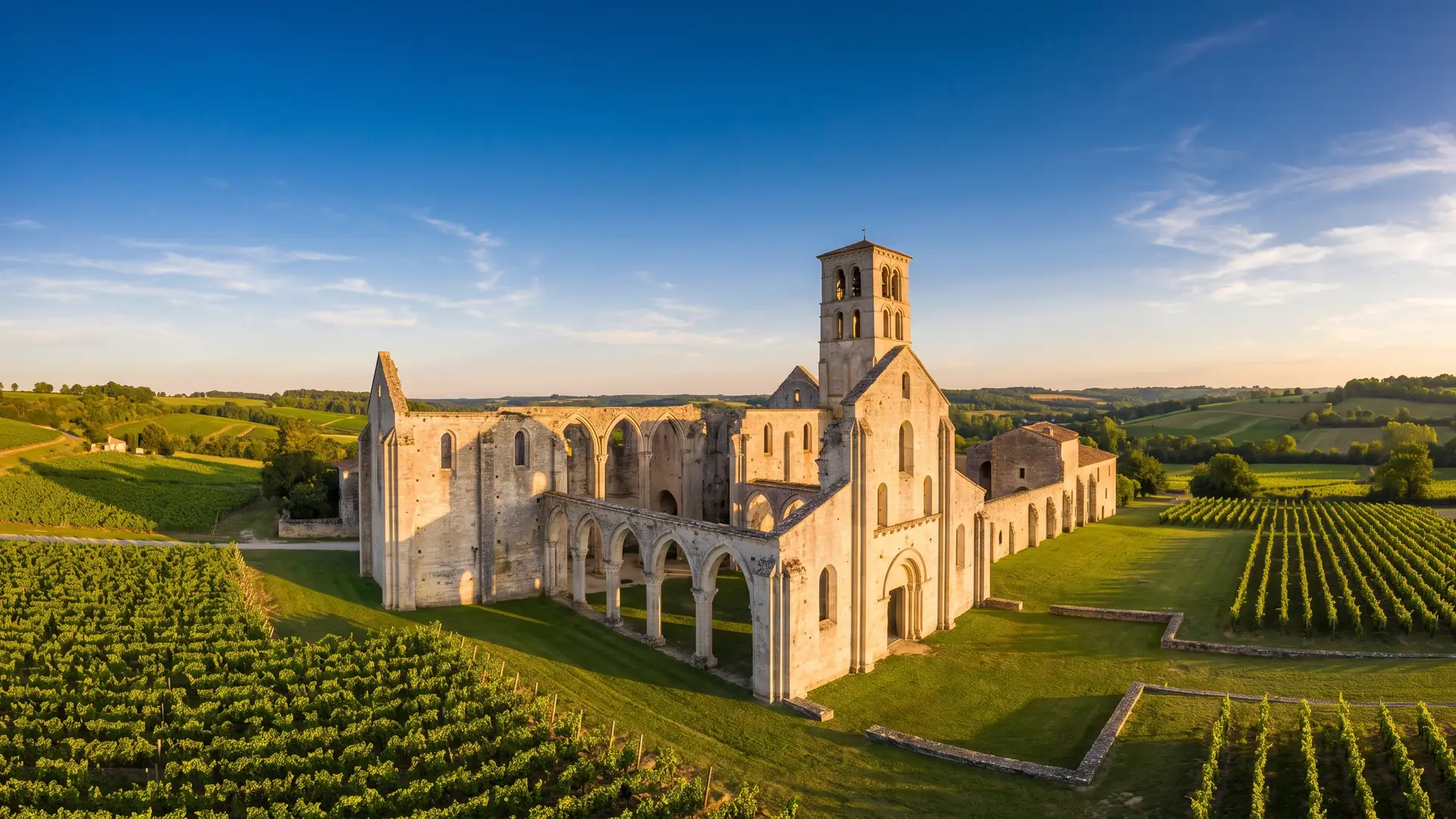
In the countryside around Targon stand the ruins of Montarouch Church, a 13th-century building listed as a Historic Monument. Claims that it was founded by the Knights Templar around 1160–1180, along with the detailed chronology often repeated online, are not established by the official heritage record and are therefore presented here as local tradition.
The facts established by the Mérimée entry
The official POP record PA00083849 dates the main construction phase to the 13th century and states that the church belonged to the Order of Malta. It describes a building without an apse or side aisles, once vaulted, with a turret added at the north-east corner and defensive features on the north wall. The ruins have been listed since 21 December 1925.
Local Tradition and Documentary Limitations
Some secondary sources link Montarouch to the Knights Templar and interpret certain visible signs as evidence of this connection. In the absence of specific primary or academic sources provided in the file, these elements are not presented as facts. The visit should be understood as a tour of protected ruins; access and viewing conditions should be verified on site.
A crossroads town in the Entre-deux-Mers region
A rural crossroads in the center of the plateau, Targon has been a part of the history of the Entre-deux-Mers region: under the authority of the monks of La Sauve, with the presence of the Order of Malta documented in Montarouch, the violence of the Wars of Religion, and then two centuries as the county seat. Here are the verified landmarks.
Monks, the Order of Malta, and the Wars
The history of Targon is largely shaped by the Abbey of La Sauve-Majeure, to which the Church of Saint-Romain was affiliated. The official entry on Montarouch, for its part, confirms its affiliation with the Order of Malta, without confirming the Templar origins repeated in local tradition.
The Wars of Religion left a deep mark: in 1562, according to local history, Blaise de Monluc’s troops captured the town. The church was fortified, with a raised apse serving as a strongroom and watchtowers at the corners. Targon later became the seat of a rural canton and a service center for a region devoted to viticulture.
"Targon"—a cover name?
Where does the name Targon come from? The hypothesis reported by the sources suggests that to drift from targo, “the shield "— an appealing etymology, though one to be taken with a grain of salt, as it has not been definitively documented. It echoes the fortified church that served as a refuge, without, however, proving the detailed history traditionally attributed to Montarouch."
The town has retained its role as the market town of the central plateau. Today, its 2,079 residents—the Targonnais — live in a town near Bordeaux. This heritage is still visible in the fortified apse of Saint-Romain and in the protected ruins of the church in Montarouch.
Church, greenway, appellation: things we often see
Several claims are circulating about Targon that need to be corrected, backed by sources—that’s the whole point of a reliable guide. The safety features, the greenway, the name: here’s what’s true and what’s false.
Registered, unclassified—and no greenway in town
One sometimes reads that the Saint-Romain Church is “listed " as a historic monument: in reality, it is listed (decree of December 21, 1925), just like the ruins of Montarouch—and these are the only two protected monuments in the town; we shouldn’t make up any others. Another common misconception: Targon is supposedly just a short bike ride from the Roger-Lapébie greenway. The trail does not pass through Targon.
It runs north through Créon, La Sauve, and Espiet, and the closest access point is in La Sauve, about 6 km away (an 8- to 9-minute drive). However, a marked bike trail of about 20 km connects La Sauve, Saint-Léon, Targon, Blésignac, and Espiet, with the return trip along the trail—the best way to include the village in a cycling loop. Finally, it should be noted that the headquarters of the Entre-Deux-Mers Rural Community of Communes is in Sauveterre-de-Guyenne: Targon is its most populous municipality and its western hub, but not its headquarters.
Entre-deux-Mers, a white wine appellation
As for wine, here's an important point to note: theEntre-deux-Mers AOC, of which Targon is a part (among 133 municipalities), is historically, a designation for dry white wines — primarily Sauvignon, along with Sémillon, Muscadelle, and Sauvignon Gris. Red wines have only been permitted there since 2023, and remain in the minority (~10% of total volume): the region's red wines are traditionally classified under the AOC Bordeaux. Therefore, Entre-deux-Mers should not be presented as a general-purpose red and white appellation. Targon also benefits from the designation "Entre-deux-Mers Haut-Benauge", reserved for a handful of towns in the heart of the plateau—a “cru within a cru,” a little-known appellation for the most distinctive white wines. Finally, the neighboring Cadillac is officially called Cadillac-sur-Garonne for the past few years. It is these details—verified, without any approximations—that distinguish a reliable guide from a copied text.
Haut-Benauge: An Appellation Within an Appellation
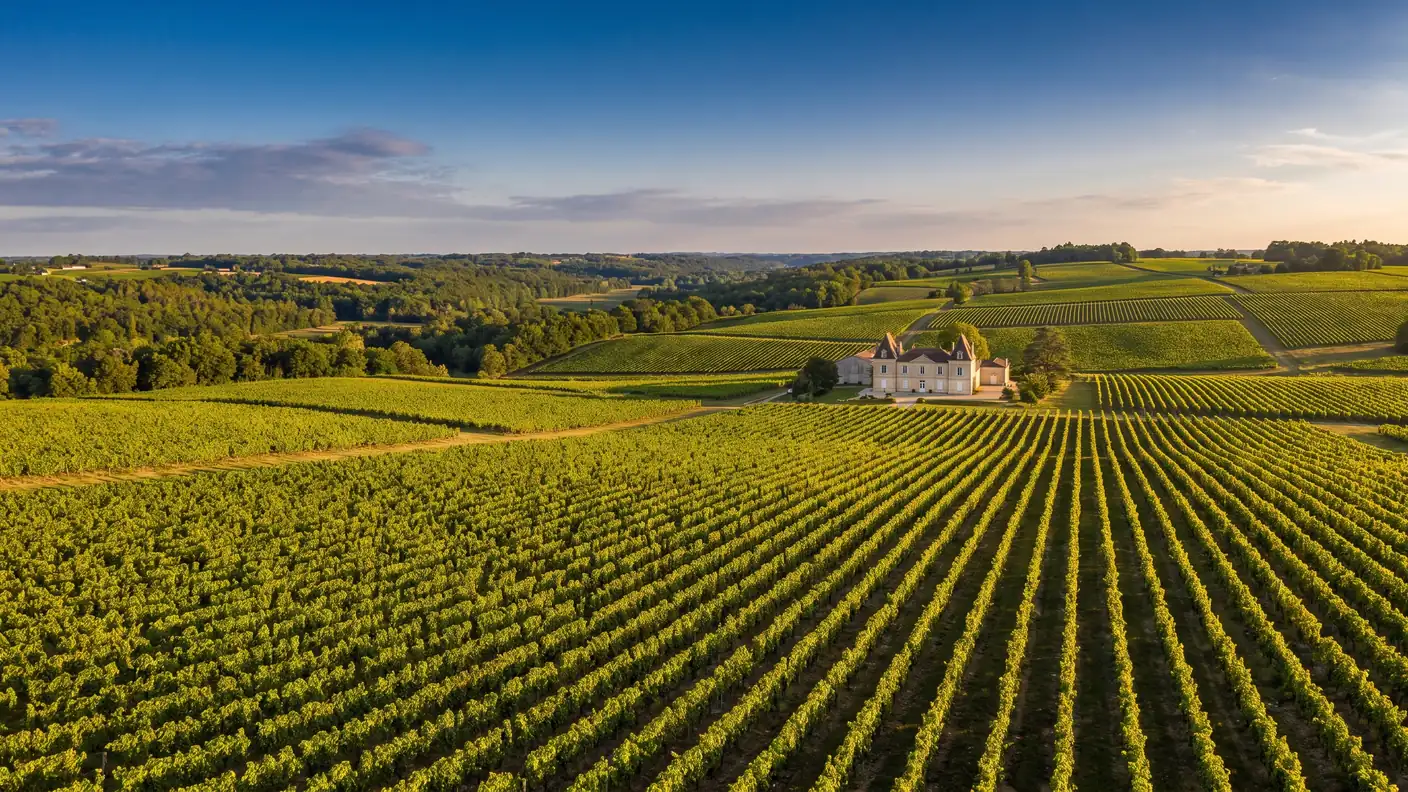
Targon is at the heart of the Entre-deux-Mers wine region and its least well-known appellation, Haut-Benauge—a terroir known for its dry white wines, produced by family-run estates that are sometimes five centuries old... or nearly so. Here’s what the Targonne terroir has to offer visitors, backed by verified facts.
Sauvignon Whites and a Little-Known Appellation
The Entre-deux-Mers AOC produces lively, aromatic dry whites, blends of Sauvignon (the predominant variety), Sémillon, Muscadelle, and Sauvignon Gris—the classic pairing for oysters from the Bassin. Targon is one of the 133 communes in the appellation, but more importantly belongs to the select group known as “Entre-deux-Mers Haut-Benauge”: one of the few communes in the heart of the plateau that can claim this “cru within a cru,” known for its more exclusive white wines.
All around the village, vineyards stretch as far as the eye can see: sun-drenched hillsides, castles built of pale stone, and family-run wineries. Two estates exemplify this continuity: Vignobles Toutigeac, a family-owned estate in Targon founded in 1928 and passed down through five generations (the Mazeau family, ~40 ha of red and white wines), and Vignobles Ducourt, in Ladaux, the neighboring town—a family that has resided at Château des Combes since 1858, now managing 480 ha and 14 châteaux, which hosts tastings at Château d’Haurets by appointment.
Taste Wines on the Plateau
Tastings at Targon are arranged directly with each winery. Tastings are often by appointment, and the terms vary. The Maison des vins de l'Entre-deux-Mers, located at the foot of La Sauve-Majeure Abbey, also offers a chance to explore the appellation all in one place.
- Reservations: Please confirm your visit and the number of participants with the estate before departure.
- Duration: Contact the winery to find out how much time to allow for the tour and tasting.
- Driving: Designate someone who doesn't drink or hire a designated driver for travel between stops.
- Return: Arrange the time and place for return in advance, especially if you plan to visit multiple locations.
| Wine at Targon | Details (according to sources) |
|---|---|
| Designation | AOC Entre-deux-Mers (dry whites; reds permitted only since 2023) |
| Name | Entre-deux-Mers Haut-Benauge — one of the few municipalities in the “cru within a cru” |
| White Grape Varieties | Sauvignon (the predominant variety), Sémillon, Muscadelle, Sauvignon Gris |
| Fields | Toutigeac Vineyards (Targon, 1928, 5 generations) · Ducourt Vineyards (Ladaux, 1858) |
| 10 min away | Entre-deux-Mers Wine Center (14th-century tithe barn, La Sauve) |
What is there to do in Targon?
At Targon, you can visit the fortified church of Saint-Romain and the protected ruins of the church at Montarouch, check out the Friday market, we’ll enjoy wine tastings at the Haut-Benauge vineyards—and we’ll venture out to La Sauve-Majeure Abbey, Créon, and the neighboring bastides. For such a small town, many of the activities are right in the immediate vicinity.
- Saint-Romain Church — fortified Romanesque church, apse serving as a vaulted chamber with arrowslits, carved portal (Adam and Eve, woman with a toad), recumbent statue of a knight
- The Montarouch ruins — remains of a 13th-century church that belonged to the Order of Malta, listed as a Historic Monument (exterior view)
- Friday Morning Market — 8:00 a.m.–1:00 p.m., Place du XI-Novembre; organic and artisanal market on the first Sunday of the month
- The Le Pressoir Festival—brass bands and street performances with pay-what-you-can admission, held at the end of the grape harvest (in October, according to the annual program)
- Tasting Haut-Benauge — at family-owned estates (Toutigeac in Targon, Ducourt in Ladaux; by appointment)
- La Sauve-Majeure Abbey—8 minutes away: a Romanesque masterpiece listed as a UNESCO World Heritage Site, and the Maison des Vins, located in its tithe barn
- The La Sauve – Targon bike loop — a marked ~20 km route through Saint-Léon, Blésignac, and Espiet, returning via the Roger-Lapébie trail
Heritage and the Market
The Targon tour begins at the Church of Saint-Romain: the fortified apse with arrowslits, the watchtowers, and then the Romanesque portal and its sculpted gallery. Visitors can then view the ruins of Montarouch from the outside, in accordance with the site’s access guidelines.
On Friday mornings, the market at Place du XI-Novembre sets the tone for the town; on the first Sunday of the month, the organic and artisanal market takes over. Every fall, the Le Pressoir festival features marching bands, circus acts, and street theater with pay-what-you-want admission, according to the annual program.
A Star-Shaped Itinerary: Abbey, Bastides, and Biking
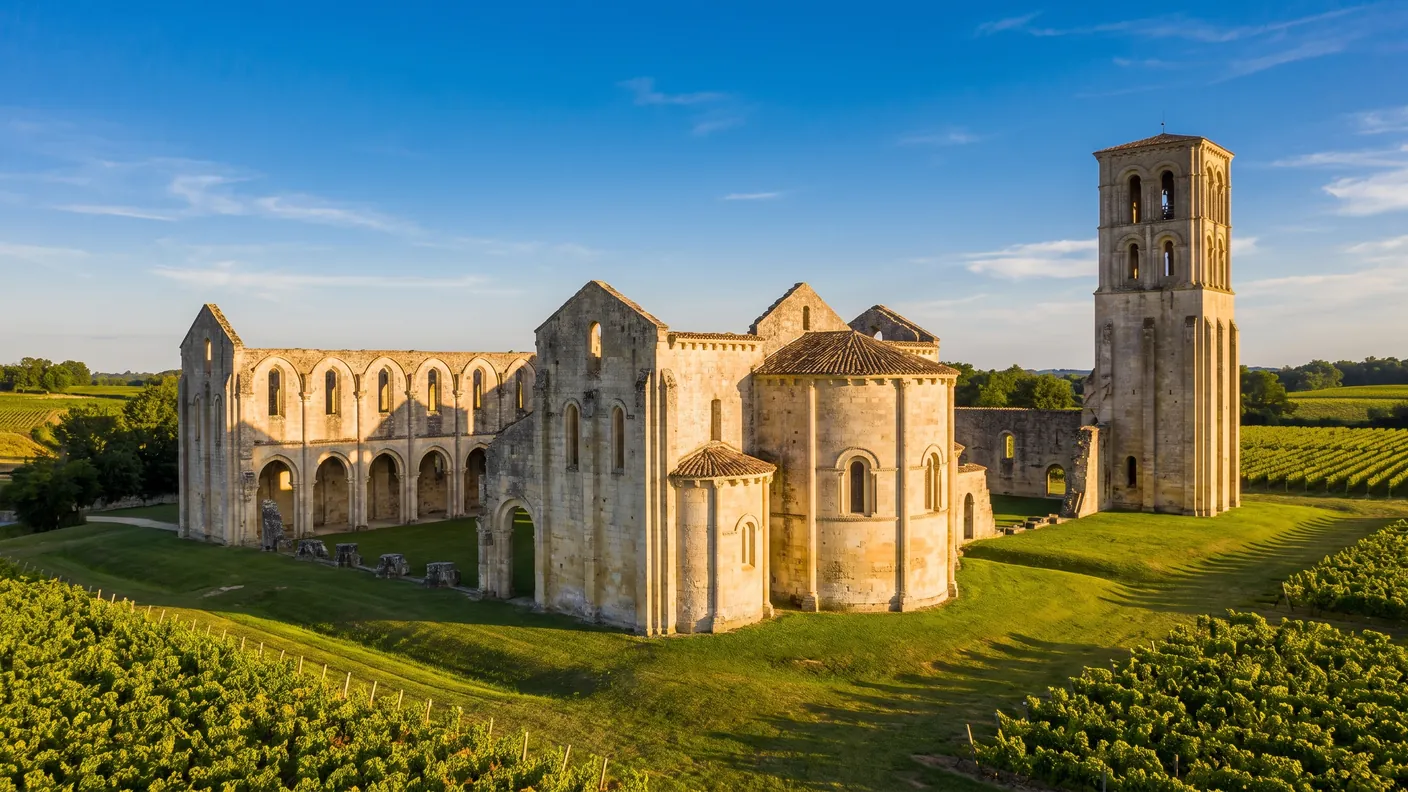
Targon’s strength lies in its central location: the entire Entre-deux-Mers region can be explored from here in a radial pattern. Just 8 minutes away (6 km), La Sauve-Majeure Abbey—a Romanesque masterpiece founded in 1079, a UNESCO World Heritage Site as part of the Way of St. James, and managed by the Centre des monuments nationaux—and the Maison des vins, housed in its tithe barn. Just 12 minutes away (9 km) is Créon, a bastide dating back to 1315, with its Wednesday market and pioneering bike station on the Roger-Lapébie trail.
Cadillac-sur-Garonne and its castle are 19 minutes away; Sauveterre-de-Guyenne and its four gates are 20 minutes away. By bike, the marked trail of about 20 km connecting La Sauve, Saint-Léon, Targon, Blésignac, and Espiet allows you to include the village in a loop, returning via the Roger-Lapébie trail. A local chauffeur familiar with the area can tailor the itinerary to your preferences—historical sites, tastings, markets—so you don’t have to worry about driving. Site hours vary and should be confirmed in advance.
| Activity | Where / When | Good to Know |
|---|---|---|
| Saint-Romain Church | in the village | fortified Romanesque church, carved portal, designated a historic monument |
| Ruins of Montarouch | Targon campaign | Protected ruins, exterior view |
| Market | 11 November Square, Friday, 8 a.m.–1 p.m. | + organic on the first Sunday of the month |
| The Wine Press | Espace René Lazare, in October, according to the annual program | Marching bands & street performances, pay what you can |
| Haut-Benauge Wine Tastings | estates (Toutigeac, Ducourt, etc.) | by appointment |
What's there to see around Targon?
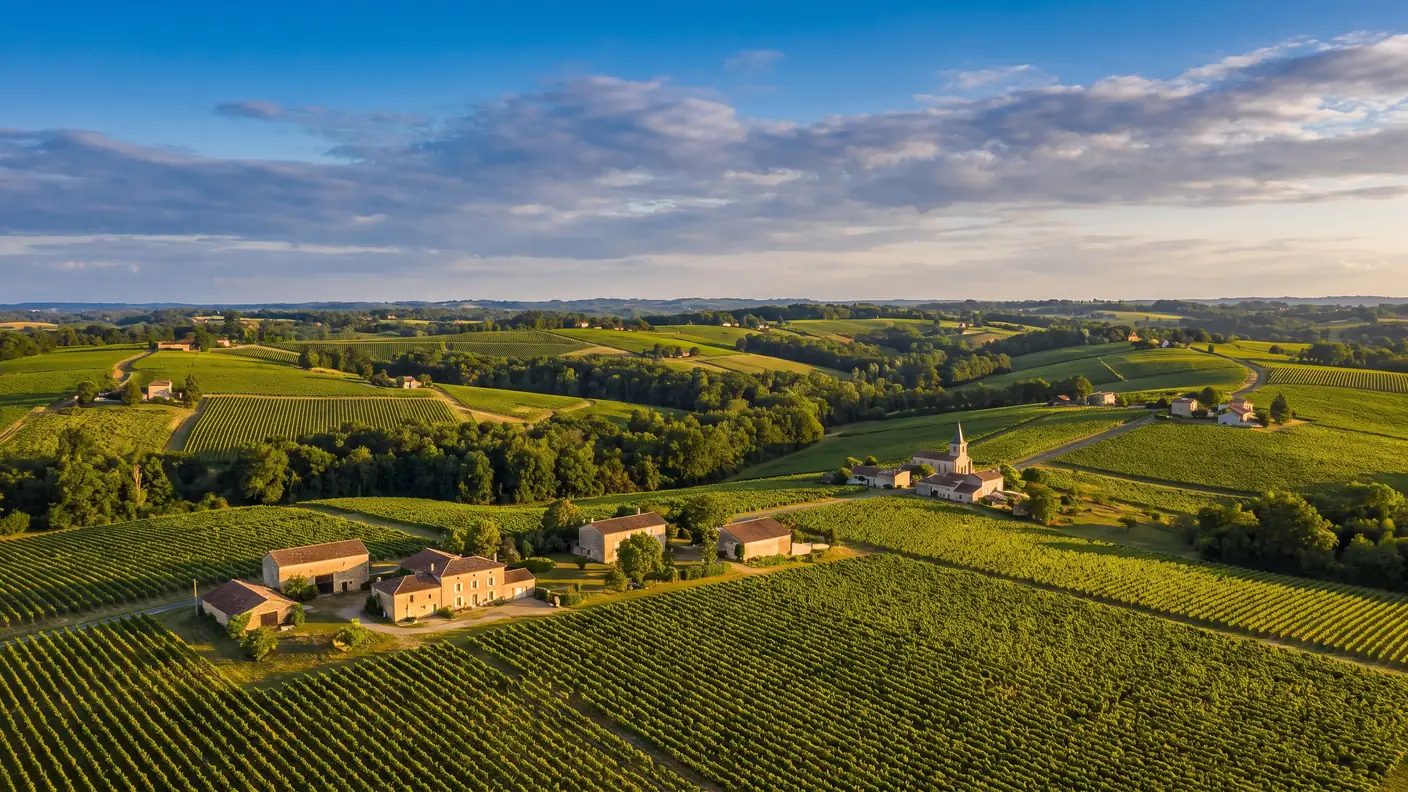
From Targon, you can explore the entire Entre-deux-Mers region in less than twenty minutes: the UNESCO-listed Abbey of La Sauve-Majeure, the bastides of Créon and Sauveterre, Cadillac-sur-Garonne, and the wine routes. Here are the must-see attractions, verified with actual driving distances.
La Sauve-Majeure and Créon, the neighboring towns
At 6 km (8 minutes), La Sauve-Majeure Abbey is one of south-west France’s major sites. Founded in 1079 by Gérard de Corbie, its Romanesque ruins, including the apse, carved capitals and climbable bell tower, form part of the UNESCO World Heritage Routes of Santiago de Compostela and are managed by the Centre des monuments nationaux. At its foot, the Entre-deux-Mers Wine Centre, housed in a 14th-century tithe barn, offers tastings from the appellation’s 240 winegrowers.
9 km (12 minutes) away, Créon—a bastide founded in 1315 by Amaury de Craon for the King of England—features a row of arcades lining the Place de la Prévôté; its former train station houses the pioneering bike rental station for the Roger-Lapébie trail, and its Wednesday market brings the entire Créon region to life. These two destinations, just a quarter of an hour from Targon, together with it, form the beating heart of the Entre-deux-Mers region—a concentration of monastic history, bastides, and vineyards.
Cadillac, Sauveterre, and the Wine Routes
To the south, at 15 km (19 minutes), Cadillac-sur-Garonne — the official name of Cadillac — retains its bastide, the castle of the Dukes of Épernon, and its sweet wines, on the banks of the Garonne. To the east, at 18 km (20 minutes), Sauveterre-de-Guyenne, the only bastide in the Gironde region to have preserved its four-door fortified, marks the end of the Roger-Lapébie trail. Between the two lie the wine routes in the Entre-deux-Mers region.
These roads connect family castles, Romanesque churches, mills, and scenic overlooks on the hillsides. Further afield, La Réole (a “City of Art and History”) and the Sauternes vineyards round out the options for day trips. A private chauffeur familiar with the region can tailor an itinerary through Targon—the abbey in the morning, lunch in a bastide town, wine tastings in the afternoon—easily covering the distances without worrying about driving or parking.
When is the best time to visit Targon?
Targon is open to visitors year-round, with two highlights: the summer season, when the vineyards and villages are at their most beautiful, and the fall harvest, capped off by the Le Pressoir festival. The spring (April–June) is ideal: the soft light on the hillsides, the soft-green vineyards, the wineries open for tastings, and the bike routes that are easy to ride—the La Sauve–Targon loop is a real treat at this time of year. Thesummer (July–August) is the peak season in the Entre-deux-Mers region: lively markets, La Sauve-Majeure Abbey bustling with activity, and balmy evenings in the stone villages. Thefall (September–October) is perhaps the most "Targonnais" time of year: the grape harvest bring life to the wine cellars and hillsides; the light bathes the vineyards in gold, and the festival The Wine Press (in October, according to the annual schedule) wraps up the season with the lively sounds of marching bands; admission is pay-what-you-can.
Thewinter, though quieter, still has its charms: the Friday market, which is always there; the Romanesque churches bathed in low-angled sunlight; the wineries open by appointment—and deserted ridge roads, stunning on a clear day. No matter the season, the Friday morning (market) and the the first Sunday of the month (organic market) are the times when the town comes alive. Allow half a day for Targon alone—the church, Montarouch, and an estate—a full day if you add La Sauve-Majeure and Créon, and a weekend to venture as far as Sauveterre, Cadillac-sur-Garonne, or La Réole. Less than 40 minutes from Bordeaux, it’s one of the most authentic getaways in the Entre-deux-Mers region—a concentrated taste of the local terroir, without any frills.
| Season | Atmosphere | Ideal for |
|---|---|---|
| Spring (April–June) | delicate vines, soft light | biking, food tastings, Romanesque churches |
| Fall (Sept.–Oct.) | Grape Harvest + Le Pressoir Festival | wine tourism, marching bands, photography |
| Summer (July–August) | markets, a bustling abbey, pleasant evenings | family, Entre-deux-Mers star |
How to get to Targon from Bordeaux
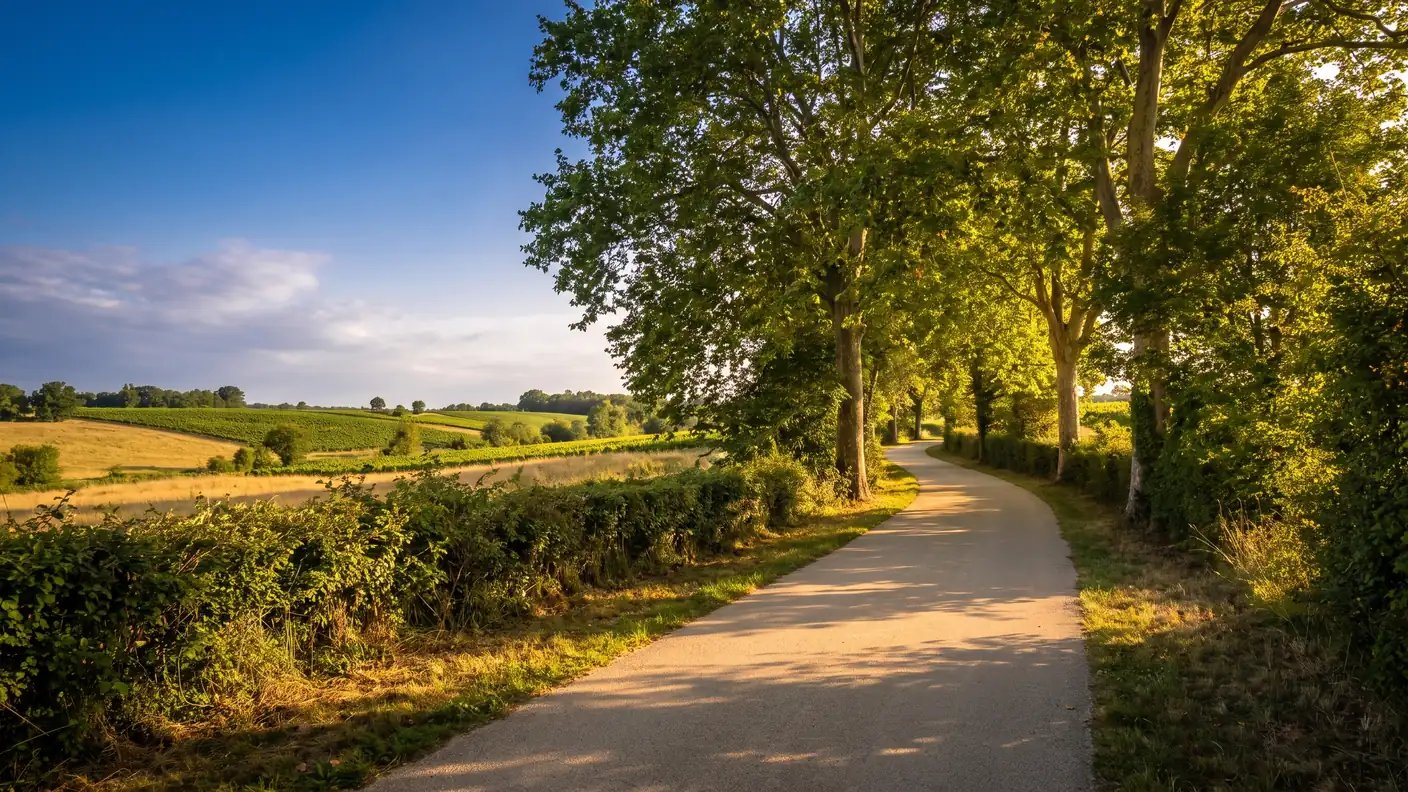
Targon is about 35 km from Bordeaux, or about a 54-minute drive. The route leaves Bordeaux heading southeast and crosses the Entre-deux-Mers region via the D671—the old Sauveterre Road—winding along the hillsides. The village does not have a train station; a private door-to-door transfer is the most direct option.
| Route | Distance | Duration | Details |
|---|---|---|---|
| Bordeaux → Targon | ~35 km | ~54 min | Starting at ~€78 for a chauffeured transfer |
| Bordeaux-Mérignac Airport → Targon | ~45 km | ~50 min | pickup at the terminal |
| Targon → La Sauve-Majeure (abbey) | ~6 km | ~8 min | UNESCO Masterpiece of World Literature |
| Targon → Sauveterre-de-Guyenne | ~18 km | ~20 min | fortified country house with four gates |
By car, you can reach Targon from Bordeaux in about 40 minutes via the D671, which winds through the heart of the Entre-deux-Mers region, between vineyard-covered hillsides and stone villages. There is no train station at Targon, nor is there a direct rail service to the plateau. Private transportation fills this gap in direct service.
He provides pickup service at the airport, Saint-Jean train station, or your hotel in Bordeaux, and drops you off at the village, at a winemaker’s estate, or at the foot of La Sauve-Majeure Abbey. The driver can then take you to a series of stops—Créon, Sauveterre, Cadillac-sur-Garonne, and the Haut-Benauge estates—and bring you back to Bordeaux at the agreed-upon time.
Whether you’re visiting the fortified church and protected ruins of Montarouch, a day of wine tastings in the Haut-Benauge, or a full “étoile” tour of the Entre-deux-Mers, booking a chauffeured transfer ensures a comfortable and punctual ride—book a driver from Bordeaux → Targon or explore all our destinations.
Frequently Asked Questions
Where is Targon located?
Targon is a wine-growing village in the heart of the Entre-deux-Mers region, in Gironde, about 35 km southeast of Bordeaux (a 54-minute drive via the D671). It lies almost exactly in the center of the plateau between the Garonne and Dordogne rivers, on the Créon–Sauveterre-de-Guyenne axis. Administratively, the town belongs to the Langon district and the Entre-Deux-Mers Rural Community of Municipalities, of which it is the most populous town and the western hub (the headquarters is in Sauveterre). Formerly the county seat until the 2014–2015 redistricting, Targon has a population of 2,079, known as Targon residents. Its central location makes it an ideal base: La Sauve-Majeure Abbey is 8 minutes away, Créon 12 minutes, Cadillac-sur-Garonne 19 minutes, and Sauveterre 20 minutes. There is no train station; private transportation is the most direct option from Bordeaux.
How much does a transfer from Bordeaux to Targon cost?
We offer a fixed-price transfer from Bordeaux to Targon, starting at approximately €91 one way (about 35 km, approximately 54 minutes by car), in a Mercedes sedan or van seating up to 7 passengers, with a professional driver. The route is direct, door-to-door: pickup at the airport, Saint-Jean train station, or your hotel in Bordeaux, and drop-off in the village, at a winery, or at the foot of the nearby La Sauve-Majeure Abbey. The fixed-price quote is provided and confirmed in writing before departure, with no unexpected meter charges. This is particularly convenient for a day of wine tasting in the Haut-Benauge region—you can enjoy the tastings without having to drive—or for a tour of the Entre-deux-Mers region’s top restaurants: the driver will take you to Créon, Sauveterre, or Cadillac-sur-Garonne, then bring you back to Bordeaux. For groups, this is often the simplest and most economical option.
What makes the Saint-Romain Church in Targon so special?
It is a 12th-century fortified Romanesque church: during the Wars of Religion, its apse was raised to form a fortified chamber with arrowslits, and watchtowers were added at the corners. In the Middle Ages, it was under the jurisdiction of La Sauve-Majeure Abbey; it received a Gothic side aisle in the 15th century and a bell tower in the 17th.
Its Romanesque portal features, among other things, capitals depicting Adam and Eve and the Adoration of the Magi, a metope depicting a woodcutter, the arches representing the vices, and 21 modillions. The church has been listed on the Register of Historic Monuments since 1925 but is not classified.
What do we know about the history of Montarouch?
The official heritage description dates the main structure of the Montarouch church to the 13th century, notes that it belonged to the Order of Malta, and describes its ruins and their defensive features. The ruins have been listed as a Historic Monument since December 21, 1925.
The Templar origins, the founding around 1160–1180, and the detailed chronology often cited are not confirmed by this entry. Without specific primary or scholarly sources, they should be considered a local tradition rather than established facts.
What is there to do in Targon?
First, we visit the fortified church of Saint-Romain, then view the protected ruins of the Montarouch church from the outside. On Friday mornings, the market on Place du XI-Novembre brings the town to life; on the first Sunday of the month, it’s time for the organic and artisanal market.
As for wine, tastings at Haut-Benauge must be booked directly with the wineries. La Sauve-Majeure Abbey, Créon, Cadillac-sur-Garonne, and Sauveterre round out the day. A marked cycling loop of about 20 km also connects La Sauve, Targon, and Espiet, returning via the Roger-Lapébie trail.
Is Targon on the Roger-Lapébie Greenway?
No—this is a common misunderstanding. The Roger-Lapébie Greenway, built along the former railroad line between the Bordeaux metropolitan area and Sauveterre-de-Guyenne, runs north of Targon, through Créon, La Sauve, and Espiet; it does not pass through the town itself. The closest access point is in La Sauve, about 6 km from the town center (an 8- to 9-minute drive). However, a marked cycling loop of about 20 km does connect La Sauve, Saint-Léon, Targon, Blésignac, and Espiet, returning via the trail—the best way to include the village in a cycling loop through the heart of the vineyards. For cyclists, a convenient option is to take a private shuttle to La Sauve or Créon (where the old train station houses a bike station with rentals), ride the loop via Targon, and then have the bikes picked up — explore Entre-deux-Mers on your own terms, without any constraints.
What is the Targon wine?
Targon is located in the heart of the Entre-deux-Mers AOC, the appellation for dry white wines from the plateau (primarily Sauvignon Blanc, Sémillon, Muscadelle, and Sauvignon Gris)—an appellation historically dedicated to white wines, where reds have only been permitted since 2023 and remain a minority; reds from the region traditionally fall under the Bordeaux AOC. Above all, Targon is part of the select circle of the “Entre-deux-Mers Haut-Benauge” appellation, the “cru within a cru” at the heart of the plateau, known for its distinctive, lesser-known white wines. Family-owned estates carry on this terroir’s legacy: Vignobles Toutigeac, founded in Targon in 1928 and passed down through five generations (the Mazeau family, ~40 ha), and Vignobles Ducourt in Ladaux, the neighboring town, established in 1858 (480 ha; tastings at Château d’Haurets by appointment). Just ten minutes away, the Maison des vins de l’Entre-deux-Mers, located in the tithe barn of La Sauve-Majeure, rounds out the exploration of the appellation.
When is the Targon market held?
The weekly market is held on Friday mornings, from 8 a.m. to 1 p.m., on Place du XI-Novembre, across from the post office—a neighborhood market with about ten vendors, reflecting the rhythm of a rural town in the Entre-deux-Mers region. On the first Sunday of every month, it is complemented by an organic and artisanal market that attracts local producers and artisans from the region.
For a more extensive market experience, the neighboring towns are a good option: Créon on Wednesday mornings (about a hundred vendors on Place de la Prévôté, one of the Gironde’s largest markets) and La Réole on Saturday mornings along the banks of the Garonne—voted “France’s Most Beautiful Market” for 2023. Targonne’s fall season also has a highlight in store: the Le Pressoir festival, featuring brass bands and street performances with pay-what-you-want admission, held at the end of the grape harvest (in October at the Espace René Lazare, according to the annual program).
What is the distance between Bordeaux and Targon?
About 35 km by road, or about a 54-minute drive. The route leaves Bordeaux heading southeast and follows the D671, the old Sauveterre highway, which crosses the Entre-deux-Mers region through the vineyard-covered hillsides. With an executive car service, the fare is fixed and provided in advance, starting at €78 for a one-way trip.
There is no train station in Targon, nor is there any rail service to the plateau. Private door-to-door transportation also makes it possible to visit nearby attractions—La Sauve-Majeure Abbey, Créon, Cadillac-sur-Garonne, or Sauveterre-de-Guyenne—and return to Bordeaux at the agreed-upon time after a wine tasting or a night at the festival.
What's there to see around Targon?
Explore the entire Entre-deux-Mers region in a loop, all in less than twenty minutes. 6 km (8 min) away, the Abbey of La Sauve-Majeure, a Romanesque masterpiece founded in 1079 and designated a UNESCO World Heritage Site as part of the Way of St. James, featuring the appellation’s wine center in its 14th-century tithe barn. 9 km (12 min) away: Créon, a bastide dating from 1315, with its arcaded square, Wednesday market, and pioneering bike station on the Roger-Lapébie trail. 15 km (19 min) away, Cadillac-sur-Garonne, with its bastide and the castle of the Dukes of Épernon. 18 km (20 min) away, Sauveterre-de-Guyenne, the only bastide in the Gironde to have retained its four fortified gates. Further afield, La Réole—France’s smallest “City of Art and History”—and the wine routes round out the possible excursions. An executive chauffeur can tailor the itinerary to your preferences: a visit to an abbey in the morning, lunch in a bastide, and wine tastings in the afternoon.
Is the church in Targon designated as a historic monument?
No: it is listed, which provides a real level of protection but is distinct from classification. The Saint-Romain Church was listed as a Historic Monument by decree dated December 21, 1925 (Mérimée entry PA00083848); the ruins of the church at Montarouch are also listed (entry PA00083849).
These official designations make it possible to describe the fortified Romanesque church and the ruins at Montarouch without accepting unsubstantiated accounts as fact. The entry on Montarouch confirms its affiliation with the Order of Malta, but not the often-repeated claim that it was founded by the Knights Templar.
When is the best time to visit Targon?
All year round, with two special times of year. Spring (April–June) brings soft-green vineyards, gentle light on the hillsides, and ideal conditions for the bike loop through La Sauve and for wine tastings. Fall (September–October) is the quintessential Targonne experience: the grape harvest brings the wineries to life, the light gilds the hillsides of Haut-Benauge, and the Le Pressoir festival (in October, according to the annual program) wraps up the season with its marching bands and pay-what-you-want street performances. Summer is the peak season in Entre-deux-Mers—markets, La Sauve-Majeure Abbey open to visitors, balmy evenings—and winter retains its understated charms: the Friday market, Romanesque churches bathed in low-angled sunlight, and wineries open by appointment. Allow half a day for the village (church, Montarouch, a vineyard estate), a full day to visit La Sauve-Majeure and Créon, and a weekend to explore the entire Entre-deux-Mers region.
Further Reading
- The nearby UNESCO-listed abbey: see the Guide to La Sauve-Majeure Abbey (a Romanesque masterpiece just 8 minutes away)
- The Bastide with Four Gates: see the Guide to Sauveterre-de-Guyenne (end of the Roger-Lapébie trail)
- The neighboring "City of Art and History" : see the Guide to La Réole (and its market, voted the most beautiful in France)
- A Nature Getaway in Southern Gironde: Planning Your Visit to Lake Curton and Its Access Points
- The Pimpine Valley near Bordeaux: Check out the Lignan-de-Bordeaux guide
- Understanding our rates and vehicles: see the "Book a Driver" page (sedan & van, fixed-price quote)
- Plan your trip: Book a private driver from Bordeaux to Targon or explore all our destinations
Sources and References
- Wikipedia — Targon — a town in the heart of the Entre-deux-Mers region, population 2,079. (2023), former canton seat; the town was captured by Monluc in 1562; etymology: targo (“shield”), cited as a hypothesis
- POP Mérimée — Saint-Romain Church in Targon — 12th-century Romanesque fortified church (vaulted apse with arrowslits and watchtowers), 15th-century Gothic side aisle, listed as a Historic Monument on December 21, 1925; carved portal, modillions
- POP Mérimée — Ruins of the Church of Montarouch — a 13th-century building that once belonged to the Order of Malta; the ruins were designated as a historic monument on December 21, 1925; accessed July 24, 2026
- Targon Town Hall — weekly market on Friday mornings (8 a.m.–1 p.m., Place du XI-Novembre), organic market on the first Sunday of the month, Le Pressoir Festival (Espace René Lazare)
- Wikipedia — AOC Entre-deux-Mers — appellation for dry white wines (133 municipalities; red wines permitted only since 2023, ~10%); the designation “Entre-deux-Mers Haut-Benauge” applies to a few municipalities, including Targon
Article updated in July 2026.
On the Way to the Heart of the Entre-deux-Mers Region
Direct transfer from Bordeaux (~54 min) to Targon and Haut-Benauge—from the airport, train station, or hotel to the village, a winemaker’s estate, or La Sauve-Majeure Abbey. Fixed, written quote—no unexpected meter charges.