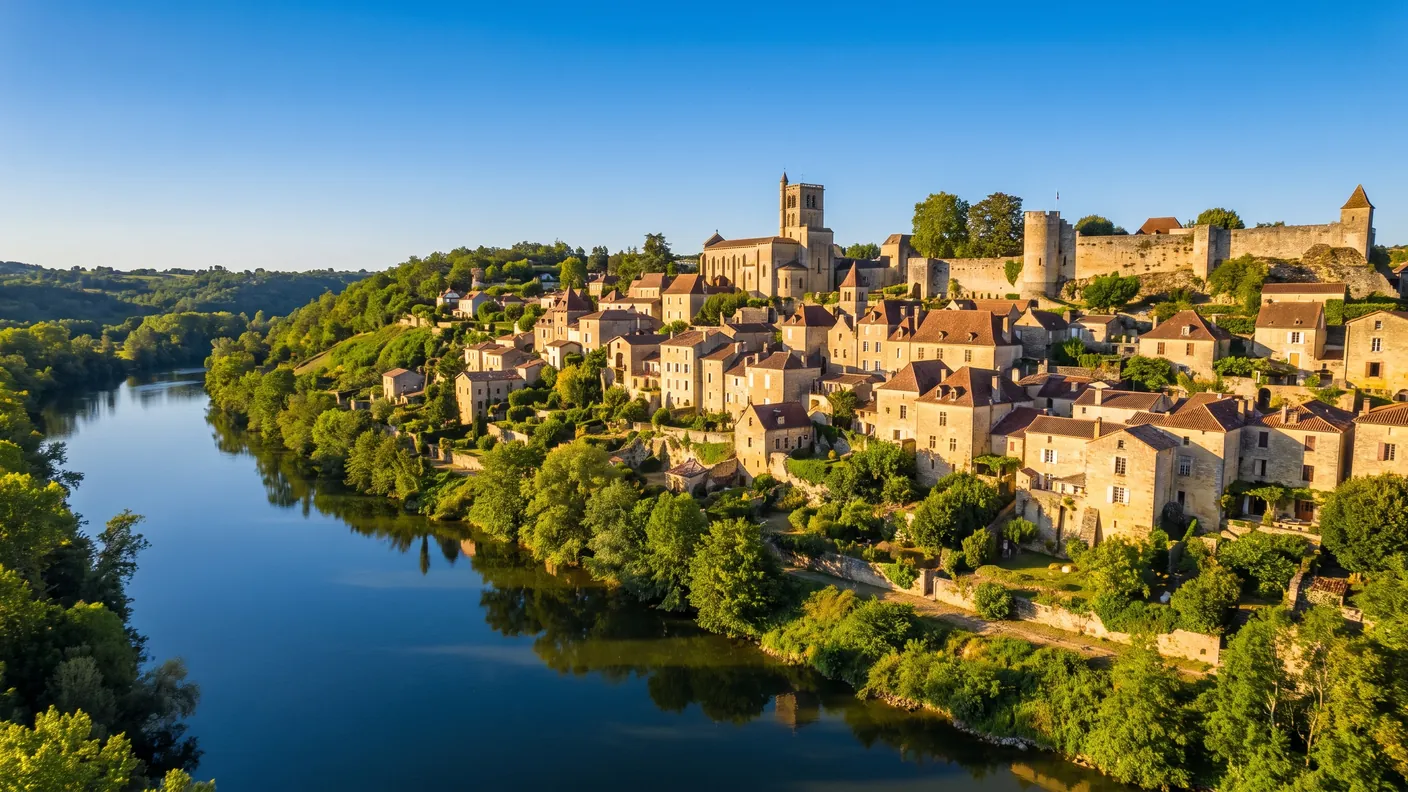
Bordeaux to La Réole: a medieval town on the Garonne
The smallest town in France to hold the “City of Art and History” designation: La Réole, founded as a priory in 977, home to one of France’s oldest medieval town halls, the Château des Quat’Sos, and a Saturday market voted the most beautiful in France—plus your private door-to-door transfer from Bordeaux.
La Réole at a Glance
La Réole is a medieval town in the Gironde department, situated on the right bank of the Garonne River, about 77 km southeast of Bordeaux—and the smallest municipality in France to hold the “City of Art and History” designation. Founded in 977 around a Benedictine priory and contested throughout the Hundred Years’ War, it has preserved an exceptional heritage for its size: one of the oldest town halls in France, the Château des Quat’Sos, and a listed priory that now houses the town hall. Its Saturday market was even voted “France’s Most Beautiful Market” in 2023. This guide distinguishes fact from fiction: the designation is indeed “City of Art and History” (not “Small Town of Character”), the Quat’Sos is privately owned and not open to the public, and the drive from Bordeaux is ~77 km (the “62 km” is as the crow flies). We then outline the easiest way to get there: a private door-to-door transfer.
Here are the key details to know before you go. Distances are calculated door-to-door from Bordeaux; the price listed is for a private driver reservation at a fixed rate provided in advance, with no unexpected meter charges regardless of traffic or stops along the way. Information on cultural heritage and demographics has been verified using Wikipedia, the Mérimée database, INSEE, and the La Réole city hall; visiting hours may vary and should be confirmed on site.
| Landmark | Details |
|---|---|
| City | La Réole (Gironde, Langon District) |
| Location | on the right bank of the Garonne, 19 km upstream from Langon |
| Residents | 4,487 residents (2023) |
| Must-See | the priory, the old town hall, the Quat'Sos, the Saturday market |
| Distance from Bordeaux | about 77 km · 1 hr 04 min by car (A62) |
Where is La Réole located?
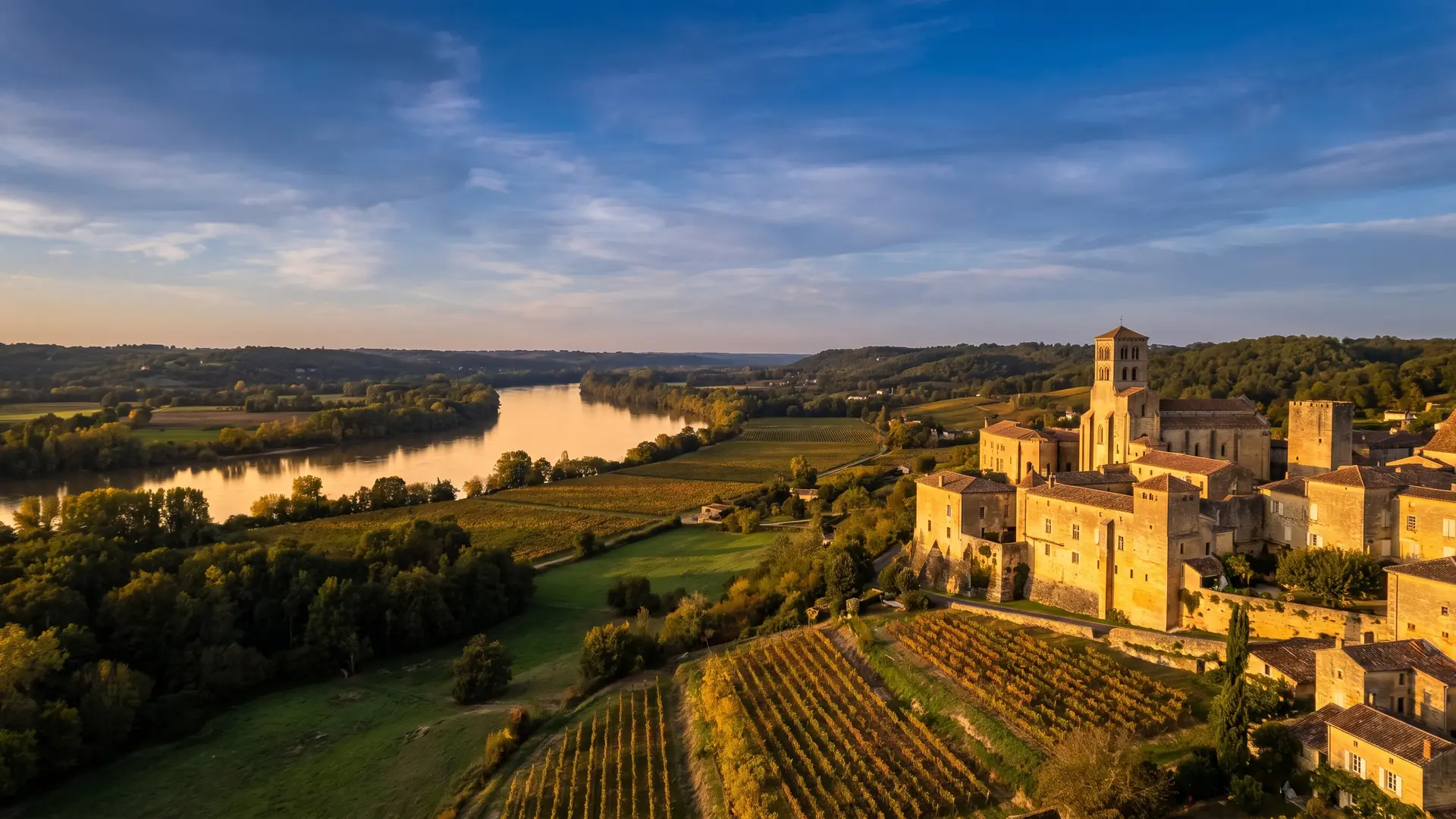
La Réole is located in the southeastern part of the Gironde department, on the right bank of the Garonne River, 19 km upstream from Langon—according to Wikipedia, it is “the oldest and largest urban center in the entire Entre-deux-Mers region.” The town, with a population of 4,487, is spread out across a hillside overlooking the river, on the edge of the department (Lot-et-Garonne and Marmande are only about 20 kilometers away). Administratively, it is part of the Langon district and serves as the seat of the Réolais en Sud Gironde community of municipalities. This is a crossroads of several regions: the Entre-deux-Mers and its bastides to the north, the Garonne Valley and its canal to the south, and the Marmandais to the east. This role as a bridge town and market town brought great prosperity to La Réole in the Middle Ages—and today makes it an ideal, rich, and little-known destination for a day trip, located about 1 hour and 4 minutes from Bordeaux via the A62 highway.
A city perched above the Garonne River
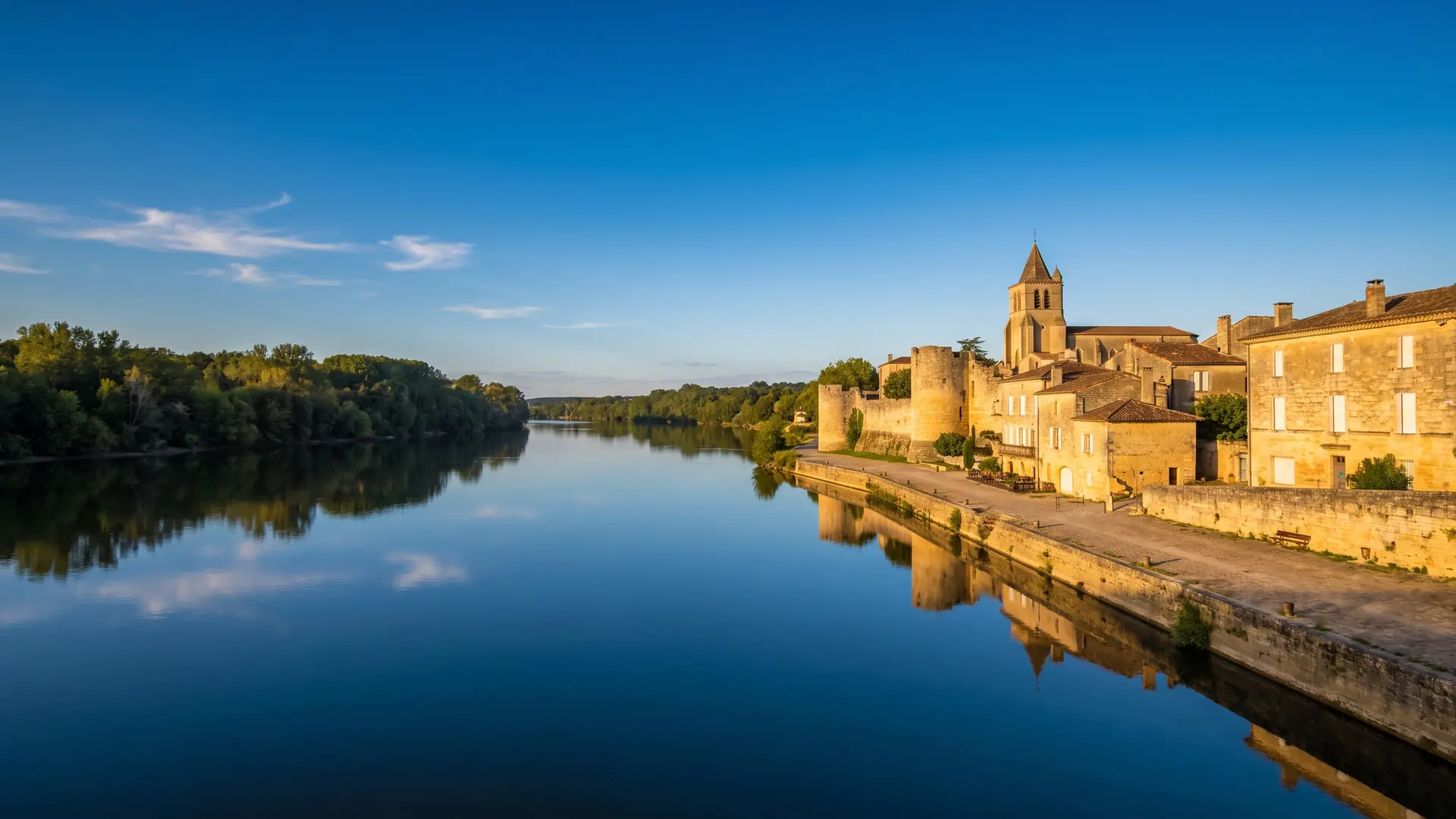
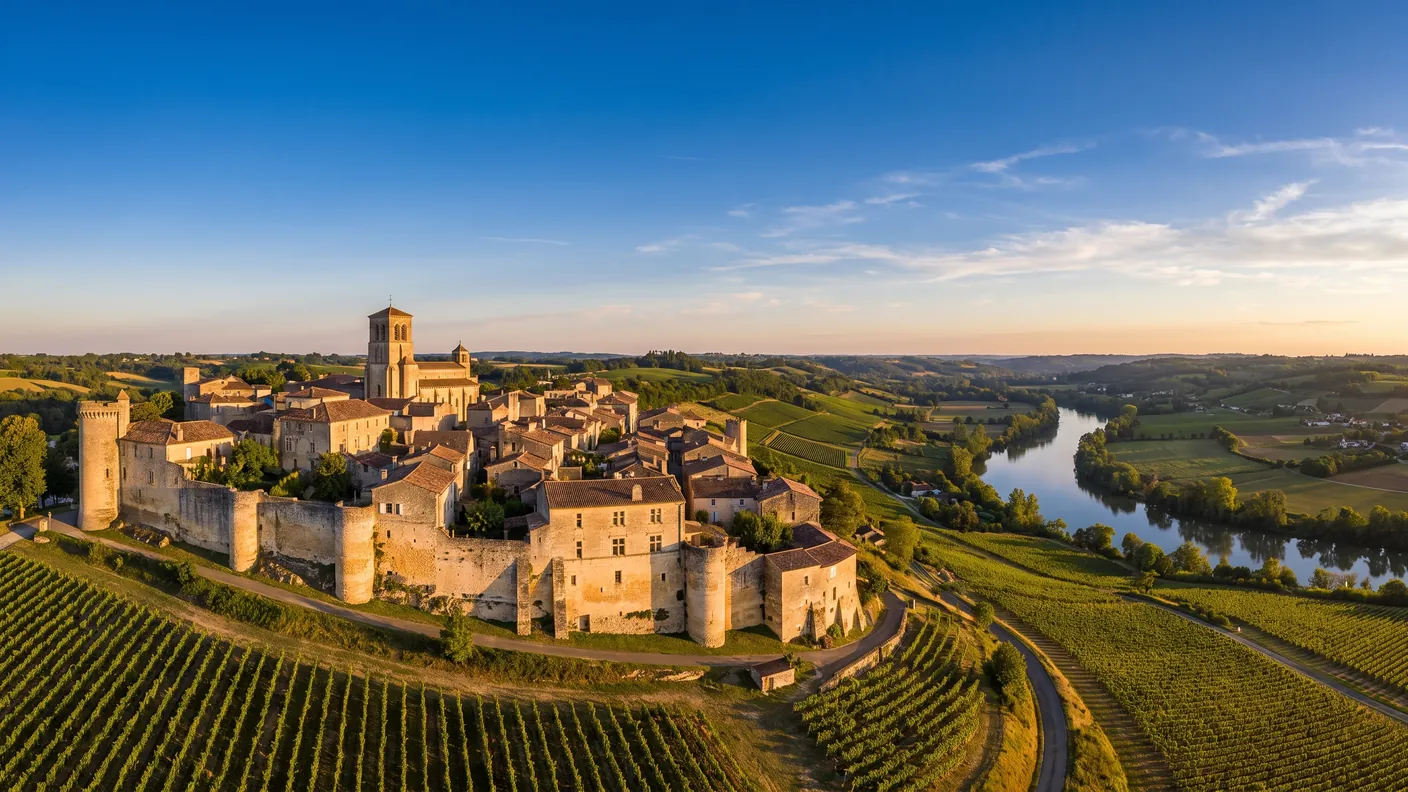
La Réole is built in an amphitheater-like layout on the right bank of the Garonne: from the quays, the town rises up through steep alleyways and stairways toward the priory and the castle, offering one of the most beautiful urban silhouettes in the valley. The classic view can be admired from the Rouergue Bridge, an elegant suspension bridge with a 170-meter span that was inaugurated in 1935: the terraced city, the bell towers, the tiled roofs, and the imposing structure of the Quat’Sos all unfold above the river. A remarkable detail: La Réole marks the upstream boundary of the Garonne’s dynamic tidal current—more than 150 km from the ocean, tidal oscillations can still be observed beneath its low-flow quays, and the tidal bore can travel upstream as far as this point. This shows just how closely the city is intertwined with its river, which for centuries brought it trade, travelers, and prosperity. Today, the quays host the large Saturday market and provide a place to stroll along the waterfront.
On the edge of Entre-deux-Mers
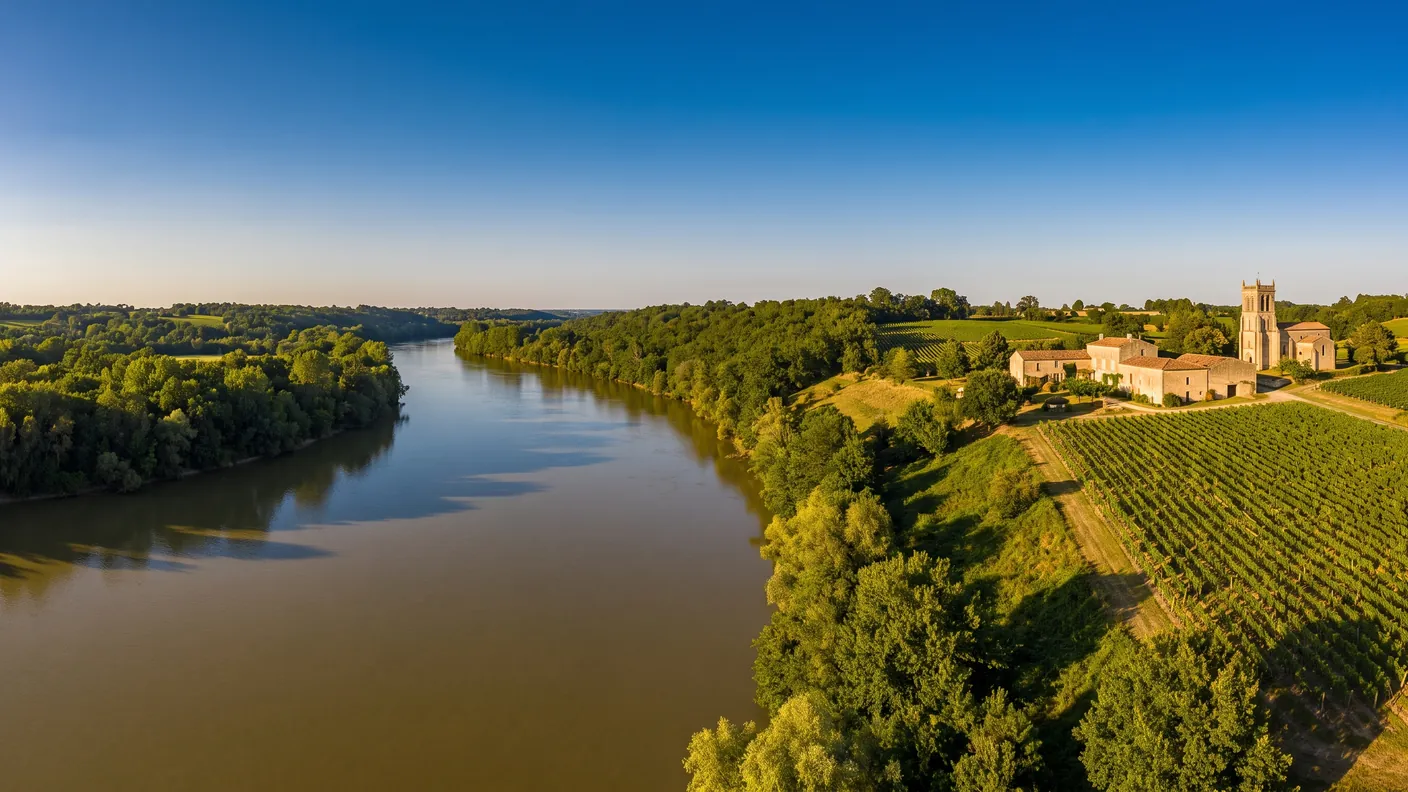
La Réole is the southeastern gateway to the Entre-deux-Mers, the vast wine-growing plateau nestled between the Garonne and Dordogne rivers. Dotting the surrounding area are medieval bastides—including neighboring Sauveterre-de-Guyenne, just 14 km away—as well as abbeys such as Saint-Ferme and the vine-covered hillsides of the Entre-deux-Mers AOC. To the south, the Garonne Valley leads to Langon, the Graves, and Sauternes; to the east, to the Marmandais region. This crossroads location is even reflected in the cycling routes: La Réole is a stage of the “Canal des 2 Mers by Bike” (V80) route, which connects it to Sauveterre via an old railroad line and joins the Garonne Canal at the nearby Fontet boat dock. For visitors, it’s the perfect base: a charming little town with its own market, historic sites, and shops, situated in the heart of a region rich in heritage. Hiring a chauffeur service allows you to explore the area without worrying about driving or parking.
The Benedictine priory and the former city hall
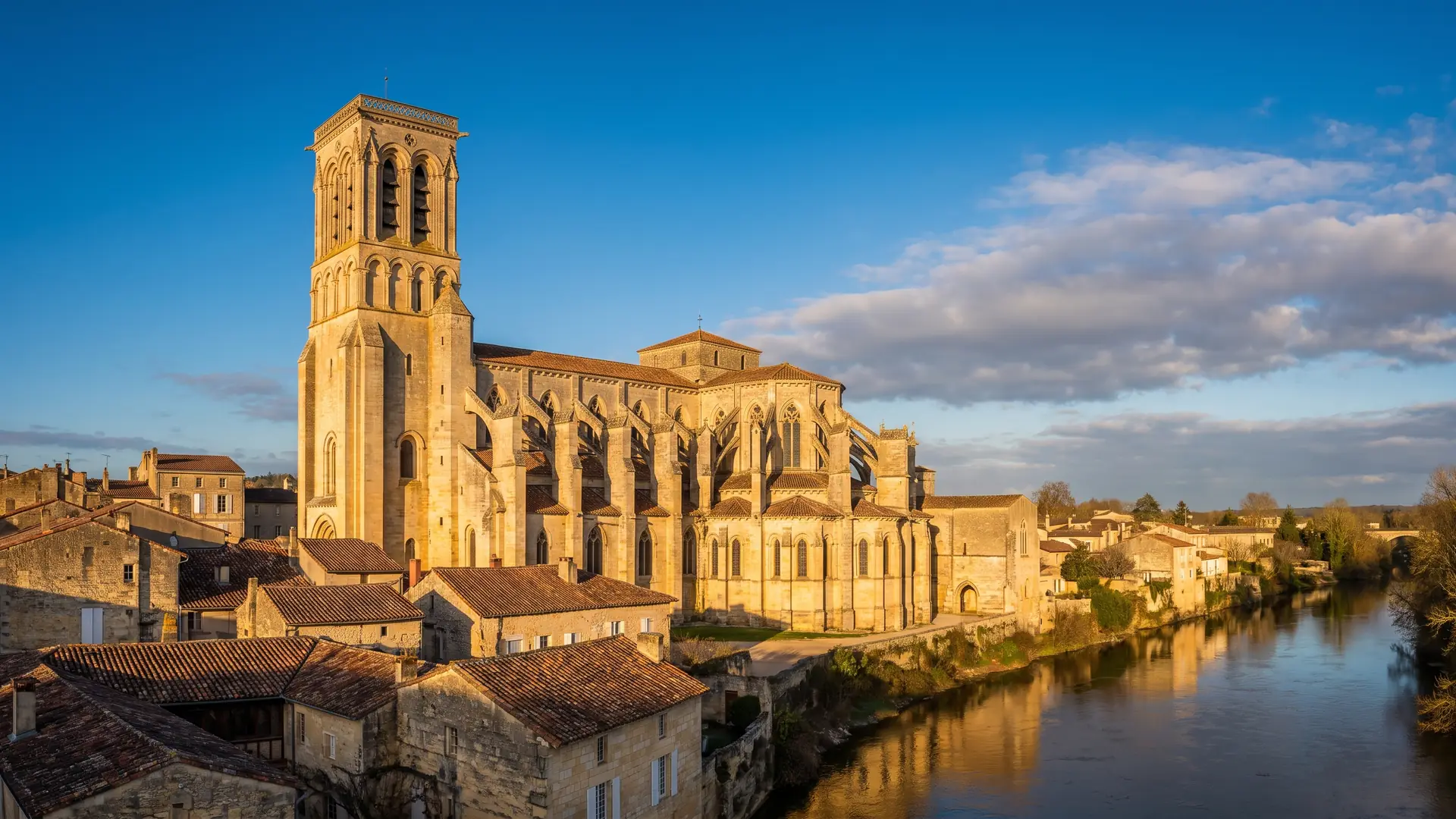
La Réole has its roots in a monastery: the Benedictine priory of Saint-Pierre, founded in 977, gave the city its name, its skyline, and its most beautiful monuments—including a former town hall that is one of the oldest in France. Here is what the sources say, in detail.
A thousand-year-old priory turned into a town hall
The Saint-Pierre Priory was founded in 977—a charter from that year refers to the “Monastery of Squirs”—and affiliated with the great Abbey of Fleury (Saint-Benoît-sur-Loire). The town takes its name from Regula, the Rule of Saint Benedict, which became “La Réole.” Destroyed during the Wars of Religion in 1577, the priory was lavishly rebuilt in the 18th century : its vast convent buildings, listed in 1925 and then designated as Historic Monuments in 2017 (POP, record PA00083699), now house the town hall and courthouse. Visitors can therefore enter a former monastery freely for civic business—more than a thousand years of religious and civic life in the same place. Next door, Saint-Pierre Church, a former priory church (a more accurate term than “abbey church,” since Saint-Pierre was a priory rather than an abbey), has 12th-century Romanesque origins . It too was devastated in 1577 and rebuilt in the 17th century ; listed since 1846, it features a Flamboyant Gothic portal and a vast single nave.
One of the oldest city halls in France
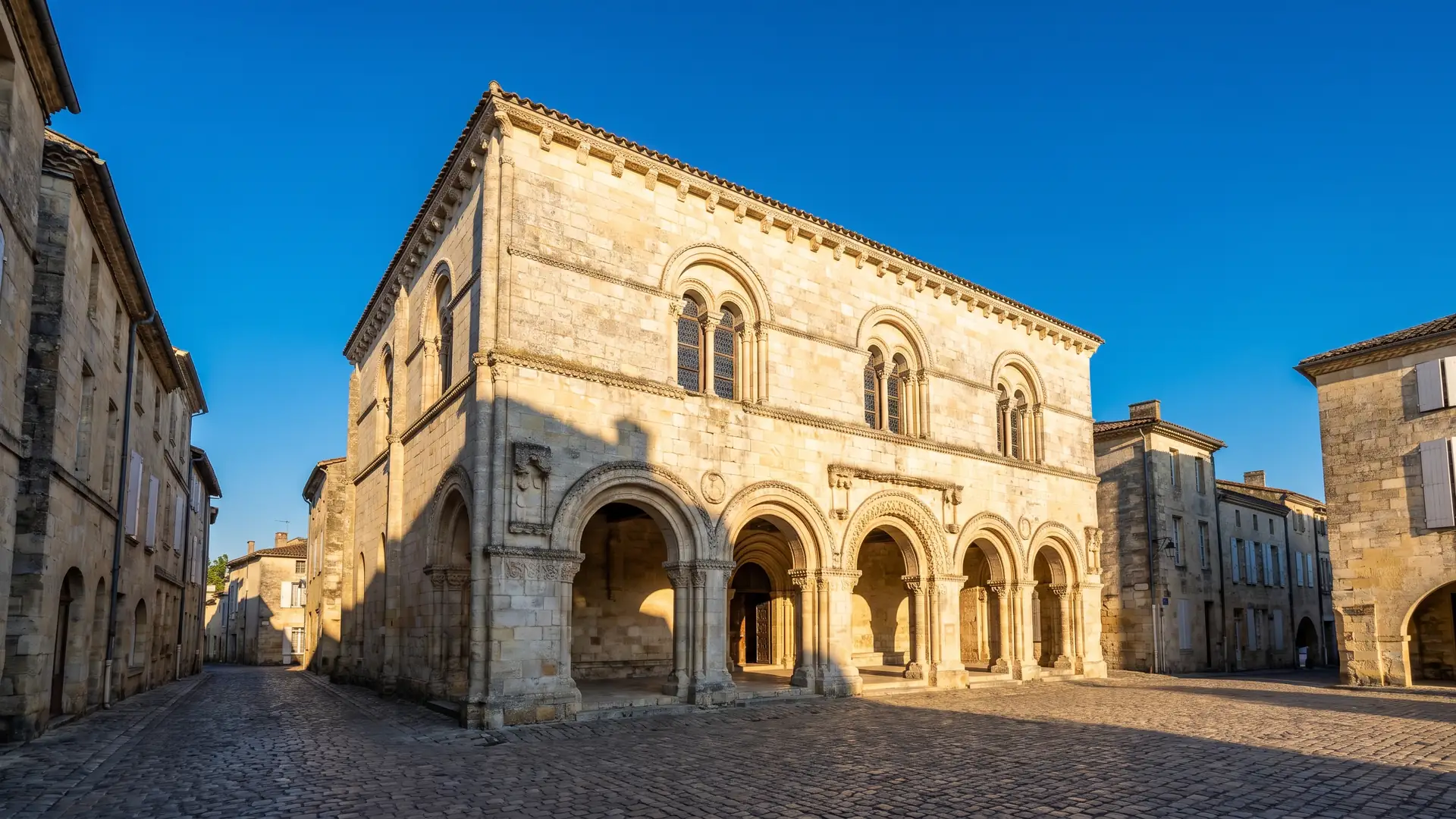
Just a few streets away, an understated building is a national treasure: La Réole’s former town hall, dating from the late 12th or very early 13th century—one of the oldest town halls in France (POP, record PA00083697). Tradition associates it with Richard the Lionheart, who is said to have ordered its construction in 1190 while travelling to the Crusade. This traditional attribution should be treated with caution, but it reflects the city’s long-standing ties to the Plantagenets. The medieval building, with its arcaded grain hall on the open ground floor and an upper chamber lit by paired windows, was designated a Historic Monument in 1913 [1] — one of the very first structures of its kind. Today, it serves as an exhibition space. It is a rare testament to a municipal civilization that emerged in the Middle Ages: a city that, caught between a king of France and a king of England, secured privileges and freedoms very early on and built a monument to exercise them. A must-see during your visit.
| Monument | Period | Protection |
|---|---|---|
| Former City Hall | late 12th – early 13th century | Listed as a historic monument in 1913 |
| St. Peter's Church (Priory Church) | 12th century, rebuilt in the 17th century | Listed as a historic monument in 1846 |
| Benedictine Priory (City Hall) | Founded in 977, rebuilt in the 18th century | Listed as a Historic Monument in 2017 |
| Quat'Sos Castle | c. 1230–1250 | Listed as a historic monument (1947–1960), private |
The Château des Quat'Sos, the “Four Sisters”
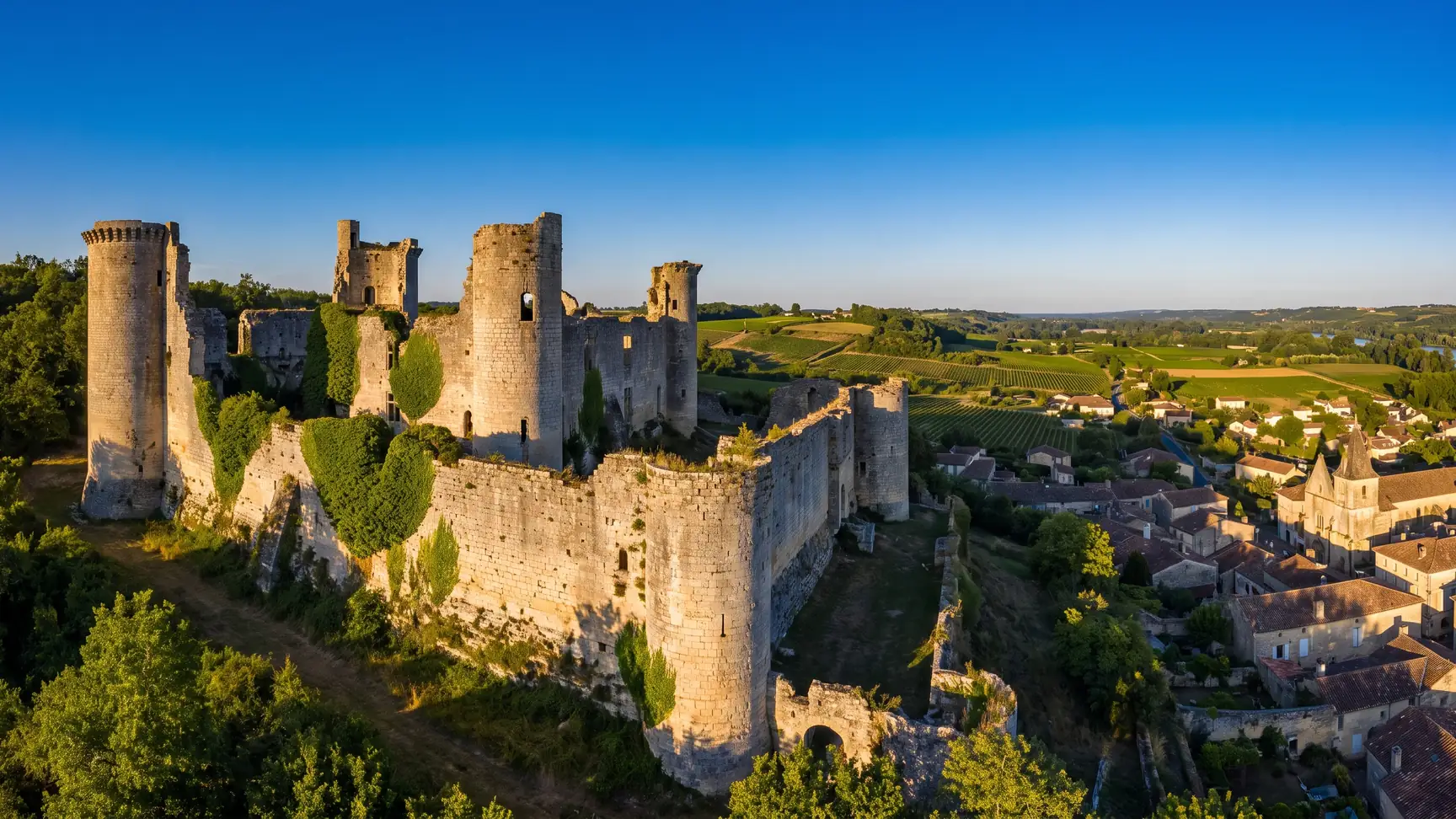
Perched above the town, the Château des Quat'Sos—“the four sisters” in Gascon—is a 13th-century fortress with four nearly identical towers and the site of famous sieges during the Hundred Years' War. Please note: the castle is privately owned and not open to the public, but its silhouette belongs to everyone. Here is its verified history.
A Franco-English fortress
The history of Quat'Sos mirrors that of the city. In 1224, King Louis VIII of France authorized the construction of a fortress; King Henry III Plantagenet of England then built it around 1230-1250, on the site of a late-12th-century tower traditionally attributed to Richard the Lionheart. The castle follows a quadrilateral plan with four corner towers that are almost identical—hence its Gascon name, “quat' sos,” meaning the four sisters. The Thomasse Tower, the most imposing, rises about 30 meters above the Garonne. This coveted stronghold endured two famous sieges: the siege of 1324—which Maurice Druon’s The Accursed Kings describes as the first use of cannon in the West, a literary legend that should be identified as such—and that of 1345-46, led by the Earl of Derby and described by the chronicler Froissart. In 1629, Richelieu ordered the castle’s partial demolition; three towers survive today.
A sight to behold from the docks
An important note, as confusion is common: the Château des Quat’Sos is private property currently undergoing restoration; visitors should check access arrangements directly with the Château des Quat’Sos. It is best admired from the outside, and the view is well worth the trip: from the banks of the Garonne and especially from the Rouergue Bridge, the fortress crowns the terraced town in a striking medieval panorama above the river. The castle is protected as a Historic Monument (partially listed in 1947, followed by the partial listing of the Thomasse, southeast, and northwest towers in 1960). Its silhouette, together with those of the priory and bell towers, forms one of the finest townscapes in the Garonne Valley. This is the image you’ll take away from La Réole—and it explains why France’s smallest “City of Art and History” more than deserves its designation. An executive car service can drop you off at the best riverside viewpoint, with no parking concerns.
A Thousand Years of History Between France and England
Founded as a monastery in 977 and contested between the crowns of France and England throughout the Middle Ages, La Réole has weathered a thousand years of turbulent history—which accounts for the exceptional richness of its heritage. Here are the verified facts.
A monastic town that became a frontier city
It all began in 977, when a Benedictine priory was established on the hillside overlooking the Garonne River. A town grew up around the monastery and its Rule (regula, which would give the city its name), aided by the river and trade. La Réole soon gained privileges, confirmed in 1206 by John Lackland, King of England and Duke of Aquitaine. The city then lay in the heart of English Guyenne, and its strategic position on the duchy’s frontier made it a border town contested by the two crowns. A French fortress commissioned by Louis VIII, an English castle built by Henry III, and repeated sieges: La Réole changed hands with the tides of war, right up to the major conflicts of the Hundred Years’ War. The sieges of 1324 and 1345–46 are among the best documented of the era. This frontier history left the town with fortifications, a castle, and a density of monuments rare for a place of its size.
The smallest "City of Art and History" in France
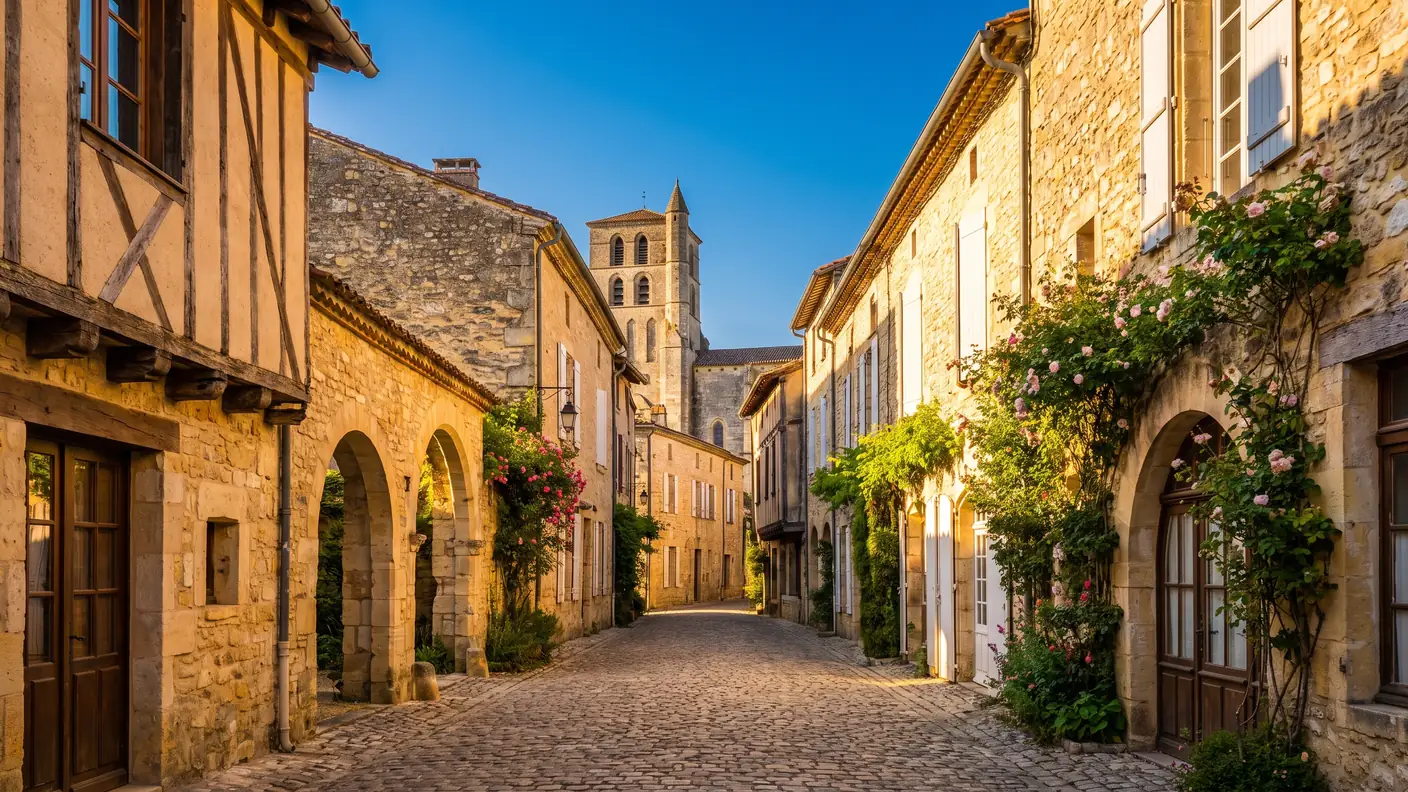
This rich cultural heritage has earned La Réole national recognition: the “City of Art and History” designation, awarded by the Ministry of Culture after a process completed in 2013 and an agreement signed on November 20, 2014. With approximately 4,500 residents, La Réole is France’s smallest municipality to hold this designation, which it shares with cities such as Bordeaux and Sarlat. In practical terms, it supports regular guided tours (bookable through town hall), active heritage programs, and a remarkably enhanced historic center: medieval alleyways, half-timbered houses, mansions, and stairways leading down to the quays. More recently, the city was also an industrial center—its former tobacco factory (SEITA), a vast 9,500-square-meter building that closed in 1981, still towers over the train station. It is not open to the public, but stands as a testament to another era of prosperity. A thousand years of history can thus be read, layer by layer, in the stones of La Réole.
Label, château, distances: what we often read
Several claims are circulating about La Réole that warrant correction, backed by sources—which is the whole point of a reliable guide. The label, City Hall, the castle, the distances: here’s what’s true and what’s false.
"City of Art and History," and nothing else
La Réole is sometimes described as a “Petite Cité de Caractère” or one of the “Most Beautiful Detours in France,” but neither claim is accurate. Its more prestigious designation is “City of Art and History”, awarded by the Ministry of Culture, and La Réole is its smallest holder in France. The former town hall is likewise often called “the oldest in France”; the sourced wording is “one of the oldest,” dating from the late 12th or early 13th century. Its connection to Richard the Lionheart, who is said to have ordered its construction in 1190, belongs to local tradition and should remain conditional. Saint-Pierre Church is also often called an “abbey church,” yet Saint-Pierre was a priory affiliated with Fleury Abbey, so the correct term is priory church. Far from diminishing La Réole’s heritage, these nuances reveal its true value: documented, precise, and exceptional.
A private castle, and a very real 77 km
Another note: The Château des Quat'Sos is not open to the public. It is private property currently undergoing restoration—it can be admired from the riverbanks and the Rouergue Bridge, which is still a beautiful sight, but visitors should not be promised a tour of the interior. Similarly, the former tobacco factory, which closed in 1981 (and briefly served as an automobile museum from 1995 to 2006), is now privately owned: exterior viewing only. Finally, the distance: you often see “62 km from Bordeaux”—that’s the distance as the crow flies. By road, it’s about 77 km (1 hr 04 min via the A62, the “Autoroute des Deux Mers”); and Bazas, sometimes said to be “25 km away,” is actually 39 km away via the fastest route. It is these details—verified, without approximation—that distinguish a reliable guide from a copied text. This makes for a much better-prepared visit.
The most beautiful market in France, on the riverfront
Every Saturday morning, the banks of the Garonne host La Réole’s main market—voted “France’s Most Beautiful Market” in 2023 by viewers of TF1’s 1:00 p.m. news (La Réole Town Hall, page updated in 2025). It’s the essential weekly event for the town and the wider Réolais region. Here’s what makes it so special.
120 to 150 exhibitors along the waterfront
The Saturday market runs from 8 a.m. to 1 p.m. on the Garonne riverbanks, against a unique backdrop: stalls spread out at the foot of the terraced town, between the river and historic facades. With approximately 120 exhibitors—up to 150 in peak season—and more than a thousand visitors, it is one of Gironde’s major markets, bringing together producers from the Réolais and Entre-deux-Mers regions, market gardeners, cheesemakers, poultry sellers, fishmongers, and local winegrowers. In 2023, it was voted “France’s Most Beautiful Market” in TF1’s national 1:00 p.m. news competition, a major accolade for this local institution and another reason to plan a Saturday-morning visit. The ideal itinerary is to arrive in the late morning, browse the stalls, fill a basket with local produce, and have lunch in town before an afternoon of sightseeing. A private chauffeur can drop you at the riverfront, with plenty of room for your purchases on the return journey.
The Garonne River, the tide, and the Rouergue Bridge
The market is just one reason to enjoy La Réole’s quays. The town has a distinctive relationship with the Garonne: it marks the river’s upstream limit of dynamic tides. More than 150 km from the ocean, tidal movement can still be observed beneath the quays, and the tidal bore may travel this far upriver when water levels are low. The Rouergue Bridge, a suspension bridge with a 170-meter span inaugurated in 1935 to replace an earlier bridge from 1834, offers the classic view of the town: tiered rooftops, bell towers, and the Quat'Sos—the panorama found in almost every image of La Réole. A walk is essential: follow the quays and bridge, then climb the narrow streets toward the priory and castle, passing stairways and viewpoints. It’s the best way to understand this amphitheater-like town, born from the river and facing it for more than a thousand years.
What is there to do in La Réole?
In La Réole, explore France’s smallest “City of Art and History”: the priory and its town hall-monastery, the former medieval town hall, the silhouette of the Quat’Sos, and the Saturday market on the riverfront—or cycle along the V80 toward Sauveterre or the Garonne Canal. These are the town’s key verified activities. The main sights are in the historic center; cycling and nearby excursions complete the day.
- The Saturday Morning Market — 8 a.m.–1 p.m. on the banks of the Garonne, ~120–150 vendors, named “France’s Most Beautiful Market” in 2023
- The "City of Art and History" tour—historic center, medieval alleyways, guided tours available by reservation at City Hall
- The former town hall—late 12th to early 13th century, one of the oldest in France, now an exhibition space
- The Benedictine priory and Saint-Pierre Church—18th-century listed buildings (the current town hall, open to the public) and the listed priory church
- The view of the Quat'Sos—from the docks and the Rouergue Bridge (private estate, exterior only)
- The V80 “Canal des 2 Mers by Bike” — toward Sauveterre-de-Guyenne via the old railroad line, or toward the Garonne Canal at Fontet
- Saint-Ferme Abbey — about 16 km away: a listed church, with decorated capitals and a collection of 1,300 Roman coins
The City of Art and History, on Foot
Discover La Réole on foot, following a gentle climb from the quays. Start at the Garonne riverfront and the view from Rouergue Bridge, then climb into the historic center through medieval alleyways, half-timbered houses, and mansions. Essential stops include the medieval former town hall (now an exhibition space), Saint-Pierre Church, and the majestic 18th-century priory buildings , which are open to the public because they house the town hall. Higher up, the approaches to the Quat'Sos reveal its silhouette and views across the valley. The City of Art and History designation supports regular guided tours, bookable through town hall and ideal for exploring a thousand years of history in depth. Allow a generous half-day for the center, or a little longer on market Saturdays. This compact town makes an excellent off-the-beaten-path escape for couples, families, or friends.
Cycling along the V80, and on various excursions
La Réole is a stage on the major “Canal des 2 Mers by Bike” route (V80): to the north, a greenway along a former railway connects the town to the bastide of Sauveterre-de-Guyenne (14 km), joining the Roger-Lapébie trail at Daignac; to the south, the route reaches the Garonne Canal at the nearby Fontet boat stop before continuing toward Marmande. It makes for beautiful cycling loops between river, canal, and bastides—and you can cycle out and return by private transfer. For another excursion, Saint-Ferme Abbey (~16 km) is worth visiting for its church, listed as a Historic Monument since 1886, 18 figuratively carved capitals, and a museum housing a hoard of 1,300 Roman coins discovered in 1986. Wine tastings in the Entre-deux-Mers region complete the options. Opening hours vary and should be confirmed locally.
| Activity | Where / When | Good to Know |
|---|---|---|
| "Most Beautiful in France" Market 2023 | Garonne Riverbanks, Saturday, 8 a.m.–1 p.m. | 120–150 exhibitors, products from the Réolais region |
| Old Town & Guided Tours | City of Art and History | reservation at City Hall |
| Former City Hall | historic center | one of the oldest in France, exhibitions |
| Quat'Sos | view from the docks / bridge | private castle, exterior only |
| V80 by Bike | toward Sauveterre or Fontet (canal) | former railroad track, flat and safe |
What's there to see around La Réole?
From La Réole, you can reach the bastide town of Sauveterre-de-Guyenne, Saint-Ferme Abbey, Langon, and the vineyards of the Garonne Valley in less than half an hour. The town is an excellent base for exploring the southern part of the Entre-deux-Mers region: here are the must-see attractions, verified with actual driving distances.
Sauveterre, Saint-Ferme, and the bastides
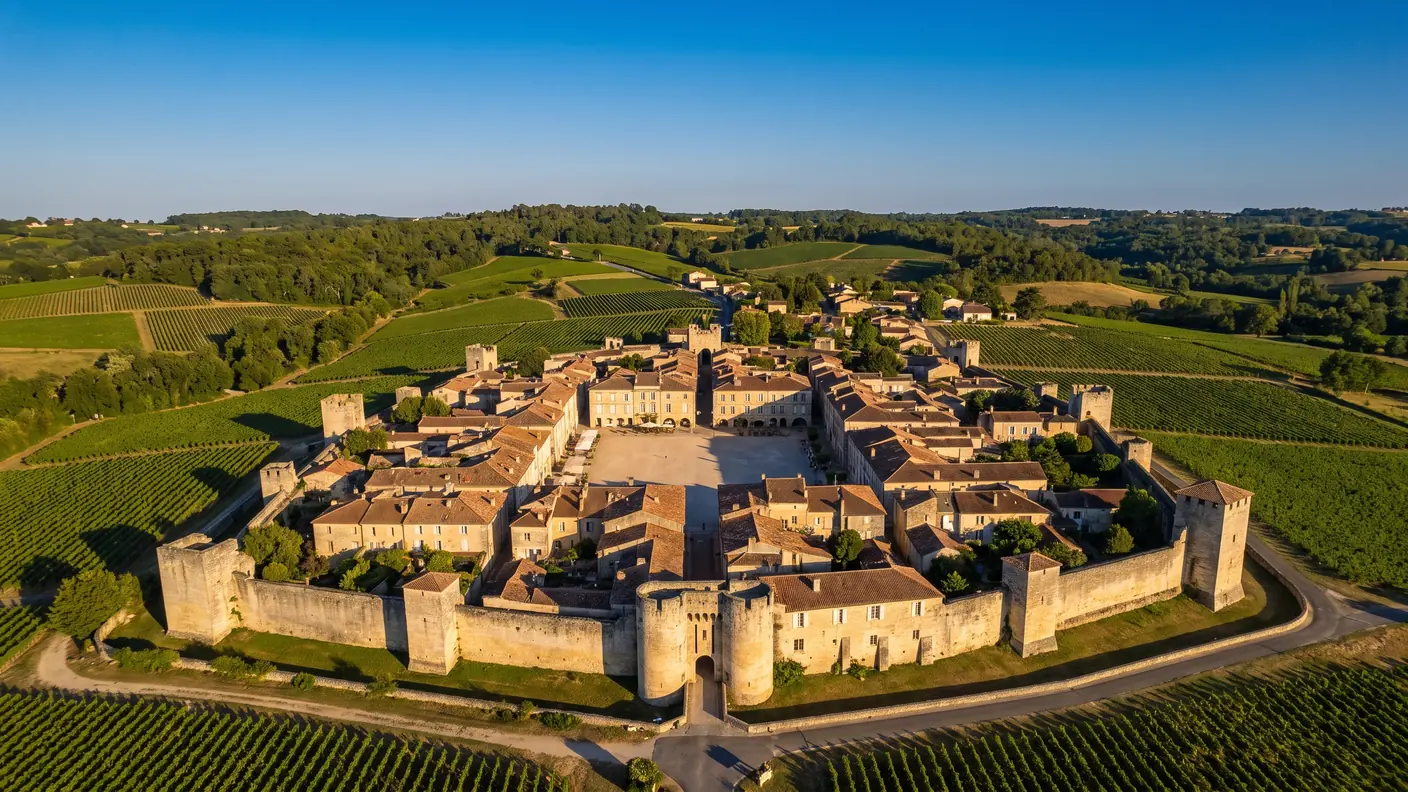
14 km to the north (17 minutes), Sauveterre-de-Guyenne is the major neighboring bastide. Founded in 1281 by Edward Ier of England, it is the only one of Gironde’s eight bastides to have preserved its four fortified gates around an arcaded square, and it marks the terminus of the Roger-Lapébie greenway from Bordeaux. 16 km to the east (18 minutes), Saint-Ferme Abbey, a former Benedictine abbey on the Camino de Santiago, contains a listed church with remarkable decorated capitals and a small museum displaying a hoard of 1,300 Roman coins. Across the surrounding Entre-deux-Mers, villages are dotted with Romanesque churches, mills, and wine estates. The region is made for touring, whether by bicycle along the greenways or by car with a driver for bastides, abbeys, and tastings without route-finding or parking concerns. With its shops and restaurants, La Réole remains an ideal base.
Langon, Marmande, and the Garonne Valley
Following the valley, Langon is 19 km downstream (27 minutes): it’s the gateway to the Graves and Sauternes regions, whose great sweet wines are just a short half-hour from La Réole. Upstream, Marmande (20 km, 23 minutes) marks the beginning of Lot-et-Garonne, with its famous tomatoes and lush countryside. 39 km to the southwest (33 minutes via the A62), Bazas and its UNESCO-listed Gothic cathedral round out the picture—note that the actual distance is indeed 39 km by road, not the “25 km” sometimes cited. Finally, the Garonne Canal, just nearby in Fontet, winds its way along a shaded towpath toward Toulouse: an invitation to stroll or cycle alongside the water. From La Réole, this offers everything you need for a full weekend combining heritage, vineyards, and the laid-back charm of the Garonne region—with a chauffeured transfer to take you between stops in complete freedom.
When is the best time to visit La Réole?
La Réole is open to visitors year-round—and, if possible, always on a Saturday morning, so you can experience its waterfront market, voted the most beautiful in France. The spring (April–June) is ideal: the soft light over the terraced city, the terraces along the quays coming to life, the V80—perfect for cycling—and the Entre-deux-Mers region bursting with greenery. The summer (July–August) is the peak season: the market is in full swing, there are more and more “City of Art and History” guided tours, and evenings along the Garonne are delightful—the shade of the terraced alleyways is a welcome relief during the hottest hours of the day. The fall (September–October) is perhaps the most beautiful time of year: the grape harvest brings the Entre-deux-Mers to life, the light bathes the quays and stones in a golden glow, and the crowds begin to thin out.
Even winter has its charm: a quiet town, the dependable Saturday market, and mists rising from the Garonne that give Quat'Sos the atmosphere of a Romantic engraving. In every season, Saturday morning remains the highlight, when the market turns the quays into a weekly celebration. Allow a generous half-day for the historic center and monuments, and a full day to include the market and an excursion to Sauveterre, Saint-Ferme, or a cycling loop. A weekend lets you add Bazas, Sauternes, or the Garonne Canal. Just 1 hour and 4 minutes from Bordeaux via the A62, La Réole offers one of Gironde’s finest heritage escapes year-round: rich in history, authentic, and still off the beaten path.
| Season | Atmosphere | Ideal for |
|---|---|---|
| Spring (April–June) | flower-lined docks, soft light | Old Town, V80 bike, market |
| Summer (July–August) | bustling market, guided tours | family, Garonne, evenings |
| Fall (Sept.–Oct.) | grape harvest, golden light, tranquility | wine tourism, photography, excursions |
How to get to La Réole from Bordeaux
La Réole is about 77 km from Bordeaux, or about a 1-hour, 4-minute drive via the A62, the “Autoroute des Deux Mers.” The route follows the bypass and then the highway for about 50 kilometers before reaching the Garonne Valley. The city also has a TER train station on the Bordeaux–Agen line.
| Route | Distance | Duration | Details |
|---|---|---|---|
| Bordeaux → La Réole | ~77 km | 1 hour 4 minutes | Starting at €146 for a private chauffeur service |
| Bordeaux-Mérignac Airport → La Réole | ~85 km | ~1 hr 5 min | pickup at the terminal |
| La Réole → Sauveterre-de-Guyenne | ~14 km | ~17 min | fortified bastide with four gates |
| La Réole → Bazas | ~39 km | ~33 min | UNESCO Cathedral |
By car, it takes about 1 hour and 4 minutes to reach La Réole from Bordeaux: take the bypass, then the A62 toward Toulouse for about 50 kilometers, and exit toward the Garonne Valley. By train, La Réole is served by the TER on the Bordeaux–Agen line, with a station located below the city—convenient for a quick visit to the city center. However, a private transfer offers the most freedom: door-to-door, it drops you off directly at the riverbanks or in the heart of the historic center, then takes you, if you wish, to Sauveterre-de-Guyenne, the Abbey of Saint-Ferme, a vineyard in the Entre-deux-Mers region, or Bazas, before bringing you back to Bordeaux at the agreed-upon time. Whether you’re heading to the Saturday market, taking a heritage tour, or going on a bike ride with a shuttle back, this is the simplest and most flexible option—with no set schedules and no need to hunt for parking.
Whether you’re heading to the Saturday market, exploring France’s smallest “City of Art and History,” or taking a trip to the southern part of the Entre-deux-Mers region, booking a professional chauffeur guarantees a comfortable and punctual ride—book a driver from Bordeaux → La Réole or explore all our destinations.
Frequently Asked Questions
Is La Réole accessible without a car?
Yes. The TER station is located below the town center on the Bordeaux–Agen route. From the station, the town slopes upward toward the riverbanks, the old town hall, and the priory, so be prepared for the elevation change and stairs. To combine the market, monuments, and surrounding area without returning to the train, a chauffeured road transfer offers greater flexibility.
How much does a transfer from Bordeaux to La Réole cost?
We offer a fixed-price transfer from Bordeaux to La Réole, starting at 169 € one-way (approximately 77 km, about 1 hour and 4 minutes by car via the A62), in a Mercedes sedan or a van seating up to 8 passengers, with a professional chauffeur. The trip is direct, door-to-door: pickup at the airport, Saint-Jean train station, or your hotel in Bordeaux, and drop-off directly on the banks of the Garonne or in the heart of the historic center. The fixed quote is provided and confirmed in writing before departure, with no unexpected meter charges. This is particularly convenient for the Saturday morning market or a day trip: the driver can then take you to Sauveterre-de-Guyenne, the Abbey of Saint-Ferme, or a winery, and then bring you back to Bordeaux. For groups, this is often the simplest and most economical option.
Why is La Réole designated a “City of Art and History”?
Because its cultural heritage—exceptional for a town of about 4,500 residents—earned it this designation from the Ministry of Culture—a process completed in 2013, with the agreement signed on November 20, 2014. La Réole is thus the smallest town in France to hold this designation, which it shares with cities such as Bordeaux and Sarlat. Its treasures include: the former town hall, dating from the late 12th to early 13th century—one of the oldest in France, listed as a historic monument in 1913; the Benedictine priory founded in 977, rebuilt in the 18th century and listed in 2017, which now houses the town hall; the priory church of Saint-Pierre, designated a historic monument in 1846; and the Château des Quat’Sos, a 13th-century fortress overlooking the Garonne River. This designation is reflected in regular guided tours, which can be booked through city hall—the best way to discover a thousand years of history.
What is the Château des Quat'Sos? Can you tour it?
The Château des Quat'Sos—“the four sisters” in Gascon, referring to its four nearly identical corner towers—is the medieval fortress that crowns La Réole. Authorized by King Louis VIII of France in 1224, it was built around 1230–1250 by King Henry III Plantagenet of England on the site of an older tower traditionally attributed to Richard the Lionheart. Its Thomasse Tower rises about 30 meters above the Garonne River. The castle withstood the famous sieges of 1324 and 1345–46 (described by Froissart), before being partially dismantled in 1629 on the orders of Richelieu; three towers remain. Please note: This is private property currently undergoing restoration and is not open to visitors. It can be admired from the outside, from the banks of the Garonne and especially from the Rouergue Bridge, where the view of the terraced city and its fortress is superb.
On what day is the La Réole market held?
Saturday mornings, from 8 a.m. to 1 p.m., on the banks of the Garonne. It’s one of the largest markets in Gironde: about 120 vendors (up to 150 during peak season) and more than a thousand visitors, set against a unique backdrop between the river and the terraced city. You’ll find producers from the Réolais and Entre-deux-Mers regions: vegetable growers, cheesemakers, poultry sellers, fishmongers, and local wines. In 2023, it was voted “France’s Most Beautiful Market” in TF1’s 1:00 p.m. national contest—a major accolade for this local institution. If you have to choose just one day to visit La Réole, make it Saturday: the market in the morning, lunch in town, then an afternoon exploring the historic center and its monuments. A private transfer will drop you off right at the riverfront and then take you back with your purchases.
What's a good three-hour route to take in La Réole?
In three hours, start at the docks, walk through the market if you’re visiting on a Saturday, then head up toward the old town hall, Saint-Pierre Church, and the priory buildings. End your walk near the Château des Quat’Sos—a private property—before heading back down through the narrow streets. This route covers most of the historic center but does not include access to the interior of the château.
What is the former city hall of La Réole?
It is one of the oldest town halls in France—an extremely rare example of medieval civil architecture, dating from the late 12th or very early 13th century. Tradition links it to Richard the Lionheart, who, in 1190, while en route to the Crusades, is said to have ordered its construction: a traditional attribution that should be taken with a grain of salt, but which speaks to the long-standing ties between the city and the Plantagenets. The building comprised a grain hall on the ground floor, open with arcades, and an upper hall with mullioned windows where the city council met. Designated a Historic Monument in 1913—one of the very first such designations—it now serves as an exhibition space. It bears witness to the municipal freedoms obtained very early on by La Réole, confirmed as early as 1206 by John Lackland, under the joint rule of the crowns of France and England.
Where does the name La Réole come from?
From the Latin regula, “the Rule”—that of Saint Benedict, followed by the monks of the priory founded in 977 on the hillside overlooking the Garonne. The town that grew up around the monastery took its name from the Benedictine Rule: Regula, which became “La Réole.” The city’s name is therefore, literally, a monastic manifesto—a rare instance in which a city bears the name of a spiritual text. The Saint-Pierre Priory, affiliated with the great Abbey of Fleury (Saint-Benoît-sur-Loire), was the heart of the city for centuries; destroyed during the Wars of Religion in 1577, it was lavishly rebuilt in the 18th century. Its buildings, designated as Historic Monuments in 2017, now house the town hall and courthouse: the former monastery is open to the public, and the civic heart of the town still beats there—more than a thousand years of continuity in the same place.
What is the distance between Bordeaux and La Réole?
About 77 km by road, or about 1 hour and 4 minutes via the A62, the “Autoroute des Deux Mers” (bypass, then about 50 kilometers of highway, then the Garonne Valley). Be careful with the “62 km” figure you often see: that’s the distance as the crow flies, not the actual road distance. With a private driver, the fare is fixed and provided in advance, starting at €146 one way. By train, La Réole is served by the TER on the Bordeaux–Agen line, with a station located below the town. A private transfer remains the most flexible option for exploring both the town and its surroundings: the Saturday market, Sauveterre-de-Guyenne (14 km), Saint-Ferme Abbey (16 km), Bazas and its UNESCO-listed cathedral (39 km), or a wine tasting in the Entre-deux-Mers region, before returning to Bordeaux at the agreed-upon time.
Can you ride a bike at La Réole?
Yes — La Réole is a stage of the major national route “Canal des 2 mers à vélo” (V80), which connects the Atlantic to the Mediterranean. To the north, a greenway built on a former railroad track leads to the bastide town of Sauveterre-de-Guyenne (14 km) and joins the Roger-Lapébie trail coming from Bordeaux at Daignac. To the south, the route reaches the Garonne Canal at the nearby Fontet boat dock, then heads toward Marmande along the towpath. This makes for beautiful, flat, and safe loop routes winding through the river, canal, vineyards, and bastides. A popular option: cycle out from the surrounding area and return via private transfer with your bikes—or vice versa. The official “Sauveterre / La Réole” and “La Réole / Marmande” stages of the V80 are documented on the France Vélo Tourisme and Canal des 2 mers à vélo websites.
Which stages should be combined on the same day?
For a day trip, combine La Réole with Sauveterre-de-Guyenne, 14 km away, or the Abbey of Saint-Ferme, 16 km away. To the west, Langon provides access to the Graves and Sauternes regions. Choose just one additional stop after exploring the historic center and the market: adding too many stops would cut into the time you have to spend in the narrow streets, at the priory, and along the riverbanks.
What's the best time of year to visit the market and the waterfront?
Saturday morning remains the best time to visit the market along the quays, from 8 a.m. to 1 p.m. Spring offers pleasant temperatures for exploring the sloping alleyways and the V80; fall combines soft light with the grape harvest in the Entre-deux-Mers region. Summer is livelier, while winter is ideal for a peaceful heritage tour—provided there are no flash floods.
Further Reading
- The neighboring bastide with four gates: see the Guide to Sauveterre-de-Guyenne (the only bastide in the Gironde to have retained its gates)
- The medieval lower town: see the Saint-Macaire Guide (city walls and arcaded square on the Garonne)
- The nearby confluence: see Caudrot’s Guide (where the Dropt joins the Garonne)
- Understanding our rates and vehicles: see the "Book a Driver" page (sedan & van, fixed-price quote)
- Plan your trip: Book a chauffeur service from Bordeaux to La Réole or explore all our destinations
Sources and References
- Wikipedia — La Réole — a city on the right bank of the Garonne, founded in 977 around the priory (regula), population 4,487. (2023), “the oldest urban center in the Entre-deux-Mers region,” granted privileges by John Lackland (1206), besieged in 1324 and 1345–46
- La Réole Town Hall — “City of Art and History” designation (the smallest municipality in France to receive this designation, agreement dated November 20, 2014), guided tours, Saturday market from 8 a.m. to 1 p.m. on the riverbanks (~120–150 vendors), voted “Most Beautiful Market in France” for 2023
- POP Mérimée — Former City Hall of La Réole — late 12th–early 13th century, one of the oldest city halls in France, grain market, designated a Historic Monument on May 3, 1913 (PA00083697); traditionally attributed to Richard the Lionheart
- Château des Quat'Sos — fortress built c. 1230–1250 (Henry III Plantagenet), 4 towers (“four sisters” in Gascon), Thomasse Tower, partially dismantled in 1629; privately owned and currently undergoing restoration; not open to the public
- POP Mérimée — Priory of La Réole — Benedictine priory founded in 977 (Fleury Abbey), rebuilt in the 18th century, designated a historic monument in 2017 (PA00083699); houses the town hall; the priory church of Saint-Pierre, designated a historic monument in 1846
- 2 Seas Canal by Bike (V80) — Official Stages: Sauveterre-de-Guyenne ↔ La Réole (greenway on a former railroad track) and La Réole ↔ Marmande; connection with the Garonne Canal at Fontet
Article updated in July 2026.
On the Way to the City on the Garonne
Direct transfer from Bordeaux (1 hr 04 min via the A62) to La Réole, France’s smallest “City of Art and History”—from the airport, train station, or hotel to the banks of the Garonne, then on to Sauveterre, Saint-Ferme, or the vineyards. Fixed, written quote—no unexpected meter charges.